
Bonus: Autocar meets David Durand: The designer that took Dacia from cheap to chic
About this episode
David Durand, director at Dacia Design, shares insights on how Dacia transformed from a budget brand to one known for clever, essential, and robust design. Drawing inspiration from military shelters, architecture, and outdoor gear, Durand emphasizes simplicity and functionality over decoration. He discusses the innovative Euclid fixation system that encourages customer customization and the Hipster concept car, a compact, affordable electric city vehicle designed with lightweight and practical features. Durand also reflects on balancing modern regulations with Dacia’s philosophy of making accessible, popular cars that resonate emotionally and practically with everyday users.
A few years ago, Dacia was best known as the cheap and cheerful value alternative to the mainstays, selling cars that were light on equipment (and kerb appeal) and styled to a price.
But the brand's current line-up contains some of the most fashionable and attractive cars on sale, majoring on rugged, utilitarian charm and designed to draw the eye from much more expensive alternatives.
To find out what drove the change, deputy editor Felix Page spent a couple of days in the mountains with chief designer David Durand, to explore how he has taken Dacia from its humble, value-focused roots to a maker of outdoorsy, activity-focused multi-tools on wheels.
Hosted on Acast. See acast.com/privacy for more information.
EV charging
"This bonus episode of the AutoCar podcast is sponsored by Anderson, design-led premium EV charging company. Search Anderson or visit anderson-ev.com, where they're currently offering six months free charging,"
EV charging means plugging in an electric car to add more battery power so it can keep driving.
EV charging refers to the process of replenishing the battery of an electric vehicle using specialized charging equipment. Home charging solutions are important for electric vehicle owners to conveniently charge their cars.
Datsier Design
"I'm here today with Datsier designer David Durand. David, thank you so much for coming along."
Datsier Design is the team that designs how Dacia cars look, making them more stylish and attractive.
Datsier Design is the design studio responsible for the styling and design direction of Dacia vehicles, helping transform the brand's image from cheap to chic.
Pinskauer 6x6 military truck
"We had a Pinskauer 6x6 military truck with 12 seats in the back, these things from, you know, designed in the 50s but made a bit later than that, really utilitarian but the word I kept coming back to was clever, right,"
The Pinskauer 6x6 is a tough military truck that can drive on six wheels and carry many people. It has smart design tricks to help it work well in hard places.
The Pinskauer 6x6 military truck is a rugged, utilitarian vehicle designed primarily for military use, featuring six-wheel drive and seating for multiple passengers. It is known for its clever design features that maximize functionality and durability in rough conditions.
approach angle
"where you got the great approach angle. Yeah, even another beautiful detail I love is this piece of wood which is screwed on the side of the car knowing that you are going to slide a bit on trees or rocks"
Approach angle means how steep a hill or obstacle a vehicle can go up without its front part scraping the ground. It's important for cars that drive off-road.
The approach angle is the maximum angle of a ramp or obstacle that a vehicle can climb or approach without any part of the front of the vehicle hitting the ground. It is an important specification for off-road vehicles.
Dacia
"and, for example, we were thinking in Dacia to provide the exact size even the blueprint of the inside of your boots for customers to be able to realize some little furniture that adapts exactly like flat pack, you know. Yeah, exactly. And this kind of trust relationship saying, okay, if you want to, if you have good ideas, you can do it."
Dacia is a car company that makes simple and affordable cars. People like them because they are easy to use and good for everyday needs.
Dacia is a Romanian automotive brand known for producing affordable and practical vehicles, often with a focus on utility and value. The brand is part of the Renault Group and has gained popularity for its no-frills approach and adaptability.
flat pack
"that adapts exactly like flat pack, you know. Yeah, exactly. And this kind of trust relationship saying, okay, if you want to, if you have good ideas, you can do it."
Flat pack means things like furniture that come in a flat box and you put them together yourself. Here, it means car parts you can build or change yourself.
Flat pack refers to furniture or items designed to be packed and shipped in flat boxes and assembled by the customer, popularized by companies like IKEA. In this context, it relates to customizable interior components for cars that customers can assemble themselves.
3D file
"We give you the exact size and the, I don't know, even the 3D file to be able to make by your own and adapt also your vehicle as your usage and your creativity because sometimes we see, you know, there is big forums about Dacia with people exchanging good ideas"
A 3D file is a computer picture that shows how something looks in three dimensions. People can use it to make parts for their cars themselves.
A 3D file is a digital model used for designing or manufacturing objects, often used with 3D printers or CNC machines. Providing customers with 3D files allows them to create custom parts or accessories for their vehicles.
customer customization
"and adapt also your vehicle as your usage and your creativity because sometimes we see, you know, there is big forums about Dacia with people exchanging good ideas and things like that, upgrading or changing or adapting accessories. And there is a huge creativity from our customers and we learn from them. Sometimes they have the good ideas because they have a very specific usage and you see that it's coming from the reality, the real life and they are doing this every day and it's really changing their life"
Customer customization means you can change or add things to your car to make it fit what you want or need better.
Customer customization refers to allowing vehicle owners to modify or adapt their cars to better suit their personal needs or preferences, often encouraged by manufacturers providing tools or designs for such adaptations.
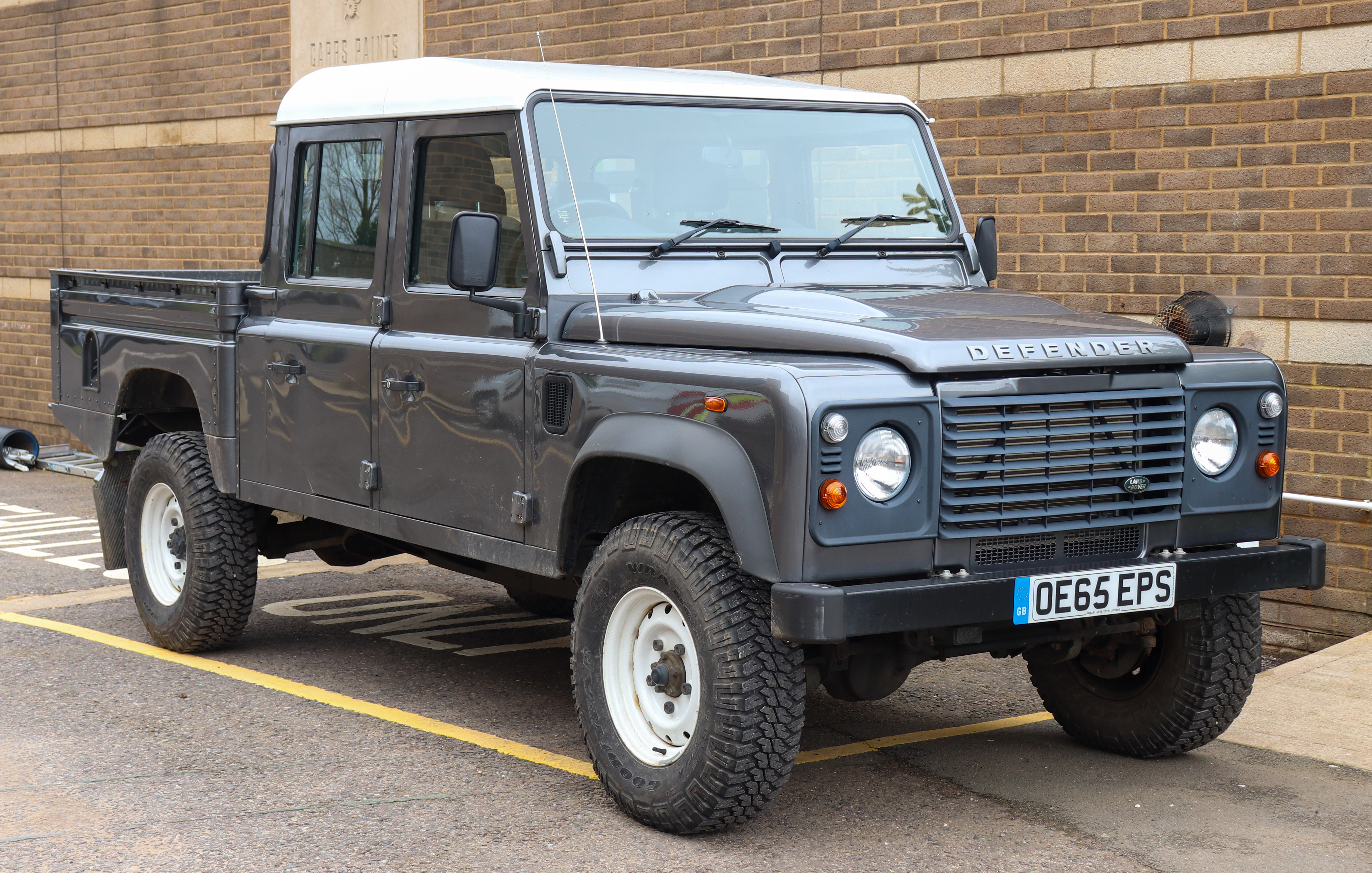
Land Rover Defender
"We were very fortunate to be up close and personal with an original Land Rover Defender, one of the last original Land Rover Defenders."
The Land Rover Defender is a tough and simple 4x4 vehicle that many people love because it can go off-road and is easy to fix. It has a special group of fans who really like how it looks and works.
The Land Rover Defender is a rugged off-road vehicle known for its simple, utilitarian design and strong community following. It has a cult status among enthusiasts for its durability and classic styling.
tail lamps
"One example I'm talking about very often is that for example on the rear of our cars, so many cars have some rear lights, tail lights on the body side and also on the tailgate to make a long horizontal lamp. It doubles the price of the tail lamps. Why would we spend more money there and a tail lamp is expensive where you don't need it?"
Tail lamps are the red lights at the back of a car that help other drivers see you and know when you stop or turn. Some cars have extra lights on the back door, which can cost more.
Tail lamps are the rear lights on a vehicle that provide visibility to other drivers and indicate braking or turning. Some cars have tail lamps both on the body side and the tailgate, which can increase cost and complexity.
full-width LED light bars
"It's funny, isn't it? Where people started introducing full-width LED light bars to their cars to stand out. Now you don't have them, you stand out more because everyone else has them."
These are long lights made of LEDs that go all the way across the front or back of a car. They help the car look unique and easy to recognize, especially at night.
Full-width LED light bars are lighting elements that span the entire width of a car's front or rear, often used to create a distinctive visual signature. They are popular in modern car designs to enhance the vehicle's presence and recognition.
hipster concept car
"But the concept that was really interesting, we're talking about rear lights, the hipster concept, which represents a lot of your views on design, views on simplicity. That has a really different tail light setup. The tail lights are in the boot, right? Yeah, in fact, the idea here, because tail lights are expensive parts in tail and front lamps, And everything we can save on that is welcome. And on hipster, the idea was to say, OK, why don't we put the lamp inside the car, behind the window? And we make it simpler with visible LED instead of putting some screens in front to cover. And the worst for me is those lamps where you have some masks inside that are imitating technological or mechanical parts which are just plastic injected. Where behind you have electronic cards where all of this technology is visible, why hiding it? And so this was the idea of hipster saying, OK, we put the electronic card with the visible LED and the electronic elements and we fix it inside the car behind the windows to be sure that it's safe and protected. I should maybe explain the hipster a little bit for anyone that doesn't know. So this is your most recent concept car, 3.4 metres long?"
The hipster concept car is a new idea where the back lights are put inside the car window instead of outside. It uses simple LED lights and shows the electronic parts instead of hiding them, making the design simpler and cheaper.
The hipster concept car is a design project focusing on simplicity and cost reduction by integrating tail lamps inside the car behind the rear window, using visible LEDs and electronic components without traditional covers. This approach challenges conventional lamp design by exposing electronic elements safely within the vehicle.
tail lights
"That has a really different tail light setup. The tail lights are in the boot, right?"
Tail lights are the red lights on the back of a car that help other drivers see it, especially at night or when the car is stopping.
Tail lights are the red lights at the rear of a vehicle that illuminate when the headlights are on and intensify when braking. They are essential for signaling and safety, and their design can significantly impact a car's aesthetics and cost.
lamp design complexity and cost
"And the head lamps are expensive parts in a car, a complex shape to develop. It's a block, it has to have a transparent part, it has to be waterproof, it's heating inside. So it's complex, it's a security thing, it costs a lot at the end."
Making car lights is tricky because they need to keep water out, be clear, and sometimes have heaters. This makes them expensive to make.
Designing car lamps involves complex engineering to ensure they are waterproof, have transparent covers, include heating elements, and meet safety standards. These factors contribute to the high cost of tail and head lamps in vehicles.
head lamps
"And the head lamps are expensive parts in a car, a complex shape to develop. It's a block, it has to have a transparent part, it has to be waterproof, it's heating inside."
Head lamps are the bright lights at the front of a car that help you see when it's dark or foggy. They are made carefully to keep water out and sometimes have heaters to stop fogging.
Head lamps are the front lights of a car that illuminate the road ahead during low light conditions. They are complex components requiring transparent, waterproof housings and often include heating elements to prevent fogging or icing.
LED (Light Emitting Diode)
"And on hipster, the idea was to say, OK, why don't we put the lamp inside the car, behind the window? And we make it simpler with visible LED instead of putting some screens in front to cover. And the worst for me is those lamps where you have some masks inside that are imitating technological or mechanical parts which are just plastic injected. Where behind you have electronic cards where all of this technology is visible, why hiding it? And so this was the idea of hipster saying, OK, we put the electronic card with the visible LED and the electronic elements and we fix it inside the car behind the windows to be sure that it's safe and protected."
LEDs are tiny lights that use less power and last longer than regular bulbs. Cars use them to make bright and cool-looking lights that can be shaped in many ways.
LEDs are semiconductor light sources used in modern automotive lighting for their efficiency, brightness, and design flexibility. Visible LEDs in lamp design allow for simpler, more durable lighting systems with unique styling possibilities.
city car
""And it's a vision of what a city car could look like in the future. How would you describe it?""
A city car is a small car made to drive easily in busy cities. It's easy to park and uses less fuel because it's smaller and slower than big cars.
A city car is a small, compact vehicle designed primarily for urban environments where space is limited and driving conditions involve frequent stops and low speeds. These cars prioritize maneuverability, efficiency, and ease of parking over high performance or long-distance capability.
lightweight design
""It's like we have to be as lightweight as possible because weight is raw material, of course, which costs. But it's also the size of your battery.""
Making a car lighter means it uses less energy to move, so it can be cheaper to make and easier to drive, especially if it's electric.
Lightweight design in cars focuses on reducing the vehicle's weight to improve efficiency, handling, and reduce manufacturing costs. Lighter cars require less energy to move, which is especially important for electric vehicles to minimize battery size and cost.
battery size in electric cars
""But it's also the size of your battery. And when you know that the size of battery is one third of the price of an electric car, the lighter the car will be, the smaller the battery will be.""
The battery in an electric car is like its fuel tank. Bigger batteries let you drive farther but cost more. If the car is lighter, it needs a smaller battery, which saves money.
In electric cars, the battery size largely determines the vehicle's range and cost. Larger batteries provide longer driving distances but are more expensive and heavier. Reducing the battery size by making the car lighter helps lower the overall cost and improves efficiency.
cubic shape design
""And to maximise the volume inside, we constructed a kind of little tube, which is the maximum you can get with the same surface on the floor. And the other good point is having this cubic shape, it looks also very strong, like a bit safe on four wheels.""
Making the car box-shaped helps fit more space inside for people and stuff, even if the car is small outside.
A cubic shape design in cars maximizes interior volume within a compact footprint, providing more usable space for passengers and cargo. It also can contribute to a strong, safe appearance and structural integrity.
high driving position
""And something which was very important for us was to keep a high driving position and not being in a small car too low on the road in the middle of the traffic where you can't control anything.""
Sitting higher in the car helps you see better when driving, especially in busy traffic, so you feel safer and more in control.
A high driving position in a car means the driver sits higher off the ground, which can improve visibility and the feeling of control in traffic. This is often preferred in small cars to help drivers better see surrounding vehicles and obstacles.
L7 quadricycle regulation
""Because we have the L7 quad-recycle regulation that imposes 450 kilos maximum before the battery. So this is Citroen Ami territory.""
L7 quadricycle rules are special laws in Europe for very light small cars. These rules make it easier and cheaper to build tiny cars that don’t have to meet all the usual safety rules.
The L7 quadricycle regulation is a European classification for very light four-wheeled vehicles with a maximum weight limit (450 kg before battery weight). Vehicles under this category face less stringent safety and emissions regulations, enabling simpler and cheaper designs like the Citroën Ami.

Citroen Ami
"...450 kilos maximum before the battery. So this is Citroen Ami territory. Yeah, exactly. Then if you go in M1, ..."
The Citroen AMI is a very small electric car made to drive short distances in cities. It is easy to park and uses electricity instead of petrol or diesel.
The Citroen AMI is a tiny electric city car designed for short urban trips and easy parking. It is notable for its ultra-compact size, low weight, and minimalistic design, making it ideal for city dwellers who need simple, emission-free mobility. It is often discussed in the context of micro-mobility solutions and urban electric vehicles.
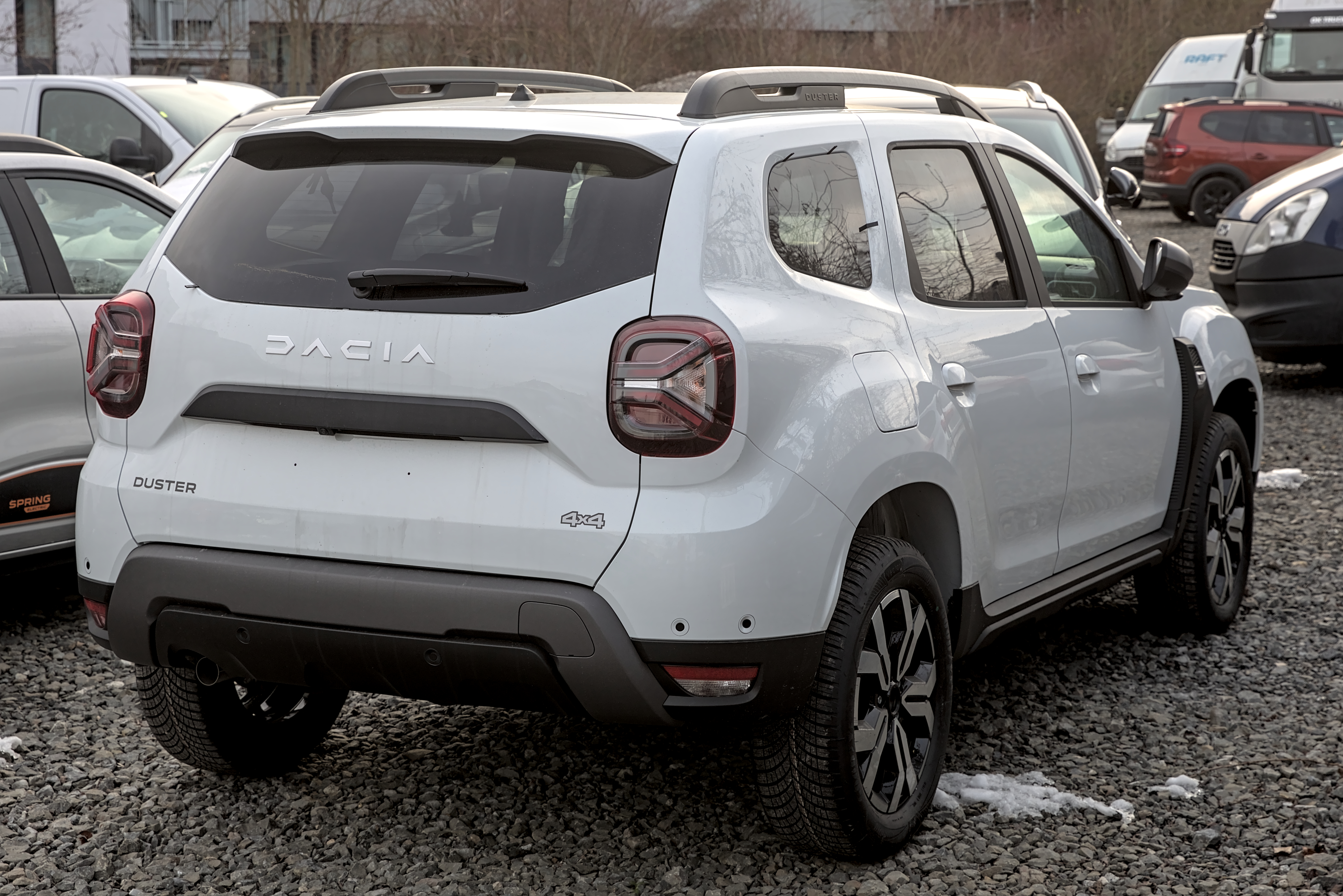
Dacia Duster
"I'm so happy when I meet people saying, I love the last Duster. ... I bought the first generation and now I have the third one."
The Dacia Duster is a small SUV that many people like because it is affordable and useful. It is made by a company called Dacia and is now in its third version.
The Dacia Duster is a compact SUV produced by the Romanian car manufacturer Dacia, known for its affordability and practicality. It has been popular in Europe as a budget-friendly SUV option and is currently in its third generation.

Fiat Panda
"When you think about Renault 4, when you think about the, you were talking about the original Mini, when you think about the Fiat Panda"
The Fiat Panda is a small and simple car made in Italy. Many people like it because it is easy to use and not expensive.
The Fiat Panda is a small city car produced by the Italian manufacturer Fiat. Known for its practicality and affordability, it has been popular in Europe since its introduction in the 1980s.

Renault 4
"When you think about Renault 4, when you think about the, you were talking about the original Mini, when you think about the Fiat Panda"
The Renault 4 is a small, simple car that many people liked because it was easy to use and affordable. It was made a long time ago but is still remembered.
The Renault 4 is a small economy car produced by Renault from the 1960s to the early 1990s. It was known for its practicality, simplicity, and popularity across Europe.
C segment cars
"there's two new C segment cars coming from Dacia, which will be, you know, related to the big stuff, which has been very successful in entering that C segment."
C segment cars are medium-sized cars that are bigger than small cars but not too big. Many people buy these cars because they are good for everyday use.
The C segment refers to the European car classification for compact cars, which are larger than small city cars but smaller than mid-size vehicles. This segment is highly competitive and popular among buyers looking for practical everyday cars.

Dacia Sandero
""I'm super happy that Sandero is making so good in Europe. But to maintain this position in this changing world, we have to reinvent ourselves all the time.""
The Dacia Sandero is a small car made by Dacia that is popular in Europe because it is cheap and useful for everyday driving.
The Dacia Sandero is a compact hatchback produced by the Romanian car manufacturer Dacia, known for its affordability and practicality in the European market.
electrification
""We have regulation changing. We have habits. We have, I don't know, emissions that are more and more electrification of the automotive world that we also have to play.""
Electrification means making cars that use electricity instead of gasoline or diesel to help reduce pollution and save energy.
Electrification refers to the automotive industry's shift from internal combustion engines to electric powertrains, including hybrid and fully electric vehicles, driven by emissions regulations and environmental concerns.
brand identity
""It was a bit the case between the, I would say, the first era of Dacia and the one we opened with the new brand identity and where we brought to the brands more emotional value. Even if we keep the rational one who were essential, robust and eco, economic, ecologic, that are going together.""
Brand identity is how a car company makes its cars look and feel special so people recognize and like them.
Brand identity in automotive design refers to the visual and emotional characteristics that define a car brand, including design language, values, and the overall image projected to customers.
affordable pricing
""And we stayed Dacia, we stayed affordable, but we brought more to the brands. And this is the job that we have to do for the next phase, for the future of Dacia to be able to go for electrification.""
Affordable pricing means selling cars at a low price so many people can buy them without spending too much money.
Affordable pricing is a key concept for brands like Dacia, focusing on offering vehicles at low cost while maintaining essential features and quality to attract budget-conscious buyers.
design philosophy: less is better
""I was talking about making things essential, simple and less is better. How do we apply it with these new rules?""
Less is better means making car designs simple and clean instead of too busy or complicated, so they look nice and work well.
The design philosophy 'less is better' emphasizes simplicity and essentialism in automotive design, focusing on clean lines and functional aesthetics rather than excessive ornamentation.
Request an Explanation
Heard something you'd like explained? We'll add it to this episode.
Sign in to request explanations for terms you heard.
Want to learn more?
Browse our glossary for plain-English explanations of automotive terms, jargon, and concepts.
Help improve this episode
See something that's not quite right? Our annotations are AI-generated and can sometimes miss the mark. Click the flag icon on any annotation to suggest a correction.