Which budget exotic? VW woes. A Caterham at 80
About this episode
From listener letters at the British Motor Museum to Goodwood rally-stage views, the hosts debate what makes a “driver’s car” and how perceptions of harshness change over time. They share used “budget exotic” shopping examples, then get into Porsche 996 IMS-bearing worries and why some limited-production supercars can still be hard to sell. The show also covers EV ideas from Alpine’s dual-battery concept to Polestar and Chinese-brand ownership risks, plus a Volkswagen identity-and-model-cut discussion.
Which semi-budget exotic car is worth a risk? What defines a great driver's car and is a Caterham right up there, even if you're 80? What was the highlight of the Goodwood Festival of Speed? And what's going wrong at Volkswagen? All these questions and more in the latest episode of the Autocar podcast, My Week In Cars, brought to you by your hosts Steve Cropley and Matt Prior.
They also dive into the Autocar archive. For details of a subscription special offer which includes archive access and gives you SIX issues of Autocar for just £6, click here.
Hosted on Acast. See acast.com/privacy for more information.
British Motor Museum
"We are at the British Motor Museum today for, well, you're here for a meeting, aren't you?"
The British Motor Museum is a car museum in the UK. The hosts are recording there, so it sets an enthusiast, car-history vibe for the episode.
The British Motor Museum is a museum in the UK that hosts cars and automotive exhibits. It’s a fitting venue for a car podcast meeting because it’s tied to British motoring history and enthusiast culture.
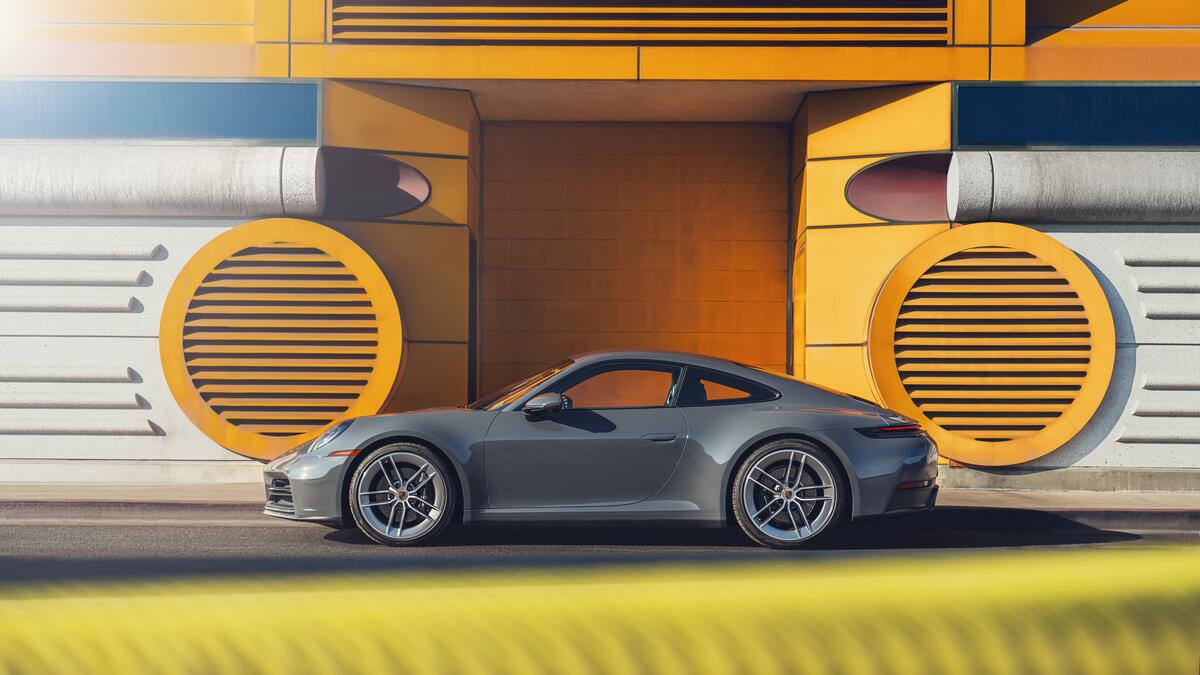
Porsche 911 GT3
"When somebody said something like a Porsche 911 GT3 might be too harsh for daily use or to consider as a inverted commas driver's car."
The Porsche 911 GT3 is a special, more hardcore version of the 911. People call it a “driver’s car” because it’s made to feel exciting and precise, but that can mean it’s not as comfortable for everyday use.
The Porsche 911 GT3 is a track-focused version of the 911, built for high grip and sharp steering response. It’s often discussed as a “driver’s car” because it prioritizes feedback and braking/handling feel over comfort, which is why people debate whether it’s too harsh for daily driving.

Caterham 7
"Hugh Robinson, who is 80, drives a Caterham 7 regularly, including I've often driven four to 500 miles a day with no problem at all."
The Caterham 7 is a very light, simple sports car that’s meant to feel connected to the road. Because it’s so minimal, it can be noisy and exposed, but enthusiasts still use it for long drives.
The Caterham 7 is a lightweight, minimalist “Seven” sports car concept derived from the original Lotus Seven idea. It’s known for being very direct and engaging, which is why the host is discussing it as a practical daily-driver alternative despite noise and wind when the hood is up or the car is top down.
ear plugs
"I'd be interested to know what, whether he drives that distance with earplugs, you know, the way you and I do a bit of motorcycle."
Earplugs are small things you put in your ears to make loud noise quieter. They’re especially useful in loud cars or when driving with the top down for long distances.
Earplugs are used to reduce wind and engine noise exposure, which matters a lot in cars that are loud or open-top. In this context, they’re mentioned as a practical solution for long-distance driving in a noisy, top-down setup.

Land Rover Defender
"..., but everybody used to do this. Yeah. I drive my Defender a bit, you know, people say, go blimey, because i..."
The Defender is a tough off-road vehicle made to handle rough roads and bad weather. People talk about it a lot because it’s known for being very capable and long-lasting. The podcast mentions it because the speaker drives one and notices people reacting to it.
The Land Rover Defender is a rugged, off-road-focused 4x4 built for durability and capability in tough conditions. It often comes up in car discussions because it’s an iconic model with a strong reputation for real-world use. In the podcast, it’s mentioned in the context of someone driving one and reacting to the attention it draws.

Discovery 4
"If you were to take, I don't know, if you'd arrived with, [290.7s] in a Discovery 4 with a big trailer on the back, and you could smuggle something out."
The Land Rover Discovery 4 is a big SUV that’s known for being able to tow things. Here it’s mentioned as the kind of vehicle someone could use to bring a trailer full of cars to an event.
Land Rover Discovery 4 is a large, body-on-frame-ish SUV built for towing and long-distance hauling. In this segment it’s used as the practical “arrive with a trailer” vehicle, contrasting with the exotic cars being discussed at the Festival of Speed.

Ford Mustang
"Well, I was taking with some of the American road cars [314.1s] around the place, you know, you know, Mustangs and Dodge Chargers and things like that."
The Ford Mustang is a famous American car, often associated with big V8 engines. The speaker is just name-checking them as examples of the American cars they saw at the event.
Ford Mustang is a long-running American muscle car line known for V8 power and a strong motorsport and pop-culture presence. In this segment, “Mustangs” are part of the American road-car mix the speaker enjoyed seeing at the event.

Dodge Chargers
"Well, I was taking with some of the American road cars [314.1s] around the place, you know, you know, Mustangs and Dodge Chargers and things like that."
The Dodge Charger is a well-known American performance car, often with a big engine. The speaker is listing it as one of the American cars they saw at the event.
Dodge Charger is an American performance sedan/coupe that’s especially associated with V8 engines and “muscle car” culture. Here it’s mentioned alongside Mustangs as part of the American road cars the speaker was drawn to.
Hemi
"And I'm quite, I'm quite fancy a Hemi, you know. So I got mesmerized by, [349.6s] there were two beautiful 60s Ferraris, the Sharknose V6 Ferrari from the very early 60s."
“Hemi” is a nickname for a type of high-performance V8 engine design. It’s often linked with big power and a special sound, which is why the speaker is excited about it.
“Hemi” refers to Chrysler’s hemispherical combustion-chamber engine design, commonly associated with high-performance V8s. The speaker’s “fancy a Hemi” comment is about wanting that distinctive, powerful American V8 character.
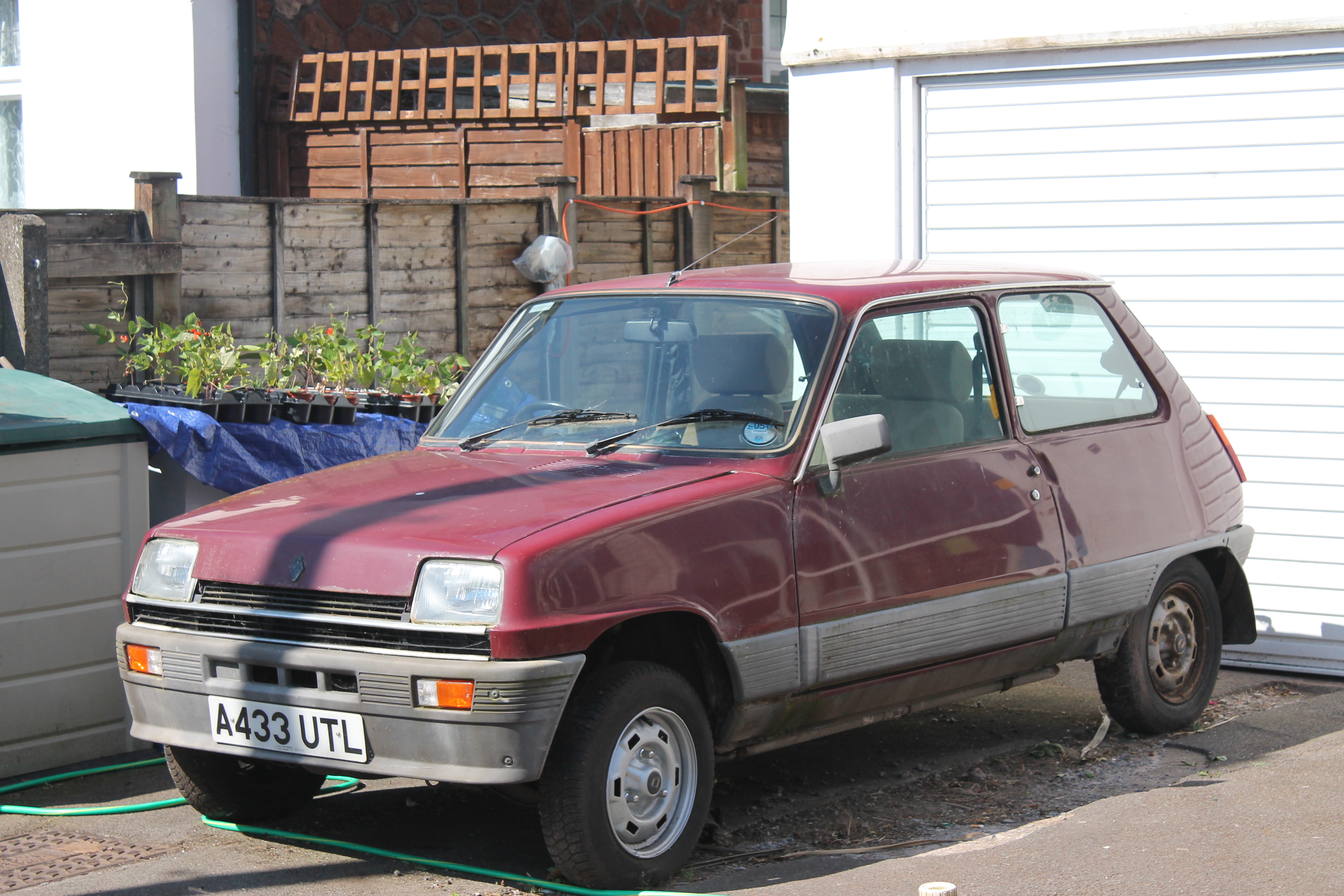
Renault 5
"... Yeah. That will be told me the real story of the Renault 5. Oh yeah. That will be, we will put that up. I do..."
The Renault 5 is a small hatchback car. People talk about it because it’s a well-known model with a history. The podcast hints that there’s more to the story they plan to share.
The Renault 5 is a small, iconic hatchback that’s remembered for its compact size and character. It often comes up because it has a strong history and has inspired modern electric versions. In the podcast, it’s referenced as a subject with a “real story,” suggesting a deeper discussion or feature about the model.

Alpine A110
"You touched on with him the Alpine A110 future, [603.3s] which was at the show looking like an A110, a current A110 body put onto a new chassis."
The Alpine A110 is a small, lightweight sports car that’s famous for feeling nimble and fun to drive. Here, they’re talking about a possible electric version that tries to keep the same character, even though the car’s layout and battery placement are new.
The Alpine A110 is a lightweight, mid-engine sports car known for its compact size and agile handling. In this segment, the hosts discuss an A110 future direction where the current A110 body is paired with a new chassis and an electric layout, aiming to keep the original “values” while changing the powertrain.
all-aluminium chassis
"So that platform is aluminium as before. And you're right, it does look, although the wheel [721.8s] stuck out further, didn't they, under the bodywork."
A chassis is the car’s main structure. Using aluminium helps keep the car lighter and can make it feel more solid and responsive when driving.
An aluminium chassis is a vehicle’s structural frame made largely from aluminium. Aluminium is used to reduce weight while maintaining stiffness, which helps handling and efficiency—especially important for sports cars and for packaging heavy components like batteries.
battery pack
"It's got a battery pack behind the passenger compartment [734.0s] and another one in front, which must be interesting, mustn't it?"
In an electric car, the battery pack is the big unit that stores the electricity. Its placement in the car affects balance and how the car fits together.
A battery pack is the assembled set of battery cells/modules that stores electrical energy for an EV. Here, the discussion focuses on where the packs are placed (behind the passenger compartment and in front) to manage weight distribution and packaging.
skateboard style battery layout
"Because the reason people use a [741.8s] skateboard style battery layout is that that's kind of the most efficient way of doing it,"
A skateboard-style battery layout means the battery is placed low in the car’s floor. That helps the car feel more stable and balanced, and it can make the battery easier to package and manage.
A skateboard style battery layout places the EV’s battery pack low in the floor area, spanning much of the wheelbase like a “skateboard.” This helps lower the center of mass for better handling and stability, and it can simplify wiring and thermal management compared with more fragmented battery placement.
centre of mass
"keeps the centre of mass within the wheelbase and closer to the"
Center of mass is basically where the car’s weight “balances” from. Putting heavy batteries in the right spot helps the car handle better and feel more stable.
Center of mass is the point where a vehicle’s weight effectively balances. EV battery placement is often designed to keep the center of mass within the wheelbase and as low as possible, improving turn-in response and reducing body roll.
talk vector
"And this one's got two motors at the rear, one for each wheel so it can talk vector and do [791.3s] cool stuff."
This is about torque vectoring: the car can send different amounts of power to each wheel. That can help the car turn more easily and grip better.
The host is referring to torque vectoring, where the car can vary torque side-to-side (often using multiple motors or a differential strategy) to help rotation and traction. The idea is that the car can “steer” with power, not just with the steering wheel.
Philip Krief
"And it's been developed. What did the boss, is it Philip Krief, the boss of Alpine? [799.9s] He says it has been developed as an EV."
Philip Krief is mentioned as the leader of Alpine. The point is that he’s saying the project is being developed as an electric car.
Philip Krief is identified here as the boss of Alpine. The host uses his comments to frame the car’s development as an EV, which is relevant because it connects leadership statements to product direction.

Renault 5 Turbo 3
"... between this platform and the one underneath the Renault 5 Turbo 3, the mad little Roller Skate Renault 5. Fantastic..."
The Renault 5 E-Tech Electric is a modern small car that runs on electricity. The podcast compares it to other Renault 5 versions and highlights that it feels fun and nimble. It’s being mentioned because it uses a different electric platform than other related models.
The Renault 5 E-Tech Electric is the modern electric version of the Renault 5, built on an electric-focused platform. It’s discussed in the podcast alongside other Renault 5 variants, with the speaker describing it as a “mad little Roller Skate,” emphasizing its playful, compact feel. The mention of platform differences suggests the conversation is about how the electric version is engineered compared with other related models.

Bentley Continental GT
"say 911 is probably making a bit of a big claim, but cars like the Bentley Continental GT [943.3s] are now in their third or fourth iteration and they stick with the look, don't they?"
The Bentley Continental GT is a luxury “grand tourer” from Bentley—built for comfortable long-distance driving. The host is saying it has been redesigned a few times, but the overall style stays recognizable.
The Bentley Continental GT is Bentley’s grand tourer (GT) that’s known for a luxury-focused, high-speed highway ride rather than track-first behavior. In this segment, the host notes it’s on its third or fourth iteration, meaning multiple redesign generations while keeping the overall look.
curbed a wheel
"More on the Festival of Speed though, on the way I curbed the wheel on my Skoda Kodiak. [961.0s] Oh, it was on the way to, yeah, on Thursday, I think Thursday, yeah, on Thursday morning,"
“Curbed the wheel” means you accidentally hit the curb with your tire or wheel when parking. It can scuff the rim and sometimes harm the tire, so it’s worth checking after.
“Curbed the wheel” means scraping the tire and/or wheel rim against the curb while parking or maneuvering. It often damages the rim finish and can also affect tire sidewalls, which matters for ride quality and long-term tire wear.

Kodiaq Skoda Kodiak
"...Speed though, on the way I curbed the wheel on my Skoda Kodiak. Oh, it was on the way to."
The Kodiaq is a family-sized SUV made to carry people and luggage comfortably. The podcast mentions it because the speaker damaged a wheel by curbing it while driving. It’s an example of how easy it is to run into wheel and tyre issues.
The Skoda Kodiaq is a mid-size SUV designed for family use, with practical space and everyday drivability. In the podcast, it’s mentioned through a driving incident—curbing a wheel—highlighting how real-world driving can affect wheels and tyres. That makes it relevant to discussions about ownership and day-to-day handling.
20 inch alloy wheels
"because I don't want to [1043.5s] crunch. So 20 inch alloy wheels, you know, lovely wheels, great looking thing. But the cars were [1057.4s] 1800, nearly 1900 mil wide across, 2. something, including the mirrors, 2.2 meters wide, including [1066.1s] the mirrors."
“20 inch” means the wheel is 20 inches across. Bigger wheels usually come with shorter tire sidewalls, so there’s less rubber to protect the rim if you scrape a curb.
“20 inch” refers to the wheel diameter, which typically goes along with lower-profile tires on modern cars. Larger wheels can improve steering response and appearance, but they also reduce sidewall “cushion,” making curb scrapes more likely to show damage.
carbon fiber
"Because it keeps the alloy wheels repairers and the carbon fiber, the bodywork stuff keeps the carbon fiber repairers in business."
Carbon fiber is a very light, strong material used on some car parts. When it gets damaged, it can be costly to repair because it needs special fixing methods.
Carbon fiber is a lightweight composite material made from carbon strands woven into a strong structure, often used for body panels and trim. It’s valued for strength-to-weight, but curb damage can be expensive because repairs may require specialized processes and materials.
curbing a wheel
"So I've written about it in my column and I thought, [1262.7s] I'm sure I've written about curbing a wheel before in my column and I don't want to use the same [1266.1s] analogy again. So I looked on my laptop at the last time I wrote about curbing a wheel [1272.8s] and it was in 2014."
“Curbing a wheel” means accidentally scraping your tire or wheel against the edge of the road when you park. It can scuff the tire and sometimes damage the rim.
“Curbing a wheel” means scraping the wheel or tire against a curb while parking or driving slowly. It often damages the tire sidewall and can bend or scuff the wheel rim, which is why drivers track it as a “days without an accident” type of issue.

Ford Capri
"...ick out a little bit? Well, I recently had a Ford Capri which had, it had odd tyres, different size front..."
The Ford Capri is an older sports coupe. The podcast mentions one example that had unusual tire sizes, which can affect how the car feels and handles. It’s a reminder that the right tyres and wheel setup matter.
The Ford Capri is a classic European sports coupe that became popular for its styling and driving character. It’s discussed in the podcast in a practical context—specifically odd tire sizes and fitment—showing how details like wheels and tyres matter to how the car drives. That makes it a good example of how ownership can involve correcting small setup issues.
different size front and rear
"Well, I recently had a Ford Capri which had, it had odd tyres, different [1310.8s] size front and rear, but the front tyres had this collar, that rubber collar that just stuck out [1317.8s] further than the wheel, which was a 20, 28, 20 inch."
This means the tires weren’t the same size front and back. That can affect how the car grips and handles, and here it’s also part of why the front tires were better at avoiding curb damage.
Running different tire sizes on the front and rear is a staggered setup. It can change steering feel and grip balance, and in this anecdote it’s tied to how the front tire’s extra “collar” protrusion helped protect against curb scuffs.

Minor Morris Minor
"...re probably designed in 1958. Yeah, built for the Morris Minor. Yeah. Yeah. You know, so we're pretty good at it..."
The Morris Minor is an old small car from the late 1950s. The podcast talks about it because something was designed for that car. It’s basically about matching parts or engineering to the original Minor.
The Morris Minor is a classic small car that dates back to the late 1950s, and it’s often discussed in terms of its original design and how it’s been supported over time. The podcast references it as being “built for the Morris Minor,” implying a component or system designed around that car’s era. That kind of mention is typical when talking about restoration, parts, or period-correct engineering.
Jerry Judah
"I do. I really think, I think Jerry Judah, the sculptor, did a wonderful job this year for Singer, you know, the, the, the red re-imaginers of porches, 964s and so on."
Jerry Judah is a sculptor the hosts credit for creating a standout sculpture “this year.” The segment frames his work as a labor-intensive, long-term creative process, including how he plans and builds the piece over months.
Singer
"I really think, I think Jerry Judah, the sculptor, did a wonderful job this year for Singer, you know, the, the, the red re-imaginers of porches, 964s and so on."
Singer is a company that builds special, highly customized versions of classic Porsche 911s. Here, they’re mentioned in the context of a project and the kind of classic 911s Singer works with.
Singer is an automotive brand known for highly customized “restomod” style builds based on classic Porsche 911s. In this segment, it’s referenced in connection with a sculpture and the “red re-imaginers” description, tying Singer to the Porsche 964-era cars they start from.
restomods
"even people, people now, they have senior bods at Porsche seeing both of these cars and a lot of other Resto mods, I'm sure. And they, you know, they nod and approve"
A restomod is a classic car that’s restored, but also upgraded with modern parts so it drives better. The host is saying even Porsche people pay attention to these kinds of builds.
“Restomod” (spoken here as “resto mods”) is a blend of “restoration” and “modification,” meaning a classic car is kept visually true to the original but updated with modern engineering. The host connects this to Porsche leadership “nodding and approving,” implying the company likes this approach when done well.

Mclaren F1
"Yeah. It is a phenomenal though, isn't it? Because you remember, I always goes, you go back to the early days of the McLaren F1 and they couldn't sell them all. [1764.9s] Yeah. And, you know, neither could they sell all them for GT 40s."
The McLaren F1 is a rare, famous supercar made by McLaren. The hosts are talking about how hard it was to sell at first and roughly how many were built, including race versions.
The McLaren F1 is a landmark supercar from McLaren, famous for being built in very limited numbers and for its race-bred engineering. In this segment, the hosts discuss how McLaren struggled to sell early production and how many were ultimately made, including race cars.

GT 40s
"Yeah. And, you know, neither could they sell all them for GT 40s. But how many F1s did they make in the end? Was it a hundred and something just over a hundred?"
“GT 40s” means the Ford GT40, a famous race car from Ford. The hosts are using it as a comparison point for how even extremely desirable, limited cars can be difficult to sell in small numbers.
“GT 40s” refers to the Ford GT40, a legendary endurance-racing car that Ford built to beat Ferrari at Le Mans. Here, the hosts compare sales/production difficulty of the McLaren F1 era to the earlier GT40 era, emphasizing how limited, high-profile cars can still be hard to sell.

AMC Javelin
"...ooking up the, the, our test of the early fifties Javelin. Oh, really? Because I was having this conversati..."
The AMC Javelin is a classic American performance car. The podcast mentions an early test and talks about its history, suggesting they’re discussing how it was evaluated or where it came from. It’s mainly being used as a historical example.
The AMC Javelin is a classic American muscle car associated with early 1970s performance, and it’s notable for its place in the muscle-car era. The podcast mentions a “test of the early fifties Javelin,” which suggests a historical or archival discussion about the model’s development and early versions. It’s brought up as part of a conversation about testing and the car’s background.
rear wheel drive
"having this conversation with a daft mate of mine about whether or not it was front or rear wheel drive. So we had to look it up and we found a beautiful cutaway, which shows that it was indeed rear wheel drive."
Rear wheel drive means the back wheels are the ones that get the engine’s power. That can change how the car feels when you accelerate or turn, and the hosts are confirming which wheels were driving on that car.
Rear wheel drive (RWD) means the engine’s power is sent to the rear wheels, which affects traction and handling balance. In the segment, they look up an early 1950s Javelin cutaway to confirm it was indeed rear wheel drive.

Bentley Flying Spur
"Some friends 2007 at 18 grand Bentley Continental Flying Spur 2006 70,000 miles on it for 12,000 pounds"
The Bentley Continental Flying Spur is a very upscale Bentley that’s meant to feel luxurious and still drive fast. Here, it’s mentioned as an example of a pricey-looking car you can sometimes find used for less than you’d expect.
The Bentley Continental Flying Spur is a luxury grand tourer/sedan from Bentley, known for combining high-end comfort with strong performance. In this segment, the host cites a specific used example (2007, 18 grand, 12,000 pounds) to illustrate budget “exotic” pricing.
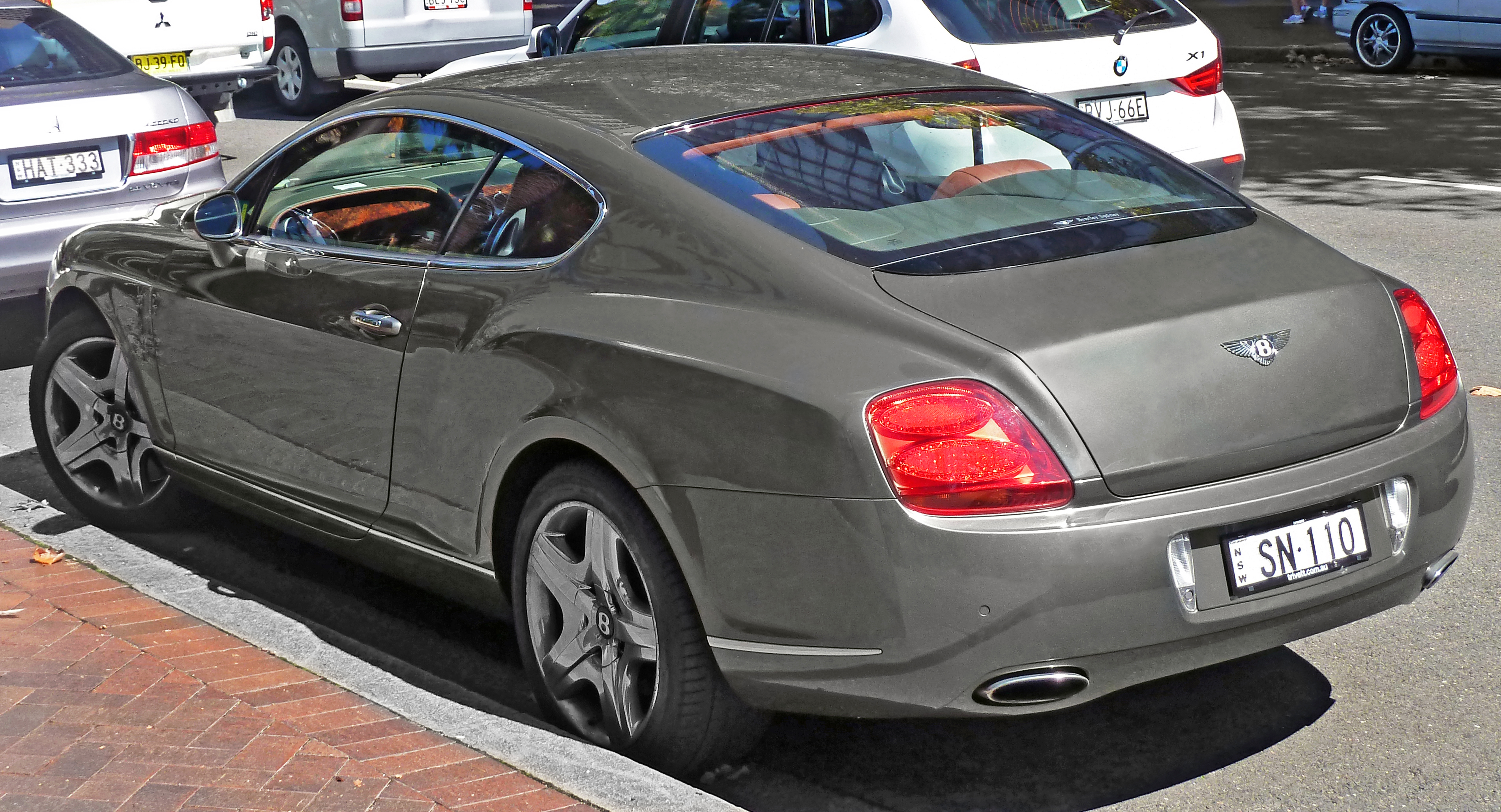
Bentley Continental
"seven o'clock, enjoying a countryside drive? Mostly the Bentley Continental. ... The Bentley is such a nice place. Performance is irrelevant. What really strikes me is the sumptuous interior and amazing stereo."
The Bentley Continental is a very upscale, comfortable car meant for cruising. Here, the point is that it feels luxurious inside and sounds great, so it’s more about the experience than chasing maximum performance.
The Bentley Continental is a luxury grand tourer known for its high-end comfort and refinement rather than outright track aggression. In this segment, the host emphasizes the “nice place” feel, plus the sumptuous interior and stereo, suggesting it’s valued for long-distance comfort and atmosphere.
semi-automatic gearbox
"The Maserati is beautifully built, raw, fast, has an F1 semi automatic gearbox, is an underrated car."
This means a semi-automatic transmission that lets you change gears quickly using paddles. It’s designed to feel like race cars, where you don’t have to use a clutch pedal yourself.
An “F1 semi automatic gearbox” refers to a paddle-shift, computer-controlled transmission that behaves like Formula 1-style racing gearboxes. It typically uses automated clutch actuation so the driver can shift quickly without a traditional clutch pedal.
IMS bearing
"there was a gremlin in the some sort of bearing in the middle of the engine. ... Yeah, isn't it something like the IMS, what do they call it, intermediate something shaft or something had a bearing issued in it."
IMS bearing is a specific bearing inside the engine that’s known for wearing out on some Porsche 911s. If it fails, it can cause major engine problems, so buyers often want proof it’s been checked or fixed.
The IMS bearing refers to the intermediate shaft bearing used in certain Porsche 911 engines (notably the 996 generation). It’s a known failure point because wear or failure can lead to serious engine damage, which is why owners often discuss inspection or replacement.

MGB
"you got quite keen on that kind of modded, healthy, health-ified MGB, didn't you? ... I don't think the creators of the MGB, even they, I don't think they realize how good that car is."
The MG MGB is a classic British sports car with the engine in the front and power going to the rear wheels. People often modify them, and they’re loved partly because they sound great and are relatively easy to own and upgrade.
The MG MGB is a classic British sports car known for its front-engine, rear-wheel-drive layout and easy-to-live-with coupe form. In this segment, the hosts talk about “modded” and “healthy” MGBs, plus how the car’s B-series engine and exhaust note make it feel special even if it looks “ordinary.”
B-Series
"Loads of parts are available. Amazingly, characteristic exhaust note too. Don't you think the old B series through that particular exhaust system sounds special?"
The “B series” is the engine family MG used in the MGB. People often talk about how these engines sound, and here they’re saying the exhaust note from that setup is a big part of the charm.
The “B series” refers to MG’s well-known family of inline-four engines used in cars like the MGB. In this segment, the hosts connect the B-series engine to the car’s “characteristic exhaust note,” implying the engine’s sound is part of what makes the car feel special.
classic car insurance
"And I suppose they can also, they qualify for classic car insurance, which is a real bugbear for people in their early twenties."
Classic car insurance is a type of insurance made for older cars. It can be cheaper or easier to get than regular insurance, especially for people who are still young and might otherwise struggle with rates.
Classic car insurance is a specialized insurance category for older vehicles, often with agreed value and usage restrictions. The hosts mention it as something that can matter to younger owners, because it can be easier to insure than a regular policy for a classic.

Austin 7
"those Austin 7 specials. Lovely. Goodness me, just. They are fabulous."
The Austin 7 was a very small, older British car. People often modified it into custom “special” cars for racing, so when they say “Austin 7 specials,” they mean those modified, often home-built race versions.
The Austin 7 is a small British pre-war car that became famous as a lightweight, affordable platform for motorsport and coachbuilding. “Specials” were often one-off or small-batch cars built on the Austin 7’s mechanicals, so the name is shorthand for a whole subculture of backyard-built racers.
backyard mechanics
"I still need to write a column about backyard mechanics. I think I talked about it last week."
“Backyard mechanics” means regular car enthusiasts who work on cars at home. They may not be professional mechanics, but they can still build or modify cars themselves.
“Backyard mechanics” describes enthusiasts who do fabrication and repairs outside of professional workshops—often using hand tools and personal know-how. In the context of pre-war specials, it’s a big part of how unique cars were built and refined.
hand tool marks
"And you can, of course, every single, you can see the hand tool marks on the exterior panels because"
“Hand tool marks” are small dents or lines left when someone shapes metal by hand. Seeing them on a custom car can show it was made manually, not mass-produced.
“Hand tool marks” are visible surface impressions left when metal panels are shaped and finished manually rather than by industrial stamping or machining. On a bespoke pre-war special, these marks can be evidence of the maker’s process and craftsmanship.
Volkswagen Group
"What is happening at Volkswagen Group? Well, there's a lot of refinement, isn't there? They are suddenly aware of the threat of the Chinese. Their CEO has come up with a way of improving things by reducing production and reducing the number of models rather dramatically on all of their marks..."
Volkswagen Group is the big company behind several car brands, not just Volkswagen. The hosts are talking about the company changing how many models it makes and how it builds them because of pressure from competitors, especially Chinese brands.
Volkswagen Group is the large automotive group that owns multiple brands such as Volkswagen, Audi, Porsche, and Skoda. In this segment, the speaker discusses how Volkswagen Group is responding to competitive pressure (especially from China) by changing its model lineup and production plans.
persona
"but they have produced a lot of cars with no persona, really. What is a VW Tiger? What is it? I saw one on the M40 today..."
Here, “persona” means a car’s unique personality. The host is saying some cars feel too similar to others—more like the same formula than something with its own character.
In car talk, “persona” means a model’s distinct character—how recognizable it feels in design, driving feel, and identity. The speaker criticizes some Volkswagen Group cars as lacking “persona,” meaning they feel generic or interchangeable, and argues that losing those models wouldn’t bother them.
seat
"and I was like, this is perfect, but it was also very much like a Seat, and it was also very much like a lot of other things that they make."
SEAT is a car brand owned by Volkswagen Group. The host is saying the car felt very similar to SEAT—like it shared the same kind of interior and overall character.
SEAT is another Volkswagen Group brand. The speaker compares the car’s feel and controls to SEAT, suggesting it shares the group’s “family resemblance” in design and packaging.

Porsche Panamera
"So, but apparently the skids are, or cars like the Porsche K, and no, not the K, and the Panamera [2655.2s] are under threat, because not too many people buy them, it was rather expensive to make, I'm sure."
The Porsche Panamera is a Porsche that’s meant for fast, comfortable long drives, but with four doors. The hosts are saying it may be at risk because not many people buy it compared with other models.
The Porsche Panamera is Porsche’s four-door grand tourer, built around a performance-focused layout and comfort for long-distance driving. In this segment, it’s mentioned as a model that isn’t selling in huge numbers, which is why it could be “under threat.”
VW's
"Audi always made the money. Audi are now [2744.2s] lately Porsche. But as I was saying in my column item about this, it was Dr. Piesch who put it [2754.1s] all together. He just wanted to amass this big group, because he figured that at one stage, [2762.7s] do you remember, there were four versions of the Golf."
“VW” means Volkswagen, one of the biggest car companies. The host is talking about how profitable it has been compared with other brands in the same big corporate family.
VW refers to Volkswagen, a major automaker in the VAG group that includes brands like Audi, SEAT, and Škoda. Here, the host is discussing profitability and how Volkswagen has “never been particularly profitable,” contrasting it with Audi and Porsche’s financial performance.
Audi
"VW have never been particularly profitable. Audi always made the money. Audi are now [2744.2s] lately Porsche."
Audi is a premium car brand owned by the same big company as VW. The host is comparing which brands have been making more money over time.
Audi is Volkswagen Group’s premium brand, positioned above VW in the market. In this segment, the host uses Audi as a profitability benchmark—saying Audi “always made the money” and later that it’s “lately Porsche,” implying shifting financial strength within the group.
Dr. Piesch
"lately Porsche. But as I was saying in my column item about this, it was Dr. Piesch who put it [2754.1s] all together. He just wanted to amass this big group, because he figured that at one stage, [2762.7s] do you remember, there were four versions of the Golf."
“Dr. Piesch” is a person the host says helped shape Volkswagen Group’s strategy. The host’s point is that he pushed for owning multiple car brands under one umbrella.
“Dr. Piesch” refers to Matthias Piëch, a former senior executive associated with Volkswagen Group’s strategy. The host credits him with assembling a large group of brands and explains the idea using the example of multiple versions of the Golf across different marques.
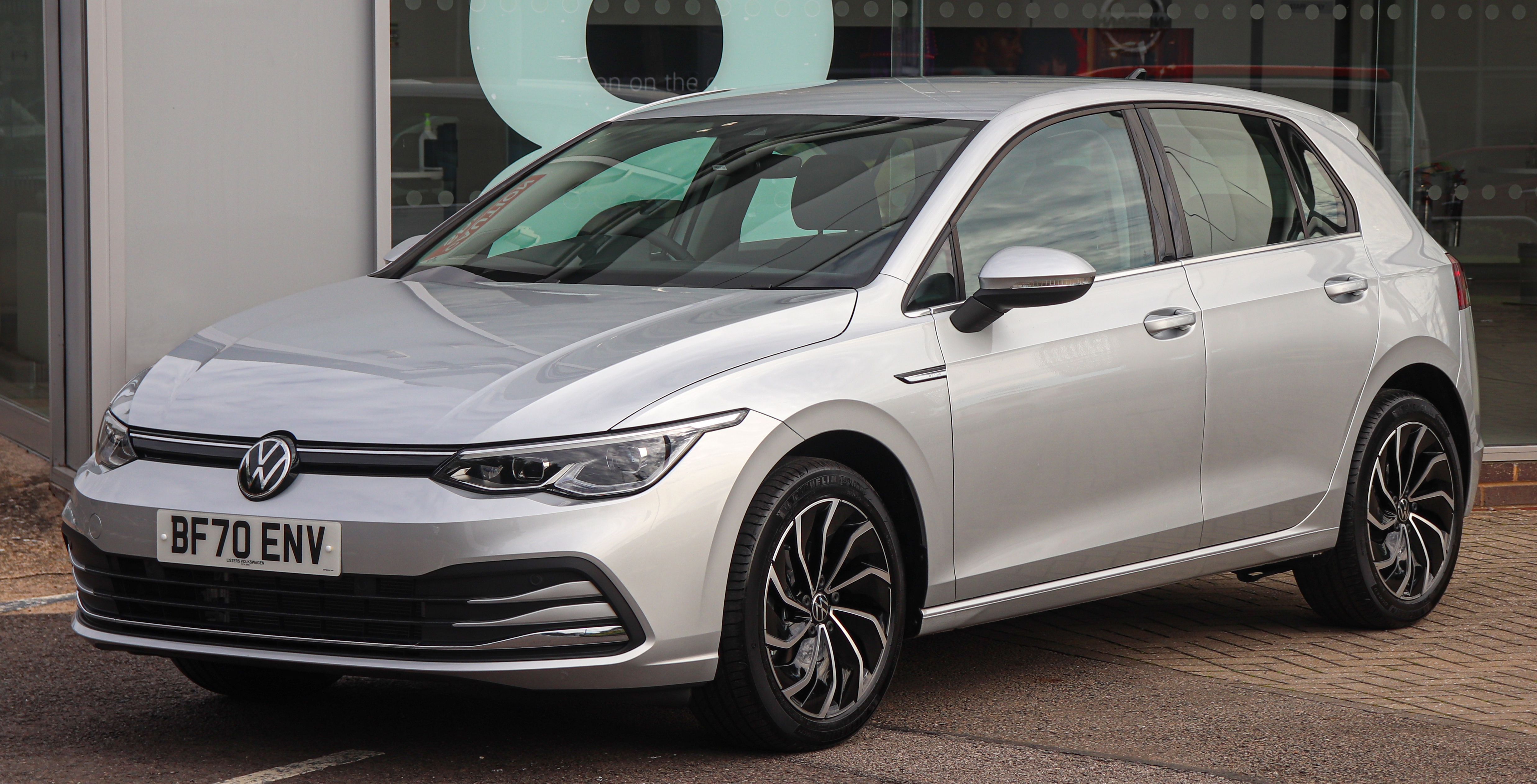
Volkswagen Golf
"... do you remember, there were four versions of the Golf. There was an Audi, a Seat, a Skoda, and a... Wha..."
The Volkswagen Golf is a popular small car that many people buy. Over the years, there have been different versions and related models. The podcast brings it up while talking about how there were multiple Golf-style variants in different lineups.
The Volkswagen Golf is a mainstream compact car that’s been produced in many generations and variations. It’s significant because it’s widely known, heavily supported with parts and trims, and has spawned multiple related models. The podcast references “four versions” of the Golf, pointing to how the name and platform have been used across different brands/market variants.
Stellantis
"And I don't know whether that's still a valid way to think. It seems not. You do wonder about [2805.6s] Stellantis, who much more recently amassed a huge group of, you know, over a dozen marks, [2817.0s] because that made you powerful."
Stellantis is a big car company that owns lots of different car brands. The host is saying that having many brands doesn’t automatically make the company more powerful or successful.
Stellantis is a large multinational automaker formed by mergers that brought together many brands. The host mentions it to compare how owning “over a dozen marks” was supposed to create power, and then questions whether that strategy actually works.
steering effort
"the surface of the steering wheel cover, there's the steering effort as you put lock on, [3058.8s] there's the steering effort as a self centering as you come off it."
Steering effort is how heavy or light the steering feels. The host is talking about how hard it is to turn the wheel and how it feels as you let it come back toward center.
“Steering effort” is how much force the driver needs to turn the wheel, often changing with steering angle and speed. The host breaks it down into how effort feels when applying lock and how it behaves as the wheel self-centers.

Chevrolet C10
"...ntering as you come off it. And in the Leap Motor C10 that I've got, it all works really well. And the ..."
The Chevrolet C10 is a pickup truck model that people often like for its classic design. In the podcast, the “C10” name comes up while discussing how a system works well in a C10 vehicle. The focus is on the experience of the car’s operation rather than detailed specs.
The Chevrolet C10 is a classic American pickup truck known for its simple, durable design and strong enthusiast following. It’s often discussed in the context of how well modern upgrades or systems work in older platforms. In the podcast, it’s mentioned alongside the “Leap Motor C10,” but the key point is the C10 name and the speaker’s experience with how the system performs.

Leap Motor C10
"And in the Leap Motor C10 that I've got, it all works really well. And the car has got nice steering. It's not alert sporty steering, but it's very, very nice."
The Leap Motor C10 is an electric car. In this segment, the host says the steering is really good, even if the rest of the car doesn’t feel as well-developed.
The Leap Motor C10 is an EV from Chinese automaker Leapmotor, and the host is specifically praising its steering feel. They’re contrasting the C10’s steering development with the rest of the car, implying the chassis/overall package isn’t as refined as the steering.
self-centering
"there's the steering effort as a self centering as you come off it. And in the Leap Motor C10 that I've got, it all works really well."
Self centering is how the steering wheel naturally wants to come back to the middle after you turn it. The host is judging whether that return feels smooth and predictable.
“Self centering” describes the steering’s tendency to return toward the straight-ahead position after you turn the wheel. The host is using it to evaluate how the steering feels as it unwinds from lock, which is closely tied to steering geometry and assist calibration.

Ford Focus
"And it all goes to show how hard it must have been to produce a car of all round excellence like the Ford Focus or even today's Astra."
The Ford Focus is a popular compact car. The host is using it as an example of a car that’s generally good in many ways, not just one specific thing.
The Ford Focus is used here as a benchmark for “all-round excellence,” meaning a car that feels well-sorted across multiple areas rather than excelling in just one. The host is arguing that building a balanced, high-quality package is hard, especially for newer entrants.

Opel Astra
"...nd excellence like the Ford Focus or even today's Astra. And the Chinese are on the path, but they're not..."
The Opel Astra is a compact car meant for everyday driving. The podcast mentions it while comparing how good it is compared with other compact cars. It’s brought up as an example of a current Astra being discussed in that context.
The Opel Astra is a compact car that’s been produced across many generations, typically aimed at mainstream buyers. In the podcast, it’s mentioned in a comparison about excellence and how it relates to other compact models, including a reference to “today’s Astra.” That makes it relevant to discussions about how the Astra has evolved over time.
panel gaps
"Yeah. Isn't it interesting the way things like paint quality, panel gaps saw gone? You know, it's a thing you can trust in any old car now."
Panel gaps are the small spaces between the outside parts of a car’s body. If the gaps look even and consistent, it usually means the car was assembled with better fit and finish.
“Panel gaps” are the visible spacing between body panels (like doors, fenders, and hoods). The host is saying that fit-and-finish—how evenly those gaps line up—has improved so much that you can “trust” it on many cars now.

Land Rover Range Rover
"...he car that's doing so well on that. Oh, the Timu Range Rover, the JQ7. The JQ7. Yeah. Yeah. That's,"
The Range Rover is a large SUV that focuses on comfort, but it’s still designed to handle tougher roads. People talk about it because it’s the luxury version of Land Rover. The podcast mentions it in the context of how well a particular Range Rover model is selling.
The Range Rover is Land Rover’s flagship luxury SUV, combining comfort with off-road ability. It’s often discussed because it represents the brand’s move toward high-end refinement while still being capable in rough conditions. In the podcast, it’s referenced as a model that’s doing well commercially, including a specific “JQ7” mention.

7 Jq7
"...ng so well on that. Oh, the Timu Range Rover, the JQ7. The JQ7. Yeah. Yeah. That's, it's a phenomenon t..."
I can’t tell which car “7” refers to from the snippet alone. It sounds like it’s part of a longer model name mentioned with other cars. If you share the full model name, I can explain what that specific car is.
The “7” in the podcast appears to be part of a model reference—specifically alongside “Timu Range Rover” and “JQ7.” Because only “7” is provided, the exact car model can’t be identified reliably from the transcript alone. If you can share the full name as spoken, I can generate a precise explanation.
six-speed gearbox
"It's a Carrera, you know, it's a pretty bog basic car, but with a six beautiful six speed gearbox manual and, and, you know, a bit more equipment and so on, but, but no extra poke, still 387 or whatever it is."
A six-speed gearbox is the manual transmission with six forward gears. It affects how smooth the car feels and how the engine sounds and pulls in different speeds.
A “six-speed gearbox” is a manual transmission with six forward gears. More gears can help keep the engine in its best power/efficiency range, and it also changes how the car feels during acceleration and cruising.
turbo engine
"received very, very minor tweaks when Porsche launched the GTS, which has got the new turbo [3486.0s] engine."
A turbo engine uses a device that forces extra air into the engine. More air helps the engine make more power, and it can make acceleration feel stronger as you rev.
A turbo engine uses a turbocharger to compress incoming air, allowing more oxygen into the cylinders. That lets the engine make more power without needing a larger displacement, and it can also change how the car feels as revs build.

Porsche Taycan
"...ecause I haven't driven one for a year or so is a Taycan, because I still approve of that car and it's imp..."
The Taycan is an electric Porsche, meaning it runs on electricity instead of gasoline. It’s designed to be quick and fun to drive. The podcast mentions it because the speaker likes it and hasn’t driven one for a while.
The Porsche Taycan is an electric performance car known for its fast acceleration and high-tech powertrain. It’s discussed in the podcast as a car the speaker still approves of, even though they haven’t driven one in a while. That makes it a relevant topic for conversations about electric-car appeal and real-world ownership experience.
two-wheel drive
"And I've got a feeling that the two-wheel drive, [3600.9s] longest range Taycan might be a bit of a good thing."
Two-wheel drive means the car only powers two wheels instead of all four. The host thinks that can make the car feel more balanced and easier to steer.
“Two-wheel drive” means power is sent to only two wheels (typically the rear wheels on many EVs). The host links this to balance and steering feel, suggesting fewer drivetrain effects from the front axle can make the car feel more straightforward.
longest range Taycan
"And I've got a feeling that the two-wheel drive, [3600.9s] longest range Taycan might be a bit of a good thing."
“Longest range” means the Taycan version designed to go farther on a single charge. The host thinks that matters because it also matches the driving feel they like.
The “longest range” Taycan refers to the variant tuned for maximum driving distance on a charge, typically via battery capacity and efficiency optimization. The host expects that version to be especially appealing because it pairs range with the handling/drive layout they prefer.
rear drive only
"And it's, [3609.9s] it's the lightest, I think, just about of them. And it felt really nicely balanced and rear drive [3618.2s] only."
Rear-drive-only means the rear wheels are the ones doing the work. The host is saying it can make steering feel cleaner and more natural because the front isn’t also being driven.
Rear-drive-only (rear-wheel drive) means the rear axle provides the traction while the front axle is not driven. The host says it “steered without any corruption from the front,” implying the steering feel is less affected by front-axle traction and torque delivery.
EV
"[3628.8s] And particularly with a whole crop of these recent EVs, you know, so there are some Polestar models [3661.8s] but you get more range and it's lighter. Yeah."
EVs are electric cars that run on batteries instead of gasoline. The hosts are saying EVs can feel quick and still go farther.
EVs stands for electric vehicles—cars powered primarily by electric motors and rechargeable batteries. The hosts discuss how EVs can deliver strong acceleration (“poke”) while also offering more range and lower weight than some alternatives.

Polestar 2
"... know, so there are some Polestar models that the Polestar 2, isn't it the, do I mean, the smallest Polestar i..."
The Polestar 2 is an electric car made by Polestar. The podcast mentions it as the smaller model in their lineup. It’s brought up while discussing which Polestar models are available.
The Polestar 2 is an electric fastback/sedan-style car from Polestar, positioned as a smaller electric model within the brand’s lineup. The podcast mentions it as the “smallest Polestar,” which is why it comes up in discussions about which models fit different buyer needs. It’s also referenced while talking about the range of Polestar models available.
Request an Explanation
Heard something you'd like explained? We'll add it to this episode.
Sign in to request explanations for terms you heard.
Want to learn more?
Browse our glossary for plain-English explanations of automotive terms, jargon, and concepts.
Help improve this episode
See something that's not quite right? Our annotations are AI-generated and can sometimes miss the mark. Click the flag icon on any annotation to suggest a correction.