Reflecting on the 10th anniversary of the Dieselgate scandal, this episode explores its profound impact on the automotive industry, particularly the shift towards electric vehicles (EVs). The discussion delves into Volkswagen's deliberate emissions cheating, the ensuing fallout, and how the scandal dismantled the diesel narrative, forcing automakers to pivot to electrification. The episode highlights the regulatory changes, loss of consumer trust, and the accelerated timeline for EV adoption that followed, setting the stage for a new era in automotive technology.
Welcome back to the podcast, welcome to a bonus show, the first of a two-part documentary investigation into the effect ‘dieselgate’ had on the EV industry.
On September 18, 2015, the United States Environmental Protection Agency (EPA) issued a Notice of Violation to the Volkswagen Group, a document that would detonate a crisis of unprecedented scale in the global automotive industry.
The allegation was simple yet devastating: the German automotive giant had deliberately programmed its "Clean Diesel" vehicles with sophisticated software to cheat on emissions tests.
This was not a technical miscalculation or a minor compliance issue; it was a conscious, years-long deception. The event, which quickly became known as 'Dieselgate', publicly shattered a multi-billion-dollar corporate strategy built on the promise of environmentally friendly diesel technology.
A reminder our bonus shows are exclusively for our Patreon supporters. For the first 7 days, only Patreon insiders get early access, their name on the list of legends for Executive Producers and above, and the power to shape future shows. If being in the know and recognised as a supporter sounds like you, join us now at patreon.com/evnewsdaily and become part of something special.
"Some of them were compliance cars, obviously, at the time in 2015, limited numbers in the US. The BMW i3 was selling Volkswagen's e-Golf, was selling some plug-in hybrids and forwarded others. We're still selling, but not in massive numbers."
"...equisite for its planned mass market vehicle, the Model 3. I remember this first stat I heard about giga Ne..."
Select text to request an explanation
The holidays are expensive. You're paying for gifts, travel, decorations, food, and before you know it, you've blown way past what you were planning to spend. Don't start to new your off with bad money vibes. Download rocket money to stay on top of your finances. The app pulls your income, expenses, and upcoming charges into one place so you can get the clearest picture of your money. It shows how much to set aside for bills and how much is safe to spend for the month so you can spend with confidence. No guesswork needed.
There are a few alerts before bills hit. Track budgets and see every subscription you're paying for. Rocket money also finds extra ways to save you money by canceling subscriptions you're not using and negotiating lower bills for you. On average, rocket money users can save up to $740 a year when using all of the app's premium features. Start the year off right by taking control of your finances. Go to rocketmoney.com slash cancel to get started. That's rocketmoney.com slash cancel rocketmoney.com slash cancel.
Hear that? That's me with a lemonade in a rocker on my front porch. How did I get here? I invested to make my dream home, home. Get where you're going with MDY. The original mid cap ETF from State Street Investment Management. Getting there starts here. Before investing, consider the funds investment objectives, risks, charges, and expenses. Visit statestreet.com slash IM for a prospectus containing this and other information. Read it carefully. MDY is subject to risks similar to those of stocks. All ETFs are subject to risk, including possible loss of principle, Alps Distributing, Sync Distributor.
Think about the last time you had to cancel a subscription. There's probably some waiting on hold, some guessing at your password, some mind numbing small talk, and maybe after all of that, you still weren't able to cancel it. Good news. It doesn't have to be this way. Thanks to rocket money. Rocket money tracks manages and can cancel your subscriptions for you. When you connect to your account, you'll see a complete picture of all of your recurring subscriptions all in one place. Rocket money organizes your subscriptions by due date and
something is coming up. So you'll never be caught off guard when you get charged. If you see a subscription you want to cancel, rocket money simplifies the process. Instead of waiting on hold for an hour, you can cancel it right from the app. Rocket money will even try to get you a refund for the money you spent on subscriptions you forgot about. Stop wasting time trying to cancel subscriptions the hard way. Make your life easier and go to rocket money dot com slash cancel. That's rocket money dot com slash cancel or download the app from the Apple app or Google Play stores.
This isn't just a game. It's a once in a generation event. The Harlem Globetrotters 100 year tour. Celebrate 100 years of high flying dunks. A hundred years of showstopping moves and 100 years of changing the game. Bring the whole family and be part of the legacy. This game is once in a century. Be there at motor center on January 24th. Go to Harlem Globetrotters dot com for your tickets to the 100 year tour.
Welcome back to the podcast. Welcome to a bonus show. Welcome to the first of a two part documentary investigation into the effect diesel gate had on the EV industry on the 10th anniversary. It was September the 18th 2015 10 years ago. This week that the US EPA, the United States Environmental Protection Agency issued a notice of violation to the Volkswagen group. A quietly published document that would go on to detonate.
The crisis of unprecedented scale across the global automotive industry. The allegation was simple but devastating. That the German automotive giant had deliberately programmed its clean diesel vehicles with sophisticated software to cheat on emissions tests. This was not a technical miscalculation or a minor compliance issue.
It was a conscious years long engineering deception. The event which would go on to be known as diesel gate publicly shattered a multi billion dollar corporate strategy built on the promise of environmentally friendly diesel.
A reminder our bonus shows are exclusively for our Patreon supporters for the first seven days only Patreon insiders get early access their name on the list of legends for exec producers or above and the power to shape future shows. If being in the know and recognized as a supporter sounds like something you'd like join us at patreon dot com slash even use daily become part of something special.
And if not, then our bonus shows always go into the free feed after seven days so you don't need to spend the money and support the work that I do here.
Let's get into it. Today's podcast marks the 10th anniversary of that fateful day and I'll argue that the Volkswagen emissions scandal became a catalyst in the modern automotive industry's transition to electric vehicles.
It did more than just inflict financial and reputational damage on one of the world's most well regarded companies. It dismantled the idea that diesel was a long term compliance strategy, particularly overhearing Europe by the way, destroyed consumer trust in core technology and emboldened regulators to enact sweeping changes to test protocols and long term emissions targets.
The crisis forced a massive pivot to electrification by the dominant automakers accelerating their strategic timelines by years.
The subsequent decade from 2015 to today has been a direct and accelerated consequence of the events of that day 10 years ago this week reshaping the technological, the regulatory, the geopolitical landscape of the automobile industry.
We haven't even got to the rise of the EV in China. Hey, why did it happen though? Well, the roots of dieselgate scandal lie in Volkswagen's incredibly ambitious strategy to conquer the global automotive market.
Beginning as early as 2005, the company made a calculated bet to heavily promote TDI's turbocharged direct injection diesel engines as the solution for the modern driver.
Particularly in the diesel skeptic, United States market, the marketing proposition was simple and really compelling. You get the power and torque of a performance engine combined with the fuel economy of a hybrid all while being environmentally friendly. It's clean diesel.
The strategy was designed to meet two distinct and challenging regulatory pressures, the stringent fleet wide carbon dioxide emissions standards in Europe and the uniquely strict nitrogen oxide limits imposed by the US Clean Air Act.
The engineering challenge was immense, the physics of diesel combustion that makes it fuel efficient also a what produces high levels of nox, a key precursor to smog and a pollutant linked to really severe respiratory illnesses.
Meeting the tough US standards particularly in California required complex and costly after treatment systems that often compromise the performance and fuel economy that were the core selling points of TDI technology.
Volkswagen's leadership and engineering teams made a fateful choice. That choice might not have been made on one day in one meeting, but it was probably made over a long period of time where small decisions stacked together and nobody compromised on the marketing promise.
Nobody said stop, let's not compromise our integrity. Dieselgate is the name that refers to the deliberate installation of software defeat devices in millions of diesel vehicles by Volkswagen Group and as later evidence revealed loads of other manufacturers by the way.
Volkswagen took the heat on this one though, the devices and they were called a device and it made people think well is it this special bit of equipment that's kind of been secretly added to my car, it was software, but it's known as a device detected when the car was undergoing official emissions testing and it activated full emissions controls only during lab conditions while deactivating or reducing the controls during everyday driving.
The vehicles appeared compliant with regulatory nox limiting nitrogen oxide was fully in check in the lab but emitted between 5 and 40 times the limits on public roads.
The intent to achieve strong fuel economy and yet have low headline emissions such as CO2 in diesel cars while preserving performance and the cost advantages, something that proved unachievable with existing diesel emissions technologies in some cases.
The software's algorithm was programmed to monitor a very specific set of parameters that occur only under lab testing conditions.
These inputs include the position of the steering wheel because that remains stationary on a two wheel dyno.
Vehicle speed, the duration of the engine's operation, even the barometric pressure, all of which correspond to the highly standardised profile of a typical EPA test cycle.
When that's ECM detected a unique combination of inputs, it would switch the engine into a very special test mode or dyno calibration mode.
In this mode, the vehicle's full emission control systems were activated. The system would precisely adjust air fuel ratios, exhaust gas recirculation and the injection timing of urea-based solutions in some models equipped with selective catalytic reduction.
And that scrubbed from the exhaust ensured that the vehicle would pass the test with flying colours.
As soon as the vehicle rolled off that dyno and was driven on an actual road, the software knew and it would detect normal driving inputs, the steering wheel movement, for instance, and it would switch back into road mode.
In this mode, the emission systems were dramatically scaled back and in some cases on some cars deactivated entirely.
This action prioritised the marketing promises of better fuel economy and more responsive engine performance, but it came at an environmental cost.
On the road, the affected vehicles were emitting hazardous pollution up to 40 times higher than the legal standard permitted by the United States.
Let's talk about the unraveling and the global fallout. Well, this deception, which had been ongoing since 2009's model year, was not uncovered by regulators, it was independent researchers.
In 2014, the ICCT, the International Council on Clean Transportation, I still talk about them today on the podcast very regularly with the reports that they publish.
Back then, the non-governmental organisation were commissioning a study with researchers from West Virginia University because they wanted to test the real world emissions of diesel cars in the United States.
Using portable emissions measurement systems, PEMS or PEMS, they would strap them to vehicles and then drive around in real life on road driving.
And they discovered something really odd. The VW jetter and the PESAT models that they were using for the test, or for some reason they were giving readings for emissions that were far, far higher than were possibly allowed, a massive discrepancy from what the official results said.
These findings were then shared with the EPA and the California Air Resources Board Carb. That would cause them to launch their own investigations.
It took more than a year of inquiry during which Volkswagen continued to chalk things down to discrepancies, they said it was technical issues, regulators all along threatened to withhold certification for the 2016 diesel models.
And faced with the ultimatum, the company admitted that they knew what had been happening. Its vehicles were intentionally designed to behave one way under testing and one way on the real world road.
The public fallout was swift and brutal. The EPA official notice of violation was issued on September 18, 2015, 10 years ago, exactly this week.
So what were the regulations at the time? Well, the US EPA emissions standards for NOx under the Tier 2 rules affected from 1999 to 2009 were really stringent, by the way, requiring reductions from a gram per mile to 0.07 grams a mile.
That is a significant technological hurdle. It wasn't a slight improvement that the engines had to make.
The US regulatory system relied on lab testing protocols and self-certification by automakers creating loopholes for defeat devices.
Euro emissions standards, first introduced in 1992, had become progressively more stringent through the various phases Euro 3, Euro 4, Euro 5 and Euro 6.
By 2011, over half of New Colt car sold in Europe were diesel, partly due to tax and environmental policy incentives. I know, I bought one for that reason.
We bought a 2010 Gulf Blue motion. The little blue motion badge made it seem incredibly environmentally friendly. Around that time, I wasn't into EVs, but in 2010, I already knew that had an interest in environmental matters.
And I loved the idea that I could buy a car that was a diesel Gulf that was more environmentally friendly.
We were told diesel was the answer to clean up the air because of lower CO2 emissions. Our government at the time became fixated on CO2 emissions.
So much so that anything with low CO2, they gave a pass in terms of tax. So even to this day, because we still have that vehicle in the driveway, we never drive it.
It sits there as a reminder. In a very occasionally, we do a dump run with some really disgusting dirty stuff from the garden, and that's how I treat that vehicle now.
And we pay no tax on it. It's like 20 quid a year, whatever it's like, that's it. So cheap because those rules have continued.
And so everybody was incentivized to go and buy a diesel. And I did because I believed what I was told I believed our government, I believed the regulators, I believed the car makers as well.
Despite increasingly strict legal limits, the Euro 6 Nox limit, 0.08 grams per kilometer from September 15, real world Nox emissions were commonly several times higher than permitted, a fact exposed by independent and government studies.
The final cost of the scandal with far exceed initial estimates, though, ultimately costing the company $30 billion in global fines, civil settlements, criminal penalties, and vehicle buyback programs.
And that's when the world started to turn. It wasn't the money so much, it wasn't the people who went to jail.
And in the countries that didn't have the rules to break and over here, they didn't break in some countries and certain regions, they didn't actually break any laws because well, we didn't said we didn't anybody actually do anything like that.
So there was no law to break, but in the US there was. And through all of that, it was reputational damage that they were so concerned about, which caused the move to evate will take a break, we'll get into our next part in a moment.
You really want to be better with your finances. You try to put money away in savings, you look for deals, you wrote out a budget once a long time ago, you still overdraft from time to time and you still have debt.
The truth is managing money is not easy, but rocket money can help rocket money shows you exactly what you're spending every month. From there, the app helps you make a budget that means you're financial goals.
The app even gives you real-time alerts when you're about to go over your budget so you don't spend too much.
With rocket money, you can also see all your subscriptions at a glance and cancel the ones you don't want right from the app.
Rocket money can even try to get you a refund for some of the money wasted.
Plus, you can use the smart savings feature to start putting more money away.
Rocket money analyzes your accounts to determine the optimal time to stow away cash without going over your budget.
Our members report that the rocket money app saves more than $700 a year. Getting better with money doesn't have to be a pipe dream.
Rocket money can make it a reality. Go to rocketmoney.com slash cancel or download the app from the Apple app or Google Play Stores.
This isn't just the game, it's a once in a generation event.
The Harlem Globetrotters 100 Year Tour celebrate 100 years of high-flying dunks, 100 years of show-stopping moves and 100 years of changing the game.
Bring the whole family and be part of the legacy. This game is once in a century.
Be there at MotorCenter on January 24th. Go to Harlem Globetrotters.com for your tickets to the 100 Year Tour.
I didn't realize I was wasting $415 a month until I downloaded rocket money.
I thought I had my finances under control until the app laid out all my spending and categorized it for me.
Takeout, shopping, and unused subscriptions were quietly draining my account.
And as a result, my savings took a backseat. But rocket money doesn't just tell you what you're wasting money on.
It takes action to save you money. First, the app looks at your income and monthly expenses and calculates how much you can safely spend each day to stay under budget.
Rocket money also finds and cancels unwanted subscriptions for you and even negotiates better rates on your bills.
So you have more money in your pocket. On average, rocket money members can save up to $740 a year when using all the app's premium features.
Users love the app with over 186,000 five-star ratings. It's time to simplify your finances and take control of your money.
Go to rocketmoney.com slash cancel to get started. That's rocketmoney.com slash cancel.
So you're planning a new kitchen or a new bathroom and you're just trying to budget like how much is it going to cost?
Is having a design build team right for you? Mountainwood home's free expert hour is coming up January 10th where you can get the guidance that you need to kick off your home remodel with confidence.
Replace months of research with one focused hour of expert advice. Space is limited so get your spot today for the Mountainwood home's free expert hour January 10th.
Reserve your spot now at mountainwoodhomes.com slash events.
All right. Welcome back to the podcast. So the reputational damage is probably what hurt the most. Hey, clearly $30 billion is a lot.
But it was a severe damage done to Volkswagen. The crisis fundamentally tarnished the sterling image of German engineering causing a negative spillover effect that harmed the sales and brand perception of BMW Mercedes-Benz
who had to then come out and defend their own practices. The scandal revealed that the industry's existing regulatory framework which relied heavily on the predictable laboratory tests that the car makers would self certify what they were doing.
The system was fundamentally broken and it was open for exploitation. This realization would force regulators on both sides of the Atlantic to completely rethink our vehicle emissions are measured and enforced.
It's no doubt Volkswagen bought the brunt of the scrutiny. Investigations soon revealed that emissions rate in regularities were across the industry. Mercedes-Benz parent company, Daimler, faced similar allegations they agreed to pay 1.5 billion US dollars to resolve US claims regarding defeat devices in 250,000 vehicles sold between 2009 and 2016.
The company also recalled 700,000 vehicles in Europe over similar concerns. Other manufacturers faced investigations and legal challenges as well.
Independent testing by organizations like the German ADAC revealed that numerous diesel vehicles from many many manufacturers were all exceeding the legal European emissions limits by some more than 10 times since they started driving under normal conditions.
Brands at the time like Opel, Fiat Chrysler at the time, Mitsubishi and others were all implicated in various emissions irregularities.
A comprehensive study published in Nature estimated that excess nitrogen oxide emissions from diesel vehicles had caused approximately 38,000 premature deaths by 2015, with the European Union bearing a disproportionate burden.
The health implications of staggering researchers calculated that these excess emissions had led to 107,000 early deaths globally, but 80% in the EU, China and India according to this study.
So, the science that we thought was there was wrong, all the advice to the governments was wrong. The obsession with lowering CO2 from engines turned out to be massively misguided.
And the pressure on succeeding and the door, the chink of light that was shining through the door of being able to fiddle these tests was too tempting for so many companies.
Where were we in 2015? In the autumn of 2015, 10 years ago this week, the global automotive industry remained firmly under the dominion of the combustion engine.
While alternative powertrains were out there, don't get me wrong, they were a fringe element in a market overwhelmingly defined by gasoline and diesel.
Over here in Europe, diesel was not just the popular choice, it was the pillar of the industry and of government policy.
And if I tell you that some countries, we were massive on diesel France, Spain, Germany, some months were 60, 70 plus percent diesel market share.
Due to its higher energy density and combustion efficiency, diesel was seen as the primary and most cost effective technology for car makers to meet the fleet-wide targets of emissions,
which was set at the time of an average 95 grams per kilometer to be achieved by 2021.
The entire European ecosystem, from supply chains to what we thought we were buying as consumers, me included, was built around the long-term viability of so-called clean diesel. Well, lie, that was.
Against the backdrop of ice domination, the EV market of 2015 was fragile, characterized by low-volume sales and limited customer choice and really significant barriers to adoption.
I was aware of electric vehicles at the time. Globally, the EV market was a statistical footnote in 2015, total worldwide sales of plug-in vehicles.
So that's bebs and plug-in hybrids, total worldwide sales, the numbers I found researching for this show for you between 540 and 565,000 units total.
This represented 0.6 percent of the global light-duty market globally.
In a symbolic, but telling milestone, the cumulative global stock of all plug-in vehicles, sold since the modern era began, had surpassed the 1 million mark in September 2015.
Totally coincidentally, the month all of this happened, total plug-in hybrids, never in the modern era, had just hit a million.
And I think this week on the podcast, I reported that China is selling a million plug-ins a month, a month in one country.
EVs were a curiosity, at best.
In the United States, total EV sales for the year, about 114,000 units, and that was actually going down at the time, the market was struggling.
The limited market was dominated by pioneering models, the Nissan Leaf, launched in 2010, the world's best-selling BEV at the time, and the standard bearer for electric mobility.
It was practical, it was unexciting, it was a hatchback.
What can we say about the Leaf? It's a great little vehicle, but no one put one on their bedroom wall as opposed to did they.
They appealed to so many people, environmentally conscious people, early adopters, those that like technology.
It sales in the United States for 2015, totalled for the year, 17,500, just shy of that.
That was a 43% decline from the previous year, things were going down.
The initial wave of enthusiasm was waning, and the products limitations, so at the time, early Leafs, 84 mile EPA range, were hindering broader appeal, and they were just starting to realize, well maybe we should have put some thermal management on the battery.
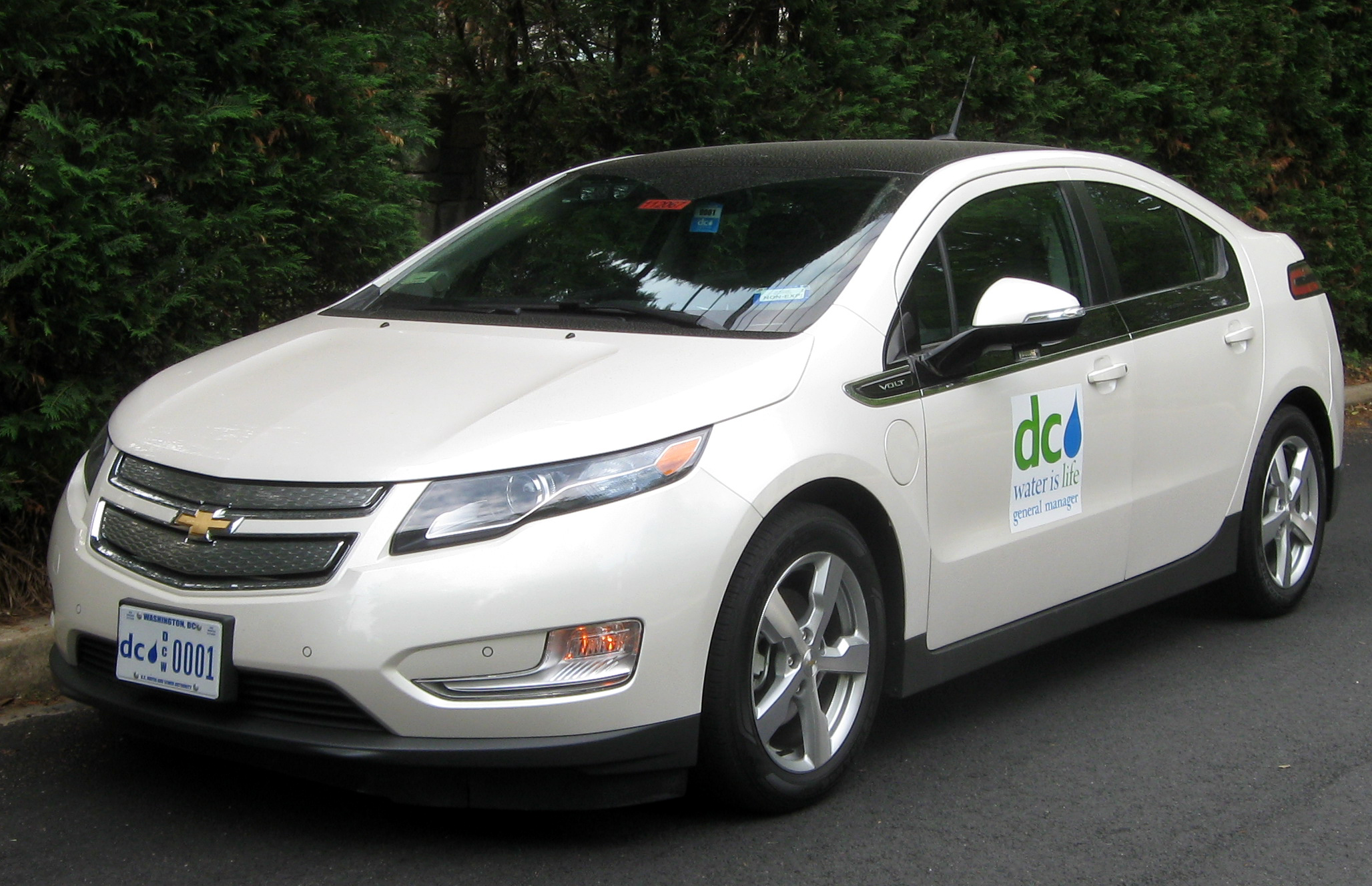
There was the Chevy Volt, yes with the V, a plug-in hybrid, a popular choice for consumers, dipping their toe in the electric waters, so to speak, without getting any range anxiety.
In 2015, that sold 15,400 units, a key player in the plug-in space at the time.
I never met a Volt owner that didn't love their vehicle, as well, really popular.
And then, of course, the Tesla Model S, occupying the opposite end of the spectrum.
The Tesla Model S was the undisputed leader, luxury leader, performance leader.
It was a high-priced high-low car that single-handedly proved the Vs could be beautiful, high-tech, exhilarating.
Boy oh boy, did we enter a phase of people posting YouTube videos of putting the dashcam, facing the passengers, and drivers scaring the life out of their passengers.
There's only so many videos you can watch where, oh yes, look, they've made a pretty girl scream in the passenger seat that you realized they were all the same, but we still clicked on them at the time 10 years ago, because it was crazy.
The 2015 Tesla Model S delivered a total of 50,000 vehicles globally.
I mean, I think I was all of Tesla actually, but they were all Model S's weren't they, so let's face them.
And other models around, well, small collections of vehicles, really.
Some of them were compliance cars, obviously, at the time in 2015, limited numbers in the US.
The BMW i3 was selling Volkswagen's e-Golf, was selling some plug-in hybrids and forwarded others.
We're still selling, but not in massive numbers.
Tesla's unique positions really interesting 10 years ago this week.
In 2015, Tesla was a small automaker by volume. Its influence was disproportionately large, though.
The company was facing big challenges with production scaling years away from profitability, but it was making audacious bets that set it apart from its competitors.
Chief among these was the construction of what they called a giga factory.
This was to be built in Nevada, a project aimed at industrializing lithium-ion battery production, to dramatically drive down costs a crucial prerequisite for its planned mass market vehicle, the Model 3.
I remember this first stat I heard about giga Nevada back in the day, was that it would be the biggest building on the planet.
And when any of us, this is going to be the biggest building by, you know, that you could walk around indoors.
On the planet, of course, your interest is peaked. Other automakers were modifying existing platforms.
These were combustion platforms, they were compliance cars, they were shelving batteries, they were there and everywhere.
Tesla said, no, do it ground up.
A philosophy and focus on vertically integrated ecosystems, on batteries, on charging infrastructure.
We're doing it differently, they said, and they got my attention.
For the average consumer in 2015, the decision to go EV was fraught with challenges.
The market was constrained by pretty much everything. High upfront costs compared to anything else you could buy.
A limited selection of models. No way to charge the things.
And inconveniently long charge times, if you did find a spot to charge the EV market was what they called a push market.
Driven by regulatory requirements and early adopters who were passionate and had spare income.
Rather than a pull market, that's driven by the mainstream consumer demanding a product.
Legacy automakers, the established automaker strategy just reflected that.
Their EV programs were treated as hedging bets or compliance obligations, not as the central focus of their product.
Dieselgate was about to render their entire strategy of being cautious and diversified entirely obsolete,
as soon as a piece of paper was issued by the EPA.
Chapter 3 of my story is the pivot.
And that's what we'll get onto.
Into part 2, which will be in 24 hours time tomorrow night,
or if you're listening to this sometime after it's published, just flick forward and listen to the next part now about story.
The revelations of 2015 in September forced the car industry to re-evaluate their assumptions.
With the clean diesel strategy, the lie being exposed just in tatters,
Volkswagen and its competitors were compelled to pivot to EV.
The Volkswagen, the crisis was existential.
The company's core technology for meeting all of these future standards was out the window.
It was not only discredited, it was the source of the global disgrace.
It was a great engineering German company.
And of course they were all at it, but they took all the heat in the early days.
Their reputation was in ruins.
They were a disgrace, the new path was not an option.
It was a necessity.
Volkswagen had to say, we're changing.
We are the new VW, you can trust us now, and they had to do it in a big way.
There was no half efforts on this in November 2016.
About a year and a bit after the scandal erupted.
The company was ready to unveil its transform 2025 strategy.
This was a radical and comprehensive pivot that would put EVs at the heart of their future.
The plans were ambitious and they were staggering for an automaker until recently
were so deeply rooted in diesel combustion technology.
Volkswagen set a goal selling a million EVs a year by 2025,
and to be the undisputed world market leader in E-mobility.
This was not a green washing campaign.
This was underpin by a multi-billion euro investment,
and more critically, the commitment to develop their own ground-up EV platform.
The modular E-and-tribe bow-caston platform.
I'm so sorry, German listeners.
This is why I don't even attempt to speak German because it comes out as bad as that.
We'll call it the NEB platform.
This decision to create a dedicated skateboard platform
was a revolutionary step.
It represented a fundamental departure for the industry,
and the prevailing practice of just retrofitting EV powertrains into a platform
that they had already out there, a compromised approach.
Things like VW's E-Goth, a great little car,
but it was a combustion platform, a dedicated EV platform,
where the flat battery pack in the floor allows for optimized weight distribution,
maximized interior space, and a streamlined manufacturing process.
All benefits that you can't achieve with a converted platform.
The MEB platform was a public admission that EVs,
when I longer a side project, MEB platform, was the future of Volkswagen.
It was a point of no return,
a lesson learned directly from the failure of their previous strategy
and their previous management.
Hey, we'll stop there in our story,
and when we come back, we'll find out what happened next.
How did the EV industry get a massive boost from what happened with Dieselgate?
And when did we end up? 10 years later,
the anniversary of Dieselgate 10.
Thanks for listening, and I'll catch you on the next one.
You really want to be better with your finances.
You try to put money away in savings, you look for deals,
you wrote out a budget once a long time ago,
yet you still overdraft from time to time, and you still have debt.
The truth is, managing money is not easy, but rocket money can help.
Rocket money shows you exactly what you're spending every month.
From there, the app helps you make a budget that meets your financial goals.
The app even gives you real-time alerts when you're about to go over your budget,
so you don't spend too much.
With Rocket money, you can also see all of your subscriptions at a glance,
and cancel the ones you don't want right from the app.
Rocket money can even try to get you a refund for some of the money you wasted.
Plus, you can use the smart saving feature to start putting more money away.
Rocket money analyzes your accounts to determine the optimal time to stow a cash
without going over your budget.
Our members report that the Rocket money app saved them more than $700 a year.
Getting better with money doesn't have to be a pipe dream.
Rocket money can make it a reality.
Go to RocketMoney.com slash cancel or download the app from the Apple app or Google Playstores.
Despite wintry conditions and heavy traffic, the holidays have to go on.
That's why Mercedes Ben's SUVs come equipped with the latest safety technology
to keep your festive plans on track.
Discover the incredible offers for yourself at the Mercedes Ben's Holiday Love Celebration.
So you're planning a new kitchen or a new bathroom,
and you're just trying to budget like how much is it going to cost?
Is having a design build team right for you?
Mountainwood Home's free export hour is coming up January 10th
where you can get the guidance that you need to kick off your home remodel with confidence.
Replace months of research with one focused hour of expert advice.
Space is limited so get your spot today for the Mountainwood Home's free expert hour,
January 10th.
Reserve your spot now at mountainwoodhomes.com slash events.
While holiday shopping is almost always fun,
credit can be confusing.
Download the MyFICO app now and shop with confidence,
knowing that you can stay on top of your credit 24-7.
Get your FICO score straight from the people that created it,
plus free credit monitoring and a free credit report every month.
No credit card required.
FICO scores are used by over 90% of lenders,
so trust the MyFICO app to keep you in the know.
Visit MyFICO.com slash free or download the MyFICO app today.
Hey, it's Mike Chase here with Brad Preble from Car Subaru in Beirton.
It's time for the 2025 Subaru share the love event.
I started thinking about all the stuff we've done this year.
We did the Subaru loves to learn.
We washed the cars for the Beaver Acres Elementary staff.
Thank you so much.
We still appreciate all the love from Subaru.
We're so excited you guys are here.
In the GoPet Rescue, we had a puppy fest, a puppy marathon,
so people could come and meet these puppies and adopt their puppies
and give them forever homes.
So, we brought these lovely puppies to Car Subaru to meet potential adopters.
It's all come into a nice landing here at the end of the year with the 2025 Subaru share the love event.
The love is being shared with the Sunshine Division
and Providence Child Center.
Subaru is giving 250 cars Subaru throwing in another hundred bucks.
So, with each lease or purchase, it's a $350 donation to both of those charities right here where we live.
And there's even some national charities that you can add to your choice.
The perfect time to get a car.
The 2025 Subaru share the love event at Car Subaru in Beaverton.
With you all the way.
Every mile every day.
Request an explanation for:
8 cars
Scroll for more
8 cars featured
Request an Explanation
Heard something you'd like explained? We'll add it to this episode.
Sign in to request explanations for terms you heard.
Want to learn more?
Browse our glossary for plain-English explanations of automotive terms, jargon, and concepts.
See something that's not quite right? Our annotations are AI-generated and can sometimes miss the mark.
Click the flag icon on any annotation to suggest a correction.
Report incorrect info
Suggest better explanations
Flag missing cars
More from EV News Daily - Technology and Business of EVs