
BONUS: Electric Cars Broke Ford in Europe — Can They Save It Too?
EV News Daily - Technology and Business of EVs
BONUS: Electric Cars Broke Ford in Europe — Can They Save It Too?
EV News Daily - Technology and Business of EVs · Sep 22, 2025
Annotations will appear as you listen
0:00
35:29

Car
Ford Fiesta

Car
Ford Transit
Car
Ford Galaxy

Car
Ford Fusion
Car
Ford F150
Car
Ford Explorer

Car
Ford Capri

Car
Volkswagen Id

Car
Ford Mustang


Car
Ford Puma
Car
C4 Citroen Ec
Car
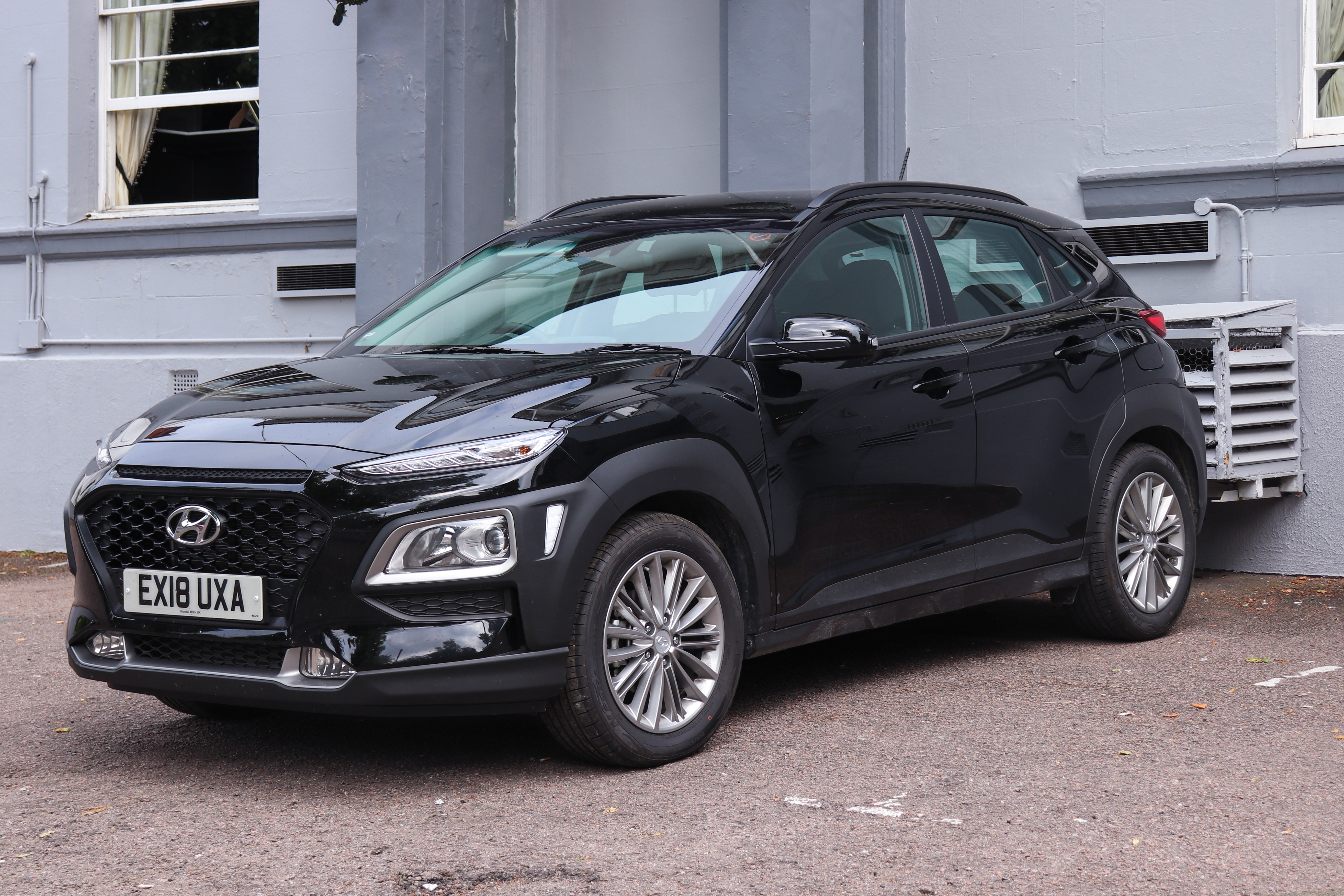
Hyundai Kona

Car
Ford Cougar

Car
Ford Got Ford

Car
Nissan Micra
LIVE
Finish your year with your dream kitchen with help from Menards.
Clearview Cabinet offers a selection of finishes made with the finest materials and built to
a stand.
Life's sticky messes.
They provide features like soft clothes, doors and drawers and cabinet accessories to match
your unique style.
Don't wait to finish your projects.
Save big money on Clearview cabinets and check out our weekly flyer on Menards.com for more
great deals happening now.
Brighten up your home with help from Menards.
Illuminate your home with LED light bulbs from Fight Electric.
They provide light that lasts with a rated light of over 10,000 hours.
Don't wait to finish your projects.
Save big money on Fight Electric LED light bulbs now at Menards.
Plus check out our weekly flyer on Menards.com for all the great deals happening now.
Finish your year with your dream kitchen with help from Menards.
Clearview Cabinet offers a selection of finishes made with the finest materials and built to
a stand.
Life's sticky messes.
They provide features like soft clothes, doors and drawers and cabinet accessories to match
your unique style.
Don't wait to finish your projects.
Save big money on Clearview cabinets and check out our weekly flyer on Menards.com for more
great deals happening now.
Welcome back to EV News Daily and welcome to a special bonus edition of the podcast looking
at the future of Ford in Europe as it electrifies.
There was a time when it seemed every second driveway in Britain or Germany had a Ford
parked in it.
School runs in fiestas, morning commutes in focuses and the Blue Oval found pride of place
in government fleets and police pools.
I remember the UK tabloid newspapers when I was growing up in the maybe 80s, 90s, maybe
a teenager in the 90s.
They would talk about Mondeo Man literally as a shorthand for the average guy in Great
Britain because everyone owned a Mondeo.
Ford's grip on Europe's roads was so firm that 12 years straight in a row the Fiesta
reigned supreme as the number one car sold in Europe and it didn't lose the crown.
A symbol of trust and accessibility on a continental scale.
Well, today, Ford's European operations are somewhat different, facing a critical juncture
where EVs represent not only the greatest challenge, but the most viable path to salvation
in my opinion.
I'm a huge Ford fan, by the way, because Ford sold cars for the every man and every woman.
But I grew up in an era of Fords being on my bedroom wall.
Fast Fords, RS Fords, crazy Cosys and all the rest, just the idea of Fords rallying
or really rapid Fords gave you a sense you could have something exotic and you wouldn't
have to have a crazy job when you grew up.
I mean, I don't get me or I had supercars on my bedroom wall as well and, you know, Lamborghini
Contaches, but a fast Ford was attainable back in those days.
These days, it's so different.
The American automaker finds itself struggling with a rapidly declining market share over
here.
Their closing factories, the former management team made missteps that have left it vulnerable
to the Chinese and disconnected it from EV buyers.
Hey, a reminder, our bonus shows are exclusively for our Patreon supporters.
For the first seven days, only Patreon insiders get the early access.
They get their name on the list of legends in the show notes.
If you want to be an exec producer or above, you get the power to shape future shows as
well.
And if being in the know and on the, you know, supporter list sounds like you, check out
the link, patreon.com slash EV news daily and be part of something special.
Let's get into it.
I'm looking forward to this podcast that I've been writing this on and off for a long time
now, making little notes in my book and in my word spreadsheet that I kind of have open
and stuff.
Ford's European success story began in the late 1960s with the creation of Ford of
Europe and it really hit its zenith in the 1990s and into the 2000s.
The company's European strategy was built on three pillars that made Ford truly formidable
mass market accessibility, a very strong product portfolio and manufacturing efficiency.
During its peak years, Ford commanded impressive market shares across Europe as high as 12%
in 1997.
The Ford Fiesta, launched in 1976, was the definition of Ford's European success.
It involved into the UK's bestseller for 12 years in a row.
With over 22 million units produced globally, 16 and a half million came here.
The Fiesta represented Ford's ability to create vehicles that resonated with the European
consumer.
They wanted efficiency, affordability, practicality.
The Blue Oval just defined all of those.
Similarly, the Ford Focus was introduced in 1998.
For me, it was a whole new world.
I passed my test in what, 1996?
Yeah, I think I passed in 90, maybe 95, 96.
So the Escort was a car, but I've kind of always looked at maybe one of my, my first
car was, you know, was going to be something smaller, but maybe I get an Escort one day
and then the Focus arrived, European car of the year winner.
It demonstrated Ford's capacity for innovation and quality.
It was exciting, even though it was a very average family car.
It was the cornerstone of their European lineup.
Ford's European operations during the Golden Era were characterised by big
manufacturing footprints in Germany, Spain, the UK, the company's Cologne and
Salui factories in Germany became centres of excellence, millions of vehicle made.
At its peak in 2001, Ford achieved European sales of 1.28 million vehicles.
It was the second largest automotive brand over here.
Like I say, everyone had one.
The company's commercial vehicle division, particularly the Transit,
established Ford as Europe's leading commercial vehicle manufacturer,
position it does maintain today with a 14% market share.
This success in the commercial vehicles market provided Ford with stable revenue
and strong dealer relationships that in a way helped their passenger car sales.
Now, look, obviously, you know, you might not know the UK car market.
Obviously, in America and down under, you have either truck culture,
pickup culture or ute culture.
We don't have that here.
We have it was again called the shorthand of the tabloid newspapers, White Van Man.
But it's true if you are a tradie over here, you don't have a truck or a pickup.
You have a white van and it was nearly always a transit.
I remember one of my first jobs when I say I wasn't paid for it, by the way.
But, you know, when I was 14 or 15, like my job,
when I was volunteering at radio stations, where I'd go on for a 30 year
whatever career in commercial radio, when I was starting out volunteering,
I would literally get in the back of a Ford Transit and drive around the area
and help the traveling travel reporter do their bulletins.
Like, and that was it.
My first, my very first experience of work was spending my day in a Ford Transit.
I love Ford, so where has it gone wrong?
When did it start to go wrong?
The decline began in the mid 2010s and accelerated really dramatically
with market share falling from eight percent in 2016, five percent in 2022.
And the decline was really a mix of things.
Strategic blunders, market timing failures,
misunderstanding of the European consumers.
How did it go so wrong for Ford?
The most critical era was the product refresh
refresh cycle for Ford compared to its competitors.
European rivals like Volkswagen maintained a probably about four
point two year model refresh cycle.
But Ford, in that era, allowed its models to get really stale.
The company's division delayed the new Mondeo, the new S Max,
the new Galaxy because of factory transitions and things like that.
But when the new model of the Mondeo arrived in 2015,
it was old news.
It was out in the US for years as the fusion in China since 2013,
a couple of years before Ford's factory closure decisions
were damaging the closure of the plant in Belgium and delays in moving
Spanish production made big gaps in Ford's European lineup.
These manufacturing disruptions coincided with competition
from premium German brands and emerging brands as well.
Let's tie it all up to electric vehicles then.
So where are we today?
Well, Ford has gone really premium.
Ford's approach to going electric here in Europe.
And again, apologies if you're not in the European market.
Let me educate you.
It's not about built tough.
It's not about pickups and it's about the Ford F 150 over here.
It's about two models, really.
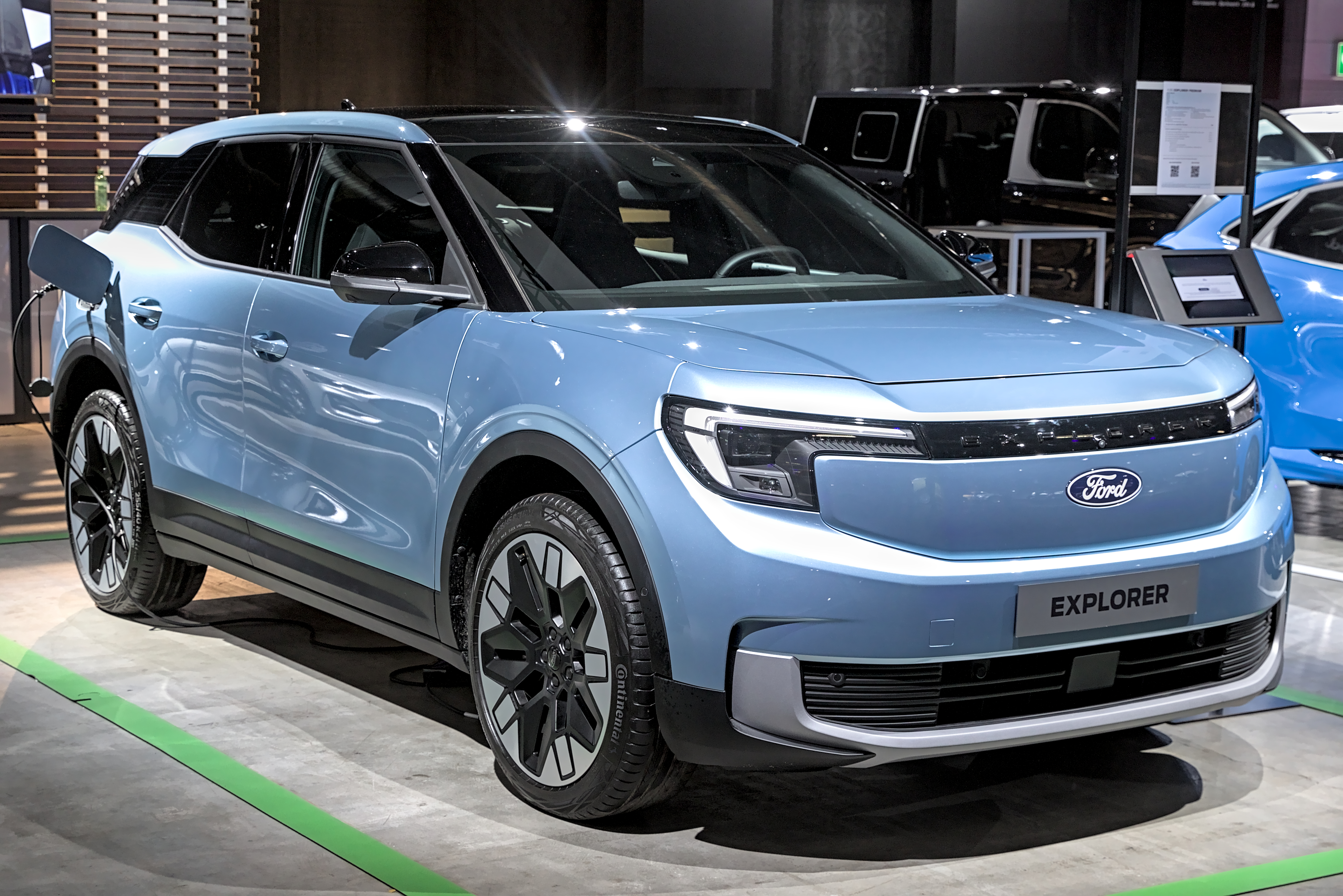
And that is the Explorer, which is not the Explorer that you might have in mind.
But we call it the Explorer and the Capri,
which is certainly not the Capri that you might have in mind.
They use the name again.
They were a bit naughty because they really leaned into that nostalgia
because the Capri is really special.
It's an iconic car.
It had iconic moments in British television in the 1970s and 80s.
And then when we saw it, we're like, that's not a Capri.
You're just using the name.
And that unfortunately resulted in quite a lot of pushback.
I remember the particularly the electrifying dot com channel.
Love that brilliant website, great YouTube channel.
They were brutal about using the Capri name and not delivering a Capri.
So they discontinued the popular cars they sold here.
The Fiesta had nowhere to go.
They killed the Fiesta in twenty twenty three.
The Focus had nowhere to go and it's gone this year.
The Mondeo was gone in twenty twenty one.
All massive vehicles with loads of love and amazing name plates.
And there was no electric alternative lined up.
The product pipeline was empty.
Ford launched the Explorer, which I've had a look today.
So this data is absolutely bang on accurate as of a couple of minutes ago.
The Ford Explorer starts at thirty nine two eight five.
So it's a smidge under the forty thousand pound luxury car tax here.
But it doesn't get the grant because it's too expensive.
And it's got a teeny weeny fifty two kilowatt hour battery as well.
So it's a forty grand vehicle with a small battery.
If you want the old seventy seven kilowatt hour battery that VW have moved on from.
That's forty five eight eight five and forty six thousand pound vehicle.
And that's look that's for the base trims.
Then there's the Capri, which they've priced so premium.
Again, tiny battery, fifty two kilowatt hours is forty one four eight five.
So forty one and a half thousand pounds to get into it to get the big battery
in all wheel drive premium driver assist trim is fifty seven thousand four eight five.
You you're asking me for fifty seven and a half thousand pounds for a Ford and not
a particularly spare look the Capri is nice.
Don't get me wrong, but it's nice in a way that the VW ID four and ID five,
which these cars are based on are just kind of nice.
Like I'd love them in my driveway, but I'm not spending fifty seven and a half
thousand pounds on a Ford Capri.
They have abandoned the mass market segment where they made all of their
money with those vehicles.
The Explorer and Capri's pricing strategy was a fundamental mess up of the
European market. Ford positioned these vehicles as premium.
They were built on Volkswagen's MEB platform, though.
They didn't sound like knockoff vehicles.
But if you were following the EV industry, a lot of EV early adopters, I know
because a lot of people listen to this podcast to learn about these know a little
bit more than your average buyer.
They do their own research and they made direct comparisons with these European
brands like Volkswagen, of which the vehicles they were made on Volkswagen ID
five, Scott, any at Coupe, you'd have those over the Ford Capri, wouldn't you?
The Ford Mustang Mach E.
Let's not forget it was technically incredibly accomplished.
What a vehicle.
Four hundred and eighty seven PS of power.
No to sixty two miles now, three point seven seconds at its peak.
But it hasn't hit any volume sales in Europe.
It's got premium positioning.
It's limited mass market appeal, incredible performance specifications
and long range, three hundred and seventy two miles.
I think WLTP, Magna Ride, suspension, brilliant vehicle hasn't cut through.
So what about the pros and cons of using the MEB platform?
You might make it think that I'm saying it was a mistake to do it.
Look, by leveraging VW's, the architecture, Ford cut development time,
but by at least two years, at least allowing its EV models to hit European
showrooms much sooner, Ford avoided billions of dollars in costs and delays
otherwise required to engineer and validate an entirely new EV architecture
for European tastes.
This reduced technical and financial risk at a critical stage of the business.
VW's MEB platform was homologated for EU safety, for charging, for regulatory standards,
everything else.
Ford sidestepped that and that can stall a new entry on a platform
in a region for a long time, too.
Plus, Ford capitalized on VW's supply chain, charging network partnerships,
access to battery supply contracts, past supplies, already important.
However, despite the vehicles looking like Ford's,
and when I get passed by an Explorer or a Capri today, they're good looking vehicles.
I like them.
The vehicles drove like VW's and Skoda's.
It's harder for Ford to command a price of almost 60,000 pounds
for a Capri at the top end when it's not that premium.
Is it? Let's face it.
And you can't really say we're different.
I mean, the inside and outside are different, but some of the controls
and infotainment are the same.
Complaints about VW haptic controls and the UI.
VW's platform isn't exclusive.
So Ford competes head to head with those VW.
Skoda's, Cooper's on identical hardware with, you know, not as great brand
heritage at the minute and at higher price points, royalty and licensing fees
cut the profitability erode the margins at Ford, limiting the financial
upside compared to doing it themselves, which they are doing.
By the way, long term plan for EVs, I should point out.
And Ford's ability to respond to new trends, so new battery
chemistries, software features, entirely constrained by what VW was
doing on the MEB platform.
And again, we had an ID three in the driveway for a time.
I like that vehicle.
I like what VW have done with the MEB platform.
But look, it's not premium at all.
And there's a lot wrong that has had to be and is being fixed.
And it will be fixed with this kind of big refresh coming next year.
A complete reworking of the ID three, ID four entirely.
And they might even call the Tiguan, the ID four, entirely new vehicle, really.
And so Ford have been at their mercy when you got to say VW didn't
particularly smash it out of the park solid, not bad, but solid.
So we haven't even talked about China yet or the competitive set.
And what else can you get for that money as a Ford Puma?
Commercially, these are a big deal.
Supply chains and also maybe what could Ford do?
Well, I've got a couple of ideas that they won't care about.
But, you know, I'll let you know and you can see if I'm wide of the mark or not.
And if anybody at Ford listens to this podcast, I highly doubt it.
Feel free to tell me you're an idiot because you don't understand our business.
But I've got some ideas and I'll present them in a minute.
We'll take a break, slap a coffee and back in a moment.
Finish your year with your dream kitchen with help from it.
Clearview Cabinets offers a selection of finishes made with the finest materials
and built to withstand life sticky messes.
They provide features like soft, closed doors and drawers
and cabinet accessories to match your unique style.
Don't wait to finish your projects.
Save big money on Clearview Cabinets and check out our weekly flyer on
minards.com for more great deals happening now.
Save big money at minards.
So we have to talk about China on the podcast, don't we?
Because the emergence of Chinese EVs fundamentally altered the EV market.
BYD for one, MG for another.
Big market share already through very aggressive pricing,
rapid model development cycles, MG leaning into particularly here.
I mean, across Europe, of course, as well.
But I think a lot of people really do think MG is a British brand.
Still, maybe some older generations have more love for that
and don't really care that it's owned by the Chinese, but they see the MG badge.
And so all that heritage, but at very low prices.
Chinese manufacturers are refreshing some models every 1.3 years on average.
There are some models that aren't a year old and they're getting a refresh
or an update on new chips or a new look.
It's crazy.
European competitors, what, 4.2, four and a half year cycles,
providing continuous tech advancement and cutting costs in China.
Chinese EV pricing advantages are substantial.
Of course, labor costs are a lot lower, but they haven't got magical
ways of making vehicles over there.
They still make vehicles the same way, but just all of their costs are lower.
You know, and for good and bad reasons, obviously.
But labor is the big one and vehicles costing 25 percent less at least
by the time you've made it in China and shipped it over here and paid tariffs
and still make money at lower prices.
And we'll talk about China a bit more in a minute, actually.
But I want to look at the competitive set for the Ford Puma
because the Ford Puma is the new one, the new vehicle from Ford.
I can't possibly look at every market, so I have to focus on the UK where I am.
And I'm sorry about apologies if I'm not doing this in your local currency.
Ford Puma built on a modified B2E platform derived from the conventional
Puma, which is for bestselling vehicle over here now that there's nothing else
to sell really. The Gen E offers 233 miles of range at its maximum
and maintains the gigabox, as they call it, the big storage solution
that made the Puma quite well known.
So the new Ford Puma started starts at twenty nine nine nine five.
So that's 30,000 pounds, 30 grand in its absolute stripped down select standard
trim, they call their base trim, 123 kilowatts of power.
It's not bad, 43 kilowatt hour battery.
WLTP range is great for the battery size, by the way, 233 miles.
It's a really small vehicle, mind, but Ford has nailed the efficiency.
Comfort pack takes it to 30 and a half.
Top spec is 31 and a half.
What about real world pricing, though?
Because these big car manufacturers can can influence monthly deals and things like that.
I can't get into all that because you end up looking at what's the deposit down.
And I'd look at leasing.
I'd look at PCP. There's no point.
Everything's different.
But a quick look on car.
Wow, an hour ago showed me that the dealer direct offers on Ford Puma's
brand new car direct from a Ford main dealer is twenty four three fifty
with the government discount off.
They got the maximum government grant, one of the only cars that has
such a saving of five thousand seven hundred pounds from the RRP.
So Ford have taken some money off the RRP and then you've got the full government grant off that as well.
So Ford Puma, let's rewire our brains.
It's not a thirty grand car, which it has been until the government grant.
Now it's a twenty four three fifty car.
But you know what?
The depressing thing for Ford is that's probably still not enough.
A similar sized Vauxhall front era is five thousand pounds cheaper.
You can get a Vauxhall front era.
I'm looking at this right now on car.
Well, dealer direct offers eighteen nine one six.
Now a lot less range, one hundred and eighty six miles WLTP and one eight six
is a lot less than two hundred and thirty three.
But it's got the same size pack, forty four kilowatt hours.
So a lot less efficient.
However, something a lot, lot smaller.
It's a segment smaller.
It's the Hyundai Insta is forty centimeters shorter, twenty centimeters more narrow,
fifty percent less storage, but very, very stylish.
And if you want a compact car for safe, reliable transport for maybe two and
occasionally four people, you know, that the Insta still does over two hundred
miles of WLTP range and it's sixteen thousand eight hundred
pounds for a brand new one.
Now that's an eight thousand pounds offset.
No, the Puma is bigger, not by much, but it is bigger.
But if you need compact, reliable transport to then go eight grand more
for a Puma, you do need to have, well, I need to maybe fit five adults and a bit
more storage space.
So what about comparable vehicles Citroën EC three, not the EC three smaller one,
but the bigger one, the taller SUV shape, the Citroën EC three Aircross
directly comparable, one hundred and eighty eight miles.
So a lot less range, but again, well under twenty K, a smidge over twenty thousand
at twenty seven four five is the MG for getting a little long in the tooth.
I can't believe it seems like it's only been here five minutes,
but they've already refreshed it in China.
We're going to get the refresh as well.
Fifty one kilowatt hour battery in that and it's twenty thousand pounds seven
hundred and forty five. The Renault five. OK, so now it's getting discounts.
It's been out a little while now, the Renault five.
So it's just starting to get some offers that now starts at twenty thousand
eight hundred and twenty nine pounds, forty kilowatt hour pack,
one hundred and ninety two miles of range.
So we're forty shy of the the Puma.
But look, the Renault five bags of style, loads of style.
MG's MG S five is a couple of pounds more, but that's got a forty nine
kilowatt hour battery, two hundred and eleven miles of range.
And the MG S five is a big family vehicle, way bigger than a Puma to fit a family.
Loads more space generously appointed as well in terms of trim levels.
And it's twenty one thousand four hundred and three hundred and forty five
pounds is twenty one and a half.
And a lot of this depends on monthly offers as well.
I know what about a curveball Citroen EC four X.
All right, same mileage on WLTP as the Puma from a slightly bigger battery.
Fifty kilowatt hours, loads more room, though, quite curious styling
for a saloon, Sadani kind of what is it?
But it's twenty one and a half thousand pounds per shows.
E two double eight.
That's twenty six and a half, but it comes with a massive battery.
Fifty four kilowatt hour, two hundred and fifty miles of range.
And if you want to go a little more premiums, if you want to spend a bit
more than a Puma, you can get into an ID three in essential pure trim.
Bit much bigger battery, way more efficient.
Four point four miles per kilowatt hour.
Great monthly deals back by VW.
Scott is new L rock.
All right, we're getting premium now, but the L rock is twenty seven seven
fifty five kilowatt hour pack, identical mileage to the Puma,
but it's three grand more and getting way more premium.
Renault McGahn is a different segment, two hundred and eighty five
miles of range, sixty kilowatt hour pack.
It's a whole class different to the Puma and it's twenty eight thousand pounds.
So yeah, it's four grand more.
The Kona, in case you're wondering, always a good benchmark for a family car.
Again, Kona, bigger, sixty five kilowatt hour battery,
well over three hundred and nineteen miles of range, legendary efficiency
on the Hyundai's, but it is thirty thousand and sixty six pounds.
So you can probably do a deal and get it under thirty, maybe twenty nine
something good monthly deals from Hyundai in the two hundreds, you know,
on that whole different type of vehicle, though.
But look, that's and that's not even all I say to some American listeners as
well as fans, I know fans American listeners.
Our small car market is just ridiculous at the moment.
The last twelve months, last eighteen months has been an explosion
in that bit of the market and that and that's just a sample.
By the way, that's not all of the vehicles.
There's so much I could go into more.
That's how competitive it is for Ford and even with the full
UK government grant and they'd be stuffed without it, by the way,
but they've got the full UK grant, a bit of money off for Ford as well.
Twenty four and a half.
They're starting to get into the right ballpark now for that entry level
Puma, but that's the level of problem that Ford has got here
in terms of making money, but up against ridiculous competition.
And I haven't even mentioned B. Y. D. C. Girls and things like that.
Smaller vehicles. So quick mention, Ford's commercial vehicle
electrification plan is a big strength for them in the EV markets.
E transit custom starts production this year next year.
Europe's one ton van segment being targeted there with a lead
two hundred and thirty six miles of range, big towing.
E transit custom will address commercial users concerns about
EV practicality, the broader transit, electric family,
the two tonne transit and smaller courier variants.
They provide Ford with a comprehensive EV lineup in the commercial world.
Very, very strong there.
With a planned focus SUV for twenty twenty seven,
obviously not its official name might be called the focus,
might be called something else.
It's a great name to have in your locker if you afford.
But we'll call it the focus for now.
This represents Ford's attempt to recapture mass market segments
abandoned with the discontinuation of their traditional passenger cars.
It'll be built at Ford's Valencia plant in Spain.
That has an annual capacity of three hundred thousand units.
This crossover will offer both petrol, hybrid and pure electric
power trains to address the different market needs positioned between
the Puma Gen E, which we've established is a mid twenty thousand
something car now and the Explorer, which currently costs 40 K.
I mean, it's literally going to be between those not only in pricing,
but size as well.
The focus aims to compete directly with the VW ID for Scott at any
act in the emerging Chinese competitors in this midsize crossover
segment and out there loads of those coming from China at the moment.
However, this vehicle is still at least two years away.
And that by me two years until the reveal, the model's success
will largely determine whether Ford can rebuild volume sales in Europe
or remain relegated to being a niche player.
The multi energy powertrain choice for the focus acknowledges
the European market and the realities here where pure electric adoption
varies by region and consumer segment.
If they release the focus as a pure bev over here in the UK,
I think it go down very well.
Some other countries, France, Germany, Norway, be very good at Spain's
really coming along where the vehicle will be made by having a great twenty
twenty five other countries might want possibly plug in hybrid, maybe EREV.
This approach allows for to compete across the full spectrum of powertrain
preferences, whilst also catering to customers that want to go electric.
So what platform will they use?
Well, I think I can confidently say it won't be VW's MEB platform or even MEB
plus one option, then Ford has already announced its universal EV platform.
Now, that is scheduled for a twenty twenty seven release.
It's developed as part of a five billion dollar investment.
The UEVP universal EV platform promises to deliver affordable
EVs with starting prices from twenty two thousand directly competitive
with the Chinese makers and European value brands.
There's a load of choice between 18 and twenty two in the UK.
So this production system, it's a whole new way of making cars, really.
It reduces the parts count by at least 20 percent assembly workstations
by 40 percent and even production time by 15 percent.
And this is all in an industry that has iterated itself down to the final
nth degree. These are massive, massive improvements.
It's a whole new way of building vehicles.
The efficiency enables Ford to compete on price and be profitable
and also be sustainable.
Technical specs for you, EVP vehicles include cobalt free and nickel free
lithium ion phosphate packs integrated structurally into the floor of the vehicle,
reducing weight and cost, improving space.
The platform's flexibility enables multiple body styles from hatchbacks
to pick up trucks and economies of scale across every segment.
However, that may well be too much too soon for Ford of Europe.
The first vehicles they produce on this revolutionary architecture
will surely be for the USA first.
And if they're a global vehicle, it probably won't be a European made focus.
So what else have they got?
Well, according to Felix Page at Auto Car Magazine,
he writes, the new crossover could become one of Ford's best selling lines globally.
It will not replace the Cougar, but rather will be sold alongside it
as a separate model line that introduces a multi energy approach
with petrol, hybrid and electric drivetrains as it has done with the Puma.
As the two cars will be built in parallel at Ford's Valencia plant,
it is also expected to be a close match size wise to avoid the need
for costly alterations to the production line and process.
While also sharing key components, the new model, we'll call it the focus,
is highly likely to be based on the C2 platform,
the same one that Ford uses for mid sized C segment models in Europe.
Having first been used for the outgoing fourth gen focus way back in 2018.
This architecture underpins a range of saloons,
crossovers and SUVs worldwide testament to its flexibility.
But it's so far yet to accommodate a pure electric powertrain.
And once again, this is me editorializing here, not Mr.
Page at Auto Car.
Once again, it's that it's that dilemma.
Do you go with a pure EV platform to make the best possible EV that you can?
Or do you use an architecture that by the time this vehicle comes out,
is not only almost 10 years old, maybe older,
which is the problem that that's what got Ford in this problem.
But also is a compromise to the car makers have to compromise to make money,
to make affordable vehicles, should they be going pure EV?
The likes of, well, Tesla's always done, but the likes of BMW more recently
saying, all right, we tried it both ways and now this is the way to do it.
So we'll wait and see.
So many questions.
So what's Ford got to do where they've got to localize European
EV production if they want to be competitive and reduce supply chain
vulnerabilities, they have their Cologne EV center as the foundation.
But additional capacity is going to be required.
Battery supply chain partnerships should prioritize European
suppliers to reduce costs and improve supply security and do things like
accessing things like the new UK car grant.
There's the Turkish partnership with Ford Ottersand that can be expanded
to provide additional manufacturing capacity to European markets as well.
And how do they fight the Chinese?
Ford's commercial vehicle heritage is an advantage in practical electric
vehicles that the Chinese can't operate, that replicate very easily.
There are some commercial vehicles from China.
They're pretty rubbish.
The company should emphasize payload capacity for to talk about towing
and payload and durability and their heritage in commercial vehicles.
The service network can be an advantage over the Chinese as well.
Because there's Ford dealers everywhere.
Service infrastructure will give customer confidence.
They should really play into that and say, you know, these Chinese
brands, some of them aren't even around anymore because they've gone bust in China.
Want to take the risk on that?
No, hey, with Ford Blue Oval come to us.
I think they need to be more aggressive and and, you know, I'm here for
the Chinese invasion because they're cheap cars and I want people to drive
cheap cars that are safe and reliable.
They're going Euro and cap five testing and stuff.
They're safe.
And so, you know, you can argue about how they're made and the regime and whatnot.
But still, I want people to have great value cars to choose from.
And so that's the weakness, isn't it?
It's the uncertainty.
Now, what the heck is this new Chinese name?
We're Ford.
They, you know, it's not scaremongering.
Just telling say, these companies are going bust in China.
You want to be left with a car that doesn't work or whatever.
Lots of people have been with Ford.
They lean into that regulatory compliance in the European markets.
They've been here forever.
They know how it works.
They should be doing better and Ford can accelerate their product development
cycles to match the Chinese as well.
And they've talked about how they're going to do this as well.
So what a Ford need to do, in my opinion, it's the sub 20,000 euro or it's
around 20,000 euro models.
And I'm not saying launch the fiesta EV.
But launch the fiesta EV, do you know what I mean?
They're bringing back things like the Nissan Micra based on the Renault five
and Nissan are smart because it's, you know, partnership with Renault.
And the Micra is a big vehicle now.
It's not like the small little micro that it used to be.
Everything's got fat, though, because of safety.
But still, you know, a new fiesta would get bigger.
But still, the timing advantage of hitting Europe now with cheaper cars.
Ford still has time to establish a market position in cheap EVs.
It's not too late for them.
Fleet and commercial integration has to be prioritized between now and then.
The next couple of years, lean into commercial, lean into the transit.
Ford's European recovery through EVs has to mean an abandoning of premium positioning.
I see why it was tempting to do it and I get why they did it.
But Ford is the mass market and they left it and they deserted it and no one's
paying almost 60,000 pounds for a Ford Capri that's not a Capri.
So the UAVP platform and for the Focus SUV are vital in that 20 something
thousand euro price band in vans and small commercial vehicles.
They're a leader.
I think they're fine there.
Second wave collaborations and rapid platform development will enable
Ford to catch up on costs, features and adaptability.
It's not too late, like I say, their extensive dealership network
can be scaled for EV adoption.
A customer loyalty, I think, can still be there, but they must launch
ultra competitive EVs in core segments.
They won't do it before the Chinese because the Chinese are here now.
And but VW, the European rivals, if not the ID one, then certainly the ID
Polo and the other vehicles, so Cooper, Ravel and the Scotter version as well,
the Epic, they are coming sooner than Ford will get cheap EVs here.
And then time is ticking for them.
If Ford delivers on that, they could see a resurgence in popularity and profitability,
maybe not at the glory days, but I think they can do it.
Ford set the standard back in the day for family, for fleet vehicles,
for small, cheap vehicles, but so many problems over here in Europe.
It wasn't just one thing delaying models over reliance on partnerships.
Poor pricing choices have led for that to that big dramatic decline
in market share and I hate to say it relevance as well.
With Chinese EVs capturing share through just sheer pricing,
but also value as well, because it's loaded with technology.
Ford's premium EV approach missed the mark.
It doesn't. It didn't work draw a line under it.
Strategic recommendations from me would be accessibility.
The lineup from Ford, get back to what we love about them.
Localize production, be cost competitive,
strengthen their commercial vehicle at the same time, reputation and advantage
and realign with that rapid execution of bringing new things to the market
to restore Ford's position and growth over here in Europe.
That's my thoughts anyway. Maybe I'm right.
Maybe I'm wrong.
I've waffled on for far too long today.
But hopefully a bit of a history lesson and a bit of a look at where we are
today with Ford and maybe where they go in the future.
What do you think? I'd love to hear from you.
Have you owned Ford's in the past? Do you own them now?
What do you think of the Explorer and Capri?
Have you bought the new Puma? What do you think?
Let me know. Thanks for listening and I'll see you on the next one.
About this episode
Exploring Ford's tumultuous journey in the European market, this episode delves into the automaker's past dominance and current struggles as it pivots towards electric vehicles. The discussion highlights key historical milestones, including the Fiesta's reign and the decline in market share due to strategic missteps. With a focus on Ford's premium EV offerings like the Explorer and Capri, the episode critiques their pricing strategies and competition from Chinese brands. Insights into Ford's future plans and the importance of returning to mass-market accessibility make for a compelling analysis of the brand's potential resurgence.
Original notes
Welcome back to EV News Daily, and welcome to a special bonus edition of the podcast looking at the future of Ford in Europe.
There was a time when it seemed every second driveway in Britain and Germany had a Ford. School runs in Fiestas, morning commutes in Focuses, and the blue oval found pride of place in government fleets and police motor pools. I remember the UK tabloid newspapers would talk about Mondeo-man as a shorthand for the average guy.
Ford’s grip on Europe’s roads was so firm that, for twelve years straight, the Fiesta reigned supreme as the UK’s favourite car—a symbol of trust and accessibility on a continental scale.
Today, Ford's European operations face a critical juncture where electric vehicles represent both the company's greatest challenge and its most viable path to salvation. The American automaker finds itself struggling with declining market share, factory closures, and former management missteps that have left it vulnerable to Chinese competition and disconnected from EV buyers.
A reminder our bonus shows are exclusively for our Patreon supporters. For the first 7 days, only Patreon insiders get early access, their name on the list of legends for Executive Producers and above, and the power to shape future shows. If being in the know and recognised as a supporter sounds like you, join us now at patreon.com/evnewsdaily and become part of something special.
There was a time when it seemed every second driveway in Britain and Germany had a Ford. School runs in Fiestas, morning commutes in Focuses, and the blue oval found pride of place in government fleets and police motor pools. I remember the UK tabloid newspapers would talk about Mondeo-man as a shorthand for the average guy.
Ford’s grip on Europe’s roads was so firm that, for twelve years straight, the Fiesta reigned supreme as the UK’s favourite car—a symbol of trust and accessibility on a continental scale.
Today, Ford's European operations face a critical juncture where electric vehicles represent both the company's greatest challenge and its most viable path to salvation. The American automaker finds itself struggling with declining market share, factory closures, and former management missteps that have left it vulnerable to Chinese competition and disconnected from EV buyers.
A reminder our bonus shows are exclusively for our Patreon supporters. For the first 7 days, only Patreon insiders get early access, their name on the list of legends for Executive Producers and above, and the power to shape future shows. If being in the know and recognised as a supporter sounds like you, join us now at patreon.com/evnewsdaily and become part of something special.
0:00
35:29