The Rivian R1S is a large electric SUV made by Rivian. It runs on batteries instead of gas and is built to drive both on roads and rough terrain. It is a more expensive car because it has many features and good performance.
The Tesla Model Y is a well-known electric SUV that many people buy. It can go far on a charge and has lots of tech features. Rivian R2 is often compared to it.
The Rivian R2 is a new electric SUV that will be smaller and less expensive than other Rivian models. It is made to help more people buy an electric car from Rivian. It will still be good for driving on different types of roads.
A front trunk is a storage space at the front of an electric car where you can put bags or other things, because electric cars don't have a big engine up front.
The perception stack is the set of cameras and sensors on the car that help it see what's around it, like other cars or obstacles, to help the driver or drive itself.
A radar system sends out radio waves to find out how far away things are and how fast they're moving, helping the car keep safe distances and avoid crashes.
Rivian Autonomy Plus is a smart system that helps drive the car by itself in some situations, but the driver still needs to watch and be ready to take over.
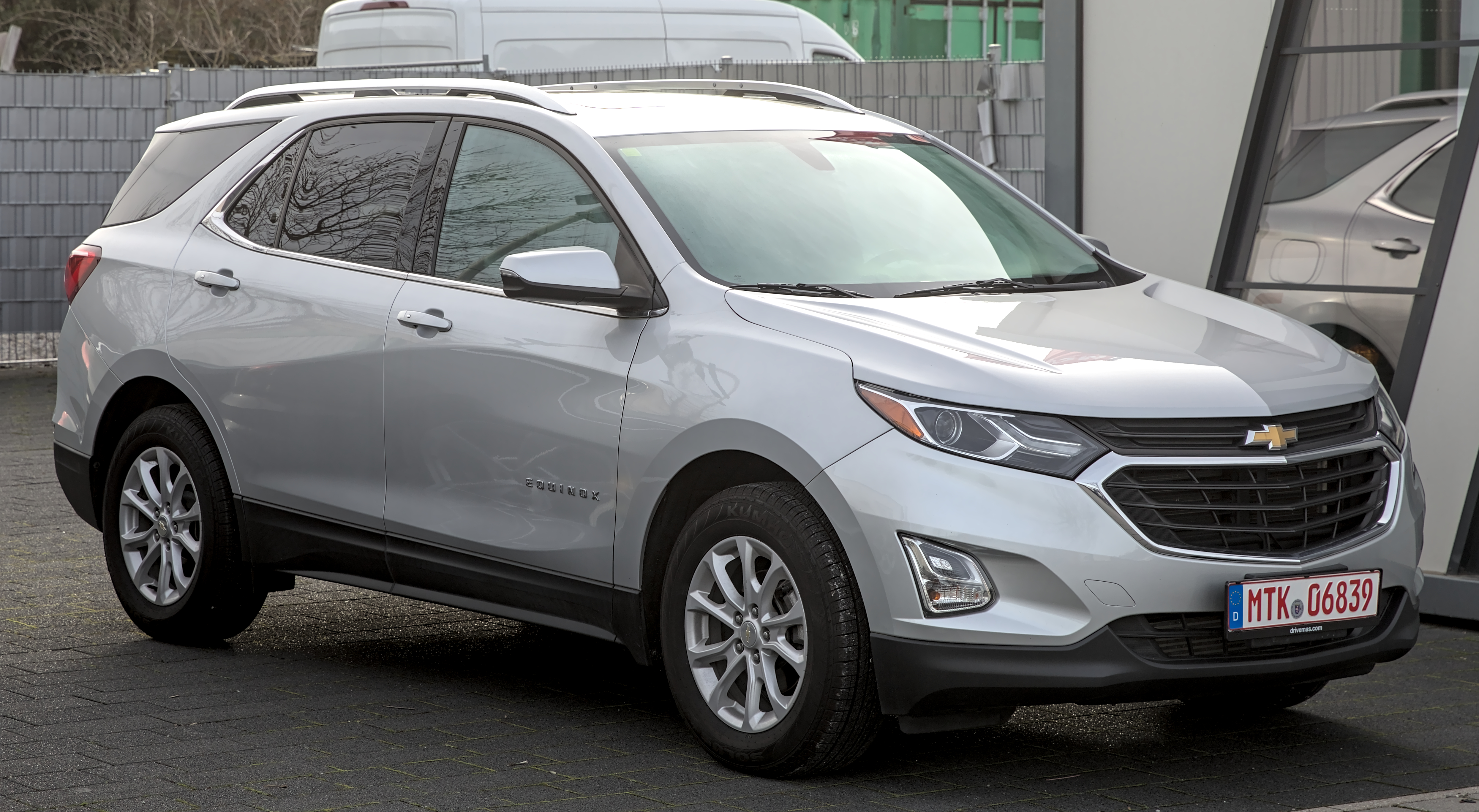
The Chevrolet Equinox is a small SUV made by Chevrolet. It is a family-friendly car that can carry people and cargo comfortably. There is a version that uses electricity to run, which helps save fuel.
The Toyota Supra is a fast car made by Toyota that is designed for fun and sporty driving. It is smaller and quicker than regular cars and is popular among people who like performance cars.
LIVE
Your life's already digital. From banking and shopping to streaming and learning.
So why does sorting government stuff still feel like such hard work?
The government is introducing a new digital ID to make access to services quicker and more secure for everyone.
But we need to hear from you. Your voice matters.
Search digital ID consultation to have your say. Digital ID, making it work for you.
Dating apps? Easy.
Online shopping? Simple.
Banking app? Sorted.
Life admin? Ugh.
That's what a digital ID could change.
And the government is opening a conversation to make it work for you.
Your voice will shape the final product.
So search digital ID consultation to have your say.
Digital ID, making it work for you.
Many people can't afford it.
The R2, a mid-sized SUV that I can tell you now starts at $45,000 and tops out at $57,990 before delivery,
which even when it does destination just brings it slightly under $60,000.
The company's answer to that problem.
Full pricing and trim details can now be revealed on the 12th of March
and I've been sitting on this for a little while now and apart from one outlet
that broke the embargo earlier today, which of course meant the internet went crazy with the details.
I've not been able to talk about it until right this second.
Deliveries of its first performance variant begin this spring.
And if it works, Rivian becomes a proper car maker.
If it doesn't, well, the maths are going to get ugly really, really quickly.
Let's get into it. The R2 platform was first announced back in 2022
with production originally penciled in for 2025 at a planned factory in Georgia.
That all changed in March of 2024 when founder and CEO RJ Scarridge,
the chief executive unveiled the production ready R2 alongside the smaller R3 and R3X crossovers
at a packed event at the Rivian Theater in Laguna Beach, California.
Mr Scarridge confirmed he was for now scrapping the Georgia plan
and would build the R2 initially at the existing normal Illinois plant instead.
That decision would save the company $2.25 billion in capital expenditure and pull the launch date forward.
Within 24 hours of its unveiling, Rivian say they'd taken more than 68,000 reservations at $100 a piece
by July of that year in 24, the company's VP of manufacturing, Tim Fallon,
said reservations had surpassed $100,000 and were still climbing.
Rivian, I don't believe, has updated that figure publicly since.
Well, production began in January 2026, validation vehicles rolled off the normal line first,
and now the factory is ramping towards a target capacity of 155,000 R2 units every year.
Not this year, but that's the target alongside the R1 models that it already builds there.
Each R2 takes roughly 15 hours to assemble, that's down from 18 hours for an R1 vehicle.
Now, why the R2 matters more than anything Rivian's done.
The R1T, the pickup truck and the R1S SVSUV, and Rivian a devoted following
and a deserved top spot in Consumer Reports owner satisfaction surveys.
They also bled money.
Rivian posted a net loss of $3.65 billion last year, that's on top of $4.75 billion in 2024.
And the R1S starts near $75,000, that's about £59,000,
a price that limits the addressable market to a sliver of American buyers.
And it is just American buyers, it's not an international vehicle.
Mr. Scarringe told CNBC last month,
I quote, R2 is really instrumental for driving the business to positive cash flow and overall profitability.
He was not exaggerating.
The bill of materials for the R2 is roughly half that of the R1 vehicles.
Rivian slashed the number of computing units from over 60 in a traditional vehicle to just seven.
We call them ECUs, the computers, the brains that run the things.
They cut the wiring length by two miles of cabling, that's 3.2 kilometers.
The result is what Mr. Scarringe called a dramatic reduction in the cost structure to build it.
Rivian did scrape together a positive gross profit for the fourth quarter of 2025.
A milestone, don't get me wrong.
The margin was about as wafer thin as it gets, it was at 2%.
That's compared to someone like Tesla's 17%.
The R2, with its lean architecture and lower price, will close that gap at volume.
Analysts expect 15,000 R2 deliveries this year, though some believe Rivian will exceed that.
And by next year, with three full shifts running, the normal plant could be at 155,000 R2s as it becomes a global vehicle.
All right, let's get into it.
This is what you're waiting for, the pricing, what you get and how far you can go and the specs as well.
The lineup will be in four trims, and the cheapest one won't come first.
And that's absolutely fine, because that's what everyone does.
But they all share, at least the three longest range ones, will share a usable battery of 87.9 kilowatt hours.
All the prices as well come with $1,500 destination charge, and here's how it breaks down.
The performance trim arrives first.
Performance trim launch edition, $57,990, plus the $1,500 destination, brings it nicely under $60,000.
It's about 46,000 pounds.
That includes the launch package, by the way.
These are going to be the early adopters.
They'll be getting a dual motor, all wheel drive system, with 656 horsepower, that's 609 pound feet of torque, or 826 Newton meters.
It'll do 0 to 60 miles an hour, just shy of 100 kph, in 3.6 seconds.
Highway overtaking is savage.
Floor it at 50 miles an hour, and you'll be doing 70 miles an hour in 1.5 seconds.
Nice, for overtaking.
EPA range sits at 333 miles, that's 531 kilometers.
The launch package bundles their lifetime autonomy access, amongst other things as well.
It also includes a tow package, that's 4,500 pounds, almost 2,000 kilograms, and an exclusive launch green paint option, which is an extra cost option, but you only get access to it with launch trim.
Then, towards the end of the year, they say, the premium trim follows.
That's going to be $53,990, so that is $54,000 plus destination of one and a half.
That's 43,000 pounds.
It has the same range, which is interesting, because this is the premium, not the performance, and normally performance has bigger wheels, and if we know it does, it's going to run on bigger wheels.
And so, it has the same range, that's odd.
Normally, it would go a little bit further with smaller wheels, anyway.
You can play about with EPA ranges, and you can bring some cars down, and you can be conservative.
So, same again, 330 is the number, 330 miles.
Dual motor all-wheel drive, dialing the power back, not 656 horsepower, but 450 horsepower, not three and a half seconds, but four and a half seconds to get to 60.
Look, it's hardly slow.
The standard rear-wheel drive, long range, is going to be the range monster.
That comes early next year, and that's going to be $48,500, or 38,500 pounds.
Single rear motor, which is plenty for those that don't need cold weather performance or all-wheel drive, 350 horsepower is still a sub-six second, not to 60.
That's still quick, but it's 345 miles of range.
Doesn't seem like that much of a premium over 330 miles of the all-wheel drive.
Normally, I'd expect a bigger offset by taking off that front motor.
Maybe the front motor is so efficient, it may be it's a disconnect in the all-wheel drive system that means they can be more efficient, but either way, that's going to be the standard long-range rear-wheel drive.
Then, a standard range rear-wheel drive.
Now, we haven't got the exact battery capacity on that.
It's a smaller pack, and they updated the numbers.
Last week, when I first got the details of this, about 265 miles, they updated it yesterday to 275 plus.
So, they're still working things out, even at launch.
All trims will charge 10 to 80 in 29 minutes.
That's not going to blow your socks off, but they do have made some cost savings, but still.
29 minutes, 10 to 80.
That could be the only weakness in the whole R2 armor.
Little chink in the armor there, but still.
At least in North America, it'll have J3400 or Naxport on the side, so you can use the Tesla Supercharger network and then CCS adapters, of course.
So, the R2 rides on an entirely new mid-size unibody platform, a departure from the body on frame of the R1.
The result is a vehicle that weighs nearly 2,000 pounds less, that's over 900 kilograms less than its bigger sibling,
while sitting on a wheelbase that's almost 3 meters long, that's 116 inches.
At 186 inches long, that's 4.7 meters long, and 75 inches wide, that's 1.9 meters wide, it is squarely in Model Y territory.
And oh, I know, why do we have to compare everything to the Tesla Model Y?
Well, because inevitably you will cross shop with vehicles in the same price, and also it's one of the world's best selling vehicles, let alone electric vehicles.
So, I think we probably have to, size-wise, even price-wise, and performance-wise, range-wise, charging-wise.
This is all very comparable when you're cross shopping it with the Tesla Model Y.
The weight savings translate directly into agility, but Rivian is all about the off-road adventure DNA, aren't they, in a way that Tesla isn't?
Tesla's more about autonomy.
Ground clearance of almost 10 inches is best in class, that's 25 centimeters, 3 inches more than a Model Y.
Approach and departure angles of 25 degrees and 26 degrees, respectively, if you're interested,
and a weighting depth of almost 20 inches or 50 centimeters mean the R2 can do more than just look the part on the school run.
Go for the performance trim, they're including semi-active suspension, eight drive modes, including rally and soft sand,
and a low center of gravity courtesy of a structural battery pack.
OK, before we go inside and look at the cabin and do some more specs and tech, I will take a quick break and be back in a moment.
To make access to services quicker and more secure for everyone.
But we need to hear from you. Your voice matters.
Search Digital ID Consultation to have your say.
Digital ID, making it work for you.
Your life's already digital, from banking and shopping to streaming and learning.
So why does sorting government stuff still feel like such hard work?
The government is introducing a new digital ID to make access to services quicker and more secure for everyone.
But we need to hear from you. Your voice matters.
Search Digital ID Consultation to have your say.
Digital ID, making it work for you.
OK, welcome back to a bonus edition of the podcast about one of the more important vehicles that we'll talk about this year,
and that is the Rivian R2, certainly important to the survival of that company.
Inside, the cabin seats five adults in comfort, rear legroom of 40 inches.
That's over a metre, they say, and plenty of headroom, enough for occupants for over six feet tall.
So a smaller vehicle, but still plenty of room inside.
Total enclosed storage is over 90 cubic feet.
That's over two and a half thousand litres.
There's a front trunk that'll swallow a carry-on suitcase and a backpack.
Fold flat rear seats that create a level load surface and dual gloveboxes.
The rear drop glass, a powered window that lowers completely down into the liftgate,
is a genuine talking point, allowing skis and surfboards and, well, anything.
You just want to open up the whole back of your car, but you just drop the rear window to put things in.
Hasn't got to be really long cargo.
Looks like a breeze to use.
It's included on the performance and premium trims.
Materials are sustainable, up-cycled birchwood accents.
A headliner made from recycled ocean plastics and Rivian's second-generation Adventex material
designed to withstand muddy boots and wet dogs.
Let's talk about the technology play.
Rivian calls the R2 the software-defined vehicle, and the spec sheet backs that up.
The perception stack is 11 HDR cameras with a combined 65 megapixels and a 5 radar system,
hardware that comes standard on every trim.
Then there's Rivian Autonomy Plus.
It's the company's Level 2 Plus.
They can't call it Level 3 at the moment because it's still hands,
it's eyes on the road, even if your hands are off the wheel, ready to take over.
But it's a good Level 2 system.
They call it Level 2 Plus, but there's no real Level 2 Plus.
It's Level 2 or Level 3, but it's a really good Level 2 system.
That covers 3.5 million miles of roads across the US and Canada.
It will cost $50 per month to subscribe to, or $2,500 as a one-off purchase.
The launch package has it for the lifetime of the vehicle.
Every R2 gets 60 days free trial.
The onboard AI compute for the launch vehicles runs at 200 tops, trilling operations per second.
Dedicated to the in-cabin experience, powering the forthcoming Rivian Assistant.
That's a voice-controlled system that processes complex requests locally, offline.
The 5G connected architecture though ensures updates over the air,
while the offline capability means the vehicle isn't hobbled if you're going into areas of no signal.
At the steering wheel, Rivian's in-house haptic halo dials replace conventional switch gear.
They really are a genius bit of design.
They seem to work really well in the YouTube reviews as well in real life.
They are context-aware scroll wheels that you can push, pull, and even tilt.
They feel very tactile according to the reviewers like Doug DeMuro,
and it's an attempt to bridge the gap between touchscreen convenience but physical controls as well.
Two digital displays complete the cockpit, one behind the wheel for driving data, and one in the centre.
So, where does this sit in the market?
Well, the elephant in the room has to be Tesla, the R2 lands in the most competitive segment of the EV market.
And that's right where the Model Y sits.
The best-selling EV on the planet and has been the best-selling car on the planet, at least in 2023.
That starts at $44,000 in the US, delivering up to 357 miles of range with its vast supercharger network,
its awesome software ecosystem, and years of manufacturing efficiency and refinement behind it.
The R2 fights back. It's got more ground clearance.
It's a genuine off-road hardware experience.
The interior feels more designed.
It's richer interior materials and a distinctive outdoor adventure identity that Rivian really cultivates since its founding.
Whether that is enough to prize buyers away from Tesla or the Hyundai Onyc 5, the Mustang Mach-E, the Chevy Equinox CV,
all kind of flying around this price point, that's the central question.
Now, they will be updating the hardware on future R2s.
Maybe in around six months' time that timeline is not nailed on.
That hardware becomes significantly better.
The onboard compute is multiple times better.
It's going to come with LiDAR and that will enable a future of hands-off, eyes-off driving of proper level three.
Now, all Rivians at the beginning will include point-to-point navigation on autopilot effectively, like their version of.
So it will still do point-to-point.
So even if the hardware is not going to be outdated from the minute it leaves the factory,
but they are being very clear that within this year they will have access to add a much more superior compute system,
multiple times better, and LiDAR, I don't know.
I think it's called RoboSense and the BYD backed.
That's not confirmed.
I think I've read that a couple of times speculating.
Really good Chinese technology and that will unlock level three,
but that's not in the hardware of the vehicles that's launching.
So again, some buyers might weigh that up in terms of whether they get the launch one or not,
but certainly launch vehicles will be very good for autonomy.
So where does that leave Rivian?
Well, failure is not an option for this vehicle.
Rivian burned roughly $3 billion in the first nine months of last year.
It ended 2024 with about $5.3 billion in cash.
That figure was being steadily eroded.
The Volkswagen joint venture, where of course Rivian are providing the software smarts to Volkswagen,
is worth up to $5.8 billion in total.
That's a lifeline, as there's also a loan from the Department of Energy.
That's not a grant, but it's a loan that will be paid back.
But lifelines aren't lasting forever.
The company's stock tells its own story.
Rivian went public back in 2021 at $78 a share, touched $170 briefly.
It now trades at 15, a 90% decline from the peak.
The R2 must do three things all at the same time,
attract a materially larger customer base than the R1 vehicles ever could,
generate positive gross margin per vehicle,
and ramp to volumes that spread fixed costs through enough units like Tesla have done
to bend the loss curve downwards.
At a planned capacity of 155,000 units a year from normal alone,
with the factory in Georgia eventually to follow, that's now back on the table,
Rivian has the ambition and the industrial capability.
The Volkswagen partnership supplies the software licensing revenue
and probably some credibility too.
Mr. Scaring described the R2 as, I quote,
the most important thing that we've developed as a company.
And on the evidence of today's news, it's also the most complete.
The range is competitive, the technology is ambitious,
the price is within the reach of mainstream buyers.
By the time you get monthly deals and lease and finance involved,
it's very competitive with the rest of the market.
But none of that will matter if Rivian cannot build at scale,
on time at a cost that makes them a profit.
The company that once dazzled Wall Street with $170 a share price
now needs to dazzle consumers instead with a 45,000 price tag.
And that's the harder trick and the one on which everything depends.
And that's your bonus podcast for today.
Thanks for listening. See you on the next one.
Dating apps, easy.
Online shopping, simple.
Banking app, sorted.
Life admin, ugh.
That's what a digital ID could change.
And the government is opening a conversation to make it work for you.
Your voice will shape the final product.
So search digital ID consultation to have your say.
Digital ID, making it work for you.
About this episode
Rivian's new R2 SUV aims to be a game-changer with a starting price of $45,000 and deliveries beginning in spring 2026. Built on a lighter, more efficient platform than its predecessors, the R2 offers multiple trims including a high-performance version with 656 horsepower and a 333-mile range. Rivian has cut costs significantly by simplifying electronics and wiring, targeting profitability after years of losses. The R2 features off-road capabilities, spacious interior with innovative cargo solutions, and advanced tech including Level 2+ autonomy. Its competitive pricing and specs position it as a strong rival to the Tesla Model Y.
Rivian has spent four years and billions of dollars building electric vehicles that most people cannot afford. The R2 — a mid-size SUV that starts at $45,000 and tops out at $57,990 — is the company's answer to that problem. Full pricing and trim details dropped today, 12 March 2026, and deliveries of the first Performance variant begin this spring. If it works, Rivian becomes a proper carmaker. If it does not, the maths gets ugly fast. From Concept to Concrete The R2 platform was first announced in 2022, with production originally pencilled in for 2025 at a planned factory in Georgia. That changed in March 2024, when RJ Scaringe, Rivian's founder and chief executive, unveiled the production-ready R2 alongside the smaller R3 and R3X crossovers at a packed event at the Rivian Theater in Laguna Beach, California. Mr Scaringe also confirmed he was scrapping the Georgia plan — at least for now — and would build the R2 at the existing Normal, Illinois plant instead. That decision saved more than $2.25 billion in capital expenditure and, crucially, pulled the launch date forward. Within 24 hours of its unveiling, Rivian had taken more than 68,000 reservations at $100 apiece. By July 2024, the company's VP of manufacturing Tim Fallon said reservations had surpassed 100,000 and were still climbing. Rivian has not updated that figure publicly since. Production began in January 2026. Validation vehicles rolled off the Normal line first, and the factory is now ramping toward a target capacity of 155,000 R2 units per year — alongside the R1 models it already builds there. Each R2 takes roughly 15 hours to assemble, down from 18 hours for an R1. Why the R2 Matters More Than Any Vehicle Rivian Has Built The R1T pickup and R1S SUV earned Rivian a devoted following and the top spot in Consumer Reports owner satisfaction surveys. They also bled money. Rivian posted a net loss of $3.65 billion in 2025, on top of a $4.75 billion loss in 2024. The R1S starts near $75,000 (around £59,000) — a price that limits the addressable market to a sliver of American buyers. "R2 is really instrumental for driving the business to positive cash flow and overall profitability," Mr Scaringe told CNBC in February. He was not exaggerating. The bill of materials for the R2 is roughly half that of the R1. Rivian slashed the number of computing units from over 60 in a traditional vehicle to seven, and cut wiring length by about two miles (3.2 km). The result is what Mr Scaringe called "a dramatic reduction in the cost structure to build it." Rivian did scrape together a positive gross profit in the fourth quarter of 2025 — a milestone, though the margin was wafer-thin at around 2%, compared with Tesla's 17%. The R2, with its leaner architecture and lower price, is meant to close that gap at volume. Analysts expect around 15,000 R2 deliveries in 2026, though some believe Rivian could exceed that figure. By 2027, with three full shifts running, the Normal plant could produce roughly 155,000 R2s annually. Today's Pricing: What You Get The lineup spans four trims, all sharing an 87.9 kWh usable battery and a $1,495 destination charge. Here is how they break down: The Performance trim arrives first, this spring, at $57,990 (around £46,000) including the Launch Package. It runs dual-motor all-wheel drive with 656 horsepower, 609 lb-ft (826 Nm) of torque and a 0–60 mph (0–97 km/h) time of 3.6 seconds. Highway overtaking is savage: 50–70 mph (80–113 km/h) in 1.55 seconds. EPA-estimated range sits at up to 330 miles (531 km). The Launch Package bundles lifetime Autonomy+ access, a tow package rated at 4,400 lbs (1,996 kg) and an exclusive Launch Green paint option. The Premium trim follows in late 2026 at $53,990 (around £43,000). It shares the 330-mile range and dual-motor AWD layout but dials the power back to 450 hp and 537 lb-ft. Zero to 60 takes 4.6 seconds — hardly slow. The Standard RWD Long Range arrives in the first half of 2027 at $48,490 (around £38,500). A single rear motor delivers 350 hp and 355 lb-ft, reaching 60 in 5.9 seconds. Rivian estimates range at up to 345 miles (555 km) — the longest in the lineup, because rear-wheel drive is more efficient. Finally, the Standard RWD variant lands in late 2027 at approximately $45,000 (around £35,700). It uses a smaller battery pack and offers 275+ miles (443+ km) of estimated range. Rivian has shared few other details so far. All trims charge from 10% to 80% in 29 minutes via a native NACS port, which grants access to the Tesla Supercharger network. CCS adapters are supported too. Built Lighter, Built Tougher The R2 rides on an entirely new mid-size unibody platform — a departure from the R1's body-on-frame architecture. The result is a vehicle that weighs nearly 2,000 lbs (907 kg) less than its bigger sibling while sitting on a 115.6-inch (2,936 mm) wheelbase. At 185.9 inches (4,722 mm) long and 75 inches (1,905 mm) wide, it is squarely in Tesla Model Y territory. The weight savings translate directly into agility, but Rivian has kept the off-road DNA intact. Ground clearance of 9.6 inches (244 mm) is best in class — nearly three inches more than a Model Y. Approach and departure angles of 25° and 26° respectively, plus a wading depth of 19.7 inches (500 mm), mean the R2 can do more than look adventurous in a car park. The Performance trim gets semi-active suspension, eight drive modes including Rally and Soft Sand, and a low centre of gravity courtesy of the structural battery pack. Inside, the cabin seats five adults with 40.4 inches (1,026 mm) of rear legroom and headroom — enough, Rivian says, for occupants over six feet (1.83 m) tall. Total enclosed storage is 90.1 cubic feet (2,551 litres), with a front trunk that swallows a carry-on suitcase and a backpack, fold-flat rear seats that create a level loading surface, and dual gloveboxes. The rear drop glass — a powered window that lowers completely into the liftgate — is a genuine talking point, allowing surfboards and other long cargo to slide in or a breeze to sweep through. It is included on Performance and Premium trims. Materials lean sustainable: upcycled Birch wood accents, a headliner made from recycled ocean plastics and Rivian's second-generation Adventex material, which is designed to withstand muddy boots and wet dogs in equal measure. The Technology Play Rivian calls the R2 a "software-defined vehicle," and the specification sheet backs that up. The perception stack comprises 11 HDR cameras with a combined 65 megapixels and a five-radar system — hardware that comes standard on every trim. Rivian Autonomy+, the company's Level 2+ hands-free driver-assist system, covers 3.5 million miles (5.6 million km) of roads across the United States and Canada. It costs $49.99 per month or $2,500 as a one-off purchase. The Launch Package includes it for the lifetime of the vehicle. Every R2 gets a 60-day trial. On-board AI compute runs to 200 TOPS, dedicated to the in-cabin experience. This powers the forthcoming Rivian Assistant — a voice-controlled system that processes complex requests locally, even when offline. The 5G-connected architecture ensures updates arrive over the air, while the offline capability means the vehicle is not hobbled in areas without signal. At the steering wheel, Rivian's in-house Haptic Halo dials replace conventional switchgear. These context-aware controls scroll, push, pull and tilt with distinct tactile feedback for different functions — an attempt to bridge the gap between touchscreen convenience and physical control that many rivals have abandoned entirely. Two digital displays complete the cockpit: one behind the wheel for driving data, and one in the centre for everything else. The Elephant in the Room: Tesla The R2 lands in the most contested segment of the electric vehicle market. The Tesla Model Y — the best-selling EV on the planet and briefly the best-selling car of any kind in 2023 — starts at $44,000 in the United States and delivers up to 357 miles (575 km) of range. It has a vast Supercharger network, a mature software ecosystem and years of manufacturing refinement behind it. The R2 fights back with 3 inches (7.6 cm) more ground clearance, genuine off-road hardware, a richer interior (Model Y's cabin has always divided opinion) and that distinctive outdoor-adventure identity that Rivian has cultivated since its founding. Whether that is enough to prise buyers away from Tesla — or from the Hyundai Ioniq 5, the Ford Mustang Mach-E and the Chevrolet Equinox EV — remains the central question. Why Failure Is Not an Option Rivian burned roughly $3 billion in the first nine months of 2025 alone. It ended 2024 with about $5.3 billion in cash, a figure being steadily eroded by capital expenditure and operating losses. The Volkswagen joint venture — worth up to $5.8 billion in total — provides a lifeline, as does the potential for Department of Energy loan access. But lifelines do not last for ever. The company's stock tells its own story. Rivian went public in November 2021 at $78 a share, briefly touched $170 and now trades around $15. A 90% decline from the peak concentrates the mind wonderfully. The R2 must do three things at once: attract a materially larger customer base than the R1 ever could, generate a positive gross margin per vehicle and ramp to volumes that spread fixed costs across enough units to bend the loss curve downward. At a planned capacity of 155,000 units per year from Normal alone — with a second factory in Georgia eventually to follow — Rivian has the industrial ambition. The Volkswagen partnership supplies software licensing revenue and engineering credibility. Mr Scaringe has described the R2 as "the most important thing that we've developed as a company." On the evidence of today's specification sheet, it is also the most complete. The range is competitive, the technology is ambitious, the price is within reach of mainstream buyers and the off-road capability gives it a personality that few electric SUVs can match. None of which will matter if Rivian cannot build it at scale, on time and at a cost that leaves room for profit. The company that once dazzled Wall Street with a $170 share price now needs to dazzle customers with a $45,000 truck. That is the harder trick — and the one on which everything depends.