
BONUS: Rivian R2 – Full Specs, Range and Price Confirmed From $45,000
About this episode
Rivian's new R2 SUV aims to be a game-changer with a starting price of $45,000 and deliveries beginning in spring 2026. Built on a lighter, more efficient platform than its predecessors, the R2 offers multiple trims including a high-performance version with 656 horsepower and a 333-mile range. Rivian has cut costs significantly by simplifying electronics and wiring, targeting profitability after years of losses. The R2 features off-road capabilities, spacious interior with innovative cargo solutions, and advanced tech including Level 2+ autonomy. Its competitive pricing and specs position it as a strong rival to the Tesla Model Y.
From Concept to Concrete
The R2 platform was first announced in 2022, with production originally pencilled in for 2025 at a planned factory in Georgia. That changed in March 2024, when RJ Scaringe, Rivian's founder and chief executive, unveiled the production-ready R2 alongside the smaller R3 and R3X crossovers at a packed event at the Rivian Theater in Laguna Beach, California. Mr Scaringe also confirmed he was scrapping the Georgia plan — at least for now — and would build the R2 at the existing Normal, Illinois plant instead. That decision saved more than $2.25 billion in capital expenditure and, crucially, pulled the launch date forward.
Within 24 hours of its unveiling, Rivian had taken more than 68,000 reservations at $100 apiece. By July 2024, the company's VP of manufacturing Tim Fallon said reservations had surpassed 100,000 and were still climbing. Rivian has not updated that figure publicly since.
Production began in January 2026. Validation vehicles rolled off the Normal line first, and the factory is now ramping toward a target capacity of 155,000 R2 units per year — alongside the R1 models it already builds there. Each R2 takes roughly 15 hours to assemble, down from 18 hours for an R1.
Why the R2 Matters More Than Any Vehicle Rivian Has Built
The R1T pickup and R1S SUV earned Rivian a devoted following and the top spot in Consumer Reports owner satisfaction surveys. They also bled money. Rivian posted a net loss of $3.65 billion in 2025, on top of a $4.75 billion loss in 2024. The R1S starts near $75,000 (around £59,000) — a price that limits the addressable market to a sliver of American buyers.
"R2 is really instrumental for driving the business to positive cash flow and overall profitability," Mr Scaringe told CNBC in February. He was not exaggerating. The bill of materials for the R2 is roughly half that of the R1. Rivian slashed the number of computing units from over 60 in a traditional vehicle to seven, and cut wiring length by about two miles (3.2 km). The result is what Mr Scaringe called "a dramatic reduction in the cost structure to build it."
Rivian did scrape together a positive gross profit in the fourth quarter of 2025 — a milestone, though the margin was wafer-thin at around 2%, compared with Tesla's 17%.
The R2, with its leaner architecture and lower price, is meant to close that gap at volume. Analysts expect around 15,000 R2 deliveries in 2026, though some believe Rivian could exceed that figure. By 2027, with three full shifts running, the Normal plant could produce roughly 155,000 R2s annually.
Today's Pricing: What You Get
The lineup spans four trims, all sharing an 87.9 kWh usable battery and a $1,495 destination charge. Here is how they break down:
The Performance trim arrives first, this spring, at $57,990 (around £46,000) including the Launch Package. It runs dual-motor all-wheel drive with 656 horsepower, 609 lb-ft (826 Nm) of torque and a 0–60 mph (0–97 km/h) time of 3.6 seconds. Highway overtaking is savage: 50–70 mph (80–113 km/h) in 1.55 seconds. EPA-estimated range sits at up to 330 miles (531 km). The Launch Package bundles lifetime Autonomy+ access, a tow package rated at 4,400 lbs (1,996 kg) and an exclusive Launch Green paint option.
The Premium trim follows in late 2026 at $53,990 (around £43,000). It shares the 330-mile range and dual-motor AWD layout but dials the power back to 450 hp and 537 lb-ft. Zero to 60 takes 4.6 seconds — hardly slow.
The Standard RWD Long Range arrives in the first half of 2027 at $48,490 (around £38,500). A single rear motor delivers 350 hp and 355 lb-ft, reaching 60 in 5.9 seconds. Rivian estimates range at up to 345 miles (555 km) — the longest in the lineup, because rear-wheel drive is more efficient.
Finally, the Standard RWD variant lands in late 2027 at approximately $45,000 (around £35,700). It uses a smaller battery pack and offers 275+ miles (443+ km) of estimated range. Rivian has shared few other details so far.
All trims charge from 10% to 80% in 29 minutes via a native NACS port, which grants access to the Tesla Supercharger network. CCS adapters are supported too.
Built Lighter, Built Tougher
The R2 rides on an entirely new mid-size unibody platform — a departure from the R1's body-on-frame architecture. The result is a vehicle that weighs nearly 2,000 lbs (907 kg) less than its bigger sibling while sitting on a 115.6-inch (2,936 mm) wheelbase. At 185.9 inches (4,722 mm) long and 75 inches (1,905 mm) wide, it is squarely in Tesla Model Y territory.
The weight savings translate directly into agility, but Rivian has kept the off-road DNA intact. Ground clearance of 9.6 inches (244 mm) is best in class — nearly three inches more than a Model Y. Approach and departure angles of 25° and 26° respectively, plus a wading depth of 19.7 inches (500 mm), mean the R2 can do more than look adventurous in a car park. The Performance trim gets semi-active suspension, eight drive modes including Rally and Soft Sand, and a low centre of gravity courtesy of the structural battery pack.
Inside, the cabin seats five adults with 40.4 inches (1,026 mm) of rear legroom and headroom — enough, Rivian says, for occupants over six feet (1.83 m) tall. Total enclosed storage is 90.1 cubic feet (2,551 litres), with a front trunk that swallows a carry-on suitcase and a backpack, fold-flat rear seats that create a level loading surface, and dual gloveboxes. The rear drop glass — a powered window that lowers completely into the liftgate — is a genuine talking point, allowing surfboards and other long cargo to slide in or a breeze to sweep through. It is included on Performance and Premium trims.
Materials lean sustainable: upcycled Birch wood accents, a headliner made from recycled ocean plastics and Rivian's second-generation Adventex material, which is designed to withstand muddy boots and wet dogs in equal measure.
The Technology Play
Rivian calls the R2 a "software-defined vehicle," and the specification sheet backs that up. The perception stack comprises 11 HDR cameras with a combined 65 megapixels and a five-radar system — hardware that comes standard on every trim.
Rivian Autonomy+, the company's Level 2+ hands-free driver-assist system, covers 3.5 million miles (5.6 million km) of roads across the United States and Canada. It costs $49.99 per month or $2,500 as a one-off purchase. The Launch Package includes it for the lifetime of the vehicle. Every R2 gets a 60-day trial.
On-board AI compute runs to 200 TOPS, dedicated to the in-cabin experience. This powers the forthcoming Rivian Assistant — a voice-controlled system that processes complex requests locally, even when offline. The 5G-connected architecture ensures updates arrive over the air, while the offline capability means the vehicle is not hobbled in areas without signal.
At the steering wheel, Rivian's in-house Haptic Halo dials replace conventional switchgear. These context-aware controls scroll, push, pull and tilt with distinct tactile feedback for different functions — an attempt to bridge the gap between touchscreen convenience and physical control that many rivals have abandoned entirely. Two digital displays complete the cockpit: one behind the wheel for driving data, and one in the centre for everything else.
The Elephant in the Room: Tesla
The R2 lands in the most contested segment of the electric vehicle market. The Tesla Model Y — the best-selling EV on the planet and briefly the best-selling car of any kind in 2023 — starts at $44,000 in the United States and delivers up to 357 miles (575 km) of range. It has a vast Supercharger network, a mature software ecosystem and years of manufacturing refinement behind it.
The R2 fights back with 3 inches (7.6 cm) more ground clearance, genuine off-road hardware, a richer interior (Model Y's cabin has always divided opinion) and that distinctive outdoor-adventure identity that Rivian has cultivated since its founding. Whether that is enough to prise buyers away from Tesla — or from the Hyundai Ioniq 5, the Ford Mustang Mach-E and the Chevrolet Equinox EV — remains the central question.
Why Failure Is Not an Option
Rivian burned roughly $3 billion in the first nine months of 2025 alone. It ended 2024 with about $5.3 billion in cash, a figure being steadily eroded by capital expenditure and operating losses. The Volkswagen joint venture — worth up to $5.8 billion in total — provides a lifeline, as does the potential for Department of Energy loan access. But lifelines do not last for ever.
The company's stock tells its own story. Rivian went public in November 2021 at $78 a share, briefly touched $170 and now trades around $15. A 90% decline from the peak concentrates the mind wonderfully.
The R2 must do three things at once: attract a materially larger customer base than the R1 ever could, generate a positive gross margin per vehicle and ramp to volumes that spread fixed costs across enough units to bend the loss curve downward. At a planned capacity of 155,000 units per year from Normal alone — with a second factory in Georgia eventually to follow — Rivian has the industrial ambition. The Volkswagen partnership supplies software licensing revenue and engineering credibility.
Mr Scaringe has described the R2 as "the most important thing that we've developed as a company." On the evidence of today's specification sheet, it is also the most complete. The range is competitive, the technology is ambitious, the price is within reach of mainstream buyers and the off-road capability gives it a personality that few electric SUVs can match.
None of which will matter if Rivian cannot build it at scale, on time and at a cost that leaves room for profit. The company that once dazzled Wall Street with a $170 share price now needs to dazzle customers with a $45,000 truck. That is the harder trick — and the one on which everything depends.

capital expenditure
"and would build the R2 initially at the existing normal Illinois plant instead. That decision would save the company $2.25 billion in capital expenditure and pull the launch date forward."
Capital expenditure means money a company spends to build or fix things like factories. Spending less means they save money.
Capital expenditure (CapEx) is money spent by a company to buy, maintain, or improve fixed assets like factories or equipment. Reducing CapEx can help a company save cash and improve financial health.
production ramp
"Well, production began in January 2026, validation vehicles rolled off the normal line first, and now the factory is ramping towards a target capacity of 155,000 R2 units every year."
Production ramp means making more and more cars until the factory is making as many as planned every year.
Production ramp refers to the process of increasing manufacturing output to reach full planned capacity. It involves scaling up operations, improving efficiency, and resolving early production issues.
validation vehicles
"Well, production began in January 2026, validation vehicles rolled off the normal line first, and now the factory is ramping towards a target capacity of 155,000 R2 units every year."
Validation vehicles are the first cars made to check that everything works right before making lots of them.
Validation vehicles are early production cars built to test and confirm manufacturing processes and vehicle quality before full-scale production begins.

Rivian R1T
"The R1T, the pickup truck and the R1S SVSUV, and Rivian a devoted following and a deserved top spot in Consumer Reports owner satisfaction surveys."
The Rivian R1T is an electric pickup truck made by Rivian. It's popular because it works well and has cool features.
The Rivian R1T is an all-electric pickup truck and one of Rivian's first production vehicles. It has gained a devoted following for its innovative features and electric performance.
Consumer Reports owner satisfaction surveys
"and Rivian a devoted following and a deserved top spot in Consumer Reports owner satisfaction surveys. They also bled money."
Consumer Reports asks people who own cars how happy they are with them. If a car scores high, it means most owners like it a lot.
Consumer Reports owner satisfaction surveys measure how happy vehicle owners are with their cars based on reliability, performance, and overall experience. High rankings indicate strong customer approval.

Rivian R1S
"... that's on top of $4.75 billion in 2024. And the R1S starts near $75,000, that's about £59,000, a pri..."
The Rivian R1S is a large electric SUV made by Rivian. It runs on batteries instead of gas and is built to drive both on roads and rough terrain. It is a more expensive car because it has many features and good performance.
The Rivian R1S is an all-electric SUV positioned as a premium off-road capable vehicle with modern technology and a focus on adventure. Starting near $75,000, it targets buyers looking for luxury electric SUVs with strong performance and utility. It is significant as part of Rivian's early electric vehicle lineup aiming to compete in the growing EV market.
addressable market
"a price that limits the addressable market to a sliver of American buyers. And it is just American buyers, it's not an international vehicle."
Addressable market means how many people can buy a product. If it's too expensive, fewer people can buy it.
The addressable market is the total group of customers who can realistically buy a product. A high price limits the addressable market by making the product affordable to fewer people.
dual motor all-wheel drive
"They'll be getting a dual motor, all wheel drive system, with 656 horsepower, that's 609 pound feet of torque, or 826 Newton meters."
This means the car has two electric motors that power all four wheels, helping it go faster and handle better on slippery roads.
A dual motor all-wheel drive system uses two electric motors, one on each axle, to provide power to all four wheels. This setup improves traction, acceleration, and handling, especially in adverse conditions.
torque
"They'll be getting a dual motor, all wheel drive system, with 656 horsepower, that's 609 pound feet of torque, or 826 Newton meters."
Torque is the force that helps the car start moving and pull heavy things.
Torque measures the twisting force the engine produces, which affects the car's ability to accelerate and tow. Higher torque means better pulling power and quicker acceleration from a stop.
horsepower
"They'll be getting a dual motor, all wheel drive system, with 656 horsepower, that's 609 pound feet of torque, or 826 Newton meters."
Horsepower tells you how strong the car's engine is and how fast it can go.
Horsepower is a unit of measurement for engine power, indicating how much work the engine can perform. Higher horsepower generally means a car can accelerate faster and achieve higher speeds.
0 to 60 time
"It'll do 0 to 60 miles an hour, just shy of 100 kph, in 3.6 seconds. Highway overtaking is savage."
This tells you how fast the car can go from zero to 60 miles per hour, showing how quick it is.
The 0 to 60 time measures how many seconds a car takes to accelerate from a complete stop to 60 miles per hour. It is a common performance benchmark for acceleration.
EPA range
"EPA range sits at 333 miles, that's 531 kilometers. The launch package bundles their lifetime autonomy access, amongst other things as well."
This is how far the car can drive on a full battery according to official tests.
EPA range refers to the estimated driving distance an electric vehicle can travel on a full charge according to the U.S. Environmental Protection Agency's standardized testing. It helps consumers compare electric vehicle ranges.
launch package
"The launch package bundles their lifetime autonomy access, amongst other things as well. It also includes a tow package, that's 4,500 pounds, almost 2,000 kilograms, and an exclusive launch green paint option, which is an extra cost option, but you only get access to it with launch trim."
This is a special set of features you get when the car first comes out, like unique paint or extra options.
A launch package is a special edition or bundle offered when a new vehicle model is introduced. It often includes exclusive features, options, or upgrades not available on standard trims.
launch trim
"It also includes a tow package, that's 4,500 pounds, almost 2,000 kilograms, and an exclusive launch green paint option, which is an extra cost option, but you only get access to it with launch trim."
This is the special version of the car you can get only when it first comes out.
Launch trim refers to a special version of a new vehicle model released at launch, often with exclusive features or options not available on later trims.
tow package
"It also includes a tow package, that's 4,500 pounds, almost 2,000 kilograms, and an exclusive launch green paint option, which is an extra cost option, but you only get access to it with launch trim."
This means the car has special parts that let it pull trailers or heavy things behind it.
A tow package includes equipment and features that enable a vehicle to tow trailers or other loads safely, such as a hitch receiver, wiring harness, and enhanced cooling systems.
premium trim
"Then, towards the end of the year, they say, the premium trim follows. That's going to be $53,990, so that is $54,000 plus destination of one and a half. That's 43,000 pounds."
This is a nicer version of the car with extra features and upgrades.
A premium trim is a higher-end version of a vehicle model that typically includes more features, better materials, and sometimes improved performance compared to base or standard trims.
wheel size effect on range
"It has the same range, which is interesting, because this is the premium, not the performance, and normally performance has bigger wheels, and if we know it does, it's going to run on bigger wheels. And so, it has the same range, that's odd. Normally, it would go a little bit further with smaller wheels, anyway."
Bigger wheels can make the car use more battery, so it might not go as far.
Wheel size can affect an electric vehicle's range because larger wheels often weigh more and have higher rolling resistance, which can reduce efficiency and driving distance.
rear-wheel drive
"The standard rear-wheel drive, long range, is going to be the range monster. That comes early next year, and that's going to be $48,500, or 38,500 pounds."
This means only the back wheels get power from the motor to move the car.
Rear-wheel drive means the engine or motor powers only the rear wheels. This layout often provides balanced handling and is common in performance and luxury vehicles.
CCS adapters
"At least in North America, it'll have J3400 or Naxport on the side, so you can use the Tesla Supercharger network and then CCS adapters, of course."
CCS adapters let electric cars plug into different charging stations, even ones made for other car brands.
CCS (Combined Charging System) adapters allow electric vehicles to connect to different types of charging stations, including Tesla Superchargers, enhancing charging network compatibility.
unibody platform
"So, the R2 rides on an entirely new mid-size unibody platform, a departure from the body on frame of the R1."
A unibody platform means the car's body and frame are built as one piece. This usually makes the car lighter and easier to drive.
A unibody platform is a vehicle construction method where the body and frame are integrated into a single structure, making the vehicle lighter and often improving handling and efficiency compared to traditional body-on-frame designs.
body-on-frame
"So, the R2 rides on an entirely new mid-size unibody platform, a departure from the body on frame of the R1."
Body-on-frame means the car's body sits on top of a separate frame. This makes the car stronger for rough use but heavier.
Body-on-frame is a traditional vehicle construction technique where the body is mounted on a separate frame or chassis. This method is common in trucks and off-road vehicles but usually results in heavier vehicles compared to unibody designs.

Tesla Model Y
"it is squarely in Model Y territory... This is all very comparable when you're cross shopping it with the Tesla Model Y."
The Tesla Model Y is a well-known electric SUV that many people buy. It can go far on a charge and has lots of tech features. Rivian R2 is often compared to it.
The Tesla Model Y is a popular electric compact SUV known for its range, performance, and advanced technology. It is one of the best-selling electric vehicles worldwide and serves as a benchmark for competitors like the Rivian R2.
ground clearance
"Ground clearance of almost 10 inches is best in class, that's 25 centimeters, 3 inches more than a Model Y."
Ground clearance is how high the car sits off the ground. More clearance means it can go over rocks or bumps easier.
Ground clearance is the distance between the lowest point of a vehicle's body and the ground, affecting its ability to drive over obstacles without damage.
approach and departure angles
"Approach and departure angles of 25 degrees and 26 degrees, respectively, if you're interested,"
Approach and departure angles show how steep a hill a car can go up or down without scraping its front or back.
Approach and departure angles are measurements of the steepest incline a vehicle can climb or descend without the front or rear bumpers hitting the ground, important for off-road capability.
drive modes
"Go for the performance trim, they're including semi-active suspension, eight drive modes, including rally and soft sand,"
Drive modes let you change how the car drives depending on the road or weather, like making it better for sand or rough roads.
Drive modes are selectable settings in a vehicle that adjust parameters like throttle response, suspension stiffness, and traction control to optimize performance for different conditions such as rally or soft sand.
semi-active suspension
"Go for the performance trim, they're including semi-active suspension, eight drive modes, including rally and soft sand,"
Semi-active suspension means the car can change how soft or firm its ride is while you drive, making it smoother or sportier.
Semi-active suspension is a type of vehicle suspension system that can adjust damping characteristics in real-time to improve ride comfort and handling based on driving conditions.

Rivian R2
"...that we'll talk about this year, and that is the Rivian R2, certainly important to the survival of that comp..."
The Rivian R2 is a new electric SUV that will be smaller and less expensive than other Rivian models. It is made to help more people buy an electric car from Rivian. It will still be good for driving on different types of roads.
The Rivian R2 is an upcoming smaller electric SUV expected to be more affordable and critical to Rivian's market expansion and survival. It aims to offer electric vehicle buyers a more accessible option while maintaining Rivian's focus on adventure and utility. The R2 is important for Rivian's strategy to broaden its product lineup and improve financial stability.
front trunk
"There's a front trunk that'll swallow a carry-on suitcase and a backpack. Fold flat rear seats that create a level load surface and dual gloveboxes."
A front trunk is a storage space at the front of an electric car where you can put bags or other things, because electric cars don't have a big engine up front.
A front trunk, often called a 'frunk,' is a storage compartment located at the front of an electric vehicle where an engine would traditionally be. It provides additional cargo space, useful for luggage or smaller items.
perception stack
"[856.6s] The perception stack is 11 HDR cameras with a combined 65 megapixels and a 5 radar system, hardware that comes standard on every trim."
The perception stack is the set of cameras and sensors on the car that help it see what's around it, like other cars or obstacles, to help the driver or drive itself.
The perception stack refers to the combination of sensors and cameras that a vehicle uses to detect and understand its surroundings. In the Rivian R2, this includes 11 HDR cameras and 5 radar sensors, providing detailed environmental data for driver assistance systems.
radar system
"[856.6s] The perception stack is 11 HDR cameras with a combined 65 megapixels and a 5 radar system..."
A radar system sends out radio waves to find out how far away things are and how fast they're moving, helping the car keep safe distances and avoid crashes.
Radar systems use radio waves to detect objects and measure their distance and speed. In vehicles, radar helps with adaptive cruise control and collision avoidance by sensing other vehicles and obstacles.
Rivian Autonomy Plus
"[869.5s] Then there's Rivian Autonomy Plus. [872.0s] It's the company's Level 2 Plus."
Rivian Autonomy Plus is a smart system that helps drive the car by itself in some situations, but the driver still needs to watch and be ready to take over.
Rivian Autonomy Plus is the company's advanced driver assistance system offering Level 2 Plus autonomy. It provides features like hands-off driving in certain conditions but requires the driver to remain attentive and ready to take control.
Level 3 autonomy
"[873.9s] They can't call it Level 3 at the moment because it's still hands, it's eyes on the road, even if your hands are off the wheel..."
Level 3 means the car can drive itself in some situations and the driver can take a break, but must be ready to take control if needed.
Level 3 autonomy allows a vehicle to handle all driving tasks under certain conditions without driver intervention, but the driver must be available to take over when requested. Rivian currently does not offer this level in the R2.
subscription model
"[894.1s] It will cost $50 per month to subscribe to, or $2,500 as a one-off purchase."
A subscription model means you pay regularly, like every month, to use some features in the car instead of buying them all at once.
A subscription model is a payment method where customers pay a recurring fee, often monthly, to access certain vehicle features or services. Rivian offers its Autonomy Plus system as a subscription or a one-time purchase.
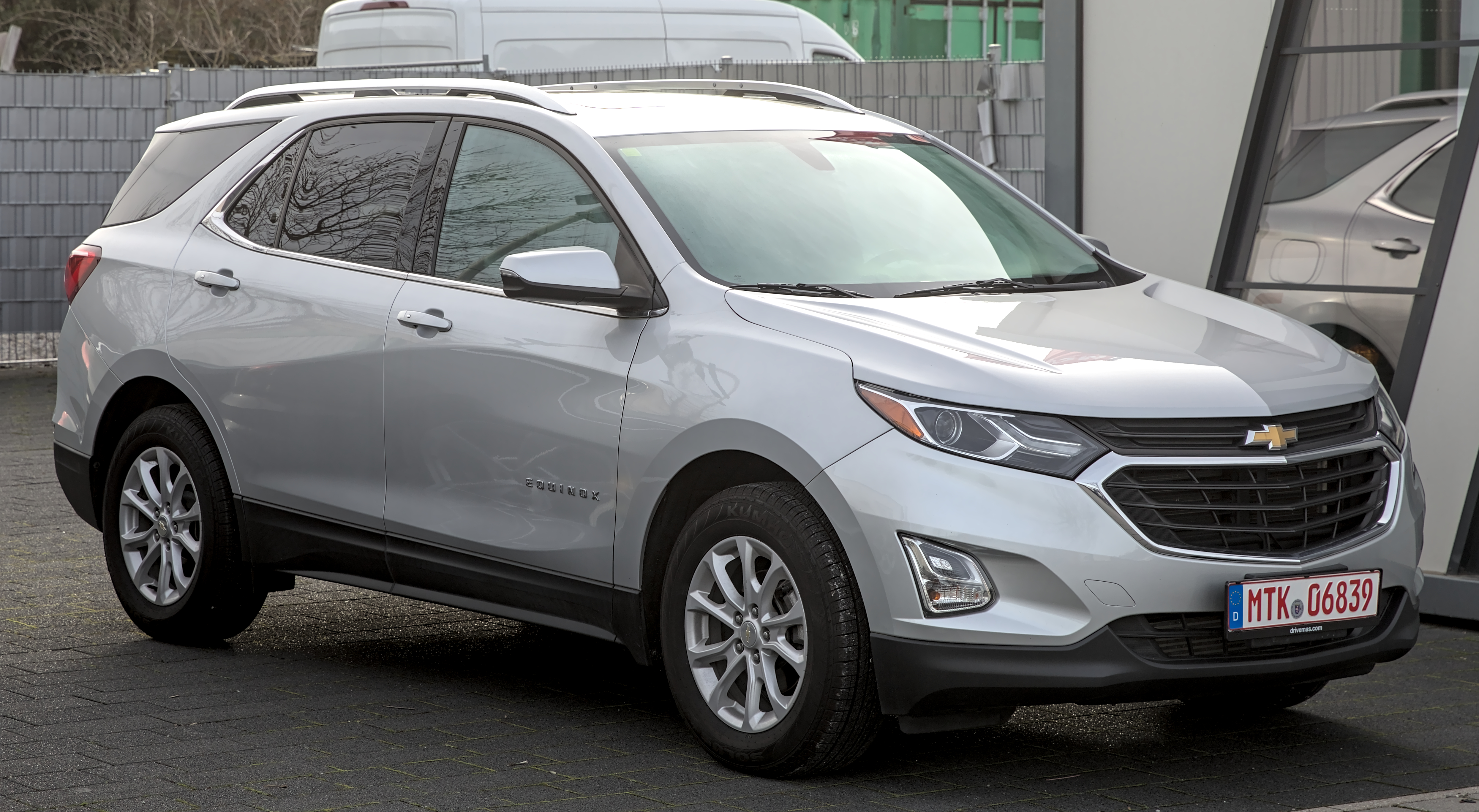
Chevrolet Equinox
"...the Hyundai Onyc 5, the Mustang Mach-E, the Chevy Equinox CV, all kind of flying around this price point, ..."
The Chevrolet Equinox is a small SUV made by Chevrolet. It is a family-friendly car that can carry people and cargo comfortably. There is a version that uses electricity to run, which helps save fuel.
The Chevrolet Equinox is a compact SUV known for its practicality and affordability, often competing in the mainstream crossover market. The Equinox CV likely refers to an electric or hybrid variant, reflecting Chevrolet's push into electrification. It is often discussed due to its competitive pricing and role in expanding electric vehicle options.

Toyota A90
"Rivian went public back in 2021 at $78 a share, touched $170 briefly. It now trades at 15, a 90% decline from the peak. The R2 must do three things all at the same time,"
The Toyota Supra is a fast car made by Toyota that is designed for fun and sporty driving. It is smaller and quicker than regular cars and is popular among people who like performance cars.
The Toyota Supra is a sports car celebrated for its performance and driving dynamics, often praised for its blend of power and handling. It has a strong enthusiast following and is frequently mentioned in discussions about sports cars and automotive culture. The Supra's significance lies in its legacy and recent revival with modern technology.
Request an Explanation
Heard something you'd like explained? We'll add it to this episode.
Sign in to request explanations for terms you heard.
Want to learn more?
Browse our glossary for plain-English explanations of automotive terms, jargon, and concepts.
Help improve this episode
See something that's not quite right? Our annotations are AI-generated and can sometimes miss the mark. Click the flag icon on any annotation to suggest a correction.