Cooper is the name of a car brand the CEO is talking about. He’s saying it’s still relatively new, but it’s already had good results.
Car
Cooper Raval
The Cooper Raval is the new car model they’re getting ready to sell. The CEO talks about how they’re building up to the launch with early cars, press events, and reviews.
He’s talking about a big car-industry event in Munich where they presented the new car to the media. It’s a common way automakers build hype before sales start.
Ravel is Cooper’s newest electric car aimed at being an affordable “entry” EV. The CEO says it’s the first in a new set of electric models built in Spain.
MEB plus is Volkswagen Group’s electric-car “foundation” that automakers build on. Using the same platform helps companies develop new EVs faster and more efficiently.
The Skoda Epiq is a small electric car in the crossover style. It’s part of a group of similar new electric models, meaning it’s built using shared design and engineering ideas. The podcast is talking about how people are responding to it and where it will sit in Skoda’s lineup.
Wolfsburg is where Volkswagen does a lot of its major engineering and planning. The CEO is saying the platform work involved people from that Volkswagen center.
It means making electric cars easier for more people to buy. The speaker is saying they want EVs to be less expensive and more common, not just for a small group.
They talk about where Cupra is headed next—how it will grow and what kinds of cars it will make. They also discuss what powertrain approach they might use on future platforms.
The Cupra Tindaya is a concept car Cupra showed off. In this conversation, the CEO says they’re still considering whether it could become a real car in the future.
A range extender is like a backup generator in an electric car. It doesn’t directly drive the wheels; instead, it helps make electricity so the car can go farther.
SSP is the platform (the shared car “foundation”) that Volkswagen Group plans to use for future vehicles. It’s basically the design base that different cars can be built on.
They’re talking about moving away from gas-engine cars over time. Regulations and customer preferences are pushing manufacturers to sell more electrified cars instead.
Plug-in hybrids are cars that use both a gas engine and an electric motor. You can charge the battery by plugging the car in, but it can also run on gas.
Decarbonizing cities means reducing pollution that warms the planet. Here, the host is saying switching to electric vehicles is a major way to hit those CO2 goals.
The transition phase is the in-between period while the world shifts from gas cars to electric cars. The point is that not everyone switches at the same time, so companies need options for different buyers.
The Volkswagen Group is a big car company that owns several brands. The CEO is saying that because they’re part of that group, they can share technology and save money when building electric cars.
Import tariffs are taxes on products shipped into a country. If tariffs are high, imported cars can cost more, which can affect whether they’re sold there.
The Cupra Tavascan is Cupra’s main electric car. In this interview, they’re talking about how important it is to make the business decisions work for that specific electric model.
The European Commission is a major EU organization that helps set and apply rules across Europe. They mention it because they reached an agreement that affects tariff costs for their cars.
Concept
local manufacturing
Local manufacturing means making cars in the same region where they’ll be sold. They’re saying it can be competitive, not automatically more expensive than building in China.
Time to market means how quickly a company can go from designing a car to selling it. They’re saying their group can speed that up by learning from colleagues elsewhere.
Material costs are the costs of the parts and raw materials used to build a car. They’re saying they can learn approaches from China to keep those costs down.
“Elevate” is the name of the new strategy plan the CEO says Cupra is rolling out. The idea is to improve the cars and the business so the brand can do better going forward.
A “performance program” is a company effort to improve how well it’s doing. In this case, the CEO says it’s mainly about cutting costs so the brand can make more profit.
Fixed costs are costs a business has to pay regardless of how many cars it sells. The CEO says they’re trying to lower those costs to help the company earn more profit.
This segment focuses on how Cupra plans to maintain its “challenger” identity as it grows. The CEO emphasizes design as the core pillar, with performance framed as something expressed through styling and then confirmed when driving.
A “challenger brand” is a brand that tries to compete by being noticeably different, not by copying what everyone else does. The CEO is saying Cupra wants to keep that distinct identity as it grows.
The Dodge Challenger is a performance car, usually with a strong engine and a sporty, aggressive look. It’s the kind of car people associate with Dodge’s “challenger” identity. The podcast is likely talking about how to keep that identity going as car technology changes.
“Performance DNA” is a branding phrase meaning the visual cues and design language that suggest a car’s driving character. The CEO is linking Cupra’s styling directly to how the car feels and performs, both on the outside and when you drive it.
The SEAT Ibiza is a popular small car from SEAT. They’re saying it’s getting mild-hybrid updates next year and that it’s been selling very strongly in Spain.
The SEAT Arona is SEAT’s compact crossover. They’re planning mild-hybrid updates for it next year, alongside the Ibiza, to keep the lineup competitive.
A mild hybrid uses a small electric motor to help the regular engine, especially during acceleration and stop-and-go. It’s a middle step toward full electrification, and that’s why they’re using it for the next updates.
A platform is the car’s underlying “build” design. They’re saying the electrified version of that design is expensive right now, and they need it to get cheaper so the brand can still profit.
Decontenting means taking features out of a car to make it cheaper to build. The CEO says they don’t want to do that just to keep a brand going if it harms the brand’s identity.
Brand differentiation means keeping two brands feeling different, not just changing the badge. The CEO is saying they don’t want to cut features and re-sell the same basic car under another brand name.
Cupra Leon is a sportier, more performance-minded version of the SEAT Leon. Here, the CEO is talking about whether future Cupra cars will still be closely based on SEAT models or become more unique.
SEAT Leon is a common compact car model in the SEAT lineup. The CEO mentions it because earlier Cupra cars were built from the same underlying idea as the Leon, and they’re now trying to keep the brands more separate.
Bespoke here means “made specifically for that brand,” not just a shared design with a different badge. They’re discussing whether future Cupra cars will be uniquely developed instead of reused from SEAT.
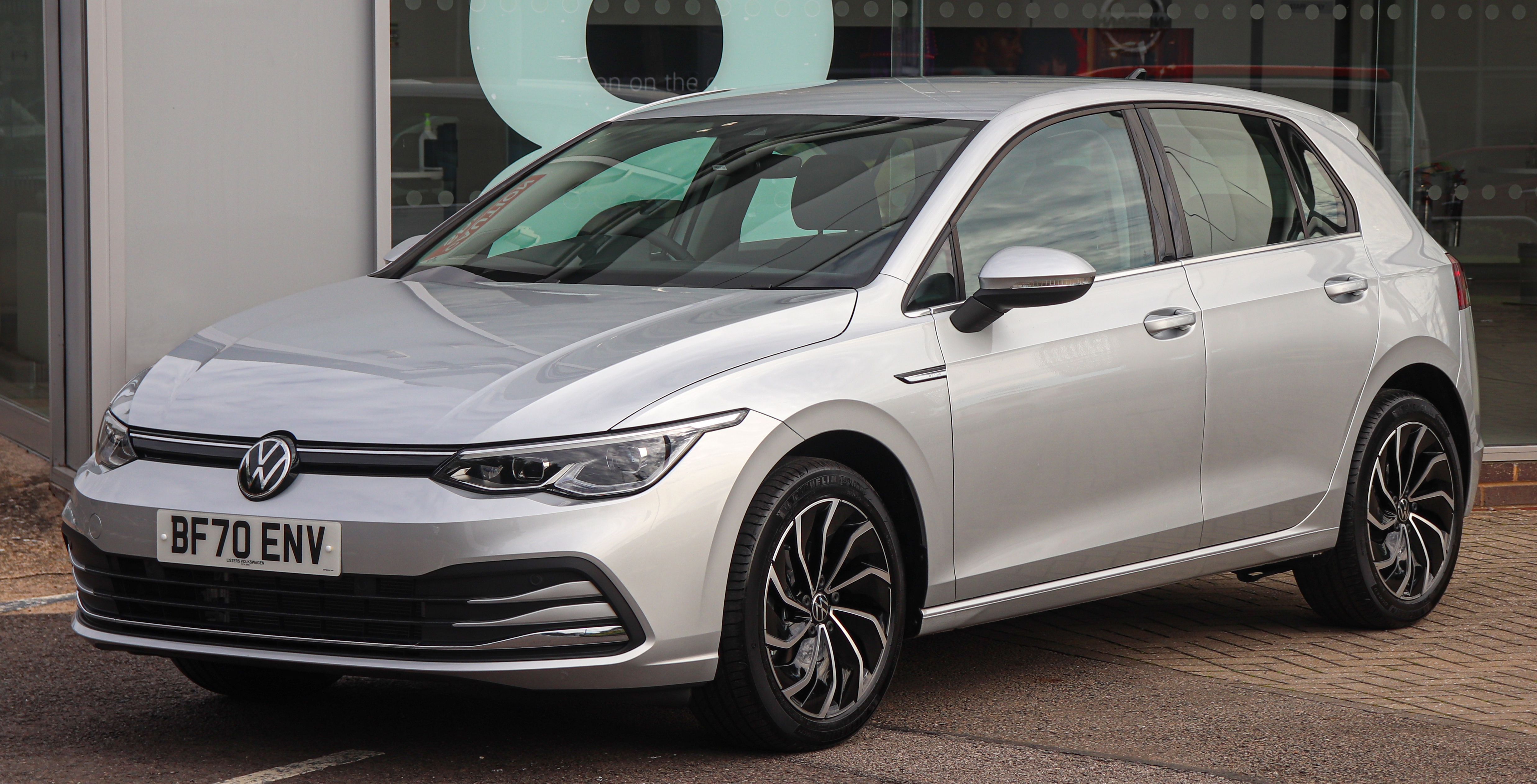
The Volkswagen Golf is a very popular compact car model. In this discussion, they’re talking about when (or whether) the electric version should arrive, based on what buyers are doing in the market.
They’re talking about when the electric Volkswagen Golf should arrive. The idea is that the company is changing the schedule because customer demand and sales of other EVs are going well.
The Volkswagen ID.3 is an electric version of a compact hatchback from Volkswagen. They mention it as doing well, which influences their plans for the electric Golf.
The Cupra Born is Cupra’s electric car. They’re using it as an example of how Cupra now has both EV and non-EV models in the lineup.
LIVE
Welcome to a bonus episode of the AutoCar podcast. AutoCarMeets brought to you in association
with our sponsor Anderson, whose EV charges start from just £695. Visit Anderson-EV.com.
This week our deputy editor Felix Page meets Seat Cupra CEO Marcus Helpt over to Felix.
Hello and welcome to a very special episode of the My Week in Cars podcast. I'm Felix Page.
I'm the deputy editor of AutoCar and I'm joined today in this very swish London studio by the
CEO of Seat and Cupra, Marcus Helpt. Thank you so much for being with us. How are you?
Thank you first of all Felix for inviting me here. I'm really happy to be here. This nice
setting and super happy to be in London having some interviews and preparing to borrow my
FT summit appearance. So happy to be here. This is why you're in town, the big FT summit
where we hear from lots of CEOs. I think it's your first time speaking as Seat Cupra CEO at
the event, which makes it the perfect time to ask you. You've been in the position for a good
few months now, almost a year. Yeah, one year. Yeah. And how have you found it? How's it been?
Are you settling in well? What's the experience been like of taking over the reins?
Super busy. As you can imagine, I took over quite fast and things were running. So there was not a
lot of time just to get used to the position. It was just dipping into the pool. And this is
what I did. I'm happy to have a super good team. So it was not completely new for me before. As
you know, I was vice president for production and logistics. So I was aware about the projects
going on, the situation of the company. And it was then about to find this new setting with
the team and start to work on whatever priorities, what is a business plan and at least now at the
end working for a new strategy for the company, what we are doing now. So super, super busy start,
but super happy and now happy to be here. Give me a bit of a flavor. I always think looking at
the industry landscape as it is, who'd want to be a car company CEO, right? It's one of the toughest
jobs in the world at the moment. So you get that call up. Is it daunting? Is it exciting? What
runs through your head when they say, right, you need to run this car brand now?
Yeah, I mean, first of all, for me, it's important. I'm a car lover. So probably for me, it was my
dream. It's nothing I planned when I was a kid or some years ago. But I had the opportunity to step
in. And for me, it's super exciting. And even more with a brand like Cooper, a very young
brand, eight years old, with lots of success in these eight years. And I think as a car lover,
there is no better place to work in than the one I have the honor to do now.
We tend to divide the industry up into sort of startup brands and legacy brands. You're in a
unique position because you sort of run both in a way. You've got two brands under your umbrella.
We'll come on a bit to what that's like running those two brands in parallel. But just give us
your first impressions when you got in the chair on your first day. What was on the keep list? What
was on the change list? What sort of company did you take over?
Yeah, I mean, we are preparing the launch of the Cooper Raval, where we are now in the middle of.
And there was still a way to go. And the ramp up phase where we produced the pre-series cars,
where we prepared the wheel premiers, we had to prepare the IAA presentation in Munich, which was
my first big presentation as CO, as you can imagine, lots of pressure, lots of people looking at me
for the first time. And that was the priority to assure a good Cooper presentation in the IAA
and afterwards to roll out the complete launching program that we are now realizing. As you know,
now we are having the international media drives in Barcelona with teams of all our markets.
Your colleague was there, lots of journalists, and we are super happy about the first feedbacks we
are getting because, of course, we are convinced this is the best car in its class.
But it's not only us now saying it, it's the specialized praise press having a super good
feedback. And this gives us lots of confidence for the start of selling this car in our different
markets. I do want to talk more in depth about the Raval, it's such an important car. And I know
that you're very pleased with the reviews. They certainly seem to be prevailingly positive,
which is a really reassuring sign. But just coming back to the company as a whole,
and particularly with the focus on the Raval, outwardly, the focus seems to be very much on
Cooper as a brand over the last eight years that has taken over as the focus from Seat.
What's behind that transition and what do you think made that brand strike such a chord with
the public? Why did it become so successful so quickly? Yeah, let me first look back at Seat
history. Seat is now 76 years old last year. We was our 75th birthday, so we had a big
exposition of our cars in the Barcelona Motor Show, which was really, really very
emotional to all the people, especially to the Spanish people, because Seat is part of Spain,
is the only automotive company that can design, develop, produce and sell cars as the only Spanish
company. And this was the perfect foundation to create Cooper without, probably without Seat,
and without the whole company. This is behind, it would be impossible to create a brand like Cooper.
We like to say Cooper was a kind of startup inside of a brownfield, and also being part
of the Volkswagen Group, providing technology, having our plant in Martore, we had lots of assets
that a normal startup first has to build up, and we were able to profit from them. And then it was
a bold decision, and people were looking at us and saying, Hey guys, are you crazy and creating a
new brand in Europe in 2018? Why? Why should you do that? And Seat was always up and down with its
results. So the formula was how can we find a car? How can we find a brand that can aim for a sweet
spot where maybe people are willing to pay more for a car? And this is exactly what we did with
Cooper. I was not there at the time, but we found this sweet spot between the premium market and
between the volume market. And we also decided Cooper is not a brand that everybody must like
or should like. Cooper must be something different, something special to address these customers that
want to have also something special, like you could compare with fashion, different brands,
and you just choose what you want. And we were lucky, we found lots of customers, lots of customers
that very fast, we are loving the brand. And we see already now after launching eight cars in eight
years, and a success of growing that is really brutal. And I would say 30% a year in Europe,
we hit 1000000 cars last year. And so it's a success story. And we are praised for that also
inside of the Volkswagen group. So I'm really, really happy that we took this decision in 2018.
With the benefit of hindsight, it looks like the smartest move ever, you know, just 34
years later, we were already seeing the first Chinese car companies coming to Europe en masse.
And they had to follow that same journey as you, but without the heritage to back it up.
Do you think it was, do you think timing was on your side? We saw a couple of other European
companies set up offshoot brands at that time as well. But do you think the timing was was
central to Cooper's success? Yes, for sure. Looking back when just referring to the numbers,
I said, I think the timing was perfect. But not only the timing, I think also we were able to
create something that is not just a car brand. And I like to say Cooper is a kind of ecosystem,
you know, all the things we do, all the activities on sports, on music, festivals,
and everything we do, we do in a different way. It's not the traditional way of doing things.
And I think this ecosystem in the automotive industry or automotive world is something unique.
And this is also why we are able to attract, for example, the youngest customers
of the Volkswagen group. We have the youngest customer base. And I think this is something
that really makes us different. I think a perfect embodiment of that is perhaps the
Ravel, the new entry EV that you've just launched last week, we're just reading the first reviews
of it now. This is the first of four MEB plus cars that say that Cooper is going to build in
Spain, all on top of this sort of shortened MEB platform, twinned with the Polo, the ID Cross,
and the Skoda Epic. You must be pleased with the reviews, as I say. But what does that car mean
for Cooper in general? And not just from a product perspective, but in bringing
entry EV production to Spain? Yeah, first of all, let me say for me, it's super special
because I was, since the beginning, in a different position. But it's kind of my baby,
what is coming now out to the street. So I'm really proud about the efforts of the team.
As you said, it's the first car of a new family. And this family is a special one because the
Volkswagen group trusted us, as Seat and Cooper, to develop these cars. And we developed all four
cars. The platform was developed with our colleagues in Wolfsburg. The heads were done by
Yasin and Martore with our R&D team. And they will be produced in two different factories,
in Martore, our factory and in the factory of Volkswagen and Pamplona. And Cooper embodies
the complete transformation we are going through with our company. It's a transformation we did
for the last years. And it's, of course, an industrial transformation, transforming our
plant. But it's much more than that. It's a transformation of the market. It's bringing a
new car that we like to name as the game changer. The thing, this car is changing the rules.
For me, it's opening a new segment by itself. And you had the opportunity to see the car.
It's just four meters. But it embodies complete Cooper DNA. Design always in number one. Performance
very important. The car, when you drive the car, you feel you are driving a go-kart. And also
exterior colors, matte colors that are really our Cooper DNA. And when you go to the interior,
we have lots of novelties. What I like more is an innovation we did with the projections on the
front door panels. We are the first ones in the automotive industry to have it. And so we made
this project with lots of love, effort. And now we can't wait to see it hitting the streets and
especially here in UK, London and all the other cities. What does it tell us about maybe the
change in priorities for the industry in general? We hear a lot about how there aren't enough
affordable electric cars in Europe, particularly as China is providing those very cars to the
European market. Obviously, the Rival is the more premium of those four entry cars for the
Volkswagen group. But do you think that car makers are, they have a responsibility to start
providing these smaller, more accessible cars, even premium manufacturers like yourself?
Yeah, first of all, the position of Cooper, we will never be a volume brand. Although with this
car, we are democratizing electric mobility. Because it starts here in the UK, it will start
with 24,000 pounds. I think it's a very attractive starting price for a car that is very special,
like Cooper with its own positioning, going up almost to a premium brand. And yes, going back
to a question, of course, it's our responsibility to make electric mobility more affordable.
Because the future is electric, we know it. And it's the only way to create sustainable
environment, sustainable cities. And there is no doubt about, we also need to achieve CO2 targets.
And I think this project of the Volkswagen group embodies perfectly this objective we had to make
democratize the electric mobility. And I think this project, we have four hearts,
we have 80% of common parts, we can use scale in order to have better costs on our side.
And this is the beginning of, I would say, a new era for us.
You previously, I was looking at your CV, your career history, you previously led production
of the A0 cars for the Volkswagen group. So this is the up, the me and the city go, am I right?
Yeah, that was the up where it was A00. That was the Polo and all its derivates, but also
all the other cars produced outside of Europe, in China, for example, La Vida in South America,
the Goal. I mean, it was a huge project for me. Small cars, basically. Small, affordable, accessible
cars. Exactly. That must have been a very helpful experience when it came to getting
Ravel into production. What changed in those, that's probably 10, 12 years between those two
projects, what's changed in the industry? Has it become more challenging to make cars like that?
Yeah, for sure. I mean, if I look back, this is 14, 15 years ago. For me, it was a super great
experience. I was coming from Seattle at that time. It was not a global, we were present in
global markets, but it was not as global as it is now. And I had the opportunity to be in China,
in South America, in South Africa, in India. But the times we were living were completely
different. It was pre COVID, pre semiconductor crisis. And nobody spoke about logistics. Logistics
was something that was just happening behind the scenes. And it almost never came to big disruptors
and in the supply chain. And nowadays, when we look to the geopolitical situation we have,
our strategy in the group is China for China, Europe for Europe, and America for America.
And we have lots of disruptions in the supply chain. So I would say the normal world is over.
And now it's about being flexible, agile. And it's about speed, being able to adapt very fast
on the changes. And I think the world as it was before will never come back. So now it's on us
to achieve this flexibility, to be faster, and always to keep growing in terms of competitiveness.
It's interesting to hear you talk about the sort of regional disparities
between various automotive markets. I mean, we hear so much about the differences between China
and Europe and the problems it causes for product development. Do you think Kupra is
a European brand? Is it rooted in Europe, are the products tailored to Europe? And is that
always going to be a central component of the brand? We are a European brand. Yes,
we are rooted in Europe. We like even to say that we inspire the world from Barcelona. This is what
we want to give our customers a piece of Spain inspired in Barcelona in our cars. I think the
design stands very much for that. You can feel it. Our designer is, by the way, a Spanish guy.
I don't know if you know him. Jorge Diaz, exactly. And I think the brand Spain sells a lot outside
of Spain. So it's important for us to be honest to our roots. But for sure, we cannot stay in
Europe as our Europe is our biggest market. Yes. And probably it has a very important position
when we design a new car. And we hear to our customers, because at the end, the customer
stands in the middle of everything. But of course, Kupra, when we look back, is a story of growth.
And when we look to the future, it has still to keep growing. So it's growing in terms of cars.
That must be also bigger than sometime as we presented in Munich with the Tindaya.
But it's also expanding to other markets. Actually, that's a really good point. This
isn't on my list. But you have just reminded me of a question I've asked some of your colleagues
before. I came out to see the Tindaya before the Munich Motor Show. Fantastic looking thing.
Do you still plan to build that? Could that still find a place in the Kupra portfolio?
Yeah, of course. You said it looks fantastic. Why should we not build a Tindaya? We are indeed
looking at our plans when we could build a Tindaya. But it's something I can promise
this car will see these tweets in some years. Fantastic. The technology underneath that car
was really interesting. It used a range extender powertrain. Is that something that's still
relevant, do you think, in today's environment? I mean, all this discussion is changing day by
day very, very fast. And it will be, of course, on a new platform of the group. This is decided
already. The SSP. But which powertrains we will have at the end is a decision we have not taken
now. And we want to stay flexible as long as possible. Because when the car hits the streets,
we need to assure that it has the right powertrains for our markets, for our customers. But we are
lucky we are as part of the Volkswagen Group. We have the technology. And so we can decide quite
late which technology we bet on for this car. Of course. As Cooper has evolved, it's obviously,
it's entered new segments. I mean, every car Cooper launches in a new segment because it's
such a young brand. But do you think the bandwidth has increased? Could Cooper enter more segments
than maybe it could have five years ago? I mean, I don't know whether there will be anything smaller
than a Ravel, but could you launch bigger cars? Could you tap into that more premium market?
Yeah, for sure. For now, we first need to make and happen with the Ravel because we are entering
this new segment with high ambitions, I have to say. We have high volume ambitions. And
being here in the UK, seeing that EVs are already very present. When you go through the streets
of London, tomorrow I will head up to Manchester. I expect a similar picture. So this makes us very
confident that this is the right way. And of course, when we look to our future portfolio,
going to a higher segment is our aspiration. And as you can imagine, always discussing and
deciding on our portfolio. And we would love to go to something bigger. That sort of flexibility
when it comes to powertrain development is so important. Every manufacturer says the same thing
at the moment as regulations are changing and market demand is evolving. I've just spent,
well, recently I spent sort of six months in a Leon triple three VZ four-wheel drive.
Fantastic thing. Brilliant engine. Amazing car. Then I get in the newborn, also a fantastic car,
but on its own attributes. How do you manage product development when powertrain mix is so
uncertain and not everyone wants an EV, but you have to start phasing out the combustion
powertrains, which are a core strength of the brand. How do you approach that? That's a good
point. And we are lucky because we have combustion cars, plug-in hybrids, BEVs. We are launching
mild hybrid cars next year with the CRTBs and CRTARONA. But who defines at the end what we
produce are our customers. We need to hear to our customers. And the customer behavior is
different from country to country. And in Europe, it's clear that the future is electric. And there
is no other way to decarbonize cities. And it's the only way to meet the CO2 targets.
But I think what is super relevant is the transition phase until we arrive at this point
where EVs are the dominant in the market. And in this transition phase, you have to be flexible.
And having a Leon with a visit engine for some petrol heads here in UK, also in Germany,
in every market is as important as having the BEVs for the people that already took the decision
to go for an electric car. And what we are looking forward really is to stop speaking about
transformation and just say, okay, transformation is done in 20, I don't know, 29, 2030. And I think
we need the help of everyone to achieve this point. Because now we speak about a lot of electrification,
what are the challenges behind it. There are a lot of challenges. But with our will and the
will of the governments and the will of the customer at the end, electrification, I would say,
starts to be the present. Is it fair to say that your position as part of the Volkswagen group
shelters you from some of the huge costs that other manufacturers have incurred in trying to
go electric and then delaying going electric? You can take that more flexible approach because
you have the technology and the group and the platforms behind you. For sure. Being part of
the Volkswagen group is a big advantage for us. I always say it's like going to IKEA and
you have everything on the shelves, you need to take it and build it up for yourself.
This is an exaggerated picture, but it's an advantage for us. And we can create scale with
that. We can work with all the other brands together on reducing product costs, for example.
But we still need to do some homework. We need to be faster. We need to increase our competitiveness
because competition is coming. But we have a very good position for it.
We should talk about China, really. You talk about getting faster. You can't not talk about
China speed. You do build a car in China. The Tavascan recently given exemption from some of
the import tariffs in the EU. Was that a crucial decision for you in keeping that car on sale?
Could you have kept that car on sale without that exemption? And what has building in China taught
you about the differences between the two environments? The Tavascan is our electric
flagship, I would say. And of course, it was very important to avoid the tariffs in order to have a
better profitability for this car and keeping it running, especially here in Europe.
The decision we took to produce in China when we took the decision was a correct one and we would
do it again because it was the only opportunity we had to have this car for our brand. So we are
very happy that this car is existing and we managed to get an agreement with the European
Commission not to pay the tariffs. And I think in the future is the Raval. The Raval is produced
in Matoré. We have a very good cost structure, very good production cost. And I think this is
important also to show to the competition that in Europe we are able today to compete
with electric build cars made in Europe. And I think this is a very strong message
and this gives us also lots of confidence that we are on the right path.
That's really reassuring to hear that local manufacturing can be as competitive as it is
in China. It's perhaps not quite there yet for every manufacturer. You said you would build there
again. We've heard recently Oliver Blumer talking about potentially some VW Group products
for China being appropriate in Europe. What's your view on that? Could there be a
Chinese product that could be a Cooperate in Europe?
Yeah, this is more a group-related question. In my opinion, I would say the group has decided
for a strategy to think that this is the only one that probably can lead to success. It's
because we need to meet the requirements of Chinese customers. And I think the only way
then to do it is being there, developing there and assuring that the cars that the Volkswagen
Group produces and sells there are the ones that the Chinese customer wants to have.
For us, which is the advantage, we can learn from our colleagues there to reduce development
time, to reduce time to market, also to see what they do different to us when we speak
about material costs, for example. So I think this is again an advantage being parts of such a
group because we can learn from our colleagues from China and just copy lots of things they do
right here in Europe to assure that Europe stays competitive in the future.
You've given us a bit of a sense of it already and your approach to leading a car brand. What's
your approach to management? What are you like as a manager? How do you approach
leading a team and operating this huge expanding network?
People. What I like most is working with people and I see a big car manufacturer or a big car
company like we are like a big football team. Everyone has a role. We have lots of players.
We have trainers. We have physiotherapists. We have different roles and the management
of course need to be aligned on one way. Therefore, some days ago we had a strategy day
where we presented our new strategy. We call it Elevate and I think this describes very well
what we need to do in the future, which has to be the way we need to elevate everything we do.
We need to elevate the products to a short customer like them. We need to elevate the
profit of the company in order to be more profitable in the future and this is how I
like to work very near to the people and understanding us as a very good functioning
football team that can make it at the end on number one. Do you think we will see on the
surface will the Elevate plan, does that represent a new phase for Cupra? Are we coming to the end
of the first phase for Cupra and we're going into another one now? When we presented the strategy
and I was on stage with all the management and I said guys we are on our right way. We have an
objective. We know where we want to go and there I made a comparison with sailing but the winds
are changing. It's a perfect storm and now we need to keep the boat in this direction and to keep
the boat running in this direction things are tougher now. So we need the tools and we need
performance program as an example that we just launched this year to reduce cost. We need to
reduce fixed costs. We need to work on product cost so we need to tackle everything that defines
the cost of our product in order to increase profitability and as I said the direction is
clear. The future is electric. We know where to go with Cupra. It's not changing everything. It's
for the brand's positioning. Cupra has always been presented as this sort of edgy disruptor,
rebellious. The new car is called a rebel in Spanish. When does it just become a mainstream
brand? For how long can it be disruptive and outside the norm and edgy as it becomes more
popular and reaches new audience with cars that are more accessible? Does it then become a bit
more sort of publicly accepted and normal? I would say never. We don't want to be mainstream and I
think as I mentioned before I think the success formula of Cupra is being different addressing
customers that want to have something different not the traditional car and this is by the way
the challenge we have. How to keep the brand as a challenger brand as something different
as something that can address still customers looking for something different over the next
years and of course we will do it over the products but also over all what surrounds the
brand as I said before the partnerships we have sports events, paddle for example the fastest
growing sport in the world and I think we have the best team to do it. We have super creative
people, we have super professionals on every area and it's about us to find our way and to stay
how to say true to our roots. What role does design play in that? We've touched on it before but
design has always been a central pillar of Cupra's strategy. Very striking looking cars with you know
you can sort of see the performance DNA in the shape of them. Does that just get more and more
important as new brands come onto market and you need to really cement your positioning?
How will you keep design at the heart of your strategy? When people ask me what is the most
important characteristic for you in Cupra I always say it's design design design because I'm
convinced that the design stays in absolute number one. Of course performance is directly
related to design I think performance is also described through the design of the car. Of
course when you then step in the car and drive it the performance is also to come down to the street
but that we also are very successful in and I would say performance is our secret formula.
A quick question just building on that why can't we have some some brighter colors? Is it important
that Cupra keeps this sort of dark color range? We've seen some really nice colors introduced
on Ravel this Matt Green for example why not do a big bright blue and a bright red and a yellow
orange you know what does that tell us about the brand? I would say we are
exactly there where we wanted to be with the colors and we have a very detailed process how we
choose colors how we define our cars it's part of the design process and brighter colors yes
we get the point and I just would say stay tuned for what is coming. Fantastic I'll get my sunglasses
on and wait and see. I'm conscious of time we've been focusing on Cupra which is the brand of the
moment I think it's fair to say we can't ignore Sia it's in your job title. Give us a flavor of
where that brand sits now what its role is and what what the future might hold for that. Yeah first
of all I need to look back to October November last year when we made the presentation of the
new Siat Ibiza and Siat Arona on Ibiza Island and that was a strong signal to our dealers to our
customers that we are still investing in the brand Siat. We cannot imagine our company without Siat
I mean Siat is the heritage of our of our company and Siat made history in Spain and in some other
countries and so a very important message we still are investing in the brand Siat. Next year we will
have a mild hybrid versions of these two cars and both cars are still running on a very high
rate for example the Siat Ibiza was the most sold car in February in Spain in our home market
and this just confirms that this brand is still super strong and working outside there and with
the customers. When we face 2930 and CO2 becomes harder than today and for sure there will be
a point where we need to discuss what can be the future of this brand for that we probably need
still to work on the cost of electrical platforms because today it will be very tough to have a
Siat that is able to earn money with the cost we have so it's first working on the cost making
scale reducing the cost and there someday the discussion will pop up what to do with Siat but
until then we have a clear strategy to keep betting on the models we have and also the brand
position is completely different customer base from both brands is different we cannot forget
overseas markets where electrification is still not as it is in Europe and so we are very happy
it's part of the strategy what we are doing now so it's it's not just a causality so we are there
and and we still bet on both brands very very strong. That's good to hear I'm going to put you on the
spot and just ask you very simply do you think I'll be able to buy a new Siat in the UK in 2035?
I hope so. Well that's reassuring hopefully it's a new Ibiza the reason I ask is because
it strikes me as you say cost is so important and I know that costs are even a challenge
for a premium small electric car the margins are still super thin in Europe why not just
decontent the Raval a little bit and you know take some bits off it and put some steel wheels on it
and call it the Siat E-Beathe you know is that is that not the the cost effective way of keeping
that brand going perhaps? I would never do that because I think we need to keep both brands
very differentiated and Raval will always be a Cupra and just decontenting Cupra cars and
making sets out of them is for sure not the right strategy for us and I think both brands deserve
its own DNA and both brands have to find its own way and so for sure we will not see a Raval
with a Siat logo. Does that mean then that we're moving away from for good
from Cupras being based on Siat you know we've had the Cupra Leon was a Siat Leon do you think
all Cupras in the future will be entirely bespoke? If I look back I think it was a clever move and
we use a good opportunity with the Leon move but also part of this strategy looking to the future
is to have a completely different portfolio for both brands and so I don't think we will repeat
something like that but as I said it was a good opportunity and the proof of it is the Cupra
Leon is working the Siat Leon is working so we did a good job there but now it's about
keeping both brands truly on their DNA and in a similar vein I know you watched Thomas Schoeper
who is the boss of Brand Group Corp for the VW Group as well as being Volkswagen brand boss
he said they're delaying the electric Golf it's no longer needed as early as 2028
due to market demand and the ID3 and the Golf are currently performing quite well
you're in a very similar position you've got the Born and the Leon you know combustion and EV
in the same segment so what does that mean for the Leon can the Leon just continue
continue indefinitely I suppose I mean we have now a fully fledged portfolio when we see the
the sum of both brands and we are really happy with that portfolio because we see it's it's it's
working very good in the different markets and we need to have this combustion car and we need
to have this BEV that complement each other I would say and you said it before you had Leon VZ
and we still need to serve at the end the customer the boss is the customer the boss is not it's
not us in the executive committee our boss our customers they say what they want and we need
to assure that we give them the products they want and as long customers demand both worlds we will
need to produce both worlds okay fantastic and I'm conscious of time and I'm conscious of your
workload over the next uh next couple of days while you're in the UK but just to finish us off
give us some things to look forward to from say at Cupra over the next year or so yeah let me let
me say my biggest wish in some years is that I'm sitting here and I'm speaking about the success
of the Raval and looking back like we like I do now and they look back to the eight years of Cupra
I would love to look back and say okay Raval was was and is a real success we are hitting the volumes
we planned and and transformation is no more a topic to discuss on transformation is the
reality and the present and this is my biggest wish for the next years fantastic where you've
got a lot to do to make that work so I'll let you get back to your to-do list thank you so much for
joining us today Marcus thank you very much for inviting me and thank you to you too for listening
thank you for watching if you're watching on our youtube channel we'll see you next time thank you
very much goodbye thank you for listening and thanks to our sponsor Anderson Cropley and Pryor
that's me we'll be back on Wednesday with our regular my weekend cast podcast
About this episode
Felix Page chats with Seat/Cupra CEO Markus Haupt about his first year in the role and the brand’s shift from Seat to Cupra. Haupt explains where the Cooper Raval sits in the launch plan, how international media drives are landing, and why Cupra grew as a “startup inside of a brownfield.” The conversation moves into EV strategy: the Raval as the first of four MEB plus cars, projected graphics, UK pricing, and how tariffs and platform costs shape what stays on sale.
In this special episode of the Autocar podcast, we sit down with Markus Haupt, CEO of Seat and Cupra, to hear about his exciting plans for the two Spanish brands.
As the crucial new Raval city car hits the market, thoughts are turning to what Cupra does next - and it sounds like BMW and Volvo might have something to worry about. Meanwhile, the future of Seat – long uncertain – is starting to finally take shape - and we've got all the details.