Bonus: Seat-Cupra future unwrapped with CEO Markus Haupt
About this episode
Felix Page chats with Seat/Cupra CEO Markus Haupt about his first year in the role and the brand’s shift from Seat to Cupra. Haupt explains where the Cooper Raval sits in the launch plan, how international media drives are landing, and why Cupra grew as a “startup inside of a brownfield.” The conversation moves into EV strategy: the Raval as the first of four MEB plus cars, projected graphics, UK pricing, and how tariffs and platform costs shape what stays on sale.
In this special episode of the Autocar podcast, we sit down with Markus Haupt, CEO of Seat and Cupra, to hear about his exciting plans for the two Spanish brands.
As the crucial new Raval city car hits the market, thoughts are turning to what Cupra does next - and it sounds like BMW and Volvo might have something to worry about. Meanwhile, the future of Seat – long uncertain – is starting to finally take shape - and we've got all the details.
Hosted on Acast. See acast.com/privacy for more information.
Cooper
"And even more with a brand like Cooper, a very young brand, eight years old, with lots of success in these eight years."
Cooper is the name of a car brand the CEO is talking about. He’s saying it’s still relatively new, but it’s already had good results.
Cooper is discussed here as a car brand that’s only about eight years old. The CEO frames it as a “startup brand” with early success, and positions it as a major focus alongside another brand under the same corporate umbrella.
Cooper Raval
"we are preparing the launch of the Cooper Raval, where we are now in the middle of. And there was still a way to go. And the ramp up phase where we produced the pre-series cars..."
The Cooper Raval is the new car model they’re getting ready to sell. The CEO talks about how they’re building up to the launch with early cars, press events, and reviews.
The Cooper Raval is the specific new model Markus Haupt says the company is preparing to launch. He describes the launch process—pre-series cars, media drives, and presentations at major auto events—implying it’s the centerpiece of Cooper’s current product push.
pre-series cars
"And the ramp up phase where we produced the pre-series cars, where we prepared the wheel premiers, we had to prepare the IAA presentation in Munich..."
Pre-series cars are early versions of the production car. They’re built to test things and get the car ready before it officially goes on sale.
“Pre-series cars” are early production-intent vehicles built before full-scale launch. They’re used to validate the manufacturing ramp-up, finalize details, and prepare for public/press exposure.
IAA presentation in Munich
"where we prepared the wheel premiers, we had to prepare the IAA presentation in Munich, which was my first big presentation as CO..."
He’s talking about a big car-industry event in Munich where they presented the new car to the media. It’s a common way automakers build hype before sales start.
This refers to an auto-show style presentation at the IAA event in Munich. In automotive terms, these major shows are used to debut new models to press and industry before broader market rollout.
international media drives in Barcelona
"now we are having the international media drives in Barcelona with teams of all our markets. Your colleague was there, lots of journalists..."
They held press test drives in Barcelona so journalists could drive the car and report back. The CEO is saying the early reviews look very positive.
“International media drives” are organized test-drive events where journalists from different markets drive the car and publish impressions. Barcelona is mentioned as the location, and the CEO uses the feedback as a key signal for launch readiness.
Seat
"outwardly, the focus seems to be very much on Cooper as a brand over the last eight years that has taken over as the focus from Seat."
Seat is another car brand mentioned in the conversation. The CEO says the attention has shifted from Seat toward Cooper recently.
Seat is referenced as the brand that previously held the main focus, with Cooper taking over that spotlight over the last eight years. The CEO frames this as part of running two brands in parallel under one umbrella.

Cupra Raval
"I think a perfect embodiment of that is perhaps the Ravel, the new entry EV that you've just launched last week, we're just reading the first reviews of it now."
Ravel is Cooper’s newest electric car aimed at being an affordable “entry” EV. The CEO says it’s the first in a new set of electric models built in Spain.
Ravel is described as Cooper’s new entry EV. It’s positioned as the first of four upcoming MEB plus-based cars that Cooper will build in Spain.
MEB plus
"This is the first of four MEB plus cars that say that Cooper is going to build in Spain, all on top of this sort of shortened MEB platform, twinned with the Polo, the ID Cross, and the Skoda Epic."
MEB plus is Volkswagen Group’s electric-car “foundation” that automakers build on. Using the same platform helps companies develop new EVs faster and more efficiently.
MEB plus is a Volkswagen Group electric-car platform architecture. The CEO says the Ravel is the first of four “MEB plus” cars, meaning it uses an updated version of the group’s EV underpinnings.
shortened MEB platform
"This is the first of four MEB plus cars that say that Cooper is going to build in Spain, all on top of this sort of shortened MEB platform, twinned with the Polo, the ID Cross, and the Skoda Epic."
This means the EV platform is a “smaller” version of Volkswagen’s main electric-car base. That lets the group fit EV tech into different-sized cars.
A “shortened MEB platform” refers to using a smaller wheelbase/packaging version of Volkswagen’s MEB EV architecture. The CEO frames it as the basis for multiple upcoming models across the group.
Skoda Epic
"...orm, twinned with the Polo, the ID Cross, and the Skoda Epic. You must be pleased with the reviews, as I say. ..."
The Skoda Epiq is a small electric car in the crossover style. It’s part of a group of similar new electric models, meaning it’s built using shared design and engineering ideas. The podcast is talking about how people are responding to it and where it will sit in Skoda’s lineup.
The Skoda Epiq is a small electric crossover concept/next-model direction discussed alongside other Volkswagen Group small electric models. It’s mentioned in the context of being “twinned” with related vehicles, which typically means it shares a common platform and design approach. The podcast is likely covering early feedback and positioning—how it fits into Skoda’s lineup and what buyers can expect from the reviews so far.
Wolfsburg
"And we developed all four cars. The platform was developed with our colleagues in Wolfsburg."
Wolfsburg is where Volkswagen does a lot of its major engineering and planning. The CEO is saying the platform work involved people from that Volkswagen center.
Wolfsburg is Volkswagen Group’s headquarters city in Germany. The CEO says the platform was developed with colleagues there, indicating where key EV engineering work is coordinated.
industrial transformation
"It's, of course, an industrial transformation, transforming our plant. But it's much more than that."
It means the company is changing how it builds cars. They’re updating their factory and approach so they can make new kinds of vehicles.
“Industrial transformation” here means changing manufacturing operations—upgrading plants, processes, and production capabilities to build new vehicles. The CEO ties it to both factory changes and a broader shift in how the market is served.
matte colors
"And also exterior colors, matte colors that are really our Cooper DNA."
Matte colors are paint finishes that look more flat and less shiny than normal glossy paint. They can make a car look more distinctive.
Matte colors refer to paint finishes that don’t have a glossy, reflective surface. In automotive design, matte can be a distinctive brand cue because it changes how light and reflections appear on the body.
go-kart
"Performance very important. The car, when you drive the car, you feel you are driving a go-kart."
They’re comparing the driving feel to a go-kart. That usually means the car turns quickly and feels very agile.
“Go-kart” is used here as a driving-feel comparison: quick steering response, low body motion, and a sense of agility. It’s a common enthusiast phrase to describe how a car feels nimble and direct rather than floaty.
projections on the front door panels
"What I like more is an innovation we did with the projections on the front door panels. We are the first ones in the automotive industry to have it."
This sounds like a light or image feature on the door. Instead of just lighting the car, it projects a design onto the door panels.
“Projections on the front door panels” describes a lighting/visual feature that projects graphics or light patterns onto the door area. It’s an example of interior/exterior lighting used for branding and user experience, beyond basic illumination.
affordable electric cars
"We hear a lot about how there aren't enough affordable electric cars in Europe, particularly as China is providing those very cars to the European market."
They mean electric cars that cost less, so more people can buy them. The discussion is about whether Europe has enough of those.
“Affordable electric cars” refers to EVs priced to be accessible to a broader range of buyers, often to increase adoption rates. The segment contrasts Europe’s supply with China’s ability to offer lower-priced EVs.
democratizing electric mobility
"Yeah, first of all, the position of Cooper, we will never be a volume brand. Although with this car, we are democratizing electric mobility."
It means making electric cars easier for more people to buy. The speaker is saying they want EVs to be less expensive and more common, not just for a small group.
“Democratizing electric mobility” means making electric cars more attainable for more people, usually by lowering purchase price and expanding availability. In this segment, the CEO frames it as moving toward wider EV adoption without turning the brand into a mass-market volume seller.
CO2 targets
"Because the future is electric, we know it. And it's the only way to create sustainable environment, sustainable cities. And there is no doubt about, we also need to achieve CO2 targets."
CO2 targets are goals for reducing carbon dioxide pollution. Car companies talk about them because they need to meet rules that push cleaner vehicles.
CO2 targets are legally or policy-driven goals for reducing carbon dioxide emissions. Automakers reference them because EVs and cleaner powertrains are one of the main ways to cut tailpipe CO2 and help meet regulatory requirements.
Kupra
"Do you think Kupra is a European brand? Is it rooted in Europe, are the products tailored to Europe? And is that always going to be a central component of the brand? We are a European brand."
Cupra is a car brand connected to Volkswagen. Here, the CEO is explaining why they see it as a European brand and how Barcelona influences the cars.
Cupra (spelled “Kupra” in the transcript) is a performance-focused brand within the Volkswagen Group. In this segment, the CEO frames Cupra as a European brand rooted in Barcelona, tying brand identity to design and customer targeting.
Cupra future plans and powertrain strategy
"But of course, Kupra, when we look back, is a story of growth. ... And it will be, of course, on a new platform of the group. This is decided already. The SSP."
They talk about where Cupra is headed next—how it will grow and what kinds of cars it will make. They also discuss what powertrain approach they might use on future platforms.
This segment focuses on Cupra’s growth strategy and how the brand plans to evolve its product lineup across markets. It also ties future model development to platform planning (SSP) and the question of which powertrain types will be chosen.

Cupra Tindaya
"But it's also bigger than sometime as we presented in Munich with the Tindaya. ... I came out to see the Tindaya before the Munich Motor Show. Fantastic looking thing. Do you still plan to build that?"
The Cupra Tindaya is a concept car Cupra showed off. In this conversation, the CEO says they’re still considering whether it could become a real car in the future.
The Cupra Tindaya is a concept vehicle shown by Cupra, discussed here as something the brand may still build. The CEO highlights that its underlying technology was especially interesting and asks whether it can fit into the Cupra lineup.
range extender powertrain
"The technology underneath that car was really interesting. It used a range extender powertrain. Is that something that's still relevant, do you think, in today's environment?"
A range extender is like a backup generator in an electric car. It doesn’t directly drive the wheels; instead, it helps make electricity so the car can go farther.
A range extender powertrain uses a small onboard generator (often an engine) to produce electricity and extend the driving range of an electric vehicle. It’s different from a traditional hybrid because the wheels are still driven electrically, while the range extender mainly helps maintain battery charge.
SSP
"And it will be, of course, on a new platform of the group. This is decided already. The SSP."
SSP is the platform (the shared car “foundation”) that Volkswagen Group plans to use for future vehicles. It’s basically the design base that different cars can be built on.
SSP refers to Volkswagen Group’s scalable system platform, a shared vehicle architecture intended to underpin future models. The CEO says the powertrain decision will be made later, but that the new car will be on the SSP platform.
EVs
"And being here in the UK, seeing that EVs are already very present. When you go through the streets of London, tomorrow I will head up to Manchester."
EVs are electric cars that run on electricity stored in a battery. The host is saying EVs are already common in the UK cities they’re looking at.
EVs are electric vehicles—cars powered primarily by one or more electric motors drawing energy from a battery. The speaker uses EV presence in cities like London and Manchester to justify confidence in their electrification strategy and future product planning.
phasing out the combustion powertrains
"How do you manage product development when powertrain mix is so uncertain and not everyone wants an EV, but you have to start phasing out the combustion powertrains..."
They’re talking about moving away from gas-engine cars over time. Regulations and customer preferences are pushing manufacturers to sell more electrified cars instead.
Phasing out combustion powertrains means gradually reducing and eventually stopping sales of vehicles powered primarily by internal combustion engines. The speaker ties this to changing regulations and shifting market demand, while noting that combustion has been a core strength for the brand.
plug-in hybrids
"And we are lucky because we have combustion cars, plug-in hybrids, BEVs. We are launching mild hybrid cars next year..."
Plug-in hybrids are cars that use both a gas engine and an electric motor. You can charge the battery by plugging the car in, but it can also run on gas.
Plug-in hybrids (PHEVs) combine an internal combustion engine with an electric motor and a battery that can be charged from an external power source. They’re often positioned as a bridge technology for customers who want some electric driving but aren’t ready (or able) to switch fully to a battery-electric vehicle.
decarbonize cities
"And there [1194.7s] is no other way to decarbonize cities. And it's the only way to meet the CO2 targets. [1204.0s] But I think what is super relevant is the transition phase until we arrive at this point"
Decarbonizing cities means reducing pollution that warms the planet. Here, the host is saying switching to electric vehicles is a major way to hit those CO2 goals.
Decarbonizing cities means cutting greenhouse-gas emissions from urban activities, especially transport. The speaker frames electrification as the key pathway to meet CO2 targets during the shift away from internal-combustion vehicles.
transition phase
"But I think what is super relevant is the transition phase until we arrive at this point [1209.4s] where EVs are the dominant in the market. And in this transition phase, you have to be flexible."
The transition phase is the in-between period while the world shifts from gas cars to electric cars. The point is that not everyone switches at the same time, so companies need options for different buyers.
The transition phase refers to the period when the market is moving from internal-combustion cars toward EVs, but EVs aren’t yet the majority. The speaker emphasizes flexibility during this time because different buyers and regions adopt electrification at different speeds.
Volkswagen group
"Is it fair to say that your position as part of the Volkswagen group [1266.7s] shelters you from some of the huge costs that other manufacturers have incurred in trying to [1271.9s] go electric and then delaying going electric?"
The Volkswagen Group is a big car company that owns several brands. The CEO is saying that because they’re part of that group, they can share technology and save money when building electric cars.
The Volkswagen Group is the large automaker conglomerate that includes multiple brands and shares engineering, manufacturing, and vehicle platforms. Here, the CEO argues that being part of the Volkswagen Group helps reduce EV development costs and enables scale across brands.
import tariffs
"You do build a car in China. The Tavascan recently given exemption from some of [1326.6s] the import tariffs in the EU. Was that a crucial decision for you in keeping that car on sale? [1332.2s] Could you have kept that car on sale without that exemption?"
Import tariffs are taxes on products shipped into a country. If tariffs are high, imported cars can cost more, which can affect whether they’re sold there.
Import tariffs are taxes governments charge on goods brought into a country from abroad. In the EV context, tariffs can make imported vehicles more expensive, affecting whether a model can be priced competitively and kept on sale.

Tavascan
"you about the differences between the two environments? The Tavascan is our electric [1342.7s] flagship, I would say."
The Cupra Tavascan is Cupra’s main electric car. In this interview, they’re talking about how important it is to make the business decisions work for that specific electric model.
The Cupra Tavascan is Cupra’s electric flagship in this discussion. The CEO is framing it as the key model whose production and sourcing decisions matter most for profitability and supply-chain planning.
European Commission
"And I think we managed to get an agreement with the European [1373.3s] Commission not to pay the tariffs."
The European Commission is a major EU organization that helps set and apply rules across Europe. They mention it because they reached an agreement that affects tariff costs for their cars.
The European Commission is the executive body of the European Union that proposes and enforces EU policies. In this interview, it’s referenced as the authority Cupra negotiated with to reach an agreement related to tariffs.
local manufacturing
"That's really reassuring to hear that local manufacturing can be as competitive as it is [1411.6s] in China."
Local manufacturing means making cars in the same region where they’ll be sold. They’re saying it can be competitive, not automatically more expensive than building in China.
Local manufacturing means building cars inside the market region you’re selling into, rather than importing them. The CEO uses it to argue that producing in Europe can be competitive, not just a cost disadvantage versus China.
time to market
"to reduce development [1464.3s] time, to reduce time to market, also to see what they do different to us"
Time to market means how quickly a company can go from designing a car to selling it. They’re saying their group can speed that up by learning from colleagues elsewhere.
Time to market is how long it takes from starting development to getting a car on sale. The CEO says being part of a larger group helps reduce development time and time to market by learning from other regions.
material costs
"also to see what they do different to us when we speak [1470.5s] about material costs, for example."
Material costs are the costs of the parts and raw materials used to build a car. They’re saying they can learn approaches from China to keep those costs down.
Material costs are the expenses for raw inputs like metals, batteries, and other components used to build a vehicle. The CEO points to learning from China to manage material costs differently and improve overall economics.
Elevate
"Therefore, some days ago we had a strategy day where we presented our new strategy. We call it Elevate and I think this describes very well what we need to do in the future, which has to be the way we need to elevate everything we do."
“Elevate” is the name of the new strategy plan the CEO says Cupra is rolling out. The idea is to improve the cars and the business so the brand can do better going forward.
“Elevate” is the name of Cupra’s strategy day plan described by the CEO. It’s presented as a roadmap to “elevate” products, improve customer appeal, and raise company profitability.
performance program
"So we need the tools and we need performance program as an example that we just launched this year to reduce cost. We need to reduce fixed costs. We need to work on product cost so we need to tackle everything that defines the cost of our product in order to increase profitability"
A “performance program” is a company effort to improve how well it’s doing. In this case, the CEO says it’s mainly about cutting costs so the brand can make more profit.
A “performance program” here refers to a structured internal initiative aimed at improving results—specifically cost reduction. The CEO links it to reducing fixed costs and product costs to increase profitability.
fixed costs
"We need to reduce fixed costs. We need to work on product cost so we need to tackle everything that defines the cost of our product in order to increase profitability"
Fixed costs are costs a business has to pay regardless of how many cars it sells. The CEO says they’re trying to lower those costs to help the company earn more profit.
Fixed costs are expenses that don’t change much with how many cars the company sells or produces. In the segment, Cupra’s CEO says the performance program targets fixed costs to improve profitability.
Cupra brand strategy: staying a challenger through design
"I think the success formula of Cupra is being different... ...design has always been a central pillar of Cupra's strategy."
This segment focuses on how Cupra plans to maintain its “challenger” identity as it grows. The CEO emphasizes design as the core pillar, with performance framed as something expressed through styling and then confirmed when driving.
challenger brand
"How to keep the brand as a challenger brand as something different as something that can address still customers looking for something different..."
A “challenger brand” is a brand that tries to compete by being noticeably different, not by copying what everyone else does. The CEO is saying Cupra wants to keep that distinct identity as it grows.
A “challenger brand” is a marketing position where a company tries to stand out from established competitors by offering a distinct identity and point of view. Here, the CEO uses it to describe Cupra’s goal to remain “different” rather than becoming mainstream.

Dodge Challenger
"...the challenge we have. How to keep the brand as a challenger brand as something different as something that ca..."
The Dodge Challenger is a performance car, usually with a strong engine and a sporty, aggressive look. It’s the kind of car people associate with Dodge’s “challenger” identity. The podcast is likely talking about how to keep that identity going as car technology changes.
The Dodge Challenger is a classic American muscle car known for its powerful V8 options and long-running, performance-focused identity. In a discussion about keeping the brand “as a challenger,” it’s likely being referenced as the model that helps define Dodge’s character and differentiation. It comes up often when people talk about how to preserve a performance brand feel while the market shifts toward new powertrains.
performance DNA
"Very striking looking cars with you know you can sort of see the performance DNA in the shape of them."
“Performance DNA” is a branding phrase meaning the visual cues and design language that suggest a car’s driving character. The CEO is linking Cupra’s styling directly to how the car feels and performs, both on the outside and when you drive it.

SEAT Ibiza
"...when we made the presentation of the new Siat Ibiza and Siat Arona on Ibiza Island... Next year we will have a mild hybrid versions of these two cars and both cars are still running on a very high rate for example the Siat Ibiza was the most sold car in February in Spain..."
The SEAT Ibiza is a popular small car from SEAT. They’re saying it’s getting mild-hybrid updates next year and that it’s been selling very strongly in Spain.
The SEAT Ibiza is one of SEAT’s key small-car models and a major volume seller in Europe. In this segment, the CEO says next year it will receive mild-hybrid versions and cites it as the most sold car in Spain in February.

SEAT Arona
"...the presentation of the new Siat Ibiza and Siat Arona on Ibiza Island... Next year we will have a mild hybrid versions of these two cars..."
The SEAT Arona is SEAT’s compact crossover. They’re planning mild-hybrid updates for it next year, alongside the Ibiza, to keep the lineup competitive.
The SEAT Arona is SEAT’s compact crossover model, positioned as a high-volume part of the brand lineup. The CEO pairs it with the Ibiza, saying both will get mild-hybrid versions next year as part of SEAT’s continued investment strategy.
mild hybrid
"Next year we will have a mild hybrid versions of these two cars and both cars are still running on a very high rate..."
A mild hybrid uses a small electric motor to help the regular engine, especially during acceleration and stop-and-go. It’s a middle step toward full electrification, and that’s why they’re using it for the next updates.
A mild hybrid is a hybrid system where an electric motor assists the engine but doesn’t typically drive the car on electricity alone. The CEO says SEAT will introduce mild-hybrid versions of the Ibiza and Arona next year as a step toward electrification while managing cost and complexity.
electrical platforms
"we probably need still to work on the cost of electrical platforms because today it will be very tough to have a Siat that is able to earn money with the cost we have..."
A platform is the car’s underlying “build” design. They’re saying the electrified version of that design is expensive right now, and they need it to get cheaper so the brand can still profit.
An electrical platform (in this context) means the vehicle architecture designed around electrified powertrains, typically including battery placement and power electronics. The CEO argues that the cost of these platforms must come down for SEAT to be able to make money with electrified models.
decontenting
"why not just decontent the Raval a little bit and you know take some bits off it and put some steel wheels on it and call it the Siat E-Beathe"
Decontenting means taking features out of a car to make it cheaper to build. The CEO says they don’t want to do that just to keep a brand going if it harms the brand’s identity.
Decontenting is the practice of removing features or equipment from a vehicle to reduce cost. In the segment, the idea is proposed as a way to keep a brand alive cheaply, but the CEO rejects it as a strategy that would blur brand identity.
brand differentiation
"I would never do that because I think we need to keep both brands very differentiated and Raval will always be a Cupra and just decontenting Cupra cars and making sets out of them is for sure not the right strategy for us"
Brand differentiation means keeping two brands feeling different, not just changing the badge. The CEO is saying they don’t want to cut features and re-sell the same basic car under another brand name.
Brand differentiation is the strategy of keeping two brands meaningfully distinct in design, product planning, and identity rather than making them too similar. Here, the CEO argues against “decontenting” one brand’s cars and rebadging them to another, saying both brands need their own “DNA.”

Cupra Leon
"Does that mean then that we're moving away from for good from Cupras being based on Siat you know we've had the Cupra Leon was a Siat Leon do you think all Cupras in the future will be entirely bespoke?"
Cupra Leon is a sportier, more performance-minded version of the SEAT Leon. Here, the CEO is talking about whether future Cupra cars will still be closely based on SEAT models or become more unique.
The Cupra Leon is a performance-focused version of the SEAT Leon, positioned as a distinct brand within the Volkswagen Group. In this segment, the CEO discusses how earlier Cupra models were based on SEAT platforms (e.g., “Cupra Leon was a Siat Leon”) and whether future Cupras will become fully bespoke.
SEAT Leon
"Does that mean then that we're moving away from for good from Cupras being based on Siat you know we've had the Cupra Leon was a Siat Leon do you think all Cupras in the future will be entirely bespoke?"
SEAT Leon is a common compact car model in the SEAT lineup. The CEO mentions it because earlier Cupra cars were built from the same underlying idea as the Leon, and they’re now trying to keep the brands more separate.
The SEAT Leon is a mainstream compact hatchback/sedan in the Volkswagen Group lineup. This episode segment references it as the base for earlier Cupra models (“Cupra Leon was a Siat Leon”), and then contrasts that with the plan to keep Cupra and SEAT more differentiated going forward.
bespoke
"do you think all Cupras in the future will be entirely bespoke? If I look back I think it was a clever move"
Bespoke here means “made specifically for that brand,” not just a shared design with a different badge. They’re discussing whether future Cupra cars will be uniquely developed instead of reused from SEAT.
Bespoke, in an automotive context, means purpose-built or uniquely engineered for that brand rather than shared as a rebadged derivative. The CEO is asked whether future Cupra models will be entirely bespoke, implying a move away from simply basing Cupra on SEAT models.
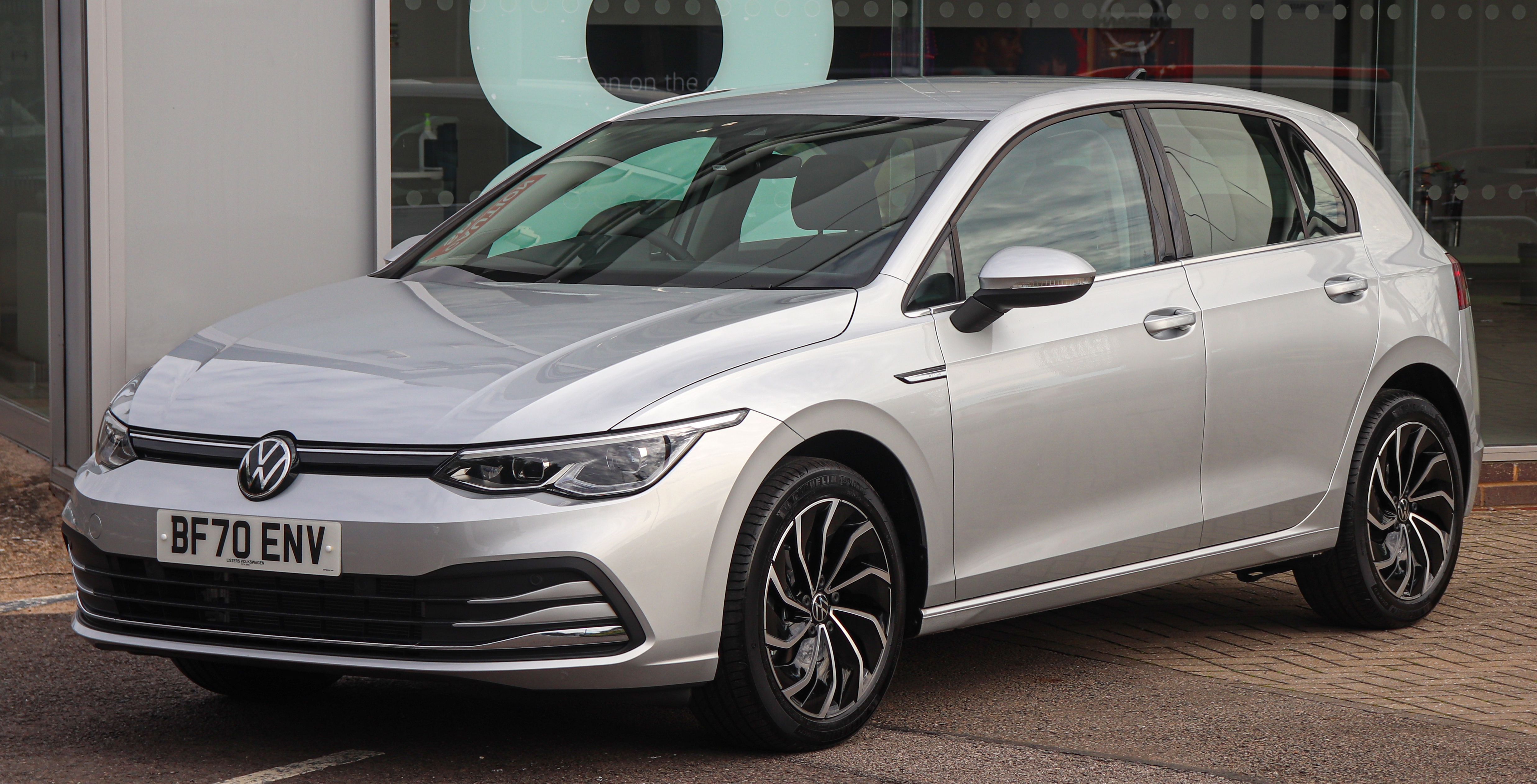
Volkswagen Golf
"he said they're delaying the electric Golf it's no longer needed as early as 2028 due to market demand and the ID3 and the Golf are currently performing quite well"
The Volkswagen Golf is a very popular compact car model. In this discussion, they’re talking about when (or whether) the electric version should arrive, based on what buyers are doing in the market.
The Volkswagen Golf is the brand’s long-running compact car and one of the most important models in Europe. Here, the CEO of the VW Group’s Brand Group discusses delaying the electric Golf, tying the decision to market demand and current performance of related EVs.
electric Golf timeline (2028)
"he said they're delaying the electric Golf it's no longer needed as early as 2028 due to market demand"
They’re talking about when the electric Volkswagen Golf should arrive. The idea is that the company is changing the schedule because customer demand and sales of other EVs are going well.
The segment discusses delaying the electric Volkswagen Golf’s timing to 2028, or rather pushing it back because it’s “no longer needed” that early. This is a product-planning concept: automakers adjust launch schedules based on demand and how other EVs are selling.

Volkswagen Id3
"he said they're delaying the electric Golf it's no longer needed as early as 2028 due to market demand and the ID3 and the Golf are currently performing quite well"
The Volkswagen ID.3 is an electric version of a compact hatchback from Volkswagen. They mention it as doing well, which influences their plans for the electric Golf.
The Volkswagen ID.3 is an all-electric compact hatchback in the ID family. In this segment, it’s referenced as currently performing well, which is part of the rationale for delaying the electric Volkswagen Golf timeline.

Cupra Born
"you're in a very similar position you've got the Born and the Leon you know combustion and EV in the same segment so what does that mean for the Leon"
The Cupra Born is Cupra’s electric car. They’re using it as an example of how Cupra now has both EV and non-EV models in the lineup.
The Cupra Born is Cupra’s battery-electric model, representing the brand’s EV direction. The CEO frames it as part of a broader portfolio where combustion and EV models coexist in the same segment, influencing how the Leon can evolve.
Request an Explanation
Heard something you'd like explained? We'll add it to this episode.
Sign in to request explanations for terms you heard.
Want to learn more?
Browse our glossary for plain-English explanations of automotive terms, jargon, and concepts.
Help improve this episode
See something that's not quite right? Our annotations are AI-generated and can sometimes miss the mark. Click the flag icon on any annotation to suggest a correction.
1 community members have helped improve this episode.