The Ford Ranger is a medium-sized truck that people use for things like farming, carrying stuff, and going off-road. It's smaller and easier to handle than big fancy SUVs, so some people like it better for everyday work and fun outside.
The Porsche Cayman is a sporty car designed to be fun and easy to control when driving. It has its engine placed in the middle, which helps it handle well.
The Austin 7 is an old, small car from Britain that was easy to drive and very popular a long time ago. Many people liked it because it was simple and cheap.
Hill climbs are races where drivers try to go up a steep hill as fast as possible, one at a time. It's a way to see how good a car and driver are at going uphill and around turns.
A world record breaker is something that goes faster or farther than anything else before it. Here, it means a small car that went really fast, faster than anyone else with that kind of engine.
Mid-engine means the car's engine is placed in the middle of the car, usually behind the seats but before the back wheels. This helps the car drive better and handle turns more easily.
The Hyundai Kona is a small SUV that can run on gas or electricity. People like it because it's easy to drive, has good features, and helps save fuel or electricity. Some drivers change how the car slows down to get more battery power back when they stop.
LIVE
This is James The Freed from Shits and Geeks and we're currently sponsored by TUI.
So, we love going on holiday together, love travelling and new experiences,
but we can't always agree on where to go.
But that's okay, as this is where TUI comes in.
With TUI, there's more options and more choice, with hundreds of destinations worldwide.
So, whatever firsts you want to mark, whether it's your first time away with your mates,
or the first time doing something new on holiday, we've chatted about trying jet skiing
and trying to catch some live sports.
TUI has the answer.
TUI, you pick it, they saw it.
Booking T's and C's apply, Atoll and Apto are protected.
Self praise is no praise, except for people talking about their jobs online.
Like, what my barista taught me about B2B sales,
or how losing a pub quiz made me a better team player.
Really? Here at Indeed, we're more sure than tell.
Our profiles help you showcase your skills and experience
so employers can focus on what you do, not what you talk about.
Because actions speak louder than buzzwords.
Download the Indeed app and start making the world work better for you today.
Redeem your lab books on free bet spins, or even cash in for real money.
That's Ladis Faction from Lab Brooks.
And for extra Ladis Faction, here's the T's and C's. Let's rock!
Hello, welcome to a bonus episode of the AutoCard podcast,
My Week in Cars, where Steve Cropley, Hellestine and I read your letters.
We have a number of pods coming up over the coming weeks,
where we do have interviews, which will be in these bonus slots on a Saturday.
We have been Felix Page, our deputy editor, has been talking to the design director of
Datsia. David Durand, Durand Durand.
Rings Revelle.
And I've been speaking to James Cameron of Mission Motorsport.
On Wednesday, though, in just a few days' time,
Steve and I will be talking to Jeremy Clarkson of the Grand Tour,
of Clarkson's Farm, formerly of Top Gear Performance Car, Sunday Time still,
the Sun, a pub, a farm, a brewery.
And a Ranger over L322, and he feels like it.
And somehow still has the time to talk to us.
So anyway, we're off over there in a second to talk to him,
so that will be on Wednesday. Do not miss it.
This podcast is brought to you in association with Anderson, our sponsors,
the design-led premium EV charging company.
If you go to Anderson-EV.com, if you search Anderson,
you'll find their full range of chargers, which are built, designed,
and engineered, and installed in the UK.
They are very good.
They are very good.
And we are very happy for them to be partners for this podcast.
Grateful to them.
Your letters, John Prescott, not that one, writes to us to say.
I've been reading an article in your magazine entitled,
Rodent Damage, a growing problem for UK motorists.
I had this very problem.
Luckily, they only chewed up some underbonnet soundproofing and made some nests.
I came up with a humane, cheap solution that has totally cured the problem, says John.
They are essentially looking for a dark, safe space.
I now have a 10-pound motion-activated light on top of my battery,
their favorite place for a nest.
And if they try to come in, it must be like a 500 million watt bulb
has just turned on in their face.
Problem solved, says John.
That's a smart idea.
It is a smart idea.
I have bought for my garage and shed because I do have, living where I do,
some rodent issues, some of those ultrasonic things that you plug in,
and they make a very high-pitched sound.
And that seems to have worked because there were some,
I think, rat droppings in the middle of the garage, and they are no longer there.
Oh, that's good.
So I think, hopefully, they've been.
But also, the man from the Guild of Molecatchers does come round every now and again
to try and eradicate the problem as well.
Good for him, yeah.
I got worried about this when I read the stories.
Because the alpine, our alpine lives in a garage of fairly much of its life, I guess.
And luckily, we haven't had the problem.
But it's mainly because of Mrs. The Steering Committee has encouraged a cat from up the road
called Inky to come and hang out in our barn.
And Inky isn't a very sociable cat, but he likes the black spaces in our place.
So he's doing his stuff, it would seem.
Excellent.
Does he bring any gifts to you?
Does he come half-eaten mouse in mouth?
No, not so far.
I don't know if he's responsible.
There's the odd dismembered bird in the yard, but not in a barn where he hangs out.
There's a very convenient little hole in the side of the barn wall where a hose can go in and out.
And that's his access.
And I think it might be to jump up to that with something in your mouth might be a bit too much of an ask.
I don't know.
But chief mouse a she-crop-ly.
Yeah, so far.
I mean, that would be if my cat was of any use whatsoever.
Hey, maybe he keeps them out of the house.
I don't know.
I mean, we don't get rodents in the house, so maybe he does.
Well, sometimes getting them in the walls and the roof.
But that can get a man in for...
But he's totally blameless.
Midge is a legend, mate, didn't he?
I have a friend who I met on, works in the car industry,
met on an event for the first time last year.
And they sort of texted the other day to say,
oh, I'm sort of back in the UK for a bit in the week.
Could meet up for a cup of tea or coffee somewhere.
What they mean is, can I come to your house and meet your cat?
I bet.
There's no interest in seeing me.
You want to come and meet the cat.
I must say it is one of the lights of coming to your house is me.
Well, he's very sociable.
That's the other thing.
He is a friendly cat.
Regarding the growing problem of rodent damage for UK motorists,
11th of February magazine says Andrew Cross,
I would recommend, this is really valuable info, this,
I would recommend that readers check the small print in their insurance policy.
As my recent renewal with a well-known classic slash multi car insurer includes a new exception
for damage caused to vehicles by vermin, insects, mildew or fungus.
Good to know.
It is good to know because I imagine the renewal costs of wiring and so on terrifying.
Yeah, because you've got to trace the problem in the first instance.
Yeah.
And in the meantime, the car is immobilized.
So it's got a motorcycle indeed.
So actually in key that I was talking about, he also does his stuff with them.
I keep two motorbikes in the same place.
And his favorite place of residence is on the seat of my motorbike.
I mean, have you provided a quilted.
No, no, no, he just for him.
No, it's just covered in a sheet and he sits on top of the sheet.
Oh, that's good.
Which is, no, we've lucked in.
Yeah.
Good old inkies.
There is a tabby cat that sometimes but too infrequently hangs around my place.
Dr. Mary, because she turned up, she turned up near Christmas.
But but is a bit too scared runs it went went hang around.
But also I'm slightly loath to encourage it because the chickens are not very big.
And when they're sort of locked away this time of year because of,
because they're supposed to be for bird flu, et cetera reasons.
But they're not enormous.
And I think they could fall foul, no pun intended of a, of a particularly.
Oh, we've got to look after them.
They're another tourist attraction.
They're another tourist attraction.
Well, the problem is if you, and I think this is a thing, if you have chickens,
they attract rodents because you have quite a lot of available food and water.
Yeah, which the rats will come and dance around on at night,
picking up the corn and eating the things.
And yeah, you just need to, and then because they want to go into,
because they like quiet, dark, warm spaces.
So I did once find it wouldn't be rats be too, too big.
When I changed the air filter on my motorbike,
I found a few little grains of corn in the air box.
Wow.
Yeah, not in, not thankfully down the air intake,
but just in around the edges.
And I wondered, yeah, I wondered if a mouse or a shrew or something.
Yeah, no, I find that scary.
The, the, the business of rodents attacking the wiring, just not just because of the expense,
but also because the thing there it is in your place.
It's immobilized.
You've got to ring up somebody.
You can find it relocated to somebody who can repair it.
No, dear, you'd rather not have that, wouldn't you?
Yeah.
So I think the, the, the light idea is a good one.
It is, I think.
I've not heard of these ultrasonic.
Oh, I mean, I don't know for sure how effective they are,
but I think they're pretty, I think they're good.
And you can't, obviously being, actually,
I can very, very slightly hear them,
but they operate on a frequency that you can't really hear.
They're too, they're too high to hear.
You can just detect it now and again as the frequency unit changes.
You just plug them into the socket and leave them going.
They're only a few quid each and you can buy them,
you know, you can buy a multi-pack.
And I think, fingers cross slash touch word,
I think they're effective, but then they, birds can't hear them.
So you don't, you don't offend birds with them.
I think cats and dogs and stuff can't pick them up.
So it makes a noise that, and insects don't mind them either,
but it makes a noise that rodents are supposed to not like.
I think the risk is bats don't like them.
So if you want to be kind to bat, don't put them,
don't put them outside because bats don't,
and don't put them anywhere where bats might hang around.
So, but if you've got bats, that should be reasonably obvious
because you will find you'll have a space where bats,
it will be obvious where bats would like to be.
You'll see bat droppings as outside.
So that's very interesting.
I'm going to get, yeah.
Yeah, let me know if it's effective.
So you just go, literally hardware store?
Yeah, yeah, probably.
Yeah, I would think a hardware store or online.
Oh, no, yeah.
Just, yeah, and they'll just, yeah, but anyway, loads of places.
John Pollard writes to say,
do you or your road testers have any opinions you can share
on the crazy horsepower of some cars?
Surely can't be used 99% of the time.
Having nearly had my head ripped off in cars
with three or 400 horsepower, a thousand must be ridiculous.
Also, John is not massively keen
on the latest Hyundai and Kia styling.
So we could talk that if we want to,
but let's talk the power thing first.
Our cars too powerful.
Well, I suppose the thing you've got to remember
is that all the EVs that we're talking about
with sort of effortlessly huge power outputs
are also very heavy.
So your 400 horsepower petrol car
is probably the equivalent of a 650 horsepower EV for a start.
But it, well, we've had the conversation before, haven't we?
It's, a lot of these cars just go quicker than you want to go.
And the reason the power outputs are there
for boasting reasons as much as anything.
My car's got 750 horsepower.
How much, surely, how do you get by on 150?
I, there is something about this, I think I've written this,
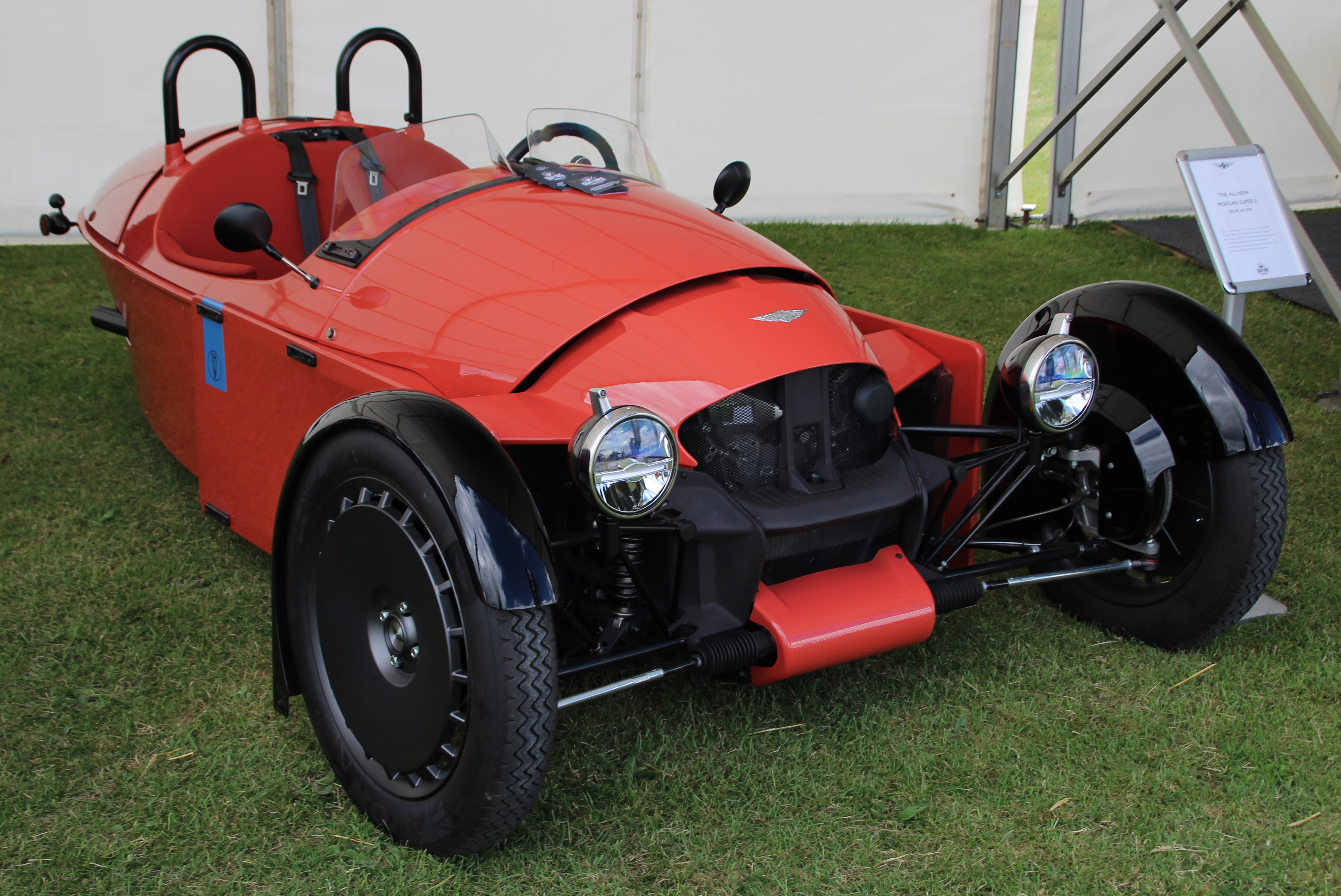
when I was talking about that Morgan Super 3,
which has 115 horsepower and sort of lower overall limits
of acceleration, probably braking and grip as well,
compared to, I don't know, it's a similar 50,000 pounds.
Yeah, or a Porsche Cayman or something like.
There is something about being able to,
you're going the same speed as somebody in a more capable,
more powerful car.
But because you are somehow a bit closer to its limits,
I do find that more enjoyable.
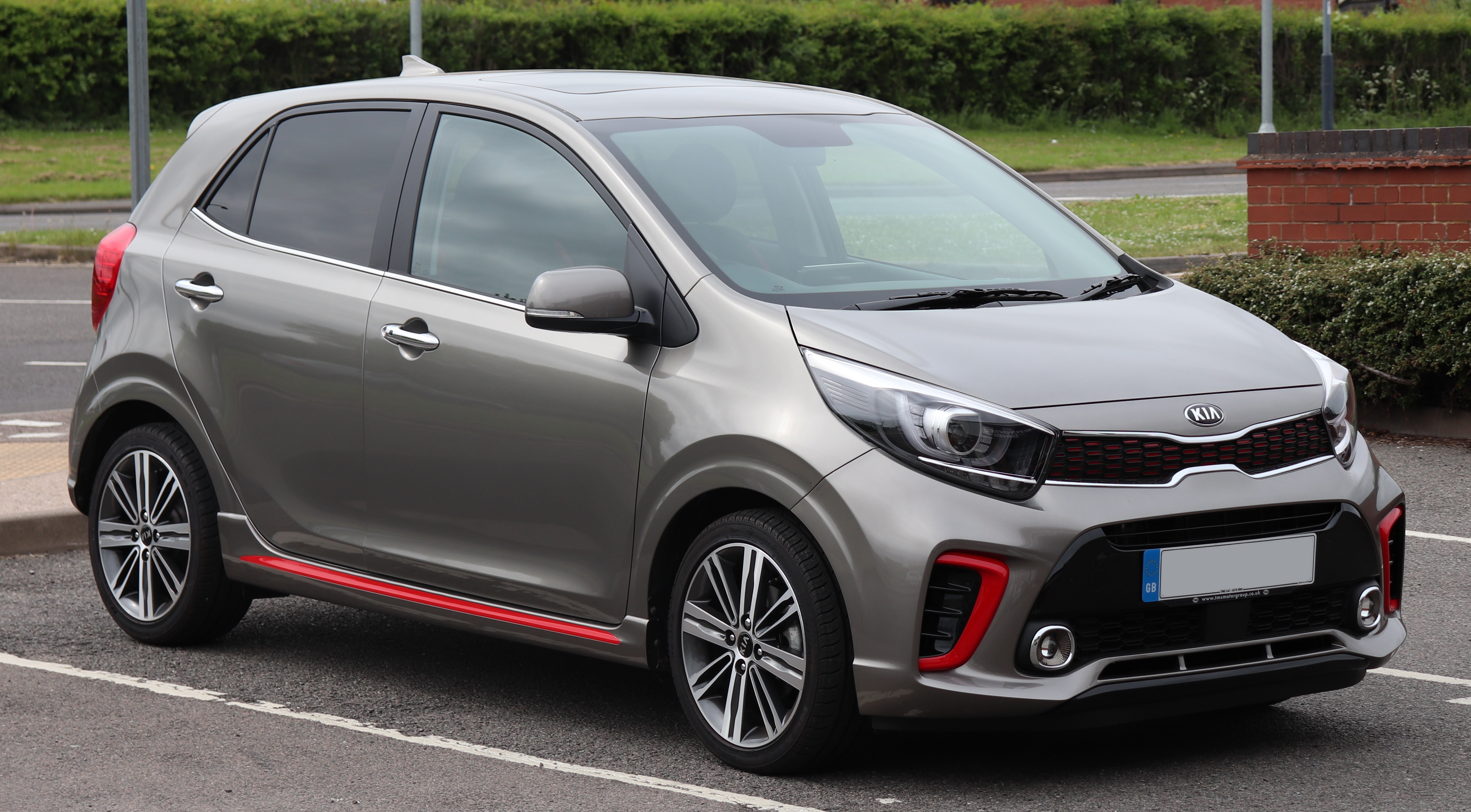
I find it more enjoyable to be right up the limit of a P&A A10 or Kia Picanto
than at 10% of a much more powerful car.
And I don't know why that should be.
I'm going the same speed, the steering is doing the same thing,
the wheels are doing the same thing, the tyres are doing the same thing.
But somehow I'm getting more out of it because.
Especially if there's a balance to it.
You know, if the responses are nice and the car,
when it, if it starts to slide, it starts to slide in a sweet way
and you can, you can sort of tune how much opposite lock you want.
And now you're right, absolutely right.
It's just something that's sort of glued to the ground.
Isn't, isn't as nice.
No, and I do, do you think that buyers are starting to feel that way
about top end supercars?
There's a lot of people who, who raise this very point, I think.
And they must wonder if they're just trying to buy something
without spending a ridiculous amount of money.
They must wonder whether they're paying for something they don't need.
And I have definitely been in fast cars as a passenger,
you know, sort of McLaren around Silverstone.
All I can do is about five laps.
If any more than that, you know, I, I just feel deeply uncomfortable.
So there is a, there is part of you, me that wonders why it's necessary.
And I've had a lot of low powered cars that I enjoyed.
I've raced a Lotus, a Lotus, an Austin seven special at Snetterton
two years ago, three years ago with the 750 motor club, great motor club,
introductory low value, low cost motors, and a very friendly thing.
And I had as much fun around there.
And I've raced there in a few things and we've given events.
We've had our breast drivers car thing there.
You know, I've driven at Snetterton a lot.
I reckon I had as much fun in that Austin seven with its
tweaked 750 horsepower, 750 CC engine making, I don't know, 50 horsepower,
maybe, maybe a bit less.
But the car didn't weigh very much under 400 kilos probably.
I reckon I had as much fun in that as I've had in anything.
Yeah. Did you, I always wonder what it's like.
I've not driven a car like that in a circumstances like that.
Is it all right on the still and it still go bolts down the straight reasonably well, does it?
Yeah, well enough.
You don't feel lost.
I wasn't bored waiting for the next corner, but the corners are what it's
what it's interested in, but I still felt engaged enough.
I suppose because you've got gear shifts to do and you've got positioning to do.
I suppose the
And everybody else has got the same poke as you, I suppose.
Yeah. In that series, there are quite a lot of different classes and
there's quite a lot of different cars in it.
So anything from a very basic, not very modified engine special all the way through to
one of the cars made by, I want to say, John Miles.
Yeah. John Miles, he was his first racing car.
He used to, I think it's a famous car still owned by.
Yeah. He, he, if you're unaware, listener, he was Formula One driver.
And then later auto cars, technical editor or sports editor.
Yeah. He was a columnist.
He wrote a thing called Miles Behind the Wheel a long time.
And it was always about modified, usually about modified cars.
And he had a famous Ford Capri that he, that he modified great.
He became more and more expert on dynamics, didn't he?
Yes.
You know, the geometry of dynamics.
Yes. Was he working as a chassis engineer as well later?
Well, he was self trained and he eventually got to the point where he was
the go-to bloke for, you know, Aston Martin would secretly take their cars to Lotus to get
John Miles to give him an opinion.
And he became trained a lot of good people too.
For instance, Matt Becker, you know, the current guru at JLR and Gavin Kershaw,
still at Lotus.
Both of those people worked with, who are absolute experts in that field.
They both worked with John Miles and he was a special guy.
Yeah. Yeah. And I did, after trying a fairly ordinary Austin 7,
one of John Miles ones that I think somebody said was the fourth one he built in retirement.
Oh, he had a few.
And it was, yeah. And it had about 80 horsepower.
You sit in it slightly off center so that you can sit beneath the chassis rails to get even lower.
And that was genuinely really fast.
You know, I mean, 80 horsepower, 300 and something kilos.
Wow.
Why would it not be?
Yeah.
It was, it was better than I was.
Whereas the slightly lower powered one I could get on top of and feel
confident in very quickly.
Oh, that's really interesting.
Oh, gosh.
I'd have, with another few laps, another hour in it, I'd have felt much more comfortable.
But it was, yeah, it was, it felt a great drive at all.
Yeah, amazing.
A very, very kind of their respective owners to let us have a go.
Yeah. It's great to think of that, a car like that being still used well and truly in anger too,
because that's how he built it after all.
But you could imagine people getting a bit reverent about a car like that.
Yeah. There's something about, they should be used, shouldn't they?
I think, yeah.
He used to drive all over Britain, didn't he?
He lived in London and he'd, you know, if it was necessary to race at SNET,
he would drive the car to.
Oh, really?
SNET and do the race, you know, drive home at midnight and go to work the next day.
There's a brilliant book called, my favorite motoring book probably,
which is called Building and Racing My 750 by PJ Stevens, I think,
and he builds an Austin 750 Motor Club special.
And does that, drives it to the race meet, maybe with a mate of his in his works van,
so that they could both share the car in a race weekend.
Sleeping it probably.
He'll be raced against Colin Chapman and others, you know, and says,
we didn't expect to beat the Lotus Austin anyway.
Goes to, this was in the days when Chapman was modifying
Austins a lot and they would take bits to him to be tweaked and so on and so forth.
It's a really interesting book and a really lovely warm book.
I've got a couple of other seven special books that are a bit more cold,
but this is just, it's the story of a guy in his shed with a mate of his
building a special and then running it.
It's a lovely, lovely book.
There are some great books like that give a fantastic feel for, or the best ones,
give a fantastic feel for the era, don't they?
There's a, there was one, I finished up writing a foreword for one of the
editions of it.
There was a guy who built a mini bay special called a Terrapin,
which was a little mid-engined car, single seater, run them in hill climbs.
And God, it was a good thing.
And it was the same feeling of, well, I'm doing this for me, you know,
I know I'm not going to be building the next Indianapolis.
The Terrapin Mark one mini-based self-build race car was designed by Alan Staniforth.
It's detailed in his 1969 book High Speed Low Cost.
Sorry, not High Speed Low Cost, sorry, not Low Speed High Cost.
The story of a 140-mile-an-hour mini-engined world record breaker and how to build it.
That was a book that I, well, I was still living in the bush.
I bought that book and I eventually was, after Alan Staniforth died, I wrote some stuff about
how much I loved the book.
I think his son, who was producing a version Mark 6 or something, asked me to write it forward.
That's terrific.
Yeah, if you just search Terrapin mini online, you'll get a lot of pictures of small
Terrapins, but also in there, Terrapin racing cars, and you can see it.
It is tiny, isn't it?
Yeah.
Well, the A-Series and the tiny gearbox and all that, they just promoted smallness, didn't they?
Yeah, so you must have to have some kind of gear thingy in there somewhere to reverse the drive,
because it's mounted behind the driver.
Well, I think, you know, you just use the, in effect, a mini-
Oh, you move it the same.
Subframe and bung it in the back.
Exactly, in the same layout as they were.
Yeah.
Because I think there's a few hillman-imp based mid-engined specials, and people like to keep the
in the imp, the gearbox is in front of the engine, but ideally on a single seat at
mid-engine, single seat, you would have the gearbox behind, because you want it mid-engine,
not rear-engine, and people effectively turn the gearbox upside down.
Do they, gosh.
But there's some way of doing it.
But there's some way of having it, so that you can have the drive.
I remember, I'm sure I remember an imp, but I got really, I think I may have got as keen
at you on this stuff, that I can remember somebody at least proposing it, and possibly
building an imp special, which had, which was front-wheel drive, which had
a combination of mini and imp bits, so the imp engine was in the front with the gearbox,
and they used, they gave it steering by using mini bits.
But, you know, the imp powertrain was ahead of you, and your bum was right
right out the back, you know, with a little, probably a dead axle or something.
Yeah, yeah, yeah.
But I'm sure I saw that, and it looked good.
It was, because it was a long nose, short tail.
But I, where and when this was, I wouldn't know, but it seemed like a rather clever idea to me.
Yeah, that is going to take some fine-heelving into, I think, yeah.
I've got, I've got, I'm not going to do it, Steve, because I can't, I don't, I don't,
I won't finish these things, but because I happen to have a spare imp
engine plus gearbox, I would love to make a single-seater based around having those, but,
and then I don't know what, maybe you buy a, an old race car's passenger cell and then
create the rest around it, but my welding is not good enough, as is, and I don't have the time
to get better at what you say.
But at some point, yeah, I think, you know, at some point before,
maybe, maybe when I retire, that'd be a, that would be a project for me,
is if I can keep the rats and mice out of the shed for that long.
The trouble with this job, as I'm afraid I can, I can tell you, is it's pretty hard to give it up,
so you weren't retiring as a, is it, is it still a distant concept?
It is really, yeah, it is.
It would have to be, I think it would probably take somebody deciding for me.
I'm looking forward to your BM though, the BMW donkey going into your car,
because I've got experience of that engine.
I liked it so much, and it's indestructible and really powerful.
Yeah, I'm very, I'm,
you should see the gesticulations.
I don't know when I'll find the time, but I've just, if I told you about the exhaust I bought,
I did, didn't I?
You did, well, yeah, I saw a picture, yeah.
Yeah.
Oh, well, I was going to put it on the socials, but I mean,
oh, we were going to put a picture of something else on the.
Yeah, I think the 205.
Oh, that's right.
Yeah, your Porsche 205.
Actually, funnily enough, when we were talking about that going around Castle Coombe,
there's a bit of concern.
My son and I were talking about the 205.
We're going to do a track day in it when it comes to us soon.
And he's a bit worried about the top speed, because the top speed absolutely against the
rung out is 109 miles an hour, and he reckons that won't be quick enough.
Yeah, down at Castle Coombe, that might not be minor.
Be good for hill climbs and sprints, but that might be a problem.
But I think by the time we, we'll only spend a couple of seconds against the
rev limiter and top gear, and then we'll be too busy worrying about Avon Rise.
You know that horrible, just before the, there's a bend called quarry that goes right at the,
right at the end of the straight or sort of curved straight.
Is that the one that comes on which straight?
Because there's sort of three straight-ish straights at Castle Coombe, aren't there?
It's the one, you go past the pits, you know, there'll be the starting grid, and then it curves
right, and then it goes down, quite a long way down, and there's a rise just at the very point
that you would either be changing down or going for the brakes or something or other.
There's this horrible crest to crest where the car goes light.
So, you know, you want to be on maximum brakes, except you can't be because it's suddenly
wants to leave the ground. It's really scary.
And 205s make famously stable under braking, I always think, don't they?
Let's hope so.
Nick Rose says, in this week's My Week in Cars, this was some time ago,
Steve and Matt were debating the most efficient level of regeneration
on throttle lift-off to use, and yes, thank you, Nick.
I think we've come to the same conclusion you have here.
The maths is very simple, says Nick, if the motor is 90% efficient when powering the car,
and also 90% efficient when acting as a generator, then in regen mode, as soon as you lift off and
start artificially slowing down, you're only getting back 81% of the energy you put in it
to get up to speed, because 90% of 90 is 81.
Therefore, as long as when braking you don't push through into friction mode,
it is most efficient to coast as much as air and tyre resistance will admit,
because we were talking about whether it's most efficient to add a lot of regen or not a lot of
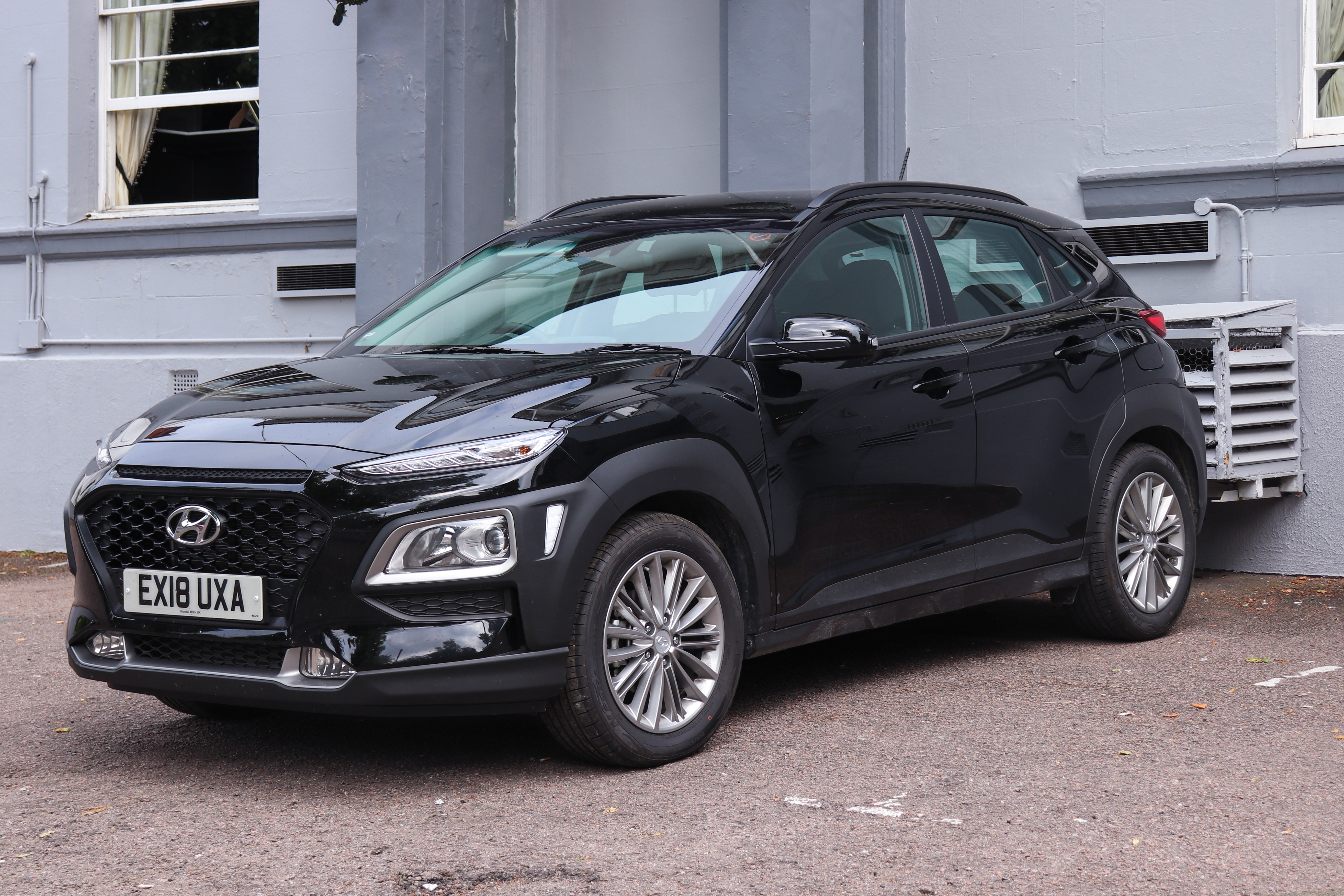
Personally, says Nick, I've also found it much more comfortable, which is why in a Porsche Taycan
and Hyundai Kona I usually drive, I always set the regen to zero and notice immediately if I haven't
done so. It's also, plus the plentiful buttons, a key reason for choosing Hyundai.
None of the Stellantis group, not any of the rest of the Volkswagen group, perhaps Bentley,
and certainly not Tesla, have a zero regen option.
So yes, I got another letter about this from an engineer who said,
but surely it's better to get back some energy under braking than none.
If you are only starting from the braking point, but if you are going, say, between two sets of
traffic lights, if you are coasting up to one set with no regen, and you are braking up to the
same set with regen, because the coasting takes you further and you would have to start from
further away or a lower speed, and that means that overall you've put less in, because you must
have put less into the acceleration in the first place, otherwise you wouldn't be able to coast
to a stop. Does that make sense? Yeah, it does. The Ford Capri that I'm in at the moment has got a
really a VW. That's got a nearly zero and something close to coasting,
and I always choose that now as a result of this discussion that we've had, and I'm sure it's
correct. You can get quite good, really good, I'm surprised by how good the miles are out of that
thing. It's endearing car. You know, I can usually get a thick end of 300 miles out of it.
That's very good. I tend to drive in a low, as low as possible, regen mode, and then just keep
maintain as much as you can. Occasionally, on the way up here, up the first way,
there are some very long straights, and I occasionally select the braking mode going down
then, because otherwise I gain on the traffic ahead. No, that's interesting.
But normally, as a result of our discussion, actually, and the previous letters we've had,
I've come to do, and I'm sure it's right. Yeah, I mean, the physics are right. You know, you may
accelerate to 50, and then brake from 50, and get some of that energy back. But if you only
accelerated to 25, and then coasted, you've expended a lot less energy in the first place.
So even though you're getting less back, you used a lot less, and that's where the advantage comes
from. I mean, you can't drive like that on the road all the time, because sometimes you can be
going very, very slowly as a result. But that is the thing, is to exert as little as possible.
There are sort of versions of that you can use. You can use those principles without getting in
anybody's way. Yeah, I think so. I think so. And we both quite enjoy doing that, don't we? We get
quite a bit, because you've got to get your motoring kicks where you can. Yes. Is it still
fun to drive on the road these days? Is probably one of the questions we will be asking Jeremy
Clarkson. Yeah. Later, he will be on the podcast on Wednesday coming. Don't miss it. Steve and I
are going off in a moment to talk to him. We'll talk all things cars. Yeah, that's the promise.
You know, no sort of tabloid crap. Just cars. Yeah, so join us for that. Meantime,
thanks to our sponsor Anderson. If you visit Anderson-EV.com, you can see their full charge
of design-focused premium charges. They look after you very well. They come with a seven-year
warranty. And also, do find us at themagazineshop.com for Steve Cropley's entire archive of
motoring columns. 34 years, 1,702 of them by now, I would say. More than 1.2 million words.
That's quite a lot of words. It's a lot to inflict on people in it. And join us again. We're here
now every Saturday, whether we have an interview bonus podcast or not. On the occasions we don't,
Steve and I will chat to somebody from the office, or we will chat your letters, as we have done
here. But coming up in the next few weeks, we've got interviews with the desired boss
of Datsya and James Cameron of Mission Motorsport, and probably many more besides. So thanks, mate.
Cheers, everyone. Do you see?
Here at Indeed, we're more sure than tell. Our profiles help you showcase your skills and
experience so employers can focus on what you do, not what you talk about. Because actions speak
louder than buzzwords. Download the Indeed app and start making the world work better for you today.
Participates in selective promotions to get like bucks.
Water wipes. Now two times stronger and even softer. Ready for whatever happens back there.
Available online and in store. Water wipes. Cleans, cares and protects sensitive skin.
Two times stronger material than previous water wipes.
About this episode
Steve Cropley and Matt Hellestine engage with listener letters covering topics like rodent damage to vehicles and creative prevention methods such as motion-activated lights and ultrasonic devices. They discuss the challenges rodents pose to UK motorists, including insurance implications. The hosts also debate the practicality of high-horsepower cars, weighing the thrill of driving near a car’s limits versus the excess power many vehicles offer. Alongside, they tease upcoming interviews with notable figures like Jeremy Clarkson and share anecdotes about cats helping control pests around garages and barns.
In this bonus episode of the Autocar podcast, Steve Cropley and Matt Prior read your correspondence. They talk rodent problems, how much power is too much power, the most efficient way to drive an EV, and more besides.
We're also here every Wednesday with our regular My Week In Cars podcast. Subscribe and you won't miss it. Would you be kind enough to leave us a like or review too?