Le Mans is a super famous long-distance race in France. Cars race for about 24 hours, and the goal is to finish reliably, not just go fast for a short time.
Customer racing means private teams race cars that come from a manufacturer program, rather than the manufacturer’s own factory team. The manufacturer may help with support and parts so the teams can afford to race.
A factory team is the automaker’s own official racing team. If the factory team isn’t there, it can change what other teams decide to do for that race.
Porsche is the car brand being talked about here. The host is wondering whether Porsche’s racing program is too expensive for some customer teams to join.
GTD is a category in endurance racing for cars that are based on models you could buy, but with rules on how much they can be modified. “GTD levels” just means the customer-team version of that racing category.
Mercedes is the other car brand mentioned in the comparison. The speaker says Mercedes tends to help customer racing teams more, which can make racing cheaper.
BOP means “Balance of Performance.” It’s a set of rules that nudges different race cars to be closer in speed, so one car doesn’t automatically win just because it’s faster on paper.
A “hybrid” race car uses both a gas engine and an electric motor. The electric part can add extra push and can also store energy for later use during the race.
“Plug and play” means something you can use right away with little extra setup. Here, it’s about race tech being adapted so customers can actually drive it on the street.
“Range” means how many miles the car can go before it needs more fuel or a recharge. The host is saying that hybrid/race tech can still work on the street partly because it helps with range.
A turbo is a device that helps the engine make more power. It uses exhaust gases to force more air into the engine so it can burn more fuel and produce more thrust.
The Opel Astra is a compact car meant for everyday driving. The podcast is saying it doesn’t feel competitive anymore compared with what people expect in its class. That’s why it’s mentioned in the discussion.
WeatherTech is an automotive brand that makes car accessories. In this context, they’re being described as stepping in to race even without factory support.
Race support is the extra help teams get to run and maintain their race cars. It can include technical guidance and parts so the car keeps performing. The hosts are saying that if that support isn’t being funded and used heavily, racing involvement can fade.
LMP is a racing category name used for prototype race cars at endurance events like Le Mans. It basically means “high-end, purpose-built race car,” and the class rules can change over time.
NASCAR is a stock-car racing series in the United States with its own rules and car identity conventions. The hosts are pointing out that Toyota’s NASCAR presence doesn’t mean the race car is literally a street Camry.
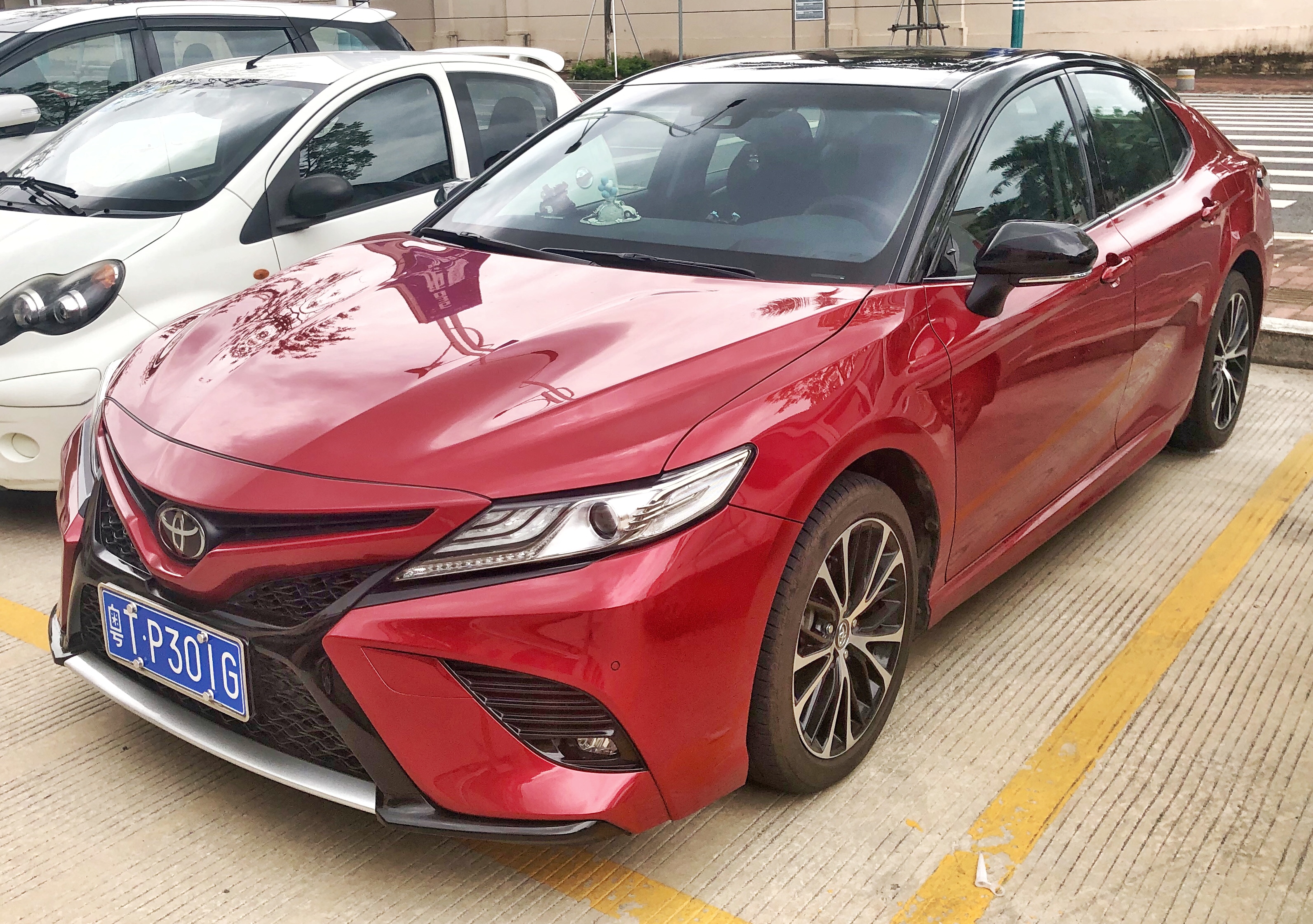
The Toyota Camry is a regular street car. In NASCAR, the race car might use the Camry name, but it’s not the same as a Camry you’d buy at a dealership.
The Toyota Corolla GR is a sporty, performance-focused Corolla. The hosts are using it as an example that Toyota is building cars that feel more connected to racing.
A “halo car” is the coolest, most attention-grabbing car a brand makes. It’s usually so expensive or rare that most people can’t actually buy it, but it makes the brand look awesome.
“Baja” is off-road racing in Baja California, known for rough terrain and long, tough races. Mentioning it signals the brand races in demanding conditions.
The Carrera GT is a very high-performance Porsche supercar. It’s the kind of car people talk about when they mean rare, fast, and special. The podcast mentions it as part of a list of notable cars.
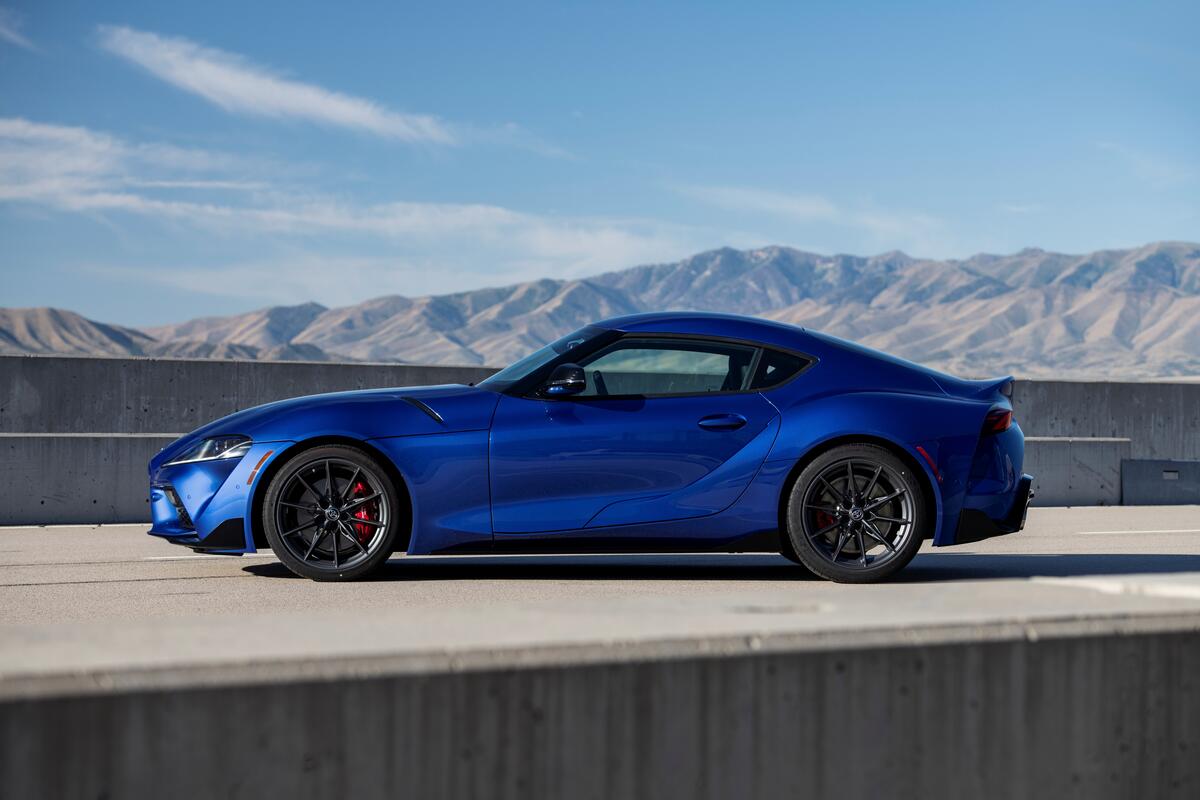
The Toyota Supra is a well-known sports car, especially famous for its turbocharged performance. Here it’s being used as an example of a more reachable Toyota performance option compared to ultra-expensive halo cars.
A body kit is a set of parts that changes how a car looks from the outside. The host’s point is that it doesn’t replace real performance—if there’s no engine, it’s mostly just appearance.
Term
executive
Here, “executive” means the top decision-makers at the car company. The host is saying they may care more about racing than about selling a certain number of cars.
2JZ is a Toyota engine. People love it because it’s strong and responds well to upgrades, so it’s a common choice when someone wants big power or an engine swap.
Topic
JATC
JATC is a type of racing series in Japan. The host is using it to point out that Toyota has raced successfully there, which helps explain why people associate certain Toyota engines with racing credibility.
The Carrera Cup is a Porsche-only racing series. It’s like a ladder for drivers, and the host is saying changes in Porsche’s GT3 program can affect whether that series stays strong.
GT3 refers to a specific set of racing rules for race cars. The host is saying that Porsche’s GT3 involvement is tied to the health of the racing series built around those cars.
Term
RG3R
RG3R sounds like another Porsche racing name the host is comparing to the RSR. The transcript doesn’t make it clear exactly what it stands for, so it’s hard to pin down the exact car or class.
“Factory support” means the car maker helps the racing team directly. That can include expert help and parts, which can make it easier to compete.
Concept
bad business decision
They’re basically saying the person in charge didn’t want to pay a big bill for racing appearances. So they treated it like a money decision: if the costs aren’t covered, you don’t do it.
A “send off” here means the team is wrapping up a racing program. It’s like a final-race moment where they acknowledge the car is being retired from competition.
Motor swaps are when someone replaces a car’s original engine with a different one, often to change performance, fitment, or character. The episode title suggests the hosts discuss how swaps happen and what can go wrong—especially when factory programs or expectations collide with real-world engineering.
Genesis is a luxury car brand. The podcast is pointing out that Genesis is owned by Hyundai. That’s why it comes up—because it helps explain who makes the cars.
Service centers are places that do repairs and maintenance. For very expensive, rare cars, the idea is that there may be dedicated shops and trained technicians instead of using any random dealer.
Dealerships are the official stores that sell the cars and handle service. The hosts are saying the manufacturer may send expert techs to those dealers for these new cars.
ADM is a dealer-added price on top of what the car is supposed to cost. When a car is hard to get, some dealers charge extra, which makes the final price much higher.
The Taycan is an all-electric Porsche sedan, so it runs on electricity instead of gasoline. The podcast is mentioning it in terms of how it’s being sold or supplied. That’s why it comes up alongside other performance models.
They’re saying the Porsche Cayman isn’t being made anymore. The Cayman is Porsche’s mid-engine sports car, so once it’s discontinued it becomes harder to build new special versions of it.
Copyright is the legal right that protects creative designs and characters. The point here is that if a car design uses Pixar’s look, Porsche can’t just repeat it without permission.
Pixar is the animation studio behind popular movies. The hosts are saying the car’s theme is probably connected to Pixar’s protected characters/art, so Porsche can’t freely copy it.
A vinyl wrap is like a big, durable sticker that gets put on the outside of a car. People use it to change the car’s color or add designs without doing a full paint job.
A livery is the car’s “look” in paint and graphics—like stripes, logos, and sponsor-style designs. It’s how race cars get their recognizable team identity.
“Heritage” here means the history behind a car or racing team—like where the look comes from and why it matters. It’s about having a meaningful backstory, not just copying the colors.
Term
three RS
“Three RS” is how people shorthand a Porsche GT3 RS. They’re talking about how to make the car’s graphics look right—like using a subtle chalk/white script style.
Term
chalk with a white script
This is about the lettering style on the car. “Chalk” means a lighter, softer-looking mark, and “white script” means the text is done in a cursive/handwritten-style font.
“Clout chasers” means people who want attention and approval. Here, it’s about buying a car mainly to show off, not because they actually love driving it.
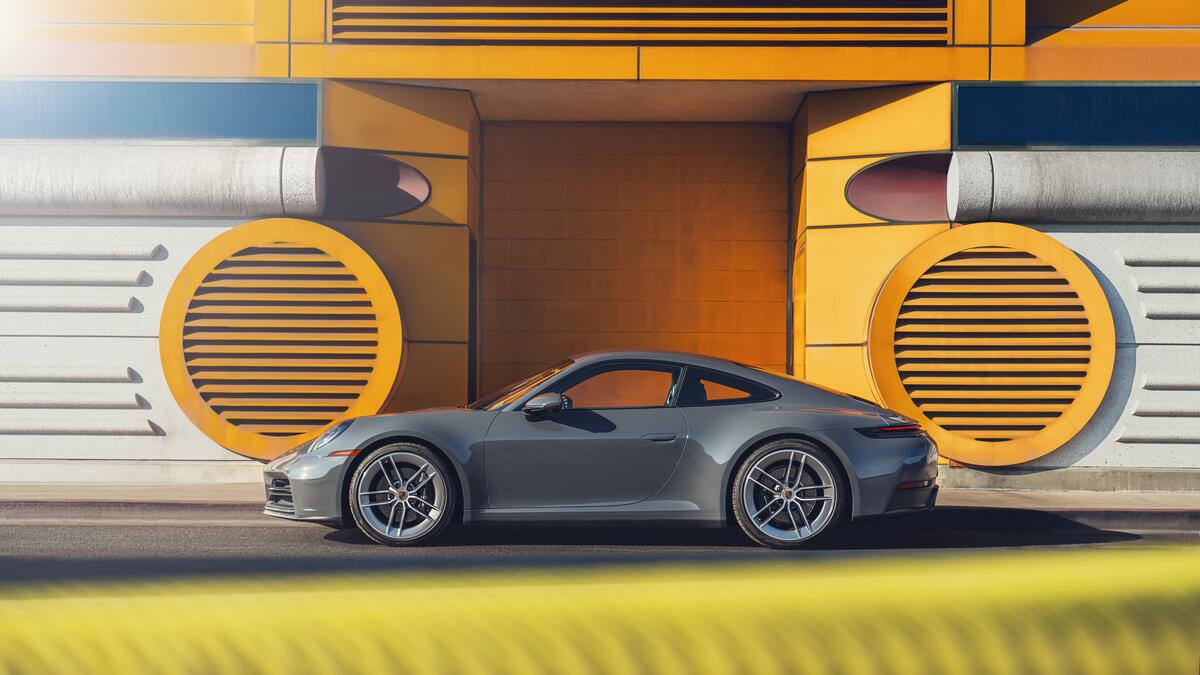
They’re talking about a Porsche 911 GT3 RS painted a specific factory color called Lizard Green. The “991” is the model generation, and the GT3 RS is the more extreme, track-oriented version of the 911.
“Polarizing” just means people don’t all agree. With cars, it usually refers to a look that either really grabs you or really turns you off.
Concept
spoiled gen
“Spoiled gen” is a commentary concept meaning the current enthusiast generation has become accustomed to constant new releases and standout cars. The hosts argue that this makes people expect attention-grabbing cars to show up all the time, changing how “special” new models feel.
Concept
dot 3 in the chamber
This is a metaphor meaning “there’s another big thing coming soon.” It’s not describing a car part or a technical system.
Concept
production mode racing
This phrase is basically saying the racing effort is built around the same kind of engineering as the cars you can buy. Instead of being totally experimental, it stays connected to the production side of the business.
Concept
engineering standpoint
This just means the speaker is talking about it from a technical point of view—what’s possible and where the design runs out of room to improve.
Turbocharged means the engine uses a device (a turbo) to push extra air into the engine. More air usually helps the engine make more power, which is why turbo setups are common in performance cars and race programs.
A “GT program” is the brand’s whole plan around GT racing and GT-style performance cars. They’re talking about whether it’s worth the money and whether more GT cars are coming.
Homologation is how racing rules get “approved” for real cars. It often requires making enough production cars (or using production parts) so the race cars are based on something that exists for customers.
“GT” refers to a type of race car category that’s based on real production cars. It’s generally less “alien” than prototype race cars because it starts from something closer to what you can buy.
Reverse engineering means studying something that already exists to figure out how it was made. In cars, it can be about learning from what worked before so engineers can build something better.
“Race derived” means the idea or parts started in racing and were adapted for regular cars. The speaker is saying the connection to racing is weaker than it used to be, even though they still use racing lessons.
Term
strong arrow
“Strong arrow” here is almost certainly shorthand for strong aerodynamic downforce—often discussed as “aero” or “spoiler/wing” effectiveness. The idea is that even if they dial back harshness, the car should still generate significant grip at speed.
“Street compliant” means the car is set up to be easier to live with on normal roads. Instead of being only for track days, it’s adjusted to feel less harsh and more practical for everyday driving.
Topic
clout chasing vs proper use of track-focused cars
They’re basically saying some people buy extreme performance cars just to take pictures, not to really drive them. The point is that these cars are meant to be used for real driving, not just posing.
IMS is short for a part inside the engine called the intermediate shaft. The “issue” is that a bearing in that area can wear out or fail. If it fails, it can damage the engine badly, so it’s a big deal for these Porsche 911 years.
“Bore scoring” means the inside walls of the engine cylinders get scratched or damaged. That can make the engine not seal properly, which can cause low power or oil burning. It’s expensive because it often requires rebuilding or replacing engine parts.
An “LS swap” means putting a GM LS V8 engine into a different car than it originally came with. People do it because the engine is common and there are lots of parts and support for it. In this segment, they’re saying it’s a known option for these Porsche 911s.
A “K swap” means installing a Honda K-series engine into a different car. Here, the hosts say they’ve even seen these Porsche 911s get K engines with turbo setups. It’s a custom project, not a factory-style repair.
“Bore out” means a machine shop enlarges the inside of the engine cylinders. That’s part of some rebuilds, where you fit bigger pistons and rings. But if the damage is too severe, there isn’t enough metal left to safely bore it out.
Term
4-0
“4-0” is shorthand for building an engine that’s about 4.0 liters. The idea is to increase displacement, which usually means more internal engine work. The hosts are saying it can cost a lot of money compared with other choices.
Term
4-1
“4-1” means building toward about 4.1 liters of engine size. It generally takes more parts and machining than smaller displacement builds. The hosts bring it up to show how expensive these custom rebuilds can get.
The Honda S2000 is a sports car famous for revving high and sounding a certain way. The speaker is basically saying that dropping that engine into a 911 wouldn’t give the right vibe for them.
“996” refers to a specific generation of the Porsche 911. The speaker is using it as an example to discuss what you’d do if that 911 needed an engine rebuild or replacement.
“Clapped out” means the car is in really bad shape—beat up and not well cared for. They’re saying whether you’d consider an engine swap depends on how rough the car is to begin with.
“Collector grade” means the car is in excellent condition and is the kind of example people want to keep original. The speaker is implying that you wouldn’t want to change a car like that too much.
An engine has multiple cylinders, and “cylinder 6” is one of them. The host is saying that one cylinder seems to be the one that has the most trouble.
Car
Chevrolet LS
The Chevrolet LS is a common V8 engine family used in a lot of cars and swaps. The host is using it as an example that cylinder wear problems can happen in other engines as well.
Oil feeder lines are the oil “pipes” inside the engine that deliver oil where it’s needed. Adding more of them can help get oil to the parts that are wearing too quickly.
Tolerances are how close engine parts are allowed to fit together. If the gaps are too small, oil can’t flow the way you want, so the engine may not work as intended.
LIVE
We are here to bring you everything and anything surrounding Porsche.
I'm Mike. I'm Aaron. And this is Peacart Talk.
Welcome to another episode of Peacart Talk. I'm Mike. And I'm Aaron.
Are we thinking our people? We are. Yes. I didn't have it in my talk, so I was like, oh, but I found it.
We got Leslie, we got Chris, we got Steve, we got Ken, Richard, Sean, and Nick.
I can't see last names right now, so. Yeah.
That works. All right, let's get moving.
So another dismal race weekend, right? Le Mans. Well, that was fun.
So we kind of talked about this offline, but I don't think I brought it up about customer racing.
Where, where is the customer racing? I mean, Manthey doesn't count in my opinion.
I agree. I'm the same way. Maybe they just, maybe it costs too much. I don't know.
Maybe. Because maybe they didn't want to fly the cars
that were in the U.S., the customer program to go race over there.
Because like what, one of them is a Mustang. You know what, they may not.
I wonder if a lot of people just didn't qualify because you have to have a certain amount of races, or A race,
and WEC, or something like that. Well, that one. Well, yeah, I guess.
That's the reason. I guess the factory team.
Yeah, did qualify, but they weren't going to run because they had, you know,
Daytona, I think, is a qualifier. So they were eligible, but they already
verbally committed to not participating in that race, I think, at the beginning of the year.
And Joda was running a Cadillac. Yep. I saw that.
Yeah, dismal. I mean, 11 car had power steering, steering failure, crashed.
Yep. I actually did.
I thought the other one was already out because it was running so poorly.
I thought it was already out. I was like, oh, no, that one's already out. I was like, oh, man, we lost the other one.
And then I was like, oh, it finished. Oh, wow.
I checked it in the middle of the night and I saw it like on the board and I'm like, oh my god,
like 12, like what are we doing, man? Like
Ah, it's a man, like career T power in there.
I was going to say that, man, what a change in
just want six month period, right? Running high
early in the year. And now
not so good.
I don't think it translates, but do you think it translates
because there may be, because it would be customer racing, we already know the factory team wasn't going to be there.
Our customers
that do race, are they kind of shying away from Porsche because of maybe some of their
financial issues too? Is that, you know, almost like kind of a boogeyman, like that guy has
chickenpox. Stay away from him. Like, I don't know. I'm just making stuff up. Do you think that
might be possible? Like, I agree with you. Maybe it costs too much.
Maybe the program is just too expensive. I don't know.
Well, as we know, even not at
prototype levels, but, you know, GTD levels, we know that
other manufacturers compensate and give
concessions to make their cars more affordable. I know Porsche is not one of them. Mercedes
is definitely one. That's why there's years where we can go to Daytona and we see
multiple customer racing teams that there's like eight Mercedes out
there. It could be. It could be pricing.
More than likely it is. Because I'm sure it costs money to
have engineers and all that stuff because you're not just running the car.
You got to have the team behind it. Plus, so let's
probably a
controversial topic. But we've seen the cars be competitive
and we've seen them not be competitive. And
if you're a multi-millionaire and you own your own business and you want some right
house, but you like racing, maybe you don't feel like that
car gives you the best chance to win anymore. It's true. It doesn't.
So maybe that's why that's why there's not that many customer racing teams
anymore involved with that because they're like, look, if I'm going to spend my money,
this is not. I'm not. I don't have the skill
set that it takes to win in that car because it takes an immense
skill set because the car is not as quick as we know
in a lot of tracks as other cars. I feel like if it was
had the ability to be non-BOB. Oh, yeah. I mean,
if it was uncorked, but the problem with as we know that chassis
even though it's an EVO and they keep making an EVO every year,
it still gets BOP because it's an iteration of the car that was
last seen before. So Emsa has some data on it.
So I think that car continues to get crippled more than
maybe a completely new chassis. Now a brand new chassis
race car obviously is going to be very expensive for Porsche, even though they're not
going to race it, they still have to develop the car. Oh, something I learned and maybe I'm just
late to the game on this. But it kind of has to do with
Porsche, but at least the GTBs. I didn't realize Aston's was not
hybrid at all. Zero hybrid. Yeah, you mean their prototype?
Yeah, I knew that. Yeah. That's why it's a fan favorite because
it just sounds amazing. I knew the sound was there, but I thought all of them had it. I thought it was that.
You thought some assist was there? Yeah. They knew they were going into that,
but they wanted to run that unlike a lot of
I mean, not saying a lot. That's not fair to say. A lot of the manufacturers that are running,
they are leaking that technology back
into their car somehow in some way where they rationalize it.
I feel Aston's probably the closest
plug and play because they're putting V12 still in their cars.
They're selling Aston Valkyries or whatever
and those are going in. Those are street cars.
They're really using that race program for
their ultra high level hypercars that they're selling to customers
for plug and play. Unlike
maybe applications on other race teams are saying,
we use the hybrid system in our Cayenne. Okay, great. That's
super sexy that you're racing a race car, but you're putting it in a pedestrian
regular traffic car. It doesn't have to be sexy, but they're
looking at it from a rationalization. They're like, well, we sell a lot of Cayennes. We don't sell
a lot of hypercars. Not just for a missed opportunity with some of those
guys, just to view a cool engine. Yeah, I agree.
But I guess it goes back to being competitive, right?
They want to win so they don't really care. I think Aston already knew that they were going to be
a little bit of a detriment going in. Yeah, because you don't get to float off. I mean, I'm sure
there's range and other things that help out with that and definitely a power
because you only have so much power. But the cool thing about
them doing that and continuing to do that for however long they decide to do it
when the history books are written, that will be
talked about for decades. They're like, hey, when everybody was running these
turbos and hybrid system, there was one brand that wasn't. There was one with
wings. And they were running a naturally aspirated V12 and kudos
for them for doing that. Us as race fans, obviously, we want to
want to see stuff like that. I get it from a financial standpoint. It doesn't make sense, but
I don't know. I mean, you're still not winning and you're running a hybrid. So what's
the difference? I guess.
If you're not, yeah, somebody's not winning and then somebody's finishing, yeah, just before them.
Does that make sense? So yeah, my point is
you're trying to run what your competition's running and you're still not winning. So I
guess it doesn't matter. But whatever. I mean, back to the Porsche thing, I feel like we're
just not competitive anymore. Even even with a
Astra or anybody in the car. Well, I just feel a class driver
without them saying it. I feel like you and I and other people that
are like us that are probably listening to the show have a pretty good pulse
on whether it's being printed or even
verbalized or you can just kind of see the air come out
of that race program. Even basically once the
RSR died, like that was part of it. Like it wasn't totally gone.
Like meaning that's the icon. So like there was a few other
straggler teams right after they killed the program. I mean, like
WeatherTech ran at the very next year on their own, on their own dime
and ran an RSR. But that was the only and there was a couple
other places that ran an RSR for a little bit and then that finally
died. And then the prototypes there. So I feel like we've kind of
been stringing this thing out anyways.
And just Porsches
I don't know. Like I guess the best term for it will be lack of
excitement with their racing program. Like before when we used to go to races
they used to really be present. Yeah. As like a company
like they would want to make a good showing as opposed to farming out
even their booths and all that stuff. And that's been that's not just this year. They've been doing
that ever since the RSR program kind of went away.
I think we're going to move into a dark time
for Porsche racing unfortunately for fans where we're
barely ever going to see them on track for a lot of
years I feel moving forward. I just think financially
they're not going to spend their money. If a customer wants to spend money that's fine.
And we'll probably get onesies and twosies here and there.
And those things
go hand in hand. So if nobody's participating in your customer
racing program at a high level and spending millions and millions of dollars
for one of your cars and for race support. Well why do you
as a company because they still have to develop the car. Why do you keep developing the car
that way. So then so those two things eventually
basically go die together. And I feel like it's already happening a little bit
to be honest with you. Which is odd because that's their DNA
is racing. And under new leadership
you know they IPO'd. There's a lot of I think a lot of moving parts
where now there's a lot of hands in the cookie jar and there's
a lot of people that are have a lot of power that maybe
don't see the race program as a viable income source.
They just look at as we're losing money by doing this like let's stop doing this.
Guess we'll just have to see the 963s at HSR then.
Which is funny though because none of those cars make it out because
even the prototype LMP what was it like class that they ran before
they switched to that. I already am brain fried because I can't
remember but you know what I'm saying like the one
whatever prototype car that was running before the
program that's now like I forget the name of that program.
I know this but I was telling you I was just watching.
Anyways you guys get the point. Yeah that car set like a lap record
in multiple places. The LMP.
Yeah that's it. I was going to say LMP but yeah
I'm looking for LMDH.
But yeah it's and I think it's
reflecting across the board too where I think there's a lot of people
and I'm not trying to speak ill obviously we're Porsche fans as a Porsche podcast.
We're just bummed. We're just bummed about it.
It sucks right? It takes the excitement out of it.
We're still going to go to the racetrack. I mean it's not like we're not going to go but
it's just going to be one of those times where I guess it's more of a pendulum effect.
Sometimes they've been winning for a long time and now we're
on the downswing where we're not winning and it is what it is I guess.
Can we get some discounts on the Porsche growl?
The France family owns that so I don't think that has anything to do with
Porsche. I don't give a shit.
Yeah it is a bummer
and really I felt it watching this Le Mans race to be honest with you.
The very first time I could feel it a little bit but still even when we went to Daytona
the 9.6.3's are racing. They were competitive. They were good.
There were some other teams. Rexy was there
running so you still had that Porsche vibe but watching this Le Mans
and just watching only Mantae really out there
I felt lonely for them. I was like man
that feels lonely and I'm not even in France.
I'm looking at that and I'm like that feels lonely.
No big dogs there to hang out with
the Porsche factory buses
and transports aren't there and all that stuff.
Not even looking down the road and seeing other Porsches. Yeah it's weird right?
I definitely felt that watching. Did you feel that when you were kind of watching?
Yeah I kind of made it boring.
You're like oh this is just racing.
One thing I didn't think about. I was like
Toyota 1 huh? What if Porsche was there? Would you have won?
That's a good point. I mean that has to play in some people's
minds for racing. Not all the manufacturers are there.
Yes it still counts but what's the difference?
Toyota doesn't get enough credit because they're super competitive
in that WEC series.
I think in the US
at least from the road racing
type of stuff that we watch. We already know they're a NASCAR.
We all know it's not really a Toyota Camry but still they're a
NASCAR and I think they're in the truck series too.
They're also in the interstate everywhere driving the same.
I think a lot of people unless you live in Europe and other parts of the
world you don't realize how competitive that car is.
Their prototype car. I mean that car is dominant.
It wasn't always but they built it up to be
and the fact that they're spending money to still run and I always
find that unique that their executives run that car.
Which is crazy. It is crazy but they have so
much passion for racing and all this stuff but they make a lot of
malign day to day cars.
More recently it's changing.
Don't get me wrong. Obviously the reinvention of the Supra
they have the Corolla GR. They have a few other GR cars
that are out there but still you don't look at that brand
and go that is a race bred brand that's going
to go and dominate and they do.
It's just and I know they're making their new
Halo car. I know that's out there. They showed that
the mold and the prototype and kind of revealed it. It looks cool.
You would think there'd be a couple. I wouldn't call them Halo
because when you have a Halo car that's an unreachable car but
maybe something in the 150 range like a 911
or something like that because they are so into racing. It is kind of shocking
that they're so they have and it's not just that it's everything.
They race Baja. They were racing
I think they still race WRC.
They're actually a lot of racing going on with that brand but
they don't put a lot of that shit on the street. You're just kind of like
what's happening here?
I'm lobbying them to make something cool that we can
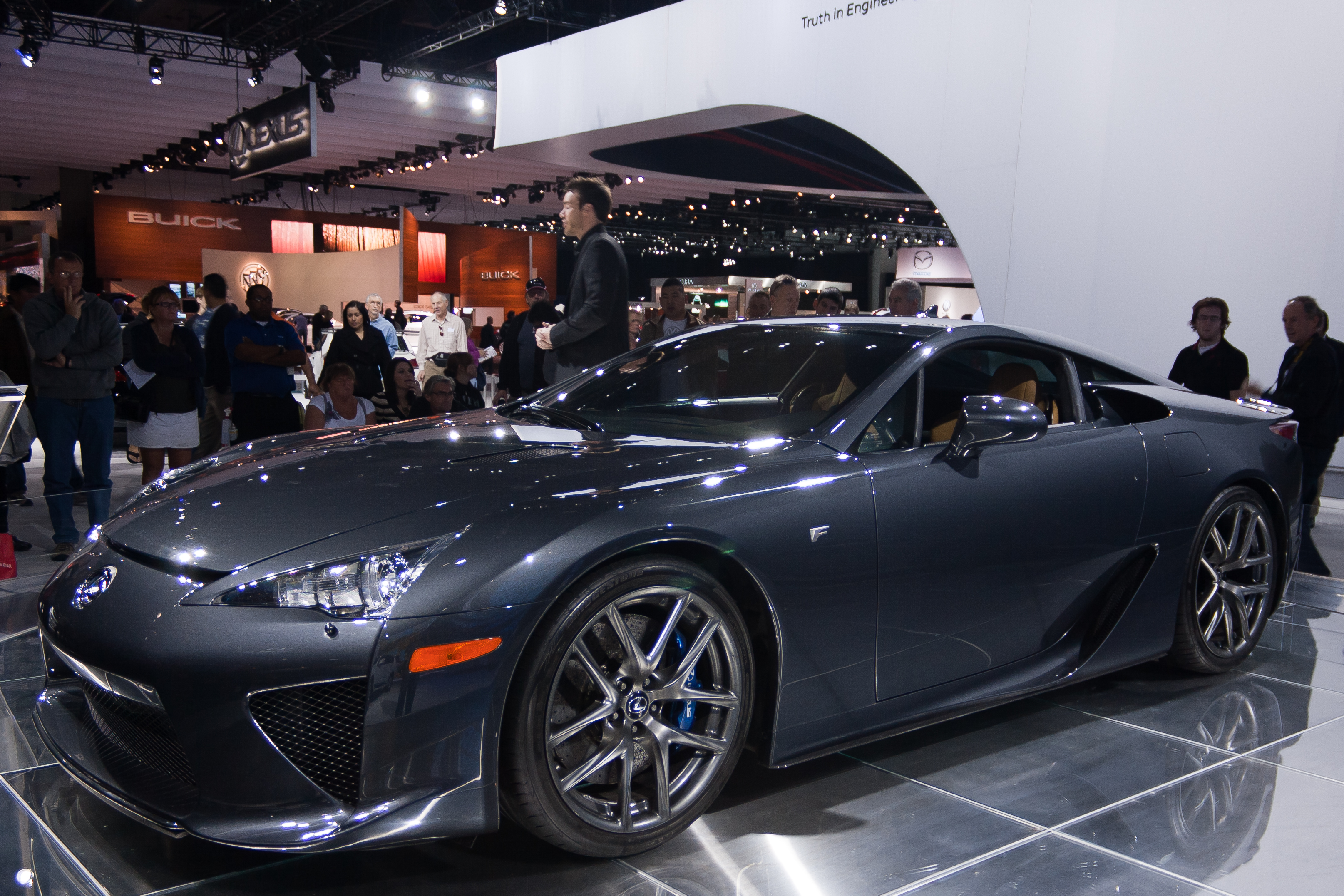
a 911 equivalent. They either make something like an LFA
that goes like way beyond. They're like okay this is a 9
freaking 18 competitor or something
or Carrera GT competitor I guess.
Then you get a Supra. There's a huge gap
there but maybe they just have their clientele so dialed in. They're like there's no one
who's going to come in here and buy a $150,000 Toyota no matter how cool it is.
In the production they do that stuff too. Which is weird though
because as we know the recent CEO that
stepped down but he's still involved in the company is descendant of the
Toyota family. Huge into racing.
I'm surprised maybe he's still because they're a conservative
brand at the end of the day. Maybe we should just be lucky
that we do have the Supra and in Europe they have the GR RS.
We have the GR Corolla. They're making a couple, the Mariso edition,
all these other things. Maybe that's their way of saying hey be
happy you have this because otherwise it could just be a Corolla with a body kit
because with no engine. I'm sure they're making millions of cars versus making
special editions. But clearly they have the capability.
Think about how much money we don't know the number but just guessing in your
mind the things that I just mentioned that they're
racing in that the cost.
I mean those are factory teams racing. That's not some customer racing
team like we're Porsches trying to pawn it off. Their actual factory teams are racing
in these events that were mentioned. I mean that's got to be a ton
of money to do that. Hundreds of millions of dollars a year
in racing. And you
walk into a Toyota dealership and it's like yawn.
You're like hmm now we got a super
Camry here. How about that? You got a TRD Camry
that's fun. But I'm sure the executive is like
I don't care how many Camrys we have to sell. We're going racing.
So sell them. You know at the end of the day
the big dogs are probably like look I don't care if we produce anything but we're going racing
because that's what I like. If you guys don't want to translate
that to anything else then it's money wasted. I don't care.
Which is ironic because it's the opposite of what Porsches are doing.
Yeah it's strange.
You would think I mean they have
they make great stuff. They always have like 2JZ. They make great engines.
I mean they used to race in the JATC obviously in Japan
they race in those classes and win and do all those things.
I don't know. I just find it's interesting.
I wonder if we'll see any of these like the cup series
and stuff dry up and all that.
Because there's going to be a certain boy why would I have a cup series if I'm not developing
this car anymore. Why am I going to have any of these extra
why am I going to be in any of these series which you don't even see
if you start looking at the Amazon GT series
and some of the others see a Porsche every once in a while but it's not dominant.
There's a lot more brands around there. I mean the Carrera cup
they took a break before. I wouldn't be surprised if it happens again.
I think right now that cup makes sense
just because they're making a GT3. Now if a GT3 goes away meaning out of
their production line well that's going to go hand in hand with that racing series because
those two support each other. But if you don't have a top tier like an RSR
or any of the RG3R to go for your feeder series then why?
Yeah that's a good point. I mean
it'll probably go back to the way it used to be where it's just straight out
gentlemen racing almost for a while. Hurley's coming back.
It'll just be wealthy guys running around with each other because
their young talent will leave then. Like what would be the point
I mean I'm sure we're going to see Heinrich end up
on some other team eventually. Heinrich's dominant no matter what
we think just you and I
I'm not speaking for anybody else other than you and I we think the 963 program will be
dead after this year. After we saw at least factory program.
Let me state the factory program like as we know
they always want that though. They want to go customer so Heinrich's going to be
basically in a vulnerable position where
he's going to have to find and hope that there's a
963 customer racing team that he can drive for. Now if there
isn't one he's a great enough driver. There's plenty of teams I'm sure will pick him up.
I don't know. I mean I think Benzki's been sponsoring stuff for
so many years in different ways.
But even him would you want to do it? I mean he's really good.
Yeah. I mean
but I mean why would Roger as a whole
when he even has a factory support why would he go as a customer
to Le Mans on his own next year?
I don't know. I think maybe he's comfortable
with not doing it like we're out. Well I think he's given it his
shot and they haven't won. I don't think he wants to waste any more time doing that.
Honestly I mean if this year doesn't show you that
he would have been there right?
Because they haven't. That's the only trophy he doesn't have.
And I think he's I mean I can't speak for him
but his actions show that he may be content with that.
Because otherwise I feel like they would have been there and he would have been and maybe we don't know
the inside baseball but Porsche was like well we're not going to spend the money to do it. If you want us to be there
we'll be there but it's going to cost you X amount of dollars to do this. This time we're not
and he probably was like well I'm not fronting the whole bill to do that so
we're not going to do that then. Because clearly
I mean he's not an idiot he's a gazillionaire for a reason
as a businessman so like he probably looked at that as a bad business decision for him to say
dude I'm not spending let's just make a number up and say 35 million
dollars to go stand us up this weekend all weekend long for all of this
because you guys don't want to pay. I'm not doing that.
I don't want this this bad.
And we talked about it in the past I think with
the basically the send off with the RSR without saying it
like I think they would they do they made the announcement
at Petit Le Mans when they were sending the RSR off like
the week of saying this is going to be the last race for the RSR. So they held their cars
that long. I would not be surprised if we got
a blanket global email that says thanks guys
it was great we had a great season and then they'll run down
and they'll run down all of the wins that cars done all the records it's done you know
how they basically the stat sheet the portfolio thank
you and you know you'll see us again we're not done forever but we're out of
racing for a little bit we'll see I'm sure we'll get that at when
Petit comes around. It'll be sad but it's going to
I see it happening
and then all those drivers will go and find other homes.
When I saw somebody else leave I was like alright I know everybody's saying they're still out there.
You sent a thing of me on like Tandy left or something. Yeah that's what it was and I was like whenever somebody else left
they're like well but he's still his Porsche got on track they're like why does it mean anything
Yeah all those guys are on it they all just get farmed out
but now they're going to a whole different manufacturer that's a bigger deal
yeah they were just doing like what you know Jan Halen does and like different
team but still Porsche and plus
I mean we saw Genesis come online at Le Mans I mean that's
a whole other car where all these other guys are going to need. So that's plugged into another manufacturer
now taking that position so. Yeah so there's other
people showing up did you see speaking of that like I know this is a
Porsche podcast did you see that they're I guess
their release of that. Hypercar. Their hypercar. Yeah
It looks insane and awesome all at the same time. Yeah
Where are they coming from? What are they doing?
Secret project for the last 25 years probably I don't know. Dude they came hard
though didn't they? They were like hey we want to compete
man and that's not just going to be BS
because they're racing that basic
They're doing what we want you to do Porsche. Yeah. Race the car. Yeah and then
make a street car. Make They're doing that. Continue to do this
like you've always done. I mean the blueprints not hard
I'm just shocked that at the end of the
day Genesis is owned by Hyundai as we if you
don't know I mean it's own arm essentially kind of like
Lexus and Toyota but wow on that
design if you haven't looked at it guys go look at that thing it's
if it ends up looking anything close to that which I think it will
because I think it's
I forget the displacement I want to say it's like a 3.8
liter twin turbo V8. It's going to be in the street car
a little Ferrari size. Yeah like McLaren stuff. Twin
turbo. Supposed to be super fast. Not a borrowed motor from anybody. Now their own
developed motor. Yeah. It'd be interesting
to see if you can turn people over on that
I would say the one thing
about that is I feel like they have the capability
obviously they have the dollars to back it. I don't think they'll go cheap
if anything that first gen of that hypercar or whatever it's going to be I think it's
going to over deliver because they want to make sure they don't embarrass
themselves. Yeah it might but like getting that
service next to anything else that's on day
I bet they'll be special service centers just for
those cars like if there's a tech they'll probably be a team
of techs depending on how many they sell they'll probably fly techs to
dealerships for those cars to say don't even bring your car in here until
what's his face he'll be there on Tuesday bring the car in then
he has his own bay he flies with his own crate and all this stuff
to work on the car that's the only guy that's going to touch the car
I guarantee that program is going to come
with a lot of hand holding meaning
concierge service type stuff because
when you're a brand like that where you're selling I don't even know if they still sell them
do they still sell Alantras or whatever those I don't know whatever
something like that yeah Santa Fe whatever
when you sell cars like that yeah you're absolutely right you can bring
700000 dollar car in there and sick bro you got guys
and girls going in there with a 300 credit score financing at Hyundai
for 20 years and then you drive your 400000 dollar car in there
that mixing of that population is going to be interesting I'll just leave it at that
speaking of that where's the Porsche's flagship car where'd that go
I don't know I feel like there's a lot of air out of that balloon
right now I'm like with like what's going on
the irony of this though right but I know we're beating it
but we're up we have some things we're tying this yeah the irony of this though
with let's just rewind
we don't have to go back that 36 months
yeah that's alright 2023 yeah 2023
they could do no wrong I mean they were making STs
they were doing whatever people are losing their minds people paying ADM
still strong ADM in 23 wrong ADM yeah
I mean Taycan was even doing pretty good I think still then
and then since that just shows you
a misstep or a miscalculation
how detrimental it can be to a company
like at that magnitude like we're not talking about like somebody
forgot to bring a paper to somebody else we're talking about like we're making a
billion dollar decision or trillion dollar decision to build a facility we're doubling down we're going
all in um lesson learned right and
maybe maybe a forever
detrimental lesson at this point because it seems like this is going to be
a long term recovery here but yeah
I digress um so Porsche
is known for collabing with other brands and they have in the past
and they've collabed with Pixar in the past and
and this is for good good measure this isn't just for random
so they're collabing with Pixar again on the new toy story movie
to release three cars not so don't
this that they're going to make these they made these three that's it
and they're going to auction them off and they're going to all the money to charity
pretty cool um all the spoke type stuff
it just shows you the breath that Porsche can have when they
want to have it if they want to do some cool stuff obviously I think
speaking for you the three RS is probably the cool one of
the three um the Buzz Lightyear one yeah I think
that the Woody one when I found out how they did the pain like the pressing and the denim
but I think they're trying to show off like hey we do have a CXX
program and this is what it can do yeah to get the money
to do things in the imagination at the time
yeah it's super cool I mean those cars are going to bring heavy heavy duty money
obviously the three RS is going to bring the most
um it looks I mean even all the into the
interiors pretty cool my only thing with that and I don't know if anybody thought about more
cares why wasn't it like a turbo s like he's he's got rocket ships you know
why wouldn't he that's what I thought too when I saw that but maybe because of the wings
you know like when he jumps off the thing and he has those wings that come out and it has that big
wing in the back so maybe that's why they went with that um
um does it show you that they don't care about the other
models because that's the first thing I thought I was like well you
could have had some diversity but you just had all nine elevens yeah
well that's their baby right so no tycans
no like I know Cayman's out of production
everybody harps on that I didn't see no four RS in there
it's a better car according to everybody else
just jokes just jokes but um I think it's pretty cool
I love that Porsche does stuff like that with charity would they do that one
Sally car they made one and they auctioned that off
for charity um so these will bring big money for the charity and
that's always a good thing to give back to those charities they definitely need funding so
I think this was a I mean all three of them were way more bespoke than anything they
made in the past I agree with that I mean the Sally car was pretty
pretty well done um but that was only one they made three this time that were
totally like bespoke which is very very cool I mean
that Buzz Lightyear one's very interior wise very
detailed with the purple and the imprinting and
and all of its Porsche colors and yeah that's what it's
gonna be bring money um how many
how many tools, trust fund babies, douchebags at wannabes
and all this other stuff how many are we gonna see
their three RS's that have this livery on it moving forward now
oh that's a good point I don't know I didn't think about it from that I thought
you meant just like somebody ending up with it I was probably
with children or a lady with children like if you have kids I could think this would be something
Rick Hendrick's gonna have that car like he loves giving a charity and he
loves special stuff like that I'd be shocked if he didn't pay big money for that car
um it'll be it'll be a fight of
the Titans for that car um but yeah I think
there'll be a lot of copycats out there because we already know
the three RS's kind of the
you know people have said things about them
the kinds of people that have them um
but I bet we'll start seeing some so like I wanna play a fun game
um and I came up with this while we were writing it and you guys
at home please send this stuff to us if you see this stuff out
moving forward um you go to a car event somewhere
you see it or even if you see it on Instagram forward it to our IG account
at the pcar talk um and we'll post it and we'll get it
we're gonna do a tally I kinda just wanna see how many people are gonna be
unoriginal and just copy this moving forward I have a feeling
quite a few um is it gonna dominate the market no but
I think we'll bag anywhere from 20 to 40
I think is my gage um so help us
find them if we see them we'll post them and like we said we'll do
like a little tally number or something on each one that we post and once we
feel like we've kinda ran out and can't find any maybe we'll do like a hard
you know post on them and just picture each one of them
and the interesting thing we'll be seeing
how detailed somebody went and how short they went
do you think there's any sort of
Porsche offering a livery type that's similar to this maybe not the full
no don't think they will because
they know the significance and they're parading them around for
traction I think I don't
really see they didn't do it with this alley car why would it they wouldn't do it this
for this I don't think there's I think if somebody even asked for it
I don't think they'd do it just because
potential copyright stuff with Pixar there's probably an agreement there
that they built it so like you do one it's part of the merchandise yeah we're not
and if somebody requests another one that's not gonna work
because it kind of dilutes it I really don't see I mean just like just the
outside livery not not the I don't even see them having the interest of doing that that's why I think that
they'll be they can't stop the copycats from doing it but there'll be tons of places
that go to these you know wrap houses that wrap stuff and
vinyl wrap there'll be plenty of copycats out there that we'll get to see
because let's be real I mean everybody and their mother is trying to do
stuff now I'm sure you've seen a couple of them I've seen
rexie copycats on three rs's where people have put you know the rexie
wrap on their car I've seen
another I think there was some skeleton wrap on another one I've seen
so my point is is that car
is just strange where
there's so many of them that people are going to extreme lengths
to make them look unique yeah because
they're kind of like well they're everywhere because they're new
yeah I mean we haven't had time new wish yeah but new wish that we haven't had
time for really season in and I feel like well maybe we have and we're still
seeing them I mean there's a lot of people in the community compare them to
they're the new hurricane essentially when the hurricane came out
they were everywhere and people were doing stupid stuff
on them and wraps and all this other things try to make them unique because everybody
had one so everybody had to make their special and so similar
things happening I think it's a cool car at the end of the day but you know the
interesting thing maybe there's just so many people that have
three RS's that are so I guess caught up in the
riptide of like PTS and CC or CSX
is that what it is and basically patting
themselves on their back that they think that they built a car and all this other horse
that goes along with it I've seen a couple
cool like the Salisbury
Salisbury like liveries went on it a few other ones
just do if you're gonna do one like just go hard
go like put a brumos livery on like with the last
RSR hat on with all like the 59's on it I think that
I think that car is prime for it it's got all the wings it looks the part
it's wide enough it's big enough for it no one's doing that
it's cause no one has any heritage that's why they don't even half those people don't even
fucking probably know what brumos is probably not
with brumos I saw in 997 do something modern
but heritage at the same time he did chalk
with a white script which I've never seen
that actually was good that's a pro tip for anybody doing a three RS
chalk with a white script was really good more kind of understated
with white wheels yeah
I don't know what you have left to do but I mean you want to stand out
if you're spending that kind of money you want to be dead you want to have your car be
something different I guess I guess just buy a black one
right or a red one or a standard color palette made a lot of them though
hard to stand out when there's a lot of them around you're buying
you're buying regular traffic at this point I mean
if that's your only goal if you're buying the car it's a great car and you want to drive it
that's a whole different story but you're absolutely right there's a lot of people that are
clout chasers that are buying those cars to be like look at me
so the next one that comes out it doesn't look like that what happens
you know like what to do is it going to be
a moment when we're like these things are everywhere we don't like them kind of like they were over the
night because the launch color lizard green 991 three RS that came out we're like
that was strong I feel people felt that about shark blue too
that came out but now we don't see it that often it's kind of like oh I do like a
991 three RS versus how you may have felt about it in the beginning
will there be a time I guess when these age
like okay it's cool see that I think they'll always be polarizing
I think it'll be talked about I think it'll take a very long time to feel
that way I kind of feel that about a hurricane still and I think a lot of people
still will feel that way about a hurricane for a very long time where when you see one you're like
oh remember when we used to see those everywhere I think that's what people will say
until you finally stop seeing them and then
when you see one you'll be like holy crap I forgot how like intense
those were but it's going to be a long time before that happens
I think they're not going to be able to make something even
more aggressive than that so I don't know what they have left in the
well there might not be anything that there might be one or two more gents
and that might be it anyways I mean
we're living in a spoiled gen we talked about this for a very long time
the expectation a lot of people have expectations
people have entitlement people think these things are coming all the time
we lived a long long time before 3rs even showed up
there's a dot 3 in the chamber
because they're not going to do it 994
so there you go right there horse's mouth
so I wouldn't be surprised because you make a really good
point you can't top that what are you going to do make a bigger wing than that
like you can't like that car's maxed out it's maxed
you want to go a little bit more maxed man tie that's it
that's it um so
you know and I'm sure people who bought that think that like oh yeah they're not going to make
anymore that's why I bought this no dude there's always going to be plenty of them
um might not make anymore but they made a lot of those
and it's weird because to have
such a halo of them but seeing an
abundance of them is strange I feel like I see
more 3rs's than I see 992
GT3's honestly absolutely
right absolutely which is wild
cause I only know two people that have them right now let's say two
maybe now let me know
I know that I see it kind of on the regular
those have me and I get so that's kind of like
but it's it is it'll be interesting
I wouldn't be surprised if they gave the
3rs after this one you're talking about a break for a few years
stop and do a 2rs and really just hurt everybody's feelings
I mean they're due for one so
I wouldn't be surprised to see one um trying to get a new
tax brackets so yeah alright but again
I wouldn't be surprised if they took a break
you're already here of course you're just going to be
production mode racing
GT program I mean I think they'll always be like a
there's still room in a GT3 I think that'll still be around because
there's no denying that's not a moneymaker for them but I do think
from an engineering standpoint
they're probably at their limits with a 3rs because they did
go so hard I mean you don't think that's Andy's final thing
final thing and he just retires I mean he's got to retire eventually
it's going to happen anyways but that doesn't mean that program dies
it's just going to look different I think
and it could look a little different or it could look very different
it could go to the point where
everything's turbocharged because now he's gone
and he was the gatekeeper on that and now whoever
they put in there might be yes ma'am or yes sir and they're saying hey you're only
getting in charge of this department yes you have oversight but at the end of the day
you don't have full control like Andy has full control
I think that was part of the deal when he took the program over when it was in its
infancy and they're honoring that deal until he retires
behind closed doors are probably like dude one of you
are going to retire so we can just do whatever the hell we want here
he's the one probably keeping that motorsports department alive to be honest with you
with the NAs and all that stuff and the good stuff that's coming from it
and hearing him talk
I would love to get him on the show someday just to pick his brain but he's obviously
a lot like us and the people that are listening very much a car person
I think he feels some responsibility to make
sure that the cars that come out of there are worthy
he's not caught up in the bureaucracy of
what that company I don't want to say has become
but just any corporate company what it becomes and I think because he gets to work in a special
department and he has over complete oversight and all this stuff
and they trust his ability to lead
I think he takes that very seriously and I think because of
that the cars that are coming out there are very special I don't know what's going to look like when he's gone
the next ruler of that domain may not have the same
concept they may say okay yeah I'm a puppet
because although I'm the face
I don't get to make all the decisions
and it may be less motorsporty moving on we may be living in
a Porsche muscle car era right now where we're seeing all these special cars
we're just taking it for granted that there's going to be GT3s till the day we die
that's true because there's always been GT3s right no because there was a point where there wasn't
exactly so this could be
a short-lived dynasty essentially if you're into sports
like this dynasty when Andy's done this dynasty could be done like that could be
it and what we've talked about and like hey maybe we should shrink
the offerings and then the ones they shrink is like well
this GT program looks kind of expensive
gone well you know turbos are where we wanted to be
is that our halo car again they go back to a
911 focused couple SUVs here and there
just yeah that's it because you were saying too
that the CEO said that they're not going to do any
EVs or he's saying they're just going to do fuel so but he didn't say they're not going to do turbos
and they've done turbos everywhere else
I guess we should be happy if we have a GT program
well I think that's the thing I'm trying to bring up
because it's hard to sit here and smell the roses
because the expectation is when's the next GT car coming
and no one wants to hear including us even though we're not buying them
there isn't another GT car coming this is it
and no one wants to hear that and I'm sure everybody who's a GT car enthusiast
doesn't want to hear that either and anybody whose aspiration
is to buy one doesn't want to hear that either because that means the price just continues
to go up on what is available in the market
but I do think there'll be a day where maybe there might not be GT cars for the exact
reason if you really funneled this thing down and break it down as
you were talking about earlier which made a lot of sense
if you start to take it out of racing well
it was born out of a homologation reason
so we can go racing now don't get me wrong it's not
a homologation car anymore however
it was still born from that fire if you're not racing anymore
do you still need the car around I mean
that's what the bean counters are going to say because there's nothing
to like you said to aspirate towards you don't have that
aspirational well hey you know there's not a cup series so
there's no 992 cup cars anymore so there's no GT
cars there's no street GT3s could all that dry
up it could and the three R's that are made now are not I mean they're
based on the GT3s but not
to the level of the cup car that's actually more than the cup car so they
surpassed it so there's nothing it's not like it's going to reverse technology
and reverse engineering into that's why I think
they just keep feeding off of what they've previously built from the street side
it's no longer race derived at least in my opinion
race derived back into the platforms it's no I built an
ST okay it's got these gears or our next GT3
revision is going to have now these ST gears and this and this because
we found out that it worked better for the street side I don't think they'll
dry up anytime soon I think we're five years
I don't think we have long and I think what proved that
is now we're thinking about it and reflecting is
the moment they did what we wanted them to do which is say three R's
as many as we can make I think that's
that's the time and I think when if we do see a .3 like everybody's
rumoring and they push it out another five years that's the length of it before
they go and we're cutting back because we're no longer
needing development side for this there's no reason to produce it that's an extra
production there's no reason to engineer it on the race
side there's no reason to engineer on this side I could see Porsche
doing this though I'm going bespoke with something else maybe
you know where we were talking about how extreme the three RS is currently
I could see them dialing it back and still giving
the car a strong arrow and all this stuff and
maybe that'll be Andy's last car in the sense of
him saying well we listened to that's always they do it
they put it on the customers because it's kind of hard to check that right because it's a very blanket statement
when we listen to the customers you hear him say that a lot when we listen to the customers
and this car was too harsh for the street so we
made our .3 versions a little softer still has strong arrow
little bit more subtly to it people are upset that there was no
frunk so now there's a frunk like there'll be little things I think
is how they're gonna I think that's they're manipulate they'll manipulate that
car in the sense of this extreme one is
here now I think the next one will be actually less extreme and the
way they'll rationalize it is basically what I just said that's how they'll rationalize it
they'll say that car was way too complicated it was way too strong
we realized that we outkicked our coverage so we're gonna bring
it back a little bit and make it more street compliant we're gonna make it a little
softer we're gonna make it a little bit more usable like more user
friendly than that car that car was you know a very
very technical engineering type of car we're gonna make something
I bet we see something like that I because based off of what you said
you make total sense and I totally agree with you you can't go more extreme
that car is already super extreme I mean outside of the GT3 you're in sport edition
but you can't use on the street so
I'm just saying I feel
let's be real like they make a lot of
those cars are kind of clout chasing cars a lot of them as we talked about before
people are not using them properly people want to take photos on the beach
with the sun with them and all this other stuff and that's fine
that's their prerogative but if you go to Stute Guard and you
sat in a room and there was no recordings and nothing going on and you kind of told
them what you did with that car I guarantee they'd be like man you gotta drive the car man you gotta do
you gotta go to the mountain passes you gotta go do this with a car like
why are you doing photo shoots like this is some like
Versace model like this is not what this is man like stop trying to make this
you know it's like you you took this
weapon of death and now you're modeling it out in these
areas like it's that's not what it's for stop it's like okay let's take
our cruise missiles and start showing them putting them by palm trees
and putting models by them and stuff like that's like dude this thing is a bomb
like go blow some shit up with it
anyways it's just I think it'll actually soften the next one
a little bit alright so next one
996 997s
we know we talked about this before but
a couple interesting things like I know some people would have some you've had one
we know there's IMS issues with
996s and 997s
more boar scoring issues with 997s than 996s but they still do
exist in 996 scenario
we know that these swaps exist you grenade a motor in one
of those cars
people have done LS swaps that's nothing new we've seen that
we've seen K swaps in these cars with turbos on them we've seen it
if you're in that situation I'm trying to put
you there right now you have this car you know you might
not have the money obviously like got the bad news you got the diagnosis
the block is too damaged to bore out the build like because I know that's
another option people go okay well I'm going to take my 36 or my 38
and make it a 4-0 I'm going to make a 4-1 and spend 50, 60 grand
to do that well what if you only have 25 grand
what are you going to do what if you don't even have that what are you going to do if you're in that situation
are you going to build a motor or are you going to do a motor swap
and tell me why
I wouldn't do an LS or
as much as I don't know I wouldn't do anything that's not
the Porsche way and that's not because the Porsche beer is just because
I don't see the point in that
treating it like something it's not even with a
I don't think so I think I would rebuild the motor and if that's not an option
you would go source another motor I think so I think that's what I would do because I
like how we were talking before I saw somebody and I don't know
I saw somebody rebuild that for later for like 20
yeah so I mean you might yeah it might take me a
bit to rebuild that that's if the block isn't damaged
but if I could find another block and I haven't rebuilt I think I would go that direction
just to keep it 9-11 I don't know that I
would want to do I mean it may be balanced with an LS it may be balanced
with a s2000 motor but I just don't
I don't think those sounds in that car go together for me
that makes sense so no LS in that I wouldn't go LS either
but if I had a 996
and if I had a 996
like are we talking like super
just beat up 996 or is it like
whatever you want whatever I want
yeah this is all hypothetical so whatever you want
let's just call it for argument sake middle of the ground it's not clapped out
it's not collector grade if it was clapped out
I think I might entertain
yeah so like probably price point wise
so like let's say you spent
$30,000 or less on the car you're going
to pay swap I think so
I mean because it's going to cost so much to find a motor and then rebuild it
you're like oh I'm just going to source a motor what do you think they're just laying around
those things are all snatched up by people that know those motors
and if you end up going to get a what is it a M91 is that what it is
for that to know cars
yeah so
you would just go source another one of those to stick in the car to
like detonate like again
so you're bringing this up so yes yes I would but then I want to follow that up
with something I heard and I want to see if you've heard it too I heard
from that the IMS thing is a maintenance item
once you redo it you still have to worry about redoing it again
yeah I'm the one that said that so yeah
but yeah you do it's a it's a wear item
now it's not a wear item in the sense of like you got to do it
like your brake pads
but it's considered a wear item
but that still doesn't help with the bore scoring situation now there's other things you can do
like I did research on this like you can
I thought it was only because of colder climates and a certain
like startup slash
there's a couple camps that think that it's inevitable there's a couple camps that think that
it's avoidable if you properly run the car meaning like
letting it warm up not high RPM it and there's a couple other things you
can do if you can bring engine temps down like
CSF sells a radiator kit that upgrades
and brings your temps down to you can bring
them down almost by 40% which is a lot
so but I mean you can do this in a non-med scar car too though but I'm saying
those things are semi is it going to prevent it all together
no but you could probably put some barriers between you and the
boogeyman if you do that
any evidence on oils or anything like that because I mean obviously bore scoring is a
oil changes need to happen more frequently
zinc obviously is important as they
should be in all 9-11's if you're not doing that you should be doing that but
more oil changes I think proper
engine procedure meaning you should be doing that in anything not even
something that's you should be just doing it in your Cayenne you shouldn't be like romping on it
when it's cold like no have some mechanical sympathy right
you probably could go up a little bit
that it wouldn't thin out I still think the issue is
I think it's cylinder 6 is the biggest issue and I even
look you know like in an LS they even have cylinder issues in
some of those cars and they can put like oil feeder lines
additional oil feeder lines or in those cars
they can hollow out galleys so more oil can follow in
I haven't seen any research I tried to do some I haven't seen anybody doing that in those motors
I think the tolerances are just too tight
for you to be dremeling any additional little like even if it's just
millimeters for some more oil to come in because I think the car
probably just otherwise people would be doing it so somebody would have done this by now
so it doesn't exist but I was like oh
maybe can you put a stronger oil pump in it like that
may be able to help now there's no
there's no sufficient evidence or research that shows
upgrading a fuel pump I mean a fuel oil pump will help with that
because it wouldn't matter because well I mean it would you would get
quote unquote more pressure but you wouldn't have any more flow because you have
no more journaling you said there's nothing to do out where
exactly so I would do a case swap
turbo case swap not just a case swap I would do a turbo like
because otherwise you'd be underpowered
so basically you would have an NA car but now you would have
a turbo car yeah I know that's against probably the unpopular
position like where a lot of people is like oh why wouldn't you do this go build this out build it
honestly man things have gotten so expensive in the
Porsche world and you and I talk offline about it all the time
and it's frustrating because you earn more money
and I'm not just speaking just for us everybody we know you earn more money
you work hard and that goalpost keeps moving
and you feel like you're never going to get close to that goalpost because
even though you make more money now the shit costs more so then you're still
at the same distance that you were or further
yeah in some cases much further right and
you know I hate the term but the ship set sail and you're just you're sitting
you're not you're not even on the dock you're like on the shore
like we're used to be on the dock and you're like hey I'm getting close but the boat's gone
and now you're like you're actually probably not even on the shore you're still in like the lobby
of the hotel and the boats at sea already that's how the distance it's moving
so for the case swap and the turbo what kind of power are you looking to make
I mean depending on how strong you want to make your case swap because you could even go
I know you could go titanium inside you could go molly pistons
like you could really build that motor out if you want to go you probably could do
400 450 no problem without going breaking
the bank account and boosting it and not putting too much
PSI through it no problem so you're going to get more power
so basically recreating a 96 turbo
yeah with an inline four I mean it's definitely not sound the same
but if you're if you like the chassis
I think you could get away
on the on the high side if you got a fancy case swap and had somebody do it for you
and did like what I said you build internals and all that I think you can get that done
between 20 and 25 if you if you don't need that much boost
pressure and maybe you want like just 350 300 maybe
at the crank low boost pressure probably not doing
a ton to the motor you could probably get away at like 15
and puts you back in the car I mean it's not
sexy but you're I think the quirkiness of it at least
for me I think it's kind of cool I much like that idea better than
the LS like I don't I agree with you I don't like
that sound coming out of a 911 that VA
like thumping sound for me that doesn't work
but for some weird reason I'm okay with a four cylinder turbo sound
coming out of it I wouldn't say okay I would say
more accepting is probably better to say
you know people have to do what they have to do sometimes and like I said
it's actually pretty common swap because a lot of those motors believe it or not have
there's a plenty of people if you guys are interested
you know backyard hacks and all these other people building their own I mean
and honestly it's not even just going into 911's
people will put them in 944's like transaxle cars people are doing
that stuff just because the Porsche parts themselves are so expensive
and you could you could probably run that boosted k-swap motor for
a very long time very no problems
there wouldn't be any other Porsche things you think about swapping in there I don't know
I don't even know what you would I mean I toyed with the idea but there's
so much stuff that won't fit is the problem I mean
you probably could go and
I mean what do you put a Panamera motor in it
I mean it's not going to fit
yeah I mean
the way that sits maybe
and we may see that someday
but like maybe that 718 is so new
and we'd be reinventing the 912 all over again
but the thing about that motor is I guarantee that motor if you were to buy a co-part
and you just wanted the motor out of that car whatever you wanted to
you'd have to buy the whole car they don't let you park cars out there
it's still probably going to be pretty expensive
that's the other thing that's what I was saying or at least thinking was
if you went to the Porsche direction you're back in the same boat of the expense
and then now you have the expense of that and still having to hope it works
yeah I think if you follow
I mean unless you're handy and you really want to do some experimental stuff I think
you could really do whatever you want but the ones I mentioned
were there's kits for them meaning the kits for
the engine harness and there's kits for it to sit in there like people have built those
so they exist so they can bolt into the engine mounts because at the end of the day
somebody had to do that CAD somebody did that CAD
and built that harness engine mount and built it to sit in there
because obviously it wasn't designed for that
I feel like that would be the most economical
way to do it is it totally outside of
what Porsche is supposed to be? Absolutely
but at the end of the day your options are very
very expensive, experience your 911 or let it sit there
or just let it be a paperweight right or okay well I'm going to build
the block out alright have fun
because at the end of the day
I hope you really love that car because once you go down that path
that car will never bring back what you put into it like not even close
but it'll be kind of cool and at the end of the
day I don't know man like
I guess if you're going to be married to it you might just enjoy it you know
I don't know that's just such strong and what I'm saying is like whichever direction you went
why not do a case swap versus doing it
I can't speak for the people that own cars that have been blown motors and done this
so I'm not trying to criticize the directions they have gone I'm not at all
everybody's situation there's a situation however I'd be willing to bet money
anybody who has had a granated car
whether it's 996 or 997 they didn't buy that car
when they bought that car to say I will own this 911
the rest of my life this is my favorite 911 I love this
I love the 996 chassis so much I don't care what happens
I'm going to drive this car when I'm 70 years old I promise you
90% of those people did not say that to either one of those cars when they bought
those cars that was not their dream car it was a great car
and they were excited to own it and they wanted to own a Porsche but they
bought it because it was affordable probably
and then it put them in a bad situation so
if they're telling you that they're probably lying to themselves and you to say
okay yeah well I don't mind it I love it I'm going to keep it forever now you're
just giving your rationalizing with yourself at this point that's what you're doing
you're saying okay this is what I'm going to do build a 4 liter now
come on let's be real you're going to put a 4 liter and a 996 narrow
body chassis because you love the car so much cut the
shit man you do not love that car so much that you're going to go spend
60-70 grand to go put a 4 liter in that car like you're not
I mean dude build the motor and go buy a
you know an SC shell or something and put it in that car at least it will have more
cloud I don't know but you hear those stories you hear people
like oh I love those cars this is my dream car it's like dude what this is your dream car
this is your dream car like you got low dreams man like what are you doing you're dreaming
what no let's be real
that's why I feel like those cars
not that they're not worthy I think they're great cars
I love pretty much every 911 but if you do grenade a motor
I think the economical way is to do what we were talking about
motor swap wise now if you want to go LS and that's what you're into and you like that V8 sound that's cool
like go for that like I'm not into it but that doesn't mean anything there's plenty of people that are
I've had V8's we've had V8 Porsche's
we have them it's it's fine it's I just don't
it sounds strange coming out of there like I mean I like a cam to V8
but at that point like just sell the parts and go buy
go get your Z06 or something then
like it's I don't know I just don't feel everybody's like why did they ever put like
LS in that car like it's a light blight motor it's just like
I think there is a prototype V8 car from the
911 but I don't know
I mean I don't know it's whatever
we're just used to it being a flat six I mean it's the same thing for those guys doing the
Zubi motors and the hair cords
and I didn't pull that up but I mean I know there's that's an option you can do
Superroom motor and put that in there
so I mean you could probably go that way too and you'll get
more of the flat sound instead of the but I think the most economical way
I guess probably the cheapest way
would be to go LS because they're literally everywhere
Yeah, you could probably get a ls 5 3 iron block
Real old school. I think I've seen old old photos of you know, like old 350 like Chevy 350s and like
914s and stuff like that like just look awful and wonky just like some butchered hack job that
Somebody stuck that in there. It's like all mine. You got V8 and that little bit thing. I bet you that thing moves man
You're like that thing probably is a damn death try nightmare
Probably drives like yeah, probably drives like a damn 1990 lawnmower. I still does that mean horse power
No, yeah, you're right. It's 170 horsepower. It's just carrying just more weight. Yeah, it's heavier
It's doesn't you take and get out of its own way put anchor in there. Yeah, but it's good to go. It's so cool
Yeah, I mean probably honestly that the cheapest is is to LS
It's probably cheaper than the case wops, but case wops are super cheap
I think the expensive part is the plumbing and the turbo wing of it
Something about it makes me feel happier that there's a on the motor going in at the murders of the Chevy motor
And I know that could be that's just the Japanese thing. Yeah
I think there's some more exoticness of a turbo charged for
I mean you already had an NA car like if you want to do something different turbo charge that in line for that be cool. I
Would I like that better? I think they sound cool at least you'll get turbo whistle noises out of it
Yeah, big ones kind of cool, right? I mean, we know a guy did that in a G body car out out in Washington
His car is pretty awesome. He's got roof wheels on it. It's got
what 935 style pipe and
Derivative valve sticking out the back. It's it looks the part sounds Porsche. It's it's got old-school vibes and
But it's a case-wop car and people are doing and it's his is he's paid big money to do his the right way like it's
Fully built motor all that and I've heard videos of him when he's posted it and it sounds awesome. I mean it definitely sounds
very
It's a high-revving motor too, so I think there's a part of it
Probably got a dial it back with compression a little bit, but still even if you're getting 8,000 and turbo boost that's pretty solid, man
They're saying these days
Looking at tuning that the compression
Is not the big not as big of a factor because the way there's the way that's tuned
So you can run a higher compression and it's not it's fine like how it was the old school word
It was always this issue. Yeah, I've got to bring compression down
Fueling is probably better. Yeah
Probably ran out of fuel is the issue or it got just not great on granular enough. Yeah
Yeah, software is better now. That's all I have you have anything else for him. I guess buy something fun casewap it
I blow us up casewap casewap it. All right. See you guys
Thank you so much for listening to this episode of peak our talk
Connect with us on Instagram at peak our talk or online at peak our talk com
About this episode
P-Car Talk Podcast swings from endurance racing to garage reality: they unpack Le Mans disappointment, customer-racing eligibility, and a specific on-track failure (“11 car had power steering, steering failure, crashed.”). The conversation broadens into why Porsche’s customer and factory programs have thinned out, how BOP can blunt iterative updates, and what that means for future prototype expectations like the 963 and LMDH. Later, they pivot to engine swaps—IMS, bore scoring, LS/K options, and costs—then close with Porsche x Pixar Toy Story liveries and a charity auction.
Thank You to Our CrewThank You to Our Crew Before we get into it this week, a big thank you to everyone who keeps this show going — the listeners, the community, and everyone flying the P-car flag out there. You know who you are. We appreciate you.
Another Rough Weekend for Porsche Motorsport There is no sugarcoating it — another race weekend, another result that hurts to watch. One car out with steering rack issues, the other limping home in 12th. For a factory program with the pedigree Porsche carries, this is not where anyone expected to be at this point in the season. The year opened with real promise, and now we are sitting here trying to figure out what went sideways. The thing that makes it sting more is context: this is the last year of the current factory effort, which means every result carries extra weight. Is this a program that ran out of steam at the end? Is the talent still there but the development cycle just dried up knowing the curtain is coming down? The crew has thoughts, and none of them are particularly optimistic. We are not here to pile on, but we are also not going to pretend a 12th and a DNF is anything other than what it is.
Porsche x Toy Story — Buzz Lightyear and the Clone Army Porsche teamed up with Toy Story for a charity livery and honestly, as a one-off it is kind of hard to hate. It is silly, it is colorful, it is for a good cause — fine. But here is where the fun starts. How long before the clout-chasing segment of the community starts dropping their own Buzz Lightyear wraps? Because you know it is coming. We are officially starting the counter. Every time one of these shows up on Instagram over the next few months, we want to know about it. Send them to us at @pcartalk, we will keep a running tally, and we will report back. Play along at home. The over/under on copycat liveries by end of year — place your bets now. To infinity and beyond, apparently.
The Big One: When Your 996 or 997 Engine Goes Boom — What Do You Actually Do? IMS failure. Bore scoring. If you own a 996 or 997, these are not hypotheticals — they are scenarios you have thought about, probably more than once. So let us say it actually happens. The engine is cooked, damage is too severe to rebuild sensibly, and you are staring at a bill. A proper factory-spec engine replacement is going to run you somewhere around $50,000 depending on who does the work and what parts are needed. That is a real number, and for a lot of people owning these cars, it reframes the entire ownership conversation. So what do you actually do? You have options, and none of them are comfortable. You pay the freight, source a replacement engine, and keep the car correct — which is the defensible move if you have a clean example and plan to keep it. You find a used engine and gamble on its history. Or you go a completely different direction. And this is where the conversation gets interesting, because people have gone different directions. LS swaps in 911s exist. K-swapped 996s with a turbo bolted on — we have seen it with our own eyes. It runs. It is fast. It is also deeply confusing to look at under the hood of a 911. The question is not just mechanical, it is philosophical. A 911 is defined by the engine in the back. That flat-six, that specific architecture, is what makes the car what it is. When you pull it and replace it with something that was never meant to be there, are you still driving a 911 or are you driving something else that happens to have a 911 body? There is no wrong answer here, especially when the alternative is a $50K repair on a car that might be worth $40K. But the crew has opinions, and this one goes long. Where would you go, and why?
Outro That is a wrap on this one. Thanks for riding along. Find us at pcartalk.com for events and everything P-car, support the show at Patreon.com/pcartalk, and hit us on Instagram at @pcartalk.
Kimchi Crew: Steve, Leslie, Chris, Ken, Aaron, Sean, and Nik.