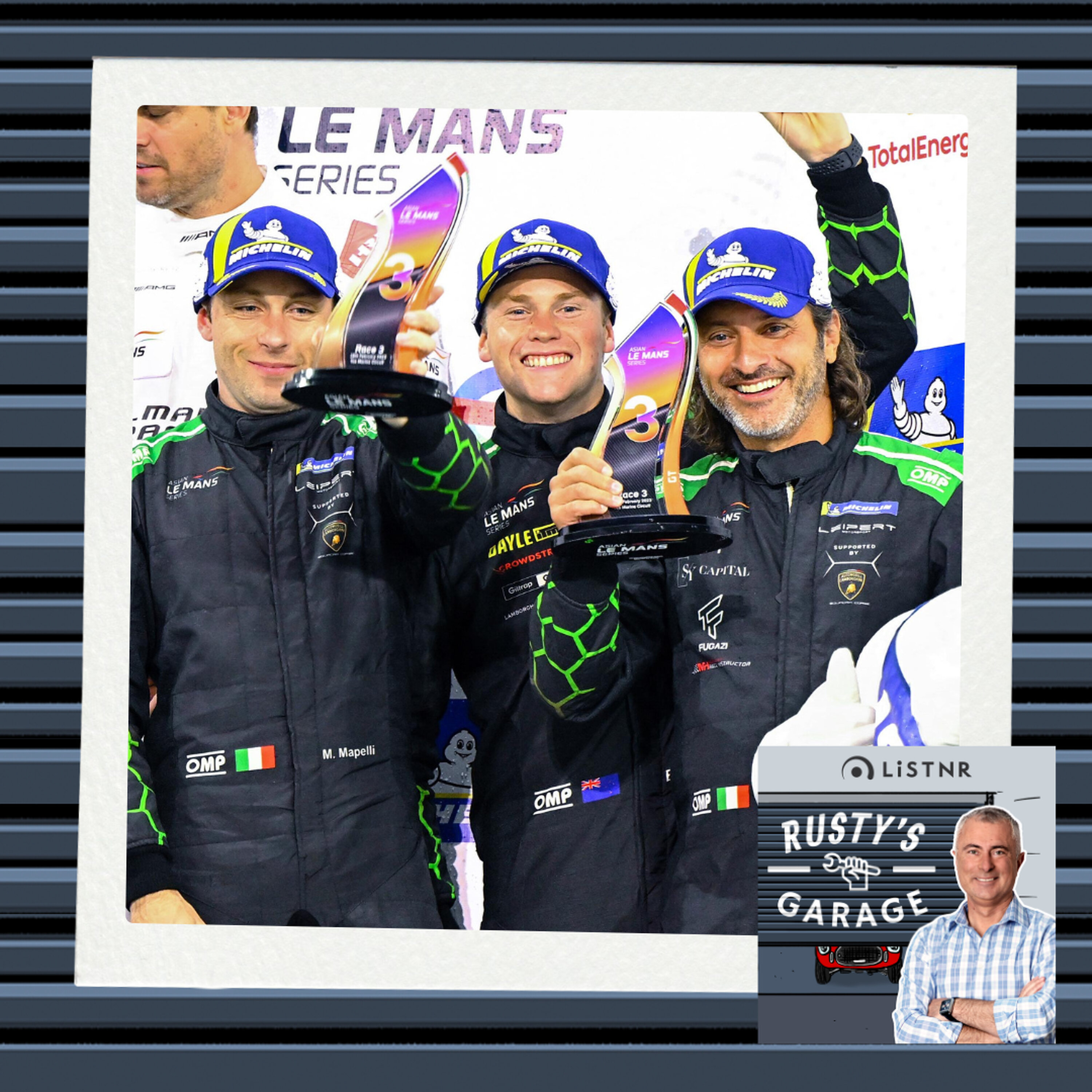
The Shannon Speed Series is a racing competition series. In this episode, it’s the event Brendan is taking part in over the weekend.
Car
Mercedes-AMG GT3
The Mercedes-AMG GT3 is a race version of a Mercedes-AMG sports car made for a popular worldwide racing class called GT3. It’s built to be fast and reliable over race weekends, not just for short sprints.
Sergio Pires is another driver involved with Brendan Leach’s race car. In races like these, drivers often share the car and work together to get good results.
Tagani Motorsport is the team that helps run the race car. They’re responsible for things like getting the car ready and supporting the driver during the race weekend.
Hour-long races are endurance-style events where the key challenge is staying consistent for a long time, not just going fast for a few laps. Strategy often includes tire and fuel management, plus keeping the car in a condition that can survive the full race duration.
Leach Motorsport and Restoration is the business tied to Brendan Leach’s family and workshop. It’s connected to racing work and also to restoring cars.
Tim Miles was a person Brendan Leach knew well and raced with. The host says Tim helped Brendan in a behind-the-scenes way.
Company
DayLITM
DayLITM is a business name connected to Brendan Leach through a long-term relationship. The episode suggests it’s part of the support network behind his racing career.
A diamond hone is a special tool used to lightly sand the inside of an engine cylinder. The goal is to make the surface smooth and “just right” so the piston rings can seal well.
Tolerances are how precisely parts have to fit together. In an engine rebuild, checking tolerances helps make sure everything seals and moves correctly.
In this context, “rings” refers to piston rings, which sit in grooves on the piston. They seal the gap between the piston and cylinder wall to control oil and combustion gases, and they need the right cylinder finish to seat correctly.
This part is about the guest’s family history with racing. It explains where their interest and skills came from before getting into the workshop and business side.
Go-karts are small race cars you often start with when learning to race. They’re quick to respond, so you learn how to steer, brake, and corner effectively.
The AC Cobra is a famous old-school sports car. Here, they’re talking about half-size toy replicas that look like a Cobra so kids could “drive” around the yard.
Car
Caterham Lotus 7 Bleach Super Sprint
Caterham makes small, lightweight sports cars inspired by the Lotus 7. This “Bleach Super Sprint” is a specific version they had as a toy, and the person says it felt lighter and quicker than the other one.
“160cc” tells you how big the engine is. In this case it’s a small engine size, which makes sense because these are toy cars for driving around the lawn.
CART Sport New Zealand is the group that made an exception so the guest could race when he was still very young. It’s basically the authority that handles racing rules.
A dispensation is an official exception to the rules. In this case, it let him race earlier than the usual age limit.
Car
Ralts RZ4
The Ralts RZ4 is a dedicated race car used in Formula Atlantic. It’s the kind of car built for open-wheel racing, and the guest says he actually raced one.
A historic race is an event where older cars are raced, typically to preserve and celebrate motorsport history rather than to crown current-spec champions. Here, it’s used to describe the Lady Wygrom Cup as a historic competition for Atlantic cars.
Term
in-car robot adjustment
This sounds like a system that can automatically adjust something on the car while you’re driving. Instead of setting it once before you go out, it helps you change how the car grips so it feels better in different conditions.
Front grip is basically how well the front tires can stick to the road. More front grip usually makes the car turn in more easily; less front grip can make it feel like it won’t turn and pushes outward.
Term
five-speed H-pat
This is describing a manual transmission with five gears and a standard shift pattern. You move the gear lever into different positions to pick each gear.
Term
over-ever
This likely means “over-revving,” or spinning the engine too fast. Drivers avoid that because it can be hard on the engine.
“Visceral” here means the car feels really physical and exciting—like you can sense what it’s doing through the steering wheel and seat. It’s the opposite of feeling numb or disconnected.
The Dodge Journey is a crossover SUV, meaning it’s built for everyday driving with more space than a small car. It’s typically chosen for practicality like passenger room and cargo space. If it’s mentioned in a personal story, it’s likely the person’s everyday vehicle before or alongside other interests.
The Chevrolet Corvette is a fast sports car made for performance driving. It’s also used in racing, so people may talk about it when discussing drivers and competition. If someone says they’re a “Corvette driver,” it means they race Corvettes.
The Mini Countryman is a small crossover SUV made by Mini. It’s designed to be practical for daily driving, with more space than a basic Mini hatchback. People bring it up because it’s a common, usable car rather than a race car.
The Mercedes SLS AMG is a high-performance Mercedes made by AMG. It’s known for being fun to drive and for its big V8 sound, so it shows up in racing when people want something exciting and controllable.
The Porsche Carrera GT is a very high-end sports car designed for fast driving. It’s the kind of car that shows up in serious racing conversations because it’s built for performance. The name “Carrera GT” refers to that specific supercar model.
A pit limiter is a system that limits how fast the car can go in the pit lane. When you leave the pits, the limiter turns off, so the car can accelerate much more strongly.
Formula 3 is a racing series where up-and-coming drivers compete in open-wheel cars. It’s often used to learn the skills needed to move up to bigger, faster racing categories.
A simulator is like a realistic racing video game used for practice. It helps drivers learn a track and plan things like when to brake before they drive the real car.
Ferrari is a famous racing car brand. In this segment, the driver says they already understood how the Ferrari felt, which helped them focus on learning the new track.
In racing, “brake” is about when you slow down before a corner. If you know the right braking point, you can carry the right speed into the turn instead of guessing.
A “race weekend” is the whole event across a couple of days. Drivers only get limited practice time, so you can’t just drive as much as you want.
Place
Ben Motorsport Park
“Ben Motorsport Park” is a specific racing venue mentioned as the location tied to the lead-up content. In motorsport, track-specific learning (lines, braking points, and setup changes) is a big part of how drivers improve between sessions.
A Toyota Hiace is a common type of van in many countries. Here, it’s just the vehicle that pulls over to help them when they’re stuck.
Car
Lamborghini GT3
This is a Lamborghini race car built for GT3 racing. It’s made to be fast and reliable for track events, and it has to follow a common set of racing rules so different brands can compete fairly.
The Audi R8 is a supercar made by Audi, and it’s built with the engine in the middle of the car. That mid-engine design helps it handle well, and the early (first-generation) R8s are especially recognizable.
This is the name of a racing series in New Zealand’s South Island. The host is mentioning it to explain when they got back into competition.
LIVE
A listener production.
I'm automotive commentator and journalist Greg Rust and this is Rusty's Garage.
For this episode, I'm in a corporate box at the impressive Bend Motorsport Park
about an hour out of Adelaide. Friday practice for the Shannon Speed Series
has just wrapped up and my guest, Brendan Leach, has a rice smile on his face.
That's because the Mercedes-AMG GT3 that he races with Sergio Pires
and Tagani Motorsport is in very good shape.
In fact, 24 hours after we recorded this, they took a very memorable win
in the first of the weekend's hour-long races.
Brendan has done some hard yards to get to this point of his career
and you sense, even at age 30, there are still some important boxes to tick.
He absolutely has the right stuff for that.
You'll hear about early life on the South Island of New Zealand,
a real tenacity to stitch a racing budget together
and how we cold-called lots of businesses in Invercargill as a youngster.
The family's pure love of the sport
and being around some seriously cool cars in his Dad Barry's workshop,
the internationally respected Leach Motorsport and Restoration.
There are candid moments here, how he's coped and regrouped
when it seemed like doors were hard to open or the pandemic got in the way of plans.
He also talks about his friendship with the late Tim Miles, racing with him
and the things that Tim quietly helped him with.
There's a long-standing commercial connection with the Day family and DayLITM,
plus the craziness of flatting with a couple of motorsport journals
and an insight into his supercars test.
He's become a bit of a global GT gun for hire,
having successfully raced all sorts of marks and in lots of different places.
There's a Lamborghini Super Trafeo European title in 2023
and he was the pro-am winner at the World Finals in 24.
The numbers show you that just over 25% of the time,
Brendan finishes on the podium.
There's a class win at the Bathurst 12 hour
and he's raced against some stars in the New Zealand Grand Prix over the years too.
This year he's splitting his time between GT World Challenge Australia and Asia.
A quick thanks to Barry and Marguerite, his lovely parents, his brother Damon
and Speed Café's award-winning journal Simon Chapman for the extra intel for this chat.
It'll hook you in. I know it did for me.
Brendan gets the medium and digital media generally.
He has a story to tell and he tells them well.
Enjoy the Convo.
Hello, mate. How are you?
Good, mate. Thanks for having me.
I have a little bit of, if I'm honest, a bit of intel that we've had from different people,
including Simon Chapman who's here watching on tonight.
But I want to start with your lovely mum and dad,
who every time we go to Invercargill for racing at Serratima and things like that,
are so welcoming.
I've had lovely kind of home-cooked meals and laughs
and I would imagine that was what life was like growing up in the Leach household, wasn't it?
Yeah, absolutely.
I mean, growing up, I didn't know anything different than, you know,
Mum's kumar and chickpea salad.
That was just a standard, you know, and lots of roast meats.
And yeah, very, very lucky growing up.
And dad was looking after lots of classic cars
around the January, February classic time.
And yeah, I was just a little kid running around the paddock
and then at night go home and Mum was cooking for 50, 60, even 70 people sometimes.
It was crazy.
We'll talk about their racing careers in a minute in order to set up your own.
But I think the extension of that is that every time I've gone there,
always a bit of time in the workshop,
he's had some amazing cars that he's worked on and continues to work on,
Dad Barry, how big of an impact or awareness or was that for you?
Like being around those kind of cars constantly?
Oh, it was great.
Ever since I was a kid, I remember being three or four years old
and sitting on the workbench as Dad was rebuilding my brother Damon's Go-Kart engine
and I vividly remember that.
And I'm just measuring tolerances on the rings with diamond hones
and wondering what they were and every little detail like that
I was just brought up around since a very, very young age.
How much does that help you now?
Like all that stuff, no way?
It's absolutely priceless.
That stuff is knowledge that I use every single day,
whether it's at home on the simulator with my customers,
at home on the simulator mucking around by myself at the racetrack,
preparation for events, everything.
It's all that there is the foundation of what this is now.
Amazing.
So so valuable all these years on.
We've begun on some of your Dad's work that he does on cars.
I mean, he still pulls the helmet on himself,
you know, and I've had the joy of seeing him do that.
But it's worth sharing with people that may not know
that your mum's been a pretty handy steerer too, mate, hasn't she?
Yeah, mum used to race.
She was in Go-Karts.
I don't think she ever raced cars,
although she might have done a couple laps around.
Tara Tolar and Dad's old Lotus replica.
That leached super sprint.
But yeah, mum used to race cars.
She started racing just after mum and dad had met.
And I think at some point she was beating Dad.
So that was pretty funny.
That was a good story.
And then when I started racing and was probably a couple of years into it,
Dad built her a Go-Kart up and she did a couple of races
and a few ladies' day races as well.
And like, yeah, she loves being involved in it.
And yeah, done it for a very long time.
Marguerite, amazing human being.
They tell me, both of them kindly tell me,
that when you were about five years old,
maybe just before your sixth birthday,
you were allowed to do laps in a midget car
at the end of a race day at a track.
And you were so excited by the prospect of this
that I think around like 6.30am, you were waking them up,
like, race suit, kind of ready to go type thing.
Is this true?
Yeah, I didn't wake up and put my race suit on.
I slept in there.
Like, that was just the way it went.
I remember, I mean, I don't remember,
but there's also a story of my brother going to sleep
wearing his overalls and taking his little carry toolbox to bed as well.
But it was a real toolbox, like a little snap-on carry box.
Like, that was just it.
Normal.
Yeah, loved it.
Did they, I think over one of those dinners,
did they tell me, did you boys have like a,
I don't know whether it was a Shelby or what it was,
but it was a toy car of some kind.
And you could kind of, it was a bit bigger than a courtyard,
but there was like an outdoor kind of grass area at home.
And you guys just cut laps all the time in that thing.
Yeah, mum used to get super frustrated
because we'd just cut divots in the lawn, like,
rutted out.
It was just like an oval sort of thing.
Dad built these half-size replica AC Cobras.
Cool.
And also a Caterham Lotus 7 Bleach Super Sprint.
So he would, you know, we had one of each for like,
not one of each, one of each car that, you know,
Damon and I would share.
And I remember the Super Sprint was a bit lighter.
It was a bit faster.
But yeah, we just used to chase each other around the lawn
and these things, they had a little Honda engine in them,
like a little hundred, 160cc motor.
So yeah, ever since I was, I mean,
Damon used to drive around the lawn and put me to sleep
in the thing when I was one or two years old
in my nap in the afternoon.
So that was a common occurrence.
But then, you know, and I got a bit older
and I started driving it myself at like three years old
and then started to drive the midget at five.
And yeah, obviously racing as soon as it was possible at six.
I think I did my first race.
My birthday might have been on the Monday or Tuesday.
So back then, I mean, how many years ago was that?
CART Sport New Zealand gave me a dispensation
to do my first race when I was like, you know,
five and 360 days.
So yeah, that was pretty cool.
Couldn't wait to do it.
Hey, we'll come to your brother in a moment,
but just to come to, I mean, some of the many cool cars
that your dad has campaigned.
One that is sort of uppermost in my mind is that,
that Ralts RZ4, the Formula Atlantic, right?
The Jacques Lafitte car, Jautane livery.
I love that thing.
Have you had a chance to drive that?
Tell me about that.
Yeah, I raced it.
I was really lucky 2013 or 2014.
I did the Lady Wygrom Cup in it, which was a historic race
for Atlantic.
People don't know that's actually a very special thing
to New Zealand, isn't it?
Yeah, it was.
Oh, it was so much fun to drive.
It's pretty cool.
It has an in-car robot adjustment.
So, I mean, for me, growing up in junior formula,
you never had that.
I mean, they do an American now
and some of the junior formula stuff,
but I thought that was such a cool novelty
just to have the front-handy robot
you can adjust how much front grip you had
in the car while you're driving.
And I mean, you've got a five-speed H-pat and gearbox there
and just trying not to over-ever the thing
and just felt, I don't know,
they feel very different to the cars of now.
Chapo's a journal.
He would say probably like visceral,
like a real kind of driver's car magic sound.
Oh, absolutely.
You feel everything in the seat of your pants
and it's just every, I don't know,
it's just there's something about it.
It just feels super special
and very different to what we raced now.
And it's a very, very fortunate experience
that I got to have to drive that.
And I can only imagine what that was like in the 80s
when they were racing those things all around the globe.
I mean, over in New Zealand and Australia
and then in America and the Atlantic as well,
they were just a crazy car for a 1600 CC.
They were a small engine
and they just produced so much downforce and grip.
For 1980s, it was the next best thing to Formula One.
It was what they were all driving
when they weren't at a Grand Prix.
Great chapter, great chapter.
And New Zealand really embraced it.
You mentioned your brother Damon before.
I mean, he works at Highlands nowadays,
so I get to see him in that instructor kind of capacity.
I've had the joy of watching him wheel, you know, the legs,
if you like.
I'm using the wrong phrase or terminology here,
but I'm wheeling a McLaren GT3 car really handily.
What about his own career mate,
maybe the kind of unrealised potential there
and just a reflection on him as a racer?
Yeah. Oh, I mean, Damon,
I mean, he still is a really good driver back
until I started racing like every other weekend.
He was better than me and it was like I knew it.
He was just something, I don't know,
I didn't even know what it was,
but I just remember watching him when I was younger
and he was in TRS
and the Toyota Racing Series in New Zealand.
And, you know, Daniel Kivout was his teammate
and Daniel and him were fighting
for the front row of the grid every other weekend
with Cassidy and Mitch Evans
and these guys as well all around that same time.
And then I think in 2015 was the last year
he did that championship
and I think he just lost a little bit of the passion
for the finding,
I mean, it's a very hard thing to do
to keep going and finding all the sponsors
and he was quite a reserved bloke back then, I would say.
I mean, he's a lot more outspoken now
and as he got older, but yeah,
when he was a bit younger he was a bit more quiet
and that's where you could see Damon and I were very different
but on track, I mean, very similar.
And yeah, he was a driver that I think now
that if he kept going he would be, you know,
at the top of the sport somewhere for sure he deserved to be
and he just found his passion in other things and that's it.
Can we tap into what you were just discussing there
around the kind of commercialities
and learning a bit about that when you're younger?
So your dad tells me that you were super determined
at one point to go formula forward racing.
This is probably about age 13
but Damon is already racing at this point
so the challenge for the family of two racing budgets
is going to be a massive thing.
He recalls you being absolutely unfazed by this
and you kind of sit out to knock on doors everywhere
in, you know, in Invercargill, maybe even beyond
and you had this big pile of sponsor proposals
and every day after school
you basically filled your backpack, jumped on your bike
and went door knocking up and down every street to businesses.
Were you naturally comfortable doing that?
You were forcing yourself because you were so passionate about it.
What were you doing?
I mean, in the beginning, mum just made me do it.
She's like, Brandon, if you want to race,
this is what you've got to do.
We can't afford to fund a racing career.
So being young and naive, I was like,
oh, you know, that can't be too tricky.
We'll just find a way.
What were the reactions from people?
Because racing and, you know,
our business can often have so many nose mates,
so many knockbacks.
As a young fellow, what are you, 13 here?
How are you coping with that?
Well, I just had to get stuck in.
I knew that if I wanted to drive the race car,
I needed to find the money for it.
And that was enough for me to say, oh, well,
I mean, how do I get from A to B?
And it's this way.
So I just made my own proposal and made it a PowerPoint.
And then mum and dad looked at it
and helped me with getting it better.
And then I made a couple of phone calls
and I found a company which was really cool called IQ,
Ray Tinker in Invercargill.
And he said, OK, well, we'll print your proposals for you.
And that's your, like, sponsorship from us.
So he printed hundreds of proposals
and bound them in everything like really good quality.
I mean, the quality of the printing was far better
than the workmanship inside that I'd done as a 13-year-old.
But it was enough.
And I took 10 proposals each day with me
in my backpack to school, a bike to school.
And I was a kid.
It was like, I mean, Invercargill's not huge.
So I think it was like a 20-minute bike ride to school.
And then after school, I would go work in a workshop,
engineering workshop,
and I would sweep the floors there.
And then once I'd finished that,
it was like, I mean, I'd go there for like an hour,
I think on a Monday, Wednesday, Friday.
On those days, I would bike around
and I'd just find a choose a street
and other in the industrial area or in town
or on one of the side streets
and say, I'm just going to work my way down the street.
And I just went into every company and just said,
hi, my name's Brendan Leach.
I'm looking to race in the New Zealand Formula 4 championship.
This is the situation.
And I was wondering if you'd like to have a look at my proposal.
And that was it.
I see the same line every time.
But the repetition was, you know,
what got me there in the end.
And I must have handed out a couple of hundred
at least proposals before I got my first dollar.
And then that motivation just kept me going.
And, you know, it's all possible.
Just nothing's changed now.
It's just a different, you're looking for a different thing,
you know, looking for drives and...
Bigger number, more professional proposals, blah, blah, blah.
That's right, yeah.
So everything that I did back then is very valuable
and it was just a big learning process.
And I even had a little company where I bought myself a scanner
and I would go around all our friends and family and beyond.
And I would scan negatives and slides and digitize them.
And I got paid like, I mean, I can't remember what the price was.
It might have been like ten cents a slide or five cents a slide.
You know, so if I did a lot of those,
I mean, I raised, I think, over $1,000,
which was more than a set of ties and for a formal affords.
So, yeah, all those little bits and pieces made a huge difference.
And that's just the way it had to be.
So I got it done.
Just to back you up, mate.
I mean, your dad, in finishing that story,
tells me about the response that people in the cargo had.
You know, you said they were really impressed by your passion,
your commitment, and it helped the journey begin.
Give me some memories of that period for you.
I mean, we're on the cusp of Formula Forward, clearly.
What are you like as a school kid?
Are you just hell-bent on going car racing?
And what is the racing journey up until that point?
I guess this is almost a crossover point from early stuff into proper car racing.
What had that been like?
Oh, I mean, I had to have been on the spectrum at some point, right?
Aren't we all that?
Yeah, that's right.
I was fully focused on racing.
I knew I loved cars, and I loved working on cars.
And every night, I would be working on my go-kart at night with Dad
to get it ready, and I had to clean it.
That was part of the rules of going racing.
I always remember if my chain guard wasn't perfectly clean,
I wasn't allowed to drive the car.
So it was, yeah.
I mean, they definitely ingrained it into me from a young age
that if you were going to do it, it needed to be done right.
And yeah, lots of my memories are from growing up,
but always just working on the go-karts, helping Dad and the shed,
building the Formula Ford as well.
When Damon was racing Formula Ford, I was out in the shed helping too,
not because I maybe wanted to right then,
but Mum would just tell me I had to go help Dad and Damon in the shed
and I'd go out there and get stuck in and just cleaning parts or whatever.
But I was involved in it, and that was all part of the process.
And then, yeah, once I started racing, then it was my job to prepare
my own car in the off season as a 13, 14, 15-year-old.
And those skills just developed.
And when I left school as well, I started working as a mechanic
for a guy named Michael called Scott O'Donnell.
And I was helping out in his workshop,
and the skills that I learnt from building my own cars with Dad
and working in the workshop with him
was what Scott gave me the chance to come and work for him straight out of school.
I didn't have a qualification. I wasn't doing like big jobs,
but I was helping and getting things done there too.
He's become a very prominent figure in the cargo.
Now a stakeholder, obviously, at Walk and Shore and so on,
and loves, absolutely loves his racing.
We have Mr Hidden Talent of yours here.
Marguerite tells me you would make hundreds of cheese rolls and Christmas truffles.
Are you a good cook? How much did this help the racing fund?
Oh, classic.
I remember making the cheese rolls,
but I only remember because you've told me now.
I kind of erased that from my brain, I think.
I can't remember what the recipe was.
I know it was definitely white bread,
because brown bread and cheese rolls was just not a go.
And cheese rolls, obviously, are just south on sushi.
Yeah, we made hundreds and hundreds of those.
And the truffles, we didn't wrap off those,
but they were gifts to all the people that sponsored me through the series.
So we'd do them at Christmastime as a Christmas gift
for all the supporters and sponsors of mine back then.
Because maybe I need to get back on to making the old truffles for Christmas.
Yeah, definitely. I'll try some of those.
In the junior phase and what New Zealand does with its summer of racing
and so on, there's a period here probably where it's,
I don't know, whatever it is, five weekends a year.
Shoe string budget.
But, I mean, up against some future F1 stars,
but then not much else for the rest of the year.
What was that sort of phase like?
That was the hardest bit probably,
like knowing, coming into that season,
I mean, not having any experience.
I didn't know any better, so that's fine.
That was probably the best bit about it,
was again, probably my naivety.
But I just did what I could with the tools that I had,
and then the season was over
and it was again, what's the next step?
And then again, for 10 months of the year,
I didn't drive anything at all really until I was 19
and I got a job at Highlands.
And then I was working as a mechanic
and doing my apprenticeship there.
Were you a good employee at Highlands? What were you like?
I think so. I think that's pretty good.
I need to fact check this, but I didn't have time. Good guy.
Trust me. Trust me.
No, that was good. I did my apprenticeship there with him.
It was really good.
And then I was also doing hot laps
one or two days a week as well.
So they were miles?
I was driving at that point,
but up until then, I wasn't doing too much.
And it was just taking punters for rides.
60%, 70% depends on how you look at it,
but it was in a more safe environment,
trying to minimise risk,
so you're not giving it everything.
So it's not quite like going testing
and being able to change the car,
you're not making adjustments to the ride heights,
changing the wing angles, the roll bars, kinematics,
whatever you want.
So all these miles weren't quite as good
as doing 200 days of testing
in a Formula 3 car all around Europe.
It makes a huge, huge difference.
The more you drive, the faster you get,
the faster you get, the more confidence you get,
the more confidence you get, the faster you go.
And then the circle repeats, right?
So it's all about mileage.
And if there's any, like,
you need to find any way you can to drive more.
That's the key to the whole thing.
And back then, I just did what I could,
and that was all I could do, and I was just,
I mean, obviously, driving well enough
and had a really good car for a few years there,
and it showed what I was probably capable of,
and I was very, very fortunate to have the backing
of Dale ITM, Deb and Marty,
and they've been beside me, absolutely amazing people.
And they've been by me the whole way since 2014
was the first time they came on board and supported me.
And again, I had the same phone call with Deb
that I just told you, like, you know,
I just introduced myself and told them what I was doing
and asked if they'd like to have a look at the proposal,
and that's how the relationship began,
and it just flourished into their support, became amazing.
And if it wasn't for them, I wouldn't have gone overseas,
and I would probably just be working as a mechanic.
So I'm, you know, super grateful for the opportunity
that they gave me, and then that led on
and to create a lot more opportunities.
But again, if it wasn't for that first hurdle,
I wouldn't have got to where we are now in this position.
Before we move to that, can you just rattle off
for people listening and maybe watching
some of the names that you battled over the summer in New Zealand
and what that was like, mate?
I mean, 2014, I was still figuring it out,
and I can't really remember too many of the drivers there.
I know my brother was there at the front,
he was fighting for the title.
2015 was the year Lance Stroll won the championship.
Now Santino Farooch, he was there as well,
and there was about three or four other guys
that all became GT3 works drivers now.
I mean, Charlie Eastwood was there,
and he's racing in WEC, now a Corvette driver.
Into 2016 was the year of Landon Orris,
and Lando won it that year, and, sorry,
Johan Deriva came second.
I was third.
Behind me was Ferdinand Habsburg,
Alpine hypercar driver now.
Fifth was Pedro Piquet, son of Nelson Piquet.
And the list goes on.
That year was huge.
Actually, the majority of that field,
I think 16 or 17, are all professional drivers now.
And then year after that was Marcus Armstrong.
Yeah, and the list goes on.
Liam Lawson was there in 2019
and my last full season of the championship.
And Lucas R as well, I raced a couple of times too,
and, you know, I rub bump into Lucas quite a lot in the paddock now,
and GT3 racing the Mercedes,
and he's also racing the Mercedes,
so it's pretty cool to still be rubbing shoulders with these guys
and now racing against them at a completely different level
and, you know, a completely different mindset too.
Before we move to sort of overseas adventures,
proudest moment at home in New Zealand,
because there is such a rich fabric,
such a rich history of racing there.
What's the big thing there?
The big thing for me that's still stuck with me
is when I won the Spirit of a Nation Cup in 2015.
That was the turning point for me.
It was the first full season where Deb and Marty supported me,
and we scraped through that season
on the shuest of shoestring budgets,
so much so that by the time we got to Palmerston North
the last round in Manfield,
they didn't have enough budget for tyres,
so I just did the whole practice on the sets
from the rest of the championship
and victory motor racing now known as Kiwi Motorsport.
They obviously helped me get through on that
and I'm super grateful for that as well.
The Spirit of a Nation was a cool one.
That was the one where Lance Stroll came third in the race.
There was a big stack of drivers there
that got on to do big things,
but that was the first time I put it on pole
and then won the race.
It was the feature race as well,
so the big trophy for my hometown of Invercargill.
It was a good one.
You've just reminded, I think, young racers
of the importance of hunger,
and therefore what you then savor when you finally
are able to achieve something special like this.
Damon tells me in that first season of TRS
you fundamentally, big, borrowed,
almost kind of stole from people in the team
to get through the series.
He says, I have plenty,
but I probably shouldn't broadcast those things publicly.
How much of a struggle was all the way?
That was tough.
The first year, yeah, it was, I remember,
I was often using Damon's tyres.
I remember the first event,
we had this rookie test on the Wednesday,
day off on Thursday, and then into it Friday,
and I got through the whole Wednesday,
maybe Thursday as well,
and Friday on one set of tyres,
at territory time, I mean, it's a short circuit,
did a lot of laps,
but I just remember coming onto the front straight
on Friday afternoon and just pulling gears,
and the thing just wheel spinning like nothing else,
and that was all I could do.
And then, anyway, then Damon started giving me
some of his old hand-me-down tyres.
He'd be doing quality sims and race runs,
and then I'd get them after that
and take whatever was left in the tyre,
and obviously, from your own not watching,
others watching it, the fall off of a tyre
is humongous after.
You've done a race on it.
You know, the tyres got to 100 degrees,
and you pretty much just scrape in the bottom of the barrel
and break pads and stuff from him as well,
and anyone else on the team
that would give me any of the leftovers.
And that's just what I had to do.
That's what you do, mate, man.
I couldn't afford to chuck new pads in
and throw new tyres on the car,
and if I could have,
sure, the things might have been different,
but I think it's all part of the journey.
I look back now, and I think that's pretty crack up, really,
that we just did it that way.
The family for you is backbone
of your racing journey, obviously.
But, you know, often there are
people that inspire along the way,
and Kiwis have this unbelievable Australian stew,
but New Zealand, especially for its size,
its population, does so well.
What is it, mate?
I mean, you're from the bottom of the South Island,
a small city, a small town there,
and you go on to do some things
and still are doing some things globally.
What is it, mate, about all that stuff?
I think it's just the determination,
I think, coming from such a small country.
I mean, now it's pretty cool
for all the young and up-and-coming drivers.
They have so many professional New Zealand drivers
around the world to look up to and say that, you know,
from all different walks of life,
and there's just, there's opportunity out there,
but you've got to want to take it.
Have there been people that have been good
at supporting you in that sense?
Well, maybe even it's just a little bit of advice.
Oh, yeah, mum and dad, absolutely.
Mum and dad, mum is for sure the hard tasker,
I'd say, out of the two,
and I remember many conversations,
and I wanted to, like,
oh, I can't be bothered doing this, I don't want to do this.
I just want to play video games,
or I just want to go hang out with my mates.
She's like, Brendan, if you want to race cars,
this is what you've got to do,
and if you don't want to do these, you don't want to race cars,
and that's fine, go hang out with your friends,
and we'll go sell the Formula Ford or whatever,
and I'm straight away, I'm up and about,
and, you know, that's, I mean, when you're young,
of course you want to go muck around and play with your mates,
but you've got to want to do these things,
and I think it's all part of it.
If you're not determined and you're not motivated,
then it's like anything in life.
I think you've just got to want to do it really badly,
and if you do, then you'll make it work.
Brendan's countryman, Paul Radisic,
came on the pod back in 2019
for a wide-ranging chat with Rusty,
including the subtle tune-up the late Murray Walker gave
Paul Surname at the height of the British touring car championship
in the 90s.
Paul Radisic, you know, he...
But there was a story of legend going around at the time
that someone in the family had perhaps tried
to gently let him know that that wasn't the correct way.
I mean, he's a legend.
You can't correct Murray Walker, but is that true?
Did someone try and gently let him know
that that's not how you say it sooner?
But I figure when I produced a whole lot of t-shirts,
with Radisic written on it,
and they sold, like, hotcakes.
I didn't really bother me at all.
Fittingly, they recorded the chat sitting in a race car
while Paul waited to head up the hill climb
at the Leed Foot Festival.
Check it out later if you haven't already.
Now back to Brendan Leach.
So take us to that next step,
going from TRS and sort of
endurance stuff in New Zealand
to then double duties in Asia, racing Lamborghini
and Formula 3.
I mean, where did the whole idea of going racing abroad
come from? What drove that?
What sparked that? And how did it all get started?
Well, it was definitely Deb.
She put a lot of trust in me
and knew that I had the potential to do some cool things.
And at the beginning of 2017,
we were racing in New Zealand,
and I just had a huge crash
in Palmerston North at Mainfield,
where I just did a triple somersault,
which wasn't very fun.
Take people to that?
Yeah, I mean, it's on YouTube.
It got a lot of views for a little New Zealand clip,
and I was just, you know,
had another bad quality probably,
and I was just stuck behind a couple of guys,
and they were fighting.
They had contact, and I was, you know,
less than a metre away from them, really close.
I just had nowhere to go,
and I just flew straight over the back of the guy,
and then just nose dived to the dirt,
and I remember it happening in slow motion.
Like, when you go over the handlebars on a push bike,
and you have that sick feeling in your stomach,
I still remember that, and I hit the ground,
and then the thing just pirouetted,
and the G-Meter went off the chart.
I broke a bone in my hand.
It was amazing how safe...
Not enough to scare you?
No, no, no.
No, no, no. It was all good.
The cars are so safe now.
It's just incredible.
I mean, short touring cars,
you've got a roof over your head.
It's a little bit safer again.
No exposure at all.
But, yeah, it was probably that period of time
that Saturday night,
I was just sitting there,
I was a bit, you know, a bit gutted about everything,
and I was like, oh, what's going to happen?
Like, you know, I don't know what I'm doing now.
And Deb's like, no, let's go.
Well, you know, let's go overseas.
So we worked with Gary Orton,
who owned the team I was driving for in New Zealand.
Right, great person.
Yeah, he gave me the opportunity to go over there.
I mean, it was...
We did it again.
We did it on a shoestring budget.
We tried to minimise costs as much as we could,
and we went over there, and we did a good job.
For the equipment we had at the time,
it was Gary's first year in America.
We tried to develop this Formula 4 car
for him as well as we could.
We've got some really good results,
got a lot of podiums, won a race as well.
And then, 2018, I didn't race overseas.
I raced in New Zealand in the Mercedes.
It was my first time driving a touring car,
racing the Mercedes SLS AMG.
It was really cool.
In New Zealand for a small team that doesn't exist anymore.
And we just had some fun in New Zealand.
They really really pushed for me to enjoy my racing.
I was pretty stressful at that time.
I tried so hard to get to that point,
and then I became, I guess...
I just found it hard to not put pressure on myself,
and she really pushed for me to make sure I'm having fun
with my racing.
Deb did, you did.
Yeah, Deb.
If I wasn't having fun, there was no point to do it.
So she was great from that side of things,
just emphasizing that I should be enjoying myself.
And, you know, I was, but I was just putting too much pressure
on myself to perform.
And that, you know, is in a roundabout way.
You know, now I pass that on to my teammates that I raced with,
and, you know, you've got to be having fun.
And when you're having fun, you're going fast.
Like, that's just the way it goes.
So, anyway, 2018 raced in New Zealand,
and then in 2019, I got the opportunity to race
in Formula 3 with a team in Asia.
I got a call from the team owner,
and he offered me this opportunity
to come and drive for them.
I was like, well, this is the first.
I've never had someone just call me and say,
we've got this car.
We want you to come and do a test.
And if it goes well, you know,
we haven't had a good season last year,
and we want you to come and develop the car for us
and see if we can get to the front.
And it was really fun.
That year was great.
And at the same time,
Dee was pushing for me to go to touring cars
and to try and chase the GT career.
So, yeah, 2019 raced in Super Trefao Asia
and Formula 3, often double duties on the same weekends,
which was really much trickier than I told everybody it was.
You know, in one situation in Suzuka,
I finished the race in Super Trefao.
We won the race in our class,
came into the pits.
The F3 race started straight after that.
I ran down to the car, jumped straight in there,
still in my Lambo suit,
went out the pits,
and as I came out of the pits,
I got on the gas off the pit limiter, full throttle,
and then hit the brakes like I had ABS
and just torched the front tyres,
completely destroyed them on the way out,
just because I'd just come out of the Super Trefao
with anti-lock braking.
So, yeah, these are...
Yeah, it was a tricky one,
but that was the turning point for me.
I had an amazing driver coach that year,
and Simon will...
He was there this weekend.
We were racing at Suzuka,
and I had a driver coach.
His name is Richard Bradley.
He's a great guy, lives in the UK,
and after the qualifying session,
I had fired the car off at Degna, too,
in the middle of Suzuka,
and I came in, and he absolutely destroyed me, like...
Tore you a new one.
Tore me a new one for it,
and, like, you know, what are you doing?
If this, if that...
You know, this is what you need to be doing.
You need to be doing a better job here,
and I really did a great job of explaining
what I needed to do,
but at the same time, I just felt terrible for it,
and that was, like, the turning point for me.
He just...
I'd never had a driver coach before,
you know, past Damon and New Zealand,
so just going overseas and having this next step,
I needed something to get me forward,
and that weekend was the turning point for me,
where the performance started to come,
and then after that, we...
Yeah, well, I mean, the rest is history.
That's where the performance began,
and it was all because Richard was...
had an amazing wealth of knowledge.
He raced, you know, 24 hours of Le Mans, LMP2,
lots of LMP2 experience.
No, he just does historic racing for fun,
and he does a bit of P2 stuff as well,
but he taught me so much
on that championship in Formula 3
that it progressed my current racing so much.
Yeah, I mean, you mentioned Sim there before and so on.
You actually enjoyed that aspect of it,
and don't you, mate, the learning, the knowledge,
I'm not articulating that right,
but you know where I'm going from there.
Yeah, absolutely.
There's so much to learn from that.
I race around so many tracks in the world now,
and often I'm going to a new circuit.
We just finished in Mandelika in Indonesia,
which was a brand new circuit to me,
and never been there before,
can watch video, but nothing beats driving on it,
so I managed to find a good track model in my simulator
and jump on there and cut lots and lots of laps,
and straight away we got there in the first session
and we were right at the top of the times,
like in the first run on the car,
I knew the Ferrari already from the first round,
didn't know the track,
but I knew exactly where I needed to brake,
knew exactly what gear I needed to be in,
and then all it was was looking for the last 1%,
so you just jump straight in.
So that tool is really useful.
It's really helpful, isn't it?
Yeah, absolutely, because the GT3 car
costs somewhere between 20 and 30 euros per kilometre
right to run, so you don't want to be cutting laps
for no reason, right?
So when you get to the circuit and you waste five laps,
that's, you know, it's a lot of mileage on the parts,
it's not necessary, you know, where you can do this.
You can say you end up saving a lot of money,
a lot of time, you're limited with your driving time
on a race weekend, you know, you have limited sessions,
one-hour sessions through both days,
on a Thursday and a Friday in Asia,
and on a Friday here in Australia,
but you just gain so much, such a wealth of knowledge,
you can change things on the same,
they often have an impact like they would in real life.
It's just so relative to what we do.
You don't mind sharing that stuff on socials too,
like in the lead-up to where Taylor and Ben did,
the Ben Motorsport Park.
I think you shared a bit of a lap around here,
which you kind of commentate and do it in a manner
that is descriptive, helpful.
Did I spot Shane Van Gisburg
and diving into the comments recently
and taking the mickey out of you
or something or other about an apex,
so I can't remember where that was,
but there's a bit of Ben too in that stuff, isn't it?
I think it was around the conversation of A-rated
and B-rated drivers and supercars,
and I won't mention who it was,
but yeah, Shane's, he's a good character.
I do a lot of swim racing with Shane for fun now
and keep in touch with him,
but he likes to get up in the comments,
and it's good whenever he gets in the comments,
the videos go great, so for me, it's perfect.
And yeah, absolutely.
I tried to do a V8 supercar lap at Rua Puna,
and I just sailed on past the apex of Turn 1
to start the lap, and yeah.
Straight on to it.
Rental car adventures in Japan.
I may or may not have had a bit of help
from Simon Chapman here.
Tell me about rental car adventures in Japan.
Yeah, I mean, that was Suzuka.
That was an eventful weekend.
We were just talking about, and we had...
I can't remember exactly what kind of car it was,
but it was definitely a petrol car.
Anyway, we're on our way back from Suzuka,
about to fly out back to New Zealand,
and near the airport,
need to fill the car back up with fuel,
so that's fine.
You know, just looking around on Google Maps there,
where can we go?
We found a gas station in New Zealand.
Petrol is a green-handled pump,
and diesel is black, right?
Oh, no, mate, no.
I don't speak much Japanese,
apart from Aragato, so...
Yeah, it was a bit of a situation
where we came in and filled up,
and I kind of wondered, you know...
Man, fuel's pretty cheap here.
I've taken this green handle and tried to plug it in,
and so the long story short, the diesel...
Fuel pump nozzles are actually fatter than the petrol ones, right?
Yeah, yeah, yeah.
I mean, I was young, dumb, and yeah.
And I didn't realise this, so I'm going to there,
and I've got this handle, this green handle,
and I put it up there, and I'm like,
oh, Simon doesn't fit in the hole.
And I was like, oh, whatever.
I just squeezed the trigger, like, softly,
so I could still get the fuel in.
Oh, something's wrong, that's weird.
Filled the thing to the top.
It was very low fuel, so, I mean,
it made quite a difference, filled it up.
Didn't think anything of it.
Man, that was pretty cheap, you know, cheap to fill it up.
Start driving on our way back to the airport.
We're about five minutes away and get to the final toll booth,
and I start to pull in there.
Oh, good. I thought I heard a bit of a splutter,
but I was like, oh, no, it's all good.
It's just in my head.
Pull in, pay the toll, gate opens,
go to get on the throttle,
and the thing just starts coughing
and moving at, like,
two kilometres an hour.
I'm like, oh, no, what's going on here?
And then I just look straight across at Simon,
and I'm like, mate,
we've definitely done something wrong here.
Pull over on the side of the road.
Just passed the final toll booth.
I'm like, what do we do?
You know, with early 20s,
I'm absolutely packing myself here.
I'm like, oh, no, like, Deb's going to be so upset.
What's going on? What am I going to do?
You know, this is it.
I'm over. I'm done.
Get out of the car. Get our bags out.
What are we going to do if we just had the hazards on?
Lock the car.
Take the keys with us.
Hitchhike for the first time in my life.
Who pulls up but, like,
a typical Toyota Hiace van,
like a Silver Hiace van
with four Japanese builders in it?
Like, can't speak a word of English.
Here's me with Google Translate and Simon.
They're like, oh, like, you know,
airport, airport, and they're like, oh, yeah,
like, flying, yeah, like, perfect.
Yeah, jump in and they open up the back.
There's just tools and stuff in there,
and just throw our bags in, jump on the,
sit on top of the bags.
The car's just still sitting beside the final toll booth.
On our way to the airport there.
Not a word, not a word.
Just, you know, thank you very much.
Pull and stop. Do you want something for it?
No, no, no, no, no.
OK, OK, OK, carry on.
Walk over to the, um,
to the rental car company and, oh,
hey, guys, look, something's wrong.
Car, something's wrong with the car.
It's, uh,
it just completely stopped and they're like, yeah,
yeah, we know.
They have a camera at the final toll booth
and they just see us pull over parked there.
Here's the keys.
We've got a flight to catch.
Let me know how that goes.
I've never heard anything else.
I've never heard another thing.
So, um, yeah, it was, uh,
it was an experience, definitely a lot of experience.
And then Simon gave me a little model car
of a Toyota, a Silver Hi-Ace van, identical.
As a reminder.
It still sits in my childhood bedroom
in Invercargill, right next to some trophies there
from Japan, from Japan.
Awesome, mate, awesome.
You're talking about a number of things here
that are approaching the pandemic.
How much did the pandemic impact
where you were going, your plans,
and what you were doing?
Oh, massively.
So, end of 2019,
I got the opportunity to go to Europe
and test the
Lamborghini GT3 car for the first time.
Current spec car
with the manufacturer and with Leipzig Motorsport.
They were doing a test
for the team to try and
gather the customers and put a program together
for 2020. So, we've been over there
and got some laps in the car.
It was great, came home
and then I was like, OK, how can I get there?
What's the next step?
Very, yeah.
Grateful to have some sponsors come on board,
obviously including Deb and Marty
and we got ready to go.
But flights are booked
for the 31st of March, 2020.
Got to the 17th of March,
2020 and
we're in lockdown.
What's going to happen? So, couldn't go.
Canceled the flights
and
got a refund.
And then I was just sitting there at home,
like everyone else was, what am I going to do?
Got to the point where I was considering to stop
and wasn't sure what to do.
It was really cool that New Zealand,
we kind of opened back up a little bit there
and we could get racing and
we put together a program
and an old Audi R8, LMS,
one of the first generation cars,
which was really cool looking back on,
like a cool car to go racing in.
A great little car.
And we did the
South Island Insurance Championship there
and then by the time we got into that
and I was like, you know,
I was properly jeered up again, I was like,
I don't want to stop, let's do this properly.
Molly Taylor talks, mate,
in that period about chasing
borders kind of thing and chasing
opportunities where you could
and did it come to sort of that sort of
thing for you?
Honestly, I tried
so hard to that point for then
the biggest opportunity that I was
ever going to get at that point
to fall over. I was ready
to pull the pin, I didn't
feel like racing and Deb
really talked me into doing this
SUDEC that year and as soon as I got back out
there, I mean, I was back in love with it
and everything was back on track but
Is it the closest moment you've come to stopping?
Yeah, 100%. That's the closest moment
probably the only moment I ever had where I
felt like I should maybe think about giving
it up and I was already
a qualified mechanic at that point
and I was doing lots of driver coaching in New Zealand
with Downforce and a few other
customers there and I was like, oh, you know, I'm fine
I'll just do this and that's going to be great
I'm going to get a house
and have a garden
and whatever and then
I got myself sorted out
and got back on track and then we started to
put together the program for 2021
and regardless of what COVID was doing
we were going to go do it so
then flights were rebooked for
20th of April 2021
I still remember these days because they were
so massive in my career
and that was the day I
went over to Europe for the first time and
was going to live over there and
be with Leipzig Motorsport
and put together a program to race
in Europe and that was the first time
I
raced professionally
in the GT3 car over in Europe and
Tell me about that mate, I mean, effectively pro
first international GT3 race, where were you
take people there? Oh, Hockenheim
it was a Hockenheim 12 hour
I've been in the country for
just under a month and
I was working
as I was there as a driver coach
in Super Traffa Europe
with a, yeah, a
good friend of mine
and then, yeah,
Hockenheim was the first race I did so I was
cheered up by this point because I'd just been
itching to get in the car
just coaching, driver coaching
at Monza
Hockenheim 12 hour, we won the
race, it was
awesome, we couldn't
have had a better debut with the car
everything went absolutely perfectly
I mean, I can't remember a lot of the
race just that I remember finishing the race
and we were, we had a real good battle
with a couple of cars at the front
I was top three cars all neck and
neck and we were in the fight and we
won it, it was such a cool race
amazing, that's where it all kicked off
that's huge mate
that's the end of part one of my feature
with Brendan Leach but not the end
of our conversation, within 24
hours of this first part dropping
we have a fabulous second
installment for you and in some ways
the yarns in that just keep
getting better on what you've heard so far
making his mark internationally
why his role in GT racing is
so much more than just driver
and the loss of a mentor last year
that has only hardened
his resolve, plus the move
to Tagani Motorsport, he opens up
on unfinished business after testing
a supercar too, it's all ahead
for you here on Rusty's garage
About this episode
Recorded from a corporate box at Bend Motorsport Park, Brendon Leitch walks through his motorsport path—from early workshop lessons and family racing stories to the grind of sponsorship door-knocking and cold calls. He recalls learning engine rebuilding as a kid, racing go-karts and Formula Ford projects, and even a major triple-somersault crash in New Zealand. The conversation then tracks his persistence into GT opportunities, including GT3 testing in Europe, and how limited budgets shaped everything from tyres to race preparation.
Growing up at the bottom of the world and the strong Leitch racing genes.
Being round his Dad Barry’s internationally respected Motorsport restoration business and how that ‘hands on’ learning helps to this day.
Getting creative to find the budget to go racing and heading off with props in his backpack after school.
Working at Highlands Motorsport Park and for Scott O’Donnell (now part owner for Walkinshaw TWG Racing) in the early years.
The respect for his brother Damon’s talent and Brendon’s little known cooking skills.
What it was like to only race five weekends over the New Zealand summer (on a shoe string budget) but to beat some F1 stars of the future!
And the bollocking he received from a respected team manager that Brendon says helped shape his career.
Plus a funny rental car adventure in Japan.
This is one of those eps that will genuinely draw you in. Easy going, affable but hungry and determined. Brendon gets the podcast medium too and he converses here with ease.
Head to Rusty's Facebook, Twitter or Instagram and give us your feedback and let us know who you want to hear from on Rusty's Garage.