
test drive
A test drive is just driving the car yourself before you buy it. It helps you feel how it drives and decide if it’s right for you.
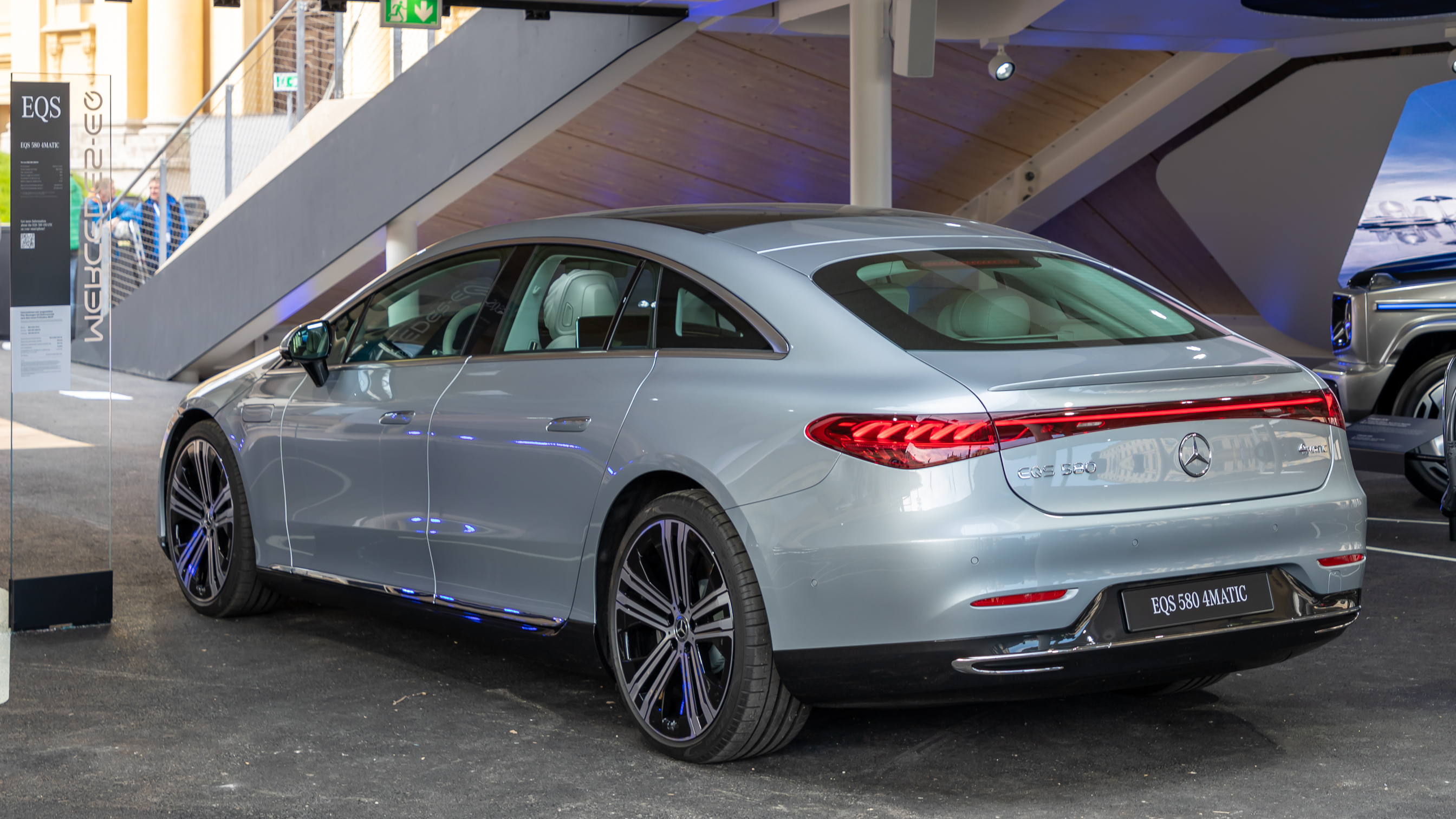
Mercedes-Benz EQS
The Mercedes-Benz EQS is Mercedes’ main electric car. This update is a big refresh, including improvements that affect how the car charges and how far it can go.
overhauled version
An “overhaul” usually means the update is a lot bigger than small changes. It often includes new or redesigned parts that can affect performance and charging.
800-volt architecture
“800-volt” is how the car’s electrical system is set up. In general, higher voltage EVs can charge faster at DC fast chargers.
WLTP range
WLTP range is a standardized test number for how far an EV can go on a full charge. Your real range may be different depending on driving conditions.
steer by wire
Instead of a direct mechanical connection from the steering wheel to the tires, the car uses electronics to control steering. That can allow more tech features, but it relies on sensors and computers to work correctly.
silicon oxide
Silicon-oxide is a material used inside the battery to help store more energy. It’s one way manufacturers try to get more range without making the battery much bigger.
graphite anode
The anode is part of the battery that helps move lithium during charging and driving. Graphite is the common material used there because it works reliably.
122 kilowatt hours
kWh is how big the EV’s battery is—how much energy it can hold. Bigger usually means more potential range, but it’s not the only factor.
CMF EV platform
A platform is the car’s main “building system.” CMF EV is a shared EV design that helps different models use similar parts and engineering.

Nissan Leaf
The Nissan Leaf is a well-known electric car. The host is saying the new electric Juke will be built on the same basic EV design as the Leaf.
386 miles of range
Range is how far the car can go before it needs charging. The episode is saying the EV version should be able to drive around that distance on a full charge.
75 kilowatt-hour option
This means there will likely be a bigger battery choice—75 kWh. A bigger battery usually means more range, but it can also cost more and add weight.
European EV and plug-in hybrid registrations
Registrations tell you how many new electric and plug-in hybrid cars are being sold and registered. The host is saying Europe just hit a record high and sales are growing fast.
year-on-year
Year-on-year means “compared to the same time last year.” It helps you see if things are getting better or worse over time.
sharp fuel price rises
When gas prices jump, driving gets more expensive. That can push more people to consider electric cars because they can be cheaper to run.
disruption of shipping routes
If ships can’t travel normally, it can make fuel and other goods harder to get and more expensive. Higher fuel prices can then make electric cars look like a better deal.
Kia EV1
Kia is planning an affordable small electric car called the EV1. The point here is that it’s meant to be one of the cheaper EV options.

General Motors Ev1
The General Motors EV1 is a small electric car GM says it will launch next year. It’s meant to be one of the cheapest EVs GM plans to sell. The main idea is to make electric driving more affordable for more people.

BYD Dolphin
The BYD Dolphin is a relatively affordable electric car. The host is saying Kia’s EV1 is aiming at the same kind of buyers as the Dolphin.

5 Renault 5
The 5 E-Tech Electric is a small electric car made by Renault. It’s aimed at everyday driving, especially in cities. The podcast mentions it because it’s in the same general class as other compact EVs.

Kia Picanto
The Kia Picanto is a tiny, affordable car meant for city streets. When someone says an EV is in “Picanto territory,” they mean it’s aiming to be similarly small and practical. It’s a way to describe the car’s category without getting technical.
Leap Motor T03
The Leap Motor T03 is a small electric car. The host talks about different battery versions, which affect how far it can go and how it charges. Think of it as an entry-level EV competing in the same small-car space.
400-volt
“400-volt” is the EV’s electrical system voltage. In general, higher-voltage EVs can be better at fast charging, because they can move more power efficiently. It’s one of the reasons some EVs charge quicker than others.
EGMP
EGMP is an EV “building system” used by Hyundai and Kia. It helps determine how the battery and electric parts fit together in the car. The host is using it to explain what kind of EV design this version is based on.
social EV leasing
Social EV leasing is a program that helps people with lower incomes get an electric car without paying the full price upfront. It usually works by lowering the monthly cost through subsidies or special terms. The goal is to get more EVs into everyday use.
Stellantis
Stellantis is a big car company that makes lots of different brands. In Europe, it’s one of the major manufacturers that governments can pressure to build more EVs. Here, it’s mentioned as part of the EV production targets.
wean themselves off the temptation of buying cheap Chinese imports
This describes a policy and industrial strategy to reduce reliance on low-cost imported vehicles—here, specifically Chinese EVs. It implies governments want domestic or EU-aligned manufacturing capacity to grow, often through targets, incentives, or procurement rules. The segment frames it as part of broader EV industrial planning.
Volvo Trucks
Volvo Trucks makes commercial trucks used by businesses. The segment is saying Volvo is pushing electric trucks further, not just regular passenger EVs. That’s important because trucks need a lot of energy and planning.
700 kilowatts
700 kilowatts is how much power the charger can deliver to the truck. More power generally means faster charging, though the battery and charging conditions still matter. The point here is that the truck can recharge quickly enough for real schedules.
driver regulations of downtime
The segment connects charging time to “driver regulations” that govern how long drivers can work and when they must take breaks. For heavy trucking, these rules shape route planning and how charging stops fit into duty cycles. The host implies megawatt charging is timed to match those mandated downtime windows.
Capital One
Capital One is a financial services company that’s using AI-driven tools to support car shopping workflows. In this segment, they’re positioning their technology as helping with tasks like scheduling, financing, and trade-in valuation.
multi-agentic AI
Multi-agentic AI means the AI isn’t one single brain—it’s more like a team of AI helpers working together. Each helper can handle a different part of the car-buying process.
layered reasoning
“Layered reasoning” describes an AI approach that breaks a problem into multiple steps or layers of analysis. In a shopping assistant, that can mean combining user preferences, constraints, and real-time data to produce better recommendations and next actions.
live API checks
“Live API checks” means the software looks up current information from other systems while you’re using it. That helps it avoid giving you stale or incorrect details.