
BRIEFLY: Mercedes VLE, Chevy Bolt, Cayenne S & more | 11 Mar 2026
About this episode
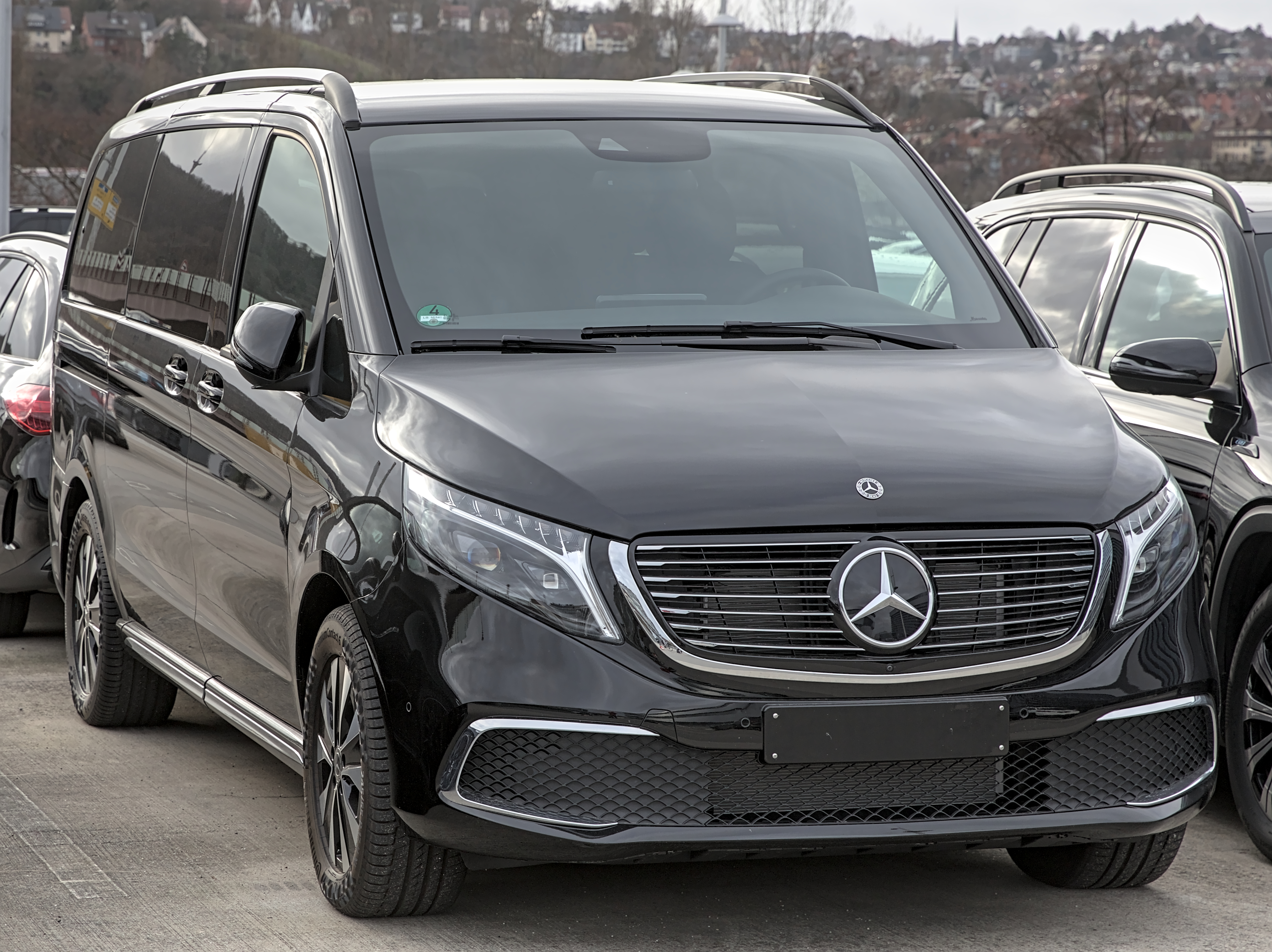
Mercedes unveils the luxurious all-electric VLE van with impressive range and high-end features like an 8K rear cinema screen. GM reintroduces the affordable 2027 Chevy Bolt with improved charging and range. Porsche adds the Cayenne S, a fast-charging road tripper with advanced cooling tech. Volkswagen launches a large-scale grid battery in Germany to stabilize energy supply. A camouflaged Genesis GV90 is spotted charging at a Tesla supercharger, hinting at new EV tech. Slate Auto changes leadership ahead of its truck launch, while Dacia and Chinese automakers prepare new EVs for Europe and Canada.
It's EV News Briefly for Wednesday 11 March 2026, everything you need to know in less than 5 minutes if you haven't got time for the full show.
Patreon supporters fund this show, get the episodes ad free, as soon as they're ready and are part of the EV News Daily Community. You can be like them by clicking here: https://www.patreon.com/EVNewsDaily
MERCEDES VLE TAKES AIM AT THE PREMIUM VAN
Mercedes is launching the all-electric VLE on its new VAN.EA platform to replace the V-Class, offering two battery options: an 80 kWh LFP unit charging at 300 kW and a 115 kWh NMC pack from CATL on an 800-volt system charging at up to 315 kW, with a WLTP range of around 700 km. The cabin offers up to 8 seats, a 31-inch 8K rear cinema screen, electric sliding doors, a centre-console fridge, and pricing from roughly €68,000 to €135,000 in Germany.
GM REVIVES BOLT, THEN SETS AN END DATE
GM has brought back the Chevrolet Bolt for 2027 as the cheapest EV in the US at $28,995, featuring a 65 kWh LFP battery, 210 hp, 262 miles of EPA range, and 150 kW NACS fast charging with a 10–80% time of 25 minutes. However, GM plans only one model year of production, as ending Bolt output frees its Kansas City plant to shift Equinox assembly from Mexico to the US.
PORSCHE ADDS CAYENNE S ELECTRIC
Porsche has added the 2026 Cayenne S Electric at $128,650, slotting between the 435 hp base model and the 1,139 hp Turbo with 536 hp standard and 657 hp on launch control, hitting 0–60 mph in 3.6 seconds. It shares the range's 108 kWh battery and 400 kW peak DC charging, reaching 10–80% in under 16 minutes, and borrows the Turbo's direct oil-cooling system for improved thermal resilience.
ELLI CONNECTS FIRST GRID BATTERY IN SALZGITTER
Volkswagen's energy subsidiary Elli has connected its first large-scale battery storage system—a 20 MW / 40 MWh PowerCentre across 13 containers—to the grid in Salzgitter, Germany. The system uses cells from VW's PowerCo plant, trades energy on the European Power Exchange, and is designed to stabilise grids and support renewable energy integration.
GENESIS GV90 SPOTTED CHARGING AT SUPERCHARGER
A camouflaged Genesis GV90 has been photographed charging at a Tesla Supercharger in Mesquite, Nevada, confirming the model will feature a standard NACS port as Genesis rolls out NACS across all new US-market EVs from 2026 onward. The GV90 is expected to ride on Hyundai's new eM platform, which promises 50% more range than the current E-GMP architecture, with higher trims set to feature coach doors and panoramic displays.
SLATE AUTO CHANGES CEO BEFORE TRUCK LAUNCH
Slate Auto has replaced founder and CEO Christine Barman with Peter Faricy, a former Amazon VP and Ford executive, less than a year before the planned launch of its low-cost electric truck. Barman, the company's first hire and one of only two women leading a US automaker, moves to the role of president of vehicles at the Jeff Bezos-backed startup.
DACIA READIES SECOND SMALL ELECTRIC CAR
Dacia is preparing a second small EV to sit alongside the Spring, developed in under 16 months and targeted at under €18,000, built on Renault's AmpR Small platform that also underpins the Renault 5. The unnamed model is part of Dacia's plan to launch four new EVs by 2030, with design direction hinted at by the Dacia Hipster concept unveiled in October 2024.
IVECO PUTS WIRELESS ROAD CHARGING INTO TRAFFIC
Iveco has launched a real-world dynamic wireless power transfer (DWPT) trial on the A35 Brebemi motorway in northern Italy, using a production eDaily van fitted with inductive charging hardware that can charge both while stationary and while driving over embedded road sections. The project moves DWPT beyond lab testing into live traffic conditions, though it remains a technology demonstration rather than a commercial rollout due to the large infrastructure investment required for wide deployment.
BYD, CHERY AND GEELY EYE CANADA
BYD, Chery, and Geely are preparing to enter the Canadian market by end of 2026 following a January trade reset between Canada and China, under which Canada agreed to allow 49,000 China-made EVs at the most-favoured nation tariff rate in exchange for lower Chinese tariffs on Canadian agricultural goods. Up to 15 additional Chinese brands could follow, though homologation remains the key bottleneck, with Tesla, Volvo, and Polestar best positioned to move quickly under the quota as they already have certified vehicles and established retail networks in Canada.

Mercedes VLE
"Mercedes is launching the all-electric VLE van on its new van.ea platform to replace the V-Class, offering two battery options, 80 kWh LFP pack, a 300 kW DC fast charging, or 115 kWh pack, NMC from CATL, both 800 volts architectures and a WLTP range up to 700 kilometers."
The Mercedes VLE is a new electric van from Mercedes-Benz that can travel a long distance on a single charge and has lots of fancy features inside. It's meant to replace an older van model and is very comfortable.
The Mercedes VLE is an all-electric van built on Mercedes-Benz's new van.ea platform, designed to replace the V-Class. It offers two battery options with advanced 800-volt architecture and a WLTP range up to 700 kilometers, emphasizing luxury and technology.
van.ea platform
"Mercedes is launching the all-electric VLE van on its new van.ea platform to replace the V-Class, offering two battery options..."
The van.ea platform is the special design Mercedes uses to build electric vans, helping them fit batteries and electric parts better so the van works well and has lots of space inside.
The van.ea platform is Mercedes-Benz's dedicated electric vehicle architecture for vans, designed to optimize electric drivetrains, battery placement, and interior space for commercial and passenger electric vans.
Mercedes-Benz Vclass
"Mercedes is launching the all-electric VLE van on its new van.ea platform to replace the V-Class, offering two battery options, 80 kWh LFP pack, a 300 kW DC fast charging, or 115 kWh pack, NMC from CATL, both 800 volts architectures and a WLTP range up to 700 kilometers."
The Mercedes-Benz V-Class is a big van made by Mercedes that can carry many people or things. They are making a new version that runs on electricity instead of gas, which means it uses batteries to move.
The Mercedes-Benz V-Class is a luxury multi-purpose van often used for passenger transport and business purposes. The upcoming all-electric VLE van built on the new van.ea platform will replace the V-Class, offering modern electric powertrains with two battery options: an 80 kWh LFP pack and a 115 kWh NMC pack, supporting fast charging. This transition highlights Mercedes' move towards electrification in their commercial and passenger van segments.
800 volts architecture
"...both 800 volts architectures and a WLTP range up to 700 kilometers."
An 800 volts system means the electric car can charge its battery faster and work more efficiently than cars with lower voltage systems.
An 800 volts architecture in electric vehicles allows for faster charging speeds and improved efficiency compared to the more common 400 volts systems, enabling quicker recharge times and better performance.
DC fast charging
"...80 kWh LFP pack, a 300 kW DC fast charging, or 115 kWh pack, NMC from CATL..."
DC fast charging is a way to charge electric cars quickly, so you don't have to wait as long to fill up the battery.
DC fast charging is a method of rapidly charging electric vehicle batteries using direct current, significantly reducing charging times compared to standard AC charging.
NMC battery pack
"...offering two battery options, 80 kWh LFP pack, a 300 kW DC fast charging, or 115 kWh pack, NMC from CATL..."
An NMC battery is a type of battery in electric cars that can store a lot of power and help the car go farther and faster.
NMC stands for Nickel Manganese Cobalt, a lithium-ion battery chemistry that offers higher energy density and power output, commonly used in electric vehicles for longer range and better performance.
WLTP range
"...both 800 volts architectures and a WLTP range up to 700 kilometers."
WLTP range is a way to measure how far an electric car can go on a full charge in normal driving conditions.
WLTP stands for Worldwide Harmonized Light Vehicles Test Procedure, a standardized testing method used in Europe and other regions to measure the realistic driving range and fuel efficiency of vehicles, including electric cars.
LFP battery pack
"...offering two battery options, 80 kWh LFP pack, a 300 kW DC fast charging, or 115 kWh pack, NMC from CATL..."
An LFP battery is a kind of battery used in electric cars that is very safe and lasts a long time, but it might not hold as much power as some other batteries.
LFP stands for Lithium Iron Phosphate, a type of lithium-ion battery chemistry known for its safety, longevity, and cost-effectiveness, though it typically has lower energy density than other chemistries.

Chevrolet Bolt EV
"General Motors has bought back the Bolt and it's now with dealers for a 2027 model year, and it's the cheapest electric vehicle on sale in the United States at 28995, has a 65 kWh LFP pack, 210 horsepower, 262 miles, EPA range, and unlike the old 55 kWh charging, this one charges at 150 kW..."
The Chevrolet Bolt EV is a small electric car that is cheaper than many others. The new 2027 version can go about 262 miles on a charge and can recharge quickly in about 25 minutes for a good amount of range.
The Chevrolet Bolt EV is an affordable all-electric hatchback from General Motors. The 2027 model features a 65 kWh LFP battery pack, 210 horsepower, and an EPA range of 262 miles, with improved 150 kW DC fast charging allowing 10 to 80% charge in about 25 minutes.
EPA range
"...210 horsepower, 262 miles, EPA range, and unlike the old 55 kWh charging, this one charges at 150 kW..."
EPA range is an official number that tells you how far an electric car can drive on a full charge in everyday driving in the U.S.
EPA range refers to the estimated driving range of an electric vehicle as measured by the U.S. Environmental Protection Agency's standardized testing, reflecting real-world driving conditions in the United States.
charge curve
"...early videos show the charge curve is really robust, so 10 to 80 time of 25 minutes, and honestly, that's entering road trip territory..."
A charge curve is a graph that shows how fast an electric car charges over time, usually charging quickly at first and then slowing down as the battery gets full.
A charge curve shows how the charging speed of an electric vehicle changes as the battery fills up, typically starting fast and slowing down to protect battery health as it approaches full capacity.

Porsche Cayenne
"Porsche has added the Cayenne S to the lineup, slotting between the base model and the Turbo bonkers version, 3.6 seconds, 0 to 60, 108 kWh pack. DC charging tops up at 400 kW, and you'll be stopping for 16 minutes to do a 10 to 80 charge. Yeah, that is a proper road tripper, and loads of high tech, engineering like direct oil cooling for improved thermal resilience on the motors."
The Porsche Cayenne S is a sporty SUV that can charge its battery very fast and has special cooling to keep the electric motors from getting too hot when driving hard.
The Porsche Cayenne S is a mid-level performance SUV in the Cayenne lineup, positioned between the base model and the Turbo variant. It features a 108 kWh battery pack with 400 kW DC fast charging capability, allowing a 10 to 80% charge in about 16 minutes, and includes advanced engineering like direct oil cooling for better motor thermal management.
direct oil cooling
"...loads of high tech, engineering like direct oil cooling for improved thermal resilience on the motors."
Direct oil cooling means using oil to cool down parts of the electric car like the motors, so they don't get too hot and can work better for longer.
Direct oil cooling is a thermal management technique where oil is circulated directly over electric motors or battery components to dissipate heat more effectively, improving performance and longevity under heavy use.
grid battery storage
"LE, has just connected up its first large scale grid battery storage, a 40 megawatt hour power center, fitting inside 13 containers, adding it to the grid in Germany,"
Grid battery storage is like a big rechargeable battery that helps keep the electricity flowing smoothly to homes and businesses. It stores extra power when there's too much and gives it back when more is needed.
Grid battery storage refers to large-scale battery systems that store electrical energy to help balance supply and demand on the power grid. These systems can provide backup power, stabilize the grid, and enable better integration of renewable energy sources.
Volkswagen
"the system uses cells from VW's new power co-plant, trading energy on the European power exchange,"
Volkswagen is a big car company from Germany that makes many cars, including electric ones. They also make batteries for electric cars and energy storage.
Volkswagen is a major German automotive manufacturer known for producing a wide range of vehicles including electric cars. The company has a power co-plant producing battery cells used in grid storage and EVs.

Genesis GV90
"Now, a camouflaged Genesis GV90, that's also very high end, very luxurious, has been snapped, pictured charging at a Tesla supercharger in Nevada, confirming the model will feature standard J3400 Naxx port on the left rear side,"
The Genesis GV90 is a fancy electric SUV made by Genesis, which is Hyundai's luxury car brand. It has a special plug for charging and lots of nice features.
The Genesis GV90 is a luxury electric SUV from Genesis, Hyundai's premium brand. It is expected to feature high-end features and advanced technology, including a charging port compatible with the J3400 Naxx standard.

Hyundai Genesis
"... left rear side, some say where it should be, and Genesis is rolling out Naxx across all of their US marke..."
The Hyundai Genesis is a type of car made by Hyundai that is designed to be more luxurious and comfortable than regular cars. It is meant for people who want a nicer, more stylish vehicle with extra features.
The Hyundai Genesis originally started as a luxury sedan model from Hyundai before evolving into its own luxury brand known simply as Genesis. It is significant as it represents Hyundai's push into the premium vehicle market, offering high-end features and performance. The mention of 'Naxx' likely refers to a new technology or feature rollout across the Genesis lineup in the US market.
J3400 Naxx port
"feature standard J3400 Naxx port on the left rear side, some say where it should be, and Genesis is rolling out Naxx across all of their US market cars."
The J3400 Naxx port is a type of plug that electric cars use to charge their batteries quickly and safely. Genesis is using this plug on all their US electric cars.
The J3400 Naxx port is a charging standard for electric vehicles, designed to provide faster and more efficient charging. Genesis is adopting this standard across its US market EVs.
EV platform
"The GV90 will ride on Hyundai's new EV platform, it's called the EM platform, 50% more range than the tech they've got with their current architecture and their current cars are really good."
An EV platform is the basic design and parts that electric cars are built on. Hyundai's new platform helps their cars go farther on a single charge.
An EV platform is a dedicated vehicle architecture designed specifically for electric vehicles. Hyundai's new EM platform promises 50% more range compared to their current EV architecture, improving efficiency and performance.
Slate Auto
"Slate Auto has swapped out its CEO, who's been leading the business for, through the whole coming out of stealth mode. Now, they have a former Amazon VP and Ford executive, it's less than a year though to the planned launch of that Slate truck."
Slate Auto is a new company making electric trucks. They just got a new boss who used to work at Amazon and Ford, and they plan to sell their truck soon.
Slate Auto is an electric vehicle startup company developing an electric truck. They recently changed their CEO to a former Amazon VP and Ford executive, aiming to launch their truck within a year.

Dacia Spring
"Dacia is preparing a second small EV for the European market, sitting just above the spring, so this would be an 18,000 euros kind of pricing, sitting on Renault's AMPR small platform,"
The Dacia Spring is a small and cheap electric car sold in Europe. The company is making another small electric car that will cost a bit more.
The Dacia Spring is a small, affordable electric vehicle designed for the European market. Dacia is preparing a second small EV positioned just above the Spring, targeting a price around 18,000 euros.
Renault AMPR small platform
"so this would be an 18,000 euros kind of pricing, sitting on Renault's AMPR small platform,"
The Renault AMPR small platform is the basic design that small electric cars like the Dacia Spring are built on. It helps make these cars affordable and practical.
The Renault AMPR small platform is an electric vehicle architecture designed for compact EVs. It underpins models like the Dacia Spring and upcoming small EVs, enabling cost-effective production and efficient design.
Geely
"and BYD, Cherry and Geely, look to be the first three names, preparing the paperwork to enter Canada on that reduced tariff deal,"
Geely is a big car company from China that makes many kinds of cars, including electric ones. They want to start selling cars in Canada.
Geely is a major Chinese automotive manufacturer that produces a wide range of vehicles including electric models. They are preparing to enter the Canadian market under a reduced tariff deal.
BYD
"and BYD, Cherry and Geely, look to be the first three names, preparing the paperwork to enter Canada on that reduced tariff deal,"
BYD is a car company from China that makes electric cars and batteries. They are planning to sell their cars in Canada soon.
BYD is a Chinese automotive brand known for producing electric vehicles and batteries. They are preparing to enter the Canadian market under a reduced tariff deal.
Request an Explanation
Heard something you'd like explained? We'll add it to this episode.
Sign in to request explanations for terms you heard.
Want to learn more?
Browse our glossary for plain-English explanations of automotive terms, jargon, and concepts.
Help improve this episode
See something that's not quite right? Our annotations are AI-generated and can sometimes miss the mark. Click the flag icon on any annotation to suggest a correction.