In Formula 1, the “V10 era” means the time when the main race engines had 10 cylinders in a V shape. The hosts are talking about that whole period and how hard it was for other drivers to beat the top guy.
Michael Schumacher is one of the greatest Formula 1 drivers ever. In this discussion, he’s treated as the top standard that everyone else had to beat during the V10 years.
Jarno Trulli is a Formula 1 driver the host thinks deserved more credit in the V10 years. They talk about how he seemed like he could challenge the very best, but also how his results were often disappointing.
Qualifying performance in F1 refers to how fast a driver is in the timed qualifying session, which determines starting position for the race. The host uses it to argue that Trulli’s debut showed promise—because strong qualifying often translates into better race opportunities.
Prost is the Formula 1 team name. When the host says Trulli drove a “Prost,” they mean he was racing in a car built and run by that team, which affects how competitive he could be.
Term
stepping in
In F1, “stepping in” typically means a driver temporarily replaces another driver—often due to injury, illness, or availability. Here, the host says Trulli stepped in for another driver at Prost, which is relevant because it explains how Trulli got an opportunity to show his pace.
Yarno Trulli is a famous Formula 1 driver from Italy. The hosts are talking about why he matters to the V10 era—he could be great at qualifying, but he wasn’t always consistently at the front in races.
“Trulli train” is a nickname fans used for a recurring on-track situation involving Yarno Trulli. It basically means other cars ended up bunched up behind him, like a little procession, instead of everyone spreading out.
Concept
letting downness
“Letting downness” is a made-up phrase the hosts use to describe a driver who can be good, but not always deliver the big results you’d expect. They’re using it to explain why Trulli could look great at times but not always stay consistently dominant.
“V10s era” means the time in Formula 1 when most of the cars used V10 engines. People talk about it because the engines had a very distinctive feel and sound, and it influenced how the cars drove.
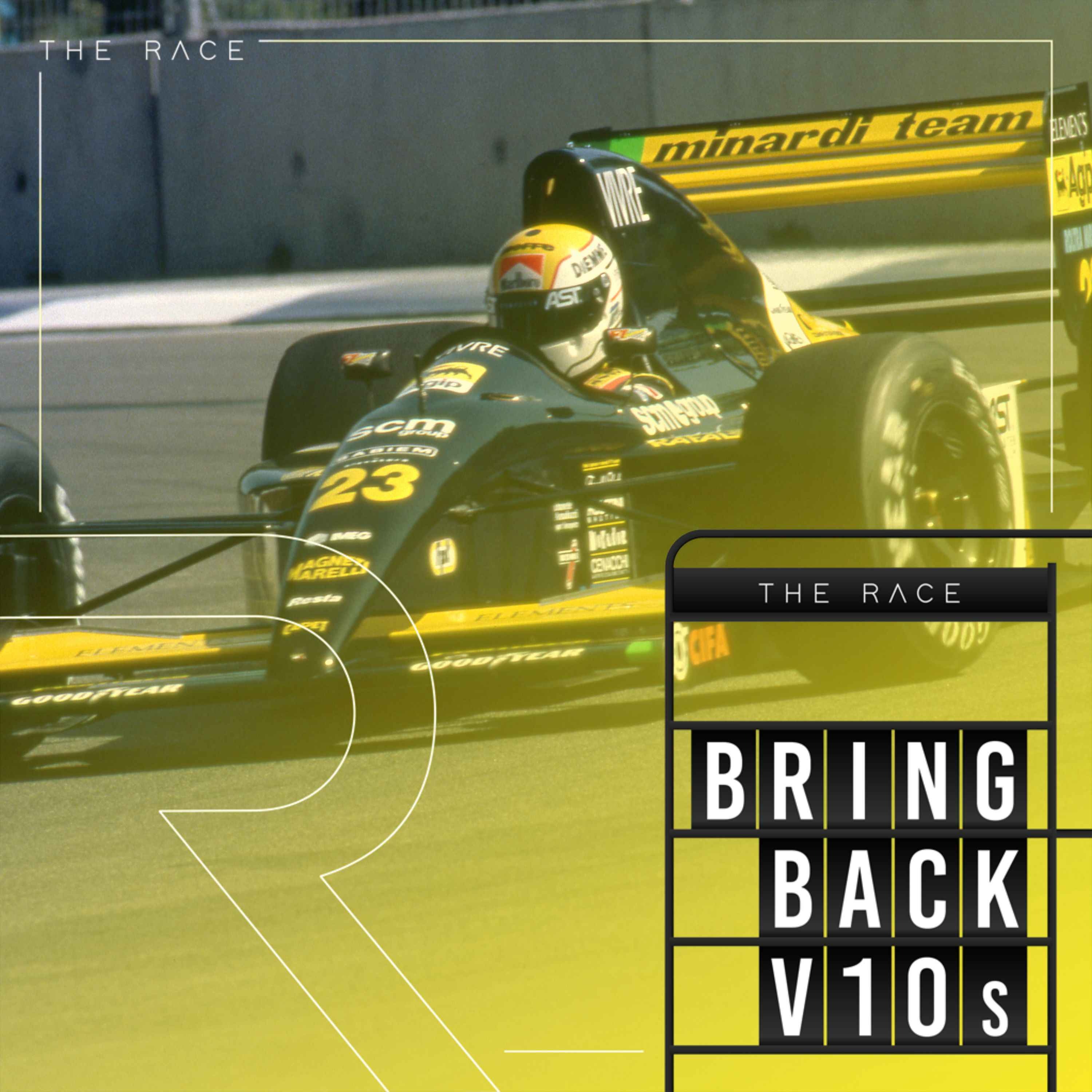
Minardi was a Formula 1 team that usually didn’t have the best car. When a driver did well in a Minardi, it stood out because they were fighting with fewer resources than the top teams.
Place
Estaril
“Estaril” sounds like Estoril, a race track in Portugal. The hosts mention it because it’s where Martini did something notable—like leading a lap.
Pierre Luigi Martini was a Formula 1 driver from Italy. The hosts are talking about how he managed to do impressive things in a weaker team like Minardi, which made him memorable to fans.
In F1, the “front row” is where the two fastest cars start the race. If a Minardi driver is on the front row, that’s a huge surprise because they usually start much further back.
Pirelli makes the tires. In racing, tires matter a lot for grip and speed, so mentioning Pirelli is a way of saying what rubber the car was using when it did well.
Term
B10s
“B10s” looks like it should be “V10s,” referring to the V10 engine era in Formula 1. They’re talking about how Martini did during that time.
The Alpina B10 is a luxury sedan that’s tuned for better performance than a standard version. It’s built to feel smooth and comfortable, but still drive quickly. In the podcast, “B10s” likely refers to that car model in relation to racing or results.
“Led a lap” means they were in the lead for at least one lap. Even if they didn’t win the whole race, it shows they had the pace to be first for a while.
They’re talking about a race weekend in Phoenix. In F1, qualifying determines where you start the race, and starting near the front row is a big advantage.
“Car control” means how well a driver can keep the car stable and pointed correctly while going fast. It’s about making the car behave predictably, especially when the tires don’t have much grip.
Senna was one of the greatest Formula 1 drivers ever. The hosts are saying another driver had a famous, exciting fight against Senna that people still remember.
This is the main idea of the episode: the hosts are arguing for bringing back V10 engines in F1. They use driver stories to explain what made that time period memorable.
Monza is one of the most famous race tracks in Formula 1, in Italy. Winning there is a big deal because it’s a historic, high-profile race.
Place
Nürburgring 95
This refers to a race at the Nürburgring in 1995. The Nürburgring is a legendary German track, and the “95” is pointing to that specific year.
Person
John O'Lacy
John O’Lacy is being discussed as a driver from the V10-era story the hosts are telling. They’re saying he had talent and exciting moments, but didn’t always turn that into the biggest, most consistent wins.
“Hands at 10 to 2” describes a steering-wheel grip position where the driver’s hands are placed around the 10 o’clock and 2 o’clock marks. In racing commentary, it’s often treated as a recognizable signature because it can reflect a driver’s technique and comfort with steering inputs.
Johnny Herbert is a former Formula 1 driver. The hosts are using his name to point out that the driver they’re talking about had conflicts and drama with other drivers during his career.
John Lacey is an F1 driver the hosts talk about a lot. They say he was a “throwback” driver who didn’t like newer computer-assisted driving features, and he also stood out with his helmet and visibility choices.
Traction control is a computer feature that helps prevent the tires from spinning when you accelerate. It can change how much power the engine delivers so the car keeps grip.
Wheel slip is when the tires spin faster than the car is moving forward. The hosts say some slip can actually help you accelerate fastest, as long as it’s controlled.
Term
cockpit sides
Cockpit sides are the protective structures around the driver’s seat area. The hosts are saying Lacey was doing something noticeable before those protections became standard.
The chrome crash helmet trend is when F1 drivers started wearing shiny, reflective helmets. The hosts say Lacey was an early adopter and helped make that look popular.
Concept
put all of his eggs in the McLaren basket
It’s an expression meaning he focused almost entirely on one chance instead of pursuing several paths. Here, it describes how Brundle’s hopes were tied to getting into McLaren.
McLaren is a famous Formula 1 racing team. The episode is talking about Martin Brundle finally getting a McLaren seat in 1994, even though that season didn’t go well for the team.
The British Grand Prix is one of Formula 1’s traditional races, held in the UK. The segment references a famous moment at the British Grand Prix where Brundle’s car caught fire at the start, making it an iconic piece of F1 history.
Mark Blundell is an F1 driver who took over a seat in the situation the host is describing. The host thinks Brundle would have done better than Blundell.
Martin Brundle is an ex–Formula 1 driver who became a TV commentator. The hosts are saying he was unusually good at explaining what’s happening on track and making it entertaining, not just reading the race results.
A “driver pundit” is a broadcaster who’s a former (or current) racing driver and provides analysis on TV or radio. The hosts argue Brundle changed expectations by offering more insightful, driver-like commentary rather than generic race talk.
Ron Dennis was a major leader in Formula 1, especially connected with McLaren. Here, the hosts are mentioning his management style and how it affected drivers.
Heinz-Harald Frentzen was a Formula 1 driver in the 1990s. The hosts are saying Williams bet on him, but his time there didn’t go as well as they hoped.
Damon Hill was a top Formula 1 driver for Williams. The hosts are talking about a controversial moment where Williams replaced him even though he was doing well in the season.
Williams is the storied Formula 1 team that competed at the front during the V10 era. Here, the hosts discuss Williams’ decision to drop Damon Hill and their later “peak” period, tying team strategy and driver choices directly to championship outcomes.
Jordan was a Formula 1 team that, in the V10 era, could occasionally challenge for major results despite not being a top-tier powerhouse. The segment frames Jordan as the “ultimate” V10-era team for Frentzen because he nearly fought for a championship with them.
“Midseason” means it happened during the racing year, not after it ended. In F1, changing drivers during the year can disrupt how the team works with the car.
A “journeyman career” means someone who keeps switching teams. In racing, that can make it harder to get the same level of results because every team has a different car and setup.
“Hungary” here means the Hungarian Grand Prix race. The hosts are saying that at that event, Frenzen’s results were a letdown compared to what they hoped for.
Concept
coalescing
Here, “coalescing” just means everything came together. The hosts are saying the team and driver seemed to click as one unit during 1999.
Joss Verstappen is a former Formula 1 driver. The hosts talk about him as someone who got a lot of attention early, then had a mixed career with some standout moments.
Benetton is an F1 team. The host is saying Verstappen had strong results with Benetton in 1994, including podiums that happened because another driver was injured.
DNF stands for “did not finish.” It means the driver couldn’t complete the race, often due to a crash or mechanical problem.
Person
Yann Magnuson
Yann Magnuson is mentioned as the driver who was replaced. The point is that a change like this can open the door for another driver to get a real opportunity.
Rubens Barrichello is a famous Brazilian F1 driver who raced for many years and scored lots of podiums. Here, he’s mentioned in relation to how a driver’s career played out.
A midfield team is usually good enough to score points, but it’s not regularly battling for wins. They’re often trying to improve steadily rather than taking huge risks.
Term
back market team
This means a team that usually struggles and is near the back of the pack. For teams like that, opportunities for success are rarer, so they may gamble more on drivers.
It’s a qualifying format where you don’t get many tries to set your fastest lap. You have to nail it on the one (or very few) chances you get, because conditions can change quickly.
Pole position means you start the race from the very front. It usually comes from being the fastest in qualifying, and it can help you avoid getting stuck in traffic at the start.
The Ford Maverick is a small pickup truck made by Ford. It’s meant for normal daily driving, but it also has a bed for carrying things. In the podcast, the word “maverick” is probably being used to describe a bold or independent personality.
“Pay drivers” are racers who get a seat partly because they can bring money to the team. That can be controversial because it may mean less money-driven drivers don’t get opportunities.
Person
Deniz
“Deniz” is the driver the host is talking about in this argument. They’re using his career as an example of how money could affect who got the best F1 opportunities.
Mika Salo was a Finnish Formula 1 driver. The hosts mention him as a driver they thought could have done more if he had the right chance, and they connect that to how people were judged in that time period.
Person
John Lacy
John Lacy is mentioned as someone the hosts thought might have been a world champion. They’re using his career as an example of how the era’s outcomes didn’t line up with what people expected.
Pedro Diniz was a Formula 1 driver from Brazil. The hosts are talking about how he was viewed by fans and media—sometimes unfairly—as a “pay driver,” and whether his later career changed that opinion.
A “paid driver” is a Formula 1 driver who secures a seat partly (or primarily) through bringing sponsorship money rather than purely through results. The hosts use the term as part of a critique of how money-backed drivers were perceived and how that perception affected how fans ranked other drivers.
Term
V10z era
“V10z era” is the hosts’ way of talking about the time in Formula 1 when the cars had V10 engines. They’re using it to set up the episode’s theme and to talk about how people’s careers and reputations turned out.
A “roll hoop” is a safety bar/structure on the car meant to protect the driver if the car flips or crashes hard. The hosts mention it being torn off to show how violent the accident was.
A “shunt” just means a sudden crash or impact. The hosts are using it to describe a violent accident in that season.
Person
Tarso Marquez
Tarso Marquez is a driver name the hosts bring up while talking about how some drivers only get short runs in F1. They’re using him as an example of how money and team situation can limit opportunities.
Person
Matzakani
Matzakani is another driver name the hosts mention. They’re using it to illustrate that some drivers don’t stay long because the team’s finances or competitiveness aren’t strong enough.
The “big manufacturer period” means a time when big car companies got more involved in F1. That changed which teams could afford top drivers and how seats were offered.
Ricardo Rosset is brought up in a debate about how drivers are chosen for F1 seats. The hosts are basically saying that some drivers looked like they deserved a chance, but then didn’t live up to expectations once they were there.
Term
helmet designs
In Formula 1, the helmet isn’t just for protection—it’s also how drivers show their style. The hosts are talking about how some helmet designs were so recognizable you could tell who it belonged to.
Person
Pedro de la Rosa
Pedro de la Rosa is a former Formula 1 driver from Spain. The hosts mention him here as someone they want to include when talking about the V10 era.
LIVE
When looking back over F1 history, we regularly celebrate the great names, the champions who
defined their era of the sport.
But what about the stars who perhaps didn't shine as bright all for as long, but made
an impact on us in different ways, ways that are often a little bit maybe intangible?
For this episode, we're not doing a top 10 this or greatest ever that,
we're celebrating what we think will be a different set of heroes from the V10 era.
And joining me, Gwen Freeman, to do just that, we have Ed Straw, Ben Anderson and Matt Beer.
Ed, this slightly different episode format was your idea, so why don't you elaborate for people
on what we're going to do here and perhaps explain the slightly odd, I think, two year old
social media trend from a different sport that we've nicked this idea from.
Yeah, for those who object to this, I should note that although I suggested it,
Glen, you did approve it. So we're in this together.
Immediately. I didn't take any convincing.
Yeah, two year old social media trend and that's about where I am with the world of
trends and that kind of thing. So give me a bit of time and I'll get on board with six,
seven and all that fairly soon. But anyway, yeah, the Barclaysman, it's all about the Premier League.
So the idea, it's a kind of nostalgia driven looking back at footballers who played in the
Premier League when Barclays sponsored it, which is kind of mid 2000s to mid 2015s,
because there's nothing that we all like more than just sitting around talking about
former sports people that we watched and enjoyed. But crucially, it's not about the best.
It is about the kind of defining ones, the ones who stick in your memory for all sorts of reasons,
the cult heroes, the phrase that's often appended to it is the streets never forget.
So maybe you had one great moment, maybe you're playing a big part in the arc and the storyline,
but you're not winning all the races necessarily. So it's very much about the kind of the
bring back V10's cultural impact of players in that sense. The kind of people who their name
you don't think of, and then they suddenly come up and you go, ah, yes, Pierluigi Martini,
just to throw a random word in there, and it sends you into a reverie. And so that's what
it's about. So it's, it's, it's a, it's a slightly nebulous concept, but it's not,
it's not the top 10 bring back V10's era drivers. That's a very different list.
It's not your worst drivers. So there's kind of quite a three dimensional
criteria and it's quite a personal criteria as well. So I would imagine that
we'd all select slightly different people and that's what will make it quite interesting. And,
and fun. And there's a serious side because it's a way to, to look at how these drivers
shape the era and the moments they shaped as well and, and what they brought to it,
even if their success doesn't necessarily match the way that we talk about them, because that's
the really important thing. It's not necessarily about success. In fact, a lack of success is
some ways a qualifying factor. Certainly for you. So yeah, as Ed's outline there,
we're basically nicking English footballs, Barclaysman, social media trend, that ran
a little while back. So I guess we'll be calling them V10smen or bring back V10smen.
I think that sounds quite, quite catchy. But Matt, as we talked about in the World Cup episode
that we did a couple of episodes back, you're not a huge football fan. I think your following of
football is primarily keeping an eye on the teams that your colleagues support. So you can see if
they're going to be in a good or a bad mood on a Monday morning. But I know that you've had this
concept explained to you by one of our in-house serious football fans, Jack Benion. So how good
a job did he do? I think we'll find out over the rest of the episodes, won't we, Ed started out
by putting a link into an article about this concept, which I read and I was none the wiser
more confused. Yeah, I went, I recognize the name more than Gamps Pedersen, but I don't know why.
And that didn't really help me. But no, Jack Benion was very helpful. We were buying a pint
together at the same time in the time it took for that pint to be poured. He took me through what
it takes to encapsulate an era without necessarily being any good. And I think that kind of sent
me on the right path. Yeah. And there's plenty, there's plenty of names to choose from, I think,
in the V10 era. So this should be a really fun discussion. Ben, I know when this was first put
on your radar, you were baffled by the concept. Are you still baffled by the concept as we're
about to begin? Yes and no. I mean, I know about the Premier League and follow football more than
Matt does, maybe not as obsessively as you and Ed. I remember the Barclays era. I know who Morton
Gamps Pedersen is and who he played for and some of the stuff he did. I know about Jakubu.
I know about Jimmy Bullard and sort of what they did in football terms, trying to figure out who
F1's Jakubu is and who F1's Jimmy Bullard is, is much more difficult. But I'm here to give it a stab.
The thing is, the effect that for anyone who does follow the Premier League, you'll have got the
effect because as soon as you get Morton Gamps Pedersen or Jakubu mentioned, if you followed it,
it has an effect on you. It triggers something. There's a nostalgia thing and that's the very
ethos and concept of this. There's going to be an episode of names being mentioned and people going,
and then fun memories. Brilliant. Yeah, I mean, if that's not in Bring Back V10's wheelhouse,
I really don't know what is. I did not expect the name Morton Gamps Pedersen to be said so many times
in the opening minutes of this show. I have a lot of friends who will be very happy about that,
even ones that don't listen to Bring Back V10's. But this is how our episode is going to work then.
We're each going to pick two drivers across the show that we think fall into this category.
We'll take turns making our choices and we'll pick one at a time. To make it a bit more challenging,
though, we've not shared our selections with each other ahead of time. So there is a risk
that one of your picks will go before you get the chance to name them. So there could be
some chaos here. I don't know about you guys, but I'm backing myself that a list of five
is all I'm going to need and I'm in trouble. If those five, by the time I get my second pick,
if those five have gone, I'm in big, big trouble. I might just have to blurt out the first name that
comes into my head. The order will be random for our first selections and then we'll flip the order
to prevent the same person having to go last both times because that would just be horribly unfair.
So in our random order, let's kick off with checks notes. Matt, you're going first. So give us your
first name, give us your first, Bring Back V10's man. Okay. So my criteria to start with was I
spent most of F1's V10 era waiting for people to be good. I feel this was an era, I write off the
centerprost, mantle gangers. They were turbo people who dragged into V10's era a bit. For me,
V10's is spending a decade knowing that Michael Schumacher was the best, but waiting for people
to challenge him. And there were some obvious candidates who I just didn't get excited about,
like Mick Hakkinen. And then there were people who I put a lot of faith into as a teenager. And
for me, they are the V10's men. So I'm going to start with Yanno Trulli. Oh, excellent.
As my first pick, as someone who, based on what people were writing about him in F3 and stuff,
I was like, this guy's going to come in and be a proper Schumacher threat. I got more excited
than I should have done about occasionally being him being close to Uke Katayama in the Minardi.
I put great faith in his man, you call qualifying performance on his debut in the
Prost, stepping in for Olivia Panes, before realizing that that was a really good Saturday.
And oh, where's he gone? Would become a key Trulli trend. Obviously,
Austria in 97, him leading was great. But then it's the other Trulli moments
beyond below the headlines. I convinced myself on the basis of how high that car got briefly
during Australia 9-9 attrition that the 99 Prost was actually a turning point for Prost
and spent a lot of that season waiting for Trulli to do something really good in that car, which
even when he inherited results, I don't think he was actually any good along the way.
Yeah, so my, Jordan, him going to Jordan as Damon Hill's replacement, I was like,
yes, if Fredson can nearly win a title in the Jordan, Yarno Trulli is going to as well. Obviously,
2000 was, oh, some good Saturdays and then other cars broken, but he was going backwards anyway.
So in an era that I spent mostly being let down by people, Yarno Trulli was a wonderfully
letty downy sort of driver. I really liked that. Ed, you obviously, you covered the
back end of Trulli's career, which doesn't cover the V10 era, but what do you think
of Matt's selection? Does Trulli count? Can you see why Trulli's in this conversation?
Oh, yeah, yeah, Yarno Trulli definitely came into my consideration. He's on my
very long, long list. I made sure I've got enough to do at least two of these podcasts
single-handedly if needed. So, yeah, I approve of Trulli because Trulli's the one who you'll hit
on various little moments where it was great. Various streets never forget to go back to the
football parlance moments, but you'll never point to a season and say that particular season was
wall-to-wall brilliant. You have the Trulli train as well, which of course is another good element
for it. That's effectively, it's sort of seen as being famous for being a bit bad, which normally
is down to him overperforming and qualifying, but you never really knew what you were going to get
from him a little bit all over the map, could go missing sometimes in races, could produce mega
qualifying performances. So, I think Trulli's everything. And yeah, the word that Matt came
with, that letting downness, was that the word you coined? Letty Downey. Letty Downey. He was
Letty Downey, but Letty Downey while being good enough to actually be genuine, you're good in
that narrow window when everything was great. So, yeah, nobody's going to be throwing Yarno Trulli
out as one of the greatest drivers of the Bring Back V10s era, but he was there for a long time,
did a lot of fun things. Great fun. And the haircut, remember, as well, the famous haircut.
I remember years ago, Autosport decided to, in the news pages, do a few cutouts because
it was a bit weird, but there was like a weekend where Trulli and a lot of people had slightly
weird haircuts. So, they decided to do a cutout, and I remember it causing these cutouts of three
people, caused enormous production problems, trying to produce them, just for the minimal
effect. So, that's why his haircuts is always mine. I can't remember which one it might, but I
feel like it might have been around a Monaco, kind of mid 2000s kind of time. Ben, any thoughts?
I'm not sure. I'm much closer to understanding the concept fully, but I did have Trulli on my
long list, mainly because of the Trulli train thing. Like, to me, that feels like a culturally
significant moment. If you get a thing named after you, and it's a bit rubbish, I think that's really
good. 100%. That felt like the strongest signal that he should be considered, and that idea that he
hung around for a long time. You know, he was up and down the grid in various different good cars,
bad cars, underperforming in good ones, sometimes over-delivering in bad ones,
dragging his career out as long as he could while he made wine, as well, towards the end of his
career, racing for really bad teams. So, I think that element of sticking around despite it all
is also quite strong in Trulli. So, yeah, I think that's, as far as I understand the concept, I
think that's a pretty good pick. I really like that point, actually. I think it's Ed,
you that made it, that he never put together a fully formed, like, great season as well.
If you say that his peak was the first half of 2004, where he seemed to have the edge on Alonzo,
he wins the Monaco Grand Prix, that's probably when he had the crazy haircut that you're talking about.
You know, he ends that season in a different team, having been fired because he's gone completely
rubbish mid-season. Like, that's, it's incredible. There were points in the first half of 2004,
if you said pretty soon this guy's going to stop scoring points and he's going to get fired and
that will end the year driving a Toyota, you go, no, that's absolutely mad. He's, you know, if
anything, he's with Fernando Alonzo, he's getting found out by this guy. So, what on earth can you
be talking about? So, I think that's a really fun pick to kick us off. So, let's have a look.
Who's next on my list? Ben, you're next up. So, while you continue to grapple with the concept,
you've now got to make a choice. Okay, so I'm going to go for, I'm going to go for Pierre Luigi
Martini and I'm not going to go for him because Ed mentioned him earlier in the show, although that
obviously gives me more confidence in terms of mentioning him. But he, he was one of the first
names to come to mind because of that single team longevity he had, just racing for Minardi,
for season after season, a rubbish team, but a well-liked team, but also not only being rubbish
all the way through his career, actually being quite good, turning up randomly high on the grid,
particularly in the early part of the V10s era, sort of single-handedly dragging that team to
results sometimes. So, a kind of under heralded but yet well-known loyal driver, I feel like
that's an element I did pick up from the Barclaysman thing, that you tended to get these kind of one
club heroes who are kind of staying with that team despite maybe slightly being slightly too good
for that team at points, but maybe not always consistently too good for that team. That means
they just go on to bigger and better things. So, kind of, yeah, legendary in his own way, limited,
but also capable of overachieving and doing things that live long in the memory.
Yeah, having those kind of memorable little high points as a, as a Minardi driver, you know,
is the sort of thing that will come up in conversation between us. Oh, he led a lap,
Estaril. Ed, I've got to throw to you next because, I mean, Ben had barely finished saying
Pierre Luigi Martini. I could see him nodding in strong approval of the choice.
Yeah, I think he's a great choice, isn't he? And it is for things like, like you said, leading
in the Minardi. And I remember when Pierre Luigi Martini put it on the front row, Phoenix,
on those Pirelli tyres. So it's just toiling in obscurity. This is the good player in a rubbish
club, kind of grinding away, doing some good things when they can. You think they might get an
opportunity with a big club? They never do. We had that brief departure to Scuderia Italia and
earlier in his career outside of this span. He briefly turned out for Tolman, didn't he? But,
yeah, just... Did he make that move? Do you think you made the Scuderia Italia move because he
did think it was a step to... Well, he thought he was going to drive for Frey, didn't he? And it
all got a bit confused, didn't it, about whether it's Capelli or Martini for 92. So, yeah, that
was part of it. But, yeah, no doubt Martini was a very, very capable and quick driver. But I think
in the B10s here, he got maybe nine points finishes. So he's not doing much. But I think,
I think that any race where Pierre Luigi Martini in a Minardi is finishing for fifth,
sixth, everyone's delighted. No one dislikes that, do they? I was nearly going to object,
not very strongly, because he does... He was, along with someone who might be my second pick,
I'm still toying with that. In terms of early 90s backmarker heroics, he did really stick in my
mind. And then a few times over the years, I kind of challenged myself on that and go,
was there much more to it other than he led a lap, he qualified in the front row at Phoenix,
then vanished, and then he looked all right, but disappeared quite early, really, in the era.
Is it just because he stayed for the team that he did those heroic things with that you think he
was doing lots more of those than they maybe was? But you are right about the sort of fourth,
fifth place finishes. There were probably enough good days. And I think the fact he did stay with
Minardi so long. And, you know, if you're going to stay with the team that long, it helps if your
surname sounds a bit like the team name as well. That makes it sound even more endearing. So, yeah,
I'm not strongly objecting. I think I agree. I think it's because it's Minardi as well.
We in a lot of our audience have a soft spot for them. He hasn't gone to some
team that maybe you don't feel or didn't spend a long time at a team that you don't
feel the same sort of warmth towards. I do think that without those couple of highlights,
you are just picking a bloke who drove for a not very good underfunded team a lot. I think
what gets over the line for me is the fact that you can go, oh, he led a lap and all we put it
on the front road. It's those weird moments where he achieved these great little fascinations for
Minardi of all teams as well. The fact that you can just boil it down to that time of Minardi
led a lap and that time of Minardi was on the front row. So, I think, I think that's for me,
that's what makes him qualify. A good news, Ed, on the randomly generated list, you are next.
Well, I'm delighted because the driver who I consider, King of the Bring Back V10sman,
is still there for me to choose. And I think it might be a bit controversial,
but I can justify this. My choice is John Alacey. He was going to be my first choice,
and I thought the same thing. I thought he might be too good. So, let's hear your case.
A driver who burst onto the scene pretty much as the Bring Back V10s here started,
give or take a few races. His whole career was in it. He was a driver with enormous car control
without the other connective things to make it all come together and deliver on what he could have
done. He was nowhere near, he ultimately didn't achieve anything like he looked like he was going
to. He did along the way produce a wonderful performance, the Phoenix battle with Senna,
of course, the point on debut. Those lost wins with Ferrari, only one once, kind of almost
more talks about Bring Back V10s for the race. He should have won the Monza in the Benetton,
Nürburgring 95. So, he does so because everybody will remember him, but he's almost overrated
because he was so fun. And while he had a tremendous, he was tremendously skillful as a
driver because he didn't put it all together consistently. He was also quite underwhelming
as a driver, but just always there, finished fourth in the championship a couple of times.
So, although he's kind of nibbling at the edge of a bit too successful, I think ultimately he
embodies an era. Plus, I think if you look at Michael Schumacher and John O'Lacy,
you have the story of the Bring Back V10s era there. You've got the kind of the old school
driver who's the next big thing briefly. And then Schumacher turns up and says, no,
the next big thing involves doing all of these things. And you might have the same
war materials or perhaps actually O'Lacy had the, if you want to talk about natural talent,
maybe had a bit more than Michael Schumacher, but he certainly didn't make the most of it. So,
O'Lacy is great. And I think anyone will be able to reel off half a dozen things they remember
O'Lacy for that they enjoy. The streets never forget moments for good or for bad. And yeah,
the definitive Bring Back V10s man in my eyes. Yeah. So, I would have been very surprised for
O'Lacy to last until my pick, which is obviously the fourth pick. And my, I was kind of wondering
if I'd get any pushback of, I think he's right at the top of being too good to be included,
but he's just, he just falls into it. And it is that it's the story, which as you say,
is encapsulated basically within just over a decade of time in F1 of coming in and being that
great hope. And that hope actually never being realized. And as we've talked about on the show
many times previously, perhaps it wasn't that he never quite managed to realize his full potential.
It's perhaps that his potential was lower than we all realized at the time. There's the single win.
Yeah. It's much more memorable for him to have won one race than it would be if he won three or four.
And I do, I do think he's a, he was even then a throwback driver. I think he's the sort of guy
who would have kind of swashbuckled his way to six to eight Grand Prix wins in say the seventies,
or maybe even part of the eighties, but people like Michael Schumacher move the game on in terms
of professionalism, in terms of having to have, join up all the dots, not just be a kind of flamboyant,
showman, skillful kind of driver. So I think that's why, yeah, a Lacy's maybe one of the more
glamorous picks you can make, but it's one that I fully, fully endorse. Ben, what do you
think? I wonder if he's just a bit too good, known, but then you could just say
where that makes, just makes him an obvious pick rather than an unfair pick. I think there's nothing
wrong with that. Some of them could be obvious borderline, borderline too successful. He was on
my long list. So I can't object on that basis. I had him slightly below truly, so but at a similar
level. So I think you can't really hold the notoriety against him. And I do think
purely from a cultural perspective, there are a lot of good justifications in terms of that,
yeah, being the hope, being someone who didn't quite achieve what they appeared to have the
ingredients to achieve, but also just that, that driving style, that having the hands at 10 to 2
on the steering wheel, but that is so emblazoned in my mind as a kid growing up watching everyone
as a unique thing that only he did that was always mentioned on commentary because only he
did it. He never changed it. He always did it. So just from that point of view, I think that he
qualifies regardless of whether he could have achieved more, whether he did achieve more,
whether he got more wins or not. Yeah, I crossed him off my list of being too obvious, too, too
successful. But the letty downness, surely nobody has more letty down. The letty downness element
is gigantic. No one really, yeah, rivals him for letty downness, especially if you're Benetton.
Yeah, true. I think what keeps him in for me is if you, there's not really, there's barely even a
race where he is not a story in some way in this period, even when he's rubbish, he's having an
argument with his team boss or something or like, even at those, I guess the sour years or maybe
his most anonymous bit, and he's managing to sort of falls out with Johnny Herbert along the way
there. He's got the romantic return to Jordan at the end. There's always something going on with
the Lacey and maybe 60% of it isn't very good. And 30% of it is just really exciting and brilliant.
And then there's like 10% that's bang in the middle of that. But there's always a reason to
talk about John Lacey. There are probably aren't many episodes in where he hasn't appeared in your
notes somewhere in research, Glenn, with doing something. So yeah, I'll take it. He's part of
the tale, isn't he? He's a really big part of the tale. And picking up on that point,
you may go in about his like swashbuckling style that was kind of not suited to the,
or quite suited to the era that he actually raced in towards the end of his career. He was one of
those reigning against traction control. And I think he even refused to drive with it, didn't he,
when he was thinking his final season with Prost, just so annoyed by the game moving on
way beyond what he was comfortable with and yet refusing to adapt. So that really sticks in my
mind as somebody who's like a quintessentially throwback driver who like just won't move with the
times. Very much belongs in the era in which they raced in or actually maybe one that predated it.
Yeah, the era before, I think that's a good point. And the traction control thing I think
actually showed a limitation in that he didn't realize, like say a Michael Schumacher did,
that it didn't just mean mash the throttle and the computer will work it out for you.
Schumacher worked out there was a way to drive with it and actually turn it down a little bit.
So you do still get some wheel slip because that's the fastest way. So yeah, Lacey couldn't grasp
any of that. I think he also scores points to me for before high cockpit sides came along,
the massive headling out the side of the car. And also really it was kind of the pioneer of the
chrome crash helmet trend that happened around the turn of the century. He was kind of the first
guy to really commit to that. I know Michael Schumacher saw did it for one race, but Lacey
really went for it and it was cool until loads of other people started doing it as well.
I think the key thing with him is his achievements are completely out of proportion with the way
he's remembered ultimately. That's the key thing for Lacey with me because he's remembered for all
these hilarious and fun things and he could be quick in moments, but he was just,
somebody used the word throwback, didn't they? And that's just very much the quintessential
throwback driver from this period when Formula One was kind of moving into the future. He was
very much from the past, wasn't he? Which just makes him just tremendous fun. And I think
if you were to somehow measure the affection in which he's held and map that to his achievements,
it's out of all proportion, which is great. That's a good thing. There's reasons why he's
celebrated, but makes him a bring-back V10sman. Right, we'll take a brief pause there then,
because when we come back, I get the next two picks.
I'm Paul Tenorio. I cover soccer for the Athletic. And I'm Amy Lawrence. I cover football for the
Athletic. Whatever you call it, the biggest competition in the sport is happening right now,
and the Athletic's World Cup coverage has everything you need to follow the tournament.
This 48 countries taking part from the tiny island of Curaçao to the five-time champions
Brazil. Even if you don't know you're offside from your own side, if you're eager to know more
about the teams, the matches, all the stories on and off the pitch, we've got you sorted.
Maybe you're the kind of person who's already up early every weekend,
waking the neighbors when your favorite club scores. We'll make sure you get equipped with more
information, more insight than anyone you know. We've got more than 70 obsessive reporters on
the ground covering the ins and outs from every game. I almost forgot to mention the best part,
Amy. Free access to the Athletic's World Cup coverage in our app. Download the Athletic app and see you there.
Right, next up then I get my first pick, and then because the way the format works and we flip
the order, I then get to do my second pick straight after. So my list is looking healthy and I've got
plenty to choose from. The first one I'm going to pick then is someone who I believe made an impact
in and out of the car during the V10s era. And that is Martin Brundle, who spent obviously the
first few years as one of the best drivers of the era not to win a race, had few opportunities.
You'd have to say along the way, but we'll get into that a bit. But the thing that massively made
him high on my list was the fact that he then became a co-commentator when he couldn't find a
drive for 1997. And I think completely revolutionized that game. And here we are recording this in
2026. And Martin is still in the commentary box with Sky Sports in the UK. And probably for a lot
of people, he's now much more memorable as a commentator and expert F1 analyst and voice
of opinion and expert opinion than maybe he was as a driver. So this one, yeah, this one was always
going to be high on my list. I think his driving career in the V10 era, his V10 years are probably
best described as maybe right place, wrong time, and a couple of times. He's got that famous thing
that Fravio Buettori would still say today that he probably shouldn't have got rid of him
from Benetton in 1992, because actually Flaveo didn't realize how good Michael Schumacher was
at that point. Flaveo has said that to Martin on the grid, on one of Martin's grid walks in recent
years, that he definitely shouldn't have got rid of him. So that was unlucky. He then did that classic
thing where he put all of his eggs in the McLaren basket for 1994. He gambled on Alan Prost,
not wanting to take that offer to abandon his decision to retire to race the McLaren.
Brundle didn't entertain any other offers. And right on the eve of the season, he finally got
the call up for McLaren. But then that meant he got to drive for McLaren, one of F1's greatest teams
in one of its least successful season or least memorable seasons or a season that is memorable
because the cars kept blowing up as we covered in our McLaren Peugeot episode of looking back on
1994, which of course was where he had the famous moment where his car became ablaze at the start
of the British Grand Prix. So he's got kind of famous iconic imagery moments as well. And yeah,
I think took to the commentary role with ITV alongside Murray Walker, the great Murray Walker
brilliantly in those first few years at ITV and has since moved around as the F1 rights have moved
around in the UK. Whoever's taken them up was always taken Martin Brundle on as well. And I
think that I think that really is saying something. The intensity of his chase for that McLaren drive
is such a such a great story. And in some way, even at the time, it felt rare for how open he was
being about the emotion around it as well and how much he wanted that all costs. It was it wasn't
it was quite soon afterwards he was talking about kind of curling up in the ball in tears mid-season
that over like the McLaren blowing up on the grid at Silverstone. It was very hard on his sleeve
in a way that I think was rare for sort of particularly a non Nigel Mansell British driver
in that era. I was a massive Brundle fan, and maybe always expected a little bit more like some of
the good the good DJ drives were so good. I was really I thought him going reuniting with Eddie
Jordan at last in F1 after their F3 times together would pay off really well 96 and it really didn't
as a really flat underwhelming season. So I think as a driver, I was I had loads of high hopes for
Brundle loads of great underdog drives but never really there were there were also a lot of missed
opportunities when he maybe his performance wasn't there either. I thought it's really sad that
having got the McLaren drive and done okay with it with some with some good races and some podiums.
Okay, on paper he gets dropped for Nigel Mansell and reality gets dropped for his mate Mark
Blundell who wasn't as good as him because Mansell's there for two minutes then goes and it's
Blundell in that car for the whole year and maybe okay the 95 McLaren was awful as well but
a year of continuity with McLaren and the Mercedes engine that blew up less than the
Peugeot might have been quite a decent a decent 95 for Brundle there getting close to hacking.
The commentary point is is really important. I think I'd probably put him in this list on that
alone. I can remember so clearly 95 when he was sharing the leisure drive with the Guru Suzuki.
He went and co-commentated as a third commentator, not a second one alongside
Murray Walker and Jonathan Palmer on the BBC for some races he didn't do. I remember thinking
that he was hilarious and so insightful and so when he got the ITV gig for 97 I was really excited
about that. Now my memory of his 97 commentary I felt at the time like there were a few too many
occasions where he wanted to be back in the car a little bit too much. I think Giancarlo Fisichella
got quite a rough ride from him at times having taken his Jordan seat a little bit unforgiving
at times but also the type of insight he was bringing how willing he was to take the piss
a little bit and then the gridwalks which he effectively pioneered not not every race to start
with. Was his 97 his first one or did he do Silverstone 97? Silverstone 97 is the first one.
Yeah but that just wasn't a thing anyone else was doing. Now he does them and there were
broadcasters everywhere copying the thing that he and ITV created. I would say if you are new-ish to
F1 you probably don't realise how good Martin Brundle was as a commentator and pundit because I
think a lot of people are as good as he is now and there's not many times I listen to a commentary
and go wow that was super insightful or funny Martin in the way it was 29 years ago but he
really raised the game for what a driver pundit should be doing so yeah absolute definite pick
on and off track. I didn't actually have Brundle on my consensus list but I should have done.
This is a really good argument that you may do. I didn't really even consider the commentary
angle as well because I think that is relevant. Maybe I just considered him an earlier
era driver because when he was in F1 from AC4 but yeah he was really good Brundle and imagine what
he would have done if he hadn't had the axe in AC4 and smashed up his ankles because that
changed him as a driver. It meant he was always going to struggle in qualifying say but really
really accomplished driver. Maybe just in my mind he was just a bit too good but I think he fits the
I didn't have him on my list. I think because I was focusing only on what he did in the car and
I was like that's probably slightly better candidates or ones that are a bit more interesting in
terms of how they drove. I didn't consider too much that point Ed made about whether your career
lasts through the whole era rather than starts before it or goes into a period past it but
nevertheless that bit about him transitioning into commentary and then changing the game for
punditry and TV that completely changes the picture. Like that has a massive cultural impact
maybe beyond any of the contenders that we're going to talk about so just on that alone which I
hadn't considered when compiling my list I think that's a great shout. Excellent so I'm off to a
good start also I'm being dropped by McLaren thing. I think McLaren had decided to drop Martin
way before they even knew who was going to be in that car so it wasn't they got dropped for Nigel
Mancell or Mark Blundell he got dropped for nobody and then he had to subscribe before he got
signed really didn't he didn't necessarily want him there in the first place particularly. Yeah
race by race deal all the times we talk about in any sort of 1994 episode which was was very unfair
Ron Dennis doing that old school thing of thinking oh that'll keep you on your toes which was yeah
quite unfair. The Fissey Keller point I enjoyed especially because it's been mentioned in in a
friendly way in a I'm over it now kind of way like Fissey Keller turns up in the back of a
Ferrari garage or something now like long retired you'll still occasionally get Marty going there's
Giancarlo Fissey Keller he nicked my drive at Jordan for 1997. Right so I get my second pick now
and let's see so you all seem to quite like my first one let's see if you like my second one
I am going for for reasons that are to follow I'm going for Heinz Hald Frenzen and my reasons are
not just because he was quite good but not a great my reasons are I'm going to start go
kind of chronological here in that he obviously came into F1 as this there's the other along with
Carl Vennig I guess but one of the other great Mercedes hopes he always had that kind of oh
you know in sports cars he was sometimes quicker than Michael Schumacher that thing hung around
for ages that's when you when you get a tag like that that sticks with you I think that gives you
some sort of cult status almost I think he also qualifies because you know one of the defining
things that happened in the v10 era was Damon Hill getting dropped by Williams when he was on
his way to winning the world championship and that happened because Williams had so much faith
in Heinz Hald Frenzen he bends bowing his head and but then for Frenzen not to live up to it as well
his Williams stint was largely forgettable so after all the all the effort Williams went to
all the disruption Williams caused the guy that they then did all that for didn't deliver so which
then takes me onto the fact I love that he is he is the only guy who almost managed to fight for a
championship for Jordan like the ultimate kind of v10 era team I also like that the fact that you
can drive for Williams and you get the final year really of like the Williams peak you want to call
it that the last Williams reno year where you don't get near fighting for a championship you you manage
yeah Damon Hill is dropped for you at Williams yet you end up fighting for a championship for Jordan
of all teams and then it all gets a bit heartbreaking as well and then the end of his career is just
kind of weird like he gets a couple years later he's fired midseason by Jordan and he starts
rattling around like turns up at Prost for a bit that turns up at Sauber somehow ends up at Arrows
when they're when they die so it becomes a bit of a journeyman career as well so I just feel that
Frenzen the fact that he was quite good and won a handful of races kind of has nothing to do with
the reason that I've picked him that was not my criteria here I feel there are so many other boxes
that he can tick to be worthy of inclusion here Ed I think you were the first person
motioning that you wanted to respond to this yeah it's really difficult Frenzen because
he gets a little bit too close to winning the championship which is a little bit troubling
but I do think it shows in a Jordan if that happened in his Williams reno 97 season I think
that would disqualify him but it's for Jordan yeah it's he's such a fun driver because
he does it bit of everything doesn't he he's the he's the superstar young driver he's the massively
letty downy driver in Williams I'm enjoying that phrase the heroics in Jordan and then kind of late
on he's just sort of the fun guys around and it's oh he's on the podium in a Sauber wonderful so
although it wasn't on my list I think he's a he's a good contender in in that regard and of course
friend of the show isn't he we held him on in the past so it takes quite a few boxes
I discounted him because I think he was too good in a way but your your argument hasn't persuaded me
he wasn't as good as I thought it's more that actually he is in so many stories he's so quintus
he is quintessentially doesn't encapsulate the error I get that but straight away when I was like
making my list he was on the people across stuff going no he was actually fantastic he nearly won
the title with Jordan I kind of crossed out the Jordan bit in my head though I should have taken
that more seriously when we did 97 revisited I spent so many races kind of looking back and
wondering how as a 16 year old I tried to make a case for him being really good and unlucky in
lots of races and that case holds up for what Hungary and that's it all your disappointments he
actually was a bit disappointing but yeah a great sideburns in the mid 90s as well I thought that
good show had had an impact on me um yeah okay I'll I'll take it but having
originally thought no he was a superstar actually no he is in the in the right bracket for me of
I had such high hopes for you knew let me down I obviously I object to Frenzen I think for obvious
Stamenhill related reasons but I mean are the only reasons though because if they're your only
reason then your argument doesn't count no they're not my only reasons it's that's a it's a big part
of why I just can't I can't get my head around Frenzen anyway from a starting point but I just
think he was a bit underwhelming I know the 99 season with Jordan that's special but it just
feels so anomalous and I just feel like the rest of his body of work is just a bit underwhelming
disappointing and he was a bit boring I don't feel like he added much to the kind of cultural
impact of F1 I don't I can't think of a standout Frenzen moment apart from the 99 season and that
body of work that makes me think uh oh yeah you know that really that really encapsulated the the
V10s era but the arguments as they've been made like they do make sense I can see the rational
argument for putting Frenzen in but I just think are they're not better candidates who just
did something that made you feel something a bit more but 99 I kind of see why you know that
resonates so strongly but it's not just him it didn't feel like it was him dragging Jordan it felt
like the team coalescing into one of those vintage seasons so maybe I'm not giving Frenzen enough
credit for that but I just don't feel like it totally belongs to him well obviously the second
Jordan the second Jordan did really well in 99 didn't it yeah yeah well yeah but I mean you know
dame that's the thing maybe if you had an earlier version of Damon in that car or you just he no
retired sooner went out on the high of winning spar in 98 you don't know do you he was like he was
gone in that season like mentally gone and stopped early so you don't have a comparison it is a one
car team and probably that helped because they just coalesce around Frenzen and it's
you know that perfect coming together but yeah like I say I've got the blind spot but I
I still feel like beyond that he didn't he didn't move the world for me I don't
think of the v10 zero and think oh yeah like Hightown Frenzen is one of the personalities
of that era that really stands out you're so biased this is so from a dame hill disappointment
lens is everything you said there was just wrong as usual and you know you don't none of these
drivers is not a requirement that you have a personality obviously Ben you can your criteria
can be your own but you are you are wrong I obviously with Martin Brundle I said that it's
you know the impact he had out of the car and he's still having as a commentator today I guess
another tick for Frenzen is that he tweets about the v10 era and his career basically every day
in the in the present day so you know he's keeping he's keeping the the era alive for us on social
media with actually often some really detailed insights like he'll talk about setup things
or things that weren't working on the cars which I know fans love he appears and I guess he appears
to go around sort of looking for things from that era that he can then go and respond to and give
insight on and some people are very good at tagging him in stuff and thinking yeah I'm probably
going to get a bite here but for me that's another tick in the box he's he's joining us in keeping the
memories alive and and adding adding to people's understanding of the era so that's that's my two
picks regardless of what Ben just said they appear to be unanimously agreed with but now you guys get
your second picks so first up is Ed I'm going to go for Joss Verstappen always a controversial figure
but turned up with a huge amount of fanfare got on the front page cover of
autosport after that famous footwork test everyone was very excited and then he got into F1 and it
was quite disappointing overall raw material was there but hardly hardly ever delivered had those
two podiums with with Benetton in 94 when he got the outings for Benetton because Lato was was injured
and then thereafter he just had this glorious journeyman career where basically for extended
periods of time you wouldn't notice him and then well he's he's charged from 18th to second or
third in Malaysia in the wet what's happening here oh he's got a sim tech up into the points
briefly in Argentina or that that's sixth place for footwork the following year in Argentina
but most of his career after that Benetton disappointment in 94 is just lots of DNFs
some finishes rarely in the points like he has four points finishes after his Benetton years
but just like multiple there's like half a dozen times you'll crop up and he looks like he is the
best driver in the world doing the most incredible thing but he did 107 races in Formula 1 and he
didn't really know how to do it and all of those things that he learned there he tried to
sort of teach Max what needed to be done this is all the stuff nobody told me that's how he's put
it and no matter what your position is on on Joss's approach to Max that aspect of it certainly was
beneficial so he's just cropping up hey remember doing that
that yeah some famous moments but the aggregate was almost literally pointless yeah I'm going to
fully endorse this pick because he was high up my list of people having that arc of like super
exciting young talent that everybody wants flashing the pan debut season in team he's not ready for
and then just this drudging journeyman career through loads of terrible teams and bad cars but
as Ed said just cropping up with some mad moments of like genius or overachievement but only snapshots
never though never the coherence of a full race or a run of races or a full weekend just like
moments of brilliance and madness plus quite a lairy personality as well so yeah I think he's a
he's a great shout I backed off joining in because I thought uh let Ben go first I think Ben might
disagree here so I'm impressed actually that Ben's jumped on this one because he was also on my list
the simtech thing helps if you're going to be a star back market do it in the car that cool
even that minardi season he turns up for late on there's a a reality in which he could have won
into largosso 3 in that car if things had turned out differently um but not like a crazy reality
like that was a feasible result with his strategy and where he was there's um man you call that
year was it him it was him not just in wilson wasn't it who was the provisional fastest in
friday qualifying so the 12 and q one for minardi yeah step in leading the way which is
not anything to do with ability whatsoever it's purely when it rained and didn't rain but the
one-shot qualifying yeah the fact it was him who who was in that position some of the arrows races
in 2000 that thought were really good particularly in the wet as well you'd see him pop up doing
something interesting so yeah like ed's put it like ben put it as well actually the high spots
were so high but also the evidence when you gave him a chance for longer and I think the half season
at stewart was particularly telling for that I mean he his take on that was he didn't get a fair
shot there but he turned up to replace yann madden yann magnuson and basically it's blown the way
by rubens barrakello and I think if you're a midfield team there was a episode a little while ago
glenn when you decided him being linked to sauber in whatever year that happened and you asked me
would I've liked to see that I was surprised I meant no because for an upper midfield team
there's kind of no point because he's probably going to blow more chances than he's going to
fulfill but for a back market team who has no chance most of the time but might want one
really crazy headline he was your guy so completely back to front career as well coming in at benaton
getting the podium straight away and then everything everything happened for him upside down
and yeah you've got to love that landed on martin brondle's head once as well in that
i was debut in fact so yeah first race yeah so that's that's two of our pick yeah so I don't
keep an eye on yeah no pressure man ben see if you can join those dots for us um
yeah the uh i'm so glad the minardi thing got mentioned because it's that classic thing of
something that's cool it's nice because it's minardi it's the thing everybody hoped would happen
at some point in one shot qualifying so exactly what you wanted was that you get kind of the moment
where the minnow team uh who you know under the old qualifying format where they ran for an hour
minardi would go out and clean the track for 20 minutes to get tv coverage wouldn't they they
changed the format and uh you you you all well i certainly hoped one day i want minardi to to
get lucky with the weather here doesn't and but it's almost better because it was pointless
in that it was the friday thing it had no bearing on the grid it would be i mean it would still
qualify him but it would almost be too memorable if it was oh yeah remember the minardi one shot
pole position but the minardi's being fastest on a friday qualifying him in the first year of
one shot yeah it meant nothing in the end so it's it's only fun if you if you remember it so i think
yeah josper stappen excellent choice so two more to go then and we will hear ben and matt's choices
in a moment okay then two picks left matt has to go last because he went first at the beginning
of the show so ben you're next up okay a couple maybe three avenues open to me now and i'm
nervous because i don't know which one to pick that will best ensure that my pick is approved
i'm amazed you care that we're gonna whether we approve or not well we we know we're meant to
achieve the you know the eight archetypal v tensman aren't we so i can't afford to have my name
thrown out by the panel but i think i actually think the of the three names i picked between
they're all quite controversial in different ways so i'm actually going to go for jack veilnerve
the reason i'm going to go for jack veilnerve is because of this
come incredibly weird story arc where he gets into formula one is amazing wins the
championship in his second season and then decides to pretty soon after that toil away
the rest of his career in his own team that is just objectively useless and rubbish doesn't
achieve anything persists forever with it slags off his teammates constantly slags off formula one
constantly uh is like weird sort of anti grunge fashion icon throughout his career
just a complete maverick personality throughout his time in formula one so i think you'll object
on the basis that he was too successful won the championship 12 good races too good but i just
think the amount the amount of uh ability he wasted in terms of his career choice and the
the unique way he spent his time in formula one i think left well it left a massive impression
on me and i just found it like him actually just incredibly weird so the cultural impact he has
for me is outweighs if actually his achievements i've compiled an exhaustive rebuttal wrong
the prosecution rests on the grounds that he's too too good too successful ed or is there more
to it world champion won the world championship and a lot of grand prix so that you're completely
excluded if you if you win the championship are you well you're not completely excluded haven't
you because you got him in but doesn't mean you're not wrong i he didn't win that many grand prix
in the in the end did he well 11 for that's a decent number well yeah but again for how good
he was in the car he had i still enough that he let slip so but from i agree he can't he shouldn't
be in because he won the championship but it's what makes it almost a case is how close he came
to not winning the championship and if a couple of things have gone a little bit differently in
97 shimaka wise let's say shimaka has a couple more points from there's a few malibu from an
extra pit stop or something just a little a little shimaka thing is different so there's a bit more
of a cushion in her earth shimaka doesn't have to drive into him vilnev loses that championship and
then yeah absolutely a v10s man because then the entire story arc is this guy was so good he came
so close he was such a cultural phenomenon for him like ben says weird ways but he certainly was
different and he was never the never had that crowning moment he blew it all then he's oh yeah
he's like a lacy times 10 but he didn't blow it all he actually in the end made it happen and
he made it happen on as much as he did sketchy things for some part of 97 his good bits were
really good and when it came to it in her earth he showed he deserved that championship with a
really really good drive on the day when it mattered most so i think for me an our criteria
that disqualifies him from being the archetypal v10s man because he he got something done in the
end yeah good analysis say i'm trying to agree with you but i do quite like him being in here to an
extent for irritating glen what who says it irritates me your face well there was
some reflections on jacqueline urban you were shocked a key part of a key a key part of ben's
argument was how wonderful a big chunk of his career was didn't even mention the three racer
who run i in truly seats it's the b it's the bar era jack filner which for me is most of it that
that's what i've kind of tried to separate that from the rest of it but maybe that's too tortured
like i said it's a controversial pick but it's that it really stands in my mind it's just something
so abnormal and disappointing as well so may but maybe on reflection he just needed to have that
bit and not the the moderately successful bit before that i'd the championship is disqualifying
it for you guys but for me everything else makes him much more v10z and as much v10z as the other
candidates that we've uh we've talked about yeah i think um it's kind of it's like a a more successful
version of my friend's an argument in that everything else you've said i think does qualify him you
know an incredible character off the track whether you liked him or not you know the weird the weird
fashion sense the baggy race suits uh not you know not having a belt on the race suit when
everybody did have them the the firstly the crazy blonde hair that then became a crazy purple hair
like there's all this mad stuff the yeah the weird the music career yeah even
i couldn't finish that album trying to listen to it once um and then yeah just the fact that he
came in and sucked this massive great hope and i think did a pretty good job of delivering
on at least a lot of that expectation you know almost winning your first race from pole position
there's a pretty good way to suggest you were going to live up to the hype decent enough first
season we're not we're not going to litigate the 97 season again i won't allow it as i say there's no
room for small print on the trophy he got the job done in the end but then everything after that is
absolutely mental and you know we do get questions don't mean in a lot of our episodes but people
always saying what if he'd stayed at williams what if he was still at williams when they had
bmw engines and that sort of thing there is a there's a potential for him to have had a much
more normal career but i guess the type of person he was probably meant that was never
quite going to be possible so even if he didn't have craig pollock trying to build him an f1 team
he'd have probably at some point got bored or fed up with williams and gone and done something else
something else crazy so yeah he he didn't cross my mind just because for me champions were
automatically eliminated but much like i did with frentzen you have built a case uh around that
so i can i see your logic and uh my reaction yeah it was shock and surprised because i didn't
expect to hear a champion's name mentioned uh but i i don't take any affront at him being
included you've just given us an excuse to talk about jack vilner for 10 minutes ben why would
i be annoyed about that well yeah good i mean i could have made a case for nigel mansell but
then matt's head would have exploded no i just limited time in the v10 era i think was far
far too consistently successful but mental though for yeah yeah true yeah there's always there's
always drama with nigel so uh matt you went first you gave us yanno trilly what feels like a long
time ago you can now bring the curtain down on this process and you have to follow
i think the most surprising or shocking pick yet uh i've got quite a few that i think i can get in
easily and make a good case for but i'm not going to do that because i think that'll be boring
i'm going to go for a contentious one see how we get on but i've got a case
pedredin is i did not see that come on here is my case in terms of summing up part of an
era and there's two elements to this okay so pay drivers and people's view of them i think in the
v10 era were a big thing there was so much kind of the people at nigel robuck writing about the
travesty of pay drivers and f1 there was this narrative that everyone who was good in form of
3000 was not getting in because pay drivers and deniz is like the the big
bogeyman pay driver of the era in many ways the fact he starts off at a terrible team a properly
v10z terrible team in 40 with an iconically ugly car in 95 in which he is terrible i think is a
good start for the story but then after that okay in 96 i'm furious this pay driver is buying
his way into a competitive leisure at the expense of martin brundell or the expense of vincenzo
sospiri other people who were actually good racing drivers being linked to that seat and deniz is in
that seat as that season goes on initially deniz is where you think he is he would be relative to
liviar panace which is nowhere but as his career goes on he's not nowhere relative to a bunch of
genuinely good drivers he's just not destroying reputation so he's making reassess whether people
who you thought were really good were actually that good but the deniz was as bad as you thought he was
the fact he outqualified damon hill at arrows at both spa and sezuka i think in 97 is the
ultimate indictment of the fact damon hill's 97 season outside of hungary was not particularly
shiny i would argue and understandably in the way he's in an arrow he's just just won a title
yeah deniz goes up against mikosalo in two teams at arrows and salpa he goes up against
john lacy at salba as well yes the stand-up moment still comes from salo at arrows and
elacy at salba but you don't get surprised to see deniz out qualifying elacy or salo anymore it
starts happening it becomes normal he becomes a respectable ish midfield driver or one where
you look at and he's still there because he's got a ton of cash so what is this saying about
mikosalo who i had really high hopes for if he ever got a top drive and who did quite well for a
bit at some tracks at ferrari what is this saying about john lacy who we all thought could be a
world champion and then we're not that surprised now when he's behind pedro deniz on the grid so
the pedro deniz story arc of encapsulating the worst of the paid driver bogie man and
then making you reassess a bunch of people who you thought were good or in one case was actually a
world champion and what that says about how you ranked drivers in this really weird era where
ultimately everyone apart from michael schumacher ends up a little bit disappointing just plays into
the v10z era storylines for me adding the fact he started out in an atrocious ugly very yellow 40
adding the fact that he basically catches fire uh boinal series in 96 and a particularly iconic
image with the spinning blazing lige even no burgering 99 makes a contribution to by having
his roll hoop ripped off in that terrifying and bizarre shunt yeah somehow not washing his own
head yeah yeah indeed he's there into my conic moments i don't think he's better than you think
he was i still don't think he's very good i think he makes other people look worse and for that for
me he's he's pretty he features in my feelings about the v10z era a lot and did at the time mostly
through anger but i think it counts i really like the case i like you've gone different like he's
don't all have to be guys who were quite good at the front of the midfield or got got podiums and
that sort of thing you've gone with a different narrative which i think is a really nice way
to finish ed people in the top champions tier of the race members club occasionally get to
hear from you in your series ed sheds which tends to be about rubbish drivers and or cars
do you think that diniz is ed sheds worthy i mean you may have already recorded
an episode on him and i've forgotten or as matt says did he actually kind of rehabilitate his
reputation so much over the rest of his career that kind of the useless rich boy from brazil
tag was was unfair by the end he has already appeared in ed sheds because there was a there
was a handy diniz car at monza last year where i was able to do a few with with props but the thing
that i really like about diniz and why he's a great bring about v10z man is because he's the one
that everyone says you know he was a page driver but he was really underrated wasn't
he was really good yeah and it's he's actually gone from coming in people thinking he was
terrible when he was you know sort of passively competent and then he go because he shows himself
to be kind of competently okay at times people ain't go way the other way yeah and now he's
looked back on expectations were so low and that that expectation effect is still there because
he's still you know he had a few fourth fifth sixth places the odd points finish the overall
he's grown pretty great it was not a great but he's got that place hasn't he because he is the
one that everyone says yeah he's he's the sort of page driver you want isn't he yeah he was pretty
good and that's just surely through the fact that he he was around for a reasonable period of time
he didn't do any he wasn't sort of a purveyor of hilarious incompetency or anything he was just a
bit slow quite a bit of the time and there were times when he was actually pretty brisk and could
get the odd results so yeah he's he's perfect bring about v tansmen fodder wow that's way
better at this than you band it's a good argument a convincing argument i think it's an argument for
the longevity of his sponsors bank balance isn't it because if you can hang around long enough
and form one and not just be absolutely so woefully out of your depth that they have to get rid of you
then you can get competent we've probably seen it in later years of formula one where it became
even blurrier the distinction between the pay driver and their own talent because they were able
to do that and you have i mean drivers like Sergio Perez had that following around for ages
and he was more accomplished than i think deniz was coming into f1 even people like lanc stroll
you know now with the son of a team owner like he's been around in formula one long enough that
whether you think he deserves to be there or not he's capable when the car's not as awful as it is
this year of being able to do a decent job at times show flashes so make make is deniz the driver
that sort of pays paves the way for pay drivers to be seen in different light yeah maybe pay drivers
great again yeah maybe maybe he is um you know there's a lot of others in that
period i mean ed you'll be big fans of drivers like tarso marquez and matzakani and stuff that
were just there too briefly you know the the money runs out or the team is not in good enough shape
they haven't got enough to to fill the coffers for long enough to stick around and make an impression
but yeah deniz did do it he was like and also i suppose he did it in that area where
formula is starting to move towards the big manufacturer period so there's you're picking
off a few of these independents that are like not able to do those deals and they really need
a driver like that to plug in and help them and from my personal obsession with the cultural
impact and that that sort of stick in your mind come what may element that that incident argentina
96 and the headline den is in the oven i mean that even that that alone is probably enough
but you he's never too far away is it you it's you don't have to think too long about the v10
zero to for deniz to crop up somewhere and obviously all roads lead to pedro deniz 90 not quite but
yeah i mean the hell of 97 like yeah he's he's there adjacent to my experience of that too so
yeah a good left field pick yay okay i'm pleased with that at the end of an era thing is a big
part of where i think why i think he sticks in my mind as well because you give the example of
pares pay pay drivers really changed after that manufacturers came in and you didn't really need
pay drivers for a spell then by the time you did need them again they weren't it wasn't straightforward
here's a rich kid a lot of it was here's someone who's actually good but they've because of the
nation there from and who that nation went to get behind them because their circumstances
they've picked up backing but they were good in the first place but they've paid they've paid for
this drive but they weren't terrible and deniz was kind of the not the last to show people
at mazikarni around as well this you mentioned tato markets i think it's not tato markets even
ricardo rosset as well they sort of flipped it because you look at their like from the 3000
record and go no they should get in on merit and then they get there and it's like oh no they're
crap they're pay drivers and deniz you look at his form the 3000 record and go don't pay him
anywhere near f1 and then oh he's all right he's just that qualified dame in the hill
john lacy and megasolo and he doesn't have the the comedy stylings of tacky anoui does he you
know there's he's fortunate or um it's good at least that he comes in after an era and a spell
of particularly crap like really bad drivers who are only known for doing really stupid or comedic
things and yeah he's just by i've always thought to myself what deniz is just a bit too
dull in terms of what he did but actually what he represents probably elevates him in the conversation
he also had a quite fun helmet with an arrow on with arrows on it so he had direction instructions
as well which i quite enjoyed you know there were lots of good helmet designs or striking helmet
designs in this era but deniz certainly had one of those memorable crash helmet design that as soon
as you see it you know who it belongs to which to sound like old men yelling at clouds you can't
always say that about the crash helmets today uh but let's let's leave it there then i'll quickly
remind everybody of our choices before we go so matt went for jano trilley and pedro deniz
ben went for uh pierluigi martini and jack villner of bar era yeah okay there's been a
clarification there after some pushback uh ed went for john lacy and jos for stappen and i went for
martin brundle and heintz held frensen we are going to do a follow-up episode to this after
season 13 exclusively for the race members club where we will ask you for your suggestions and
importantly the justification so you can't just go this guy there needs to be a case made like we
had to do here we'll put a call out for that after season 13 and uh you know maybe maybe a couple of
us or maybe the full lineup depending on how busy we are we'll uh come back and scrutinize
your choices as well but to kick off this process and to introduce it to f1 fans having nicked it
from football uh a big thank you to matt ben and to ed for the idea which as i say uh i did not take
much convincing i saw the message on my lock screen when ed sent it to our bring back v10s
whatsapp group and immediate i thought we are doing that i am making space in the schedule
to make this an episode immediately um so yeah i think uh hopefully we've done a good
job of conveying kind of what the concept is it is very broad so hopefully there's lots of names
left on the table for you and as i say we'll come back to that then after season 13 as for season
13 we have one more episode to go where we'll be taking your questions about anything and everything
to do with f1's v10 era can i just throw in a few honorable mentions oh god there's loads of
names on my list are you sure no no but ed we want to get one of the members to do it you're
going to get rattled off you've probably got 80 names on your piece of paper haven't you 147
but we've got through a few of them but that's all of them but you know the stefano modena
tussler tsukumasato so many races didn't do much but quite fun mikasalo alleviate panis that one
when you have to mention jankalo fiscichello ok katiyama tacky anui always being driven to 93
revisited thing we're gonna have to fade him out he's not in luke badawa evan capelli aguri zazuki
that podium in the la ruse alex zanardi matt's favorite fun but disappointing riccardo rossett
and his hilarity johnny morbidelli should have got that podium in the ferrari kydfeld mr second
place johnny herbert's three wins a bit successful petro donorosa roberto merano nauki hitori who
remembers nauki hisori his very anonymity and forgettableness it makes him the ultimate
a bit offset but quite fun still lace here with jordan john diddy dalatras in the way
there's just thousands of them well there's not there's 147
you can't have a driver who's known for their anonymity to be the ultimate
literally the opposite i just wanted to mention nauki hitori i don't think he's ever been mentioned
on uh on bring back v tense and now he has i should have picked eric warwick
the athletic
About this episode
A panel of F1 writers and hosts tackle the “bring back V10s” idea—borrowing a Premier League “cult heroes” social trend—to celebrate drivers who defined the V10 era through memorable moments, not dominance. Gwen Freeman is joined by Ed Straw, Ben Anderson, and Matt Beer, who explain the rules: each person picks two “cult” V10-era drivers without sharing lists ahead of time. Matt kicks off with Jarno Trulli, praised for the “Trulli train,” chaotic highs and lows, and a career that lingered through good and bad machinery.
Bring Back V10s celebrates some key names from F1's V10 era who aren't necessarily remembered purely for their outright achievements behind the wheel.
Before Season 13 draws to a close, we decided to borrow English football's 'Barclaysmen' social media trend, picking out drivers who made a memorable impression on the V10 era without ever really being considered in the top echelon of drivers.
Glenn Freeman, Edd Straw, Matt Beer and Ben Anderson all did their best to grapple with the concept, and got to pick two drivers each. But we didn't share our choices beforehand, meaning everybody needed to bring back-ups.
So get ready for a nostalgic chat about occasional race winners, plucky backmarkers, unlikely title contenders, nomadic journeymen, and - somehow - even an F1 world champion!
Get bonus F1 podcasts, extra content and ad-free listening, sign-up to The Race Members' Club on Patreon today.