Caterham is a British company that makes a very small, lightweight sports car. They’re known for continuing the design of the Lotus Seven, and they’ve made many versions of it over the years.
The Lotus Seven is a famous tiny British sports car idea. It’s known for being very light and focused on the driving feel, and Caterham later continued that same basic concept.
Infinity is a luxury car brand. In this part of the podcast, they’re talking about which Infinity models are selling now and what the brand needs to do next.
A manual transmission is the kind of car where you use a clutch pedal and a gear stick to choose gears. The host is saying there’s renewed interest in putting that kind of driving experience back into sedans.
The QX60 is a midsize SUV made by Infiniti. It’s meant to be a comfortable, everyday family vehicle with enough space for passengers. The podcast mentions it because it’s one of the main models Infiniti has available.
The Infiniti QX 65 is basically related to the QX 60, but it’s styled with a more sloping “fastback” roofline. The host is highlighting that design difference.
The Infiniti QX 80 is Infiniti’s biggest luxury SUV/crossover. The host is saying it’s aimed at competing with other brands’ larger, higher-end models.
The host is talking about a trend in what younger buyers want to drive. The claim is that they’re getting less interested in crossovers, which could change what car companies build next.
An “architecture” is basically the car’s main underlying design—its platform. The point here is that it only makes sense if the automaker sells enough cars to justify the development cost.
The Cadillac CT6 is a full-size luxury sedan. Here, the hosts connect it to “strange V8s under the hood,” suggesting Cadillac is experimenting with engine configurations in its sedan lineup.
When gas gets expensive, people often change what they buy. Here, they’re saying expensive fuel may push shoppers toward smaller, more efficient-feeling cars like sedans.
All wheel drive means the car can send power to all four tires. That helps it grip better on slippery roads, which is one reason people like crossovers.
The Buick Century was a sedan model made by Buick for many years. A sedan is a car with a separate trunk for luggage. The podcast mentions it because it’s unusual to hear about a model like that when the brand doesn’t offer that kind of car anymore.
The Land Rover Defender is a tough off-road SUV. Here it’s used like a “workhorse” for obstacles, showing how it can crawl and pull through rough, uneven stuff.
Off-roading means driving on rough ground that isn’t a normal paved road. It’s about getting traction and control when the surface is uneven or tricky.
The Camel Trophy was an off-road contest where teams had to drive and navigate in very tough, remote places. The point is that these instructors had proven experience in extreme conditions.
Jeep is a car brand that’s famous for off-road vehicles. In this part, they’re saying Jeep had similar experienced instructors to help people drive in tough conditions.
Term
110
In Land Rover Defender terminology, “110” refers to the wheelbase length class (the distance between the front and rear axles). Wheelbase affects stability, ride behavior, and how the vehicle fits cargo and equipment—important for off-road competition setups.
A headliner is the material on the car’s ceiling. Alcantara is a fancy, suede-like fabric that looks great, but it may not be as forgiving if you’re constantly getting dirt and scuffs inside.
Cooled seats are seats that help keep you from overheating. They’re useful when it’s hot outside because they can blow air or otherwise pull heat away.
The Lexus GX is a luxury SUV that’s also meant to handle rough roads. The point here is that it had a built-in cool box in the front so you could keep drinks cold.
“Short wheelbase” just means the car is shorter from front wheels to rear wheels. That usually makes it easier to turn and maneuver, while longer versions tend to feel roomier in the back.
Concept
Range Rover lineup confusion (Range Rover vs Range Rover Sport vs other variants)
They’re saying the “Range Rover” name gets used for several different SUVs. You have to pay attention to the exact name (like Sport) because they’re not the same vehicle.
The Discovery Sport is a Land Rover SUV that’s smaller than some of the brand’s bigger models. It’s meant to be a practical vehicle for everyday driving while still having the brand’s off-road capability. The podcast lists it to help distinguish it from other Land Rover SUVs.
“Turbocharged” means the engine uses a device to push extra air into the cylinders, which helps it make more power. “Eight cylinder” just means it has eight combustion cylinders.
Torque is the engine’s “pulling strength.” Higher torque usually helps a car feel quicker, especially when you’re not already at high speed.
Term
nibble side
When someone says a car feels “nimble,” they mean it steers and changes direction quickly. It’s about how responsive it feels, especially at low speeds.
As-tested price is what that exact car costs with its specific options. It helps you compare the real price of the car they drove, not just the starting price.
This is the liquid that gets sprayed onto your windshield to clean it. In this case, the host says the system sprays in a way that doesn’t leave enough fluid on the glass when you’re driving fast.
Windshield wipers are the blades that wipe the windshield. The host is pointing out that the washer fluid is going through the wiper system, which affects cleaning effectiveness.
Term
heated washer fluid
Some cars warm the washer fluid so it works better in winter. The host says it’s helpful when you’re stopped, but not as good when you’re driving fast.
A V8 is an engine with eight cylinders. The segment is about which V8 engine is being used—specifically, they say BMW is supplying the V8s for these vehicles.
“Simplify and add lightness” is Colin Chapman’s guiding design philosophy at Lotus. The idea is that removing unnecessary complexity and reducing mass improves how a sports car accelerates, brakes, and handles.
A one-make series is a race where lots of drivers compete in the same kind of car. Because the cars are similar, it’s easier to compare drivers and tuning choices. That’s why it can build a tight fan and owner community.
A multi-make series is a race where different brands of cars compete together. The rules are meant to keep the competition fair even though the cars aren’t identical. The hosts mention it to show Caterham’s racing presence beyond just one model.
The Nürburgring 24 Hours is a long-distance race where cars have to keep going for a full day. It’s not just about being fast once—it’s about staying consistent and finishing. The hosts bring it up to show Caterham is involved in serious racing.
The Nordschleife is the famous Nürburgring track section that’s known for being tough and unpredictable. Drivers and cars are really tested there because it’s long and challenging. Mentioning it signals that Caterham’s racing heritage is tied to one of the hardest tracks in the world.
The Ford Duratec is Ford’s engine design. In this case, they’re saying the car uses a 2.0-liter Duratec engine, which helps determine how much power the lightweight car can produce.
Power-to-weight ratio is basically how strong the car is compared to how heavy it is. A lighter car with decent power can feel very quick because there’s less weight to move.
Horsepower per ton is a simple performance math: how much power you have compared to how heavy the car is. The hosts say Caterham’s model numbers are meant to reflect that idea.
Term
narrow body and a wider body chassis
A narrow-body vs wider-body chassis refers to different body widths built on the same basic lightweight platform concept. Width can affect stability, tire size options, and how the car fits its intended setup (track vs road feel).
A roll cage is a strong metal frame inside the car. It helps protect you if the car tips over or crashes hard, which is why it’s common on track-focused cars.
A sequential gearbox means you shift one gear at a time in order—like stepping up or down. People like it in racing because it can be quicker and easier to do repeatedly.
A manual five-speed means you use a clutch and shift through five forward gears. Here it’s mentioned as the drivetrain option that comes with the engine they’re describing.
Term
DuraTek two liter engine
A “two liter” engine is one with about 2.0 liters of displacement, which is a basic measure of engine size. “DuraTek” here is the name of the particular engine setup Caterham is using.
Concept
kick car regulations
This is a set of U.S. rules that can make it possible to import and sell certain niche cars. The speaker is saying Caterhams fit under those rules, which is why there are U.S. dealers.
Concept
marry the two together
They’re describing how the car arrives in pieces: the chassis comes in separately from the engine/drivetrain. Then the dealer puts them together to make a complete car.
Mountune is an engine-preparation company that works with specific manufacturers and platforms. In this segment, the host says Mountune is the engine provider and references their history of working on engines over time.
Some states let certain kit cars be registered as replicas of an older model. That can make the paperwork and inspection rules different from registering it as a completely new car.
Kit car regulations are the rules states use to allow cars built from kits to be legally registered. Different states can handle the same kit car in different ways.
SB 100 is a California law that lays out how certain special vehicles (like replicas or kit builds) get registered. It affects what steps you have to do to make it legal to drive.
Powertrain is the set of parts that make the car move—like the engine and the parts that send power to the wheels. For a kit build, you have to get both the powertrain and the chassis together.
DMV inspections are the checks a state requires before you can register and drive the car legally. For special builds, the rules can be stricter and vary depending on where you live.
When a car is brought into the U.S. from another country, the government can charge extra fees. Those charges can make the car cost more than it would in its home market.
The Porsche 911 is a sports car known for being fast and fun to drive. There are different versions, including ones built for track performance. The podcast mentions the 911 GT3 RS to highlight how serious that performance level is.
This is the idea that some enthusiasts keep more than one car: a practical daily driver plus a dedicated fun car for weekends or track days. The hosts use Caterham as an example of a car that fits that kind of household setup.
A “go-kart” comparison means the car feels light and easy to steer, like a small track toy. It’s usually about how it feels to drive, not about the car literally being a go-kart.
The Acura MDX is a midsize SUV with three rows of seats, so it can carry a family. Here, the hosts are talking about how well it sold compared with a similar luxury SUV from Genesis.
The Genesis GV80 is a luxury SUV that’s meant to feel more upscale than typical family SUVs. In this segment, it’s compared to the Acura MDX for which one sold better, and they briefly discuss whether the sales include the GV80 Coupe version.
The Audi 100 was an older Audi sedan that was important for Audi’s luxury-sedan identity. They’re using it as a reference point for how Audi’s lineup used to be organized.
The Lincoln Navigator is a large luxury SUV made by Lincoln. The hosts say they like the updated version and think more people should pay attention to it.
The Cadillac Escalade is a big luxury SUV. It’s the kind of vehicle people buy for comfort and a premium feel, and the hosts compare it to the Lincoln Navigator.
The Buick Envision is a smaller luxury SUV/crossover. In this discussion, it’s brought up because its sales are being compared to a Lexus model, and the hosts think it doesn’t get enough attention.
The Lexus NX is a compact luxury SUV/crossover. The hosts mention it in a sales matchup versus the Buick Envision and then note they personally think more about the larger Lexus RX.
The Lexus RX is a midsize luxury SUV/crossover that’s very popular. Here it’s mentioned because the host says they think of the RX more than the smaller NX.
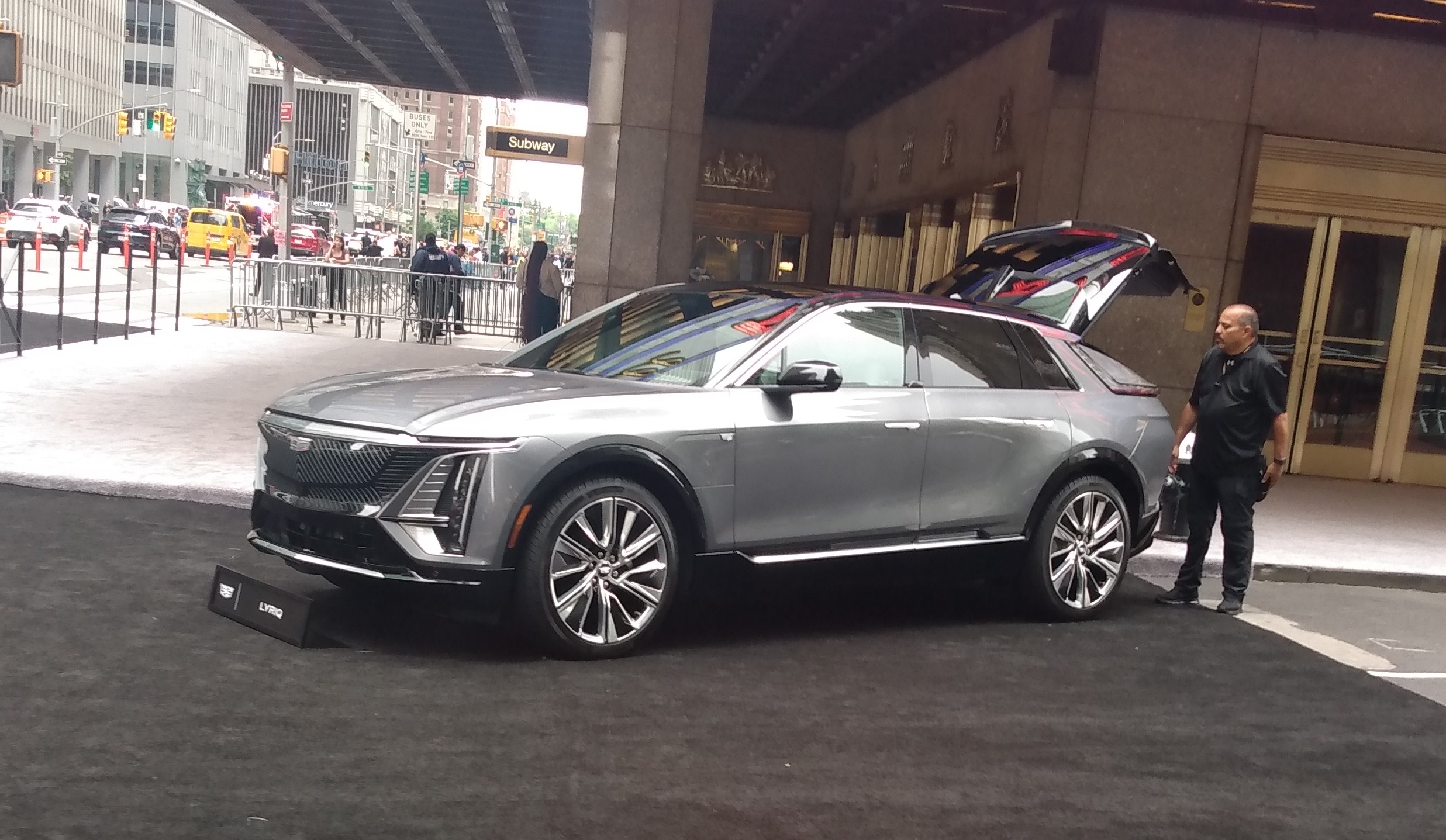
The Lyriq is an electric SUV made by Cadillac. “Electric” means it runs on a battery instead of gasoline. The podcast mentions it because someone has driven it and is discussing how it compares to other EVs in Cadillac’s lineup.
The Optiq is an electric SUV made by Cadillac. It’s smaller than some other luxury SUVs, but it’s still meant to feel upscale. The podcast mentions it as part of Cadillac’s electric lineup, even though the speaker hasn’t driven it yet.
CarPlay is Apple’s way of bringing your iPhone’s apps and controls to the car’s screen. Some cars make it work really smoothly, and others feel clunky.
The Pontiac Fiero is a sports car that was made with a layout that puts the engine closer to the middle of the car. It’s a smaller, two-seat vehicle meant for driving enjoyment. The podcast brings it up as a topic that needs more discussion or specific knowledge.
An earnings call is a meeting where a company like Tesla talks to investors about how it did financially and what it plans to do next. Even if you’re not investing, it can hint at future changes to their cars.
The Tesla Semi is an electric truck designed to move goods. Instead of using diesel fuel, it runs on electricity. The podcast brings it up because it’s part of the conversation about whether electric trucks are becoming a real option.
An EV semi is an electric version of a big delivery truck. It’s hard to do because these trucks need a lot of energy, so charging and battery capacity are major issues.
These are big long-distance trucks that run on electricity instead of gas or diesel. They need big batteries and charging stations to keep them moving on highway trips.
Energy storage means saving electricity for later, like a giant rechargeable battery. It helps the power grid stay steady when renewable energy or demand changes.
Waymo is a self-driving company that runs robotaxi services. In this conversation, it’s mentioned as one of the few real-world examples of autonomy working today.
“Full self-driving” is Tesla’s name for software that helps the car drive. The hosts are saying it doesn’t mean the car can safely and legally drive itself everywhere like a real robot taxi.
Cruise is GM’s self-driving car project. The hosts are saying GM changed how the self-driving team is organized inside the company.
LIVE
Whether you drive a car, need a car, or just occasionally bummer ride with friends, you've
come to the right place.
Join Jill and Tom as they break down everything that's going on in the auto world.
New car reviews, shopping tips, driving green, electric cars, classic cars, and plenty of
great guests.
This is the Consumer Guide Car Stuff podcast.
All right, this is the Consumer Guide Car Stuff podcast.
I am Tom Appel, publisher of Consumer Guide Automotive.
Thank you for joining us this week.
When you have a chance, do me a favor, solid.
Check us out at consumerguide.com.
While you're there, you can see all of my new car reviews, some fun classic car stuff.
And you can stream the podcast right there on our homepage, though you should actually
just subscribe.
Jill.
Yes.
This is the first time we've been together in like a month.
It is.
It is.
We have been in various incendiary places.
Yeah, it's been weird.
That voice, of course, Jill Siminello.
She's a contributing editor here at consumerguide.com.
North American Car of the Year juror and prolific freelancer.
You're doing good.
I am.
I am doing very well.
Thank you.
Yeah.
I apologize for ducking out last week.
Things happened.
I will try not to do that again too soon.
That would be appreciated.
I even though I know like nobody like I'm going to post this, I'm posting our zoom
videos on YouTube again.
And but the people listening can't see this, but I do feel the need to point out
that you have gotten a haircut.
I did.
I got a lot of haircuts all right around the same place, which is my head.
But yeah, I go to the same place all the time and it's an actual barber shop.
And depending on who gets my head, my hair looks very, very different.
There's a guy named Frank.
Frank's the best.
And he does stuff like he was a little wisp in the front and curls and stuff.
Frank is awesome.
The woman that got me this past Saturday.
Yeah, she was she was just going to tell you she clearly was collecting hair
scraps for something and needed a lot of hair.
I know I'm like, I'm like looking at him like, is that just the sun?
Or is that actually your head?
And I'm like, nope, that's actually your head.
Yeah, this makes me look bald.
I have a lot of very wispy white hair that doesn't show up when it's short.
So I look bald.
Yeah, which I am not.
Well, next week, next week, we'll see your hair.
All right.
Later in the show, we talked to Simon Sprol of Caterham.
And I don't think we've ever discussed this brand before, but it is a
storied British race car manufacturer, not really race car, but sports car.
And I didn't know this.
I had to dig in this a little bit.
They bought the rights to the famous Lotus seven.
Back in 1973, and they've been building that same car ever since.
So 50 years of the Lotus seven, obviously there have been improvements.
There's like nine versions of it.
The car is cool as heck.
It is tiny.
It is like, it is like a hundred horsepower go card.
It's the coolest car in the world.
So we'll be talking about that a little bit later on.
But, but interesting news.
Now you will get to my news in a second.
You did a bonus episode of the podcast.
Thank you.
Yes.
And you talked to Eric Ladoo of Infinity.
So people should check that out.
It's out there now.
It's about 15 minutes long.
And he answered a lot of questions that guys like that don't always answer.
So yeah, we had a great conversation and I was, you know, first time I'd ever
met him, first time I'd certainly met him in person and talking about manual
transmission coming back into a sedan and some exciting things in the future of
Infinity. I mean, you know, just when you think that maybe, maybe Infinity is done.
We have a wait.
There's more situation going on.
And that is exactly the stance they have to take right now, right?
They have three products total.
This is not a brand with a lot of stuff to stuff into the showroom right now.
But they've got the QX 60 and midsize crossover.
That's good.
That's their volume car.
The 65, which you went there to drive, which is a sexy fastback version of the 60.
And then finally, the big QX 80, which is sort of their, their escalate competition.
But they've got more stuff coming, which is good.
But one of the things that Eric talked about was that, and we know this, we see
this happening generation to generation is that young people no longer want to
drive crossovers.
Yeah.
I'm, I'm not a hundred percent sure that this is a thing that's taking, but maybe
it is, maybe there is some room for, for sedans to make a comeback.
But American makers have all but washed their hands of sedans.
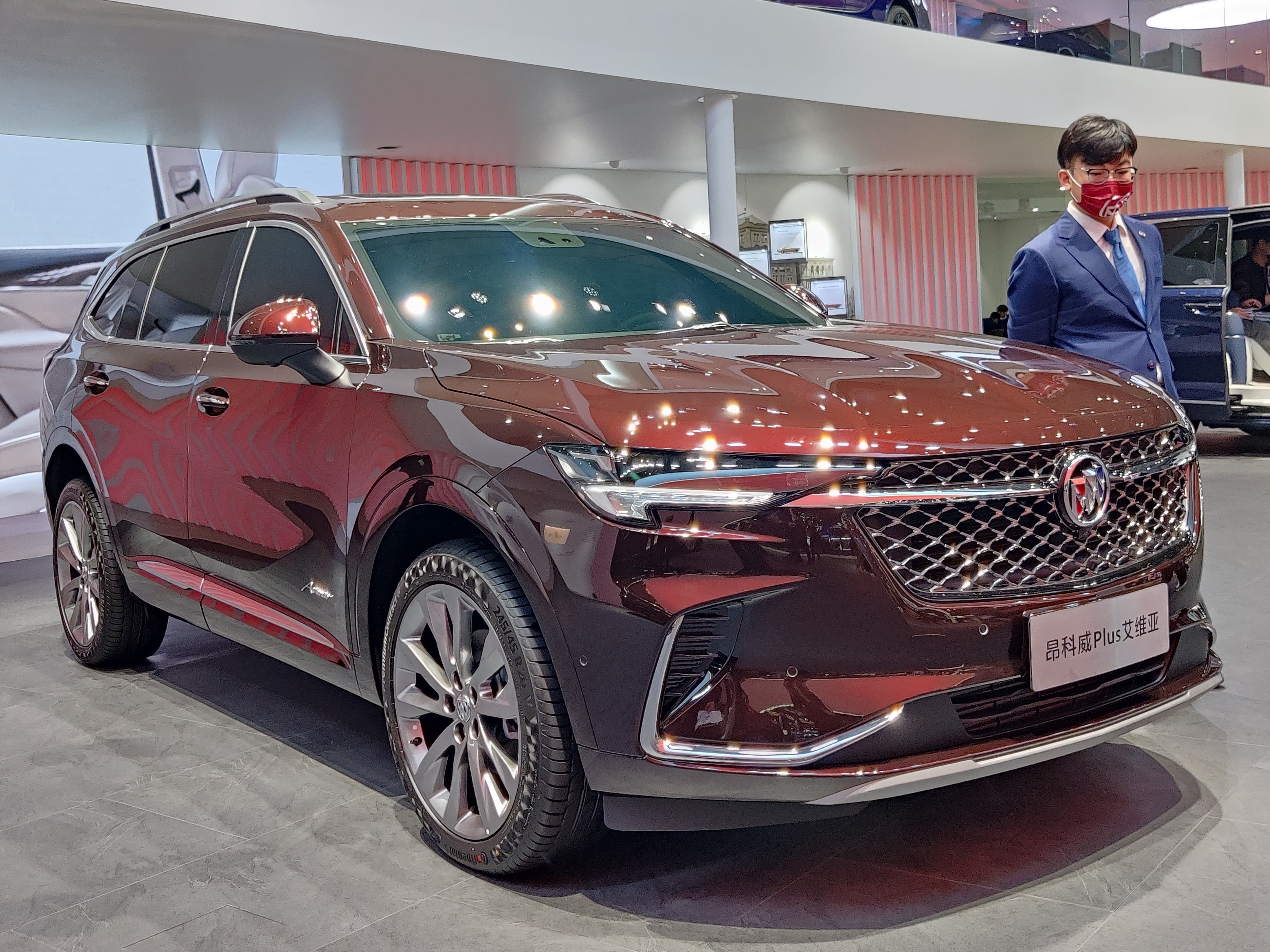
However, however, however, Buick is making some noise in this, in this regard.
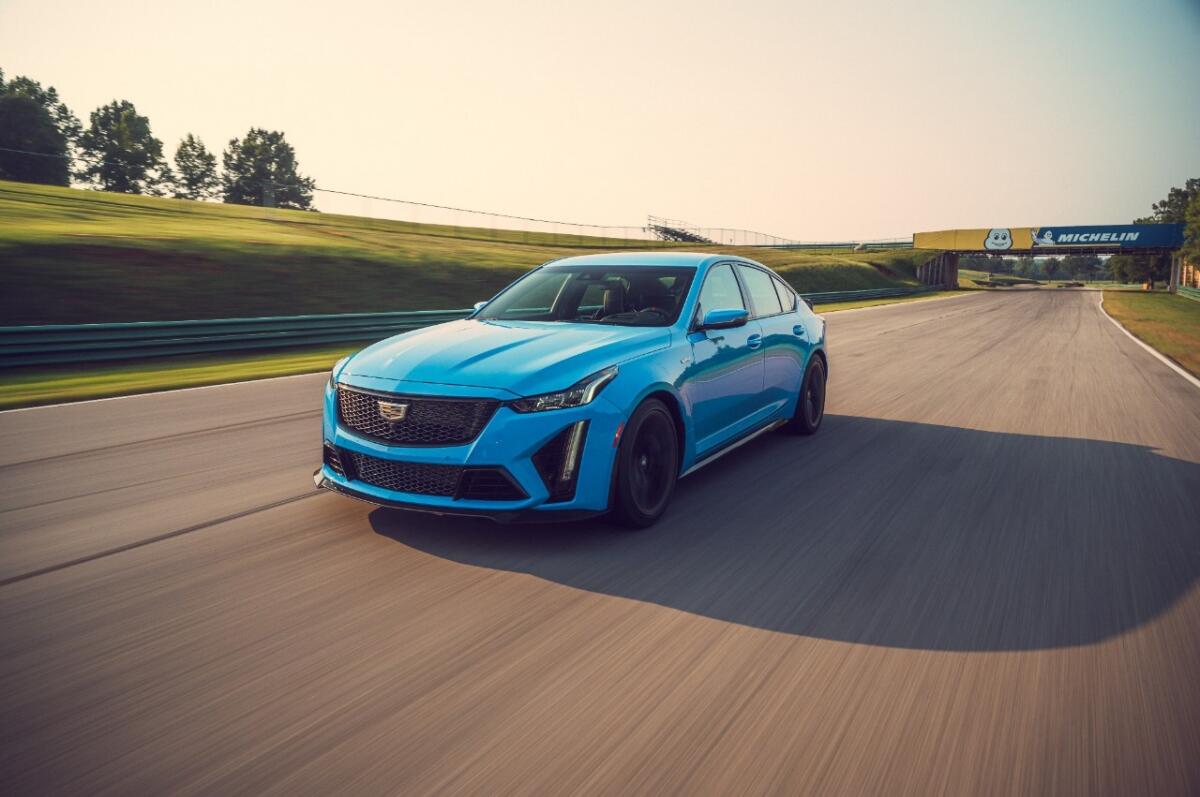
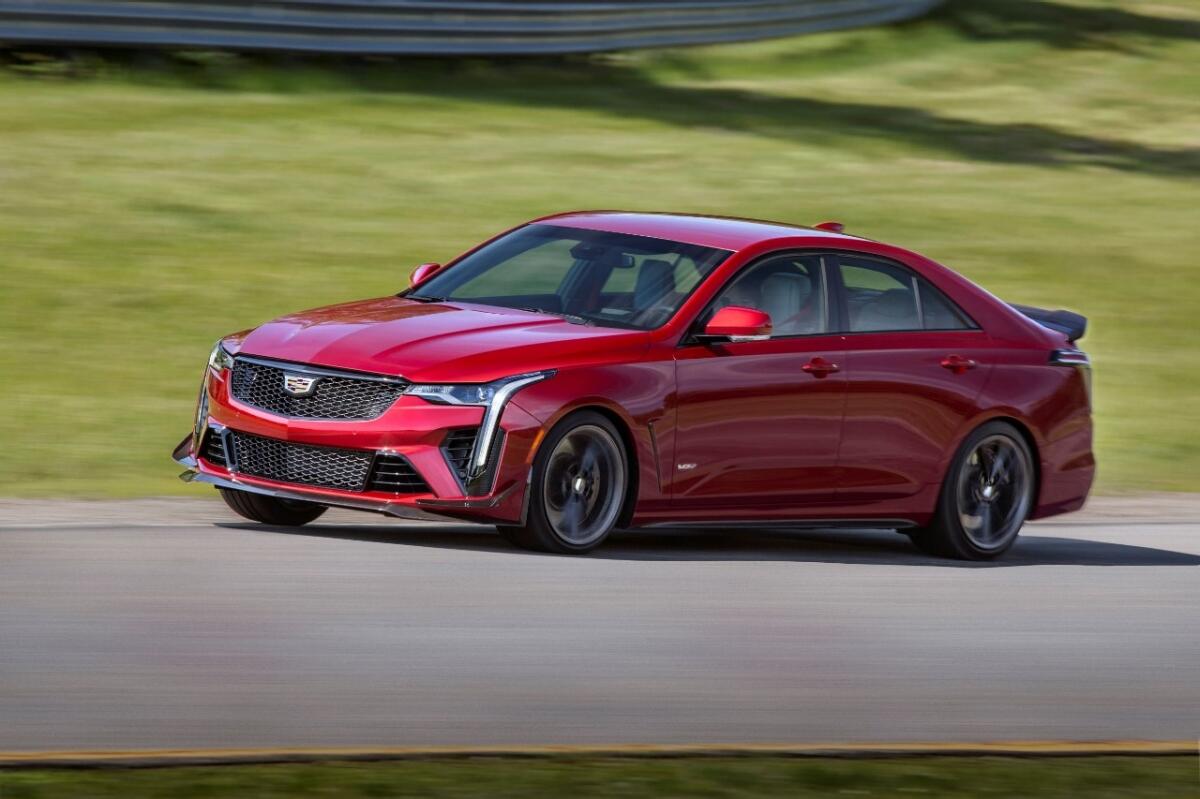
So Cadillac builds a CT4 and CT5, a small and midsize sedan.
CT4 is going away soon, but the CT5 is coming back on heavily redone architecture.
It's called the Alpha 2 architecture.
That architecture probably needs more volume to justify its existence than just
Cadillac can give it.
So they're talking about a Buick.
Buick could make use of a sedan because maybe there are some young people who don't
want to buy SUVs, but more importantly, they can probably get by doing some
fleet stuff with that too.
Um, and I'm not talking about rental fleet.
I'm talking about business fleet and things like that.
Um, so there's that, but here's the, the part that not enough people are talking
about Chevrolet, you've heard of Chevy, never heard of them.
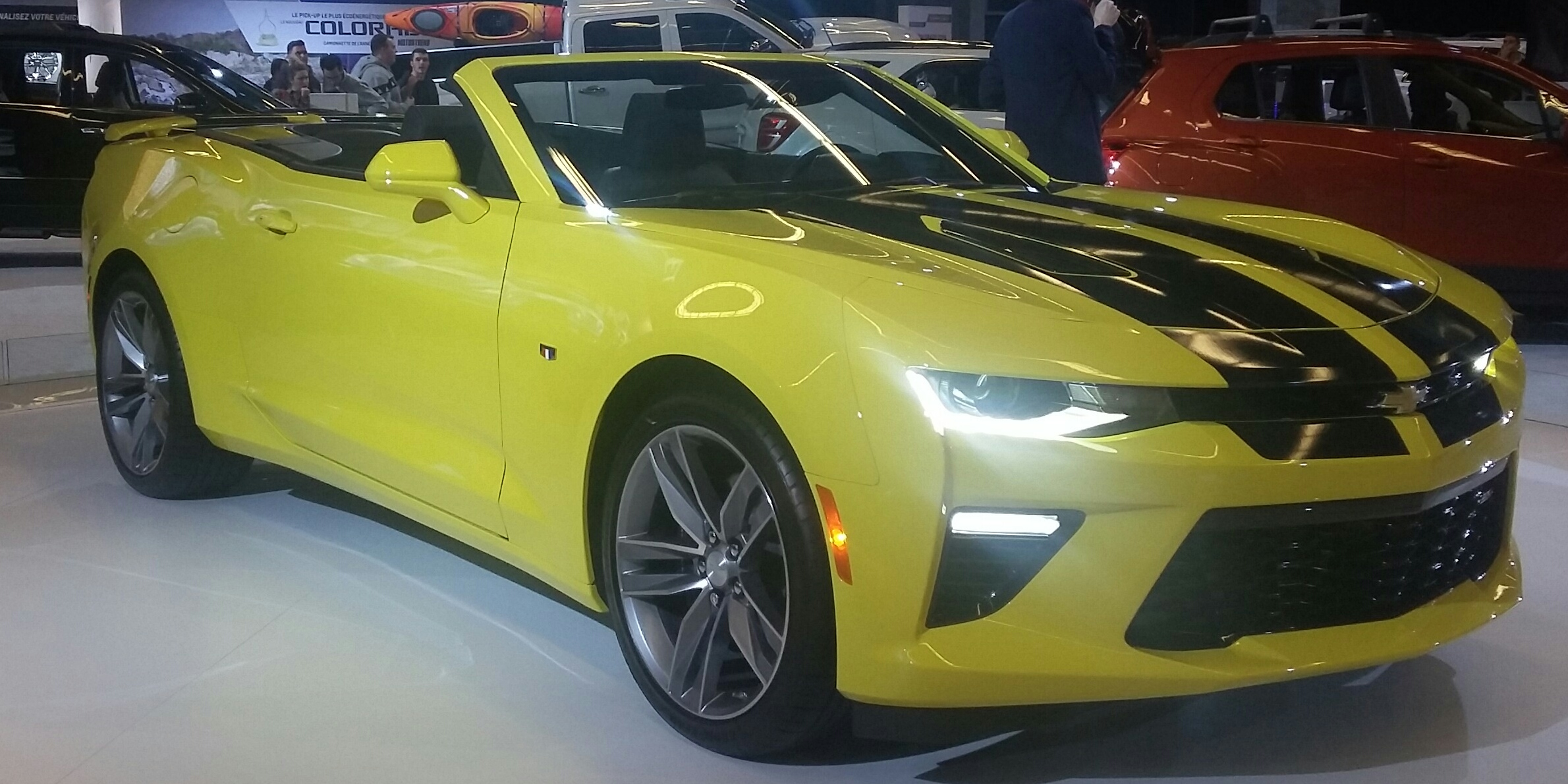
They're talking about a new Camaro.
Yep.
And that Camaro very likely would not arrive in the form of a coupe.
It would very likely be a high performance sedan.
And that would be based on this architecture as well.
And that's interesting.
Yeah.
That's really interesting.
And we've been watching Cadillac stuff, strange V8s under the hood of their CT4
and CT6.
So a CT5, I'm sorry, whatever Camaro comes out of this, if a Camaro comes out
of this, could be really cool.
Yeah, I, you know, I definitely don't think that the sedan is dead.
And, um, especially when we're talking about higher gas prices, whether it's
for the moment or forever, um, you know, I think that people are looking for
something that might be a little bit smaller and user friendly than a crossover.
Maybe, maybe I've always appreciated why consumers move to crossovers.
You get more space on a, on a footprint.
You get all wheel drive.
You get this look of utility.
I get why people want to do it.
Placing at the right height.
And the problem is that once people started going into crossovers, everybody
needed the right height.
Right.
Everybody needed the right height.
Cause once one person can see over everybody, everybody needs to match it.
So I get what happened with crossovers, but, but sedans, you know, they're a
little sportier, they can be more fun to drive, lower center of gravity.
They're easier to make sporty.
So we'll see if anything comes of this.
Um, I mean, Buick was a sedan manufacturer for decades, almost a century.
So it's so weird that they're not in that business anymore.
But anyway, that's that story.
Now you, you, I'm looking at my notes.
You.
Yes.
We're involved in something I don't even want to explain.
You explained it.
You, you, you were a Land Rover thing, the Land Rover trophy.
Yeah.
Yeah.
So this is, you know, in some ways, I don't even know how to describe it.
I went to the Land Rover Defender, um, trophy trials in Vancouver, Canada.
And trials trials.
So this is the trials.
And, um, they had three waves of contestants coming through.
So I think 120 contestants total and contestants for what?
So in competing in this event, and then you get to go to a global event in
Africa, if you move forward.
So, and I'm, I was a little bit unsure of how they were actually scoring
participants or competitors.
But I know like some of it was, you know, how quickly people were able to do things.
But I think some of it was pretty subjective and how well do you work as a
part of a team?
You know, how are your leadership skills?
Um, that kind of stuff, you know, are you a personable, nice person?
You know, are that kind of thing?
Cause they had to do, um, interviews.
Then they had to do what I like to call feats of strength.
And so this was anything from having to like swim a certain amount of distance
in a pool to, um, doing a ropes course where you're literally like hanging
around by your arms and climbing on ropes and through tires and all the stuff
up in the air.
And then, um, they had this thing called lay pen silo, which was essentially
you had this post that eight people had that's, that's like pasta, right?
Yeah.
It's totally like pasta, but they had to like lift this post up in the air and
then move it through a maze on the ground by tugging on ropes and like one
person would have to tug while somebody else would have to let go.
So to what end?
So, I mean, that was like the team ship and strength exercises.
And so then, so that was like day one.
And then day two was, um, where they, um, got to do like, I called it a
Land Rover playground.
So you have all of these Land Rover defenders of the trophy edition where
they would then, um, play like off-roading and they'll, you know, and,
but there were still teams to exercise this here because you had to build a
bridge to drive the Land Rover defender over, or you use the defender to, um,
pull up blocks and you, I mean, I don't know.
It was just, it was crazy to watch and really cool.
I had a little bit of FOMO because I definitely wanted to be participating,
but, um, it, it, it's modeled after the defender, uh, the Camel Trophy.
So I don't know if you remember the Camel Trophy, um, the nineties.
Anyone who smokes cigarettes remembers the Camel Trophy, right?
It was a tie-in with Camel Cigarettes and there was extensive ad campaigns,
which appeared in all the car magazines, but they're usually just some dude wearing
khaki with a shirt open, covered with sweat and smoking a cigarette.
And he was on a raft with some sort of, uh, Land Rover, Land Rover product.
But, um, yeah, that was a big deal then.
And it was a bigger deal.
Yeah.
And, and it was like an eight day event, um, I think.
And, and now, so this was, the trials were only two days.
So like the first day was like feats of strength.
And then, um, the second day is more of the like vehicle agility and, um, how
good you are at driving over obstacles and dealing with the vehicle and situations.
So what does Rover get out of this?
Clearly, if they're moving this to Africa, it's going to be international.
Yeah.
Um, which, which is interesting.
I mean, I, I don't know if it's necessarily goodwill or, um, I don't know if it's, um,
I, I mean, I have to think it's talking about the capability of the vehicle itself.
But I think it's also setting up a persona, like a tough guy persona of
somebody who might own this vehicle.
And so it's, it's creating a little bit of FOMO.
You know, I have this vehicle.
I could do this.
Um, I want to be that guy.
Um, you know, I wrote an article for consumer guide automotive and I, I mentioned
that the very first time I went on a press trip with Land Rover, you know, I saw
these quote unquote Land Rover guys who could literally, they were prepared
for Armageddon, I think, you know, they could get you out of a ditch.
They could, you know, Ford water.
They could, you know, do all of these amazing things.
And I just remember walking away from that event thinking, I want to be that guy.
I want to be able to do that.
I want to be able to do those things.
Well, those guys that were helping to guide us through these situations and
were instructing us on how to drive these vehicles in many cases had competed
in the Camel Trophy.
And so, um, it was just kind of cool.
We should talk about that level of skill and talent.
And that's if you have a brand like Jeep or if you have a brand like Land Rover,
you kind of need to build on that.
And you need people who really know what they're doing.
And I know the guys you're talking about, I went to those events as well.
And they were surprisingly calm and could get you through anything.
Of course, it helped that Land Rover, Land Rover products were so good off road.
Anyway. Oh yeah. Oh yeah.
And Jeep had similar guys with similar experience, so that worked pretty well.
The interesting thing about the Trophy Defender, and it's only based on the
110, which is the regular length for Ford or vehicle.
That vehicle isn't particularly suited for this.
It actually gets like weird luxury upgrades, like Alcantara headliner and stuff.
Like, that is so weird.
It should be like lined with plastic.
You know, I will say that I want to say the headliner is dark, which means that
if you are putting muddy, dirty things in the vehicle, you're not going to show
the dirt, the scuffs, the scrapes.
Also, you know, I mean, just because you're driving off road, doesn't mean
you want, you don't want heated seats.
You probably absolutely want heated seats, especially.
Africa?
Well, or cooled seats.
And by the way, the desert gets really flipping cold at night.
So, I mean, I just think the versatility of the vehicle and some
of the luxury upgrades aren't necessarily luxury features that
they're luxury features that you want in those situations.
Like, I remember many moons ago driving the Lexus GX and it had the cool box
in the front where you could turn your armrest cubby into a refrigerator,
essentially, and people are like, why would you put that in a vehicle that's
going to go off road?
And I'm like, you're in a desert.
Why wouldn't you want cold water?
Yeah, you could just throw a cooler in the back, too.
The world has changed.
And those original Camel Trophy vehicles, way, way, way back when, were
bare, bare bones.
Yeah, they were.
They were rough.
So, you drove, was this independent of this event?
You spent some time in.
Okay, you drove the Range Rover.
I have it here.
The Range Rover SE short wheelbase P3 530.
That's so much name.
I know it really is.
I drove, I drove the Range Rover.
That, let's just say I drove the Land Rover Range Rover.
Yeah, and so it was really funny because I came home from the Defender Trophy
and the vehicle waiting for me was the Land Rover Range Rover.
And I was like, how very apropos.
Yeah, we should identify that vehicle that when we say Range Rover, this is the
car.
This, this is the Range Rover.
Yeah.
Extremely confusing lineup there is made up of different vehicles, including
Range Rover, Range Rover Sport, Range Rover Valar, Range Rover Evoke.
But the Range Rover is the top of the line.
No suffix, that's your car.
Well, and I had an interesting conversation with the Land Rover, the JLR folks
while I was on the Defender Trophy trip.
And they were saying, and I'm not sure I completely buy into this, but they
said that Range Rover is a brand like Buick is a brand, that Defender is a
brand like Chevrolet is a brand, that Discovery is a brand like Oldsmobile
was a brand.
And I was just like, interesting.
So they're saying that like you have Land Rover as the apparent company, but
then you have the Range Rover Valar, Evoke, the Range Rover.
You know, you have the Discovery, the Discovery Sport, you have the Defender
110, the Defender.
And I thought that was an interesting way to look at it as Range Rover Defender
and Discovery being the brands within themselves and then of the other things
falling underneath.
But I don't know that I would equate like Range Rover to like a Buick.
It kind of works, especially because the Discovery vehicles are so much more
affordable than the Range Rover products.
Also, they look great, actually.
It doesn't feel like you're taking a big hit in luxury.
But but the Range Rover products very expensive and the Discovery are more
affordable and then obviously the Defender are your serious off-roaders.
Yeah, but all of these vehicles are very capable off-road.
All of them are very, very capable.
And so, yeah, back to the vehicle that I actually drove.
So this was equipped with a 4.4 liter turbocharged eight cylinder engine,
523 horsepower, 553 pound feet of torque.
It was so smooth, so fast, so fun to drive.
I drove this, as I usually do, down to Indianapolis and back.
And I was so comfortable for the entire drive.
And even though, I mean, this is a big vehicle.
This is this is a very, very large vehicle.
It felt small.
It drove small.
It was definitely more on the nibble side of things.
And I mean, I live in the city of Chicago.
I park in off of an alley in a garage and you have to do a lot of tight
maneuvering in the city and I have to do a lot of tight maneuvering specifically
to get into my parking space.
And I thought I was going to have problems with the Range Rover, but I did not.
And part of that is because it is a little bit, it feels like a little bit narrower
than some of the wider, large SUVs, but the turning radius and everything on
this just made it feel so sharp and so nimble.
And I thoroughly, I thoroughly enjoyed it.
All right.
Hit us with the bad news.
You know, I didn't have a lot of bad news.
It was funny because I was I'm talking about the price.
Oh, yeah.
OK, that is certainly a little bit bad news.
The the price is 100 and 55000 dollars.
That's the as tested price of this vehicle.
100 and 55000 dollars.
It was 100 and 35000 is like the base price for this
vehicle, but it it did.
You know, it and it's funny because in my video, I was just like,
are you going to spend 100 and 55000 dollars?
But I kind of likened it to, you know, you're buying not only the massaging
seats and the, you know, high horsepower engine and the smooth and supple
interior amenities, you're also buying the brand name.
It's kind of like buying like a Louis Vuitton purse instead of buying a Kate
Spade. So, you know, you're you're buying all the luxury amenities, but you're
also buying the brand name when you're when you're spending this money.
And the only thing I think I really found on this vehicle that I did not like
was the way the windshield washer fluid is dispersed.
It comes through the windshield wipers themselves.
And if you're driving 70 miles an hour on the highway and you're trying to get
this liquid on your windshield to get rid of the bug guts, you're invariably
going to get between Indianapolis and Chicago.
It doesn't work very well because you spray out of the windshield, you know,
wipers and then it just literally flies off the side of the vehicle.
And there's no fluid really left on on the windshield in order to be able to get
the bug guts off. And that was my primary complaint.
I usually like I can't believe we're talking about wiper blades here.
But I usually like that when the when the fluid comes out of the wiper arms
themselves, usually that's heated as well, which makes that great for winter.
But if you're stopped, it's great.
But if you're going 70 miles an hour, not so great.
All right. So that vehicle, you drove a 2025.
I did. Interesting.
It's not changed much for 2026.
The big deal here, this is really interesting, but we're out of time.
These V8s are now BMW engines.
Yeah. They're sourced by BMW.
The old five liter V8 no longer available in anything Range Rover.
It is available in stuff called Land Rover.
No discovery products, but interesting that they made that move.
Yeah. Well, I mean, everybody's trying to
work together and find a way to get along in 2026.
2025 is the case.
BMW is four point four liter V8 is one of the most flexible things in the world.
It's been around now for, what, 25 years?
And they keep they keep modifying it in different states of tune.
And it's wonderful and everything it goes in.
All right. So that car obviously been around for a while.
It's available now at a place.
All right. And then once you review that, can it appear?
Soon. I'm a little bit behind with all the travel I've been doing.
I'll write that down soon.
Soon. All right. We should take a break.
When we come back, we talked to Simon Sprawl of Caterham.
I've been saying Caterham.
Yeah. Caterham. Caterham.
All right. Stick around.
Questions or comments?
Drop us a line at carstuffatconsumerguide.com.
That's carstuffatconsumerguide.com.
Welcome back to the CarStuff Podcast.
And we're back.
This is the Consumer Guide CarStuff Podcast.
I'm Tom Appel, publisher of Consumer Guide Automotive.
Thanks for sticking around today. Jill, how are you doing?
I am doing fine for like the fourth time.
You know what makes me sad?
What makes me sad?
We're about to talk about one of the coolest cars you can buy on the planet.
And there's no way I would ever fit in this car.
I would fit.
You would. You would.
And you actually have to arrange that.
OK, we will have to talk to our guests about making that happen.
All right. On the phone with us is Simon Sprawl.
He is with Caterham. Caterham.
Caterham. How are you?
Caterham. Caterham.
Caterham. Roll the roll.
Roll up the tech. Caterham.
Simon, how are you today?
I'm good. Thank you. How are you, Tom?
I am well.
This is a brand that has fascinated me forever.
And I've been reading car magazines since the late 70s.
And every now and then, one of these vehicles would show up
in car and driver or road and track, especially those two magazines
here in the States.
And not enough good words could be written about these cars.
They were just the the most fundamentally basic, raw,
delightful things to drive in the whole world.
And you guys are still building these things.
Tell us about the Caterham cars and what you guys do now.
Yeah, sure. So look, the story really starts with Lotus
and we call in Chapman, the founder of Lotus back in 1907
when he created the Lotus 7.
And, you know, that can be said to be almost the
the big, you know, the prime example of his mantra of
simplify and add lightness.
And still to this day, you hear people at Lotus and others talking
about this idea of adding lightness, which actually is
a is is something that that anyone who's making a sports car
knows that weight is the enemy of of everything.
Sure. So so Colin, you know, produced the Lotus, produced the 7
and produced that for what just under 20 years.
And in 1973, a company called Caterham came along and said,
we'd like to take the the rights to make the car under license.
And and and that was where Caterham was born.
In fact, effectively, the Lotus 7, as it was, finished its run then
and really Caterham took over with the with the Caterham 7.
And that was 1973 in the UK.
And and ever since then, Caterham has has made the 7, the Super 7
in various guises with various different power trains and sold them
to enthusiasts all across the world.
I mean, it's it's actually a global car, whether it's in Japan,
here in the United States or or its homeland in the UK.
Now, who is buying these cars?
They're they're extremely low volume.
And and I envy everyone who fits in one and owns one because they
seem like just the most pure form of automotive joy.
But who is your audience for this car?
You know, it varies because and that I think is the joy of of Caterham.
So you can say that there's there's the there's the I want to say hardcore.
There's the there's the person who's looking for that elemental driving
experience. And as you know, that today it's hard to get into a car
that doesn't have some sort of assistance, right?
Even, you know, power steering, power assisted brakes, you know,
ABS, et cetera, et cetera.
And and Caterham is one of the last cars that you can buy that really
is, you know, true elemental driving.
So you've got the hardcore enthusiast, I would say, or somebody who's
looking for that very back to basic experience.
And then from there, you get owners who want to go racing.
So Caterham has got a very successful one make and multi make
series running in the UK.
There's in across Europe, it's in Japan.
We have enthusiasts here in the United States who race them
in various club meets around the country.
And so there's the there's the racing enthusiast and always the thing
with the Caterham is that sure, you can put it on a transporter
and take it to the track.
But actually, a lot of people, particularly in the UK and Europe,
they drive their car.
Good for them.
Rogan, they drive it to the track and then they put on their race suit
and the crash helmet and they go racing and they drive at home.
And that's kind of been the Caterham thing.
You know, it's it's usable on the road.
It's it's a lot of fun on the road.
But you'd argue it really comes alive on the on the track.
And, you know, there is we were actually Caterham was at the Nürburgring
for the 24 hour race.
This is just this last weekend, the big one where Max was was driving.
And we launched a special edition Caterham Nürburgring
to celebrate our our participation in numerous races at the at the Nordschleife.
So it's, you know, we're we're sort of a car that is I wouldn't say
happiest on the track, but certainly the track is really where the car can come
alive and people can exploit all its all its capabilities.
But, you know, having driven them on the road as well, it's a lot of fun
to drive on that favorite bit of windy road when it's quiet on a Sunday morning.
And you really just want to connect with the car on the road.
So tell us about the car itself.
It is tiny.
It is extremely light.
And I believe you're using exclusively Ford engines these days.
Yes. So that's that's correct.
So so in the United States, we bring it in with the Ford two liter
Duratec engine. OK.
And it's available in various powertrain, various horsepower formats.
But the car itself is about half a ton in weight.
So the power to weight ratio is is equivalent to a supercar.
And in fact, the the the naming of the cars is, you know, we have the 420,
for example, which is, you know, relates to horsepower per ton.
So it's it's it's everything's ready to to power to weight.
We're very focused as a company on power to weight.
Because again, you go back to the origins of the car, which is about lightness.
So the rate is rate is incredibly important.
But you'd be surprised about, you know, the the
in fact, to excuse me, two chassis.
A narrow body and a wider body chassis.
And actually, they they're pretty they're pretty accommodating.
The you know, you can pop the pop the steering wheel off.
To help you get in there's various types of roll cages that you can fit to the car,
whether you're going full racing or just or just out on the road.
And yeah, it's just it's a lot of fun.
Only only manual transmission, although when you get up to the
higher model, we do offer a sequential shift gearbox as well.
But they come in primarily would be with the manual five speed transmission,
which is a Mazda transmission and afford a DuraTek two liter engine.
Excuse me, I'll use my voice there for some water.
So an American looking to purchase a Ketterham, how do they do that?
We come in under the kick car regulations.
So what you would do is we have seven dealers in the United States.
So Irvine, California, Sonoma, California, Washington State, Colorado,
upstate New York, Daytona Beach and Miami.
I think I remember all seven of them.
And you go to your catering dealer and they would help you with bringing a car in.
And it comes in as either a effectively a box of bits that you can build yourself
or it comes in as a chassis without a powertrain.
So you bring in the the chassis is imported as one piece.
And then the powertrain is imported separately under a separate invoice.
And then the dealer helps marry the two together.
We work with Mount Tune in California as our as our engine provider.
And Mount Tune have been have worked on four engines
you throughout their entire existence.
I can remember as an ex Ford guy working with Mount Tune back in the UK.
So Mount Tune are the engine provider for us.
And they'll supply the engine to you or to the dealer.
And then you either build it yourself or the dealer can help you build it.
And then depending on which state you're in,
there are different ways of getting it registered.
But basically sometimes catering's come in under a 1957 replica law.
So so it's home. Oh, interesting.
Yeah. So sometimes it comes in as a 57 replica, which is what they are.
Or sometimes it will come in just under the kick car regulations.
So in California, for example, SB 100 is the is the registration process for there.
Other states have had different different rules and regulations.
But the cars come in with bins and chassis numbers.
And and, you know, you work with your dealer
to bring both the powertrain and the chassis in,
bring them together and then take it down to DMV and other inspections
and get it on the road.
Wow. So what are we talking about?
Oh, go ahead, Jill, I'm sorry.
Yeah. And so does that mean then that they are completely street legal
in terms of being able to, like, drive them on regular city streets,
highways, that kind of thing?
Or is there are there certain restrictions
and how you can drive it when you bring it into the United States?
No, no, absolutely not.
No, you bring it in, you make it, it gets a VIN number.
And then you take it to DMV and you get it registered under as a kick car.
Each state has different rules and regulations
for how cars like that are registered.
But no, I mean, every catering that comes in is street legal
and can be registered.
Some people who only want to use it for racing
will just bring it in and just track it and don't need to register.
But the majority of catering that come into the United States
obviously come in as kick cars and then ultimately assembled here
by the by the dealer and the owner registered
and then driven driven on the road with a plate on it.
All right, I've got two questions for you.
The first one is there zero weather protection, right?
These are totally open air sports cars.
And then secondly, what are we talking about price wise?
So no, you can I mean, there's tonneau covers and hoods.
So, you know, don't forget it's it's a British sports car.
So we do have occasionally rain in the UK, as you might have heard.
Occasionally, I think
everybody the UK sports car market is quite interesting in the country
where it rains a lot, actually convertible cars are very popular.
But we we do have weather protection and tonneau covers and hoods and so forth.
So you can you can drive it in all weathers and there's
there's wind winds side windows as well that you can fit.
And so it is it is an all season car.
And then price point wise, we're typically in the 80 to 100 thousand dollar
price range, depending on the spec.
I mean, if you go into the catering configurator, you can play around
and configure a car in almost unlimited, different build combinations.
But typically a catering today with import tariffs and duties
and other and other factors going in will typically be somewhere
between the 80 and 100 thousand dollar price range.
And these are pretty darn rare, right?
How many do you guys typically sell in the US a year?
Well, we we focus on on the capacity of the of the manufacturing plants.
We've got a new factory, which we have a couple of years ago in the UK.
That has a capacity of about 800 cars a year.
I would say the United States has we sell
currently under 100 cars a year in this market.
But that's something that we obviously want to change.
And part of the challenge that I've taken on the catering
and how we're looking at building the brand is to obviously
bring catering to more American consumers.
I mean, you talk to me, you know, ask me the question earlier about
who is buying these cars.
I think we see an evolution in the customer.
And certainly going forward, we see this as
a an addition, clearly an additional car and a multi car enthusiast garage.
And we would see a catering sit very comfortably alongside a
911 GT3 RS or a Ferrari or so forth.
So we're we're we're really if you think about, you know,
who's been buying Harley Davidson's, why they buy Harley Davidson.
It's not a it's not the only thing you have in your garage.
It's something that you would you would take out when you want to enjoy a
you know, a weekend blast up your favorite road or all to go on a track.
So catering really fits in that multi car enthusiast garage.
Not exclusively.
We've got people that just have a catering and maybe one other more practical car.
But typically, we think that catering is going to go to multi car enthusiast households.
Cool.
If you are interested in purchasing to Caterham and you live in, say, Chicago,
so you're not near a dealer, how does one go about?
Well, you can inquire through us at cateringcars.com
and the inquiry will be routed through and depending on your zip code,
we route you to the closest dealer and the dealer in Chicago
probably be testing my geography at pro B time machines in upstate New York.
OK, well, Simon, thank you so much for your time today.
My pleasure. Thanks for having me on.
I enjoyed talking about this wonderful little iconic British sports car.
No, it's very cool.
It's glad to have this conversation.
That was Simon Sproul with Caterham.
We're going to take a break.
And when we come back with time with some questions or comments,
drop us a line at carstuffatconsumerguide.com.
That's carstuffatconsumerguide.com.
Welcome back to the Car Stuff podcast.
And we're back.
This is the Consumer Guide Car Stuff podcast.
I'm Tom Appel, publisher of Consumer Guide Automotive.
Thank you for sticking around today, Jill.
Yes, I need to lose about 100 pounds.
You need to lose me.
I need to lose. Yeah, I want to drive one of these.
It's like the most fundamentally pure thing.
Did you hear him say you can remove the steering wheel?
To get it.
That's how you get into a lot of racing cars.
So, I mean, maybe, yeah, maybe you don't maybe only need to lose 50.
But we will post pictures of these cars because people need to see them.
They are the most fundamentally basic things.
They are go carts with like 100 or 200 horsepower engines.
They're absurd. Yeah. And they're cool.
There's also great footage to the auto car guys.
That's a British car magazine. Yep.
They have recent video of them flogging.
OK, Dan, and it's it's very cool.
All right, you're you're involved in the socials.
I am involved in the socials.
And you would like me to talk about it.
Well, you wouldn't like no, but I'm but I'm going to to.
So I am on Instagram, TikTok, Facebook,
LinkedIn, Threads, Blue Sky, all the things as I like to say.
You can find me at Jill Siminello.
And I have the hashtag Cartageur.
That is also the name of my YouTube channel, Cartageur.
And I post daily videos to both YouTube shorts and to TikTok.
So to give you your daily dose of drive.
So, yeah, that's me.
If people care, I'm Car Guy Tom. OK.
X Twitter and Blue Sky. OK, all right.
There you go. It's quiz time.
Jill, are you ready?
And I have already. No, no.
Today's topic is very simple. OK.
It stays luxury, which sold better in the first quarter of 2026. OK.
Going to give you two cars.
You just have to tell me which stays which sold better.
We're sticking with luxury this week. OK.
And I will say you always try to trip me up here and you give me an answer
that I think is going to or you give me a question that I think is going to be
obvious and it's not. Yes, that's sort of the plan.
Thanks. So I'll see what my instinct is and I'll go with the opposite.
I think it's what I'm hearing you say. All right.
Five questions plus the bonus question.
You need three for a victory.
The bonus question, of course, always related to the topic of the day.
OK. All right. You ready? Mm hmm.
Number one bestseller in the Q one of 2026, the Acura MDX or the Genesis
GV 80. Oh, two very good vehicles.
Yes, they are.
I have not driven an MDX in a very long time.
I they refreshed it recently.
And I was able I was I actually wrote about that for another publication.
So I was there for the refresh and I mean, they've done nothing but improve it.
And these are both midsize crossovers.
So I would my tendency is to say that the Acura
in the question is which sold better, right, which sold better.
My tendency is to say that the Acura MDX sold better,
which means it was probably the GV 80.
Now, do you know if the GV 80 is just the SUV or if it's also including the Coupe?
It probably includes the Coupe.
But since it was Q one, there wouldn't have been very many of them.
Fair points.
I'm going to say the MDX.
Correct. OK.
All right, you're on the board.
10900 and 28 to 6300 and seventy
six genocide. That doesn't sound good.
I don't know what the plural of Genesis is.
Genesis is this. Yeah.
All right. Number two, are you ready?
The BMW five series or the Mercedes Benz E-Class.
Hmm.
Once the bread and butter of those lineups, now they're
kind of drifting slowly into obscurity.
Yeah.
I don't imagine either one of them.
Sold like hot cakes.
And they used to.
They did.
But again, no one wants the dance.
That is fair.
You know, along with what was at the Audi A five.
66
Hey, six would have been the midsize sedan.
OK.
That goes back to the 100
The Audi 100
This is a total shot in the dark here.
I'm going to say the BMW five series.
Yeah, by a fair amount.
5400 and 89 BMWs.
Just 3600 and 28 of the Mercedes.
Wow. You have two points.
You're in good shape.
All right.
Number three, are you ready?
I am ready to two icons in their category.
The Cadillac Escalade or the Lincoln Navigator,
which sold better in Q 12026
So will the Escalade include the IQ?
I don't know that.
I think not.
What are you to me?
I think not.
OK.
Oh, I really liked the Navigator.
The refresh that they did.
These are both really good.
They really are.
They're silly.
They're huge.
They're silly.
They're expensive.
And they're really comfortable.
And they're amazing.
I feel like Navigator is kind of underrated.
And I feel like people don't necessarily think about it.
I agree.
As they think about like Cadillacs.
So I'm actually going to say Cadillac Escalade sold better.
Yeah, by a lot lot.
Yeah, 9063 Cadillacs,
4300 and 22 Navigators.
You've already won.
Yeah.
All right.
Number four, which sold better in Q 12026
the Buick Envision or the Lexus NX?
Also both very underrated cars.
I've only seen one Envision ever.
And for people who don't know,
Terramotors is still importing this sucker from China.
Yeah.
And getting their asses kicked on every one of them.
Terrifies.
Yeah.
So I'm going to say not the Envision.
Yeah, this one's even less close than any of the previous ones.
The Buick Envision, 4400 and 85 in the first quarter.
The Lexus NX, dang, 13200 and nineteen.
Okay.
I don't really think about that vehicle much.
I always think about the Lexus RX, the midsize car.
The NX is kind of an interesting and awkward location,
like in terms of the lineup because, you know,
you've got the UX, which is like really teeny tiny.
And I really thoroughly enjoy that one,
especially from a city dweller perspective.
But the NX is just like, it's smaller than the RX,
but it doesn't seem like it is significantly enough smaller.
It's a vehicle I never think of.
Yeah.
I never think of that vehicle.
Yeah.
All right.
You've got four.
You could sweep.
Finally, the Infiniti QX 60.
We just talked about that.
That's Infiniti's three row midsize crossover.
Or the Cadillac VISTIQ Cadillac's three row electric
midsize crossover.
Vistik versus QX 60.
I would like to drive a Vistik.
Yeah.
Same.
Hello Cadillac.
Same.
I've driven Lyric and OPTIQ, but I haven't driven this.
I haven't driven the OPTIQ.
That's their new small car.
Yeah.
I really like the OPTIQ.
They did a nice job with that.
Aside from the whole car play thing.
I just heard car and drivers review of the Vistik.
It's very positive.
But it's electric versus QX 60 being gas.
But QX 60, I don't think is a huge seller.
I'm going to say QX 60 sold better.
It did.
9400 and I think 75.
I can't read my writing compared to just 1900 for the Vistik.
Okay.
Vistik.
Vistik.
Vistik.
I don't know.
All right.
You're five for five.
You need the bonus question.
Luckily, we're going to your favorite topic, which is pop music of the 80s.
Did the 80s have pop music?
I thought that was more of a 90s thoughts thing.
Did the 80s have pop music?
I see you're wearing a Ramon shirt today.
I am.
That's 70s, 80s.
But yeah.
I was like, is that considered pop music?
Well, I mean pop in the looser sense that they made the charts and things like that.
Popular.
Yeah.
All right.
What are the most influential bands of the 80s and 90s?
The Talking Heads got their start at the famous CBGB nightclub in New York.
In 2002, they were inducted into the Hall of Fame, the Rock and Roll Hall of Fame.
That's, of course, the Talking Heads, one of my favorite bands.
I need you to tell me which of the following is not a Talking Heads album.
Okay.
Are you ready?
My sisters could probably answer this.
I will not be able to.
I'm going to give you four albums.
One of them is not.
All right.
A Talking Heads album.
Are you ready?
Mm-hmm.
More songs about buildings and food.
Naked.
Exile on Main Street.
Little Creatures.
One of those is not.
The others are and all of them sound weird.
Yeah.
Well, they are the Talking Heads.
Okay.
I go through those again.
Sure.
More songs about buildings and food.
Naked.
Exile on Main Street.
And Little Creatures.
And if Randy were here right now, he would be shaking his head.
I know.
I know.
He would probably try to be giving me a hint, too.
Probably.
So you said Naked and then what was the third one?
Naked was the third.
No, the third one was Exile on Main Street.
Exile?
Exile.
Exile.
Yep.
Exile on Main Street.
Ugh.
So all of them except for Naked have lots of words.
Naked seems to be the aberration.
So, I mean, just because I have no clue and it seems like the odd man out, I'm going with Naked.
No, Naked was their 1988 release.
It was actually quite popular.
Okay.
Also, fans and critics kind of hated it because it was really just a David Byrne album, not
really a Talking Heads album, so people kind of pushed back against it.
Little Creatures, 1985.
More songs about buildings and food, 1978.
Exile on Main Street.
You're going to catch crap about this.
Legendary Rolling Stones album from 1972.
Yeah, from before I was born.
I'm not going to know that one.
Well, you should know it.
No.
I wanted to talk about something real quick.
The quiz is over.
You're done talking about the quiz.
The quiz is over.
Okay.
I will sign this and mail it off to you.
So, before we move on to the thing that you want to talk about, did you take my quiz from
last week?
Did I what?
Did you listen to my quiz from last week that I gave Sam?
Oh, way too easy.
Well, I mean, again, that was my quiz.
He did not want to take the chat GPT quiz.
Did you get the bonus question?
What was the bonus question?
I think I did.
The bonus question was what was the profession of Doc something on the show?
Oh, Doc Adams.
Yes.
Doc had actually been a doctor during the Civil War.
Yeah.
Because he joins the show.
We're talking about gun smoke and Doc, of course, is the doctor in Dodge City.
And he's not a young man, even when the show opens.
He's an experienced surgeon.
But back then he was probably only like 30 and he probably just looked 80.
Yeah.
Yeah.
That's the way that stuff worked.
But yeah, you had to go much harder on the Fiero questions for Sam.
Yeah.
So, you did well and you got the bonus question.
Sam only did not get the bonus question.
No, I'm going to get gun smoke questions.
I know.
I figured.
I think you and Randy talked about gun smoke all the time.
So.
Yeah, the thing.
Yeah, the thing.
So I started talking with Paul and we got distracted, but I had mentioned that our friend
Bodie over at Kilowatt had done like a redo.
He had excerpts and he did a summary of the Tesla earnings call.
Okay.
And I listened to that and that was so much less painful than actually listening to a
Tesla earnings call.
So you could still listen to that because he's got that posted.
But one of the interesting things that I got from listening to this and this was listening
to Elon Musk himself is Elon's not interested in cars anymore.
Nope.
And Tesla is not going to be interesting for us to watch anymore as car enthusiasts or
auto writers.
And he's got everything else he's working on, including are you following the EV semi
thing?
A little bit.
Yeah.
They go over the road trucks.
Well, he's building them.
They seem to be working and Pepsi PepsiCo has made a huge order for these things.
So we're going to be hearing more about electric over the road semis moving forward.
He's big into the Optimus humanoid robots.
So that's going to happen.
He's into energy storage.
Now he's always been into that.
But if EV sales don't grow, you need to do something with some of your capacity.
And Ford is doing this.
Ford is starting to sell batteries for energy storage.
But Tesla's been doing that for a while.
So and then obviously, Tesla wants to build its own semiconductors.
Well, and the whole RoboTaxi thing too.
Yeah.
So there's a lot going on there.
We need to talk about the RoboTaxi.
Do you have him in it?
I think we've got like maybe six of them.
All right.
The RoboTaxi thing is kind of a crock.
Okay.
And here's why.
Tesla is still having a hard time getting its driverless cabs on the road.
And they only have a handful and they're all in Austin.
Yep.
But there is no market and there is no one out there to buy cars without steering wheels.
You can't.
You can't use them legally any place.
So I don't know why they're building these.
There's no place to put these yet.
It's so weird.
And we keep getting distracted by the fact that they seem to be making these autonomous
cars, but they're not.
Yeah.
I mean, I will say this until I'm blue in the face.
Other than Waymo right now, there are no self-driving cars.
There are no self-driving cars that you can own.
And I have people tell me every day that they want to buy a Tesla with full self-driving
so that when they're tired or they've had a couple of drinks at night that they can
just let the car drive them home.
And I was like, oh, oh no.
No, no, no.
That is not why you buy that car.
When we have Bodie on the show, I think that's coming up, Bodie from Kilowatt.
Yeah.
We should talk a little bit about this because FSD, full self-driving, people paid a lot of
money for these systems and they still don't work.
No.
People paid $8,000 to $15,000 in advance for this hardware.
And that hardware may not be compatible with the software that is just sort of getting
rolled out right now.
So we will be hearing the terms class action coming because people paid for something they
can't get.
Right.
Well, and I mean, right now, there is no infallible self-driving system.
I mean, even Waymo has problems.
I was watching a video the other day where, and I can't remember what location this was
in, but there is a neighborhood somewhere where these Waymo's keep getting stuck.
And they like, there were like eight of them, like in a cul-de-sac, just stuck and not able
to get out.
There's a lot going on there.
Yeah.
First of all, Waymo has been incredibly successful with its self-driving vehicles.
Right.
Very low incidence of accidents, very high rider satisfaction.
They're generating revenue charging for these rides.
The system works.
But the thing that happened was insane where 50 Waymo vehicles up descended on the same
subdivision and just kept tooling around a cul-de-sac.
Yes.
What the hell?
Yeah.
I mean, glitches still happen.
And I would not, I am not personally trusting of a vehicle necessarily to let me fall asleep
while I'm at the wheel to like get me home.
Not trusting that.
That Waymo scene is what the end of the world will look like.
Yeah.
Yeah.
It was so weird.
Yes.
You know what's funny about that too, and I know we're running out of time here, although
you have a better sense of the time than I do, I think, was that Waymo keeps doing recalls.
The funny thing about a Waymo recall is that they're voluntary, right?
So it's just Waymo working on its own cars.
They own all the cars.
Right.
So when they do a recall, it's just like they're calling them back to the shop doing a software
update and kicking them out.
Now they are complying, I think, strictly with government laws.
So that's good.
It's a recall.
It's out there.
Everyone can see what it was.
And that's good.
And they're doing that.
But it is kind of silly on some level because, of course, they're going to respond to the
recall.
They're their cars.
Yep.
Yeah.
Well, you know, and Waymo is supposed to be coming to Chicago.
I feel like soon.
Chicago is interesting because we have snow.
We do.
And I don't know if it's just a fair weather only operation.
I did download the Waymo app.
I haven't looked recently since I've been back in Chicago to see if there's like any
activity there.
But I was in San Francisco recently, so I downloaded the Waymo app just in case.
Cruise, cruise automation, which was General Motors, Autonomous Division, when that still
existed.
They pulled that back into the company now.
So it's not an independent action.
But they had cars in San Francisco and Waymo had cars in San Francisco.
And while they don't have snow, they do have fog and a lot of rain.
And they'll seem to be working pretty well there.
Yeah.
But snow is the big one.
That's the big barrier for a lot of autonomous vehicles.
Yep.
All right.
Got anything else?
Coming up, I will be having some reviews of the Lexus ES, the new sedan from Lexus,
the all-new next-generation sedan.
Is that embargoed?
It is until the 27th.
Oh.
There's so many questions.
And I may or may not have answers for you.
Is that launching as a 26 or a 27?
It seems so late.
I think it's a...
I would have to go back and check my notes to be sure, but I think it's a 26.
That's weird.
But it's going to be electric and hybrid, so no gas-only option.
And they have two electric versions and then one hybrid option.
We talk about the fact that sedans are kind of on the way out, but the ES was always this
great definition of what Lexus was.
It was roomy and quiet and refined and really nice on the highway.
Yeah.
Not a lot of fun to drive, but just supremely refined.
Yeah.
And not crazy money.
No.
No.
So we won't be able to talk about this next week on the show, but we will be able to talk
about it the following week.
So a couple weeks, come back, and that will be the car that we review.
Sounds good.
All right.
Guess what we did?
We talked a lot and had a great show.
Yeah.
Big thanks to Simon Sprawl of Caterham.
Caterham.
Caterham.
You say it.
Caterham.
It's it.
All right.
Like Jaguar.
Big thanks to Producer Margaret.
Thank you, Jill.
Let's talk more about cars again.
Next week.
Next week.
Remember to check us out at consumerguide.com.
The Car Stuff podcast is produced by J-Turn Media.
To advertise on the show, please drop us a line at carstuffatconsumerguide.com.
About this episode
Sedan and crossover trends take center stage as the hosts discuss manual-transmission interest “coming back into a sedan,” why sedans feel “more fun to drive,” and how platform volume could revive models like Buick’s. The show then pivots to Caterham’s Lotus Seven lineage, emphasizing “true elemental driving,” U.S. kit-car import rules, and its racing culture. Later, Tesla and autonomy get debated—“there are no self-driving cars that you can own”—with snow singled out as a major obstacle.
The hosts open the show discussing Jill's recent interview with the head of Infiniti USA regarding--among other things--the possible comeback of the humble sedan. This conversation dovetails nicely with Tom's news regarding the likely comeback of a Buick midsize sedan---and a possible Camaro, as well.
Jill shared impressions of a would-be annual Land Rover event dubbed Defender Trophy Competition. The event would mirror the legendary Camel Trophy competitions of the Seventies and Eighties.
Still in the first segment, Jill reviews the Range Rover SE premium large crossover. Listen in for her take on this off-road-ready luxury hauler.
In the second segment, the hosts chat with Caterham's Simon Sproule about the carmaker's tiny sports cars. Listen in for details regarding the history of Caterham, as well as U.S. availability of these storied automobiles.
In the last segment Jill is subjected to Tom's "Which Sold Better?" quiz, including a special Talking Heads bonus question.
After the quiz, Tom talks about Elon Musk, and how apparently distracted he was from from developing his core automotive products.
Hosted by Simplecast, an AdsWizz company. See pcm.adswizz.com for information about our collection and use of personal data for advertising.