Buick's New Sedan, 1000-Pound Caterham, Elon is Distracted
About this episode
Sedan and crossover trends take center stage as the hosts discuss manual-transmission interest “coming back into a sedan,” why sedans feel “more fun to drive,” and how platform volume could revive models like Buick’s. The show then pivots to Caterham’s Lotus Seven lineage, emphasizing “true elemental driving,” U.S. kit-car import rules, and its racing culture. Later, Tesla and autonomy get debated—“there are no self-driving cars that you can own”—with snow singled out as a major obstacle.
The hosts open the show discussing Jill's recent interview with the head of Infiniti USA regarding--among other things--the possible comeback of the humble sedan. This conversation dovetails nicely with Tom's news regarding the likely comeback of a Buick midsize sedan---and a possible Camaro, as well.
Jill shared impressions of a would-be annual Land Rover event dubbed Defender Trophy Competition. The event would mirror the legendary Camel Trophy competitions of the Seventies and Eighties.
Still in the first segment, Jill reviews the Range Rover SE premium large crossover. Listen in for her take on this off-road-ready luxury hauler.
In the second segment, the hosts chat with Caterham's Simon Sproule about the carmaker's tiny sports cars. Listen in for details regarding the history of Caterham, as well as U.S. availability of these storied automobiles.
In the last segment Jill is subjected to Tom's "Which Sold Better?" quiz, including a special Talking Heads bonus question.
After the quiz, Tom talks about Elon Musk, and how apparently distracted he was from from developing his core automotive products.
Hosted by Simplecast, an AdsWizz company. See pcm.adswizz.com for information about our collection and use of personal data for advertising.
Caterham
"Later in the show, we talked to Simon Sprol of Caterham. And I don't think we've ever discussed this brand before, but it is a storied British race car manufacturer, not really race car, but sports car. ... They bought the rights to the famous Lotus seven."
Caterham is a British company that makes a very small, lightweight sports car. They’re known for continuing the design of the Lotus Seven, and they’ve made many versions of it over the years.
Caterham is a British sports-car brand best known for building the Lotus Seven-style cars. In the segment, they’re described as having bought the rights to the famous Lotus Seven and continuing that design lineage for decades, with multiple variants over time.

Lotus seven
"They bought the rights to the famous Lotus seven. Back in 1973, and they've been building that same car ever since. So 50 years of the Lotus seven, obviously there have been improvements."
The Lotus Seven is a famous tiny British sports car idea. It’s known for being very light and focused on the driving feel, and Caterham later continued that same basic concept.
The Lotus Seven is an iconic lightweight British sports car concept, originally designed around minimal weight and simple, driver-focused performance. The segment frames Caterham as acquiring the rights and continuing to build essentially the same car for decades, which is why listeners may hear “Seven” referenced as a whole lineage of variants.
Infinity
"And you talked to Eric Ladoo of Infinity. ... And that is exactly the stance they have to take right now, right? ... But they've got the QX 60 and midsize crossover."
Infinity is a luxury car brand. In this part of the podcast, they’re talking about which Infinity models are selling now and what the brand needs to do next.
Infinity (spoken as “Infinity” in the segment) is the luxury brand that sells crossovers and sedans aimed at drivers who want more premium styling and features than mainstream brands. In this discussion, the hosts focus on Infinity’s current lineup and what it means for the brand’s future product strategy.
manual transmission
"first time I'd certainly met him in person and talking about manual transmission coming back into a sedan and some exciting things in the future of Infinity."
A manual transmission is the kind of car where you use a clutch pedal and a gear stick to choose gears. The host is saying there’s renewed interest in putting that kind of driving experience back into sedans.
A manual transmission is a gearbox controlled by the driver using a clutch pedal and gear lever. The segment treats “manual transmission coming back into a sedan” as a notable shift—suggesting renewed interest in driver-focused cars rather than only automatic transmissions.

Infiniti QX60
"This is not a brand with a lot of stuff to stuff into the showroom right now. But they've got the QX 60 and midsize crossover. That's good."
The QX60 is a midsize SUV made by Infiniti. It’s meant to be a comfortable, everyday family vehicle with enough space for passengers. The podcast mentions it because it’s one of the main models Infiniti has available.
The Infiniti QX60 is a midsize luxury crossover focused on practicality, comfort, and family-friendly packaging. It’s discussed in the podcast as a key model because Infiniti’s lineup at the time is described as having fewer options in showrooms. That context suggests the QX60 is one of the brand’s main volume or “core” vehicles.

QX 65
"The 65, which you went there to drive, which is a sexy fastback version of the 60. ... And then finally, the big QX 80, which is sort of their, their escalate competition."
The Infiniti QX 65 is basically related to the QX 60, but it’s styled with a more sloping “fastback” roofline. The host is highlighting that design difference.
The Infiniti QX 65 is described here as a “sexy fastback version” of the QX 60, meaning it uses a more sloped roofline for a sportier look. It’s still in the same general midsize crossover family, but with styling that differentiates it from the more conventional QX 60 shape.

QX 80
"And then finally, the big QX 80, which is sort of their, their escalate competition. ... But they've got more stuff coming, which is good."
The Infiniti QX 80 is Infiniti’s biggest luxury SUV/crossover. The host is saying it’s aimed at competing with other brands’ larger, higher-end models.
The Infiniti QX 80 is Infiniti’s large, flagship-style luxury crossover. In this segment it’s framed as their “escalate competition,” i.e., a bigger, more premium alternative meant to compete with other brands’ top-tier large SUVs.
young people no longer want to drive crossovers
"But one of the things that Eric talked about was that, and we know this, we see this happening generation to generation is that young people no longer want to drive crossovers. Yeah."
The host is talking about a trend in what younger buyers want to drive. The claim is that they’re getting less interested in crossovers, which could change what car companies build next.
This is a market-demand concept: the host claims younger buyers are shifting away from crossovers (SUVs) toward other body styles. If true, it affects how luxury brands like Infiniti plan future products and which segments they prioritize.
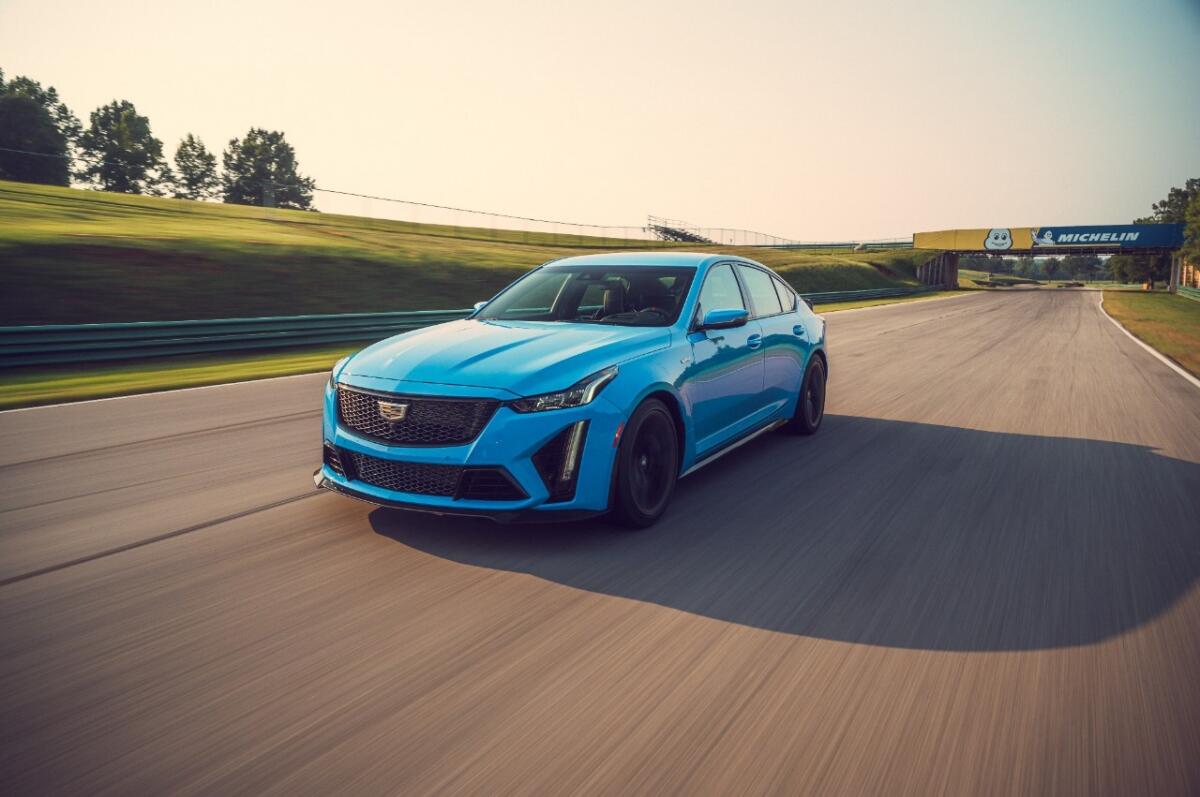
Cadillac CT5
"So Cadillac builds a CT4 and CT5, a small and midsize sedan. CT4 is going away soon, but the CT5 is coming back on heavily redone architecture."
The Cadillac CT5 is Cadillac’s midsize sedan. The discussion is that it’s coming back with a much bigger redesign underneath.
The Cadillac CT5 is a midsize sedan from Cadillac. Here, the hosts say the CT5 is returning with heavily redone architecture, meaning a major platform update rather than just a refresh.
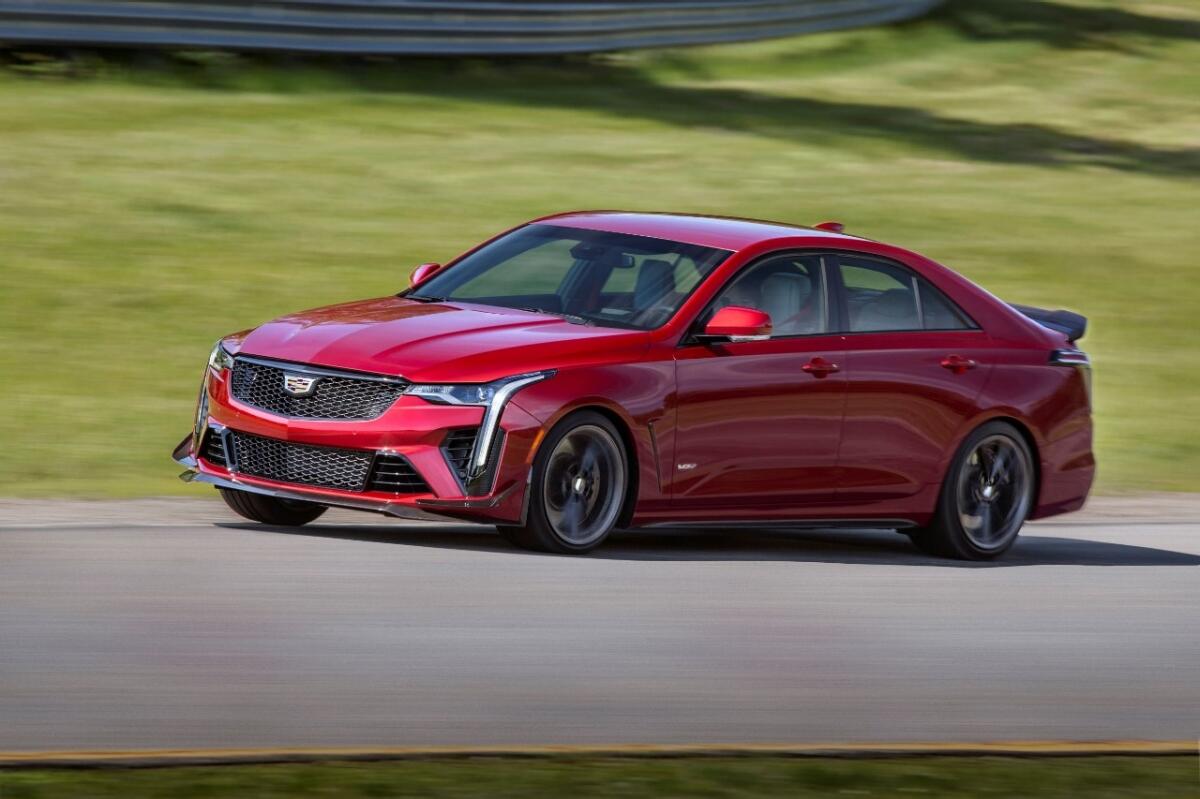
Cadillac CT4
"So Cadillac builds a CT4 and CT5, a small and midsize sedan. CT4 is going away soon, but the CT5 is coming back on heavily redone architecture."
The Cadillac CT4 is a smaller sedan made by Cadillac. The hosts are saying the CT4 is expected to be discontinued soon.
The Cadillac CT4 is a compact sedan from Cadillac. In this segment, it’s mentioned as part of Cadillac’s sedan lineup, with the CT4 described as going away soon.
Alpha 2 architecture
"It's called the Alpha 2 architecture. That architecture probably needs more volume to justify its existence than just Cadillac can give it."
An “architecture” is basically the car’s main underlying design—its platform. The point here is that it only makes sense if the automaker sells enough cars to justify the development cost.
“Alpha 2 architecture” refers to a shared vehicle platform used to underpin multiple models. The hosts are pointing out that new architectures need enough production volume to be financially worthwhile, otherwise the cost of developing and supporting the platform can’t be spread out.

Cadillac CT6
"And we've been watching Cadillac stuff, strange V8s under the hood of their CT4 [369.1s] and CT6."
The Cadillac CT6 is a full-size luxury sedan. Here, the hosts connect it to “strange V8s under the hood,” suggesting Cadillac is experimenting with engine configurations in its sedan lineup.
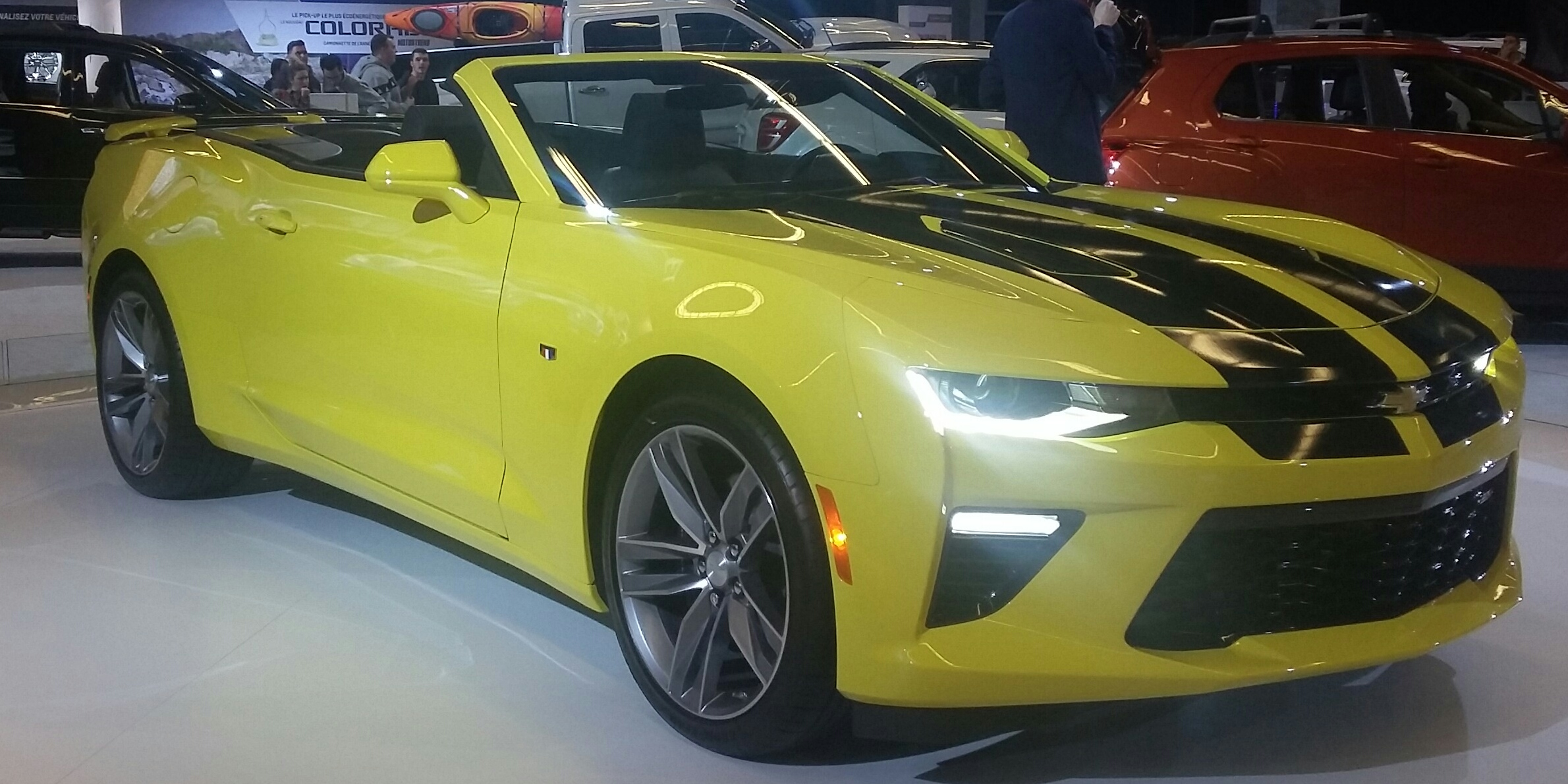
Chevrolet Camaro
"So a CT5, I'm sorry, whatever Camaro comes out of this, if a Camaro comes out [374.9s] of this, could be really cool."
The Chevrolet Camaro is a well-known performance car. They’re speculating about a new Camaro and whether it could be exciting.
The Chevrolet Camaro is a performance-focused sports coupe/pony car. The hosts speculate that “whatever Camaro comes out of this” could be “really cool,” implying a potential new Camaro product direction tied to the sedan discussion.
higher gas prices
"And, um, especially when we're talking about higher gas prices, whether it's [386.5s] for the moment or forever, um, you know, I think that people are looking for"
When gas gets expensive, people often change what they buy. Here, they’re saying expensive fuel may push shoppers toward smaller, more efficient-feeling cars like sedans.
Higher gas prices can shift consumer demand toward vehicles perceived as more efficient or more practical for daily use. In this segment, the hosts connect fuel-cost pressure to interest in smaller sedans versus crossovers.
all wheel drive
"You get more space on a, on a footprint. [404.5s] You get all wheel drive. [406.1s] You get this look of utility."
All wheel drive means the car can send power to all four tires. That helps it grip better on slippery roads, which is one reason people like crossovers.
All wheel drive (AWD) sends power to all four wheels, improving traction in low-grip conditions like rain, snow, or loose surfaces. In this segment, it’s cited as one reason consumers moved toward crossovers.
lower center of gravity
"but, but sedans, you know, they're a [426.6s] little sportier, they can be more fun to drive, lower center of gravity. [430.5s] They're easier to make sporty."
A lower center of gravity means the car feels less top-heavy. That usually helps it handle more confidently when you drive it more aggressively.
A lower center of gravity means the car’s mass sits closer to the ground. That typically helps reduce body roll and can make a sedan feel more stable and “sporty” compared with taller vehicles.

Buick Century
"...ck was a sedan manufacturer for decades, almost a century. So it's so weird that they're not in that busine..."
The Buick Century was a sedan model made by Buick for many years. A sedan is a car with a separate trunk for luggage. The podcast mentions it because it’s unusual to hear about a model like that when the brand doesn’t offer that kind of car anymore.
The Buick Century was a long-running midsize sedan line from Buick, produced for decades and known for being a mainstream family car. It comes up in the podcast because the host is surprised Buick isn’t still in that sedan business. The discussion is likely about how Buick’s lineup has changed over time and what that means for the brand’s identity.

Land Rover Defender
"So you have all of these Land Rover defenders of the trophy edition where they would then, um, play like off-roading and they'll, you know, and, but there were still teams to exercise this here because you had to build a bridge to drive the Land Rover defender over, or you use the defender to, um, pull up blocks"
The Land Rover Defender is a tough off-road SUV. Here it’s used like a “workhorse” for obstacles, showing how it can crawl and pull through rough, uneven stuff.
The Land Rover Defender is a rugged, off-road-focused SUV known for its ability to handle rough terrain. In this segment, it’s used in obstacle-style activities like building a bridge and pulling blocks, which highlights its low-speed traction and durability in off-road conditions.
off-roading
"So you have all of these Land Rover defenders of the trophy edition where they would then, um, play like off-roading and they'll, you know, and, but there were still teams to exercise this here"
Off-roading means driving on rough ground that isn’t a normal paved road. It’s about getting traction and control when the surface is uneven or tricky.
Off-roading is driving on unpaved or uneven terrain like dirt, rocks, mud, and sand where normal road tires and suspension travel can struggle. It typically emphasizes traction, ground clearance, and controlled low-speed maneuvering—exactly the kind of challenges described with bridges and pulling obstacles.
Camel Trophy
"those guys that were helping to guide us through these situations... were instructing us on how to drive these vehicles... had competed in the Camel Trophy."
The Camel Trophy was an off-road contest where teams had to drive and navigate in very tough, remote places. The point is that these instructors had proven experience in extreme conditions.
The Camel Trophy was a long-running off-road competition that tested teams’ navigation, endurance, and vehicle-handling skills in remote terrain. Mentioning it here signals that the instructors had real-world, high-stakes off-road experience—not just casual driving knowledge.
Jeep
"And that's if you have a brand like Jeep or if you have a brand like Land Rover, you know, you kind of need to build on that... Jeep had similar guys with similar experience, so that worked pretty well."
Jeep is a car brand that’s famous for off-road vehicles. In this part, they’re saying Jeep had similar experienced instructors to help people drive in tough conditions.
Jeep is an American brand strongly associated with off-road driving and rugged 4x4 vehicles. The segment uses Jeep as a parallel to Land Rover, saying Jeep also had experienced people guiding drivers through difficult situations.
110
"The interesting thing about the Trophy Defender, and it's only based on the 110, which is the regular length for Ford or vehicle."
In Land Rover Defender terminology, “110” refers to the wheelbase length class (the distance between the front and rear axles). Wheelbase affects stability, ride behavior, and how the vehicle fits cargo and equipment—important for off-road competition setups.
Alcantara headliner
"It actually gets like weird luxury upgrades, like Alcantara headliner and stuff. Like, that is so weird."
A headliner is the material on the car’s ceiling. Alcantara is a fancy, suede-like fabric that looks great, but it may not be as forgiving if you’re constantly getting dirt and scuffs inside.
An Alcantara headliner is the fabric lining on the inside of a car’s roof, made from Alcantara (a suede-like synthetic material). It’s often chosen for its soft feel and premium look, but it can be less practical for muddy/off-road use because it can show wear or stains.
heated seats
"Also, you know, I mean, just because you're driving off road, doesn't mean you don't want heated seats. You probably absolutely want heated seats, especially."
Heated seats are seats with built-in heat. They warm you up, which matters when it gets cold—like at night in deserts.
Heated seats use electric heating elements in the seat cushions to warm you up. They’re especially useful in cold climates or at night, which is why the hosts connect them to desert/off-road scenarios where temperatures can drop quickly.
cooled seats
"Well, or cooled seats. And by the way, the desert gets really flipping cold at night."
Cooled seats are seats that help keep you from overheating. They’re useful when it’s hot outside because they can blow air or otherwise pull heat away.
Cooled seats use ventilation and/or refrigeration-like systems to remove heat from the seat surface. They’re helpful in hot climates because they reduce how much the seat feels like it’s “holding onto” heat.

Lexus Gx
"Like, I remember many moons ago driving the Lexus GX and it had the cool box in the front where you could turn your armrest cubby into a refrigerator, essentially, and people are like, why would you put that in a vehicle that's going to go off road?"
The Lexus GX is a luxury SUV that’s also meant to handle rough roads. The point here is that it had a built-in cool box in the front so you could keep drinks cold.
The Lexus GX is a midsize luxury SUV known for combining off-road capability with comfort-focused features. In this segment, the hosts highlight a GX-specific convenience item: a front “cool box” that can turn an armrest cubby into a refrigerator-like storage area.
short wheelbase
"The Range Rover SE short wheelbase P3 530. [868.4s] That's so much name."
“Short wheelbase” just means the car is shorter from front wheels to rear wheels. That usually makes it easier to turn and maneuver, while longer versions tend to feel roomier in the back.
“Short wheelbase” describes a vehicle configuration with a shorter distance between the front and rear axles. Compared with a long-wheelbase layout, it typically improves maneuverability and turning feel, while long-wheelbase versions often prioritize rear-seat space and ride smoothness.
Range Rover lineup confusion (Range Rover vs Range Rover Sport vs other variants)
"we should identify that vehicle that when we say Range Rover, this is the [888.0s] car. [890.5s] Extremely confusing lineup there is made up of different vehicles, including Range Rover, Range Rover Sport, Range Rover Valar, Range Rover Evoke. [898.7s] But the Range Rover is the top of the line."
They’re saying the “Range Rover” name gets used for several different SUVs. You have to pay attention to the exact name (like Sport) because they’re not the same vehicle.
This segment highlights how the Range Rover nameplate is used across multiple related models—like Range Rover, Range Rover Sport, and other variants—so “Range Rover” can be confusing without the exact suffix. The base “Range Rover” is positioned as the top-of-the-line model in the family.

Land Rover Discovery Sport
"...ange Rover. You know, you have the Discovery, the Discovery Sport, you have the Defender 110, the Defender."
The Discovery Sport is a Land Rover SUV that’s smaller than some of the brand’s bigger models. It’s meant to be a practical vehicle for everyday driving while still having the brand’s off-road capability. The podcast lists it to help distinguish it from other Land Rover SUVs.
The Land Rover Discovery Sport is a smaller, more compact SUV in the Discovery family, designed to offer Land Rover’s practicality with a size that’s easier to live with. It’s mentioned alongside other Land Rover models, which highlights how the brand structures its lineup by size and capability. The podcast context suggests they’re clarifying the different Discovery/Defender/Range Rover options.
turbocharged eight cylinder engine
"So this was equipped with a 4.4 liter turbocharged eight cylinder engine, [995.2s] 523 horsepower, 553 pound feet of torque. [999.0s] It was so smooth, so fast, so fun to drive."
“Turbocharged” means the engine uses a device to push extra air into the cylinders, which helps it make more power. “Eight cylinder” just means it has eight combustion cylinders.
A turbocharged eight-cylinder engine uses a turbocharger to force more air into the cylinders, allowing the engine to make more power than a non-turbo setup of the same displacement. The host is describing the specific powertrain they drove: a 4.4-liter V8 with turbocharging.
torque
"523 horsepower, 553 pound feet of torque. [999.0s] It was so smooth, so fast, so fun to drive."
Torque is the engine’s “pulling strength.” Higher torque usually helps a car feel quicker, especially when you’re not already at high speed.
Torque is the engine’s twisting force, which strongly influences how quickly a vehicle accelerates, especially at lower speeds. The host cites torque (553 pound-feet) alongside horsepower to describe why the car felt “so fast.”
nibble side
"It drove small. It was definitely more on the nibble side of things."
When someone says a car feels “nimble,” they mean it steers and changes direction quickly. It’s about how responsive it feels, especially at low speeds.
“Nimble” (and phrases like “nibble side”) describe how quickly a car responds to steering inputs and changes direction. It’s a subjective feel that often correlates with steering calibration, chassis stiffness, and how the vehicle’s weight shifts during cornering.

Range Rover
"And I thought I was going to have problems with the Range Rover, but I did not. And part of that is because it is a little bit, it feels like a little bit narrower than some of the wider, large SUVs, but the turning radius and everything on this just made it feel so sharp and so nimble."
A Range Rover is a big luxury SUV. Here, the point is that even though it’s large, it can still be easy to steer and park in tight spaces.
The Range Rover is Land Rover’s large, luxury SUV known for its comfort and on-road manners. In this segment, the host focuses on how the Range Rover feels “nimble” in tight city parking, which comes down to steering response and overall maneuverability rather than just size.
turning radius
"but the turning radius and everything on this just made it feel so sharp and so nimble."
Turning radius is how tight the car can turn. The smaller it is, the easier it is to park in narrow spots.
Turning radius is the smallest circle a vehicle can make when steering at full lock. A smaller turning radius generally makes parking and tight maneuvers easier, which is why it matters in dense cities.
as tested price
"It was funny because I was I'm talking about the price. Oh, yeah. OK, that is certainly a little bit bad news. The the price is 100 and 55000 dollars. That's the as tested price of this vehicle."
As-tested price is what that exact car costs with its specific options. It helps you compare the real price of the car they drove, not just the starting price.
As-tested price is the total cost of a specific vehicle configuration including options and any included packages, not just the base model price. It’s useful because two cars with the same nameplate can cost very different amounts depending on trim and add-ons.
windshield washer fluid
"And the only thing I think I really found on this vehicle that I did not like was the way the windshield washer fluid is dispersed. It comes through the windshield wipers themselves."
This is the liquid that gets sprayed onto your windshield to clean it. In this case, the host says the system sprays in a way that doesn’t leave enough fluid on the glass when you’re driving fast.
Windshield washer fluid is the liquid sprayed onto the windshield to help dissolve and wash away road grime like bugs. How it’s delivered matters: if it’s routed through the wipers/wiper arms, it can miss the glass at highway speed and end up spraying past the windshield.
windshield wipers
"It comes through the windshield wipers themselves. And if you're driving 70 miles an hour on the highway and you're trying to get this liquid on your windshield to get rid of the bug guts, you're invariably going to get between Indianapolis and Chicago."
Windshield wipers are the blades that wipe the windshield. The host is pointing out that the washer fluid is going through the wiper system, which affects cleaning effectiveness.
Windshield wipers are the blades and linkage that sweep across the glass to clear water and debris. Some cars also integrate washer delivery with the wiper system, which can change how well bugs and grime get cleaned at speed.
heated washer fluid
"But I usually like that when the when the fluid comes out of the wiper arms themselves, usually that's heated as well, which makes that great for winter. But if you're stopped, it's great."
Some cars warm the washer fluid so it works better in winter. The host says it’s helpful when you’re stopped, but not as good when you’re driving fast.
Heated washer fluid (or heated washer components) warms the fluid so it sprays effectively in cold weather and helps prevent freezing on the windshield. The host contrasts this benefit at a stop versus reduced effectiveness at highway speed.
V8
"These V8s are now BMW engines. Yeah. They're sourced by BMW."
A V8 is an engine with eight cylinders. The segment is about which V8 engine is being used—specifically, they say BMW is supplying the V8s for these vehicles.
A V8 is an engine with eight cylinders arranged in a “V” shape. In this segment, the hosts discuss how V8s are being sourced from BMW and how that changes which V8 is used across certain luxury SUVs.
sourced by BMW
"These V8s are now BMW engines. Yeah. They're sourced by BMW."
“Sourced by BMW” means the car is using an engine that BMW makes and supplies. It’s basically outsourcing the engine to another company.
“Sourced by” means the engine is supplied by another manufacturer rather than built in-house. Here, the hosts are describing a cross-brand sourcing arrangement where BMW provides the V8 powerplant for these vehicles.
simplify and add lightness
"...the prime example of his mantra of simplify and add lightness. And still to this day, you hear people at Lotus and others talking about this idea of adding lightness..."
“Simplify and add lightness” is Colin Chapman’s guiding design philosophy at Lotus. The idea is that removing unnecessary complexity and reducing mass improves how a sports car accelerates, brakes, and handles.
weight is the enemy
"...anyone who's making a sports car knows that weight is the enemy of of everything."
This means heavy cars tend to feel slower and less agile. Less weight usually helps the car accelerate, brake, and turn more easily.
In performance car design, “weight is the enemy” means extra mass makes the car harder to accelerate, harder to stop, and generally less responsive in corners. It’s especially relevant for sports cars where driver feel and agility matter as much as raw power.

Caterham 7
"In fact, effectively, the Lotus 7, as it was, finished its run then [1418.0s] and really Caterham took over with the with the Caterham 7. [1421.3s] And that was 1973 in the UK."
The Caterham 7 is a very simple, lightweight sports car. It’s designed to feel raw and fun to drive, with the driver doing most of the work.
The Caterham 7 is a lightweight, minimalist sports car descended from the Lotus 7 concept, built around the idea of “elemental” driving. Caterham continued the 7 after the Lotus 7’s original run, and it became known for being extremely driver-focused with minimal distractions.

Lotus 7
"In fact, effectively, the Lotus 7, as it was, finished its run then [1418.0s] and really Caterham took over with the with the Caterham 7."
The Lotus 7 is an early, very lightweight roadster. It’s known for being simple and focused on how it feels to drive.
The Lotus 7 is the original small, lightweight roadster that Caterham effectively continued. It’s famous for the “bare-bones” approach—prioritizing driver feel and simplicity over modern comfort and electronic aids.
elemental driving experience
"There's the person who's looking for that elemental driving [1475.5s] experience. And as you know, that today it's hard to get into a car [1480.2s] that doesn't have some sort of assistance, right?"
An “elemental” driving experience means the car feels simple and direct. You get more feedback from the road and less help from electronics.
An “elemental driving experience” refers to a stripped-down, driver-centric way of driving where the car relies less on electronic and power-assist systems. The focus is on direct mechanical feedback—how the car responds to steering, throttle, and braking—rather than on safety/comfort tech.
power steering
"And as you know, that today it's hard to get into a car [1480.2s] that doesn't have some sort of assistance, right? [1483.2s] Even, you know, power steering, power assisted brakes, you know,"
Power steering helps you turn the wheel with less effort. Without it, steering takes more strength, especially at low speeds.
Power steering uses a motor or hydraulic system to reduce the effort needed to turn the steering wheel. It makes low-speed maneuvering and parking easier, which changes the driving feel compared with manual steering.
power assisted brakes
"Even, you know, power steering, power assisted brakes, you know, [1487.8s] ABS, et cetera, et cetera."
Power assisted brakes make it easier to slow the car down. They help you press the pedal and get stronger braking without as much leg force.
Power assisted brakes (typically via a brake booster) use engine vacuum or an electric system to multiply the driver’s braking force. This reduces pedal effort and helps braking feel consistent, especially in stop-and-go driving.
ABS
"Even, you know, power steering, power assisted brakes, you know, [1487.8s] ABS, et cetera, et cetera."
ABS helps stop the wheels from locking up when you brake hard. That can help you keep steering control instead of sliding.
ABS (anti-lock braking system) prevents the wheels from locking up during hard braking. By rapidly modulating brake pressure, it helps maintain steering control and reduces the chance of skidding.
one-make series
"So Caterham has got a very successful one make and multi make series running in the UK."
A one-make series is a race where lots of drivers compete in the same kind of car. Because the cars are similar, it’s easier to compare drivers and tuning choices. That’s why it can build a tight fan and owner community.
A one-make series is a racing format where most competitors drive the same brand/model (often with similar rules and parts). That reduces differences in car design so driver skill and setup choices matter more. The hosts use it to explain why Caterham has a strong racing community.
multi-make series
"So Caterham has got a very successful one make and multi make series running in the UK."
A multi-make series is a race where different brands of cars compete together. The rules are meant to keep the competition fair even though the cars aren’t identical. The hosts mention it to show Caterham’s racing presence beyond just one model.
A multi-make series is a racing format where different car brands/models compete under a common rule set. Balance-of-performance measures or class rules are often used so no single design dominates. The hosts mention it alongside Caterham’s one-make racing to describe the broader ecosystem.
Nürburgring 24 hour race
"we were actually Caterham was at the Nürburgring for the 24 hour race. This is just this last weekend, the big one where Max was was driving."
The Nürburgring 24 Hours is a long-distance race where cars have to keep going for a full day. It’s not just about being fast once—it’s about staying consistent and finishing. The hosts bring it up to show Caterham is involved in serious racing.
The Nürburgring 24 Hours is a famous endurance race held at Germany’s Nürburgring circuit. Endurance racing emphasizes reliability, consistent lap times, and efficient driving over outright sprint speed. The segment uses it to frame Caterham’s credibility and racing participation.
Nordschleife
"we launched a special edition Caterham Nürburgring to celebrate our our participation in numerous races at the at the Nordschleife."
The Nordschleife is the famous Nürburgring track section that’s known for being tough and unpredictable. Drivers and cars are really tested there because it’s long and challenging. Mentioning it signals that Caterham’s racing heritage is tied to one of the hardest tracks in the world.
The Nordschleife is the “north loop” section of the Nürburgring, known for being long, fast, and extremely demanding. It’s a benchmark track where car balance, braking stability, and driver confidence are tested. The hosts mention it to explain why a Nürburgring special edition Caterham matters.
Ford Duratec engine
"Yes. So that's that's correct. So so in the United States, we bring it in with the Ford two liter Duratec engine."
The Ford Duratec is Ford’s engine design. In this case, they’re saying the car uses a 2.0-liter Duratec engine, which helps determine how much power the lightweight car can produce.
The Ford Duratec is Ford’s family of gasoline engines used across multiple models. Here it’s mentioned as the engine used in the Caterham for the U.S. market, specifically the “Ford two liter Duratec,” which sets the baseline for how the car makes power.
power to weight ratio
"But the car itself is about half a ton in weight. So the power to weight ratio is is equivalent to a supercar."
Power-to-weight ratio is basically how strong the car is compared to how heavy it is. A lighter car with decent power can feel very quick because there’s less weight to move.
Power-to-weight ratio is the relationship between an engine’s output (power) and the car’s mass. A higher number generally means the car accelerates more easily and feels more responsive, which is why lightweight cars can feel “supercar-like” even with modest engines.
horsepower per ton
"And in fact, the the the naming of the cars is, you know, we have the 420, for example, which is, you know, relates to horsepower per ton."
Horsepower per ton is a simple performance math: how much power you have compared to how heavy the car is. The hosts say Caterham’s model numbers are meant to reflect that idea.
Horsepower per ton is a way to express performance potential by dividing engine power by vehicle weight. Caterham’s naming (like “420”) is described as relating to this metric, tying the model name directly to the car’s power-to-weight emphasis.
narrow body and a wider body chassis
"in fact, to excuse me, two chassis. A narrow body and a wider body chassis. And actually, they they're pretty they're pretty accommodating."
A narrow-body vs wider-body chassis refers to different body widths built on the same basic lightweight platform concept. Width can affect stability, tire size options, and how the car fits its intended setup (track vs road feel).
roll cages
"To help you get in there's various types of roll cages that you can fit to the car, whether you're going full racing or just or just out on the road."
A roll cage is a strong metal frame inside the car. It helps protect you if the car tips over or crashes hard, which is why it’s common on track-focused cars.
A roll cage is a reinforced metal frame installed inside a car to protect occupants during rollovers or hard impacts. Caterham-style cars often use roll cages because they’re designed for track use, where structural rigidity and driver safety matter more than everyday comfort.
sequential shift gearbox
"Only only manual transmission, although when you get up to the higher model, we do offer a sequential shift gearbox as well."
A sequential gearbox means you shift one gear at a time in order—like stepping up or down. People like it in racing because it can be quicker and easier to do repeatedly.
A sequential shift gearbox lets you move through gears in order (typically up or down one gear at a time), rather than using a traditional H-pattern gate. It’s often used in racing because it can make gear changes faster and more consistent under load.
manual five speed transmission
"But they come in primarily would be with the manual five speed transmission, which is a Mazda transmission and afford a DuraTek two liter engine."
A manual five-speed means you use a clutch and shift through five forward gears. Here it’s mentioned as the drivetrain option that comes with the engine they’re describing.
A manual five-speed transmission is a gearbox where the driver selects gears using a clutch and a gear lever, with five forward ratios. In this context, it’s part of the specific drivetrain package the speaker says is paired with the Caterham’s engine.
DuraTek two liter engine
"which is a Mazda transmission and afford a DuraTek two liter engine."
A “two liter” engine is one with about 2.0 liters of displacement, which is a basic measure of engine size. “DuraTek” here is the name of the particular engine setup Caterham is using.
“DuraTek” refers to a specific engine family/variant used in some Caterham builds, and “two liter” describes the engine’s displacement (about 2.0 liters). Displacement is a key spec because it influences how much air/fuel the engine can move and how it tends to make power and torque.
kick car regulations
"We come in under the kick car regulations. So what you would do is we have seven dealers in the United States."
This is a set of U.S. rules that can make it possible to import and sell certain niche cars. The speaker is saying Caterhams fit under those rules, which is why there are U.S. dealers.
“Kick car regulations” refers to a U.S. import pathway that allows certain low-volume vehicles to be brought in under specific rules, often involving how the vehicle is certified and assembled. The host ties it to how Caterhams can be sold through U.S. dealers despite being imported in kit/chassis form.
marry the two together
"So you bring in the the chassis is imported as one piece. And then the powertrain is imported separately under a separate invoice. And then the dealer helps marry the two together."
They’re describing how the car arrives in pieces: the chassis comes in separately from the engine/drivetrain. Then the dealer puts them together to make a complete car.
In kit-car style distribution, “marry the two together” means combining the imported chassis with the separately imported powertrain (engine and drivetrain components). This matters because it changes how the vehicle is shipped, invoiced, and assembled by the dealer.
Mount Tune
"We work with Mount Tune in California as our as our engine provider. And Mount Tune have been have worked on four engines you throughout their entire existence."
Mountune is an engine-preparation company that works with specific manufacturers and platforms. In this segment, the host says Mountune is the engine provider and references their history of working on engines over time.
1957 replica law
"But basically sometimes catering's come in under a 1957 replica law. So so it's home. Oh, interesting. Yeah. So sometimes it comes in as a 57 replica, which is what they are."
Some states let certain kit cars be registered as replicas of an older model. That can make the paperwork and inspection rules different from registering it as a completely new car.
In some states, a kit car or Caterham-style build can be registered under a “replica” pathway that treats it like a reproduction of an older vehicle. That can change how the car is inspected and titled compared with registering it as a brand-new vehicle.
kit car regulations
"Or sometimes it will come in just under the kick car regulations. So in California, for example, SB 100 is the is the registration process for there. Other states have had different different rules and regulations."
Kit car regulations are the rules states use to allow cars built from kits to be legally registered. Different states can handle the same kit car in different ways.
“Kit car regulations” are the legal rules a partially assembled or kit-based vehicle must follow to be titled and registered. Depending on the state, the same basic vehicle can be processed differently—either as a replica or under kit-car rules—affecting inspections and compliance requirements.
SB 100
"So in California, for example, SB 100 is the is the registration process for there. Other states have had different different rules and regulations."
SB 100 is a California law that lays out how certain special vehicles (like replicas or kit builds) get registered. It affects what steps you have to do to make it legal to drive.
SB 100 is a California law that sets the process for registering certain vehicles—often including replicas or kit-based builds—so they can be inspected and titled. In practice, it determines what paperwork and compliance steps you must complete with the state.
chassis numbers
"But the cars come in with bins and chassis numbers. And and, you know, you work with your dealer"
Chassis numbers are identification marks on the car’s frame. They help the state and paperwork systems confirm you’re registering the correct vehicle.
Chassis numbers (often used interchangeably with vehicle identification markings) are the stamped/assigned identifiers tied to the vehicle’s frame or structure. They’re important for matching the car to its paperwork during import, assembly, and registration.
powertrain
"you work with your dealer to bring both the powertrain and the chassis in, bring them together and then take it down to DMV and other inspections"
Powertrain is the set of parts that make the car move—like the engine and the parts that send power to the wheels. For a kit build, you have to get both the powertrain and the chassis together.
Powertrain refers to the components that generate and deliver driving force—typically the engine, transmission, driveshaft, differential, and related hardware. In a kit/replica context, it’s one of the major groups that must be imported and assembled to make the car functional.
DMV and other inspections
"bring both the powertrain and the chassis in, bring them together and then take it down to DMV and other inspections and get it on the road."
DMV inspections are the checks a state requires before you can register and drive the car legally. For special builds, the rules can be stricter and vary depending on where you live.
DMV inspections and related compliance checks are the steps required to verify that a vehicle meets state rules before it can be driven legally. For kit or replica builds, these inspections often focus on safety and emissions/compliance requirements that vary by state.
VIN number
"No, no, absolutely not. No, you bring it in, you make it, it gets a VIN number."
A VIN number is like a car’s unique ID code. Once the car has a VIN, it can be officially registered and tracked by the government.
A VIN (Vehicle Identification Number) is the unique 17-character code used to identify a specific vehicle for registration, insurance, and legal tracking. Getting a VIN is a key step in making a car officially recognized by the government.
import tariffs and duties
"But typically a catering today with import tariffs and duties and other and other factors going in will typically be somewhere between the 80 and 100 thousand dollar price range."
When a car is brought into the U.S. from another country, the government can charge extra fees. Those charges can make the car cost more than it would in its home market.
Import tariffs and duties are government taxes and fees applied to goods when they cross international borders. For a niche car brand like Caterham, these costs can significantly raise the final price in the U.S., especially when combined with other logistics and compliance factors.
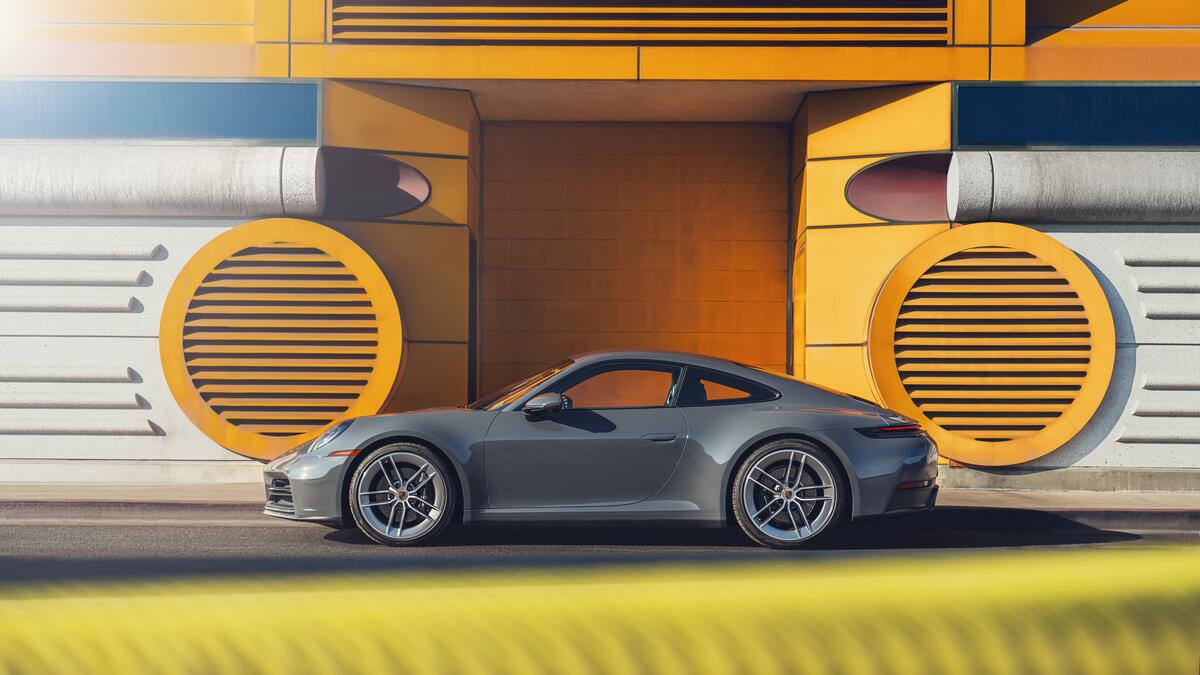
Porsche 911
"...d see a catering sit very comfortably alongside a 911 GT3 RS or a Ferrari or so forth. So we're we're w..."
The Porsche 911 is a sports car known for being fast and fun to drive. There are different versions, including ones built for track performance. The podcast mentions the 911 GT3 RS to highlight how serious that performance level is.
The Porsche 911 is a long-running sports car famous for its distinctive design and performance. It’s significant in automotive culture because it has a wide range of high-performance variants and remains a benchmark for driving feel. The podcast references a 911 GT3 RS alongside other performance cars, indicating they’re discussing how the 911 fits into a lineup of serious track-oriented machines.
Harley Davidson
"So we're we're we're really if you think about, you know, who's been buying Harley Davidson's, why they buy Harley Davidson. It's not a it's not the only thing you have in your garage."
Harley-Davidson makes motorcycles. The hosts are using it as an example of a hobby vehicle people keep for fun, not just commuting.
Harley-Davidson is a motorcycle brand best known for big, V-twin cruiser bikes and a strong owner community. In the segment, it’s used as an example of a “second vehicle” lifestyle—something people keep for enjoyment rather than daily use.
multi-car enthusiast garage
"So catering really fits in that multi car enthusiast garage. Not exclusively. We've got people that just have a catering and maybe one other more practical car. But typically, we think that catering is going to go to multi car enthusiast households."
This is the idea that some enthusiasts keep more than one car: a practical daily driver plus a dedicated fun car for weekends or track days. The hosts use Caterham as an example of a car that fits that kind of household setup.
go carts
"They are the most fundamentally basic things. They are go carts with like 100 or 200 horsepower engines. They're absurd. Yeah. And they're cool."
A “go-kart” comparison means the car feels light and easy to steer, like a small track toy. It’s usually about how it feels to drive, not about the car literally being a go-kart.
“Go-kart” is a comparison used in car talk to describe a vehicle that’s extremely light and feels mechanically simple and direct. When hosts say a car is “go-kart-like,” they’re usually pointing to quick steering response and a driver-focused feel rather than luxury comfort.

Acura Mdx
"Number one bestseller in the Q one of 2026, the Acura MDX or the Genesis GV 80. Oh, two very good vehicles. ... I'm going to say the MDX. Correct."
The Acura MDX is a midsize SUV with three rows of seats, so it can carry a family. Here, the hosts are talking about how well it sold compared with a similar luxury SUV from Genesis.
The Acura MDX is a three-row midsize crossover SUV from Acura, aimed at buyers who want family space with a more upscale feel than many mainstream competitors. In this segment, it’s compared directly against the Genesis GV80 to discuss which model sold better in Q1 2026.

Genesis GV 80
"Number one bestseller in the Q one of 2026, the Acura MDX or the Genesis GV 80. Oh, two very good vehicles. ... Now, do you know if the GV 80 is just the SUV or if it's also including the Coupe? It probably includes the Coupe."
The Genesis GV80 is a luxury SUV that’s meant to feel more upscale than typical family SUVs. In this segment, it’s compared to the Acura MDX for which one sold better, and they briefly discuss whether the sales include the GV80 Coupe version.
The Genesis GV80 is a luxury midsize crossover SUV positioned as a premium alternative to mainstream three-row family SUVs. The hosts discuss it alongside the Acura MDX as a top seller in Q1 2026, and they also mention the GV80 “Coupe” variant as part of the sales question.
Q one of 2026
"Number one bestseller in the Q one of 2026, the Acura MDX or the Genesis GV 80."
“Q1” just means the first part of the year—January through March. So the sales comparison here is based on that early-2026 time period.
“Q1” (the first quarter) refers to the first three months of a year, used for sales rankings and business reporting. Saying “Q1 of 2026” means the comparison is based on sales during that specific January–March window.

Mercedes-Benz E-Class
"[2343.0s] The BMW five series or the Mercedes Benz E-Class. [2347.5s] Hmm. [2348.8s] Once the bread and butter of those lineups, now they're [2352.5s] kind of drifting slowly into obscurity."
The Mercedes-Benz E-Class is a mid-size luxury car from Mercedes. The hosts are saying it used to be a top seller, but it’s not as popular as before.
The Mercedes-Benz E-Class is Mercedes’ midsize luxury sedan, positioned between entry luxury and larger flagship models. Here it’s discussed alongside the BMW 5 Series as a model line that used to sell strongly but is now “drifting” as buyer preferences shift.

BMW 5 Series
"[2343.0s] The BMW five series or the Mercedes Benz E-Class. [2347.5s] Hmm. [2348.8s] Once the bread and butter of those lineups, now they're [2352.5s] kind of drifting slowly into obscurity."
The BMW 5 Series is a mainstream luxury sedan from BMW. The hosts are basically saying it used to sell a lot, but it’s not as dominant as it once was.
The BMW 5 Series is BMW’s midsize luxury sedan line, known for a balance of comfort and driver-focused handling. In this segment, it’s referenced as a once-popular “bread and butter” model that’s losing momentum versus newer market choices.

Audi 100
"[2380.7s] That goes back to the 100 [2382.4s] The Audi 100 [2385.8s] This is a total shot in the dark here."
The Audi 100 was an older Audi sedan that was important for Audi’s luxury-sedan identity. They’re using it as a reference point for how Audi’s lineup used to be organized.
The Audi 100 was a long-running midsize luxury sedan line that helped establish Audi’s reputation in the European executive-car segment. The hosts mention it as historical context for the “Audi A5/6” midsize sedan discussion, implying how model naming and positioning have evolved over time.

Lincoln Navigator
"Oh, I really liked the Navigator. The refresh that they did. ... I feel like Navigator is kind of underrated."
The Lincoln Navigator is a large luxury SUV made by Lincoln. The hosts say they like the updated version and think more people should pay attention to it.
The Lincoln Navigator is Lincoln’s full-size luxury SUV, famous for its roomy cabin and comfort-focused driving feel. The hosts specifically mention liking the Navigator after a refresh, and they call it “underrated,” highlighting how it competes with the Cadillac Escalade in the same big-luxury-SUV space.

Cadillac Escalade
"The Cadillac Escalade or the Lincoln Navigator, which sold better in Q 12026"
The Cadillac Escalade is a big luxury SUV. It’s the kind of vehicle people buy for comfort and a premium feel, and the hosts compare it to the Lincoln Navigator.
The Cadillac Escalade is a full-size luxury SUV from Cadillac, known for its large dimensions and high-end comfort. In the segment, it’s discussed as a top-selling competitor in the luxury SUV category, compared directly with the Lincoln Navigator.
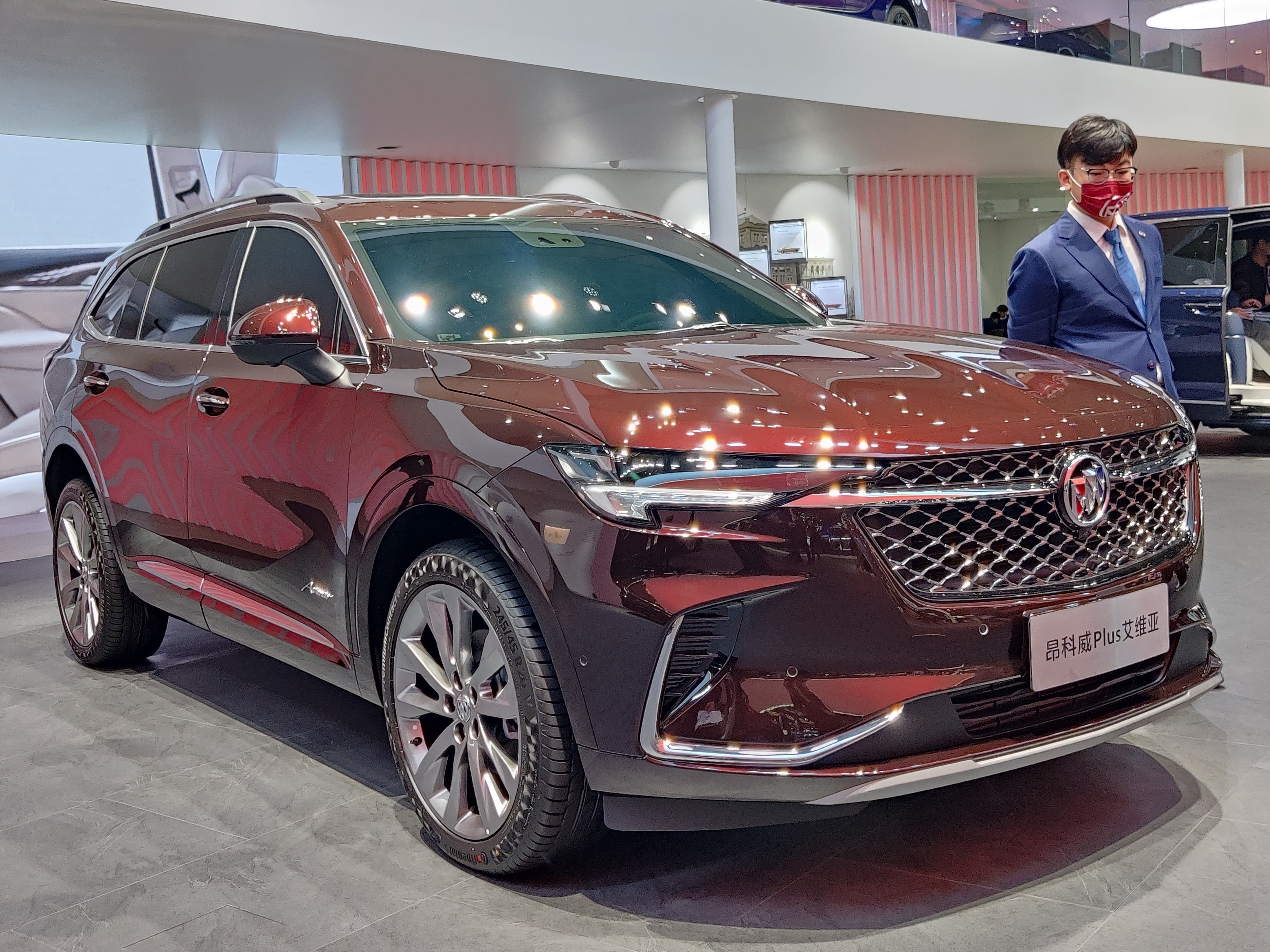
Buick Envision
"Number four, which sold better in Q 12026 the Buick Envision or the Lexus NX? Also both very underrated cars. I've only seen one Envision ever."
The Buick Envision is a smaller luxury SUV/crossover. In this discussion, it’s brought up because its sales are being compared to a Lexus model, and the hosts think it doesn’t get enough attention.
The Buick Envision is a compact luxury crossover SUV positioned as a more mainstream alternative to brands like Lexus. Here it’s compared using first-quarter sales figures against the Lexus NX, with the hosts calling it underrated.

Lexus Nx
"Number four, which sold better in Q 12026 the Buick Envision or the Lexus NX? ... The Lexus NX, dang, 13200 and nineteen. Okay. I don't really think about that vehicle much."
The Lexus NX is a compact luxury SUV/crossover. The hosts mention it in a sales matchup versus the Buick Envision and then note they personally think more about the larger Lexus RX.
The Lexus NX is a compact luxury crossover SUV, typically known for a comfortable ride and a more practical size than larger Lexus models. In this segment it’s part of a sales comparison against the Buick Envision for Q1 2026.

Lexus RX
"Okay. I don't really think about that vehicle much. [2516.3s] I always think about the Lexus RX, the midsize car."
The Lexus RX is a midsize luxury SUV/crossover that’s very popular. Here it’s mentioned because the host says they think of the RX more than the smaller NX.
The Lexus RX is a midsize luxury crossover SUV and one of Lexus’s most mainstream, high-volume models. The host contrasts it with the Lexus NX, saying they personally think of the RX more when discussing this “midsize car” category.
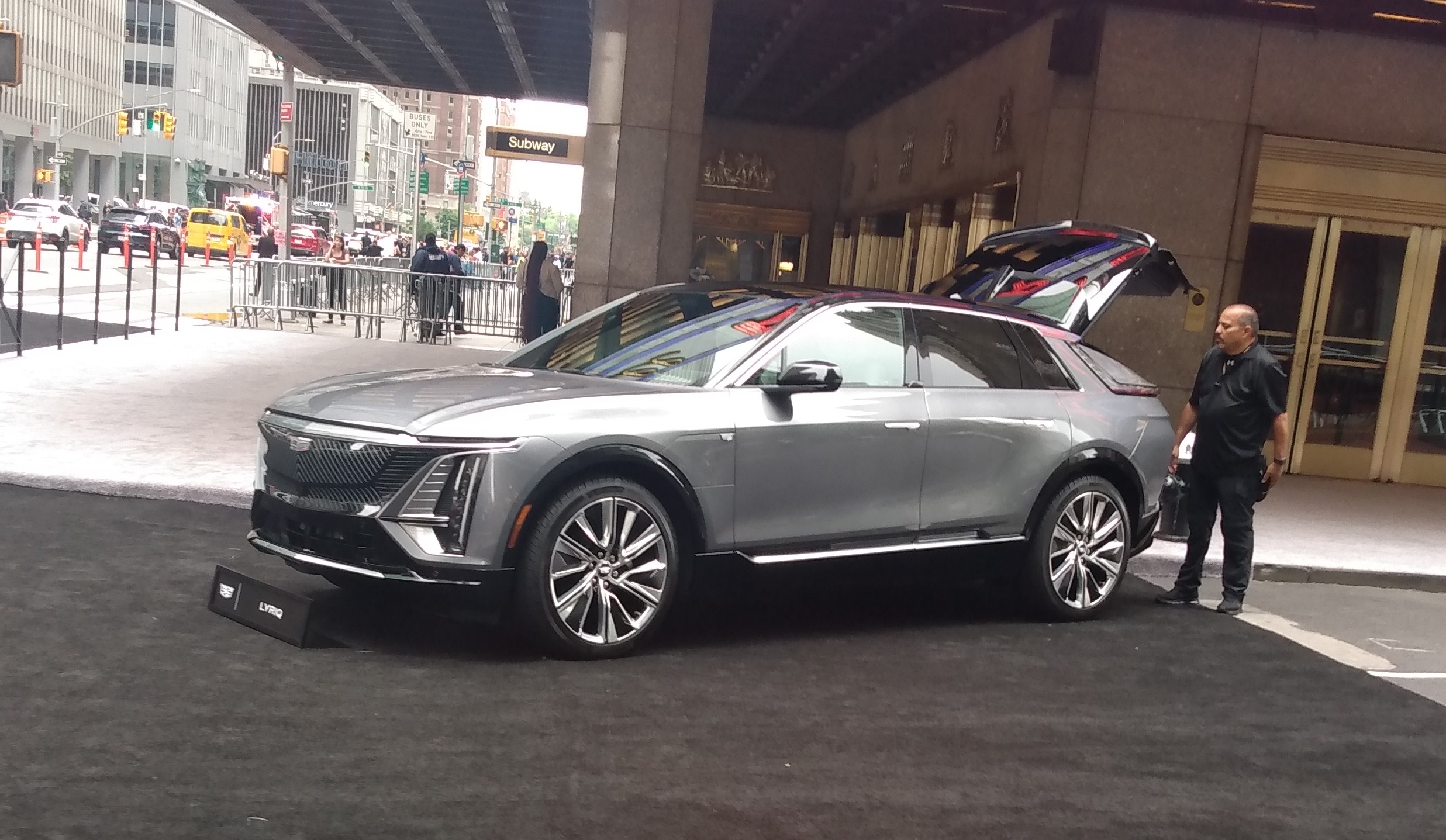
Cadillac Lyric
"Same. I've driven Lyric and OPTIQ, but I haven't driven this. I haven't d..."
The Lyriq is an electric SUV made by Cadillac. “Electric” means it runs on a battery instead of gasoline. The podcast mentions it because someone has driven it and is discussing how it compares to other EVs in Cadillac’s lineup.
The Cadillac Lyriq is an all-electric luxury SUV, part of Cadillac’s push into EVs. In the podcast, it’s referenced alongside other Cadillac electric models, suggesting they’re comparing or discussing the EV lineup and what each one offers. The mention that someone has driven it indicates they’re likely talking about real-world feel and usability.

Cadillac Optiq
"Same. I've driven Lyric and OPTIQ, but I haven't driven this. I haven't driven the ..."
The Optiq is an electric SUV made by Cadillac. It’s smaller than some other luxury SUVs, but it’s still meant to feel upscale. The podcast mentions it as part of Cadillac’s electric lineup, even though the speaker hasn’t driven it yet.
The Cadillac Optiq is an all-electric compact luxury SUV intended to bring EV ownership to a smaller, more accessible size. The podcast groups it with the Lyriq, implying they’re discussing Cadillac’s electric model range and how the vehicles differ. Since the speaker says they haven’t driven this one (while having driven the others), the conversation likely focuses on positioning and expectations rather than firsthand impressions.
car play
"I really like the OPTIQ. They did a nice job with that. Aside from the whole car play thing. I just heard car and drivers review of the Vistik."
CarPlay is Apple’s way of bringing your iPhone’s apps and controls to the car’s screen. Some cars make it work really smoothly, and others feel clunky.
“CarPlay” is Apple’s system that mirrors a compatible iPhone’s key apps and controls onto the car’s infotainment screen. It’s meant to make navigation, calls, and music easier while driving, but different implementations can feel smoother or more annoying depending on the vehicle.

Pontiac Fiero
"...orked. But yeah, you had to go much harder on the Fiero questions for Sam. Yeah."
The Pontiac Fiero is a sports car that was made with a layout that puts the engine closer to the middle of the car. It’s a smaller, two-seat vehicle meant for driving enjoyment. The podcast brings it up as a topic that needs more discussion or specific knowledge.
The Pontiac Fiero is a two-seat sports car that’s remembered for being a distinctive, mid-engine design during its production era. It’s often discussed by enthusiasts because it has a unique layout and a strong following. In the podcast, the “Fiero questions” reference suggests they’re talking about trivia or details related to the car.
Tesla earnings call
"He had excerpts and he did a summary of the Tesla earnings call. Okay. And I listened to that and that was so much less painful than actually listening to a Tesla earnings call."
An earnings call is a meeting where a company like Tesla talks to investors about how it did financially and what it plans to do next. Even if you’re not investing, it can hint at future changes to their cars.
A “Tesla earnings call” is a quarterly investor call where Tesla’s executives discuss financial results and business outlook. For car enthusiasts, it matters because it can include updates on production plans, vehicle programs, and technology priorities that affect what Tesla cars will be like next.

Tesla Semi
"...'s working on, including are you following the EV semi thing?"
The Tesla Semi is an electric truck designed to move goods. Instead of using diesel fuel, it runs on electricity. The podcast brings it up because it’s part of the conversation about whether electric trucks are becoming a real option.
The Tesla Semi is an electric heavy-duty truck intended for long-haul freight. It’s significant because it represents the push toward electrifying commercial trucking, which is a major shift from diesel. The podcast mentions it in the context of “the EV semi thing,” indicating they’re discussing the broader trend and whether it’s gaining traction.
EV semi
"And he's got everything else he's working on, including are you following the EV semi"
An EV semi is an electric version of a big delivery truck. It’s hard to do because these trucks need a lot of energy, so charging and battery capacity are major issues.
An “EV semi” refers to an electric semi-truck—heavy-duty freight equipment powered by electric motors instead of a diesel engine. It’s a big deal in the automotive world because electrifying long-haul trucking raises challenges around battery energy density, charging infrastructure, and operating cost.
electric over the road semis
"So we're going to be hearing more about electric over the road semis moving forward."
These are big long-distance trucks that run on electricity instead of gas or diesel. They need big batteries and charging stations to keep them moving on highway trips.
“Electric over-the-road semis” are long-haul heavy trucks powered by electricity instead of diesel. They typically rely on large battery packs and may use charging infrastructure along highways to cover long routes.
energy storage
"He's into energy storage. Now he's always been into that."
Energy storage means saving electricity for later, like a giant rechargeable battery. It helps the power grid stay steady when renewable energy or demand changes.
Energy storage refers to systems that store electrical energy for later use, helping balance the grid when supply and demand don’t match. In the EV context, it’s often discussed alongside batteries because the same core technology can be used for stationary power.
RoboTaxi
"Well, and the whole RoboTaxi thing too. Yeah. We need to talk about the RoboTaxi. Do you have him in it?"
“RoboTaxi” is the idea of a self-driving car that you can ride like a taxi. The discussion suggests the reality may not match the hype yet.
“RoboTaxi” refers to a self-driving taxi service concept where vehicles operate with minimal or no human driving input. The hosts debate it as being overhyped (“a crock”), which highlights how far real-world autonomy and regulatory approval still have to go.
Waymo
"Other than Waymo right now, there are no self-driving cars. There are no self-driving cars that you can own."
Waymo is a self-driving company that runs robotaxi services. In this conversation, it’s mentioned as one of the few real-world examples of autonomy working today.
Waymo is a company focused on autonomous driving and operates robotaxi services in limited regions. The hosts use Waymo as a reference point to argue that, at the time of the discussion, truly self-driving cars you can own are still rare.
full self-driving
"And I have people tell me every day that they want to buy a Tesla with full self-driving so that when they're tired or they've had a couple of drinks at night that they can just let the car drive them home."
“Full self-driving” is Tesla’s name for software that helps the car drive. The hosts are saying it doesn’t mean the car can safely and legally drive itself everywhere like a real robot taxi.
“Full self-driving” (FSD) is Tesla’s branding for a suite of driver-assistance features intended to automate more of the driving task. In practice, the hosts argue that it’s not the same as true, fully autonomous driving that you can legally and safely use everywhere without supervision.
recall
"But it is kind of silly on some level because, of course, they're going to respond to the recall. They're their cars."
A recall is when a company tells owners their cars need a fix. It usually happens because something could be unsafe or not meet safety rules.
A recall is when a manufacturer asks owners to return vehicles (or specific components) for inspection, repair, or replacement due to a safety or compliance issue. In the context of autonomous vehicles, recalls can be especially relevant because software and sensor behavior may need updates after real-world incidents.
Cruise
"Cruise, cruise automation, which was General Motors, Autonomous Division, when that still existed. They pulled that back into the company now."
Cruise is GM’s self-driving car project. The hosts are saying GM changed how the self-driving team is organized inside the company.
Cruise is General Motors’ self-driving vehicle effort, previously run as an autonomous division. The segment notes that Cruise automation was reorganized back into the broader company rather than operating as a standalone unit.
Request an Explanation
Heard something you'd like explained? We'll add it to this episode.
Sign in to request explanations for terms you heard.
Want to learn more?
Browse our glossary for plain-English explanations of automotive terms, jargon, and concepts.
Help improve this episode
See something that's not quite right? Our annotations are AI-generated and can sometimes miss the mark. Click the flag icon on any annotation to suggest a correction.
1 community members have helped improve this episode.