200 MPH Corvette, VW is Hurting, Where the EV Market is Going
About this episode
Corvette talk kicks off with a 2027 refresh and the return of the Grand Sport, then zooms into real-world performance: “You can drive this car over 200 miles an hour now,” with aero and the Z51 package trading straight-line speed for track grip. The conversation shifts to EVs, explaining why “Volkswagen's problem is, is multi-fold” and how heavy EV spending, diesel-gate fallout, and BYD pressure are reshaping the market. Battery tech, incentives, and extended-range strategies wrap the episode.
In place of the traveling Jill, Tom is joined this week by Brendan Appel of the Sons of Speed. Tom and Brendan open the show discussing updates to the 2027 Corvette, including a new base engine which lifts the cars top speed to 200 mph.
The hosts go on to discuss Volkswagen's sales and financial woes. Though relatively healthy here in the U.S., the German carmaker is feeling the impact of poor sales in Europe and in China. Volkswagen is looking to cut manufacturing capacity from about 12 million units to 9 million, but faces stiff push back from European labor unions.
In the second segment, Tom and Brendan welcome Bodie Grimm, host of the Kilowatt podcast. Bodie shares his insights into the EV market place, and looks ahead as carmakers struggle to sell electric vehicles in the U.S. and other markets. Bodie also shares a music listening suggestion for Tom.
In the last segment, Brendan is subjected to Tom's "Corvette!" quiz. Brendan also talks about shopping for a 3/4-ton truck with which to do some towing. Did Brendan make a truck purchase? Listen in for details.
Hosted by Simplecast, an AdsWizz company. See pcm.adswizz.com for information about our collection and use of personal data for advertising.
6.2 liter engine
"They went from a 6.2 liter engine, what was it, 490 or 495 horsepower up to a 6.7."
“6.2 liter” is how big the engine is inside—its displacement. Bigger displacement can help an engine make more power, but it’s not the only factor.
“6.2 liter engine” refers to engine displacement, measured in liters, which is the total volume of all cylinders. Larger displacement often correlates with potential power and torque, though tuning and technology matter too.
LS6
"Yeah, they call it the LS6. That's the name of the new engine."
“LS6” is the name of a Chevrolet performance V8 engine. It’s what the host says will replace the current base engine in the Corvette update.
The “LS6” is an engine name used by Chevrolet for a performance V8 family. In this segment, it’s the new base engine for the Corvette refresh, and the host notes Corvette enthusiasts tend to prefer the “LS” naming over “LT.”
LT
"Corvette people prefer the LS designation of motors over the LT that has been ruling the Roost since the C7."
“LT” is another engine name Chevrolet uses for a V8 family. The host is saying people have been used to that naming, but now the Corvette is moving back to “LS.”
“LT” is Chevrolet’s engine-family naming used on some modern small-block V8s. The host is using it as shorthand for the previous engine designation that Corvette enthusiasts have been living with since the C7 era.
Grandsport
"But it's really more interesting, even in the base form, because they introduced obviously, if you haven't heard yet, the Grand Sport is now coming back."
“Grand Sport” is a specific Corvette version/trim. It’s typically a more performance-oriented model than the base car, and the host says it’s returning.
The “Grand Sport” is a Corvette trim/model variant positioned between the base Corvette and the top-tier performance versions. The host says it’s “coming back,” implying a return of that specific performance-focused configuration.
destination fee
"And we're talking $75,000 probably out the door with the destination fee."
A destination fee is the cost to ship the car from the factory to the dealership. It’s usually added on top of the base price.
A destination fee is a charge automakers add to cover shipping the car from the factory to the dealer. It’s typically a fixed amount across many trims of the same model and is often included in the “out-the-door” total.
out the door
"And we're talking $75,000 probably out the door with the destination fee."
“Out the door” means the full price you actually pay at purchase time. It includes things like taxes and fees, not just the base price.
“Out the door” (OTD) is the total price you pay to buy the car, including taxes, registration, and dealer fees, not just the sticker price. When someone says “$75,000 out the door,” they mean the all-in purchase cost.
aerodynamics
"One of my favorite facts about this, it's super interesting to me that aerodynamics matter this much."
Aerodynamics is how the car’s shape interacts with air. At high speeds, air resistance matters a lot, so the car’s design can change its top speed.
Aerodynamics is how air flows around a car, affecting drag and stability. At very high speeds, small aerodynamic changes can noticeably change top speed and how hard the car has to work to keep accelerating.

Lamborghini Countach
"One of the Cannonball movies, I think, had a Lamborghini Countach."
The Lamborghini Countach is a famous classic supercar from Italy. The host is using it as an example from the Cannonball Run movie—specifically pointing out how the car’s big rear wing changes the look and likely the aerodynamics.
The Lamborghini Countach is an iconic Italian supercar known for its wedge-shaped styling and dramatic, high-performance reputation. In the transcript, it’s referenced as the kind of car used in the Cannonball Run movie context, including the difference between having or not having a large rear wing.
top speed
"[397.4s] the wing probably dragged 15 miles an hour off the top speed of that car. [401.8s] So the one that they had in the show was actually wingless and would have gone a lot"
Top speed is the fastest the car can go. At very high speeds, air resistance matters a lot, so changes like adding a wing can make the car slower even if it looks “more racey.”
Top speed is the maximum speed a car can reach under ideal conditions. The host connects top speed to aerodynamic drag, saying the wing likely reduces top speed by increasing resistance.
Z51 package
"[412.3s] So yeah, the standard aero treatment on the current sting rate is the way to go. [418.7s] If you want top speed, but that Z51 package is just a killer on the track."
The Z51 package is a Corvette option that adds performance parts and tuning aimed at track driving. In this discussion, it’s presented as the “right” choice if you care about grip and stability at speed, not just straight-line speed.
The Z51 package is a performance option package for the Chevrolet Corvette that typically adds track-focused hardware and tuning. Here, the host argues it’s especially effective for track use because it supports the aerodynamic trade-off needed for downforce and stability.
downforce
"[423.6s] I mean, you want downforce on a race track. [426.9s] And, you know, quite honestly, if you're going 200 miles an hour, you want a little downforce,"
Downforce is what pushes the car’s tires harder onto the road. That helps the car stick better in corners, but it can also increase air resistance and reduce top speed.
Downforce is the downward force created by aerodynamic devices (like wings) that increases tire grip. More downforce can improve cornering and stability on a race track, but it often comes with added drag that can hurt straight-line top speed.
base Corvette
"[443.0s] But if you want to go over 200 comfortably, you probably should get a 01 [448.4s] I wonder how many base vehicles without Z51 are actually sold."
“Base Corvette” means the regular version without the Z51 performance package. The host is basically saying most Corvettes you see are the upgraded Z51 cars, not the simplest version.
“Base Corvette” refers to the standard, non-Z51 configuration of the Corvette. The host is discussing how common it is to see Z51-equipped cars versus truly base-spec cars, implying Z51 is the more popular buyer choice.

BMW M5 Touring
"I just got out of the BMW M5 Touring that had- What a great car. Oh my, it's a fantastic car, but the red interior was killing me."
The BMW M5 Touring is a fast, performance-focused BMW wagon. The host brings it up because they didn’t like the red interior color after a while.
The BMW M5 Touring is the high-performance wagon variant of BMW’s M5, known for combining a powerful engine with practical wagon packaging. Here it’s used as a comparison point because the speaker says the red interior “was killing me.”
chassis setup
"If I had one complaint, and I've complained about this about German cars before, I would like an engineer to tell me what the chassis setup should be. And I just want that. I don't want all this adjustability."
Chassis setup means how the car’s suspension and steering are tuned to feel a certain way. The host is saying they don’t want to fiddle with lots of settings—they want one proven setup.
A chassis setup is the specific configuration of suspension and steering tuning (like spring/damper settings, alignment, and other geometry choices) that determines how a car handles. The speaker wants an engineer to tell them the “right” setup instead of having too many adjustable options.
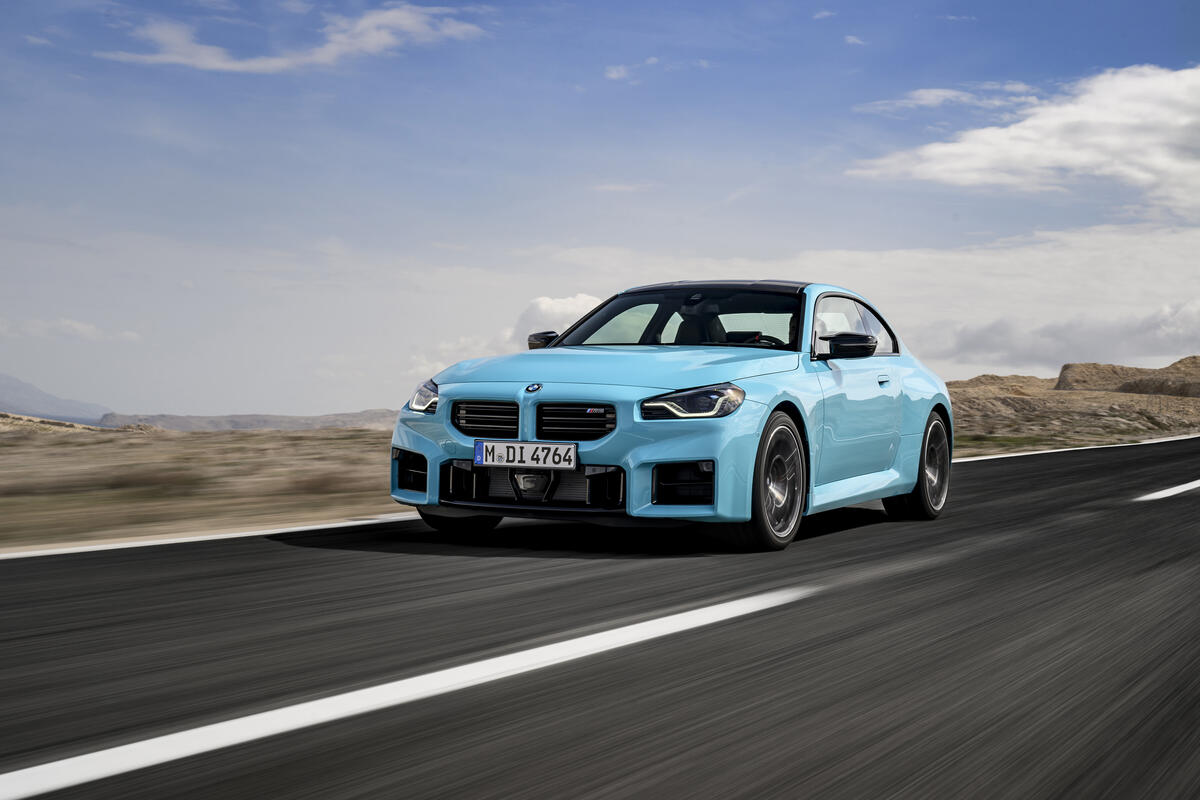
BMW M2
"...h. I want a German PhD. Yeah. Because Paul has an M2 and I just go set this up. So he's my German engi..."
The BMW M2 is a high-performance version of a BMW 2 Series. It’s designed to drive more aggressively than a regular BMW, with stronger power and sport-tuned handling. It comes up in conversation because it’s a popular choice for people who want a fun, compact performance car.
The BMW M2 is a performance version of BMW’s 2 Series, tuned for sharper handling and stronger acceleration than a standard model. It’s often discussed because it’s a smaller, more driver-focused “M” car that appeals to enthusiasts who want a sportier feel without going to a larger platform. In the podcast, it’s referenced in the context of someone owning one and discussing German engineering.

Corvette Grand Sport
"... Too much stuff to decide from. Oh, so that's the Grand Sport that starts around 86 grand. What used to be call..."
The Corvette is a sports car made by Chevrolet. The Grand Sport is a higher-performance version of the Corvette, and the podcast mentions its starting price. People talk about it because it’s one of the options buyers consider when choosing a Corvette.
In this context, “Corvette” refers to the Chevrolet Corvette sports car, specifically the Grand Sport trim mentioned as starting around the mid-$80k range. The Grand Sport is positioned as a more performance-oriented Corvette variant within the lineup, and it’s often discussed when people talk about pricing and trim differences. It’s brought up because buyers compare which Corvette model best matches their budget and performance goals.
E-axle
"And that was the only hybrid Corvette still. And that was an E-axle up front. So that got you all wheel drive."
An E-axle is an electric motor system built to drive an axle. In this case, putting it up front helped the car drive all four wheels.
An E-axle is an electric drive unit that packages an electric motor with reduction gearing and differential functions for an axle. Here, the host says an E-axle up front enabled all-wheel drive on an earlier hybrid Corvette setup.
all wheel drive
"And that was the only hybrid Corvette still. And that was an E-axle up front. So that got you all wheel drive."
All-wheel drive means the car can send power to both the front and rear wheels. That usually helps with grip, especially on slippery roads.
All-wheel drive (AWD) sends power to more than one axle, typically improving traction by letting the car distribute torque to the front and rear wheels. In this segment, they connect AWD to an “E-axle up front” on a hybrid Corvette configuration.
X moniker
"Now, what Chevy has done with the Corvette is they've gone to the X moniker, a la BMW, ironically enough, to indicate when they're using a front axle motor to drive"
A moniker is just a name label. Here, “X” is being used to indicate a Corvette version with an electric motor driving the front wheels.
A moniker is a naming label, and the “X” moniker here refers to Chevrolet’s branding for a Corvette variant that uses an electric front axle motor. The hosts compare the naming style to BMW’s use of similar letter-based naming.
ZR1X
"the front wheels and give you all wheel drive. So they have the ZR1X, which is the top, top of the line. That one's running was a 1,561 horsepower... And then, and then now they've replaced the E-ray with the Grand Sport X... it's still the wide body, it's still the front electric motor, and you get the all wheel drive and the grip on the launch is insane."
The Corvette ZR1X is a super extreme version of the Corvette meant to be insanely fast. The host says it uses an electric front motor to help drive all four wheels, which makes it launch hard and hit 60 mph in about two seconds.
The Chevrolet Corvette ZR1X is an extreme, halo-level Corvette variant built for very high power and drag-strip performance. In this segment, it’s described as having an electric front motor setup for all-wheel drive and launch grip, plus a very fast 0-60 time.
front electric motor
"it's still the wide body, it's still the front electric motor, and you get the all wheel drive and the grip on the launch is insane."
A front electric motor is an electric drive unit mounted on the front axle that can propel the car (or assist the rear powertrain). In a hybrid AWD setup, it helps deliver torque instantly for traction and launch performance.
wide body
"let us know what differences there are, because it's still the wide body, it's still the front electric motor, and you get the all wheel drive..."
A wide body is a bodywork configuration that adds wider fenders and typically allows wider tires. Wider tires increase contact patch area, which can improve grip for launches and high-speed stability.
0 to 60
"you get the all wheel drive and the grip on the launch is insane. I mean, they're talking, you know, basically around two seconds to 60 with that. And without it, it's three seconds."
0–60 is how fast a car goes from stopped to 60 mph. It’s a simple way to compare how quickly cars accelerate.
0–60 mph measures how quickly a car accelerates from a standstill to 60 miles per hour. It’s a common performance metric because it reflects launch traction, power delivery, and drivetrain gearing.
pushrod engine
"06 returns, 670 horsepower. That is not a pushrod engine. That is the multi valve 5.5."
A pushrod engine is one where the camshaft uses rods to operate the engine valves. The host is saying this Corvette’s engine isn’t that type, which can affect how it sounds and how it revs.
A pushrod engine uses pushrods to transfer motion from the camshaft to the engine’s valves. The host contrasts this with the Corvette’s engine design, implying a different valvetrain architecture (multi-valve).
multi valve 5.5
"That is not a pushrod engine. That is the multi valve 5.5. That engine turbocharged flat-plane crank..."
Multi-valve means the engine uses multiple valves per cylinder to breathe better. The “5.5” is the engine size (about 5.5 liters), which is part of why it can make big power.
“Multi-valve” means each cylinder uses more than two valves (commonly four) to improve airflow. The “5.5” refers to a 5.5-liter engine displacement, which helps explain the power potential discussed in the segment.
turbocharged flat-plane crank
"That engine turbocharged flat-plane crank, which makes for crazy exhaust sounds. It does. Crazy, wonderful exhaust sounds."
Turbocharged means the engine uses a turbo to cram more air in, which boosts power. A flat-plane crank is an engine design detail that can change the sound the car makes.
A turbocharged engine uses a turbocharger to force more air into the cylinders, enabling higher power. A flat-plane crank refers to a crankshaft design that can produce a distinctive exhaust note and firing order character compared with other crank layouts.
quarter mile times
"Oh, yes. Yeah, people are achieving extraordinarily low quarter mile times at local drag scripts so much so that they're getting told not to come back..."
Quarter-mile times are how fast a car can run a 1/4-mile drag strip. It’s one of the main numbers drag racers use to compare how quick cars are.
Quarter-mile times measure elapsed time over a 1/4-mile drag strip run, typically reported in seconds. They’re a key metric for drag racing because they correlate strongly with acceleration, traction, and power delivery.
roll cage
"they're getting told not to come back because, you know, you run a nine second car in most drag strips and they want a full roll cage and fire suppression systems..."
A roll cage is a strong safety frame inside the car. It helps protect you if the car flips or crashes hard, and drag strips may require it for very quick runs.
A roll cage is a reinforced safety structure installed inside the cabin to protect occupants in a crash or rollover. Drag strips often require it for very fast cars because higher speeds increase the severity of potential accidents.
fire suppression systems
"they want a full roll cage and fire suppression systems and all that stuff because you're under 10 seconds..."
Fire suppression systems are automatic fire-extinguishing setups in the car. Drag strips require them on very fast cars to reduce the chance that a fire becomes catastrophic.
Fire suppression systems are onboard devices designed to detect and extinguish fires quickly, often in the engine bay or cabin. In drag racing, they’re commonly required for high-performance cars because the risk of fire rises with power and heat.

Dodge Demon
"because you're under 10 seconds, which was happening with the Dodge Demon, if you remember back in the day."
The Dodge Demon is a very fast drag-racing muscle car. The host mentions it because it helped set the expectation for cars running sub-10-second quarter miles.
The Dodge Demon is a high-performance drag-focused muscle car known for extremely quick acceleration and record-setting quarter-mile runs. In this segment, it’s referenced as an example of a car that previously triggered stricter drag-strip safety rules when it started running under 10 seconds.
Arcus Duntov
"But Zora, we're talking about Zora, Arcus Duntov, the father of the Corvette and a man who played a, who left his fingerprints all over the small block V8..."
Arcus Duntov was a major early Corvette engineer. People credit him with helping shape the Corvette into the performance car it became.
Arcus Duntov (often spelled Zora Arkus-Duntov) is credited as a key figure in Corvette’s development and early performance engineering. The hosts describe him as the “father of the Corvette” and tie his influence to Chevrolet’s V8-era performance.
small block V8
"Arcus Duntov, the father of the Corvette and a man who played a, who left his fingerprints all over the small block V8, an important guy in the development of not just the Corvette, but Chevy and Chevy powertrains."
A small block V8 is a famous Chevy V8 engine design. It’s called “small block” because it’s a compact V8, and it has a big history in performance cars.
The small block V8 refers to Chevrolet’s compact V8 engine family that became one of the most widely used and influential V8 designs in American performance. The hosts connect Arcus Duntov’s legacy to the Corvette’s historical engine lineage.
dieselgate
"Volkswagen's problem is, is multi-fold in that they invested very heavily in electric vehicles. And part of this was because they had been embarrassed by diesel gate."
“Diesel gate” was a scandal where Volkswagen’s diesel cars didn’t meet emissions rules in real life. During testing they could behave better, but outside the lab they were more polluting than expected.
“Diesel gate” refers to Volkswagen’s emissions-cheating scandal involving diesel engines. The company used software to detect testing conditions and adjust emissions results, making real-world pollution higher than regulators and customers were led to believe.
six speed
"So yeah, my wife had a jet a touring wagon, beautiful car, wonderful car, six-speed manual, 44 miles to the gallon, everything about that car was fantastic, except that they had to buy it back."
A six-speed manual means you choose gears yourself using a clutch and gear stick. It’s the more hands-on driving style compared with automatic transmissions.
A six-speed manual transmission is a gearbox where the driver selects gears using a clutch pedal and a shift lever. The host brings it up to highlight that the car they owned had a traditional, enthusiast-friendly driving setup.
chip shortage
"Western Europe, interestingly, a little bit like North America, never recovered from COVID. So sales fell during COVID and during the chip shortage and never came back."
The chip shortage was when factories couldn’t get enough computer chips. Since cars need chips for electronics, it slowed down production and hurt sales.
The chip shortage was a global shortage of semiconductor components used in modern vehicles. It disrupted production and contributed to supply-chain problems that affected car sales and inventory levels.
BYD
"And China, Chinese car makers, especially BYD, and companies like BYD, are selling cars in Europe pretty well."
BYD is a major Chinese car company. The host says BYD is doing well in Europe, especially with electric cars.
BYD is a Chinese automaker known for mass-producing battery-electric vehicles and plug-in hybrids. The host credits BYD with selling well in Europe, helping explain why some Western brands are struggling.
EV platform
"But Volkswagen's other interesting problem, too, is that they have spent considerable money developing an EV platform that didn't work."
An EV platform is the main design and engineering foundation for electric cars. If it doesn’t work well, it can make every electric model built on it harder or more expensive to get right.
An EV platform is the shared engineering “base” a manufacturer builds multiple electric models on—covering things like battery packaging, motor mounting, wiring, and structural design. The hosts argue Volkswagen spent money developing an EV platform that didn’t deliver the results they needed.
Cariad
"And we've talked about this before, but they have a division called Cariad. And one of the things Jill and I have talked about is branding things that suck."
Cariad is Volkswagen’s internal group that works on software and electronics. The hosts are saying it didn’t help Volkswagen’s electric-car plans as much as it should have.
Cariad is Volkswagen Group’s software and electronics-focused division. In this segment, the hosts criticize it as part of why Volkswagen’s EV efforts “didn’t work,” suggesting the division’s output didn’t meet expectations.
extended range electric vehicles
"And now they're E-Refs, extended range electric vehicles. They may not even start with an electric vehicle at all."
Extended-range electric vehicles are electric cars with a backup system that helps keep the car going when the battery is low. It’s like having a safety net so you don’t have to worry as much about running out of charge.
Extended range electric vehicles (EREVs) are electric cars that still use a battery for driving, but include a generator (often an engine) to recharge the battery when it runs low. The hosts contrast this with “pure” EVs, arguing it can reduce range anxiety by keeping energy available beyond the battery’s initial charge.
Volkswagen
"Volkswagen's bottom line, because you're right. I mean, with the trouble that they're in now, they could use anything they can get... The last word on this Volkswagen story... is that Volkswagen is looking to cut its capacity globally from 12 million units to 9 million units."
Volkswagen is the automaker the hosts are discussing in terms of financial pressure and production strategy. They mention it cutting global capacity and dealing with labor issues in Europe, which they frame as a major challenge for the company.
E-refs
"My problem with E-Refs is that we still don't know if people will buy them. We really haven't seen one hit the market and be popular yet."
“E-Refs” sounds like a nickname for electric cars. The hosts are saying they’re not sure people will buy them yet, and that EVs haven’t fully proven themselves as a mainstream hit.
“E-Refs” appears to be a shorthand the hosts are using for electric vehicles (EVs). The point of the phrase in this segment is that Volkswagen is trying to push EVs, but there’s uncertainty about whether buyers will actually adopt them at scale.
capacity globally
"The last word on this Volkswagen story... is that Volkswagen is looking to cut its capacity globally from 12 million units to 9 million units."
“Capacity globally” means how many cars a company plans to build worldwide. Cutting it from 12 million to 9 million means they’re planning to make fewer cars overall.
“Capacity globally” refers to how many vehicles Volkswagen plans to produce worldwide. Cutting capacity from 12 million units to 9 million units is essentially reducing production volume to match demand and improve financial outcomes.
Ig Metall
"And they're getting into huge trouble in Europe with the German labor union, IG Metall."
IG Metall is a German workers’ union. The hosts are saying Volkswagen is having big problems in Europe partly because of labor issues involving this union.
IG Metall is a major German labor union, and the hosts connect it to Volkswagen’s troubles in Europe. In this segment, it’s part of the labor/political context around layoffs in the home market.

Volkswagen Jetta
"The cars we have are probably going to stay here unless they decide to kill the Jetta, which doesn't sell that well."
The Volkswagen Jetta is a smaller sedan model. The hosts are saying Volkswagen might stop selling it if it isn’t doing well enough in sales.
The Volkswagen Jetta is a compact sedan that the hosts mention as a model that might be discontinued if it doesn’t sell well. In this discussion, it’s used to illustrate how Volkswagen’s lineup could change depending on market demand.
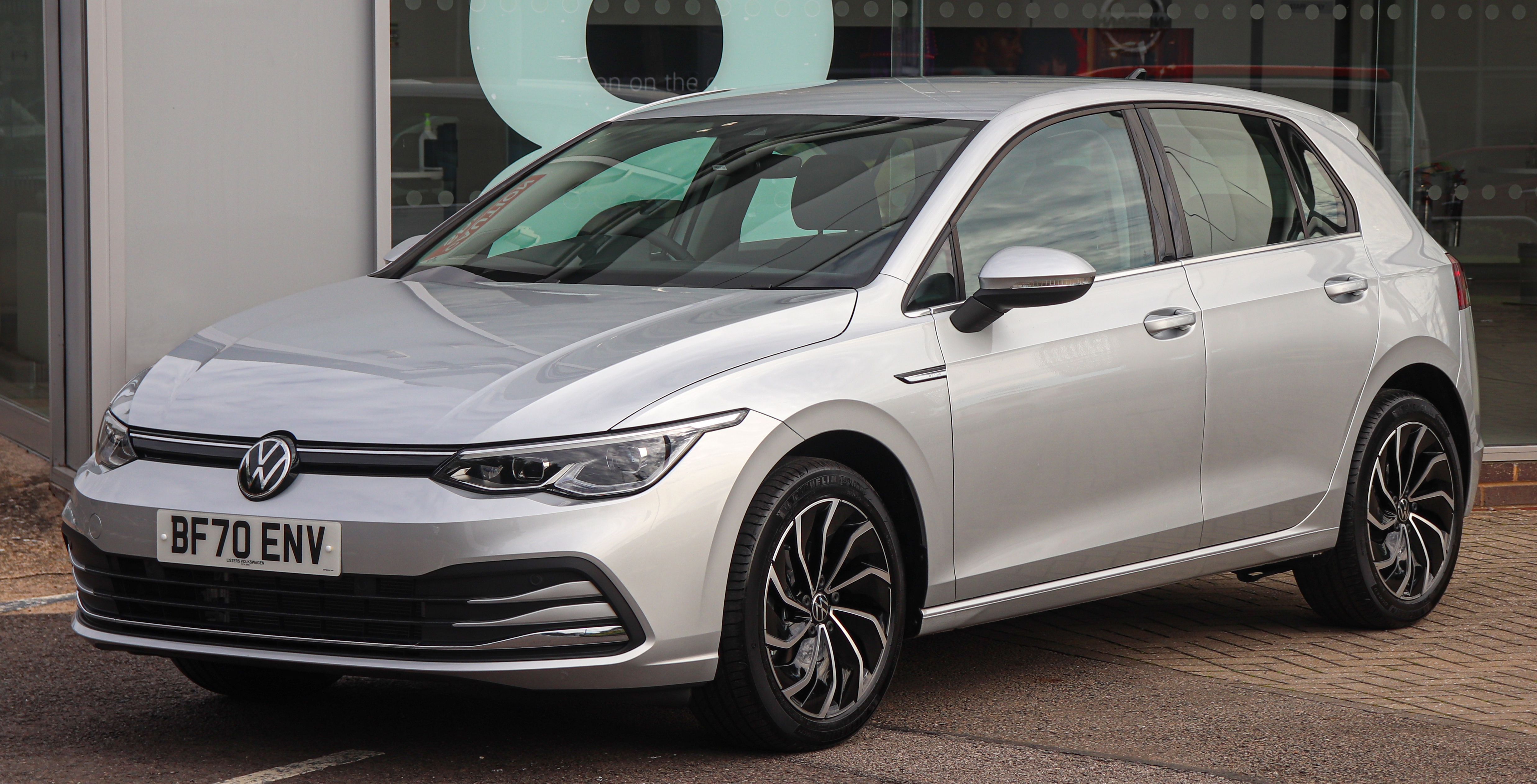
Volkswagen Gti
"...t some pricing strength on that. I just drove the GTI and it was over 40 grand. So that's a lot of mone..."
The Volkswagen Golf is a compact car made by Volkswagen. The GTI is a sportier version of the Golf, and the podcast is talking about how much it costs. It comes up because it’s a common choice in the compact-car category.
The Volkswagen Golf is a compact car known for being practical and widely used, with performance and sport trims like the GTI. In the podcast, it’s mentioned in the context of pricing, especially after comparing the cost of a GTI to other vehicles. That makes it relevant to discussions about what buyers get at different price points in the compact segment.
EV
"So Kilowatt is a podcast about electric vehicles, renewable energy and autonomous driving and no politics."
An electric vehicle is a car that runs on electricity stored in a battery. Instead of buying gas, you charge it at home or at a public charging station.
Electric vehicles (EVs) are cars powered primarily by electric motors and batteries, rather than a gasoline engine. They recharge by plugging into an electrical outlet or charging station.
autonomous driving
"So Kilowatt is a podcast about electric vehicles, renewable energy and autonomous driving and no politics."
Autonomous driving means the car can do some driving tasks on its own. How much it does varies—some systems help the driver, while others can drive more independently.
Autonomous driving refers to vehicle systems that can steer, accelerate, and brake with varying levels of human oversight. Depending on the system, it may handle specific tasks (like highway driving) or more of the driving process.
Tesla
"You cover Tesla separately from other electric vehicles. Yeah, that came out of necessity."
Tesla is a company that makes electric cars. The host is saying their show treats Tesla as its own category because Tesla’s approach was different from other EV makers.
Tesla is an EV-focused automaker that became a major reference point for the industry’s early electric-car rollout. The host notes their podcast covers Tesla separately from other EVs, reflecting how much Tesla’s strategy and product lineup differed from the rest of the market.
Stellantis
"I was trying to follow like Stellantis made a bunch of noise for a while about EVs, they were going to be launching."
Stellantis is a big car company that owns multiple brands. The host is bringing it up because they talked a lot about EV plans, but the results didn’t match the hype.
Stellantis is a major automaker group formed from the merger of Fiat Chrysler Automobiles and PSA. The host mentions it because the company publicly talked about launching EVs, but those plans didn’t materialize as expected.
CES
"I saw the RAM rev in 2025 at CES."
CES (Consumer Electronics Show) is a major annual technology trade show in the U.S. Automakers and suppliers use it to preview new vehicles, concepts, and tech—especially infotainment, software, and electrification ideas.

Sierra
"They've got Silverado Sierra and the Hummer."
The Sierra is GMC’s big pickup truck. The host is saying GM is planning EV versions across its major truck brands.
The GMC Sierra is GM’s full-size pickup line that competes in the same segment as the Silverado. The host brings it up to show GM’s broader strategy of electrifying multiple truck nameplates, not just one.
Hummer
"They've got Silverado Sierra and the Hummer."
Hummer is a GM brand known for big, bold trucks. In this context, it’s mentioned because GM is also pushing EVs under the Hummer name.
Hummer is a GM-owned brand that has been reintroduced with an EV focus. Mentioning Hummer alongside Silverado and Sierra signals that GM’s electrification plans include both mainstream pickups and more extreme, high-profile EV products.
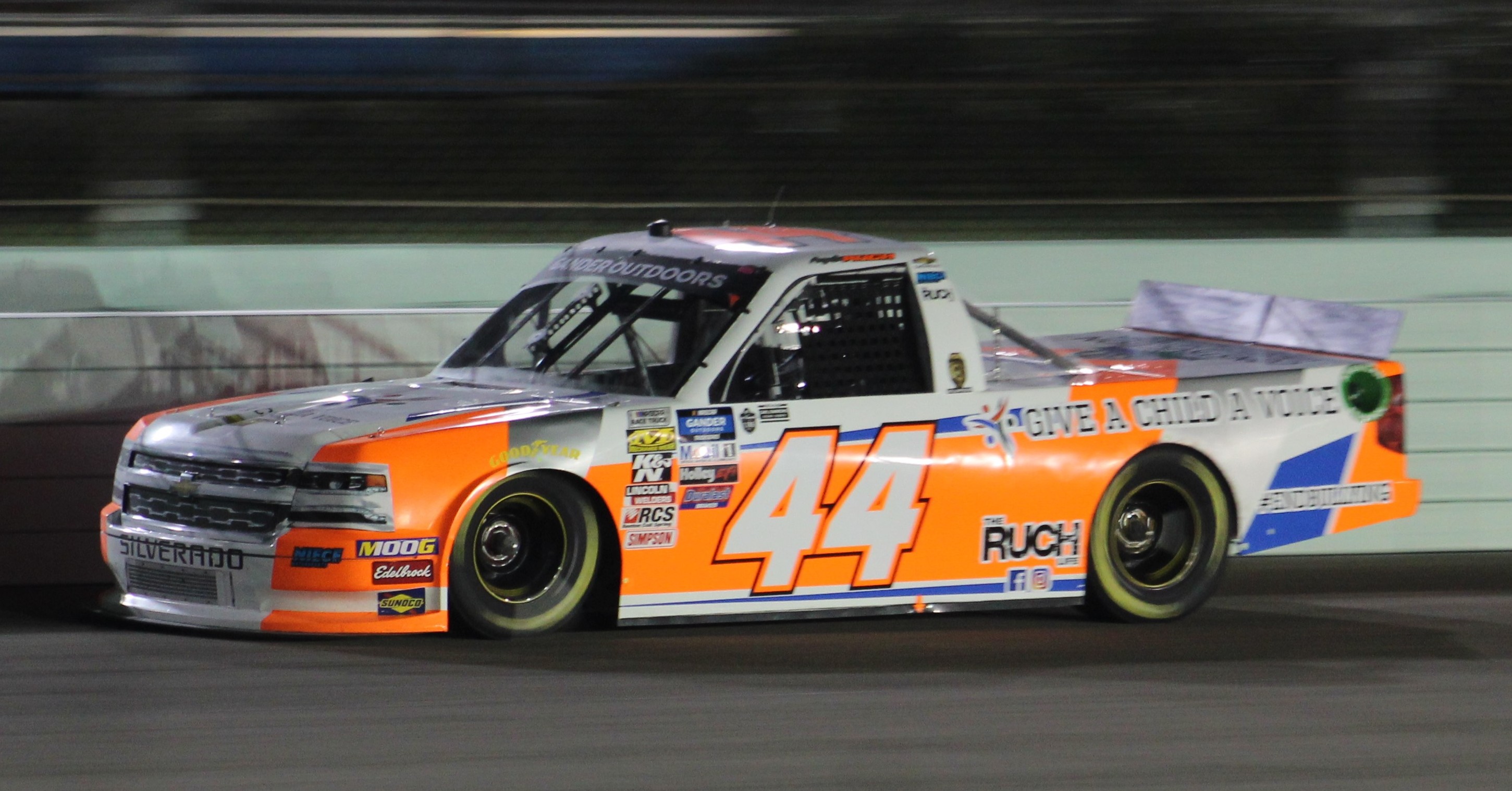
Chevrolet Silverado
"...committed in a pretty big way, right? They've got Silverado Sierra and the Hummer. And they're still building..."
The Chevrolet Silverado is a large pickup truck made by Chevrolet. It’s built for carrying things and towing, but it can also be used like a normal daily vehicle. It’s commonly discussed because it’s a major model in Chevrolet’s truck lineup.
The Chevrolet Silverado is a full-size pickup truck used for everyday driving and work tasks like towing and hauling. It’s significant because it’s one of the most widely sold trucks, so changes in powertrains, trims, and tech often get a lot of attention. In a podcast, it may be mentioned alongside other big-name vehicles because it represents Chevrolet’s core truck lineup.
extended range EVs
"They haven't disclosed as to what they're going to do with their EV pickups, whether those become extended range EVs, which makes a lot of sense for those larger pickups, especially people who want to tow..."
An extended-range EV is an electric car with a backup way to keep it going farther. Instead of relying only on charging, it can use another system to generate electricity when the battery gets low.
Extended-range EVs are electric vehicles that can use an additional energy source (commonly a generator) to keep the battery charged and extend driving range. They’re designed to reduce “range anxiety” while still driving like an EV most of the time.
E-Rives
"Right. Actually, Brendan and I were just talking about E-Rives and how they seem like a great idea, but there isn't really any proof of concept vehicle out there yet."
They’re talking about an electric pickup idea called “E-Rives.” The hosts’ main point is that there aren’t any real versions you can buy in the U.S. yet to show how well it works.
“E-Rives” here refers to an electric pickup concept/idea being discussed as a potential product direction. The key point is that the hosts say there isn’t a real, purchasable proof-of-concept vehicle available to Americans yet.

the Volt
"Well, there was the Volt, so that's in here. [..] The Volt, that's a good one."
The Volt is a plug-in hybrid Chevrolet. It can run on electricity, and when the battery needs help, the gas engine can generate power instead of just directly pushing the car like a normal gas car.
The Chevrolet Volt is a plug-in hybrid that was known for using its electric drive as the primary propulsion. A major design detail is that the gasoline engine could act as a generator rather than directly driving the wheels in the way many conventional hybrids do.
plug-in hybrid
"Yeah. So for people who don't know, the Volt was basically a plug-in hybrid, but it was more advanced than that."
A plug-in hybrid is a car that you can charge like an electric car. It also has a gas engine for longer trips when the battery runs low.
A plug-in hybrid (PHEV) is a hybrid vehicle with a battery large enough to be charged from an external power source. It can run on electricity for some distance, then switch to using the gasoline engine (and/or electric motor) as needed.
gasoline engine
"And one of the things about the Volt was that technically, the gasoline engine was supposed to never touch the wheels. It was supposed to power a generator"
Here they’re talking about the gas engine’s job in the system. Instead of always directly driving the wheels, it’s described as powering a generator to make electricity when needed.
In this context, the gasoline engine is being described as part of the Volt’s power system that can generate electricity rather than directly turning the wheels. That’s a key distinction from many hybrids where the engine often mechanically drives the drivetrain.
overdrive situation
"It was just on the highway. It was just kind of almost like an overdrive situation."
Overdrive is when the car is geared so the engine doesn’t have to spin as fast while you’re going down the highway. That can make steady driving feel easier and often helps efficiency.
“Overdrive” is a gearing setup where the engine turns slower than the wheels, helping cruising efficiency at highway speeds. In an EV context, the host is using it as an analogy for how the drive ratio can make the car feel like it’s in a more efficient, highway-oriented mode.

Fisker Karma
"Oh, there was the Fisker Karma. Yeah. All six of those."
The Fisker Karma is a car that uses both electricity and a gas engine. It’s not a pure electric car, but it’s still part of the “EV era” conversation because it can drive using electricity.
The Fisker Karma is a plug-in hybrid (PHEV) that was known for its distinctive design and for using an electric drive system to move the wheels. It’s often brought up in EV discussions because it sits between traditional gas cars and full battery-electric vehicles.
tax credit
"But these vehicles are on their drawing boards for a long time. I don't want to give Toyota too much credit. But the tax credit is gone."
An EV tax credit is a government incentive that reduces the effective purchase price of qualifying electric vehicles. When it’s removed or reduced, it can change demand and make EV sales look flatter even if the underlying technology is improving.
EV sales
"But the tax credit is gone. EV sales seem to be flat, but not as terrible as they could have been."
“EV sales” refers to how many electric vehicles are being sold relative to the overall auto market. Hosts often use market-share numbers (like a percent of total sales) to describe whether EV adoption is accelerating, stalling, or declining.
subsidies
"Same with Europe and the UK has got a lot of subsidies right now on EVs."
EV subsidies are financial incentives (often from governments) that lower the cost of buying or using electric vehicles. They can significantly affect adoption rates by making EVs more affordable than comparable gas cars.
ICE cars
"And we're learning that EVs have a much longer lifespan than what we thought, [1847.6s] and it's even longer in a lot of ways than ICE cars."
ICE cars are gas or diesel cars that run on an engine burning fuel. The reason people compare them to EVs is that they tend to have different maintenance needs and different kinds of problems over time.
ICE cars means internal combustion engine cars—vehicles powered by gasoline or diesel engines. The comparison matters because EVs and ICE cars have different wear items and different long-term failure modes.
Vinfast
"It's funny that there was that period of time and VinFast came in sort of at the end [1857.5s] of this period of time when people were freaking out about the potential for an EV battery to fail."
VinFast is an electric-vehicle brand. The host brings it up to explain that it arrived during a period when people were especially worried about EV batteries failing.
VinFast is an EV brand mentioned as entering the market around the time people were worried about EV battery failures. The point is historical timing—how early fear about battery reliability shaped perceptions.
EV battery
"And the worst stories out there of Tesla batteries being very, very, very expensive to replace, [1868.4s] but I don't know how many Tesla batteries actually needed to be replaced."
In an electric car, the EV battery is the big rechargeable battery that powers the car. Over time it can wear out, which can reduce how far the car can go and sometimes make replacement expensive.
An EV battery is the large rechargeable battery pack that stores electricity to power an electric motor. Its health matters because battery degradation can affect range and, in worst cases, replacement cost.
300,000 miles
"But ultimately, what are we hearing now that the EV batteries are easily going 300,000 miles? Does that sound right?"
300,000 miles is the very high mileage number being tossed around for how long an EV battery might last. The host is basically asking whether that kind of lifespan is realistic.
300,000 miles is the longevity figure being discussed for EV batteries, implying very slow degradation over long use. It’s presented as a question (“Does that sound right?”), so it’s more of a benchmark claim than a confirmed universal number.
battery chemistry
"But there's a lot of technology out there that is aside from battery chemistry, we have things like that are dopants and coatings that go [1904.8s] in batteries."
Battery chemistry is what the battery is made of inside—its specific type of lithium-ion system. That affects how the battery performs and how quickly it wears out.
Battery chemistry refers to the specific materials and electrochemical system inside a battery pack (for example, different lithium-ion chemistries). Different chemistries can change energy density, charging behavior, and how the battery degrades over time.
dopants
"But there's a lot of technology out there that is aside from battery chemistry, we have things like that are dopants and coatings that go [1904.8s] in batteries."
Dopants are tiny ingredient tweaks added to battery materials. The goal is to make the battery work better and last longer.
Dopants are small additives introduced into battery materials to improve performance or durability. In batteries, they can help with stability, reduce degradation, or improve how ions move through the electrodes.
coatings
"But there's a lot of technology out there that is aside from battery chemistry, we have things like that are dopants and coatings that go [1904.8s] in batteries."
Coatings are protective layers put on parts of the battery. They help prevent damage and unwanted chemical reactions so the battery lasts longer.
Battery coatings are protective layers applied to battery components to manage reactions and wear. They can reduce unwanted side reactions, improve stability, and help the battery maintain capacity over many charge cycles.
constant pressure
"But there's also things like the Cambridge University, they came up with this constant or consistent pressure on a battery. So a battery breathes, just like we breathe in, [1938.2s] kind of."
Constant pressure means the battery is kept under a steady mechanical load instead of freely expanding and shrinking. That can help the battery last longer because the materials don’t get stressed as much.
Constant pressure in a battery context means keeping mechanical stress on the battery materials within a controlled range during expansion and contraction. The idea is to reduce degradation caused by repeated swelling/shrinking as the battery charges and discharges.
181 psi
"And they found that if you have a constant pressure of 181 PSI, [1951.7s] you can actually extend the life of that battery to 181 PSI."
181 PSI is a specific pressure number mentioned in the discussion. The point is that there’s an “just right” pressure that may help the battery last longer.
181 PSI is the specific pressure value mentioned for the battery’s “Goldilocks” operating point in the described research. The claim is that holding the battery at that pressure range can extend its life compared with other pressures.
cathode side
"[1975.4s] ...there could be causes. If it's too much, [1980.9s] there's going to cause problems with the cathode side."
In a lithium battery, the cathode is the positive part where electricity is released during use. If something about the battery isn’t right, problems can start at this side.
The cathode is the positive electrode in a lithium battery. If the battery chemistry or operating conditions are off, issues can show up at the cathode, affecting charge acceptance, heat generation, and long-term degradation.
anode side
"[1980.9s] there's going to cause problems with the cathode side. And if it's too little, [1984.0s] it's going to cause problems with the anode side."
The anode is the negative part of a lithium battery. If the battery is pushed too far or built with the wrong balance, problems can happen on this side too.
The anode is the negative electrode in a lithium battery. If conditions are outside the intended range, the anode can develop problems that reduce performance or increase risk, because it’s where lithium ions are stored and released during cycling.
solid state battery
"[1984.0s] ...What are we with potentially having finally a [1989.8s] solid state battery that really works?"
A solid state battery is a type of EV battery that uses a solid material instead of a liquid inside. The goal is safer operation and more energy, but it’s tough to build so it’s not widely available yet.
A solid state battery is a lithium battery design that replaces the usual liquid electrolyte with a solid (or mostly solid) material. That can improve safety and potentially enable higher energy density, but it’s also harder to manufacture reliably at scale.
liquid electrolyte
"[2022.8s] ...semi-solid state batteries. I guess it's not [2027.9s] a hybrid, it's semi-solid state, which means that it's not a liquid electrolyte or a solid [2031.9s] electrolyte."
In most EV batteries, there’s a liquid inside that helps the battery move ions back and forth. Solid-state batteries try to replace that liquid with something else.
A liquid electrolyte is the conductive fluid inside most conventional lithium-ion batteries that allows lithium ions to move between the anode and cathode. Solid-state designs aim to replace this with a solid or gel-like electrolyte to improve safety and performance potential.
solid electrolyte
"[2027.9s] ...semi-solid state, which means that it's not a liquid electrolyte or a solid [2031.9s] electrolyte."
A solid electrolyte is the “inside material” that lets ions move in a solid-state battery. Instead of a liquid, it uses a solid to do that job.
A solid electrolyte is the ion-conducting material in a solid-state battery that replaces the liquid electrolyte. Its job is to let lithium ions travel while remaining stable and safe, which is a major engineering challenge for solid-state batteries.
vaporware
"[2062.5s] ...should I just sit and wait for it? Then on the flip side of that, you're looking at [2067.3s] the manufacturers going, is this like vaporware that you're going to talk about for the next [2072.6s] five years..."
Vaporware means something that’s talked about a lot, but may not actually show up when promised. People use it when they think the hype is ahead of real results.
Vaporware is a product that’s heavily marketed or promised, but doesn’t actually arrive when expected. In battery/EV tech discussions, it’s used to question whether a new technology will be real and mass-producible on the timeline being claimed.
4680 battery cell
"So I'll give you an example. When Tesla announced the 4680 battery cell, they were putting them in early on 4680 is just the size of the battery cell. They were putting them in early model wise that were built in Texas."
“4680” is Tesla’s newer battery shape/size. The idea was that it could make the battery better and cheaper, but early on the tech wasn’t fully dialed in, so the average driver didn’t notice much difference yet.
The "4680" refers to Tesla’s battery cell format (about 46mm in diameter and 80mm tall). Tesla positioned it as a next-step design meant to improve performance and cost, but early cars didn’t benefit as much as buyers expected because the manufacturing and pack-level technology wasn’t fully mature yet.
energy dense
"which is supposed to be more energy dense and there's all of these benefits that we're supposed to come to this cell. ... But in general, it's not as energy dense even as an LFP battery from my understanding."
Energy dense means “packs more energy into a smaller/lighter battery.” If a battery isn’t as energy dense, you may need a bigger or heavier battery to get the same range.
“Energy dense” describes how much electrical energy a battery can store for a given size or weight. Higher energy density generally supports longer EV range, while lower energy density can make batteries bulkier or heavier for the same usable energy.
sodium ion technology
"Is it sodium ion technology? Do I have that right? Is that going any place as far as you know? ... It sounds like right now, sodium ion is a better fit for stationary storage to power your home, but it doesn't mean that it can't be."
Sodium-ion batteries use sodium instead of lithium. They’re attractive because sodium is widely available, and they may be cheaper and easier to source, but they usually don’t pack as much energy per battery weight/size as lithium batteries.
Sodium-ion technology uses sodium instead of lithium as the primary charge carrier. It’s often discussed as a good fit for stationary storage (like home or grid backup) because sodium is abundant and can help reduce supply-chain risk, though it generally isn’t as energy-dense as lithium chemistries.
battery degradation
"It's not to say that there isn't one that is, but LFP batteries don't tend to be very energy dense, but they are also super robust. You can charge them to 100% and not see much battery degradation."
Battery degradation means the battery slowly “wears out,” so it holds less charge over time. Some battery types handle charging to 100% better than others, so they degrade more slowly.
Battery degradation is the gradual loss of a battery’s ability to store charge over time, often measured as reduced capacity and/or increased internal resistance. Charging behavior (like frequent full charges) can influence how quickly degradation occurs, which is why some chemistries are marketed as more tolerant.
nickel manganese cobalt batteries
"250 mile range car. If you were to do that in with nickel manganese phosphate batteries, [2257.0s] you would be 80% of that is what you could charge to most of the time, so 200 miles"
This is a type of EV battery chemistry. Different battery chemistries can charge and age differently, so the “range you can actually use” can vary between battery types.
Nickel manganese phosphate (often shortened to NMP) is a lithium-ion battery chemistry used in some EVs. It’s known for good thermal stability and long cycle life, but it can have different charging behavior and energy density than other chemistries.
LFP battery
"200 miles whereas the [2265.1s] LFP battery you could charge to 100% almost every single time without seeing much if any [2270.1s] battery degradation."
LFP is a battery type used in some EVs. People like it because it tends to last a long time and can usually be charged more aggressively without hurting the battery as quickly.
LFP stands for lithium iron phosphate, a lithium-ion battery chemistry. It’s commonly praised for durability and the ability to charge to a high state of charge more often, with relatively low battery degradation compared to some other chemistries.

Tesla Model Y
"...ng. Interesting. So are you an EV owner? I have a Model Y and I have a Kia Carnival hybrid. Okay. How's tha..."
The Tesla Model Y is an electric SUV, which means it runs on electricity instead of gasoline. It’s made for regular driving and family-style use, like other SUVs. People often mention it when talking about what it’s like to own an EV.
The Tesla Model Y is an all-electric compact SUV from Tesla, designed for everyday practicality with an electric powertrain. It’s frequently discussed because it’s one of Tesla’s highest-volume models and a common entry point for EV ownership. In the podcast context, it’s brought up as an example of someone’s current EV experience.
Leap Motor
"but speaking of Stellantis, do you have any impressions of what's going on with Stellantis [2314.3s] and Leap Motor? It's a really interesting business model right now"
Leap Motor is a Chinese EV company. In this conversation, it matters because it’s working with Stellantis through a partnership to bring cars to other markets.
Leapmotor (Leap Motor) is a Chinese EV brand that’s being discussed here in the context of partnering with a Western automaker. The key point in this segment is how its relationship with Stellantis is structured through a joint venture and ownership stake.
joint venture
"they would just [2368.0s] partner with a joint venture with US automakers and that's what Stellantis, to bring it back [2373.0s] around to your question, that's what Stellantis and Leap Motors have. They have a joint venture"
A joint venture is when two companies team up and share the work and the ownership. In this case, it’s how Stellantis and Leap Motor coordinate to bring EVs to market.
A joint venture is a business arrangement where two companies create a new shared entity or partnership to develop and sell products together. Here, it’s used to describe how Stellantis and Leap Motor split ownership and control to build cars using shared platforms/technology.
Chrysler
"a Dodge or Chrysler. We'll see what happens with Chrysler, but yeah."
Chrysler is a major American automaker brand that has been part of multiple corporate structures over the years. In this segment, the host mentions Chrysler’s future as part of a broader discussion about Stellantis’ U.S. brand decisions.
Fiat
"When Stellantis started bringing [2408.6s] in Fiat to the US, they really should have brought it in as Dodge."
Fiat is a car brand from Italy. In this discussion, it’s about which brand name Stellantis should have used to sell cars in the U.S.
Fiat is an Italian automaker known for compact, mass-market cars and a long history in Europe. The host is criticizing Stellantis for reintroducing the Fiat brand in the U.S. rather than using Dodge as the entry point.
Western Europe
"its products are being distributed in Western Europe right now by Chrysler, by Stellantis"
Western Europe is a region of countries in Europe. Car companies often talk about it because rules and buying habits can be different from other places.
Western Europe is a specific geographic market region that matters in automotive because regulations, incentives, and consumer preferences differ from other regions. Here it’s used to describe where Leap Motor products are being distributed.
Blue Flame Six
"[2776.0s] Brendan, what was the name of the Corvette's first engine? Was it the Blue Flame Six or the Red [2781.7s] Devil Six? It was the Blue Flame Six. It was. It was an interesting engine. It was a push-rod [2789.6s] engine. It wasn't a flathead."
The “Blue Flame Six” is the early engine that powered the Corvette before it became known for big V8s. It’s called a “six” because it has six cylinders in a straight line.
The “Blue Flame Six” refers to an inline-six engine used in the early Corvette (1953). It’s notable because it wasn’t a V8, yet it was designed to be smooth and reasonably powerful for its era.
flat head
"[2781.7s] Devil Six? It was the Blue Flame Six. It was. It was an interesting engine. It was a push-rod [2789.6s] engine. It wasn't a flathead. And I think it was dual-carbed and something like 155 horsepower."
A flathead is an older engine type where the valves sit in the engine block instead of the cylinder head. They’re saying the Corvette’s first engine wasn’t that design.
A flathead is an engine design where the valves are located in the engine block rather than in the cylinder head. The host mentions it to contrast the early Corvette’s push-rod layout with a different, older valve arrangement.
V8
"[2796.0s] It's made fun of now because it's not a V8, but actually in the day, it didn't suck. [2801.8s] No, no. And that's the thing is most people don't realize the Corvette because it's such [2806.0s] a sports car and now 200 mile an hour in base form sports car."
A V8 is an engine with eight cylinders arranged in a V shape. In this episode, they’re pointing out that early Corvettes didn’t start with a V8, but later ones did—and that’s a big reason the car became a performance icon.
A V8 is an engine with eight cylinders arranged in a “V” shape. The segment contrasts the early Corvette’s inline-six with later Corvettes that became famous for V8 power, which is why the model’s identity shifted toward performance.
dual-carbed
"[2789.6s] engine. It wasn't a flathead. And I think it was dual-carbed and something like 155 horsepower. [2796.0s] It's made fun of now because it's not a V8, but actually in the day, it didn't suck."
“Dual-carbed” means the engine had two carburetors. Carburetors help mix fuel and air, and having two can help the engine make more power.
“Dual-carbed” means the engine used two carburetors to mix fuel and air before it entered the cylinders. Using two carburetors was a common way to improve airflow and power compared with a single-carb setup.
Mr. Duntoff
"It was not a sports car until Mr. Duntoff came around and said, [2826.3s] you know what? We need to drop a big V8 in this thing and make a sports car out of it, [2831.3s] true proper sports car. And that's when that's why he's considered the godfather of the Corvette."
“Mr. Duntoff” is the person the host credits with steering the Corvette toward a big V8. The idea is that this change helped transform the car from a cruiser into a real performance sports car.
“Mr. Duntoff” is credited here as the person who pushed for putting a big V8 into the Corvette to turn it into a true sports car. In Corvette history, this kind of shift is what helped define the model’s performance reputation.
1984 Corvette
"The 1984 Corvette featured a branded fuel injection system. Was that called crossfire injection or tuned port injection? That would be the infamous crossfire injection."
This is a specific Corvette from 1984. The hosts are focusing on its fuel system—how the engine got fuel through a setup they call “crossfire injection.”
The Chevrolet Corvette is known for evolving into a true performance sports car, and the 1984 model year is highlighted here for its fuel-injection setup. The hosts specifically discuss the 1984 Corvette’s “crossfire injection” system and how it used two throttle bodies feeding a V8 layout.
tuned port injection
"The 1984 Corvette featured a branded fuel injection system. Was that called crossfire injection or tuned port injection? That would be the infamous crossfire injection."
Tuned port injection is a fuel system where each cylinder gets its own intake passage. The “tuned” part means the intake shape is designed to help the engine breathe better, and the hosts bring it up as the alternative to crossfire injection.
Tuned port injection is a fuel-injection approach where each cylinder gets its own intake “port,” and the intake runners are shaped/“tuned” to help airflow and fuel atomization. The hosts mention it as an alternative to crossfire injection, implying it’s the more enthusiast-friendly or performance-oriented design.
crossfire injection
"Was that called crossfire injection or tuned port injection? That would be the infamous crossfire injection. [2985.9s] Yeah. Crossfire injection was weird. It was simply two throttle bodies, one for each bank."
“Crossfire injection” is a way of feeding fuel to a V8 engine. Instead of a separate setup for every cylinder, it uses two throttle bodies (one for each side of the V), and the hosts think it was more about packaging than making power.
Crossfire injection is a fuel-injection system used on some V8 engines where fuel is delivered using two throttle bodies—one per bank—rather than separate throttle bodies for each cylinder. In this segment, the hosts describe how the intake/manifold packaging was made to look “cool,” but they argue it didn’t translate into real performance gains.
four plus three
"And then, of course, they made it with the four plus three, which is the craziest gearbox"
“Four plus three” describes a transmission setup that effectively gives you more gears than a simple single gearbox. The idea is that there’s a normal set of gears plus an extra gearset, making it unusual to drive compared with a typical transmission.
“Four plus three” refers to a transmission configuration where a four-speed manual is paired with an additional three-speed overdrive/auxiliary gearset. The hosts call it “the craziest gearbox,” pointing to how unusual the shifting/gear layout is compared with a normal single transmission.
port fuel injection
"ever to hit a Corvette. And you just had this very odd combination of poor fuel injection and weird gearbox."
Fuel injection is the system that sprays fuel into the engine. If it’s not working well, the engine can feel sluggish or run inefficiently because it’s not getting the right fuel at the right time.
Fuel injection is how an engine meters fuel into the cylinders. If it’s “poor,” it usually means the system delivers the wrong amount at the wrong time, which can hurt drivability and power.
gearbox
"And you just had this very odd combination of poor fuel injection and weird gearbox."
A gearbox is what lets the engine spin at the right speed while the car moves at different speeds. It’s basically how the car “chooses” the right gear for what you’re doing.
A gearbox is the transmission system that changes engine speed to match driving conditions. In performance cars, gearbox behavior (like how it shifts or downshifts) strongly affects acceleration and feel.
overdrive gear
"it downshifted? Yeah. And then it would give you like overdrive gears when you were in fourth gear just cruising."
Overdrive is a gear that makes the engine spin slower while you’re going the same speed. That usually helps with comfort and fuel economy on the highway.
Overdrive gears are higher-ratio gears that let the engine run at lower RPM for a given road speed. They’re typically used for cruising to improve efficiency and reduce engine noise.
California Corvette
"It was actually called the California Corvette. It came only with an automatic and only with a five-liter V8."
“California Corvette” is a nickname for Corvettes that were tuned to meet California emissions rules. Because of that, they often had less power and fewer options than Corvettes sold elsewhere.
“California Corvette” is a nickname for the emissions-restricted Corvette configuration sold in California, typically with a smaller, lower-output V8 and limited options. The point is that California-spec cars were regulated differently than the rest of the U.S., so they could be down on horsepower.
Great Wall buttons
"Yeah, that might have something to do with the 01 The Great Wall buttons went away, which is an interior change."
“Great Wall buttons” sounds like a nickname for a particular set of interior buttons/controls. The hosts are using it as a clue for when the car’s interior got updated.
“Great Wall buttons” refers to a specific interior control design/feature that the hosts say was removed in a later model year. It’s mentioned as an interior change that coincided with sales movement.
HVAC stuff
"So it was all the HVAC stuff. There might have been some other switches there."
HVAC is the car’s heating and cooling system. It controls how warm or cool the cabin feels and where the air comes out.
HVAC stands for heating, ventilation, and air conditioning. In a car, it’s the system that controls cabin temperature and airflow, typically using vents, fans, and temperature blend doors.
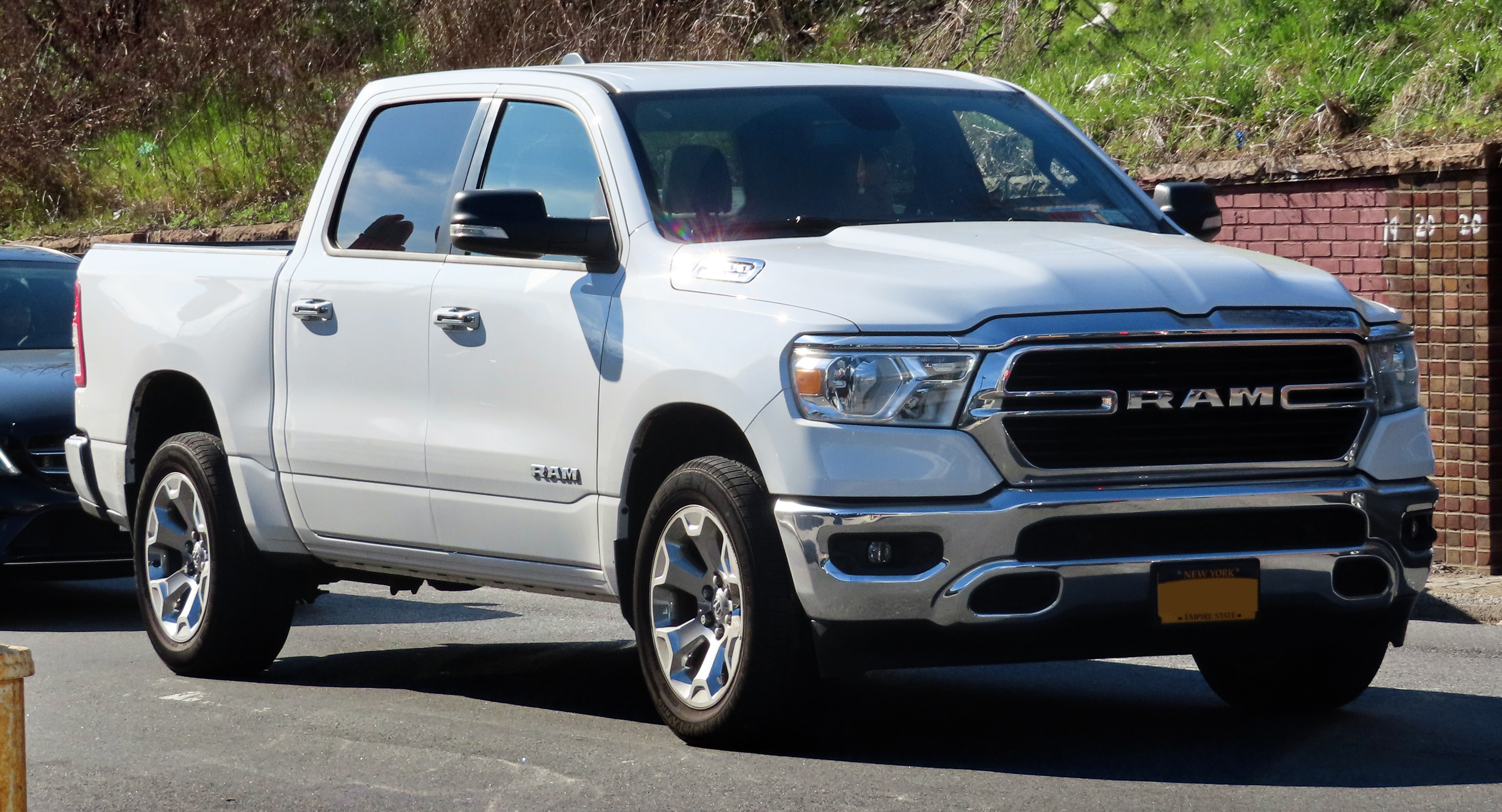
Ram A1500 Ram
"Yes. So we are in the process of picking up a camper trailer. As you know, I have a 1,500 ram limited, and the worst thing you can probably do is go online and ask people's opinion as to whether that thing can help certain other vehicles because you will"

F-250 Godzilla motor
"So at some point, we thought we needed to upgrade this half ton to a three-quarter ton, and we did so by shopping an F-250 Godzilla motor, [3324.8s] 7.3. Great engine, by the way."
This is a Ford heavy-duty truck (the F-250) with a famous big V8 engine nicknamed “Godzilla.” People like it because it’s designed to handle hard work like towing for long periods.
The Ford F-250 Super Duty is a heavy-duty pickup, and the “Godzilla” motor refers to Ford’s big-displacement V8 used in certain Super Duty trucks. It’s known for being built for durability and towing work rather than high-revving performance.
three quarter ton
"So at some point, we thought we needed to upgrade this half ton to a three-quarter ton, and we did so by shopping an F-250 Godzilla motor, [3324.8s] 7.3."
“Three-quarter ton” is a category for heavier-duty pickups. They’re built to carry and tow more, but that often means the suspension feels stiffer when you’re not hauling anything.
“Three-quarter ton” is another pickup-truck class label, positioned between “half-ton” and “one ton.” In practice, it usually means higher payload/towing ratings and a suspension tuned for carrying weight, which can make the ride harsher when unloaded.
half-ton
"So at some point, we thought we needed to upgrade this half ton to a three-quarter ton, and we did so by shopping an F-250 Godzilla motor, [3324.8s] 7.3."
“Half-ton” is a way people group pickup trucks by how much weight they’re meant to carry and tow. It usually means a lighter-duty truck than “three-quarter ton” or “one ton,” which can feel more comfortable day-to-day.
“Half-ton” is a common pickup-truck class label that roughly indicates a lighter-duty truck compared with “three-quarter ton” and “one ton.” It’s tied to how the truck is rated for payload and towing, and it affects suspension stiffness and ride comfort.
rear springs
"The Super Duty is a very capable vehicle, but holy moly, if you are not under load, the rear springs are so stiff that it really just rattles the fillings out of your teeth and bounces like a Pogo stick over rough pavement."
Rear springs are the suspension springs that support the back of the vehicle and help control ride height and how the truck absorbs bumps. In heavy-duty trucks, they can be tuned to handle loads, which can make the ride feel stiff and bouncy when the truck is unladen.
unweighted
"But that thing was unweighted, very, very hard to basically contemplate as a daily driver, so we didn't get it."
“Unweighted” means the truck isn’t carrying the extra weight you’d normally tow or haul. A truck can feel rougher when it’s empty compared with when it’s loaded.
“Unweighted” here means the truck is being driven without the extra mass of a trailer or cargo. That matters because heavy-duty suspension setups can feel harsh or bouncy when they’re not supporting a load.
towing limit
"How heavy is the trailer you're thinking about towing? [3391.8s] It's going to be about 6,800 pounds, I think, unweighted and probably another 1,000 when you load it up. Okay. Well, within the towing limit, but then you get right about payload, which I discovered too."
Your towing limit is the maximum weight your truck is rated to pull with a trailer. If you go over it, you can overwork the engine, brakes, and other systems.
A towing limit is the maximum trailer weight the vehicle is rated to tow under specified conditions. It’s determined by factors like cooling capacity, drivetrain strength, and braking capability, and it can vary with how the truck is equipped and loaded.
payload
"Okay. Well, within the towing limit, but then you get right about payload, which I [3404.9s] discovered too."
Payload is the maximum weight the truck can carry. Even if your towing limit looks okay, you can still exceed payload once you add people and cargo.
Payload is the maximum weight a vehicle can carry in addition to its own weight, including passengers, cargo, and any items in the truck bed. It’s a key limit for towing setups because you can run out of payload even if you’re still within the towing rating.
Request an Explanation
Heard something you'd like explained? We'll add it to this episode.
Sign in to request explanations for terms you heard.
Want to learn more?
Browse our glossary for plain-English explanations of automotive terms, jargon, and concepts.
Help improve this episode
See something that's not quite right? Our annotations are AI-generated and can sometimes miss the mark. Click the flag icon on any annotation to suggest a correction.