
Massive Jeep Recall, Mercedes Plug-in Wagon, Why U.S. Car Sales Remain Robust
About this episode
Jeep’s recalling about 1,000,000 Wrangler and Gladiator vehicles, with recall letters expected to go out July 9. The hosts also spend time with the 2026 Mercedes plug-in hybrid E-Class wagon, calling out real-world electric range and quick performance, then compare it with Toyota’s ongoing V6 recall issues tied to COVID-era engine design. The conversation widens to why U.S. sales stay resilient despite higher prices—plus a look at solid-state battery timelines and potential EV disruption.
Jill and Tom open the show sharing news of a massive Jeep recall. Jeep has issued a "park-outside" warning for owners of many late-model Jeep Wranglers and Gladiators. Listen in for details.
The hosts discuss Mitsubishi's new electric crossover, the Eclipse Sportback EV. Mitsubishi's first U.S.-market electric vehicle shares its basic architecture with the Nissan Leaf.
Jill reviews the Mercedes-Benz E 53 Hybrid wagon. One of a waning number of true station wagons still offered in the U.S., the E 53 serves up power and tech, though exclusive pricing will keep the car a rare sight on U.S. roads.
In the second segment, Jill and Tom welcome Automotive News' Larry Vellequette to the show. Larry talks about Toyota quality issues, the Gordie Howe Bridge, and surprisingly robust U.S. auto sales. Listen in for some great insights.
In the last segment, Jill is subjected to Tom's "Who is that Guy?" quiz. The hosts wrap up the show with a quick take on Ferrari's first-ever electric vehicle, the controversial Luce. Check out the Car Stuff Podcast Facebook page for a picture of the Luce, and listen in for the price.
Hosted by Simplecast, an AdsWizz company. See pcm.adswizz.com for information about our collection and use of personal data for advertising.

Mercedes GLE
"CarGurus and just wrote a review of the Mercedes GLE for US News."
The Mercedes GLE is a luxury SUV made by Mercedes-Benz. It’s the kind of vehicle people buy when they want a nicer, more comfortable family car with room for passengers and cargo.
The Mercedes GLE is a midsize luxury SUV from Mercedes-Benz, known for combining everyday comfort with a more upscale driving feel. It’s a common choice for shoppers comparing family-friendly utility with premium features.

Jeep Gladiator
"..., 1000000 units of the 21 through 25 Wrangler and Gladiator. Fairly simple problem."
The Jeep Gladiator is a pickup truck that’s designed to go off-road. It’s related to the Wrangler, but it has a truck bed for hauling. The podcast mentions it because a common issue affected many Gladiators and was described as fairly simple.
The Jeep Gladiator is a midsize pickup truck built on the Wrangler’s general off-road platform, combining truck utility with Jeep-style capability. The podcast groups it with the Wrangler and references a large number of units and a “fairly simple problem,” suggesting a recall or common concern across those model years. It comes up because owners care about how dependable the truck is and how easily issues can be corrected.

Jeep Wrangler
"...and six zeros, 1000000 units of the 21 through 25 Wrangler and Gladiator. Fairly simple problem."
The Jeep Wrangler is a type of SUV made for off-road driving. It’s popular because it’s built to handle rough roads and has lots of parts and upgrades available. The podcast mentions it because there was a problem that affected many Wranglers and it was described as fairly simple to deal with.
The Jeep Wrangler is a rugged, off-road-focused SUV known for its simple, durable design and strong aftermarket support. In the podcast context, it’s mentioned alongside the Gladiator as part of a large production run and a “fairly simple problem,” likely referring to a specific issue affecting those model years. It’s discussed because Wrangler ownership often centers on reliability, recalls, and how straightforward fixes are.
wiring harness
"“I imagine this is not a super difficult fix. This sounds like a wiring harness thing. You will have to bring your vehicle in.”"
A wiring harness is like the car’s electrical “wire bundle.” If a recall might involve it, the fix is typically about making sure the wires and connectors are connected correctly so the car doesn’t act up.
A wiring harness is the bundled set of wires and connectors that routes electrical power and signals through a vehicle. When a recall is suspected to be “a wiring harness thing,” it usually means a specific electrical connection or routing needs inspection or replacement to prevent faults.
hybrids
"“And this is separate from the four by e-recalls that we have seen previously. This is on their just regular non-hybrid vehicles. This has got nothing to do with the hybrids.”"
A hybrid car uses two power sources: a gas engine and an electric motor. Here, they’re saying the recall is for non-hybrid cars, and it may or may not include the hybrid versions too.
In automotive context, “hybrids” refers to vehicles that use both a gasoline engine and an electric motor/battery system. The hosts are distinguishing which vehicles are affected by the recall—regular (non-hybrid) vehicles versus hybrid versions.

Mitsubishi Eclipse Cross
"“Mitsubishi sells a vehicle called the Eclipse Cross. That's a small crossover. And that borrows its name from the legendary Eclipse,”"
The Mitsubishi Eclipse Cross is a small SUV. In this episode, they’re talking about a recall affecting this model and why the name “Eclipse” matters.
Mitsubishi Eclipse Cross is a small crossover SUV from Mitsubishi. It’s notable here because the hosts are discussing a recall situation tied to this model, and they connect it to the older “Eclipse” nameplate.
crossover
"[291.5s] But that was a hot little car. [293.1s] Now it's a crossover, not so hot."
A crossover is a car that’s kind of in between a regular car and an SUV. It usually feels more like a normal car to drive, but looks more rugged and has a higher seating position.
A crossover is a vehicle type that blends features of a passenger car and an SUV, typically prioritizing easier everyday driving and packaging over true off-road capability. The host uses it to contrast the older Eclipse’s sporty character with its newer, more SUV-like direction.

Mitsubishi Eclipse Sportback EV
"But the Eclipse Sportback EV due out later this year is an electric version of... [304.8s] The Nissan Leaf."
This is Mitsubishi’s upcoming electric car that uses the Eclipse name. The host says it’s basically an EV take on the same kind of concept as the Nissan Leaf, but with Mitsubishi’s look and branding.
The Mitsubishi Eclipse Sportback EV is a planned electric version of the Eclipse nameplate, shifting from the original Eclipse’s sporty identity to an EV crossover-style design. In this segment, the host frames it as an EV built around the same general idea as the Nissan Leaf, but with Mitsubishi branding and styling cues.
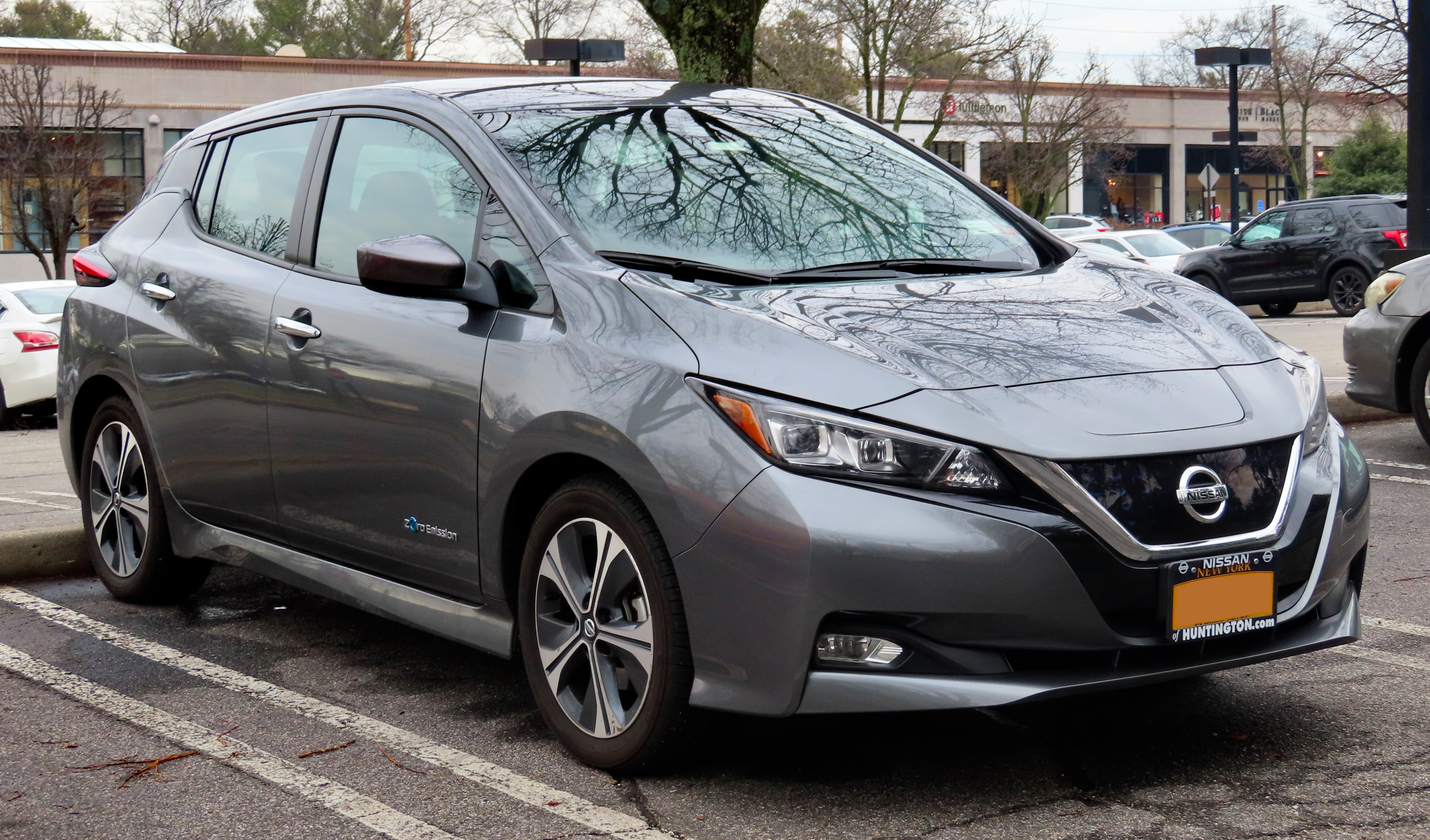
Nissan Leaf
"But the Eclipse Sportback EV due out later this year is an electric version of... [304.8s] The Nissan Leaf. [305.6s] The Nissan Leaf."
The Nissan Leaf is one of the best-known electric cars from Nissan. In this segment, it’s the comparison point for the upcoming Mitsubishi EV and even how its rear lights may look.
The Nissan Leaf is Nissan’s mainstream battery-electric hatchback/compact EV that became one of the most recognizable EVs in the 2010s. Here, it’s used as the reference point for how the upcoming Mitsubishi Eclipse Sportback EV will be an “electric version” of the Leaf, including visual cues like tail-light design.
3D tail lights
"It doesn't have the 3D tail lights that you see on the Nissan Leaf, [346.8s] but it has a really attractive tail end."
“3D tail lights” refers to tail-light designs that use layered lenses, sculpted housings, or multiple light elements to create a more dimensional, depth-like appearance rather than a flat light bar. The host contrasts this with the Eclipse Sportback EV’s tail-light look versus the Nissan Leaf’s design.
J1772
"having Tesla charging as well as your, was it J1772, like level two charging capabilities"
J1772 is the standard plug shape many electric cars use for everyday charging. It’s commonly used for slower charging at home or at public stations.
J1772 is a common EV charging connector standard used widely in North America for Level 2 charging. It’s the “plug type” the car uses for slower, home and public charging compared with faster DC fast-charging standards.
level two charging
"was it J1772, like level two charging capabilities, you have this really nice, affordable, well-rounded vehicle"
Level 2 charging is the faster kind of EV charging you often get at home with a 240V setup or at public stations. It’s usually quicker than plugging into a normal outlet.
Level 2 charging refers to EV charging that runs on 240V power, typically faster than standard household Level 1 charging. It’s commonly used for home installs and many public charging stations, making it practical for daily driving.

Mitsubishi Outlander
"And Mitsubishi's take on the Outlander, [461.8s] which is more or less based on the Nissan Rogue, is very nice."
The Mitsubishi Outlander is a popular SUV. Here, the hosts say it’s closely related to the Nissan Rogue, which usually means they’re built on similar engineering and can drive in a similar way.
The Mitsubishi Outlander is a mainstream crossover SUV that’s often discussed in the context of its platform and powertrain choices. In this segment, the hosts connect it to the Nissan Rogue, implying it shares design/engineering DNA that can affect how it drives and feels.

Nissan Rogue
"And Mitsubishi's take on the Outlander, [461.8s] which is more or less based on the Nissan Rogue, is very nice."
The Nissan Rogue is a common family SUV. In this discussion, it’s used as a reference point for how the Mitsubishi Outlander is built and how it drives.
The Nissan Rogue is a widely sold crossover SUV known for being a practical, comfortable daily driver. The hosts mention it as the basis for the Mitsubishi Outlander’s approach, which points to shared platform/engineering influences that can carry over into ride and handling.

Subaru Outback
"Of all the station wagons sold last year, almost all of them were Subaru Outbacks."
They’re saying the Subaru Outback is the most common wagon-style car people buy. So even though wagons are rare, the Outback is one of the main options that fills that role.
The Subaru Outback is being used here as the dominant example of the “station wagon” category in the U.S. market. The point is that many buyers who want wagon-like space and practicality are effectively choosing the Outback instead of traditional wagons.
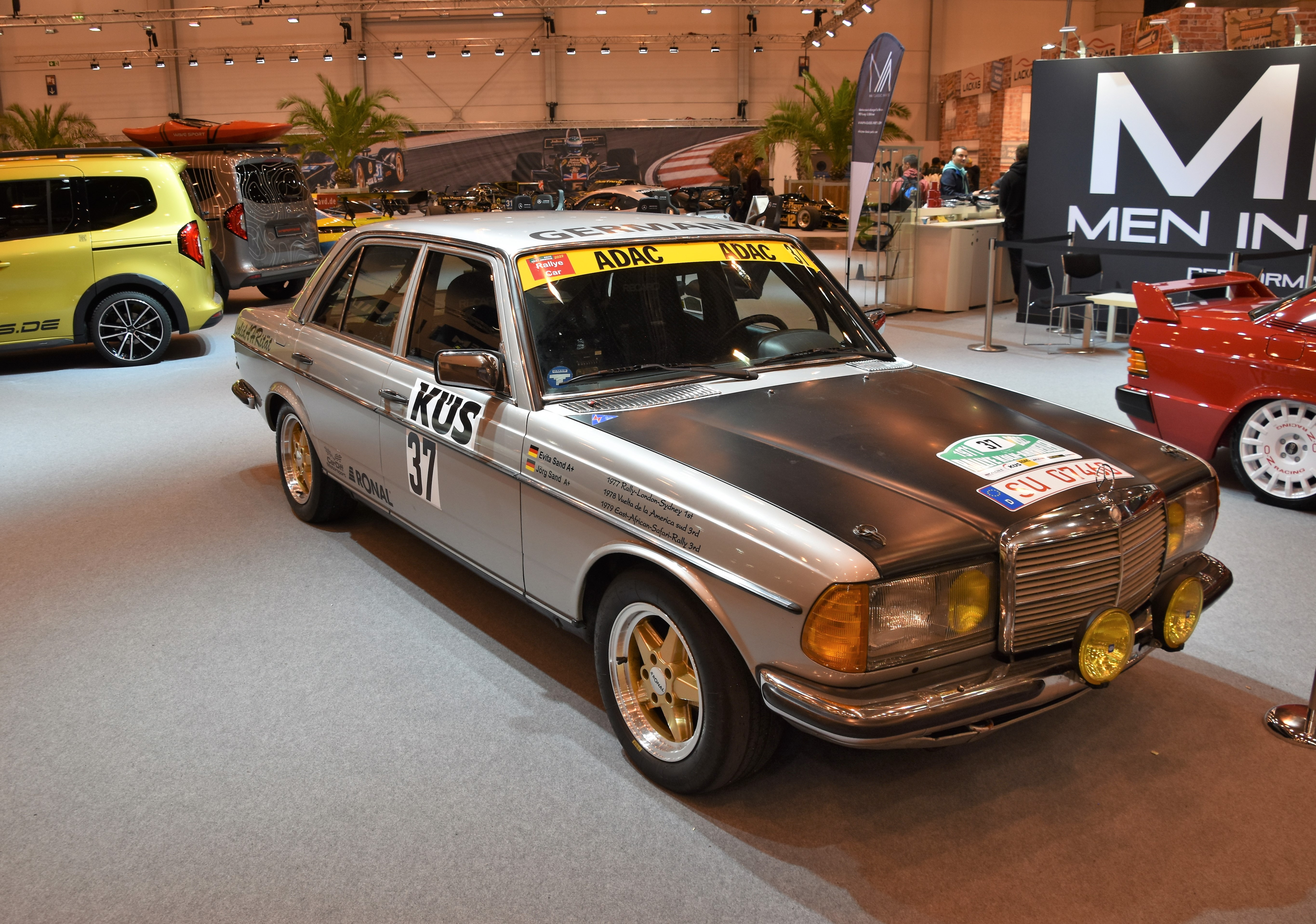
Mercedes E-Class
"They're based on the E-Class sedan."
The Mercedes E-Class is the sedan line. In this case, the wagon versions are built from the same underlying design, so they drive and behave more like an E-Class than like a generic wagon.
The Mercedes E-Class is the sedan model family that the discussed Mercedes-Benz wagons are based on. That matters because the wagon’s layout, suspension geometry, and overall “feel” are derived from the E-Class platform rather than being a totally separate design.
all-terrain
"But there is a base version that is more or less off-road-y. They call the all-terrain."
“All-terrain” here means a wagon setup meant for rough roads. It’s not a full SUV, but it’s intended to be tougher and more capable than a normal road-only wagon.
“All-terrain” is a trim/variant label used for wagons that are set up to handle rougher surfaces than a typical road-focused wagon. It usually implies things like more rugged styling and suspension/ride-height tuning, aiming for a crossover-like usability without becoming a full SUV.
plug-in hybrid
"And now there's a plug-in hybrid... You drove the plug-in hybrid."
A plug-in hybrid is a car that uses both electricity and gas. You can charge it from a plug, so it can sometimes drive on electric power for part of your trip before the gas engine takes over.
A plug-in hybrid (PHEV) is a hybrid vehicle that can be charged from an external power source, typically using a charging cable. Compared with a regular hybrid, it can often run for a while on electric power alone, depending on battery size and driving conditions.
EPA estimates
"EPA estimates that you get 41 miles of electric range. [584.6s] But on the trip computer, I've been seeing like 48 to 50 miles of electric range. [589.3s] I haven't put that to the test yet."
The EPA is a U.S. agency that publishes official testing numbers for things like electric range and fuel economy. Those numbers are based on standardized tests, so your real results can differ. The host is comparing the official estimate to what they’re seeing in daily driving.
EPA estimates refer to fuel-economy and electric-range figures published by the U.S. Environmental Protection Agency using standardized testing procedures. Real-world results can be higher or lower depending on weather, driving style, and how much you charge before driving. The host compares the EPA electric-range number to what the trip computer shows.
electric range
"EPA estimates that you get 41 miles of electric range. [584.6s] But on the trip computer, I've been seeing like 48 to 50 miles of electric range. [589.3s] I haven't put that to the test yet."
Electric range is how many miles the car can drive using electricity only. It changes with things like weather and how you drive. The host is saying the car’s displayed electric range has been higher than the official estimate.
Electric range is the distance a plug-in vehicle can travel using only its electric motor before the battery charge is depleted. It’s influenced by temperature, speed, accessory use (like heating/cooling), and driving behavior. In this segment, the host contrasts the EPA electric-range estimate with the trip computer’s displayed range.
110 jack
"But I've only used electric since I've had it. [617.4s] And I plugged it into my 110 jack in my garage. [621.4s] And I think it's, I mean, it is everything I could possibly want in a vehicle."
A 110 jack means a regular home outlet (about 120 volts) you can plug a charger into. It usually charges more slowly than a dedicated home charging station, but it can be enough for daily use if you charge overnight. The host is saying they’ve been able to rely on electric driving by charging at home.
A 110 jack refers to a standard household 120-volt outlet in the U.S. used for charging plug-in vehicles (often with a portable charging setup). Charging from a lower-voltage outlet is typically slower than using a dedicated higher-voltage home charger, but it’s convenient for overnight charging. The host mentions plugging into this outlet to support their electric-only driving.
0-60
"Mercedes Quads 0-60 in four seconds flat from 577 horsepower."
“0-60” tells you how fast a car can go from standing still to 60 mph. Lower seconds usually means the car feels quicker when you press the accelerator.
“0-60” is shorthand for how many seconds it takes a car to accelerate from 0 mph to 60 mph. It’s a common performance metric because it captures how quickly the car can build speed from a stop.
fuel economy
"Because it really is, I mean, from the fuel economy, just tooling around in the city, I would never have to dip into the gas engine."
Fuel economy is how efficiently a vehicle uses energy—typically measured as miles per gallon (for gas) or miles per unit of energy (for hybrids/EVs). In a plug-in hybrid context, it’s strongly affected by how much you can drive on electricity before the gas engine has to take over.
gas engine
"just tooling around in the city, I would never have to dip into the gas engine. But driving to and from Indianapolis as I do, I would have that backup of the gasoline engine"
The “gas engine” is the part that runs on gasoline. In a plug-in hybrid, it’s usually there for longer trips or when the battery isn’t enough.
A “gas engine” is the internal-combustion engine that burns gasoline to make power. In a plug-in hybrid setup, it typically acts as a backup when the battery charge is depleted or when you need more power for longer-distance driving.
infotainment
"You have a lot of screens in addition to the center stack infotainment screen and the digital display."
Infotainment is the car’s main screen system for things like music, navigation, and phone features. It’s basically the dashboard’s “tech” interface.
Infotainment is the car’s integrated system for media and information—typically navigation, audio, phone connectivity, and vehicle settings—shown on the center screen. In modern Mercedes interiors, it often includes multiple displays and touch/gesture controls.
digital display
"and the center stack infotainment screen and the digital display. You have a passenger screen."
A digital display is the screen that shows your driving info instead of old-style gauges. It can show things like speed and battery status, and some cars use multiple screens.
A digital display in the instrument area replaces traditional analog gauges with screens that can show speed, battery/energy status, navigation prompts, and other driving information. The host is also describing a separate “screen behind the wheel,” suggesting a multi-display cockpit layout.
passenger screen
"You have a passenger screen. And I haven't dug into the workings of the screen behind the wheel yet,"
A passenger screen is a screen for the front seat passenger. It’s usually there so they can watch or control things like media or navigation.
A passenger screen is an in-cabin display aimed at the front passenger, often used for media, navigation, or vehicle information. It’s part of the trend toward multi-screen interiors, which can make the cabin feel more like a tablet-based cockpit.
3D
"but it's 3D and it's driving me crazy. Because when I look at it, sometimes it's blurry"
They’re saying the dashboard screen uses a 3D effect. They notice it can look blurry when you glance at it, but clearer once you focus your eyes on it.
In this context, “3D” refers to a stereoscopic or depth-effect display technology used in the driver’s screen. The host’s description—blurry at a glance and then coming into focus—suggests the display’s depth effect or focus behavior can be distracting depending on viewing angle and momentary eye focus.
Bermister surround sound system
"But is that the Bermister? I'm like at the available Bermister with the really cool steel guitar, speaker grills. ... the Bermister surround sound system is not optional."
They’re talking about a premium sound system brand called “Bermister.” It uses multiple speakers so music and audio feel more spread out around you, not just coming from the front.
“Bermister” here refers to a branded surround-sound audio system option/feature. Surround sound uses multiple speakers and audio processing to create a more immersive, directional soundstage inside the cabin.
recall
"This recall has been fascinating to watch, number one. And it's fascinating."
A recall is when a car company has to fix a problem in certain vehicles. Here, the problem is described as debris getting into the engine and ruining engines.
A recall is when a vehicle manufacturer (or regulator) requires a fix because a safety-related defect or serious problem is found. In this segment, the recall is described as being driven by debris getting into the engine and damaging it.
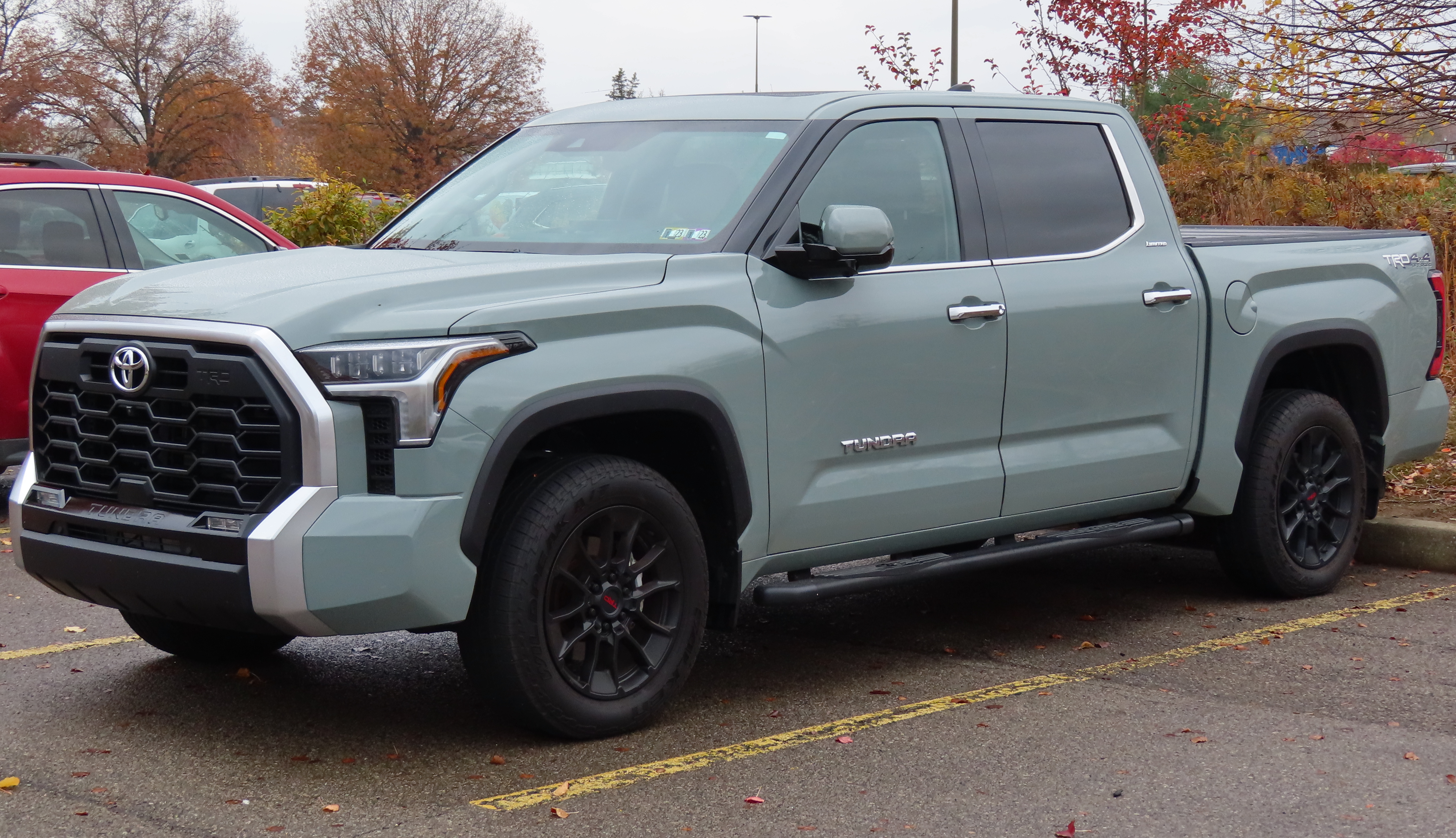
Toyota Tundra
"These are V6 recalls primarily for the Tundra. The Toyota Tundra full-size pickup,"
The Toyota Tundra is a big pickup truck from Toyota. Here, the hosts are talking about a recall affecting some Tundras because debris can get into the engine and cause serious damage.
The Toyota Tundra is Toyota’s full-size pickup truck, built to tow and haul like a traditional American truck. In this segment, it’s specifically tied to a recall involving V6 engines and debris entering the engine that can ruin them.

Lexus Gx
"Lexus GX is impacted. A couple of smaller vehicles as well,"
The Lexus GX is a luxury SUV from Lexus. The hosts say it’s also affected by the recall because debris can get into the engine and damage it.
The Lexus GX is a mid-size luxury SUV from Lexus, known for body-on-frame construction and off-road capability. In this segment, the Lexus GX is mentioned as being impacted by the same kind of recall issue affecting engines—debris getting into the engine and damaging it.
engine switchover
"What's fascinating, though, is that the engine switchover didn't solve the issue. They're still having problems."
An “engine switchover” means the company changed the engine being installed or the engine design used for repairs. In this case, Toyota tried swapping in new engines, but the issue still kept happening.
An “engine switchover” is when a manufacturer changes what engine is installed—often moving from one production approach to another or switching to a revised engine design. Here, Toyota replaced engines to fix the recall issue, but the hosts say the switchover didn’t fully solve the problem.
residual demand
"Could it be just residual demand from COVID? It seemed like we'd be past that by now."
“Residual demand” means people still want to buy cars even after the original shortage is over. The host is wondering if that leftover demand is still affecting sales.
“Residual demand” here means leftover consumer demand that built up during the COVID-era supply shortages and then continued to show up after production normalized. The host is questioning whether that lingering pent-up buying is still propping up sales.
upside down
"They're all upside down by significant amounts. They shouldn't be back in market."
“Upside down” means you owe more on the loan than the car is worth right now. That can make it harder to sell or trade the car in.
Being “upside down” on a car loan means the loan balance is higher than the car’s current market value. That matters for sales because owners who are upside down are less likely to trade in or sell, which can reduce the pool of available buyers.

Hyundai Santa Fe hybrid Calligraphy
"No. I did notice something last week. I wrote a review of the Hyundai Santa Fe hybrid calligraphy. And in going researching that vehicle, one of the things I noticed is that Hyundai has added a base trim level to the hybrid side of that vehicle..."
The Hyundai Santa Fe is a family SUV. “Hybrid Calligraphy” is the nicer version that uses a hybrid powertrain, and the host is saying Hyundai added a cheaper hybrid version to keep buyers from being priced out.
The Hyundai Santa Fe is a mainstream three-row SUV, and the “hybrid Calligraphy” trim is the higher-end version of the Santa Fe’s hybrid powertrain. In this segment, the host notes Hyundai added a base trim level on the hybrid side, which is a pricing/positioning move aimed at making the hybrid model more attainable.
longer loan terms
"I was going to say, I wonder if some of the the ability to buy is coming from longer loan terms, because traditionally it's been three, maybe five years, but I'm starting to see like seven, 10-year loans."
“Longer loan terms” means paying for the car over more years. That can make the monthly payment smaller, even if the total cost ends up higher.
“Longer loan terms” refers to extending auto financing from the more typical few years to much longer periods (like 7 or 10 years). Longer terms can lower the monthly payment, which can keep some buyers in the market even when prices and interest rates are high.
underwriting
"And frankly, the underwriting would probably support it because of the better quality. If car is going to last longer, perhaps."
“Underwriting” is the lender’s risk-check process. It’s how they decide if you qualify for a loan and what kind of loan terms you get.
In auto lending, “underwriting” is the process lenders use to decide whether to approve a loan and what terms to offer, based on things like credit risk and the borrower’s ability to repay. The host suggests underwriting may be supporting longer terms because the cars are lasting longer due to improved quality.
SAR
"I think the theory that I'm working on is that we basically you have priced out the what's called the SAR, the selling rate was around 17."
“SAR” sounds like a sales-tracking number used to describe how fast cars are selling. The host mentions a selling rate around 17, but doesn’t fully define the acronym in this clip.
“SAR” is referenced as “what's called the SAR,” tied to a “selling rate” around 17. In automotive sales analysis, such shorthand typically refers to a sales-rate metric used to track how quickly inventory is moving, but the transcript doesn’t spell out the acronym.
solid state battery
"So Toyota, like many automakers, is working on the solid state battery. And this fascinates me..."
A solid state battery is a type of EV battery that uses a solid material inside instead of a liquid. The goal is to make the battery safer and potentially better at storing energy. If it works as hoped, it could change how EVs are built and priced.
A solid state battery is an electric-vehicle battery that replaces the usual liquid electrolyte with a solid material. That design can improve safety and potentially enable higher energy density, which could mean longer range or smaller/lighter packs for the same energy. In this segment, the hosts focus on Toyota’s work on solid state batteries and how it could disrupt EV economics and product planning.
energy density
"The solid state battery, it's about the size of a large briefcase, right?"
Energy density is how much “usable power” a battery can fit into a certain size or weight. If a battery has higher energy density, the car can often travel farther without making the battery bigger. It’s one of the big reasons people care about new battery designs.
Energy density is how much electrical energy a battery can store for a given size or weight. Higher energy density generally helps EVs go farther without adding mass or volume. The hosts don’t use the phrase explicitly, but their discussion of a compact “briefcase-sized” pack and industry disruption is directly tied to the concept.
battery-as-a-service
"Well, that's like the backward model that Vinfast was trying to go for, where they were going to be selling you the car and then renting you the battery."
Battery-as-a-service means you don’t own the EV battery. Instead, you pay to use it, kind of like a subscription. The idea is to make it easier to keep the car while upgrading or replacing the battery later.
Battery-as-a-service (BaaS) is a business model where customers don’t buy the battery outright; they pay to use it, often via a subscription or lease. That shifts the financial burden from the vehicle price to ongoing payments and can make it easier to upgrade batteries over time. The hosts compare this idea to Vinfast’s plan to sell the car while renting the battery.
Vinfast
"Well, that's like the backward model that Vinfast was trying to go for, where they were going to be selling you the car and then renting you the battery."
Vinfast is an EV company. In this discussion, they’re mentioned for a plan where you buy the car but rent the battery instead of owning it. The hosts use it to explain how battery technology could reshape EV pricing and ownership.
Vinfast (spelled Vinfast in the transcript) is an EV brand that has explored unusual ownership economics, including the idea of selling the vehicle while renting the battery. That approach is meant to reduce upfront cost and shift value toward the battery over the vehicle. In this segment, it’s used as an example of how solid-state batteries could change EV business models.
Toyota solid-state battery
"from this particular battery. So this is a Toyota solid-state battery. It's a Toyota solid-state battery."
They’re talking about Toyota’s solid-state battery technology. The main idea is that it could last much longer than the batteries used in most cars today.
This segment references Toyota’s solid-state battery technology, which is Toyota’s push toward next-generation EV and electrification batteries. The key point is that the hosts expect it to degrade less than conventional lithium-ion chemistry, potentially enabling much longer service life.
replaceable batteries
"In China, they have luck with replaceable batteries. They actually have charging stations where they simply take a battery out, swap it for another battery."
Instead of charging a battery, battery swapping lets you trade your empty battery for a full one at a station. The hosts say it’s easier when battery designs are standardized so different cars can use the same swap units.
Battery swapping (replaceable batteries) is a system where a depleted battery is removed and replaced with a charged one at a station. The hosts argue it works in China partly because manufacturers can agree on battery types, while the U.S. market lacks that kind of standardization.
lithium-ion
"But 40 years is a long time. We're already seeing that the lithium-ion batteries in most cars are going way beyond the service license of the vehicle."
Lithium-ion is the common battery type used in most modern cars. The hosts are saying that even after a lot of miles, it often still has most of its usable energy left.
Lithium-ion is the dominant battery chemistry used in most modern cars, especially hybrids and EVs. The hosts mention that even after high mileage, lithium-ion packs can retain a large fraction of their original capacity, which is a way to illustrate how degradation typically works.
service license
"We're already seeing that the lithium-ion batteries in most cars are going way beyond the service license of the vehicle."
“Service license” is basically the time period the battery is expected to keep working well enough for its intended use. They’re comparing that normal expected lifespan to the idea of batteries lasting decades.
“Service license” here refers to the expected usable life or warranty/expected performance window for the vehicle’s battery pack. The hosts use it to contrast typical lithium-ion degradation timelines with the much longer life they expect from solid-state batteries.
rotary engine
"Was he the inventor of the rotary engine or a president of General Motors?... That was the rotary engine. It's in fact, it's the Wenkel rotary."
A rotary engine is an engine design where a spinning rotor makes power. It’s different from the usual piston engines you’re probably picturing, and the show connects it to the Wenkel rotary idea.
A rotary engine is a type of internal combustion engine where a rotor spins to create combustion and power, instead of pistons moving back and forth. The segment specifically references the “Wenkel rotary,” tying the rotary concept to Felix Wenkel and early development for NSU in 1957.
Alfred P. Sloan
"Alfred P. Sloan was the president of GM between 23 and 43. He was in the company with the company longer than that. He was important for a couple of things."
Alfred P. Sloan was an important leader at General Motors. The show says he helped GM through the Great Depression and created an idea for how GM’s different car brands were positioned for different kinds of buyers.
Alfred P. Sloan was a key executive at General Motors (GM), serving as GM president from the early 1920s into the 1940s. The episode credits him with shaping GM’s business approach during the Great Depression and with the “Sloanian ladder,” which mapped brands to different customer “ability to pay” and expectations.
Sloanian ladder
"He's credited with the Sloanian ladder, which is basically that every General Motors division... would be very specifically tied to someone's ability to pay and their expectations of a vehicle."
The “Sloanian ladder” was GM’s marketing plan for its many car brands. It treated the brands like steps: as people made more money, they were expected to “move up” to the next brand in the lineup.
The “Sloanian ladder” was General Motors’ brand strategy that arranged its divisions in a step-up hierarchy. The idea was that customers would move from lower-priced brands to higher-priced ones as their income and expectations grew—starting with Chevrolet and then moving through brands like Pontiac, Oldsmobile, Buick, and Cadillac.
Felix Wenkel
"Felix Wenkel. Okay. Was he the inventor of the rotary engine or the founder of Firestone?... he developed that in 1957 for German car company NSU."
The host credits Felix Wenkel with the rotary engine idea. In this segment, they say it was developed in the late 1950s for a German automaker called NSU.
Felix Wenkel (as named in the segment) is credited here with developing the rotary engine concept that the host calls the “Wenkel rotary.” The episode says it was developed in 1957 for the German car company NSU.
John Z. DeLorean
"Number four, John Z. DeLorean. Was he the founder or the father of the Pontiac GTO or the inventor of the turbocharger?"
John Z. DeLorean is a famous automotive executive/figure. In this trivia question, the host links his name to the Pontiac GTO and also jokes about whether he invented the turbocharger.
John Z. DeLorean is referenced in the segment as the subject of a trivia question connecting him to the Pontiac GTO. Even though the question is framed as “founder/father” versus “inventor of the turbocharger,” the key point for listeners is that DeLorean is a notable automotive figure tied to American performance-car history.
turbocharger
"Number four, John Z. DeLorean. Was he the founder or the father of the Pontiac GTO or the inventor of the turbocharger?"
A turbocharger is a device that helps an engine make more power by forcing extra air into it. It uses the engine’s exhaust to spin a turbine that compresses that incoming air.
A turbocharger is a forced-induction device that uses exhaust gas to spin a turbine, which compresses incoming air. Compressing the air lets the engine burn more fuel (and make more power) than it could with naturally aspirated airflow alone.

Delorean DMC-12
"...s question. Okay. All right. Number four, John Z. DeLorean. Was he the founder or the father of the Pontiac ..."
The DeLorean DMC-12 is a sports car with a very recognizable look. The podcast brings it up while discussing John Z. DeLorean and his involvement with cars. It’s mentioned because the DMC-12 is closely tied to that person’s story.
The DeLorean DMC-12 is a distinctive sports car best known for its unique styling and its place in automotive pop-culture history. In the podcast, it’s mentioned alongside questions about John Z. DeLorean and his role in automotive concepts. It’s discussed because the DMC-12 is strongly associated with the DeLorean story and the people behind it.
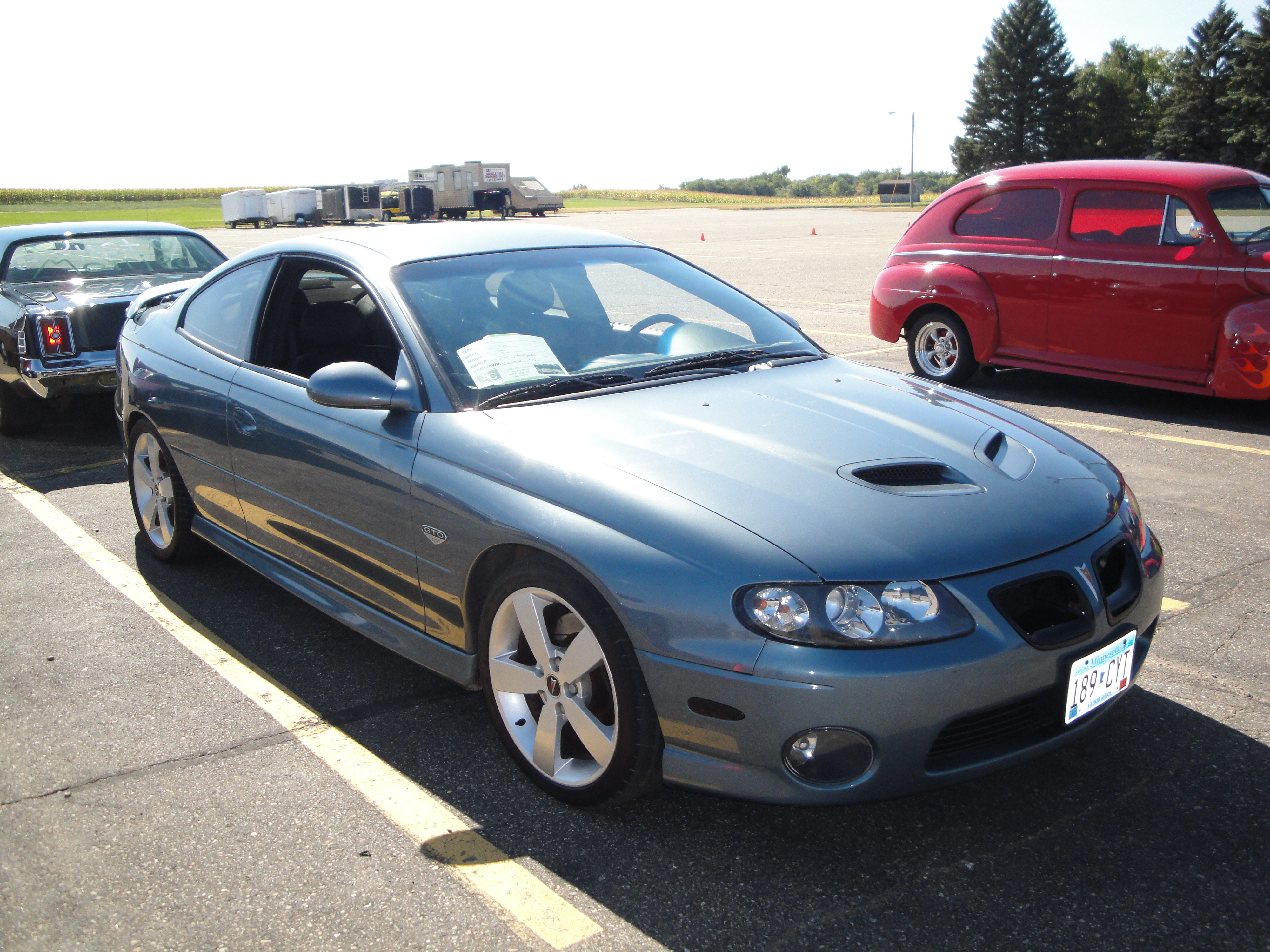
Pontiac GTO
"But was he the father of the GTO? I'm going to say yes. Yeah, he basically invented the muscle car... The GTO came out for 63, 64... The GTO is a cool car... It was a mid-sized car stuffed full of big-sized car engine, plus some stuff."
The Pontiac GTO is an early “muscle car,” meaning it was built to be fast in a straight line and exciting to drive. The host explains it as a regular-sized car that was stuffed with a big engine, and it got some upgrades to help it handle better. Even then, it could still be risky.
The Pontiac GTO is a landmark American muscle car from the early 1960s, credited with helping define the muscle-car formula. In this segment, they describe it as a mid-sized car with a big engine, plus handling upgrades like better brakes, steering, and roll bars—yet still known for being dangerous. It’s also tied to the 1963–1964 era and the idea of performance-focused packaging.
muscle car
"Yeah, he basically invented the muscle car. Okay... A lot of people don't know what the formula is for a muscle car... It was a mid-sized car stuffed full of big-sized car engine... better brakes, better steering, roll bars."
A muscle car is an American kind of performance car built for strong acceleration. The idea is usually a normal-sized body with a huge engine, plus some extra parts to help it stop and handle better. The host also points out that they weren’t always easy or safe to drive.
A muscle car is an American performance category that became popular in the 1960s: typically a relatively affordable, mid-sized car fitted with a large-displacement engine. The host describes the “formula” as big engine power plus supporting upgrades like better brakes, steering, and roll bars. They also emphasize the tradeoff—these cars could be dangerous even while being fun to drive.

Ferrari 250 GTO
"The GTO was based on a couple of Ferraris that he liked, including the 250 GTO. And the GTO came out for 63, 64."
The Ferrari 250 GTO is a very famous, very expensive Italian performance car from the early 1960s. The host is saying the Pontiac GTO’s creator was inspired by cars like this. It’s basically “European racing cool” influencing an American muscle-car idea.
The Ferrari 250 GTO is a famous Italian grand touring race car from the early 1960s, often cited as a benchmark for performance and design. In this segment, the host claims the Pontiac GTO was based on Ferraris the creator liked, “including the 250 GTO,” tying the muscle-car story to elite European inspiration. The point is the contrast: a track-bred Ferrari influence versus a mass-market American muscle-car execution.
Max Gale
"finally, Max Gale. Max Gale. Was he a designer at American Motors or did he play Woja Hoets on Bernie Miller? The name does not sound familiar..."
Max Gale is a person the host brings up in a “who did what” discussion tied to American Motors (AMC). The host seems to be trying to figure out whether Gale was involved with AMC design. It’s about the humans behind the cars.
Max Gale is mentioned as a figure connected to American Motors (AMC) in the context of design and authorship of the muscle-car story. The host appears to be doing a “car quiz” style identification, then links Gale to a designer role at AMC. For listeners, this is a pointer to the real-world people behind the muscle-car era rather than just the cars themselves.
Dick Teague
"Max Gale played Wojo. Dick Teague was sort of the last corporate designer at AMC. Okay. I think we lost him recently."
Dick Teague was a car designer who worked for American Motors (AMC). The host is mentioning him as a major figure in how AMC cars were designed. It’s basically a “who was behind the design” moment.
Dick Teague was a well-known automotive designer associated with American Motors (AMC), and the host frames him as the “last corporate designer” at AMC. In this segment, he’s used to connect the muscle-car era to the people designing the cars and shaping their engineering direction. The key value for listeners is understanding that these performance identities weren’t just engineering—they were also design leadership.
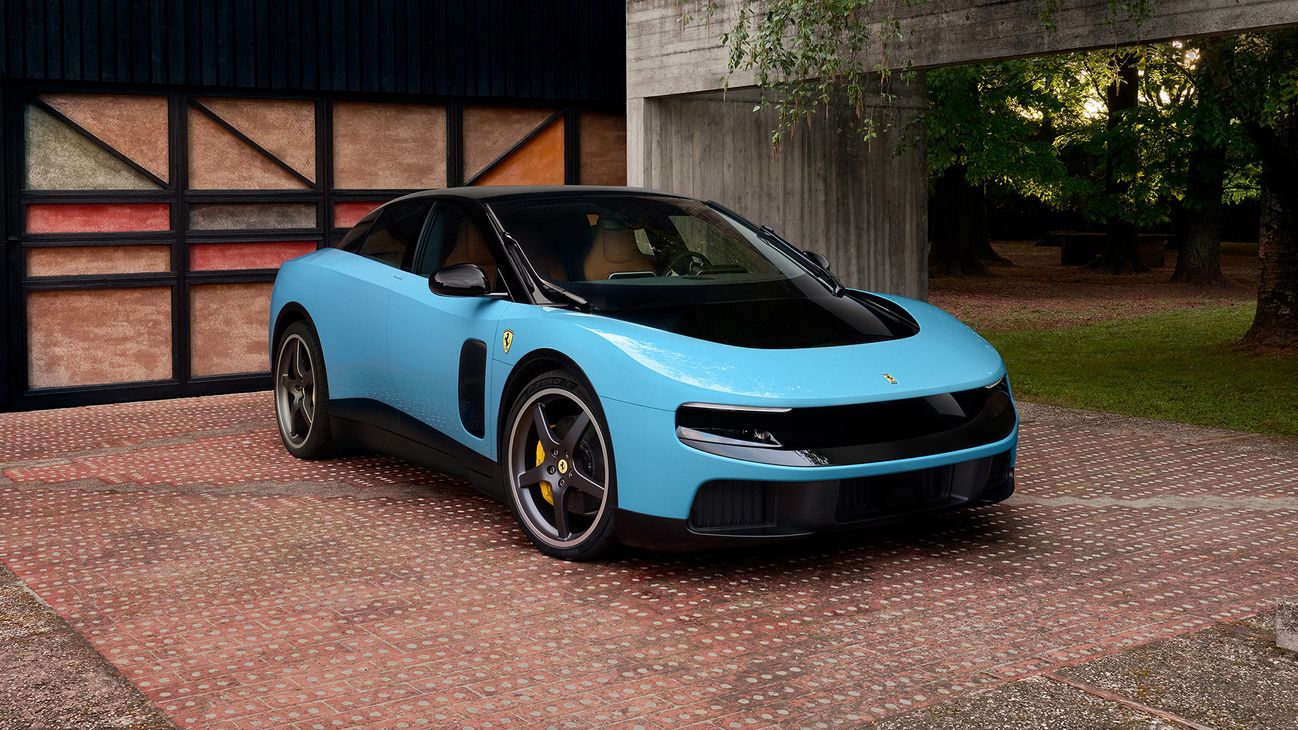
Ferrari Luce
"Ferrari. Luce. Luce. Ferrari recently shook up the industry... And that is the Ferrari Luce. The big deal about the Ferrari Luce is it's the company's first ever electric, pure electric vehicle, and only the second ever four door Ferrari."
The Ferrari Luce is a new Ferrari that’s fully electric, and it’s also one of the rare four-door Ferraris. The big talking point here is that its styling and color choices are dividing opinions.
The Ferrari Luce is described as Ferrari’s first ever electric, pure electric vehicle, and it’s also positioned as only the second four-door Ferrari. The host emphasizes its design direction—especially the two-tone look with a black roof—and how it’s causing controversy.
pure electric vehicle
"The big deal about the Ferrari Luce is it's the company's first ever electric, pure electric vehicle, and only the second ever four door Ferrari."
A pure electric vehicle is powered only by electricity from a battery. The host is pointing out that this Ferrari is fully electric, not a gas-electric hybrid.
A pure electric vehicle (BEV) runs entirely on electricity stored in a battery, rather than using a gasoline engine. In the segment, the host uses this to stress that the Ferrari Luce is not a hybrid—it’s fully electric.
Pininfarina
"Ferrari, famous for its long, long, long term partnership with Italian design house Pininfarina, has been designing vehicles in house for a while with mixed results."
Pininfarina is an Italian design house historically associated with shaping the look of many Ferraris. The host notes Ferrari’s long-term partnership with Pininfarina, then contrasts it with Ferrari designing vehicles in-house more recently, which they describe as having mixed results.
two tone thing with a black roof
"It's got the blue color and then it's got a black roof. And the two tone thing with a black roof, I think like Nissan kicks 24 grand..."
Two-tone styling means the car uses two different paint colors. Here, the host is specifically talking about the blue body paired with a black roof.
A two-tone paint scheme uses two different colors on the body, often with the roof in a contrasting shade. The host calls out the Luce’s blue body with a black roof as a key styling choice that contributes to the “looks like an EV” comparison.
Apple
"One of the designers, this gentleman by the name of Joni Ives, who was responsible. He worked at Apple and was responsible for the first iPhone and some subsequent iPhones."
Apple is referenced because designer Joni Ives previously worked there, including on the first iPhone. The hosts use that connection to explain why the vehicle’s design feels “Apple-like,” implying a cross-pollination of design philosophy between consumer tech and automotive design.
electric super cars
"But it's also electric. And one of the interesting things about electric super cars is that a lot of super car manufacturers have come out and just said no one wants an electric super car."
An “electric supercar” is a very fast, high-end sports car that runs on electricity rather than gasoline. The segment is about whether people actually want EVs at that extreme performance level.
“Electric super cars” refers to high-performance supercars that use electric motors instead of a combustion engine. The hosts are discussing the market debate around whether buyers want an EV powertrain in a supercar package.
thousand horsepower
"Wow. Yeah. It's supposed to be, it's a thousand horsepower."
“Thousand horsepower” means the car is claimed to have about 1,000 units of engine power. The hosts mention it to emphasize how extreme the performance is supposed to be.
“Thousand horsepower” is a power claim (1,000 hp) used to describe extreme performance potential. In the context of an electric supercar, it’s meant to signal very high acceleration capability and a dramatic performance target.
rebates
"I haven't seen that number, but they're probably not going to, there probably won't be rebates."
A rebate is a discount you get back after you buy the car. Here, they’re guessing Ferrari probably won’t offer that kind of deal.
Rebates are price reductions offered by a manufacturer or dealer after purchase (often tied to financing, model-year incentives, or eligibility rules). The hosts are speculating that Ferrari likely won’t use rebates to move inventory.
Request an Explanation
Heard something you'd like explained? We'll add it to this episode.
Sign in to request explanations for terms you heard.
Want to learn more?
Browse our glossary for plain-English explanations of automotive terms, jargon, and concepts.
Help improve this episode
See something that's not quite right? Our annotations are AI-generated and can sometimes miss the mark. Click the flag icon on any annotation to suggest a correction.