Compact Crossover Comparo, Scout Deep Dive, Discontinued Car Quiz
About this episode
Jill and Tom kick off with a quick pigeon joke, then set up a lineup of topics: compact crossover redesigns, hybrid-only powertrains, and a discontinued-car quiz. The hosts compare the 2026 Jeep Cherokee and Toyota RAV4, plus Mazda’s CX-5/CX-50 changes, and talk mild vs full hybrids. Later, they dive deep into Scout’s return—its body-on-frame, solid-axle, range-extender plan, and direct-to-consumer rollout. The episode also covers JDM import rules and several discontinued models like the Kia Soul and Nissan Versa.
This week Tom opens the show clarifying the difference between mild-hybrid and full-hybrid applications. Tom notes that mild hybrid drivetrains are found mostly on European luxury vehicles.
In advance of chatting with Scout Motor's Ryan Decker, Jill and Tom discuss how few all-new car brands have been launched in the past 25 years. Listen in for a list.
Still in the first segment, the hosts are joined by fellow automotive journalist Ed Piotrowski. Ed attended the 2026 Midwest Automotive Media Association Spring Rally, and wrote a comparison review of four compact crossovers: The Jeep Cherokee, Mazda CX-5, Toyota RAV4, and Volkswagen Tiguan. There's big news here, as for 2026 the Jeep and Toyota are all new--and now hybrid only--the Mazda is redesigned, and the VW has been treated to an updated powertrain. Listen in for Ed's insights.
In the second segment, the hosts are Joined by Scout Vice President of Strategy and Branding Ryan Decker. Ryan shares details regarding Scout's position in the market place, the products themselves, and what to expect regarding Scout's direct-to-consumer sales plan.
In the last segment, Jill is subjected to Tom's "Is it still being built?" quiz. After the quiz Jill talks a little about the redesigned Subaru Outback Wilderness, with which she recently spent time.
Hosted by Simplecast, an AdsWizz company. See pcm.adswizz.com for information about our collection and use of personal data for advertising.
Rivian
"Rivian. Rivian. That's good. And I guess, I don't know if I'm counting Rivian as having made it yet."
Rivian is a company that makes electric cars, especially for people who want to go off the beaten path. The host is talking about how Rivian is trying to become profitable with upcoming vehicles.
Rivian is an automaker known for building electric vehicles with a strong emphasis on adventure and off-road capability. In this segment, the host focuses on Rivian’s business model—spending heavily while aiming to reach profitability with newer models.
burn through cash
"I'm super interested in Rivian for a couple of reasons, but one of the reasons is the fact that they seem to burn through cash."
“Burn through cash” means the company is spending money faster than it’s earning it. It’s basically running low on cash unless sales or profits catch up.
“Burn through cash” means a company is spending more money than it brings in, using up its cash reserves to fund operations and growth. In automaking, this often happens when development and production ramp up before vehicles become profitable.
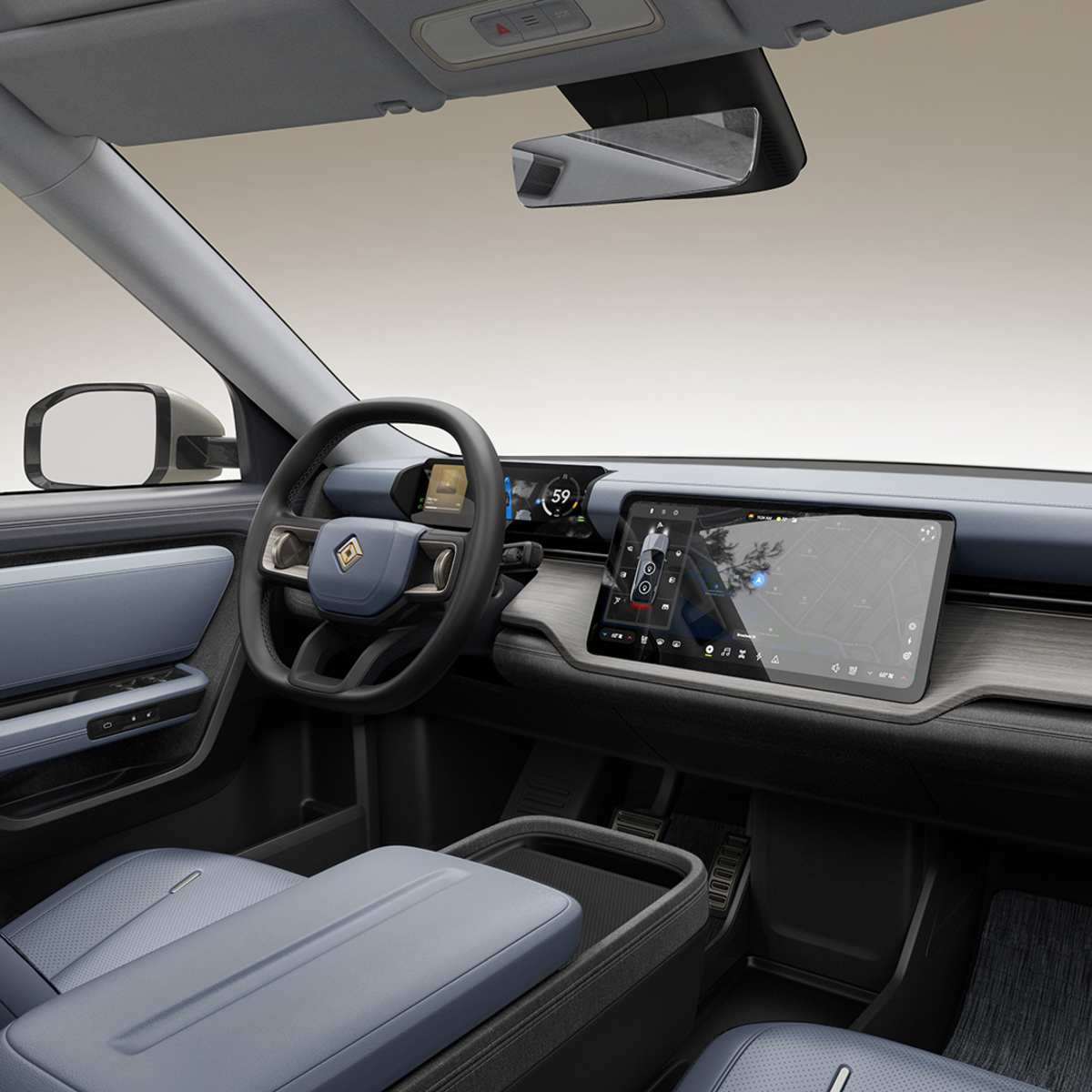
R2
"I think the new R2 is going to be a game changer for them. 202.4s] If they make money on it, yeah. 204.0s] Well, and I think that they will, and I think that's why it's going to be a game changer."
The Rivian R2 is a smaller electric crossover. The host thinks it could be a turning point for Rivian because it may be easier for the company to sell profitably.
The Rivian R2 is a smaller crossover that Rivian is positioning as a key step toward profitability. The host’s point is that a lower-cost, more mainstream size could help Rivian make money where its current vehicles reportedly lose money.
game changer
"I think the new R2 is going to be a game changer for them. If they make money on it, yeah."
“Game changer” means something that could make a big difference. The host thinks the R2 could be that kind of turning point for Rivian’s money situation.
“Game changer” here is the host’s framing that the Rivian R2 could materially change Rivian’s financial trajectory. The idea is that a smaller crossover may improve unit economics enough to shift from losses toward profit.
mild hybrids
"We talked a little bit last week about mild hybrids versus full hybrids. One of the things about this that I think I didn't make clear..."
A mild hybrid uses a small electric system to help the gas engine, but it usually can’t run the car by itself on electricity. The goal is better gas mileage without the complexity of a full hybrid.
A mild hybrid is a hybrid system that can assist the engine with electric power, but it can’t fully drive the car on electricity alone. It’s usually used to improve fuel economy and smoothness with a smaller battery and less electric capability than a full hybrid.
full hybrids
"We talked a little bit last week about mild hybrids versus full hybrids. ...when you're talking about a hybrid vehicle, a CR-V, a RAV4... those are full hybrid vehicles..."
A full hybrid can use gas, electricity, or both. That usually lets it save more fuel than a mild hybrid because it can rely on the electric system more often.
A full hybrid can run using the gas engine, the electric motor, or a combination of both, depending on conditions. In practice, that means many full hybrids can operate without the engine in certain situations and generally deliver stronger fuel-economy gains than mild hybrids.

Honda Crv
"when you're talking about a hybrid vehicle, a CR-V, a RAV4, something like that, a Camry, those are full hybrid vehicles..."
The Honda CR-V is a popular compact SUV, and in this context it’s being used as an example of a true full hybrid. The key point is that it’s not offered as a mild hybrid on the same model.
The Honda CR-V is a compact crossover that’s commonly offered with a full-hybrid powertrain. In this discussion, it’s used as an example of a hybrid model where mild-hybrid hardware isn’t offered on the same vehicle—so “hybrid” there means full hybrid.
BMWs
"mostly German, Audis, BMWs, Summer Sades, and Volvos..."
BMW is mentioned as one of the luxury brands that uses mild hybrids. The host is saying these systems are more common on pricier cars.
BMW is a premium brand the host links to mild-hybrid adoption. The discussion frames mild hybrids as a strategy used on higher-end German cars to improve fuel economy without fully committing to full-hybrid complexity.
Audi
"Where we're seeing mild hybrids really is in premium vehicles, mostly German, Audis, BMWs..."
Audi is a luxury car brand mentioned here as an example of where mild hybrids are more common. The host’s idea is that mild hybrids are easier to justify on expensive cars.
Audi is one of the premium brands the host associates with mild-hybrid systems. The point is that mild hybrids show up more often on higher-priced vehicles where the added system cost can be absorbed more easily.
Volvos
"mostly German, Audis, BMWs, ... and Volvos, and it's because those cars are expensive enough..."
Volvo is mentioned as another luxury brand that tends to use mild hybrids. The main point is that mild hybrids show up more often on higher-priced cars.
Volvo is another premium brand cited as using mild-hybrid systems. In the host’s explanation, mild hybrids are more likely to appear on expensive vehicles where the cost can be hidden in the base price.
stop-start
"It does improve the stop-start engine stop-start performance. It does bring somewhat better fuel economy, but not nearly the fuel economy game you get from a full hybrid."
Stop-start is the system that turns the engine off when you’re stopped and turns it back on when you’re about to go. Mild hybrids can make that start/stop happen more smoothly.
Stop-start is an engine control feature that shuts the engine off when the car is stopped (like at a red light) and restarts it when you’re ready to move. Mild hybrids often improve how smoothly and quickly this happens, which can reduce fuel consumption in city driving.
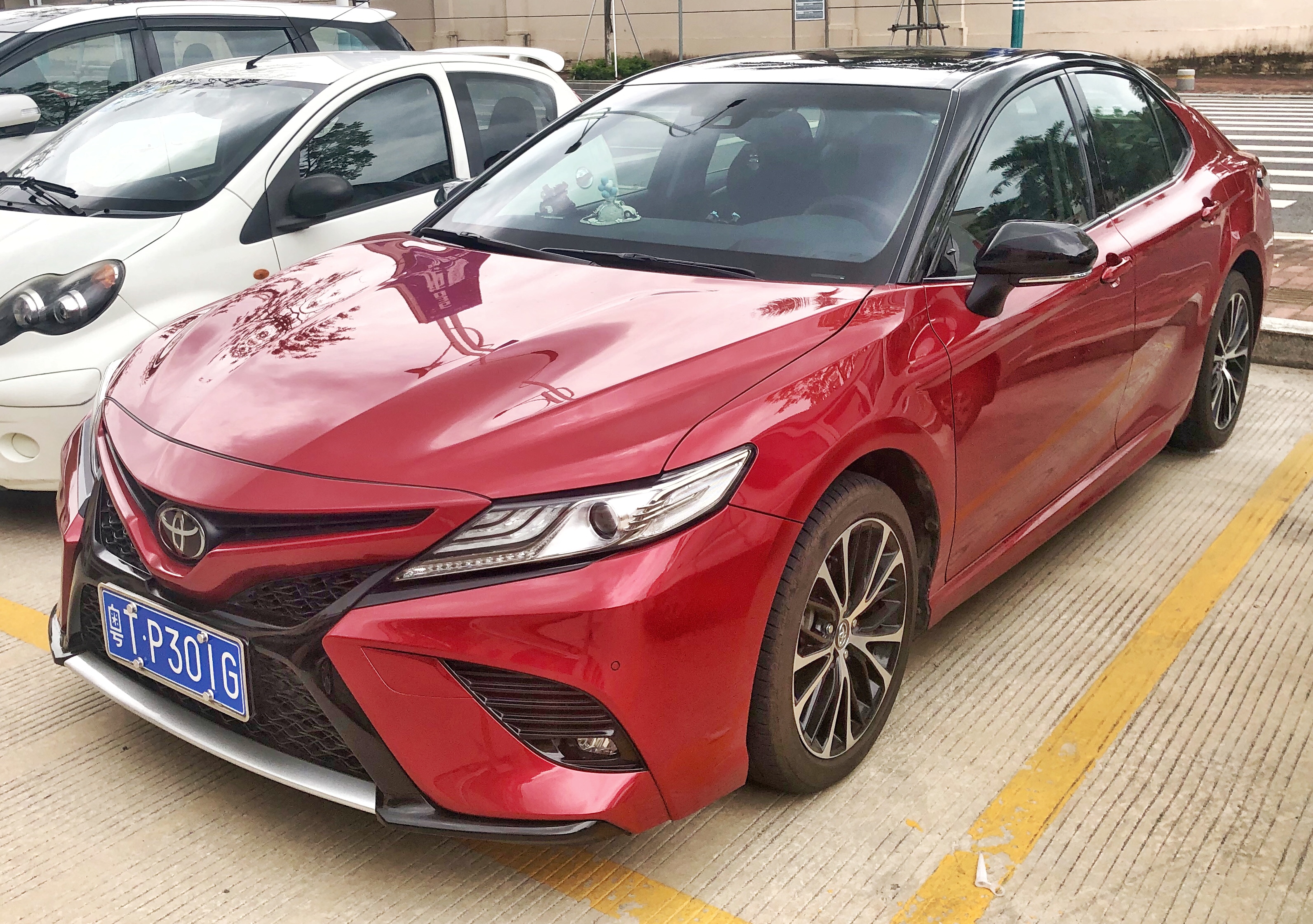
Toyota Camry
"The system on a C-Class Mercedes is far less efficient than the system on a Toyota Camry, for example."
The host mentions the Toyota Camry to make a point: two different cars with mild hybrids can get different real-world efficiency. They’re saying the Camry’s mild-hybrid system is the better one in their comparison.
The Toyota Camry is cited as an example of a mild-hybrid system that the host says is more efficient than the Mercedes-Benz C-Class setup. This highlights that mild-hybrid results depend heavily on the specific system design and calibration.
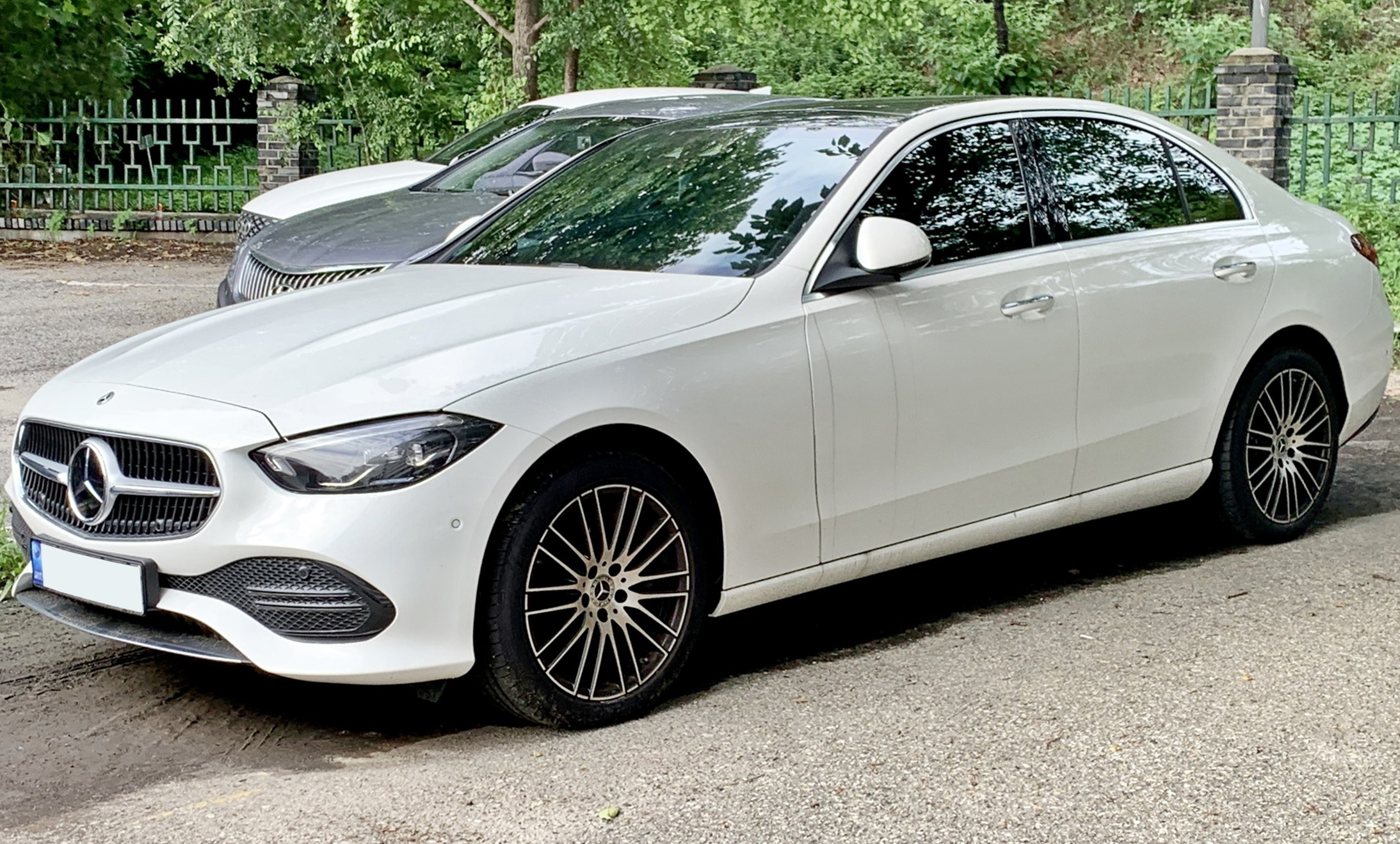
Mercedes C-Class
"The system on a C-Class Mercedes is far less efficient than the system on a Toyota Camry, for example."
The host is using the Mercedes-Benz C-Class as an example to show that mild-hybrid systems don’t all work the same. They’re saying the Mercedes system is less efficient than the Toyota system they compare it to.
The Mercedes-Benz C-Class is being used here as an example of how mild-hybrid efficiency can vary by manufacturer. The host claims its mild-hybrid system is less efficient than Toyota’s approach in the Camry.
electronic boost
"A mild hybrid also will, in addition to the stop-start of the engine, it gives you a little bit of electronic boost in acceleration, and that is where that fuel economy game comes in."
Electronic boost means the car uses its electric motor to help the gas engine when you accelerate. It’s not a full electric drive—more like a helpful push.
Electronic boost here refers to extra acceleration assistance provided by the mild-hybrid’s electric motor. Instead of replacing the engine, it adds a small amount of torque during acceleration to improve responsiveness and help efficiency.
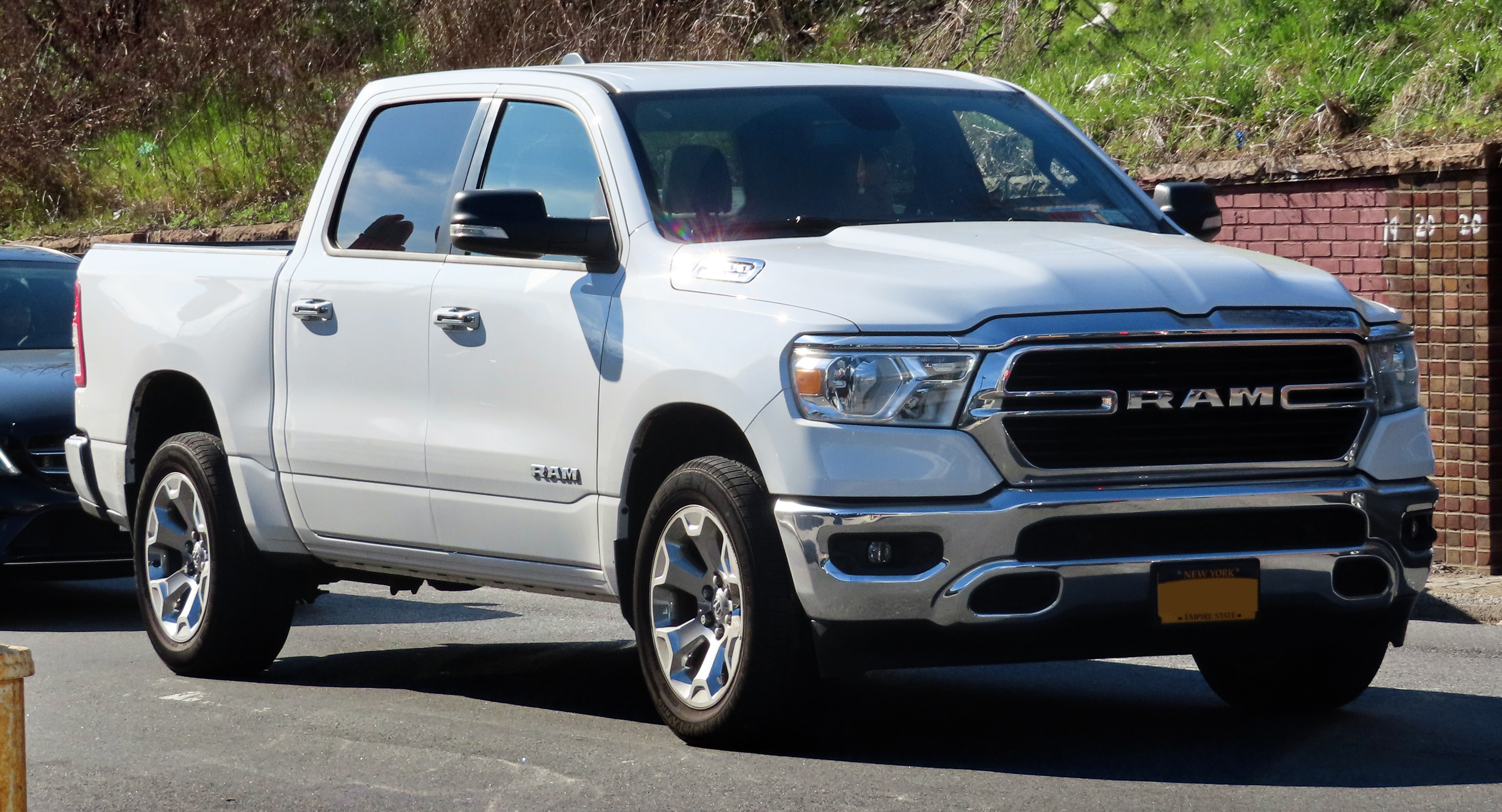
Ram 1500
"when Ram was bringing out the new generation of the Ram 1500 pickup, one of the things that they did was bring out the eTorque mild hybrid system."
The Ram 1500 is the pickup the host is talking about. They’re describing Ram’s mild-hybrid system (eTorque) and how the company later backed away from the big claims.
The Ram 1500 is a full-size pickup used here to illustrate an early mild-hybrid implementation. The host explains that Ram introduced an eTorque system on the new generation and then changed how it presented the system’s claimed benefits.

Dodge Ram
"... when way back when, a decade, 12 years ago, when Ram was bringing out the new generation of the Ram 15..."
The Ram is a full-size pickup truck made by Dodge. The podcast is talking about when a newer generation of the truck came out and what that change meant. It’s mentioned because it’s a major update in the truck’s history.
The Dodge Ram (often referred to simply as Ram) is a full-size pickup truck line. The podcast context points to “the new generation” arriving about a decade ago, which suggests they’re discussing how the truck evolved and what that meant for buyers. It’s brought up as part of a broader conversation about product changes over time.
V6 engine
"It didn't provide what I would call good fuel economy, but it did help a little. It was also available on the V6 engine of versions of the Ram as well."
A V6 engine is a type of gas engine with six cylinders arranged in a V shape. The host is saying eTorque was available on Ram versions that used a V6 too.
A V6 engine is an engine with six cylinders arranged in a V-shaped layout. The host notes that Ram’s eTorque mild-hybrid system was also offered on versions of the Ram with a V6, not just the V8.

Ford Ranger
"[395.3s] Ford Ranger. [396.7s] Oh. [397.6s] I haven't driven a Ranger in a very long time, so I'm excited."
The Ford Ranger is a pickup truck. It’s popular because you can choose different engines, and that affects how strong and responsive it feels when you drive.
The Ford Ranger is a midsize pickup truck known for being a practical, do-anything platform that can be configured for different driving needs. In this segment, the hosts focus on its engine lineup, including turbocharged options that change how it feels in everyday driving.
2.3 liter turbocharged four-cylinder engine
"[400.4s] One of the things that I forgot, you probably knew this, is that the Ranger comes with a [405.4s] 2.3 liter turbocharged four-cylinder engine, an EcoBoost engine that is actually a variation"
This is a small engine (2.3 liters) with four cylinders, and it has a turbo. The turbo helps it feel stronger without needing a bigger engine.
A turbocharged four-cylinder uses a turbocharger to force more air into the engine, which helps it make more power than a non-turbo engine of the same size. The “2.3 liter” part is the engine’s displacement, and “four-cylinder” describes how many cylinders do the work.
EcoBoost
"[405.4s] 2.3 liter turbocharged four-cylinder engine, an EcoBoost engine that is actually a variation [410.8s] of the base engine in the Ford Mustang."
EcoBoost is Ford’s name for turbocharged engines. It generally means the engine uses a turbo to make more power while keeping fuel use down.
EcoBoost is Ford’s branding for turbocharged engines. In this segment, the host says the Ranger’s 2.3-liter turbo four is an EcoBoost engine, and that it’s related to Ford’s Mustang engine family.

Ford Mustang
"...tually a variation of the base engine in the Ford Mustang. But you can now just order, as a standalone opti..."
The Ford Mustang is a sports car made by Ford. It can be ordered with different engine and option packages. The podcast is talking about how one of those options relates to the base engine setup.
The Ford Mustang is a performance-focused sports car that’s often discussed in terms of its engine and trim options. In the podcast context, they mention a “variation of the base engine” and the idea that you can order something as a standalone option. That’s the kind of detail people care about when comparing how the Mustang is configured.
2.7 liter V6 turbocharged engine
"[414.0s] But you can now just order, as a standalone option, the 2.7 liter V6 turbocharged engine. [422.5s] Just a standalone option, and that's really cool."
This is a bigger engine than the four-cylinder—it's a V6—and it also has a turbo. The turbo helps it pull harder, especially when you need extra power.
A 2.7-liter V6 turbocharged engine combines a V6 cylinder layout with forced induction (a turbo) to deliver stronger acceleration and passing power than smaller engines. Here, it’s notable because the host says you can order it as a standalone option on the Ranger.
standalone option
"[414.0s] But you can now just order, as a standalone option, the 2.7 liter V6 turbocharged engine. [422.5s] Just a standalone option, and that's really cool."
A standalone option is something you can add on by itself. Here, it means you can choose the V6 turbo without having to pick a whole package.
A standalone option is an add-on you can select by itself, rather than only being available as part of a larger package or trim level. In this context, it means the Ranger’s 2.7-liter V6 turbo can be ordered without needing to buy a specific bundle.

RAV4
"But the RAV4, the single most popular vehicle sold in the U.S. [572.7s] That's redesigned and now hybrid only and Jeep is finally back in the segment."
The Toyota RAV4 is a super-popular crossover in the U.S. Here, the point is that the redesigned 2026 version is going hybrid-only, meaning it relies on an electric motor along with the engine.
Toyota RAV4 is the U.S. best-selling compact crossover, so changes to it tend to ripple across the whole segment. In this discussion, the host says the redesigned 2026 RAV4 is now hybrid only, which is a major powertrain shift for a mainstream model.

Jeep Cherokee
"With the redesigned 2026 Cherokee that comes back after a three year absence, [585.8s] has a more kind of grand Cherokee-esque look to it versus the original one that came out"
Jeep’s Cherokee is a crossover model that’s been around for years. The host is talking about the redesigned 2026 version coming back after being absent for a few years, with a new look closer to Jeep’s larger Grand Cherokee.
The Jeep Cherokee is a long-running compact crossover nameplate, and the host highlights a major refresh with the redesigned 2026 model. They also note it returns after a three-year absence, and that its styling is more “Grand Cherokee-esque” than the earlier, more polarizing look.

CX-50
"I think in the case of the Mazda CX-5, there's the CX-50 now. [634.9s] And that's sort of a premium upscale, more cross-overy version of the same vehicle [640.8s] and really the same class."
Mazda’s CX-50 is meant to feel a bit more upscale than the CX-5, even though they’re still in the same overall size/category. The host’s point is that the price gap isn’t huge, so it may not feel like a big upgrade.
The Mazda CX-50 is positioned as a more upscale, crossover-styled alternative to the CX-5 while staying in the same general class. The host notes that the CX-5 and CX-50 aren’t priced that differently, which makes the CX-50’s “premium” positioning feel more like a branding/positioning move than a major step up.
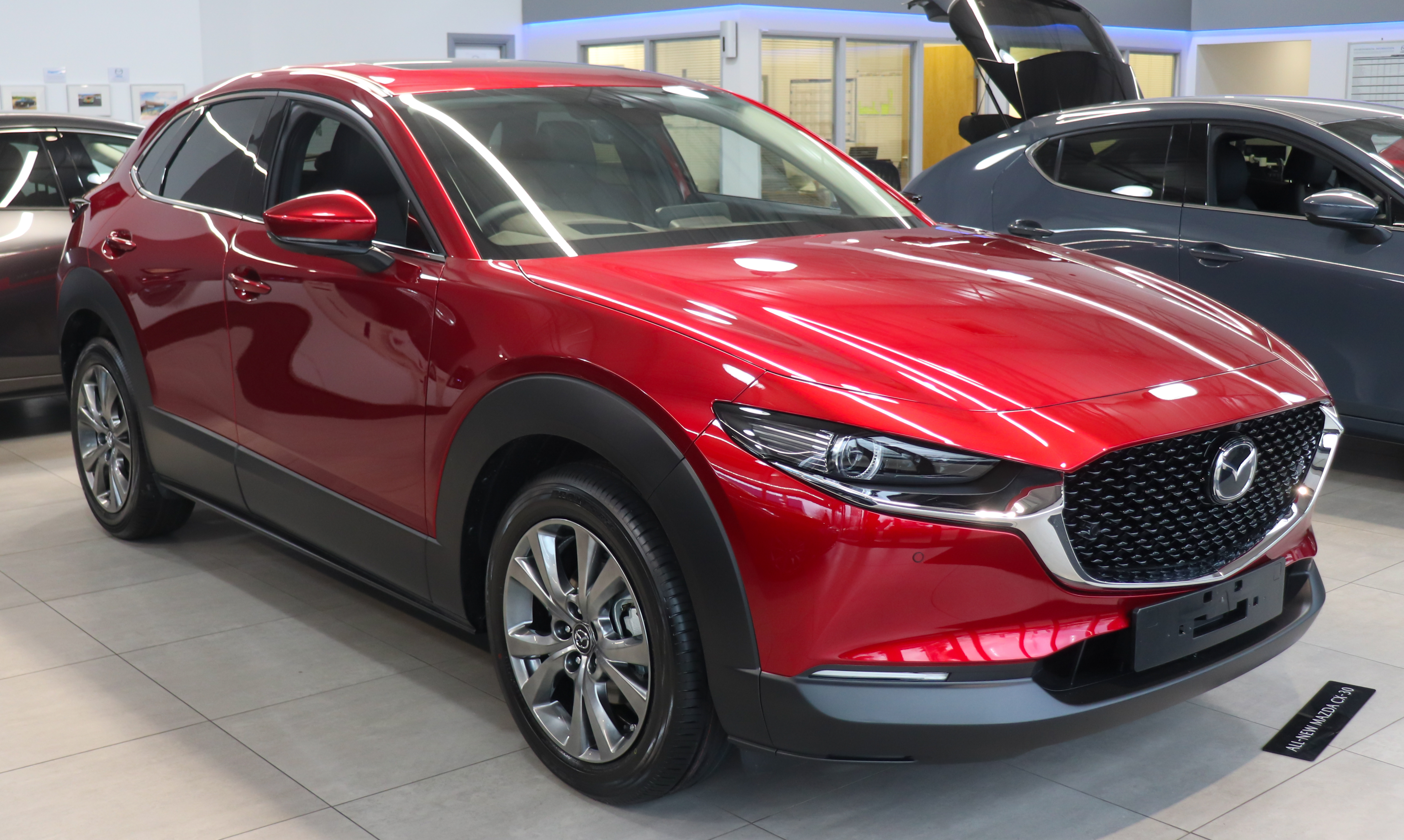
Mazda CX-30
"And also with the infotainment system, I know when I have previously driven you know, vehicles like the CX-5 and the CX-30 when I was considering purchasing one, [706.1s] I couldn't figure out how to set radio presets using the old infotainment system"
The Mazda CX-30 is a smaller Mazda SUV. They bring it up because, in older versions, it was harder for them to set radio presets than in the newer infotainment system they’re trying.
The Mazda CX-30 is a compact crossover positioned below the CX-5, sharing much of the same Mazda design and driving character. The hosts mention it to contrast older infotainment usability versus the newer system in the CX-5 they’re discussing.
infotainment system
"And also with the infotainment system, I know when I have previously driven you know, vehicles like the CX-5 and the CX-30 when I was considering purchasing one, [706.1s] I couldn't figure out how to set radio presets using the old infotainment system [710.7s] whereas this one, but, you know, it less than a minute, I had it figured out."
The infotainment system is the car’s main screen and controls for things like music and navigation. They’re saying the newer one was much easier to figure out for setting radio presets.
An infotainment system is the car’s integrated dashboard tech—usually the touchscreen, audio controls, navigation, and phone connectivity. The hosts specifically talk about how the infotainment interface affects everyday tasks like setting radio presets.
hybrid only
"So quick question about the Jeep and the RAV4. [733.9s] Those vehicles are now both hybrid only, which is interesting. [737.5s] And it just talks about where we're moving as an industry."
“Hybrid only” means the car is only available as a hybrid. Instead of being gas-only, it uses both a gas engine and an electric motor to help improve efficiency.
“Hybrid only” means the model is sold exclusively with a hybrid powertrain (typically combining a gasoline engine with an electric motor), rather than offering a purely gas-only version. The hosts use it to illustrate the industry shift toward electrification in mainstream crossovers.
limited
"I think actually bumping up another two grand to the limited gets you more stuff. And actually, to me, that makes it a little bit of a stronger value."
“Limited” usually means a more fully equipped version of the car. In this segment, they’re saying paying a bit more for the Limited trim gets you noticeably more features.
In trim naming, “Limited” typically refers to a higher equipment level than the base model. The host is using it to compare how much extra equipment you get when you move up in trim pricing.
plug in
"They had the all wheel drive limited, which was the standard hybrid. So no plug in. And that one was over $46,800."
“Plug-in” means the car can be charged from a wall outlet. The host is saying this RAV4 setup isn’t that kind of hybrid, so you can’t charge it externally.
“Plug-in” refers to a plug-in hybrid electric vehicle (PHEV), which can be charged from an external power source. The host is contrasting that with a standard hybrid, which can’t be charged by plugging in and relies on the engine and regenerative braking.

2026 Tiguan
"CX five, the redesigned 2026 Toyota RAV four and the updated powertrain [912.4s] that Volkswagen put in the 2026 Tiguan."
The Volkswagen Tiguan is a compact SUV. The hosts say the 2026 Tiguan gets an updated powertrain, meaning the engine/transmission setup was changed in some way.
The Volkswagen Tiguan is a compact crossover SUV, and this episode specifically mentions an updated powertrain for the 2026 Tiguan. That matters because a powertrain update can change how the vehicle drives, its efficiency, and sometimes its emissions equipment.
updated powertrain
"CX five, the redesigned 2026 Toyota RAV four and the updated powertrain [912.4s] that Volkswagen put in the 2026 Tiguan."
The “powertrain” is what actually makes the car move—engine and the parts that send power to the wheels. “Updated powertrain” means Volkswagen changed that setup for the newer model year.
A “powertrain” is the vehicle’s main mechanical system for moving—typically the engine plus the transmission and drivetrain components. When a manufacturer says “updated powertrain,” it usually means changes to that system to improve efficiency, performance, drivability, or emissions compliance.
Nissan diesel version
"And this is really, really often the weeds was the Nissan diesel version of the scout [985.4s] that no one remembers. OK. [994.0s] But that was available the last couple of years of scout."
They’re talking about a Scout that could be had with a diesel engine from Nissan. Diesel engines usually pull strongly at low speeds and can be more fuel-efficient than gas engines.
This refers to a diesel engine option sourced from Nissan that was used in some late Scout applications. Diesel engines are known for strong low-end torque and fuel economy compared with many gasoline setups, which is part of why enthusiasts remember specific engine variants.
Scout
"Why why scout exists, what you guys are trying to do with it? ... So the intent is to reimagine the Scout brand, but it's also to build an all new version of Scout products..."
Scout is a car brand. Here they’re talking about bringing it back in a new way—new vehicles and a new company—while keeping the original off-road spirit.
Scout is an American off-road-focused vehicle brand being reimagined as a standalone effort under Volkswagen. In this segment, the hosts describe it as a new brand with new products and a new manufacturing setup, while still trying to preserve what made Scout feel “Scout” on the vehicle side.
solid or axle
"And so for us, that's what directly informed a lot of the decisions we made in those early days to go body on frame, to go solid or axle..."
A solid axle connects both wheels on an axle together. It helps the wheels stay in contact with bumpy terrain, which is why it’s popular on off-road vehicles.
A solid axle is a suspension design where the left and right wheels are connected by a rigid axle beam. It’s often used on off-road vehicles because it maintains wheel contact over uneven ground and can handle higher loads than many independent setups.
mechanical lockers
"the very tactile interior, optional features like mechanical lockers, you know, really that sort of go anywhere..."
Mechanical lockers are off-road traction aids that can “lock” the wheels together so they spin together. This helps when one wheel is slipping and you need both sides to keep moving.
Mechanical lockers are hardware that can lock the differential so both wheels on an axle rotate together. That improves traction when one wheel loses grip (like in mud, snow, or rocks), at the cost of less flexibility on high-traction surfaces.
all new factory approach
"So that led us down the road of going all new factory approach. And so then it's all new brand, all new products, all new factory."
An all-new factory approach means they’re planning to build vehicles in a brand-new production setup. The goal is to set up manufacturing specifically for these new vehicles.
An all-new factory approach means building or commissioning a dedicated new manufacturing facility for the new vehicles. The idea is to design the production process around the new brand and product requirements instead of adapting an existing plant.
range anxiety
"charging anxieties, real. Yeah. Yeah."
Range anxiety is the worry that your electric car won’t have enough battery to finish your trip. It can make people plan routes around charging stops.
Range anxiety is the fear that an EV won’t have enough battery charge to reach the destination or the next charging station. It strongly affects how people plan trips, especially on longer routes where charging availability and time matter.
strategic pivot to preserve the electrified powertrain
"But then there was the strategic pivot to preserve the electrified powertrain but to give it the security of having the built-in gas power generator on board."
They’re saying they changed strategy but still wanted an electric-style drivetrain. The idea is to keep the benefits of electric driving while adding a backup power option.
This describes a change in plan where the company keeps an electrified drivetrain (electric motors and battery) but adjusts the overall architecture to add another energy source. In this case, the pivot is about combining electrification with an onboard generator for added security.
built-in gas power generator
"but to give it the security of having the built-in gas power generator on board."
This is a small gas engine that makes electricity inside the car. It helps keep the electric system running when the battery needs help.
A built-in gas power generator is an onboard engine-generator that produces electricity to support the vehicle’s electric drivetrain. It’s typically used to recharge the battery or provide power when the battery is low, rather than directly driving the wheels like a traditional hybrid system.
range extender
"And that's what the range extender unlocked. And of course, that's where we're seeing now the vast majority of our demand"
A range extender is like a backup power source in an electric vehicle. If the battery gets low, it uses a small gas-powered generator to help keep you going, so you don’t have to stop and charge as often.
A range extender is an onboard system (often a small gas engine and generator) that charges the battery to extend how far the vehicle can go. It’s used to reduce “range anxiety” by providing extra energy when the battery is depleted, without requiring frequent fast-charging stops.
body on frame
"Both products, that platform is body on frame, which we determined to be the right platform approach to really deliver upon the durability and the robustness that customers in these segments are expecting in order to be perceived as a serious product."
Body-on-frame means the car’s body sits on a separate metal frame underneath. Trucks and off-road vehicles use this because it can handle bumps, towing, and rough terrain better.
“Body-on-frame” is a vehicle construction method where the body mounts to a separate ladder-like frame. It’s commonly used on trucks and rugged SUVs because the frame can better handle heavy loads and rough-road impacts.
all electric range
"where you still have up to 150 miles of all electric range and over 500 miles of combined range when you're leveraging the generator."
All-electric range is how far the vehicle can go using only the battery. After that, the extra generator power may be used to keep you going.
“All electric range” is the distance the vehicle can travel using only its battery-powered electric drive, without the generator contributing. It’s a key metric for how “EV-like” the driving experience is before the range extender kicks in.
combined range
"where you still have up to 150 miles of all electric range and over 500 miles of combined range when you're leveraging the generator."
Combined range is the total distance you can go using the battery plus the generator. It’s the bigger number you get when the vehicle can keep making electricity after the battery runs low.
“Combined range” is the total estimated distance you can drive when using both the battery and the range extender’s generator. It’s typically higher than the all-electric range because it includes the generator’s contribution.
ground clearances
"So when it comes to delivering upon things like ground clearances and approach angles and departure angles, we want to be up there competing with the incumbent leaders in the category."
Ground clearance is how much space there is between the bottom of the car and the ground. If it’s higher, you’re less likely to hit the undercarriage on bumps or rough trails.
Ground clearance is the distance between the lowest part of the vehicle and the ground. More clearance helps prevent scraping the underbody when driving over rocks, ruts, or uneven trails.
departure angles
"So when it comes to delivering upon things like ground clearances and approach angles and departure angles, we want to be up there competing with the incumbent leaders in the category."
Departure angle is how steeply you can drive down off a bump or ledge before the back of the car scrapes. Higher departure angles generally help with off-road descents.
Departure angle is the maximum angle you can descend away from an obstacle without the rear bumper or underbody contacting it. Like approach angle, it’s an off-road geometry measure that affects how well the vehicle handles dips and ledges.
approach angles
"So when it comes to delivering upon things like ground clearances and approach angles and departure angles, we want to be up there competing with the incumbent leaders in the category."
Approach angle is how steep a bump or hill you can drive up before the front of the car starts to scrape. Bigger numbers usually mean better off-road clearance at the front.
Approach angle is the maximum angle you can climb up toward an obstacle (like a hill or rock) without the front bumper or underbody hitting it. It’s a key off-road geometry metric for avoiding front-end scraping.
torque
"We will be by far best in class in terms of our performance characteristics, things like zero to 60 and torque will be very competitive of our off-road characteristics..."
Torque is the “pulling strength” of the engine or motor. More torque usually helps the car accelerate harder, especially from low speeds or when climbing.
Torque is the twisting force an engine or motor produces, and it strongly influences how quickly a vehicle can accelerate, especially at low speeds. For off-road use, higher usable torque can help with climbing and traction when you need strong pull.
zero to 60
"We will be by far best in class in terms of our performance characteristics, things like zero to 60 and torque will be very competitive of our off-road characteristics..."
Zero-to-60 mph (often shortened to “zero to 60”) is a performance metric measuring how quickly a vehicle accelerates from a standstill to 60 mph. It’s a simple, comparable way to describe straight-line acceleration strength.
starting pricing without any incentives
"and we're holding the line on is starting pricing without any incentives below $60,000. That is 100 percent still our plan and our commitment."
They’re saying the base price is the real price you’ll pay, not a lower number that only happens if you qualify for discounts or rebates. It’s meant to make the pricing easier to compare fairly.
“Starting pricing without any incentives” means the base price is what you pay without relying on discounts, rebates, or promotional offers. This matters because incentives can temporarily lower the effective cost, making comparisons between brands misleading.
below $60,000
"and we're holding the line on is starting pricing without any incentives below $60,000. That is 100 percent still our plan and our commitment."
They’re saying the starting price will be under $60,000. That’s a big deal because it determines whether the car fits your budget compared with other options.
The speaker is anchoring the vehicle’s price point under $60,000, implying a target affordability threshold for the segment. For shoppers, this is a key reference because it affects whether the vehicle competes in the same budget bracket as rivals.
pre-production
"But I'm just wondering how close to pre-production are the production models going to be? Like, are there going to be any big design changes that we're going to see?"
Pre-production refers to early vehicles built to validate design, packaging, and manufacturing processes before full-scale production begins. They can still be “delicate” or subject to changes as engineers finalize the production version.
split tailgates
"Some of the features that we know people love, bench seats, split tailgates, of course, front trunk execution, all of that is very much going to be carried over into production intent, no doubt."
A split tailgate is a rear door design where the opening is divided into sections—often a lower door plus an upper section that can open independently. This can make loading cargo or accessing the cabin easier without fully opening the rear.
bench seats
"Some of the features that we know people love, bench seats, split tailgates, of course, front trunk execution, all of that is very much going to be carried over into production intent, no doubt."
Bench seats are a single, continuous seat for multiple passengers (commonly two or three) instead of separate individual seats. In compact crossovers, they can affect seating flexibility and how the cabin is laid out.
front trunk execution
"Some of the features that we know people love, bench seats, split tailgates, of course, front trunk execution, all of that is very much going to be carried over into production intent, no doubt."
“Front trunk execution” refers to how well the vehicle implements a front cargo area, commonly called a frunk. This is especially common on EVs because the engine bay can be repurposed for storage.
EREV
"And so to be clear, also, you said that the primary strategy moving forward is for the power tank is EREV. But will there also be electric only versions available? Absolutely. So EREV first, EREV is the priority."
EREV means the car is mostly electric, but it can make extra electricity on the go using a generator. That helps it drive farther without needing to plug in as often.
EREV stands for “extended-range electric vehicle.” It’s an EV that primarily runs on an electric motor, but uses a generator (often driven by an engine) to recharge the battery when needed, extending how far you can go without plugging in.
direct to consumer distribution system
"But you guys are making a little bit of news here in that you want to go [1718.5s] with a direct to consumer distribution system. [1721.1s] You don't want to go with a franchise dealership arrangement."
Direct-to-consumer means the car company sells to you directly instead of using a dealership network. That can let them control how you buy the car and what the process feels like.
A direct-to-consumer (DTC) distribution system means the automaker sells vehicles straight to buyers, rather than routing sales through franchise dealerships. The goal is to control the buying experience end-to-end—pricing, communication, and delivery—so it feels consistent across customers.
franchise dealership arrangement
"[1718.5s] with a direct to consumer distribution system. [1721.1s] You don't want to go with a franchise dealership arrangement. [1725.0s] Well, why is it that you guys want to do that?"
A franchise dealership arrangement is the usual way cars are sold: local dealers represent the brand and sell cars to customers. The dealership runs a lot of the customer experience.
A franchise dealership arrangement is the traditional model where independent dealer businesses sell a brand’s cars under a franchise agreement. In this setup, the automaker typically sets brand standards and supply, while dealers handle much of the customer-facing sales process.
customer experience
"But regardless of our competitors success, [1744.8s] what we're seeing is just the ability to deliver upon a customer experience [1748.6s] that we think is right for scout customers."
Customer experience here means the whole process of buying the car—how easy it is, how you’re treated, and how the steps are handled. They’re saying their sales model is designed to make that experience better.
In automotive retail, “customer experience” refers to the end-to-end process of buying and owning—how customers are contacted, how pricing and paperwork are handled, and how delivery is organized. Here, the speaker ties it directly to choosing a direct-to-consumer sales model.
regional rollout
"And if that's the case, will there be like a regional rollout of the brand [1800.4s] or will you guys be ready to be national on job one?"
A regional rollout means they start in certain areas first, then expand to more places later. They’re discussing whether they’ll launch nationwide right away or in stages.
A “regional rollout” is a phased launch where a brand expands to specific geographic areas first, rather than going nationwide immediately. The speaker contrasts this with being “national on job one,” implying staged capacity planning for sales and service.
brick and mortar
"Yeah, we will own, we will invest in and own our own brick and mortar [1807.3s] facilities where we will be able to deliver and of course service cars"
“Brick and mortar” just means real physical places—like showrooms and service centers—rather than selling only online. They’re saying they’ll own those locations.
“Brick and mortar” refers to physical, in-person facilities like stores and service centers, not online-only operations. Here, the speaker is describing owning physical retail and service locations to deliver and service cars.
test drives
"facilities where we will be able to deliver and of course service cars [1810.5s] and, you know, quote unquote kick the cop tire and do test drives."
A test drive is when you get to drive the car yourself before buying it. The company is saying they’ll handle that through their own facilities.
A “test drive” is a structured drive of a vehicle to evaluate how it feels and performs before purchase. In a direct-sales model, the company needs its own process and facilities to provide these drives.

Jeep Wrangler
"... in your lineup, eventually, for something like a Wrangler or a Bronco. Who is your competitive set and how ..."
The Jeep Wrangler is an SUV designed for off-road driving. It’s the kind of vehicle people choose if they want to go on trails. The podcast brings it up because other SUVs are being compared to it.
The Jeep Wrangler is a rugged off-road SUV that’s especially associated with trail driving. The podcast mentions it as a reference point for a competitive set—meaning other vehicles are being compared against the Wrangler’s role and appeal. It comes up when discussing which models target similar buyers.

Ford Bronco
"...p, eventually, for something like a Wrangler or a Bronco. Who is your competitive set and how would you be..."
The Ford Bronco is an SUV made for off-road driving. The podcast mentions it because it’s in the same category as other trail-focused SUVs. They’re using it to describe who competes for similar customers.
The Ford Bronco is a rugged SUV built for off-road use, often discussed alongside other trail-capable models. In the podcast, it’s mentioned in the same breath as the Wrangler as part of a “competitive set,” meaning it’s considered a direct alternative for shoppers. That’s why it’s relevant to the conversation about who’s competing for similar buyers.
competitive set
"Who is your competitive set and how would you be different maybe from Jeep and the Bronco series?"
A competitive set is basically the list of rival cars that are trying to win the same customers. The speaker is asking which models they’re going to be compared to and how they’ll stand out.
A competitive set is the group of rival vehicles a brand considers itself to be competing against for the same buyers. Here, the speaker is asking which off-road SUVs they’ll target and how they’ll differentiate from Jeep’s Wrangler and Ford’s Bronco.

Toyota Land Cruiser
"We see Broncos participating in this. We see Land Cruisers. We see several mainstream SUVs that also have an off-road orientation..."
The Toyota Land Cruiser is a tough SUV that’s known for going off-road and lasting a long time. The hosts mention it as an example of a rugged SUV doing well.
The Toyota Land Cruiser is a full-size SUV famous for durability and off-road ability, often used as a benchmark for ruggedness. In this segment, it’s listed among vehicles the speaker sees as participating in the off-road-oriented mid-sized SUV conversation.
low incentives
"that are delivering very good pricing power, low incentives, inventories turning fast."
Incentives are the deals a dealer or manufacturer offers to get you to buy. “Low incentives” means they’re not having to discount as much to sell the cars.
Incentives are discounts or financial offers (like rebates or special financing) used to encourage purchases. “Low incentives” suggests the vehicles being discussed don’t need heavy discounting to sell, which supports the idea of stronger demand and pricing power.
inventories turning fast
"that are delivering very good pricing power, low incentives, inventories turning fast."
Inventory turnover is how quickly a dealer sells the cars they have on the lot. If it’s “turning fast,” it usually means customers are buying them quickly.
Inventory turnover (often described as “inventories turning fast”) measures how quickly a dealership sells through its stock. Fast turnover typically indicates strong demand and can reduce the need for discounting.
entry price point below 60
"And that first requirement is the price point... We're going to hit that entry price point below 60."
The entry price point is the starting price of the car—what most buyers would pay to get into it. They’re saying they want that starting price to be under $60k to reach more people.
An entry price point is the starting price level that determines which buyers can afford a vehicle. The speaker says they want to sell below 60 (implying a sub-$60k target), positioning the product to compete for mainstream buyers rather than only premium-priced transactions.

right-hand drive JDM Nissan Skyline GT-R
"I saw a right-hand drive JDM Nissan Skyline GT-R. That's a crazy thing to see."
The Nissan Skyline GT-R is a well-known fast Japanese sports car. Here, they’re talking about one that’s right-hand drive and from Japan, which usually means it was imported instead of sold normally in the U.S.
The Nissan Skyline GT-R is a famous Japanese performance car, best known for its racing heritage and strong aftermarket support. In this segment, the host specifically calls out a right-hand drive JDM example, which is a big clue that it’s imported from Japan rather than a U.S.-spec car.
gray marketing a car in from Japan
"So the rule about gray marketing a car in from Japan is that it has to be 25 years old."
“Gray marketing” means importing a car through unofficial routes instead of the normal dealer system. Here, they’re saying there’s a legal age rule—cars have to be at least 25 years old to be brought in and used on U.S. roads.
“Gray marketing” is importing and selling a vehicle through unofficial channels rather than the manufacturer’s official U.S. distribution. In this segment, the host ties it to a rule that the car must be 25 years old before it can be brought in and driven legally.
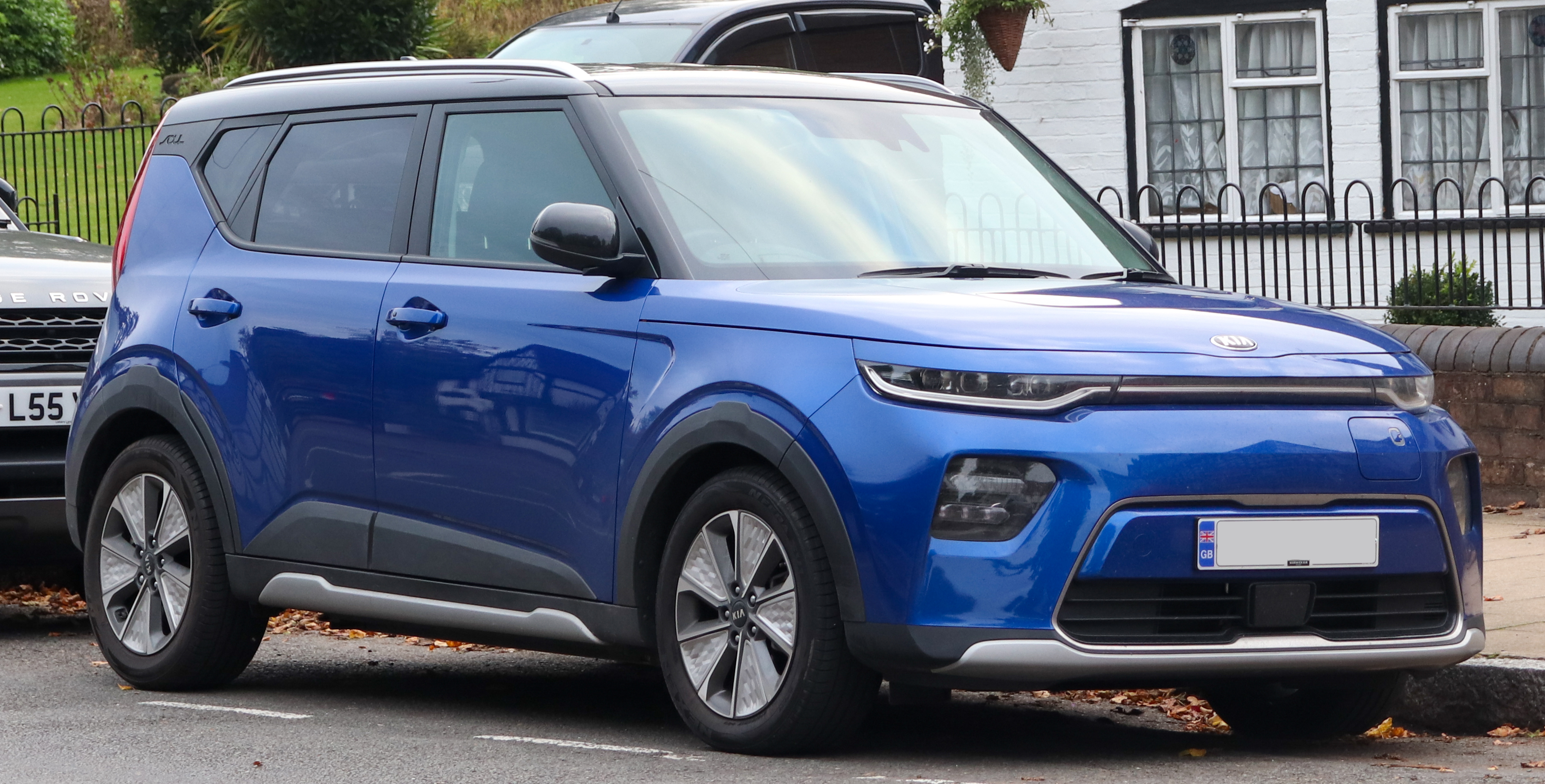
Kia Soul
"Ready? Number one, the Kia Soul. No."
The Kia Soul is a compact car with a distinctive, boxy shape. The podcast is calling it out as the top item in their list for that part of the discussion. It’s being mentioned because it’s a standout choice in their ranking.
The Kia Soul is a compact, boxy-styled car that’s often discussed as a practical everyday vehicle with a distinctive look. In the podcast context, it’s listed as “Number one,” indicating it’s being highlighted as a top choice or top pick in that segment. That makes it relevant to the episode’s ranking or recommendation theme.

Scion Xb
"Yes. You remember there was the Scion XB, the Nissan Cube. And if you want to count it, th..."
The Scion xB is a small hatchback with a boxy shape. The podcast is reminding listeners of that model and comparing it to another similar-looking small car. It’s mentioned to help describe the kind of vehicle they mean.
The Scion xB is a compact, boxy hatchback that the podcast references as a recognizable earlier model. The host compares it to the Nissan Cube and mentions it in a way that suggests they’re talking about the style or category of quirky, practical small cars. It’s brought up because it helps anchor the conversation in a familiar design type.
tariff
"And that's part of the problems it was built in Mexico and it was a tariff thing. Yeah. So we lost a very affordable, accessible new vehicle, unfortunately, because of the tariffs."
A tariff is a tax on imported products. The idea here is that those extra costs made it harder to keep selling that car.
A tariff is a tax on imported goods, which can raise costs for manufacturers and affect whether a vehicle is profitable to sell. Here, the speaker links tariffs to the Versa’s discontinuation and the loss of an affordable option.
manual transmission
"Yeah, because it was available with a manual transmission. I think it was a five speed manual, too."
A manual transmission means you shift gears yourself using a clutch and a stick. The point here is that this cheap car could still be bought with a manual.
A manual transmission requires the driver to change gears using a clutch pedal and gear lever. In this context, it’s notable because the speaker says the Versa was available with a manual at a very low price point.
five speed manual
"I think it was a five speed manual, too. Yeah."
This means the car has five forward gears that you shift manually. It’s a pretty typical setup for budget cars.
A five-speed manual transmission has five forward gear ratios plus reverse. More gears can help keep the engine in a better efficiency or power band, but a five-speed is common in lower-cost cars.
automatic reverse braking
"And I think not on the five speed manual, but on the ones with an automatic transmission, it had standard automatic reverse braking, which was kind of surprising for the price point."
It’s a safety feature that helps when you’re backing up. If the car senses something behind you, it can brake automatically to help avoid a crash.
Automatic reverse braking is an advanced driver-assistance feature that can detect an obstacle while the car is reversing and apply the brakes automatically. The speaker finds it surprising that this kind of safety tech showed up at that price point.
Volkswagen
"And Volkswagen used to do stuff like this where they'd have two vehicles that were the same with the same model year, but they were different designs or they'd skip two years and they it was all very weird."
Volkswagen is a car company. The host is saying Volkswagen previously did some confusing lineup moves—like having two different designs sold in the same model year.
Volkswagen is a major global automaker known for using multiple closely related models and sometimes overlapping model-year strategies. The host claims Volkswagen used to run two vehicles with the same model year but different designs, describing it as a “weird” approach.

Acura RDX
"So this is very weird, but the RDX is going away for two model years. Um, no 2026, no 2027 back for 2028 is a hybrid only model."
The Acura RDX is a small luxury SUV. The hosts are saying Acura is pausing it for a couple years and then bringing it back in 2028 as a hybrid-only version.
The Acura RDX is a compact luxury crossover SUV from Acura. In this segment, the hosts discuss it being discontinued for two model years and then returning as a hybrid-only model for 2028, which is a major powertrain and lineup change.

Ford Escape
"Is it still being built the Ford Escape? No, it's not."
The Ford Escape is a compact SUV from Ford. The host is basically asking if Ford is still making it.
The Ford Escape is a compact crossover SUV sold by Ford. Here it’s mentioned as a comparison point to the RDX’s lineup changes, with the host asking whether it’s still being built.
manufacturing flexibility
"[2462.9s] This was a question of manufacturing flexibility. [2465.8s] And this, this kills me. [2467.5s] They were still selling 140,000 of these a year."
Manufacturing flexibility means a factory can change what it makes without too much trouble. The hosts are saying the decision to stop production was likely about making it easier to build other models instead. It’s more about how the factory runs than about how good the car was.
Manufacturing flexibility is the ability for a factory or production system to switch what it builds with minimal disruption. In this segment, the host frames the discontinuation as a production decision driven by how easily the company could retool or reallocate capacity. It’s presented as a business/operations reason rather than a product-quality issue.
platform
"Well, it's built on the same platform as the Bronco Sport. [2478.6s] It is, and they will sell more Bronco Sports because of this."
A platform is the shared foundation a car company uses to build different cars. If two vehicles share a platform, they can use similar parts and manufacturing methods. In this segment, that’s tied to why production decisions can change.
A vehicle platform is the shared underlying engineering “base” a manufacturer uses across multiple models—things like major structural components and mounting points. When the hosts say one vehicle is built on the same platform as the Bronco Sport, they’re implying it can share design, packaging, and manufacturing efficiencies. That’s why they connect it to “manufacturing flexibility.”

Ford Bronco Sport
"...ere. Well, it's built on the same platform as the Bronco Sport. It is, and they will sell more Bronco Sports bec..."
The Ford Bronco Sport is a smaller SUV from the Bronco lineup. It’s meant to be more compact while still offering off-road capability. The podcast is talking about it as an important seller and how it relates to the Bronco platform.
The Ford Bronco Sport is a smaller SUV that’s part of the Bronco family, aimed at buyers who want a more compact option with off-road capability. The podcast notes it’s built on the same platform as the Bronco Sport, and that sales volume matters—suggesting it’s a key model in the lineup. That’s why it comes up when discussing strategy and what people are actually buying.
compact crossovers
"[2493.2s] It seems that compact crossovers, um, are not sold generally on rear seat space. ... [2503.3s] It's a sense I get because the Bronco Sport has really, has a really tight rear seat area."
Compact crossovers are smaller SUVs/crossovers. The hosts are saying they’re often marketed for other things besides how much room you get in the back seat. They compare two models to show the difference in rear-seat space.
Compact crossovers are smaller, higher-riding vehicles that blend car-like packaging with SUV-style driving position. Here, the hosts are making a packaging/marketing observation: these vehicles often aren’t sold primarily on rear-seat space. The segment uses the Bronco Sport’s tight rear seat and the Escape’s roomier layout as examples.

Bmw X4
"Good. The BMW X4. There's a car I haven't thought about in like ever. I have to see one to think about one."
The BMW X4 is a BMW SUV that’s based on the smaller X3, but it looks more sporty with a more slanted roof. It’s basically BMW’s “sporty small SUV” idea.
The BMW X4 is a compact crossover built on the X3 platform, but styled and marketed as a sportier, more sloped “coupe-like” SUV. In this segment, the host frames it as a smaller sibling to the BMW X6, which helps listeners place it in BMW’s crossover lineup.

BMW X6
"Well, I feel like the X4 is like, it's kind of like just a smaller version of the X6. It's like that egg shaped thing. Yeah."
The BMW X6 is a bigger BMW SUV with a sportier, coupe-like shape. In the episode, it’s used as the reference point for what the X4 is like—just smaller.
The BMW X6 is BMW’s larger “coupe-like” crossover, positioned above the X4 in size and price. The host describes the X4 as a smaller version of the X6, and also calls both “backie coupé” variants of their more mainstream crossover counterparts.

BMW X3
"And for people who don't know, there's the X3 and the X5 that is BMW's compact and mid-sized crossover. Both are very popular."
The BMW X3 is BMW’s smaller, more “normal” SUV in the lineup. The episode mentions it because the X4 is basically the sportier-looking version of that idea.
The BMW X3 is BMW’s compact crossover that serves as the base for the X4’s platform and sizing. The host uses it to explain BMW’s crossover lineup by contrasting the X3 and X5 with the more stylized X4 and X6.

3 Bmws Compact
"It is. And for people who don't know, there's the X3 and the X5 that is BMW's compact and mid-sized crossover."
The podcast is talking about BMW’s compact-size category. They mention the X3 and X5 to explain the difference between smaller and larger crossovers. It’s mainly about how the lineup is grouped by size.
The “3 Series Compact” in the podcast context refers to BMW’s compact segment, with the host also mentioning the X3 and X5 as BMW’s compact and mid-sized crossovers. The key point is that the discussion is about vehicle size classes and how BMW’s lineup is organized. That’s why it comes up when talking about what counts as “compact” versus larger categories.

BMW X5
"And for people who don't know, there's the X3 and the X5 that is BMW's compact and mid-sized crossover. Both are very popular."
The BMW X5 is a bigger SUV than the X3. The episode uses it as the baseline model that the X6’s sportier styling is derived from.
The BMW X5 is BMW’s mid-sized crossover, and in this segment it’s used as the “mainstream” counterpart to the more stylized X6. The host’s point is that the X4/X6 variants are based on the X3/X5 but add a sportier, coupe-like body shape.
backie coupé versions
"They're also both very good. The X4 and the X6 are fast, backie coupé versions of those vehicles."
This is basically BMW’s “sporty-looking SUV” design. It means the roofline is more slanted like a coupe, even though it’s still an SUV underneath.
“Backie coupé” is an informal way to describe the coupe-like SUV styling BMW uses for the X4 and X6—typically a more sloped roofline and sportier proportions than a standard crossover. The key idea is that it’s still an SUV, but shaped to look more like a coupe.
mildly collectible
"So the X4 is gone, probably mildly collectible, kind of good looking."
When people say a car is “mildly collectible,” they mean it might become more sought-after later because it’s no longer made and not as common. It doesn’t necessarily mean it will be worth a fortune—just that enthusiasts might want it.
“Mildly collectible” is a fan/market term meaning a discontinued or low-volume model may become more desirable over time, often because fewer remain in good condition. It’s not the same as a guaranteed high-value classic, but it suggests some collectability potential.
Android automotive
"This is actually a Subaru designed infotainment system, um, that uses Android automotive, but not Google built in."
Android Automotive is the software platform that can power a car’s big screen and apps. The host is saying Subaru uses that platform, but the look and features are still Subaru’s design rather than a fully Google-controlled setup.
Android Automotive is an automotive operating platform that lets car makers build modern in-dash interfaces using Google’s Android ecosystem. The host clarifies that the Outback Wilderness uses Android Automotive, but it’s not “Google built in,” meaning it’s Subaru’s own implementation on that platform.
horizontal screen
"...uses Android automotive... it's, it's a really good system, horizontal screen, very different than the previous vertical screen..."
A horizontal screen just means the car’s main infotainment display is wide like a landscape tablet. The host is comparing it to an older setup where the screen was upright.
A horizontal screen refers to the infotainment display layout mounted in a wide, landscape orientation. The host contrasts it with the previous vertical screen design, implying a different user experience and UI layout.
physical HVAC controls
"...horizontal screen... and you have physical HVAC controls."
Physical HVAC controls are the real knobs or buttons for climate control (heat/AC). The benefit is you can adjust temperature without hunting through menus on the screen.
Physical HVAC controls are real buttons/knobs for heating, ventilation, and air conditioning instead of relying entirely on touchscreens. The host points this out as a practical advantage of the Outback Wilderness’s infotainment/controls design.
tire noise
"...I was like listening to my podcast all the way down... on the exit... I had to turn this up really high to overcompensate for the tire noise."
Tire noise is the road-and-tire sound you hear in the cabin, like a hum or roar. The host is saying it was quiet on the highway, but got louder after they exited.
Tire noise is the sound produced by tires interacting with the road surface, especially at highway speeds or on certain pavement types. The host says the cabin felt very quiet until leaving the highway, when tire noise became noticeable and required turning the audio up.
beefier tires
"...the wilderness is an off-roading version of the, um, outback. And so it's going to have beefier tires on it."
“Beefier tires” means tougher, more rugged tires meant for rougher use. The host is saying the Wilderness version gets tires that can handle off-road conditions better.
“Beefier tires” is enthusiast shorthand for tires that are more rugged or have a more aggressive off-road-oriented spec (often thicker sidewalls and/or more durable tread). The host ties this to the Wilderness trim being designed for off-roading compared with the standard Outback.
off-roading
"But the amazing thing about it is that then you can take it to, um, an off-road place and [2906.2s] you can do some really capable, competent off-roading."
Off-roading is when you drive on rough, unpaved roads or trails instead of smooth pavement. It needs good tires and suspension so the car can handle bumps and loose ground.
Off-roading means driving on unpaved or uneven surfaces like dirt roads, trails, and rocky paths. It typically stresses tires, suspension, ground clearance, and traction more than normal highway driving.
Wrangler Rubicon
"...ot going to go to Moab and, you know, do like the Rubicon Trail or anything like that."
The Wrangler is an off-road SUV. The podcast mentions places like Moab and the Rubicon Trail to show it’s meant for tough trail driving. It’s being used as an example of a vehicle people take on serious off-road routes.
The Wrangler is referenced in the context of serious off-road use, specifically mentioning trips to Moab and the Rubicon Trail. That highlights the vehicle’s reputation for trail capability and durability in challenging terrain. It’s brought up to illustrate what kind of driving the Wrangler is known for.

Subaru Outback
"[2964.3s] I got the impression from photographs and I don't think I've seen one in the Flescia [2969.2s] that the, the new Outback is much bigger than the old Outback. [2973.8s] But I did some checking today and it's not. [2976.2s] The wheelbase is the same, the overall length is about the same."
The Subaru Outback is a family-friendly car that’s comfortable for daily driving, but it’s also designed to go on dirt roads and trails. Here, they’re saying the newer one feels bigger in pictures, but the wheelbase is the same and you get more cargo room.
The Subaru Outback is a wagon-based crossover that’s built for everyday comfort but can also handle light off-road use. In this segment, the host compares the new Outback to the older one and discusses how the packaging affects cargo space while keeping the same wheelbase.
wheelbase
"[2973.8s] But I did some checking today and it's not. [2976.2s] The wheelbase is the same, the overall length is about the same. [2979.4s] You pick up a little bit of cargo space and that's largely because it looks more like a crossover"
Wheelbase is the distance between the front and rear wheels. A longer wheelbase usually helps with a smoother ride and more room inside, while the same wheelbase can mean the car feels similar in how it drives.
Wheelbase is the distance between a car’s front and rear axles. It strongly influences ride smoothness and interior space, and keeping it the same helps explain why the new Subaru Outback can feel similar in size even if other dimensions change.
cargo space
"[2976.2s] The wheelbase is the same, the overall length is about the same. [2979.4s] You pick up a little bit of cargo space and that's largely because it looks more like a crossover"
Cargo space is how much room you have in the back to carry things like groceries, luggage, or camping gear. More cargo space usually means it’s easier to pack for trips.
Cargo space is the usable volume (and sometimes the practical load area) for storing luggage, gear, or equipment. It’s often a key differentiator between wagon-like and crossover-like packaging, which is why the host ties it to the Outback’s updated proportions.
electric vehicles
"…when they move to just selling the electric vehicles, and I'm getting a sense that the early production is going to be all EREV…"
Electric vehicles are cars that run on electricity stored in a battery. Instead of burning gas to move, they use an electric motor.
Electric vehicles (EVs) are cars powered primarily by electric motors and a battery pack, rather than a traditional gasoline engine. In this context, the hosts are discussing a shift in product strategy toward EV-only offerings.
dealer network
"Also, there's still the controversy of them not working through the dealer network. So they have legal battles ahead of them there…"
A dealer network is the network of franchised retailers that sell vehicles on behalf of automakers. The hosts are referencing controversy and legal battles around whether Rivian should sell through dealers or use a different sales/distribution approach.
national rollout
"Yeah, and I'll be curious to see how the national rollout goes."
A national rollout means expanding sales and support from a few areas to the whole country. It’s about how fast more customers can get the product.
A national rollout is the staged expansion of a product or service from a limited region to nationwide availability. In EV sales, it often affects how quickly customers can access ordering, delivery, and service support.
production plan
"…I think Ryan made a really good point with the flexibility of their production plan."
A production plan is how a company decides when and where to build cars. The point here is that they can adjust it if demand shifts to different states.
A production plan is how a manufacturer schedules and allocates manufacturing capacity to meet demand. The hosts are highlighting flexibility in production so the company can build vehicles closer to where demand is highest.
Chicago, Illinois
"…If a whole bunch of people in Chicago, Illinois want one, then they can very easily build a network here."
Chicago, Illinois is mentioned as an example city. The hosts are using it to explain how a company could adapt if lots of people in one area want the cars.
Chicago, Illinois is referenced as an example of a market where demand could be high enough to justify building or expanding distribution locally. It’s used to illustrate how flexible production and distribution can respond to regional demand.
California
"…or if there's also need and desire in California, Tennessee, or Michigan…"
California is mentioned as another place where people might want these cars. It’s used to show the company could expand based on where demand is.
California is mentioned as another potential demand region that could influence how quickly a company expands its distribution and production footprint. It’s part of the broader point about geographic flexibility.
Tennessee
"…or if there's also need and desire in California, Tennessee, or Michigan…"
Tennessee is mentioned as another state where customers might want the cars. The point is that the company could expand there if demand shows up.
Tennessee is referenced as an example state where demand could drive faster expansion of sales/distribution. It supports the hosts’ argument about being able to scale quickly across regions.
Michigan
"…or if there's also need and desire in California, Tennessee, or Michigan…"
Michigan is mentioned as another place where people might want the cars. It’s part of the argument about scaling based on where demand is.
Michigan is mentioned as another example region for potential demand. In the context of EV rollouts, it highlights how distribution and manufacturing plans might be adjusted by geography.
Request an Explanation
Heard something you'd like explained? We'll add it to this episode.
Sign in to request explanations for terms you heard.
Want to learn more?
Browse our glossary for plain-English explanations of automotive terms, jargon, and concepts.
Help improve this episode
See something that's not quite right? Our annotations are AI-generated and can sometimes miss the mark. Click the flag icon on any annotation to suggest a correction.