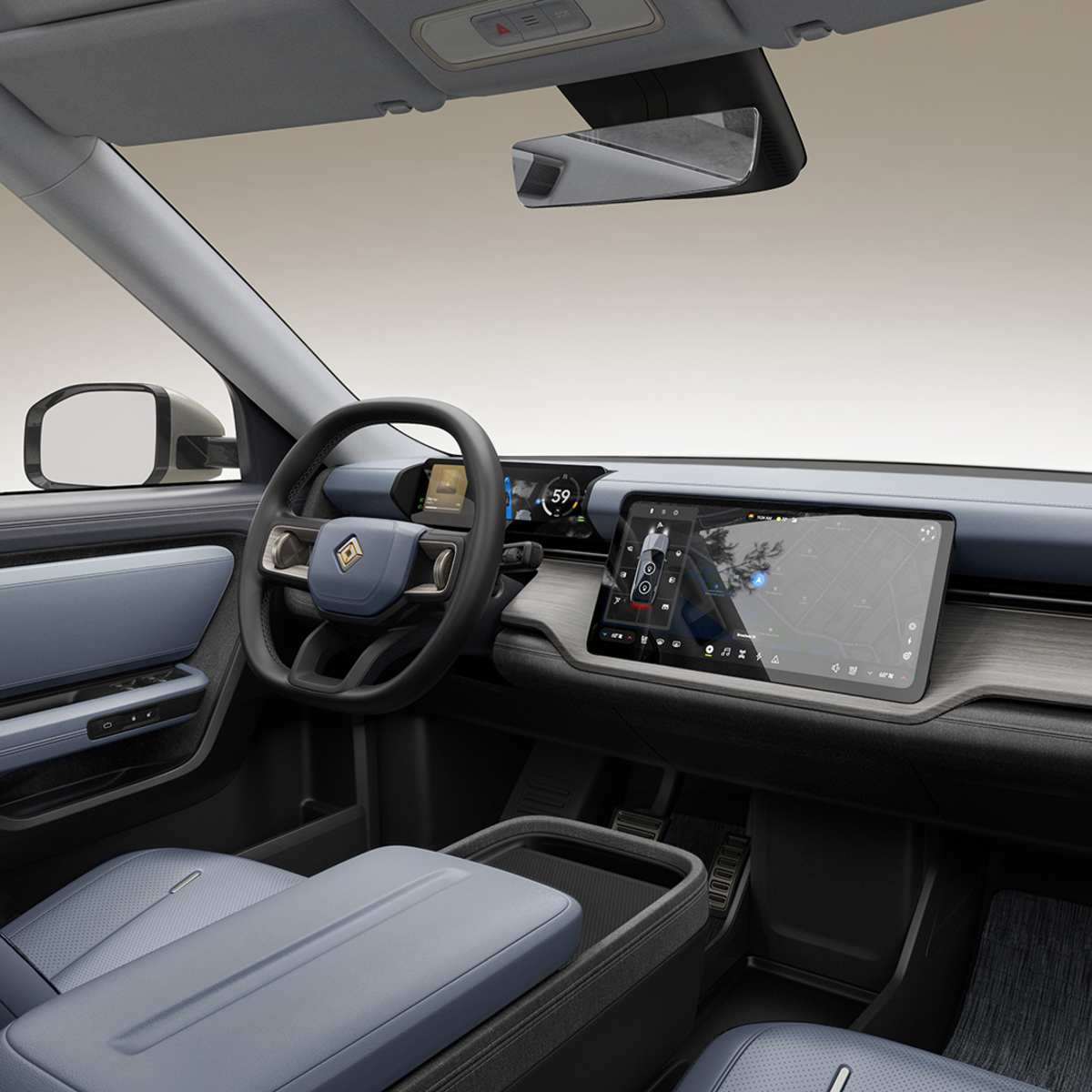
Rivian is a company that makes electric cars, especially for people who want to go off the beaten path. The host is talking about how Rivian is trying to become profitable with upcoming vehicles.
“Burn through cash” means the company is spending money faster than it’s earning it. It’s basically running low on cash unless sales or profits catch up.
The Rivian R2 is a smaller electric crossover. The host thinks it could be a turning point for Rivian because it may be easier for the company to sell profitably.
“Game changer” means something that could make a big difference. The host thinks the R2 could be that kind of turning point for Rivian’s money situation.
A mild hybrid uses a small electric system to help the gas engine, but it usually can’t run the car by itself on electricity. The goal is better gas mileage without the complexity of a full hybrid.
A full hybrid can use gas, electricity, or both. That usually lets it save more fuel than a mild hybrid because it can rely on the electric system more often.
The Honda CR-V is a popular compact SUV, and in this context it’s being used as an example of a true full hybrid. The key point is that it’s not offered as a mild hybrid on the same model.
Audi is a luxury car brand mentioned here as an example of where mild hybrids are more common. The host’s idea is that mild hybrids are easier to justify on expensive cars.
Volvo is mentioned as another luxury brand that tends to use mild hybrids. The main point is that mild hybrids show up more often on higher-priced cars.
Stop-start is the system that turns the engine off when you’re stopped and turns it back on when you’re about to go. Mild hybrids can make that start/stop happen more smoothly.
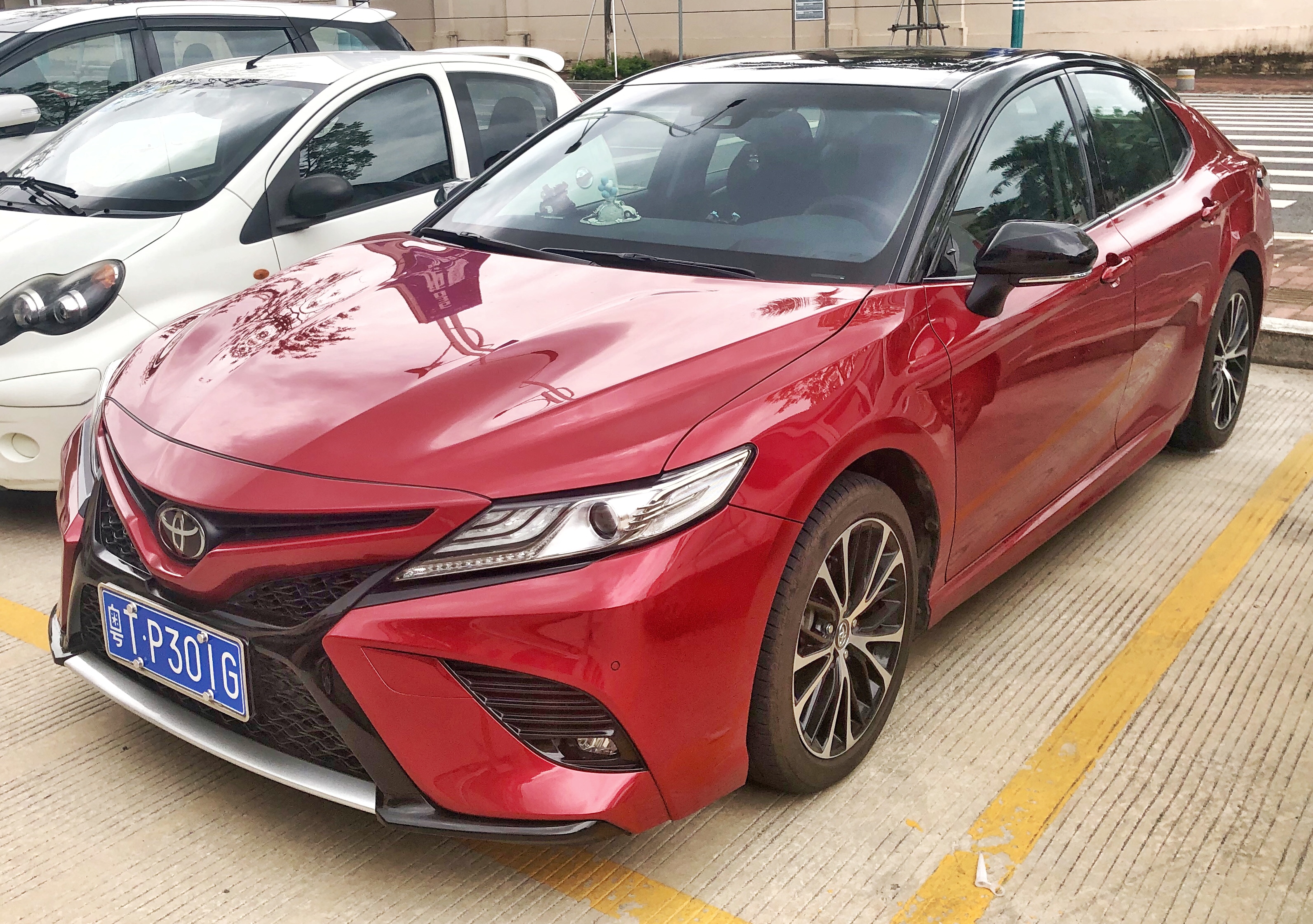
The host mentions the Toyota Camry to make a point: two different cars with mild hybrids can get different real-world efficiency. They’re saying the Camry’s mild-hybrid system is the better one in their comparison.
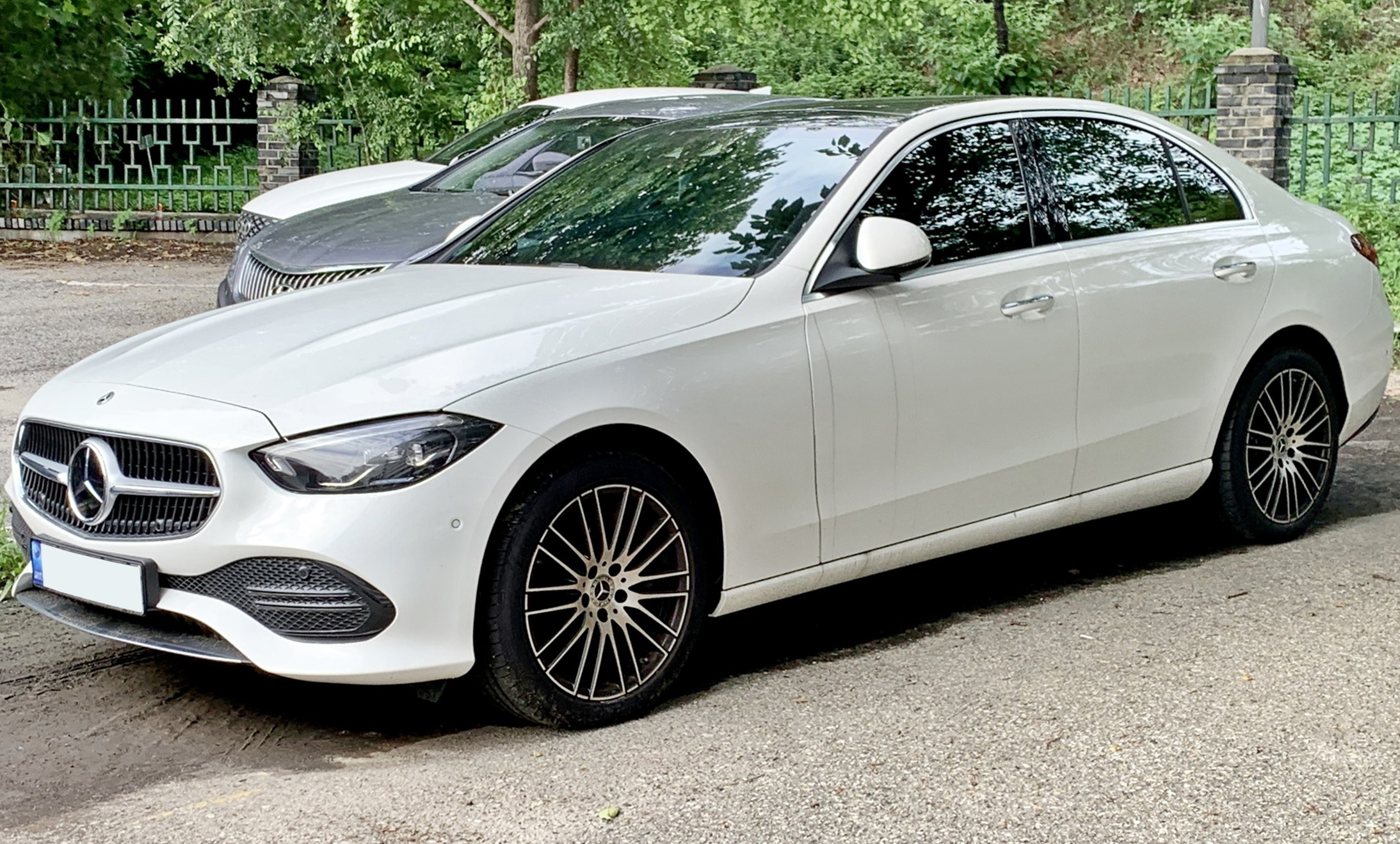
The host is using the Mercedes-Benz C-Class as an example to show that mild-hybrid systems don’t all work the same. They’re saying the Mercedes system is less efficient than the Toyota system they compare it to.
Electronic boost means the car uses its electric motor to help the gas engine when you accelerate. It’s not a full electric drive—more like a helpful push.
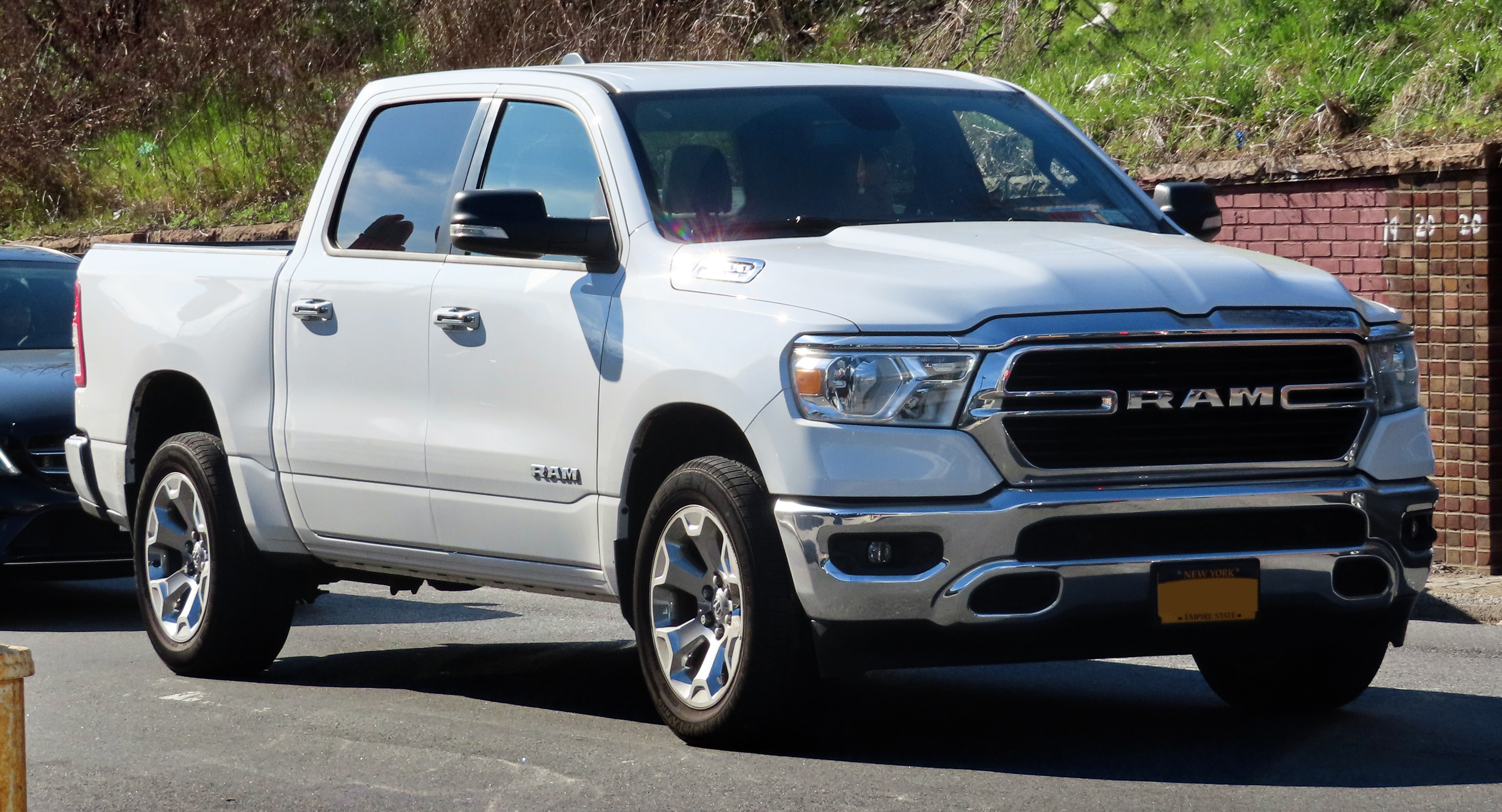
The Ram 1500 is the pickup the host is talking about. They’re describing Ram’s mild-hybrid system (eTorque) and how the company later backed away from the big claims.
The Ram is a full-size pickup truck made by Dodge. The podcast is talking about when a newer generation of the truck came out and what that change meant. It’s mentioned because it’s a major update in the truck’s history.
A V6 engine is a type of gas engine with six cylinders arranged in a V shape. The host is saying eTorque was available on Ram versions that used a V6 too.
The Ford Ranger is a pickup truck. It’s popular because you can choose different engines, and that affects how strong and responsive it feels when you drive.
The Ford Mustang is a sports car made by Ford. It can be ordered with different engine and option packages. The podcast is talking about how one of those options relates to the base engine setup.
This is a bigger engine than the four-cylinder—it's a V6—and it also has a turbo. The turbo helps it pull harder, especially when you need extra power.
The Toyota RAV4 is a super-popular crossover in the U.S. Here, the point is that the redesigned 2026 version is going hybrid-only, meaning it relies on an electric motor along with the engine.
Jeep’s Cherokee is a crossover model that’s been around for years. The host is talking about the redesigned 2026 version coming back after being absent for a few years, with a new look closer to Jeep’s larger Grand Cherokee.
Mazda’s CX-50 is meant to feel a bit more upscale than the CX-5, even though they’re still in the same overall size/category. The host’s point is that the price gap isn’t huge, so it may not feel like a big upgrade.
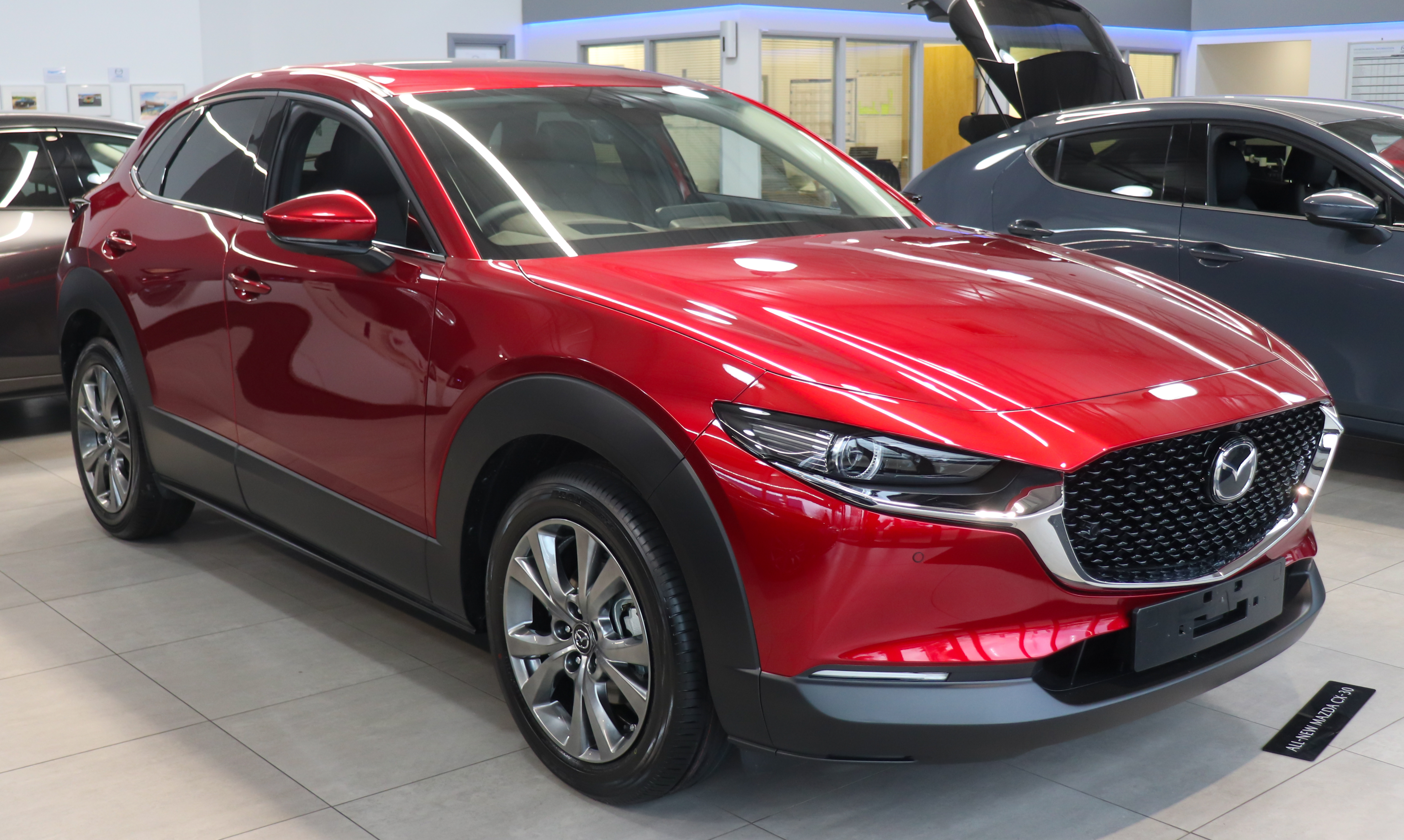
The Mazda CX-30 is a smaller Mazda SUV. They bring it up because, in older versions, it was harder for them to set radio presets than in the newer infotainment system they’re trying.
The infotainment system is the car’s main screen and controls for things like music and navigation. They’re saying the newer one was much easier to figure out for setting radio presets.
“Hybrid only” means the car is only available as a hybrid. Instead of being gas-only, it uses both a gas engine and an electric motor to help improve efficiency.
“Limited” usually means a more fully equipped version of the car. In this segment, they’re saying paying a bit more for the Limited trim gets you noticeably more features.
“Plug-in” means the car can be charged from a wall outlet. The host is saying this RAV4 setup isn’t that kind of hybrid, so you can’t charge it externally.
The Volkswagen Tiguan is a compact SUV. The hosts say the 2026 Tiguan gets an updated powertrain, meaning the engine/transmission setup was changed in some way.
The “powertrain” is what actually makes the car move—engine and the parts that send power to the wheels. “Updated powertrain” means Volkswagen changed that setup for the newer model year.
Term
Nissan diesel version
They’re talking about a Scout that could be had with a diesel engine from Nissan. Diesel engines usually pull strongly at low speeds and can be more fuel-efficient than gas engines.
Scout is a car brand. Here they’re talking about bringing it back in a new way—new vehicles and a new company—while keeping the original off-road spirit.
A solid axle connects both wheels on an axle together. It helps the wheels stay in contact with bumpy terrain, which is why it’s popular on off-road vehicles.
Mechanical lockers are off-road traction aids that can “lock” the wheels together so they spin together. This helps when one wheel is slipping and you need both sides to keep moving.
An all-new factory approach means they’re planning to build vehicles in a brand-new production setup. The goal is to set up manufacturing specifically for these new vehicles.
Range anxiety is the worry that your electric car won’t have enough battery to finish your trip. It can make people plan routes around charging stops.
Concept
strategic pivot to preserve the electrified powertrain
They’re saying they changed strategy but still wanted an electric-style drivetrain. The idea is to keep the benefits of electric driving while adding a backup power option.
A range extender is like a backup power source in an electric vehicle. If the battery gets low, it uses a small gas-powered generator to help keep you going, so you don’t have to stop and charge as often.
Body-on-frame means the car’s body sits on a separate metal frame underneath. Trucks and off-road vehicles use this because it can handle bumps, towing, and rough terrain better.
Combined range is the total distance you can go using the battery plus the generator. It’s the bigger number you get when the vehicle can keep making electricity after the battery runs low.
Ground clearance is how much space there is between the bottom of the car and the ground. If it’s higher, you’re less likely to hit the undercarriage on bumps or rough trails.
Departure angle is how steeply you can drive down off a bump or ledge before the back of the car scrapes. Higher departure angles generally help with off-road descents.
Approach angle is how steep a bump or hill you can drive up before the front of the car starts to scrape. Bigger numbers usually mean better off-road clearance at the front.
Torque is the “pulling strength” of the engine or motor. More torque usually helps the car accelerate harder, especially from low speeds or when climbing.
Zero-to-60 mph (often shortened to “zero to 60”) is a performance metric measuring how quickly a vehicle accelerates from a standstill to 60 mph. It’s a simple, comparable way to describe straight-line acceleration strength.
They’re saying the base price is the real price you’ll pay, not a lower number that only happens if you qualify for discounts or rebates. It’s meant to make the pricing easier to compare fairly.
They’re saying the starting price will be under $60,000. That’s a big deal because it determines whether the car fits your budget compared with other options.
Pre-production refers to early vehicles built to validate design, packaging, and manufacturing processes before full-scale production begins. They can still be “delicate” or subject to changes as engineers finalize the production version.
A split tailgate is a rear door design where the opening is divided into sections—often a lower door plus an upper section that can open independently. This can make loading cargo or accessing the cabin easier without fully opening the rear.
Bench seats are a single, continuous seat for multiple passengers (commonly two or three) instead of separate individual seats. In compact crossovers, they can affect seating flexibility and how the cabin is laid out.
“Front trunk execution” refers to how well the vehicle implements a front cargo area, commonly called a frunk. This is especially common on EVs because the engine bay can be repurposed for storage.
EREV means the car is mostly electric, but it can make extra electricity on the go using a generator. That helps it drive farther without needing to plug in as often.
Direct-to-consumer means the car company sells to you directly instead of using a dealership network. That can let them control how you buy the car and what the process feels like.
A franchise dealership arrangement is the usual way cars are sold: local dealers represent the brand and sell cars to customers. The dealership runs a lot of the customer experience.
Customer experience here means the whole process of buying the car—how easy it is, how you’re treated, and how the steps are handled. They’re saying their sales model is designed to make that experience better.
A regional rollout means they start in certain areas first, then expand to more places later. They’re discussing whether they’ll launch nationwide right away or in stages.
“Brick and mortar” just means real physical places—like showrooms and service centers—rather than selling only online. They’re saying they’ll own those locations.
The Jeep Wrangler is an SUV designed for off-road driving. It’s the kind of vehicle people choose if they want to go on trails. The podcast brings it up because other SUVs are being compared to it.
The Ford Bronco is an SUV made for off-road driving. The podcast mentions it because it’s in the same category as other trail-focused SUVs. They’re using it to describe who competes for similar customers.
A competitive set is basically the list of rival cars that are trying to win the same customers. The speaker is asking which models they’re going to be compared to and how they’ll stand out.
The Toyota Land Cruiser is a tough SUV that’s known for going off-road and lasting a long time. The hosts mention it as an example of a rugged SUV doing well.
Incentives are the deals a dealer or manufacturer offers to get you to buy. “Low incentives” means they’re not having to discount as much to sell the cars.
Inventory turnover is how quickly a dealer sells the cars they have on the lot. If it’s “turning fast,” it usually means customers are buying them quickly.
The entry price point is the starting price of the car—what most buyers would pay to get into it. They’re saying they want that starting price to be under $60k to reach more people.
The Nissan Skyline GT-R is a well-known fast Japanese sports car. Here, they’re talking about one that’s right-hand drive and from Japan, which usually means it was imported instead of sold normally in the U.S.
“Gray marketing” means importing a car through unofficial routes instead of the normal dealer system. Here, they’re saying there’s a legal age rule—cars have to be at least 25 years old to be brought in and used on U.S. roads.
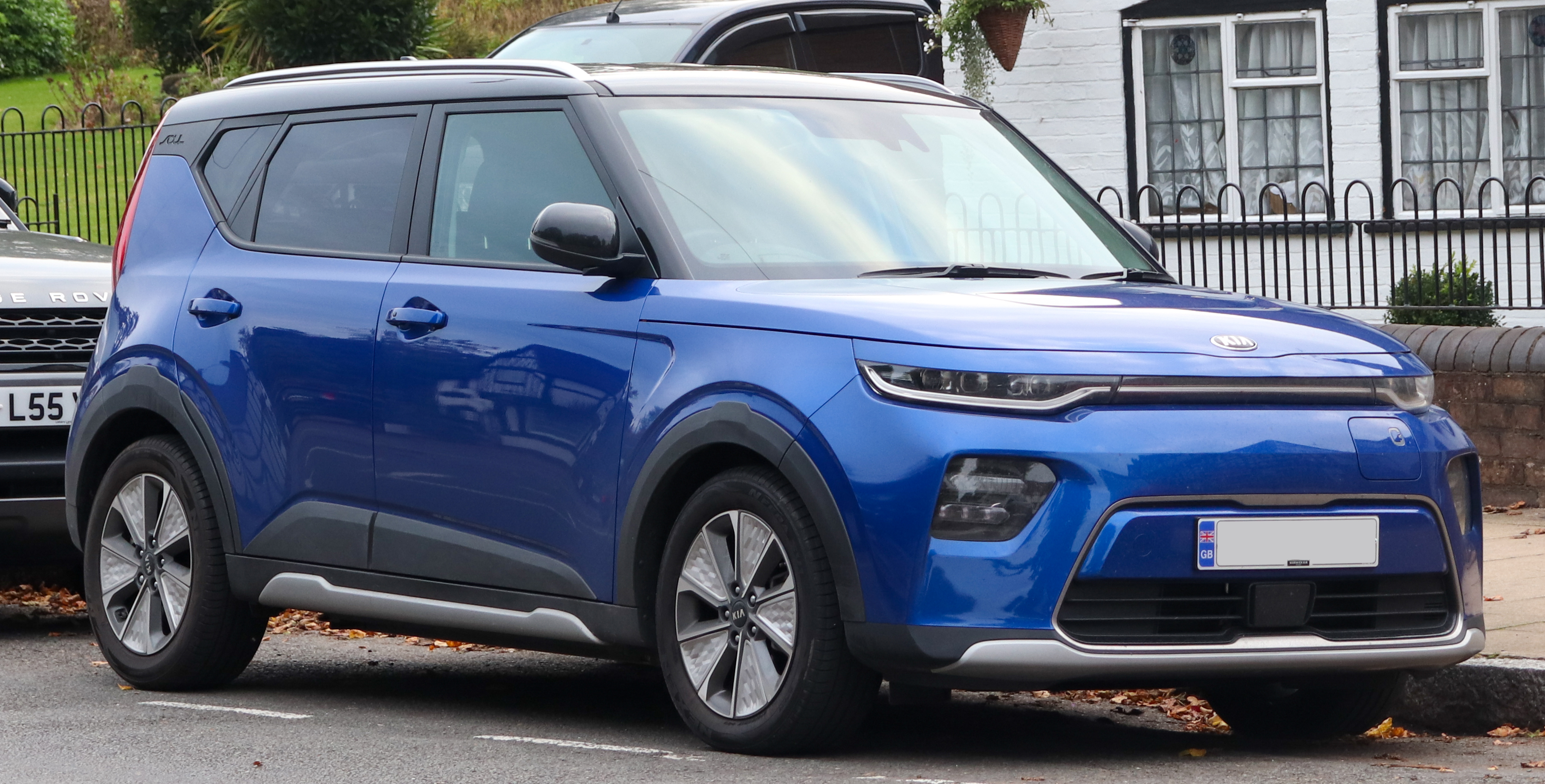
The Kia Soul is a compact car with a distinctive, boxy shape. The podcast is calling it out as the top item in their list for that part of the discussion. It’s being mentioned because it’s a standout choice in their ranking.
The Scion xB is a small hatchback with a boxy shape. The podcast is reminding listeners of that model and comparing it to another similar-looking small car. It’s mentioned to help describe the kind of vehicle they mean.
A manual transmission means you shift gears yourself using a clutch and a stick. The point here is that this cheap car could still be bought with a manual.
Volkswagen is a car company. The host is saying Volkswagen previously did some confusing lineup moves—like having two different designs sold in the same model year.
The Acura RDX is a small luxury SUV. The hosts are saying Acura is pausing it for a couple years and then bringing it back in 2028 as a hybrid-only version.
Manufacturing flexibility means a factory can change what it makes without too much trouble. The hosts are saying the decision to stop production was likely about making it easier to build other models instead. It’s more about how the factory runs than about how good the car was.
A platform is the shared foundation a car company uses to build different cars. If two vehicles share a platform, they can use similar parts and manufacturing methods. In this segment, that’s tied to why production decisions can change.
The Ford Bronco Sport is a smaller SUV from the Bronco lineup. It’s meant to be more compact while still offering off-road capability. The podcast is talking about it as an important seller and how it relates to the Bronco platform.
Compact crossovers are smaller SUVs/crossovers. The hosts are saying they’re often marketed for other things besides how much room you get in the back seat. They compare two models to show the difference in rear-seat space.
The BMW X4 is a BMW SUV that’s based on the smaller X3, but it looks more sporty with a more slanted roof. It’s basically BMW’s “sporty small SUV” idea.
The BMW X6 is a bigger BMW SUV with a sportier, coupe-like shape. In the episode, it’s used as the reference point for what the X4 is like—just smaller.
The BMW X3 is BMW’s smaller, more “normal” SUV in the lineup. The episode mentions it because the X4 is basically the sportier-looking version of that idea.
The podcast is talking about BMW’s compact-size category. They mention the X3 and X5 to explain the difference between smaller and larger crossovers. It’s mainly about how the lineup is grouped by size.
When people say a car is “mildly collectible,” they mean it might become more sought-after later because it’s no longer made and not as common. It doesn’t necessarily mean it will be worth a fortune—just that enthusiasts might want it.
Android Automotive is the software platform that can power a car’s big screen and apps. The host is saying Subaru uses that platform, but the look and features are still Subaru’s design rather than a fully Google-controlled setup.
A horizontal screen just means the car’s main infotainment display is wide like a landscape tablet. The host is comparing it to an older setup where the screen was upright.
Physical HVAC controls are the real knobs or buttons for climate control (heat/AC). The benefit is you can adjust temperature without hunting through menus on the screen.
Tire noise is the road-and-tire sound you hear in the cabin, like a hum or roar. The host is saying it was quiet on the highway, but got louder after they exited.
“Beefier tires” means tougher, more rugged tires meant for rougher use. The host is saying the Wilderness version gets tires that can handle off-road conditions better.
Off-roading is when you drive on rough, unpaved roads or trails instead of smooth pavement. It needs good tires and suspension so the car can handle bumps and loose ground.
The Wrangler is an off-road SUV. The podcast mentions places like Moab and the Rubicon Trail to show it’s meant for tough trail driving. It’s being used as an example of a vehicle people take on serious off-road routes.
The Subaru Outback is a family-friendly car that’s comfortable for daily driving, but it’s also designed to go on dirt roads and trails. Here, they’re saying the newer one feels bigger in pictures, but the wheelbase is the same and you get more cargo room.
Wheelbase is the distance between the front and rear wheels. A longer wheelbase usually helps with a smoother ride and more room inside, while the same wheelbase can mean the car feels similar in how it drives.
Cargo space is how much room you have in the back to carry things like groceries, luggage, or camping gear. More cargo space usually means it’s easier to pack for trips.
A dealer network is the network of franchised retailers that sell vehicles on behalf of automakers. The hosts are referencing controversy and legal battles around whether Rivian should sell through dealers or use a different sales/distribution approach.
A national rollout means expanding sales and support from a few areas to the whole country. It’s about how fast more customers can get the product.
Concept
production plan
A production plan is how a company decides when and where to build cars. The point here is that they can adjust it if demand shifts to different states.
Chicago, Illinois is mentioned as an example city. The hosts are using it to explain how a company could adapt if lots of people in one area want the cars.
we believe we're very competitive for what we're offering at the price point we are.
And we have a lot of confidence that we can go into these segments and win.
Well, this is very cool.
And it's very exciting to be here to welcome a new brand.
Ryan, is there anything we forgot to ask?
You know, it's you didn't forget to ask it, but I always love to shout out
to Scout community and the Scout stories that we love to hear, Tom, including yours.
And it is a special thing to be reimagining a brand that has so much love in the market.
And as you all know, there's the real Scout OGs out there who are looking for the rest of Maas
and who have kept sort of the factory grade parts alive.
But then there's this much bigger chunk of people who simply have a Scout story.
And we always love to hear them.
And we want to do right by all of those groups because Scout was a special thing
and we want to make it a special thing again.
Well, I'm glad to hear that.
Ryan, thank you so much for your time today.
Thank you both, Tom and Jill.
I appreciate spending time with you.
Appreciate your time.
That was Ryan Decker with Scout.
We're going to take a break.
And when we come back.
Waste time.
Waste time.
Questions or comments?
Drop us a line at carstuff at consumerguide.com.
That's carstuff at consumerguide.com.
Welcome back to the Car Stuff podcast.
And we're back.
This is the Consumer Guide Car Stuff podcast.
I'm Tom Appel.
She is Jill Siminello.
Jill.
Hello.
Jill, I feel like we haven't talked about your social media in several hours.
No, we've been too busy talking about the pigeons that are talking my balcony.
No, yeah, you can find me on all the things.
I'll keep it short and sweet.
Jill Siminello.
And I use the hashtag Car Dejeure.
And on YouTube and TikTok, I post a new video every day about, you know, the vehicles that I'm driving.
I am Car Guy Tom on Twitter, X and Blue Sky.
And I had a spectacular car spotter weekend.
So for people who don't know, I test drive the cars that I'm working with.
Generally on Saturdays, I'd like to put 50 to 100 miles on a car every Saturday.
And I drive around and while I'm doing that, I look for weird, strange, unusual cars, take pictures of them.
Sometimes they're just old cars from the 80s or 70s.
But this week I crushed it.
OK.
Crushed it.
So you want to check out hashtag Car Spotter on X.
All right.
I saw last week.
What?
I saw a right-hand drive JDM Nissan Skyline GT-R.
That's a crazy thing to see.
And I don't know how many people know what that is, but that's like Japan's Mustang.
Yeah, it was really cool.
It was on the Edens heading south.
Yeah, JDM, tell us what that means.
Japanese domestic market.
So it was never on sale in the United States.
And I believe it's only just recently that they've been allowed to bring these vehicles over and make them insurable to drive on streets.
Yeah, so the rule about gray marketing a car in from Japan is that it has to be 25 years old.
And we've hit a golden age of cars in Japan that people love.
So all of a sudden you're going to start seeing these cars in the US and they're cool and they're little and they're strange.
And the styling is really kind of controversial and perky.
So yeah, JDM vehicles are going to start showing up on the roads around you now.
Yeah, and you'll probably notice them by being right-hand drive.
Yeah, that's the big giveaway.
Yeah.
All right, guess what time it is?
It is quiz time.
It is quiz time.
I've got a good quiz here for you today.
It's very functional.
It's very business oriented.
Are you ready?
Oh, okay.
Are you going to ask me about numbers and sales numbers and things like that?
Nope.
Okay.
Nope.
The quiz title this week is, is it still being built?
Oh, okay.
Okay.
A lot of action in this particular segment right now and that segment is vehicles on the bubble.
Are you ready?
I am now or never.
I'm as ready as I can be.
I'm going to give you a particular model.
You have to tell me if it is still being produced for sale in the United States.
Okay.
Ready?
Number one, the Kia Soul.
No.
It is not.
The beloved Soul was available between 2010 and 2025.
The last one was built late last year.
And it's really the survivor of the Foxy vehicle set.
Yes.
You remember there was the Scion XB, the Nissan Cube.
And if you want to count it, the Chevy HHR.
Oh, yeah.
Yeah.
And it outlived all those vehicles.
All right.
You're on the board.
You've got one point.
Okay.
It's only getting harder from here.
I suspect.
All right.
The Nissan Versa.
Is it still being built?
Oh, so once upon a time, they had a hatchback and a sedan version of it.
They got rid of the hatchback and then we're still selling the sedan.
But is it still on sale?
The first hatchbacks were pretty practical vehicles.
I think the Versa was always likable.
It was.
It was a very affordable vehicle.
And, you know, like you said, it's very practical.
I'm going to say yes.
No.
Ned, Versa production ended in December of 2025.
There is no 2026 model.
And that's part of the problems it was built in Mexico and it was a tariff thing.
Yeah.
So we lost a very affordable, accessible new vehicle, unfortunately, because of the tariffs.
All right.
I liked that car.
Yeah.
I liked it a lot too.
And it got, you got a bunch of tech and a bunch of design for the money.
Yeah.
It was one of the last, I think that was the last sub $20,000 vehicle sold in the U.S.
Yeah, because it was available with a manual transmission.
I think it was a five speed manual, too.
Yeah.
And I think not on the five speed manual, but on the ones with an automatic
transmission, it had standard automatic reverse braking, which was kind of surprising
for the price point.
Yeah, I had good stuff.
All right.
Is it still being built?
Oh, what's throwing in the is there was a little bit of a.
St.
Kerr Fuffle.
Situation where they were talking about bringing out a new version and then they were
putting it on hold, but then I didn't think it was on hold.
And that's not a kerr fuffle to you.
That's a situation kerr fuffle.
Um, oh, I'm going to say yes.
No, because it's very popular vehicle.
It was Acura's most popular vehicle.
And this whole thing seems like a gigantic mistake.
And Volkswagen used to do stuff like this where they'd have two vehicles that were
the same with the same model year, but they were different designs or they'd skip two
years and they it was all very weird.
That's that was a Volkswagen thing, not an Acura thing.
Honda Honda Acura's parent company typically has its stuff together.
So this is very weird, but the RDX is going away for two model years.
Um, no 2026, no 2027 back for 2028 is a hybrid only model.
So that's that's weird and it's not going to do their sales any good at all.
No, no, right.
You're kind of in a bad way here.
You've got I know, I know.
All right.
Like I said, it was only going to get harder.
Yeah, it got harder.
Is it still being built the Ford Escape?
No, it's not.
You were decisive in your answer.
Um, production ended December of 2025.
This was a question of manufacturing flexibility.
And this, this kills me.
They were still selling 140,000 of these a year.
Yeah, I don't fully understand what happened here.
Well, it's built on the same platform as the Bronco Sport.
It is, and they will sell more Bronco Sports because of this.
Right.
Um, and I have, I don't want to go too far off into the weeds on this,
but I have a question for you and just sort of a general observation.
It seems that compact crossovers, um, are not sold generally on rear seat space.
It's a sense I get because the Bronco Sport has really, has a really tight rear seat area.
Yeah.
And, and the escape is roomier.
Yeah.
So that's not the issue here, but the Bronco Sport, it looks off roady.
It's called Bronco.
It's got a lot going for it.
And it will pick up a lot of these sales.
Yeah.
Um, but it is weird.
I think it's weird.
All right.
Uh, wait, you got that one.
So you've got two points.
Two and two.
Yep.
All right.
You're in a better way now.
You need to get one of the next two.
There are five questions total plus the bonus question.
Bonus question always related to the topic of the day.
Um, do I have a bonus question?
I do.
Good.
The BMW X4.
There's a car I haven't thought about in like ever.
I have to see one to think about one.
Well, I feel like the X4 is like, it's kind of like just a smaller version of the X6.
It's like that egg shaped thing.
Yeah.
It is.
And for people who don't know, there's the X3 and the X5 that is BMW's compact
and mid-sized crossover.
Both are very popular.
They're also both very good.
The X4 and the X6 are fast, backie coupé versions of those vehicles.
Um, that are wholly unnecessary, but they make so much extra money selling them.
Usually five grand more than the base vehicle that they sell them anyway.
But the X4 has not been selling well.
About 5,800 units last year versus 1,200, I'm sorry, 1,200 for the X6.
So the X6 sticks around.
But the X4, is it, is it there?
Is it not?
I'm going to say no, because I think you, you know, you're kind of giving me a hint here.
I'll say no.
I think I blew it.
Yeah.
The X4, like everything we've talked about, the X4 was discontinued late in November.
Yes.
Last year.
So the X4 is gone, probably mildly collectible, kind of good looking.
Kind of a weird car.
Um, so you've got three, you've already won.
All right.
All right.
Um, are you ready for the bonus question?
Always, always ready for the bonus question, especially if it's about the Hallmark channel.
It's not about the Hallmark channel, it's about steak sauce.
Um, we don't talk enough about steak sauce on the show.
Well, you don't eat steaks.
That's probably part of the problem.
So you're familiar with A1.
Yes.
Uh, do you know how far back A1 goes?
No, but I'm going to say a really long way.
A really long way, 1862.
Wow.
1862.
Before Marshall Dillon was the Marshall of, uh, of the Dodge area in Kansas.
That's how far back that's, that's the middle of the civil war.
Yes, it is.
Yep.
So that's A1.
Do you know how far back Lee and parents goes?
No, but I really like Lee and parents.
Do you?
Just your sauce.
1837.
Wow.
It goes way back.
I need you to, Lee and parents, uh, savory, sweet taste is famous.
People seem to love it.
Although it's a little bit controversial.
I need you to tell me which of the following is not the Lee and parents ingredient.
Okay.
Are you ready?
Mm hmm.
Molasses, anchovies, tamarind, or lemon zest?
Well, I know anchovies are in there.
Um, and I'm trying to figure out if molasses, because like I would say it's
either the molasses or, um, what was the second to last one?
Tamarind.
Tamarind, I would say it's either the tamarind or the molasses that is not in there.
Um, because the, the lemon zest with the zing makes sense to me.
Um, but you know, it doesn't really taste that sweet to me, which is why I have a problem with the
molasses idea.
But then again, my dad would put nutmeg in his pulled pork.
So what do I know?
Um, everyone puts nutmeg in everything.
If you watch, if you watch cooking shows, uh, a lot of nutmeg.
A lot of nutmeg, um, nutmeg in my meatballs.
Wait, wait.
Now, so if you know about nutmeg, do you know about mace?
Ish.
Mace is the shell around a nutmeg that is also grounded up that tastes surprisingly different
from nutmeg.
And I think if you're just like kind of a cooking person who wants to seem like you know what you're
doing, you just mentioned mace a lot.
Yeah, I'm, I make no such claims that I know what I'm doing.
All right, I'm going to, I'm going to go with molasses.
Uh, no, the lemon zest is the fifth.
Yeah.
All right.
So I'm going to have to go get out my Leah parents, uh, bottle because I have Worcestershire
sauce in my refrigerator and look at the ingredients.
We were going to review the Subaru Outback Wilderness today.
Yes.
But we don't really have time.
Would you like to give us a brief overview and we get to it next week?
Um, sure.
So, uh, I got it last week.
I drove it over the weekend, went to Indianapolis and back and, um, I want to address a couple
of things that people had mentioned to me in, um, TikTok or some questions that people had
asked me on TikTok.
And one was, um, about the infotainment system.
People assume that now that Toyota and Subaru have an overall, um, collaboration that all
of the Toyota infotainment systems are going into Subaru vehicles and that's not true.
This is actually a Subaru designed infotainment system, um, that uses Android automotive, but
not Google built in.
And it's, it's a really good system, horizontal screen, very different than the previous vertical
screen and you have physical HVAC controls.
Um, the other thing, um, that I noticed on my drive is, you know, I didn't, I thought that
the vehicle was really, really quiet and had a good interior quietness.
And I was like listening to my podcast all the way down.
And then when I pulled off the highway, um, on the exit, the podcast was so loud and I
was like, oh, I had to turn this up really high to overcompensate for the tire noise.
So, you know, the wilderness is an off-roading version of the, um, outback.
And so it's going to have beefier tires on it.
So you do get a little bit more interior road noise.
I like this car though for its overall comfort.
The seats are amazing.
The overall comfort on the highway for a long drive is really good.
But the amazing thing about it is that then you can take it to, um, an off-road place and
you can do some really capable, competent off-roading.
I mean, yeah, you're not going to go to Moab and, you know, do like the Rubicon Trail
or anything like that.
But it is, it is really good on, you know, a moderately skilled, um, course.
And I drove it off-road at the Midwest Automotive Media Association was super impressed with it.
So if I had to like kind of sum this up in, in a nutshell, I would say this is one of those
really great everyday drivers that's comfortable.
But you're going to have to deal with a little extra road noise because of the tires.
But then it doubles as a really great adventure lifestyle vehicle that you can, um, load your
bikes in, your camping gear, you know, things to do, adventure, you know, things.
And then, um, you know, take it on a trail, take it to a trailhead, take it off-roading,
and have a little bit more of an adventure, you know.
So I think it's got this really great dual personality, but you just have to contend
with a little extra road noise.
Well, yeah.
I got the impression from photographs and I don't think I've seen one in the Flescia
that the, the new Outback is much bigger than the old Outback.
But I did some checking today and it's not.
The wheelbase is the same, the overall length is about the same.
You pick up a little bit of cargo space and that's largely because it looks more like a crossover
and other than a wagon, but it actually is not different dimensionally than the old vehicle.
So that's good.
Now we see there's the controversy there that I will continue to bring up endlessly.
It no longer looks like a station wagon.
You know, it doesn't, I mean, it doesn't, it doesn't.
And, but you know, I mean, everything has to evolve, change.
And I don't know, I think it looks really good.
I'm getting a lot of feedback from people who either love it or hate it.
I don't think there's anything in the middle.
Oh, oh, oh, before we forget, producer Margaret wanted me to point something out.
I keep saying people are on the phone.
I keep you saying they're on the line.
I'm on the phone and I'm on the phone because something's wonky with my computer that is
killing me.
It's absolutely killing me.
It's going to drive me into therapy, but, but whatever.
You mean you're not already in therapy?
Not for this.
Okay.
So it's something else to talk about with your therapist then.
I'm going to see a separate therapist just for the podcast.
Just just for the podcast and the microphone issues.
Oh, last week I was also remiss.
I had mentioned that Sonny Rollins had passed away and I'd mentioned the photographs.
A great day in Harlem.
And I forgot to mention something important.
If you care and you want to check out Sonny Rollins,
there's an album called A Night at the Village Vanguard from 1957.
Spectacular.
I expect the weekend listening to it is very, very good.
So if you're wondering about Sonny Rollins,
you can listen to that entire album on YouTube
before you decide you want to download it.
So there you have that.
So YouTube, it's good for not just car reviews.
Um, I do a lot of music listening on YouTube, actually.
I also watch a lot of Jacques Pepin.
I love Jacques Pepin.
He's awesome, right?
That dude.
He's awesome.
He is.
Although I have to say one of the last episodes I saw kind of turned me off a little bit.
He cut a live lobster in half.
Oh, yeah.
Yeah, those old school guys, they're not nice to the lobsters.
No, but I'm sure whatever he made was amazing.
So there you have it.
All right, guess what we did?
We had another great show.
We did.
Yeah, it was really good to talk about Scott Motors.
I'd like to have more conversations about that as they move forward,
because what's going to be interesting to see
is when they move to just selling the electric vehicles,
and I'm getting a sense that the early production
is going to be all EREV, all extended range electric vehicle,
and then what they do with subsequent models.
Because right now they've got a full-size truck and a largest mid-size crossover,
which is the Rivian game plan sort of.
Rivian has a more compact truck, but still very similar game plans.
So we'll see there's goes.
Also, there's still the controversy of them not working through the dealer network.
So they have legal battles ahead of them there,
but if they believe the customer is better served this way,
you know, it'll be fun to watch how that plays out.
Yeah, and I'll be curious to see how the national rollout goes.
And I think Ryan made a really good point with the flexibility of their production plan.
If a whole bunch of people in Chicago, Illinois want one,
then they can very easily build a network here.
But if that shifts, or if there's also need and desire in California,
Tennessee, or Michigan, it just gives them the flexibility to expand and grow quickly.
Yeah. So the other thing is that they're very well financially backed by Volkswagen.
So they can build their own distribution network.
Yes.
It's so that will happen more quickly.
It's actually the question I asked about, I know we're running out of time,
about a national rollout, maybe being regional,
and that they might not want to put all the dealers in right away.
Sounds like they're going to set those up.
Yeah.
So there you have it.
All right. Thank you very much, Jill.
Yeah. No, thanks. Good to be here.
All right. Thanks to Ed Piotrowski.
Thank you to Ryan Decker of Scout.
And thanks to Producer Margaret.
Well, let's talk more about cars again next week.
Next week.
Remember to check us out at consumerguide.com.
The Car Stuff podcast is produced by J-Turn Media.
To advertise on the show, please drop us a line at carstuffatconsumerguide.com.
About this episode
Jill and Tom kick off with a quick pigeon joke, then set up a lineup of topics: compact crossover redesigns, hybrid-only powertrains, and a discontinued-car quiz. The hosts compare the 2026 Jeep Cherokee and Toyota RAV4, plus Mazda’s CX-5/CX-50 changes, and talk mild vs full hybrids. Later, they dive deep into Scout’s return—its body-on-frame, solid-axle, range-extender plan, and direct-to-consumer rollout. The episode also covers JDM import rules and several discontinued models like the Kia Soul and Nissan Versa.
This week Tom opens the show clarifying the difference between mild-hybrid and full-hybrid applications. Tom notes that mild hybrid drivetrains are found mostly on European luxury vehicles.
In advance of chatting with Scout Motor's Ryan Decker, Jill and Tom discuss how few all-new car brands have been launched in the past 25 years. Listen in for a list.
Still in the first segment, the hosts are joined by fellow automotive journalist Ed Piotrowski. Ed attended the 2026 Midwest Automotive Media Association Spring Rally, and wrote a comparison review of four compact crossovers: The Jeep Cherokee, Mazda CX-5, Toyota RAV4, and Volkswagen Tiguan. There's big news here, as for 2026 the Jeep and Toyota are all new--and now hybrid only--the Mazda is redesigned, and the VW has been treated to an updated powertrain. Listen in for Ed's insights.
In the second segment, the hosts are Joined by Scout Vice President of Strategy and Branding Ryan Decker. Ryan shares details regarding Scout's position in the market place, the products themselves, and what to expect regarding Scout's direct-to-consumer sales plan.
In the last segment, Jill is subjected to Tom's "Is it still being built?" quiz. After the quiz Jill talks a little about the redesigned Subaru Outback Wilderness, with which she recently spent time.
Hosted by Simplecast, an AdsWizz company. See pcm.adswizz.com for information about our collection and use of personal data for advertising.