
Subaru Uncharted, Jeep Cherokee Deep Dive, New Silverado
About this episode
The Car Stuff Podcast moves from station-wagon speed talk to EV and hybrid realities, then lands on hands-on impressions of the Subaru Uncharted. Hosts connect the Uncharted to the new Toyota CHR, note its city-friendly character, and discuss charging, real-world range, and an unusual front-wheel-drive base trim. The Jeep Cherokee deep dive follows, focusing on its return, bigger dimensions, and a hybrid strategy designed to protect all-wheel-drive capability. The episode also looks ahead to the 2027 Silverado redesign and ongoing RAV4 supply constraints.
Jill and Tom open a content-packed episode by welcoming the BMW M5 Touring to Tom's driveway. Expect to hear much more about this practical super-car in future episodes. Producer Margaret then shares details of her recent interview of Chicago-based radio reporter/journalist Jennifer Keiper, a peer of Jill's and Tom's. Jennifer lost her most recent position in the radio industry as CBS News wound down its broadcast operations. You can listen to that interview here.
Tom share a list of the countries in which the Car Stuff Podcast is most popular, and it's rather surprising.
Still in the first segment, Tom shares bad news for folks waiting to purchase a 2026 Toyota RAV4. The all-new compact crossover is in high-demand, and redesign rollover constraints have limited supply. Jill says the small crossover is worth the wait. The hosts also discuss slumping Lucid sales, and the most-popular model names of all time.
In the second segment, the hosts welcome Jeep Vice President of Design Vince Galante to the show. Vince walked Jill and Tom trough all of the news surrounding the return of the compact Cherokee crossover to the Jeep lineup. Listen in for details.
In the last segment, Jill is subjected to Tom's "Was it an Oldsmobile?" quiz, complete with a popular franchise-opportunity bonus question.
Jill also reviews the all-new Subaru Uncharted small crossover EV.
Hosted by Simplecast, an AdsWizz company. See pcm.adswizz.com for information about our collection and use of personal data for advertising.
station wagon
"Last week, we talked about obscure station wagons. In my parking lot, in my driveway right now, 2026 BMW M5 Touring. Oh. Station wagon."
A station wagon is a car with extra space behind the back seats. The back area is built for carrying stuff, so it’s more practical than a typical sedan.
A station wagon is a car body style with an extended roofline and a rear cargo area that’s open to the passenger compartment. It’s essentially a practical, family-friendly alternative to a sedan, with more usable space for luggage, gear, or hauling.

2026 BMW M5 Touring
"Last week, we talked about obscure station wagons. In my parking lot, in my driveway right now, 2026 BMW M5 Touring."
This is a super-fast BMW wagon. It’s based on the BMW M5, which is BMW’s performance model, but in a station-wagon body instead of a regular sedan.
The BMW M5 Touring is a high-performance wagon built on BMW’s M5 platform, combining a practical estate body with M-car performance. It’s notable because the M5 name is typically associated with sedans, so the Touring variant is a rarer, enthusiast-focused configuration.
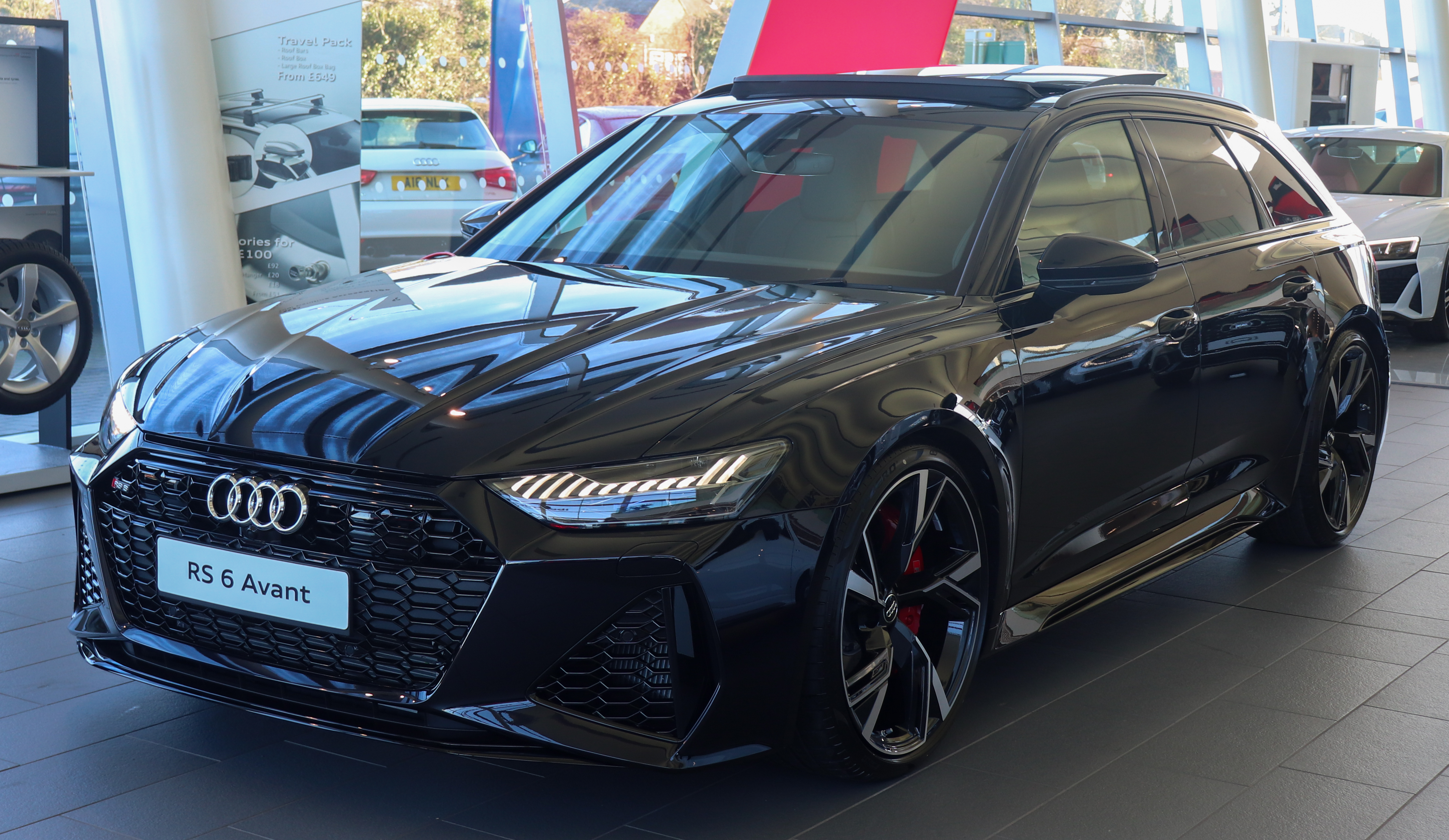
Audi Rs6
"...oked at the specs on it, but I would also say the Audi RS6 Avant is probably also pretty fast. Oh, you know ..."
The Audi RS6 Avant is a fast, performance-focused wagon. It’s built to be quick while still having the space you’d want for cargo. The podcast mentions it because it’s known for strong performance.
The Audi RS6 Avant is a high-performance wagon known for combining fast acceleration with the practicality of a station wagon. The episode mentions it as “pretty fast,” indicating the conversation is focused on performance specs and how these cars drive. It’s included because the RS6 Avant represents a rare blend of speed and cargo-friendly design.

Porsche Taycan
"Hmm. Will be the Porsche Taycan wagons, which have both been discontinued. Yeah."
The Porsche Taycan is an electric car from Porsche. The episode mentions that the wagon versions of the Taycan have been discontinued. That matters because it tells buyers what styles are still available.
The Porsche Taycan is an all-electric performance sedan, and the episode specifically mentions Taycan wagons being discontinued. That’s significant because it affects what body styles are available to buyers and how the lineup is evolving. The podcast brings it up to clarify current availability and what’s no longer offered.

RAV4, Toyota RAV4
"Okay. [505.7s] I'm just changing topics here. [508.6s] RAV4, Toyota RAV4. [510.6s] Yes."
The Toyota RAV4 is a popular SUV that a lot of people buy. Here, they’re saying it’s so in-demand that it’s hard to find, and that Toyota’s move toward hybrid versions slowed things down a bit.
The Toyota RAV4 is a compact crossover SUV known for being a high-volume, mainstream choice. In this segment, the hosts connect its popularity to supply constraints and discuss how Toyota’s shift toward hybrid versions affected availability.
hybrid
"[516.5s] Yeah. [516.5s] Like the demand is high and the supply is very low. [520.4s] Yeah. [521.0s] Apparently the rollover to the hybrid only thing slowed them down a little bit."
A hybrid uses both a gas engine and an electric motor. The host is saying that when Toyota started making the model hybrid-only, it took time to ramp up supply.
A hybrid powertrain combines an internal-combustion engine with an electric motor. When the host says the “rollover to the hybrid only thing” slowed supply, they’re referring to the transition to hybrid-only availability for that model/market.
tariffs
"[528.8s] Japan, Canada and the US, which is messing with things. [533.3s] It's also messing with them when it comes to tariffs. [536.0s] Okay. [536.9s] By them, I mean Toyota."
Tariffs are extra taxes on imported products. The host is saying that if Toyota is building cars in different countries, those taxes can affect pricing and supply.
Tariffs are taxes a government places on imported goods. The host links Toyota’s multi-country sourcing (Japan, Canada, and the US) to tariff impacts, implying that where parts/cars are made can change costs and availability.
unfilled orders
"Wow. Unfilled orders. So RAV4 are tough to get right now."
Unfilled orders means people have already ordered cars, but the dealer can’t get enough vehicles to deliver them yet. That can lead to waiting and pricing changes.
Unfilled orders are customer orders that have been placed but can’t be delivered yet because the manufacturer can’t supply enough vehicles. In a market like this, unfilled orders can contribute to shortages, longer waits, and pricing pressure.
Lucid
"[638.9s] Lucid. [640.0s] Do you remember we were talking about electric, like new companies? [643.2s] And I said the jury was still out on whether or not Lucid's going to make it."
Lucid is a company that makes electric cars. The hosts are talking about whether Lucid is doing well enough financially and in sales right now.
Lucid is an electric-vehicle brand known for building premium EVs with a focus on efficiency and long range. In this segment, the hosts discuss Lucid’s current market position and whether the company can sustain itself as sales soften.

Tesla Model
"...r. And for people who don't know the Lucid air, a Tesla Model S size large electric sedan, very nice vehicle."
The Tesla Model Y is an all-electric SUV. It’s designed to be a practical daily driver, with room for passengers and cargo. The podcast mentions it to help people understand how big and capable different electric Teslas are.
The Tesla Model Y is a compact electric SUV known for its practicality and strong all-around performance. It comes up in conversations alongside other electric sedans because it helps people compare size, power, and everyday usability in the EV world. In this episode, it’s referenced as a benchmark for what an “electric sedan size” can feel like compared to larger EVs.
market for large luxury sedans doesn't exist
"Not selling so well because the market for large luxury sedans doesn't exist. [674.8s] But they brought out the gravity, which was a midsize electric crossover."
The host is basically saying that not many people are shopping for big, high-end sedans. So even if a car is good, the sales may still be weak if the demand isn’t there.
This is a market-demand concept: the speaker argues that large luxury sedans have limited buyer interest right now. That framing is used to explain why Lucid’s sedan-focused strategy (and later its crossover push) hasn’t translated into strong sales.
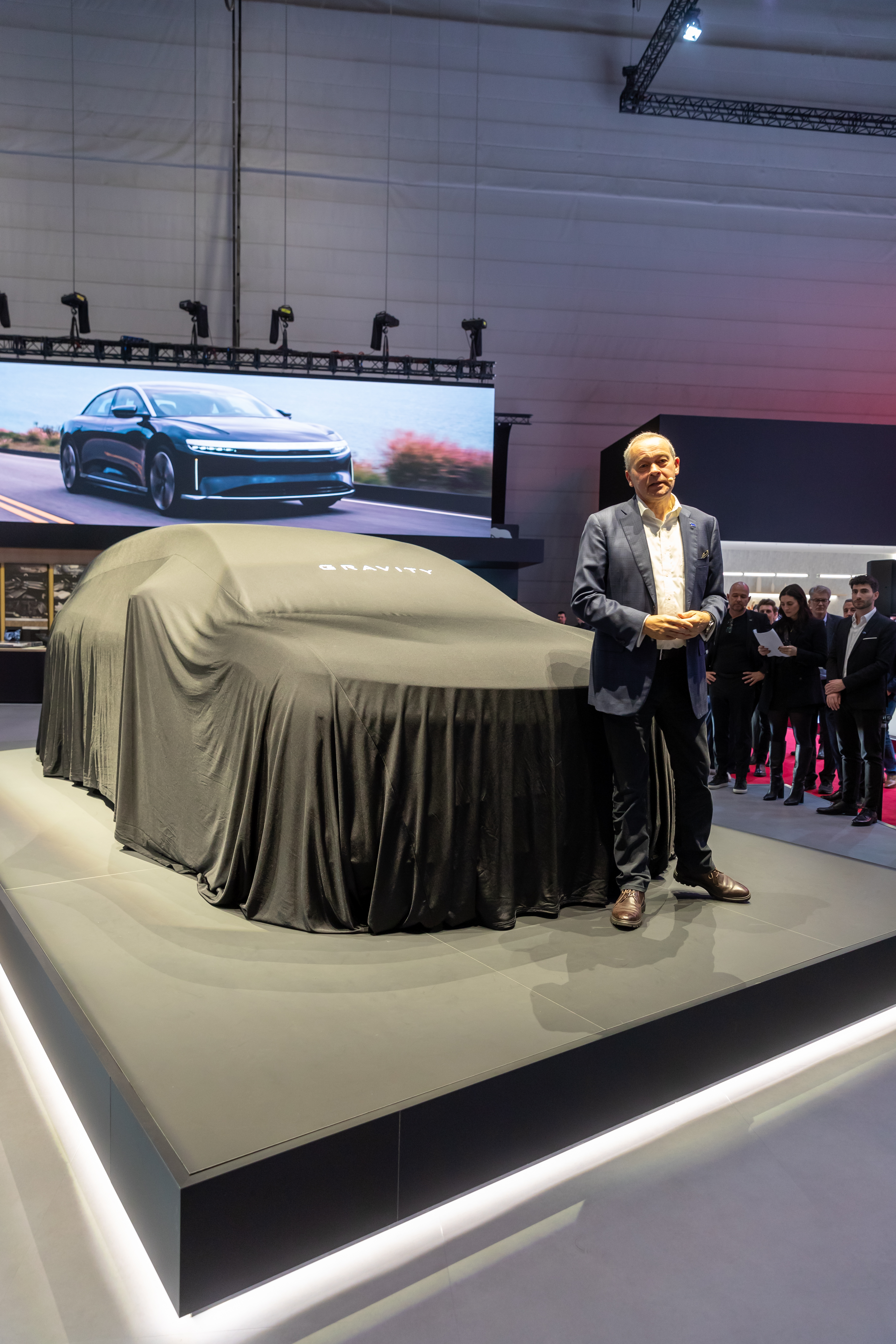
Lucid Gravity
"But they brought out the gravity, which was a midsize electric crossover. [679.4s] Everything Lucid sells is electric. [681.4s] And it's not selling so good. [684.0s] Also, the S sales just fell off a cliff when the gravity came out."
Lucid Gravity is an electric SUV/crossover from Lucid. The discussion suggests that when Gravity came out, it changed what people were buying and hurt sales of Lucid’s other model.
Lucid Gravity is Lucid’s midsize electric crossover, positioned as a larger, more family-friendly alternative to its sedan lineup. The host connects its launch to a drop in “S” sales, implying Gravity pulled demand away from Lucid’s earlier model strategy.
midsize electric crossover
"But they brought out the gravity, which was a midsize electric crossover. [679.4s] Everything Lucid sells is electric. [681.4s] And it's not selling so good."
This phrase means an electric SUV-style car that’s in the middle size range—not a small compact and not a full-size vehicle. The host is using it to explain what kind of buyers Gravity is trying to reach.
A “midsize electric crossover” is a vehicle that blends SUV-like body shape with car-like size, and it’s powered by an electric drivetrain. The host uses this to describe Lucid Gravity’s target segment and why it competes differently than large luxury sedans.
revise its guidance for 2026
"And Lucid's going to have to revise its guidance for 2026 because they'd hoped to sell 25,000 [699.3s] units this year. [700.3s] Not going to happen. [701.5s] It's going to be more like half that."
Guidance is a company’s public forecast for the future. If they revise it, they’re admitting their earlier sales expectations were too optimistic.
“Guidance” is a company’s forward-looking sales or financial forecast that it shares with investors and the market. Revising guidance means the company now expects results (here, 2026 unit sales) to be lower than previously planned.

Tesla Model X
"And even though Tesla just got rid of the Model S and the Model X, you would think that Lucid [746.5s] might be able to break up some of those sales."
Tesla Model X is an electric SUV from Tesla. The host says Tesla removed it from the lineup and suggests Lucid could have benefited from that shift.
Tesla Model X is an all-electric SUV known for its performance and distinctive rear “falcon wing” doors. The host mentions Tesla removing both Model S and Model X as a setup for why Lucid might have been able to take some of the displaced demand.

Tesla Model S
"He got one of the first Tesla Model S's in 2012 and owned them all the way through. I want to say like last year, 2025, and just bought a Lucid Air and loves it."
The Tesla Model S is a popular electric luxury sedan. Here, it’s the car he had for years, and it’s the one he compares the new car against.
The Tesla Model S is an electric luxury sedan known for its long range and tech-forward driving experience. In this segment, it’s used as the benchmark the brother-in-law owned for years before switching to another EV.

Lucid Air
"I want to say like last year, 2025, and just bought a Lucid Air and loves it. ... if you have a Model S and you aren't going to be able to replace it with another Model S, I would say give the Lucid Air series consideration ..."
The Lucid Air is an expensive electric luxury car. The host is talking about how Lucid offers it in different versions, and whether that makes it harder for shoppers to understand the lineup.
The Lucid Air is a luxury electric sedan from Lucid, positioned as a premium alternative to Tesla’s Model S. This segment discusses how the Air is offered in different variants (roughly $80k vs ~$250k), and questions whether that architecture strategy could confuse buyers.
Apple CarPlay
"He said it is so much better than the Tesla Model S. And, you know, because of features, functionality, how it drives, Apple CarPlay."
Apple CarPlay is a smartphone-integration system that lets you use an iPhone’s apps and navigation through the car’s infotainment screen. The host mentions it as part of what makes the Lucid Air feel better and more complete than the Tesla Model S.
architecture
"I wonder too, if Lucid hurts itself a little bit by putting, attempting to sell way too much variance on the Lucid Air architecture, right?"
Here, “architecture” means the car’s underlying design and layout. The host is wondering if using the same basic design for both cheaper and ultra-expensive versions might confuse buyers.
In EV and platform talk, “architecture” refers to the underlying vehicle design—how the battery, motors, electronics, and structural layout are engineered. The host is questioning whether Lucid’s shared Air architecture across very different price/trim levels could make the lineup confusing.
Rivian
"And when we talk about Lucid, it's hard not to talk about Rivian. [852.7s] Rivian is selling some volume of vehicles. [855.2s] It's R1S, R1T, nearly big pickup and nearly big crossover."
Rivian is an electric-car company. The host is talking about how many they’re selling now and what kind of smaller, cheaper model they plan to bring out next.
Rivian is an EV brand best known for its electric adventure vehicles, including the R1S and R1T. Here, the host discusses Rivian’s current sales volume and previews the company’s next, smaller crossover strategy and pricing.

Rivian R1S
"Rivian is selling some volume of vehicles. It's R1S, R1T, nearly big pickup and nearly big crossover...."
The Rivian R1S is an all-electric SUV. It’s built to carry people and gear, similar to other larger SUVs, but with an electric powertrain. The podcast mentions it as one of Rivian’s main models.
The Rivian R1S is an all-electric SUV from Rivian, designed to be a larger, family-capable alternative to smaller EVs. In the episode, it’s grouped with the R1T and described as part of Rivian’s lineup, emphasizing that these vehicles are meant to cover multiple body styles. That’s why it’s mentioned: it helps listeners understand what Rivian sells and how the models relate.

Rivian R1T
"...ian is selling some volume of vehicles. It's R1S, R1T, nearly big pickup and nearly big crossover. And ..."
The Rivian R1T is an all-electric pickup truck. It’s designed to do the kinds of jobs people expect from a truck, but with an electric powertrain. The podcast mentions it as one of Rivian’s main vehicles.
The Rivian R1T is an all-electric pickup truck, and the episode groups it with the R1S to describe Rivian’s product lineup. It’s characterized as a “nearly big pickup,” which points to its role as a full-size-capable EV truck. That’s why it’s mentioned: it’s a key model for anyone comparing electric trucks and what they’re like in real ownership terms.
trim level
"[871.4s] Though they are launching it in its most expensive trim level. [875.8s] But there's supposed to be like a 40 grand version of that coming at some point."
A trim level is the “version” of a car you buy, based on what features it includes. The host is saying Rivian will start by selling the top, most expensive version first.
A trim level is a specific configuration of a car that bundles equipment and features (like wheels, infotainment, and driver-assist options) at a given price point. The host notes Rivian is launching the new compact crossover in its most expensive trim first, with a cheaper version later.

Toyota Corolla
"...ou can guess the first one. I mean, I would guess Corolla. No."
The Toyota Corolla is a small, everyday car made for commuting and errands. It’s popular because it’s generally straightforward to own and maintain. The podcast mentions it as a likely model in their discussion.
The Toyota Corolla is a long-running compact car that’s widely known for being dependable and easy to live with. It often comes up in discussions because it represents mainstream, high-volume transportation rather than niche performance. In this episode, it’s mentioned as a likely answer in a guessing game about a model name.

Ford F
"...s grain of grain of sand, grain of salt here. The Ford F series, 40 million sold since 1948. That's when t..."
The Ford F-100 is an older model in Ford’s pickup truck lineup. The podcast mentions it while talking about how long the F-series has been around and how many trucks have been sold. It’s mainly used to highlight the truck’s long history.
The Ford F-100 is a classic name in the Ford pickup family, and the episode references the broader F-series history and sales volume. It’s brought up as part of a discussion about how long-running the F-series has been and how many have been sold since the late 1940s. That kind of historical context helps explain why the F-series is such a major part of American truck culture.
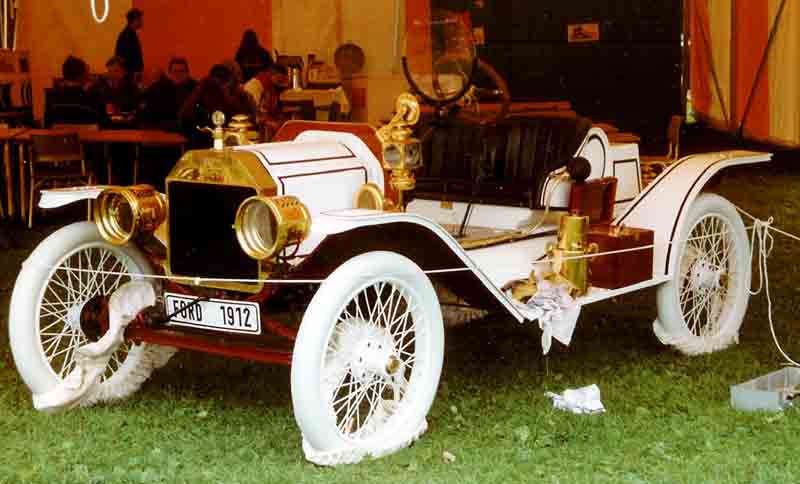
Ford Model T
"Right. Number three, the Model T. Number four, we're going to be talking about thi..."
The Ford Model T is an old, historically important car. It was one of the early cars that became widely available to regular people. The podcast brings it up as part of a list of notable vehicles.
The Ford Model T is a historic early mass-produced car that helped popularize affordable personal transportation. It’s referenced in the episode as a numbered item in a list, showing the discussion is likely covering automotive history or milestones. Because it’s such an iconic model, it’s a common anchor when talking about how cars evolved over time.
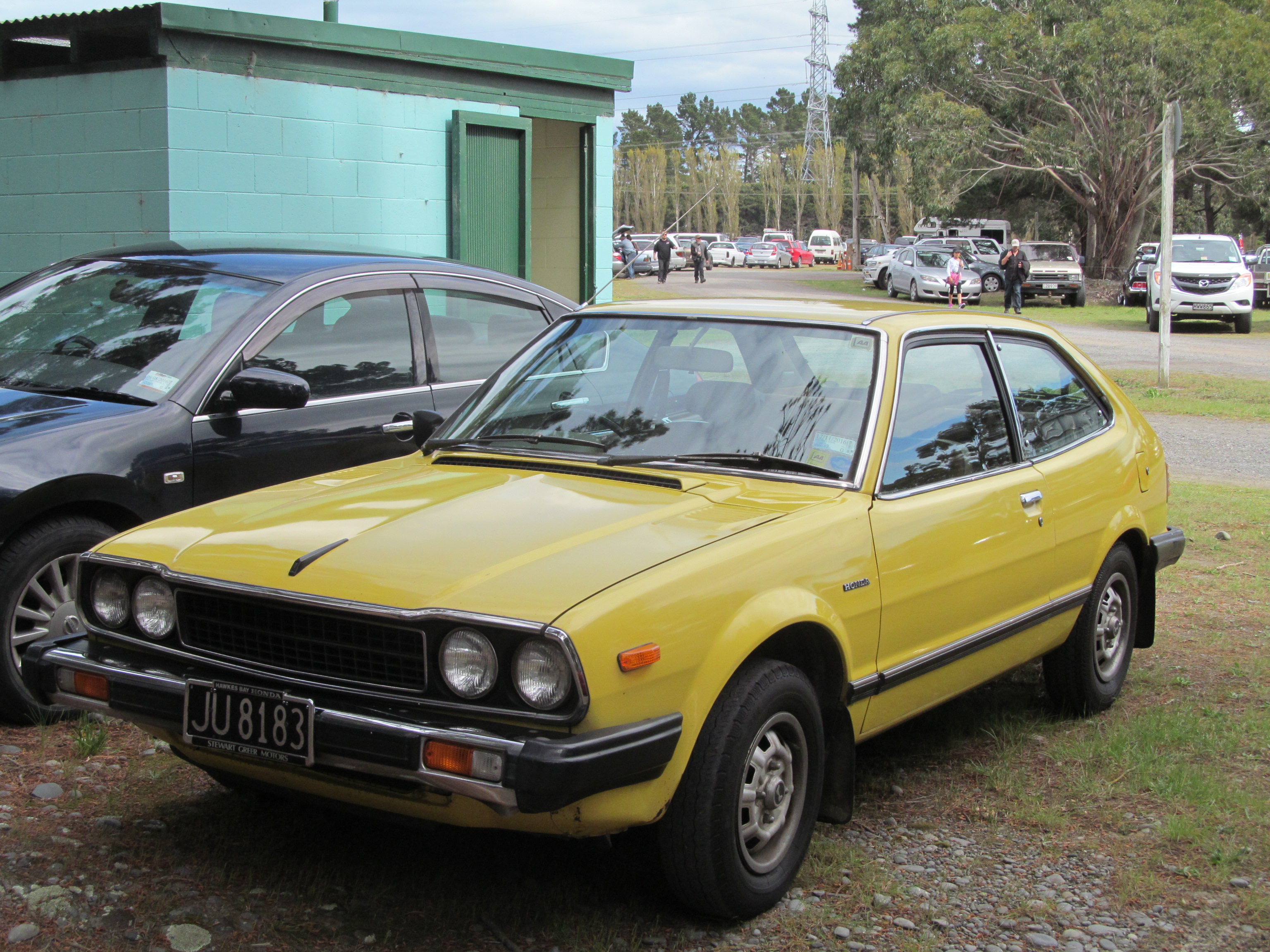
Honda Accord
"Our friend Vince is going to be coming back on the show Vincent. I'm sorry to talk about the Honda Accord."
The Honda Accord is a very common Honda sedan that many people buy as a practical daily driver. The host is just flagging it as something they’ll talk about next.
The Honda Accord is a long-running midsize sedan known for being a mainstream, high-volume family car. The host mentions it as a topic they’ll discuss later, even though it’s part of the quiz banter here.

Jeep Cherokee
"I just spent a week in the Jeep Cherokee. Okay. And for people who don't know, there's been a hole in the Jeep lineup for a little while now, because the Cherokee had disappeared about three model years now. But it is back."
The Jeep Cherokee is a Jeep SUV you can drive daily, but it’s also built to handle rougher roads than a typical family car. Here, they’re saying it’s back after being missing from Jeep’s lineup for a few years.
The Jeep Cherokee is a midsize SUV from Jeep, known for blending off-road capability with everyday usability. In this segment, the hosts frame it as returning to the lineup after a gap, which signals a model refresh and repositioning within Jeep’s SUV lineup.
hole in the Jeep lineup
"And for people who don't know, there's been a hole in the Jeep lineup for a little while now, because the Cherokee had disappeared about three model years now."
They mean Jeep wasn’t selling the Cherokee for a few years, so there was a gap in what models Jeep offered. It’s basically a pause before the next version comes back.
A “hole in the lineup” means Jeep had no Cherokee model available for a period, leaving a gap in its product lineup. Automakers do this when they pause a model, rework it, or wait for a new generation to launch.
compact crossover
"And that's compact or large compact crossover. It's back now."
A compact crossover is a smaller SUV. It’s meant to be easier to drive and park than a big SUV, but still gives you extra space for passengers and cargo.
A compact crossover is a family-oriented SUV size class that blends car-like ride/handling with SUV packaging. It typically targets buyers who want more space than a sedan or hatchback, without the size and fuel use of full-size SUVs.
cargo
"So now you're going to have tons of great space on the inside, about 30% more cargo than we had before, which was something we found from customers was an area where we could improve."
Cargo is the space in the vehicle for bags, groceries, and gear. “30% more cargo” means there’s more room to carry things than before.
Cargo refers to the usable space in a vehicle for carrying items—usually measured as volume behind the rear seats and/or with the seats folded. When the speaker says “30% more cargo,” they’re talking about increased real-world carrying capacity.
tech on the inside that you connect five
"Lots of tech on the inside that you connect five. So I think overall it feels a nice spot in our showroom."
Uconnect is the Jeep system for the touchscreen and phone features. It helps you use things like navigation, music, and hands-free calling through the car’s screen.
“Uconnect” is Jeep’s in-car infotainment and connectivity system, used to control navigation, media, and phone integration. It’s often the centerpiece of the dashboard interface for features like voice control and smartphone pairing.

Jeep Grand Cherokee
"...pace between the, what is it, the Compass and the Grand Cherokee? Yeah. Yeah."
The Jeep Grand Cherokee is a mid-size SUV. It’s meant to be bigger and more capable than smaller Jeep SUVs, while still being easier to live with than the largest options. The podcast mentions it to explain where it sits compared to other Jeep models.
The Jeep Grand Cherokee is a mid-size SUV that’s positioned between smaller Jeep models and larger, more capable ones. It’s referenced in the episode in terms of how it fits in the lineup—specifically the “space” between the Compass and the Grand Cherokee. That kind of comparison matters because it helps listeners understand size, capability, and what to expect from each step up.

Jeep Compass
"between the, what is it, the Compass and the Grand Cherokee? Yeah. Yeah."
The Jeep Compass is a smaller Jeep SUV. Here, they’re using it as a comparison to explain how big the vehicle they’re discussing needed to be.
The Jeep Compass is a compact SUV from Jeep, positioned below the Grand Cherokee in the brand’s lineup. In this discussion, it’s used as a reference point for where Jeep wanted the next model to land in size and interior space.
rear seat leg room
"when we were looking at that specifically at that rear seat spaciousness, [1239.5s] the rear seat leg room and the cargo room that we were after,"
Rear seat leg room is the amount of space for passengers’ legs in the back seats. It’s a key driver of how long and wide an SUV needs to be, because more leg room usually requires more cabin space and packaging.
rear facing car seat
"We put car seats in the back. [1287.6s] You know, we're out of the rear facing stage, [1290.1s] but I know for some of those young families that do have a rear facing car seat,"
A rear-facing car seat is how many baby car seats are used—facing backward for safety. It can take up more space in the back seat area, so it influences how roomy the vehicle needs to be.
A rear-facing car seat is a child safety seat installed so the child faces the back of the vehicle. It typically takes more back-seat space and affects how much room adults need in front, which is why rear-seat packaging matters for families.

Ford Escape
"...like, was simply that Ford has just abandoned the escape, which seems like a really strange move from, you..."
The Ford Escape is a compact SUV. The podcast talks about it because it sounds like the model may be getting dropped or changed in the lineup. That matters if you’re shopping and want to know what will still be sold.
The Ford Escape is a compact SUV that’s been a common choice for everyday driving. In the episode, it’s mentioned in the context of Ford “abandoning” the Escape, which suggests the conversation is about changes to the lineup and what models remain available. That makes it relevant for buyers tracking which vehicles are being discontinued or deprioritized.

Ford Bronco Sport
"...r seat space, but they're still going to sell the Bronco Sport, which has absolutely no rear seats whatsoever."
The Ford Bronco Sport is a smaller SUV with an off-road style. The podcast points out that it doesn’t offer much (or any) rear seating, so it’s mainly for front passengers. That’s important if you need to carry people in the back.
The Ford Bronco Sport is a compact SUV built with an off-road-leaning design and capability. The episode notes that it has “absolutely no rear seats whatsoever,” which highlights a key point about packaging and passenger space. That kind of detail matters because it affects who the vehicle is practical for day-to-day.
XJ Cherokee
"So, you know, they're all of us in the studio are 80s and 90s babies and we grew up with or maybe had a the original XJ Cherokee like that 80s 90s Cherokee is, you know, that was our, [1437.6s] for me, that was my mom's car when I was growing up for some of the guys in the studio that was their first car."
The XJ Cherokee is the older, famous Jeep Cherokee from the 1980s and 1990s. The designers are saying they wanted to keep some of that original, boxy “heritage” look, but still make a modern vehicle.
The XJ Cherokee refers to the classic Jeep Cherokee generation from the 1980s and 1990s, known for its distinctive boxy shape. In this segment, the hosts say they wanted to bring that heritage into the newer Cherokee without doing a direct retro redesign.
Cherokee Xj Cherokee
"...s and we grew up with or maybe had a the original XJ Cherokee like that 80s 90s Cherokee is, you know, that was..."
The Cherokee is a Jeep SUV model name. The podcast talks about older Cherokee versions from the 1980s and 1990s and how people remember them. It’s mentioned to connect the newer discussion to the model’s earlier history.
“Cherokee” refers to the Jeep Cherokee nameplate, including older generations that the hosts discuss from their past experiences. The episode references the original XJ Cherokee from the 1980s and 1990s, which is often remembered for its rugged character. That’s why it comes up: it’s being used as a nostalgia and identity reference point for what the Cherokee used to be.
square key
"So I think, you know, one of the first thing people call it the square key for a reason. [1450.4s] So we wanted to have kind of this boxy profile, which I think, you know, for, you know, brands that like to do more slick aerodynamic types of things."
They’re using a nickname (“square key”) to talk about the Jeep’s boxy, upright shape. The point is that this shape helps make the cabin and cargo area bigger and easier to use.
“Square key” is a nickname used here to describe the Cherokee’s boxy, upright styling cues. The host ties it to the design goal of keeping a spacious, practical interior and cargo area while still referencing the XJ Cherokee’s heritage.
boxy profile
"So we wanted to have kind of this boxy profile, which I think, you know, for, you know, brands that like to do more slick aerodynamic types of things. [1461.6s] It is a struggle to get that spacious descending inside in the cargo, but for us, the boxy profile lent itself really well to the mission that we were after."
A “boxy profile” means the vehicle is shaped more like a box than a teardrop. In this case, that helps the designers fit more space inside and make the cargo opening as wide as possible.
A “boxy profile” describes an upright, squared-off vehicle shape that prioritizes interior volume over aerodynamic smoothness. The hosts argue that this geometry makes it easier to create a wider, taller cargo area and a large opening when the liftgate is opened.
liftgate
"…the liftgate cut line wraps around the side and the tail lamps are integrated. [1478.6s] There's some there's some small touches there that kind of hint back to that that XJ Cherokee, but then at the same time they make they help us make the cargo area, you know, wider and taller and they make the cut lines go all the way out [1491.6s] so that the opening when you do open that that trunk is as wide as it possibly can be."
A liftgate is the rear door on many SUVs that swings upward to access the cargo area. Here, the hosts discuss how the Cherokee’s rear sheetmetal and cut lines are shaped so the opening is as wide as possible when the liftgate is opened.
resto mod heritage piece
"So kind of a resto mod heritage piece on that it was kind of the you know the classic kind of gold metallic color but we left it."
A restomod is an older car that’s been kept in the spirit of the original, but improved with newer parts so it drives better. Here, they’re talking about doing that while still honoring the Cherokee’s classic look.
A restomod is a vehicle that keeps the original body/identity but updates key systems (often suspension, drivetrain, and electronics) to feel modern. In this segment, they’re describing a heritage-themed restomod approach for a two-door Jeep Cherokee.
you didn't have to plug in
"So with the hybrid the hybrid did make a lot of sense and we wanted to do something that you didn't have to plug in."
They’re saying you don’t need to plug the car in to charge it. Instead, the car charges its battery using its own systems while you drive and slow down.
Not having to plug in usually describes a self-charging hybrid system, where the battery is replenished through the engine and regenerative braking. That’s a key distinction versus plug-in hybrids, which rely on external charging.
trip computer
"I had the the Laredo for the weekend actually for the week just got out of it and I photographed it yesterday and usually right before I photograph but I check all my numbers including my fuel economy. [1758.5s] I got 45 miles per gallon last week according to the trip computer."
A trip computer is the car’s dashboard screen that tracks things like fuel economy. They’re using it to see how many miles per gallon the car is getting.
A trip computer is the vehicle’s onboard display that calculates driving metrics like fuel economy and range based on recent driving. In this segment, it’s used to report the Cherokee’s fuel economy figure.
EPA estimated
"I know I was even averaging around 40 to 42 miles per gallon when I drove it. [1794.9s] I know I did better than what the EPA estimated. [1797.1s] So I was thoroughly impressed with the hybridness of the of the powertrain and how efficient it was."
The EPA estimated fuel economy is the official MPG number the government publishes based on tests. They’re saying their real driving beat that number.
The EPA estimated number refers to fuel-economy ratings produced by the U.S. Environmental Protection Agency using standardized test procedures. The speaker contrasts those official estimates with what they saw in real-world driving.

Toyota Prius
"... Yeah that used to be the unique territory of the Prius the Prius would always exceed its EPA numbers. Vi..."
The Toyota Prius is a hybrid car, meaning it uses both a gasoline engine and an electric system. It’s known for getting good gas mileage. The podcast mentions it because it historically performed very well compared with EPA fuel-economy estimates.
The Toyota Prius is a hybrid car that became a benchmark for fuel efficiency and real-world EPA comparisons. In the episode, it’s brought up because it “used to” exceed its EPA numbers, which is a point people care about when judging how efficient a car is in practice. That makes it a recurring reference for anyone discussing hybrid performance and expectations.
plaid seats
"You know besides for the exterior package we finally we put the plaid seats in which I was so excited about."
“Plaid seats” just means the seats have a plaid pattern on the upholstery. They’re pointing it out as a cool interior update.
“Plaid seats” refers to a specific interior upholstery pattern (a plaid fabric/design) rather than a mechanical component. The speaker is highlighting it as a notable, enthusiast-friendly interior change on the Jeep Wrangler.
Easter Jeep Safari concepts
"Yeah something we've been showing in Easter Jeep Safari concepts for a long time but I just love the idea of these patterns and textures and things that we can add to the jeeps and just add a little bit of fun. [1894.0s] I think time you were asking about the lineup you said you drove a Laredo"
Easter Jeep Safari is a Jeep event where Jeep shows off special concept vehicles. They’re saying they’ve been testing fun design ideas there for a long time.
Easter Jeep Safari is an annual Jeep event where the brand showcases concept vehicles and special editions. In this segment, they’re referencing “concepts” as the place Jeep has long experimented with new patterns, textures, and styling ideas that can later influence production trims.
Jeep Laredo
"You drove a Laredo and I think one of the things you know our design models of course when we build them in the studio and we sketch them are always the top of the line biggest wheels. [1905.9s] You know most luxurious interior all of that stuff but you know so the Laredo I think I was pleasantly surprised every time I see one how premium it feels even though it's just one step off off the base."
The Jeep Laredo is a version/trim of a Jeep. It’s meant to be a little nicer than the base model, with more features, but not as expensive as the highest trims.
The Jeep Laredo is a trim level within Jeep’s lineup, positioned as a step up from the base model. In this segment, they’re emphasizing how it feels “premium” and how it balances content with price—important for shoppers who want more features without going to the top trims.

Jeep Wrangler
"we've been having a lot of fun with the Wrangler on the 12 for 12 program and doing heritage inspired things and military I guess more modern youthful types of things and all kinds of pop culture [2008.9s] sorts of like, and we can go pretty far in the Wrangler but you know we're looking to have fun with the Cherokee to so you know whether that be color, patterns and textures, like we've been talking about"
The Jeep Wrangler is Jeep’s famous off-road SUV. It’s also the model Jeep loves to customize with special colors and themed designs, and that’s what they’re talking about here.
The Jeep Wrangler is Jeep’s iconic off-road SUV, known for its heritage and for being a popular platform for special editions and design themes. Here, the hosts discuss the Wrangler’s “heritage inspired” and pop-culture/military-inspired styling programs, and how Jeep uses it as a canvas for new colors and textures.

Jeep Gladiator
"And it's just in a sea of white and gray and silver, a juice colored Wrangler or scram not scrambled. I'm getting ahead of myself here. Gladiator. Just a wonderful thing to see. [2078.4s] Yeah, yeah, we have we have tons of fun. Yeah, I'm like you guys always do the best job with your colors"
The Jeep Gladiator is Jeep’s pickup truck. They mention it while talking about how fun, bright colors stand out compared to the usual neutral colors.
The Jeep Gladiator is Jeep’s pickup truck variant, combining truck utility with Jeep’s off-road DNA. In this segment, it’s name-dropped as part of a discussion about a bright “juice” orange color on a Wrangler/Jeep lineup, emphasizing how standout colors help break up the usual white/gray/silver palette.

Trailhawk
"So Vince, we're running out of time here but you mentioned a trailhawk which is off road oriented. Does that mean we'll see a trailhawk you guys like to talk about future products. [2132.7s] Yeah, no, I think we teased it today. Yeah, so you will see a trailhawk."
Trailhawk is a Jeep trim meant for off-roading. It’s the more rugged, trail-focused version, and they’re talking about whether it’s coming as a future product option.
Trailhawk is a Jeep trim designation aimed at off-road capability and rugged styling. The host frames it as “off road oriented” and asks whether a Trailhawk version will be part of future Cherokee products.
hemi engine
"All right, no, no hemi engine in the Cherokee. Fortunately, the thing doesn't fit in there."
A “Hemi” is a type of engine design where the inside of the cylinder head is shaped to help the fuel burn more efficiently. It’s commonly linked with powerful V8 engines from Chrysler.
A “Hemi” engine refers to Chrysler’s hemispherical combustion-chamber design, where the cylinder head has a shape that helps airflow and combustion. In practice, it’s often associated with higher-output V8s and a performance-focused reputation.
12 for 12 program
"before we sign off can you just tell us briefly what the 12 for 12 program is you've mentioned that a couple of times... give us a brief synopsis of what it was what it is and what we should look forward to in the future."
The “12 for 12 program” is Jeep’s plan to release a new special Wrangler every month for their 85th anniversary. They’ll announce each one on the 12th day of the month at 12 o’clock.
The “12 for 12 program” is Jeep’s 85th-anniversary marketing initiative: a different special-edition Wrangler released every month for the full calendar year. The segment explains the cadence (drops on the 12th at 12 o’clock) and that each edition has a distinct theme.
Hemi 392 v8
"we've done the willies 392, which is kind of a entry level but with the Hemi 392 v8 and the white cap which has kind of white a white grill and a white top..."
“Hemi 392” is a powerful V8 engine used in some Jeep models. The “392” is the engine’s size, and “Hemi” refers to the engine design that helps it breathe and burn fuel efficiently.
“Hemi 392” refers to Chrysler’s 6.4-liter (392 cubic-inch) V8 engine family using the Hemi combustion-chamber design. In this segment it’s used to explain why certain Wrangler special editions are positioned as more performance-oriented.
Vince Calante
"All right, that was Vince Calante. He is vice president of design and cheap. We're going to take a break and when we come back."
Vince Calante is the Jeep design vice president. In this interview, he explains Jeep’s 85th-anniversary plan for monthly special Wrangler editions.
Vince Calante is identified as Jeep’s vice president of design in this segment. He’s the guest explaining the 85th-anniversary “12 for 12” Wrangler special-edition plan and the themes behind each monthly release.
fuel economy
"I, um, I'll be honest, I wish it was a little bit more engaging to drive, but I'm super impressed by the fuel economy and I'm really impressed by the use of space and the interior looks good."
Fuel economy is how far the car can go on a gallon (or a tank) of gas. Better fuel economy usually means you spend less money on fuel.
Fuel economy is how efficiently a vehicle uses fuel, usually expressed as miles per gallon (MPG) or liters per 100 km. It matters because it directly affects running costs and how often you’ll need to refuel.
price sweet spot
"I think that they are hitting a price sweet spot at 40K for that vehicle. The only option on the vehicle I drove was, um, uh, special paint."
A “price sweet spot” means there’s a price where the car feels like a really good deal. It’s when you get enough features for what you’re paying.
A “price sweet spot” is the range where a vehicle’s features and quality feel worth the money compared with nearby alternatives. In other words, it’s where the value proposition is strongest for the buyer.

Oldsmobile Omega
"Number one, the Omega. Was there an Oldsmobile Omega? You do get the nice alliteration. I know. And I'm like, but only if there was an alpha. Um, I'm, I'm going to say yes."
Oldsmobile used the name “Omega” for a couple different eras. The hosts are saying it was built on GM’s shared car platform and was similar to other GM models from those decades.
The Oldsmobile Omega was a model name used by Oldsmobile in the 1970s and again in the 1980s. In this segment, the hosts connect it to General Motors’ X-body platform family and compare it to contemporaries like the Chevrolet Nova and Chevrolet Citation.

Chevrolet Nova
"...X chassis. The first one was similar to the Chevy Nova. And for the eighties, it was similar to the Chev..."
The Chevrolet Nova is an older car model name that was used across different years. In the podcast, it’s brought up because they’re comparing it to other cars from similar time periods. It’s mainly being used as a historical reference.
The Chevrolet Nova is a classic American car nameplate that appeared in different generations, including earlier versions referenced by chassis and model comparisons. In the episode, it’s mentioned as being similar to another car in a historical context, suggesting the discussion is about automotive lineage. That makes it relevant as a reference point for how designs and platforms evolved over time.
Oldsmobile Savoy
"Number two, the Savoy. Was there an Oldsmobile Savoy?"
The Oldsmobile Savoy is a model name Oldsmobile used. In this clip it’s just introduced as the next quiz question, before they say whether it’s real.
The Oldsmobile Savoy is another Oldsmobile model name that the hosts bring up as part of their “Oldsmobile or not” quiz. In this excerpt, it’s introduced as question #2, but the segment cuts off before they confirm the answer.

Savoy Plymouth Savoy
"Okay. There was a Plymouth Savoy between 54 and 64. Nice. You've got two points. Y..."
The Plymouth Savoy is an older car model. The podcast mentions it to talk about what cars were available between the 1950s and early 1960s. It’s mainly a historical reference.
The Plymouth Savoy is a classic car model that the episode places in a specific time window (mid-1950s through early 1960s). It’s mentioned as part of a historical discussion about older nameplates and what cars existed during those years. That makes it relevant as a reference point for automotive history rather than current ownership.

Starfire Oldsmobile Starfire
"Yeah. Star, Starfire. Was there an Oldsmobile Starfire? Ooh, I know there was a something Starfire."
Starfire is a car name that the hosts are trying to recall, specifically whether Oldsmobile used it. The podcast brings it up as a historical question about older model names. It’s not about a modern car in this context.
Starfire is a name associated with Oldsmobile, and the episode is asking whether there was an Oldsmobile Starfire. That kind of mention is typical of a historical car-name discussion, where the hosts are trying to confirm which model names existed. It’s relevant because it points to the broader topic of classic automotive branding and model history.

Chevy Monza
"And it was similar to the Monza from Chevy and the Sunbird from Pontiac. Nice. You've already won."
The Chevrolet Monza is mentioned as a related GM car. The point is that it shared the same basic GM platform as the Starfire, so they were similar in how they were built.
The Chevrolet Monza is referenced here as a car that was similar to the Oldsmobile Starfire because both sat on GM’s H-Body architecture. That’s a platform-sharing relationship, meaning the cars likely had comparable layouts and engineering foundations.

Pontiac Sunbird
"And it was similar to the Monza from Chevy and the Sunbird from Pontiac. Nice. You've already won."
The Pontiac Sunbird is another GM car the host says was similar to the Starfire. The reason is that they shared the same basic platform (H-Body), so they were built in comparable ways.
The Pontiac Sunbird is brought up as another H-Body–era GM model similar to the Oldsmobile Starfire. The comparison highlights how GM used common architecture across different brands to reduce development cost and keep parts/engineering aligned.
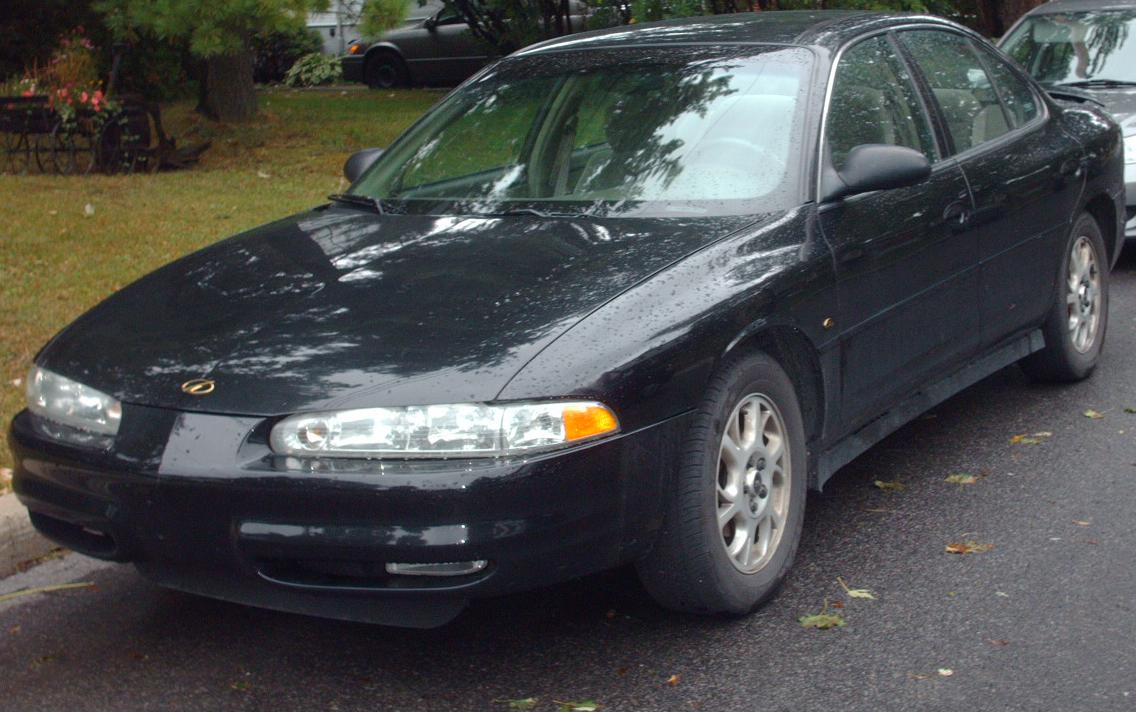
Oldsmobile Intrigue
"All right. Was there an Oldsmobile Intrigue? Ooh, I, again, I know there was an Intrigue that was the name of the car, but I don't think it was Oldsmobile. ...Sipowitz drove an Intrigue."
The host discusses an “Intrigue” and initially wonders if it was an Oldsmobile. They later clarify that the character Sipowitz drove an Intrigue in NYPD Blue, making this a specific model name tied to a real-world TV product placement moment.

Toyota Chr
"me, but here they are. There's the new Toyota CHR, and there's a Subaru Uncharted, which is based o..."
The Toyota C-HR is a small SUV crossover. The podcast mentions it to compare it with other similar-sized SUVs. It’s part of a discussion about what models are in the same general category.
The Toyota C-HR (often written as C-HR) is a compact crossover SUV. In the episode, it’s mentioned alongside a Subaru model that’s based on another platform, indicating the discussion is about which cars compete in the same size class. That makes it relevant for listeners trying to understand the lineup of compact crossovers.
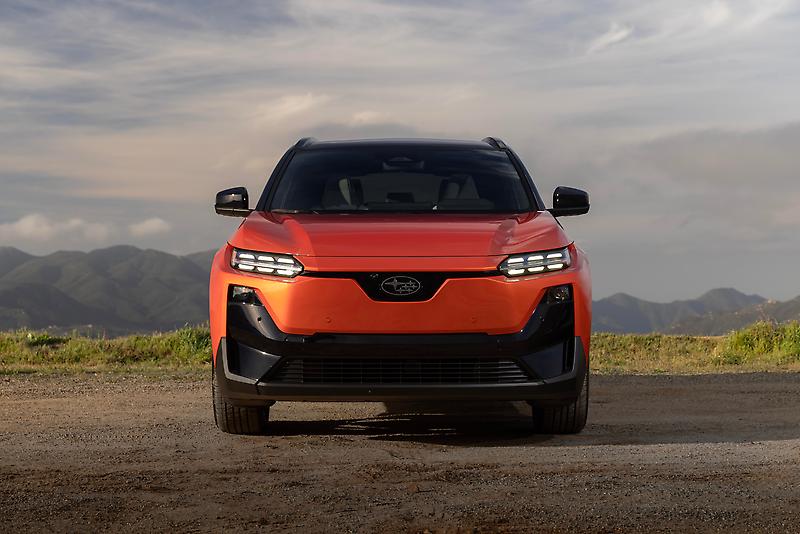
Subaru Uncharted
"There's the new Toyota CHR, and there's a Subaru Uncharted, which is based on it. So that's what's going on there. But you just spent time in the smallest but not cheapest of the Subaru EVs, and that's the Uncharted."
The Subaru Uncharted is a small electric crossover meant for city driving. The hosts say it’s built on a Toyota platform (the Toyota CHR), so it should feel similar in size and layout.
The Subaru Uncharted is an upcoming Subaru EV positioned as a small, city-focused crossover. In this segment, it’s described as being based on the new Toyota CHR, which helps explain its likely size, packaging, and target audience.
Subaru Saltera
"There's also the old Toyota BZ, which is the Subaru Saltera. They've been around for a few years."
The Subaru Saltera is described as Subaru’s version of an older Toyota EV (the Toyota BZ). That usually means the two cars are closely related in how they’re built.
The Subaru Saltera is mentioned as the Subaru counterpart to an “old Toyota BZ.” This kind of naming pairing suggests Subaru’s EV is derived from Toyota’s BZ-family architecture or design direction, likely sharing key engineering fundamentals.

Subaru Trailseeker
"There's the BZ Woodland, which is the Subaru Trailseeker. And then finally, the Highlander for 2027 goes electric."
The Subaru Trailseeker is mentioned as the Subaru version of the Toyota BZ Woodland. It sounds like they’re related cars, but with different trim and look aimed at outdoor use.
The Subaru Trailseeker is referenced as the Subaru counterpart to the Toyota BZ Woodland. The “Woodland”/“Trailseeker” pairing indicates a shared base EV with different styling and likely off-road-leaning trim cues.
range
"I'm like, I don't know that I'm going to have enough range to do all of that... Well, they delivered it to me at like 95%, which was 280 miles of range... The range tends to exceed the published EPA figure."
For an electric car, “range” means how many miles you can drive before the battery runs low. The host is saying their real driving matched (or beat) what the car’s estimate said.
In an EV context, “range” is how far the battery can drive before it needs charging. The host compares their real-world miles to the published estimate to judge how accurate it is for everyday use.
EPA figure
"That has been true of Toyota EV products since the beginning... The range tends to exceed the published EPA figure."
The “EPA figure” is the official mileage estimate the government publishes for an EV. Your actual miles can be higher or lower depending on how and where you drive.
The “EPA figure” refers to the U.S. Environmental Protection Agency’s standardized EV range test result. It’s a lab-based estimate meant to be comparable across vehicles, but real-world range can vary with weather, speed, and driving habits.
Toyota EV products
"That has been true of Toyota EV products since the beginning."
The host is talking about Toyota’s electric cars and how their stated range tends to be conservative. That means you often get at least as much driving distance as the estimate suggests.
The host attributes the EV range behavior to Toyota’s EV lineup (“Toyota EV products”). They’re specifically saying Toyota’s published range estimates have historically been conservative, which helps real-world drivers.
wall jack
"And second, I brought it home and I plugged it into a wall jack... and just plugging it into a wall jack was fine for me."
A “wall jack” means using a normal home outlet to charge the EV. It usually charges slower than a dedicated EV charger, but it can still be enough if you don’t drive far every day.
A “wall jack” here means charging from a standard household outlet rather than a dedicated Level 2 EV charger. It typically charges more slowly, so whether it works depends on your daily mileage and how long the car sits parked.
level two charger
"And so for the driving that I do, I would not need to have a level two charger at home and just plugging it into a wall jack was fine for me."
A “level two charger” is a faster EV charger you can install at home or use at public stations. The host is saying they didn’t need the fast charger because their regular driving fit what they could get from a regular wall outlet.
A “level two charger” is a home or public EV charging setup that uses higher-voltage power than a standard outlet, typically allowing much faster charging. The host says their routine didn’t require Level 2 because they could charge enough using a simpler wall outlet.

Dodge Charger
"...g that I do, I would not need to have a level two charger at home and just plugging it into a wall jack was..."
The Dodge Charger is a car that’s usually built for a sporty, powerful driving experience. The podcast mentions it alongside home charging, which implies the topic is about how you power it when it’s electric or plug-in. The key point is whether you need special charging equipment at home.
The Dodge Charger is a performance-oriented sedan that’s often discussed for its power and driving feel. In this episode, it’s mentioned in the context of charging at home, which points to a discussion about electric charging needs rather than traditional gasoline fueling. That suggests the conversation is comparing charging convenience and infrastructure expectations.
Tesla supercharger
"So standard Nax charging, which means you can go to a Tesla supercharger to charge."
A Tesla Supercharger is a fast public EV charger. It’s the kind of station you can stop at to add a lot of battery fairly quickly.
A Tesla Supercharger is Tesla’s fast-charging network for compatible electric vehicles. “Supercharging” is designed to add a lot of range in a relatively short time compared with standard home charging.
gauge cluster
"It has a large infotainment screen, the Toyota infotainment system, that weird gauge cluster above the steering wheel that I like, but I don't think you like."
The gauge cluster is the instrument panel behind or above the steering wheel. It shows important driving info like speed and warnings.
A gauge cluster is the driver’s instrument panel that shows key vehicle information (like speed, battery/fuel status, and warnings). In this case, the host calls out a “weird” placement above the steering wheel, which can affect visibility and comfort.
infotainment screen
"It has a large infotainment screen, the Toyota infotainment system, that weird gauge cluster above the steering wheel that I like, but I don't think you like."
An infotainment screen is the big screen in the dash. It controls things like music, navigation, and phone features.
An infotainment screen is the main display that combines media and vehicle functions like navigation, audio controls, and sometimes phone/app integration. Its size and layout can strongly affect usability while driving.
steering wheel kind of hits it in a weird place
"But people who are taller or larger than me are going to have a problem because the steering wheel kind of hits it in a weird place."
They’re saying the driver’s seating position might not work well for taller people. The steering wheel can interfere with where the controls/displays are.
This is a fit/ergonomics issue: the host says taller/larger drivers may have interference between the steering wheel and the instrument/cluster area. It’s essentially a packaging problem affecting how comfortably the driver can sit and see controls.

Nissan Juke
"The Nissan Juke had that. Yeah. Yeah."
The Nissan Juke is a small crossover with a very unusual look. The hosts mention it because its door handle design can make it hard to figure out how to open the door at first.
The Nissan Juke is known for its quirky, distinctive styling and unusual usability details for drivers and passengers. Here, it’s referenced because it also uses a door-handle placement that can confuse people when they first approach the car.
all-wheel drive
"I had the mid-level, they called it the sport trim... standard with all-wheel drive... It is not standard with all-wheel drive... base trim actually comes as a front-wheel drive model... CHR version of this vehicle is all-wheel drive only."
All-wheel drive means the car can send power to all four wheels. That usually helps it grip better on slippery roads, and here it’s the main thing they’re comparing between trims and models.
All-wheel drive (AWD) means power can be sent to all four wheels, improving traction in low-grip conditions like rain, snow, or loose surfaces. In this segment, AWD is central to the host’s point about how Subaru is (and isn’t) sticking to its traditional drivetrain identity across EVs and hybrids.
front-wheel drive
"It is not standard with all-wheel drive. The base trim actually comes as a front-wheel drive model."
Front-wheel drive means the front wheels do most of the work to move the car. In this discussion, it matters because the host says Subaru doesn’t usually offer FWD in America for its mainstream models.
Front-wheel drive (FWD) sends engine power primarily to the front wheels. The host highlights that the base trim of the Subaru Uncharted is offered as FWD, which they describe as a rare move for Subaru in the U.S. compared with its usual AWD positioning.
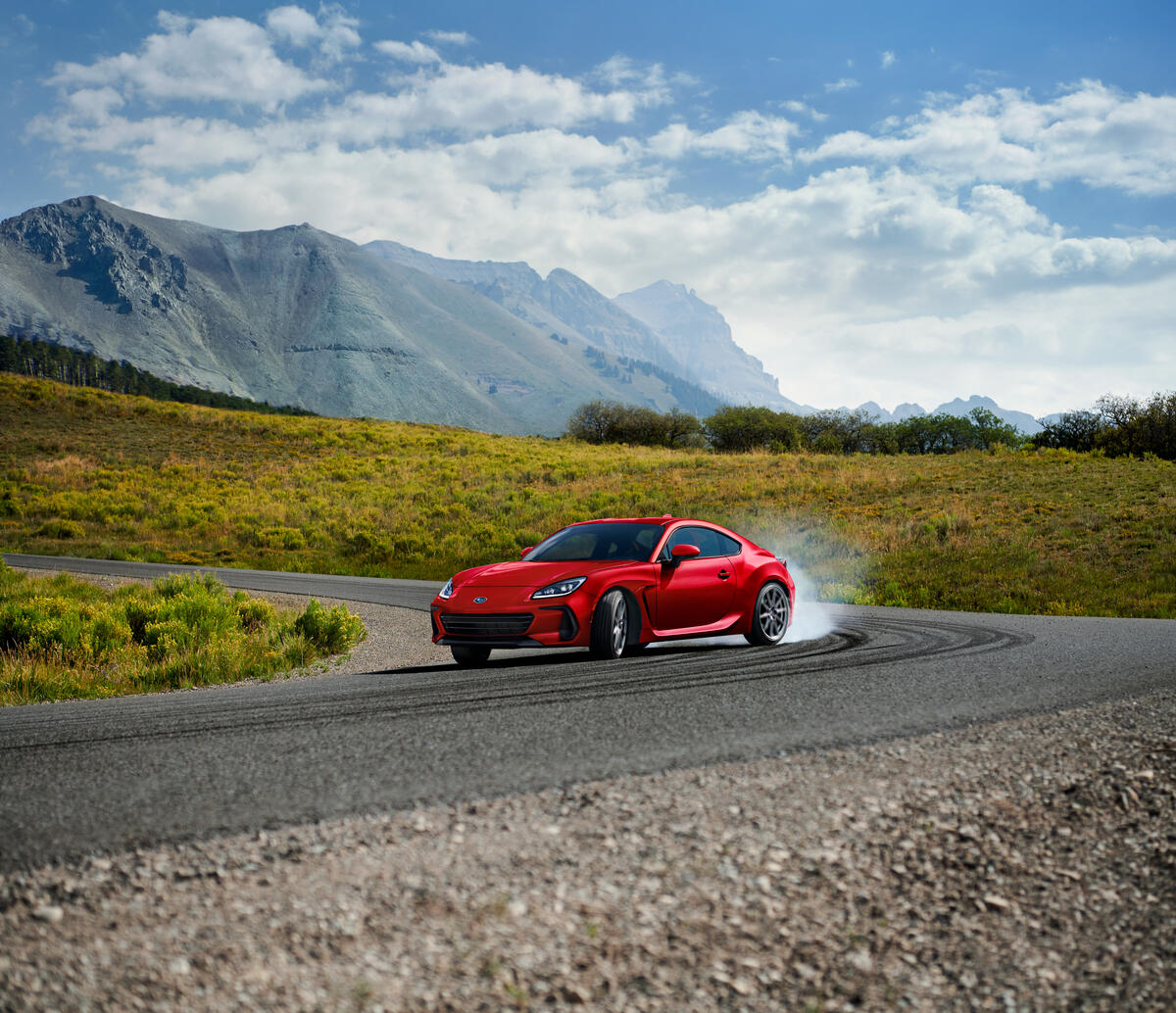
Subaru BRZ
"And this is like the first front-wheel drive Subaru in America in many, many years. You have the BRZ, but that's real-wheel drive."
They mention the Subaru BRZ as a contrast point. The key idea is that some Subarus (like the BRZ) don’t use all-wheel drive as their default setup.
The Subaru BRZ is a rear-wheel-drive sports coupe (the host contrasts it with the Uncharted’s drivetrain choices). In this segment, it’s used as an example of a Subaru that isn’t all-wheel drive by default.
Subaru Salterra
"So the Salterra, their first EV, was all-wheel drive only? I think so."
They bring up the Subaru Salterra, Subaru’s first EV. The point here is that it’s described as all-wheel drive only, unlike some other Subarus.
The Subaru Salterra is Subaru’s first EV mentioned in this segment, and the host says it’s all-wheel drive only. That’s used to highlight how Subaru’s EV lineup is being positioned differently from its traditional approach.

Subaru Forester Subarus
"but not its hybrid vehicles. The Forester, Subaru's compact crossover, which we compete directly with the Compass. I'm sorry, the Cherokee."
The Subaru Forester is a compact SUV meant for everyday driving. It’s often chosen for its versatility and the option of all-wheel drive. The podcast mentions it to explain how it compares in size and role to other SUVs.
The Subaru Forester is a compact crossover SUV known for practical space and available all-wheel-drive capability. In this episode, it’s discussed in relation to the Compass and the Cherokee, meaning the conversation is about where it fits in the market and who it competes with by size and purpose. It also comes up as a contrast point when talking about hybrid availability versus non-hybrid models.
E-axle
"They did a hybrid version of that, but they didn't go with an E-axle in back because they didn't want to compromise the vehicle's all-wheel drive capability. So it's using the mechanical hookup to get power torqued to the back of the car, which most hybrids do not do,"
An E-axle is basically an electric motor built into the rear axle to help drive the wheels. In this case, the host says they didn’t use that setup because it could have made the all-wheel drive less capable.
An E-axle is an electric drive unit (motor(s) plus reduction gearing) integrated into an axle to power the wheels. The host is saying the hybrid Cherokee avoided using an E-axle in the rear to not interfere with the vehicle’s all-wheel-drive system.
power torqued to the back of the car
"So it's using the mechanical hookup to get power torqued to the back of the car, which most hybrids do not do, because you can save money and power and fuel by going another way, but they wouldn't compromise on that."
Torque is the force that makes the wheels spin. The host is saying this hybrid sends that driving force to the rear using a mechanical setup.
“Torque” is the twisting force that actually does the work of turning the wheels. The host is describing a hybrid layout where power is delivered to the rear via a mechanical connection, rather than relying on an electric rear drive unit.
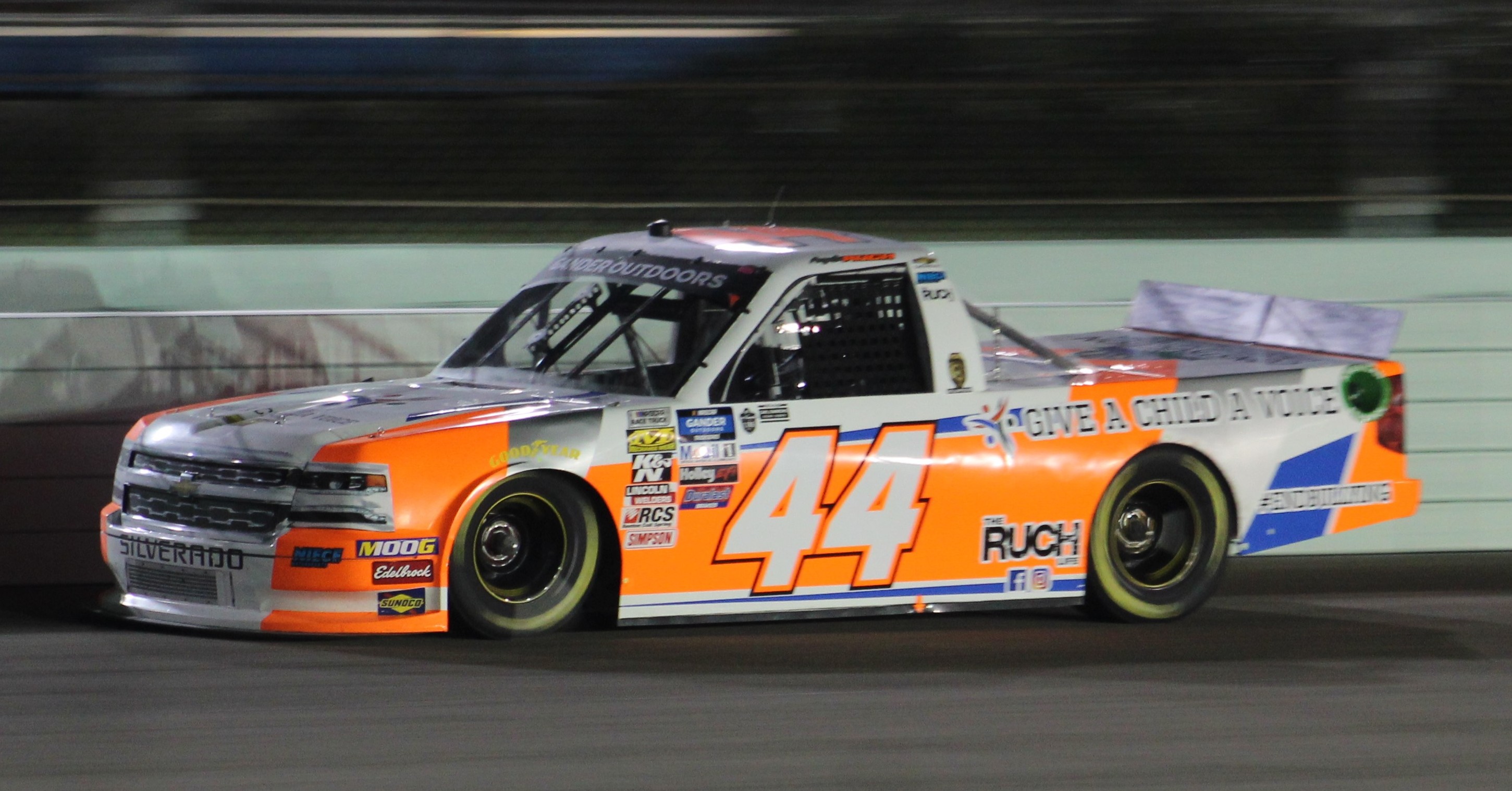
Chevrolet Silverado
"But the Chevrolet Silverado, the second best-selling vehicle in the United States, is all-new. [3386.7s] I believe it's all-new for 2027. [3389.2s] It is. Next generation."
The Chevrolet Silverado is a big U.S. pickup truck. The host is saying the next generation is coming and it’s a big deal for the market.
The Chevrolet Silverado is a full-size pickup, and this segment highlights that it’s getting an all-new next generation. The host specifically says it’s expected to be all-new for 2027, framing it as a major shift for the U.S. truck market.

Gmc Sierra
"[3394.2s] And General Motors, Chevy, excuse me, and GMC Sierra, which is a companion vehicle, [3403.2s] they're not twins, but they're very similar mechanically."
The GMC Sierra is a big pickup truck from General Motors. In this episode, they’re talking about a new 2027 version and how it should be very similar to the Chevrolet version.
The GMC Sierra is General Motors’ full-size pickup, and in this segment it’s discussed as a 2027 all-new model. The host highlights that it will be mechanically similar to the Chevrolet sibling, but they haven’t released the GMC details yet.
pushrod
"[3433.0s] But one of the really interesting pieces of news, and this is total geek stuff, [3437.5s] but they've replaced the two top engines. [3440.7s] There used to be a 5.3 and a 6.2 pushrod,"
Pushrod refers to a traditional engine design where the camshaft moves the valves using rods and rocker arms. It’s an older layout that can still be modernized with newer fuel and efficiency tech.
A pushrod engine uses a camshaft in the engine block to actuate the valves through pushrods and rocker arms. The host contrasts older pushrod V8s with newer “advanced” versions that still use pushrod architecture but add modern systems like direct injection and cylinder deactivation.
cylinder deactivation
"[3440.7s] There used to be a 5.3 and a 6.2 pushrod, [3445.4s] but otherwise very advanced engines with direct injection and cylinder deactivation"
Cylinder deactivation lets the engine shut off some cylinders when you don’t need full power. That can save fuel during cruising.
Cylinder deactivation temporarily shuts off some cylinders during light-load driving to reduce fuel use. It’s commonly paired with modern injection and engine management so the engine can switch between fewer cylinders and full operation smoothly.
direct injection
"[3440.7s] There used to be a 5.3 and a 6.2 pushrod, [3445.4s] but otherwise very advanced engines with direct injection and cylinder deactivation"
Direct injection is a way of delivering fuel more precisely into the engine. That precision can help the engine burn fuel more efficiently.
Direct injection is a fuel-delivery method where gasoline is sprayed directly into the combustion chamber instead of into the intake. It can improve efficiency and allow more precise control of combustion, which matters when manufacturers add features like cylinder deactivation.
10-speed automatic
"[3445.4s] but otherwise very advanced engines with direct injection and cylinder deactivation [3450.1s] made it to 10-speed automatic."
A 10-speed automatic is an automatic gearbox with more gear steps than older transmissions. More gears can help the car feel responsive and sometimes improve fuel economy.
A 10-speed automatic transmission uses ten forward gear ratios to keep the engine operating closer to its most efficient range. More gears can help with smoother acceleration and better fuel economy, especially when paired with engine tech like cylinder deactivation.
EPA numbers
"[3474.7s] So the engine got bigger, but reportedly fuel economy is going to improve. [3478.6s] We haven't seen the EPA numbers yet. [3480.1s] And then the old 6.2 becomes a 6.6, which is another legacy thing."
“EPA numbers” are official fuel-economy estimates from the U.S. government. People use them to compare how efficient different cars and engines are.
“EPA numbers” refers to fuel-economy estimates published by the U.S. Environmental Protection Agency. These figures are what shoppers often look at to compare real-world-ish efficiency across different engines and vehicle configurations.
high-margin
"because this is a high-volume, high-profit, high-margin vehicle"
“High-margin” means the truck line makes more profit per dollar of sales. The hosts are saying GM’s big pickups are especially profitable.
“High-margin” refers to profitability: how much profit a vehicle line generates relative to its revenue. The hosts use it to argue that the Silverado/Sierra are especially lucrative for GM, not just high-volume sellers.
GM
"something like a third of all the money GM makes comes from the Silverado and the Sierra. So huge deal."
GM is General Motors, the company that makes trucks like the Silverado and Sierra. The hosts are talking about how GM’s sales and profits are affected by what other automakers can build.
GM (General Motors) is the automaker behind the Silverado and Sierra lines discussed here. The segment frames GM’s market share and profitability as being influenced by truck production and supply-chain issues.
half ton
"when I get a truck, it's almost always a half ton, a 1500, and I drive it like I would commute in it"
“Half-ton” is a way people categorize pickup trucks by how much they’re meant to carry. Here, the host says they usually get the smaller “1500” size and just drive it normally.
“Half-ton” is a U.S. pickup class label that roughly indicates the truck’s payload capacity and how it’s marketed for work vs everyday use. In this segment, the host says they typically buy a half-ton (1500) and drive it like a commuter.

Dodge Ram
"...d I generally enjoy these vehicles very much. The Ram, the F-150, the Silverado, these are really, real..."
The Dodge Ram is a large pickup truck. People choose it for hauling and towing, and it’s available in many different setups. The podcast mentions it as part of a group of well-known trucks.
The Dodge Ram (often referred to as Ram trucks) is a full-size pickup line known for strong capability and broad configuration options. In the episode, it’s mentioned alongside other popular trucks, suggesting the conversation is about mainstream pickup choices and what buyers typically consider. That’s why it comes up: it’s a key name in the full-size truck category.

Ford F150
"having a hard time getting F-150s built because of an aluminum shortage, because there was a fire at an aluminum provider at their factory."
The Ford F-150 is a very popular big pickup truck. The hosts are saying Ford couldn’t build as many as usual because of a shortage of aluminum after a fire at a supplier.
The Ford F-150 is the best-known full-size pickup in the U.S., and it’s referenced here in the context of production constraints. The hosts say Ford had trouble building enough trucks due to an aluminum shortage caused by a fire at an aluminum supplier.
aluminum shortage
"having a hard time getting F-150s built because of an aluminum shortage, because there was a fire at an aluminum provider at their factory."
An aluminum shortage means there wasn’t enough aluminum available for car parts. The hosts say a fire at a supplier reduced supply, so Ford couldn’t build as many F-150s.
An aluminum shortage is a supply-chain constraint that can limit production when automakers rely on aluminum components. Here it’s tied to a specific disruption: a fire at an aluminum provider, which reduced available material for Ford’s F-150 builds.
Request an Explanation
Heard something you'd like explained? We'll add it to this episode.
Sign in to request explanations for terms you heard.
Want to learn more?
Browse our glossary for plain-English explanations of automotive terms, jargon, and concepts.
Help improve this episode
See something that's not quite right? Our annotations are AI-generated and can sometimes miss the mark. Click the flag icon on any annotation to suggest a correction.