
Mazda CX-5, Mitsubishi American Renaissance, Carbon Monoxide Deaths
About this episode
The Car Stuff Podcast jumps from a Mazda CX-5 first-look—where the rotary dial is gone and controls are now screen-based—to a Mitsubishi Outlander update and strategy chat with Jeremy Barnes. The episode also revisits a rare carbon monoxide tragedy tied to idling vehicles and discusses why there are “no standards for CO emissions inside a car.” EV ownership concerns shift to charging at home, with Level 1 vs Level 2 timing and costs. It closes with mobile dealership service and more car talk.
Jill and Tom open the show reviewing news from the city of Toledo where three members of a family perished in a crossover last week as a result of carbon monoxide poisoning. Little is known at this point regarding the tragedy, except that the vehicle was running with the air conditioning in use.
The hosts also discussed recent news that potential EV shoppers no long worry about vehicle range as much as they do home charging. Listen in for why this might be the case.
Tom notes that, five years into its run, the Ford F-150 PowerBoost (hybrid) does not seem to be generating as much consumer interest as might have been initially expected. Price may be an issue, or just a general lack of interest in hybrids by large-Pickup buyers.
Still in the first segment, Jill reviews the redesigned Mazda CX-5 compact crossover. Has the CX-5 lost some of its "Mazdaness?" Listen in for details.
in the second segment, the hosts welcome Jeremy Barnes of Mitsubishi to the show. Jeremy talks about the the maker's updated Outlander compact crossover, as well as its Mitsubishi Motors Momentum 2030 business plan. Mitsubishi plans to roll out a new model every year until 2030 in the U.S. market. Listen in for details.
In the last segment, Jill is subjected to Tom's "Is it a VW Trim Level?" Quiz. Listen in to see how she scored.
Hosted by Simplecast, an AdsWizz company. See pcm.adswizz.com for information about our collection and use of personal data for advertising.

Ford Explorer
"a family of five were parked in a Ford Explorer, a used older Ford Explorer with the air conditioning on. It's been hot and the car was idling outside."
The Ford Explorer is a common family SUV. In this story, a used older Explorer was idling with people inside/near it, and carbon monoxide built up—this gas can be deadly if it gets into the cabin.
The Ford Explorer is a midsize SUV, and the hosts connect this specific model to a real-world incident involving carbon monoxide. They mention a used older Ford Explorer idling with the air conditioning on, which is relevant because carbon monoxide can build up when exhaust gases enter the cabin.
carbon monoxide poisoning
"And three of the people died of carbon monoxide poisoning. I did not see this story."
Carbon monoxide is a poisonous gas that can come from car exhaust. If it builds up where people are breathing, it can stop the body from getting enough oxygen and become fatal.
Carbon monoxide poisoning happens when carbon monoxide gas—an odorless exhaust byproduct—builds up in an enclosed space and is inhaled. It prevents the blood from carrying oxygen effectively, which can lead to death quickly.
exhaust
"So what's happening is that access for CEO from the exhaust"
Exhaust is the smoke/gases a car sends out from the engine. If those gases end up where people breathe inside the vehicle, they can be dangerous.
Exhaust refers to the engine’s waste gases leaving the vehicle through the exhaust system. In the context of this segment, exhaust is important because carbon monoxide can enter the cabin if exhaust routing or sealing is compromised.
bolt holes
"To install things like the cage in the back of a police explorer, bolt holes have to be drilled through the floor."
Bolt holes are holes drilled so something can be attached with bolts. In this story, drilling through the floor for a police cage could create a path for dangerous gases to get inside.
Bolt holes are openings drilled into a vehicle’s structure so parts can be bolted on. Here, the host says police-cage installation requires drilling through the floor, which can affect how exhaust gases and cabin air are sealed.
cage in the back
"To install things like the cage in the back of a police explorer, bolt holes have to be drilled through the floor."
A back cage is a metal barrier used in police cars. Putting it in place can require drilling and mounting changes that may affect how safe the cabin is.
A cage in the back refers to a partition/metal enclosure installed in police vehicles to protect officers and restrain prisoners. Installing it can require structural modifications (like drilling), which may influence cabin sealing and airflow paths.
CO emissions
"It's interesting to note too that there are no standards for CO emissions inside a car."
CO emissions are how much carbon monoxide the vehicle produces. Carbon monoxide is a poisonous gas, and if it gets into the cabin it can make people sick or worse.
CO emissions means how much carbon monoxide a vehicle produces. Carbon monoxide is a colorless, odorless gas that can build up inside a car if exhaust leaks, leading to poisoning even without obvious warning signs.
EV
"Interesting piece of news, it's market research. It has to do with electric vehicles."
Electric vehicles are cars that run mostly on electricity stored in batteries. The discussion here is about what worries people have when they consider buying one.
Electric vehicles (EVs) are cars powered primarily by electric motors and batteries rather than gasoline combustion. The episode ties this to consumer concerns and how public perception is shifting.
range
"And the number one concern is no longer range."
For electric cars, range means how far you can drive on one charge. The host is saying people are worrying less about that than they used to.
In EV discussions, range is the estimated distance a fully charged battery can drive before needing recharging. The host says range is no longer the top consumer concern, implying other issues are now more prominent.
110 jack
"I do actually have a 110 jack in my parking spot that I will use occasionally to plug in like PHEVs or electric cars"
They mean a normal wall outlet (like the kind you’d plug appliances into) that you can use to charge an EV. It works, but it charges much more slowly than a dedicated charger.
A “110 jack” here refers to a standard household 120V outlet used to charge an electric car. It’s typically slower than dedicated home charging equipment, so it’s best for topping up rather than fully recharging quickly.

Alpine A110
"like there is, I do see like power up above in the, in the rear ceiling, and I do actually have a 110 jack in my parking spot that I will use occasionally to plug in like PHEVs or electric cars"
The Alpine A110 is a small sports car. In the podcast, it’s mentioned because the speaker talks about using a plug-in setup in their parking spot for charging. The focus is on how they manage charging, not on technical specs.
The Alpine A110 is a compact sports car known for its lightweight, agile driving character. In the episode, it’s mentioned in a practical way—specifically about having a “110 jack” in a parking spot to plug in PHEVs or electric cars. That ties the car into a broader discussion about charging and daily logistics rather than performance details.
PHEVs
"that I will use occasionally to plug in like PHEVs or electric cars if I'm not driving far."
PHEVs are plug-in hybrids. They have both a gas engine and an electric battery, and you can charge the battery by plugging the car in.
PHEVs are plug-in hybrid electric vehicles—cars that combine a gasoline engine with an electric motor and a battery you can recharge by plugging in. They can benefit from home charging, but they don’t rely on the battery as completely as a full EV.
level one charging
"For people who don't know 110 or level one charging, it's a temporary solution."
Level one charging means using a regular home outlet to charge an EV. It’s convenient, but it usually takes a lot longer than using a dedicated charger.
Level one charging is charging an EV from a standard 120V household outlet. It’s considered a temporary or backup option because it can take a long time to replenish the battery, especially from a low state of charge.
level two charging
"Level two charging, which is what you can do in your house or your garage, something like that is six or seven times faster."
Level two charging uses a special home charger (not just a normal outlet). It’s faster, so you can usually charge enough overnight.
Level two charging uses a dedicated home or garage charger (typically 240V) to deliver much higher power than Level one. That’s why it can refill the battery in hours and is the practical choice for overnight charging.
meaningfully discharged
"So like level one will take you like three days to charge to 100% if you are meaningfully discharged. And like doing the level two charger, it'll take something like eight to 12 hours."
They’re saying the battery is fairly low. If it’s really low, charging takes much longer—especially with a slow Level one setup.
“Meaningfully discharged” means the battery is at a low enough state of charge that charging time becomes noticeably longer. In practice, how empty the battery is strongly affects whether Level one can take days versus whether Level two can finish overnight.

Ford F150
"“I just think it's interesting that we have not talked much about the Ford F-150 power boost pretty much since it was introduced. … this is a hybrid version of the F-150. And it uses the 3.5 liter EcoBoost engine plus electric boost.”"
Ford made a hybrid version of the F-150 pickup called the PowerBoost. It uses a gas engine plus an electric motor, so you can get extra push when you need it.
The Ford F-150 PowerBoost is a hybrid version of the Ford F-150 pickup that pairs a 3.5-liter EcoBoost V6 with an electric motor for extra assist. The “PowerBoost” setup is designed to improve real-world acceleration and towing feel by letting you tap both the engine and electric boost.
hybrid version
"“this is a hybrid version of the F-150. And it uses the 3.5 liter EcoBoost engine plus electric boost.”"
A hybrid uses two power sources: a gas engine and an electric motor. The electric part can help the truck feel stronger, especially when you accelerate.
A hybrid version uses both a gasoline engine and an electric motor to move the vehicle. In this case, the electric system can provide “boost” to supplement the engine during acceleration and certain driving conditions.
2.3 liter EcoBoost engine
"“And it uses the 3.5 liter EcoBoost engine plus electric boost.”"
EcoBoost is Ford’s name for turbocharged gas engines. Here, they’re talking about a 3.5-liter turbo gas engine working with the hybrid system.
Ford’s EcoBoost engine family refers to turbocharged gasoline engines that use forced induction to make more power from a smaller displacement. The “3.5 liter EcoBoost” is the specific engine used in the F-150 PowerBoost hybrid system described here.
electric boost
"“this is a hybrid version of the F-150. And it uses the 3.5 liter EcoBoost engine plus electric boost.”"
Electric boost means the electric motor gives the truck extra power on top of the gas engine. It’s most noticeable when you press the accelerator.
Electric boost is when an electric motor adds extra torque to help the engine, typically during acceleration or low-speed load. In a hybrid pickup, it can make the truck respond more quickly than the gas engine alone.
outlets in the bed of the pickup
"“There's I think even 220 outlets in the bed of the pickup. So you can do a lot with that ultimately.”"
These are power plugs built into the truck bed. The idea is you can run things like tools or charge gear right from the truck.
Bed outlets are built-in power receptacles in a pickup’s cargo area, allowing you to run tools or charge devices without needing an external generator. The mention of “220 outlets” suggests a high-capacity, integrated power feature tied to the hybrid system.

Gmc Sierra
"“And interestingly, the Sierra, the GMC Sierra and Chevy Silverado will be seeing brand new versions of that very soon of those big pickups.”"
The GMC Sierra is a big pickup truck that competes with the Ford F-150. They’re saying GMC is planning new versions with hybrid tech soon.
The GMC Sierra is one of the major full-size pickup rivals to the Ford F-150. The hosts mention that the Sierra is expected to get brand new versions of the hybrid-style setup “very soon,” signaling more electrified powertrains across the segment.

Chevy Silverado
"“And interestingly, the Sierra, the GMC Sierra and Chevy Silverado will be seeing brand new versions of that very soon of those big pickups.”"
The Chevy Silverado is a major big pickup rival to the F-150. They’re saying the next Silverado versions are likely to bring hybrid tech too.
The Chevrolet Silverado is another key full-size pickup competitor in the same “big truck” market as the Ford F-150. The discussion suggests upcoming new Silverado versions will adopt similar electrified/hybrid approaches.
crazy hybrid era
"“No hybrid. … We're in this crazy hybrid era.”"
They mean we’re in a time when lots of new cars are becoming hybrids. Automakers are adding electric help to gas engines to save fuel and meet regulations.
“Hybrid era” refers to the current industry shift where automakers are increasingly adding hybrid powertrains to mainstream models—especially trucks and SUVs—to cut fuel use while avoiding a full move to battery-electric drivetrains. It’s a transitional phase driven by emissions rules and consumer demand for better efficiency.
V8 engine
"Instead, counter-intuitively, Gia made its V8 engines bigger. Yes. More power."
A V8 is a gas engine with eight cylinders arranged in a V shape. It’s known for having a lot of power and a smooth feel.
A V8 engine is an internal-combustion engine with eight cylinders arranged in a “V” layout. Because it has eight cylinders, it typically produces strong low- and mid-range torque and smooth power, which is why manufacturers often use it for performance-oriented models.
mild hybrid system
"And actually took off the mild hybrid system from that. It's like, we really don't want to be efficient."
A mild hybrid is a hybrid that uses a small electric assist, but it usually can’t run fully on electricity by itself. If it’s removed, the car relies more on the gas engine.
A mild hybrid system uses a small electric motor and battery to assist the gas engine, but it can’t typically drive the car on electricity alone. Removing it means the vehicle loses that extra efficiency help (like start/stop assist and some regenerative braking benefits).
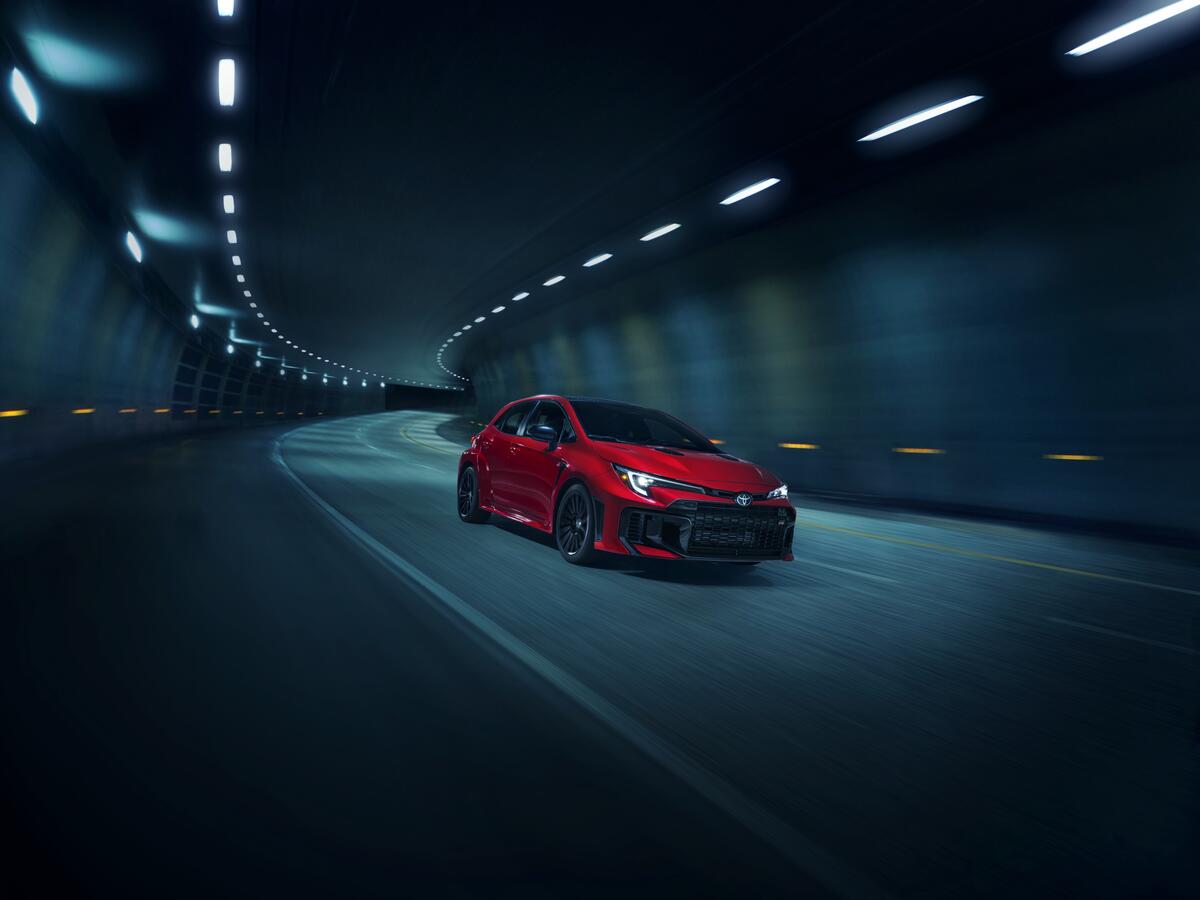
Toyota GR Corolla
"I would say the Rolls-Royce Ghost, the Lucid Air, the Toyota GR Corolla, the, I'm like, what else?"
The Toyota GR Corolla is a sporty compact hatchback from Toyota’s performance team. It’s designed to be fun to drive, with strong grip and rally-style attitude.
The Toyota GR Corolla is a hot hatch built by Toyota’s GR performance division, aimed at rally-inspired driving. It’s especially notable for bringing serious all-wheel-drive capability and a manual-transmission option to the compact segment.

Lucid Air
"I would say the Rolls-Royce Ghost, the Lucid Air, the Toyota GR Corolla, the, I'm like, what else?"
The Lucid Air is an electric luxury sedan. It’s known for strong range and a premium driving experience.
The Lucid Air is a luxury electric sedan built around high-efficiency electric power and long-range capability. It’s notable because Lucid positions it as a performance-and-range EV, not just a commuter EV.

Rolls-Royce Ghost
"I would say the Rolls-Royce Ghost, the Lucid Air, the Toyota GR Corolla, the, I'm like, what else?"
The Rolls-Royce Ghost is a very expensive luxury car. It’s famous for being extremely smooth and quiet, more about comfort than racing.
The Rolls-Royce Ghost is a luxury sedan known for its ultra-quiet ride and high-end comfort, powered by a large V12 engine. In enthusiast circles, it’s often mentioned as the “grown-up” alternative to more performance-focused Rolls-Royces.

Ford Bronco
"Oh, you know, I really do like the Ford Bronco and Raptor is especially awesome."
The Ford Bronco is an SUV made for off-road driving. People like it because it’s tough and capable on trails.
The Ford Bronco is a modern off-road SUV known for its rugged, trail-focused design and strong aftermarket support. It’s often compared within the “go-anywhere” SUV world because it’s built to handle rough terrain, not just look the part.

Chevy Colorado ZR2
"I'm also a really huge fan of the Chevy Colorado ZR2. Very different models."
The Chevy Colorado ZR2 is a version of the Colorado pickup that’s meant for off-roading. It’s set up with stronger off-road parts so it can handle rough trails better than a regular Colorado.
The Chevrolet Colorado ZR2 is a mid-size pickup built for off-road use, with ZR2-specific suspension and tougher hardware than a standard Colorado. It’s the kind of truck enthusiasts pick when they want real trail capability without stepping up to a full-size truck.

Mercedes-Benz S-Class
"But I've got some stuff here. And this is not a definitive list, but I just, I drove a Mercedes-Benz S-Class fairly early in my career as an auto journalist, 2004 or so, maybe 2005."
The Mercedes-Benz S-Class is Mercedes’ most luxurious, comfort-focused car. The host is talking about an older one they drove that was especially smooth, quiet, and had a V8 for effortless power.
The Mercedes-Benz S-Class is the brand’s flagship luxury sedan, known for top-tier ride comfort and refinement. In the early-2000s example the host mentions, it had a base V8 and was described as extremely smooth and quiet, which is a big part of the S-Class appeal.

Land Rover Defender
"I'm really, really, really fond of the current Defender. I think it makes great use of space."
The Land Rover Defender is a tough off-road SUV that’s also trying to work well for daily life. The host likes how much room it has and wants the six-cylinder version for a better engine choice.
The Land Rover Defender is a modern take on the classic Defender off-road SUV, designed to combine rugged capability with everyday usability. The host specifically praises its space usage and says they’d like the six-cylinder engine, highlighting how the newer Defender is meant to be practical as well as capable.
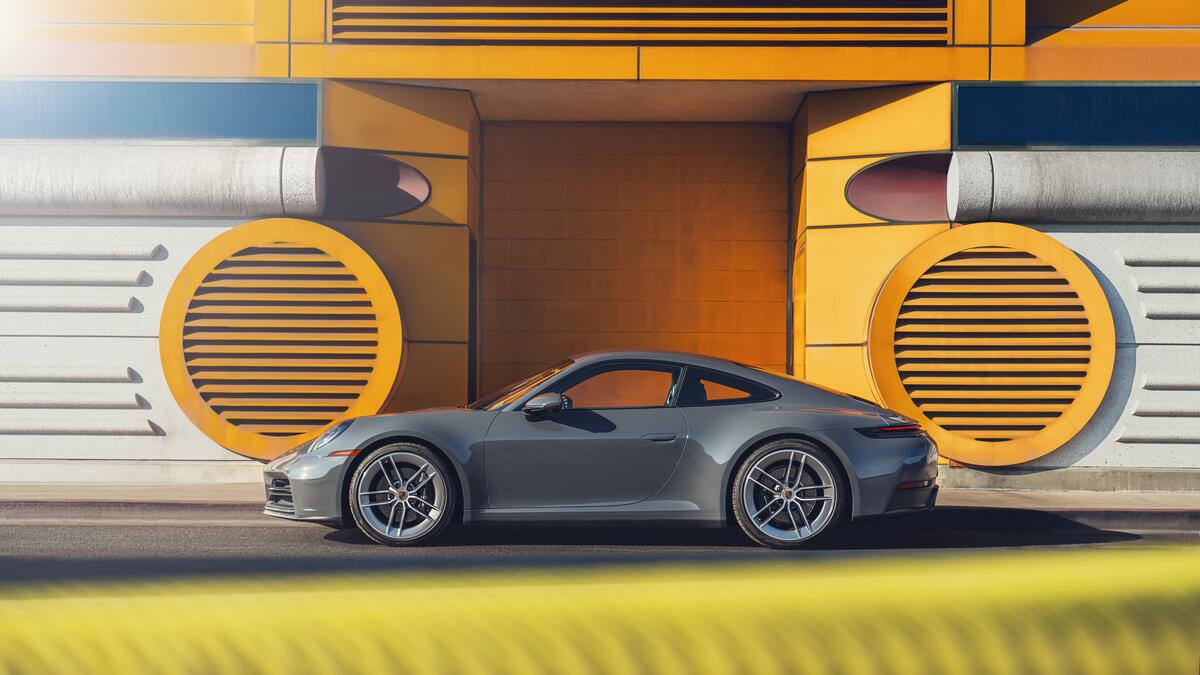
Porsche 911
"Finally, I drove a Porsche 911. Around the same time I drove the S-Class. It's kind of a base car with a manual transmission. Holy shmokles."
The Porsche 911 is one of the most famous sports cars ever made. In this clip, the host is especially excited because they drove one with a manual transmission, which makes it feel more like a classic driver’s car.
The Porsche 911 is a rear-engine sports car icon, and it’s often used as a benchmark for what a “proper” sports car feels like. Here, the host specifically mentions driving a 911 with a manual transmission, which highlights the 911’s continued availability of driver-focused setups.

Mazda three
"Like the Mazda three is just one of my favorite, like just kick around everyday driving kind of vehicles."
The Mazda3 is Mazda’s compact car. The host mentions it as one of her favorite everyday vehicles to explain what she expects from Mazda.
The Mazda3 is Mazda’s compact car, and the host describes it as a favorite for everyday driving. She’s using it as an example of the kind of “Mazda feel” she likes when comparing to the CX-5.
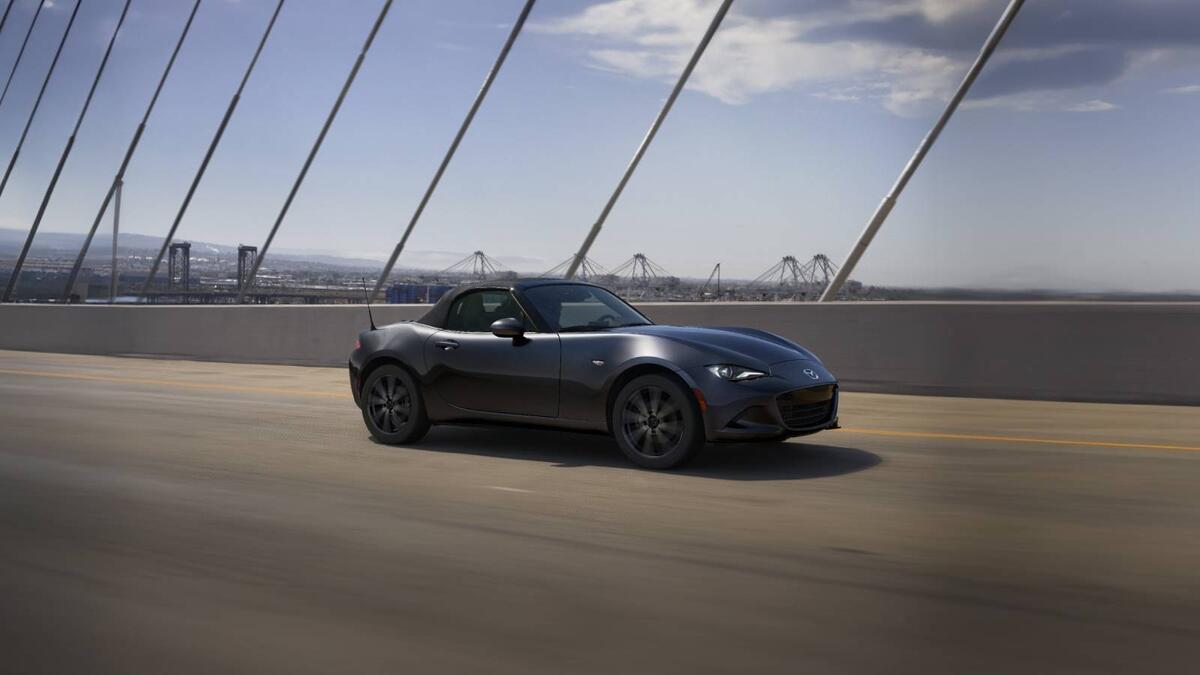
Mazda MX-5 / Miata
"And, you know, the Mazda Miata MX five. I mean, come on... Like what, what a better like little sports car with a manual transmission."
The Mazda Miata (MX-5) is a small, sporty roadster that’s famous for being enjoyable to drive, particularly with a manual gear shifter. The host mentions it to show she’s a long-time Mazda fan.
The Mazda Miata (often called the MX-5) is Mazda’s lightweight, rear-wheel-drive roadster known for being fun to drive—especially with a manual transmission. In this segment, the host brings it up to explain her personal bias toward Mazda’s driver-focused cars.
manual transmission
"Like what, what a better like little sports car with a manual transmission."
A manual transmission is when you shift gears yourself with a clutch pedal and a stick. The host brings it up because she likes cars that feel more engaging to drive.
A manual transmission is a gearbox controlled by a driver using a clutch pedal and gear shifter. The host mentions it to highlight the Miata’s “driver’s car” appeal, contrasting it with how she feels the CX-5 doesn’t match her expectations.
rotary dial
"the first thing that they've done... but they removed the rotary dial... we tend not to like these dial things because they're really hard to get used to when you only have a vehicle for like three to seven days."
A rotary dial is the round knob you turn to control the car’s screen and settings. The host says it can be annoying to get used to if you’re only driving the car for a few days.
A rotary dial is a round control knob used to operate an infotainment system (and sometimes climate settings). The host argues that these controls can be hard to learn quickly, especially when you only have the vehicle for a short test window.

Mazda Cx90
"Very boringly done. And if you have driven the, the CX 90 or the CX 70 or even the CX 50, those vehicles have this really nice attention to detail with cool reverse"
The Mazda CX-90 is a bigger SUV that can fit more people, including families. The podcast mentions it because it has some features that feel well thought out, including how it handles reversing. It’s used as an example when comparing other Mazda SUVs.
The Mazda CX-90 is a larger three-row crossover SUV designed to expand Mazda’s family-vehicle lineup. The episode mentions it in a comparison about “attention to detail,” specifically calling out “cool reverse” features, suggesting thoughtful design elements in the driving experience. It’s referenced as a benchmark for how Mazda’s newer SUVs feel and function.

Mazda Cx70
"Very boringly done. And if you have driven the, the CX 90 or the CX 70 or even the CX 50, those vehicles have this really nice attention to detail with cool reverse"
The Mazda CX-70 is an SUV that’s meant to be practical and comfortable. The podcast mentions it because it has features that help with reversing and generally feel carefully designed. It’s referenced as part of a group of similar Mazda SUVs.
The Mazda CX-70 is a crossover SUV positioned between Mazda’s smaller and larger offerings, and it’s discussed alongside the CX-90 and CX-50. In the episode, it’s mentioned because the vehicles share a similar “attention to detail” approach, including features that make reversing easier or more intuitive. That’s why it’s brought up: to describe the feel and usability of Mazda’s recent SUV designs.

Mazda Cx50
"[1274.2s] And if you have driven the, the CX 90 or the CX 70 or even the CX 50, [1279.7s] those vehicles have this really nice attention to detail with cool reverse [1284.3s] stitching... [1311.9s] And then the CX 50 came out, looked a little more stylish, [1315.2s] a little bit more sporty and was priced slightly upscale just [1318.8s] upmarket of the CX five."
The Mazda CX-50 is Mazda’s crossover positioned as more stylish and sportier than the CX-5, with a higher price tier. The host contrasts its interior design details (like stitching) and overall “upmarket” positioning against the CX-5.
turbocharged engine
"[1320.9s] But the CX five now, uh, also no longer available with the [1324.9s] turbocharged engine. [1326.0s] No, no, no zooms even the zoom."
A turbocharged engine uses a device that pushes extra air into the engine. That usually helps it feel stronger; the host is saying the CX-5 no longer comes with that kind of engine.
A turbocharged engine uses a turbocharger to force more air into the cylinders, allowing the engine to make more power without necessarily increasing engine size. Here, the host says the Mazda CX-5 is no longer available with this setup, which is a meaningful spec/positioning change.
torque
"[1326.0s] No, no, no zooms even the zoom. [1329.3s] No, I mean, it's 187 horsepower, 186 pound feet of torque."
Torque is the twisting force an engine produces, and it strongly influences how quickly a car accelerates, especially at lower speeds. The host quotes torque alongside horsepower to describe the CX-5’s output.

Mazda CX-5
"“Um, the rotary dial gone from the CX five going to disappear from [1481.2s] the CX 50.”"
The Mazda CX-5 is a popular compact SUV/crossover. Here, they’re talking about the CX-5’s “rotary dial” control for the infotainment and settings. The point is that Mazda is changing that interface on the newer CX-50.
The Mazda CX-5 is a compact crossover known for its driver-focused feel and Mazda’s interior/infotainment layout. In this segment, the host specifically discusses the CX-5’s rotary-dial interface, which is being removed on the newer CX-50. That change matters because the dial is part of how you interact with infotainment and vehicle functions.
infotainment
"“than the rotary knob would afford them for a lot of the [1488.8s] functionality that's coming online.”"
Infotainment is the car’s screen-based system for things like music, navigation, and settings. The host is saying that when the system adds more features, Mazda may need a different way to control it than just a single knob. That’s part of why the rotary dial is going away.
Infotainment is the combined system for a car’s information and entertainment, typically including the touchscreen, navigation, audio, and vehicle settings. The host’s point is that as more infotainment functionality is added, a simple rotary knob may not be enough for all the control needs. That’s why the interface changes between CX-5 and CX-50.

Mitsubishi Outlander
"And you and I have driven the Outlander recently. That is their best selling product. And that is their compact crossover that plays in the exact same pool as the CRV and the RAV4."
The Mitsubishi Outlander is a compact SUV. It’s the kind of car people compare to other popular family SUVs like the Honda CR-V and Toyota RAV4.
The Mitsubishi Outlander is Mitsubishi’s compact crossover SUV. In this segment, it’s positioned as competing with other popular crossovers like the Honda CR-V and Toyota RAV4, which helps explain why it matters in the mainstream SUV market.

Honda Crv
"...rossover that plays in the exact same pool as the CRV and the RAV4. And by the way, you can't get a RAV..."
The Honda CR-V is a compact SUV meant for everyday driving. It’s designed to be practical, with room for passengers and cargo. The podcast mentions it because it’s in the same general category as other popular crossovers.
The Honda CR-V is a compact crossover SUV that’s popular for practical everyday use. It’s often discussed alongside other mainstream crossovers because it competes in the same general space for buyers who want space, efficiency, and easy ownership. In the podcast context, it’s used to frame a comparison about what’s available in that segment.

Toyota RAV4
"...t plays in the exact same pool as the CRV and the RAV4. And by the way, you can't get a RAV4."
The Toyota RAV4 is a compact SUV that many people buy for everyday driving. The podcast mentions it because it’s similar in size and purpose to other popular crossovers. They also say it can be hard to find, which is why it comes up.
The Toyota RAV4 is a compact crossover SUV and one of the most common choices in its segment. The episode mentions it in the same “pool” as the Honda CR-V, framing them as direct alternatives for buyers shopping this size and purpose. It’s also referenced with a note that you “can’t get a RAV4,” suggesting availability or demand is part of the discussion.
Jeremy Barnes
"But on the phone with us is Jeremy Barnes."
Jeremy Barnes is the person joining the podcast for this part of the conversation. He’s being introduced as the guest who will talk about the Mitsubishi news.
Jeremy Barnes is the guest being brought onto the show in this segment. Since he’s introduced right after the hosts discuss Mitsubishi and the Outlander, he’s likely the source for the “news there” they’re about to cover.
all hybrid powertrain
"So that's the second update to that Outlander in just a year because that added a brand new mild hybrid powertrain. We used to have two and a half liter normally aspirated for."
A mild hybrid is a car that has a small electric assist system. It helps the gas engine, but it usually isn’t meant to run the car by itself on electricity for long.
A mild hybrid powertrain uses a small electric motor and battery to assist the engine, but it typically can’t drive the car purely on electricity for long distances. It’s mainly used to improve efficiency during acceleration and reduce engine load.
normally aspirated
"We used to have two and a half liter normally aspirated for. Now it's a one and a half liter turbo with a mild hybrid system."
Normally aspirated means the engine pulls air in naturally, without a turbo. It usually makes power differently than a turbo engine.
A normally aspirated engine draws air in without a turbocharger or supercharger. Compared with forced induction, it generally relies more on engine size and revs for power rather than boosting intake air pressure.
plug-in hybrid
"We have an Outlander plug-in hybrid coming along literally any day now that will have that all new interior with that killer Yamaha audio system in it as well."
A plug-in hybrid can be charged like an EV, then it can drive on electricity for a while. After that, it switches to using gas as well.
A plug-in hybrid (PHEV) has both an electric motor and a gasoline engine, and it can be charged from an external power source. That typically enables a meaningful electric-only driving range before the gas engine takes over.
Yamaha audio systems
"We have an Outlander plug-in hybrid coming along literally any day now that will have that all new interior with that killer Yamaha audio system in it as well. It is good."
Yamaha makes audio equipment. Here they’re saying the car will include a Yamaha-branded sound system.
Yamaha is a well-known audio brand, and in this context it’s being used to describe the infotainment/sound system fitted to the Outlander plug-in hybrid. The mention is essentially about premium audio hardware rather than powertrain tech.
Eclipse Sportback
"Then in another couple of months, we've got the Eclipse Sportback coming out. That's our brand new battery electric vehicle. That's a vehicle that was that is based heavily on the Nissan Leaf."
The Eclipse Sportback is being introduced as a fully electric car. They’re saying it’s based heavily on the Nissan Leaf, so it should feel like a modern EV in how it’s built.
The Mitsubishi Eclipse Sportback is described here as a new battery-electric vehicle (BEV), meaning it’s powered primarily by an electric motor and a traction battery. The segment also links its platform/engineering direction to the Nissan Leaf, implying shared EV design principles.
battery electric vehicles
"Then in another couple of months, we've got the Eclipse Sportback coming out. That's our brand new battery electric vehicle. That's a vehicle that was that is based heavily on the Nissan Leaf."
A battery electric vehicle is a fully electric car. It uses a battery and electric motor to drive, instead of relying on a gas engine.
A battery electric vehicle (BEV) runs on electricity stored in a battery pack and uses an electric motor(s) for propulsion. Unlike hybrids, it typically doesn’t have a gasoline engine for normal driving.
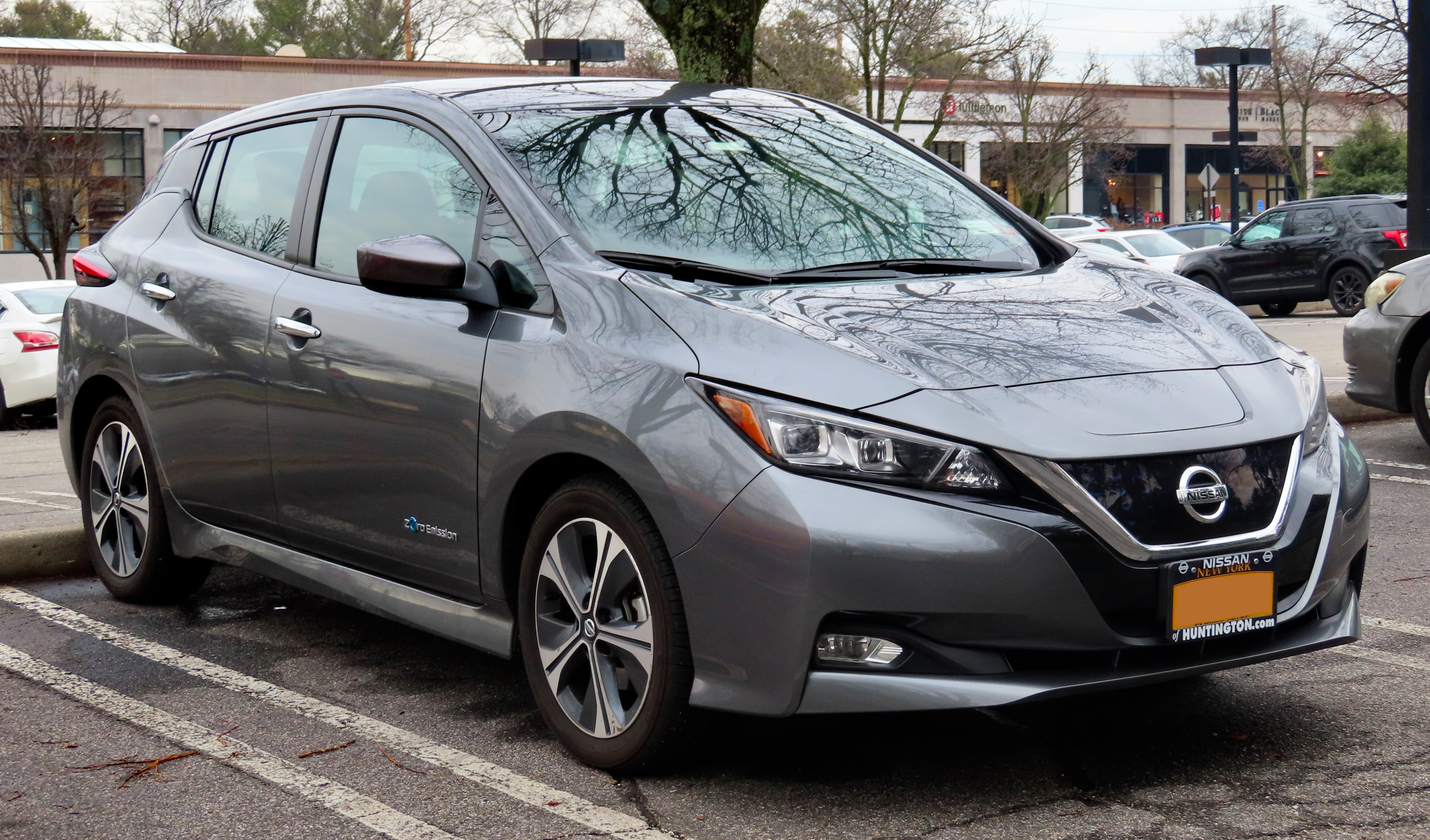
Nissan Leaf
"That's our brand new battery electric vehicle. That's a vehicle that was that is based heavily on the Nissan Leaf. We're a business partner of Mitsubishi's Nissan and Mitsubishi have a global business partnership."
The Nissan Leaf is a well-known electric car. In this segment, they’re using it as the blueprint for how the Eclipse Sportback is built.
The Nissan Leaf is an established mainstream battery-electric vehicle that’s often used as a reference point for EV design and packaging. Here, Mitsubishi says the Eclipse Sportback is based heavily on the Leaf, suggesting similar EV underpinnings.
four wheel drive
"You know, there's a difference between the crossover class and the true four wheel drive. So think of us kind of in that crossover section now moving down the road to fall true four wheel drive down the road."
“True four-wheel drive” usually means the car is built to drive all four wheels when traction is poor. It’s generally more serious off-road tech than the simpler AWD setups some crossovers use.
“True four-wheel drive” typically means a drivetrain designed to send power to all four wheels with hardware intended for low-traction conditions. In contrast to many crossovers that use part-time or electronically managed AWD, true 4WD is usually associated with more capable off-road systems.
crossover class
"You know, there's a difference between the crossover class and the true four wheel drive. So think of us kind of in that crossover section now moving down the road to fall true four wheel drive down the road."
A crossover is kind of a “SUV-looking” car. It usually drives more like a regular car, and it may not be built for serious off-road use the way a true 4WD SUV is.
A crossover class is a vehicle category that blends car-like unibody construction with SUV styling and ride height. They’re often marketed as easier to live with than traditional body-on-frame SUVs, but they may not have the same off-road hardware as true four-wheel-drive systems.
Mitsubishi lineup expansion plan
"You know, the 2030 plan part of that plan is we had said it's going to essentially double the number of vehicles that we have in the lineup in our showroom. Right."
They’re talking about Mitsubishi’s plan for the next several years—specifically a 2030 goal to sell more different models. The idea is to expand what’s available in their lineup.
The hosts discuss Mitsubishi’s “2030 plan,” including doubling the number of vehicles in its lineup/showroom. This is a strategic topic about product cadence and how the brand intends to broaden its model range.
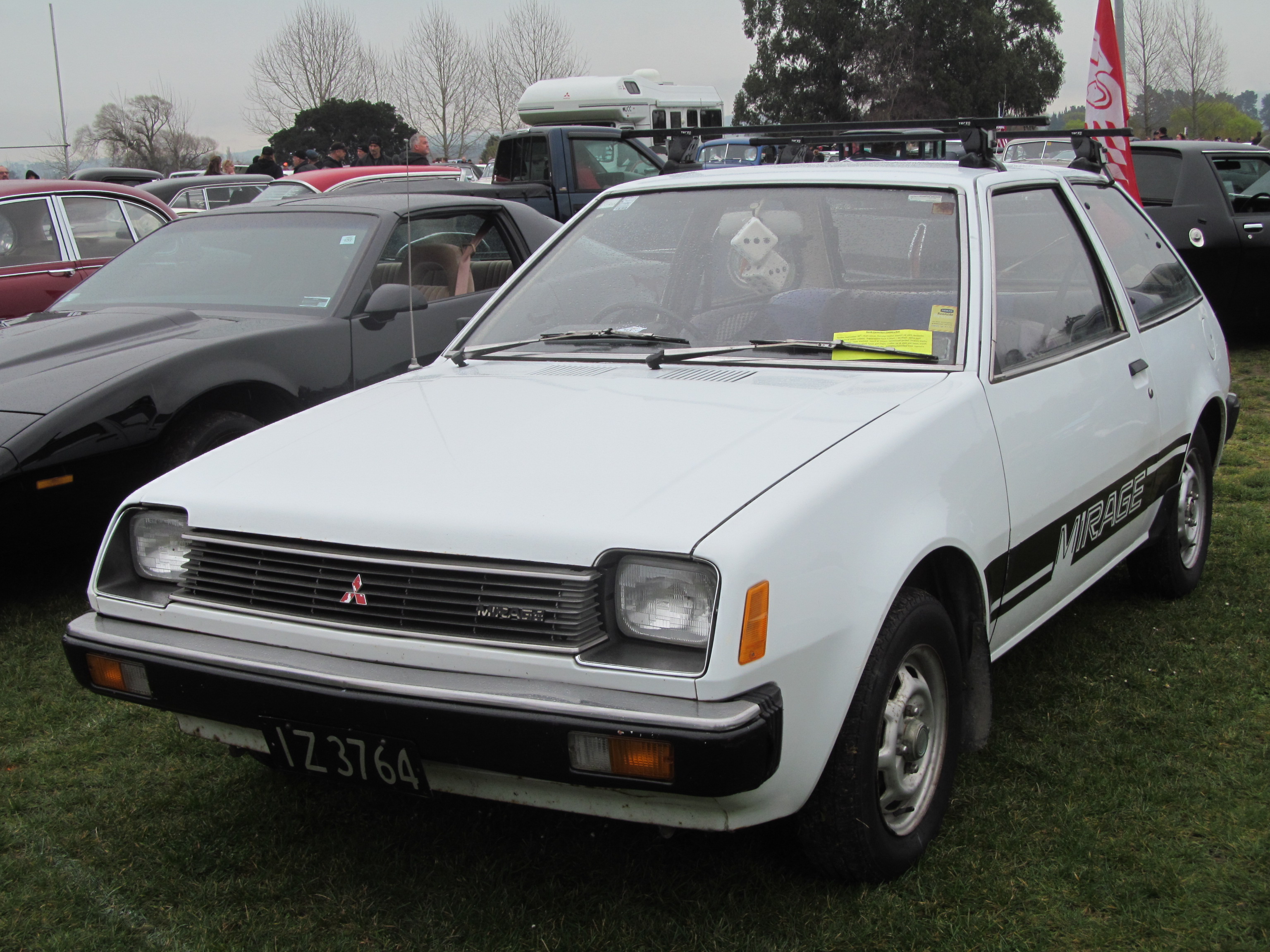
Mitsubishi Mirage
"I mean, there's a couple of maybe 10 or 15 mirages left in the country. We sort of see one or two trick up, tick up every now and then in our sales numbers, but we're fundamentally out of those vehicles."
The Mitsubishi Mirage is a cheap, small car. Here they’re saying there are only a handful left, so it’s basically running out.
The Mitsubishi Mirage is a small, budget-focused subcompact sold by Mitsubishi. In this segment, the host is talking about how few are left in the country, which frames it as a low-volume, end-of-run product rather than a current core model.

Mitsubishi Outlander Sport
"So we're kind of all SUVs at the moment with the Outlander Sport is our entry vehicle starting just over just under 25 grand."
The Mitsubishi Outlander Sport is Mitsubishi’s smaller SUV. They’re using it as the cheapest option in their lineup and talking about pricing.
The Mitsubishi Outlander Sport is Mitsubishi’s smaller SUV offering, positioned here as the entry vehicle. The segment uses its starting price to explain Mitsubishi’s current strategy: focusing on SUVs and keeping them relatively affordable.
Mitsubishi SUV lineup pricing and availability
"So we're kind of all SUVs at the moment with the Outlander Sport is our entry vehicle starting just over just under 25 grand... So there's a three distinct new SUVs under 30000 in a market..."
They talk about what Mitsubishi has left to sell and what models are now the main focus. The big idea is that Mirage is basically out, and Mitsubishi is pushing SUVs—especially ones priced under about $30k.
This segment explains Mitsubishi’s current U.S. lineup situation: Mirage is essentially gone, and the brand is now “all SUVs.” It also frames the strategy around multiple SUV models under $30,000 and discusses how that affects Mitsubishi’s market position.

Mitsubishi Eclipse Cross
"Eclipse Cross starting just under thirty grand Outlander also starting under thirty grand and then Outlander plug in hybrid starting at about 72000"
The Mitsubishi Eclipse Cross is a compact SUV. They mention it alongside other Mitsubishi SUVs to show what models are available around the $30k mark.
The Mitsubishi Eclipse Cross is a compact SUV that Mitsubishi is selling in the same “under $30k” price band as its other SUVs. In this segment, it’s part of a lineup pitch showing how Mitsubishi is competing on affordability.

Nissan Rogue
"[2041.8s] Nissan had the rogue plug-in hybrid, right? [2096.0s] Rogue's built in the US, Outlander's built in Japan."
The Nissan Rogue is a popular Nissan crossover. In this segment, it’s being used as the comparison point to show how two related cars can still feel and function differently.
The Nissan Rogue is a mainstream crossover that’s being compared here to the Mitsubishi Outlander to illustrate how “sister” vehicles can share some underlying engineering. The host highlights differences in where they’re built, body panels, and even how the all-wheel-drive system logic works.
super all wheel control
"[2114.1s] So there's a lot of things that are very different that our all wheel drive system, we call it super all wheel control, has different logic than the Nissan system. [2122.2s] The mechanicals are the same, right?"
Super All-Wheel Control is Mitsubishi’s name for its advanced all-wheel-drive system. It helps the car grip better by using the brakes and the car’s computer to control which wheels get the most help.
“Super All-Wheel Control” (S-AWC) is Mitsubishi’s branded all-wheel-drive system. It uses computer-controlled logic to manage traction and stability, including torque vectoring via brake intervention rather than relying on a traditional center differential.
differential
"[2124.0s] The way it operates using brake bias torque vectoring and instead of having a differential, it's using brakes to grab a spinning wheel. [2132.7s] The mechanicals are all the same, but it's that what's going on in the mind."
A differential is a part that lets wheels turn at different speeds, especially when turning. Here, they’re saying their system can control wheel spin using brakes instead of relying on a differential.
A differential is the mechanical component that allows driven wheels on an axle to rotate at different speeds, such as when cornering. In this segment, the host contrasts a differential-based approach with a brake-based approach that uses brakes to control wheel spin.

Mitsubishi Cordia
"I'm old enough to have changed the oil on the Cordia and Tradia."
The Mitsubishi Cordia is an older Mitsubishi model from the 1980s. People bring it up because it was part of Mitsubishi’s early push in the U.S. with a more sporty reputation.
The Mitsubishi Cordia is a late-1970s/1980s Mitsubishi coupe that helped define the brand’s early U.S. presence. It’s remembered by enthusiasts as a sporty, tech-forward import from an era when Mitsubishi was trying to build a performance image.
EV thing
"Then you guys did an EV thing for a little bit."
They’re talking about Mitsubishi doing electric-vehicle projects for a while. It’s just a casual way of saying “EVs” in general.
“EV thing” is the speaker’s casual reference to Mitsubishi’s period of focusing on electric vehicles. In context, it’s used to contrast Mitsubishi’s earlier sporty-tech identity with a later electrification effort.

Mitsubishi Pajero
"That was the point, for example, when he announced that the Pajero or Montero was going to come back on a global basis."
The Mitsubishi Pajero is a well-known Mitsubishi SUV sold in different countries under different names. In this segment, they’re talking about whether it will come back to the U.S.
The Mitsubishi Pajero (also known as the Montero in some markets) is a long-running SUV that’s strongly associated with Mitsubishi’s global identity. The speaker says Mitsubishi’s leadership announced it would return globally, and they’re not yet sure about bringing it back to the U.S.

Mitsubishi Montero
"That was the point, for example, when he announced that the Pajero or Montero was going to come back on a global basis."
The Mitsubishi Montero is basically the Pajero’s name in some countries. They mention it because Mitsubishi is talking about bringing that SUV back globally, but they don’t know about the U.S. yet.
The Mitsubishi Montero is the name used for the same SUV family as the Pajero in certain markets. The speaker references both names to explain that Mitsubishi plans a global return, but they can’t confirm U.S. availability yet.
Mitsubishi motor's-ness
"we have something that we call internally Mitsubishi motor's-ness. It's one of those very long words that, frankly, we put together to make the marketing people have something to build ads around."
They mention an internal phrase they use to describe what makes Mitsubishi “Mitsubishi.” The idea is to give marketing a clear theme for ads.
“Mitsubishi motor's-ness” is an internal branding phrase the speaker says Mitsubishi uses to define what the company stands for. They describe it as something created so marketing can build ads around a clear identity.
all wheel drive system
"We do that with all-wheel drive systems. And those all-wheel drive systems were born on the roads of the World Rally Championship, right,"
All-wheel drive means the car can send power to both the front and rear wheels. That helps the car grip the road better and respond more predictably when you steer.
All-wheel drive (AWD) systems send power to more than one axle, typically the front and rear, to improve traction and control. In this context, the host is describing how AWD helps the car follow the driver’s steering inputs more precisely.
World Rally Championship
"And those all-wheel drive systems were born on the roads of the World Rally Championship, right, from the four drivers championships that we've won over the years."
The World Rally Championship is a major rally racing series. Rally cars have to handle changing traction, so racing there helps develop technologies like all-wheel drive.
The World Rally Championship (WRC) is a top-level global rally racing series run on loose surfaces like gravel, dirt, and snow. It’s a proving ground for drivetrains and handling tech like AWD because the grip changes constantly.
Dakar
"They were born on the deserts of Dakar. We've won Dakar 12 times, more times than any other car company ever in the history of the event."
Dakar is a very tough off-road race across deserts. It’s known for pushing vehicles to survive rough terrain for long distances.
The Dakar Rally is an extreme off-road endurance event known for sand, dunes, and long navigation stages. The host is using it as a credibility marker for durability and capability in harsh conditions.

Ford Ranger
"...ble of. And I'm not talking about a Defender or a Ranger over with 35 inches of wading depth. I'm talking ..."
The Ford Ranger is a pickup truck that’s built for tougher driving and practical use. It’s often chosen by people who want something that can handle rough roads. The episode mentions it while comparing extreme off-road capability.
The Ford Ranger is a mid-size pickup truck known for off-road and work-oriented capability. It’s frequently discussed in the same breath as other tough, trail-capable vehicles because it’s built to handle rough roads and demanding use. In the podcast, it’s referenced while talking about how deep a vehicle can go in water and still perform safely.
wading depth
"And I'm not talking about a Defender or a Ranger over with 35 inches of wading depth. I'm talking about an Outlander."
Wading depth is how deep water a vehicle can safely drive through. It’s a way to measure how well a car can handle puddles or flooding.
Wading depth is the maximum water depth a vehicle can drive through without causing water to enter critical components. It’s often used to describe off-road capability for SUVs and trucks that can handle deep puddles or flooded trails.

Mitsubishi Eclipse
"So, a question for you about use of the word Eclipse, the name Eclipse. We have it for the Eclipse Cross, small crossover, and the Eclipse Smartback, the new EV."
The Eclipse Smartback is a Mitsubishi electric vehicle. The host is saying Mitsubishi is using the “Eclipse” name on an EV too.
The Mitsubishi Eclipse Smartback is described here as a new EV, tying the “Eclipse” name to an electric vehicle. The host’s point is branding strategy: using the same name across different body styles and electrified powertrains.
off-highway
"“And when I say off-road again, think of it more off-highway, at least initially moving down the road to something a bit more rugged in the future.” “Eclipse, it has a place of respect within the Mitsubishi nomenclature.”"
“Off-highway” just means driving on rough ground that isn’t regular paved roads—like dirt or gravel. The host is saying Mitsubishi wants to market toward that kind of use.
“Off-highway” describes vehicles and use-cases that go beyond normal paved-road driving, often emphasizing ruggedness and traction for dirt, gravel, and rough terrain. In this segment, it’s used to explain Mitsubishi’s near-term positioning as more adventure- and terrain-capable rather than sporty.
Mitsubishi nomenclature
"“Eclipse, it has a place of respect within the Mitsubishi nomenclature.” “And when you're a small company with limited resources, it kind of makes sense to fall back on some of the naming that people already have.”"
They’re talking about how Mitsubishi names its cars. The point is that the “Eclipse” name already has recognition, so it helps the brand communicate quickly.
“Nomenclature” here means Mitsubishi’s naming system for vehicle models—how names like Eclipse fit into the brand’s lineup. The host is arguing that the Eclipse name has brand recognition, so it’s useful even if the product direction changes.
compact crossover segment
"So I have a real quick question for you about the compact crossover segment... Is that segment in general moving upscale?"
This means the popular class of smaller SUV-style cars. The conversation is about how these cars are getting nicer inside and more expensive, like they’re competing with more premium models.
The compact crossover segment refers to the market category of smaller, SUV-like vehicles built on car-based platforms (crossovers) rather than traditional body-on-frame trucks. It’s a major sales category, and the hosts discuss how it’s trending toward more upscale interiors and pricing.
SEL
"And if you were to tell me that this was a premium brand vehicle when I was sitting in the SEL... So, yeah, I mean, a fully loaded SEL Outlander with that beautiful brick brown interior..."
SEL is a higher trim level on the Outlander. It usually means you get more features and a nicer interior than the lower trims.
SEL is a trim level designation used by Mitsubishi on the Outlander, typically indicating a higher equipment package than the base trims. In this discussion, the SEL is specifically tied to a more premium-feeling interior and features.
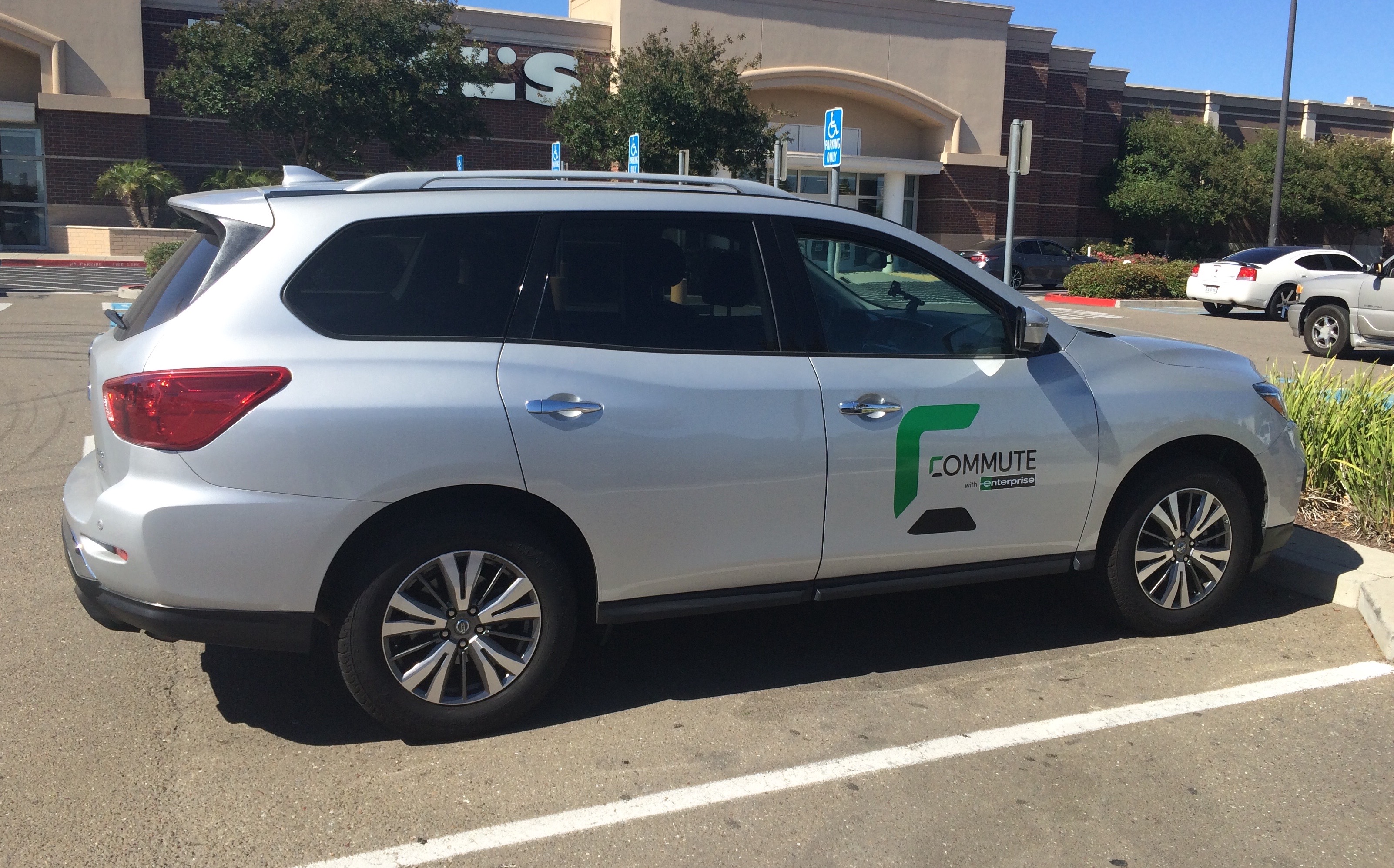
Nissan Pathfinder
"Nissan's got a rogue here, but then they've got, what, a Murano or a Pathfinder or maybe the other way around?"
The Nissan Pathfinder is a bigger Nissan SUV/crossover. They’re just using it as an example of where different Nissan models sit in the lineup.
The Nissan Pathfinder is a larger Nissan crossover/SUV mentioned as another step in Nissan’s lineup above the Rogue. Here it’s not the focus technically—it's referenced to explain brand hierarchy and model roles.
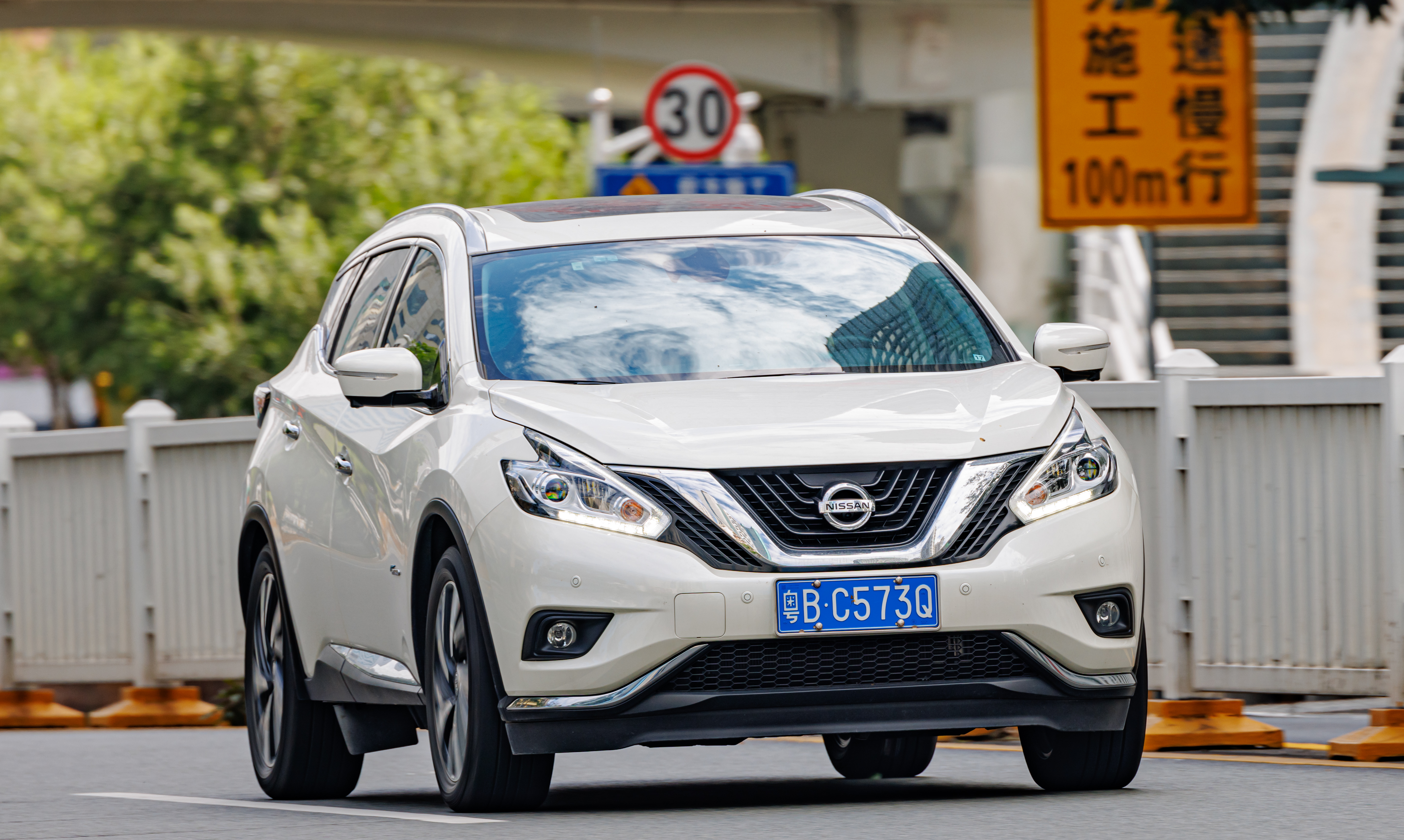
Nissan Murano
"Nissan's got a rogue here, but then they've got, what, a Murano or a Pathfinder or maybe the other way around?"
The Nissan Murano is another Nissan SUV/crossover. They mention it just to talk about how Nissan’s lineup is organized compared with Mitsubishi’s.
The Nissan Murano is a Nissan crossover SUV mentioned as part of the brand’s lineup above the Rogue. In this segment it’s used only to illustrate how Mitsubishi’s Outlander sits in its own hierarchy relative to Nissan’s different crossover models.
Infinity
"And then they've got Infinity all the way above that. In the US, Outlander is our flagship."
This is a luxury brand related to Nissan. They’re using it to explain that Nissan has a “step up” from regular cars to more premium luxury models.
Infinity (likely referring to Infiniti) is Nissan’s luxury brand in the U.S. The speaker uses it to describe how Nissan’s lineup moves from mainstream models (like Rogue) up toward luxury positioning.

Dodge Durango
"And you might remember this, but the Dodge Durango, [2717.9s] the Durango we still have in showrooms right now was based off the Mercedes-Benz ML."
The Dodge Durango is a family SUV. The host is saying an older Durango was built on the same underlying platform as a Mercedes-Benz ML, which can help explain why it drove well.
The Dodge Durango is a midsize SUV that, according to the host, was originally based on the Mercedes-Benz ML platform. That kind of platform sharing can strongly influence ride/handling fundamentals, and the segment frames this as a reason the Durango “turned out to be fabulous.”

Mercedes-Benz ML
"the Durango we still have in showrooms right now was based off the Mercedes-Benz ML. [2725.5s] That architecture has just been updated."
The Mercedes-Benz ML is a Mercedes SUV. In this segment, it’s mentioned because the Dodge Durango was based on it, meaning the Durango inherited some of Mercedes’ underlying design.
The Mercedes-Benz ML is a Mercedes SUV platform referenced here as the basis for the Dodge Durango. When one automaker uses another’s platform, it often means shared engineering and structural design that can affect how the vehicle feels and performs.
architecture
"That architecture has just been updated. [2728.3s] And the Chrysler LX cars, the 300, the charger, the Challenger, there was the Magnum, the wagon for a while."
In car talk, “architecture” means the car’s basic build—how it’s laid out and what major parts of the structure are designed around. Updating the architecture usually means more than just cosmetic changes.
In automotive usage, “architecture” refers to the vehicle’s underlying design—its structure, layout, and major engineering foundations. The host says the Durango’s Mercedes-based architecture was updated, implying changes to the core platform rather than just exterior styling.

Chrysler Charger
"And the Chrysler LX cars, the 300, the charger, the Challenger, there was the Magnum, the wagon for a while. [2735.4s] Those are actually based on Mercedes-Benz E-Class parts."
The Chrysler Charger is a well-known car model. In this discussion, it’s mentioned as part of a Chrysler group that used Mercedes-based components, which can influence how the car drives and feels.
The Chrysler Charger is a performance-oriented sedan/coupe that the host lists among the Chrysler LX lineup. The key point in this segment is the claim that these LX cars were based on Mercedes-Benz E-Class parts, tying the Charger’s fundamentals to Mercedes engineering.
Chrysler Challenger
"And the Chrysler LX cars, the 300, the charger, the Challenger, there was the Magnum, the wagon for a while. [2735.4s] Those are actually based on Mercedes-Benz E-Class parts."
The Chrysler Challenger is a muscle-car model. The host is using it to illustrate that some Chrysler models shared Mercedes-based components, which can affect overall quality and driving behavior.
The Chrysler Challenger is a muscle-car style model the host includes in the Chrysler LX group. The segment’s main takeaway is that these cars were said to be based on Mercedes-Benz E-Class parts, connecting their underlying engineering to a European donor.

Dodge Challenger
"...d the Chrysler LX cars, the 300, the charger, the Challenger, there was the Magnum, the wagon for a while. Tho..."
The Dodge Challenger is a muscle car, meaning it’s built to feel powerful and sporty. The podcast mentions it because it’s part of a set of related cars that share some design and parts. The discussion is about those connections, not just the car’s style.
The Dodge Challenger is a muscle car that has been produced in multiple generations, including the Chrysler LX-era lineup referenced in the podcast. It’s brought up because the episode discusses how certain Chrysler LX vehicles share components with other platforms. That makes it relevant to a conversation about engineering relationships across models.

Dodge Charger
"...n updated. And the Chrysler LX cars, the 300, the charger, the Challenger, there was the Magnum, the wagon ..."
The Dodge Charger is a car model that’s known for performance, especially in its sportier versions. In this episode, it’s mentioned as part of a group of related Chrysler-era cars. The point is that some of those cars share parts and platform design.
The Dodge Charger is a performance-oriented sedan that has been offered in multiple generations, including the Chrysler LX-era cars referenced in the episode. It’s discussed here as part of a family of vehicles that share underlying components. The host brings it up in the context of how those cars relate to other platforms.

Dodge Magnum
"...e 300, the charger, the Challenger, there was the Magnum, the wagon for a while. Those are actually based ..."
The Dodge Magnum is a car model that was offered in a wagon-like form. In the episode, it’s mentioned because the speaker is talking about related Chrysler cars and how some parts were based on Mercedes-Benz designs. The point is the connection between vehicles, not just the body style.
The Dodge Magnum is a wagon-style vehicle that was produced in the Chrysler LX era referenced in the episode. It’s brought up because the host is discussing how those Chrysler LX cars were said to be based on Mercedes-Benz E-Class parts. That makes the Magnum relevant to the conversation about shared components and platform origins.

Chrysler 300
"And the Chrysler LX cars, the 300, the charger, the Challenger, there was the Magnum, the wagon for a while. [2735.4s] Those are actually based on Mercedes-Benz E-Class parts."
The Chrysler 300 is a large sedan. Here it’s mentioned as part of a group of Chrysler models that used Mercedes-based parts, which can help explain why they were considered strong cars.
The Chrysler 300 is a full-size sedan that the host groups with other “Chrysler LX” vehicles. The segment claims these cars were based on Mercedes-Benz E-Class parts, highlighting how platform and component sharing can shape driving feel and quality.

Mercedes-Benz E-Class
"Those are actually based on Mercedes-Benz E-Class parts. [2740.2s] And those turned out to be fabulous cars."
The Mercedes-Benz E-Class is a Mercedes model line. The host is saying some Chrysler cars used parts from the E-Class, which can help explain why those Chrysler models felt more “fancy” or well-engineered.
The Mercedes-Benz E-Class is a major Mercedes model line used here as a parts and engineering reference. The host claims Chrysler’s LX cars used Mercedes-Benz E-Class parts, implying shared components that can influence ride, refinement, and reliability characteristics.
Dodge Crossfire
"Well, you remember the Crossfire, right? [2744.8s] Oh, the Crossfire just was a Mercedes."
The Dodge Crossfire is a small, unusual sports car. The host says it looked weird and also notes it was closely related to a Mercedes model, meaning it wasn’t a totally original design.
The Dodge Crossfire is a niche sports coupe the host criticizes for its styling. The segment also ties it to Mercedes engineering by saying it was “like the SLK,” suggesting it shared underpinnings with Mercedes roadster/coupe hardware.

Mercedes-Benz SLK
"It was like the SLK. [2748.9s] Yeah, the SLK, what was that called? SLK 350?"
The Mercedes-Benz SLK is a Mercedes sports car. Here it’s mentioned because the Dodge Crossfire was closely related to it, so the Crossfire wasn’t completely separate engineering.
The Mercedes-Benz SLK is a compact Mercedes roadster/coupe platform referenced as the comparison point for the Dodge Crossfire. The host’s point is that the Crossfire was essentially a Mercedes-derived car, with shared engineering concepts similar to the SLK.
hoodstrake
"That's when Chrysler was doing that hoodstrake thing. "
A hoodstrake is a raised line or ridge on the hood of a car. It’s usually there to make the car look more aggressive, and sometimes it’s tied to airflow design.
A “hoodstrake” is a raised or sculpted ridge on a car’s hood, often used for styling and sometimes to suggest airflow management. The host mentions Chrysler doing “hoodstrake” styling, implying a design trend that affected how cars looked in that era.

Chrysler Pacifica
"... gutters in the hood. In the original non-minivan Pacifica that they first came out with, with the hood line..."
The Chrysler Pacifica is a minivan, which is a family vehicle with more seats and space. The podcast mentions it while talking about the shape of the hood and how the design looked earlier. The point is about styling details and how the vehicle changed.
The Chrysler Pacifica is a minivan designed to carry families and cargo comfortably, with versions that include plug-in hybrid capability. The episode references the “original non-minivan Pacifica” and discusses hood-line details, which suggests a conversation about design changes over time. It’s brought up as an example of how the model’s styling and packaging evolved.

Chevrolet Corvette
"That was not my subject. Was that the Corvette quiz? Yeah."
The Chevrolet Corvette is a sports car made for fast, exciting driving. The episode mentions it because they’re doing a Corvette-related quiz. It’s brought up as a recognizable model in the discussion.
The Chevrolet Corvette is a sports car known for strong performance and a long-running reputation as a serious enthusiast vehicle. In the podcast context, it’s referenced as part of a “Corvette quiz,” suggesting the conversation is testing knowledge or highlighting Corvette-related topics. That makes it a quick but notable mention.

Volkswagen Jetta
"The 2026 VW Jetta. Can that be had in S trim? I would also like to point out that I really dislike Volkswagen trim levels."
They’re talking about the 2026 Volkswagen Jetta and which “versions” you can buy. Different trim levels are basically different feature packages—some are cheaper, some include more equipment.
The Volkswagen Jetta is a compact sedan, and the 2026 model is being discussed here specifically in terms of its available trim levels. Trim levels (like S, SE, and SEL) are different equipment packages that change what features you get without changing the basic model.
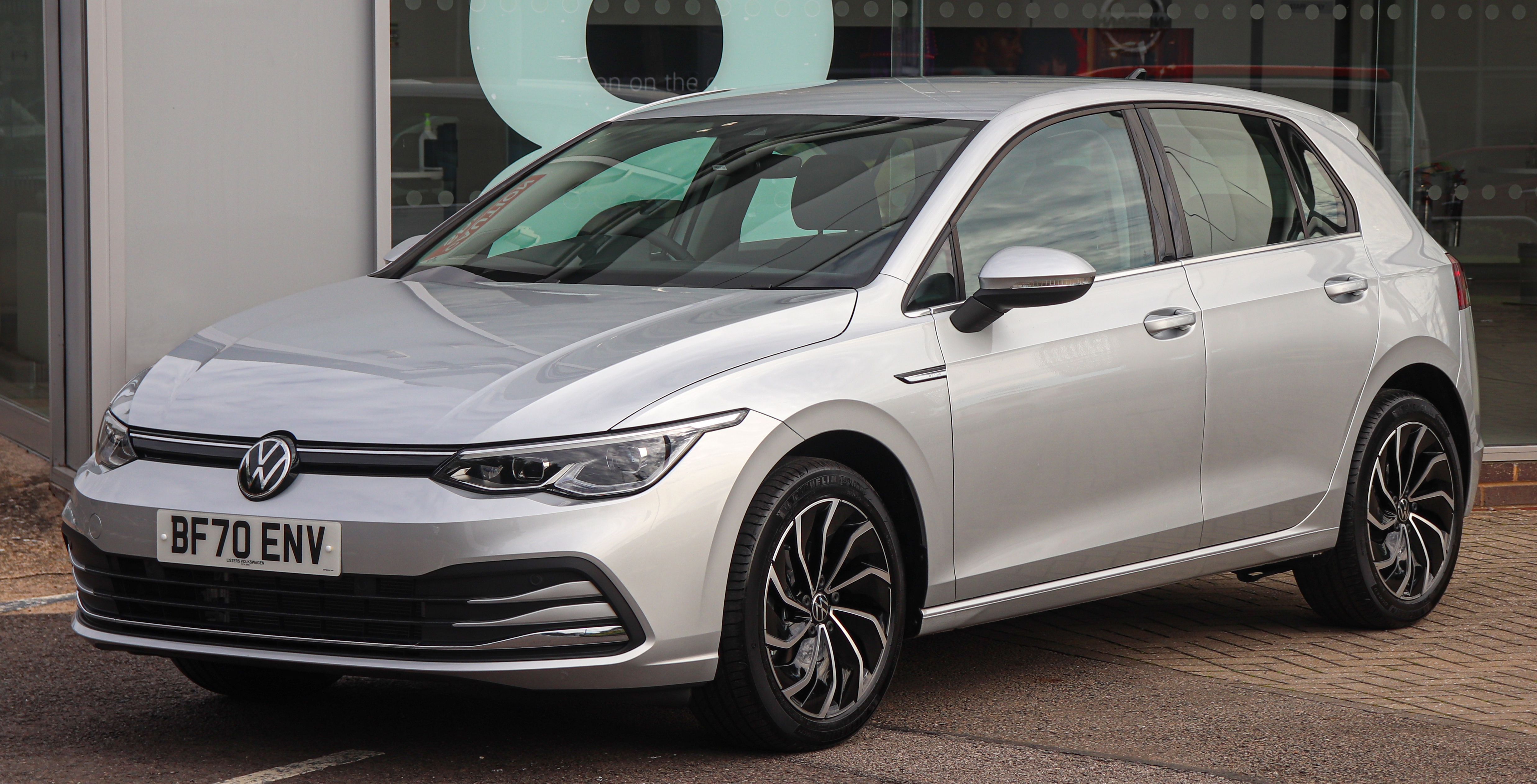
Volkswagen Golf Gti
"[3024.5s] The Golf GTI for 2026 can be had in Wolfsburg Edition trim."
The Golf GTI is the sporty “hot hatch” version of the normal Golf. Here they’re discussing the 2026 model and a special trim called Wolfsburg Edition.
The Volkswagen Golf GTI is a performance-focused version of the Golf, known for its hot-hatch formula and turbocharged engine. In this segment, the host is talking about the 2026 model year and a specific trim availability tied to Wolfsburg Edition.
Wolfsburg Edition trim
"[3024.5s] The Golf GTI for 2026 can be had in Wolfsburg Edition trim. [3031.7s] Man, if it cannot be had in a Wolfsburg trim, you know, they need to just leave the United [3039.0s] States."
“Wolfsburg Edition” is a special set of options for certain Volkswagen models. Think of it like a package of features that’s meant to be a good deal, not a completely different car.
“Wolfsburg Edition” is a named equipment/trim package associated with Volkswagen, referencing Wolfsburg, the company’s home base. It typically bundles specific features (and sometimes dealer/market-specific content) and can be offered as a late-model-year “price special” rather than a full new model.
Request an Explanation
Heard something you'd like explained? We'll add it to this episode.
Sign in to request explanations for terms you heard.
Want to learn more?
Browse our glossary for plain-English explanations of automotive terms, jargon, and concepts.
Help improve this episode
See something that's not quite right? Our annotations are AI-generated and can sometimes miss the mark. Click the flag icon on any annotation to suggest a correction.