flash charging
“Flash charging” means charging an EV really fast using very high-power chargers. The hosts are saying BYD’s new UK chargers are built for quick top-ups, and they’re also aiming for a lower electricity price.
BYD
BYD is a big Chinese company that makes electric cars and batteries. Here, they’re also rolling out very fast public charging stations in the UK and trying to make the electricity price cheaper.
VAT gap
A “VAT gap” means the tax treatment for electricity at home versus electricity at public chargers isn’t the same. If the tax difference isn’t addressed, public charging prices may stay higher even if other costs change.

Dodge Charger
The Dodge Charger is a car model name from Dodge. In this discussion, it’s brought up because the topic is about getting help paying for a home charging setup. That’s the equipment you use to charge an EV.
Ferrari
Ferrari is a famous Italian sports-car brand. They recently showed their first electric car, and the hosts say the reaction was dramatic, including criticism from Italy’s transport leadership.
Italy's transport minister
The hosts mention Italy’s transport minister criticizing the electric car launch. That’s notable because it’s not just fans reacting—government officials weighed in too.
PHEV
PHEV means plug-in hybrid. It’s a car that can charge from a plug and drive on electricity for a while, but it also has a gas engine for when you need more range.
pence per kilowatt hour
“Pence per kilowatt hour” is the price you pay for each unit of electricity your EV uses. Even if a charger is very fast, the p/kWh rate largely decides how expensive your session is.
Tesla's V4 supercharger
Tesla’s “V4” Supercharger is Tesla’s newer generation of fast-charging stations. The hosts mention it to compare charging speed/power between brands.
1500 kilowatts peak output
Peak output is the charger’s maximum “push” of electricity. Even if the charger can do a lot, your car only takes as much as it’s designed to handle.
flash charger
A flash charger is an ultra-fast charging station meant to get you back on the road quickly. But your car still has limits, so you may not get the absolute fastest speed the charger can provide.
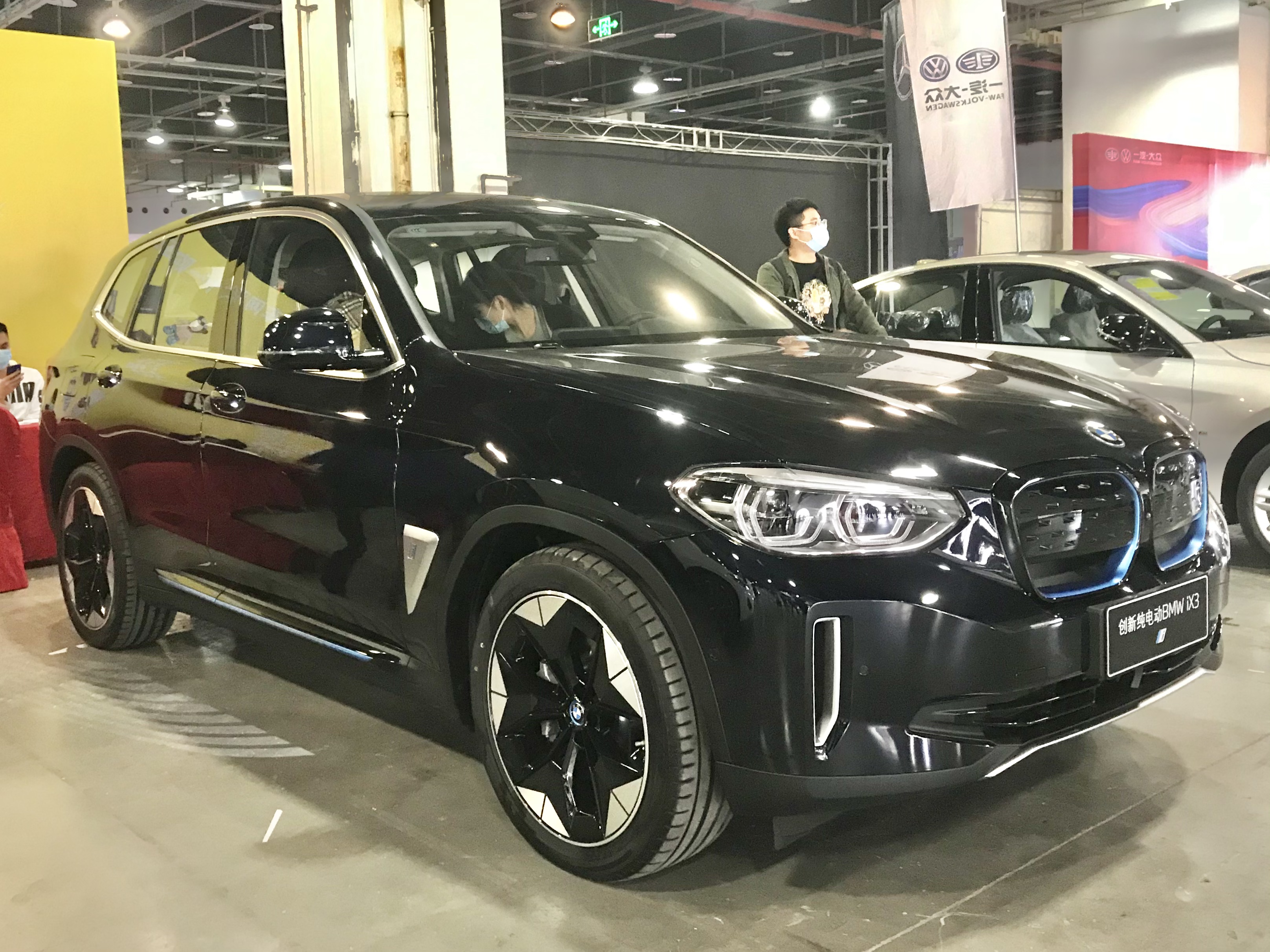
Bmw Ix3
The BMW iX3 is an all-electric SUV. The podcast is talking about how fast it can charge when plugged into a fast charger. Charging speed depends on the car and the charger together.
two-tier charging price
A two-tier charging price means some drivers pay less than others at the same charger. Here, the host suggests BYD drivers could pay a lower rate than everyone else.
one every 50 kilometers
This is about how often chargers will be spaced along roads. “One every 50 kilometers” means you shouldn’t have to drive far to reach a fast charger.
battery storage
Battery storage means the charger site has its own batteries. It can charge those batteries when electricity is cheaper, then use that stored energy to charge cars later.
off-peak rates
Off-peak rates are the times when electricity costs less because fewer people are using it. The idea is to buy power cheaply, store it, and then use it later when charging cars.
vertically integrated
Vertically integrated means one company handles more of the process end-to-end instead of relying on partners for everything. The host is saying BYD is trying to control more of the charging system so it can influence pricing.
Ionity
Ionity is a company that runs fast-charging stations in Europe. The host is comparing how Ionity’s business model affects charging prices versus BYD’s.
grid server Osprey
This sounds like another company that runs charging stations. The host is saying networks like this tend to add their own margin, unlike BYD’s more direct approach.
rapid charger
A rapid charger is a fast EV charger. It’s built to charge your battery quickly compared with normal home charging.
supercharger network
Tesla’s Supercharger network is a chain of high-power fast-charging stations built specifically for EVs. The segment highlights how Tesla opened access beyond Tesla cars, which helped the network become broadly useful.

Tesla Model S
The Tesla Model S is an all-electric car made by Tesla. The podcast is talking about what early owners were offered when the car first came out, like free fast charging. That can change how expensive it is to charge over time.
free supercharging for life
“Free supercharging for life” means you get free fast charging as long as you own the car. That can save a lot of money over time.
super fast charging
Super fast charging means charging your EV at very high power. It’s designed to get you back on the road quickly, but your car has to support that fast charging speed.
grid infrastructure
Grid infrastructure is the power network that feeds electricity to places. If a charging plan doesn’t rely on it as much, it may be easier to install chargers quickly.
five minute charge
“Five minute charge” is the promise of very fast charging. Real results can vary depending on how full the battery already is and whether the battery is warm enough.
off-street parking
Off-street parking means you can charge at home because you have a driveway or private parking spot. The host says the rules and taxes can be different if you don’t have that option.

Xpeng P7
The XPeng P7 is an all-electric sedan made by XPeng. The podcast is talking about it as a successful electric car in the UK market. It’s included because the episode compares Chinese EV options and their pricing.

Alpina B10
The Alpina B10 is a luxury car that’s tuned for better performance than a standard model. In the podcast, it’s brought up while comparing UK prices of other premium cars. It’s an example of a higher-end, performance-focused sedan.

Leapmotor B10
The Leapmotor B10 is an electric car from Leapmotor that’s coming to the UK. The hosts focus on its price and the amount of equipment you get, plus how quickly it can charge.
Leap grant
The “Leap grant” is a buying incentive that reduces the price of the car. In this segment it’s described as £1,500 off, similar to the UK’s electric car grant.
structural market shift
A structural market shift means the market is changing in a lasting way. The hosts are saying it’s not just one brand—it’s multiple Chinese EV makers changing the competitive landscape in the UK.
Stellantis
Stellantis is a big car company. Here, they’re saying Stellantis has a controlling stake in Leapmotor, so Leapmotor cars could be sold through the same dealer networks as brands like Vauxhall.

Opel Astra
The Opel Astra is a common everyday car model. The podcast mentions it because, in a dealership, an EV brand display is placed next to it. That shows how EVs are being marketed alongside regular cars.
kWh
kWh is how much energy is stored in an EV’s battery. More kWh usually means the car can go farther, though real range also depends on driving conditions.
kW
kW is a measure of charging power. In EVs, higher kW generally means you can charge faster, but the car still has to support that speed.
heat pump
A heat pump helps an EV warm itself more efficiently, especially in cold weather. That can help the car use less energy and keep range from dropping as much.
panoramic roof
A panoramic roof is a big glass roof that lets more light into the cabin. It can make the interior feel more open, but it also depends on how the glass is designed to manage heat.
360 camera
A 360 camera uses cameras around the car to show you what’s around it, often from above. It makes parking and tight maneuvers easier because you can see areas you might miss.

Tesla Model
The Tesla Model Y is an all-electric SUV. It’s mentioned because the conversation is about how EV companies plan to sell or show cars to people, including in places like shopping centres. The Model Y is one of Tesla’s most common models.
800-volt architecture
“800-volt” means the car’s electrical system is built to run at a higher voltage. That usually helps it take in charging power faster, so you spend less time at the charger.
X-Peng P7 plus saloon
The X-Peng P7 is an electric car, and the big deal here is how quickly it can charge. The host says it uses a high-voltage system that lets it go from 10% to 80% in about 12 minutes and charge at very high power.
kilowatt peak charging speed
Peak charging speed is the highest charging power the car can pull from a fast charger, measured in kilowatts. It’s the “best case” number—your actual time can be different depending on conditions and battery level.
10 to 80% in 12 minutes
This is a charging test claim: how long it takes to go from 10% battery to 80%. It’s a popular comparison because charging is usually quicker early on than when you get near full.
endurance record
An endurance record is a test where a car has to keep going for a long time. Here it’s meant to show the car can handle repeated fast charging and high-speed driving without falling apart.

Land Rover Range Rover
The Range Rover is a luxury SUV made by Land Rover. It’s being used as a reference for the style of another vehicle mentioned in the episode. The point is that the new car looks similar in design to the Range Rover.
electric car grant eligible
This means the car qualifies for a government discount for electric vehicles. If you buy one that’s eligible, you can get money off the price—here they mention £3,750 off.
backed by serious manufacturing scale
“Manufacturing scale” basically means making lots of cars. Making more cars can lower the cost per car, which can help a brand sell them with more features for less money.
Jakku
Jakku is mentioned as another electric-car brand coming to the UK. The host is basically saying it’s attractive-looking and priced aggressively.
Jonathan Ive
Jonathan Ive is a famous designer from Apple. The host is saying he helped design the Ferrari Luce, which is why the car’s look and interior are being compared to Apple products.
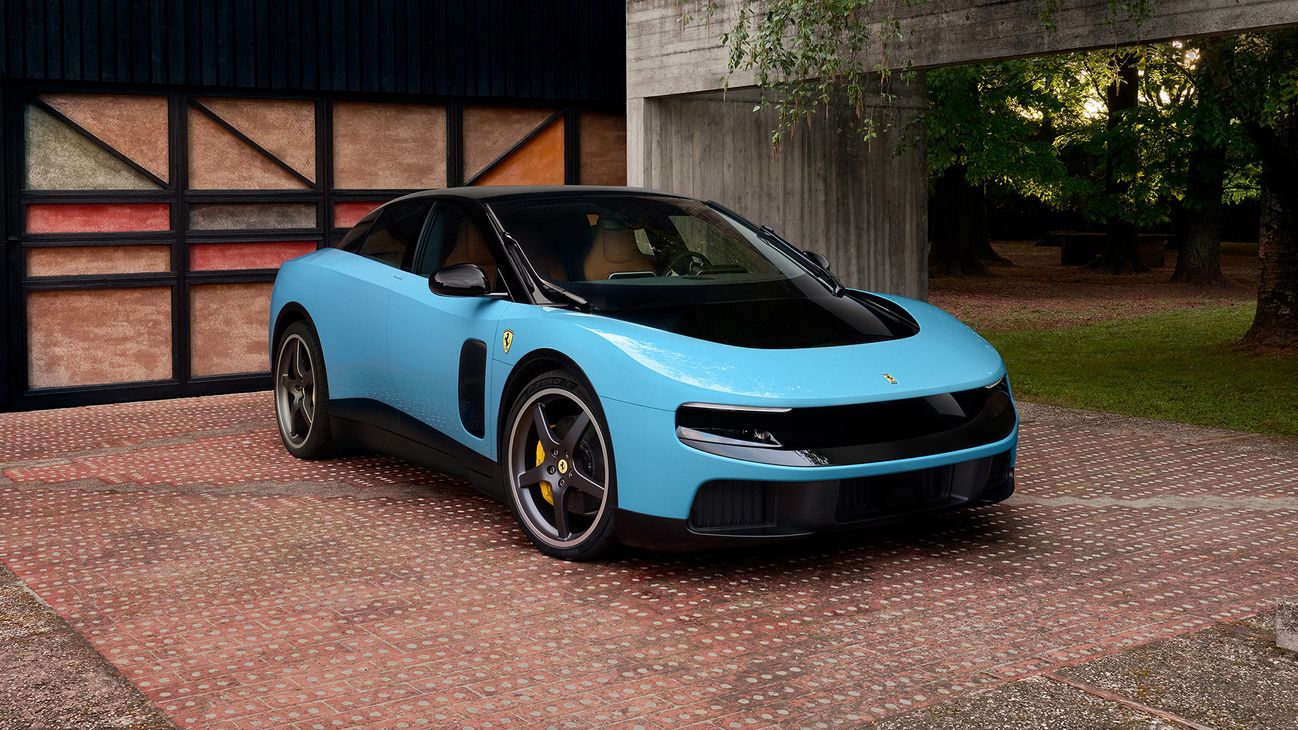
Ferrari Luce
The Ferrari Luce is a new electric car from Ferrari. It was unveiled in May 2026 and it’s fully electric. The podcast is mentioning it because it’s a major new EV release from a performance-focused brand.
0 to 62 in 2.5 seconds
“0 to 62” tells you how fast the car can accelerate from a stop to 62 mph. Lower time usually means quicker, but it’s only about straight-line speed.
YouGov
YouGov is a company that runs surveys to measure what people think. In this segment, it’s used to show how the public reacted to the Ferrari Luce.
WLTP range
WLTP range is a lab-tested estimate of how far an electric car can go on one charge. It’s used in Europe so you can compare cars, but your real range may be different.
122 kilowatt hour battery
A 122 kWh battery means the car has a large amount of stored electricity. Bigger battery capacity often means more potential range, but real-world results still vary.
infotainment
Infotainment is the car’s screen system for things like music, maps, and settings. It’s basically the car’s “tech dashboard.”
Gorilla glass
Gorilla Glass is a tough type of glass used on screens. The host is saying the Luce uses it to make the display surfaces more durable.
Matteo Salvini
Matteo Salvini is an Italian politician. The host is saying he criticized the Ferrari Luce, showing the backlash was big enough to reach mainstream attention.
powertrain
A powertrain is the car’s “moving system”—what actually makes the car go and how that power gets to the wheels. Here, the host says some people dislike the switch to an electric powertrain.
JLR rebrand
JLR stands for Jaguar Land Rover. The host is saying they tried a big brand/design shift, and it didn’t land as well as hoped.
share price drop
A share price drop means the company’s stock price went down. The host is using it to suggest that leadership is under real pressure, not just talking optimistically.
1500 kilowatt charger
This means a charging station that can deliver a very large amount of power to an EV. Higher kilowatts generally means faster charging, and the host is pointing to how quickly charging tech is advancing.
1035 horsepower
Horsepower is a number that describes how strong a car’s power is. Here, the host is saying the electric Ferrari has huge power, so it can still feel extremely fast even though it’s electric.
electric saloon
A “saloon” is basically a four-door car with a separate trunk—like a sedan. This one is electric, meaning it uses a battery and electric motors instead of a gas engine.
residuals
“Residuals” means how much the car is expected to be worth later, after you’ve owned it for a while. The host is wondering if an electric Ferrari will keep its value the way people expect from Ferrari.

BYD dolphin gdmi
This is a small BYD car, and the “gdmi” version is a plug-in hybrid. That means it can run on electricity for a while, but it also has a fuel engine for longer trips.
ac
AC is one type of electricity used for EV charging. It’s common for home charging, and the car typically handles converting it to charge the battery.
direct dc
DC charging sends power to the car in a form that lets it charge faster. It’s commonly used at public fast-charging stations.
rapid dc charging
Rapid DC charging is the fast-charging kind you usually find on public networks. How fast it goes depends on both the charger and the car.
cable gully
A cable gully is a safe, protected path for the charging cable. It can be required when the cable has to cross an area where it could get damaged or be a trip hazard.
plug-in hybrid electric vehicle
A plug-in hybrid is a car that uses both electricity and fuel. You can charge it from a plug, so short trips can be done on electricity alone.
combined range
Combined range is the estimated total distance the car can go using both electricity and fuel. It’s a test-based number used to compare cars.
B-segment car
B-segment is a European category for small cars. The host is saying this car’s emissions are unusually low compared with other small cars in that class.
CO2 per kilometer
This is a way to measure emissions: how much CO2 the car produces for every kilometer driven. Lower is better for emissions.
plug-in hybrid in the supermini class
The host is basically saying this BYD is the only plug-in hybrid among the small cars they’re comparing. It’s about what’s available in that size class.

MG3
The MG3 is a small car the host mentions for comparison. They’re saying it doesn’t have the same plug-in hybrid option as the BYD Dolphin gdmi.
CCS connector
CCS is the common fast-charging plug shape used by most EVs. If your car uses CCS, it can plug into these fast chargers.
blade 2.0 battery
BYD’s Blade 2.0 battery is a newer generation of its lithium iron phosphate (LFP) cell technology, designed to support higher charging performance. In this segment, it’s specifically tied to unlocking the full high-power charging capability (up to the charger’s maximum).
1500 kilowatt capability
This is the charger’s maximum “fast charging speed” measured in power. Your car may not be able to use all of it, so you’ll charge slower if your battery/charger can’t accept that much power.
rapid charging networks
A rapid charging network is a company that runs fast-charging stations and charges you for using them. The host is comparing BYD’s pricing to other fast-charging providers.
pavement tax
“Pavement tax” is a nickname for feeling unfairly charged if you can’t charge your EV at home. The host’s point is that public charging can end up costing more for people without driveways or garages.
cpo's
A CPO is the company that runs the charging stations you use. They pay to install them and keep them working, so how often people use them affects their costs.
capital infrastructure costs
“Capital infrastructure costs” are the upfront, long-term expenses to build charging sites—like grid connection work, electrical upgrades, and installing chargers. These costs can be large before the network earns enough revenue from charging sessions.
22 kilowatt ac charging
AC charging is when the power coming from the charger is alternating current. Your car has to convert it to the kind of electricity the battery uses, so the car has to be able to accept that charging speed.
conversion from ac to dc
When you use an AC charger, the electricity type doesn’t match what the battery needs. The car converts it from AC to DC, and the car’s own charger limits how fast you can charge.
11 kilowatt charging
“11 kilowatt charging” refers to the maximum AC charging power the vehicle can accept. Even if the street charger can deliver more (like 22 kW), the car will cap the charging rate at its own rating.
five-star euro end cap rating
A five-star Euro NCAP rating is a safety score from an independent testing program. Higher stars generally mean better crash protection for people inside the car.
four-year 60 000 mile warranty
This is how long the manufacturer will cover certain problems under warranty, and it’s also limited by miles. Shorter warranty coverage can mean more out-of-pocket costs sooner if something goes wrong.
Citron dealerships
The host is saying the brand can rely on existing dealership/service locations. That matters because it can make repairs and maintenance easier to get done.
electric range
Electric range is how many miles (or kilometers) an EV can drive before the battery runs low. The host uses it to decide if the car will cover your everyday trips without constantly needing charging.
two-tier pricing
Two-tier pricing is a charging-rate structure where electricity costs differ depending on the situation—commonly time-of-use windows, charger type, or whether you’re on a specific tariff. The host flags it as a risk when charging prices change, because it can make costs less predictable for EV owners.
EV resistance in disguise
The host means some complaints about an EV might really be about disliking EVs in general, even if the criticism sounds like it’s about the car itself. It’s about hidden motivation behind the feedback.