About this episode
Primetime EV digs into BYD’s UK “flash charging” push, starting with a headline “1500 kilowatts peak output” and a target price “sub 50 pence per kilowatt hour.” Hosts explain why peak charger power won’t guarantee peak charging for every car, and how BYD’s on-site battery storage could enable a “two-tier charging price” (about 50p for BYD drivers, 80p for others). The discussion widens to UK charging VAT policy and other Chinese EV momentum.
00:00 Introduction
01:30 Is BYD Flash Charging the fastest and cheapest in the UK?
07:30 Why is the government's charging cost review ducking the VATquestion?
10:58 Which Chinese EV brands are actually worth watching beyond BYD?
15:50 Why did Ferrari's first electric car make investors run for the exit?
22:20 BYD Dolphin G: is a six-hundred-mile supermini actually possible?
23:40 Q&A
30:20 Join the Club / Sign off
BYD Flash Charging UK 2026. EV charging costs UK. Chinese electric cars UK 2026. Ferrari Luce electric car. Government EV charging review UK. Five stories in 30 minutes on Primetime EV Live.BYD FLASH CHARGING GOES LIVE IN THE UK. The first BYD Flash Charger switched on in Britain this week — 1,500 kW peak output, three times faster than Tesla's V4 Supercharger. BYD is targeting sub-50p per kWh for BYD drivers, against the current 70–89p charged by most rapid networks. The catch: non-BYD drivers may pay around 80p due to CPO site agreements. 300 chargers planned in the UK by end 2027.GOVERNMENT LAUNCHES CHARGING COST REVIEW — BUT VAT IS OFF THE TABLE. Public rapid charging now averages 79p per kWh — up 38% since 2021. Home off-peak rates can be as low as 8.8p. The government's official review, led by Philip New, reports in autumn 2026. Despite sustained industry pressure, the 20% VAT on public charging versus 5% at home has been explicitly kept out of scope.CHINESE EV BRANDS BEYOND BYD. Leapmotor B10 — backed by Stellantis, the world's fourth-largest carmaker — is on sale now at £29,995 with the Leap Grant. Xpeng's P7+ arrives later in 2026 with 10–80% charging in just 12 minutes. Jaecoo is already climbing UK sales charts. The Chinese EV wave is much wider than one brand.FERRARI LUCE — FIRST ELECTRIC FERRARI. 1,035 hp. 0–62 in 2.5 seconds. £450,000. Designed with Jony Ive's LoveFrom studio. Ferrari shares dropped nearly 8% the day it was revealed. A YouGov survey found 51% of Britons dislike the design. Is the backlash really about the design — or is it EV resistance in disguise?BYD DOLPHIN G DM-i. 646 miles combined. 65 miles electric. 201.7mpg weighted. UK orders open this summer. The only PHEV in the supermini class.──────────────────────────────⚡ JOIN THE PRIMETIME EV CLUB — FREECheapest charging rates · best lease deals · weekly EV digest. Direct to inbox, no algorithm.👉 primetimeev.com/club📧 [email protected]
Can you run a cable gully outside your house? Use our free council checker: primetimeev.com──────────────────────────────
flash charging
"in flash charging for BYD. So there it is, super fast charging. The first BYD flash charger just switched on in the UK."
“Flash charging” means charging an EV really fast using very high-power chargers. The hosts are saying BYD’s new UK chargers are built for quick top-ups, and they’re also aiming for a lower electricity price.
“Flash charging” here refers to extremely high-power public EV charging designed to add a lot of energy in a very short time. The segment ties it to BYD’s new UK charger hardware and emphasizes both speed and—more importantly—price per kilowatt-hour.
BYD
"in flash charging for BYD. So there it is, super fast charging. The first BYD flash charger just switched on in the UK."
BYD is a big Chinese company that makes electric cars and batteries. Here, they’re also rolling out very fast public charging stations in the UK and trying to make the electricity price cheaper.
BYD is a major Chinese EV and battery manufacturer that’s expanding its charging network in the UK. In this segment, the focus is on BYD’s “flash charging” hardware and its pricing strategy for public charging.
VAT gap
"The government launched a review into charging costs this week. The VAT gap between home and public charging deliberately kept out of scope."
A “VAT gap” means the tax treatment for electricity at home versus electricity at public chargers isn’t the same. If the tax difference isn’t addressed, public charging prices may stay higher even if other costs change.
The “VAT gap” refers to differences in how value-added tax is applied between home electricity and public charging. The segment says the government review kept this “VAT gap” out of scope, implying it could still influence the real price people pay.

Dodge Charger
"...nd out whether you are eligible for a grant for a charger cable gully. There are now more Chinese EV brands..."
The Dodge Charger is a car model name from Dodge. In this discussion, it’s brought up because the topic is about getting help paying for a home charging setup. That’s the equipment you use to charge an EV.
The Dodge Charger is a well-known American car nameplate that’s typically associated with performance-focused driving. In an EV-focused podcast context, it’s being mentioned around eligibility for a grant related to installing a charger cable, which ties it to home charging infrastructure rather than its traditional engine lineup. That makes it relevant to listeners thinking about the practical costs of charging.
Ferrari
"And then the reaction wasn't necessarily in a good way. Shares dropped 8% in a single day when they launched it. Italy's transport minister publicly slammed it..."
Ferrari is a famous Italian sports-car brand. They recently showed their first electric car, and the hosts say the reaction was dramatic, including criticism from Italy’s transport leadership.
Ferrari is an Italian sports-car brand, and the segment notes it unveiled its first electric car. The discussion frames the market reaction (including a share-price drop) and political criticism as part of the broader EV transition story.
Italy's transport minister
"Shares dropped 8% in a single day when they launched it. Italy's transport minister publicly slammed it and we'll talk about what's actually going on there."
The hosts mention Italy’s transport minister criticizing the electric car launch. That’s notable because it’s not just fans reacting—government officials weighed in too.
The “Italy’s transport minister” is referenced as a government official who publicly criticized Ferrari’s electric-car launch. This matters because it shows EV policy and public messaging can influence how launches are received.
PHEV
"And BYD has a new super mini PHEV that will do 646 miles combined."
PHEV means plug-in hybrid. It’s a car that can charge from a plug and drive on electricity for a while, but it also has a gas engine for when you need more range.
PHEV stands for plug-in hybrid electric vehicle. It combines an electric motor/battery with a fuel engine, and it can be charged from an external power source to run some trips on electricity alone.
pence per kilowatt hour
"the BYD flash charger price per kilowatt hour, which is something we're going to be talking about. BYD is publicly is targeting sub 50 pence per kilowatt hour compared to the 70 or 89 pence per kilowatt hour currently charged by most rapid networks."
“Pence per kilowatt hour” is the price you pay for each unit of electricity your EV uses. Even if a charger is very fast, the p/kWh rate largely decides how expensive your session is.
“Pence per kilowatt hour” (p/kWh) is the unit price for electricity used during EV charging. The hosts frame it as the key metric because it directly determines the cost of charging, regardless of how fast the charger is.
Tesla's V4 supercharger
"It's the fastest public charger ever installed in Britain, three times more powerful than Tesla's V4 supercharger. BYD is publicly is targeting sub 50 pence per kilowatt hour..."
Tesla’s “V4” Supercharger is Tesla’s newer generation of fast-charging stations. The hosts mention it to compare charging speed/power between brands.
“V4 supercharger” refers to Tesla’s fourth-generation Supercharger hardware, used for high-power DC fast charging. The segment uses it as a comparison point to claim BYD’s charger is more powerful.
1500 kilowatts peak output
"That's a meaningful gap. Now the charging speed is extraordinary 1500 kilowatts peak output."
Peak output is the charger’s maximum “push” of electricity. Even if the charger can do a lot, your car only takes as much as it’s designed to handle.
“Peak output” is the maximum power the charger can deliver at its best operating point. For EV fast charging, higher peak power can shorten charging time, but the car must be able to accept that power.
flash charger
"Plug in a BMW ix3 into a flash charger and you'll still get 400 kilowatts because that's what the car can take."
A flash charger is an ultra-fast charging station meant to get you back on the road quickly. But your car still has limits, so you may not get the absolute fastest speed the charger can provide.
A “flash charger” is an ultra-fast EV charging setup aimed at very short charging sessions. The key idea here is that the charger can deliver extremely high peak power, but real-world charging time still depends on the vehicle’s maximum charging capability and battery behavior.
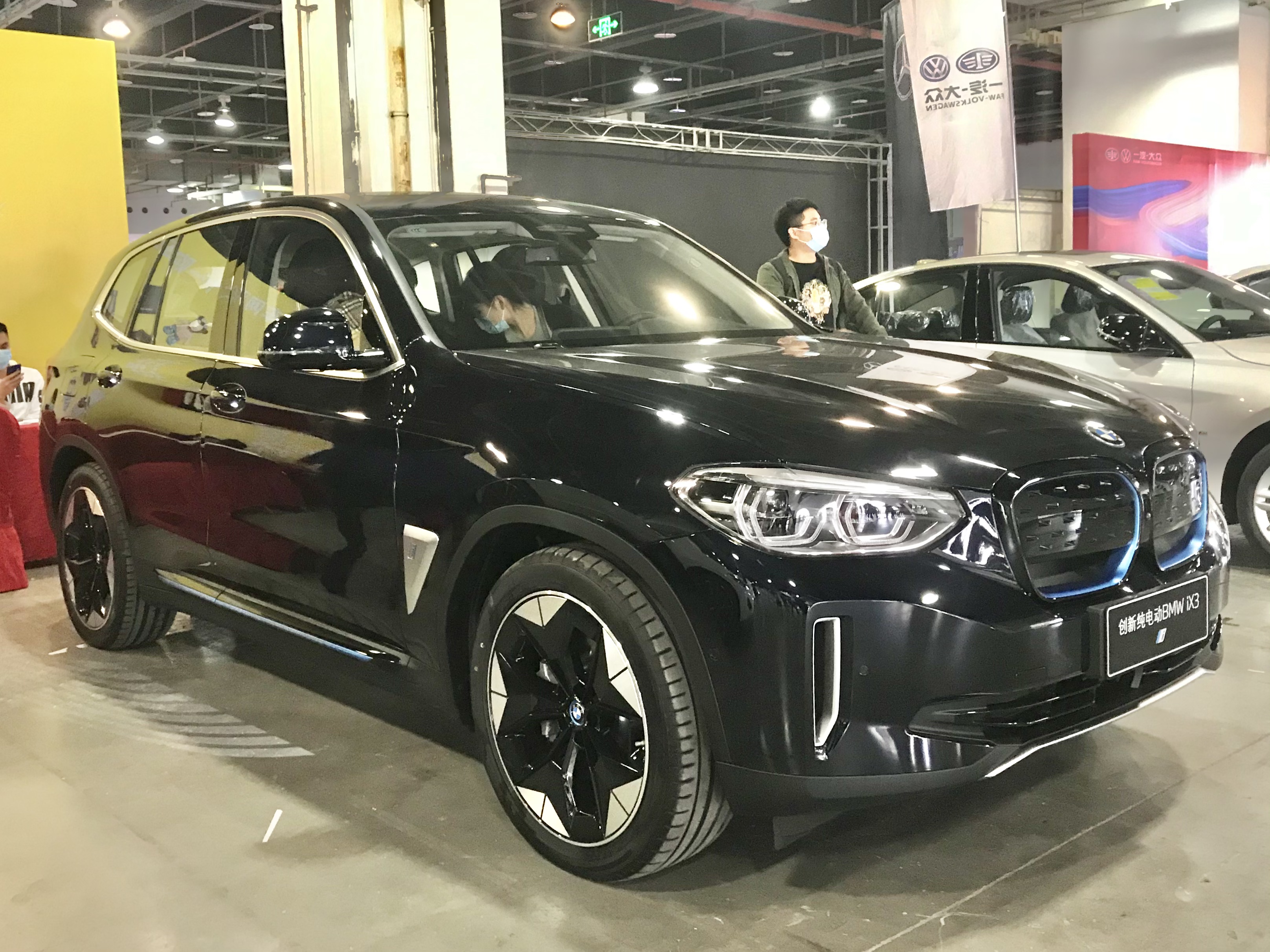
Bmw Ix3
"...ll draw what their own hardware allows. Plug in a BMW ix3 into a flash charger and you'll still get 400 kil..."
The BMW iX3 is an all-electric SUV. The podcast is talking about how fast it can charge when plugged into a fast charger. Charging speed depends on the car and the charger together.
The BMW iX3 is an all-electric version of BMW’s X3-sized SUV, built on the G08 generation platform. The podcast mentions charging performance—specifically that even when using a “flash charger,” the iX3 can still achieve around 400 kW in the scenario being discussed. That’s relevant because real-world charging speed depends on both the car and the charger.
two-tier charging price
"So you could end up with a two-tier charging price at the same physical charger. 50 pence if you drive a BYD or 80 pence if you don't."
A two-tier charging price means some drivers pay less than others at the same charger. Here, the host suggests BYD drivers could pay a lower rate than everyone else.
A two-tier charging price means the same physical charging site can charge different rates depending on who you are or what you drive. In this case, the host describes a lower BYD-linked rate for BYD drivers and a higher rate for other brands or third-party network users.
one every 50 kilometers
"By the end of next year BYD plans 300 flash chargers in the UK, 3,000 across Europe, one every 50 kilometers on major routes."
This is about how often chargers will be spaced along roads. “One every 50 kilometers” means you shouldn’t have to drive far to reach a fast charger.
A deployment density statement like “one every 50 kilometers” describes how frequently chargers are placed along major routes. It’s meant to communicate coverage—how likely you are to find a fast charger within a short drive.
battery storage
"The lower pricing is possible because BYD's installs its own battery storage on site. I've got a picture here to show you that I will put up."
Battery storage means the charger site has its own batteries. It can charge those batteries when electricity is cheaper, then use that stored energy to charge cars later.
Battery storage at the charging site means the operator installs its own energy buffer (a local battery system). That lets the site buy electricity during off-peak periods and then supply it during peak demand, potentially improving economics and reducing reliance on the grid at the worst times.
off-peak rates
"So the battery storage can store energy during off-peak rates. So it buys the energy at bulk in off-peak rates and then it charges it back at a profit during peak demand."
Off-peak rates are the times when electricity costs less because fewer people are using it. The idea is to buy power cheaply, store it, and then use it later when charging cars.
Off-peak rates are electricity pricing periods when demand is lower, so power is typically cheaper. The segment explains using on-site battery storage to buy energy during off-peak and then charge EVs during higher-priced peak demand.
vertically integrated
"they own the whole stack. That's actually quite a different model to grid server Osprey or Ionity. These networks buy energy, pass costs on and take a margin. BYD is more vertically integrated."
Vertically integrated means one company handles more of the process end-to-end instead of relying on partners for everything. The host is saying BYD is trying to control more of the charging system so it can influence pricing.
Vertical integration means a company controls multiple steps of the supply chain or value chain rather than outsourcing everything. Here, the host contrasts BYD owning the “whole stack” (including site energy storage and charging infrastructure) versus networks that buy energy and pass costs on with a margin.
Ionity
"That's actually quite a different model to grid server Osprey or Ionity. These networks buy energy, pass costs on and take a margin."
Ionity is a company that runs fast-charging stations in Europe. The host is comparing how Ionity’s business model affects charging prices versus BYD’s.
Ionity is a European fast-charging network operator. In the segment, it’s used as a comparison point to BYD’s approach, with the claim that networks like Ionity buy energy, pass costs on, and take a margin.
grid server Osprey
"they own the whole stack. That's actually quite a different model to grid server Osprey or Ionity."
This sounds like another company that runs charging stations. The host is saying networks like this tend to add their own margin, unlike BYD’s more direct approach.
“Grid server Osprey” appears to refer to a charging-network operator or brand name used in the UK/Europe. The host groups it with other networks that buy energy, pass costs on, and take a margin—contrasting that with BYD’s more controlled, integrated model.
rapid charger
"Sub 50 pence from a rapid charger would genuinely move the dial."
A rapid charger is a fast EV charger. It’s built to charge your battery quickly compared with normal home charging.
A rapid charger is a high-power EV charging setup designed to add a lot of energy in a short time. In practice, it usually refers to DC fast charging rather than slower AC charging at home.
supercharger network
"Tesla have done very well out of this over the years by having the supercharger network that's been opened up to further cars."
Tesla’s Supercharger network is a chain of high-power fast-charging stations built specifically for EVs. The segment highlights how Tesla opened access beyond Tesla cars, which helped the network become broadly useful.

Tesla Model S
"...la, particularly at the beginning, if you owned a Model S, when the Model S came out, they gave you free su..."
The Tesla Model S is an all-electric car made by Tesla. The podcast is talking about what early owners were offered when the car first came out, like free fast charging. That can change how expensive it is to charge over time.
The Tesla Model S is Tesla’s flagship electric sedan, known for being one of the earliest mainstream long-range EVs. It’s discussed in the context of early ownership perks—specifically free supercharging—when the Model S first launched. That historical angle matters because it affects total cost of ownership and how early EV programs worked.
free supercharging for life
"when the Model S came out, they gave you free supercharging for life. So all those guys that are driving around or guys or girls driving around in a car now are an early Tesla are still getting free electricity, free charge for their vehicles."
“Free supercharging for life” means you get free fast charging as long as you own the car. That can save a lot of money over time.
“Free supercharging for life” is a marketing/ownership incentive where the car’s owner receives ongoing free access to fast charging. It’s notable because it can significantly reduce real-world charging costs over many years, especially for frequent road trips.
super fast charging
"You'll get super fast charging because the vehicle is set up for it if you own a Denzel or a BYD."
Super fast charging means charging your EV at very high power. It’s designed to get you back on the road quickly, but your car has to support that fast charging speed.
Super fast charging refers to very high-power EV charging intended to add a large amount of energy quickly. The segment connects it to the vehicle being “set up for it,” implying compatibility with high charging power and fast charge protocols.
grid infrastructure
"But if they're not relying on grid infrastructure, it's a pretty smart move, actually, I think."
Grid infrastructure is the power network that feeds electricity to places. If a charging plan doesn’t rely on it as much, it may be easier to install chargers quickly.
Grid infrastructure refers to the existing electrical network (utility lines, substations, and capacity) that supplies power to charging sites. The host suggests the approach may reduce reliance on upgrading that network by using local energy storage.
five minute charge
"Now let's just put the rates up. 1500 kilowatts, five minute charge, probably 80p per kilowatt hour for most drivers, but 50p per kilowatt hour."
“Five minute charge” is the promise of very fast charging. Real results can vary depending on how full the battery already is and whether the battery is warm enough.
“Five minute charge” is a performance claim about how quickly the charger can add usable energy. In EV charging, the exact result depends on the battery’s state of charge, temperature, and how the car limits charging power as the battery fills up.
off-street parking
"This 20% for people who don't have off-street parking or a driveway, they're paying public VAT prices, so unfair."
Off-street parking means you can charge at home because you have a driveway or private parking spot. The host says the rules and taxes can be different if you don’t have that option.
Off-street parking refers to having a driveway or parking space at home rather than relying on public parking. The host ties this to how charging costs and taxes are handled, implying different charging setups for home vs public charging.

Xpeng P7
"roads and they're an incredible success story in the UK. So we're looking at Chinese electric cars, UK 2026. We're looking at the Leapmotor B10 UK price and the X-Peng P7 plus UK, which is an amazing car actually as well. So the Chinese EV wave in the UK is much wider than BYD."
The XPeng P7 is an all-electric sedan made by XPeng. The podcast is talking about it as a successful electric car in the UK market. It’s included because the episode compares Chinese EV options and their pricing.
The XPeng P7 is an electric sedan from XPeng, discussed here as part of the wave of Chinese EVs expanding in the UK. The podcast frames it as an “incredible success story,” which is why it’s included in a pricing and market-access conversation. It’s relevant because it represents how competitive EVs are becoming beyond the biggest brands.

Alpina B10
"...ric cars, UK 2026. We're looking at the Leapmotor B10 UK price and the X-Peng P7 plus UK, which is an a..."
The Alpina B10 is a luxury car that’s tuned for better performance than a standard model. In the podcast, it’s brought up while comparing UK prices of other premium cars. It’s an example of a higher-end, performance-focused sedan.
The Alpina B10 is a performance-oriented luxury sedan based on BMW’s 5 Series platform, tuned by Alpina for stronger driving feel and refinement. In this episode, it’s mentioned alongside UK pricing comparisons for Chinese EVs, which highlights how buyers compare premium performance models across different powertrains. That context makes the B10 relevant as a benchmark for what “premium” and “performance” can mean.

Leapmotor B10
"So we're looking at Chinese electric cars, UK 2026. We're looking at the Leapmotor B10 UK price and the X-Peng P7 plus UK, which is an amazing car actually as well."
The Leapmotor B10 is an electric car from Leapmotor that’s coming to the UK. The hosts focus on its price and the amount of equipment you get, plus how quickly it can charge.
The Leapmotor B10 is a Chinese EV being positioned for the UK market with aggressive pricing and strong included equipment. The segment emphasizes its battery size, charging capability, and “everything included” value proposition.
Leap grant
"Leapmotor backed by Stellantis has launched the B10 at £31,495 or under £30,000 with the Leap grant. X-Peng's P7 plus arrives later in 2026 with 10 to 80% charging in 12 minutes."
The “Leap grant” is a buying incentive that reduces the price of the car. In this segment it’s described as £1,500 off, similar to the UK’s electric car grant.
The “Leap grant” is a discount incentive tied to buying the Leapmotor B10, described as mirroring the UK government’s electric car grant. It’s presented as £1,500 off, which affects the effective purchase price.
structural market shift
"Jakku is already climbing UK sales charts. This is a structural market shift, not a single brand story. When people talk about Chinese EVs in the UK, they usually talk about BYD."
A structural market shift means the market is changing in a lasting way. The hosts are saying it’s not just one brand—it’s multiple Chinese EV makers changing the competitive landscape in the UK.
A “structural market shift” means the change isn’t just a temporary trend or one-off product launch—it reflects a deeper change in who’s competing and how the market works. Here, the hosts argue the UK EV market is changing because multiple Chinese brands are arriving, not just BYD.
Stellantis
"Let's start with Leapmotor. You might not have heard of them, but here's the bit that matters. Stellantis is its own 51% of Leapmotor International."
Stellantis is a big car company. Here, they’re saying Stellantis has a controlling stake in Leapmotor, so Leapmotor cars could be sold through the same dealer networks as brands like Vauxhall.
Stellantis is a major automaker formed from the merger of Fiat Chrysler Automobiles and PSA. In this segment, it’s described as having a controlling stake in Leapmotor, which is used to explain why Leapmotor cars may appear alongside brands like Vauxhall in UK dealerships.

Opel Astra
"...ll dealership and there's a Leapmotor next to the Astra, that's not going to be an accident. That's a str..."
The Opel Astra is a common everyday car model. The podcast mentions it because, in a dealership, an EV brand display is placed next to it. That shows how EVs are being marketed alongside regular cars.
The Opel Astra is a mainstream compact car that’s commonly sold through dealerships and is often used as a reference point for everyday, high-volume vehicles. In the podcast, it’s mentioned in a showroom context where a Leapmotor display is placed next to it, signaling how EV brands are increasingly competing for attention in traditional retail spaces. That makes it relevant to how EVs are being marketed to buyers who might otherwise consider non-EV models.
kWh
"For that, you get a 67.1kWh battery, £270 range, £168kW charging, heat pump as standard, panoramic roof, 360 camera heated seats"
kWh is how much energy is stored in an EV’s battery. More kWh usually means the car can go farther, though real range also depends on driving conditions.
kWh (kilowatt-hours) is the unit used to measure an EV battery’s energy capacity. A larger kWh number generally means more potential range, assuming similar efficiency.
kW
"For that, you get a 67.1kWh battery, £270 range, £168kW charging, heat pump as standard, panoramic roof, 360 camera heated seats"
kW is a measure of charging power. In EVs, higher kW generally means you can charge faster, but the car still has to support that speed.
kW (kilowatts) is a unit of power, and in EV charging it indicates how fast the charger can deliver energy. Higher kW ratings usually mean faster charging—though the car’s charging limits also matter.
heat pump
"For that, you get a 67.1kWh battery, £270 range, £168kW charging, heat pump as standard, panoramic roof, 360 camera heated seats"
A heat pump helps an EV warm itself more efficiently, especially in cold weather. That can help the car use less energy and keep range from dropping as much.
An EV heat pump is an efficiency-focused climate-control system that uses refrigeration-cycle technology to warm the cabin and battery more efficiently than resistive heating. It can improve real-world range in cold weather.
panoramic roof
"£270 range, £168kW charging, heat pump as standard, panoramic roof, 360 camera heated seats in one trim. Everything included."
A panoramic roof is a big glass roof that lets more light into the cabin. It can make the interior feel more open, but it also depends on how the glass is designed to manage heat.
A panoramic roof is a large glass roof section that typically extends over much of the cabin. It’s a comfort/visibility feature and can also affect interior heat management depending on glazing.
360 camera
"heat pump as standard, panoramic roof, 360 camera heated seats in one trim. Everything included."
A 360 camera uses cameras around the car to show you what’s around it, often from above. It makes parking and tight maneuvers easier because you can see areas you might miss.
A 360 camera system uses multiple cameras around the car to create a top-down or wide-angle view. It helps with low-speed maneuvering and parking by reducing blind-spot uncertainty.

Tesla Model
"...mpanies like VinFars that were planning to do the Tesla model where they just set up in shopping centres and go..."
The Tesla Model Y is an all-electric SUV. It’s mentioned because the conversation is about how EV companies plan to sell or show cars to people, including in places like shopping centres. The Model Y is one of Tesla’s most common models.
The Tesla Model Y is a compact electric SUV that’s been a major volume seller for Tesla. The podcast references it in the context of how EV companies plan to reach customers—such as setting up sales or demo activity in public places like shopping centres. That’s why it comes up: it’s a key model in the broader EV market and sales strategy discussion.
800-volt architecture
"The more interesting car is the P7 plus saloon arriving later this year. 800-volt architecture, that means super fast charging, 451 kilowatt peak charging speed,"
“800-volt” means the car’s electrical system is built to run at a higher voltage. That usually helps it take in charging power faster, so you spend less time at the charger.
800-volt architecture is an EV electrical design that uses a higher system voltage than the more common ~400V setups. Higher voltage can reduce current for the same power, which helps the car accept faster charging speeds and reduces heat stress on components.
X-Peng P7 plus saloon
"The more interesting car is the P7 plus saloon arriving later this year. 800-volt architecture, that means super fast charging, 451 kilowatt peak charging speed, 10 to 80% in 12 minutes for charging,"
The X-Peng P7 is an electric car, and the big deal here is how quickly it can charge. The host says it uses a high-voltage system that lets it go from 10% to 80% in about 12 minutes and charge at very high power.
The X-Peng P7 is a high-performance electric saloon, and this segment highlights its charging-focused engineering. The host calls out an 800-volt architecture, which enables very fast charging—claimed as 10 to 80% in 12 minutes—and a peak charging speed of 451 kW.
kilowatt peak charging speed
"800-volt architecture, that means super fast charging, 451 kilowatt peak charging speed, 10 to 80% in 12 minutes for charging, up to 341 miles range."
Peak charging speed is the highest charging power the car can pull from a fast charger, measured in kilowatts. It’s the “best case” number—your actual time can be different depending on conditions and battery level.
Peak charging speed is the maximum power level (in kilowatts) the car can draw from a fast charger at its best moment. It’s a useful headline number, but real-world charging time depends on how the battery manages heat, state of charge, and charger compatibility.
10 to 80% in 12 minutes
"451 kilowatt peak charging speed, 10 to 80% in 12 minutes for charging, up to 341 miles range. It'll be the fastest charging car in Europe when it lands."
This is a charging test claim: how long it takes to go from 10% battery to 80%. It’s a popular comparison because charging is usually quicker early on than when you get near full.
“10 to 80% in 12 minutes” is a standardized fast-charging claim that measures how quickly the battery can be charged from a low state of charge to a mid-high level. EVs often charge fastest in the lower-to-middle range, so this metric is commonly used to compare charging performance between cars.
endurance record
"Give or take the BYDs. X-Peng set a 24-hour endurance record last year in the next generation P7. 2,461 miles in 24 hours with multiple fast charges, including hitting 130 miles per hour."
An endurance record is a test where a car has to keep going for a long time. Here it’s meant to show the car can handle repeated fast charging and high-speed driving without falling apart.
An endurance record is a long-duration performance attempt that tests how consistently a car can operate over time, often including repeated fast charging. In this segment, it’s used to argue that the next-generation X-Peng P7 can sustain high-speed travel while managing battery and charging demands.

Land Rover Range Rover
"... UK showrooms. It's selling really well. It's got Range Rover adjacent styling. You may have seen them. They're..."
The Range Rover is a luxury SUV made by Land Rover. It’s being used as a reference for the style of another vehicle mentioned in the episode. The point is that the new car looks similar in design to the Range Rover.
The Range Rover is a premium SUV from Land Rover, positioned as a high-end, comfort-and-capability vehicle. In the podcast, it’s referenced for its “adjacent styling,” implying a design relationship with another model being discussed. That makes it a useful reference point for how buyers recognize the look and feel of the segment.
electric car grant eligible
"They're all over London now. I'm seeing them everywhere. Electric car grant eligible at £3,750 off. It's been climbing the sales charts faster than"
This means the car qualifies for a government discount for electric vehicles. If you buy one that’s eligible, you can get money off the price—here they mention £3,750 off.
“Electric car grant eligible” means the vehicle qualifies for a government incentive that reduces the purchase price. The host ties this to the E5’s £3,750 off figure, which can materially affect affordability and demand.
backed by serious manufacturing scale
"The pattern across all of them is the same. More spec than equivalent European cars, lower price point, backed by serious manufacturing scale."
“Manufacturing scale” basically means making lots of cars. Making more cars can lower the cost per car, which can help a brand sell them with more features for less money.
“Manufacturing scale” refers to how much a company can produce efficiently—often lowering per-unit costs through higher volume. The host argues that these EV brands can offer more equipment for less money because they’re producing at large scale.
Jakku
"X-Peng has the tech credibility. Jakku has the looks and the price. Watch all three of these brands because they're coming thick and fast."
Jakku is mentioned as another electric-car brand coming to the UK. The host is basically saying it’s attractive-looking and priced aggressively.
Jakku is mentioned as a Chinese electric-car brand with “the looks and the price.” The segment doesn’t provide enough detail to confirm the exact brand name or model, but it’s positioned as a competitor arriving in the UK market in 2026.
Jonathan Ive
"So you've probably all seen it. It was designed by Jonathan Ive who designed the Apple iPhone and Ferrari went a bit crazy or the kind of automotive community went a bit crazy about it."
Jonathan Ive is a famous designer from Apple. The host is saying he helped design the Ferrari Luce, which is why the car’s look and interior are being compared to Apple products.
Jonathan Ive is a designer best known for shaping Apple’s product design language (including the iPhone and other iconic devices). The host credits him with designing the Ferrari Luce, framing it as a crossover between consumer electronics design and automotive design.
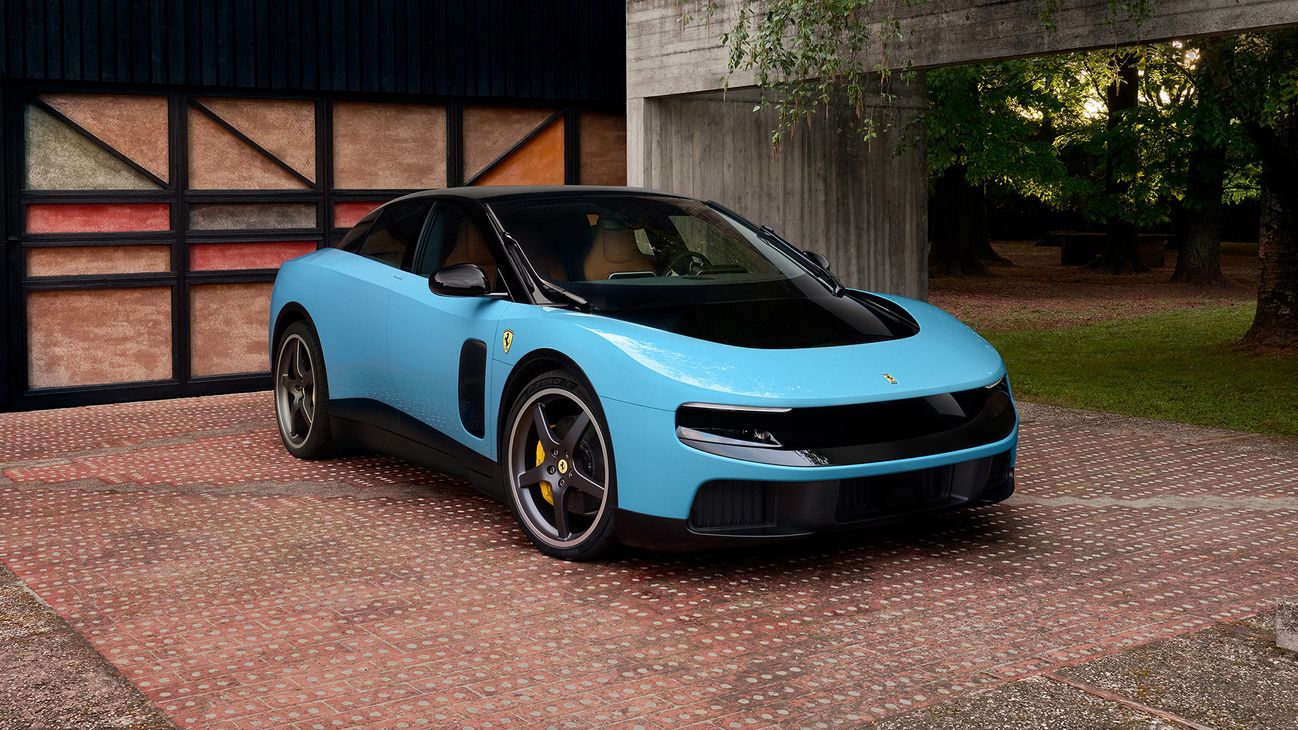
Ferrari Luce
"... a bit crazy about it. So I think it's called the Luce. Ferrari unveiled the Luce in May 2026. fully ele..."
The Ferrari Luce is a new electric car from Ferrari. It was unveiled in May 2026 and it’s fully electric. The podcast is mentioning it because it’s a major new EV release from a performance-focused brand.
The Ferrari Luce is a fully electric Ferrari that was unveiled in May 2026, making it a notable entry because it represents Ferrari’s move into battery-electric performance. The podcast calls it “a bit crazy,” which fits the idea of a high-performance brand applying its approach to an EV platform. It’s discussed because it’s a new, headline-grabbing model and a sign of where the EV market is heading.
0 to 62 in 2.5 seconds
"fully electric car 1035 horsepower 0 to 62 in 2.5 seconds 329 miles range designed with Johnny Ives legacy agency love from the UK price is around 450,000 pounds."
“0 to 62” tells you how fast the car can accelerate from a stop to 62 mph. Lower time usually means quicker, but it’s only about straight-line speed.
“0 to 62” is a common EV/performance metric measuring how quickly a car accelerates from 0 mph to 62 mph. It’s a quick way to compare straight-line acceleration between cars, though it doesn’t capture handling or braking performance.
YouGov
"Ferrari shares dropped nearly 8% on the day of the reveal. A YouGov survey found 51% of the reaction was something to it."
YouGov is a company that runs surveys to measure what people think. In this segment, it’s used to show how the public reacted to the Ferrari Luce.
YouGov is a polling and research company used to measure public opinion. Here, the host cites a YouGov survey to quantify how people reacted to the Ferrari Luce’s reveal and design.
WLTP range
"top speed 192 miles per hour very few electric cars are hitting that kind of speed 329 miles of WLTP range 122 kilowatt hour battery"
WLTP range is a lab-tested estimate of how far an electric car can go on one charge. It’s used in Europe so you can compare cars, but your real range may be different.
WLTP range is the estimated distance an EV can travel on a full charge under the Worldwide Harmonized Light Vehicles Test Procedure. It’s a standardized test used in Europe, so it’s meant to be comparable across different cars, even though real-world range can differ.
122 kilowatt hour battery
"329 miles of WLTP range 122 kilowatt hour battery 2260 kilograms around 450,000 pounds in the UK."
A 122 kWh battery means the car has a large amount of stored electricity. Bigger battery capacity often means more potential range, but real-world results still vary.
“Kilowatt-hour” (kWh) is the unit used to describe EV battery capacity—how much electrical energy the battery can store. A 122 kWh battery generally suggests the car can support longer driving distances, though actual range depends on efficiency and driving conditions.
infotainment
"so the interior is genuinely interesting apple watch style crown controls ipad like infotainment gorilla glass throughout it's clearly a piece of design work"
Infotainment is the car’s screen system for things like music, maps, and settings. It’s basically the car’s “tech dashboard.”
Infotainment is the combined system of navigation, media, and vehicle settings displayed through a touchscreen or digital interface. In EVs like the Ferrari Luce, infotainment is often a major part of the user experience and can be a design focal point.
Gorilla glass
"apple watch style crown controls ipad like infotainment gorilla glass throughout it's clearly a piece of design work"
Gorilla Glass is a tough type of glass used on screens. The host is saying the Luce uses it to make the display surfaces more durable.
Gorilla Glass is a brand name for chemically strengthened glass used in many consumer electronics and some automotive displays. The mention here is about durability and scratch/impact resistance for the Luce’s interior screens.
Matteo Salvini
"Italy's far-right transports minister Matteo Salvini publicly criticized it a centrist opposition politician called it and I'm quoting an aesthetic and technological insult to anyone who loves Ferrari even Ferrari's own design chief design officer admitted it was polarizing"
Matteo Salvini is an Italian politician. The host is saying he criticized the Ferrari Luce, showing the backlash was big enough to reach mainstream attention.
Matteo Salvini is an Italian politician mentioned as publicly criticizing the Ferrari Luce. The host uses his comments to illustrate how the car’s design controversy extended beyond car enthusiasts into mainstream politics and media.
powertrain
"“...the people genuinely upset about the shape and the people who are actually upset about the powertrain...”"
A powertrain is the car’s “moving system”—what actually makes the car go and how that power gets to the wheels. Here, the host says some people dislike the switch to an electric powertrain.
A “powertrain” is the full set of components that generate and deliver motion—typically including the engine or electric motors, transmission, driveshafts, and related systems. The host contrasts people upset about the car’s design versus people upset about the powertrain change to EV.
JLR rebrand
"“...the GLR rebrand is parallel is worth taking seriously though the JLR rebrand that was a brand that over pivoted on design...”"
JLR stands for Jaguar Land Rover. The host is saying they tried a big brand/design shift, and it didn’t land as well as hoped.
JLR refers to Jaguar Land Rover, and the host mentions a “rebrand” as an example of a brand pivoting heavily toward design changes. The point is that some premium brands can over-focus on styling and lose audience “room,” affecting reception and business outcomes.
share price drop
"“...he probably said that to a board who'd now watched the share price drop so the pressure is real...”"
A share price drop means the company’s stock price went down. The host is using it to suggest that leadership is under real pressure, not just talking optimistically.
A “share price drop” is a decline in the market value of a company’s stock. The host uses it as context for why internal pressure at Ferrari (or its leadership) is “real,” implying that business performance can influence how confidently leaders push a new direction like EVs.
1500 kilowatt charger
"“...what I find genuinely interesting is this BYD launches a 1500 kilowatt charger...”"
This means a charging station that can deliver a very large amount of power to an EV. Higher kilowatts generally means faster charging, and the host is pointing to how quickly charging tech is advancing.
A “1500 kilowatt charger” refers to extremely high-power DC fast charging, measured in kilowatts (kW). The host uses it to contrast EV infrastructure progress (very fast charging) with how different audiences react to EV cars themselves.
1035 horsepower
"“...Ferrari launches a 1035 horsepower electric saloon and people mourn the combustion engine...”"
Horsepower is a number that describes how strong a car’s power is. Here, the host is saying the electric Ferrari has huge power, so it can still feel extremely fast even though it’s electric.
“Horsepower” is a measure of engine power—how much work the powertrain can do over time. In this context, the host is using a very high EV output figure to argue that the Ferrari Luce’s performance is extraordinary even if some people dislike the transition to electric.
electric saloon
"“...Ferrari launches a 1035 horsepower electric saloon and people mourn the combustion engine...”"
A “saloon” is basically a four-door car with a separate trunk—like a sedan. This one is electric, meaning it uses a battery and electric motors instead of a gas engine.
A “saloon” is a body style term for a passenger car with a separate trunk (similar to a sedan). Calling it an “electric saloon” highlights that the layout is a traditional four-door form factor, but with an EV powertrain instead of a combustion engine.
residuals
"“...whether it's the right call commercially I'd want to see residuals in five years...”"
“Residuals” means how much the car is expected to be worth later, after you’ve owned it for a while. The host is wondering if an electric Ferrari will keep its value the way people expect from Ferrari.
“Residuals” refers to the expected value a car retains after a period of ownership (often used in leasing and long-term value discussions). The host is asking whether an electric Ferrari will hold its value as well as traditional Ferraris, which is a major commercial concern for a premium brand.

BYD dolphin gdmi
"the BYD dolphin gdmi um is let me just put some rates up so you can see go back to normal rates"
This is a small BYD car, and the “gdmi” version is a plug-in hybrid. That means it can run on electricity for a while, but it also has a fuel engine for longer trips.
The BYD Dolphin is a compact “supermini” EV platform, and the “gdmi” variant here is a plug-in hybrid (PHEV). In this segment, the host highlights its UK-focused engineering and very low CO2 for a B-segment car.
ac
"you've got ac you've got direct dc you've got some home charger costs and you've got rapid dc charging"
AC is one type of electricity used for EV charging. It’s common for home charging, and the car typically handles converting it to charge the battery.
AC (alternating current) is one of the two main types of charging power for EVs. Many home chargers and slower public chargers deliver AC, which the car then converts internally to charge the battery.
direct dc
"you've got ac you've got direct dc you've got some home charger costs and you've got rapid dc charging"
DC charging sends power to the car in a form that lets it charge faster. It’s commonly used at public fast-charging stations.
Direct DC charging delivers electricity as direct current, typically bypassing the car’s onboard AC-to-DC conversion. That’s why DC charging is usually faster and used for “rapid” charging at public stations.
rapid dc charging
"you've got ac you've got direct dc you've got some home charger costs and you've got rapid dc charging thank you to all the members"
Rapid DC charging is the fast-charging kind you usually find on public networks. How fast it goes depends on both the charger and the car.
Rapid DC charging refers to high-power public charging that can significantly reduce charging time compared with AC charging. The exact speed depends on the charger and the car’s maximum charging capability.
cable gully
"whether they can get a cable gully installed whether it could be funded you just zip your postcode in go to the website primetimeevy.com"
A cable gully is a safe, protected path for the charging cable. It can be required when the cable has to cross an area where it could get damaged or be a trip hazard.
A cable gully is a protected channel/cover used to route and protect an EV charging cable from the power source to the charger. It’s often needed for installations that run across public or shared areas, and local councils may have rules about whether they allow it.
plug-in hybrid electric vehicle
"byd dolphin g dmi plug-in hybrid electric vehicle think coarser sized 646 miles combined range"
A plug-in hybrid is a car that uses both electricity and fuel. You can charge it from a plug, so short trips can be done on electricity alone.
A plug-in hybrid electric vehicle (PHEV) combines an electric motor with a conventional fuel engine. The key difference versus a regular hybrid is that you can recharge the battery from an external power source, letting it drive on electricity for part of your daily routine.
combined range
"it’s a supermini phev plug-in hybrid electric vehicle think coarser sized 646 miles combined range"
Combined range is the estimated total distance the car can go using both electricity and fuel. It’s a test-based number used to compare cars.
Combined range is the total distance a plug-in hybrid is rated to travel when using both its battery (electric driving) and its fuel engine. It’s a standardized test figure that helps compare overall “how far can I go” between PHEVs.
B-segment car
"65 miles on electricity alone 201.7 miles per gallon weighted fuel consumption 32 grams of co2 per kilometer that last number is extraordinary for a b-segment car"
B-segment is a European category for small cars. The host is saying this car’s emissions are unusually low compared with other small cars in that class.
B-segment is a European vehicle-size class for small cars (typically compact hatchbacks). When the host says the CO2 figure is extraordinary for a B-segment car, they mean it’s unusually low for this size category.
CO2 per kilometer
"32 grams of co2 per kilometer that last number is extraordinary for a b-segment car"
This is a way to measure emissions: how much CO2 the car produces for every kilometer driven. Lower is better for emissions.
CO2 per kilometer is a measure of how much carbon dioxide a vehicle emits for each unit of distance traveled. Lower numbers generally indicate lower tailpipe emissions under the test cycle used for the rating.
plug-in hybrid in the supermini class
"it’s the only plug-in hybrid in the supermini class nothing else in this segment does this mg3 the renocleo"
The host is basically saying this BYD is the only plug-in hybrid among the small cars they’re comparing. It’s about what’s available in that size class.
This phrase is about market positioning: it claims the BYD Dolphin gdmi is the only plug-in hybrid option in the supermini (small-car) category being discussed. It’s a comparison point against other models the host lists.

MG3
"it’s the only plug-in hybrid in the supermini class nothing else in this segment does this mg3 the renocleo"
The MG3 is a small car the host mentions for comparison. They’re saying it doesn’t have the same plug-in hybrid option as the BYD Dolphin gdmi.
The MG3 is a small (supermini) car that the host brings up as a comparison point. In this segment, it’s used to argue that other superminis like the MG3 don’t offer the same plug-in hybrid setup.
CCS connector
"the answer is yes b yd flash charges [1444.9s] use a standard ccs connector so any ev with ccs can use them"
CCS is the common fast-charging plug shape used by most EVs. If your car uses CCS, it can plug into these fast chargers.
CCS (Combined Charging System) is the standard plug used for most fast-charging EVs in the UK/Europe. If an EV supports CCS, it can physically connect to CCS fast chargers like the BYD Flash Charging setup mentioned here.
blade 2.0 battery
"the charger won't force it faster only cars with b yd's blade 2.0 battery can access [1467.6s] the full 1500 kilowatt capability"
BYD’s Blade 2.0 battery is a newer generation of its lithium iron phosphate (LFP) cell technology, designed to support higher charging performance. In this segment, it’s specifically tied to unlocking the full high-power charging capability (up to the charger’s maximum).
1500 kilowatt capability
"only cars with b yd's blade 2.0 battery can access [1467.6s] the full 1500 kilowatt capability so if you own a new b yd"
This is the charger’s maximum “fast charging speed” measured in power. Your car may not be able to use all of it, so you’ll charge slower if your battery/charger can’t accept that much power.
“1500 kilowatt capability” refers to the maximum charging power the BYD Flash chargers are designed to deliver. The segment emphasizes that this is only reachable with compatible vehicles (like those with BYD’s Blade 2.0 battery) and that other EVs will charge slower based on their own limits.
rapid charging networks
"you're going to pay sub 50p per kilowatt hour for the electricity [1480.6s] rather than 80 to 90p as per other um rapid charging networks"
A rapid charging network is a company that runs fast-charging stations and charges you for using them. The host is comparing BYD’s pricing to other fast-charging providers.
A rapid charging network is a company/operator that installs and manages fast-charging stations and sets pricing for access. The segment compares BYD Flash Charging’s expected per-kWh price against other rapid charging networks.
pavement tax
"it seems incredibly unfair that there's a pavement tax [1590.5s] for people who can't charge their vehicle at home"
“Pavement tax” is a nickname for feeling unfairly charged if you can’t charge your EV at home. The host’s point is that public charging can end up costing more for people without driveways or garages.
“Pavement tax” is a rhetorical way to describe a perceived unfair cost burden on people who can’t charge at home. In this segment, it’s used to argue that public charging prices effectively penalize renters or those without home charging access.
cpo's
"but at least it would help the cpo's if the at was charged at at five percent we know that they're battling uh a lot of headwinds at the moment and they've had huge capital infrastructure costs"
A CPO is the company that runs the charging stations you use. They pay to install them and keep them working, so how often people use them affects their costs.
“CPOs” are Charge Point Operators—companies that own and run charging networks and manage the hardware and service. Their economics depend heavily on utilization (how busy the chargers are) and on the cost of installing the infrastructure.
capital infrastructure costs
"they're battling uh a lot of headwinds at the moment and they've had huge capital infrastructure costs getting all this these electric charges in now in london"
“Capital infrastructure costs” are the upfront, long-term expenses to build charging sites—like grid connection work, electrical upgrades, and installing chargers. These costs can be large before the network earns enough revenue from charging sessions.
22 kilowatt ac charging
"there are electric charges everywhere i mean we've got lots there's lots of facilities for it and they're not all busy there's lots of lamppost charging which is too expensive there's lots of 22 kilowatt ac charging all across the streets"
AC charging is when the power coming from the charger is alternating current. Your car has to convert it to the kind of electricity the battery uses, so the car has to be able to accept that charging speed.
“AC charging” means the charger supplies alternating current, and the car’s onboard charger converts it to the direct current (DC) the battery needs. A 22 kW AC setup can charge faster than smaller street chargers, but it only helps if the car can accept that power level.
conversion from ac to dc
"most people can't even charge at 22 kilowatts because their vehicle is only rated for 11 kilowatt charging and the conversion from ac to dc has to happen in the vehicle when you plug in"
When you use an AC charger, the electricity type doesn’t match what the battery needs. The car converts it from AC to DC, and the car’s own charger limits how fast you can charge.
The “conversion from AC to DC” is done inside the vehicle when you plug in to an AC charger. That’s why the car’s onboard charging hardware and its maximum AC input rating (like 11 kW) determine the real-world charging speed.
11 kilowatt charging
"most people can't even charge at 22 kilowatts because their vehicle is only rated for 11 kilowatt charging and the conversion from ac to dc has to happen in the vehicle when you plug in"
“11 kilowatt charging” refers to the maximum AC charging power the vehicle can accept. Even if the street charger can deliver more (like 22 kW), the car will cap the charging rate at its own rating.
five-star euro end cap rating
"the b10 has received a five-star euro end cap rating the four-year 60 000 mile warranty is shorter than kia or jaku which is a legitimate concern for buyers"
A five-star Euro NCAP rating is a safety score from an independent testing program. Higher stars generally mean better crash protection for people inside the car.
A “five-star” Euro NCAP rating is a crash-safety score from the European New Car Assessment Programme. It’s a standardized way to compare how well different cars protect occupants in common crash scenarios.
four-year 60 000 mile warranty
"the b10 has received a five-star euro end cap rating the four-year 60 000 mile warranty is shorter than kia or jaku which is a legitimate concern for buyers"
This is how long the manufacturer will cover certain problems under warranty, and it’s also limited by miles. Shorter warranty coverage can mean more out-of-pocket costs sooner if something goes wrong.
A “four-year 60,000 mile warranty” is the stated coverage period and mileage limit for defects covered under warranty. The host uses it as a comparison point versus other brands, implying shorter coverage can be a downside for buyers.
Citron dealerships
"the delantis connection is the reassurance here this isn't a brand selling directly from china with no infrastructure it's in voxel perjio and citron dealerships it has service centers"
The host is saying the brand can rely on existing dealership/service locations. That matters because it can make repairs and maintenance easier to get done.
“Citron” here is being used as part of the host’s claim about local dealership and service presence. The key point for listeners is that the brand’s support network is tied to established dealer infrastructure, which can matter for servicing and parts availability.
electric range
"particularly if you cover mostly short trips where 65 miles of electric range would cover your daily driving"
Electric range is how many miles (or kilometers) an EV can drive before the battery runs low. The host uses it to decide if the car will cover your everyday trips without constantly needing charging.
Electric range is how far an EV can drive on a full battery charge under typical conditions. In this segment it’s used as a practical decision tool: if your daily driving is within the car’s range, you can rely mostly on charging at home or public chargers.
two-tier pricing
"byd flash charging the prices the story watch the two-tier pricing risk when they go out government charging review"
Two-tier pricing is a charging-rate structure where electricity costs differ depending on the situation—commonly time-of-use windows, charger type, or whether you’re on a specific tariff. The host flags it as a risk when charging prices change, because it can make costs less predictable for EV owners.
EV resistance in disguise
"the ferrari luce genuinely spectacular car designed backlash partly legitimate partly ev resistance in disguise"
The host means some complaints about an EV might really be about disliking EVs in general, even if the criticism sounds like it’s about the car itself. It’s about hidden motivation behind the feedback.
“EV resistance in disguise” is the idea that some criticism of an EV (or EV-related design choices) is actually driven by opposition to EVs themselves, not the specific product. The host uses it to explain why backlash can appear even when the car is objectively impressive.
Request an Explanation
Heard something you'd like explained? We'll add it to this episode.
Sign in to request explanations for terms you heard.
Want to learn more?
Browse our glossary for plain-English explanations of automotive terms, jargon, and concepts.
Help improve this episode
See something that's not quite right? Our annotations are AI-generated and can sometimes miss the mark. Click the flag icon on any annotation to suggest a correction.