
About this episode
UK public AC charging can feel wildly expensive compared with home charging, and the hosts pin much of the gap on taxes and fixed costs. They recap that “home charging is nine times cheaper than UK public charging,” then explain “20% VAT is applied to public EV charging versus just 5% at home.” Low charger use makes things worse: “The charger is sitting idle 95% of the time.” They also connect charging economics to EV adoption and used-EV running costs, where home charging can be far cheaper.
0:00 Introduction1:30 Why is UK public AC charging so expensive compared to home?8:30 Has the UK really hit 2 million electric cars?14:30 How much will the new VW ID.Polo cost in the UK?20:30 Are used electric car prices finally rising in the UK?26:30 How many new motorway charging hubs has GRIDSERVE opened in 2026?28:00 Q&A29:30 Subscribe & Join the Club
UK EV news May 2026: this week on Primetime EV Live we follow the money on UK public charging costs in 2026. With the Zapmap weighted average at 54p/kWh on AC chargers and 79p/kWh on rapid DC, versus 25p/kWh at home on the Ofgem price cap, where does the extra money actually go? The biggest single chunk goes to HMRC: 20% VAT on public charging versus 5% on home charging — the "Pavement Tax" costing UK drivers without a driveway around £145 a year. A First-tier Tribunal ruled the disparity was wrong in February 2026. HMRC appealed in April.Plus: the UK has just crossed 2 million battery electric vehicles on the road — and the SMMT has downgraded the 2026 EV market share forecast from 28.5% to 26.8% in the same week. The new Volkswagen ID.Polo is here — May 2026 reveal, UK launch autumn 2026, from £22,000, up to 280 miles range. Used EV prices have risen for the first time in 8 months according to Solera Cap HPI data. And GRIDSERVE has delivered its fastest-ever Q1 with 120 new public charging bays.Hosted by Danny Fleet. Primetime EV — the UK's independent EV media network. No charging network pays us to favour their rates.Free Club: primetimeev.com/clubPartnership enquiries: [email protected]
off-street parking
"it seems like there's a desperate tax over everyone that hasn't got an opportunity to charge with the luxury of a driveway or off-street parking or someone like that."
Off-street parking means you park somewhere like a driveway or private parking spot, not on the street. If you have that, you may be able to install a charger at home, which usually costs less than public charging.
Off-street parking is a housing situation where you can park your car away from the public road, often with space to install a private EV charger. In the EV world, this matters because home charging is typically cheaper and more convenient than relying on public stations.
UK public charging costs and public charging UK 2026
"So it's UK public charging costs and public charging costs, public charging UK 2026 and EV news for May. We're just starting our stream now."
They’re focusing on why charging in the UK (especially public charging) costs so much in 2026. The goal is to explain what’s driving the higher prices.
This segment is framed as an explainer about UK public charging prices in 2026. The hosts are setting up a breakdown of why public AC charging can cost more than home charging.
SMMT
"So in segment two, we're going to have the SMMT confirm that this month that the UK has crossed 2000000 electric cars on the road"
SMMT is a UK organization that tracks car industry data. They’re being used here as the source for the latest numbers on how many electric cars are in the UK.
SMMT is the UK automotive industry body that publishes statistics like vehicle registrations and market share. In this episode, they’re referenced as the source for the claim that the UK has crossed 2,000,000 electric cars on the road.
EV market share forecast
"that the UK has crossed 2000000 electric cars on the road, 2000000 and they've revised the EV market share forecast down. How does growth in the downgrade happen at the same time?"
A market share forecast is a prediction of how big a portion of car sales will be electric. They say that prediction got revised downward even while EV numbers are still growing.
An EV market share forecast is an estimate of how much of the overall car market will be electric in a given future period. The hosts mention it being revised downward, which they tie to questions about how growth and downgrades can happen at the same time.
AC charging
"Can you see that? Why is public AC charging so expensive compared to at home? [177.2s] Why is UK public AC charging so expensive compared to charging at home? The biggest"
AC charging is the common kind of charging where the charger sends power in alternating current form. Your car has a built-in system that turns it into the right kind of power to charge the battery.
AC charging means the charger supplies alternating current to the vehicle. The car then converts that AC power into DC power for the battery using its onboard charger, which is why AC charging behavior and pricing can differ from home charging setups.
VAT
"single reason is tax. 20% VAT is applied to public EV charging versus just 5% at home."
VAT is a tax the UK adds to many purchases. In this episode, they’re saying public EV charging gets a higher VAT rate than charging at home, so it costs more.
VAT (value-added tax) is a consumption tax added to the price of goods and services. In the UK EV context here, public charging is taxed at a higher VAT rate than home electricity, which directly increases the per-kilowatt-hour cost.
public EV charging versus home charging
"20% VAT is applied to public EV charging versus just 5% at home. ... Same electrons, different price."
The hosts are comparing two ways to charge: at home and at public chargers. They’re arguing the difference in cost isn’t just the charger—it’s also taxes and pricing rules.
This episode frames a cost gap between public and home EV charging as a policy-driven issue rather than a technical one. The key idea is that the same electricity (same energy unit) can be priced very differently due to taxes and tariff structures.
kilowatt hour
"Charge your EV at home in the UK 2026 ... you're paying about 25 pence per kilowatt hour. ... On a public AC charger ... ZAPMAP weighted average ... 54 pence per kilowatt hour."
A kilowatt hour (kWh) is how much electricity you use. Charging prices are usually listed per kWh, so if the price per kWh is higher, your charging bill is higher.
A kilowatt hour (kWh) is a unit of electrical energy—how much electricity you use. EV charging prices are commonly quoted as pence per kWh, so the same amount of energy can cost very different amounts depending on the charger type and location.
off-peak EV tariff
"On a proper off-peak EV tariff, you can get that down to under 10 pence."
An off-peak EV tariff is a cheaper electricity plan for charging your EV during quieter times. The idea is you pay less per kWh when demand is lower.
An off-peak EV tariff is an electricity pricing plan that charges less during designated low-demand hours. For home charging, using an off-peak rate can dramatically reduce the cost per kWh compared with standard pricing.
public AC charger
"On a public AC charger, the slowest seven kilowatt or a 22 kilowatt kind on street in a car park or at the supermarket."
A public AC charger is a charging point that sends alternating current to your EV. Your car usually has to do the conversion, and AC charging is typically slower than fast DC charging.
An AC charger supplies alternating current to the vehicle, which typically means the car converts that AC to DC internally. Because AC charging is generally slower than DC fast charging, public AC rates are often higher per kWh and can be a big part of why on-street charging costs more.
ZAPMAP weighted average
"The ZAPMAP weighted average for April 26, 2026 was 54 pence per kilowatt hour."
ZAPMAP is a service that tracks EV charging prices in the UK. A weighted average is a “typical” price that accounts for differences between chargers, not just a simple average.
ZAPMAP is a UK EV charging data service, and a “weighted average” means the typical price is calculated while accounting for how much charging occurs at different sites or power levels. Here it’s used to summarize what public AC and DC charging commonly cost per kWh.
rapid DC charger
"On a rapid DC charger, 50 kilowatt and above, the weighted average was 79 pence."
A rapid DC charger sends direct current straight to the car’s battery system. It’s usually faster than AC charging, and the episode compares its typical price per kWh too.
A rapid DC charger delivers direct current directly to the vehicle’s battery system, which avoids the car doing as much conversion work. That’s why DC fast charging can be much faster than AC charging, and in this episode it’s also shown to have a different (often higher) weighted average price per kWh.
pavement tax
"VAT on public charging UK, the pavement tax, charge UK are the companies behind it."
“Pavement tax” is a nickname for the extra money you pay when you charge in public. In this episode, they blame it on higher VAT on public charging versus home charging.
“Pavement tax” is a nickname used for the extra cost of public EV charging compared with home charging, driven here by the VAT rate difference. The term emphasizes that the higher tax burden is tied to charging on public roads and pavements.
HMRC
"Home electricity is taxed at 5% VAT, public charging is taxed at 20%. ... In February this year ... HMRC appealed."
HMRC is the UK tax authority. The episode says HMRC’s VAT rules and decisions affect whether public EV charging gets taxed at 5% or 20%.
HMRC is Her Majesty’s Revenue and Customs, the UK government department responsible for collecting taxes. In this episode, HMRC’s interpretation and appeal of VAT rules is presented as the reason public EV charging can be taxed at a higher rate than home electricity.
public street
"defending its right to charge you four times more tax for plugging in on a public street than for plugging in on a driveway."
Charging on a public street is charging in a public, regulated spot. It often costs more because setting it up and connecting it to the grid can be more expensive than charging at home.
Charging on a public street usually means the EVSE (charging equipment) is installed and permitted in a regulated public location, which can trigger higher administrative and grid-connection costs than a private driveway. Those costs can flow through into the price per session or per kilowatt-hour.
utilisation
"Which brings us to reveal number three, utilisation. This is the structural one. A peer reviewed study from the University of Strathclyde tracked one of the UK's biggest AC charging networks over four months."
Utilisation just means how often a charger is being used. If it’s mostly sitting empty, the operator still has to pay the same basic costs, so the charging price ends up higher.
Utilisation is how much of the time an EV charger is actually used versus sitting idle. Low utilisation makes the business harder to break even because fixed costs (like grid connection and site fees) still accrue even when the charger isn’t delivering energy.

Dodge Charger
"... rate across most locations was below 5%. 5%. The charger is sitting idle 95% of the time. Every hour it si..."
The Dodge Charger is a sporty car that’s built for quick driving and a strong engine feel. The podcast mentions it to talk about how often it’s plugged in to charge compared with how long it’s just parked. That helps explain how charging habits look in real life.
The Dodge Charger is a performance-focused sedan (and in many markets, a muscle-car style model) known for strong acceleration and a sporty driving feel. In a podcast about EV charging behavior, it’s mentioned in the context of how often it’s actually being charged versus sitting idle, which highlights real-world charging usage patterns. That makes it relevant to discussions about charging infrastructure and how drivers use their vehicles day to day.
standing charge
"Every hour it sits idle, the operator is still paying the grid connection, the software platform fees, the leases, the lease fees and the standing charge."
A standing charge is a fixed fee you pay even if you don’t use much electricity. If a charger isn’t used often, that fixed fee still has to be paid, which raises the effective cost of charging.
A standing charge is a fixed daily (or periodic) network/grid fee that you pay regardless of how much electricity you use. For EV charging operators, it can be a major cost driver when chargers are idle because it doesn’t scale down with lower usage.
grid connection
"Every hour it sits idle, the operator is still paying the grid connection, the software platform fees, the leases, the lease fees and the standing charge."
Grid connection is how a charging station gets electricity from the power network. Setting it up (and paying for it) can be expensive, so operators try to recover those costs through what you pay to charge.
Grid connection refers to the process and ongoing costs of linking a charging site to the electricity network. It can involve infrastructure work and capacity charges, which become part of the operator’s fixed costs that must be recovered through charging prices.
smart charging
"Perhaps the home charging rates are just too appealing as loss leaders produced by the utility companies in order to encourage us to buy electric cars and sign up with them. They can sell cheap electricity overnight if you've got smart charging, but it"
Smart charging means your EV charging is scheduled or controlled to take advantage of better electricity prices or grid conditions. For example, it can charge overnight when electricity is cheaper.
Smart charging is a control approach that coordinates when an EV charges, often to match grid demand or time-of-use electricity pricing. The idea is that you can charge during cheaper overnight periods, which can lower the effective cost for drivers and reduce strain on the grid.
loss leaders
"Perhaps the home charging rates are just too appealing as loss leaders produced by the utility companies in order to encourage us to buy electric cars and sign up with them."
A loss leader is when a company intentionally prices something so low it makes little or no profit, just to get customers. Here, the claim is that cheap home charging can be used to pull people into EV plans.
A loss leader is a pricing strategy where a company sells something at a loss to attract customers. In this context, the host suggests utilities may price home charging electricity very cheaply to encourage EV adoption and customer sign-ups, even if public charging economics remain unfavorable.
public charge point
"is a huge disparity on what you're paying up public charge point. Very few of them are doing rates or lower rates for public charging."
It’s a charging station you can use in public places, not at your home. Different companies charge different prices, so the cost can be surprisingly different from one charger to another.
A public charge point is an EV charging station that’s available to anyone in a shared location like a street, retail site, or motorway service area. Pricing and reliability can vary a lot by operator, which is why the episode focuses on the disparity in what drivers pay.
DC fast charging
"Some of those drivers are telling us they're really struggling with DC fast charging and charging generally,"
DC fast charging is the quickest way to charge an EV at many public stations. Instead of charging slowly like at home, it pushes power faster so you can get back on the road sooner.
DC fast charging is a type of EV charging that uses direct current to charge the battery quickly, typically at higher power levels than home AC charging. It’s often what taxis and other high-mileage drivers rely on, and the episode notes that some drivers are struggling with it.
battery electric vehicles
"the UK officially passed 2000000 battery electric vehicles in April 2026. But in the same announcement, the SMMT downgraded its EV forecast"
Battery electric vehicles are cars that use electricity from a battery to drive. They don’t have a gas engine—so they rely on charging.
Battery electric vehicles (BEVs) are EVs that run only on electricity stored in a battery, without a gasoline or diesel engine. The episode uses BEV counts and registration data to mark the UK reaching two million cars on the road.
EV forecast downgrade
"But in the same announcement, the SMMT downgraded its EV forecast for EV market share this year, from 28.5% to 26.8%, leaving the UK well below the 33% ZEV mandate target."
They’re pointing out that even though EV numbers are growing, the forecast for how big the EV share will be has been reduced. So progress is real, but it’s not as fast as expected.
The episode highlights that SMMT cut its EV market-share forecast during the same period the UK hit a major BEV milestone. This creates a tension between headline growth and a slower-than-expected share of new-car sales.
ZEV mandate target
"leaving the UK well below the 33% ZEV mandate target. So that's the milestone, 2000000 The SMMT confirmed it in their April registration data"
A ZEV mandate target is a government goal for how many new cars sold should be zero-emission. The episode is saying the UK is currently tracking below what the regulator expected.
A ZEV mandate target is a regulatory requirement for a certain share of vehicles sold to be zero-emission vehicles (ZEVs), such as battery electric cars. The episode contrasts the UK’s EV market share forecast with the regulator’s targets, explaining why the milestone matters.
EV adoption
"The mandate was set on the assumption EV adoption would accelerate faster than it actually has. The market is catching up, just not at the speed the regulator built into the law."
EV adoption just means how many people are actually buying and using electric cars. The point here is that it’s increasing, but slower than the government expected.
EV adoption is how quickly electric vehicles are being bought and used by everyday drivers. In this segment, the host argues that adoption is growing, but not as fast as the policy framework expected.
policy framework
"The mandate was set on the assumption EV adoption would accelerate faster than it actually has. The market is catching up, just not at the speed the regulator built into the law."
A policy framework is the government’s plan—basically the rules and expectations behind how they think the market will change. In this case, the host says the plan assumed EVs would grow faster than they actually did.
A policy framework is the set of rules and assumptions governments use to shape outcomes—like expected EV sales growth. Here, the host says the framework assumed faster adoption than what happened in the real market.
discounts and incentives
"manufacturers have committed over 10 billion pounds in discounts and incentives since 2024 to keep EV sales moving... When manufacturers discount that aggressively, two things happen."
Discounts and incentives are ways manufacturers lower the price of EVs to get more people to buy them. The host’s point is that if the discounts are too aggressive, it can affect what those cars are worth later when they become used.
Discounts and incentives are financial offers (like price cuts or credits) used to make EVs cheaper and boost sales. The host argues that heavy discounting can distort the market by encouraging purchases that later show up as cheap used cars.
fleet returns
"23 years later, when those cars come back as fleet returns, they hit the use market at a heavily depreciated price, which is part of the reason used EV prices have crashed over the last two years."
Fleet returns are EVs that businesses send back after using them for a while (often lease/contract vehicles). The host says when those cars hit the used market, they’re priced much lower, which can pull down used EV prices overall.
Fleet returns are vehicles that come back to the market after being leased or used by companies (fleets) for a period. The host says these returned EVs enter the used market at heavily depreciated prices, contributing to used EV price crashes.
depreciated price
"they hit the use market at a heavily depreciated price, which is part of the reason used EV prices have crashed over the last two years."
A depreciated price just means the car is worth less than it used to be. The host is saying that EVs can lose value faster when the market is pushed by big discounts.
A depreciated price is the reduced value of a car after it has aged and been used. In this segment, the host links aggressive EV discounting to higher depreciation when those vehicles later reach the used-car market.
demand led EV growth
"You don't get demand led EV growth in the UK while public charging costs three times what home charging costs... The next phase of UK EV adoption has to be driven by consumer demand."
Demand-led EV growth means people are buying EVs because they genuinely want them, not because companies are paying to lower the price. The host says that only works if charging is affordable enough for consumers.
Demand-led EV growth means EV sales rise primarily because consumers want them, not because manufacturers are subsidizing prices. The host argues the UK’s next phase should be driven by consumer demand that depends on affordable charging.

Volkswagen Id
"...inely move the next million. Let's talk about the Volkswagen ID Polo. Here it is."
The Volkswagen ID. Buzz is an electric van-style vehicle designed to carry people. The podcast brings it up while talking about Volkswagen’s electric models and what they’re aiming to build. It’s essentially about an EV that’s meant to be roomy and practical.
The Volkswagen ID. Buzz is an electric version of the classic “Bus” concept, combining a people-moving layout with battery-electric propulsion. In the podcast, it’s mentioned as part of a broader discussion about Volkswagen’s EV lineup and naming/positioning. That makes it relevant when talking about what Volkswagen is trying to offer beyond standard compact EVs.

Volkswagen ID Polo
"How much will the new Volkswagen ID Polo cost in the UK? Polo is a very popular car. Volkswagen revealed the production ID Polo May 2026 with UK prices starting from approximately 22,000 pounds."
The Volkswagen ID Polo is a new, smaller electric car Volkswagen is planning to sell in the UK. The big deal is that it’s meant to be relatively affordable while still offering decent range and reasonably quick charging.
The Volkswagen ID Polo is an upcoming small electric car positioned as an affordable entry point for UK EV buyers. It’s notable for pairing a low starting price with a practical WLTP range and fast-charging targets, including a higher-range 52 kWh battery option.
WLTP range
"The car offers up to 180 miles of WLTP range on the 52 kilowatt hour battery with UK sales opening in autumn 2026 ahead of a 226 brake horsepower ID Polo GTI early in 2027."
WLTP range is a standardized way of estimating how far an electric car can go on a full charge. It’s useful for comparing cars, but your real range may be different in everyday driving.
WLTP range is the distance an EV is expected to travel under the Worldwide Harmonised Light Vehicles Test Procedure. It’s a standardized lab test used for comparing EVs, but real-world range can be lower depending on speed, weather, and driving style.
130 kilowatt rapid charger
"Charging in this where it actually matters for a UK buyer, the 52 kilowatt version will do 10 to 80 percent on 130 kilowatt rapid charger in around 20 minutes."
A 130 kW rapid charger is a fast public charging station that can deliver a lot of power to the car. That usually means you can add charge quicker, but the car still controls the final speed.
A 130 kW rapid charger refers to a high-power DC fast-charging station capable of delivering up to 130 kilowatts to the car. Higher charger power can reduce charging time, especially from low to mid state of charge, though the car’s own charging curve still limits how fast it can actually accept power.
10 to 80 percent
"Charging in this where it actually matters for a UK buyer, the 52 kilowatt version will do 10 to 80 percent on 130 kilowatt rapid charger in around 20 minutes."
“10 to 80 percent” is a common EV charging benchmark that measures how long it takes to add charge from a low state of charge to a mid-high level. It avoids the slower top-end charging behavior that often occurs as the battery approaches full capacity.
LFP chemistry
"The 37 kilowatt hour entry car uses LFP chemistry and gets the same job done in around 25 minutes on a 90 kilowatt charger."
LFP is a specific type of battery used in some electric cars. It’s known for being sturdy and safe, and it can help keep battery costs down, even if it doesn’t always pack energy as densely as other battery types.
LFP (lithium iron phosphate) chemistry is a type of EV battery cell chemistry. It’s often chosen for its durability and safety characteristics, and it can be cost-effective, though it may have different energy density compared with other lithium chemistries.

Toyota A90
"in around 20 minutes. The 37 kilowatt hour entry car uses LFP chemistry and gets the same job done in around 25 minutes on a 90 kilowatt charger. Both numbers are fine, neither is class read leading but for a super mini with a plenty and a lot of the traffic or the lot of the travel that car is"
The Toyota Supra is a sports car made for fast, fun driving. The podcast talks about how long it takes to charge it using different charger speeds and battery types. The key point is that charging time can change, but the numbers discussed are still reasonable.
The Toyota Supra is a sports coupe designed for driving excitement, with a focus on acceleration, handling, and driver engagement. In this episode, it’s discussed in an EV-charging context, comparing charging times and battery chemistry (LFP) on different charger power levels. That’s significant because it shows how charging speed can vary depending on the battery and charger, even when the overall results are “fine.”
90 kilowatt charger
"The 37 kilowatt hour entry car uses LFP chemistry and gets the same job done in around 25 minutes on a 90 kilowatt charger."
A 90 kW charger is a fast charger that can supply a lot of power. The car will still decide how fast it can charge, but 90 kW is meant to be quicker than slower chargers.
A 90 kW charger is another DC fast-charging power level used to estimate how quickly an EV can add energy. The actual time depends on the car’s battery and charging limits, but higher kW generally helps reduce time for the same charge window.
MEP plus platform
"It's built on VW's MEP plus platform, same architecture that underpins the Cupra, Raval and the smallest Godre EV coming behind it."
This “MEP plus” platform is Volkswagen’s shared electric-car design that many EV models are built on. It helps the company build different EVs more efficiently using common parts and layouts.
VW’s MEB/MEB+ (here called “MEP plus”) is a modular electric vehicle platform designed to standardize EV components and packaging. Using the same platform across multiple models helps manufacturers reduce development complexity and improve manufacturing efficiency.

5 Renault 5
"... petrol though and it's larger than the boot in a Renault 5 and here is the small detail in the cabin that te..."
The Renault 5 E-Tech Electric is a small electric car. The podcast is talking about how the inside is arranged and how much usable space it has compared with other small cars. The goal is to show whether it’s practical for daily use.
The “5 E-Tech Electric” refers to the Renault 5 E-Tech Electric, an all-electric version of the Renault 5 concept. The episode context points to interior and packaging details—like how the cabin is laid out and how space compares to other small cars—because those factors strongly affect everyday usability. It’s discussed as a small EV that aims to deliver practicality in a compact footprint.

Volkswagen Id4
"...per buttons. If you've driven any recent VW, ID3, ID4, the Golf Mk8, you'll know what I'm talking about..."
The Volkswagen ID.4 is an electric SUV that runs on a battery instead of gasoline. The podcast compares its interior controls to other recent Volkswagen models so you can understand what the driving experience is like. It’s mostly about how the buttons and controls work and feel.
The Volkswagen ID.4 is an all-electric compact SUV built around battery-electric power rather than a traditional engine. The episode references it alongside the ID.3 and Golf Mk8 to describe how Volkswagen’s newer interior controls and button/feedback design work. That’s important because EVs are often used with frequent charging and daily touchscreen/controls interaction, so usability matters.

Volkswagen Id3
"...k proper buttons. If you've driven any recent VW, ID3, ID4, the Golf Mk8, you'll know what I'm talking ..."
The Volkswagen ID.3 is an electric hatchback that runs on a battery. The podcast compares it to other Volkswagen models to explain how the controls are set up inside. The focus is on whether it uses more traditional buttons and how that feels to use.
The Volkswagen ID.3 is an all-electric compact hatchback designed for everyday driving with battery-electric power. The podcast references it along with other recent VW models to describe the feel and operation of the interior controls—especially the “proper buttons” versus other control approaches. That’s significant because the way controls are laid out affects how quickly drivers can use key functions without distraction.
haptic sliders
"If you've driven any recent VW, ID3, ID4, the Golf Mk8, you'll know what I'm talking about. The haptic sliders, the capacitive touch panels, the volume slider that nobody ever liked."
Haptic sliders are touch-based controls that “feel” like they move because the system gives you vibration feedback. They’re meant to replace physical knobs or buttons with something more modern.
Haptic sliders use touch controls that provide vibration or “feel” feedback instead of a traditional mechanical slider. In EVs and modern interiors, they’re often used to replace physical knobs/buttons while still trying to give the driver tactile confirmation.
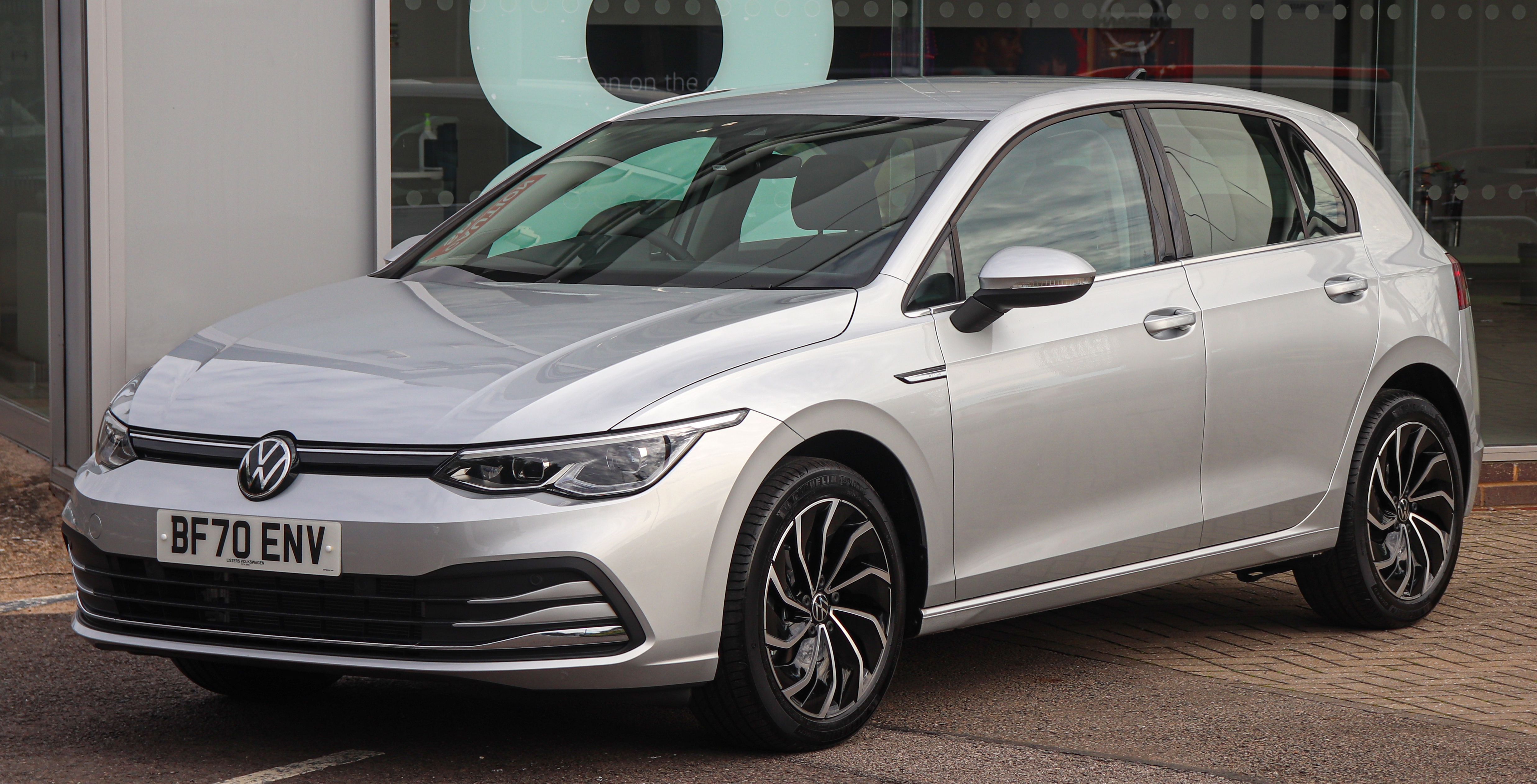
Volkswagen Golf
"...ns. If you've driven any recent VW, ID3, ID4, the Golf Mk8, you'll know what I'm talking about. The hapt..."
The Volkswagen Golf is a small everyday car, usually in a hatchback body style. The podcast mentions it because it’s a familiar baseline for how Volkswagen controls and buttons feel in newer cars. It’s mainly about how easy and comfortable the interior is to use.
The Volkswagen Golf is a compact hatchback that’s widely known for being practical while still offering a refined driving experience. In this podcast, it’s brought up as a reference point for how recent Volkswagen interiors feel and operate, especially the “haptics” and control layout. That makes it relevant when discussing usability and the day-to-day experience of newer VW models.
capacitive touch panels
"The haptic sliders, the capacitive touch panels, the volume slider that nobody ever liked."
Capacitive touch panels are touch controls that work by sensing your finger electronically. They’re common in modern dashboards, but some drivers prefer real buttons because they’re easier to use without looking.
Capacitive touch panels detect input based on changes in electrical charge when your finger approaches or touches the surface. In car interiors, they’re used for controls like climate or media, but they can be controversial if drivers prefer physical buttons.
physical rock switches
"VW have never heard the have heard the customer feedback and the ID Polo has an actual physical rock switches under the as rock switches under the top stream for aircon and heating..."
Rock switches are real physical switches you move by hand, like a small lever that rocks between settings. The speaker is saying the ID Polo goes back to controls you can feel and use more easily.
“Rock switches” are physical toggle-style switches that pivot or rock between positions, typically used for functions like airflow direction or climate settings. The speaker contrasts them with touch/haptic controls to emphasize a more traditional, tactile user interface.

Citroën ë-C3
"The Renault 5 and the Citroen EC3 are both already on sale at similar money. Both have momentum but the ID Polo arrives with the name People Trust."
The Citroën EC3 is another electric car that’s already on sale. The host brings it up to show that if you want an EV right now, you’re not waiting only for the Volkswagen.
The Citroën EC3 is cited as an EV that’s already available in the UK at a similar price to the upcoming Volkswagen ID Polo. The host uses it to show that buyers shopping now have other options besides VW’s delayed launch.

Volkswagen Polo
"The current Polo Petrol Polo has sold over 18 million units globally since 1975. That heritage matters more than it should but it does matter"
The host talks about the Volkswagen Polo to explain VW’s strategy. They’re using the Polo name’s long success to make the new electric ID Polo feel more familiar and trustworthy.
The Volkswagen Polo is used as the heritage anchor for the ID Polo strategy, with the host noting the Polo’s long-running sales history. The point is that VW is leveraging brand familiarity from the Polo name to make the EV feel like a mainstream continuation rather than a leap into the unknown.
locking diff
"VW's first electric hot hatch with proper GTI hardware including a locking diff. We'll come back to that when there's a UK test car."
A locking diff helps the car keep both wheels turning together when traction is uneven. It can help the car get grip better, especially if one wheel is on a slippery surface.
A locking differential (locking diff) is a drivetrain feature that forces the left and right wheels on an axle to rotate together. That can improve traction when one wheel loses grip, which matters for a performance-oriented hot-hatch setup.
GTI hardware
"VW's first electric hot hatch with proper GTI hardware including a locking diff."
“GTI hardware” means the performance parts and setup that make a car feel like a GTI. In this case, the host says the electric hot hatch will include real performance-focused components, not just a badge.
“GTI hardware” refers to the performance-focused parts and tuning associated with Volkswagen’s GTI identity—typically including suspension, brakes, and traction-related components. Here, the host specifically ties it to the upcoming electric hot hatch’s drivetrain/traction equipment.
Solaracap HPI
"New data from Solaracap HPI published this week shows three-year old used battery electric vehicles rose 1.2% in May 2026."
Solaracap HPI is the organization providing the numbers the host uses about used EV prices. They track how much used electric cars are worth over time.
Solaracap HPI is cited as the data source tracking used-car values for battery electric vehicles. The host relies on its monthly reporting to claim used EV prices rose 1.2% in May 2026.
used EV price floor
"The shift suggests the used EV price floor has been reached. This is genuinely new data published this week."
A “price floor” is the lowest level prices seem to reach before they stop dropping. The host says new data suggests used electric car prices have hit that low point and started to rise.
A “used EV price floor” is the idea that used EV prices stop falling below a certain level because demand and supply balance out. In this segment, the host argues the data suggests that floor has been reached, since values rose for the first time in months.
trade value
"Solaracap HPI tracked the trade value of used cars at three years and 60,000 miles."
Trade value is basically what a car is worth when it’s being bought/sold through the market channels, not the sticker price you’d see as a retail buyer. The host uses it to judge whether used EV prices are stabilizing.
Trade value is the price a car is worth in dealer-to-dealer or wholesale-style transactions, rather than the retail price a buyer pays. The host uses it as the metric Solarcap HPI tracks to infer a “used EV price floor.”
used EV values
"around £202 on a typical car. That doesn't sound like much but it's the first month on month uplift in EV values for eight months."
This just means what used electric cars are selling for. The host is using it to show whether prices are going up or down.
“Used EV values” refers to the market prices that pre-owned electric vehicles trade for. The segment treats these values as a headline indicator of how supply, demand, and depreciation are changing over time.
fleet turns
"Prices crashing as fleet turns flooded the supply chain. To put it in context, the average used EV in the UK now sells for around £20,000."
This means companies are replacing their cars and selling the older ones. If lots of cars hit the used market together, prices tend to drop.
“Fleet turns” refers to when companies rotate their vehicle fleets—selling off older cars and replacing them with newer ones. When many fleets do this at once, it increases used-car supply and can push prices down.
BEV
"Used BEV prices are roughly down 46% in three years. That is an unprecedented in the post-war UK market."
BEV means a battery-electric car. It’s an EV that doesn’t use petrol—its power comes from a battery you charge.
BEV stands for Battery Electric Vehicle—an EV that runs only on an onboard battery and electric motor, with no gasoline engine. In the used market discussion, BEV prices are specifically tracking how battery-only cars are depreciating and selling.
running cost gap
"Three, and this one matters, the running cost gap is real and well documented. If you can charge at home, a used E2026 costs you around £2 per mile..."
It means the ongoing cost difference to keep the car moving. In this case, it’s comparing what you pay to charge an EV versus what you pay for petrol.
The running cost gap is the difference in ongoing costs between two powertrains—here, charging electricity for an EV versus buying gasoline for a petrol car. The host frames it as a major reason used EVs can be attractive even after depreciation.
off peak tariff
"If you can charge at home, a used E2026 costs you around £2 per mile in electricity on an off peak tariff. A petrol car at current pump prices is around £15 per mile."
It’s an electricity rate where power costs less at certain times of day. EV owners try to charge during those cheaper hours to lower their charging bill.
An off peak tariff is an electricity pricing plan where the utility charges less for power used during certain nighttime/low-demand hours. For EV owners, it can dramatically reduce the cost per mile because home charging is timed to those cheaper hours.
battery degradation
"There is a but and the but is important. Battery degradation, the single biggest objection in our comment threads on the used EV side is how do I know battery is still good?"
Battery degradation means the EV battery slowly wears out. Over time it can hold less charge, so the car may not go as far as it used to.
Battery degradation is the gradual loss of a battery’s capacity and/or ability to deliver power over time and with charging cycles. It’s a key concern for used EV buyers because it can affect real-world range and long-term value.
state of health
"state of health was 45%. Even eight to nine years old, the median was 85%, well above the 70% [1315.1s] floor that manufacturers are legally required to guarantee."
State of health is a way to measure how worn out an EV battery is. If the number is high, the battery can still store a lot of energy like it did when it was newer.
State of health (SoH) is a battery metric that estimates how much usable capacity a traction battery has left compared with when it was new. For EV shoppers, a higher SoH generally means the battery has degraded less and should deliver better range over time.
Geotab
"We've done our deep dives on [1327.5s] this and the Strathclyde, Geotab and the recurrent studies all reach the same conclusion."
Geotab is mentioned as one of the organizations involved in studies about EVs. Here it’s used to support the point that EV batteries usually don’t degrade as fast as people fear.
Geotab is referenced as a source behind studies used to assess EV battery aging and real-world battery behavior. In this segment, it’s part of the evidence chain supporting the claim that EV batteries age less dramatically than many people assume.
DC fast rates
"So you can see some club rates on charging at the moment. These are the DC fast rates. [1385.6s] We're not showing the AC, but I can often do show AC charging rates as well."
DC fast charging is the quick-charging type you use on road trips. It can add a lot of energy in less time than slower home charging, because it delivers high power directly to the car.
DC fast charging uses direct current (DC) and high power to recharge an EV much faster than typical AC charging. When people talk about “DC fast rates,” they’re usually referring to the charging power available at those stations, which strongly affects how quickly you can top up on a trip.
GridServe
"Okay, how many new motorway charging hubs is [1400.7s] GridServe opened in 2026? GridServe delivered its fastest ever first quarter for new EV [1407.8s] charging infrastructure in Q1 2026, opening or expanding 12 electric superhubs across the UK"
GridServe is a company that runs EV charging stations in the UK. In this segment, they’re used as an example of a network that’s rapidly adding lots of fast chargers.
GridServe is a UK charging network operator building high-power charging sites branded as “electric superhubs.” The episode cites GridServe’s expansion pace and number of high-power charging bays as evidence that UK charging infrastructure is growing quickly.
electric superhubs
"opening or expanding 12 electric superhubs across the UK [1414.2s] and adding a total of 120 new high power charging bays to its electric highway network."
An “electric superhub” is a big charging stop with lots of fast chargers. The goal is to make road-trip charging easier by having more bays in one place.
“Electric superhubs” are GridServe’s branded high-capacity charging locations intended to function like major motorway charging destinations. The key idea is scale: multiple high-power bays designed to reduce queueing and support fast charging for longer trips.
Folkestone M20
"120 new charging bays from Moto Kinross in Scotland to Folkestone M20 near the channel tunnel. [1440.7s] That's their fastest ever start to a year."
This is a specific spot on the UK motorway network near Folkestone. The point is that new fast chargers are being added along major driving routes.
Folkestone M20 refers to a motorway location near the M20 route in the UK, used here as an example of where new charging bays are being added. Mentioning specific motorway corridors highlights how charging is being targeted toward travel routes rather than only urban areas.
UK charging infrastructure is failing
"It matters for a couple of reasons. One, [1446.7s] it's a direct counter to the narrative that UK charging infrastructure is failing. [1450.8s] The headline numbers up from the Department of Transport are now 92,000 public charges"
The speaker is pushing back on the idea that EV charging in the UK isn’t improving. They follow up with numbers showing new chargers are being added quickly.
This is the episode’s stated counter-narrative: the claim that UK EV charging infrastructure is not keeping up. The hosts then use charging statistics and new hub openings to argue against that idea.
DC driver
"And three, the long-distance CV driver, this is where the experience genuinely improves. The new sites use 400 kilowatt capable charges."
They’re talking about commercial drivers who travel long distances for work. The point is that faster charging makes EVs easier to use on those schedules.
“Long-distance CV driver” is shorthand for a commercial vehicle (CV) driver doing routes where time matters. The segment is arguing that faster charging infrastructure makes EVs more practical for that kind of work.
400 kilowatt capable charges
"The new sites use 400 kilowatt capable charges. The latest cars can pull 100 miles of range in under 10 minutes."
This means the charger (and usually the car) can handle very high charging power. That can make charging faster, especially for quick top-ups on trips.
“400 kilowatt capable” refers to the charging hardware and/or the vehicle’s ability to accept very high power from a DC fast charger. Higher charger power can shorten charging time, but the car may not hold peak power the whole session.
100 miles of range
"The new sites use 400 kilowatt capable charges. The latest cars can pull 100 miles of range in under 10 minutes."
Range is how far the EV can go on electricity. Here, they’re saying a quick fast-charge stop can add enough driving distance for about 100 miles.
“Range” is how far an EV can drive on a full charge (or how far a given charging session adds). When the host says “100 miles of range in under 10 minutes,” they’re describing how much distance the car can regain during a fast-charge stop.
EVED paper mile tax
"Question two, are the pragmatist CVs cheaper to own than petrol, even with the new EVED paper mile tax coming in 2028? Yes, EVED adds 3 pence per mile to an EV from April 2028."
This is a proposed UK tax that charges EV owners based on how many miles they drive. The host says it would add a small amount per mile starting in 2028.
EVED is a UK policy concept for taxing electric vehicles based on miles driven (“paper mile tax”). The host claims it adds a per-mile charge starting in April 2028, which changes the cost comparison versus petrol.
fuel duty
"Compare that to fuel duty on petrol, which is roughly 5-6 pence per mile, depending on car efficiency."
Fuel duty is a tax added to petrol at the pump. The host uses it to estimate the tax cost per mile for petrol cars.
Fuel duty is a UK tax charged on petrol (and diesel), typically expressed per unit of fuel. Comparing fuel duty “per mile” helps estimate how much tax contributes to the cost of driving a petrol car versus an EV.
depreciation curve
"From here, the depreciation curve begins to flatten."
Depreciation is how quickly a car loses value. If the curve flattens, the car starts losing value more slowly, which can make it a better buy.
A depreciation curve describes how a vehicle’s value drops over time. When the host says the depreciation curve “flattens,” they mean price declines slow down, which can make used EVs hold value better than before.
boot
"On paper, yes. Bigger boot at 435 litres."
The boot is the trunk area at the back of the car where you put luggage. Bigger boot space usually means you can carry more stuff.
In car terms, the boot is the storage compartment at the rear of the vehicle. When the host cites boot space (e.g., 435 litres), they’re talking about how much luggage/cargo you can carry.
on-street charger
"One, a lamppost or an on-street charger from Chargy, Ubertricity or connected curb."
An on-street charger is a public charging spot near where you park. It’s especially useful if you can’t charge at home.
An on-street charger is an EV charging point installed on public streets for drivers who don’t have a driveway. The host lists providers and emphasizes using smart charging overnight to take advantage of cheaper electricity rates.
off-peak rate
"Smart charged overnight at the lower off-peak rate, typically 45 cents per kilowatt hour."
Off-peak rate just means electricity is cheaper at certain times of day, often overnight. If you charge your EV then, you pay less per unit of electricity.
An off-peak rate is an electricity pricing period when power is cheaper, usually late at night or during low-demand hours. EV charging at off-peak times can significantly reduce your total charging cost compared with charging during peak hours.
destination charger
"Two, a destination charger at a supermarket while you shop, often around 50 pence."
A destination charger is a charger you use while you’re parked somewhere for a while, like shopping. It’s usually meant for convenient, lower-stress charging rather than quick motorway top-ups.
A destination charger is an EV charging station located at places where you spend time—like supermarkets or hotels—so you can charge while parked. These are often priced and scheduled differently than motorway rapid chargers, and can be cheaper for everyday charging.
rapid charging
"Rapid charging on motorways is the most expensive option."
Rapid charging is the faster way to charge an EV. It’s great when you’re traveling, but it usually costs more than slower charging at home or while shopping.
Rapid charging refers to higher-power EV charging that can add significant range in less time than standard charging. The host notes that rapid charging on motorways is the most expensive option, reflecting the convenience premium.
Request an Explanation
Heard something you'd like explained? We'll add it to this episode.
Sign in to request explanations for terms you heard.
Want to learn more?
Browse our glossary for plain-English explanations of automotive terms, jargon, and concepts.
Help improve this episode
See something that's not quite right? Our annotations are AI-generated and can sometimes miss the mark. Click the flag icon on any annotation to suggest a correction.
1 community members have helped improve this episode.