If you're the purchasing manager at a manufacturing plant, you know having a trusted partner makes
all the difference.
That's why hands down you count on Granger for auto-reordering.
With on-time restocks, your team will have the cut-resistant gloves they need at the
start of their shift.
And you can end your day knowing they've got safety well in hand.
Call 1-800-GRANGER, click Granger.com or just stop by.
Granger for the ones who get it done.
This is America on the Road, named Best Radio Show by the International Automotive Media
Conference and now in its 33rd year on the air.
Thanks for being with us.
This is, we bring you the latest automotive information from around the world.
I'm Jack Neerad.
With me is guest co-host Matt DeLorenzo.
Matt, you just got back from Europe.
I'm curious about how your trip was.
It was terrific.
We did a little visit at Munich and then we did a Danube River cruise and ended
up in Budapest for a couple of days.
So, let's pick that.
Love that.
Yeah, well, I went to Detroit, Cleveland, Pittsburgh, so a little bit different than
that.
Plenty of news to talk about this week.
Ford's Model T moment came and went this week.
We'll have our comments on what we heard and saw and what we didn't.
We'll tell you all about that coming up.
And General Motors had a debacle with its crew's self-driving vehicle division,
but now GM execs have decided to give autonomous driving another go.
There's a big shift this time around.
I, for one, find it very surprising.
Are you surprised by their new tack on this, Matt?
In a way.
You know, the way that they're couching it as an extension of supercruise makes
a lot of sense, but yeah, I was surprised.
Yeah, well, we'll talk about that at length in the next segment.
Mercury Insurance has just released its annual list of vehicles that are the most
affordable to insure and we'll have all the details for you on that.
And there's good news from Dodge about one of our favorite vehicles, the Dodge
Durango, which was our constant companion during our recent Made in America tour.
We'll tell you all about the recent developments for 2026 coming up.
So we have a lot to talk about this week.
Is there a story you find most interesting, Matt?
I think the Model T thing moment is going to be a big talking point for the future.
Yeah, in more ways than one.
America on the Road is brought to you by drivingtoday.com.
The publisher of my latest book, Only One Thing Stays the Same and Mercury Insurance.
If you're looking to save some money, you should switch to Mercury for your auto and home insurance.
Californians save an average of $670 with Mercury.
So imagine how much you could save.
Got a quote today from drivingtoday.com slash auto insurance.
That's drivingtoday.com slash auto hyphen insurance.
Well, as you long time listen to this show, no, Matt is the author of How to Buy an
Affordable Electric Car, a tightwad's guide to EV ownership.
We've been reviewing cars for years and we like to get together to talk about cars.
Typical co-host, Chris Teague, is off this week.
Matt, what is your test vehicle for this week?
It's going to be the all-electric Ioniq 9 from Hyundai.
It's a three-row, full-size SUV.
Very interesting.
I think it's interesting and I can't wait to hear your take on it.
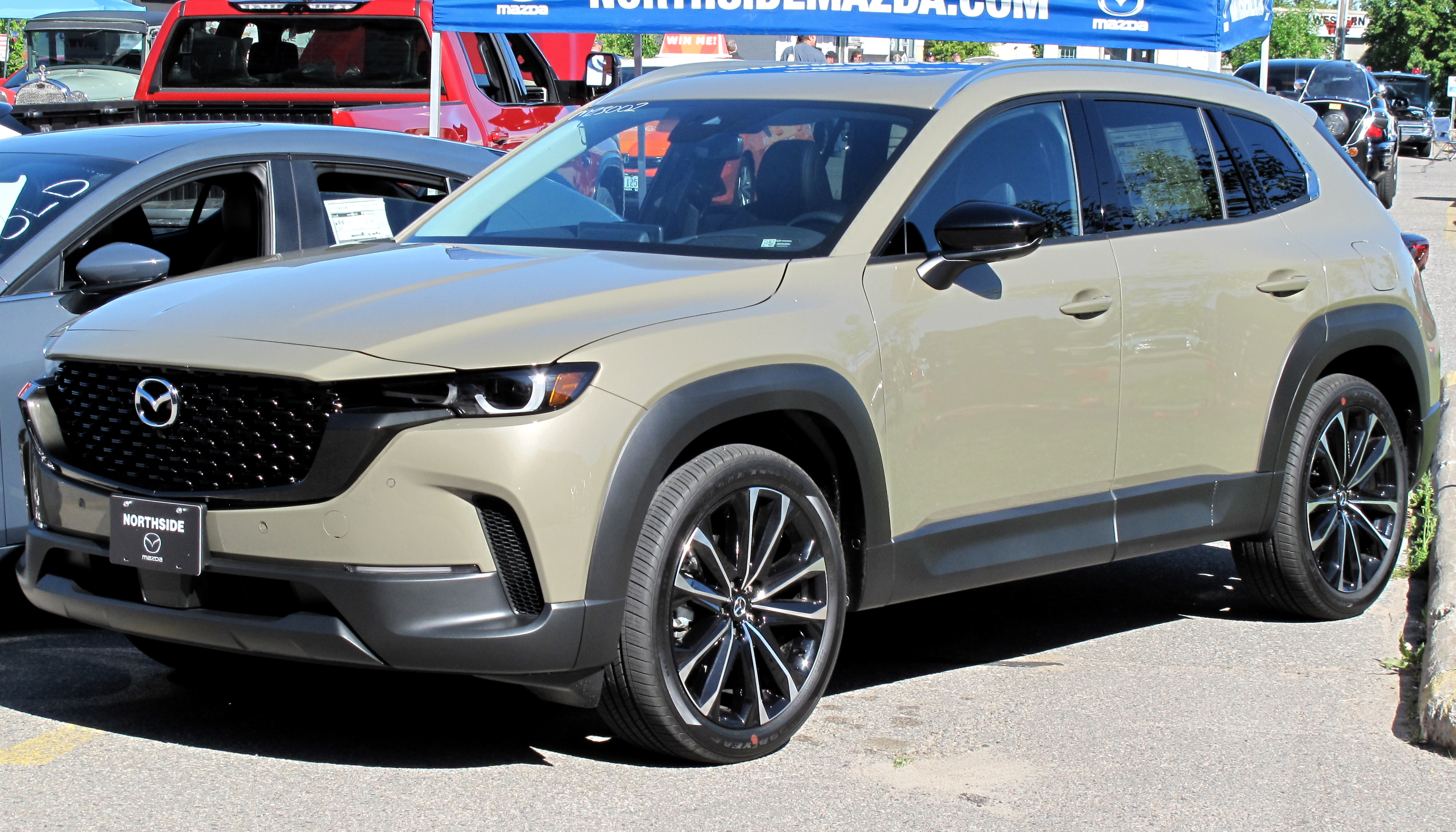
Matt, my test vehicle this week is the 2025 Mazda CX-5 Carbon Edition.
It's one of the most cost-effective vehicles I've driven this year.
So a lot coming up.
Stay with us and we'll be right back right here on America on the Road.
Welcome back to America on the Road with guest co-host Matt DiLorenzo.
This is Jack D. Redback with you.
Chris Teague is off this week.
I think he's fetching a press car in Boston or somewhere.
So we're lucky to have Matt with us.
It's always a pleasure to have Matt with us and Matt, there was something
that was touted to us a week or so ago, Ford's Model T Moment.
Their $5 billion EV, as it turns out, EV, Gamble, I guess, is a way to describe it,
where they did a big press conference
and made sure that everybody who was anybody who was paying attention
to this listening in and all that.
And I don't know about you, but I had a particular reaction to this.
I'm kind of curious as to your reaction before I spoil the pot by telling mine.
Well, you know, they've already wasted $5 billion on electric vehicles.
So to commit another $5 billion more and to sort of reinvent this thing.
I mean, there's some good elements in terms of the assembly line process.
But we've heard this thing for years about the skateboard
and using common architecture for different vehicles.
There's nothing new here and it's kind of repackaging
and they're promising a $30,000
crew cab pickup in two years when they already have the Maverick.
You know, I I'm not inclined to give them a pass on what they.
Well, yeah, I'm entirely with you.
I think this thing fell flat.
Something big was touted.
They never even showed us the vehicle, not even a rendering anything.
You know, I spent an hour of my my life that I'm never going to get back
watching, you know, a guy I liked him Farley talk.
But then the governor of Kentucky, you know, gave his kind of speech.
And, you know, there were plenty of people from the various
workers groups.
UAW was heavily represented in this presentation,
but not much in the way of product presentation.
And when you're promising something as earth shattering as the Model T,
I think maybe there's got to be a little more beef there.
Yeah. And again, the affordability is an issue.
And the fact that the target price of this thing is more than the Maverick.
So, you know, the Model T didn't come out costing more than other cars.
It costs less.
Now, now this may this electric may cost less than other
electrics on the market, but it's certainly not going to be the lowest
price vehicle on the market.
So for it to lead some sort of EV revolution that may or may not happen,
I'm I'm highly skeptical.
Yeah, I mean, I also wonder at the timing of this.
I mean, I think you and I have talked about, I think already, maybe we
reached peak EV, at least for the time being, because, you know,
certainly there's a giant headwinds against EVs these days, including
the the end of the tax breaks for EV purchase.
I just I'm hard pressed to see.
Again, as you mentioned, what was new here, we've seen so much of it
reminded me of General Motors Altium announcement that was three or four years
ago, right?
I mean, it's kind of the same, same stuff, but, you know, maybe packaged
a bit differently, but not a little bit further.
Jack, remember Saturn?
Yeah, it threw it up.
Yeah, I do remember Saturn.
Yeah.
And Saturn did meet with limited success when it when it came out.
It was sort of revolutionary.
But again, the cost structure and trying to compete with low cost
cars from other countries.
And again, this is where I think tariffs really come into play, where
I hear a lot of complaining out of Detroit about the tariffs, when in
fact the 25 percent tariffs on trucks has protected that goldmine for them.
Yeah, forever and ever had these other tariffs all along.
Maybe they could have a sustainable, affordable small car on the market today.
But, you know, they did it to themselves.
They exported a lot of their chain supply chains and things.
Getting that stuff back is going to take time and it's not going to be cheaper.
Right.
Right.
I mean, just getting back to the car, what we heard about the car, it's kind
of more interesting or telling what we didn't hear about the car.
You know, the range of the vehicle, charge times about the vehicle.
There's a lot of things about it that if this was going to wow us,
I think there should have been more.
I'm just I kind of amazed at what I saw as this unfolded in front of me.
Yeah, I agree.
I think they should have had some sort of concept of drawing something other
than that little changing icon showing like SUV and a pickup truck and whatever.
But it's still and and for it to be happening in a two year time frame
is also a head scratcher because all new vehicles, even if they're electric,
still take at least three years, as far as I know, to bring the market.
And I I think this thing's going to slip as well, which isn't great
for helping their credibility on on these issues.
No, I just don't know why they came out with this at this point.
I mean, it could be exciting.
I just don't think it was as exciting as it was suggested it would be.
Let's put it that way.
Right.
I wish them luck, but it's no revolution.
Right.
Well, here's another bit of a head scratcher, too.
General Motors is putting autonomous driving back into the fast lane.
This time it's aiming for consumers, as opposed to ride hailing.
You know, it shut down its cruise robotaxi unit last year amid,
you know, a great deal of controversy and problems.
And this and that, including, I think, some injuries in the San Francisco
area, some bad bad stuff.
Now they're putting together a new effort, and it's going to focus
on self-driving for consumers, which strikes me as a lot harder
than for a robotaxi, right?
I mean, a robotaxi, you have some kind of controlled environment
in which you're operating in this situation.
You could be operating the vehicle anywhere, right?
Well, you know, I think one of the things that I heard
from this announcement was the fact that they're looking at it
as an extension of their super cruise program.
So I think the robotaxi thing was highly ambitious, very expensive
to do, and something that's kind of outside of their core business.
Whereas I see they're kind of dragging autonomy back in
closer to their core business, which is building cards for consumers.
And if they can build on what seems to be a successful super cruise
program, it makes sense because it'll cost less than the cruise project.
And it's an extension of stuff that's going on already in-house.
So it's incrementalism, I call it.
Yeah, OK.
That makes some sense to me, and I'm glad you put that into perspective.
Let's talk about Mercury's list of the most inexpensive vehicles
to ensure quickly.
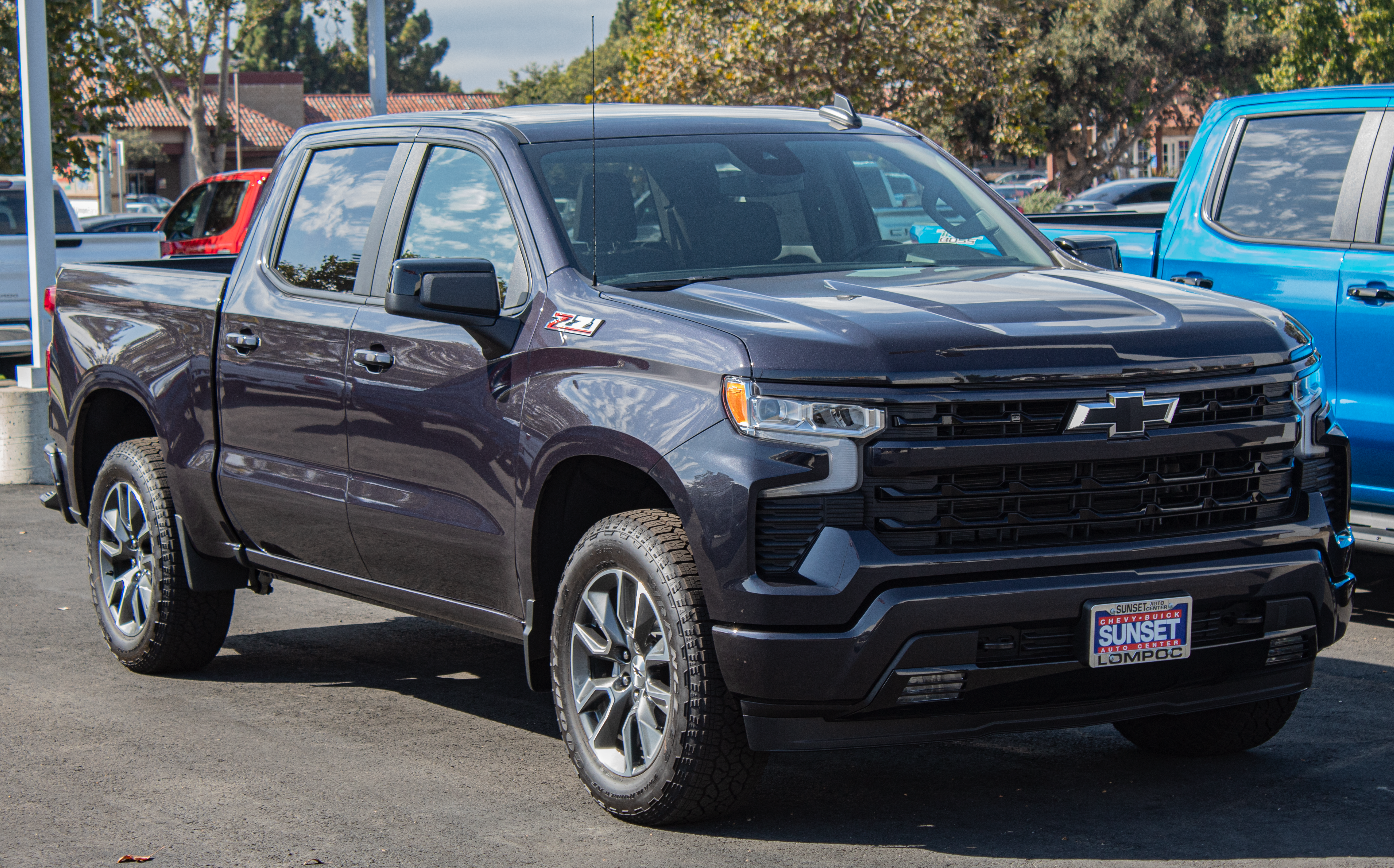
I mean, Chevrolet Colorado LT tops the list of trucks
than the Silverado C3500.
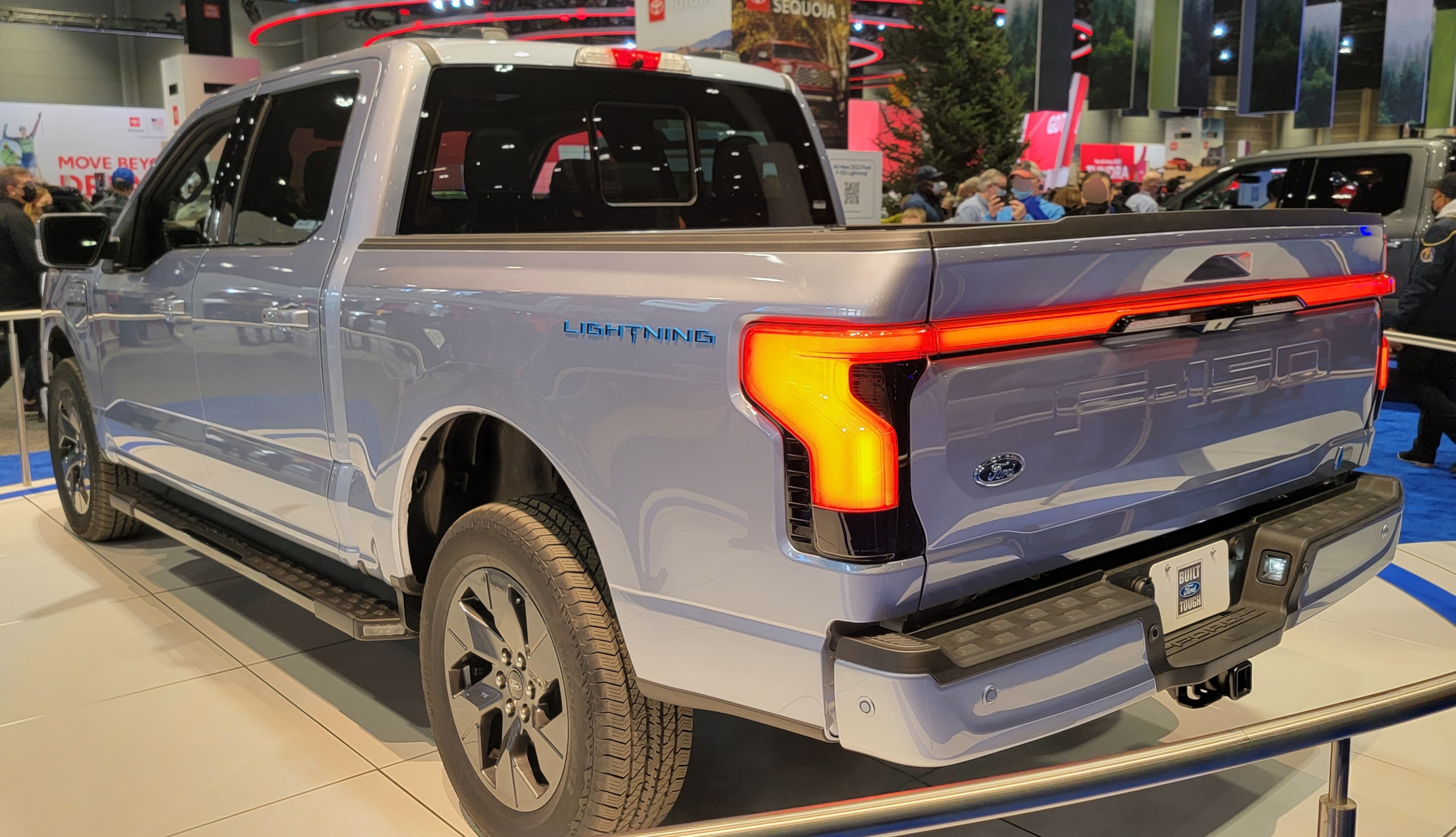
Ford is there with the Maverick, aforementioned Maverick,
the Ranger pickup, the F-150, and F-350 Super Duty.
Those are all fairly clear ones.
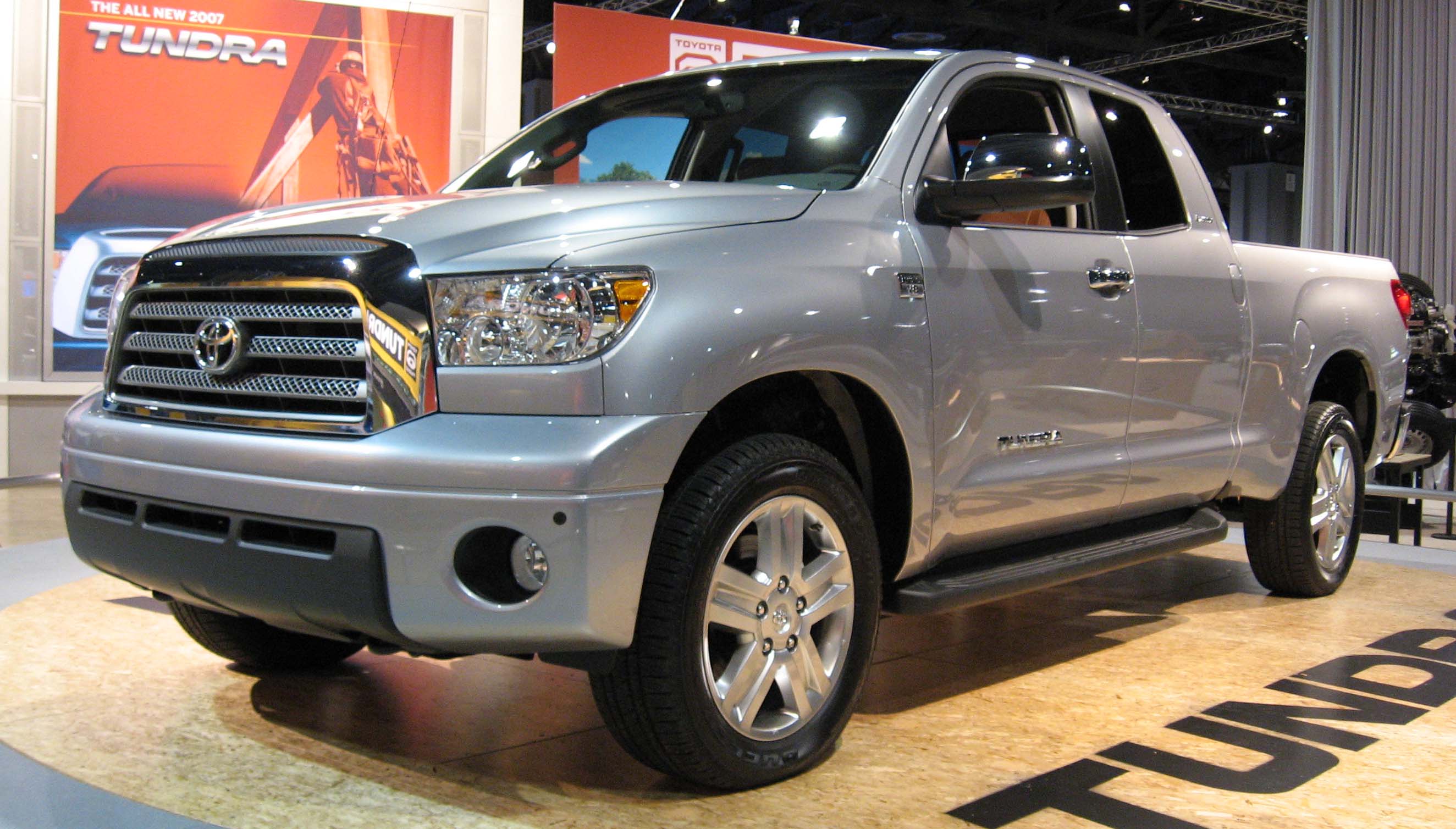
The Hyundai Santa Cruz is on the list, as is the Toyota Tundra and the Tacoma.
So that's covered up pretty well.
Hyundai Santa Fe is the ranked as most affordable to ensure among SUVs.
And several Hondas are on the list.
It's kind of interesting.
A lot of people, I don't think, pay much attention to how much it costs
to ensure a vehicle before they buy it.
But it's an important part of your cost over time, isn't it?
It's a great thing to look at.
I mean, it's part of your total cost.
And the fact that they're putting this list out there
to give you a heads up is really valuable consumer information.
Right.
Here's another piece of consumer information I think is interesting.
Dodge Durango is going to be all V8 all the time coming for 2026.
They're they're dropping the V6 engine, which had some issues, frankly.
And I love the fact of what they're doing here.
I think they're making Dodge Dodge, right?
And I think that's kind of a cool thing to do.
You know, this is more evidence, too, that kind of relaxing
the fuel economy standards, getting rid of the fines.
This will allow people to buy vehicles that they want to buy.
It'll allow Stilanus to build vehicles that they need to survive.
And I think it's a win-win for for Dodge and Stilanus.
Yeah, I love all of these things.
The Dodge, the Durango RT is going to be priced around $43,000
with a big ramp and stop and V8.
So a lot of a lot of stuff there like that a lot.
And of course, the Hellcat we had is just terrific
and also very effectively priced.
Remind me, Matt, of the vehicle you're testing.
I'm driving I've driven the Hyundai Ioniq 9
electric three row SUV and I will be testing the Mazda CX-5 carbon edition.
So stay with us for that and we'll be right back right here on America on the road.
Welcome back, everybody, to America on the road.
Jack Knee-Red with you, along with guest co-host Matt DiLorenzo.
We always love having Matt on the show at his road test time.
And we have a couple, I think, very interesting vehicles for you.
We try to have interesting vehicles.
I mean, this is an entertainment show after all.
But Matt, you were driving a three row electric SUV.
Tell us about it.
Yes, I was behind the wheel of a Hyundai Ioniq 9,
which is three row full size SUV,
all electric, all wheel drive.
I had sort of the mid trim level SEL and it starts at about $66,000.
And it offers a range of 320 miles, which is quite good.
You can get a base, just a two wheel drive model,
215 horsepower, that'll go 335 miles.
Or if you want the more performance version,
that'll go 311 miles, but you get over 400 horsepower.
The one I had had 300 horsepower, which was more than enough
for merging, getting on the freeway and driving around town.
It's an interesting looking vehicle, I have to say.
When you when you look at it from the front,
it looks like a regular SUV.
Inside kind of has the same SUV-ish look.
But you get around to the back and it looks like a spaceship.
It has a kind of a long roof that just goes straight down
in a vertical lift back.
That's all glass.
And it's got this really kind of cool LED lights
that make a horseshoe effect around the top of the around
the roof and the top of the liftgate.
So I think some people think that's too strange for me.
Other people go, that's really cool.
Right. So I like the look.
I like driving it.
And it had a couple of really interesting features.
You could adjust the
regen using the paddles and go to one one pedal driving.
And I always wonder, you know, I think when I have
like a one pedal thing going, I lift, I go,
do my brake lights come on?
You know, because you're not.
Yeah, good question.
I always wondered that, too.
They have that they have a little avatar
in the middle of the dash.
And I played with this thing.
And if you're on zero or one and you lift,
the lights won't come on till you hit the break.
But if you're in any other regen mode, when you lift,
when you lift and on a little icon, your brake lights go on.
So it's to me, it was reassuring.
And that was like a big, that was a big deal.
Little things.
Well, nuance does mean a lot in cars these days.
That's for sure.
Yeah. Yeah.
So overall, I was I was I was very impressed with the vehicle.
Now, I will say I did take it to an EV Go station to
to recharge before they came to pick it up.
And I on DC charging, it took 45 minutes
to get 85 percent charge, which got it back up over 300 miles.
It cost almost 60 bucks.
I was paying 73 cents a kilowatt hour
for the recharge, which is triple what I pay at home.
So that was like premium gas, right?
Thinking you're going to save gas, you know,
electrons can cost a lot, especially if you use public
charging. Right. Right.
One of the things I found about the Ioniq nine is the interior space.
It doesn't seem all that big exterior wise.
But because of the architecture, the fact that it's an electric,
I mean, there's a lot of interior space, isn't there?
Yeah, especially in the second and third rows.
I think that long roof helps those two rows feel a little bit roomier.
You can get these really cool captain's chairs that have like
footrest or leg rests that come out.
It really is a comfortable vehicle.
It's almost mini van.
It is. Yeah.
They have they have a front console that will slide back and forth
or you can take it out to have that old pass through effect.
That you would get in a minivan, which is kind of odd because
their sister division, Kia, they have a minivan,
the carnival and the cockpits more like an SUV.
So it's kind of a roll reversal here.
But I kind of like it.
I think there's a lot of little innovation and surprise
and delight features that have been missing from vehicles lately.
Yeah. And what was the price?
What was the price?
And you probably have talked about it.
So the one the one I had was the midline.
It was like sixty six thousand dollars, which is, you know, a little spendy.
But for a full size SUV, you know, if you're if you're in like a
traverse, you know, a gas one traverse, you probably spend as much.
The cheapest one comes in at about fifty nine thousand
and the most expensive one, which is the calligraphy and the performance,
is about seventy six thousand dollars.
So, you know, as far as electric SUV goes, it is competitively price.
Yeah. As an electric SUV, as a full size SUV.
Well, it's it's no Chevy Tahoe.
That's that is not it is not I was driving a vehicle that
we complain a lot about vehicles being so expensive these days.
I think the Mazda CX five carbon edition that I was driving
is one of the most cost effective vehicles
I've driven this year and there's a lot to like about it.
I think in a lot of ways this is a premium SUV without a premium price.
There are things about it that are not particularly premium,
but the the premium stuff is the exterior styling the interior.
We had red leather interior and this thing that makes a statement.
Certainly a lot of safety items.
Sandy and I, my wife and I had a chance to drive the six five
on a round trip about 300 miles to eastern San Diego County.
We attended a wedding down there kind of sweltered in the wedding
and then came back, but this turned out to be a great vehicle to do that in.
You know, plenty of room for our luggage, plenty of room for another couple
to ride to the rehearsal dinner with us and all that kind of stuff.
So we like that.
It's good looking vehicle, 19 inch black alloy wheels kind of set it off.
It has, you know, good looking black power mirrors, integrated turn lamps,
rain sensing wipers.
It has a lot of premium features, I think, Matt.
I mean, what's your kind of overall take on CX-5 and the carbon addition in it specifically?
Well, I like that vehicle and I thought, you know, when they brought out the CX-50,
that that it wasn't going to be long for the world.
But obviously it it it meets a need within the Mazda line.
They've kept it in the lineup.
And I think, you know, the size is is fairly comparable to the CX-50.
But again, the price is not.
And it still comes across as a premium vehicle.
It's very comfortable to drive.
It's very practical and it's stylish.
I mean, really, Mazda has had a way with their exterior styling of making it look
and feel premium.
Good stuff, too, like the power lift gate, power moon roof.
I mean, those are in a lot of ways.
This is like a luxury brand vehicle, I would say, maybe under the hood,
and not necessarily a luxury brand in that it had a two and a half liter inline
four cylinder engine.
This was not turbocharged.
It's normally aspirated.
I kind of like that, actually.
187 horsepower, 185 pound feet of torque, not tons of power, but adequate,
more than adequate power.
And I think most people would find this absolutely fine in terms of acceleration.
Has a six-speed automatic transmission, which is kind of a Mazda idiosyncrasy
when we're seeing eight, nine, ten speeds from a lot of other people.
It has a sport mode.
And it was fun to drive.
I mean, we were driving two-lane, you know, zoop, zoop, zoop, kind of twisty two-lanes
there in eastern San Diego County, pretty significantly, and had a great time with it.
So again, I think the performance is more than adequate.
All-wheel drive is standard.
Good suspension tuning, which we expect from Mazda.
Fairly good fuel economy.
828 miles per gallon combined.
Not blowing you away, but plenty of range, 428 miles of range on a full tank of gas.
So I like that.
And it has a cylinder deactivation, too, which works well for fuel economy.
And again, the interior, I like the fact that it has eight-way power seat and a power front
passenger seat, which you don't necessarily see in vehicles at this price range.
And I should mention the price.
It was around $33,000.
So I think that's pretty darn cool.
Your overall take, Matt.
Yeah, I agree.
I think affordability is key here.
And it is a usable size.
You know, there are some of the, there are certainly smaller SUVs out there that aren't
as premium that cost just as much.
So I think this is really a nice niche that they've landed in, in being able to leverage
a lot of the premium stuff they use on their other vehicles and put it in the CX-5 and then
make a compelling case for it with a great...
Well, as you mentioned, it's long on the tooth, but they fill it with stuff in terms of safety,
blind spot monitoring, of course, lane departure, lane keeping assist, rear cross traffic
alert, which not all vehicles in its price range have.
So smart brake support as well, radar cruise control, I got to try that on the freeway
is out there and then it's 10 and a quarter inch color display infotainment system worked
pretty well.
It has some Mazda idiosyncrasies to it, but they're sorting that out.
I think this is a heck of a vehicle at the price of, again, I think our price as
tested, I'm going to look at it right here, it is $33,185.
I think these days that's pretty darn good.
You know, one of the things that they do is they haven't been overtaken with touchscreen
mania.
So I'm a little bit more comfortable.
Some people complain a little bit about the rotary control, but I think it's a little
bit more intuitive to use than some of these more heavily touch screen driven schemes
that you get in some of these.
Well, and if you're using Apple CarPlay, which we use frequently, you can use it
as a touchscreen, so that worked fairly well.
What you don't have to, you can use the controller there, which used to be kind of the state of
the art.
Some people, again, might complain about the infotainment system, but I think it worked
quite well for us and overall the vehicle worked quite well for us, a good blend of
style technology and fun to drive.
Fun to drive in something that doesn't cost you the roof.
I think that I like that a lot.
And when we come back, we will have a special guest.
His name is Frank Hanley.
He is JD Power's Senior Director of Auto Benchmarking.
He's going to be talking about the recently released initial quality study.
So if you care about what vehicles are high quality, well, you will hear it from the
horse's mouth from Frank Hanley at JD Power, so stay with us for that and we'll be
right back.
Hi, I'm Jack Arnie Redd and I'd like to tell you about my newest crime novel, Only One
Thing Stays the Same.
In a style reminiscent of James M. Kane and Jim Thompson, two of my writing idols, the
book chronicles of blue collar workers up and down love affairs with two modern
Southern California women who continue to surprise, shock, and ultimately confound him.
As the story unfolds, an unemployed aeronautics worker named Bill McCurdy becomes disillusioned
with his wife and slips into an illicit affair with a teenager from down the street.
Before long, he begins to think of doing the unthinkable, but despite his desperate
attempts to make things work, almost nothing goes as planned.
His misguided quest for simple love doesn't turn out to be simple at all.
And before the roller coaster ride stops, he learns quite personally and very finally
that Only One Thing Stays the Same.
Only One Thing Stays the Same is available in Kindle e-book and paperback form, exclusively
at Amazon.com.
I'd appreciate it if you'd look for it today.
Welcome back everybody to America on the Roadside.
We have a terrific guest who's been on the show before, a very knowledgeable guy
from JD Power.
Frank Hanley is Senior Director of Auto Benchmarking at JD Power.
We're going to talk about vehicle quality and specifically initial quality.
Frank, number one, thanks for being with us.
We appreciate it.
No problem, Jack.
It's great to have the opportunity to talk to you.
I love this study, the initial quality study.
I mean, it's one of the seminal JD Power studies, certainly along with what used
to be customer satisfaction is now a little bit different.
But tell us a bit what JD Power means by initial quality, would you?
So the initial quality study looks at new vehicles that customers have purchased at 90
days.
So this looks, once they've had the vehicle at 90 days, we send out a survey to them,
ask them out of 227 attributes if they've had any problems.
We simply collect that feedback and directly feed it back to the consumers and the manufacturers
so they get an idea of how cars are currently doing in the new model year for quality.
Yeah.
It's really kind of aimed to provide with manufacturers with information about how
their cars are launching and whether they're launching with good quality or they're coming
back and people are a bit upset with them.
But it also can be used, I think, by consumers as one of the many guides that JD Power
provides.
And we can dive into that a little bit later.
But let's talk a little bit about just what the top line findings here, what you discovered
this year.
Sure.
Well, I mean, the good news this year is we did see the industry improve this year.
So the industry did have a lower problem count this year.
We do break it out by mass market and premium brands.
So mass market brands, they actually did get worse though this year.
Mass market brands actually are done by, had an increase of six problems over where
they were last year.
Really what drove the improvement on the industry was on that premium side.
Premium brands actually improved by 27 problems this year.
So big improvements on the premium sides.
But we did start digging into those premium models where that improvement came from.
It was predominantly from a very big improvement from Tesla this year.
As you can imagine, Tesla's a big chunk of the premium market with their high sales
volume.
And when they had a big improvement this year, it actually drove the entire premium
segment to move up with quality this year.
Interesting.
But I think still mass market brands as a whole were better in terms of problems than
premium brands.
Am I right or?
They were.
I mean, mass market tends to just on average do better than premium brands.
I mean, if you think about contacting and stuff, premium brands come with the full
breath of all the latest and greatest technologies where mass market takes a while for them
to catch up for the high penetration that we see on.
So mass market was better at 187 problems versus, on average, premium brands did have
203 problems per 100 vehicles.
So mass market was better still than premium brands overall.
Well, and that kind of moves us into where the problems were.
And and, you know, we're still seeing the same kind of problems that we've seen
over the last decade, I think, where infotainment systems and those kind of
things, but detail that for us.
It's kind of interesting where the problems lie these days.
Yeah.
So infotainment still does remain the most problematic area in the vehicle.
I mean, if you think about it is it's it really is not, you know, almost a
computer on wheels.
It's gone a long way for being.
I listened to AM FM radio, you know, years ago.
Now it's it's the central hub of everything that goes on the car.
So infotainment still does remote main the most problematic area, though
it does improve again this year.
So while it is problematic for customers, it is getting better, which is the
good news, you know, the manufacturer definitely listening, making
corrections to the vehicles in this area.
So moving it in the right direction.
One of the areas we were literally surprised that are starting to see a decline
that was an area typically in the industry we did not see problems with
before nets climate where you go, okay, it's supposed to blow hot and
cold air.
How difficult can this be?
But what we're seeing now is, you know, a lot more manufacturers again are
starting to remove those knobs and hard buttons for the climate controls and
right, you know, talk moving into that infotainment screen.
And that's where we're seeing the problems.
Those customers are not happy with something that used to be a one
touch I could do while driving without looking now takes, you know, three,
four steps to get to that screen and the radio.
So, you know, they're saying this should not take as many steps.
It's way too difficult.
So definitely big problems there.
Another area we saw a big increase was kind of surprising was that just the
garage door opener.
I mean, everybody again was used to that universal garage door opener.
A hard button in the car.
He's reached up and pushed it when he got home.
But again, we see now more and more manufacturers putting that in the screen.
And if you think about when you use your garage door opener, you're
backing out of your garage.
Well, what happens?
You put your car in reverse and the camera comes up and you can't get
you can't even see the screen.
Yeah.
So, you know, this is where, again, like some of these things, we kind
of probably should look at these executions and go, is this really
what is best for the customer or go, let's just leave it a button.
It's really easy to use that way.
And I think we're seeing that.
I mean, in some of the cars I'm testing most recently, they've talked
about that and largely from what you're doing at JD Power, they've
learned that this doesn't work out all that well.
And we are seeing more buttons and knobs in some of the more
recent introductions.
And I think that's a good thing.
For sure.
For sure.
A driver distraction of everything being in the screen is getting
to be too much for customers.
Another one I found actually quite amusing is cup holders.
That seems problematic.
Again, that seems like a no brainer, right?
But it's not.
Yeah, it was.
It was like it was getting better and better and better.
The industry had it really figured out.
But where the problem arose is it's not the manufacturers now.
It's actually the consumers.
You know, we're all trying to be more eco-friendly, which is great.
You know, less plastic bottles and stuff.
But what that means, we're all bringing these giant Stanley
cups and yetis into the car now.
And they're not designed to hold these massive bottles that
we're bringing in.
And imagine you put that in your center and it's blocking
controls and buttons.
And so, you know, this is the kind of one that the
consumer brought on themselves with what they're bringing
into the car anymore.
Let's talk about electrics.
And there's all kinds of electrics, of course, as plug-in
hybrids and, of course, battery, you know, pure battery
electrics as well.
And it was kind of sold to us early on that battery
electrics would be less problematic than the typical
conventional car.
There's less to go wrong, basically mechanically in these vehicles.
But that hasn't turned out to be the case.
And explain that to us a little bit.
Yeah.
So battery electrics and plug-in electric hybrids are, you
know, more problematic than, again, than their gasoline
counterparts.
And a lot of it, again, there is just, it's a lot of
contenting.
I mean, you get those cars, they come with the full suite
of driving assistance features and everything.
All wireless charging pads.
And so it's, you know, larger screens.
They were really the one to brought this larger screens
into the car.
So, I mean, just a lot more to go wrong.
One of the things that was interesting this year is
battery electrics.
So full electric vehicles actually performed better than
than the plug-in versions this year.
Again, largely due to Tesla's improvements.
But if you think about plug-in hybrids now, I mean, we're
talking about a lot more opportunity there for things to
go wrong because we have electric motors as well as
gasoline motors.
So we're getting transmission shifting issues as well as
charging issues and everything on those cars.
So, you know, not really surprised at this point
that they're becoming more problematic with just the
level of complexity in those with both electric and
gasoline motors in them.
Yeah.
Tell us about the brands that did particularly well,
Frank.
So Lexus actually came back as the number one brand this
year.
Lexus had a good improvement and moved all the way up
from eighth to number one in the rankings this year.
Nissan was actually the number one mass market brand
this year.
They've been steadily moving up in the rankings year
after year, you know, so they had a really good
really good incline this year going all the way up from
sixth to second in the industry.
And Hyundai remains, you know, third overall within
the industry.
So, you know, some really solid performers in there.
There was some variation in a lot of brands too this
year because there was a lot of late launches going
on in the industry this year where brands just
took a lot longer to change over from the 24 to
the 25 model year.
So that also impacted a lot of brands as we just
saw that that late change over.
But some other brands, you know, Cadillac, you know,
did have a good improvement again this year.
You know, they've produced a lot of electric models.
You know, OPTIQ came out this year, did much
better than Lyric when it launched.
So, you know, definitely a good improvement for
their electrification there for the Cadillac
brand overall.
You know, one of the things we saw this year,
just a lot of the models that launched this
year, we had actually one of the worst year for
launches overall in the industry out of all
the launches that occurred actually only two of
them did better than their second average.
So launches were really poor and that really
impacted, you know, a lot of brands out there
that were very launch heavy this year.
Yeah. Well, one of the things that surprised
me on the list was where Toyota Place, which
was under industry average, I mean, we
mostly consider Toyota, you know, top drawer
in terms of quality.
And that was part of, like I mentioned, those
launches this year.
Toyota had, I mean, obviously a large number of
launches this year.
I mean, Camry came out this year.
Obviously a very big volume vehicle for them.
So when you launch your volume vehicle, I
mean, launches always tend to be a little more
problematic than carryover models.
So, you know, that that was an
impact on Toyota there with Camry launching
and its high volume this year kind of made
them slip a little bit in the rankings.
Let's talk about how the consumer can look
at IQS and the results are readily
available at JDpower.com and use that
as somewhat of a guide to what they might
consider. No, for sure.
And I mean, that's how when they go, the
consumers go to our site, you know, they're
able to see, you know, specifically what
they're looking for.
So I'm looking for a premium SUV, small SUV
or a large sedan or something.
Or, you know, we break it out by each
of those segments so they can see, you
know, what models are really performing
well in that area they're looking for.
You know, so they understand, you know, where
the quality issues are, which is power
types of issues or as an interior types of
issues, so they can even go into greater
detail to see, you know, where those
issues really lie for those vehicles
that are researching, you know, I mean,
obviously, his cars are more expensive
than they've ever been when you look
at some of those prices anymore.
And they're keeping them for a lot
longer. I mean, obviously, quality is
something, you know, you really got
to be aware of anymore because you
need it to last with that investment
you're spending, so.
Yeah.
Well, and even the release itself calls
out the top, generally the top three
in each of the important segments out
there. So that's a good place
to start your shopping list, I would
think, is vehicles.
For sure. I mean, the press release
does give the top three, which in
each of the segments, so it's a great
place to kick off your, you know,
shopping and what you're looking for
before you head out to the dealership
to see, you know, where you actually
should be heading.
Right. Another critical study you do,
of course, is the vehicle dependability
study, which kind of goes hand in hand
with this. I kind of similar, but
after three years of ownership,
I think, talk about how those
go hand in hand.
Yeah. So while the IQS gives you
the impression of how we are at 90
days, the VDS gives you that look at
three years then. So after the
ownership period, you've had the
car launch, or, you know, what
type of problems can you expect to
arise, you know, as your
car gets older? Do you get more
squeaks and rattles? Is the car
settled in an age? Kind of like
people do. Is we all going to hold
or are we all going to squeak your
and rattle here? So, you know, how
does that hold up?
So it gives you, you know, a better
idea of that degradation over time
to understand, you know, how's the
car going to hold up, you know,
going past that 90 days into that
three-year period.
Yeah. The other one we have is
coming out in a month is the
appeal study, which is the, you
know, what we're getting ready to
launch shortly. That actually is
the complement to IQS. So, you
know, customers do have these
problems, but their vehicle, it
also shows, you know, where they're
super happy about their car and,
you know, you see that with the
big screens. Customers have
problems with them, but they
definitely find them appealing.
Yeah, absolutely. And a lot of
people are excited about cars,
even somewhat problem-filled
cars, because the excitement
overwhelms the problems, I think.
Exactly. And that's where you
can see that good balance
between the two of, you know, they
might have problems, but there's
still that passion behind, you know,
some of these cars that, you know,
it's all about the ownership
experience and getting it in
driving.
Well, Frank, thanks so much for
being with us. We do appreciate
Frank Hanley of JD Power talking
about the initial quality study
for 2025. And we're going to have
you back again to talk about
appeal. And thanks for being
with us. We appreciate it.
Thanks, Jack. Appreciate it as
always. And stay with us,
everybody. We'll be right back
right here on America on the Road.
Welcome back to America on the
Road with our host, Matthew Lorenz,
Jackie Redback with you. It is
listener question time. We love
to get your questions and
comments. Send them along to
editoratdrivingtoday.com. That's
editoratdrivingtoday.com. And
here's a question I'm curious
as to Matt's answer to this
question is from Ginny in
Parks City, Utah. Ginny says
this, I think my car needs
some attention and I'm not
sure what to do about it.
Should I go to the dealership for
service or find a local
mechanic? Well, it depends on
how old the car is. You know,
if it's relatively new and
still may be under warranty for
something, definitely take it to
the dealership. And building
relationship with your dealer
will help from a service
point of view. So I still
take we have a car that's
probably about seven years
old. I still take it for
dealer for routine
maintenance. Any older than
that, though, it's always
good to have a really good
mechanic that you can trust.
Yeah, I reiterate that. You
know, my brother operated his
own independent shop for the
better part of 40 years. So
getting a mechanic you can
trust is like finding gold, I
think is really terrific.
They're not available on
every corner. So ask around,
ask people that you know
about their experience with
various local mechanics, and
that'll help you find a
mechanic that you might be
able to trust. That wraps
up our show for this week.
Matt, remind us the name
of your book and how to get it.
I've written a book called
How to Buy an Affordable
Electric Car and
Tightwad's Guide to E-V
Ownership. You can find it
on Amazon, Barnes & Noble,
and at my site,
tightwadgarage.com.
You should look for it.
It's a terrific book, kind
of a primer in how to
buy and own an affordable
EV, if it isn't an oxymoron.
My new crime novel,
only one thing stays the
same, is now available.
It's both an e-book and
paperback. It's at Amazon.
We have links to
both Matt's book and my book
in the show notes.
So look for that.
If you like our show,
please pass it on.
Listen on this radio station
each week and let your friends
know where you hear
America on the Road.
And Matt, we have a podcast
on several podcast outlets.
Correct?
Yes. Yes.
Wherever you find your
local from Apple to...
Spotify, iHeartRadio,
all of those.
Spotify, iHeartRadio.
Another good one is iHeart.
We have YouTube and Rumble
channels. Check those out.
Please subscribe if you'd like
and check our America on the Road
Made in America shorts
on the YouTube channel.
Those are available now.
Our thanks to Mercury Insurance
for sponsoring the show
and to our sports byline
network stations for carrying it.
Most of all, thanks to you for
listening. We do appreciate the fact
that you're listening to America
on the Road.
We hope you join us again next
time for another edition of
America on the Road.
Hi, I'm Jack R. Neyred and I'd like to
tell you about my newest crime novel
Only One Thing Stays The Same.
In a style reminiscent of James M. Kane
and Jim Thompson, two of my writing
idols, the book chronicles
of blue collar workers
up and down love affairs with two
modern Southern California women
who continue to surprise, shock,
and ultimately confound him.
As the story unfolds, an
unemployed aeronautics worker named
Bill McCurdy becomes disillusioned
with his wife
and slips into an illicit affair
with a teenager from down the street.
Before long, he begins to think
of doing the unthinkable
to keep her love.
But despite his desperate attempts
to make things work,
almost nothing goes as planned.
His misguided quest for simple love
doesn't turn out to be simple at all.
And before the roller coaster
ride stops, he learns quite
personally and very finely
that Only One Thing
stays the same.
Only One Thing Stays The Same
is available in Kindle e-book
and paperback form
exclusively at amazon.com.
I'd appreciate it
if you'd look for it today.
I've tried all sorts of ways
to make a website with AI
and honestly, it's not as easy
as it looks.
The results can be unpredictable
and the moment I try to tweak
something, everything breaks.
Then I found Wix Harmony.
It blends vibe coding
with classic drag and drop
so you can generate pages,
sections, or even complex
components in seconds.
Then fine tune every pixel
without breaking your site.
The best part?
Everything runs on
enterprise grade infrastructure.
Try it for free at wix.com
slash harmony.
About this episode
The hosts dive into recent automotive news, including Ford's underwhelming $5 billion EV initiative and GM's renewed focus on consumer-oriented autonomous driving. They review two test vehicles: the all-electric Hyundai Ioniq 9, praised for its spaciousness and features, and the affordable yet premium-feeling 2025 Mazda CX-5 Carbon Edition. JD Power's Frank Hanley joins to discuss the latest Initial Quality Study, highlighting improvements in premium brands led by Tesla, persistent infotainment issues, and surprising problems with climate controls and garage door openers. The episode wraps with listener advice on vehicle servicing and book promotions from the hosts.
This week’s episode of America on the Road brings two all-new models to the forefront, both playing in dramatically different corners of the automotive spectrum — the 2025 Mazda CX-5 and the 2026 Hyundai Ioniq 9. Mildly refreshed for 2025, the CX-5 is a compact SUV that continues to punch above its weight with upscale styling, responsive driving dynamics, and an even more premium interior this year.
Mazda hasn’t radically altered the CX-5’s formula, but the updates include a sleeker front fascia, more tech inside, and a Carbon Edition trim that hits the sweet spot between luxury and value. During his weeklong road test of the SUV, Host Jack Nerad spent a weekend putting the fun-to-drive CX-5 through its paces over the twisty roads of eastern San Diego County, where it proved once again why it’s a perennial favorite among compact SUV shoppers and car journalists alike.
On the other end of the spectrum is the 2026 Hyundai Ioniq 9, an all-electric three-row SUV that aims directly at the heart of the American family vehicle market. Built on Hyundai’s E-GMP platform, the Ioniq 9 is large, loaded, and luxurious, with a spacious interior and cutting-edge technology. Guest co-host Matt DeLorenzo breaks down how this EV stacks up on the road, particularly in terms of range, ride comfort, and usability for larger families. Is this the long-awaited Tesla Model X alternative? Tune in to find out.
This week’s special guest is Frank Hanley, Senior Director at J.D. Power. He joins the show to talk about the latest findings from the J.D. Power Initial Quality Study, with a particular focus on how quality benchmarks are shifting in 2025. Hanley shares insights on which automakers are hitting the mark and which are falling behind as new tech becomes standard and customer expectations continue to rise.
Driving News
Ford’s $5 Billion EV Gamble: Did the Revolution Fall Short?
Promising a “Model T Moment,” Ford doubled down this week on battery-electric vehicles, announcing a$5 billion investment aimed at revitalizing its EV efforts after cooling enthusiasm and slower-than-expected sales. The new plan involves nearly 4,000 jobs and renewed focus on its Louisville Assembly Plant and BlueOval Battery Park in Michigan.
GM Reboots Autonomous Ambitions After Cruise Meltdown
In a surprising move, General Motors is reviving its self-driving initiative following the well-publicized issues with its Cruise autonomous vehicle operation closed down. The pivot includes a shift in leadership and a new business model that could either reset the playing field or repeat past mistakes.
Mercury Insurance Names Most Affordable Cars to Insure for 2025
Mercury Insurance has released its annual list of the most cost-effective vehicles to insure, revealing some surprises for value-conscious drivers. Chevrolet is among the brands that continue to rank highly thanks to its straightforward designs and strong parts availability.
Dodge Muscles Up Durango for 2026
For 2026, Dodge is going full muscle by making a V8 standard across the entire Durango lineup, from the base GT to the 710-horsepower Hellcat. The new 5.7-liter HEMI in the GT delivers a big jump in power and towing, while the R/T now features the 475-horsepower 392 HEMI under $50K. At the top, the Hellcat returns with a Jailbreak customization package and retains its crown as the most powerful gas SUV ever built.
Listener Question of the Week
This week’s listener question comes from Jinnie in Park City, Utah, who asks: ““I think my car needs some attention and I’m not sure what to do about it. Should I go to the dealership for service or find a local mechanic?” Jack and Matt share some practical advice, including the best times to go to a dealer and the best ways to find a good independent mechanic you can trust.
Thanks for joining us, and don’t forget to look for new content on our YouTube and Rumble channels. Please subscribe. If you do, we’ll like you forever.
America on the Road is brought to you by Driving Today.com, Mercury Insurance, and EMLandsea.com , the publisher of Nerad’s latest book, Only One Thing Stays the Same, which is available HERE on Amazon.com