Car Affordability Crisis questioned: Toyota vs GM. Canada allowing BYD, Changan, Chery, Geely, Great Wall & SAIC open access. Vancouver-bound soon!.
Cars The Podcast
Car Affordability Crisis questioned: Toyota vs GM. Canada allowing BYD, Changan, Chery, Geely, Great Wall & SAIC open access. Vancouver-bound soon!.Cars The Podcast · Feb 1, 2026
SCCA stands for the Sports Car Club of America, which is a group that organizes car races and events. They help people who love cars to race and compete in different ways.
The Toyota RAV4 is a type of car called a crossover SUV, which means it's a mix between a regular car and an SUV. It's known for being reliable and having a lot of space inside, making it a great choice for families or anyone who needs to carry a lot of stuff.
Car
Chevrolet Z28
The Chevrolet Z28 is a special version of the Camaro sports car made by Chevrolet. The 1981 model is known for its stylish look, even if it didn't have a lot of power.
The Oldsmobile 442 is a famous muscle car from the Oldsmobile brand, known for being fast and stylish. It has a strong engine and is a favorite among car enthusiasts.
A lightning rod shifter is a special kind of gear shifter in some cars that has multiple handles to change gears. It looks cool but can be tricky to use because there are so many options.
A warranty is like a promise from the car maker that they will fix things if they break within a certain time. Here, it says the car had a one-year warranty, which is shorter than what many cars have today.
Lemon laws help people who buy cars that have serious problems. If the car can't be fixed after a few tries, the owner can often get their money back or get a new car.
The Kia Soul is a small SUV that looks a bit like a box. It's known for being roomy inside and has a fun design, making it a popular choice for many people.
Adaptive cruise control is a feature that helps your car keep a safe distance from the car in front of you. It can speed up or slow down automatically, so you don't have to keep adjusting your speed.
Automatic emergency braking is a system in cars that helps stop the car if it thinks a crash is about to happen. It can help prevent accidents by braking for you.
ABS brakes help you stop your car without the wheels getting stuck. This means you can still steer while braking, which is really important in slippery situations like rain or snow.
The Rust Belt is an area in the U.S. known for its old factories and industries. Because of this, many older cars are still being driven there, often with rust problems from the weather.
Rust issues are problems that happen when metal on a car gets damaged by moisture and salt, causing it to corrode. Older cars, especially in cold areas, often have these problems.
The Chevrolet Chevelle SS 396 is a powerful classic car from the 1970s. It has a special performance version called 'SS' which means Super Sport, and the number '396' refers to the size of its engine.
Fiberglass is a strong, lightweight material made of glass fibers. It's often used to repair or create parts of cars because it's durable and doesn't rust.
Sheet metal is a flat piece of metal that can be shaped and used to fix parts of a car. It's often used when repairing rusted areas.
LIVE
From the shadows of Mount Rainier, this is Cars, the podcast with your host, Don Swear.
And I'm Joe Black.
Joe Black, how are you doing?
I'm doing good.
It's good to see you.
It's been a while.
Joe and I have much different tastes in cars, but we have a perspective that's kind of unique.
There's there's a lot of younger people who podcast and are influential in media.
And there's people older than us, the classic boomers.
Correct.
But there's not a lot of people who have the perspective we do, I feel like.
Gen Xers have a little bit of everything.
Got.
Yeah.
We're kind of right in the middle there.
So the boomer side and then you got the Y side, the X side.
What else we got?
I think we're running out of letters that are going to have to go to Alpha pretty soon
here.
I think there's Gen Z, right?
Isn't that?
Yeah.
I guess Alpha is after that.
Is it?
Good thing we have 26 letters.
Speaking of that, speaking of media, you have you have a very busy channel called Fast
Cars and Freedom 2.
Yeah.
And you're on.
I am on Instagram, TikTok and YouTube with TikTok being the best for me.
Yeah.
And you kind of have to spread things out.
We live up in the, like we said, the shadows of Mount Rainier.
We live in an area that the weather, the weather in the winter is kind of unpredictable.
So it is.
You know, it's just like I was looking for content last weekend and I got lucky.
I got woke up by my buddy and the next thing you know, I knew I was at Pacific Raceways
and SCCA was there doing testing.
So I did some good videos and went live for a while and well, it's a good thing.
We're way up north here because we could have been in like the Texas Panhandle.
It would have been a foot of snow there.
Exactly.
There's a lot of.
So we got.
Wild weather going on.
We got our blessings here.
A lot of Bostonians and New Englanders and Midwest people were all contacting me this
morning around my way over here and they're like, I'm minus three.
It's 10 degrees out.
It's this and that.
I'm like, Hey, it's 45 degrees here.
This is the average Seattle weather in the wintertime.
So I'm not sending it to you.
We got to, we got to observe our sunshine while we got it.
Hey, getting back to that generational thing.
We hear a lot in the news lately, the term affordability.
If you had to pick a word that's gets repeated a lot the last year or two, it's the affordability
crisis.
Everything's a crisis, I guess.
So I'm a very, I'm a big sports guy and you know, which one annoys me, but physicality,
you can listen to sports, watch sports on TV, this and that or football, physicality, oh,
the team's physicality.
I'm like, when did this word ever come out?
I'm just being, I was like, I had never even heard of this word before.
It's like, I think they're making up words.
I think you could add another buzzword to that elevated.
If you added elevated physicality, you would have maybe the phrase that needs to be banned
for the year, that and affordability crisis.
We can put them all together.
Hey, speaking of that though, it's true that there's a lot of things that are more expensive
than they used to be, homes for one, and it's just a natural function of there's only so
much land in this country, there's only so much land in this world.
So the more desirable land that gets taken up, it means that there's less for the rest
to share it with.
But there are things that affordability, I hear being tossed around and I think, well,
they're not looking at the full picture and cars, we're about cars, right?
Correct.
So I picked a year 1981, and I picked that on purpose because for one, it was the first
year that the millennials were born, the people who claimed to be in the millennial generation.
It's also the year where interest rates peaked in the US.
That's 16 percent.
16.
You and I were, I mean, that was before our home buying age.
I was just a kid.
I was just kidding.
I'm like 16.
I'm like, I can't wait till I'm 16 years old.
It's the first year I got my driver's license.
Oh, is it?
It is.
So I thought, well, that's a good year to pick.
So let's compare what cars cost then versus now.
And I said, well, what was the best selling car in the US then?
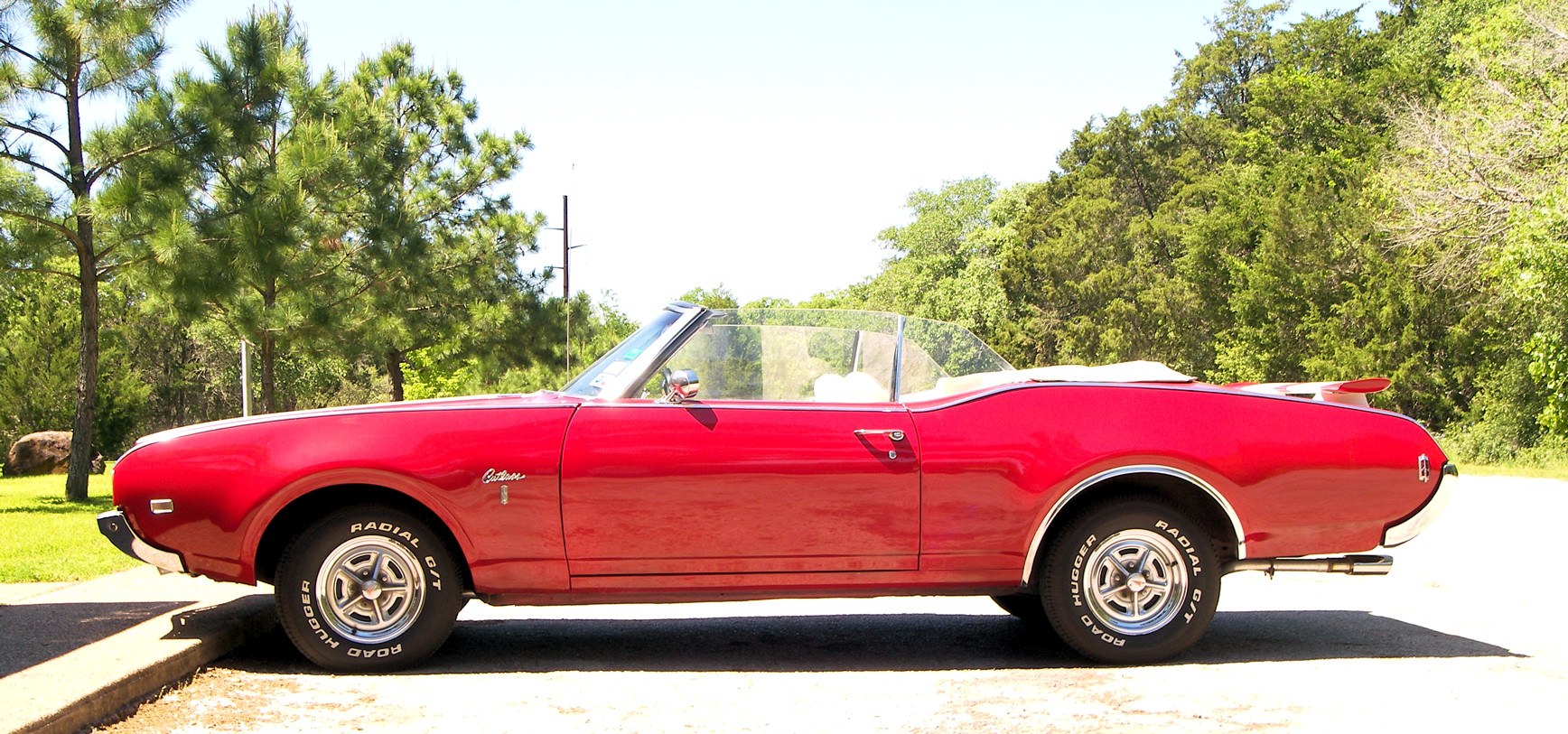
It would have been the Olds Cutlass.
1981 Olds Cutlass was the best selling car.
This year, it's the amongst cars.
I want to look at four door cars, you know, what we consider a sedan.
Oh, OK.
It's a Toyota Camry.
And I know the best selling vehicle in the US
is a full-size pickup and some crossovers like the RAV4.
But let's stick with, you know, compare apples to apples where we can.
So if you adjust for inflation, that Olds Cutlass, there was $9,000 then.
That adjust at $31,000 now.
Yeah, I wouldn't be buying that thing.
I'm just saying.
If you could roll the clock back to that 45 years ago.
I would be buying like a 1981 Z28 or an 81 Trans Am, which they had no horsepower
either, but it looked better.
Would your hair be feathered?
My hair would.
I guess that was I didn't know that was the same because I remember my mom's
friend was a hairstylist.
OK, and that's what they call them.
And so it's like used to give us our haircuts.
And it's like, oh, well, you want feathered.
I'm like, no, feathered.
That sounds like something for a girl.
But I guess it was feathered.
So it was it was a it was like John Travolta on, you know, welcome back
Carter's hair, something like that.
So I guess that's what it's called.
Yeah, I was confused.
It was it was you're right.
It was kind of men and women have the same hair back then.
Yeah, exactly.
Long and feathered.
I don't I didn't use no hairspray.
But OK, now back to cars.
OK, a new Toyota Camry.
Now they come pretty fully loaded.
If you if you actually think about it, they start at twenty nine thousand one
hundred right now and the horsepower, I wrote this down here for Joe to see.
But that horsepower right there is the same as a Fox body Mustang in like
nineteen ninety two twenty five horsepower.
Yeah, it's a and it's a hybrid two point five liter four cylinder.
So it's got a little electric motor on there.
No plug, of course.
So yeah, a new Camry two hundred twenty five horsepower.
That's like a go car that 81 olds with the much bigger V six had 110.
All right.
Could could I trade the olds in for a four forty two instead?
They there's a sharp looking ones.
Eighty one for four forties.
Oh, you're right.
What did that that probably came with like a three oh seven three oh five.
OK, I think. OK.
But they did have a three oh seven two for like maybe you might be right for
the old mobile and they think of three oh seven.
You think of a Chevy.
They had that weird.
Some of them came with the weird or that was the Hurst had like that weird
shifter. Yeah. Yeah.
That was kind of pointless.
But they called it like a lightning rod shifter.
We have like pulled like four or five handles down.
I'm like, I just need one handle.
The valet guys must have been pretty confused.
Like which of these which of these three things do I they probably just wait
till the customer walked away and they stomped on it.
Yeah. All right.
Well, that OK, that V six cutlass got twenty one miles per gallon.
The new Camry fifty one.
The warranty that GM offered on that olds in eighty one was twelve years,
twelve thousand, not twelve years, twelve months, twelve thousand.
That's it.
They didn't have the thirty six thousand miles.
Not then. No, really?
Yeah.
That was actually an upgrade from what things were, you know, back in the
like thirties and forties.
Basically, once you made it off the dealer lot, you're done.
You're done.
That's the one. Take your chance.
Hey, you made it off the lot.
That's good enough to close your eyes.
Make sure it gets off the lot.
Push them off if you don't make it.
So Toyota offers a thirty six month thirty six year thirty six thousand
mile warranty, which that's that's actually low for the industry.
That is very low because there's there's there's, well,
but you're buying a Toyota.
You're not going to, you know.
So here's your example, right?
I always tell people this because I do know some people that have a Kia,
a Kia and what's the Hyundai, right?
So they have these ten year hundred thousand mile warranties.
And you know why they have that warranty?
Let me guess.
You got to jump through a bunch of hoops.
It's because I always tell people, I said, you know what, you're right.
They're beautiful cars.
They're great cars when they're in Korea.
They are not made for America.
So in Korea, they don't drive the same mileage that we drive.
They don't use them for the same things we do.
But it's like over there. Guess what?
That's a great car, but definitely not here.
I mean, because I have a friend of mine, she has one
and she's had nothing but problems.
She's talking about the second or third engine.
I'm like, can't you get a lemon law on that car?
You know, it's like I'd do everything if I could to get out.
She's like, I just want to get rid of it and get like a muscle car.
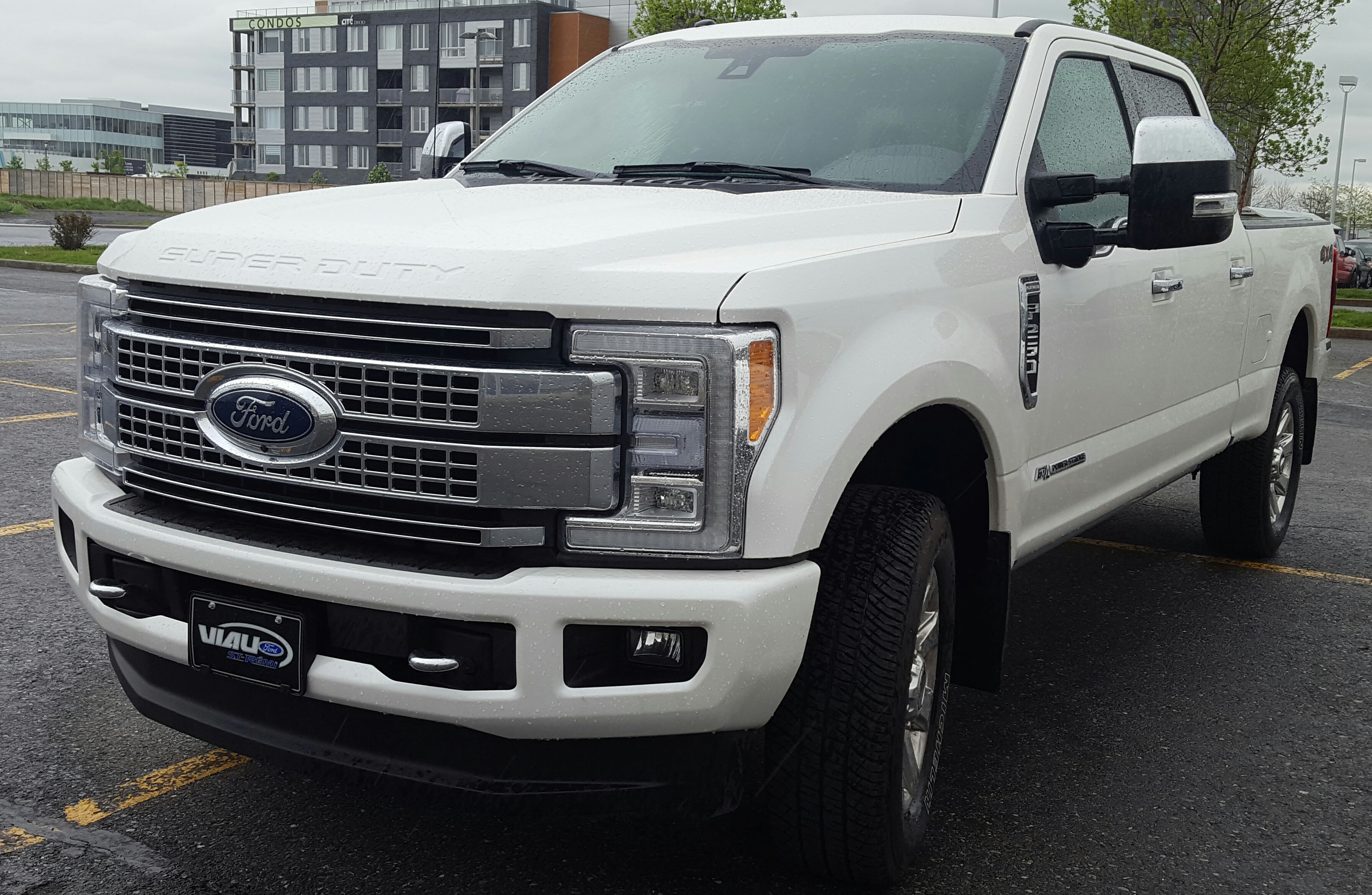
Something I could work on myself and change the plugs or get me
a big old F 250 truck.
That's what she wants to do.
She's like, I just want to get rid of this car.
Yeah.
My mechanic friend Bill, he has like the Hyundai engine supplier on speed dial.
Because they said you call them up and they go, oh, yeah, we got a bunch.
You know, they have a bunch of crate engines.
They stand there regularly dropping them off for him to do engine
replacements on Kia souls.
And yeah, I hope they got over that that issue.
But it's like, I don't know how the word isn't getting around that they have
some issues. I guess they're only good for TVs.
I don't know. There goes our Kia sponsorship.
I mean, there's no car.
There's no car called the Samsung.
Not yet. So anyway, this is not to beat up GM or anything.
This is I was just strictly trying to find two cars that were comparable.
So that again, even though that Camry nowadays is in in real dollars is is
less money, that new Camry comes with eight airbags and crumple zones that
Olds didn't have.
They hadn't quite put airbags and cars by that era.
You have all this standard safety gear like adaptive cruise control,
automatic emergency braking, lane keeping, lane tracing,
air conditioning, power, we're
powers, I got mirrors.
I have a question for you.
So yeah, because you're talking about these safety options, right?
Yeah. How many times have you ever, when you're driving your car,
conditions, something happens and you still want to pump your brakes?
Oh, you know, I well, yeah, you grew up in Boston.
So you were you have that that's built in your foot.
I'm just saying, I'm just saying, though, you're right.
You just that habit still, it's always in your head, engraved in your mind.
Oh, yeah. If you didn't have the ABS brakes.
Well, I tell you what, semis have.
And if you go back to driving like you have a muscle car or another car, right?
You have to have that. Yeah.
So you have to have in your head like oh, this isn't an ABS brakes.
Yeah. Just thought I'd toss that in.
Well, I just begin to toss in things in.
Olds didn't even toss in a stereo or radio of any sort for that 31,000 back in 81.
You had to spec.
You had to go through a whole spec sheet in order each of these things separately
that now are just considered, of course, the cars got air conditioning.
Of course, it's got a radio.
I would just back then I would just get a Sony Walkman.
And drive around with a Walkman on.
You could put your look is set in there if you want to listen to like a flock
of seagulls or something. OK.
So now what would the local constable pull you over for that?
I don't know.
They it depends on, you know, those laws are crazy because you I don't even know
what's the difference of having earbuds.
And if you think about it, they say it's safe to drive, right?
But you still have something in your ear.
I think they'd be they'd be chasing half the drivers off the road.
If yeah, if they wanted to go for that stuff, right.
And nowadays what hearing aids, they make hearing aids that fit in your ear.
You can't even see them.
I'm sure they're going to be doing the same with earbuds.
I've never used an earbud to this day.
Yeah, never tried one.
I just don't have the interest of putting things in my ears.
I yeah, it feels weird to me, too.
I have like over the ear stuff that I wear.
But so we sound like a couple of old guys who are just
we're whining about how the younger generation is whining.
But we're just throwing some perspective in there.
I'm sure most people know that when you.
You talked about a phone in 1981.
There's not a lot you could do with it other than try to call somebody.
Yeah, go ahead and use that rotary phone and try to dial it.
I did that to my son one time.
I was like, hey, I want you to make a call.
He looks at the phone, he's like, what do I do with that?
You have to call.
So you see those numbers on there with the letters?
I said, you do it the same way.
He's like, did you offer him some money?
No, but yeah, you know, it's kind of like looking for a phone booth now.
How old is your son now?
Twenty three. He's a smart guy, though, now.
Just know you just heard 24.
Yeah, he's still at the language school and aim high Air Force.
That's awesome. Yeah, he's having a good old time.
Yeah, he's already been in for a year now.
He's like, Papa, I just keep getting paid.
Probably probably learning fast.
He's just getting paid.
He's having a good time.
That's a good way to wait.
He's been actually waiting on orders now since.
I believe, like, September.
Oh, no, because they had the government shut down for one.
Yeah, yeah, yeah.
And so you have to think of all these schools to get put in different places.
Yeah.
He's been waiting since September for now for orders to go to his next training place.
He's like, I'm getting bored.
You're getting paid, though.
You've been with the military for quite a while.
So you probably know that's this hurry up and wait standard operating procedure.
Yeah, hurry up and wait.
He's like, I just want to start doing my job.
Yeah, I will.
Well, anyway, a phone back then, you try to call somebody.
That's about all you could do.
And the likelihood they didn't have an answering machine,
because that was fancy tech back then. Oh, yeah.
I mean, that was like, really, who do you think you are having an answering machine at your house?
So you're a very important person.
It was either busy or they answered the phone or nobody answered at all.
And if you don't want to listen to them, you just listen to the information
and go off and just like, I don't want to talk to them right now.
So nowadays, a phone, you can do unbelievable things with it.
I mean, it would be fun.
You can like, just like the Jetsons, you can sit there and talk to each other
and look at each other while you're on the phone.
Yeah, no matter where you're at.
Well, and and Dave, Dave Ramsey talks about he calls it a magic one.
You can sit there and order food delivered right to your house.
Right. You can be out on a walk and you're tired and you want somebody to pick you up.
You just just tap Uber.
You could have anything you can you can lock your house from your start your car from your phone.
You dropped off in a foreign country and you run into people who speak a different language.
You can have a translator app on your phone.
That's right.
All that's included, you know, for your, of course, the phone now is.
Over five hundred dollars.
No, my phone's you saw my phone.
Well, I just I have not upgraded to it.
I'm going to go over here.
I'm going to go with the S twenty two or twenty three.
It's it's amazing what you do with what you have.
I I'm a cheapskate.
I always bought the cheapest Android.
It's it's so people like, hey, I need to get a computer.
It's right there in your hand.
You've got your computer in your hand.
You know, so why not have kind of the best one?
I am not an iPhone person.
I don't know if I told you, but Lance, who does videos for Instagram.
He's like, Joe, because your videos come out so beautiful and awesome.
They do. I said, yeah, I look at my phone.
It's a two thousand eighteen broken Samsung Galaxy 10.
I said, look at your phone.
What is it like a fifteen hundred dollar iPhone from Apple?
And I said, mine takes better videos than yours.
Yeah, I was surprised when you showed me your phone.
It's a crack.
You got you deserve an award for that.
I'm you know what?
I need to do a commercial on it so I can get Samsung to give me a free phone.
So I can promote it.
I'll be like, hey, I'm Joe Black and look at me.
I'm like on my skateboard or something.
I'm like, see all this thing.
I said, I need a phone. Yeah.
So anyway, I relate to, you know, to what people are going through
trying to buy stuff now.
But I still think, you know, I go to the grocery store
and I'm just going to throw out another example.
I remember buying a lot of bananas in nineteen eighty eight
for fifty nine fifty nine cents a pound at what used to be Winco or
used to be called Cub Foods, then it's the same outfit that is Winco.
Now I go down there.
If we could go to Winco now, still about fifty five fifty nine cents a pound for
bananas. It's like, I wouldn't remember the price back then.
But I don't know why.
Just lock in my head.
I just paid fifty nine cents for bananas.
I said, you're going back 20 years ago.
Well, I'm an incurable cheapskate.
Keep in mind that was thirty five bananas.
That's closing on 40 years ago.
I'll be your calendar, Joe.
I'm not paying attention to the math here.
I'm just I'm just talking away.
So anyway, I have a and I do I really relate.
I've got a niece who's in her late 20s.
She's buying a home.
She and her husband are buying a home and it can't be easy.
It's tough. Yeah.
And they're they end up buying a home that's
it's over 70 years old, you know, but they're they're doing it the responsible way.
They're they moving to a neighborhood where, you know, things were affordable
and they could they could make the numbers work. Right.
Speaking of things that are old.
Now, this relates to you because you grew up you grew up in the Rust Belt.
Um, getting back to cars.
Yes. Now you I could tell you some body work that you didn't believe when you
travel between here and there, you don't go to Boston too often.
But don't you notice that there's a lot more older cars?
People are driving around in in 35 year old cars here like nobody's business.
I could go around on the rust issues of that stuff in the Midwest forever.
I could tell you tricks of the bodywork.
I could tell you all these things that we used to do.
Cars are just pretty much if your car is 10 years old, you're pretty much
unless you don't take care of it. It's pretty much done. Yeah.
I mean, yes, most of the cars aluminum now, but the frames then.
Like a given example, when I was in high school, there was a guy
he also had, I guess he was divorced.
His mom and dad were divorced.
And so he used to go to Florida sometimes in the wintertime
works winter break, things like that. Yeah.
And so we lived on Cape Cod.
Well, he came back before he graduated.
If you say the Cape of Cod, does that sound snooty?
Is that the snooty way to say?
Of cod? Yeah, never even heard that.
That's when when us people on the West Coast, we want to make fun of like snooty,
like I never I'd people we we referred to the Cape of Cod.
Oh, never heard it put in that little thirst and how old.
Oh, anyway, Jim, yes.
Yes. So anyways, what happened was he came home
from that one. He had 70 Chevelle SS 396 block black, white stripes, white interior.
Beautiful car.
Something tells me it made an impression on you.
Yeah, he paid $1,500 for that car in what year?
This was like 84. Wow.
Somewhere around there. So it was 15. Wow.
And but here's the bad part about it.
So guess what happened?
He was going to keep the car.
But guess what? The whole frame was rusted out on the car.
Oh, he didn't. Did he? No, he didn't do it.
His dad or whatever gave him the car or whatever.
Oh, there's a lot of people don't know a thing about cars.
Yeah. So it looks good on the surface.
Yeah. And you cannot go back there, especially even back then,
you cannot just go find a frame for a car.
So the car is pretty useless.
But man, you just think of the things that happened back then.
Back, you know, cars like that. I'm telling you, rusting out.
Yeah, lots of Bondo fiberglass.
You have rusty rear quarters and you take like a sheet metal
and you rivet it to the body.
And then what you do is you throw Bondo over it
and you smooth it out and then you paint the car.
So you're not trying to incriminate yourself here.
No, not me. I didn't do body work, but it's like, you know, you know,
you would know what you're doing. Yeah.
If you're when you're buying a car.
So I was I was I was I'm in a car guy since I was a kid.
So I used to know stuff when I used to learn from my bosses.
I worked at a Sonoco station.
So now moving beyond the somewhat related to the affordability issue
is all the the tariff issues lately.
And, you know, different countries are.
Throwing, you know, threats out to other countries.
And I think Canada, I think a lot of people have heard this.
Canada just recently announced they're reducing their tariffs on Chinese cars
from 100 percent to 6.1 percent.
Anything that's huge.
Anything to get the car in the country, right?
Well, and so there's going to be an influx of Chinese cars coming in.
They're going to allow 49,000 cars a year into Canada, which Oh, Canada.
So if you think, I mean, we're not a political show,
and this isn't this isn't a topic about politics.
It's more about this could be interesting to see what cars are going to be sold.
That right now, Canadians have to work way more weeks per year
to afford a car than we do here.
You made me think of something.
And this has to do with cars coming from Europe, Germany.
I give you example because I was in the military.
Cars have to go through certain safety issues
before they can be accepted into the country.
So I'm wondering, I don't think those Chinese cars are going to be up to par.
To be at least on American roads.
Yeah, because I can remember, like, for example,
a lot of guys are by BMWs, Mercedes.
Well, guess what?
They don't have safety glass over there.
Yeah, they had to see a lot of people got federalized cars in the 80s.
You had to get them changed over.
And so by the time you do all this change over, it is not cheap.
Yeah. So I would think that probably with the Chinese cars.
Oh, you have a Chinese car.
I'm sorry, you can't cross the border.
I'm just saying I'm just saying they were talking about that.
But I can't imagine them.
I can imagine some some vacationers from Canada arriving
in airplane Washington.
You know what I mean?
Because maybe they don't want the car to get stuck over here somehow.
I'm saying as in safety wise.
Yeah, you know, it'd be like that car is built like paper mache.
Well, think about think about Washington.
Washington is one of the most regulation happy states in the country.
But we allow these little Japanese K cars as long as they're 25 years old.
But other states, I don't think Oregon doesn't allow them in California.
So you can but you can drive across the border.
Right.
I don't know. It'd be interesting to see.
It's going to be it's going to be big.
It's so, you know, as soon as I heard that.
And just to relate, 49,000 cars a year is what they're going to allow.
That's if you think Canada is about one tenth our size,
that's a half million cars a year.
We're talking like full size pickup levels or imagine
RAV4, you know, that level of we're going to see a lot of those around
as a proportion.
Maybe they'll just go to like Calgary or something.
Well, we've we've already made plans to go to the Vancouver
auto show. That's cool, because I would like to go to that myself.
Well, let's let's talk about that.
It's down right downtown at the what's it Canada place?
A big I've never been there.
Never been to Vancouver. Oh, it's beautiful.
I've been to Toronto side.
But I know my wife, any go to Canada, go to Vancouver.
She's always game, especially should be nice weathered by March.
Oh, yeah. I mean, like I said, I'd be all over that.
But I think I have something scheduled for that weekend.
But I'm very patriotic American.
In fact, the car we buy is the most American car you can buy.
Just wear a Canadian flag on your
you have phony Canadian.
I put on that Canadian flag Canada accent.
When you when you get your next coat or something like that,
Jack, with a patch on it, make sure you get a Velcro.
So you switch it out. Nice.
And I'll have to say things like process, instead of process, progress.
It's just like them in the Midwest says a.
Yeah. OK, I'll fit in.
I'll fit in with those people.
Anyway, we're going up there to see
if it's like March 27th or something.
And normally the Vancouver Auto Show is just a local,
you know, dealer show, but it's going to be.
You know that the Chinese now they've got a foot in the door there.
I might be the good guys.
I think it's the good guys that we can in California.
Oh, in Pleasanton. Yes.
Oh, I wouldn't blame you for going there.
It'll be warmer.
Anyhow, just some other local news here.
Steve Selene, I asked you about this.
You had 17 Fox body mustangs,
but you never had a Selene Mustang, but you know quite a bit about him.
Yes, I've actually met him a couple of times.
And I thought I was going to show you.
I forgot what's actually on my Facebook.
I got some pictures with him, but just a wonderful guy.
I actually met him in the in the 80s when he was actually racing cars on.
So yeah, he was a raceway.
He was quite a race driver.
Yeah, I used to work at Sonoma Raceway when I was going to college.
He's kind of like them.
I don't know. In some ways, he's about like a modern day.
Carol Shelby.
That's true.
He's still he's still a fairly young guy.
But I feel like he's one of these guys who when he leaves us,
you know, years from now, people are going to look back.
Oh, wow, this guy was like a Renaissance man.
Yeah, when we started building the cars
originally like the Selene Mustangs go back to the 80s.
And actually, I think the earliest one is like 80s.
I think you said 84.
Yeah, I heard an interview with him recently.
I met him about 88, I think the first time.
But the cars back then like the Mustangs,
like the ones that he sold with his name on it.
I mean, they have nothing else than a little bit of suspension modifications.
You know, like KBY shocks or struts or something like that.
But it's horsepower, everything else.
And the biggest thing was the body kit stuff.
Yeah. Otherwise, it was just a regular car.
But the reason I bring them up is we have the museum nearby.
The LeMay America's Car Museum.
I guess it's the biggest in footprint, biggest car museum in the U.S.
And Steve Selene curated a collection of cars that's in there right now
called Birth of the American Supercar.
Yeah, I've been there.
Actually, I have the pictures of them.
Yeah, I need some videos.
I just haven't posted them.
I need to go see that collection because he's it's not just a Selene collection.
It's he's got Shelby's in there.
He's got all the way back to like Cunningham cars,
which are like Le Mans racing cars from the 50s.
I think it's S 11, not the S 7, I believe the newer one, right?
Yeah, there's by sauce, but it's it's it's all clay looking.
Yeah, it's like a display car.
They have it set up so that you can what you think they should have
a bunch of like a computer little kiosk.
And I don't know if they're going to use what the vinyl votes are.
And you can put what you think it should have on it.
OK, with what they put on it to to make it complete.
OK, like like the like the front grill from a Pontiac Aztec
or something like that.
Exactly, like looking like a lost in space.
That always reminded me of the lost in space vehicle.
You remember that TV show?
Unfortunately, yeah.
So remember that little buggy they had?
Yeah, that's your Pontiac track or whatever it was.
Well, so we have stuff like that going on around here to keep us
keep us from falling off the cliff in the middle of winter.
We also have grills, garage touchstone for the whole area here.
The grills people who have grills products.
I think anybody in the car world knows about them car care products.
And they have their showcase store in Tacoma, Washington.
The only store they have the only store, right?
And they have some great products.
I mean, I used for me, I use speed shine.
So say if you have like, you know, like your cars out there sitting out there
right now, right? Yeah.
So you've got raindrops on it or dirt from taking it to work.
The easiest thing to do is get some of the speed shine.
You just put it on the towel.
You do like, say the hood part of the fender.
But you can use it on the whole outside of the car if you want to.
Don't use it on the wheel of tires, but you could if you wanted to.
And instead of breaking out the bucket and sprayer and all this other crazy stuff.
You get your car done in like 20 minutes, 15 minutes.
So I used to do it for the car shows myself.
I think I have almost all their liquid products.
And so they have cars and coffee the first Saturday of every month.
Year round. Caffeine and gasoline is their trademark term.
I thought that was my turn actually.
But I guess you can claim it.
They do the same thing, I guess.
I do have the t-shirt now that says it.
So I guess while I'm looking forward to next weekend,
because the local builder showcase, that's going to be that's a great show.
And we for some reason, this area is rich with people who really know how to
to build cars. I know Southern California talks about all this.
But we have we have quite a bit here, too.
I'm looking forward to that next Saturday.
Might have to do something with the kind of cool, wet winters here.
There's nothing better to do than hang out in your garage.
Well, I did go out to the racetrack like we can remember that.
Well, we yeah, we do have some bursts of and I guess nice.
Yeah, we're doing all kinds of sponsorship.
We're blessed with all sorts of fun stuff to do with cars around here.
Yeah, even boats in the summertime.
They have those. Well, they have those power boats out on Lake Washington.
Yeah. And and they're drag races on Black Lake and there is Black Lake.
They're by me. At least they used to be.
I could tell you this, man, so I've done 70 miles an hour on a boat.
My boat on the water. Yeah.
I can't see going any faster.
It's it's pretty scary.
It is scary.
People don't realize how fast it is on water.
Yeah, it's just not something you want to do.
My folks live on a lake that's four miles long, and it's basically
they live at the start of a four mile drag race track.
It's it's unofficial.
Let's go see.
When the when the sheriffs around, though, there's less drag racing.
Yeah, yeah, because they do have that rule on there.
Like, yeah, they have that on American Lake also.
Everybody knows what the sheriff's boat looks like.
You know, the one that they used to have,
they put them on the way runners on the American Lake.
Well, we're dreaming here about summer, but we'll get there soon enough.
Sixties next weekend or next week.
Sixties and sun on Wednesday.
Oh, I thought you were talking about 1960s.
Oh, 60s like in the weather.
Man, Thursday. We're blessed with the sun.
So sorry about all you people in the wild with Midwest.
Yeah, getting those new storms.
Yeah. So we're doing good.
So thank you for tuning in, folks.
You can reach us at cars, the podcast at gmail.com,
send us topic ideas and some hellos to see Joe's work.
Go to past cars and freedom, too.
And I am on Instagram, TikTok and YouTube.
Let's just say he's prolific.
I'm a little bit of everything in something in between.
And signing out for this week.
Don Swear. Joe Black, peace out.
About this episode
Exploring the car affordability crisis, hosts Don and Joe compare the 1981 Oldsmobile Cutlass to the modern Toyota Camry, highlighting significant differences in price, safety features, and performance. They discuss how inflation has affected car prices and the evolution of warranties and technology in vehicles over the decades. The conversation also touches on generational perspectives on cars and the automotive market, including insights on brands like Kia and Hyundai. The episode is filled with humor and personal anecdotes, making for an engaging discussion.