Add-ons are extra things you can buy when you get a car, like special covers or extra protection. They cost more money but can help keep your car nice.
The Toyota RAV4 is a small SUV that many people like because it doesn't use too much gas and is very dependable. It's good for families and everyday driving. Talking about two blue RAV4s means people sometimes compare similar cars to decide which one they want.
Ceramic paint is a special clear coating put on cars to keep the paint shiny and safe from scratches and dirt. It lasts longer than regular wax and helps your car look new.
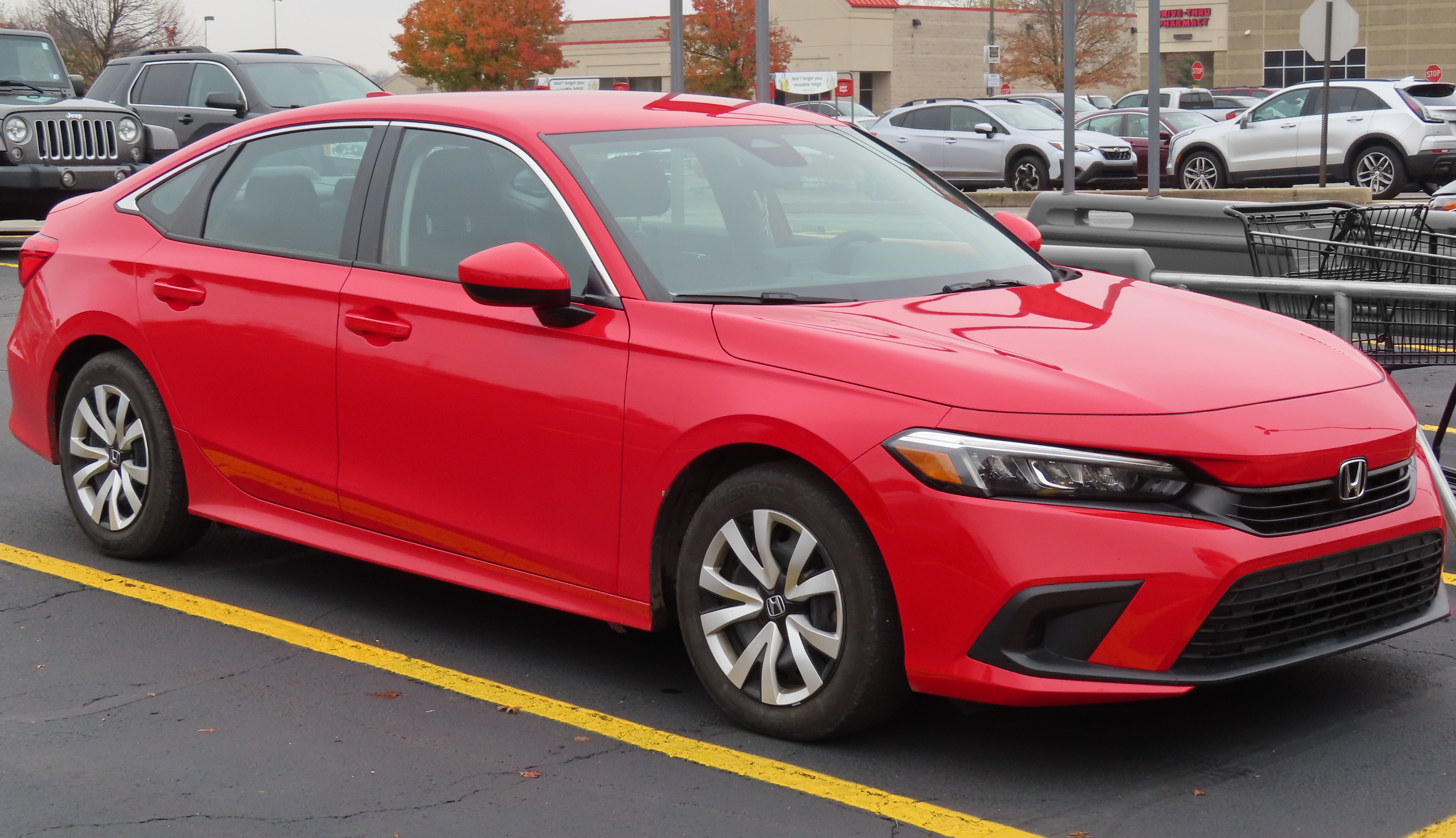
The Civic Type R is a special version of the Honda Civic that is built to be fast and fun to drive. It has a strong engine and looks sportier than regular Civics.
The Jeep Grand Cherokee is a type of SUV that can drive well on rough roads and also feels nice inside. People like it because it works for both outdoor trips and everyday driving. The talk about buying it directly means some companies are changing how they sell cars to customers.
Carvana is a company where you can buy a used car online and have it brought to your home, making car buying easier without going to a dealership.
LIVE
I think the whole industry is ridiculous.
I think, you know, I've talked about it quite a bit,
but I believe the car industry has been so stale
for the last 20 years and nothing's really evolved
or changed.
What does a traditional broker model look like
and how's that different from what you do?
It's a really good question.
And I think you can blend the lines really well,
which is why I think a lot of people call us a broker.
Yeah, we always say we're a time-saving service.
And, you know, I don't put blame
to anybody that doesn't understand that.
I think you can save people time, energy, or money.
One of those three things, then you have a business.
If you can do all three, you have a home run.
It's going to take probably an extra 20 minutes on the phone
and convincing them that I'm worth it
for that 10 to 15% to transition over.
OK, so that still leaves maybe 25 to 30% of dealers
that just under no circumstances will give you a price
if you're not in person.
This episode is brought to you by CallReview,
the dealership intelligence platform
that connects every conversation to performance
from their hosted phone system
and AI-powered attendant to real-time analytics,
coaching, and reputation insights.
CallReview helps you capture every call,
understand every interaction,
and convert more opportunities.
CallReview, where communication meets intelligence.
For more information, visit callreview.com.
OK, welcome to the Doug Horner Show.
I am here with Tommy McCoola.
Am I saying that right, Tommy?
McCoola. You are saying it perfectly.
I've heard you say it so many times
that I feel like I've got it.
Better known as Delivered.
Thank you so much, Tommy, for being here with me today.
Thank you for having me.
I feel like we've continued to miss each other over and over.
And I have to admit, I'm the person who stood you up.
I felt so bad when that happened.
But I'm here and I'm ready to talk.
Awesome. I'm glad you're here.
And yeah, hopefully no ill will that day.
I just figured right after I was like,
well, I better get some kind of content out of this.
So I purposely left it vague.
But I think one or two people might have predicted
that it was you, but there were guesses all over the place,
which I thought was pretty funny.
So you have quickly become
like the number one enemy of car dealers around the country
as you have scaled this incredibly impressive business.
How do you describe what's the elevator pitch to what you do?
Because I know that some people describe you as a broker
and you don't believe yourself to be a broker.
I don't believe you to be a broker.
But what is the elevator pitch on what deliver does?
Yeah. So, you know, one thing that we try to say is I don't have a magic wand.
I don't got a secret sauce.
I believe anybody can negotiate a great deal.
And really what we do is take on the stress of car buying for you.
We handle the the time, the energy, the anxiety.
We handle the price of the car, the trade, the add-ons, the accessories.
The idea behind it is you get to just skip the dealership experience
while still getting that great deal.
It's not it's not meant to advertise as a way that I can save you
thousands of dollars more than you can on your own.
Because we both know realistically, if anybody puts the time and effort in,
anybody can get a great deal in a car.
This isn't rocket science.
We're not reinventing a MacBook.
All we're doing is talking to people and putting enough reps in it.
And it's just people don't want to put the reps in.
Yeah. And that has really taken off for you.
How many deals on average are you doing a month at this point?
So as of right now, we cap it out just because we can't handle anymore.
But we're averaging between two 20 to two 40, just depending on the team.
But we have a few more people being hired on.
We expect the number next few months to be over 300.
Wow. So how many people are on the team now?
Like take out maybe the support staff, but how many people are kind of actively
in the trenches doing what you're doing?
Yeah. So we take out the support staff.
We realistically now have four deal coordinators.
We just offered somebody yesterday a job.
So that'd be five.
So we have five deal coordinators and their entire job is going to be to negotiate
in car deals. I do want to almost pull it back.
We do have two support agents, which their entire job is basically vital.
If they are not there, then the four or five deal coordinators can't work
at the efficiency they need to.
So I understand cutting that back, but they actually do a lot of the work
like setting up deliveries, setting up shipping, making sure paperwork goes smoothly.
Something like that where you wouldn't expect the issues.
We have issues all the time.
Those two support staff are 24 seven, making sure the clients are having
that great experience in the dealership.
Okay. And so I've talked about this on several podcasts already, several videos
that I've done as a econ major in college.
The concept that just fascinated me more than anything else was opportunity cost
and how people just don't understand it a lot of the time.
And in this business, one thing that I have noticed, I don't know what it is
about the car business.
Actually, I think I do.
I think it's that people hate dealerships so much that they will willingly waste
a tremendous amount of their own time to either prove a point or to get that deal.
I mean, it's just, I don't know.
It's like this psychologically amazing phenomenon where I've seen people that
will go and buy a car they don't actually want to try to prove a point
to a dealer that they felt wrong them.
But the point I'm making is that you are proving to the tune of over 200 deals
a month and you very publicly acknowledge that it cost a thousand dollars to work
with you that people would rather pay you $1,000 to take away the stress and the time
commitment of buying a car and have you handle it instead, which to me, that's
that's opportunity cost 101, which is saying I value my time and sanity more
than $1,000.
Therefore, I'm going to have Tommy do this for me, even though sure I could do it
myself, but who knows how long it would take and how stressful it would be.
Is that fair to say that people are trading their time and their sanity for
$1,000?
Oh, 100%.
Yeah, we always say we're a time saving service.
And, you know, I don't put blame to anybody that doesn't understand that.
I think now that I live it and breathe it, I get frustrated that people
don't understand it.
But when I started the business three years ago, my brother has been a really
good inspiration for me this entire time.
And one of the things that he said is if you can save people time, energy or money,
one of those three things, then you have a business.
If you can do all three, you have a home run.
But the idea of saving time from somebody who worked 65 hours a week in a
finance office that put his own idea to furniture together, that was always a
grinder, which is a lot of people in car sales.
I think car salespeople are naturally grinders.
They want to do things.
The idea of passing that on to somebody else is, I don't want to call it demoralizing,
but I think that type A personality does have that.
So because of that, that opportunity cost, I think people don't really see.
And it's not until you get to owning your own business and realizing that there
is only so much time in a day that that opportunity cost starts to make more sense.
Yeah, that's fair.
So let's just go back for a moment here for anybody that doesn't know kind of how
you got here.
You were in the car business once, right?
You didn't just come from nowhere and decide, I'm going to start going up
against car dealers, right?
You lived it.
How did you originally get into the car business?
Yeah, it's a really good question.
So I was, so I've been in sales my entire life.
I started off, I don't know if you want to go all the way back from the start,
but started off at Subway at 16.
I was kicked out, had to get a full time job in order to pay bills in high school,
worked as assistant, eventually got promoted to assistant manager at Subway.
And right next door, there was a Verizon store.
And they always wore a tie suit.
I always thought they were so cool.
They're like you, Bo.
But they'd always get the same sandwich every single day.
And eventually I just got the courage to say, like, what does it take to get a job?
Apparently the general sales manager was right there.
He liked that I asked the question, I suppose he said, come over in an hour for
an interview, I wore my mustard stain t-shirt, ended up getting a job left
that day, never looked back, ended up becoming a manager of that store,
becoming the number one Verizon store in the state of Iowa, which I was on a big
state, but then it became the number one store in the Midwest, moved to U.S.
cellular, started doing that.
But I just felt like there wasn't, I didn't love how that company was run.
I didn't love everything to it.
So ended up leaving that job and was in this weird moment in my life where I was
like, do I want to continue sales?
I've been grinding this for three or four years.
I'm so young.
I'm in my early twenties.
Let me try a marketing job.
I did the marketing job for one month.
I hated it with such a passion that I said, I have to get back into sales.
So I looked around.
I was like, I just need to make some money at this point.
I got to pay the bills.
I'm going to go get the, as I saw it, and I feel bad at this point, the scum of
the earth, easiest sales job I can get guaranteed just to make some money so I
can get out of this marketing job.
And I remember it.
I had a really good experience at a dealership called Dave Wright, Nissan
Subaru.
I remember when I went to go buy a car, it was low pressure.
Everybody was nice.
Everybody knew their stuff.
And I said, if I'm going to work for one of those guys, I'm going to work for
that dealership.
I walked in, had my toughest interview process that I've ever done.
And it ended up being like three different interviews.
I had interviewed for the job once before and picked the marketing job instead.
They reamed me.
His name was Mark Wallace.
Great guy.
Still talk to him today, but he reamed me for an hour saying, why would I want to
ever be your second place choice?
You did not choose us.
He made me defend every choice and really taught me the value of sales.
Did that, got that job and ended up falling in love with the idea.
I think once you sell your first car, it's that high.
I say it's like a drug.
And you, you never look back.
And there was never a world where I didn't see myself in the car industry.
Interesting.
Okay.
So you had a, a kind of a adjacent path to getting there.
It's interesting that you worked at a subway near a cell phone store.
And that's kind of what started that.
I mean, it's always interesting to me to hear the story, but it sounds like you
were at an organization that I would say kind of do things the right way.
Is that fair to say?
As far as car sales?
Yeah.
I mean, what I would say is that they vow, and I think eventually, and we can
get into that later, they eventually lost a lot of the touch due to, you know,
you can call owners switching from son or from father to son.
But at the start, I believe it was a very well trained organization.
They value training.
They value the process.
Now, I will say some of the sales tactics they do, we're not the best sales
tactics.
It's not like your store.
That's a one price store.
Call it a day.
I believe that's one of the best models to go through.
It was still heavy negotiation.
It was still heavy profits.
It was definitely try to make the most dollar you can.
And if somebody really likes an orange color, why not bring up an extra $2,000
charge because they really seem obsessed with that orange color?
That was that was the mentality.
But it's building value in it was well trained profit sales.
Got it.
Okay.
So and I think that that's that's true in many stores around the country.
So you worked your way up from sales, eventually became a finance manager.
That is a lot of the training that you lean on in your videos.
What point did you reach and thought to yourself, I don't want to do this anymore.
And I'm going to transition into this business idea because I know you and I
have talked about this before, but for anybody else, you know, what was that
moment in time and what finally propelled you to say, I'm going to go give this a try.
Yeah.
So I was in finance for five years.
I was the number one finance guy and my store was running great numbers,
making great living in Iowa.
It was awesome.
Everything was great.
And somewhere fall of 2019, I ended up reconnecting with my brother and my
brother had not been in my life for a long time.
We separated at a young age and when I've never been super close with my family,
but when me and my brother connected, it was like the same person, which was
weird because we hadn't talked our entire lives.
So we had the same drives, but I got to see myself like 10 years in the future.
And it was kind of a mystery, everything he did.
I really got to learn a little bit more about him and really got inspired
to start my own business.
I realized that I was at a stopping point, no matter what.
There's only so much money you can make at a dealership.
I did have a, you know, I talked to my brother.
He said, Hey, realistically, you're bringing in $3 million of profit for your
owner. You're getting paid about $230,000.
That's pure profit to do everything.
You deserve some type of raise.
You deserve more piece of the pie.
You've earned it.
You've been number one for five years.
So I went to my owner and I realized at that point, because my owner basically
just laughed at my face and said, no, you're not getting more.
He actually rewarded us with a payment, pay plan change, which ended up making
us about half the money that we were going to make.
They changed that back 30 days later, but it was very clear, yeah, where their
mindset was and where they valued us.
And I just saw a long term.
This didn't make sense.
So we started trying to think of my own business.
I wanted to solve things.
And the first thing I thought of was, let's help finance managers.
I'll travel the country.
I'll be a finance manager trainer and I will teach people what I do because
I'm good at what I do.
And then I just had one really bad day in finance.
And if you're a finance manager, you're going to relate.
I had eight deals all in one day, all finance, all with a leg.
Everything was perfect.
Everything was lined up.
Everything was great.
And I swung and missed eight times.
Every single client told me how much they hated buying a car.
Every single client went through and told me that they didn't want to go
through the process and no matter what I could do, I could just not convince
anybody to buy anything that day.
And everybody said the same thing.
I hate buying a car.
I hate buying a car.
I hate buying a car.
And it just clicked.
That's my, that's my angle.
Make it so it's so easy to buy a car.
Skip that time, that energy, that anxiety, and you have a business.
So I went to, I called my brother, brought the idea up to him.
He said, do it for free.
I started doing it for free and eventually fell in love with it.
But I'd notice in and left.
Wow.
So at a certain point, this is all 2019.
This is all, so no, it started 2019 is when I reconnected with my brother.
It wasn't until 2023 with where the business actually started.
Got it.
Okay.
I was going to say, wow, you missed out on that.
2019 might be a little, it might be 2022 as I reconnected with my brother.
Sorry, I'm getting old Doug.
My memory is not what it used to be.
2019, that wasn't pre-COVID, it was post-COVID.
COVID was such a weird time.
It really, it really was.
Yeah.
I was going to say I would be, if you had missed the whole COVID thing, I
wonder if that would have, if this would have ever come to be, right?
But, you know, because that was wild times in the car business.
But, yeah, I was, I left in 2023.
Okay, got it.
All right.
That makes more sense.
So you then, at this point, were you using social media much?
Were you just a consumer of social media?
Or at what point did you realize I can grow this business or effectively
start it via social media?
Well, funny enough, I didn't even understand that concept for a long time.
When delivered first started, a lot of people don't know this.
They can still see it on the website.
It was a $2,500 service.
And the idea behind it was skipping the dealership entirely, was for
high net worth individuals, skipping the dealership entirely.
We set up test drives delivered to your house.
We did a needs assessment.
We went through the full thing.
You never spoke to the dealership, essentially in the entire process other
than to sign a few dotted lines.
It was a much more intensive process.
We also did searching nationwide, which we now do with a $1,000 service, but
we didn't do, we didn't even have a $1,000 service back then.
So the idea of looking nationwide was a big deal.
So that was a $2,500 service.
And one of the things I noticed as I was doing this service and we would have
an order team, a few clients a month that people asked me, asked me the same
questions over and over and over again.
What is gap insurance?
Should I buy gap insurance?
Uh, what should I like between these two cars?
So I was like, why don't I just throw some things on social media?
Um, so I have like a library of just answers that I can just throw to people.
It was never an idea to go viral.
It was never an idea for advertising for the business.
Um, it was just a library of stuff that I could do.
And maybe I get a deal out of it, call it a day.
Uh, but eventually it took off in a major way due to one particular video.
And, uh, that's ever since, uh, I've realized the value of it.
Awesome.
So you started off as kind of a full service and, and $2,500.
What point did you realize maybe that isn't the best move?
And then you kind of dropped it back to what you do now for, for a thousand.
So when, when we went through the $2,500 service before social media,
we were finding people through referrals.
Uh, that is what we did.
We did it for free.
I did it for free for about eight months.
And the first batch of people, we asked them for a two hour interview.
So I'm going to what we're doing now, just asking about their experience,
what they would pay for the service, everything else.
And eventually got to the point where we're doing it for free.
And we said, if you enjoy the experience, we ask you for an hour interview
and to refer somebody that you would like.
Once they referred that person for free, which was easy, we then did that
referral bit and said, Hey, we want you to pay the $2,500 for the next referral.
So basically the next referral was, Hey, we'll do refer somebody, but
they're paying $2,500.
So I'm not doing it for free.
You still get it for free, but I just need you to find one person
you can refer to that would pay $2,500.
Uh, and maybe give us a video online to tell us you had a good experience.
I can put on my website and that's how we started getting clients, right?
Just repeat referral, trying to do it for free.
And eventually telling, Hey, can you find somebody that's going to pay for this?
Um, that, that part went really well.
We ended up doing, um, I won't use his name, but there's a doctor in Minnesota
that blew my mind that fell in love with the service.
I still talk to him this day.
He's actually somehow connected with my fiance's family, which is weird.
How the whole thing went full circle and they didn't even know until anyway,
he ended up doing the service nine times with basically every family.
He just started buying the service for people.
So that obviously helped the company stay afloat for a little bit.
I think him tremendously.
Um, but once we started blowing up on social media, the, when we discovered
our client was referral, this was when they were in what we call the, the shopping phase,
right?
They were still trying to find a car.
They had no idea what they want, but how the TikTok algorithm works, uh, is
when people are looking for car buying, they're looking for car buying, which
normally means they've already found the car and now all of a sudden they're
looking for advice on how to get a good deal.
So the idea of the $2,500 service where we did a needs assessment, did test
drives to you, there just wasn't much value.
People already know the car they wanted.
So we decided, why don't we just do a thousand dollar service and we just
negotiate the whole thing.
We take care of what we call the shopping phase for you.
Um, and obviously that was a huge hit.
Uh, we now only do the $2,500 service for, uh, what we call legacy clients.
So clients that have done it before can do it.
Um, and you know, it's, it's the $1,000 service where we live and breathe.
Okay.
Very cool.
So when people reach out to you, I'm very curious about this.
I mean, you've built now a pretty good network.
I'm sure you have a list of dealers that are maybe friendly, that if you know,
you're looking at one brand that they're going to be worth calling, but how
often do people reach out to you and they give you just sort of like a make
in a model, how often is it like, I really don't know what I want, but
this is the, the genre of car.
And how often is it like, I want that one at that dealership, make it happen.
Right.
Now, what's that breakdown?
So funny enough, we really only accept clients in the middle.
Um, where the people that know I want a Grand Highlander, I want a Mercedes
Benz, um, G a G wagon, I want whatever that is.
Uh, when somebody doesn't know what they want is, is more cumbersome to help
that client out, they end up having a worse experience because they want us
to negotiate two or three cars, which we would be more than willing to.
But once you negotiate on one car and they're like, okay, I want a Mercedes
Benz or a BMW, they now want to see the pricing on the BMW.
So then you get a pricing on the BMW and then like, I like the Mercedes
Benz, then you go back to the Mercedes Benz, that one's gone.
You have to renegotiate.
You're negotiating three deals.
So we don't, we don't help those clients.
We make them pick a car that they want.
Uh, and when it comes down to that specific car, we also tell that client
we're more than willing to always call in that car, but one of the
expertises that we have here is finding good inventory at a right price.
So I can call that dealership and let, you know, the best price that I can
get from them, that doesn't mean it's going to be the best price.
And I always compare it with two or three other dealerships just so they
have comparable models, but very rarely is somebody going to force us to
only call one dealership and not allow us to call anybody else.
Got it.
Yeah, because I know that you occasionally have people that are
looking for the very hard to get cars.
I mean, those videos are always fun because I know that it's going to be
a battle with the dealerships, but sometimes I wonder, is it, are, do you
even accept those people that are so locked in on one vehicle?
And I think that, by the way, this is a huge mistake that car shoppers make
that aren't, aren't using a service like yours, right?
Where it's like they get fixated on the car and now they are married to
whoever that dealer is that has it for better or for worse.
And that's where I think they oftentimes get taken advantage of or they
have buyers remorse because they got taken for a ride because they were
fixated on the car and not who they were doing business with.
So it sounds like you're not, if they're that locked in on one vehicle,
might not be a good fit to work with you.
Is that, is that fair?
A hundred percent.
It's one of the things that we do.
We do two consults before we ever start negotiating your deal.
We do a pre-consult and then we do an actual consult with two different people.
One of the things we talk about, and these are really short.
They're five minutes, 10 minutes.
And one of the things we do is feel out that exact question.
And we let people know we're very transparent about it.
This is exactly why, like two RAV4s that are both blue.
I want to, like I have to slow clients down sometimes to say, hey,
I want to be very clear.
There is a pull up a search.
There is 4,000 of these cars.
That RAV4 you're looking for down the street drives the same as the one
that is five miles away.
I need you to understand the car you're looking for.
I understand the dealership told you it's rare.
It's not rare.
And there's going to be times where we're looking for it.
You know, we're doing really exciting car.
We're doing a Ferrari SB3 right now, Daytona.
It's the craziest exotic car that we've ever done.
It's awesome.
But like that car is going to be a little bit different.
Once we find the car that makes sense, that client in the know, right off the bat,
if that deal makes sense, he needs to move on it relatively quickly.
That's a completely different car.
That's a rare car.
They only made, I think, about 500 in the country or in the world.
So that's a whole different beast.
That's a whole different car.
But your RAV4s, your Grand Highlanders, your GX550s that everybody says are rare.
We can always find another example.
On a new car, a used car doesn't matter.
Cars are made in mass production.
You can 100% find a different one.
Yeah.
And are you doing primarily new?
Primarily new, about 70% new used cars.
Used cars, we just have to be very selective with who we choose because with
used cars, we're very transparent about it.
It's not about money savings.
It's about the actual value and what you're getting for the market.
Sometimes I save a used car client.
Zero dollars.
Sometimes I save them hundreds.
Sometimes I save them thousands.
But just because you save $2,000 off a used car doesn't mean you got a good deal
because it depends on where the starting price was.
Yeah, no, exactly.
Used cars, I've always said the used car market is much more efficient.
And just because it's not being discounted doesn't mean it's not a great deal.
Whereas new cars easily replaceable.
But Tommy, what do you say to the dealers that give you just endless grief,
the ones that tell you that you're the worst and that you're ruining the car
business or that you're trying to take money from them?
What is your open form?
I know and not that you don't use your platform to do this all the time.
But what do you say to those dealers that are just giving you a hard time?
Yeah, I think sometimes you have to take a step back.
I understand that if I was in the car industry still, I could see where their
perspective is.
But first off, if I call your dealership, let's be very real for a second.
The chances that client was ever going to actually call you are next to zero.
Realistically, that client probably would have gone to their local dealership
bought a car.
So if I'm calling you, there's a chance that you have a lead that you never
would have had.
So the idea that I'm stealing something from you, I think is absurd.
We've gotten pretty efficient to the point where I'll put this publicly.
I, we do 200 plus deals a month.
I have a database of thousands of deals that we've negotiated on.
We have trackers and our internal systems to know what a good deal is.
There's a reason when I go to a dealership, I want $4,000 off this car.
It's not because I'm being unrealistic, as some people think.
It's because the data shows me that's the deal I get.
So if you give me $4,000 off a car and I ask you for $4,000 off the car and
there's no ads or anything crazy, I will just accept the deal.
I'm doing 200 plus deals a month.
I'm trying to be efficient with our time and my client's time.
I'm not here to do the back and forth in the games.
Again, if you can't do the deal, just let me know up front.
Hey, I can't do that deal.
Our dealership won't do it.
I appreciate your time.
But if you can, and it's just coming down, not liking me, I promise you,
it is the easiest car deal you'll ever do in your life.
Yeah.
Okay.
What percentage of the deals each month are you taking kind of start to finish
versus your team?
Because you have a team now.
Is it pretty even split or are you still doing the lion's share?
So as of most recent, it's been 50-50, where my team is doing about 50%
and I'm doing about 50%.
The business model we have in today's world is every client has a deal
coordinator that isn't me and they have a deal coordinator support that isn't me.
And then what I do is I just run through and actually negotiate car deals with
random dealerships, get them for my team, get them to present them, call it a day,
and then I'll call my clients or do something live.
So right now it's 50-50.
We are drastically working as we're trying to build the company.
We have some really exciting things down the pipeline.
We are drastically looking to decrease that number and to just have the team take
over the lion's share so then I can focus on a few other things.
Yeah, I was going to say that sounds like a lot.
Like it wouldn't be sustainable forever for you to be doing half the work.
I mean, because I know that my time these days for me to take a deal, start to finish
or even half of the way is very difficult just because there's so many other
responsibilities that I have in a given day.
But I lost my train of thought here.
What was I going to ask you?
Oh, yeah, the when you're live streaming, is that the majority of the deals
that you're doing or is it just you have a set time that you're live streaming
and you kind of put all of that out there and then you do a lot of it off camera?
I mean, because I feel like the camera is on most of the time that you're working.
Yeah, I wouldn't say no.
I start my day at seven and normally end around 12 to 1 a.m.
So like I work a crazy amount of hours five or six days a week
and then I try to take Sundays off if I can.
So I've been working my crazy every day.
So really streaming is only about six to 10 hours of it.
That's but I try to do as much as I can negotiating.
We're now to the point where we normally negotiate on deals.
I guess if you're watching this interview, you'll know kind of the secret
that my team is struggling with.
We've noticed that people recognize me on live.
They sometimes give me deals that we can't.
So if my team is struggling with a deal, they'll give me that deal.
I'll do it live and there's a better chance that either I take care of it
because I have the most experience or maybe we get lucky.
Somebody recognizes us.
They give us a crazy deal and our clients are happy.
So we're fine with either or option, but that's what we're doing.
A lot of the times with the deals we're doing live.
So that's not the majority by any means.
If you're in 200 deals a month, we're probably closing, you know, five or six
of them a week on stream.
So it is, I would say the vast minority being done.
Now, when you're calling these dealers, one of my favorite topics, I just really
struggle with this one.
I don't understand why the industry is the way that it is here.
How often will people just refuse to give you a price because you're not physically there?
Doug, I will tell you, you know, my goal is to reinvent this industry.
I think they're just like, you're in the same boat.
Like I think everybody's trying to reinvent this industry.
And I will tell you, if I have any hope for this industry is when I first started doing
this, because we track all these stats, it was over a 70% rate where if I call it a
dealership, over 70% of the time, it just wouldn't give numbers at all.
I had to fight tooth and nail just to get the numbers.
That's insane.
That number has gone down to about 40%.
Now, can I say Tommy Makula delivered has attributed to that?
I don't know.
Maybe it's because the market's shifting up.
Maybe it is.
But I feel like I have some impact on why dealers are being more transparent than they
are before.
And maybe I haven't impacted the 30%.
But if I impacted even 1% of that, I feel like it's a win to get people more transparent.
So about 40%, just will give you numbers over the phone.
Wow.
At least on the first ask, or it takes a lot of digging to get there.
Eventually they might, but you have to really push, which I think is where a lot of the content
comes in and why people get so frustrated.
Why not just hang up?
Because I don't want to lose 40% of the market.
So I'd rather keep pushing and potentially get another 10% to 15% that might give us a good deal.
Okay.
So are you saying then it's about maybe 10% to 15% that you can eventually convince to
give you a deal?
Out of those 40%, probably 10% to 15%.
If you ask the right people, ask the right questions, say the right things.
Or, and people hate it, stay on the phone long enough where they...
The reason why that's 40% isn't doing it.
Let's be really honest why they're doing it.
Really, they don't want you shopping their price.
And I'm telling people that, and for people, dealership, oh, I'll make the exclusion.
If a dealership won't even verbally tell you the numbers, they're almost always doing something
shady.
So they will not even verbally tell you, but a dealership that won't put it down in writing,
they just don't want your price being shopped.
So because of that, I have to sometimes stay on the phone long enough with them and argue
along enough with them that they believe that I'm a serious buyer.
To the point that I might actually buy their car.
I need to convince them that if they give me the numbers, they might get a buyer.
And they might, they may not.
But normally, it's going to take probably an extra 20 minutes on the phone and convincing
them that I'm worth it for that 10% to 15% to transition over.
Okay, so that still leaves maybe 25% to 30% of dealers that just under no circumstances
will give you a price if you're not in person?
Correct.
That's sad.
That's really, really sad.
I mean, it's certainly better than the 70% that you mentioned at first.
So now I'm very interested at what kind of other data points you're keeping,
what other statistics you have.
I'm sure there's some good ones in there.
One of the ones that I think about often is what percentage of dealers are you calling
that have add-ons at the start?
So regional, it's really, the reason the United States are really important.
It's fascinating to me because it's group think.
And obviously, you're trying to be competitive with your market.
But if I call Florida, it's 90% plus percent.
And Florida is a weird market.
If I call Texas, it's 90% plus percent.
If I call California, it's 90% plus percent.
But if I call the Midwest, if I call an Ohio dealership,
if I call some dealerships in the Northeast, it's probably,
if we go the Midwest, it's probably like 30%.
And if I call anybody in the Northeast, it's probably about 50%.
It's way more than you think.
Like I said, I always battle back and forth because I always try to see both sides.
I know people always see me as enemy number one,
but I always like to know who am I facing on a day-to-day basis.
And I believe that dealerships, when they added all these add-ons,
were told that they need to add more value to customers.
They need to add more value.
So they were like, let's just find a way to add value and also profit.
And it's a double tip.
But people don't see value in the ceramic paint that you're putting on there.
It's valuable if it's good ceramic paint,
but unfortunately so many dealerships just have an 18-year-old putting it on there
that might put it on, might not, and you're getting charged either way.
Got it. So that's a pretty big number that have it.
How often can you just not get it removed no matter how many times you ask?
And I will say this, and I've noticed this just from dealer trades that I've done.
There are some stores out there that I know that are actually
installing various things right off the rip that are legitimately there,
not like a supposed ceramic that may or may not ever get supplied or applied,
but maybe like it'll have a clear film on there or door edge guards or something
that literally has already been done and the cost just isn't going away no matter what.
How often do you see that?
I mean, there's two different, let me clarify,
because there's two different dealerships in the world.
There's some dealerships that will always have it on the T-sheet no matter what,
and they might over discount to offset it.
So there's one group of people there, and then there's some that won't remove it at all.
I would say it's hard to bulk it because if it's a Toyota dealership,
there are some Toyota dealerships, I would say 50% of them at least would at least be
like they're not moving, they're not touching it is what it is,
they're not willing to budge at all.
But if I'm going to like a Chevy store, probably 90% of them will take it off
if you push enough to get them to remove.
If I go to a Mercedes-Benz or a BMW store,
same, probably 80% of them will take it off if you push enough,
because I think that client experience is more important for the luxury side.
Got it.
Do you find that to be ridiculous that you even have to have these conversations at all?
I think the whole industry is ridiculous.
I think, and I've talked about it quite a bit, but I believe the car industry has been so stale
for the last 20 years, and nothing's really evolved or changed, which is sad.
But it's ridiculous that things are designed for the dealership.
And in most business models, there's competition, right?
We're talking about cell phones, I've brought this example up before.
I can buy my phone from Apple or I can buy my phone from Verizon.
If I could only buy an iPhone from Verizon,
and then I did not have the option to buy it from Apple,
we would see very similar things in the phone industry.
But because I have that option to buy it from Apple,
and Apple makes it so easy to buy this darn thing,
I pre-ordered my thing while I was in Croatia,
and I clicked three buttons while on the beach,
or pre-ordered my phone, called it a day, and it was there in two weeks.
That is why that exists.
And because that option is not allowed in the auto industry,
it makes it so everything becomes stale, everything is biased to the dealer.
And it's ridiculous. It's sad because of how big a purchase is.
This is a thousand bucks.
It's a lot of money, but it's not life we're changing.
50, 60, 70, 80 thousand dollars on an SUV, that changes people's lives.
If they pay a $15,000 market adjustment on a civic type R,
because the dealership told them that it was worth it, it's just insane.
Yeah. Interestingly, you and I have the same mission.
We just go about it in different ways, right?
I'm trying to do it from within a dealership.
You're doing it from outside of the dealership.
But I realize sometimes that when this unexpected social media career
sort of come about, that what always drove me in the very beginning
was seeing the inefficiencies that existed in the car business.
And you can see them a lot more clearly once you're there.
And I will preface this by saying that if you are working at a store
that has a good process and does legitimately care about giving people
good deals and making it easy, it's a lot easier to see the bad actors
than if you're in a store that does it the wrong way.
And I do feel bad for some of the salespeople
that I hear on the other end of your phone calls,
that it's very clear to me they got bad training.
And now they believe that the way they're doing it is the correct way.
And they will defend it very aggressively sometimes.
It's like, to me, I can't help but think they don't know any better.
And that's why they're defending it that way.
Why do you think that the car business is one of the only businesses
where consumers, for whatever reason,
sometimes put themselves in positions where they just are like,
well, they know it's wrong and they do it anyway,
and then they regret it later.
And it allows the dealer to keep on acting that way.
Most businesses can't get away with that, right?
Yeah. I do want to touch on one thing, and I'll answer that question,
so make sure I don't forget about that one question.
But I do want to touch on the point where you made
where about some dealerships and some salespeople don't know better.
And I actually think that's why I get a lot of hate.
I think once you're in the industry,
you can be in the industry for 20, 30 years being at one store,
and maybe your store is like your store, that does everything right,
that's by the book.
And because you are surrounded and live that,
you believe that's how the industry is.
Maybe you have a few friends that work at dealerships that are similar,
but so I think when a lot of people see my videos,
they just think it's fake.
They don't think it's real.
They think that there's no way a dealership would do this,
and I'm only posting this one out of a million clip
because it's like that's what gets clicks.
But in reality, like not the minority of dealerships are good.
There are good dealerships.
I like what you guys do.
I've talked about it.
We've done deals with you guys before.
Like I like what you guys are doing.
I like what you guys are building,
but they're good apples,
but I think a lot of people see that their experience
means that the whole industry is that way,
and that's just not the case.
Now, I did forget your question.
I'm sorry.
Can you repeat it?
Yeah, it was.
So the question was, why?
Oh, why did they get away with bad apples?
This is more on the consumer side.
Why is it that you think that consumers put themselves in these?
I mean, it's like bird's eye view.
You would think that this is one of the largest people,
largest purchases, if not the largest for a lot of people
that will never buy a home,
that they'll ever make in their life.
And for whatever reason,
when they encounter that dealership that's not acting in good faith,
they proceed with the deal anyway against their better judgment.
And then later, they're mad about it, right?
But in the meantime, because the deal happened,
what incentive does that dealer have to change their way?
That is the part of this that I can't understand,
which is why do bad dealers keep getting rewarded with business,
where in really any other business I can think of,
if you're doing bad business,
people just stop buying things from you,
and then you go out of business or you change.
That doesn't seem to happen here.
Why do you think that is with cars?
So a few different things.
So first off, buying a car is a very emotional decision.
And when you're sitting in person,
this is why I advise doing it over the phone.
When you're in person with somebody,
it eventually just emotionally draining and people do give up.
The second part is let's give credit to salespeople.
They're good at what they do.
They're good at convincing.
You know, if I go through Doug and say,
hey, you know what, I get not everybody loves the add-ons, Doug.
But realistically, everybody does them.
If you want to call 10 other dealerships, you certainly can.
But realistically, what I'm doing is I'm giving you $1,000 off these RAV4s.
You can go look at everybody's website.
Nobody's offering.
You could go through and justify it enough
where you can sell them on the idea that everybody does it.
And then they pull up TikTok
and they see me negotiating $4,000 off a car.
And now it's like, oh, shoot, I got screwed over.
But I think it's emotional beings
combined with salespeople being very good at their job.
And which is what they're paid to do.
It's what they're trained to do.
But it's not good for the consumer.
It's good for the dealership.
So it'll never change that model.
The only way this model ever gets changes,
or changes in my opinion, is competition.
I believe you have to have an alternative.
And I appreciate you doing it from the inside out.
I really love that.
I think more people should do it.
But I believe that until consumers have
a alternative option to the dealership model,
this will continue to exist.
So you think it has to be not dealers getting better,
but they have to have outside competition?
Are you saying direct from the manufacturer
would be the only option to solve that?
So obviously, I believe delivered is an alternative.
We skip that dealership process as well.
But I really do think the easiest answer for everybody
to put delivered out of business,
if everybody wants delivered to shut up and go away, is DTC.
You put direct to consumer and you go just like an iPhone,
side to side.
And you give an option that I can buy a...
People are going to say MSRP,
but I really believe it's going to be
whatever the market value is in that car.
Nobody's going to buy a direct to consumer Jeep Grand Cherokee.
But make it so you can buy a car, skip the dealership,
buy it in four clicks on my phone,
or I could go through the dealership model.
Because now there's a clear value for each person.
There's somebody who values their time
that just wants a good deal that doesn't want to deal with this.
And now dealerships have to earn their spot.
And their spot is going to be,
in my imagining, is that premier experience
for somebody who's going to walk them through the features,
go through things, walk them through which model they should buy.
And that's going to make more sense to consumers,
and it's going to make more sense for the business model.
They're going to earn their spot.
But as of right now, they don't have to earn anything.
There's no... If I want to buy a G-Wagon,
I have to go to you.
I have to go to another dealership.
And I have to trust that every dealership
is going to do things right.
But it's a Wild Wild West.
Compared to if I could buy my G-Wagon today from Mercedes,
it would change everything.
The way you would do business,
the way your competitors would do business,
would change dramatically
because you have to still earn my client.
Otherwise, why not just go buy from the manufacturer?
Yeah. Boy, you're going to get a lot of people
riled up with that option.
I think that the direct to consumer model is one
that car buyers have clamored for for a long time.
And obviously, dealerships have resisted.
I don't know. I agree with you
that I think competition makes everybody better.
And I think that there are some benefits
to direct to consumer for some people.
I think that there's maybe some fallbacks
to that model as well.
And I will say this is why I don't believe
direct to consumer is a model that can stand on its own.
I do believe that...
I think you have to adopt the cell phone model
where you have both options
because once you have direct to consumer by itself,
you then go into all the falls that could happen.
But once you have two models competing against each other,
it just makes sense because the manufacturer,
once it's a good experience
because they want to own it end to end
because people are going to buy a car based on the experience.
Hey, a GMC, oh my gosh, their customer service is the worth.
I try to order a car and it canceled four times.
I mean, so I'm just going to go buy a Chevy instead.
That is going to be a legitimate process
if people don't want that.
So they're going to improve that process, make it better.
But those have to work side by side.
I do not think direct to consumer works by itself
and I don't think dealerships work by themselves.
I think you have to have side by side for it to be successful.
Very interesting.
So I'm going to try to not get totally all over the place here
because I can think of a million questions
that I would ask you here,
but there are a couple that I want to touch on.
So what other options currently exist?
You've got dealerships.
You have a service like you provide.
Then you also have a traditional broker.
How would you explain to somebody that asks you,
and I'm sure they do,
what does a traditional broker model look like
and how is that different from what you do?
It's a really good question.
And I think you can blend the lines really well,
which is why I think a lot of people call us a broker.
Really, the best way that I can describe a broker
is if you hire a broker,
there is a good chance that you may never meet the dealership.
A broker is allowed to do the paperwork for you.
That dealership may never talk to the client.
There is a complete wall between where that can happen.
Not every broker works this way,
but they have the option to put a wall up
that you never speak to the dealership,
you never speak to the client.
So you're putting full faith in that broker
that they're giving you the best deal
and they're not taking money from the dealership,
which as we know, brokers can easily do.
I've seen dealerships take thousands of dollars
in their own pocket plus charge to the client.
So there's always a little bit of mystery.
The best way to put it is kind of like a realtor.
When you buy a house,
you never speak to the other owner of the house.
You don't ever deal with the other realtor.
You deal with your realtor, your realtor deals with it all.
And there's pros to that.
For example, brokers have great relationships
with dealerships in their local market.
They could probably get a deal in four seconds.
Like they just have a sheet of deals ready to go.
For me, we have to hand negotiate everything.
Now with our deals, we put it more to akin
to a parent helping their kid negotiate a car deal.
We negotiate everything.
We prep everything.
We get everything ready.
We make sure everything goes smoothly,
but you are still working with the dealership and the end.
You are still doing the paperwork.
And most importantly for the dealership,
they have the option to follow up.
So once we're done,
if you offer them a great experience
and you put them in their follow-up funnel,
the amount of dealerships I've seen that have just said,
okay, Tommy, we're done with you, not that we don't have to.
But I'm just going to buy my car from Scott at Ford.
It is incredible.
And now they're able to generate this relationship
and call it a day.
Obviously, be careful with relationships
because sometimes they're great, sometimes they're not,
and sometimes they take advantage of you.
But that's the biggest difference
is we can't do your paperwork for you.
We can't do anything along those lines.
But we're looking out for you
by giving you that level of transparency.
Yeah.
And just to add a little color to that is
people know exactly what it costs to work with you upfront.
And with a broker, I can tell you that you don't know.
You don't know, not forever.
I know that there maybe is a broker model
where they have kind of an upfront cost,
like you are a predetermined cost.
But a lot of the times it is sort of,
you know, a dealer gives a broker a price,
and that price is then marked up to the end user.
And I say, I think right now,
because this model, this advocacy model,
is really in the first five years.
There's been a few other companies that have attempted it.
I believe they haven't done it really well,
which is where Delivered came in.
But this advocacy model is so new that when a new business model exists,
rather than just making it into its own branch,
people always want to try to pigeonhole it into something.
But the problem is the definition just doesn't fit.
There's a reason why brokers are regulated the way they are
for exactly what you're saying is you have no idea
of the amount of money they make.
And I know brokers that have asked for $4,000, $5,000, $6,000 fees
on a Toyota just to try to get away with it
from other Toyota dealerships to try to pocket that money.
That's insane that consumers have no idea.
And they might not even know the car is marked up,
because what a lot of brokers do is they do leases.
Leases are really easy to hide money.
It's really easy to move money factors.
It becomes really, really easy for the numbers
to kind of be shifted in a positive way.
So you don't really know what happens
in the dealership or the broker pockets quite a bit,
which is also one of the reasons why I think a lot of people
don't like me is because they say,
oh, he looks like a broker.
I don't like brokers because they make thousands of dollars
on my clients.
They negotiate crazy deals, pocket the savings,
and I never even get to speak to the client in the first place.
So I think that's part of the other confusion that happens here.
Okay, so that's the dealer perspective.
Is there treating you like a broker?
Yeah, which is why we don't say we're a broker,
because that's A, we're not, but B,
because a lot of times you just hang up the phone
because we don't want to deal with brokers
because of all the reasons you mentioned.
You can hear it in your voice,
where obviously I know you guys deal with brokers,
but there's like, you got to be a little careful.
You don't know what's going to happen,
and that's what we don't want to have in our industry.
Our industry is very simple.
A thousand bucks, call it a day.
You have a customer profile page
where you see every dealership we talk to,
and you see every good deal, bad deal, ugly deal,
and you compare and contrast what makes the most sense.
I'll tell you, if you tell a broker,
can you call that dealership down the street,
and then they don't have a relationship with it,
nine times out of 10,
they're going to tell you to screw off and have a nice day.
Yeah, I think brokers are very regional.
I think they're big in the Northeast and maybe out West.
But anyway, the way I look at people
that are doing what you're doing, brokers,
I believe that if that can exist,
if you can have a business, if brokers can have a business,
then it's proof to me that dealerships have a lot of work to do.
And I think that any dealership that directs anger towards you
or towards brokers, that is, I think, just misguided.
We need to be looking in the mirror and figuring out
how can we eliminate those other options,
and not that I want to put you out of business,
but more from the mentality of if you didn't have a business,
if brokers didn't have a business,
that would mean that we were making it so easy to buy a car
that there wouldn't be a need for a Tommy or for a brokerage.
But as long as you have this business
and as long as brokers are selling cars,
that's just proof that consumers don't trust most dealerships.
And that hurts me, but I get it.
And I see it, I mean, sometimes I'll play
some of your phone calls in my morning sales meetings.
And I can't, maybe what I'll do
is I'll pick one of your particularly good ones,
and then I will film it for you.
I'll film the room because it's like some of the people,
like my sales team is crawling out of their own skin, watching just the misery,
like just how miserable the interaction is that you're having.
And it's really, it's still so bad in so many places. It's sad.
And I think it's bad when like you realize,
it's like I said, it's not only a dealership model,
but like it disheartens me to see the amount of people that just say,
well, have you just paid the original price?
Gee, suck it up, call it overpay for the car,
spend $5, $10,000 more than what you should.
And that's your answer, right?
Like the answer for a lot of people is not,
let's make the dealership model better.
I think you're 100%, right?
I believe there's a world where delivered goes out of business.
And so funny enough, I just offered somebody a job yesterday.
It's one of the first things we tell people when they get hired on,
like it's on our wall, so to speak.
It's in our employee handbook.
Our company's goal is to put ourselves out of business,
to reinvent this industry in such a way that dealerships,
the only way that they can succeed is by making it so easy to buy a car
that they, because we're costing them so much money.
Like that's where we want it to be.
So like we offered somebody a job yesterday,
we said, hey, just so you know,
this job might not be around in five years because
car buying is going to be easier because we've accomplished our mission.
Now, there's also another world where this model becomes so big
that people don't even think about dealerships.
They think about delivered, which is obviously another hope,
but it's a possibility.
And I don't want to be in this industry forever.
I love selling cars.
I love doing what I do.
But I've learned by building a business,
which is now a new passion of mine,
is solving people's problems is profitable.
And that's a good thing to do.
And I believe there's a lot of problems in the world that I can solve,
but I have to focus on this one first.
And once this one is solved and I feel confident,
I want to move on to the next.
Interesting. That's very cool.
That's cool that you have that mission because
and I think a lot of people might in the business,
especially might say, oh, Tommy, I don't believe you,
but I believe you.
And I believe that, you know what I mean?
Because again, if this is something,
if you have that mentality of I want to solve other problems as well,
then that would mean that you've got to solve this one first.
And it's a noble cause.
It really is.
So just a few more things that I want to pick your brain on.
AI, for the last year, it's felt a lot like a buzzword,
but especially coming off of NADA and seeing the rate
at which AI is growing and expanding and improving,
it is a legitimate question.
At what point can that start to spill over into what you and I do
and start having and have people just rely on AI agents
to either work in dealerships or to help them buy cars?
Is that is that a possibility?
You know, AI is getting better and better every day,
but what people, I think,
and this is what a lot of big businesses,
and I think right now the reason why AI is going so heavy right now
is that there's a heavy promise of what AI can do
and a promise of what it can change
and what it can save business owners
that everybody is going all in because they see the potential.
AI is a great tool for a human to supercharge themselves.
Just like the internet does not replace humans.
I think right now people believe that AI replaces humans.
I don't believe that.
We use AI like crazy.
I have an AI that builds things for me on a day-to-day basis.
I love AI.
It's great.
But if you've used AI long enough,
you've had a chat-GPC conversation
with whatever version doesn't matter,
where eventually it forgets what you said 10 minutes ago
and is like, oh, shoot, I'm so sorry, I forgot.
AI is not there.
Maybe it gets to the point where the memory is longer and longer.
But I think as of the second that happens
and it starts hurting the profitability of dealerships,
they're just going to have AI detection
to eliminate consumers negotiating with AI.
The idea that AI is going to make it in a world
where dealerships are able to just fold over and say,
you know what?
We can't win.
You were at NAD AI.
I imagine a lot of the AI tools were ways
to make it more profitable and more efficient to do business.
It wasn't, how do we save consumers more money?
And I see companies out there that are trying
to make AI car negotiators.
I've tested them.
They're all pretty trash because AI's aren't human.
And I think negotiation takes human ability.
I think on the sales side,
and I think it's on the consumer side.
And it's really easy to detect when you're talking to AI
at this point.
Does that change in the next few years?
Maybe.
But I'd like to say that AI is a really good tool
to supercharge people.
I just don't think it ever replaces humans.
Okay.
Yeah.
I mean, I am of that thought as well
that it's a companion for sure,
but it's pretty amazing the rate at which it's improving.
And that just makes me wonder,
what are the possibilities down the road?
I don't know.
I think in the dealership realm,
a lot of what I see are companies that want to help make
actually the process for consumers better in the sense
that they can get an answer to a question more quickly.
So I'm not saying that a consumer could call into a dealership
and buy a car from an AI agent necessarily,
but you worked in a dealership.
I work in one currently.
I think what a lot of people don't see from the outside looking in
is that at least my day is like a thousand interruptions
one after the other.
You never know what you're going to experience
when you come into work that day.
And like if somebody wanted to call me right now,
they can't reach me because I'm talking to you on this podcast.
And if I'm busy in the dealership, right?
But if an AI could answer the phone
and provide some very basic information immediately, right?
I think that's kind of the angle that most of these companies
are playing right now, not to like sell the car,
but to, oh, Tommy wants to schedule a test drive.
Let me do that for you.
And then we'll notify the people at the dealership
to be ready sort of thing.
But there are companies out there,
and this is what's scary,
that are trying to go the other angle by saying,
I have a tool that will negotiate the entire deal
and trying to sell that dream that that's going to happen.
But the problem is, is that humans are humans.
And you're right, they can't sell a car,
just like they can't buy a car.
And again, AI is a great companion tool,
but it doesn't replace human knowledge.
And it's not reliable in that regard.
And maybe one day it is,
but like one of the biggest problems delivered has right now.
Interesting part is hiring.
We pay 72 grand a year for everybody starting.
For car sales, that's decent money, right?
But that's not the elite best car salesman in the country.
So because of that, we also,
so when we attract 72 grand a year,
you're finding people that sell about 10 to 13 cars a month,
that maybe just want a different change of pace,
or people that sell 20 cars
that won't work life balance working from home.
Those are kind of your two balances that you have.
Because of this, like the product knowledge
and their experience isn't as adapted as it would be
as a top sales person.
And even putting chat GPT
and giving them every AI tool in the world,
they still have to come to me to ask questions
on that are so nuanced that take very individual minds.
So maybe you get every individual mind in there
to understand what they're doing,
but AI only has so much knowledge.
It's only just a Google resource.
It's a very high end Google resource,
but like it's only just pulling information off the internet,
and that information can be unreliable,
but people treat it as fact.
So understanding AI is a great tool,
but it's not, again, it can't replace humans,
and that's the biggest piece.
Okay.
So one of the last questions I want to ask you here,
for salespeople in dealerships,
should they be paid on a traditional commission structure,
or should they be paid on volume?
What is the better model for people who sell cars
and for consumers?
So I've battled this quite often.
What I believe you should do is,
I believe the second you charge commission off-profit,
you now reward a behavior of,
if you spend more money, I then make more money.
And no matter which way you look at it,
you are always, as a salesperson,
going to have a tight interest to making the consumer
spend the most amount of money
while having the best experience possible.
And there's always going to be which way do you weigh.
Some people weigh towards the customer experience,
some people weigh to more profit.
Because of that,
you're never really working for the customer,
and the customer can never really trust you,
because they don't know which side you're on,
and you can tell them everything in the world,
but it's your job to tell them that you're working for them
because that makes you more trust,
which makes you more money.
It's like this ying-yang that never makes sense.
So in my opinion,
if I was to open a dealership tomorrow,
I would pay every salesperson six figures.
Immediately as a salary, let's just say 100, 120k.
It's kind of where I believe the sweet spot is
for that car salesman in a perfect world.
And then what we would do is give bonuses
based off company performance.
So if the company does well,
we would give bonuses based on that.
So it's a team performance.
Everybody's working towards that team goal.
But I believe that selling cars should be a six-figure job
because it is one of the biggest purchases of their life.
The expertise should be way better.
I think as of right now,
like if I ask a Mercedes-Benz dealership,
tell me everything about your competitors.
They should tell me everything they know about the X7,
everything they know about the Audi Q.
They should tell me everything about every model
and be able to be on top and be as knowledgeable as possible.
I don't think we're there yet,
but that's where I'd want my dealership,
somewhere in that pay range.
So no commission.
Interesting.
So you're not really saying volume or commission.
You're saying salary,
which is maybe,
I don't know if there's any dealerships that really do that,
but that's an interesting take.
And I see the vision there.
I do.
I don't know how implementable it would be,
but with the right people, I think you could do it.
And that's the thing that,
and that's what I've learned from Delivered, right?
I was in the same world where,
when we hired Delivered, right,
we could do per unit,
we could do per savings,
we could do everything.
And what I realized really quick
is you give people a really good work-life balance.
You give people a good salary,
and you say, okay, put it together.
You are going to get some really good talent out there.
And if you made it a four-day work week
and you made 100K a year,
and you had a lot of control in your life,
I promise you,
the talent you're going to get is incredible,
that are going to work really hard for their clients.
And the reason why they work hard every day
is they don't want to lose their job
because it's such a great job
and it's such a great place to work.
So yeah, mine's completely off the rip.
I don't know if any dealership would be willing to do it
because you have to really trust your people.
And Car Sales has one of the worst turnover rates in the world.
It's like 80% in the first year.
So because of that,
but I think if you hired and you paid those salaries,
those turnover rates would drastically crash.
Yeah, I love that.
I have a dream of being able to...
If I had my own dealership,
it would look very different than...
Because I agree with you.
I think that the work-life balance,
it turns away a lot of people that are good.
And the just kind of the unknowns
that the average Car Sales person feels every day
when they show up to work,
like, am I going to make a paycheck this month
or will I not?
That is mentally draining.
And I think when people are very mentally drained,
they become unfocused.
They are no longer good at their jobs
because instead of focusing on what's in front of them,
helping the client,
they're spiraling about bills and whether or not,
hey, I've only...
You know, think of it like this.
It's the halfway through the month,
you've only sold four cars, you're freaking out.
Yeah.
Now somebody walks in and you can't even be present with them
because you're just like,
I'm not going to make any money this month.
And then you're frustrated when they just want to look
and they're three months out
and you feel like you're wasting your time
rather than going through that full experience.
Yeah, I wish, like I said,
if you've invested your own dealership,
I wish it was.
I'll let you know that talk to me in a few years
and that's on delivered five-year plan.
So have a dealership.
And that's hopefully one thing we have.
Again, obviously goals are goals,
but five years,
we hope to have some type of dealership model
that would be completely different to what you've seen today.
Wow.
Well, based on the trajectory that you're on,
I believe that you can do it.
I know you can.
That would be very cool to see.
And I'd love to see that
because then you'd really be on the inside of changing this.
So Tommy, I just want to thank you for being here.
I've gotten to know you over the last year and a half.
It's been fun to watch you grow this business.
And even though other dealers give you a hard time,
I appreciate what you do.
I get asked about you all the time in my comments.
What do you think of Tommy?
Have you ever done deals with him?
The answer, I'll set the record straight here.
Yes, we've done deals with delivered.
I think we've done five by my count.
And what I think of you is that you are doing good for the industry.
Not bad.
I think that the people who think that you're harming car dealerships,
I think they're missing the point, right?
This is no different than when CarMax and Carvana came onto the scene.
A lot of dealerships are ruining everything for us.
I look at that and say they're going to force everybody to step it up.
They're going to force people to pay more for trades
and to be better at acquiring cars and making things easy.
I think that you're doing the same thing.
I really do.
You should be a motivator to dealerships, not a enemy.
So thank you.
Thank you.
I appreciate it.
And like I said, I think you guys are doing great things at your dealership.
I've watched.
It's fun.
I've seen your dealership model evolve when we first started doing deals.
You guys were negotiating an Asian model and you guys changed.
And it got some flak and you guys have stuck to it.
And I believe consumers enjoy it.
They appreciate it.
And what you're building out there is incredible, Doug.
Keep it up.
I'm excited.
I love these talks.
Yeah, it's been great.
And you're right.
It was the right move.
And I think, and I think I know that you agree, right?
Because you don't take every client that reaches out to you.
I want to build a model that works for the vast majority of people,
not one that is crazy adapting and changing all the time
to capture every single person.
If there's people that want to negotiate, we're not going to be at the store for you.
But we will make it extremely easy, right?
And that's, I know, what you want to do as well.
Yep, absolutely.
Awesome.
Well, Tommy, I can't wait to see what happens in the next five years.
And I'm confident that you'll have a dealership before that time is up.
Thank you so much.
I appreciate it.
Thanks for being here, brother.
Thank you, Doug.
Appreciate it.
About this episode
Tomi Mikula of Delivrd shares his journey from traditional car sales to founding a service that removes the stress and time commitment from car buying. He explains how Delivrd operates differently from typical brokers by negotiating deals on behalf of clients, saving them time, energy, and anxiety for a fee. Tomi discusses the challenges with dealers who refuse to provide prices remotely and highlights the opportunity cost buyers face when choosing convenience over negotiating themselves. The episode also covers his background in sales, the evolution of his business, and the unique value proposition Delivrd offers in a stagnant car industry.
Season 2 of The Doug Horner Show is Here! Tomi Mikula of @Delivrd is hated by car dealerships around the country.. But is that because he makes them look bad, or they are exposing bad behavior to thousands of people at a time?
Hosted by Doug Horner, General Sales Manager at Mercedes-Benz of North Olmsted and a rising voice in automotive social media, this new podcast brings a transparent, high-energy perspective to dealership operations, leadership, and digital engagement.
Known online as @BenzsandBowTies he has amassed 500K+ followers and 25MM+ viewers monthly across his channels where he often blends humor into content resonating with agents, operators, and customers alike with authenticity and real-world dealership insights.
"We all are consuming social media all day long every day,” Horner shared in a recent Car Dealership Guy interview. “If everyone is doing this all day long, then that's where we need to be.”
The Doug Horner Show dives into what drives dealership success today through candid conversations with respected industry leaders, performance coaches and digital creators shaping modern automotive culture.
About Doug Horner
Doug Horner is General Sales Manager at luxury dealership, Mercedes-Benz North Olmsted, and the creator of @BenzsandBowties, a brand centered on real dealership culture and leadership perspective, and the joy of the work, as an auto industry influencer.
About CallRevu
CallRevu is the leading communication intelligence platform built for automotive retail—empowering dealerships to take control of every conversation, from the first ring to the final result. Our holistic solution combines an automotive-specific hosted phone system, call monitoring, performance training, and reputation management–fueled by AI-powered analytics that turn every customer interaction into actional intelligence. Founded in a dealership in 2008, CallRevu was created by the industry, for the industry to drive revenue, improve performance, and deliver exceptional customer experiences.