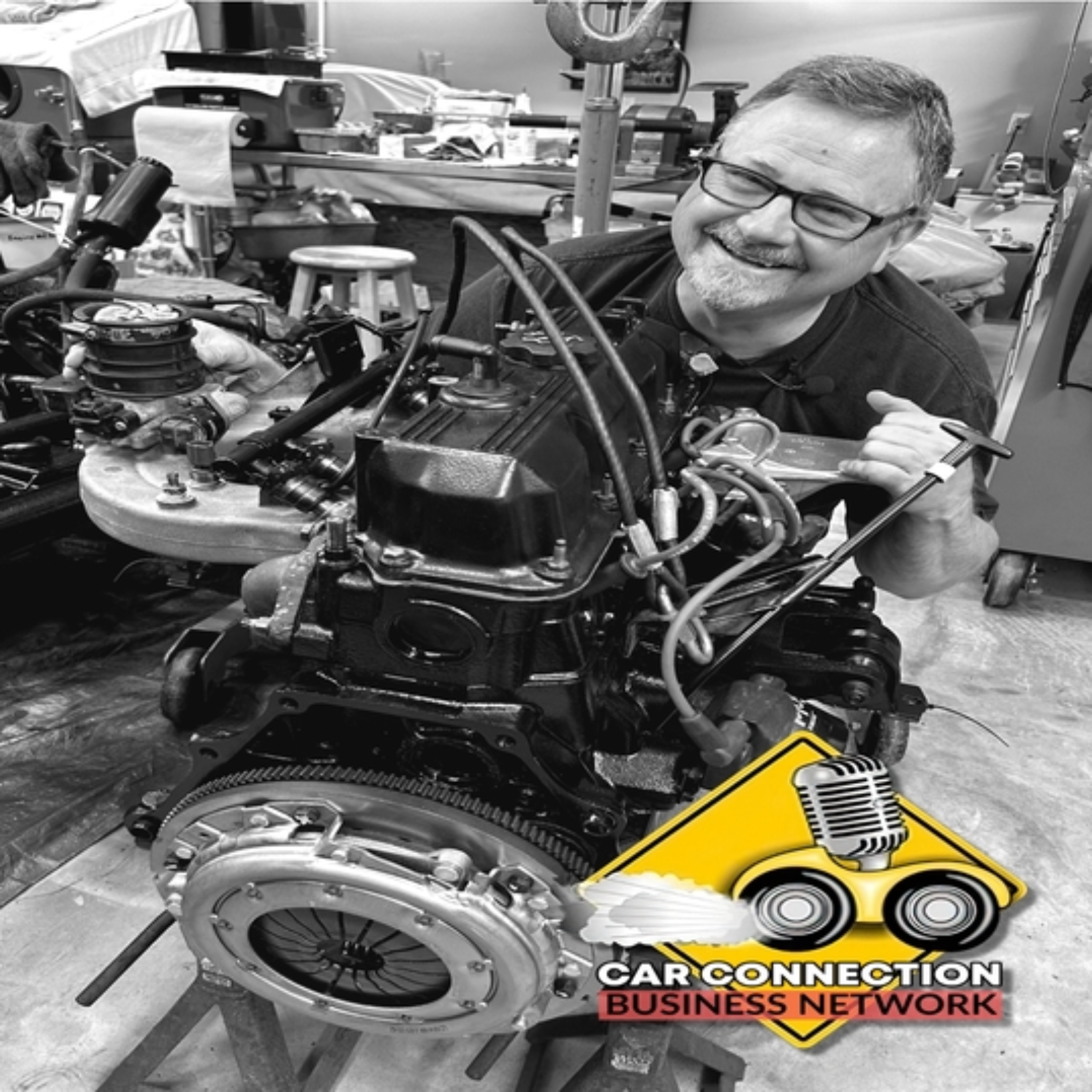
"Car Down Reality Check: How long could YOU Survive Without Your Vehicle?"
About this episode
Nile Modermouth Jenkins kicks off a “fun Friday” shop-talk rant with a reality-check question: how long could your household survive if your vehicle (or just its AC) went down—10 days, a month, even six weeks—especially with parts delays. The discussion ties that stress to real maintenance advice, focusing heavily on air-conditioning evac-and-recharge every two years, clogged orifice tubes, and compressor protection. The host also plugs upcoming Q&A, weather, community partners, and a few local fundraisers.
What happens when your vehicle suddenly says"I'm done"?
On today's fun Friday, we're putting reality front and centre. We rely on our vehicles every single day - until one breakdown flips our entire world upside down. Missed work, cancelled plans, stress levels through the roof...it adds up fast.
So here's the question:
👍 Could you go one week without your vehicle?
👍 Two weeks? A month?
👍 What about six weeks....or longer?
And lets take it even further-what if your three-car driveway suddenly became one? How does that change your household, your schedule, your sanity?
This episode challenges you to think ahead instead of react after the fact. Maintenance and repairs aren't optional - they're inevitable. The real question is : are you prepared, or are you rolling the dice?
Got a story or an opinion? Send it in -your experience might make the next episode.
#Motormouth #LifeWithoutACAr #CarDownReality #CarMaintenanceMatters #AutoRepairTruth
Merchandise Available at ccbusnet.com our online store, Proceeds to Total Freedom Addiction Campuses Canada & USA providing help to those ready to say goodbye to their addiction for good! A NEW Life Awaits them there! You guys Are So Amazing !
Thank You for your support on this, Skippy & Motormouth.
More Episodes and Links are available at Car Connection Business Network.com (ccbusnet.com) you'll find everything on our home page if you'd like to follow the build & repair work we do, connect with our program partners click their logo to meet them, Thank You for giving them you business, we need you & them to make it all happen ❤️ Nile Motormouth Jenkins.
Thank You Again Friends, Please:
Like, Share, Follow, Subscribe to our YouTube Channel, Leave a comment, Ring the Notification Bell Miss Nothing, Join our online community, Bloopers & Reels on Fb & Insta. We Love Guys So Much❤️ Skippy, we're working hard for you! Your Support Is Appreciated Always. NMJ
We'll se you in the next one!
Happy Healthy Motoring Friends, Peace Patience Kindness Always,
E=Mail Anytime to [email protected] OR motormouth.jenkins @gmail .com

Jeep Wrangler
"Whether it's a 25 year old Jeep Wrangler getting a second chance at life or a Nissan Rogue getting its brakes back in order."
The Jeep Wrangler is a popular off-road SUV. People often keep them for a long time, and “second chance” usually means fixing problems so it runs and drives like it should again.
The Jeep Wrangler is a rugged off-road SUV known for its simple, durable design and strong aftermarket support. When hosts talk about a “second chance at life,” they usually mean repairs that restore drivability and reliability after wear or neglect.

Nissan Rogue
"Whether it's a 25 year old Jeep Wrangler getting a second chance at life or a Nissan Rogue getting its brakes back in order."
The Nissan Rogue is a mainstream compact crossover that’s common on North American roads. Mentioning it “getting its brakes back in order” points to routine brake service or troubleshooting to restore safe stopping performance.
brakes
"Whether it's a 25 year old Jeep Wrangler getting a second chance at life or a Nissan Rogue getting its brakes back in order. Maybe a mystery leak that's got everyone scratching their heads."
Brakes are what slow the car down and keep you safe. If someone says the brakes need to be “put back in order,” it usually means something isn’t stopping as well as it should and needs inspection or repair.
“Getting its brakes back in order” implies diagnosing brake-related issues and restoring proper hydraulic and friction performance. Brake problems can come from worn pads/rotors, fluid issues, or caliper problems, and they’re safety-critical.
mystery leak
"Maybe a mystery leak that's got everyone scratching their heads. This is where we roll up our sleeves, we get it done with a little wit, a little wisdom, and a whole lot of fun."
A “mystery leak” is a situation where fluid is found but its source isn’t obvious, making diagnosis harder. Common culprits include engine oil, coolant, transmission fluid, power steering fluid, or brake fluid—each points to different repairs and urgency.
diagnostics
"The Car Connection isn't just about nuts bolts and diagnostics, it's about connection. Connection to our vehicles, to the people who drive them, to the community that keeps Niagara rolling..."
Diagnostics is the process of using symptoms, inspection, and test tools to pinpoint what’s wrong instead of replacing parts randomly. In modern cars, it often includes reading trouble codes and checking live data to confirm the root cause.
preparing to put [a vehicle] back together
"and prepare to put the 07 FJ Cruiser back together, because we now have the final component that everything kind of hinged on. I mean, there was stuff I could put on, but you know what? I just rather slam it all in there all at once."
The phrase “put back together” in a repair context usually means the final missing component is installed so the rest of the assembly can be completed correctly. This highlights how many repairs depend on one key part being available before you can finish the job without rework.
how it breaks
"You'll learn five things on every video. What it is, where it is, how it works, and how it breaks, and how you can prevent spending money on stupid things."
They’re basically saying they’ll explain not just what something does, but also what goes wrong when it fails. That way you can spot problems earlier and avoid wasting money.
The hosts frame their content around understanding how a system works and then how it fails (“how it breaks”). That approach helps listeners connect symptoms to causes, which is key for preventing repeat problems and avoiding unnecessary repairs.
30-day fuel challenge
"And the 30-day fuel challenge, savings challenge, is we're getting closer, but looking at the temperatures, we're taking a dive again... It's a great way to put an extra 100 bucks back in your own pocket if you're willing to listen and do."
A “30-day fuel challenge” is a month-long plan to spend less money on gas. You usually do it by driving a little smarter and keeping the car in good shape so it uses less fuel.
A “30-day fuel challenge” is a structured attempt to reduce fuel spending over a month by changing driving habits and/or maintenance routines. The idea is that small improvements in efficiency add up to noticeable savings at the pump.
paintwork
"...I haven't got back to the paintwork only. No painting in the shop when there's vehicles uncovered."
Paintwork is the work done to make a car’s outside look right again after damage. It usually means cleaning and prepping the area, then spraying paint so it blends in.
Paintwork refers to the process of repairing and refinishing a vehicle’s exterior surfaces. It typically involves surface prep, masking, and applying paint/clear coat to match the surrounding finish.
experiment
"We're gonna I'm gonna video that to show you. It's an experiment. Let's see if it works out... because if it does, instead of costing like $500 $600 to fix that bumper cover, it's gonna be like $38."
Here, “experiment” means trying a repair method to see if it really works. The host is testing a cheaper option and comparing it to the usual cost.
In this context, an experiment is a trial repair approach meant to test whether a cheaper method can achieve acceptable results. The key idea is validating a process before committing to the more expensive, standard fix.
bumper cover
"...instead of costing like $500 $600 to fix that bumper cover, it's gonna be like $38. What do you think of that? So let's see how that works out."
The bumper cover is the outer shell on the front or back of your car—the part you see. In minor crashes, it often gets scuffed or cracked, and replacing it can cost far less than fixing the whole bumper assembly.
A bumper cover is the outer plastic (or composite) panel on the front or rear bumper. It’s often the first thing to get damaged in low-speed impacts, and replacing it can be cheaper than repairing deeper structural damage.
respirator
"When I do the paintwork, it's very taught and very tough to talk with a headpiece on like a mask. Yeah, a respirator. So I will leave the camera rolling so you can see what I'm doing."
A respirator is a mask that helps protect your lungs from fumes. When you’re painting, it’s important because the chemicals in the air can be harmful to breathe in.
A respirator is a protective mask that filters harmful fumes and particulates. During painting or refinishing, it helps reduce inhalation exposure to solvents and paint-related chemicals.
Fun Friday
"All right, let's jump in this morning. Fun Friday. Today. Here's a I'm going to plant this seed in your head."
They’re starting a special part of the show called “Fun Friday.” Think of it like a recurring segment where they set up the day’s theme.
The hosts are setting up a recurring “Fun Friday” segment. It’s a structural marker for the episode’s lighter, conversational portion before the main discussion.
How long could YOU Survive Without Your Vehicle?
"Today. Here's a I'm going to plant this seed in your head. Then we're going to have our swiggy and our daily weather report. How much do you rely on your automobile? Like how"
They’re asking a “real life” question: if your car wasn’t available, how long could you keep going? It’s about how much your routine depends on having a car.
This frames the episode around a real-world dependency question: what happens when your car is unavailable for an extended period. It’s a practical way to think about transportation planning, costs, and how daily life depends on a vehicle.
automobile
"Then we're going to have our swiggy and our daily weather report. How much do you rely on your automobile? Like how"
They’re just using the general word “automobile” to mean your car. They’re asking how much your day-to-day life depends on having one.
“Automobile” is the broad term for a passenger car used for everyday transportation. In this context, it’s about personal mobility—how your life changes if that mobility is removed.
car down
"Two weeks? How about a month? Cars down for a month. What does that look like in your household? How about even worse? Let's go a step worse. Six weeks. Possibly eight. Car down. What does that look like in your household?"
“Car down” just means your car isn’t usable. It could be broken or in the shop, and you can’t rely on it for errands or commuting.
“Car down” means your vehicle is out of service—broken, unavailable, or not reliable enough to use. The hosts use it to frame how long a household could function without transportation and what that disruption looks like in real life.
spare
"I know what that would look like to car connection. That's a disaster. That's why you got to have a spare, an air and a spare. So think about that while we get in tune this morning..."
They’re saying you should have a backup plan if your main car can’t be driven. That could be another vehicle or some other way to get around while it’s fixed.
The hosts mention having a “spare” as a practical mitigation for being without a working vehicle. In automotive terms, this can mean a second vehicle, a backup mode of transportation, or even a contingency plan to keep life moving during repairs.
air
"I know what that would look like to car connection. That's a disaster. That's why you got to have a spare, an air and a spare. So think about that while we get in tune this morning..."
They’re probably talking about tire air/pressure. If your tires aren’t properly inflated, the car can feel bad or be unsafe, so having a way to fix it matters.
In this context, “air” likely refers to air in tires—i.e., tire pressure. If a vehicle loses tire pressure, it can become unsafe or undrivable, so having the means to restore pressure (like a compressor or spare tire) helps prevent a “car down” situation.
interlocking brick
"they have all the blocks you can think of and interlocking brick, metal, you know, angle irons, [989.8s] rebars, all that stuff."
Interlocking brick is a type of block or brick that fits together tightly. That tight fit helps the walkway or wall stay straight and solid instead of slowly moving.
Interlocking brick refers to masonry units designed to lock together, improving stability and reducing the chance of shifting. It’s commonly used for hardscape projects like patios, walkways, and retaining walls because it helps the structure stay aligned over time.
angle irons
"they have all the blocks you can think of and interlocking brick, metal, you know, angle irons, [989.8s] rebars, all that stuff."
Angle iron is a metal piece shaped like an L. People use it to strengthen corners and hold things in place.
Angle irons are L-shaped metal structural members used to reinforce frames and edges. In vehicle-adjacent contexts, they’re also a common fabrication material for brackets, mounts, and supports.
rebars
"angle irons, [989.8s] rebars, all that stuff. They have that as well as if you're looking to build a really cool outdoor living space, Niagara Block."
Rebar is steel bars put inside concrete. It helps the concrete resist cracking and hold up better over time.
Rebar (reinforcing bar) is steel used inside concrete to add tensile strength. Without rebar, concrete is much more likely to crack under stress, so it’s a key material for durable slabs and foundations.
Niagara Block
"They have that as well as if you're looking to build a really cool outdoor living space, Niagara Block. They can get that to happen for you."
Niagara Block is a company that sells building materials for outdoor projects. They’re being used as an example of where you can get the right blocks and help.
Niagara Block is mentioned as a supplier that can help create an outdoor living space using specific masonry products. For listeners, this is essentially a local hardscape/materials vendor rather than an automotive brand.
City Auto Sales and Leasing
"So our weekend weather brought to us by City Auto Sales and Leasing. If you or someone you know was looking to buy a vehicle, [1123.3s] that's the place to go."
City Auto Sales and Leasing is a car dealership being promoted in the episode. They’re saying it’s a safe place to buy a vehicle.
City Auto Sales and Leasing is presented as the source for the weekend weather segment and as a place to buy a vehicle. The hosts emphasize safety and trust, framing it as a dealership option for shoppers.
low mileage quality vehicles
"Earl and Louise have created over 20, 25 years of resources to find low mileage quality vehicles and being able to sell them at fair prices."
They’re talking about cars with fewer miles that are supposed to be in good shape. Even with low miles, you still want to check service records and condition before buying.
“Low mileage quality vehicles” is a sales framing that typically means the car has relatively few miles and is in good condition. In buying terms, mileage is one factor, but “quality” usually implies inspection, maintenance history, and overall wear.
in-house leasing and financing
"That's City Auto Sales and Leasing, in-house leasing and financing available. And I'll tell you, Louise will not let you go out their door, car broke."
In-house financing means the dealership helps set up your lease or loan. Instead of you going through a bunch of outside lenders, they may do more of the work for you. It can change how easy it is to get approved and what the final payment looks like.
“In-house” leasing and financing means the dealership (or its affiliated finance arm) arranges the loan/lease directly rather than sending you to a separate lender for everything. This can affect approval speed, available terms, and how add-ons or payment structures are handled.
out-the-door price (OTD) / "you spent way too much money"
"And what does that mean? That means you spent way too much money. You're into way too much car, vehicle, and you still have to maintain it, gas it, take, be the next caregiver."
They’re basically saying: don’t overpay for the car and then still have to keep paying for it. Even after you buy it, you’ll have to spend money to keep it running—like maintenance and fuel. If the deal is too expensive, it can hurt you for years.
The host is describing a common buying pitfall: paying too much upfront and ending up “into” the vehicle beyond what it’s worth or beyond what you can afford long-term. In practice, this often comes down to the total out-the-door cost (price plus taxes/fees/add-ons) and whether the deal leaves room for ongoing ownership costs like maintenance and fuel.
deferred maintenance / "maintain it"
"And what does that mean? That means you spent way too much money. You're into way too much car, vehicle, and you still have to maintain it, gas it, take, be the next caregiver."
They’re reminding you that buying the car isn’t the end of the spending. You have to keep up with routine care so it doesn’t turn into bigger problems later. If you skip maintenance, repairs usually cost more.
“Maintain it” is pointing at ongoing upkeep as a real cost of ownership, not something you can ignore after purchase. When maintenance is deferred, small issues can turn into expensive repairs, which is especially relevant when someone is already financially stretched from the purchase.
total cost of ownership over 5 to 7 years
"You're going to be paying for it for five to seven years. Come on, you know? So she's going to have a little talk with you."
They’re saying car costs don’t stop after you sign the paperwork. For years—like 5 to 7—you’ll keep paying for things such as upkeep and fuel. So you should think about the long-term cost, not just the monthly payment.
The segment frames car ownership as a multi-year financial commitment (“five to seven years”), emphasizing that payments and ownership costs extend well beyond the initial purchase. This is essentially the idea of total cost of ownership: financing/lease payments plus maintenance, fuel, and repairs over time.
daily weather update
"City Auto Sales and Leasing bringing us today's daily weather. Well, here it is, folks. It ain't great, but it isn't snowing."
This part is just the weather report. It’s not really about cars or car maintenance—more like a regular radio-style segment.
This portion is a weather read (temperature, rain timing, precipitation amount) rather than a car-specific technical discussion. It’s still a structural segment that listeners might recognize as the show’s “daily weather” break.
parts are not available
"Parts are not available. Could you survive that emotionally? How would that change how your household functions?"
Sometimes car parts can’t be found quickly. When that happens, repairs take longer, so your car stays out of service for weeks instead of days.
This highlights the real-world impact of supply-chain and inventory issues: when parts can’t be sourced, even routine repairs can stretch into weeks. For owners, that turns a “vehicle down” situation into a longer household disruption than most people plan for.
blow a head gasket
"Or could you be vibrating, ready to, you know, pop a vein or blow a head gasket that's not replaceable?"
A head gasket is a seal inside the engine. If it fails, the engine can overheat or stop working, and repairs can be very costly.
“Blowing a head gasket” refers to failure of the seal between the engine block and cylinder head, which can cause overheating and loss of compression. It’s often used as a dramatic way to describe catastrophic engine trouble that’s expensive and time-consuming to fix.
emotional total self-destruction
"Or will it be like Chernobyl meltdown in your house? Like an emotional total self-destruction."
They’re using an extreme example to say that losing your car for a long time can feel overwhelming. It can mess up your routine and stress you out.
The “Chernobyl meltdown” comparison is a metaphor for how stressful a long vehicle outage can feel—especially when it affects work, errands, and routines. While not technical, it’s pointing at the psychological side of being car-dependent.
coffee maker
"Worse than not, the coffee, every coffee maker in the house is not working."
The repeated “coffee maker” gag illustrates cascading household failures when multiple backups aren’t actually available. It’s a relatable analogy for how people assume redundancy exists—until it doesn’t.
proper maintenance plan
"Well, how long would your car last if you actually followed a proper maintenance plan? And that, that way you don't find yourself in that place, that scary place where the tech says car is going to be down for a tad."
A maintenance plan is just a checklist of things you do regularly to keep your car healthy. The idea is to catch problems early so you’re not stuck waiting a long time for repairs later.
A proper maintenance plan is a schedule of routine services (like inspections and fluid/filters replacements) designed to prevent small issues from turning into big failures. In the context of the episode, it’s used to explain how planning ahead can reduce the odds of your car being down for weeks waiting on repairs or parts.
car is going to be down for a tad
"...that scary place where the tech says car is going to be down for a tad. What's a tad? About eight weeks. What? What do you mean? Eight weeks?"
When they say the car is “down,” they mean you can’t drive it while it’s being fixed. Sometimes parts take so long to arrive that the wait can be weeks, not days.
“Down” means the vehicle can’t be used because it’s awaiting diagnosis, repair work, or parts. The hosts quantify it as “about eight weeks,” highlighting how supply-chain delays can turn a normal repair into a long downtime situation.
evac and recharge
"had the system evacuated and recharged in the last 24 months, two years, then you know what, [1728.0s] you're on borrowed time. The refrigerant doesn't last forever."
This is a service where the AC system is emptied and cleaned out with a vacuum, then refilled with fresh refrigerant. It helps the AC cool better again, especially if the system has been running low or has moisture inside.
An evac-and-recharge is an AC service where the technician pulls a vacuum to remove moisture and old refrigerant, then refills the system with the correct amount of refrigerant. It can restore cooling performance when refrigerant quantity or contamination has become an issue.
refrigerant
"The refrigerant doesn't last forever. And there are very small filters in the system to catch little tiny, very small particles, which restricts the flow of the refrigerant."
Refrigerant is the substance that makes your car’s AC actually cool the cabin. If it leaks or gets contaminated, the AC won’t move heat out of the car as effectively, and parts can wear faster.
Refrigerant is the working fluid in an automotive air-conditioning system that absorbs heat as it evaporates and releases heat as it condenses. Over time it can leak, degrade, or become contaminated, which reduces cooling efficiency and can contribute to component wear.
AC system gets choked off
"So an evac and recharge will help us to be able to actually open the line where what there's a device called an orifice tube..."
If the AC passages get clogged with tiny bits, the refrigerant can’t flow properly. That means the AC can’t cool well and the compressor may have to work harder.
“Choked off” describes restricted refrigerant flow caused by debris or contamination clogging small passages in the AC system. When flow is restricted, the system can’t move heat efficiently, leading to weak cooling and higher stress on components like the compressor.
orifice tube
"...there's a device called an orifice tube... It's a valve and a screen that captures very, very small particles of metal or debris..."
The orifice tube is a small part inside the AC system that controls how refrigerant flows. If it gets clogged with tiny particles, the AC can’t circulate refrigerant correctly, so it won’t cool as well.
An orifice tube is a small metering device in many automotive AC systems that regulates refrigerant flow. It includes a valve/screen that can trap very fine debris; if it clogs, refrigerant flow is restricted and cooling performance drops.
evac every two years
"So an evac every two years and have the AC tech change that orifice tube makes a huge difference..."
They’re suggesting you don’t wait until the AC is broken—have it serviced periodically. The goal is to keep the system clean and working efficiently before problems build up.
The speaker recommends periodic evac-and-recharge (framed here as every two years) to maintain refrigerant quality and help prevent contamination-related restrictions. The underlying idea is that small debris and performance losses can accumulate over time.
AC compressor
"...taking pressure and heat away from the compressor, the AC compressor. ... if your system goes down because the compressor is just you wore you wore it out."
The compressor is the “pump” of your car’s air conditioning. It squeezes the refrigerant so it can carry heat away; if refrigerant flow is poor, it has to work harder and can wear out.
The AC compressor is the component that pressurizes refrigerant so it can circulate through the system and remove heat from the cabin. It runs hot under load, and restricted refrigerant flow or low refrigerant can increase wear and raise failure risk.
fluids and filters
"Fluids and filters. That's simple. Fluids and filters. So again, could you could you do the entire summer without your conditioning?"
The takeaway is that simple maintenance—fresh refrigerant and keeping the system’s small filters/screens clean—can prevent bigger, expensive failures. It’s usually cheaper to maintain than to replace major parts.
The concept here is preventive maintenance: keeping the AC system supplied with the right fluids (refrigerant) and protected by filters/screens that trap debris. This reduces the chance of restricted flow that can overheat and damage expensive components.
preventative maintenance
"It's a preventative maintenance folks. I'm going to predict that we'll probably see AC compressors if we have another hot summer."
Preventative maintenance is fixing or checking things before they break. Doing AC service before the hottest months can help you avoid a bigger problem later.
Preventative maintenance means doing service before a failure happens, based on symptoms, age, or seasonal risk. In this context, servicing the AC ahead of another hot summer can reduce the chance of being stuck without cooling when repairs are in high demand.
sunroof
"You know, I do like my AC, but I will enjoy the outside ambient air temperature if it's decent. You know what I'm saying? Like, you know, windows down, open the sunroof, or take a convertible for a drive."
A sunroof lets you vent the car by opening part of the roof. It can make the car feel less stuffy, but it won’t cool the cabin like AC on very hot, humid days.
A sunroof is a glass or fabric panel in the roof that can open for ventilation. In hot weather, opening it can help exchange cabin air, but it doesn’t replace AC when humidity and heat are high.
convertible
"Like, you know, windows down, open the sunroof, or take a convertible for a drive. But when it's hot, hazy and humid, and like your clothes are sticking to you like a Pillsbury wiener wrap, not good."
A convertible is a car where the roof can open. On hot days it can feel great with airflow, but if it’s humid and hot, it may not be comfortable without AC.
A convertible is a car with a roof that can be opened, allowing more outside air into the cabin. The tradeoff is that in hot, humid conditions, comfort depends heavily on airflow and AC performance.
mortgages
"So they arrange mortgages. I don't do mortgages with banks anymore, have it for almost 20 years"
A mortgage is a loan used to buy property, typically repaid over many years. The speaker mentions arranging mortgages as part of long-term financial setup, which can influence budgeting for vehicle ownership and future purchases.
life insurance
"and life insurance, critical illness insurance, all taken care of. You know what's great is they look after all that stuff we don't want to talk about"
Life insurance is money paid to your family if you pass away. People talk about it as part of overall planning so their household stays financially protected.
Life insurance is coverage that pays out to beneficiaries if the policyholder dies. In long-term planning discussed here, it’s part of a broader financial safety net that can indirectly support vehicle ownership by protecting household stability.
critical illness insurance
"and life insurance, critical illness insurance, all taken care of. You know what's great is they look after all that stuff we don't want to talk about"
Critical illness insurance pays you if you get diagnosed with a serious illness. It’s meant to reduce financial stress so you can keep up with bills, including car-related expenses.
Critical illness insurance provides a payout if you’re diagnosed with certain serious illnesses. The segment treats it as part of comprehensive planning, which can help maintain financial commitments like vehicle costs during major health events.
discovery meeting
"If you're buried in debt and you're thinking there's no way out, you need that discovery meeting. You need that hour in a coffee."
A discovery meeting is an initial consultation where you share your situation and goals so an advisor can outline next steps. Here, it’s positioned as a first step for people who feel stuck financially and need a plan that includes vehicle-related budgeting.
Car Connection Workshop
"they like me and car connection, what we do here and have on radio for 32 years, ... All right. Questions. You have questions for me for Q&A tomorrow morning at 8am in the car connection workshop for the morning"
They’re talking about a workshop/show called “Car Connection Workshop.” It’s basically a place where they answer questions and help people plan around owning a vehicle.
This segment is framed around the “Car Connection Workshop,” which sounds like a recurring show/community event. The hosts use it to discuss planning and decision-making that affects vehicle ownership.
tax planning
"budget to take care of that vehicle that you presently have and how to plan and prepare for the purchase of the next one and tax planning. It's not what we make folks that's important."
Tax planning means planning your money so you pay less tax in a legal way. If you’re buying a car, it can help you time things and choose options that fit your overall finances.
Tax planning is the process of organizing your finances so you legally reduce taxes and keep more of your money. In the context of buying a vehicle, it can affect how you structure payments, investments, and timing of purchases.
Wrangler Tj Wrangler
"... was two fold purpose in in rescuing the 97 Jeep TJ Wrangler. It was a blessing given to us to do and to film ..."
“Wrangler” here means a Jeep Wrangler, and the episode is talking about a 1997 model. The car was saved and restored, and the restoration was filmed. That’s why it’s mentioned in a story about bringing an older Jeep back to life.
In this context, “Wrangler” refers to the Jeep Wrangler, specifically a 1997 Jeep TJ Wrangler that was rescued and filmed as part of a restoration story. The significance is that the TJ generation is a common target for preservation because it represents a classic Wrangler look and layout. It’s discussed as a two-fold effort—rescuing the vehicle and documenting the process.

2007 Toyota FJ Cruiser
"“...instead of using my using our 2007 Toyota FJ Cruiser because it's just too nice to to beat it up...”"
They mention their 2007 Toyota FJ Cruiser and say they don’t want to use it for rough work. The idea is: if a vehicle is in good shape, you protect it from damage and wear.
The host contrasts the Jeep TJ Wrangler with a 2007 Toyota FJ Cruiser, explaining they avoid using the FJ Cruiser for rough work. The reason given is that it’s “too nice to beat up,” and they don’t want the cost and hassle of replacing it with a newer one.
wood trailer
"“...that's going to be the wood hauler instead of using my using our 2007 Toyota FJ Cruiser... So the Jeep TJ Wrangler will be pulling the wood trailer.”"
They’re talking about towing a trailer carrying wood. That’s heavier than normal errands, so it’s the kind of job that can wear out a vehicle faster if you use the wrong one.
A “wood trailer” implies towing a trailer loaded with wood, which is a common use case for work vehicles. Towing adds stress to drivetrains and increases demands on brakes and tires, so choosing the right vehicle for the job matters.
custom exhaust
"We need a few more boxes to come in to be able to get the custom exhaust done in a bracket welded on the front differential..."
A custom exhaust is an exhaust system made or modified to fit your car the way you want. It can change how the car sounds and how the parts fit together.
A custom exhaust replaces or modifies the factory exhaust system to change fitment, sound, and sometimes performance. It often requires careful routing around suspension and drivetrain components.
control arm
"...a bracket welded on the front differential to hold the control arm in place because it just got whatever they got into with that thing."
A control arm is part of the suspension that holds the wheel in the right position. If it’s bent or not supported correctly, the car can handle poorly and tires can wear unevenly.
A control arm (often called an A-arm) locates and controls the motion of a wheel relative to the chassis. If a bracket is welded to support it, damage or misalignment can affect handling and tire wear.
front differential
"We need a few more boxes to come in to be able to get the custom exhaust done in a bracket welded on the front differential to hold the control arm in place..."
The front differential is a gearbox that helps the front wheels spin at different speeds when you turn. That’s what keeps the car from binding up in corners.
The front differential is the gear unit that lets the front wheels turn at different speeds, especially when cornering. It also routes power to the front axle in many drivetrains.
bracket welded
"...custom exhaust done in a bracket welded on the front differential to hold the control arm in place because it just got whatever they got into with that thing. They really bent the one bracket up..."
A welded bracket is metal support that’s permanently attached by welding. If it’s not welded straight or strong enough, it can cause problems with how the suspension parts move.
Welding a bracket is a structural repair or reinforcement that permanently joins metal parts. In suspension/drivetrain areas, weld quality and alignment matter because small errors can cause vibration, binding, or accelerated wear.
cut that off... weld on a new one
"...I've got it looking not too bad but I found them online. I didn't know you could buy them so we just going to cut that off, lance that off and weld on a new one. So things are looking good."
Instead of trying to fix a bent piece in place, they’re planning to remove it and install a new one. That helps ensure everything lines up correctly and stays strong.
This describes a common repair approach: remove damaged metal and replace it with a new, correctly shaped part. It’s often preferred over trying to “make do” with bent components when alignment and strength are critical.
Request an Explanation
Heard something you'd like explained? We'll add it to this episode.
Sign in to request explanations for terms you heard.
Want to learn more?
Browse our glossary for plain-English explanations of automotive terms, jargon, and concepts.
Help improve this episode
See something that's not quite right? Our annotations are AI-generated and can sometimes miss the mark. Click the flag icon on any annotation to suggest a correction.