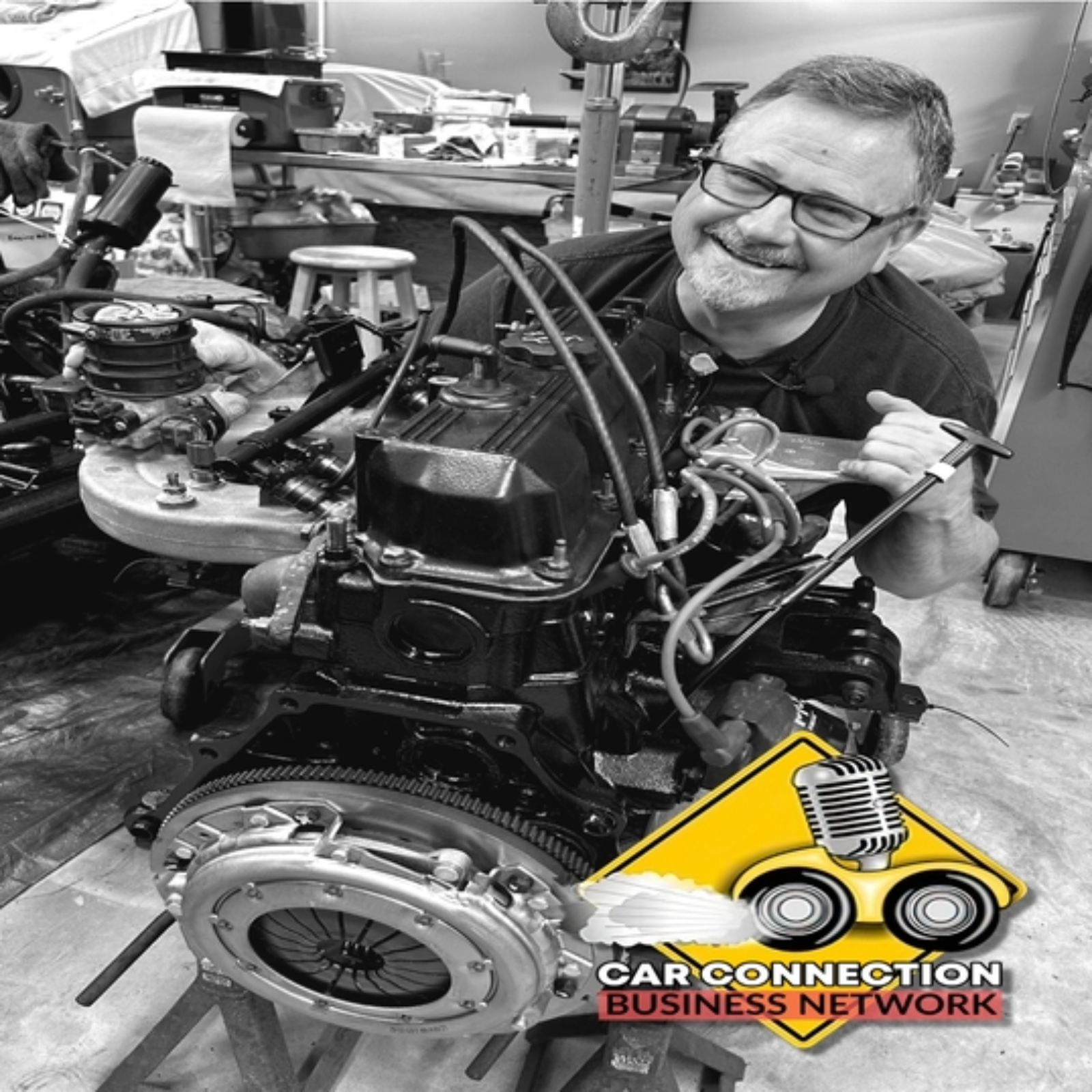
"Car Down? Start With Diagnosis - Not Decisions | Take Control of Your Repair"
About this episode
Niall “Motormouth” Jenkins runs through how to handle a car that’s down—before you start authorizing repairs. He argues against “trinostics” (the parts-cannon approach) and stresses diagnosis, clear repair orders, and tight communication with the service advisor. He shares real shop examples from his own fleet: a failing muffler and alternator replacements, plus how keeping receipts/warranties prevents overpaying. The episode ends with a four-step framework: diagnose, lock the estimate, decide calmly, and keep emotions out of the decision.
When your vehicle breaks down, emotions take over - and that's when costly mistakes get made.
In this episode, we break down exactly what to do when you car is "car down" and sitting in the shop. From the moment it arrives you need a plan - not panic.
We walk through the proper process:
1) Authorizing diagnosis the right way (and why it matters)
2) Locking in a clear repair order with signatures and limits
3) Getting a full, detailed estimate before approving anything
4) Understanding parts quality, warranty, and long-term value
5) Making a smart decision based on facts-not emotion
Too many people rush into decisions, assume the worst, or jumping straight into car shopping without knowing what they actually have. That's how you lose in the car game
This is about becoming a pro-sumer- someone who understands the process, asks the right questions, and stays in control from the start to finish.
Using real vehicle examples, we break down what it actually costs to repair properly - and how to shop smart without sacrificing quality.
The next episode will dive deeper into the repair order (RO) - what it is, how it works, and how it protects you when it's done right.
If you've ever felt overwhelmed at at repair shop, this episode is your playbook.
# AutoRepair #CarMaintenance #CarOwnership
Motormouth Gear/ Thank You to those who have shopped in our online store at ccbusnet.com proceeds go to help those struggling with addiction get the help they need and are ready to say good bye to addiction by getting to a Total Freedom Addiction Campus Canada & USA and that's what they do, change lives one at a time.. You Guys Rock! Thanks Again, Skippy & Motormouth.
More Episodes and...project Links are available at Car Connection Business Network.com (ccbusnet.com) you'll find everything on our homepage if you'd like to follow the build & Repair work & connect with our program partners, click their logo to meet them, Thank You for Supporting them with. your business. Nile Motormouth Jenkins.
Skippy and I send you our Love and Tnx for doing the little things for us so we can grow all of our platforms, we are working hard to bring helpful information to those who appreciate it and a few laughs as well!! Thank You so Much Car Connection Friends!
Keep Doing It: Like ,Share,Subscribe, Leave A Comment, Ring The Notification Bell, Watch,Listen, join our Online Community. It Gives us the Gas to keep our engines running wide open!!! Tnx Guys..NMJ
Happy Healthy Motoring Friends, see you in the next one, Peace Patience Kindness Always
NMJ
diagnosis
"Podcast: Car Down? Start With Diagnosis - Not Decisions | Take Control of Your Repair"
The show’s main idea is: figure out what’s actually causing the problem first. That way you don’t waste money guessing and replacing the wrong parts.
The episode title emphasizes starting with diagnosis rather than jumping straight to repairs or parts. In car repair, diagnosis means identifying the root cause of a symptom (like a warning light, noise, or drivability issue) before deciding what to fix.
Q&A
"So, remind, just another reminder, Saturday's Q&A, it's coming up, that's a one-hour question and answer period. So, I pull the three best questions that arrive into my email box, and then I share those out with all the listeners on all the platforms."
They’re talking about a special episode format where listeners send in questions. The host picks a few and answers them, usually about car problems and repairs.
The host mentions a recurring “Q&A” format where listeners submit questions and the show answers them on-air. It’s a common way for automotive podcasts to focus on real-world repair scenarios and diagnosis questions rather than generic advice.
RSS feed
"So, I just grouped 10 at a time, and I think I've got it figured out where there was one more step I needed to take on the RSS feed for the podcast to automatically export and go public. So, we'll see how that works out on today's program."
An RSS feed is basically the “delivery system” that tells podcast apps when a new episode is available. The host is working on the settings so episodes show up correctly for listeners.
An RSS feed is the automated link that podcast apps use to pull in new episodes. The host is describing how they’re adjusting the feed/export settings so episodes publish to the public without triggering platform restrictions.
repair orders (ROs)
"I'm telling you, I'm going to be talking about that when I do the program on, I spoke about it yesterday, ROs, repair orders, making sure if you want to protect yourself ladies, mostly the ladies at the counter, you have to make sure you're making the service advisor completely fill out the RO, the repair order."
A repair order is the paperwork the shop writes up for your car. It lists what they found, what they’re going to fix, and what you’ll be charged. If there’s ever a disagreement, that document is usually the most important proof.
A repair order (RO) is the document a shop creates that lists the customer’s complaint, the diagnosis, the parts used, labor performed, and the total cost. In disputes about being “ripped off,” the RO is often the key piece of evidence because it shows what the shop said it would do versus what was actually done.
City Auto Sales and Leasing
"Brought to us by City Auto Sales and Leasing, Earl and Louise Grant and husband and wife team."
This is the dealership sponsoring the show. They’re describing themselves as a used-car seller that tries to be straightforward and offer good-condition vehicles.
This is the sponsor mentioned in the segment. It’s presented as a dealership focused on used vehicles, with an emphasis on honesty, integrity, and low-mileage inventory.
pre-owned automobiles
"They provide amazing, I'm going to say outstanding quality vehicles, low mileage, fair prices. That's why we call them Greater Toronto Areas Premier pre-owned auto stores."
Pre-owned just means used cars. The point here is to shop for ones that are in good shape and priced fairly, not junk.
“Pre-owned” refers to used vehicles that have had at least one previous owner. The discussion frames this as a market where buyers should focus on low mileage, fair pricing, and vehicle condition to reduce the risk of buying a problem car.
beater
"So if you're looking for something that you just want to grab as a beater, let them know because they do take in trades but they don't put them back out on the lot in most cases."
A “beater” is a cheap used car you just need to get from A to B. It’s usually not the nicest car, but it can be a practical choice if you’re on a budget.
A “beater” is a low-cost, no-frills used car that’s meant for basic transportation rather than comfort or performance. The host is suggesting the dealership can help find a budget-friendly option, often with the expectation that it won’t be pristine.
Napa
"...I shop it. I got to shop parts like crazy. I've been a Napa guy for 44 years and I'll be honest, I haven't been able to really support them as much as I have in the past because the prices are crazy."
NAPA is a company that sells car parts and supplies to shops and DIYers. The host is saying parts from NAPA have gotten expensive, which changes how they shop for repairs.
NAPA is a major automotive parts retailer and parts brand (NAPA Auto Parts). The host mentions being a “NAPA guy” for decades, which is relevant because parts availability and pricing can directly affect repair decisions and turnaround time.
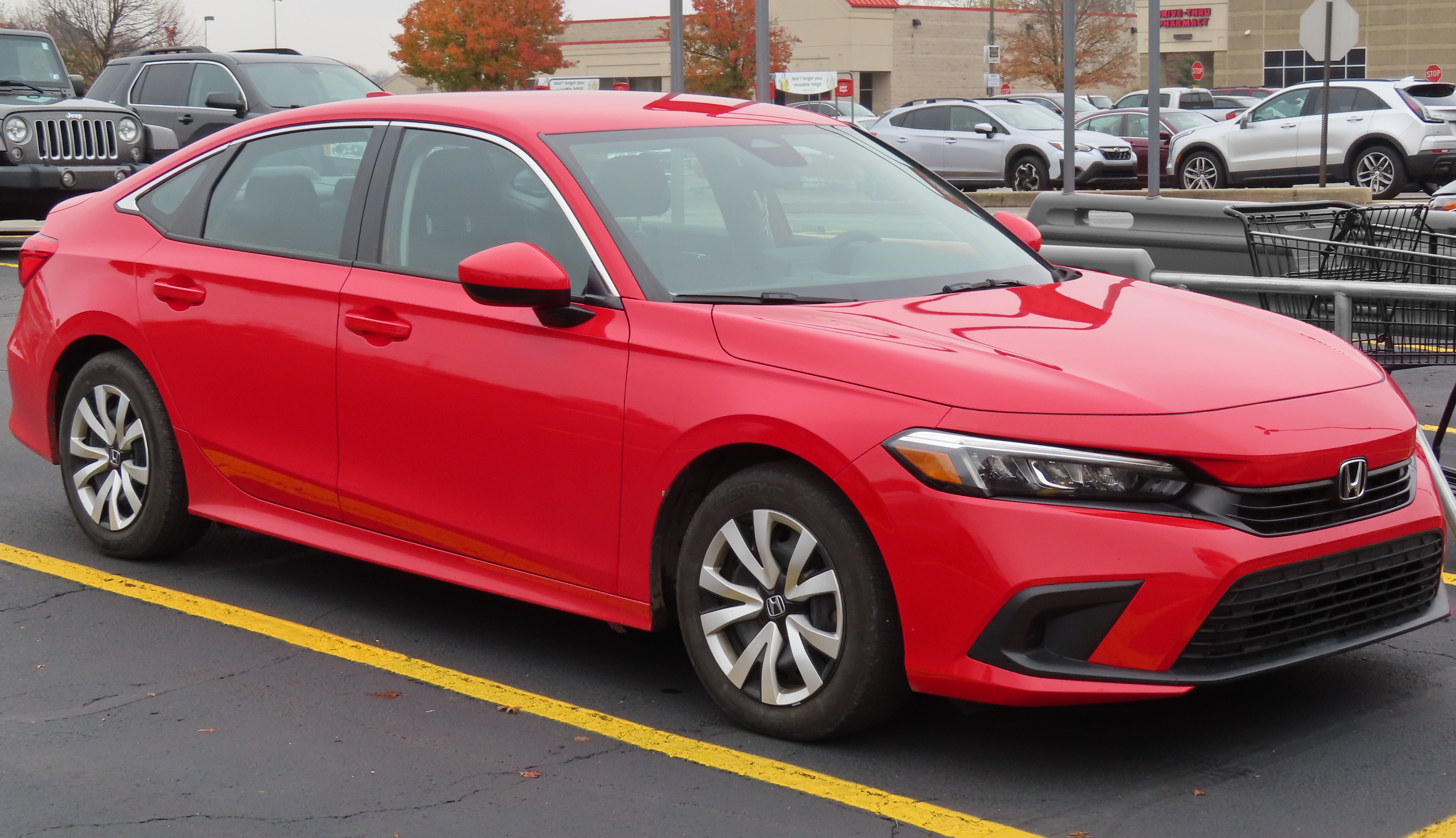
Honda Civic DX
"...I brought in the shop so far, the 99 Honda Civic DX, two-door hatchback, five-speed air conditioning, one owner car."
This is a specific version (trim) of the Honda Civic. The host is talking about a 1999 Civic DX hatchback, so it’s not just “a Civic”—it’s the exact kind of Civic they brought into the shop.
The Honda Civic DX is a specific trim level of the Honda Civic. In this episode it’s described as a 1999 Civic DX two-door hatchback, which helps listeners understand the exact vehicle being discussed for diagnosis and repair context.
five-speed
"...the 99 Honda Civic DX, two-door hatchback, five-speed air conditioning, one owner car."
“Five-speed” means the car has a manual gearbox with five forward gears. It matters because manual and automatic cars can have different issues and different repair steps.
“Five-speed” refers to a manual transmission with five forward gears. That’s useful because transmission type affects how a car drives, how it’s diagnosed, and what parts or service procedures apply.
vehicle service file / file on every vehicle
"So I went pulling, here's where I'm going with it. Having a file on every vehicle that you have in your household makes life so much easier."
It’s like keeping a folder for your car. When something breaks again, you can look back and see what was fixed before and what paperwork/warranty you still have.
Keeping a dedicated file (receipts, invoices, notes, and warranty info) for each vehicle streamlines diagnosis and future repairs. It helps you quickly confirm what was replaced, when, and what parts/warranties apply.
warranty
"because those come with, if you buy the top end walkers, they come with a one year, a lifetime warranty or a one year. I can't remember now."
Warranty coverage determines whether a failed exhaust component should be replaced at no cost. The speaker uses the invoice to confirm whether the installed muffler qualifies for the expected warranty terms.
muffler
"...and you're putting a brand new muffler on because the one that's on there is in bad shape."
A muffler is the part of the exhaust system that makes the car quieter. If it’s rusted out or damaged, replacing it can be a practical fix.
A muffler is part of the exhaust system that reduces noise and helps manage exhaust flow. Replacing a failing muffler is a common, relatively straightforward repair compared with deeper exhaust work.
shop it around
"...I'm going to shop it around. I said, I got connections and they know I'm honest with them. I just say, you know, I'm going to shop it."
“Shop it around” means getting multiple quotes or checking multiple sellers before buying a part. In repairs, this can significantly reduce out-of-pocket cost, especially for common parts like mufflers.
hardware kit
"Yeah. $127 for the Walker muffler. And I got the hardware kit for $10. So I don't waste time with old hardware. Just cut it off and, and be done with it."
The hardware kit is the set of small parts that hold the muffler in place. Using new hardware can prevent rattling and make the repair last longer.
An exhaust hardware kit typically includes hangers, bolts, clamps, and related fasteners used to mount the muffler to the vehicle. Replacing old hardware helps prevent leaks, rattles, and future corrosion-related failures.
alternator
"The alternator is screaming. Yeah, this is the third alternator, roughly around every 100,000."
The alternator is what keeps your car’s battery charged while you drive. If it’s failing, the car’s electrical stuff can start acting weird and the battery may not stay charged.
An alternator is the engine-driven generator that powers the vehicle’s electrical system and recharges the battery. When it starts failing, you can get warning lights, dimming electronics, and eventually a no-start condition if the battery can’t keep up.
car down
"[1998.5s] And if they don't have updated parts to get you going again, guess what, your car down. And that's what we're talking about today. Car down. Now what?"
“Car down” describes a vehicle that’s out of service because it can’t be repaired or made safe to drive. In the episode’s context, it’s caused by delays, shortages, or incomplete preparation to fix known issues.
fleet vehicles
"[2003.5s] And that's what we're talking about today. Car down. Now what? Now what? So here's two vehicles, two fleet vehicles in our own personal fleet that need that are getting their spring checkovers."
A fleet vehicle is a car a business uses for work. If it’s broken, the business loses time, so getting it repaired quickly matters a lot.
Fleet vehicles are company-owned cars used for business operations. Fleet maintenance is often more complex because downtime affects operations, and parts availability or repair delays can have bigger consequences than for a personal car.
Jenkins Automotive
"That's what we did at Jenkins Automotive and repairs for 11 years."
Jenkins Automotive is the name of the shop the speaker worked at. They’re using it as an example of how they handled repairs and maintenance.
Jenkins Automotive is referenced as the speaker’s shop, where they claim to have provided repairs for 11 years. It’s included here as a named business tied to the episode’s message about proactive maintenance and diagnosis.
parts cannon
"Do you have peeps in there, mechanics in there that are top drawer diagnosticians, not parts cannons, where they're going to throw a bunch of parts at it, give you a call and go, well, you know, it needs this and this and this and this."
“Parts cannon” describes a bad repair approach where a shop replaces multiple parts without properly diagnosing the underlying issue. It’s essentially trial-and-error that can waste money and time, and it can still leave the original problem unresolved.
repair order (RO)
"The moment you're checking in with your vehicle is absolutely of utmost importance to saving your butt and your wallet from taking a hit... it's spending a whole week in class all day, every day to learn from the manufacturer that the RO had better be filled out completely if you're wanting to get paid warranty on the job."
A repair order is the paperwork the shop writes when you drop your car off. It’s how the shop documents what’s wrong and what they’re going to fix. If the paperwork isn’t filled out correctly, the shop might not get paid by the warranty.
A repair order (RO) is the official document a shop writes up when you bring in a vehicle. It records the customer concern, what the technician diagnoses, what work will be performed, and what warranty documentation is needed. If key details are missing, warranty reimbursement can be denied.
shop rate
"Our shop rate was $65 an hour ago. Can I step in just for a moment? I got other work to do."
Shop rate is what a repair shop charges per hour for labor. Even if you’re just waiting or asking someone to stay and watch, that time can still be billed.
A shop rate is the hourly labor charge a repair shop bills for technician time. The host uses it to illustrate that if you want someone to stop what they’re doing to monitor a conversation, that time still costs money.
starter
"Starters, alternators, tires, brakes, exhaust, steering, lights, wiring, radiator, thermostat, oil, filters, wipers, et cetera, et cetera, et cetera."
The starter is what turns the engine over when you turn the key or press the start button. If it fails, the engine may not crank.
The starter is the component that cranks the engine to get it running. Starters commonly fail with age or heat cycles, and they’re a typical “wear and tear” item the host lists.
brakes
"Starters, alternators, tires, brakes, exhaust, steering, lights, wiring, radiator, thermostat, oil, filters, wipers, et cetera, et cetera, et cetera."
Brakes slow the car down, and the parts that create friction wear out over time. That’s why brake service is a normal part of car ownership.
Brakes are a safety-critical system that experiences wear from friction materials and heat. The host lists brakes to emphasize that many common repairs are expected over a vehicle’s life.
tires
"Starters, alternators, tires, brakes, exhaust, steering, lights, wiring, radiator, thermostat, oil, filters, wipers, et cetera, et cetera, et cetera."
Tires wear out as you drive, and they also age even if tread looks okay. Replacing them is normal maintenance.
Tires wear down from tread use and can also age due to rubber deterioration. They’re a routine maintenance item that affects safety and traction, and the host includes them as part of normal ownership costs.
radiator
"...lights, wiring, radiator, thermostat, oil, filters, wipers, et cetera, et cetera, et cetera."
The radiator helps keep the engine from overheating by cooling the coolant. If it fails, the engine can run too hot.
The radiator is part of the engine cooling system that dissipates heat from coolant. Failures can lead to overheating, so it’s a major component the host includes among typical wear-and-tear items.
planned obsolescence
"And I really affirm believer in planned obsolescence based on the quality that I see in the parts on vehicles and all the plastic coming out."
Planned obsolescence is the idea that products are designed to wear out or become outdated on a schedule, encouraging replacement. The host argues that modern parts and materials (including lots of plastic) lead to more frequent failures and replacements.
rice rocket
"I don't even feel like I'm driving an older car when I'm in there. I'm driving a little sports car. A rice rocket."
“Rice rocket” is slang for a fast-looking, performance-focused import car. In this episode, it’s used as a fun way to describe feeling like the car is “sporty” again after cosmetic fixes.
“Rice rocket” is a slang term for a car (often a tuner-style import) that’s modified for speed, typically with an emphasis on styling and engine performance. It can be used playfully or dismissively depending on context.
Request an Explanation
Heard something you'd like explained? We'll add it to this episode.
Sign in to request explanations for terms you heard.
Want to learn more?
Browse our glossary for plain-English explanations of automotive terms, jargon, and concepts.
Help improve this episode
See something that's not quite right? Our annotations are AI-generated and can sometimes miss the mark. Click the flag icon on any annotation to suggest a correction.