
Car Keys with Robin Leech and Jay de Marcken – June 1, 2026
About this episode
Turn signals take center stage, starting with the hosts’ frustration that “The signaling is the turn signal usage is diminishing” and that you “can't presume they're gonna go right or left.” They then get practical with roundabout/rotary scenarios—“I am putting on my left turn signal and That is to help the cars behind me figure out what I'm doing”—and debate when to signal while exiting. The conversation broadens into future model rumors, EV/hybrid shifts, and whether extreme performance and tech will actually translate to real-world value.
rotary
"A turning circle around about rotary a rotary. Thank you. So let's take the rotary in Goshen for example and"
“Rotary” is another word for a roundabout. It’s the circular intersection where cars go around and then exit, and the whole question is about when to use your turn signal so other drivers can predict your move.
“Rotary” is a regional term for a roundabout: a circular intersection where traffic flows around a center island. The key point in the discussion is how to use turn signals to indicate whether you’re exiting versus continuing around.
turning circle
"I have a trick signal question for you. Okay. Okay, we have this is the scenario like there is one that they [150.1s] A turning circle around about rotary a rotary."
A “turning circle” is the curved part of the road where you steer to go a different direction. Here, they’re talking about how to signal when you’re entering and exiting a roundabout so other drivers know what you plan to do.
A “turning circle” is the curved roadway area where vehicles maneuver to change direction. In this segment, it’s being used to describe how you navigate a roundabout/rotary and communicate your intended path to other drivers.
Goshen
"So let's take the rotary in Goshen for example and [161.1s] And let's say you want to turn"
Goshen is just the example town they’re using to describe a roundabout situation. It’s not about a special car or part—just helping explain the signaling rules.
Goshen is used here as a specific example location for a rotary/roundabout scenario. The hosts aren’t discussing engineering details of the place—just using it to make the signaling question concrete.
left turn signal
"Well, I know what your answer is but I I do once I'm in this [196.3s] Just about to go into the circle. I am [199.0s] putting on my left turn signal and [203.3s] That is to help the cars behind me figure out what I'm doing"
A “left turn signal” is the vehicle’s indicator used to communicate an intended maneuver to other road users. In a rotary/roundabout context, the discussion emphasizes signaling your exit intention so drivers behind you and approaching from the front can anticipate your path.
Intersection of belt of Wells Hill Road 40 and 41
"but I have a better scenario which is our our Intersection of belt of Wells Hill Road 40 and 41 the class what people are not doing"
This is a specific road intersection mentioned as an example. The speaker is saying that drivers there often don’t signal early enough before turning.
This is a specific intersection the speaker references to illustrate a real-world roundabout/turn-signaling scenario. The point is that drivers may not signal early enough when approaching the turn, creating confusion for others.
right of way
"Which would have been cutting in front of me had I waited for them to signal and yet they had the right of way [381.1s] No, they did not have the right of way because they didn't turn the signal on I"
Right of way is the rule that says who is allowed to go first in traffic. This part is basically saying you shouldn’t assume what someone will do if they aren’t signaling.
Right of way is the traffic rule that determines which driver has priority to proceed at an intersection or during a maneuver. Here, the hosts argue that without signaling, a driver shouldn’t assume the other vehicle will yield or go the expected direction.
Jeep
"Well Jeep has a nice solution for that because oh my god [429.3s] And they have a gong that goes off at about a mile from where you left you turned it on"
Jeep is a car brand. The host is saying some Jeeps have a warning sound if you leave your turn signal on for too long.
Jeep is a vehicle brand known for SUVs and off-road-focused models. In this segment, the host mentions a Jeep feature that alerts you when your turn signal has been left on too long (via an audible “gong”).
cancel the signal
"My signal does not go off on a light right turn right or left [446.8s] If you haven't turned the steering wheel enough to cancel the signal out"
Some cars turn off the turn signal automatically after you steer through a turn. If you don’t steer far enough, the signal may keep blinking.
Many cars automatically cancel the turn signal after you complete a turn, typically when the steering wheel returns to center. The host describes a situation where the signal won’t turn off unless the steering wheel is turned enough to trigger that cancellation.
interstate
"But most many cars don't have that signal so yes, you're right [466.3s] We can drive for miles with a turn signal on and I see that going on too on interstate"
An interstate is a major highway where cars usually drive fast and traffic is separated by lanes. The point here is that people sometimes leave their turn signals on too long even on highways.
An interstate is a high-speed controlled-access highway system in the U.S. The hosts mention it to describe how turn signals can be left on for long distances during lane changes or turns.
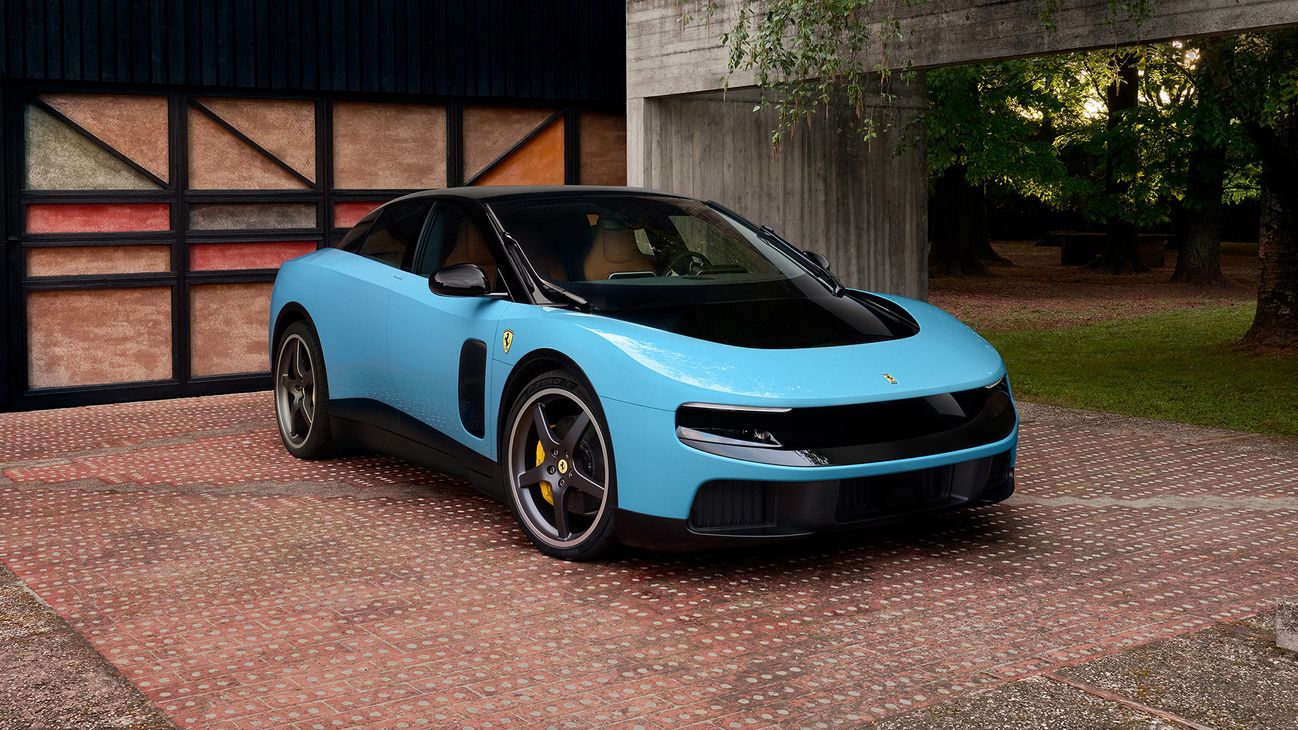
Ferrari Luce
"Have you read it all about the Ferrari luce? ... It's a sedan which is the first sedan Ferrari ever does ... The fact is that it's a 500,000 euro car ... And it is over a thousand horsepower and it's gonna be Insanely fast and it's coming out in 2027"
They’re talking about a rumored/future Ferrari sedan called the “luce.” They say it’s supposed to be Ferrari’s first sedan, and they’re also stressing that it’ll be extremely powerful and very expensive.
The Ferrari luce is discussed as a future Ferrari sedan concept/prototype. The hosts highlight that it’s positioned as Ferrari’s first sedan, with claims of extremely high power (over 1,000 horsepower) and very high pricing (around €500,000).
prototype
"if you had shown that and said this is a Um prototype and or You know some designers fantasy people who said oh, yeah, sure, but that's never happening"
A prototype is an early “test” version of a car idea. It might never be built as a real production model.
A prototype is an early, not-final version of a car used to test ideas, styling, and engineering before production. In the segment, the hosts argue that some concept designs never become real cars.
sedan
"It's a sedan which is the first sedan Ferrari ever does"
A sedan is a car with a separate trunk area in the back, not a hatchback. They’re saying this would be Ferrari’s first sedan.
A sedan is a passenger car body style with a separate trunk, typically with three distinct sections: front engine bay, passenger cabin, and rear luggage compartment. The hosts emphasize that the Ferrari luce is described as the first sedan Ferrari has ever done.
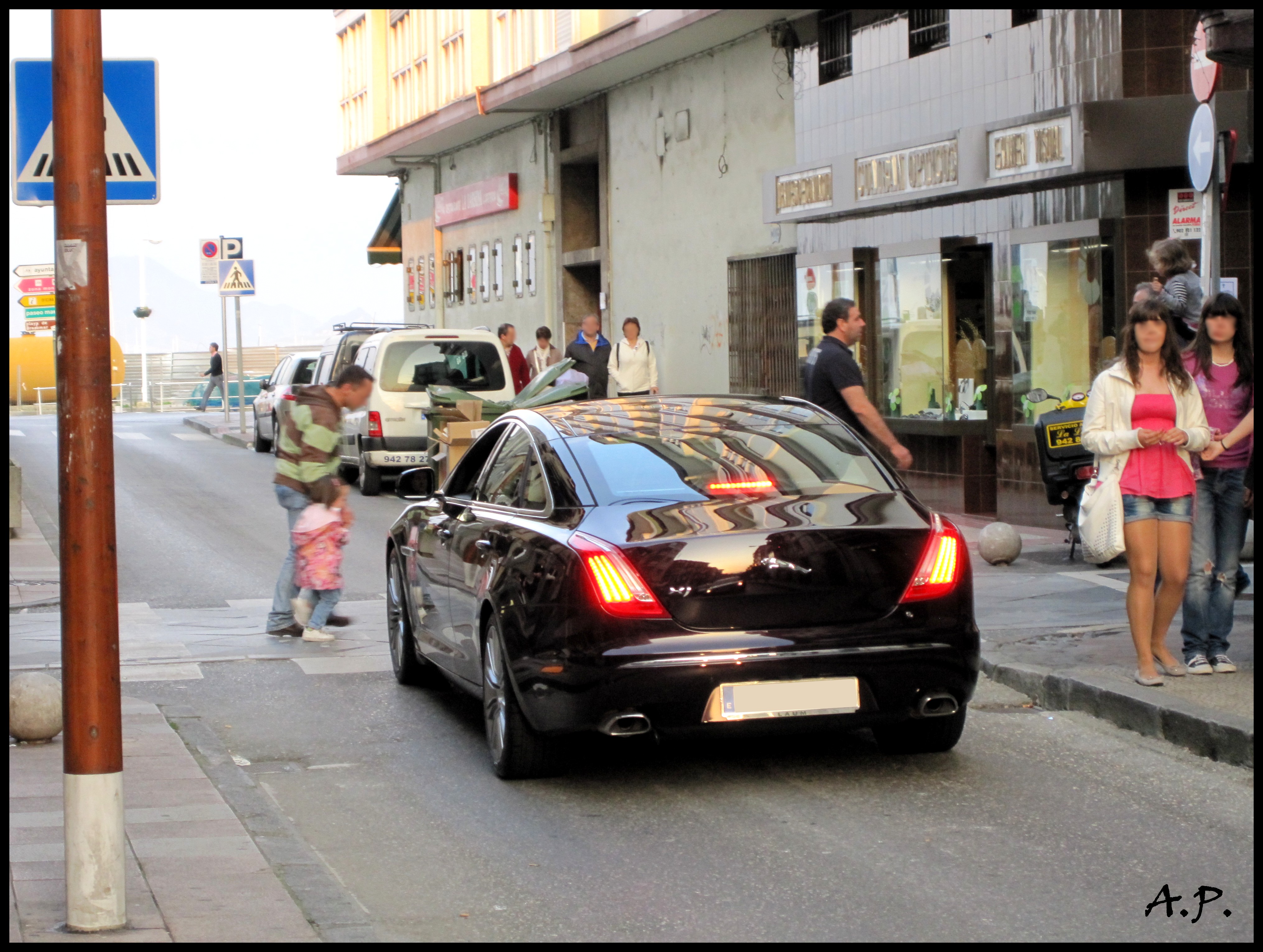
Jaguar XJ
"Maybe it should have followed the way that the conceptual design of the Jaguar XJ that came out about three years ago Never to be seen again by me in any periodical after showed up by one of the car magazines"
The Jaguar XJ is Jaguar’s big, upscale sedan. Here, the host is talking about a very bold XJ design idea that showed up briefly in magazines but didn’t stick around.
The Jaguar XJ is a flagship luxury sedan from Jaguar, known for its long-running design identity and refinement. In this segment, the host references a specific Jaguar XJ concept design that appeared in car magazines and then disappeared, highlighting how extreme styling ideas can be short-lived.
conceptual design
"Maybe it should have followed the way that the conceptual design of the Jaguar XJ that came out about three years ago"
“Conceptual design” refers to a design direction shown as a concept—often in magazines, shows, or prototypes—before it’s confirmed for production. Concept designs are used to gauge reaction and explore bold styling ideas that may or may not make it into a final model.
continuity of the brand's design
"So when you go from one model To the next or generation of a particular model to the next you you want to try to Usually try to keep us several things in mind keeping in the continuity of the the brand's design"
This means car companies try to keep the same “look and feel” as a model changes over time. The goal is to evolve the design without shocking people or abandoning what made the earlier car work.
“Continuity of the brand’s design” is the idea that automakers keep recognizable styling cues as a model evolves from one generation to the next. The host argues manufacturers usually aim for an evolution rather than a radical break, especially when the previous design was successful.

Hyundai Santa Fe
"if you look at Hyundai for instance with their Santa Fe Yes previous generation Santa Fe kind of looks like a you know from some angle like a BMW SUV or right or an Audi SUV"
The Hyundai Santa Fe is a Hyundai family SUV. In this discussion, it’s mentioned as an example where the styling changed in a way that made it seem similar to other luxury brands from some viewpoints.
The Hyundai Santa Fe is a midsize SUV from Hyundai, and it’s used here as an example of a design that broke from the usual “evolution” approach. The host says the previous-generation Santa Fe could look like a BMW or Audi SUV from certain angles, implying Hyundai’s styling direction became more aggressive or less conservative.
total box
"Which is being out for a year or two now is a total box, right? It looks like an Amazon delivery package [749.3s] with wheels on it"
“Total box” is just a way of saying the car looks very square and boxy, like it has straight sides and a tall shape. The speaker is using it to describe the styling.
“Total box” is a descriptive term for a very squared-off, boxy vehicle shape, usually associated with a tall, straight-sided design rather than flowing, rounded styling. In this segment, it’s used to criticize or characterize the Santa Fe’s (and possibly other models’) exterior proportions.
Amazon delivery package
"It looks like an Amazon delivery package [749.3s] with wheels on it and [753.2s] It that is a bold move on on that manufacturer's part, right"
The speaker is comparing the car’s shape to a delivery box—basically saying it looks plain and rectangular, not sleek.
This is a metaphor comparing the vehicle’s shape to an Amazon delivery package—i.e., emphasizing a generic, utilitarian, highly rectangular look. It’s not a technical automotive term, but it’s a vivid styling reference that helps listeners understand the “boxy” critique.

Jeep Cherokee
"I will like to go, you know the listeners on this show that have been listening regularly know [791.4s] I've been discussing the new Jeep Cherokee. Yeah, they don't want it anymore. I I consider the design Functionally useful."
The Jeep Cherokee is a popular family SUV. Here, the speaker is talking about how the newer Cherokee looks different from the older one, and whether that design change is a good thing.
The Jeep Cherokee is a compact SUV known for being a high-visibility, mainstream alternative to other family crossovers. In this segment, the host contrasts the newer Cherokee’s styling with the earlier “outgoing” Cherokees, focusing on how the design changed and how that affects buyer appeal.
outgoing Cherokees
"I think that the outgoing Cherokees were designed beautifully [836.6s] I actually had sent a letter of congratulations saying that the Cherokee was a perfect"
“Outgoing” means the older version that’s being replaced by a newer redesign. The speaker is saying the older Jeep Cherokee looked better than the new one.
“Outgoing” refers to the previous generation or recently replaced model before the redesign. The host uses it to contrast the older Jeep Cherokee styling—described as “designed beautifully”—with the newer, softened design.

Alfa Romeo Stelvio
"They have the 2027 alpha Stelvio which was slated to be a Electric vehicle and now is going to be a hybrid So gas and electric"
This is about the Alfa Romeo Stelvio SUV. The host says the 2027 version was first expected to be fully electric, but it’s now expected to be a hybrid (using both gas and electricity). They also say it’ll look similar to the current Stelvio.
The Alfa Romeo Stelvio is the brand’s compact luxury SUV, and this segment discusses a 2027 Alfa Romeo Stelvio that was originally planned as an all-electric vehicle but is shifting to a hybrid powertrain. The host also notes it will visually resemble the outgoing Stelvio generation, which has been on sale since around 2017–2018.
hybrid
"slated to be a Electric vehicle and now is going to be a hybrid So gas and electric"
A hybrid uses two kinds of power: a gas engine and an electric motor. It can use electricity for some driving and gas for the rest.
A hybrid vehicle uses both a gasoline engine and an electric motor/battery. The point is that it can combine electric driving with gas power, which can improve efficiency compared with a purely gas car.

Audi TT full electric
"Yeah, right Audi TT full electric to me is more of a concept car than anything else"
This is about the Audi TT, but in a fully electric version. The host’s point is that it feels more like a showpiece idea than a car you’d expect to be a big mainstream hit.
The Audi TT is a small sports coupe/roadster line, and the host specifically calls out an Audi TT in full-electric form. They frame it as more like a concept car than a serious production direction, implying it may not feel as authentic or compelling as the traditional TT formula.
concept car
"Audi TT full electric to me is more of a concept car than anything else"
A concept car is basically a “show car” that’s meant to preview ideas. It may not be the kind of car you’d expect to buy in large numbers.
A concept car is a prototype or design study meant to show off new styling ideas or technology, not necessarily something that will be sold widely. When the host calls the Audi TT full electric a “concept car,” they’re suggesting it doesn’t feel like a fully realized production product.
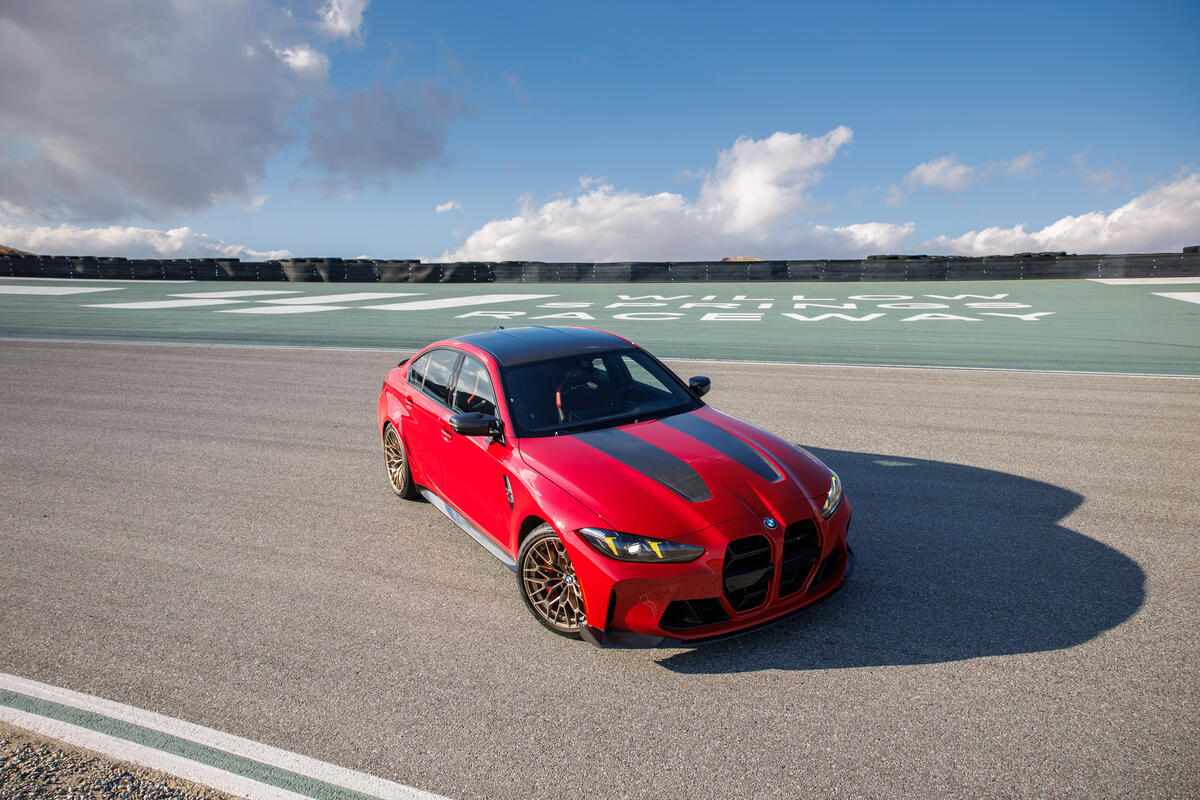
BMW M3
"particularly the M3 in electric form and that car looks like a So the the stand BMW and all and many other European manufacturers have taken is to design their electric cars to look very similar to their"
The M3 is BMW’s performance model. Here, the host is talking about an electric M3 and how BMW (and other European brands) are trying to keep the electric version looking like the familiar BMW design.
The BMW M3 is the high-performance version of the 3 Series, and the host is specifically discussing an electric M3. The key idea is that BMW and other European automakers are trying to make electric cars look very similar to their existing gas models, rather than radically changing the design language.

BMW 3 series
"The the BMW 3 series [1001.3s] As well as the Mercedes C class [1005.7s] are getting very very good reviews with"
The BMW 3 Series is a popular BMW model line. It’s known for feeling fun to drive, not just for being comfortable. Here, the hosts say early versions are getting good feedback.
The BMW 3 Series is a long-running compact executive sedan/near-luxury sports-sedan line from BMW, typically known for balanced handling and driver-focused dynamics. In this segment, it’s mentioned alongside other mainstream models as getting strong reviews, including from early prototypes.
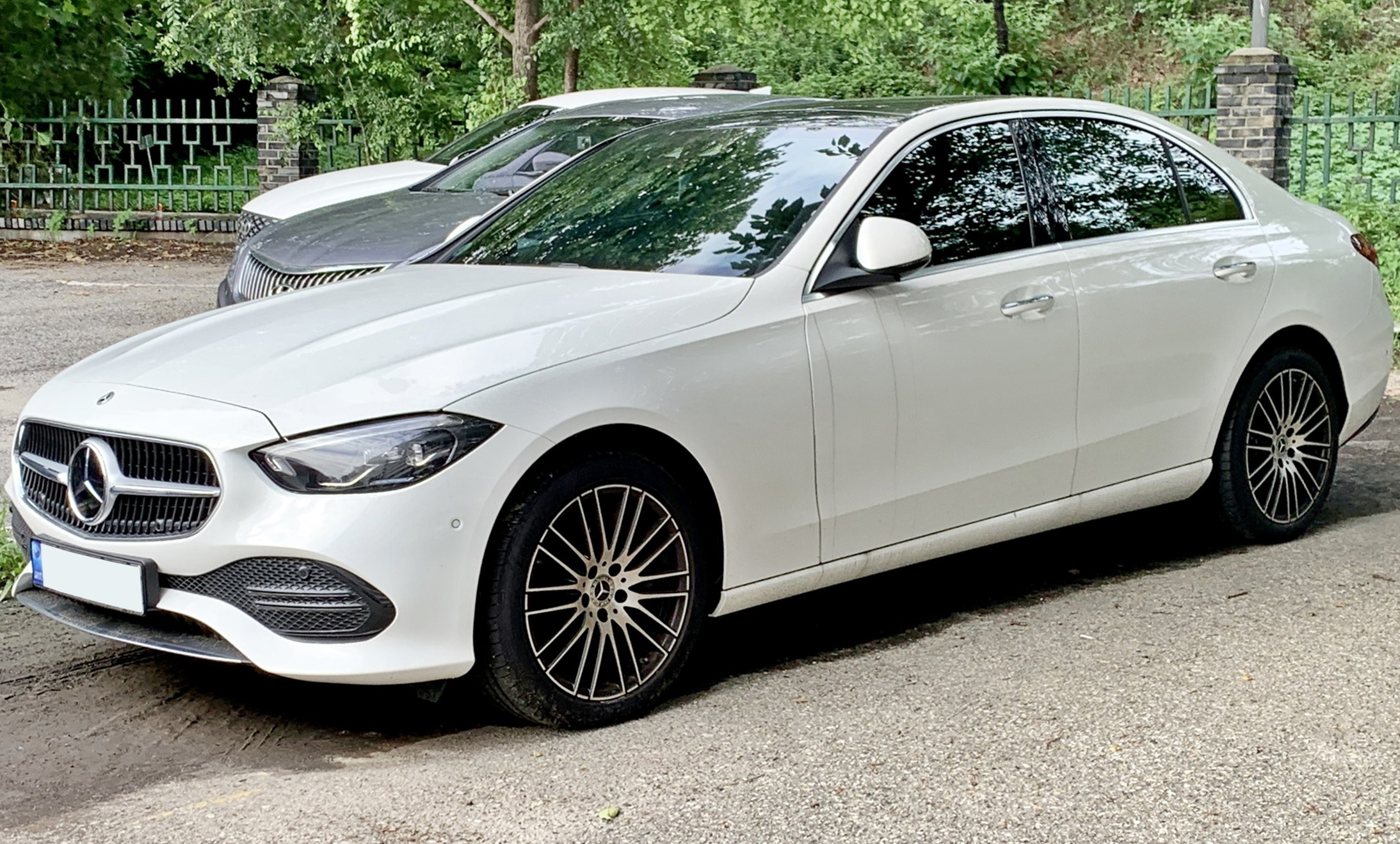
Mercedes C class
"As well as the Mercedes C class [1005.7s] are getting very very good reviews with [1010.2s] early prototypes and"
The Mercedes C-Class is a Mercedes luxury car line that sits in the smaller, more affordable part of the lineup. In this discussion, it’s mentioned as getting very good early reviews.
The Mercedes-Benz C-Class is Mercedes’ compact luxury sedan line, generally positioned as an entry point to the brand’s more premium driving feel. The segment groups it with the BMW 3 Series as models that are improving and earning strong early reviews.

new Chevy Silverado
"Vehicle where I shook my head [1020.1s] That is coming out in 2027 is the new Chevy Silverado [1024.7s] Pickup truck, which it looks like it's another pickup truck to me"
The Chevrolet Silverado is GM’s big pickup truck. The host is saying a new version is coming in 2027, and that it may also lead to new generations of GM SUVs like the Suburban and Tahoe.
The Chevrolet Silverado is GM’s full-size pickup truck line, and the host is specifically talking about a new generation coming out in 2027. They connect it to the idea that GM will also refresh its SUV lineup (like the Suburban and Tahoe) around the same time.

Chevrolet Suburban
"...ee a new generation of SUVs from GM, you know the suburban Tahoe's and escalates in the bunch"
The Chevrolet Suburban is a large SUV designed to fit many passengers and haul gear. It’s mentioned because GM is expected to refresh this kind of big SUV lineup.
The Chevrolet Suburban is a full-size SUV built for carrying lots of people and cargo, often used by families and for towing. The podcast groups it with other GM large SUVs like the Tahoe, implying a new generation and ongoing popularity of the segment. It’s discussed because it’s a major, long-lived platform that tends to get attention when updates are announced.

Tahoe's
"you know the suburban [1042.5s] Tahoe's and escalates in the bunch [1045.4s] And"
The Tahoe is a big Chevrolet SUV. The host is saying GM may update SUVs like the Tahoe at the same time as the next Silverado.
The Chevrolet Tahoe is GM’s full-size SUV, closely related in platform and market position to the Suburban. The host groups it with the Suburban as likely candidates for a new generation of GM SUVs tied to the timing of the next Silverado.

Dodge Charger Hellcat
"But a Dodge Charger Hellcat with a V8 or Mustang dark horse. These are all [1058.3s] powerful sports cars [1060.8s] with V8 engines and"
The Dodge Charger Hellcat is a very powerful Charger variant. It’s known for having a big V8 engine, and the host brings it up as an example of cars that are fast but don’t sell in huge numbers.
The Dodge Charger Hellcat is a high-performance version of the Charger, built around a supercharged V8 engine. In the segment, it’s used as an example of ultra high-performance “halo” variants that are powerful but represent a small market.

Challenger Hellcat
"... you can look forward to them But a Dodge Charger Hellcat with a V8 or Mustang dark horse. These are all po..."
The Challenger is a performance-focused muscle car model. The podcast brings it up as part of a group of cars people associate with big V8 power.
The Challenger is the Dodge muscle car model line known for powerful engines and a long hood-and-short-deck look. In the podcast context, it’s grouped with other performance cars and specifically mentioned alongside ideas like V8 “Hellcat” style performance. That makes it a shorthand for the modern muscle-car conversation.

Ford Mustang
"But a Dodge Charger Hellcat with a V8 or Mustang dark horse. These are all [1058.3s] powerful sports cars [1060.8s] with V8 engines and"
The Mustang Dark Horse is a high-performance version of the Ford Mustang. Here it’s mentioned as another example of a powerful V8 car that appeals to a smaller group of buyers.
The Ford Mustang Dark Horse is a performance-focused Mustang trim, positioned as a more track-capable, high-output variant. The host mentions it alongside the Charger Hellcat to illustrate the niche market for extreme, V8-powered performance versions.
V8 engines
"These are all [1058.3s] powerful sports cars [1060.8s] with V8 engines and [1063.1s] You know, they are kind of a very very very small market"
A V8 engine is a type of engine with eight cylinders arranged in a V shape. The host is talking about V8-powered performance cars that are known for strong acceleration.
A V8 engine is an internal-combustion engine with eight cylinders arranged in a “V” shape. In this segment, V8 is used to describe the kind of ultra high-performance powerplants found in cars like the Charger Hellcat and Mustang Dark Horse.
Is it really worthwhile for these manufacturers to draw to produce these ultra high-performance Versions of standard sort of vehicle lines
"wish for a comment for you on the following topic J [1074.8s] Is it really worthwhile for these manufacturers to draw to produce these ultra high-performance [1083.6s] Versions of standard sort of vehicle lines [1088.3s] Because of the high performance factor of it."
They’re talking about whether it’s worth it for car companies to make super-fast versions of regular models. They also question whether people actually buy for those headline numbers.
The hosts debate whether automakers should invest in ultra high-performance variants of mainstream model lines. The discussion centers on whether the marketing focus on extreme speed and acceleration is meaningful to real buyers.
zero to sixty
"Do we have to have do we have to tout and [1095.5s] With a lot of hoopla about cars can go from zero to sixty and under four seconds, for example [1101.5s] Or even under five seconds."
“Zero to sixty” is a simple test of how fast a car can speed up from standing still to 60 mph. The host is asking whether people really buy these cars just because they can do it in a few seconds.
“Zero to sixty” refers to how quickly a car accelerates from 0 mph to 60 mph, usually measured in seconds. The host questions whether buyers actually care about these headline acceleration numbers, even when magazines highlight them.
Dodge Challenger
"...you know, the high-performance Dodge chargers and Challengers came out with their whatever the hell cats and an..."
The Dodge Challenger is a two-door car built for performance, often with strong V8 engines. The podcast mentions it in the context of the most powerful versions that people associate with the Challenger name.
The Dodge Challenger is a performance-focused muscle car known for powerful V8 options and a classic two-door look. The podcast references high-performance variants like the “Hellcat” era, which is why it comes up in a discussion about modern performance models. It’s a frequent subject when people talk about how muscle cars have evolved while keeping their identity.
ludicrous
"Same thing when the Tesla s plaid came out or the ludicrous [1158.2s] the first versions of the high performance Tesla Model S and"
“Ludicrous” is Tesla’s name for an extra-fast driving mode. It makes the car accelerate more aggressively, which can encourage unsafe speeding if you’re not careful.
“Ludicrous” is Tesla’s performance mode name used on certain high-performance Model S variants. It’s essentially a software setting that increases power delivery and acceleration, which the host argues can make the car too easy to drive at unsafe speeds.
plaid
"Same thing when the Tesla s plaid came out or the ludicrous [1158.2s] the first versions of the high performance Tesla Model S and"
“Plaid” is Tesla’s label for its most extreme performance version. The host is saying that when a car is that fast, it’s easier for people to get into trouble on public roads.
“Plaid” refers to Tesla’s high-performance Model S drivetrain package, associated with maximum acceleration and top-end performance. In this segment, the host uses it as an example of how extreme performance can lead to dangerous driving behavior.

Tesla Model
"...icrous the first versions of the high performance Tesla Model S and I think the level of performance is such th..."
The Tesla Model Y is an electric SUV, meaning it runs on electricity instead of gasoline. It’s brought up because Tesla’s electric cars can be very quick, including performance-focused versions.
The Tesla Model Y is a compact electric SUV designed for everyday use with an all-electric powertrain. The podcast connects it to Tesla’s performance reputation by referencing high-performance versions and how performance levels can be “absurd.” That’s why it’s relevant in a conversation about what electric vehicles can deliver.

Tesla Model S
"Same thing when the Tesla s plaid came out or the ludicrous [1158.2s] the first versions of the high performance Tesla Model S and"
The Tesla Model S is an electric car. In this discussion, the host is warning that early super-fast versions can tempt drivers into going far faster than is safe on public roads.
The Tesla Model S is an electric performance sedan, and the segment specifically references early high-performance versions. The host’s point is that the car’s acceleration and power make it easy to exceed safe speeds, especially for drivers who aren’t used to that level of capability.
speed control
"Well given given your but this is a more dilemma. I fight every day given your examples of what's going on worldwide with speed control [1221.8s] Devices to limit your ability to drive in a sporting manner, which means aka exceeding speed limits"
“Speed control” here refers to systems that limit or regulate how fast a vehicle can go, often using electronic controls. The host is describing devices that reduce a driver’s ability to exceed posted speed limits, as a safety response to how easy it is to drive aggressively in very high-performance cars.
passing capability
"I reported on a recent show about this woman who loves her Rivian because of the passing capability [1253.3s] accelerative features of it when she's behind [1257.3s] huge [1258.6s] Dump trucks that are spraying salt-y stuff on her windshield as she's following"
“Passing capability” is basically how well a car can accelerate when you’re trying to pass someone. The host is saying some cars make passing easier because they can speed up quickly.
“Passing capability” is the real-world ability to accelerate and complete a pass quickly and safely, especially on roads with limited passing opportunities. In this segment, it’s tied to EV/hybrid power delivery and the driver’s need to get around slower vehicles on two-lane roads.

Hyundai Sonata
"And absolutely absolutely that's the appropriate use of the capability that is built into some of our cars [1289.4s] But I can do that with my 103300 sonata hybrid and not quite the same [1294.8s] Yeah, not enough to do that kind of I did it this morning against somebody trying to keep up with me on a right lane"
The Hyundai Sonata hybrid is the car the host uses to compare acceleration. They’re saying it can accelerate pretty well when the battery has charge, but it won’t match a faster EV’s punch.
The Hyundai Sonata hybrid is being used as a comparison point for EV-like acceleration. The host’s key idea is that the Sonata hybrid can still do 0–60-style acceleration when the battery is sufficiently charged, but not to the same extent as a high-performance EV.
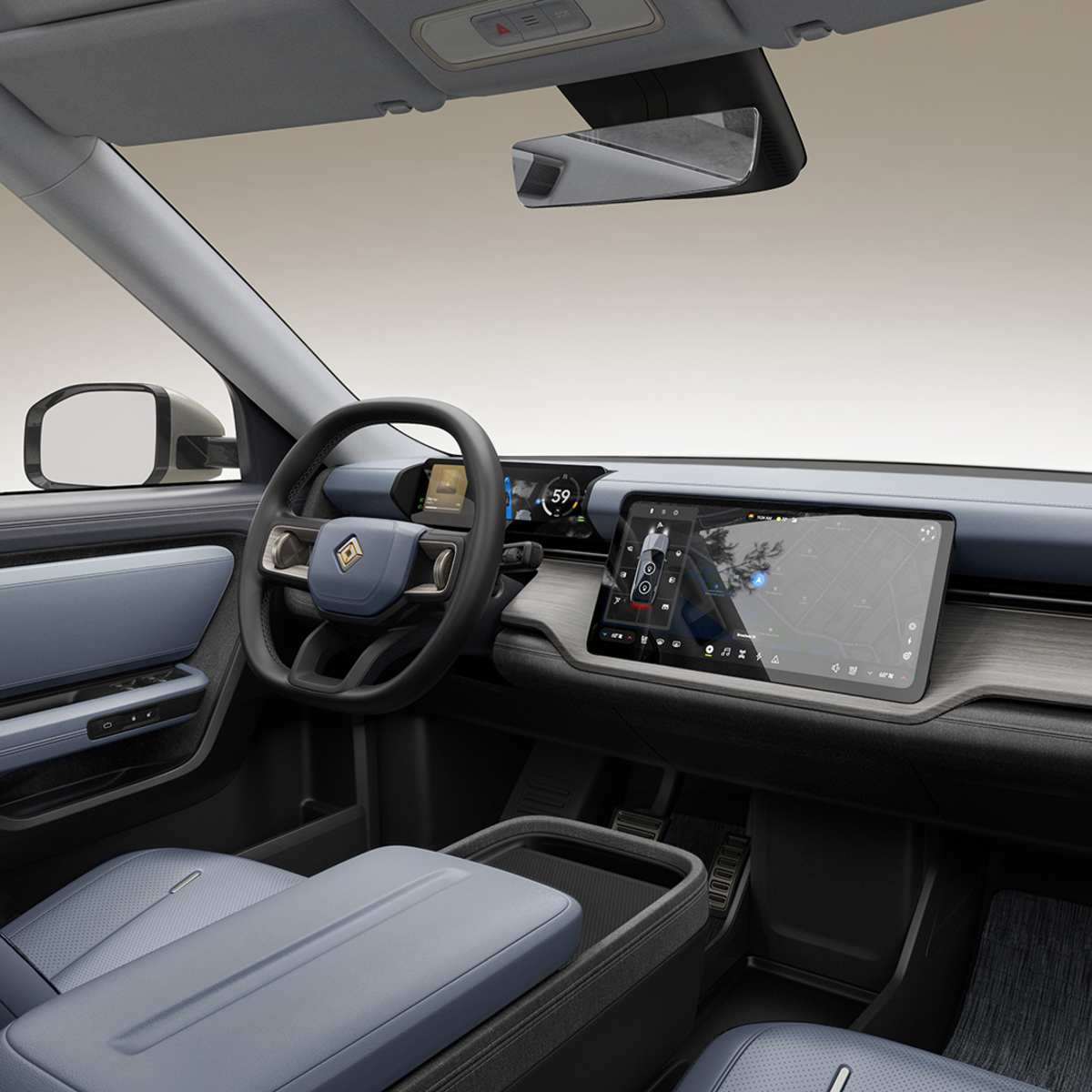
Rivian R2
"Oh, and I'm gonna enjoy driving them and you are gonna enjoy so here's my I Almost, you know, I'm toying with the idea of pulling the trigger on that and I know what you're gonna say here goes Jay again [1366.5s] With the Rivian R2. I think it's a fantastic car [1371.2s] I've read a little bit more about it the big difference between the R1 and the R2"
The Rivian R2 is an electric SUV/pickup from Rivian that’s meant to be a smaller, cheaper version of their bigger models. The hosts are saying the R2 is different from the R1 in more ways than just size and cost.
Rivian R2 is an upcoming Rivian electric vehicle positioned as a smaller, more affordable sibling to the brand’s larger R1 platform. In this segment, the hosts focus on how the R2 differs from the R1 beyond size and price, which matters because it can change how the vehicle feels and performs in real-world driving.
unibody
"The R2 is a unibody like most cars and SUVs"
Unibody means the car’s body is also the main structural “skeleton,” not a separate frame underneath. Many modern cars use this because it can make the ride smoother and the car lighter.
Unibody construction means the vehicle’s body structure is also the main load-bearing structure, rather than using a separate ladder frame. This typically improves ride refinement and reduces weight, though it depends on the specific vehicle design.
body-on-frame
"Whereas the R1 is a body-on-frame"
Body-on-frame means the car has a separate frame underneath, and the body sits on top of it. It’s common on trucks and can change how the ride and structure behave.
Body-on-frame construction uses a separate ladder frame to carry the vehicle’s loads, with the body mounted on top. This is common on trucks and can influence ride isolation, durability under heavy use, and how the suspension is packaged.

Audi A8
"... we want to drive But I do like obviously my 2001 Audi a8. I think it's fabulous looking it's basically a"
The Audi A8 is a large luxury car meant to feel comfortable and high-end. The podcast mentions the 2001 model because the speaker thinks it looks great.
The Audi A8 is a full-size luxury sedan designed for comfort, refinement, and a quiet, upscale ride. The podcast specifically calls out a 2001 Audi A8 as “fabulous looking,” indicating it’s being discussed for its design and presence. That kind of personal reference often comes up when people talk about which cars still stand out visually and feel special to drive.

Volkswagen Euro Van
"I like my Volkswagen Euro van the way you like your tour egg ... I like the high seating position ... the Euro van always gives you"
They’re talking about a Volkswagen van called the Eurovan. The main thing they like is that you sit higher, so you feel like you’re in control and can see the road better than in some minivans.
The Volkswagen Eurovan is a European-market van that the host compares to a “tour egg” (likely the Volkswagen Touareg). The key point is the Eurovan’s high seating position, which the host says gives a more commanding view than typical American minivans that sit lower like sedans.
command position
"American mini vans ... don't have they have you riding at sedan Levels in your seat as opposed to sitting high up in a command position that the Euro van always gives you"
A “command position” just means you sit higher so you can see the road and traffic better. It can make driving feel more in-control, like you’re “on top” of the situation.
A “command position” is a seating height and driving posture that makes the driver feel elevated above surrounding traffic. It’s often associated with SUVs and vans because the higher seating improves visibility and the sense of control.

BMW New Bmws
"...t and left like you see of the jeeps and Even the new BMWs and that kind of thing. Oh Robin. I think you nee..."
BMW’s “New Class” is BMW’s name for a future direction or new generation of cars. The podcast mentions it because it’s supposed to represent what BMW is planning next.
BMW’s “New Class” refers to a planned or conceptual direction for future BMW vehicles, often used to describe a new generation of models and engineering focus. The podcast mentions it alongside “new BMWs” and other automotive developments, implying it’s part of BMW’s next big step. It’s discussed because it signals how BMW wants to reshape its lineup and technology approach.

Type 01
"...t be looking forward to seeing one day the Jaguar type 01 which Why type 01 when they've done so many types..."
“Type 01” sounds like a Jaguar model name that people are expecting to see someday. The podcast is basically discussing why Jaguar would call it that and what it might mean for future cars.
The “Type 01” in the podcast appears to refer to a Jaguar vehicle concept or planned model name. The speaker questions the naming (“Why type 01 when they’ve done so many types”), which suggests the discussion is about Jaguar’s product strategy and how it’s being communicated. It’s relevant because it reflects anticipation around what Jaguar might build next.
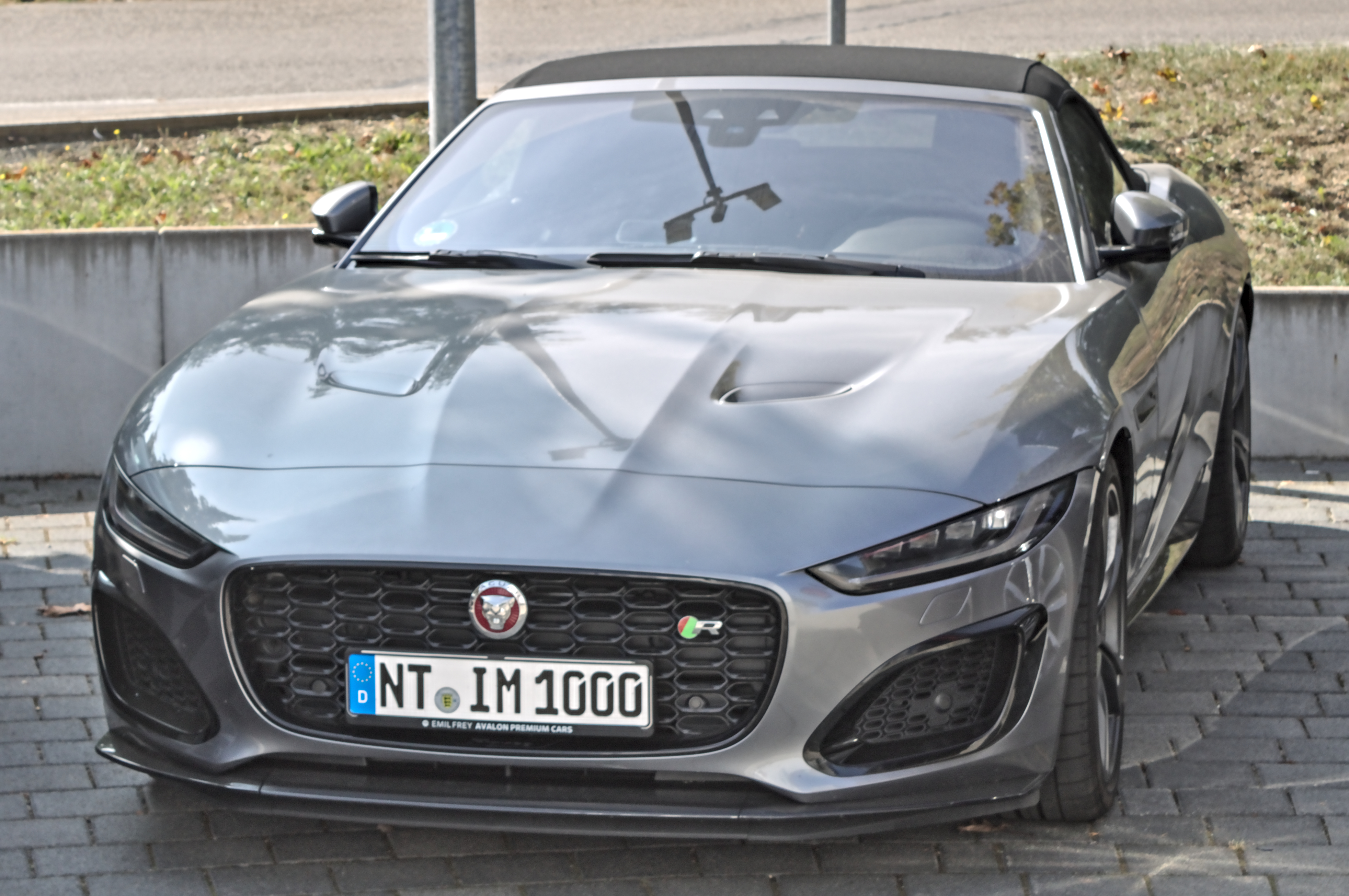
Jaguar Type
"...We might be looking forward to seeing one day the Jaguar type 01 which Why type 01 when they've done so many ty..."
The Jaguar F-Type is a sports car from Jaguar. The podcast mentions it while talking about what Jaguar might do in the future.
The Jaguar F-Type is Jaguar’s sports car, built to deliver a more driver-focused experience than a typical luxury sedan. In the podcast, it’s mentioned in the same forward-looking context as other Jaguar “type” discussions, tying it to expectations about Jaguar’s future lineup. That makes it a relevant reference point when talking about what Jaguar is known for and where it may go next.

2027 Audi RS5
"I'm staring at a picture on my Desktop of driven is the 2027 Audi RS5 Yeah, most on Audi Audi yet, but I read the whole story on it and for the life of me I cannot get into the technology ever being functionally used by any buyer of this vehicle"
This is Audi’s “RS” performance model based on the RS5. The hosts are talking about a future 2027 version and whether the new tech will matter to normal buyers, or only show up during special test drives.
The Audi RS5 is Audi’s high-performance version of the A5, known for a sport-tuned chassis and performance-focused powertrain. In this segment, the hosts are discussing a future 2027 RS5 and questioning whether its new technology will actually be usable in real-world ownership, not just during press/test events.

Hyundai Genesis
"... is is, you know Still working on putting out new Genesis model. So Genesis is their luxury brand and Many ..."
Genesis is Hyundai’s luxury car brand. The podcast mentions it because the company is still working on bringing out new Genesis models.
Genesis is Hyundai’s luxury brand, and the podcast mentions it in the context of continuing to develop and release new models. That’s significant because Genesis has been positioned as Hyundai’s dedicated route into higher-end vehicles. It comes up when discussing where the brand is headed and how its lineup is expanding.
Genesis GV90
"But the new GV 90 is a full-size SUV that actually looks pretty darn good And I have it's a fully electric vehicle and I have to guess is based on the Kia EV 9 and whatever the"
The Genesis GV90 is a big, luxury SUV that Genesis is planning to release. The hosts say it will be fully electric and that it may share underpinnings with the Kia EV9.
Genesis GV90 is a future full-size SUV from Genesis, Hyundai Motor Group’s luxury brand. The hosts describe it as a fully electric vehicle and suggest it may be based on the Kia EV9 platform, positioning it as a major step for Genesis’s lineup.

Kia EV 9
"And I have it's a fully electric vehicle and I have to guess is based on the Kia EV 9 and whatever the"
The Kia EV9 is an all-electric SUV. The hosts are using it as a reference point for what the Genesis GV90 might be based on.
The Kia EV9 is a fully electric, full-size three-row SUV that’s designed around an EV-first architecture. The hosts mention it as a likely basis for the Genesis GV90, implying shared platform/engineering ideas between the two vehicles.
fully electric vehicle
"But the new GV 90 is a full-size SUV that actually looks pretty darn good And I have it's a fully electric vehicle and I have to guess is based on the Kia EV 9 and whatever the"
A fully electric vehicle is a car that runs on electricity from a battery. There’s no gas engine—so you charge it instead of fueling it.
A fully electric vehicle (BEV) runs only on electric motors powered by a battery, with no gasoline engine. In this segment, the hosts use the phrase to frame the Genesis GV90 as an EV rather than a hybrid or plug-in hybrid.

Infiniti Q50
"We may be looking for forward to seeing the 2028 infinity Q 50 looks like a 15 year old sedan"
Infiniti is a luxury car brand, and the Q50 is one of their sedans. The hosts are talking about what a future 2028 version might look like and whether it seems modern or dated.
The Infiniti Q50 is a midsize luxury sedan from Infiniti. In this segment, the hosts discuss a rumored/anticipated 2028 version and compare its styling to a much younger-looking design language.
dead-on arrival
"Looks like a Nissan Altima in my opinion, and I think that's a dead-on arrival"
“Dead-on arrival” means “it won’t do well right away.” The host is basically saying they don’t think the car will be popular when it comes out.
“Dead-on arrival” is a phrase meaning something is expected to fail immediately after release. Here, the host uses it as a blunt opinion about the discussed 2028 Infiniti Q50’s likely reception based on its looks.

Nissan Altima
"Looks like a Nissan Altima in my opinion, and I think that's a dead-on arrival"
The Nissan Altima is a common, everyday sedan model from Nissan. The host is basically saying the car they’re talking about looks similar to an Altima.
The Nissan Altima is a mainstream midsize sedan known for high-volume sales and a comfort-focused ride. Here, the host uses it as a visual reference point, saying the discussed Infiniti Q50 styling resembles an Altima.

Mitsubishi Galant
"... frankly They were my rental car favorites both a galant as a sedan and the Monteros and SUV always my fir..."
The Mitsubishi Galant is a regular mid-size sedan, the kind of car you’d use for everyday driving. The podcast mentions it because the speaker liked it as a rental car.
The Mitsubishi Galant is a mid-size sedan that was popular as a practical daily driver in its time. The podcast mentions it as a favorite rental car, which points to its comfort and usability rather than outright performance. That kind of recollection often comes up when people talk about cars that were easy to live with.
Request an Explanation
Heard something you'd like explained? We'll add it to this episode.
Sign in to request explanations for terms you heard.
Want to learn more?
Browse our glossary for plain-English explanations of automotive terms, jargon, and concepts.
Help improve this episode
See something that's not quite right? Our annotations are AI-generated and can sometimes miss the mark. Click the flag icon on any annotation to suggest a correction.