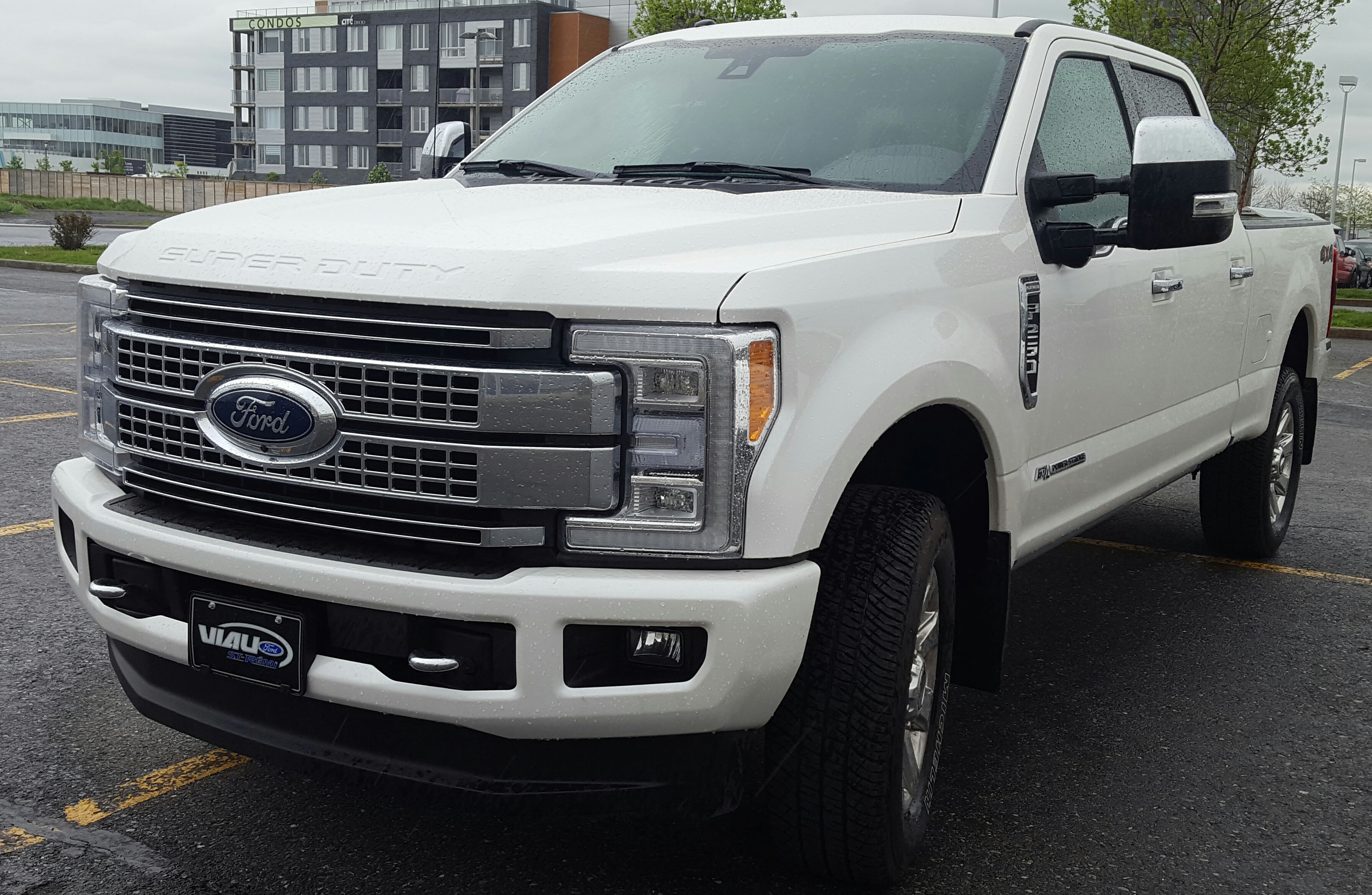
The Ford F-250 is a strong pickup truck that can carry heavy loads and is often used for work. It's built to handle tough jobs better than regular trucks.
The alternator is a part of the car that helps generate electricity while the engine is running. It keeps the battery charged and powers things like the lights and radio.
The Buick Enclave is a large SUV that can fit many passengers and has a lot of room for cargo. It's designed for families and is known for being safe and comfortable.
The Ford F-350 is a really big truck that can carry heavy loads and tow trailers. It's great for people who need to do tough jobs or want to take their toys, like boats or campers, on adventures.
Diesel additives are special liquids you mix with diesel fuel to help the engine run better. They can keep the fuel from getting thick in cold weather and help the engine stay clean.
Cetane is like a score for diesel fuel that shows how quickly it will ignite in the engine. Higher numbers mean the fuel will start burning faster, which is better for engine performance.
An internal combustion engine is a machine that makes cars go by burning fuel inside it to create energy. It's the type of engine found in most vehicles.
A CVT is a type of car transmission that doesn't have fixed gears like regular automatic transmissions. Instead, it can adjust smoothly to provide better fuel efficiency and acceleration.
The Subaru Outback is a type of car that looks like a mix between a wagon and an SUV. It's great for driving in different conditions and is popular for people who like outdoor activities.
EcoBoost is a type of engine made by Ford that uses a turbocharger to make the car more powerful while using less fuel. A turbocharger helps the engine get more air, which improves performance.
A voltage regulator helps keep the electricity in your car at a steady level. This is important because if the electricity gets too high or too low, it can harm the car's parts.
A Garmin GPS is a device that helps you find your way while driving. Some models can also show your speed, which can be helpful if your car's speedometer isn't working.
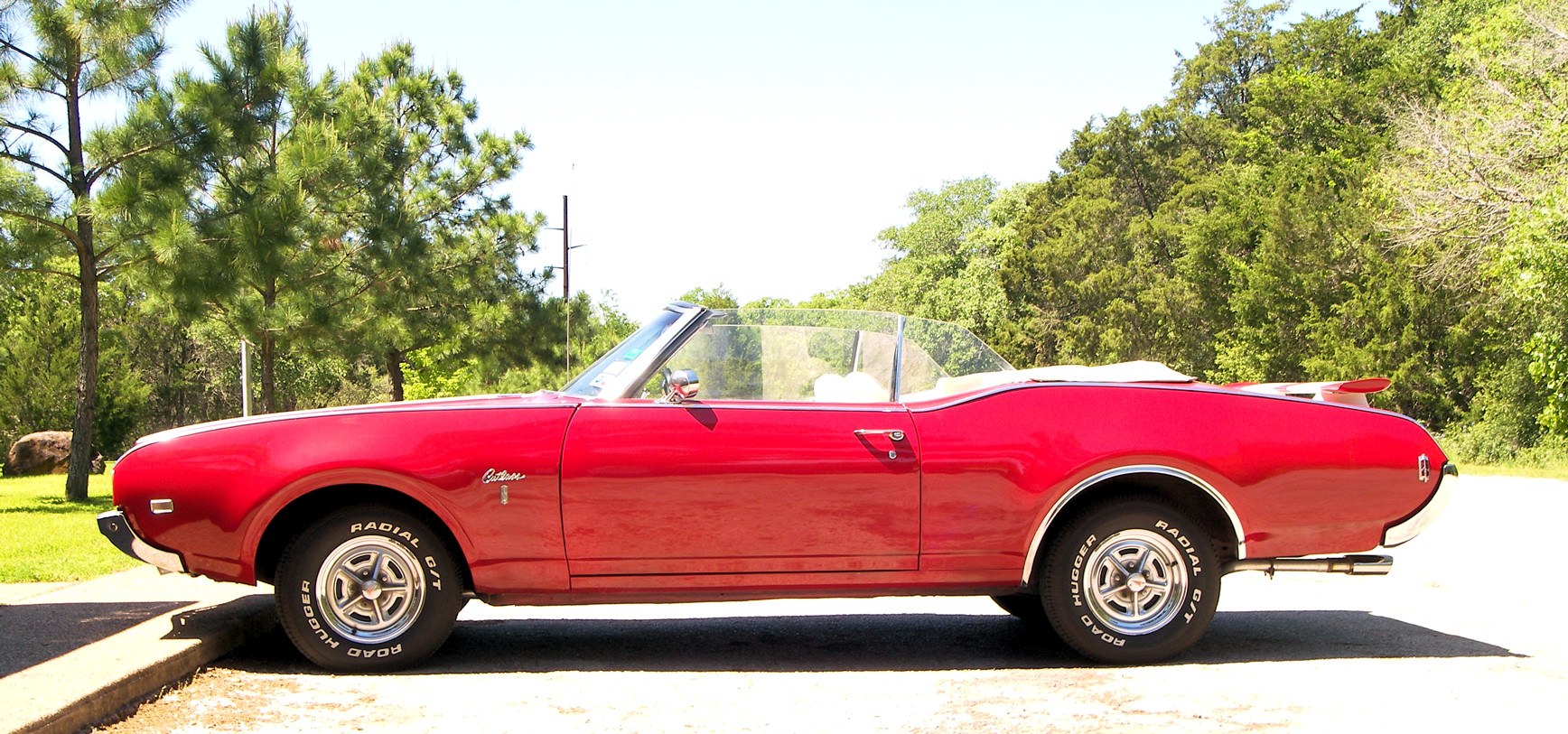
The Oldsmobile Cutlass is an older car that many people remember fondly. It was popular for being comfortable and stylish, and now it's a classic that some collectors really love.
The Honda CR-V is a type of vehicle called an SUV, which stands for Sport Utility Vehicle. It's designed to be practical and reliable, making it a popular choice for families.
A jump box is a small device that can help start a car when the battery is dead. You connect it to the battery, and it gives the car enough power to start up again.
Cranking amps tell you how much power a battery can give to start a car's engine, especially in cold weather. The higher the number, the better it can start the engine.
A multimeter is a tool that helps you check how much electricity is in a battery or circuit. It's used to find out if something is working properly or not.
The charging system keeps the car battery charged and powers everything electrical in the car when the engine is running. If it doesn't work, the battery can die quickly.
A trickle charger slowly adds power to a battery to keep it charged without damaging it. It's great for batteries that aren't used often, like in classic cars or motorcycles.
A float charger keeps a battery fully charged by giving it just a little bit of power all the time. It helps ensure the battery is always ready to go without overcharging it.
An AGM battery is a special kind of car battery that is very strong and doesn't need much care. It's often used in fancy cars because it lasts a long time.
A battery maintainer is a tool that helps keep your car's battery charged when you're not using the car often. It makes sure the battery doesn't run out of power and can start the car when you need it.
LIVE
Welcome to the Under the Hood show podcast. Thank you very much for listening. Also,
check out our YouTube channel and the Facebook page. We do the show live on video as we record
the podcast you're about to hear, which is brought to you by Berkeley One Classics,
your key to collector car insurance. And road ready wheels, replica OEM wheels,
add huge savings. Use the offer code hoodie for even more. And by car dash part,
over 200 million use parts ready to ship to you fast. Here is the Under the Hood show podcast.
Thank you very much for listening. This is Under the Hood. Welcome to the Under
the Hood show. We are glad to have you with us. Russ Evans is here to answer your automotive
questions. Yeah. Welcome to Under the Hood. Shannon Nordstrom is here to do the same. Welcome,
Hoodies. Thanks for tuning in so we can help you tune up. I'm Chris Carter here to answer your calls
at 866-594-4150. 866-594-4150. Quick question about, since it's relevant to the entire country
in this span of time, with the cold, is there anything we shouldn't do that will break our windows?
I saw a video the other day that said do this if you get cold and you can pour this on your window
Don't pour anything on it. You don't want to mess with your windows. Just let the car warm up.
When you turn your defroster on, turn it on slowly. If you go out to a car and you have
a crack or you have even some small rock chips you don't know about and you turn the defroster
on high and hot, you just fan and you start it up and walk away as the car warms up,
all of a sudden that heater, the heater doesn't work right away. But when it starts working,
it changes temp pretty quick and if it's 20 below outside and winds blowing,
and all of a sudden this heater now is putting out 160 degree air right on that windshield,
it's going to break. It's just the way it is. We try when we bring a car into our shop when it's
that cold to not run the heater at all. We just leave, we turn it off, we drive the car in,
it'll thaw out the shop on its own. But if you've got a window with a crack anywhere in it,
that's your problem. It's cold, you didn't fix the crack, shame on you because it will crack as
it's used. I've watched cracks in windows in cars as you're driving them, just get longer as you go,
that's because there's a temperature differential. If you want to protect it, fix it when it chips,
that's why they have rock chip repair. That happened to me once I watched it. It was fascinating
until I realized what was, I was like, wow, that's really neat. Oh shoot. When we were kids,
we used to always find the ones out in the salvage yard and then we'd push on them.
You could chase them around and move the cracks. We had that opportunity to do that. It was always
been a fun for 15, 20 minutes. Sure. Didn't have internet back then. Didn't need it.
Yeah, your own web of cracks. If we would have had the internet back then, we would have been stars.
I always think, thank God we didn't have YouTube because my neighbor across the street would be
dead because he was doing stuff just for fun. Let's see if I can do a flip off of the shed.
And we'd all be like, okay, let's see if you can. If we'd have had YouTube, oh.
It's amazing what pops up on YouTube, the stuff we said, oh, nobody will ever see this. And there's
photos or videos. Somebody had an old VHS camcorder or something from the 80s.
And that footage somehow lasted without rotting away. It was stored just right,
you know, on accident on a shelf. And now they, you're like, what? It's like, what did it look
like in the 70s or the 80s or sometimes even the 60s. And they put those on Facebook and you're
like, that is nuts. And what's even scarier is when they take with AI now. Yeah, they take a video
from the 80s that was pretty rough and they run it through the AI machine and it makes it
perfect. Like it just happened yesterday and you're like, our parents were stupid is what
the kids are telling us now, the stuff we did, but you cannot, nothing stays in Vegas.
I just had for Christmas for our family, I took 77, eight millimeter tapes that I had and had
them sent away. And they were from the eight millimeter handicap days. And I carried that
thing around a lot when kind of an era when our son was born and before that, and we watched
some of that at Christmas. And part of it was my dad's auction when he turned 60. He's 82 now.
Things we had never watched. Russ, you're in there. You look like a child. I mean,
but I'm a child. But it was just, and I used, in my case, I used iMemories and they have an AI
enhancement you pay a little bit more for. And they look so cool. And it's so neat. And now I've
got them captured and saved. How many of those were no good, the tapes? I had no failures. You got
lucky. My brother had some that he Sony Sony eight millimeter handicaps, but it was he had an old
windup and battery powered one from my grandfather had it. Then my dad used it in the in like 69
through 78. But my brother found a whole box my mom had under the bed and there were probably
40 of them in there. There was only about an hour of footage out of all those that was still
recoverable because it was so bad. But it was done in the time. I think the tapes are gone now. I
10 years or maybe 15. But it was surprising. Most of it wasn't me, which is really weird because
it was the oldest. But it's it's neat seeing some of that old stuff. The cars, the cars that are in
those videos where it's like, Oh, look, there's grandpa's 1971, you know, that no one remembers
because it was just normal. And there were a lot of there were a lot of cars like you and I when
we went to the auction, the Lambert auction, like what's that? Yeah. And some old guys said, Oh,
that's a those were ever that sedan. It was a daily driver. And there were thousands of like,
I never seen one. Right. Well, yeah, it had a business. It was a business scoop. You could
either have a business backseat or a backseat backseat or no backseat. It was like really just
different things that we miss overall. Like the chivette, we just looked up at the 866-594-4150.
Let's go to Wyoming and talk to Ron. You're on the end of the hood show. Ron, what can we do for
you? A couple of questions. Thanks for taking my call. I appreciate you watching you on YouTube.
Thanks. I have a 2017 Buick Enclave that the other day, one of the little notices came on the
dashboard that the tire monitoring system needs service. I looked it up on Google and I guess
one of the things that said to do was check all the tire pressures. But is this something I have
to go to a dealership for? Is it some reset I can do? The only thing you can do at home is
set the air pressures. And if that doesn't work, then you'll need to go into a tire shop,
a mechanic shop that does tire monitors, that someplace that does tires. They need to be able
to take them off so they can replace sensors if needed. Most any name brand tire store anymore
is going to have the equipment to handle TPM. The industry calls it TPMS problems.
If it says service tire monitor, that's a different thing than low air pressure.
That can be a low battery in any one of the sensors. It can be a temperature sensor in the
sensor that's failed. It can be a loss of communication with the sensor. That's different than low
air pressure. It's telling you that it can't read one of the sensors correctly and determine it.
Again, that tire store is going to more than likely have a wand that they'll go out by the
tire with and they can check if it's communicating and they can see if the battery's got power
and then they can narrow it down to say, hey, you got four sensors that we're getting signal
from. They got battery in them. We got something else going on here. Which he probably doesn't,
right? It's probably just one of them's going bad because the air pressure notice is different
from the TPMS notice. I've had that come up before and I just put air in the tire and it
goes away. Second question, I have a 2013 F350 diesel. It's a 6.7. Russ, I know you've mentioned
additives. I think an EG additive. How often should I put that in? Is it a special? Are there
different EG products? Are they all pretty much the same? You would use, on BG products, you would
use the anti-gel in the winter and you use the diesel additive in the summer. The anti-gel is
just to prevent it from gelling up in the winter and keep the, helps with cetane, helps keep the
injection system clean. In the summer, you use the diesel supplement and that is to help prevent
algae growth. Clean it up. It's amazing that something like organic can grow and live in a
tank that's dark with petroleum, right? How often should I use that? Every single
tank full of fuel. If you don't do that, you're running damaging fuel through the system. It's
too dry. It will wear out parts. It'll freeze up. In the winter time, it'll gel up. So you've got to
run that in every tank of fuel. It's very, very important to have that in there at the correct
ratio. Too much of a good thing is bad. If you get too much in there as the unburned fuel,
which happens in every single internal combustion engine, passes by the piston rings and gets into
the crankcase, that's a problem because extra anti-gel, extra diesel fuel supplement, whatever
you're running in that fuel, it's not the fuel, gets into the crankcase and can cause excess wear
and things unbearing. So when you see a product that says use 2.3 ounces or 2.8 or 3, whatever it
is per gallon, use what they recommend because it's a perfect setting. They know you can put more
or less in there. So they want to give you the perfect amount to do the job. Not too little,
not too much. So get yourself the right measuring container for it and put it in at every tank.
You'll be a lot happier that you did. Ron, thanks very much for the call. Two things. One,
I want to warn him that the TPMS, if he has to replace sensors, it's way more expensive than
you would think. If you've got low batteries, if it's just a battery going, it's way,
it will make you question why the system even exists.
When you put the tires on the vehicle, whatever you need to change the tires is when you want to
address the sensors. Secondly, just recently on the show, we were talking about adding to the fuel
and I said, if I fill my tank and then can I pour the bottle in? Remember that? And he went,
a very, very close good friend of mine said, pour it in before you put the gas in, idiot.
And I went, oh yeah, yeah, I could do that, right? I could, I could add it before I filled the tank,
if I know I have. It'll mix it up. Yeah. It'll mix it up. And it made perfect sense when he said it.
I didn't think you were talking about it. 866-594-4150. That's the number to reach us here at the
end of the hood show. Let's talk to Bob. You're on the end of the hood show. Bob, what can we do for you?
Hi guys, it's great to talk to you. I really appreciate your show. I don't work on vehicles
a lot anymore. I used to when I could still get into those cramped spaces and work,
but now to get too tight, I can't even get in some of those places. But I do have a question about
CV transmissions. You've had it before. I've listened, but kind of let it go in one year
and out the other because then thought, well, never own one. So I don't care. But now I'm thinking
about a Subaru Outback. And I just wanted to know if you have any output or any input as to what kind
of problems a Subaru has with their CVs. Are you looking at a new Outback or a newer one to you?
Yeah, pretty new. New to me, but also pretty new. Okay.
My uncle has driven those cars for the last 15 years and he used to be a racecar driver,
but he doesn't drive like that anymore. He drives like a normal human and they have had
very good success with them. Now on our end of the spectrum, we occasionally see failed CVTs
because they fail. But guess what? We have failed standard transmissions also.
But he would highly recommend one of those cars as a person that is mechanical.
He's been around a lot of different stuff in his life and they like the car. His wife likes the car.
They actually have had an accident in one of them recently that was substantial and they had
a good safety event for the most part. I don't know. If you get where they get too many miles on
them, then you can start getting into some failures if people haven't maintained them well.
There is a service interval that you should follow for sure, Russ. What is it you typically would
encourage people to do? It's about every 50 to 60 on that one.
You're looking at like a 23, 4, 5, 6, 7, somewhere in there. 6, 7.
That's twice that's come up on the show. We've avoided the childish behavior.
Yeah, 25 or 26 depending on what I find on the lots and what I can afford.
Yeah, exactly. Change that. I would say if you get one of those and it's got under 30,000 miles,
CVTs, I tell people, I think that first change is the most important. If I bought a brand new one,
I would drive it probably, probably 6 to 8,000 miles and then I would change the fluid as a drain
and fill and then I would run it up to probably 40 and change it 40, 50. But I think that would be
better to clean it out and clean all the machining stuff out right away than to wait until the first
50, even if the fluid was still pretty clean. If I knew it would be clean at 50 and I was going to
change it then, I think I'd still do that first one because I'm finding people, a lot of people
that have said, hey, I got a Nissan Rogue or whatever with a CVT and I changed that fluid like at 5,
6,000 miles and now I've got 180 on it and it's still working good and I've been changing it
like every 60 and then other people that say, well, I changed it at the first 60 and now it's
out at 90, I see more people that are lasting longer with that early first change.
There you go. Does that help you out there, Bob?
It certainly did. Thank you very much.
Thanks very much for the call. In general, if we're talking about a new car, CVTs in general,
no real concern anymore.
They're just going, they're everywhere. Everybody's got them.
It's a new design. A CVT built in 2040 is going to be much different than a CVT built in
2010. They just keep getting better. They're only a CVT by name. How they operate and how
they're built are much different things.
Which is not to say that you might not have a problem with one of them, but in general,
it's like this. It's like saying, oh, should I buy a turbo car? I heard turbo cars are bad.
An 87-spectrum turbo is not a 2026 Ford EcoBoost turbo. They're not the same. It's a turbo,
yes, but only in name. The turbo itself spins and blows air, but it's a different thing.
Yeah, so I think these transmissions, we're seeing less failures in the newer models,
even newer models that have already hit 100,000 miles.
But those older ones, especially the Fords, the Fords were nightmares. The old Fords like the
Montego's and the, oh.
And the old Nissan's got a bad enough name that there was campaigns done and extended
warranties and long, you know, so I mean...
I think the only thing worse than owning a CVT transmission for chance of a failure is
owning a dual clutch.
Yeah, back in that era.
Yeah, get a dual clutch auto trans of that age. Forget it. You're just gonna...
Even when they worked, a lot of people thought they weren't working.
Because they felt different. So the Ford said, they feel different. They're supposed to. Well,
I don't like it. And enough people said I don't like it, that it affected numbers.
So they had to do something.
866-594-4150. Let's talk to Darian. You're on the end of the hood show.
Darian, what can we do for you?
Thanks for taking my call. Hopefully you're all well on the school day. And I hope your coffee
hot cocoa is extra tasty and warm today.
Cold coffee. I'm good to go.
What can we do for you, Darian?
What a true friend.
Anyways, I got a 93 F-250 and that I got to share with you. So about two years ago,
my alternator went out, tried my battery and a couple of internals in my instrument cluster.
One of them being my speedometer. I ended up trying two resistors and I figured that out
because I wasn't taking it apart. When it was running, I would tell something burning.
And when I took it apart, my neighbor just happened to be walking by and he worked on
circuits. That's electronic. And I showed him because I didn't know what I was looking at.
And he said that you have two burn resistors. Now I took it to my local dealership and they
sent for about 300 or 400 watts. They could send it in and get it replaced. I currently have a
speedometer out of a 96 F-250, which I would pull this thing to add. However,
the resistors are larger, but now I got the speedometer wobble in there.
And so I'm kind of at a crossroads. Do I send the one in and get it fixed or do I
get a newer aftermarket one or do I put a digital cluster in there?
The digital cluster is going to solve all your problems and be guaranteed to work.
I don't know that you could put the 96 and the 93. We ran into this problem with somebody with a
93 and we never could find a good speedometer for it. We went through three or four used ones and
they all had similar issues with voltage, the voltage regulator in the dash. So that voltage,
all these dashes, all these old mechanical type had a voltage regulator in them. That was there
because the vehicle battery goes up and down slightly when you turn your headlights on and
stuff. And if you've ever seen a dash where you pull out the headlights, which to turn the headlights
on and not just the volt gauge moves, but your water temp moves, your oil pressure moves a little
bit or even your attack or speedometer moves, it's got a bad voltage regulator. That voltage
regulator keeps it, I want to say it keeps it like at 11 volts constant. So even if the alternator
gets down as low as 11, you're safe. If it gets as high as 14, you're safe. It keeps it right at
11. So the gauges all work because every gauge in the dash works off of resistance. Voltage
changes resistance. If the voltage changes, the resistance changes. So
it says we're calibrated to work at this speed, this temp, whatever at this resistance. So
I think if it was me and you, you know, you could afford it and you're in the budget,
I would go with the digital ones. Otherwise, see if you could find the exact one. But the
chances are that that exact one won't work if you find, you know, the older 93 or that it'll
break again are very high. So that like Dakota digital. Is there any, I wonder if they make
one for that 93 F 250. Is there anything because that was that 92 to 96 dash kind of unique.
Is there anything besides like my smartphone that I can use as a speedometer? If my speedometer
goes, they make just a Garmin GPS put on the dash plug it in the cigarette lighter. You can get
them as low as like 89 bucks for some of the cheap ones that just show you a basic map and a
speedometer. Do they have the ones where I can put it on the tire like on the 10 speed and it'll
spin and maybe that's what he means by a digital cash. No, no, no bicycle cards, but on the, I
remember those with the fork because there's nothing available. I would just send the other one
and get it fixed, but then you do risk a future problem. Yeah. The end of the hood show podcast
is brought to you by exclusive sponsors like Berkeley one classics, celebrating 50 years,
your key to collector car insurance and by car dash part.com with over 200 million parts,
find them online at car dash part.com and by road ready wheels. OEM replica wheels at a huge
savings road ready wheels.com. Thanks for listening to the under the hood show podcast.
Like Rocket Wren, congratulations Rocket Wren. From everybody here under the hood and our friends
over at Berkeley one classics, celebrating 50 years of collector car coverage and universal
technical Institute, UTI.edu. I think Rocket Wren is at the monster trucks this weekend. I think
that's one of the tricks going, you know, it is possible and just take a moment here. This weekend
at the Denny Sanford Premier Center is the toughest monster truck series. They're doing it Friday
night and Saturday. It was sponsored by your station groups, the crow. It was sponsored by
Nordstrom's. We've provided the prepared vehicles for that. I'll play the devil's advocate right
now. Is it really the toughest? How do you know they're the toughest? Stop all that. My group,
the crow. No, you said my group, the crow. You did say that, didn't you? Your station group.
Yeah. Which, sure. That station. Sure. Let's put them in the top five of stations.
But why would you say the crow? Who's number one? When I was, when...
I got you. What are you doing? KTWB. All right, now go ahead. I thought Denzel and the crow were
pushing it. Did I miss it completely? No, you're totally right. But why do you,
why would you bring that up instead of my station and KTWB? Could you give me a redo on how you
would have said that? Yeah. Your station, your group at KTWB. That right there. I get it. I see
you exactly what they did wrong now. Well, they had a contest and they're crushing a listener's car.
But whose car was the first ever in Sioux Falls, South Dakota, to be crushed by a monster truck
that was not, you know, a personal car? I, for some how, this is coming back to you. I don't
know that. Was it Chris? It was Chris's car, his cutlass. I totally forgot about that. He was,
his was the first. I totally forgot about that. We said, hey, what can we do? And we posted...
Totally forgot about that. The car... Gosh, you guys remember everything.
I tried to post it on Facebook and YouTube and it had already been
glass removed and painted like blood orange for the wreck. And YouTube and Facebook banned it,
removed it and flagged it and said, this is a horrific accident. You can't post grotesque
accident injury. And now they're doing AI videos that look like real, you know,
arm cut off. Oh, are you okay? But they wouldn't let us post his car.
Gosh, you guys remember everything. So anyway, this weekend, Friday night, Saturday afternoon,
in the cold, two shows, it's, hey, it's warm at the Premier Center. The guys that run the event,
I went down and talked to them. They said that the Denny Sanford Premier Center is their,
one of the premier buildings that they come to to do this event because they have such good air
exchangers and they don't have to open a door to get fresh air like they do in most places.
They eat all the chili dogs you want. They can keep the temperature nice inside.
They absolutely love coming here. It's just a wonderful setup. So we're going to have the cars
there and we're doing a fundraiser for the Faith Temple Friday food giveaway. We're going to be
presenting a check from our company for $2,500. The radio station is kicking in. The other event
is kicking in. We're going to have some QR codes up there so you can join in and help support the
Faith Temple food giveaway. Come out and have some fun and watch monster trucks Friday night
and Saturday here in Sioux Falls. As heard on the crow, 866-594-4150. Let's go to George and talk
to Charles. You're on the end of the hood show. Charles, what can we do for you?
Hi, great. Thank you. Great show. Thanks for taking the call.
I got a 2007 Honda CR-V with 225,000 miles and picked up a battery with a data manufacturer
of three months ago, 10 of 25, and went out, start the car, wouldn't start. Didn't seem like
it didn't want to turn over. So I put a jump box on it and started the car up and
checked the alternator on it and it was 14-6 and I thought okay. So went and got another battery
and then took this one back. Went through a little back and forth because I have a tester as well.
It gives you the state of charge and state of health and cranking amps, what it's rated for,
and all that checked out good on the old battery. They took it, gave it the same check,
and then I had a little back and forth with them because it wouldn't start the car.
I checked the voltage on it when it tried to start the car, put a multimeter on it and looked at it.
It drug it down to 10.8. So they checked it and I'm back and forth and then they put it on some
more sophisticated tester and the battery checked out that it was bad. So they exchanged it
and I was a little leery because the data manufacturer was the same manufacturer date
for the second battery. So now I go out, I've installed it, went to start the car,
and once again it's down to 10.8 and won't start the car on the second battery.
How long has it been in there? How long has that battery got to be in there that it doesn't start
overnight or like, what are you talking? This is the first try. This is the first start.
Oh, you put the new battery in and cranked it and it was low voltage and wouldn't go. Well,
that's either two things. Either the battery is bad or that thing is drawn too many amps,
like the bad starter or the engine is dragon. I mean, that's your choices for a battery that
if it can pull that much current down at the battery, let's say the battery's good.
You just took one out of another vehicle and battery's truck battery put it in there and it
pulls it down that far. That starter either by way of the starter itself being worn out is pulling
too many amps, drawn too many amps, which is we put a number of starters on those with that age,
that many miles, or the engine is tight and causing the starter to pull that many amps.
Battery cables would be a source of resistance, so it would be less voltage pulled out of that
battery. But to pull it down that far either means you got a battery that's weak or you've got
something in the starting system that's overloading it, pulling it down. It should be a little higher.
You get older cars with a big heavy starter and old V8s and things. They'll crank it 10.5 volts.
That was pretty normal on an old battery, but we're talking a different thing. You get into
a fuel-injected car. That's why we have so many cars with AGM batteries and we talk about using
AGM batteries because with all these loads you have in cars, you need to maintain a certain
minimum amount of voltage when you're cranking. I mean, they got a note, well, 20 below or
20 above or 110 above. They got a crank with a number of volts or the computer will not fire
the injectors, won't go. That's why you need a good strong battery in there. So what's Charles's
next step? He may have a bad, he may have got another bad battery and you may, if this is truly
the second bad battery, I would get a different brand of battery. I just like, hey, all right,
we had two same manufacturing date. It's unlikely they're both bad, but it's possible and if it is,
get one of the different date on it because they'd be out of business if they were selling all of
them bad. They're going to be asking questions about the starter or a different brand. Well,
they can, if, let's say you pulled into a batteries plus, they can go out to the car,
they can put, plug on their tester and they'll test the battery. One, okay, we're good to go.
Second test, starter test, crank vehicle and it'll tell you how many amps are being drawn.
Third test, check charging system all on one scanner and they can print it out and tell you
they would know. What if they test it and go, oh, it's charging good, cranking amps are low,
you got a bad battery. We got to do something about it. That's their assurance to know that it's
bad. Somebody comes and buys a battery from me off the shelf and carries it out, which happens
about as often as us installing it. If they do that and they come back the next day and say,
something's wrong with your battery, I need another one. I'm going to test it and if it tests
good, I'm going to say, look, I can't swap this out because it tests good. Bring your car in here
and I will do this, perform this charging starting battery test free at no charge. I'll even charge
the battery for you. If it, if it fails because it's your car, I'm going to charge you 30 bucks
for this test. But if it, if it fails because my battery is bad, I'm not going to charge anything
for the test and I'm going to give you another battery. I can write down and give it to my battery
guy who's going to ask for the test. What did you do? How did you test it? And what, Charles, what,
what's the time it lapsed since you replaced the first battery that they tested as poor
and now that, how long is lapsed between that and the second battery being bad?
Day before yesterday. Okay. So it's happened instantly. So I brought this battery home,
the second battery. I brought it home. It's got, had 12.5 volts on it, 12.5, 2, I think.
That's too low. It had a very, had a very high resistance. Yep. That's, if it was 12.5 off the
shelf, that's too low. Either the battery is discharged, it's not fully charged or it's got a,
it's got something wrong with it. Right. So I brought it, I brought it home. I looked at it
and the fluid was low, low in it. So I put distilled water in it till the, till the cavities had a
little dimple. They had a little wink kind of thing. You shouldn't have to do that. And then I,
I know, I know, but something's wrong with that battery. And so anyways, I put it in the vehicle
and then I put my trickle charger on it. I've got a nice float, float charger maintainer
that brings it up and, and so I went out this morning and it's blinking. I thought, okay,
we're good. And, and I went to start the car and it, and it went dead and that wouldn't start. So I
put the jump box on it and it took, it took about two or 3% out of the jump box when I, when I work,
but it starts with the jump box. Oh yeah, that's definitely, that's definitely a sign of a weak
battery right there. It's been a long time since I bought a battery that was not a sealed battery.
Yeah. Oh yeah. Well, a lot of them are sealed. You can pry the caps off the run of the stickers.
I know, but I just been a long time since, you know, I've even had one that was the typical
pop the lids off. Yeah. Well, and most of them now are there. I see most of them are going to AGMs
and those who aren't popping any, no, no, you're not popping a lid off any of those. Nope.
So in Charles case, you just got to go back and explain and hopefully get that.
Since it's been just a day and a half and it's the same thing and they tested the last one.
Bring your tools, bring the vehicle and if they got a performance test, do it right in the parking
lot. Not tomorrow or the next day. Maybe. He's in Georgia. Maybe. That's right. Okay. He just
watched over the ice. Thanks very much for the call. Good luck. 866-594-4150. That's the number
to reach us here at the end of the hood show. Let's go to Texas and talk to David. You're on
yes. I've got a 2004 Silverado, Chevy Silverado with a 5.3 and I've got a bad water leak in it.
And I know that it's parked there at my house. My son's way. He's up north working up North
Texas and I go out there and crank up his truck every, oh, at least once every two weeks or
something like that. But anyway, I had it cranked up and running and I'm 82 years old and I'm back
in the garage and I fell. I didn't have my phone in my pocket to be able to call anybody and I
couldn't get up. You know, I believe that dead gum thing you see on TV and help my father and I
can't get up. Yeah, that happens. But anyway, so I don't know how long I was on the floor,
not able to get up until my neighbor across the street came out and I hollered at her and she
I said, first thing, do reach in there and shut that truck off for me because I know it's losing
its water and it's overheating. And they came on over there, her husband came in, we got the
paramedics and they came out and picked me up and got me going. But then since then, I went out to
start it, the key fob, you push on it to lock or unlock the door, it don't work.
I get inside and I put the key in, turn it on, lights on the dash light up, but none of the gauges
move. Amp gauge doesn't move, fuel gauge doesn't move. So seeing the field gauge sitting down on
empty, I thought maybe someone is cycling the gas out. But anyway, so I went ahead and went to crank
it and it cranked and started. But as soon as the starter kicked out, it died. So I don't know
what's actually happening and causing that to continue. Are you okay?
Yeah, I'm okay now. I'm 82 years old. I had broken my femur a couple of years back and
my standing and being balanced and all that doesn't always work anymore.
I got to really be careful. I've fallen a couple of times in the past three months.
All right. That part of the story seemed like what I'd be the first thing to figure out how to fix
and you got that under control. You kind of know where you're at there. So let's, yeah,
we'll stay on the truck now. Oh yeah. Okay. So on the truck, it could be a battery situation
and it may have to have the battery disconnected, let it sit for, so you know it's good and
discharged, let it sit for a good 15 minutes or whatever and then hook it back up, make sure
that battery is fully charged and then see if everything fixes itself. It sounds like it's
stuck in security mode and it's also got low voltage to it, which could have caused this.
And you can avoid having to go out there and start it so often if you,
well, once they fix that water leak, just get a battery maintainer. If you've got power out there,
plug that thing in and just leave it plugged in and it's a specific battery
maintainer that'll say it's meant to be left on there every day, 24 hours a day, forever.
And then you should be able to just a truck like that should be able to sit. It really should be
able to sit for two months, disconnect it and drive it off. So if he's back every couple months,
it should be just fine. He shouldn't have to do anything else but drive it. You know, I've got
a car that'll sit for three or four months sometimes parked and all I do is disconnect the
battery maintainer and turn the key and I drive it away and it works perfectly fine.
There's no reason to store it. Well, I have a charger that I've got on it and it's got a
two amp trickle charge feature. And once it gets fully charged, I turn it down to that and it keeps,
you know, and the battery is kept up that way, but I still, you know, like,
you or your son should invest in a
maintainer, a battery maintainer. It's different than what you're doing.
This might be a two amp and also maintainer if it says on the front, because I've got an old Sears
one that says 60 amp and then it says two amp slash battery maintain and it will shut the
charger on and off at two amps, but there's other ones that are 10 amp or two amp and that two amp
is a full two amp charge and it'll burn the battery up after a while.
Yeah, and I think I have an older one that's similar to yours, Russ. I've had it forever.
But a solid state battery maintainer is what you really need to have on there.
You can leave it on there. You don't have to go out and start the truck or anything.
And I want to jump in because you said invest in and to be fair, I have two. One was $25.
One I got on sale for $12 and it works great. It's not the most advanced, but it works just fine.
Of the advanced Optima battery ones. And I love those things because they tell me battery
condition, they scan and analyze and they'll do multiple AGM or whatever. But for me, I need
something with all the different battery. I got one car with an AGM, one without one with a power
sports battery. But it's not even something to consider that much. It's just you can do it.
Yeah, I said invest. Just go buy. Yeah, yeah.
Invest in a good battery and then get yourself a good maintainer.
But get the water. I also have a maintainer that I used to use on my lawnmower battery.
And I could put that on it out there. But I need to find out, you know,
I'm turn the key. It's got its full voltage on the battery, battery's fully charged.
Turn it all the way over to start and it'll crank. But just as soon as that
yeah, I think it can continue to run might be stuck or not working.
So I think it might be stuck in the security mode because of that. And it may just need a
reset. Where are you at in Texas? I'm down in Netherlands between Beaumont and Port Arthur.
Well, you know, oil coming out the corner refinery country. Probably smell it. Yeah,
exactly. Yeah. Okay. So it's least a little warmer. I would I would find a shop that could
maybe grab it and fix that water leak and then put the put a bit get that battery. I think the
battery that if they reset it, they should be able to get it started. I mean, for me, if I was going
to get one of these going to get the water leak fixed as a shop, I bet I could, I could probably
get there, disconnect the battery for a little bit, hook it back up, jump it. It's probably going to
start. I think it's just, I think his memory is just a little out of order right now.
David, thanks very much for the call. Good luck and good health to you.
866-594-4150. Let's talk to Dean. You're on the end of the hood show. Dean, what can we do for you?
Hi, I've got a 2017 GMC Denali pickup. And I was having problems. I started when I,
with the steering, when I'd go to turn, I was getting this, this click in it.
So I took it in and they replaced that, I think it's like a U-joint where the knuckle is. That was
bad because it's a pretty sharp turn. And just before I took it in, the steering started getting
really hard to turn corners. Well, they fixed that U-joint or that knuckle and I got it back
and it was still having issues with it. So I took it back to them and they put a new rack and pinion
in. And now I got it back. It's still a little tough to turn. It's not like it was originally.
And now when I'm on the highway, this actually started before I took it in, but I get a vibration
anytime I'm over 30 miles an hour. It'll be a vibration on and off, just constantly on and off.
And I still have that. They did say they aligned the front end and I took the tires in and had
them balanced. And I'm kind of at a loss for what to do and my mechanic doesn't know what it could be.
Any ideas? Yeah, typically in this situation, it's usually the tires that are causing this. You
could rotate them front to rear and see if that changes anything, but they'll get wobbles and
stuff in the belt and depending on the road surface, they can vibrate sometimes and other
times they don't. They could still be balanced, but if the cords are a little off, you know,
balance an egg or a square tire if you want. But on the road surface, it's going to shake
and do different things. And then that steering knuckle, that is a common failure. A partner
over a dormant product sells those steering knuckle joints for those steering shafts, the
intermediate shaft and upper and lower shafts and cars and trucks because they're such a
failure rate. So they have an OEM, you know, better than OEM fix. So that was a good thing
that you did that and got the steering because that can also cause a vibration with a loss of
control and shocks. That's these trucks, the shocks are known to go bad on the front of these
and be too stiff and cause bouncing. I know Art Nordstrom had just the truck and his were out
and boy, that thing was just horrible going down the road. It's just every once in a while,
he hit just the right bump and it would shake and then it would go away and be smooth and hit
another bump just right. It would shake and go away, but sometimes it'd drive perfect all day,
but the right bump, the right road would throw it off.
Yeah. Well, mine will do it on smooth, smooth the roads. It'll just give me a vibration just
on and off. Just takes a little. I did have the tires rotated first and then I was still getting
it. So I took it back in and had them just balance the front tires again, but it's still
doing the same thing. When you rotated them, did it make any change at all to the feel?
No.
Yeah. I think that you might want to, you're calling us for an opinion, but I think I would
probably ask for, go to a second opinion at a chassis shop because there's something there that
is going on with, could be a wheel hub. There's something else going on there and you've had
enough parts taken apart on there. It does make me concerned that they want to inspect everything
again and that they touched just to kind of give it a once over. I'm sure your mechanic knows
exactly what they're doing, but just to kind of retrace their steps, look at everything to make
sure nothing was left odd when they did it. And those rack opinions, that shouldn't cause a vibration.
That should have nothing to do with that vibration at all. Dean, thanks very much for the call.
Good luck. If it stays off, he could just drive it in parades, you know, get the ones that's wobbly
and it's kind of a donated to the Shriners. There we go. Good luck. All right. This is the
after show and it's not going to exist. I mean, we get it. Doug is going to feed us so we're
getting out of here before everything freezes, right? He brought sandwiches. So I'm just glad
that we planned this and we're all here. Yeah. How dare you? That'll do it. That'll do it.
That'll do it for the end of the hood show. First, it's the radio station. Now it's your own
pride. Have you subscribed, please? By the way, we did cross it. Somebody did subscribe. We got
over the milestone. Well, thank you, whoever that was. We were over it, right? And somebody
unsubscribed, we think. I think, yeah. It was like 9,000. Then it went to 899. And then it's
nine. Is it 9,001? Tell more friends. I want a 10 in front of that. Let's go. Let's get on it.
Thanks to everybody. I was trying to hit 10 by the end of last. In 2025, we're going for 10.
And by the way, thanks to everybody who comments and gets talking in the chat,
because now you'll go back and look and see, right? We don't take email questions. We take
YouTube questions. So if you have a car question, you can comment on any video we have. You just
go to YouTube and open up our videos and say, I have a car question and type in your car question
and I'll answer you that way. We got some on Facebook today too. So if you ask that, yeah,
you can, that's one way to game the system. But we would prefer you call because it's more fun.
Yeah. And also when we're here, we're thinking about it. We're kind of zoned in. Yeah. We don't
have people bothering us on their shoulders. When I'm not in this, when I'm not in here doing this
show, I don't know anything about cars. So this is the time to get ahold of me.
I would rather that we asked when we're all three together. Yeah. Yeah. Yes.
Specifically one of us. So we get. So we get. It's not you. It's not you, Chris.
That's a good advice there, Shannon. Thanks everybody for watching The Under the Hood Show.
See you next week. With Russ Evans, this is Shannon Orts from thanking you for tuning
into The North's Under the Hood Show. Have a great day and remember PTLA.
The opinions heard on this program, based on the many years of experience of Russ and Shannon,
are offered for entertainment value only and as a guide to your repair needs.
No claim to repair or cause is given or implied. Always consult with your own certified technician
and follow all safety procedures before attempting any repair. To be a part of the show, call 866-594-4150.
Find out more by visiting UnderthehoodShow.com. Under the Hood is produced by Prairie House
Productions. All content is the property of Nordstrom's Automotive Incorporated and may
not be used without our permission. Copyright Nordstrom's Automotive, Inc.
About this episode
Listeners are treated to a lively discussion on car maintenance and repair tips, focusing on issues like tire pressure monitoring systems (TPMS) and the importance of proper winter car care. The hosts, along with callers, share personal anecdotes and practical advice, such as avoiding drastic temperature changes on car windows and the significance of timely repairs. They also delve into the nuances of maintaining diesel engines and CVT transmissions, providing insights on additives and maintenance schedules. The episode is filled with humor and engaging stories, making it both informative and entertaining.
1. How to fix 17 Buick Enclave TPMS? 2. How much and when to use diesel fuel additive on cold days? 3. Should I change my new Subaru CVT trans fluid? 4. How to fix 93 F250 Gauges? 5. Why does my Honda CR-V battery go dead? 6. Help me get my 04 Silverado started. 7. Why does my 17 Denali truck suspension bounce?