About this episode
Fun Friday at the Car Connection workshop blends shop talk, community updates, and a serious tech warning. Nile Motor Mouse Jenkins talks about keeping older vehicles running long-term, pushing viewers to subscribe to help reach monetization goals, and promoting partners, merch, and local web/community links. The standout segment is a “touchy-feely” motormouth summer tech tip: cabin air filters and what happens when mice contaminate the HVAC system—turning it into a biohazard that may require certified, hours-long cleaning. He also teases upcoming maintenance videos like front wheel bearings and diesel work.
In this episode

Jeep Wrangler
"...rs, we live them, whether it's a 25 year old Jeep Wrangler getting a second chance at life or a Nissan Rogue..."
The Jeep Wrangler is a type of SUV made for off-road driving. Some versions let you remove parts like the doors or roof, which makes it feel more open. People often keep them for a long time and sometimes restore older ones.
The Jeep Wrangler is a rugged, off-road-focused SUV known for its removable doors and roof and its ability to handle rough terrain. It often comes up in discussions about long-term ownership because many Wranglers stay on the road for decades and are commonly restored or kept as enthusiast vehicles. In a podcast context, it’s a good example of a car people “love” enough to give it a second life.

Nissan Rogue
"...ngler getting a second chance at life or a Nissan Rogue getting its brakes back in order, or it may even ..."
The Nissan Rogue is a crossover SUV meant for normal daily driving. It’s the kind of car people use for errands, commuting, and family trips. The podcast mentions it in the context of fixing the brakes, which is a normal maintenance item.
The Nissan Rogue is a mainstream compact crossover SUV designed for everyday driving and family-friendly practicality. It’s frequently mentioned in service and maintenance conversations because routine repairs—like brake work—are common on high-mileage vehicles. In the podcast context, it’s used as an example of a car getting its brakes back in order.
400,000 kilometer club
"So if you're looking to keep your vehicle long term, save some time, money, and a few bloody knuckles, and join us all in the 400,000 kilometer club, and not making car payments, and going what, what, yeah, that's all mine, that trading time"
It’s a nickname for cars that rack up a huge amount of miles—around 400,000 kilometers—yet keep going. The point is that the car has lasted a long time, usually because it’s been maintained well.
The “400,000 kilometer club” is an enthusiast way of saying a vehicle has been driven and maintained for extremely high mileage—about 400,000 km—without being retired. It’s less about a specific model and more about durability and long-term ownership habits.
vehicle service contract
"So if you want to keep your engine running smooth for long term, and your vehicles transmission, and save a ton of money, and get out of the car game, this is your podcast."
A vehicle service contract is like an add-on plan that helps pay for certain repairs for a while. What it covers can be different depending on the plan, so you have to read the fine print.
A “vehicle service contract” is a paid agreement that covers certain repairs or maintenance costs for a set period or mileage. It’s often discussed as an alternative to paying out of pocket, but coverage details vary a lot by contract.
alignment
"Left side never gets a hole in it, right side blows, has a blowout. Anybody got any ideas? My alignment's okay, so my chiropractor says, what is it?"
Alignment is how the wheels are aimed and angled. If it’s not set correctly, tires can wear unevenly, and you might end up with problems on one side before the other.
Wheel alignment is the adjustment of how your tires sit relative to the road—mainly camber, toe, and caster. If alignment is off, tires can wear unevenly, which can lead to issues like one side wearing out faster.
cabin air filter
"the mice got into the dash and [617.7s] the cabin air filter and turned the whole thing into a condominium complex full of [624.2s] antivirus. Yeah, so if you want to see what's going on there, you want to make sure that your [630.9s] tech guy, no matter what, doesn't just say, yeah, I checked your cabin air filter."
The cabin air filter is the filter that cleans the air before it comes into the car’s interior. If it gets dirty or contaminated, the air you breathe inside the car can smell bad and feel unhealthy.
The cabin air filter is the filter that cleans air coming into the passenger compartment through the HVAC system. If it gets contaminated (like from mouse activity), it can contribute to bad odors and potentially unsafe air quality.
antivirus
"the mice got into the dash and turned the whole thing into a condominium complex full of [624.2s] antivirus. Yeah, so if you want to see what's going on there, you want to make sure that your [630.9s] tech guy, no matter what, doesn't just say, yeah, I checked your cabin air filter."
They’re using the word “antivirus” as a joke to mean “germs/mold/bacteria” in the car, not the computer software. The car interior got contaminated after mice got in.
Here, “antivirus” is being used as a joking/colloquial stand-in for biological contamination—something like microbes or pathogens—rather than the computer-security product. The point is that the cabin became overrun with biological material after mouse intrusion.
HVAC system
"tech guy, no matter what, doesn't just say, yeah, I checked your cabin air filter. Yeah, the air [636.8s] flow is good. Yeah, it seems to be okay."
HVAC is the car’s heating and air system. The cabin air filter sits in that airflow, so if it’s contaminated, the air you breathe can be affected.
HVAC system refers to the heating, ventilation, and air-conditioning system that moves and conditions air inside the cabin. Cabin air filters are part of this airflow path, so contamination can spread through the ventilation system.
N15
"I've sprayed it with N15 and N02. You ask what the heck is that? These [739.7s] are special products. One are microbials to kill the bacteria that makes the smell. That's N15 and [747.4s] then N02 is a hospital authorized cleaner"
N15 is a product the host says helps kill odor-causing bacteria. It’s part of a deeper cleaning process, not just wiping something down.
N15 is described as a special product that contains microbials used to kill bacteria that causes odor. The host frames it as part of a targeted decontamination process rather than standard cleaning.
N02
"That's N15 and [747.4s] then N02 is a hospital authorized cleaner that they use, high concentrate and that will knock out any [757.2s] other bacteria like streptococcus and all that other nasty stuff"
N02 is another special cleaner the host says is used to kill bacteria more aggressively. They’re using it to disinfect the car after the mice contamination.
N02 is described as a hospital-authorized cleaner used at high concentration to eliminate other bacteria. In the segment, it’s presented as a disinfecting step to make the vehicle safe after biological contamination.
bio hazard
"but you got to use that stuff because you got to make the car safe. It started out as a bio [764.8s] hazard and now it's got to be, if somebody's doing this for you, it's got to be certified [772.3s] bio safe."
A bio hazard means there are dangerous germs or biological contamination present. The host is saying the car started out unsafe because of what the mice left behind.
A bio hazard is a biological contamination risk—like bacteria, viruses, or other pathogens—that can harm people. The host is saying the car started as a bio hazard due to the infestation and now needs to be treated to be safe.
bio safe
"It started out as a bio [764.8s] hazard and now it's got to be, if somebody's doing this for you, it's got to be certified [772.3s] bio safe. So that's why finding somebody to do the job that I've just been doing."
“Bio safe” means the car has been cleaned and treated so the germs are under control. The host is saying you should only trust a process that’s properly certified, not just a quick wipe-down.
“Bio safe” here means the vehicle has been cleaned and treated to a level where biological contamination is controlled and the car is safe for occupants. The host emphasizes certification/liability, implying this is more than casual cleaning.
car detailing
"you got to take it to a shop that'll detail it and do all the necessary steps because it's taken [791.0s] about 40 hours so far."
Car detailing is a deep cleaning and refresh for a car, not just a quick wash. It can take a long time because it’s meant to get into all the small areas.
Car detailing is a thorough cleaning and restoration process for a vehicle’s interior and/or exterior, often including steps beyond a normal wash. The host frames it as something that can take many hours and requires the right shop to do it correctly.
strip the whole dash out
"Yeah, that's how long [804.7s] it's taken. You got to strip the whole dash out and clean it. So watch the videos."
“Stripping the dash” means removing the dashboard and related interior trim to access components behind it. It’s a labor-heavy job because it requires careful disassembly to avoid damaging wiring, sensors, and trim pieces.
front wheel bearings
"We don't have a video [841.1s] upon how to do front wheel bearings. So we will have, after tomorrow, I'll be doing that on a [848.1s] Mercedes ML 3 something or other."
Wheel bearings are small parts that help your wheel spin smoothly. If they wear out, the car can start making noise or feel shaky, and you may need to replace them to keep driving safely.
Front wheel bearings are the components that let the wheel rotate smoothly while supporting the vehicle’s weight. When they wear out, you can get noise, vibration, and uneven tire wear, and replacement usually involves careful disassembly and correct reassembly.
maintenance schedule
"Have you [900.7s] grabbed your car connection maintenance schedule yet? Because we're only doing one run"
A maintenance schedule is a list of car services you should do over time. It helps you remember what needs attention and when.
A maintenance schedule is a planned checklist of service tasks (like inspections and fluid-related work) done at specific intervals. The host is promoting a “Car Connection maintenance schedule” as a way to keep track of what to do and when.
tire dressing
"We're going to vacuum it. We're going to even going to put tire dressing on. You can get that at dollar store as well. And it's not bad."
Tire dressing is a product you put on the outside of your tires to make them look clean and dark. It’s mainly for looks, not for making the tires grip better.
Tire dressing is a cosmetic product applied to the sidewalls of tires to restore or enhance their appearance. It can make tires look darker and shinier, but it doesn’t improve traction or mechanical performance.
vinyl treatment wipes
"Vinyl treatment, they have vinyl treatment wipes that you can get work really good. They're decent."
Vinyl treatment wipes are used to clean and protect the plastic/vinyl parts inside your car. They help keep those surfaces from getting dried out and ugly.
Vinyl treatment wipes are cleaning/conditioning products used on vinyl surfaces inside the car, like dashboards, door panels, and seats. They help protect the material from drying out and cracking and can improve the look of worn surfaces.

Volkswagen Beetle
"Because I've done that for years. And if you watch the video, you'll hear me say, you know, I got this beetle for next to nothing, but it was abused, used and abused... unfortunately, I don't have a picture before, but it had broken coil springs."
The Volkswagen Beetle is a classic, easy-to-recognize car with a friendly-looking shape. Here, they’re describing a Beetle they bought cheaply, drove home with problems, and later fixed up so it looked great again.
The Volkswagen Beetle is an iconic Volkswagen model known for its rounded, “smiling” styling and long-running air-cooled heritage. In this segment, the host is talking about owning and restoring a Beetle that had mechanical issues like broken coil springs.
coil springs
"unfortunately, I don't have a picture before, but it had broken coil springs. I drove it back from out of town, made it all the way home with the top down."
Coil springs are the parts in the suspension that help the car ride smoothly and keep the wheels in contact with the road. If they’re broken, the car can feel unstable and may not handle safely.
Coil springs are the suspension springs that support the car’s weight and help control ride height and wheel movement. Broken coil springs can make the car sit wrong and handle poorly, which is why it’s a notable issue in a story about driving the Beetle home.
top down
"I drove it back from out of town, made it all the way home with the top down. I managed to get the top down."
“Top down” just means the car is in convertible mode with the roof lowered. They’re pointing out they could still drive it with the roof open even though it had issues.
“Top down” refers to driving with the convertible roof lowered. It’s relevant here because the host emphasizes they still managed to drive the car home with the roof open despite suspension problems.

Volkswagen Jetta
"And then the, my factory rep said, no, you're, you're an executive and we don't want you driving a beetle. We want you in a Jetta."
The Volkswagen Jetta is a regular, everyday Volkswagen sedan. In the story, they wanted a Beetle, but the rep said they should drive a Jetta instead.
The Volkswagen Jetta is a compact sedan from Volkswagen, positioned as a more conventional alternative to the Beetle. The host mentions being steered toward a Jetta by a company representative instead of driving a Beetle.
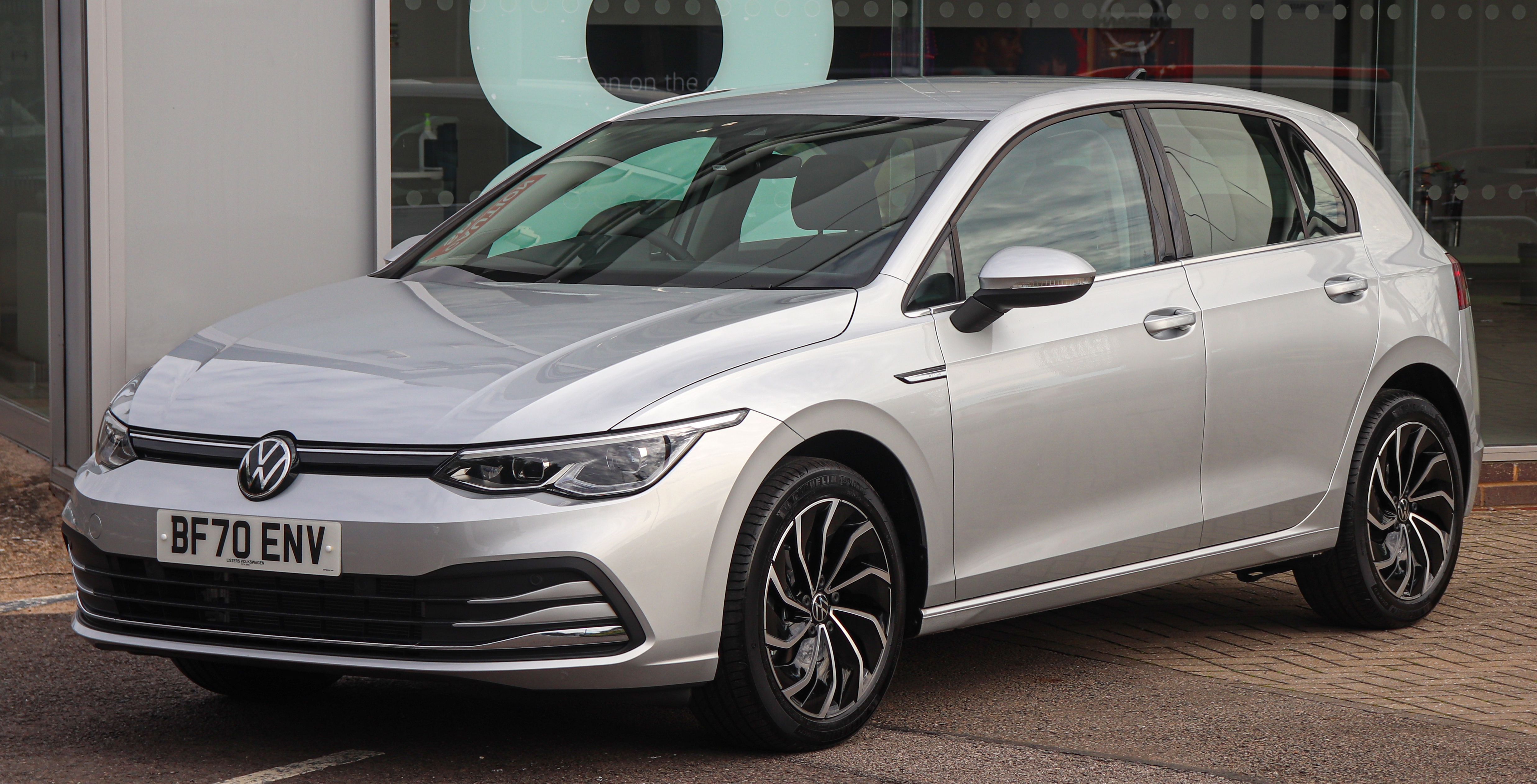
Volkswagen Golf
"Then we compromised and then they put me into golf. So then I had a golf, but I really enjoyed the beetle."
The Volkswagen Golf is a common Volkswagen car that people often use for everyday driving. Here, it’s the compromise car they were put into after not getting the Beetle.
The Volkswagen Golf is a compact hatchback/sedan platform that’s known for being practical and widely used as a daily driver. The host says they ended up in a Golf after the Beetle/Jetta discussion.
fault codes
"I talk to cars, I know how to decipher fault codes, I know how to diagnose some troubleshoot and fix wiring and mechanicals and all that stuff."
Fault codes are messages your car’s computer saves when something isn’t working right. A mechanic can read them with a scanner to figure out what part or system needs attention.
Fault codes are numeric/letter messages stored by a car’s onboard computer when it detects a problem. They’re read with a diagnostic tool (often an OBD scanner) to help pinpoint what system is acting up, like engine, emissions, or sensors.
motormouth summer tech tip
"The cabin air filter matters. That's your motormouth summer tech tip and here's what I'm going to tell you and it's going to be direct to the point..."
They’re calling this a “summer tech tip,” meaning a quick maintenance reminder for the season. Here, the tip is about the cabin air filter.
This is a recurring-style segment label for a practical seasonal maintenance tip. In this case, it’s used to introduce the cabin air filter reminder.
fresh air pull in area
"And here's how they get in there... because every car has a left vent, right vent in the front ahead of the dashboard... A lot of vehicles now don't have a cowling below the windshield... That's where the vents are... That's the fresh air pull in area."
This is the spot where your car pulls outside air into the heating/AC system. The speaker is saying that on newer cars, the intake is often behind the fenders, not near the engine.
The fresh air pull-in area is where the HVAC system draws outside air when the dash is set to fresh-air mode. On many modern cars, that intake is routed from behind the fenders rather than from around the engine bay.
dash on fresh air
"So when you put your dash on fresh air, it has to suck the air in from somewhere. So a lot of vehicles now don't have a cowling below the windshield."
“Fresh air” mode means the car brings in outside air for the heating or A/C. If there’s a way for pests or debris to get into the intake path, it can end up inside the dash.
“Fresh air” mode directs outside air into the cabin through the HVAC intake system instead of recirculating cabin air. That’s why the location of the intake matters for what can enter the dash area.
cowling below the windshield
"A lot of vehicles now don't have a cowling below the windshield. A great, that's what I call it. That's where the vents are."
This is the plastic area at the bottom of the windshield. The speaker is saying some cars no longer use that area for outside-air intake, which changes where debris or pests can enter.
The cowling below the windshield is the plastic panel area at the base of the windshield that can house or cover HVAC-related air intake paths on some vehicles. The speaker notes that many newer cars have eliminated that vented area.
cabin filter
"Guess how they get into that area inside your dash. So if you don't have a cabin filter that sits in behind the glove box in a pocket, yours is in behind the dash and we got to go get it."
A cabin filter is a small filter that cleans the air before it comes into the car’s cabin. If it’s clogged or not there, dirt and debris can build up and airflow can suffer.
A cabin filter is the filter inside the vehicle’s HVAC system that cleans the air coming into the passenger compartment. If it’s missing or clogged, debris and contaminants can get into the dash area and reduce airflow.
air intakes
"Those pockets on either side, the air intakes, if you will, that's where the little buggers get in behind there."
Air intakes are the openings where the car pulls outside air in. If those openings are accessible, pests can sometimes get into the dash area through them.
Air intakes are openings that let outside air enter the HVAC system. In this discussion, the intake locations behind the fenders create an entry path for small animals into the dash area.
AC
"your AC smells like funky or smells funky or the air flows weak, that filter might be packed with leaves, dust or who knows what."
Here, AC means the car’s air conditioner. They’re saying if the cabin air filter is dirty, the air from the AC can smell bad and not blow as strongly.
In this context, AC means the car’s air-conditioning system. The speaker links cabin air filter condition to AC odor and airflow, implying the HVAC intake is pulling through (and being affected by) that filter.
Request an Explanation
Heard something you'd like explained? We'll add it to this episode.
Sign in to request explanations for terms you heard.
Want to learn more?
Browse our glossary for plain-English explanations of automotive terms, jargon, and concepts.
Help improve this episode
See something that's not quite right? Our annotations are AI-generated and can sometimes miss the mark. Click the flag icon on any annotation to suggest a correction.