CAFE standards are government rules in the U.S. that push car companies to make their overall fleet use less fuel. If a company can’t hit the targets with gas cars, it has to sell more efficient vehicles—often including EVs.
EPA standards refer to U.S. Environmental Protection Agency regulations that limit vehicle emissions and set requirements for how clean cars must be. EVs are often discussed in this context because they can reduce tailpipe emissions compared with gasoline vehicles.
Here, “offsets” means one thing can be used to balance out another for meeting rules. The host is implying that regulations might be handled using credits across brands or the whole company.
“Fiat group” is talking about a bigger company structure that owns multiple car brands. The idea here is that regulations might be handled across the group rather than brand-by-brand.
A “carbon profile” is basically how much pollution a company’s vehicles create. The host is saying European rules may require carmakers to meet targets for overall emissions, which pushes them toward EVs.
Stefan Winckelmann is the boss of Lamborghini. The hosts bring up what he said to support the point that Lamborghini doesn’t think there’s much customer demand for EVs.
Pebble Beach’s Car Week is a big car show where brands reveal new concepts and big announcements. The host is saying Lamborghini showed a crossover concept there.
Jony Ive is a famous designer best known for Apple products like the iPhone. The host is saying Ferrari is bringing in that kind of design influence for its EV.
Mark Newsom is referenced as an industrial designer associated with consumer technology products and concept cars. In this segment, he’s used to support the idea that Ferrari Luce is pulling in top electronics-design talent for an EV.
The Apple Watch is a consumer gadget the hosts mention as an example of how tech companies highlight the designer behind the product. They’re contrasting that with how car companies usually talk about cars, not designers.
The iPhone is used as an example of a product where the designer became part of the public story. The hosts connect that idea to how Ferrari might be positioning the Luce’s design.
Pininfarina is a famous Italian company that has designed a lot of classic Ferraris. The point here is that Ferrari used to rely on well-known car-design studios like this, rather than electronics-style design teams.
Bertone is an Italian design company that has helped design some Ferraris. The hosts mention it to explain that Ferrari’s design history is tied to Italian design houses.
Person
Johnny Ize
Johnny Ize is a designer the hosts mention to explain where the design influence is coming from. They’re pointing out that Ferrari is involving famous design talent from the broader design world, not just traditional car design.
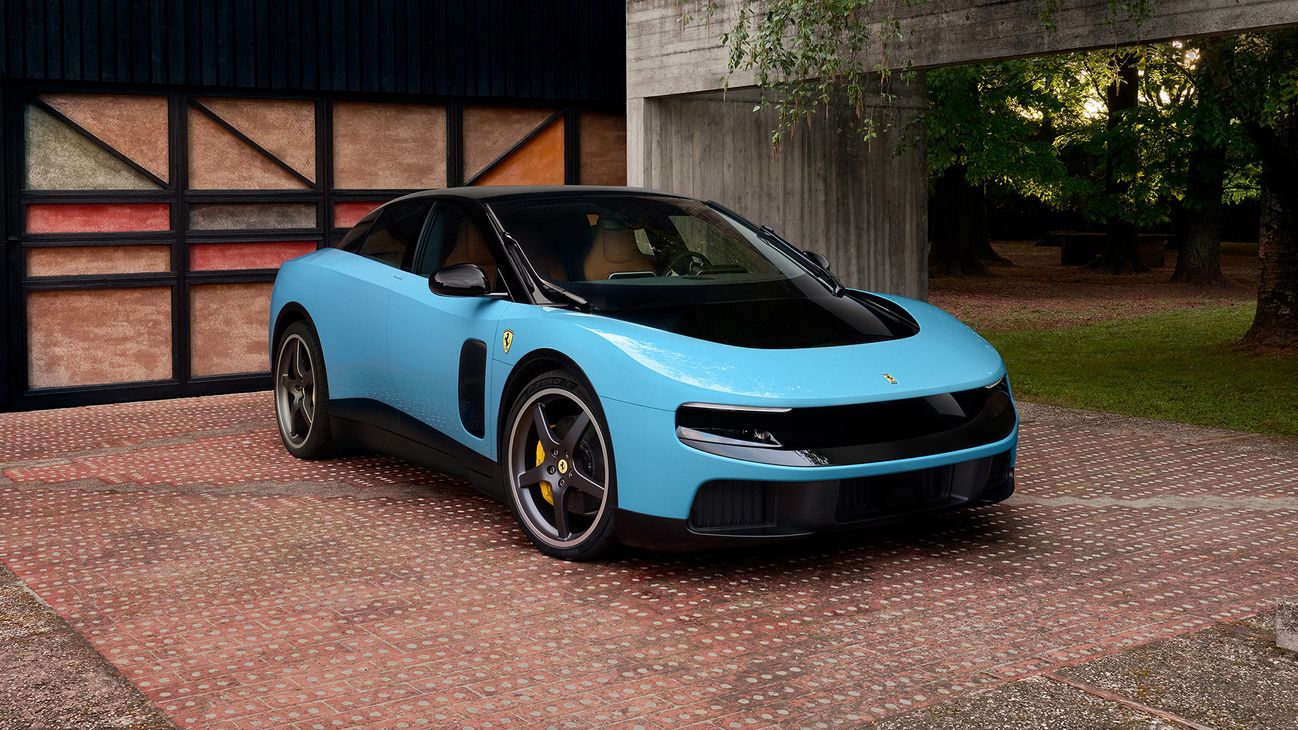
Ferrari Luce is a new electric car from Ferrari. The interesting part is that the hosts say Ferrari is taking a different approach to design by involving famous designers from the electronics world.
“Pastiche” means copying a style from the past, like a deliberate throwback. The host is saying the Luce doesn’t feel like it’s just wearing an old style as a costume. They think it’s more genuinely designed than that.
The Ferrari F40 is a classic supercar made by Ferrari. It’s famous for being very focused on driving, with a simple, no-nonsense interior. People still talk about it because it’s an iconic design and performance car from its era.
“Fit and finish” is how carefully the car is put together—things like how straight panels line up and how high-quality the surfaces look. The host is saying the Luce seems well-made. But they’re still questioning whether the design matches what you expect from Ferrari.
“Daytona” refers to a famous older Ferrari model. Here, they’re saying the Luce’s seats look like they’re inspired by that classic Daytona style. It’s part of the discussion about which parts of the Luce feel truly Ferrari and which don’t.
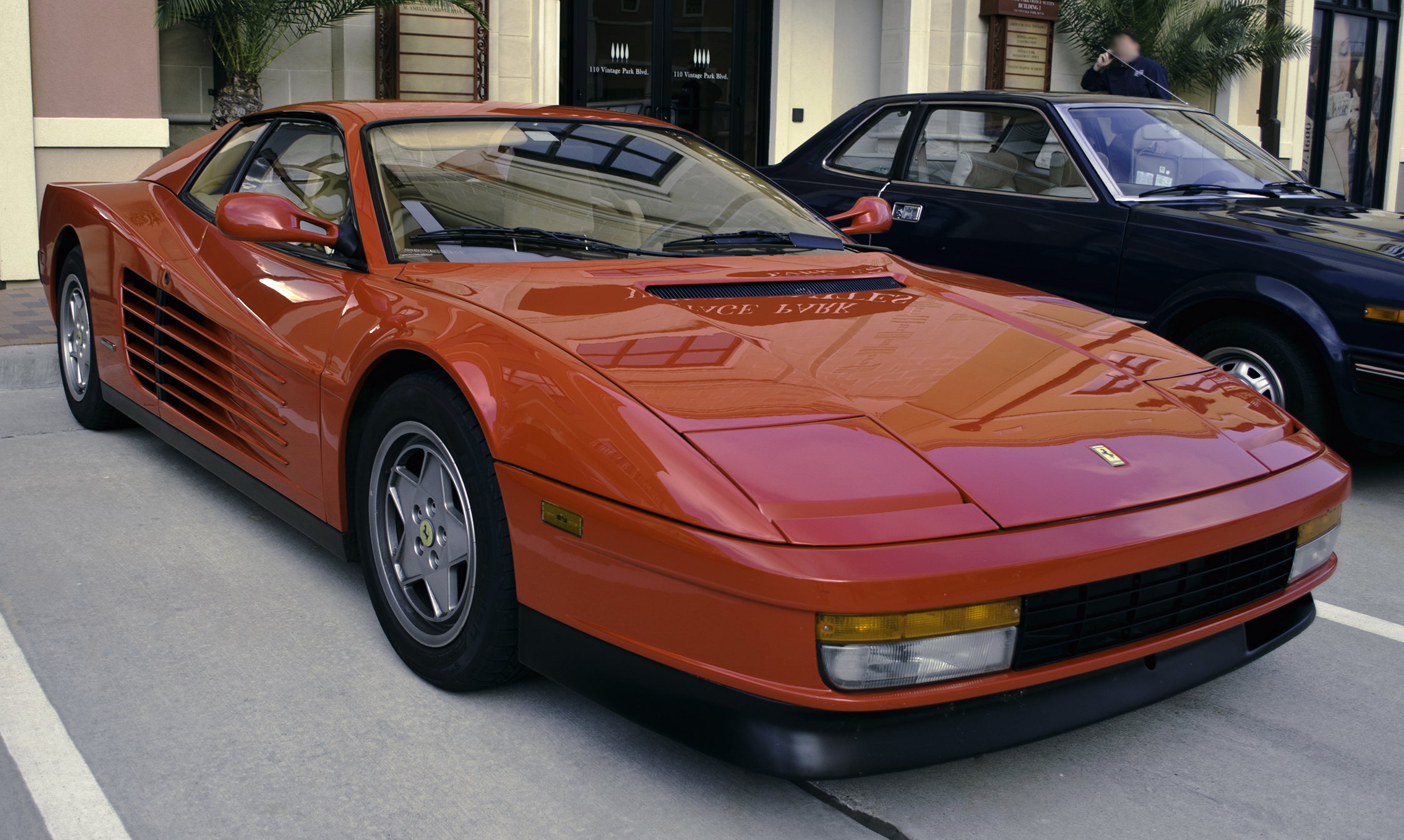
The Ferrari Testarossa is a classic Ferrari from the 1980s that’s instantly recognizable because of the big intake grilles on the sides—people sometimes describe them as looking like a cheese grater. The hosts mention it as an example of a Ferrari that didn’t look “normal,” but became memorable.
The Ferrari 348 is an older Ferrari model people talk about when they’re comparing which Ferraris were considered controversial or unusual. Here it’s just being used as an example of earlier Ferrari models that some people didn’t love at first.
The Ferrari FF is a Ferrari that’s different from most others: it has all-wheel drive and it’s shaped like a hatchback. That AWD is why people joked it was a “Ferrari for the snow,” meaning it can handle slippery weather better than a typical rear-wheel-drive Ferrari.
All-wheel drive means the car can send power to more than one set of wheels. That helps it grip better on slippery roads, which is why the Ferrari FF gets compared to a “snow” Ferrari.
The Ferrari 308 is an older, well-known Ferrari model. The hosts bring it up to illustrate that Ferrari has always had cars that some people thought were weird or controversial.
“Cheese grater” is a nickname for a design feature—little grille openings—that look like a kitchen grater. The hosts are saying some Ferrari fans don’t like that particular look.
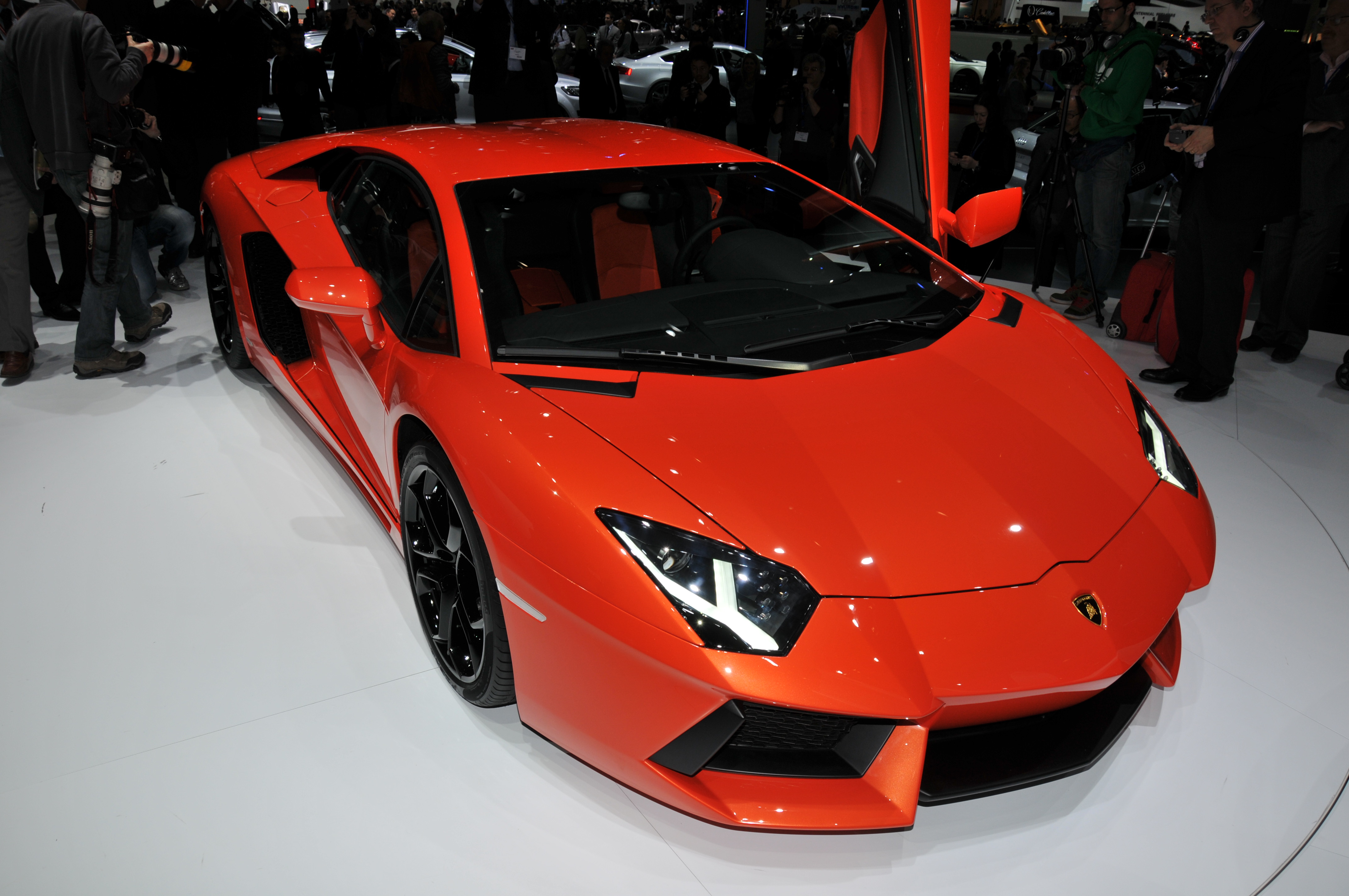
They’re using the Lamborghini Aventador as a reference point for how wide a car can be. The point is that the new car is so wide it could be annoying to drive and park, especially in tight places.
The Ferrari 250 GT is an old, famous Ferrari that collectors really chase. Here, it’s mentioned to show how much money and dedication this collector has.
The La Ferrari is one of Ferrari’s most special, hard-to-get supercars. The hosts are saying that to buy one, you might have to prove loyalty by buying other Ferraris first.
The Enzo is a legendary, very limited Ferrari supercar. Here it’s mentioned as one of the rare Ferraris people want, and the hosts say Ferrari may have used other purchases to control access.
Car
Ferrari Lusso
The Ferrari Lusso is a more comfortable, touring-style Ferrari. In this discussion, it’s mentioned because Ferrari may have used it as a stepping-stone purchase before letting customers buy more exclusive Ferraris.
The Ghost is a Rolls-Royce luxury sedan. In this discussion, it’s used to show that customers wanted an SUV in addition to their other Rolls-Royce cars.
People often expect a V12 engine to sound a certain way—usually deep and dramatic. The point here is that an EV doesn’t have that engine, so it won’t naturally make the same sound.
An amplifier is a device that makes a sound louder and helps shape it. Here, they’re using it to turn EV vibrations into a more noticeable, controllable sound.
“Digital sound” means the car turns vibrations into an electronic sound. Instead of hearing an engine the usual way, you hear a processed sound the car is designed to produce.
Term
personalization
“Personalization” here means customizing the car with extra options you pay for. Those add-ons can push the price way up.
The Hyundai Ioniq 5N is a sporty electric Hyundai. The hosts bring it up to show that there are cheaper EVs that feel fast and do a lot of what buyers want.
Formula One is the highest level of professional car racing. The hosts mention it because famous drivers are often used to make new products seem exciting or credible.
The Porsche 911 is Porsche’s most famous sports car. The hosts use it as an example that when Porsche added SUVs and EVs, the 911 didn’t suddenly become less desirable—it stayed valuable and expensive.
Brand
Lucid sapphire
Lucid Sapphire is Lucid’s battery technology. The hosts bring it up to suggest that some EVs use advanced battery tech to achieve very high performance.
The Tesla Model S is an electric car known for being quick. The host is using it to argue that if you want to go fast in an EV, there are cheaper options than a Ferrari.
The Tesla Model Y is an all-electric SUV, meaning it runs on a battery instead of gasoline. It’s popular because it can accelerate quickly and it’s sold in large numbers. People mention it when talking about how EVs are becoming more common.
“Zero to 60” means how fast a car accelerates from a stop to 60 mph. It’s a simple way to compare how quickly different cars feel when you press the accelerator.
For EVs, “range” is how many miles you can drive before the battery runs out. The host is saying the official numbers can look better than what you’ll actually get.
Kilowatts are a measure of how much power the car can use. In EV talk, people often mix up battery size and power, but the point here is that the host is trying to estimate how big the battery is compared to other EVs.
Term
5,000 pounds
They’re talking about weight—how heavy the car is. Heavier cars can use more energy and feel different to drive, even if the motor is powerful.
Suspension setup is how the car’s suspension is adjusted to handle bumps and cornering. It’s a big part of why two cars can feel very different even if they have similar power.
Depreciation risk is the chance that an EV’s resale value drops sharply over time. The hosts are weighing whether an ultra-expensive, niche EV (like the Ferrari Luce they’re discussing) would suffer the same value drop as more mainstream EVs.
Residual value is the resale value later—what the car might be worth after you’ve owned it for a while. They’re saying some luxury items hold value or even go up, and they’re not sure a pure EV will do that.
A lease is like renting a car for a few years with monthly payments. You usually give the car back at the end, unless you choose to buy it for a set price.
This is talking about EV depreciation—how much the car’s resale price drops after a few years. Luxury EVs can lose value quickly, which changes the risk and cost of buying new versus buying used.
An infotainment screen is the car’s main touchscreen for things like music, maps, and phone features. Here, they’re pointing out that the screen is designed to move and rotate, which makes it feel more like a gadget than a normal dashboard screen.
“Piano black” is a glossy, mirror-like trim finish commonly used on dashboards and center consoles. The hosts say Ferrari moved away from it and instead used glass/fingerprint-resistant materials, which changes both the look and how the interior shows smudges.
The Porsche Taycan Turbo GT is Porsche’s very high-end electric car. The host brings it up to compare how expensive the Ferrari Luce EV is versus other top-tier EVs.
The 911 is a sports car model that’s been made for many years. It’s known for being fun to drive and for having a recognizable shape. The podcast is talking about how certain versions can be harder or easier to sell depending on demand.
“Net worth” is basically how wealthy someone is overall—what they own minus what they owe. The host is saying there are more extremely wealthy people than before, so expensive cars can still sell.
Luca di Montezemolo is a well-known former Ferrari executive. The host is comparing Ferrari’s past leadership and cars to what the brand is doing now with a new EV.
The Tesla Cybertruck is an electric pickup with a super unusual, boxy design. People notice it right away, which is why it comes up in conversations about “love it or hate it” styling.
The Lamborghini Huracán Performante is a special, more hardcore version of the Huracán. It uses a V10 engine and is famous for feeling very connected and exciting to drive.
A manual gearbox is the kind where you choose gears yourself, usually using a clutch pedal. People often bring it up because it makes the car feel more hands-on.
“Polarized” just means people either really like it or really hate it. The hosts are saying Ferrari may have designed the EV to be that kind of “love it or hate it” statement.
They’re talking about what happens when a Ferrari goes electric. Even if the car is good, the worry is that some buyers want the classic engine experience that defines the brand.
“Outside the box” means doing something different from the usual formula. Here, they’re talking about Ferrari trying a new direction instead of making a car that looks like what people expect.
The Ferrari F430 is an older Ferrari sports car that people associate with the brand’s traditional feel. They bring it up as an example of Ferrari’s past, before this EV/SUV-style debate.
The Range Rover is a large, luxury SUV made for comfort and a more upscale driving experience. It’s designed to handle different road conditions, not just smooth pavement. The conversation mentions an electric version, meaning a battery-powered model is part of the appeal.
The Ford F-150 is a large pickup truck used for work and everyday driving. It’s popular because it’s widely sold and comes in many configurations. The podcast is talking about how much effort and money goes into designing the next version because it sells in very large numbers.
LIVE
Hello, welcome to The Endangered. It's CarCast podcast. I'm Matt the Motorrader,
DeAndrea here with Alistair Weaver. How are you? I'm all right, thank you. Is this our first
emergency podcast? It's going to probably fall into the schedule somehow, but yes, I kind of felt
both of us were thinking Ferrari announced an electric vehicle and it kind of blew up the
internet as the kids would say. It affected, it dropped at a stock price. It did some interesting
things and I can never get the guy's name, but who's the former chairman of Ferrari?
The Lucca di Montesamelo. Yes, so he had some interesting thoughts on it as well,
which I pulled his quote because I did not want to screw that up, but
yes, let's get into it. So I have a couple of things sort of maybe to steer this conversation.
All right, before we get into it, a word from FanDuel and right now new FanDuel customers
can bet $5 and get 150 and bonus bets if your first bet wins. That's right, turn five bucks
into 150 and bonus bets just for getting started. And when every possession matters in the playoffs,
FanDuel makes it easy to get closer to the action from player props and your favorite stars to all
the tools you need to back them up. FanDuel puts player research at your fingertips so you can check
the stats, trends, and matchups all in one place and make your picks with confidence. It's everything
you need all in one app. So don't miss your shot. Head to FanDuel.com slash believe to get started.
That's FanDuel.com slash B-L-E-A-V to get started. It's FanDuel, play your game. Must be 21 and over
and present in select states. A gambling problem called 1-800 Gambler. Here's three questions.
Maybe we can kind of base it off. Did Ferrari need to have an EV? Maybe there's some political
reason. Maybe there's some EPA reason. Did they need an EV? Now that they've got several hybrids
that customers are seem to be taking to. So did they need an EV? Is this a good Ferrari EV?
And is this just a good EV in general? Maybe not for Ferrari. So there's a couple of thoughts there
before you just go off just on its basic look. So let's start here. Let's just back up a little
bit before we and we'll show you the images that we're getting into this because pretty much everybody
has seen it. Did Ferrari need an EV? Is there something with Ferrari where they had to do it?
They can't meet these CAFE standards we have out here, EPA standards, whatever.
Or are they, honestly, I don't even know. Are they still part of a Fiat group and that offsets
everything? Not so much. Did Ferrari need an EV? I think it's more about a market thing,
isn't it? If you go back three or four years, there was this whole thing about everybody was
doing EVs. Bentley was doing an EV. Lamborghini was doing an EV. McLaren was going to do an EV.
Ferrari had to get into the game. Yes, there's a whole legislative thing, particularly in Europe,
about you need to have a kind of carbon profile. So there's a whole bunch of politics in the
background. But from a sort of consumer perspective, everybody was going to do it. And then pretty much
one by one, they've all come out and said, I don't think there's any interest. I think
Stefan Winckelmann, Lamborghini's CEO, I've met on multiple occasions. He's shameless
name dropping that, wasn't it? But yeah, we've had an interview with him on the show before.
He gave out and said, there is next to zero. I think that was the exact quote, probably in
Italian, but all German. He speaks multiple languages. But I think he basically said,
there is next to zero demand from Lamborghini customers for an EV. So they had this quite
cool looking sort of crossover concept thing, which was at Car Week in Pebble Beach a couple
of years ago. So that's been put back. Bentley said, we're not going to, they're originally
going to launch in 27. They said 2030 probably at the earliest. So everybody else has kicked the can.
Ferrari has clearly decided not to do that for probably multifarious reasons. So here we are.
An electric Ferrari. And it's not an electric supercar or a crossover. It's family SUV.
It's the first five seat of Ferrari. It's a SUV. It's a family car. It's not at all what
most people were expecting me included, to be honest.
Right. So we'll kind of get into the design. A couple of thoughts. So first of all,
maybe Ferrari needed an EV. They were already invested into something. They were developing
something. Getting away from their typical design style and some of their partners by going to
this new company by Johnny Ive, the former Apple designer who did the iPhone and a number of
products for them. And he was his company. I think it's called Love From. Love From. Yeah.
Him and Mark Newsom. I mean, two, probably the most famous and iconic industrial designers of our
age. You know, the Apple Watch, the iPhone, Mark Newsom. You know, they've done some epic
products between them. So yeah, I mean, they are the foremost designers of the age, but doing
technology products really. Mark Newsom has done a couple of concept cars before, but
yeah, interesting. Of course, this is in line. That bit is in line with Ferrari's history. If you
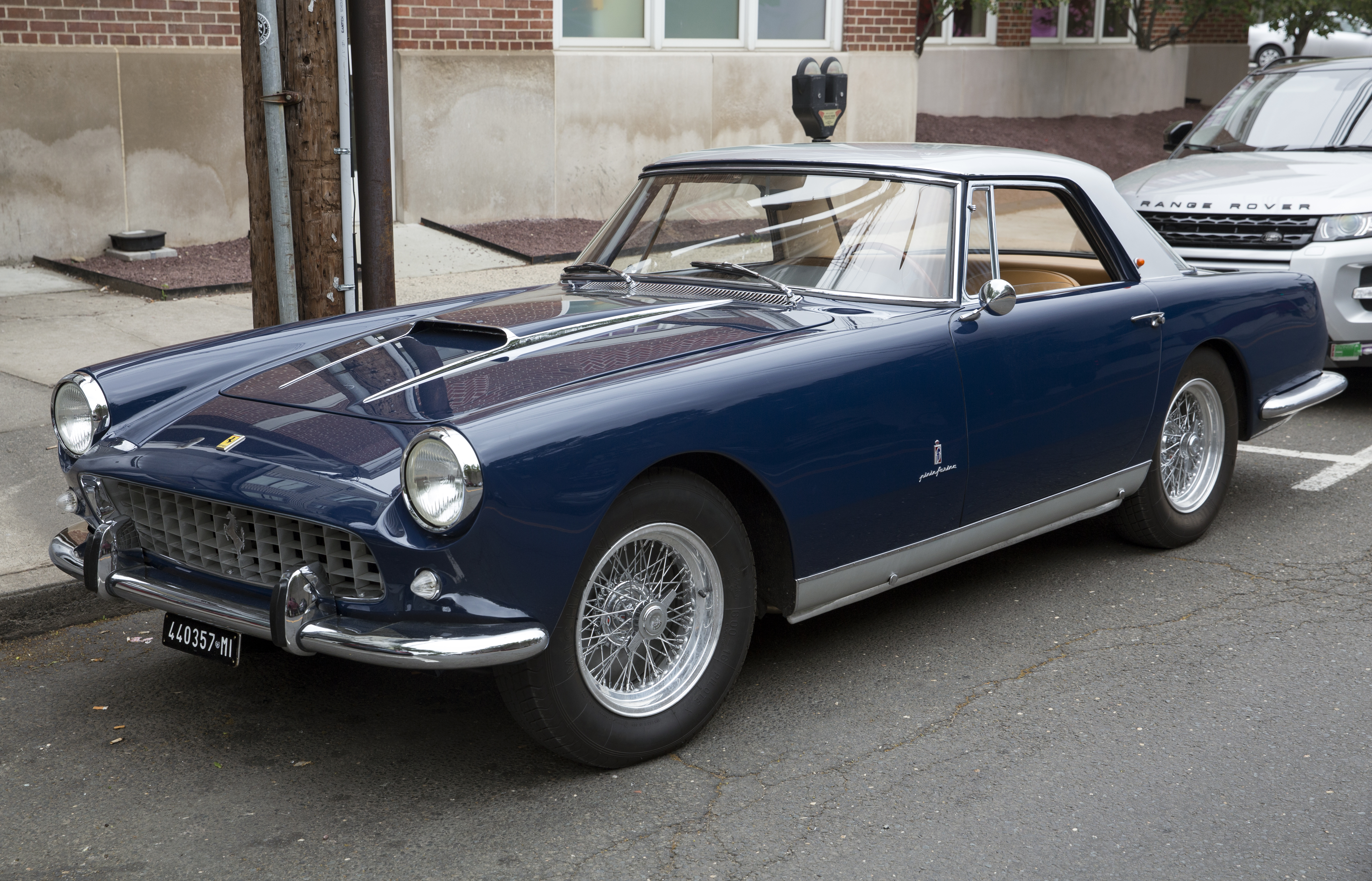
think about most of the beautiful Ferraris of the past were designed by Pininfarina.
They've had Bertone designed Ferrari. So the idea of Ferrari going to a design house,
normally Italian rather than, I was going to say American, but so Johnny Ize, of course, is
British Royal College of Art and Mark Newsom is Australian. So it's not American, but
it's an American company. It's And they made their name predominantly in
America. So they thought, listen, we're doing an electric vehicle. Why not go to the foremost
designers in electronics today? If you think about it, we never really thought of a designer or
even an outsourced design firm for almost anything in consumer electronics until now. We never
thought about an Alpine radio like, oh, who designed the interface for that? Or your LG or
Samsung TV. We never talk about the Samsung designer, but with Apple products, they became
so fashionable. We talk about designers of it. So I think if you talk to most people in the world,
I know car companies do tend to promote their designer as being a mini celebrity. But if you
ask probably most people on the street, what designer, especially a product designer they could
name, probably Johnny Ives or Sir Johnny Ives is probably the only one that most people could
could recall. I mean, he did develop this celebrity aura around around the iPhone and
other Apple products. All right. So I'm going to bring up Ferrari's website while we talk about
this and the Ferrari Luce. And we can kind of walk through this. I know you've got specs and
information to go through while we kind of scroll through the images. I just thought you guys on
YouTube would want to kind of see the images instead of watching us read the specs.
Yeah. Okay. So let's start at the beginning. They originally released pictures of the interior
and we talked about it on a previous show. And it had this wonderful kind of retro vibe about it,
but not in a kind of pastiche way. The steering wheel hinted at things like the F40 and the
massive screens. It didn't look over complex. It felt like a product of the person who designed
the iPhone. It looked very kind of simple and beautiful. And in my mind, at least, that led
me to think of the exterior as being a kind of something quite elegant, probably a cube,
something that had a little bit of historical reference. And the reality is the Luce is kind
of none of that. It's a quite simple design. You know, a lot of Ferrari design sports cars are
very, very complex now probably. And I'm not a person, not absolutely not a fan of that. So this
is much simpler. It should be a good thing. But I think what's really unusual about it,
if you take away the round rear lights, there is almost nothing on the car apart from the badges
that says Ferrari. If you took the badges off and stuck it in a car park at LAX or something,
I don't think anybody would look at it and say, that's a Ferrari or even that's high
and exotic, really. And I think that's been the big shock. If Apple had come out with something
that looked like that, everybody would go, yeah, I get that. But the fact that Ferrari comes out
of it and there's just absolutely nothing that sort of hints to Italy racing heritage,
you know, there's some detailing on it. And I suspect that when we see it out on the road
amongst other traffic and everything else, there are elements of it that will work very well, but
it's just not, you know, it's right. So I agree with you. So here's kind of the thing is,
is this a terrible EV? I don't know. We'll get into that. I think it's got incredible performance.
It's interesting design. I kind of like the interior. I think there's some really nice
elements in there. But is it the right EV Ferrari? And you're right, it doesn't seem to have
much Ferrari into it. Like, you're right, when they first tease the interior, we're like, wow,
we got kind of this retro kind of Momo-ish kind of steering wheel and clean design and glass.
And, you know, fit and finish looks great and retro kind of seats like Daytona kind of seats.
So we were kind of expecting maybe to see something, even though Ferrari has
done some things in the past that were meant to be polarizing, you know, like you and I were
talking about off the air, the Testerosa, you know, with the cheese grater on the side. I mean,
technically maybe the 348 first and or the, you know, the Testerosa and the 348.
But when the FF came out, I'm like, oh, this is interesting. It's kind of, you know, it's a two
door, not a four door, but it's a hatchback and it has a rear seat and it's all wheel drive. And
and people were like, it's the Ferrari for the snow. And I was like, oh, okay. But it did have
elements of Ferrari in it. And a lot of people kind of looked at that car and said, I don't know,
man, this thing is weird. But now I find myself on bring a trailer going, what do FFs go for these
days? Right? You know, like, because that's not a bad Ferrari to get into. I went to Sonoma to
like a Ferrari challenge event and interviewed the CEO Ferrari at the time of, of, yeah, the CEO
Ferrari and he's like, drive the FF around here, we've got one, go grab it, drive it. And it was
nice to drive, but it did still feel like a Ferrari. It had design elements, characteristics,
even on the exterior that were Ferrari. And this is very interesting. I can't help,
but keep seeing those tail lights. And I think of Coco, the food robot that I see in my neighborhood
sometimes with its round eyes. And I just think like, if this was down the street, I just saw the
tail lights on, I'd be like, Oh, Coco's here. Yeah, that's probably not what they wanted to hear,
is it? But I mean, look at elements that are really interesting. You look at the front end
and it's got this very kind of chiseled chin. That's very distinctive. Right, with a big scoop
that goes in, like this kind of floats. I mean, Dodge did this right on their EV like a little
tiny version. Yeah, I mean, it's supposed to be, you know, obviously the aerodynamics are very
important on the EV, but when you look at the figures that they've released, it's not actually
as aerodynamic as some of the Tesla's have been around for quite a, quite a long time now. So it's
I don't, I mean, look, there have been Ferraris over the year, like the 308,
which was originally by Dino in the 70s, the Petone thing that suddenly came up with the wedge
and everybody like, what the hell is that? We talked about the Testerosa, now it's seen as
this 80s icon. And because we're all of, we all grew up, you know, we, you know, you and I and
others, you know, all grew up looking at that as a kid and say, wow, look at that. Now, now it's seen
as 80s cool, but at the time it was seen as a bit kind of gauche and a bit sort of Nouveau and
you know, I wonder in time where not everybody loves the Testerosa. There's some, there's some
hardcore Ferraris guys are like, the cheese grater arrow is not for me like they hate it.
And I wonder, you know, I don't particularly, I'm not a massive fan of their current design of
their sports cars. I found it a bit over, you know, it's a bit over designed for me. Some of the
purity and the elegance has gone. So I do wonder whether this will age well and with familiarity
and you start to see it on the road, you'll, you'll, you'll look at it differently. I think it's just
you've got, it's a bit like the Jaguar, isn't it? You've got this big shock factor and then it's like,
okay, I'm shocked by it. Is that in a good way? Is that in a bad way or enough people shocked in
a positive sense that they've got to have one? You know, at least we're talking about it. It's
the same with the Jaguar, right? We're talking about the Jag because it's different and it's
interesting. This is different and interesting, but clearly the response overall has not been
positive. And then, and then you get into kind of like, as you said, what, well, what is it as a car?
I mean, the big thing about it is it's massive. When I first looked at it, I was like, that looks
quite, you know, that looks like a sort of Ioniq five, you know, Hyundai Ioniq five. And then
look at the stats. It's longer than the pure Sangui SUV that they do. It's 50% more expensive.
We'll come onto that in a minute. But it's also really wide. And not so much in the US,
but, you know, certainly when you get into Europe, something that's that wide. Yeah, I think this
thing is a little wider than the Aventador Lamborghini, which is already a very wide car. So
that becomes a hassle in particularly in Europe where the streets are narrow, but even in the US,
like parking in, you know, in LA, something something that that that wide and that long
becomes just a lot of car to handle. So there's a couple of thoughts here. So David Lee is a notable
Ferrari collector. He's the one who just spent $38 million buying that white 250 GT out me come.
He put out a video on his social media saying, you know, he's he's a big Ferrari collector,
right? Obviously, I think his Instagram is like Ferrari collector or David Lee Ferrari collector.
He says he buys every Ferrari and you can see in his video and I don't have it in front of him,
so I'm not quoting it, but you can see he was a bit surprised. Like this is not kind of what he
expected. He said he spoke to Ferrari and Ferrari's intention is to bring new people to the brand,
right? This isn't necessary for all Ferrari, you know, existing Ferrari customers,
which is an interesting thing for him to say, because not only does he buy every Ferrari that
comes out, but Ferrari does this thing where they kind of make you buy other models. Like if you want
one of the rare supercars, you know, you got to buy something that's not selling well, right? You
got to buy the SUV, right? If you want the new whatever super Ferrari, you got to buy one of
the SUVs first, right? They did this to a bunch of people. If you want an Enzo, you want a La
Ferrari, this is what you need to buy ahead of time, you know, and an interesting strategy because
they're like at the time, if you go in, hey, FF sales or or Lusso sales are down, you know,
but you want a La Ferrari, you got to buy an FF or a Lusso or whatever it was at the time
and then we'll get you on the list for the Ferrari knowing you've also bought Ferrari. So
he's looking at it going, okay, he's probably going to buy one is what he said, but it's not
necessarily for him. Which is interesting because when we spoke to Rolls Royce years ago, when their
SUV was coming out, the Colonnette, you look at the Colonnette and go, well, this kind of makes
sense, right? Because it's a big luxury vehicle, Rolls Royce big luxury vehicle. And what a great
way to bring new people to the brand. That was my initial thought. But when I spoke to Rolls Royce,
they said that is not our intention. Our customers were asking us for an SUV because they want both
of them in the garage. They want like a Wraith or a ghost next to their Colonnette. We want one of
each. So it wasn't about bringing new people. I'm sure Rolls Royce sales have increased because
of the Colonnette. But that's not necessarily it. But Ferrari saying we are bringing people to the
brand. What do you think of that? Yeah, and I think, you know, even Ferrari, most profitable car
company in the world, is still, you know, still thinking about what the future looks like. And
you know, this is a car where you look at it and go, is this a car for the California tech pros?
And there's definitely an element of that, you know, designed by Johnny Eyes, okay, so there is no
more kind of like Silicon Valley statement than that. Right. It's a, you know, it's an EV. It's not
going to have, you look at the detailing, it's not going to have like a V12 sound effect. It's
going to have what they're talking about is weird kind of, I don't know yet to hear it, but it's
basically taking the mechanical, the real noises from the car, sort of running them through some
sort of amplifier and then go giving it kind of more of a native sound. So let's see, let's find
out what that sounds like on the road. They said they were taking the vibrations from the electrical,
from the electric motor. Yeah. And turning that into sort of a digital sound. So it's a bit like
an electric guitar in a way. Right. I don't want to say that it's, it's organic because it's not
that, but, but you're right. It's, it's strumming the string on your electric guitar and turning
that into an amplified sound that they can tweak and filter. And that bit, that bit I get, right?
So I get all of what you're just arguing. It's, you know, you're talking about an EV,
you're traditional Ferrari customer to the point about what Lamborghini see it as,
maybe they're not interested in an EV, you know, it's not really what, what, what engages them in
the same way that a lot of Porsche traditional customers aren't excited by the mechanical EV.
So I get that. It is still a leap, though, to come up with something that's so different,
because I think most people buying at the luxury end of the market, and if you just do the conversion,
it's going to be well over 600 grand, probably over 700. By the time you add tariffs and personalization,
everything else, 50% more expensive than pure Zangi. You've got to, for me, you're the great,
you've got to give somebody a taste of something. You know, it's got to, you know, compared to like
the Hyundai Oniq 5N or a Chinese SUV that goes electric car, that goes really fast and does a
lot of the things that this car will do. For me, it's like any, you know, a luxury watch or
something. It's hard to imagine Rolex doing something that is just so completely out there,
because you're buying into a hundred years of heritage and watchmaking and the Daytona and the
ball Newman and God knows what else. And so it's weird to kind of eschew all of that. And I know
the wheeled out Lewis Hamilton and Charlotte Claire, and it's all like, oh, look at this,
Formula One drivers, they love it, don't they? Yeah, well, pay me $60 million a year, and I'll
love it too. But I just, so I think they're betting on that new money tech community,
maybe Chinese money as well, who are all going to look at this and say, maybe I don't know much
about for a minute, I don't care about the 250 short wheelbase or the, you know, the original
Tester Oster or the GTO, this is, this is cool. I want one. And it'll probably work on that level.
But it's a really, it's a really interesting thing to do. Because I imagined you do a Cooley V,
even if you want to make it a five seater and a lot more usable and an everyday car, great.
But you could still come up with something that feels Italian and sporty and everything else.
Here's a thought. Let me, let me bring this up. So the former chairman of Ferrari,
here's his quote and said, if I were to say what I really think, he's talking about this car,
if I were to say what I really think about this, I'd be doing Ferrari a disservice. So he's trying
to say, he's trying to bite his tongue. And he goes, we risk destroying a legend, meaning the
brand. And I'm truly sorry about that. I hope they at least remove the prancing horse from that car.
And then he went on to say, at least they won't copy it in China. And so he didn't have good things
to say, but he is speaking about the legacy and the history of the Ferrari brand. Now, when we,
when we saw this with Porsche years ago and Porsche is doing an SUV and then Porsche is going to do
an EV, everyone was saying, you're going to destroy the brand. You're going to destroy the brand.
That's not what Porsche wants. And it turned out they just made a bunch more money and 911s are,
are super expensive and they still hold their value and it didn't really affect the 911 that
much. It just gave them a bunch more money, right? So Ferrari, like to your point, maybe saying,
we don't really care that much if Ferrari owners don't like this car. We're going to sell this thing
around the world. I don't even know if they care if Americans like this car. They may sell this
place, this car in other parts of the world and, and bank on it being revenue, good revenue for them.
Because let's face it, it's not cheap. We didn't get into that yet. No, with the share price,
but then the, the word was about the share price crash and it was like $3 billion of the company.
I know, we already came back up because people saw it. Of course, of
it's look the share price dropping was more about like Wall Street and, and,
and Ferrari collectors speaking their mind, they wanted to be heard. And the way to be heard is to,
to sell off, right? I mean, look, I, I think it's part of me likes it because I think it's
controversial like controversial things. It's extremely interesting. It's a five-seater kind
of everyday Ferrari. You get into the, maybe you should talk about like what it, what it is
underneath because the tech specs that, you know, there's some interesting technology in it.
I was just looking at my notes here, what we got, we got a 1035 horsepower, but let's face it,
you know, Taycan turbo GT, which is 200 grand has got that lucid sapphire, you know, you get,
sorry, lucid sapphire, Tesla, you know, Model S plan. If you want to go that fast, you can have
one of those for less than 100 grand easily. If you really want to go, go that quickly. So, you
know, outright speed in a, in an EV isn't such a big deal. You know, Ioniq 5N, Tesla Model 3
performance, you know, they're all zero to 60 in three seconds. So that's, that's kind of just
the, the entry to the club. The range is the European range, which is always very optimistic,
says 329 miles. So that makes me think in the US, you're going to get less than 300 miles or
somewhere around there. So, you know, it's not, the battery is one,
was it one 22 kilowatts? And I think to give you some context in Model 3 batteries just over 80,
so it's sort of 50% bigger, but then it's big ish, but it's not going to, you know,
it's not going to, I mean, you think about the ones in the GM trucks, they're 200. So
it's big, but not enormous. It weighs 5,000 pounds. So in EV terms, it's kind of like not
massively heavy for something that's so big, but it's still very heavy next to a sports car.
Charging speeds are all that sort of things fairly, you know, relatively normal,
you know, there'll be a lot of trick engineering cutback borrows a lot of the
software engineering for the, and the hardware engineering for suspension setup from the,
from the sports cars. So, you know, all of that stuff bodes well in terms of how it, how it drives.
I mean, it's obviously going to be brutally fast and, you know, there's, it's a different car for
them, you know, how will they, how much experience do they have of tuning something that's this heavy
and an EV and everything else, you know, that's a, that's a different conversation.
You know, we'll have to wait until we've, we've driven it, but, but the money as well. I mean,
it's maybe about 640 grand on exchange rates, but I think that's going to be over.
Then you put on tariffs, then you put on personalization, you know, you're potentially looking
at a car that's the best part of 300, you know, three quarters of a million dollars.
That is an enormous sum. And when you think about the EV technology cycle,
what does this look like in five years time? Because battery technology, everything will
have moved on software technology. It's, so what happens in five years, in 10 years?
You know, if you think about all the risks of depreciation of current EVs, you know, it's
catastrophic. Will that apply to this car or will it be in such low numbers that it doesn't
matter so much? I, I think those are all the things, because if, yes, you've got ultra rich
people buying this, but ultra rich people don't tend to like frittering money. And one of the
appeals of buying a Ferrari, but like buying a Rolex is, you know, you, as long as you wait
long enough, the residual value has come back to you. And, you know, actually they, you know,
if anything, they start to gain value again. I just don't see a pure EV being in that space.
So you're talking about spending, you know, let's say 700 grand on something that
might not be worth all that much in, in, in five years time.
All right. Hold that thought. We'll be right back.
Bio Pro Plus. It's a 100% drug-free hormone health formula that helps guys over 40 get
leaner, tighter and stronger naturally. I've been taking it. I continue with that journey. I'm into
it for a few months now. So whether you're just getting started or a seasoned pro in the gym,
Bio Pro Plus is the answer to help you get off the couch and breakthrough plateaus.
Go to bioproteintech.com slash car cast for $100 off your first order.
There's no commitment and you can cancel at any time. That's bioproteintech.com slash car cast.
Quick reminder, if you're watching games this week, jump on FanDuel, whether it's NBA spreads,
player props or same gay parlays. FanDuel makes it easy to get in on the action.
Download the FanDuel app and place your first bet today.
All right. Here's a thought. Well, first of all, listen, I've never bought a Ferrari.
I've never obviously used or knew. Can you even lease a Ferrari new? Because EVs, like we've always
said, hey, you know what? Maybe you want to lease an EV. Can you lease a Ferrari new? I mean,
aside from going to some external bank and making it happen, I don't know if Ferrari's like financial
service even has that as an option. I'm sure you must be able to.
Right? There's got to be some sort of question. Actually, imagine you've got to be, I mean,
certainly my Instagram, not that I'm in the market, but I'm getting in data with McLaren
offers for leasing and Aston Martin offers for leasing. I would have thought this would help
it somewhere. So then the next question would be... But it's not going to be like $200. It's not
going to be on the Edmunds gem deals page. It's not going to be like an IONIQ 500 bucks a month
and you're done. No, no. But when you look at the use prices, look, this thing's $640,000. You're
going to add tax. You're going to add tariffs. You're going to throw some options on it. It's
going to be $800,000. And then in three years from now, are we going to look at this and go,
listen, a lot of EVs, especially luxury EVs have lost half their value. So are you going to look
at this thing and go, it's $320,000, which is a lot of money, but go, I know, but somebody paid
$800 for it. Now you can buy it used with 31,000 miles on it for... But then the person with
$300,000 to spend probably has $600,000 to spend because you're talking about real,
real money. You're showing me the pictures. That interior, I think it's fantastic. I looked at
that steering wheel and the dial cluster and I was like, amazing. They've got rid of all the crazy
screens. It feels like an evocative 50s race car. And I was like, I'm really excited about
those things. It's going to be awesome. So this screen in the middle with this handle
on it, the infotainment screen, that thing moves left and right, but it turns, it pivots. It's on
like a ball. So you can show your car, you can show your mate. Yeah, but you can turn it sideways
and spin it around and you can do all kinds of stuff with it. And it's an interesting design.
I agree with you. I actually like the interior. Do I like it as a Ferrari? I don't know, but
I think they nailed the idea of interior by going, piano black is done. Let's get rid of it.
Like let's use glass. Let's use something on the iPhone, like this sort of fingerprint resistant
kind of glass. I think it's cool. So I look at the interior and I think Ferrari. I think that
steering wheel, the little sort of magneto controls, little twisty things for the different
settings, the dials, I think the typeface, everything, but I think that that looks Ferrari.
I'm absolutely comfortable with that. It's just, you know, they've just gone down a different route
and they've been extremely bold and brave with it. And, you know, maybe we'll all look back on it and
say, okay, they, you know, this was, was the start of something special.
Interestingly, like the Jag, the Jag, because the Jag is probably the only other car in recent
times that's polarized opinions to this extent. Right. With an equal amount of sort of negative.
Yeah. But I think the Jag had more, and maybe this is hindsight speaking, but I think the Jag had
more people kind of going, oh, hang on a minute. I actually quite like it. Or if you put an
ETI in profile next to it, you sort of understand where it's coming from. So I think,
maybe hindsight is a good thing and we got used to the Jag. But although there's a lot of the
negativity around the Jag was actually around the ad campaign and everything else. It was not,
you know, there's actually people looking inside and saying, like, I'm not hearing a lot of people
come out and say, I really like this. I feel like I'm being a bit more of an apologist than most
people that I've read or spoken to about this, because there's bits of it. I like the boldness.
I like the bits provocative. I love the interior. And maybe, you know, time will judge it differently.
And I do think it will sell. I think it will sell to a slightly different audience.
But it will be interesting to see how it plays out, because I do think it's
extraordinary and really expensive as well for, you know, for what it is.
It's, you know, the Jag is 150 grand. The Taycan Turbo GT is 200 grand. It's like three times that.
And on a car that you're trying to potentially use as a way to bring people to the brand,
you're bringing some seriously affluent people that you've got a pretty big sell going on here.
It's an interesting thing, though. I was talking to somebody from Porsche the other week and I think
Porsche is doing really well selling its really expensive cars, its GT3s. And from what I understand,
having a tougher time selling 911 Carreras. And one of their team was sharing to me,
they looked at a lot of data on the number of people globally, but also especially in the US,
who are now got 100 million plus of net worth. And that's grown exponentially. So I think a lot
of these companies, and we've seen it with some of the specialists like the, you know, the singers
and people like that, the number of people with like massive wealth has grown exponentially.
So they're saying, look, this is a market. These people exist. There's enough people to make this
viable. So it will be interesting. Like we're going to, I've just signed up to come to Car Week in
August. I'm sure this is going to be there. It will be really interesting to see it in that
environment with the collectors. And at Car Week now, there's a lot of new money. There's a lot of
old money. And I'm kind of looking forward to seeing it. It's going to be a big, big talking
point. So I'm a bit more of an apologist. Like I don't know. I'm not just one of these people
like jumps on the bandwagon. There's a lot of people at Ferrari might be looking at Luca de
Montezemolo and saying, you know, you were the guy that did the 355, you were the 90s guy, you
know, this is today, this is a new era and we'll see. I think the biggest issue I have is probably
the price because if you're trying to experiment with something bold, you know, and be the one that
gets noticed like a cyber truck, you know, like a lot of people like, I hate the cyber truck,
like I have it, it's funky, cool. And people notice me and I'll wrap it with the name of my
company. And people will see me as like, this is a pretty big ask when you're going to spend,
you know, three quarters of a million dollars on a car. I can't wait to, you know, if I got
the opportunity to drive it, I'm sure it's fantastic. I bet it's fast and has amazing
features. The interior is great. And it'll probably win you over kind of make you fall in love with
it a bit. But I don't know, it'll make you that those sort of designs does my recall,
whether they make you fall in love with it. I don't know. I was just, this is sort of slightly
going off at Tanyun. But I was, I'm doing an interview with Lamborghini's marketing director
tomorrow, which will be in a future show. And I was looking at the cost of the one of my favorite
recent Lamborghini is the Huracan Performante. And I enjoyed driving one in Eastern Europe one time.
And I thought, how much are they now? Because I think they were about just over 200 new.
I was like, what are they going for? And I looked it up or I went online. So how much
$400,000? And it's like, what? And it's because it's that V10. It was like that icon. It's not
even a manual gearbox. It's so it's, you know, there is obviously a massive nostalgia for the
world that we only recently lost. And where this sits in all this and where they what they
where they sits in 20 years time, I don't know, maybe if you're a Ferrari collector in 20 years
time, we're going to look back on this and go, Hey, that was really stand out. That was really
groundbreaking. That was, you know, part of the zeitgeist, and it was Johnny Ives, and it was this
and it was that. And I mean, it's also interesting that they've really, yes, the guys are superstars,
celebrity designer, or they all are. But it's very interesting that Ferrari has really gone out on a
limb because they always said, you know, this is a Ferrari design with pin in Farina, and you get
the pin in Farina badge on the side of a 550 or something. But they're really like putting this
front and center, which he's always a weird thing as a brand because it's like,
and and and I can see why. And I don't want to say this is going to be the wrong word. I don't
want to say blame. But by going, listen, we got the iPhone, consumer electronics lead
designer. Yeah. So he gave us what I would exactly expect from that designer. Like, you may not like
it. I may not like it. Other people may not like it. But it was sort of an intentional
road that Ferrari went down by going, let's use this designer, let's brag about, you know,
this is the designer we use. This is the company we hired. And for what reason? Because we wanted
something polarized and we wanted something that that that feeds into this all electric sort of
consumer device type of thing. As long as it's not like, you know, and I say this as a sort of
older dad, it's not as long as it's not doing the let's let's do it because this is what the kids
want. Do you know what I mean? Yeah. Well, kids got 640. No, but it's like, it's like, how can we,
how can we, what does a new generation of Ferrari customer want? Well, what are they all using an
iPhone? Therefore, get the guy that designed the iPhone designer car. And it doesn't because
they want the interesting design. I took one look at it. And I know that, you know, you and I have
both know Ian Callum, the former Jaguar designer, very, very well and lovely guy. And he is a friend
of Johnny Eisen. I know that they've both connected with the Royal College of Art in London. Of course,
they're both Brits. And I took my first impression when I looked at it was, that's a lot like an
eyepace. And I wonder whether Ian was, I haven't spoken to him, but I wonder whether he was looking
at that at home. And I wonder what he thinks about it privately, but it did strike me that it looked
a lot like the eyepace. Listen, if one of these shows up as my Waymo, I'm all over it. I'd love
to get him one of these if I had a $700,000 Waymo show up. So for me, listen, I don't love the design.
I love an opportunity to drive the car. I think the price is outrageous. I think
they had an opportunity here to do something that plays a little bit more to the legacy of the brand
and still be a door open toward the future. And I think they kind of missed that mark. So for me,
I don't love it, right? I just don't love it. And especially at that price, I don't love it.
And Ferrari said, we're going to do an EV and it's going to be an SUV. I would have said,
great, let's try to make this more of your entry level vehicle, 250, 300 grand, wherever
they are entry level, get more people into the brand and see and play a little bit to the legacy.
So people can go, that's a Ferrari. And make it classically beautiful. Yes.
But yeah, if they came back to us and they said, we're going to do the FF with a battery,
it'd be like, interesting, you know, and we go buy that. That's the thing, you know,
like, that's the Jaguar. It's the same argument as Jaguar. I'm sorry, it is. It's like, nobody's
going to buy a electric Ferrari because everybody wants a V8 Ferrari. You know, it's better than
the hybrid. It's the same with the Lamborghinis, you know, like the Temarario owners.
Doesn't sound like the old V10, even if it goes faster. So, you know, so it's like, okay, let's,
I think it's exactly the same with Jaguar. It's like, if we're going to do this, we've got to go
right out there because if we just put a Ferrari together with an electric, with a motor, everybody's
going to go, oh, God, I missed the V8. And so I applaud them for that. And, you know,
think Ferrari's probably got more chance of making it work than Jaguar. Let's see.
All right. So, you're not going to add this into the Edmunds fleet. You're not going to sell off
everything Edmund owns. Even if I sold everything Edmunds owns and, and, and, and. And also, I'm
not sure. We now have one press car in the fleet, everybody. I'm trying to, I'm trying to get the
budget. I'd love to get the Jag, because I think it'd be a really interesting car to live with. But
no, 750 grand is a, is a, and also we'd have to buy every, it sounds like we'd have to buy
it. You have to buy every Ferrari at a time just to get to this one. Maybe 30 million into,
you know, I don't know how far you got to go back. It's the statement car, but is it the statement
that people, people want to make? So anyway, I'm excited to drive it. I am being a bit of an
apologist for it. I, I think if you're going to do something different, then
go big or go home. Now, whether this is the best execution, I don't know. But yeah,
at least we're talking about, hey, we've done an emergency podcast about it. So yeah, we did.
And longer than I thought it was going to be too. But yeah, we've gone on a bit, haven't we?
Sorry everybody. I hope you still, maybe everybody left, maybe everybody left like half an hour ago.
You know, the dogs appeared as well. If you're watching, not watching on YouTube.
Yeah. It's as fast as dinner and he's, he's super hungry. Okay, hold on. Hold on.
Um, yes, I know we've kind of joked about this in the past where we've seen certain cars and we
said, you know, this is a big company. There's a lot of people involved with this company.
How did it make it past all of the gatekeepers to getting there? And, and somewhere down the line,
like there was some decisions made saying we need to be polarizing. We need to be outside the box.
We need to not look like a typical Ferrari because we've done that.
I, I get that with this car. Much more than say, I get it with some of what BNW has done
with its design in recent years, where I just feel like it's not terribly well executed.
You know, you can argue whether this is well executed or not, but I get,
I could imagine sitting in those meetings and saying, we can't just do an electric Ferrari.
We've got to, we've got to do something very different. I get that. I'm with you though.
I think I would go the other extreme, do a quarter of a million dollar car
that doesn't necessarily have to have a thousand horsepower, though, you know, others do that.
But, you know, it just, that's just sort of beautiful and feels Ferrari-esque and Italian.
I mean, that's the other thing. Like, well, I was kind of thinking, I know we're going on now, but
where's the, I just think we were talking about like, where's the Italian bit in this?
Yeah. You know, they don't, Ferrari's hadn't always been designed by its own. Frank Stevenson
was an American that did the F430 and others and the Fiat 500 and stuff, but
they haven't always been designed by Italians, but they've always felt Italian.
Yeah. Listen, I agree. If you would have said, this is an electric $250,000 SUV and it exudes
some Ferrari design, I think you'd get a bunch of people going, great, I'm going to just lease
that. I'm going to be my daily driver. I'm out the door with my, you know, waiting for my electric
Range Rover or whatever. And I've got Ferraris in the garage or Porsches in the garage or Lamborghinis
in the garage for the weekend or whatever. And now I can just feel good about driving my SUV,
you know, my electric one every day. You know, I don't need to lose it and I can get this,
I can get into a Ferrari for a quarter million bucks and have it be my everyday EV. And I don't
have to take it in for the crazy expensive service, you know, and all that stuff, like as
much, right? I think that would have been an interesting direction to go.
He would, but then maybe it's better to sell not a lot at massive margin than a lot of, not a lot.
That was the other thought is, is there's going to be a conversation at some point. Obviously,
it was internal at Ferrari. I'd love to be a fly on that wall going $640,000 and they go,
yeah, but how much have we invested into this thing? And if we sell a thousand units, we're
good. Like, you know, we're in the black. I believe me. I'm sure that Sir Johnny Ives does not come,
does not come cheap. So, you know. Right. But like, if you're going, hey, I'm going to take
a billion dollars and I'm going to design the next generation F-150, you go, okay, but we're
going to sell 900,000 of those things and they're going to be profitable. Ferrari's going, oh, we
only have to sell a thousand of these things, presumably to make money, right? So, you know,
we'll see. They're publicly traded in the company. We'll find out. All right. So, on that note,
I think we're going to wrap things up. What happened to our 20-minute podcast special is,
as we've gone on a bit, I hope people are still with us. I guess there was a lot more to say
about this car than we even thought we were going into this. But yeah. All right.
We've got some good stuff coming up for you guys as well. And we got some stuff coming up on the
Edmunds YouTube channel with CarCast as well. We're going to play around with that. Hopefully,
you guys will watch that. We'll keep you in the loop on all of that. Yeah. So, we'll see you guys
again soon. I know this week has been a little crazy. Like, we're releasing shows on different
times and stuff, but we're just trying some things new and we're going to get back on track. We're
just getting organized with all of this. So, stick with us. Hopefully, you guys like the new stop.
All right. We'll see you next time. Until then, keep the air and the spare and the bag and the wheel.
About this episode
Ferrari’s controversial Luce EV sparks an emergency-style debate: did Ferrari “need” an EV, or is it driven by regulation and market timing? The hosts weigh the brand-risk argument—“we risk destroying a legend”—against examples of other luxury shifts. They scrutinize the Luce’s minimal exterior identity, retro-leaning interior, moving/pivoting screen, and amplified EV sound. Pricing and depreciation loom large, with talk of optimistic range claims and whether a five-seat “everyday Ferrari” can hold value.