
CarCast+Edmunds - All about the controversial Ferrari Luce EV.
About this episode
Ferrari’s controversial Luce EV sparks an emergency-style debate: did Ferrari “need” an EV, or is it driven by regulation and market timing? The hosts weigh the brand-risk argument—“we risk destroying a legend”—against examples of other luxury shifts. They scrutinize the Luce’s minimal exterior identity, retro-leaning interior, moving/pivoting screen, and amplified EV sound. Pricing and depreciation loom large, with talk of optimistic range claims and whether a five-seat “everyday Ferrari” can hold value.
Follow @motorator
Follow @weaveroncars
Follow Bravago Beverages
Hosted by Simplecast, an AdsWizz company. See pcm.adswizz.com for information about our collection and use of personal data for advertising.
CAFE standards
"They can't meet these CAFE standards we have out here, EPA standards, whatever."
CAFE standards are government rules in the U.S. that push car companies to make their overall fleet use less fuel. If a company can’t hit the targets with gas cars, it has to sell more efficient vehicles—often including EVs.
CAFE (Corporate Average Fuel Economy) standards are U.S. rules that require automakers to meet fleet-wide fuel-economy targets. If a manufacturer’s lineup doesn’t average out to the required efficiency, they can face penalties or regulatory pressure to change products—like adding EVs.
EPA standards
"They can't meet these CAFE standards we have out here, EPA standards, whatever."
EPA standards refer to U.S. Environmental Protection Agency regulations that limit vehicle emissions and set requirements for how clean cars must be. EVs are often discussed in this context because they can reduce tailpipe emissions compared with gasoline vehicles.
offsets
"Are they still part of a Fiat group and that offsets everything?"
Here, “offsets” means one thing can be used to balance out another for meeting rules. The host is implying that regulations might be handled using credits across brands or the whole company.
In regulatory discussions, “offsets” means using credits or accounting mechanisms to balance emissions or compliance across a company or product lineup. The speaker suggests Ferrari’s EV decision could be influenced by how offsets work within a larger corporate group.
Fiat group
"Or are they, honestly, I don't even know. Are they still part of a Fiat group and that offsets everything?"
“Fiat group” is talking about a bigger company structure that owns multiple car brands. The idea here is that regulations might be handled across the group rather than brand-by-brand.
The “Fiat group” reference points to Fiat’s corporate umbrella and its historical role in European automaking. In this context, the speaker is suggesting that corporate structure and regulatory credits/offsets could affect how EV requirements are handled across brands.
Lamborghini
"Bentley was doing an EV. Lamborghini was doing an EV. McLaren was going to do an EV... Stefan Winckelmann, Lamborghini's CEO..."
Lamborghini is a famous Italian supercar brand. The host talks about what Lamborghini’s leadership thinks about EV demand.
Lamborghini is an Italian supercar brand, and the episode discusses its EV strategy and leadership messaging. The speaker contrasts Lamborghini’s stance with Ferrari’s decision to pursue an EV.
McLaren
"Bentley was doing an EV. Lamborghini was doing an EV. McLaren was going to do an EV."
McLaren is a performance car brand. The host mentions it as one of the companies that was talking about EVs a few years ago.
McLaren is a British performance brand, and the speaker lists it among automakers that were planning EVs. It’s used as part of the broader “everyone was doing EVs” narrative.
carbon profile
"Getting into the game. Yes, there's a whole legislative thing, particularly in Europe, about you need to have a kind of carbon profile."
A “carbon profile” is basically how much pollution a company’s vehicles create. The host is saying European rules may require carmakers to meet targets for overall emissions, which pushes them toward EVs.
A “carbon profile” is a way of describing the overall climate impact of a product or fleet, often tied to emissions over time. The speaker implies European regulations require automakers to meet targets based on how much carbon their vehicles produce, which can influence EV commitments.
Stefan Winckelmann
"Stefan Winckelmann, Lamborghini's CEO, I've met on multiple occasions. He's shameless name dropping that, wasn't it?"
Stefan Winckelmann is the boss of Lamborghini. The hosts bring up what he said to support the point that Lamborghini doesn’t think there’s much customer demand for EVs.
Stefan Winckelmann is the CEO of Lamborghini, and the speaker cites his comments about EV demand. His quote is used to argue that some luxury brands see little customer pull for battery-electric models.
Car Week in Pebble Beach
"So they had this quite cool looking sort of crossover concept thing, which was at Car Week in Pebble Beach a couple of years ago."
Pebble Beach’s Car Week is a big car show where brands reveal new concepts and big announcements. The host is saying Lamborghini showed a crossover concept there.
Car Week in Pebble Beach is a major annual automotive event in California, known for high-profile concept debuts and luxury-brand announcements. The speaker references it as the venue where a Lamborghini crossover concept was shown.
Bentley
"Bentley said, we're not going to, they're originally going to launch in 27. They said 2030 probably at the earliest."
Bentley is a luxury car brand. The host mentions it to show that even other premium brands pushed their EV plans further out.
Bentley is a British luxury automaker, and the speaker uses it as an example of a brand delaying its EV timeline. The point is that multiple luxury makers “kicked the can” on EV rollouts after gauging demand.
Johnny Ive
"Getting away from their typical design style and some of their partners by going to this new company by Johnny Ive, the former Apple designer who did the iPhone and a number of"
Jony Ive is a famous designer best known for Apple products like the iPhone. The host is saying Ferrari is bringing in that kind of design influence for its EV.
Jony Ive (often spelled “Johnny Ive” in casual speech) is a renowned industrial designer known for Apple product design, including the iPhone. The speaker links his involvement to Ferrari changing its design approach for the Luce EV.
Mark Newsom
"Him and Mark Newsom. I mean, two, probably the most famous and iconic industrial designers of our age. You know, the Apple Watch, the iPhone, Mark Newsom."
Mark Newsom is referenced as an industrial designer associated with consumer technology products and concept cars. In this segment, he’s used to support the idea that Ferrari Luce is pulling in top electronics-design talent for an EV.
Apple Watch
"You know, the Apple Watch, the iPhone, Mark Newsom."
The Apple Watch is a consumer gadget the hosts mention as an example of how tech companies highlight the designer behind the product. They’re contrasting that with how car companies usually talk about cars, not designers.
Apple Watch is referenced as an example of consumer electronics designed by high-profile industrial designers. The hosts use it to make the point that modern tech brands put designers in the spotlight, unlike most car marketing.
iPhone
"You know, the Apple Watch, the iPhone, Mark Newsom."
The iPhone is used as an example of a product where the designer became part of the public story. The hosts connect that idea to how Ferrari might be positioning the Luce’s design.
The iPhone is mentioned as a flagship product associated with celebrity industrial design. In this segment, it supports the argument that Ferrari Luce is adopting a similar “designer-as-a-celebrity” marketing and design approach from consumer electronics.
Pininfarina
"If you think about most of the beautiful Ferraris of the past were designed by Pininfarina. They've had Bertone designed Ferrari."
Pininfarina is a famous Italian company that has designed a lot of classic Ferraris. The point here is that Ferrari used to rely on well-known car-design studios like this, rather than electronics-style design teams.
Pininfarina is an Italian design and coachbuilding firm that historically designed many of Ferrari’s most famous cars. When the hosts mention it, they’re highlighting Ferrari’s long-standing relationship with traditional Italian automotive design houses.
Bertone
"They've had Bertone designed Ferrari. So the idea of Ferrari going to a design house, normally Italian rather than, I was going to say American, but so Johnny Ize, of course, is"
Bertone is an Italian design company that has helped design some Ferraris. The hosts mention it to explain that Ferrari’s design history is tied to Italian design houses.
Bertone (Carrozzeria Bertone) is an Italian coachbuilder and design house that has designed some Ferraris in the past. The hosts bring it up to show Ferrari has historically worked with established Italian design firms.
Johnny Ize
"So the idea of Ferrari going to a design house, normally Italian rather than, I was going to say American, but so Johnny Ize, of course, is British Royal College of Art and Mark Newsom is Australian."
Johnny Ize is a designer the hosts mention to explain where the design influence is coming from. They’re pointing out that Ferrari is involving famous design talent from the broader design world, not just traditional car design.
Johnny Ize is mentioned as a British Royal College of Art–trained designer in the context of Ferrari’s design-house approach. The hosts use his background to argue Ferrari is borrowing credibility from high-profile design talent outside traditional automotive.
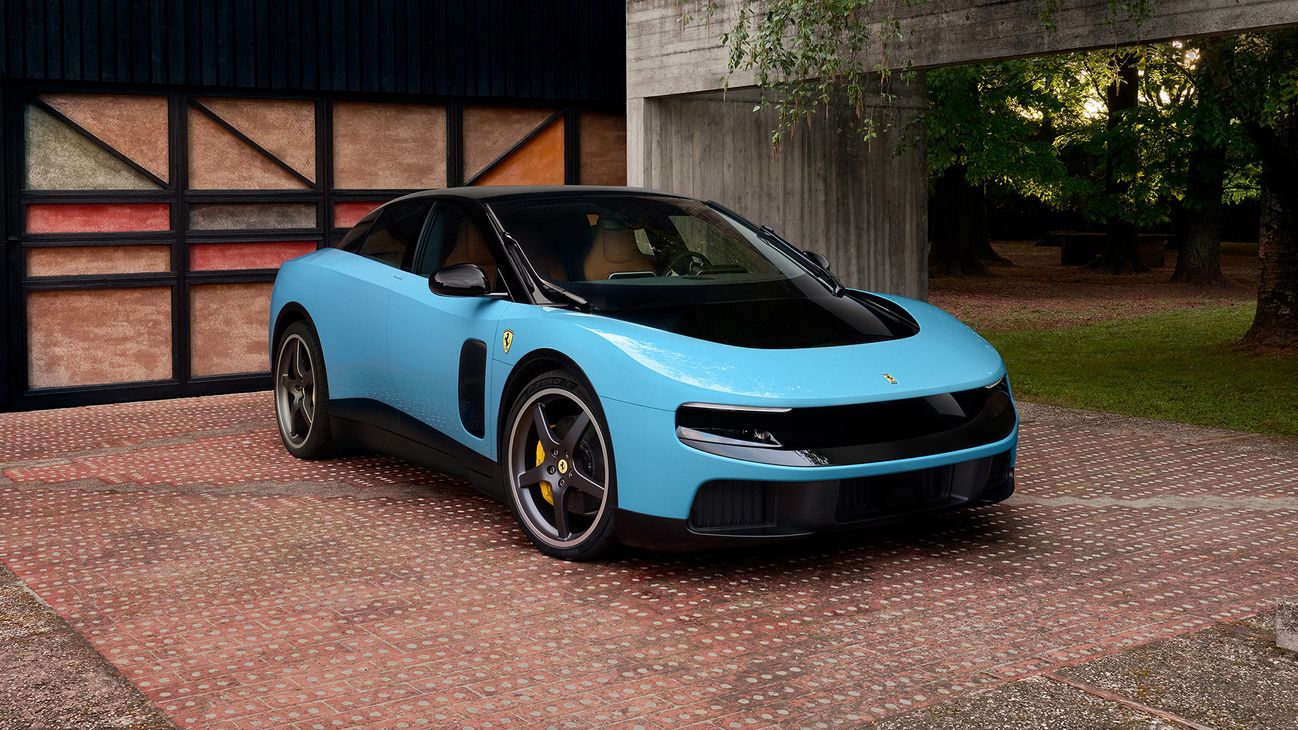
Ferrari Luce
"All right. So I'm going to bring up Ferrari's website while we talk about this and the Ferrari Luce. And we can kind of walk through this."
Ferrari Luce is a new electric car from Ferrari. The interesting part is that the hosts say Ferrari is taking a different approach to design by involving famous designers from the electronics world.
Ferrari Luce is Ferrari’s upcoming electric vehicle, and the episode frames it as a controversial move because Ferrari is traditionally known for its Italian-designed sports cars. The hosts discuss it in the context of Ferrari partnering with high-profile consumer-electronics designers rather than its usual automotive design houses.
pastiche
"And it had this wonderful kind of retro vibe about it, but not in a kind of pastiche way."
“Pastiche” means copying a style from the past, like a deliberate throwback. The host is saying the Luce doesn’t feel like it’s just wearing an old style as a costume. They think it’s more genuinely designed than that.
“Pastiche” means an imitation or collage of styles—often intentionally referencing something older—without necessarily adding new substance. The host says the Luce’s retro vibe isn’t “pastiche,” implying it doesn’t feel like a cheap throwback. Instead, they argue it feels clean and modern while still nodding to classic Ferrari cues.

Ferrari F40
"...way. The steering wheel hinted at things like the F40 and the massive screens. It didn't look over comp..."
The Ferrari F40 is a classic supercar made by Ferrari. It’s famous for being very focused on driving, with a simple, no-nonsense interior. People still talk about it because it’s an iconic design and performance car from its era.
The Ferrari F40 is a legendary mid-engine supercar from the late 1980s, known for its raw, driver-focused character. It’s often brought up as a benchmark for “real” analog feel—mechanical steering and a simple, purposeful layout. In the podcast, it’s referenced through design cues like the steering wheel and the overall cockpit vibe.
fit and finish
"we got kind of this retro kind of Momo-ish kind of steering wheel and clean design and glass. And, you know, fit and finish looks great and retro kind of seats like Daytona kind of seats."
“Fit and finish” is how carefully the car is put together—things like how straight panels line up and how high-quality the surfaces look. The host is saying the Luce seems well-made. But they’re still questioning whether the design matches what you expect from Ferrari.
“Fit and finish” refers to how well parts are assembled and how cleanly surfaces line up—panel gaps, alignment, and overall build quality. The host praises the Luce’s fit and finish, saying it looks great even if the exterior doesn’t feel very “Ferrari.” This is used to separate quality of execution from brand-appropriate design cues.

Daytona
"fit and finish looks great and retro kind of seats like Daytona kind of seats."
“Daytona” refers to a famous older Ferrari model. Here, they’re saying the Luce’s seats look like they’re inspired by that classic Daytona style. It’s part of the discussion about which parts of the Luce feel truly Ferrari and which don’t.
The Ferrari Daytona is a classic Ferrari sports car name associated with 1960s/1970s grand touring styling and racing heritage. The host compares the Luce’s “retro seats” to “Daytona kind of seats,” meaning the seat shape or design language is borrowing from that older Ferrari look. It’s another example of interior cues referencing Ferrari history even while the exterior is criticized for lacking it.
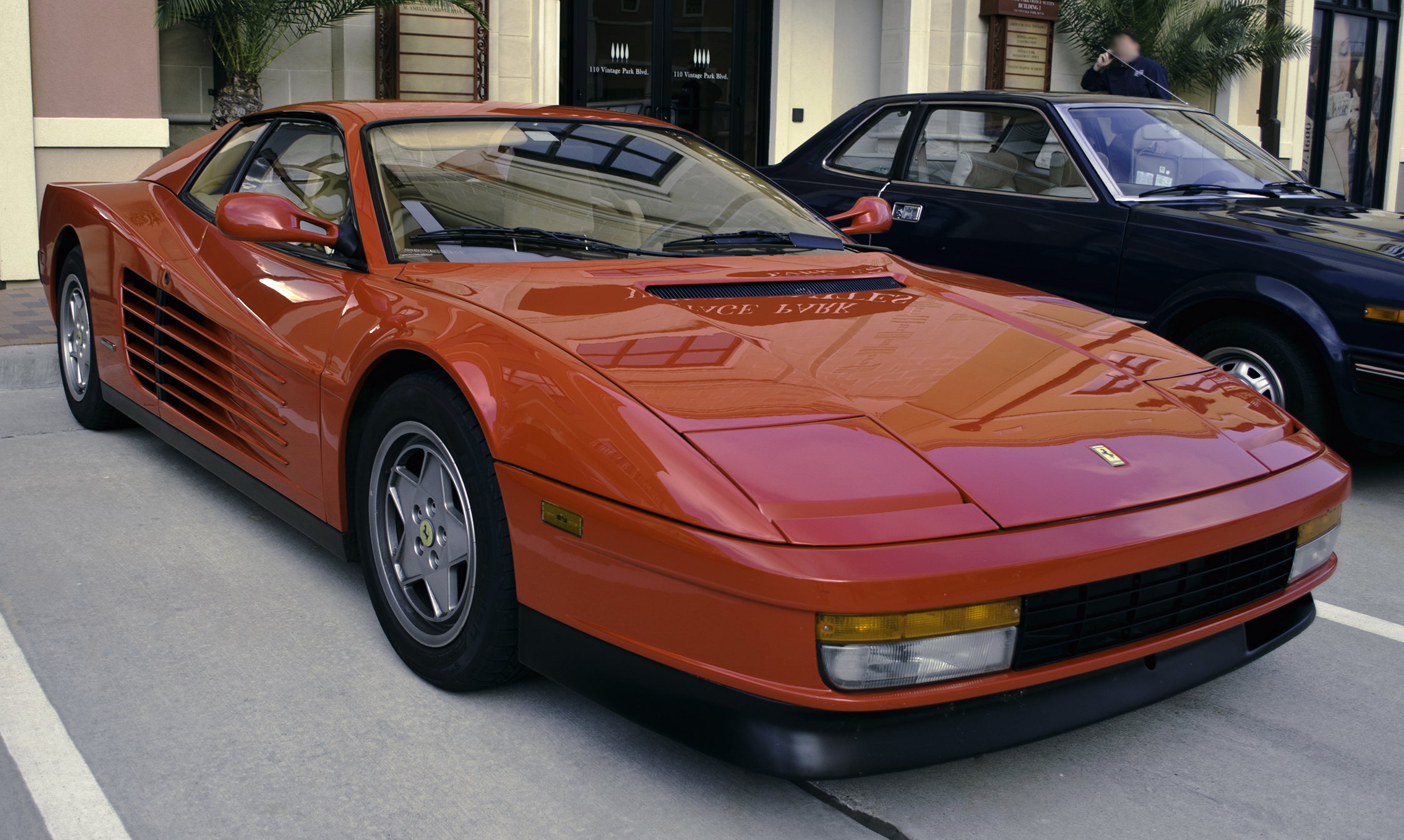
Ferrari Testarossa
"[654.3s] ...the Testerosa, you know, with the cheese grater on the side. I mean, [659.5s] technically maybe the 348 first and or the, you know, the Testerosa and the 348."
The Ferrari Testarossa is a classic Ferrari from the 1980s that’s instantly recognizable because of the big intake grilles on the sides—people sometimes describe them as looking like a cheese grater. The hosts mention it as an example of a Ferrari that didn’t look “normal,” but became memorable.
The Ferrari Testarossa is a famous 1980s/early-1990s Ferrari known for its bold styling, including the distinctive “cheese grater” side intake grilles. In this discussion, it’s used as an example of a Ferrari that was polarizing in appearance but still iconic.

Ferrari 348
"[654.3s] ...like you and I were talking about off the air, the Testerosa, you know, with the cheese grater on the side. I mean, [659.5s] technically maybe the 348 first and or the, you know, the Testerosa and the 348."
The Ferrari 348 is an older Ferrari model people talk about when they’re comparing which Ferraris were considered controversial or unusual. Here it’s just being used as an example of earlier Ferrari models that some people didn’t love at first.
The Ferrari 348 is a mid-engine Ferrari from the late 1980s/early 1990s era that’s often brought up when discussing how Ferrari design and engineering choices can be polarizing. In this segment, it’s mentioned alongside the Testarossa as part of the “polarizing Ferrari” history.

Ferrari FF
"[671.6s] It's kind of, you know, it's a two door, not a four door, but it's a hatchback and it has a rear seat and it's all wheel drive. And [677.5s] and people were like, it's the Ferrari for the snow."
The Ferrari FF is a Ferrari that’s different from most others: it has all-wheel drive and it’s shaped like a hatchback. That AWD is why people joked it was a “Ferrari for the snow,” meaning it can handle slippery weather better than a typical rear-wheel-drive Ferrari.
The Ferrari FF is a distinctive Ferrari because it’s a four-seat, two-door hatchback-style grand tourer with an all-wheel-drive system. When it launched, it stood out as a “Ferrari for the snow” because the AWD helped it put power down in low-traction conditions while still using Ferrari design cues.
all wheel drive
"[671.6s] ...it's a hatchback and it has a rear seat and it's all wheel drive. And [677.5s] and people were like, it's the Ferrari for the snow."
All-wheel drive means the car can send power to more than one set of wheels. That helps it grip better on slippery roads, which is why the Ferrari FF gets compared to a “snow” Ferrari.
All-wheel drive (AWD) means power is sent to more than just the rear wheels, improving traction when roads are slippery or uneven. In the Ferrari FF example, AWD is the key reason people associate it with being able to handle “snow” better than a typical rear-wheel-drive Ferrari.

Ferrari 308
"[781.8s] I don't, I mean, look, there have been Ferraris over the year, like the 308, [786.6s] which was originally by Dino in the 70s, the Petone thing that suddenly came up with the wedge"
The Ferrari 308 is an older, well-known Ferrari model. The hosts bring it up to illustrate that Ferrari has always had cars that some people thought were weird or controversial.
The Ferrari 308 is a classic mid-engine Ferrari from the 1970s/1980s era that’s frequently referenced in discussions about Ferrari’s design evolution. Here it’s mentioned as part of the broader point that Ferrari has had polarizing models over the years.
cheese grater arrow
"There's some, there's some hardcore Ferraris guys are like, the cheese grater arrow is not for me like they hate it."
“Cheese grater” is a nickname for a design feature—little grille openings—that look like a kitchen grater. The hosts are saying some Ferrari fans don’t like that particular look.
“Cheese grater” is an enthusiast nickname for the Testarossa’s side intake grilles, which look like the holes in a kitchen grater. In this context, the hosts use it to describe a polarizing Ferrari design element that some hardcore fans dislike.

Hyundai Ioniq
"When I first looked at it, I was like, that looks quite, you know, that looks like a sort of Ioniq five, you know, Hyundai Ioniq five."
They compare the new car’s look to the Hyundai Ioniq 5. It’s basically a “this reminds me of that” visual comparison.
The Hyundai Ioniq 5 is referenced as a visual benchmark because the hosts say the Ferrari Luce EV looks like it at first glance. The comparison is about proportions and styling cues, not performance.
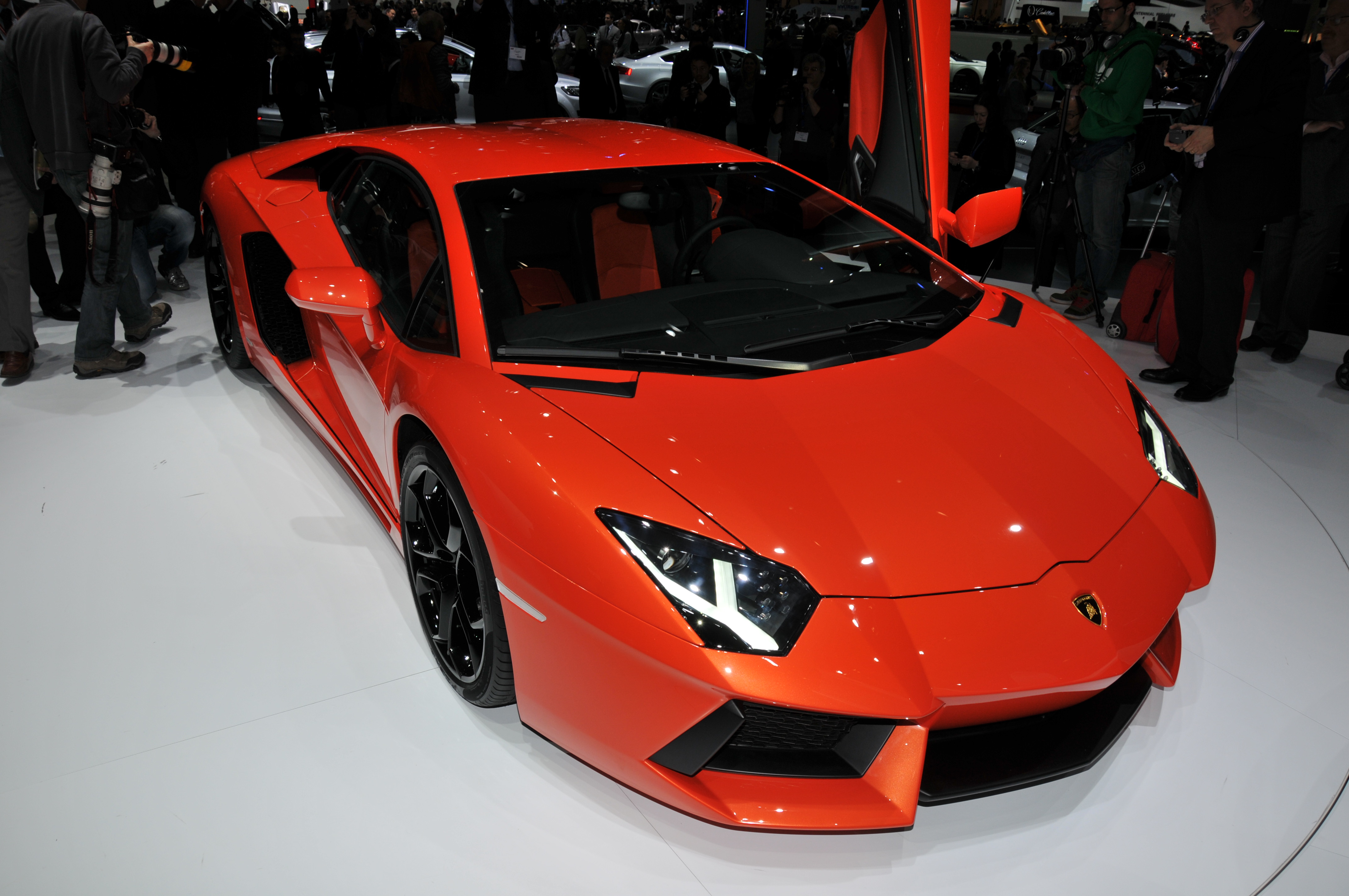
Lamborghini Aventador
"I think this thing is a little wider than the Aventador Lamborghini, which is already a very wide car."
They’re using the Lamborghini Aventador as a reference point for how wide a car can be. The point is that the new car is so wide it could be annoying to drive and park, especially in tight places.
The Lamborghini Aventador is a supercar known for being very wide, which affects real-world usability like lane positioning and parking. Here, the hosts say the Luce is even wider, making it a hassle especially on narrow European streets and in tight parking situations.
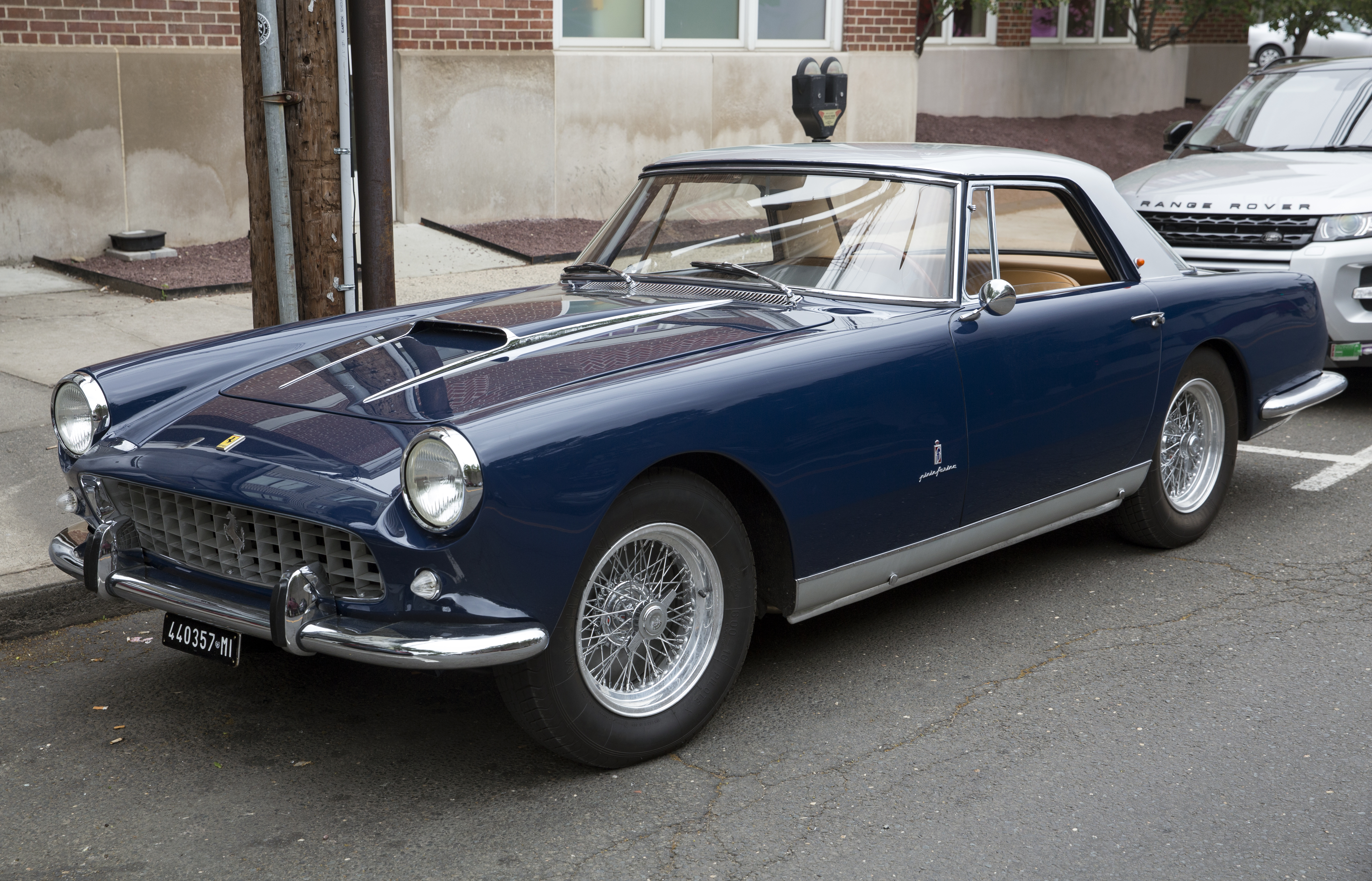
Ferrari 250 GT
"Ferrari collector. He's the one who just spent $38 million buying that white 250 GT out me come."
The Ferrari 250 GT is an old, famous Ferrari that collectors really chase. Here, it’s mentioned to show how much money and dedication this collector has.
The Ferrari 250 GT is a classic Ferrari from the 1950s/early 1960s era, known for its collectible status and grand-touring focus. In this segment, it’s used as an example of an ultra-valuable Ferrari purchase that highlights how serious the collector is.

La Ferrari
"they're like at the time, if you go in, hey, FF sales or or Lusso sales are down, you know, but you want a La Ferrari, you got to buy an FF or a Lusso or whatever it was at the time"
The La Ferrari is one of Ferrari’s most special, hard-to-get supercars. The hosts are saying that to buy one, you might have to prove loyalty by buying other Ferraris first.
La Ferrari is Ferrari’s ultra-rare, halo supercar known for its high-performance engineering and limited availability. Here, it’s central to the story: the hosts describe a strategy where buyers may need to purchase other Ferraris first to get access to a La Ferrari.

Enzo
"If you want one of the rare supercars, you know, you got to buy something that's not selling well, right? You got to buy the SUV, right? ... If you want an Enzo, you want a La Ferrari, this is what you need to buy ahead of time"
The Enzo is a legendary, very limited Ferrari supercar. Here it’s mentioned as one of the rare Ferraris people want, and the hosts say Ferrari may have used other purchases to control access.
The Ferrari Enzo is a limited-production, mid-engine supercar that became a benchmark for modern Ferrari halo cars. In this segment, it’s referenced as another example of a rare model that Ferrari allegedly used to motivate buyers to purchase other cars first.

Ferrari Lusso
"if you go in, hey, FF sales or or Lusso sales are down, you know, but you want a La Ferrari, you got to buy an FF or a Lusso or whatever it was at the time"
The Ferrari Lusso is a more comfortable, touring-style Ferrari. In this discussion, it’s mentioned because Ferrari may have used it as a stepping-stone purchase before letting customers buy more exclusive Ferraris.
The Ferrari Lusso (often referring to the FF-based Lusso variants) is a more comfort- and grand-touring-oriented Ferrari compared with the brand’s more track-focused cars. In the segment, it’s used as another example of a “slower-selling” Ferrari that buyers might have to purchase to qualify for access to rarer models.

Ghost
"They want like a Wraith or a ghost next to their Colonnette."
The Ghost is a Rolls-Royce luxury sedan. In this discussion, it’s used to show that customers wanted an SUV in addition to their other Rolls-Royce cars.
The Rolls-Royce Ghost is the brand’s mainstream luxury sedan, positioned as a flagship comfort car. Here it’s mentioned as another model Rolls-Royce customers want to own alongside the SUV, supporting the idea that the SUV demand came from existing buyers.
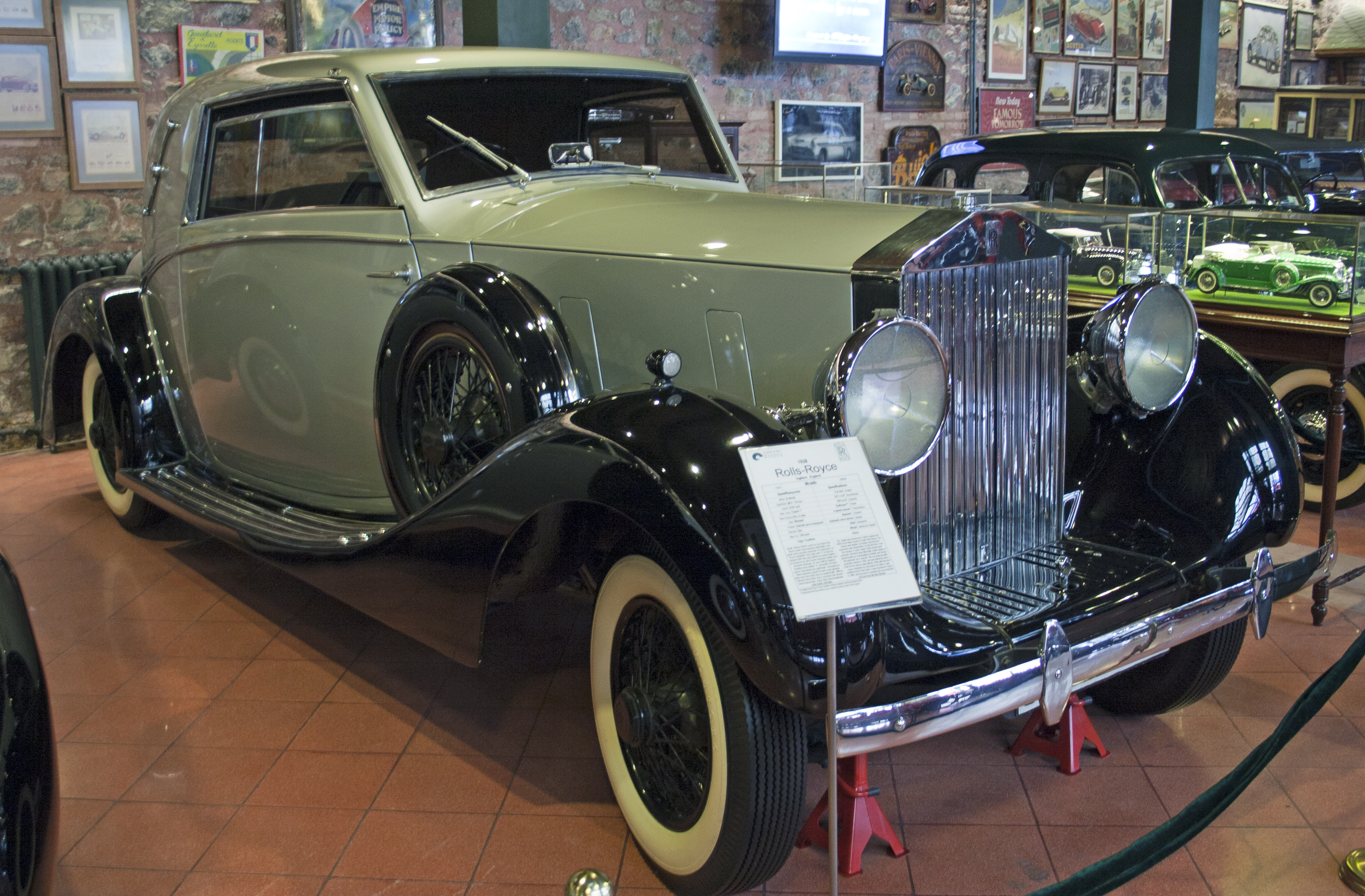
Wraith
"Our customers were asking us for an SUV because they want both of them in the garage. They want like a Wraith or a ghost next to their Colonnette."
The Wraith is a Rolls-Royce luxury coupe. The hosts mention it to illustrate that buyers already want other Rolls-Royce models in addition to the SUV.
The Rolls-Royce Wraith is a luxury grand tourer known for its powerful V12 and fast, coupe-like silhouette. In the segment, it’s used as an example of the kind of car existing Rolls-Royce customers already want alongside an SUV.
V12 sound effect
"Right. It's a, you know, it's an EV. It's not going to have, you look at the detailing, it's not going to have like a V12 sound effect. It's not going to have like a V12 sound effect."
People often expect a V12 engine to sound a certain way—usually deep and dramatic. The point here is that an EV doesn’t have that engine, so it won’t naturally make the same sound.
A “V12 sound effect” refers to the distinctive audio character associated with a V12 engine—typically the deep, high-volume exhaust note enthusiasts expect from V12-powered cars. The segment contrasts that expectation with how an EV like the Ferrari Luce EV won’t naturally produce that engine sound.
amplifier
"It's basically taking the mechanical, the real noises from the car, sort of running them through some amplifier and then go giving it kind of more of a native sound."
An amplifier is a device that makes a sound louder and helps shape it. Here, they’re using it to turn EV vibrations into a more noticeable, controllable sound.
In this context, an amplifier is used to boost and shape sound signals derived from the car’s mechanical activity. The hosts describe taking real EV-related noises (like motor vibrations) and running them through amplification so the cabin/road experience can be tuned.
digital sound
"They said they were taking the vibrations from the electrical, from the electric motor. Yeah. And turning that into sort of a digital sound."
“Digital sound” means the car turns vibrations into an electronic sound. Instead of hearing an engine the usual way, you hear a processed sound the car is designed to produce.
“Digital sound” here means converting physical vibrations from the electric motor into an electronically generated/processed audio output. The segment frames it as a way to create a more intentional sound character for an EV, rather than relying on natural combustion-engine acoustics.
personalization
"By the time you add tariffs and personalization, everything else, 50% more expensive than pure Zangi."
“Personalization” here means customizing the car with extra options you pay for. Those add-ons can push the price way up.
In car buying, “personalization” refers to paid options and custom choices (trim, interior materials, exterior colors, and other add-ons) that increase the final purchase price. The segment treats it as part of why the Ferrari Luce EV could end up far more expensive than a base figure.

Hyundai Ioniq 5N
"You've got to, for me, you're the great, you've got to give somebody a taste of something. You know, it's got to, you know, compared to like the Hyundai Oniq 5N or a Chinese SUV that goes electric car, that goes really fast..."
The Hyundai Ioniq 5N is a sporty electric Hyundai. The hosts bring it up to show that there are cheaper EVs that feel fast and do a lot of what buyers want.
The Hyundai Ioniq 5N is a performance-oriented EV from Hyundai’s N division, used here as a comparison point for what mainstream EV buyers can get. The hosts contrast its fast, feature-rich EV experience with what they see as the Ferrari Luce EV’s much higher price and more “brand/identity” focused pitch.
Formula One
"[1233.1s] the wheeled out Lewis Hamilton and Charlotte Claire, and it's all like, oh, look at this, [1236.7s] Formula One drivers, they love it, don't they?"
Formula One is the highest level of professional car racing. The hosts mention it because famous drivers are often used to make new products seem exciting or credible.
Formula One (F1) is the top tier of international open-wheel racing, and it’s referenced here as a marketing/credibility angle for high-profile drivers. The hosts contrast that racing appeal with the idea that money and new audiences can drive interest in controversial products.
EV
"[1289.6s] here's his quote and said, if I were to say what I really think, he's talking about this car, [1294.4s] if I were to say what I really think about this, I'd be doing Ferrari a disservice."
EV means electric vehicle. Instead of running on gasoline like most cars, it uses electricity stored in a battery to power the motor.
EV stands for electric vehicle, meaning the car is powered primarily by an electric motor and a battery rather than a gasoline engine. In this episode, the EV label is central because it’s tied to the controversy about whether Ferrari’s brand identity can translate to electrification.

Porsche 911
"[1336.8s] That's not what Porsche wants. And it turned out they just made a bunch more money and 911s are, [1341.5s] are super expensive and they still hold their value"
The Porsche 911 is Porsche’s most famous sports car. The hosts use it as an example that when Porsche added SUVs and EVs, the 911 didn’t suddenly become less desirable—it stayed valuable and expensive.
The Porsche 911 is Porsche’s flagship sports car, and it’s used here as the example of how Porsche’s move into SUVs and EVs didn’t ruin the core 911. The hosts claim 911s stayed very expensive and retained value, suggesting brand expansion didn’t harm the main model line as much as critics feared.
Lucid sapphire
"you know, Taycan turbo GT, which is 200 grand has got that lucid sapphire, you know, you get, sorry, lucid sapphire, Tesla, you know, Model S plan."
Lucid Sapphire is Lucid’s battery technology. The hosts bring it up to suggest that some EVs use advanced battery tech to achieve very high performance.
“Lucid Sapphire” refers to Lucid’s high-end battery/energy storage technology used in some Lucid EVs. In the segment, it’s mentioned as part of the comparison set for fast EVs, implying advanced battery tech can help deliver high performance.

Tesla Model S plan
"sorry, lucid sapphire, Tesla, you know, Model S plan. If you want to go that fast, you can have one of those for less than 100 grand easily."
The Tesla Model S is an electric car known for being quick. The host is using it to argue that if you want to go fast in an EV, there are cheaper options than a Ferrari.
The Tesla Model S is a performance-focused electric sedan, and the host uses it as an example of how you can get very quick EV acceleration for less money than the Ferrari Luce EV. The “plan” wording sounds like a transcript slip, but the point is the Model S’s role in the EV speed/value comparison.

Tesla Model
"... an EV isn't such a big deal. You know, Ioniq 5N, Tesla Model 3 performance, you know, they're all zero to 60 i..."
The Tesla Model Y is an all-electric SUV, meaning it runs on a battery instead of gasoline. It’s popular because it can accelerate quickly and it’s sold in large numbers. People mention it when talking about how EVs are becoming more common.
The Tesla Model Y is a battery-electric compact SUV known for strong performance and wide availability. It often comes up in discussions about how mainstream EVs have become, especially when people compare quick acceleration figures like 0–60 mph. In a podcast, it’s a common reference point for what everyday EV ownership can look like.

Tesla Model 3 performance
"You know, Ioniq 5N, Tesla Model 3 performance, you know, they're all zero to 60 in three seconds."
The Tesla Model 3 (in its performance version) is a quick electric sedan. The hosts use it to show that many EVs can already get to 60 mph very fast.
The Tesla Model 3 is an electric sedan, and the “performance” trim is referenced as a benchmark for quick acceleration. The host’s broader point is that EVs have made very fast 0–60 times common enough that it’s no longer a unique selling point for a luxury EV.
zero to 60
"You know, Ioniq 5N, Tesla Model 3 performance, you know, they're all zero to 60 in three seconds."
“Zero to 60” means how fast a car accelerates from a stop to 60 mph. It’s a simple way to compare how quickly different cars feel when you press the accelerator.
“Zero to 60” is shorthand for 0–60 mph acceleration time: how many seconds it takes to go from standing still to 60 miles per hour. It’s a common performance metric because it’s easy to measure and directly relates to how quickly a car feels responsive.
range
"The range is the European range, which is always very optimistic, says 329 miles. So that makes me think in the US, you're going to get less than 300 miles or somewhere around there."
For EVs, “range” is how many miles you can drive before the battery runs out. The host is saying the official numbers can look better than what you’ll actually get.
In EV discussions, “range” means how far the car can drive on a full battery charge. The host contrasts optimistic advertised “European range” numbers with what they expect to be lower real-world range in the US.
kilowatts
"So, you know, it's not, the battery is one, was it one 22 kilowatts? And I think to give you some context in Model 3 batteries just over 80,"
Kilowatts are a measure of how much power the car can use. In EV talk, people often mix up battery size and power, but the point here is that the host is trying to estimate how big the battery is compared to other EVs.
Kilowatts (kW) measure power—how quickly energy is delivered—while EV battery capacity is usually discussed in kilowatt-hours (kWh). The host mentions “one 22 kilowatts,” and the surrounding context is clearly about battery size, so they’re likely referring to a battery capacity figure.
5,000 pounds
"it's big ish, but it's not going to, you know, it's not going to, I mean, you think about the ones in the GM trucks, they're 200. So it's big, but not enormous. It weighs 5,000 pounds."
They’re talking about weight—how heavy the car is. Heavier cars can use more energy and feel different to drive, even if the motor is powerful.
The host cites the vehicle weight (5,000 pounds) to explain how EV mass affects dynamics and efficiency. In EV comparisons, heavier curb weight can make acceleration and energy consumption feel different even if the car has strong power.
charging speeds
"Charging speeds are all that sort of things fairly, you know, relatively normal,"
Charging speed is how fast the EV can charge at a charger. Faster charging usually means less time plugged in.
Charging speeds describe how quickly an EV can add energy, typically influenced by battery temperature, charger power, and the car’s onboard charging hardware. The hosts frame charging as one of the areas where the new EV is expected to be “relatively normal” or competitive.
suspension setup
"there'll be a lot of trick engineering cutback borrows a lot of the software engineering for the, and the hardware engineering for suspension setup from the, from the sports cars."
Suspension setup is how the car’s suspension is adjusted to handle bumps and cornering. It’s a big part of why two cars can feel very different even if they have similar power.
Suspension setup is the tuning of how the car’s suspension is configured to control ride and handling. Even with an EV, the suspension geometry and damping settings strongly affect how the car feels and how it manages weight and traction.
tariffs
"it's maybe about 640 grand on exchange rates, but I think that's going to be over. Then you put on tariffs, then you put on personalization, you know, you're potentially looking at a car that's the best part of 300, you know, three quarters of a million dollars."
Tariffs are extra taxes on imported products. They can make a car cost more once it’s brought into a country.
Tariffs are government taxes added to imported goods, which can raise the final price of a car. In this discussion, tariffs are part of why the EV could become extremely expensive after conversion and other costs.
EV technology cycle
"And when you think about the EV technology cycle, what does this look like in five years time? Because battery technology, everything will have moved on software technology."
EVs improve fast. That means today’s battery and software can feel behind in a few years when newer models come out.
The EV technology cycle is the pace at which battery and software improvements make today’s EVs feel outdated. As battery chemistry, charging hardware, and control software evolve, newer cars can leap ahead in efficiency and capability.
risks of depreciation of current EVs
"if you think about all the risks of depreciation of current EVs, you know, it's catastrophic. Will that apply to this car or will it be in such low numbers that it doesn't matter so much?"
Depreciation risk is the chance that an EV’s resale value drops sharply over time. The hosts are weighing whether an ultra-expensive, niche EV (like the Ferrari Luce they’re discussing) would suffer the same value drop as more mainstream EVs.
residual value
"And one of the appeals of buying a Ferrari, but like buying a Rolex is, you know, you, as long as you wait long enough, the residual value has come back to you."
Residual value is the resale value later—what the car might be worth after you’ve owned it for a while. They’re saying some luxury items hold value or even go up, and they’re not sure a pure EV will do that.
Residual value is what a vehicle is expected to be worth after a period of ownership, often used to judge long-term cost. The hosts argue that certain luxury brands (they compare it to Rolex) can regain value over time, while they doubt a pure EV would behave the same way.
lease
"Can you even lease a Ferrari new? Because EVs, like we've always said, hey, you know what? Maybe you want to lease an EV."
A lease is like renting a car for a few years with monthly payments. You usually give the car back at the end, unless you choose to buy it for a set price.
Leasing is a financing method where you pay to use a car for a set term (often a few years) rather than buying it outright. At the end, you typically return the car, buy it for a pre-set price, or roll into another deal—important for EVs because the resale value can swing the economics.
options
"You're going to add tax. You're going to add tariffs. You're going to throw some options on it."
“Options” are extra features you can add to a car. They usually cost extra and can push the price way up.
In car pricing, “options” are add-ons you choose beyond the base model—like upgraded wheels, interior packages, or performance features. Options can significantly increase the final purchase price, which matters when discussing EV affordability and depreciation.
lost half their value
"In three years from now, are we going to look at this and go, listen, a lot of EVs, especially luxury EVs have lost half their value."
This is talking about EV depreciation—how much the car’s resale price drops after a few years. Luxury EVs can lose value quickly, which changes the risk and cost of buying new versus buying used.
miles
"Now you can buy it used with 31,000 miles on it for..."
Miles means how much the car has been driven. When you buy used, mileage helps determine the car’s condition and price.
Miles refers to the car’s odometer reading—how far it has been driven. For used EV pricing, mileage affects perceived wear and can influence resale value and what buyers are willing to pay.
infotainment screen
"“So this screen in the middle with this handle on it, the infotainment screen…”"
An infotainment screen is the car’s main touchscreen for things like music, maps, and phone features. Here, they’re pointing out that the screen is designed to move and rotate, which makes it feel more like a gadget than a normal dashboard screen.
An infotainment screen is the main display used to control media, navigation, phone features, and many vehicle settings. In this segment, the hosts describe a center screen that can move and pivot, making it part of the interior’s “design statement,” not just a static display.
piano black
"“piano black is done. Let's get rid of it. Like let's use glass.”"
“Piano black” is a glossy, mirror-like trim finish commonly used on dashboards and center consoles. The hosts say Ferrari moved away from it and instead used glass/fingerprint-resistant materials, which changes both the look and how the interior shows smudges.

Taycan Turbo GT
"It's, you know, the Jag is 150 grand. The Taycan Turbo GT is 200 grand. It's like three times that."
The Porsche Taycan Turbo GT is Porsche’s very high-end electric car. The host brings it up to compare how expensive the Ferrari Luce EV is versus other top-tier EVs.
The Porsche Taycan Turbo GT is a high-performance electric version of Porsche’s Taycan lineup, built for maximum track-style power and response. Mentioning it alongside the Ferrari Luce EV is a direct “price tier” comparison between two very expensive EVs aimed at affluent buyers.
911 Carreras
"... what I understand, having a tougher time selling 911 Carreras. And one of their team was sharing to me, they lo..."
The 911 is a sports car model that’s been made for many years. It’s known for being fun to drive and for having a recognizable shape. The podcast is talking about how certain versions can be harder or easier to sell depending on demand.
The 911 is a long-running sports car model known for its distinctive design and rear-engine layout. It’s significant because it has a large enthusiast following and a strong performance reputation across many generations. In the podcast, it’s mentioned in the context of sales performance and market demand for 911 variants like the Carrera.
net worth
"they looked at a lot of data on the number of people globally, but also especially in the US, who are now got 100 million plus of net worth."
“Net worth” is basically how wealthy someone is overall—what they own minus what they owe. The host is saying there are more extremely wealthy people than before, so expensive cars can still sell.
“Net worth” here means the amount of wealth people have after subtracting debts, used as a proxy for how many potential buyers exist for ultra-expensive cars. The host argues that the number of people with very high net worth has grown, making the market for extreme luxury vehicles larger.
Luca de Montezemolo
"There's a lot of people at Ferrari might be looking at Luca de Montezemolo and saying, you know, you were the guy that did the 355, you were the 90s guy..."
Luca di Montezemolo is a well-known former Ferrari executive. The host is comparing Ferrari’s past leadership and cars to what the brand is doing now with a new EV.
Luca di Montezemolo is referenced as a former Ferrari leader associated with the brand’s 1990s era. The host uses him as a benchmark for how Ferrari’s leadership and product direction have changed from the 355 era to today’s EV push.

Cyber truck
"gets noticed like a cyber truck, you know, like a lot of people like, I hate the cyber truck,"
The Tesla Cybertruck is an electric pickup with a super unusual, boxy design. People notice it right away, which is why it comes up in conversations about “love it or hate it” styling.
The Tesla Cybertruck is a battery-electric pickup known for its angular, stainless-steel exoskeleton look. It became a cultural talking point because its design is so distinctive that people recognize it immediately, even from a distance.

Lamborghini Huracan Performante
"And I was looking at the cost of the one of my favorite recent Lamborghini is the Huracan Performante. And I enjoyed driving one in Eastern Europe one time."
The Lamborghini Huracán Performante is a special, more hardcore version of the Huracán. It uses a V10 engine and is famous for feeling very connected and exciting to drive.
The Lamborghini Huracán Performante is a high-performance version of the Huracán, built around a naturally aspirated V10 engine. It’s especially known for its track-focused character and for being offered with a manual gearbox, which adds to its “driver’s car” appeal.
V10
"And it's like, what? And it's because it's that V10. It was like that icon."
V10 means the engine has 10 cylinders arranged in a V shape. More cylinders like this usually help the car feel lively and make a unique sound.
A V10 is an engine with ten cylinders arranged in a “V” shape. In cars like the Huracán Performante, the V10 layout is part of why the engine sounds distinctive and feels high-revving.
manual gearbox
"It was like that icon. It's not even a manual gearbox. It's so it's, you know, there is obviously a massive nostalgia"
A manual gearbox is the kind where you choose gears yourself, usually using a clutch pedal. People often bring it up because it makes the car feel more hands-on.
A manual gearbox is a transmission where the driver selects gears using a clutch pedal and a gear lever. When a supercar is described as having (or not having) a manual gearbox, it’s usually about how “involving” the driving experience feels.
polarized
"road that Ferrari went down by going... we wanted something polarized and we wanted something that that that feeds into this all electric sort of consumer device type of thing."
“Polarized” just means people either really like it or really hate it. The hosts are saying Ferrari may have designed the EV to be that kind of “love it or hate it” statement.
“Polarized” here means the design is intentionally divisive—some people love it, others strongly dislike it. Automakers sometimes aim for this when they want a bold, attention-grabbing look that stands out in a crowded market.
all electric
"we wanted something polarized and we wanted something that that that feeds into this all electric sort of consumer device type of thing."
“All electric” means the car runs on electricity stored in a battery. There’s no gas engine involved—so the whole car is designed around EV power.
“All electric” means the vehicle is powered entirely by electricity from a battery, not by a gasoline engine. In EV marketing discussions, it’s often used to emphasize that the car’s identity and engineering are built around electric propulsion.
V8
"But yeah, if they came back to us and they said, we're going to do the FF with a battery, it'd be like, interesting, you know, and we go buy that. ...nobody's going to buy a electric Ferrari because everybody wants a V8 Ferrari."
A “V8” is a type of engine with eight cylinders. The hosts are saying a lot of people want that classic V8 experience rather than an electric Ferrari.
“V8” refers to an engine with eight cylinders arranged in a V shape. In this discussion, it’s shorthand for the traditional Ferrari sound and character that the hosts believe many buyers specifically want.
electric Ferrari
"...it's like, nobody's going to buy a electric Ferrari because everybody wants a V8 Ferrari. You know, it's better than the hybrid."
They’re talking about what happens when a Ferrari goes electric. Even if the car is good, the worry is that some buyers want the classic engine experience that defines the brand.
The hosts discuss the idea of an “electric Ferrari” as a brand-and-customer-expectations problem, not just a technology change. Their argument is that Ferrari’s identity is tied to traditional combustion characteristics, so an EV could disappoint buyers even if it’s fast.
polarizing
"“...like there was some decisions made saying we need to be polarizing. We need to be outside the box.”"
“Polarizing” means the car is designed to make people strongly disagree. Some will think it’s amazing, and others will think it’s ugly or wrong.
“Polarizing” here means the design or product strategy is intentionally meant to split opinions—some people love it, others hate it. In car marketing, that’s often used to create strong brand buzz and differentiate from competitors.
outside the box
"“...we need to be polarizing. We need to be outside the box.”"
“Outside the box” means doing something different from the usual formula. Here, they’re talking about Ferrari trying a new direction instead of making a car that looks like what people expect.
“Outside the box” is a strategy phrase meaning the company is trying a non-traditional approach instead of following what’s typical for the brand. In this context, it’s about making an EV that doesn’t look like a “typical Ferrari.”

Ferrari F430
"“...Frank Stevenson was an American that did the F430 and others...”"
The Ferrari F430 is an older Ferrari sports car that people associate with the brand’s traditional feel. They bring it up as an example of Ferrari’s past, before this EV/SUV-style debate.
The Ferrari F430 is a mid-2000s Ferrari sports car known for its naturally aspirated V8 and classic, driver-focused layout. The hosts mention it to contrast Ferrari’s past design direction and who influenced it.

Fiat 500
"“...Frank Stevenson was an American that did the F430 and others and the Fiat 500 and stuff...”"
The Fiat 500 is a small Italian car known for its cute, distinctive styling. They mention it to show the designer worked on more than just Ferrari.
The Fiat 500 is a small Italian city car that’s often associated with compact, design-forward styling. It’s referenced here because the hosts are discussing Frank Stevenson’s broader design influence beyond Ferrari.

Land Rover Range Rover
"...e door with my, you know, waiting for my electric Range Rover or whatever. And I've got Ferraris in the garage ..."
The Range Rover is a large, luxury SUV made for comfort and a more upscale driving experience. It’s designed to handle different road conditions, not just smooth pavement. The conversation mentions an electric version, meaning a battery-powered model is part of the appeal.
The Land Rover Range Rover is a luxury SUV built for comfort, capability, and high-end appointments. It’s frequently discussed because it represents the “premium” side of off-road-capable SUVs, and it can be a status-focused choice. In the podcast context, it’s mentioned as an electric version the speaker is waiting for, highlighting the shift toward electrified luxury.

Ford F150
"does not come cheap. So, you know. Right. But like, if you're going, hey, I'm going to take a billion dollars and I'm going to design the next generation F-150, you go, okay, but we're going to sell 900,000 of those things and they're going to be profitable. Ferrari's going, oh, we"
The Ford F-150 is a large pickup truck used for work and everyday driving. It’s popular because it’s widely sold and comes in many configurations. The podcast is talking about how much effort and money goes into designing the next version because it sells in very large numbers.
The Ford F-150 is a full-size pickup truck and one of the best-known vehicles in its class. It’s significant because it’s a high-volume model, so changes to its design and engineering can affect a huge portion of the market. The podcast mentions it in the context of major investment and the scale of selling the next generation.
Request an Explanation
Heard something you'd like explained? We'll add it to this episode.
Sign in to request explanations for terms you heard.
Want to learn more?
Browse our glossary for plain-English explanations of automotive terms, jargon, and concepts.
Help improve this episode
See something that's not quite right? Our annotations are AI-generated and can sometimes miss the mark. Click the flag icon on any annotation to suggest a correction.