
Gordon McCall, creator of the Quail event, talks about all things Monterey Car Week.
About this episode
Gordon McCall—creator of the Quail Motorsports Gathering and a key architect of Monterey Car Week events—breaks down how the two-week spectacle evolved from “Pebble” into the broader, widely recognized Car Week brand. He explains the homegrown, necessity-driven origins of his event world, including turning a customer appreciation party into a sellable business that later became the Hagerty Jet Center/MotorLux. The conversation also touches on entrepreneurship, timing, and why some legacy automotive businesses don’t get passed down to the next generation.
Follow @motorator
Follow Bravago Beverages
Hosted by Simplecast, an AdsWizz company. See pcm.adswizz.com for information about our collection and use of personal data for advertising.
Broad Arrow
"the idea of brought arrow auctions which which they they brought immediately on board to kind of play with motorlux... broad arrow has joined at the quail yes they have... it's going to enable broad arrow to expand their operations... I can't wait for their inaugural sale..."
Broad Arrow is an auction company that specializes in selling collector cars. The discussion is about them teaming up with Quail and planning an inaugural sale there.
Broad Arrow is an auction brand focused heavily on collector vehicles and luxury automotive sales. The host explains that Broad Arrow was brought on board for Quail, later joined Quail as a partner, and is expected to expand operations through a global partnership.
Christie's
"I had Christie's back in the day when I was running the Christie's car department I brought Christie's out of pebble beach and brought them to the jet center and we had a sale in conjunction..."
Christie’s is a big auction company that sells valuable items to the highest bidder. Here, they’re mentioned in connection with classic-car auctions in the Monterey/Peeble Beach orbit.
Christie’s is a major international auction house, known for high-end art and collectibles, including classic cars. In the segment, Gordon McCall describes running the Christie's car department and coordinating a sale around the Pebble Beach/Monterey area events.
FAA TSA restricted space
"I know the complications of of running a sale inside of an FAA TSA restricted space and it's a lot of layers to that not the easiest thing in the world to do..."
That phrase means an airport area with strict security rules. The point is that holding an auction there is harder because you have to follow more procedures and restrictions.
This refers to auction operations inside tightly controlled airport security zones governed by U.S. aviation and transportation security rules. The host is emphasizing that running a sale in that environment adds layers of compliance and logistics compared with a normal venue.
Peninsula Paris
"broad arrow just now announced a sale they're having at the peninsula Paris next February..."
Peninsula Paris is a hotel in Paris. The host mentions it because Broad Arrow is planning an auction there, showing the partnership is real and international.
Peninsula Paris refers to the Peninsula Hotels property in Paris, which is used here as the venue for a Broad Arrow sale announcement. The host frames it as evidence that the partnership is more than sponsorship—both sides are operating globally.
inaugural sale
"I can't wait for their inaugural sale and I've actually put one of my cars in it..."
An inaugural sale just means the very first auction in a new setup. In this case, it’s the first Broad Arrow sale tied to Quail.
An inaugural sale is the first auction held under a new arrangement or at a new venue. Here, it’s used to describe Broad Arrow’s first sale connected to Quail.
Bonham's
"years ago and for many years Bonham's had an auction out there yep it was kind of going on simultaneously..."
Bonhams is an established auction house that has historically run car auctions in the Monterey Car Week ecosystem. The segment notes that Bonhams had an auction at the Quail location for many years, sometimes running alongside other auctions.
Quail
"in that it was just kind of like we go to the quail we look around the quail... it didn't feel quite as integrated yet... the site itself the farm field at quail is a breathtaking piece of real estate"
Quail is a famous collector-car event in Monterey where people show and buy special cars. The host emphasizes that it’s more about the experience and enthusiasm than just selling cars.
Quail refers to The Quail, a collector-car event held at Quail Lodge during Monterey Car Week. It’s known for curating high-end cars and creating a “passion-driven” atmosphere rather than feeling like a typical car-lot auction.
Motor Lux
"they launched yeah they're down at the air water event the the Porsche event down here and now for the quail super smart makes sense so I called the guys over there"
Motor Lux is an event name mentioned as the starting point for a series of car-related gatherings. The point is how these events grow and connect with auctions.
Motor Lux appears here as an event that Broad Arrow started with, before expanding into other Monterey-area gatherings. It’s mentioned as part of the event ecosystem around auctions and collector car programming.
Craig Jackson
"Listen nobody knows that better than Craig Jackson right so true I know you go to a Bear Jackson event you're you're one of the VIPs"
Craig Jackson is a well-known figure in the collector car auction world. The host is basically saying he understands how the auction experience works and how to keep things moving.
Craig Jackson is associated with high-profile collector car auctions, referenced here through the Bear Jackson event and his role as a VIP/bidder. The host uses him to emphasize that auction “paddles going up” and the auction atmosphere are well understood by insiders.
Bear Jackson
"so true I know you go to a Bear Jackson event you're you're one of the VIPs you're one of the bidders up there"
Bear Jackson is an auction event name being used as an example. The host is comparing how different auction setups create excitement for bidders.
Bear Jackson is referenced as the auction event where Craig Jackson is a VIP/bidder. It’s used as an example of how auction events are run and how bidder energy is managed.
eve on the green
"we can finally announce who the entertainment is we're doing an event called the eve on the green you know the quail is a one-day event"
“Eve on the green” is an extra Thursday event added around Quail. It’s meant to kick off the week with entertainment and a special theme before the main show.
“Eve on the green” is a newly added Thursday event tied to Quail and Monterey Car Week programming. The host frames it as a quieter lead-in day that still starts “with a bang,” combining live entertainment with a themed walkthrough experience.
Russell Dickerson
"it's going to feature Russell Dickerson who's a big name in the in the country western you know number one number one song of the year"
Russell Dickerson is the musician they’re bringing in to perform. The host mentions he’s a big country star, so it’s a high-profile entertainment booking.
Russell Dickerson is named as the featured entertainment for “eve on the green.” The host positions him as a major country-western artist with chart-topping success, which matters because the event is blending car culture with mainstream live music.
root 66
"one of our featured categories which is the 100th anniversary of root 66 and we've got a company in LA that's designing a diorama for us"
Route 66 is a legendary American road that’s become a symbol of classic road trips. They’re using it as the theme for a big anniversary display with cars arranged as you walk through.
Route 66 (“root 66” as spoken) is a famous American highway that became a cultural symbol of road trips and Americana. Here, it’s used as a themed framework for a “100th anniversary” experience with cars placed throughout a walk-through diorama.
diorama
"and we've got a company in LA that's designing a diorama for us you will literally walk through a hundred years of root 66"
A diorama is like a detailed miniature scene. Here, it’s being built so you can experience Route 66 history in a walk-through display with model cars.
A diorama is a scale model scene that recreates a real-world environment in miniature. In this event, the diorama is designed so attendees can “walk through” a century of Route 66 history with cars positioned strategically.
Peninsula Chicago
"within the parent company the the peninsula chicago is celebrating their 35th year and the Beverly Hills Peninsula is celebrating an anniversary as well"
Peninsula Chicago is a hotel brand/location mentioned because it’s celebrating an anniversary. The host is connecting those anniversaries to the Route 66 theme.
The Peninsula Chicago is referenced as a hotel property with a 35-year anniversary tied to the Route 66 “bookends” theme. The host is using hotel milestones to frame the broader Monterey Car Week experience.
Beverly Hills Peninsula
"and the Beverly Hills Peninsula is celebrating an anniversary as well it's actually the other way around that's 35 years old which is the end of root 66"
Beverly Hills Peninsula is another hotel location mentioned for its anniversary. The host is using it to create a themed storyline around Route 66.
The Beverly Hills Peninsula is mentioned as another hotel property in the same parent group, also tied to anniversary timing connected to Route 66. It’s part of the event’s “bookends” storytelling rather than a car-specific topic.
Michelin star
"so we'll have bookends of Peninsula Hotel Michelin star chefs unbelievable experience Russell Dickerson entertainment eve on the green is going to"
A Michelin star is a well-known rating that signals a restaurant is top-tier. The host is saying the food experience will be from very high-end chefs.
A Michelin star is a restaurant rating awarded by the Michelin Guide, used as a marker of high culinary quality. The host uses it to describe the caliber of chefs involved in the Peninsula-related experience.
Monterey Car Week
"Gordon McCall, creator of the Quail event, talks about all things Monterey Car Week. ...it becomes such a significant part of it and even a judge the the best cars in the world..."
Monterey Car Week is a big yearly event in California for car collectors. It includes car shows and auctions where rare cars get shown off and sometimes sold for huge money.
Monterey Car Week is the annual cluster of car shows, auctions, and driving events centered around Monterey, California. It’s one of the biggest calendars in the collector-car world, where high-end cars are displayed, sold, and celebrated.
five-star food
"but you know we are serving five-star food on china and you know eat and drink your way through the day and see amazing people..."
“Five-star food” just means really high-quality, upscale dining. The point here is that the event is built like a luxury experience, not only a car show.
“Five-star food” is hospitality language meaning a top-tier dining experience, used here to describe how the event experience is designed to feel luxurious. It’s part of the argument that collector events compete on experience, not just car exposure.
privately owned cars
"incredible launches of vehicles that take place there and you know over 200 privately owned cars on display it's pretty spectacular..."
This means the cars on display are owned by regular collectors, not companies. That often makes the show feel more personal and special.
“Privately owned cars” refers to collector vehicles held by individuals rather than manufacturers or dealers. In the context of Quail/Monterey, it emphasizes that the displays are driven by personal collections, which can increase variety and desirability.
hospitality companies
"that's a good point because that's a point that I brought up many times uh with conversations like with adam corolla and my my friends in the auction space I've always sort of regarded those auctions um you know the the big auction companies as hospitality companies that sell cars"
The host is saying auction companies aren’t only selling cars—they’re also selling an experience. The atmosphere and access can matter a lot to buyers.
In the collector-car world, auction houses are often described as “hospitality companies” because the buyer experience—events, access, and social atmosphere—can be as important as the cars themselves. The host argues that this framing helps explain why auctions can “sell dreams,” not just inventory.
selling dreams
"yeah right they're selling dreams yeah you know yeah because you're you're asking people interesting so you're talking about long time ago..."
“Selling dreams” means the events aren’t just about the car as a machine. They’re about what owning it represents—status, history, and the fantasy of having something rare.
“Selling dreams” is a metaphor for how collector-car auctions and events can create emotional value around ownership, status, and nostalgia. The host connects this to why extreme car values can rise beyond what you’d expect from the cars’ practical utility.
Pebble Beach
"yeah right they're selling dreams yeah you know yeah because you're you're asking people interesting so you're talking about long time ago you're parking cars at pebble beach and then over the years..."
Pebble Beach is one of the most famous car shows in the Monterey area. Collectors bring their best cars there, and it helps set the tone for the whole week.
Pebble Beach is the famous Monterey-area concours event where collectors display some of the world’s most desirable cars. It’s a key centerpiece of Monterey Car Week and heavily influences collector attention and pricing.
supercar hypercar
"simultaneously this whole supercar hypercar thing is just nuts yeah yeah taking off for sure"
“Supercar” and “hypercar” are enthusiast terms for extremely high-performance, high-cost cars, usually with advanced aerodynamics and exotic powertrains. The host is saying this category has surged in popularity and attention compared with older eras of cars.

Ferrari f50 GT1
"and had a voice in this our best of show winner last year was a Ferrari f50 GT1 first time in a significant car shows history that a quote supercar has one best of show"
This is a special Ferrari made for racing, not just a regular road car. In this episode, they’re saying it won a top award at Quail, and they emphasize how rare it is.
The Ferrari F50 GT1 is a track-focused racing variant of the Ferrari F50, built to compete in GT racing. It’s notable here because the host says it won Best of Show at Quail, and because it’s described as extremely rare and factory-original.
Best of Show
"our best of show winner last year was a Ferrari f50 GT1 first time in a significant car shows history"
Best of Show is the highest award at a car show. It means the judges picked that one car as the overall winner.
Best of Show is the top award at a car event, given to the single standout vehicle overall. It’s a major status marker in concours-style judging, often influencing desirability and collector attention.
Pagani's
"I don't really understand the Pagani's and the conning eggs I don't know what you do with them"
Pagani is a brand that makes very rare, very high-end supercars. The host is basically saying they don’t get what you’re supposed to do with them as a normal owner.
Pagani is an Italian supercar brand known for ultra-exotic, boutique cars with high-end materials and engineering. The host mentions not understanding how to “do” with Pagani cars, implying they’re hard to place in a collector’s day-to-day life.
rev limiter
"I you know when you see the videos it's it's typically on the rev limiter in a parking lot with a crowd yeah bouncing off the well there's some interesting things there..."
The rev limiter is a safety limit that stops an engine from revving too high. When you hit it, the car limits power so the RPM can’t keep climbing.
A rev limiter is an engine control feature that prevents the engine from spinning faster than a safe maximum RPM. When the engine hits it, the car may cut fuel or spark to keep RPM from rising further.

Audi S7
"...they're not raced where something like the saline s7 was raced yeah so when I last time I sat down wit..."
The Audi S7 is a faster, sportier version of Audi’s larger sedan-like car. It’s meant for strong performance on the road, not for being a dedicated race car. The podcast mentions it to explain how it’s different from cars that are commonly raced.
The Audi S7 is a performance-oriented version of the A7, typically offered as a fast, more powerful grand tourer. The podcast contrasts it with cars that are raced, noting that the S7 isn’t raced in the same way as something like the “Saline S7.” That framing suggests the S7 is discussed as a road-focused performance car rather than a dedicated race car.
Saline S7
"with a crowd yeah bouncing off the well there's some interesting things there because I a lot of those examples they're not raced where something like the saline s7 was raced yeah so when I last time I sat down with Steve saline and I said man s7s are really starting to take off in the auction world..."
The Saline S7 is a rare, high-performance supercar made by Steve Saline. The hosts are talking about how cars like this can become more popular and valuable once they’re old enough to show up at certain racing and collector events.
The Saline S7 is a high-performance, track-focused supercar built by Steve Saline’s company, known for its lightweight, exotic look, and strong auction/enthusiast following. In this segment, it’s used as an example of how cars can gain value and relevance as they become eligible for vintage-style events.
Steve Saline
"so when I last time I sat down with Steve saline and I said man s7s are really starting to take off in the auction world why and he said because we're coming up to that year where they can go to vintage racing events..."
Steve Saline is the person behind the Saline S7. In this conversation, he’s explaining why the car is getting more attention and value at auctions.
Steve Saline is the creator behind the Saline S7 and a key figure in the car’s enthusiast and track culture. Here, he explains why the S7 is gaining momentum in the auction world as it reaches eligibility windows for events.
Ferrari F50
"hard to hard to believe that a Ferrari f50 is an example is 30 years old yeah it's and there is something to be said too..."
The Ferrari F50 is a rare, high-performance Ferrari from the 1990s. The point here is that even cars like the F50—now decades old—can still be hot in auctions and collector circles.
The Ferrari F50 is a 1990s supercar from Ferrari, famous for being a high-revving, performance-first machine and for its place in the brand’s modern supercar lineage. The host notes how an F50 can be considered “30 years old” and still be relevant in today’s collector/auction world.
lease program
"this is the part of the math that I don't really get so when those cars were new if I'm not mistaken Ferrari had a lease program that you had to participate in because they were not selling they just weren't..."
A lease program is when you pay to use a car for a period of time instead of owning it. The host is saying Ferrari used this kind of approach when some cars weren’t selling well.
A lease program is a sales approach where customers pay to use a car for a set period rather than buying it outright. The host claims Ferrari used a lease program when certain models weren’t selling, which helped manage demand and inventory.
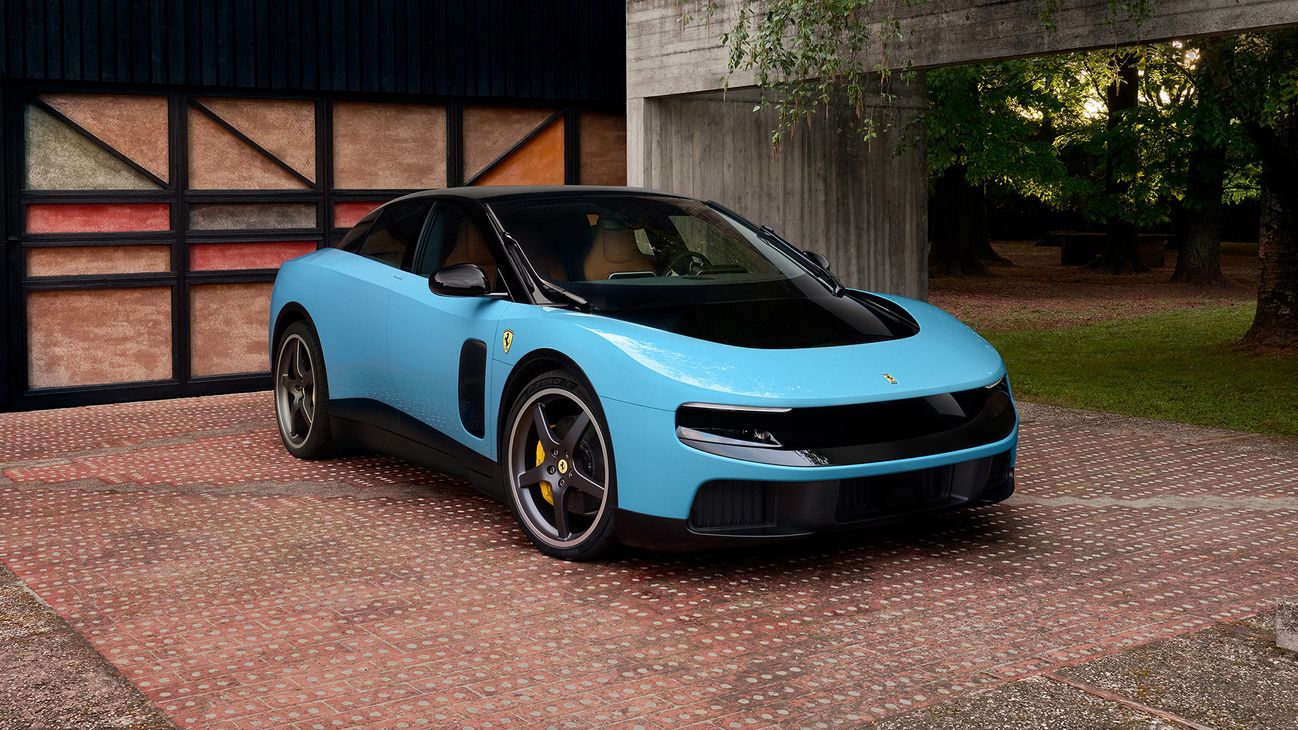
Ferrari Luce
"...ur lip you're gonna gotta you gotta get a Ferrari luce out there at some point because listen for good o..."
The Ferrari Luce is a Ferrari model mentioned in the podcast as something important that should be seen more. The speaker is basically saying it’s worth bringing attention to. The transcript doesn’t give details beyond that it’s a Ferrari to watch for.
The Ferrari Luce is referenced in the podcast as a Ferrari model that the speaker wants to see “out there,” implying it’s a notable or anticipated addition to the lineup. Because the transcript doesn’t provide technical details, the key takeaway is that it’s being discussed as a significant Ferrari product people should pay attention to. The mention is tied to the idea of getting it visible and recognized.
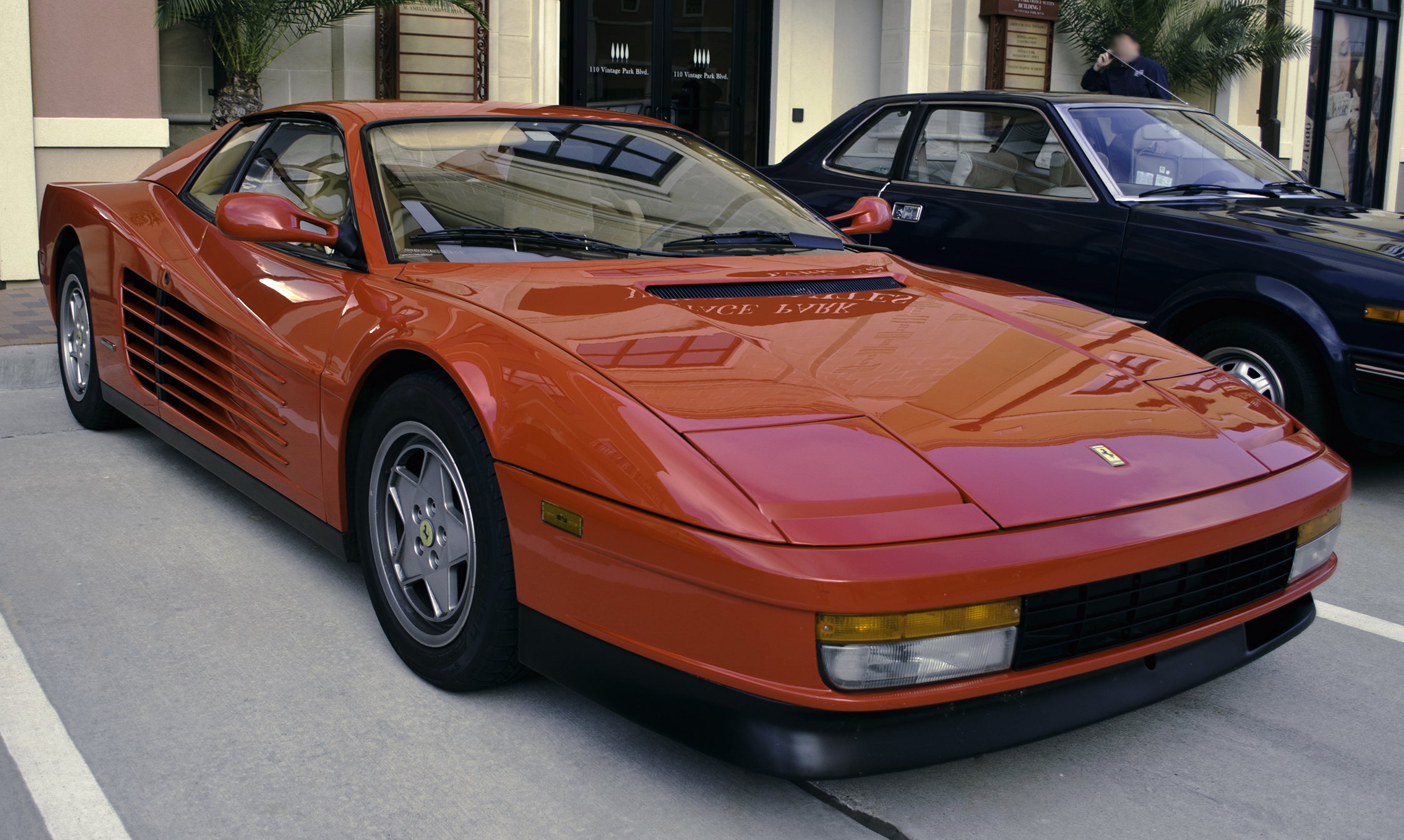
Testarossa Testarosa
"hands down was there anything on the internet talked about more than that I mean even Richard Rollins six-wheeled thing that he built yeah around a testarosa didn't garner as much internet time as the luce did..."
The Ferrari Testarossa is a famous older Ferrari model with a very recognizable look. The host is saying a six-wheeled build based on it didn’t get as much online attention as another unusual Ferrari.
The Ferrari Testarossa is a classic 1980s/early-1990s Ferrari known for its distinctive styling and big-enthusiast following. In this segment, it’s mentioned as the base car around which Richard Rollins built a famous six-wheeled project.
EV
"but if you took that car with that styling and the interior which I do like and said you know this is the new Audi EV or this is the new you know Lexus EV you would look at that thing"
EV means electric vehicle. It’s a car that runs mostly on electricity from a battery, not a gas engine. The point here is that the design could make sense if you compared it to other luxury EVs.
EV stands for electric vehicle, meaning the car is powered primarily by an electric motor and a battery rather than a gasoline engine. In this segment, the host uses it to compare the styling/packaging of the new Ferrari-adjacent electric concept to other luxury EVs.
Audi EV
"but if you took that car with that styling and the interior which I do like and said you know this is the new Audi EV or this is the new you know Lexus EV you would look at that thing"
Audi is a luxury car brand. “Audi EV” just means one of their electric cars, and the host is saying the design would make more sense if you thought of it as an Audi electric instead of a Ferrari move.
Audi is a German luxury brand, and “Audi EV” refers to its electric-vehicle lineup. The host uses Audi as a comparison point to argue that the styling and interior would feel more “normal” if it were presented as an Audi EV rather than something aimed at Ferrari buyers.
Lexus EV
"and said you know this is the new Audi EV or this is the new you know Lexus EV you would look at that thing right right I mean price aside"
Lexus is Toyota’s luxury brand. “Lexus EV” means one of their electric cars, and the host is using it as a comparison to explain why the design might feel more acceptable in a different brand context.
Lexus is Toyota’s luxury brand, and “Lexus EV” refers to its electric vehicles. The host uses Lexus as another benchmark to suggest the car’s design language could be interpreted as mainstream luxury EV styling rather than a misstep for Ferrari customers.
Laguna Seca
"this whole Japanese invasion is awesome because I think we can look no further than 2018 when Nissan was the featured mark at the Rolex reunion at Laguna Seca and I think people on the front end kind of had their doubts"
Laguna Seca is a well-known race track in Monterey, California. The host is talking about an event there in 2018 where Nissan was the featured brand, and it turned out to be a big hit with the crowd.
Laguna Seca refers to WeatherTech Raceway Laguna Seca in Monterey, California, a famous road-course track used for major racing events. The host references a 2018 event there where Nissan was the featured marque, highlighting how that “Japanese invasion” became popular with attendees.
Nissan
"no further than 2018 when Nissan was the featured mark at the Rolex reunion at Laguna Seca and I think people on the front end kind of had their doubts"
Nissan is a Japanese car brand. Here it’s mentioned because Nissan was highlighted at a big event at Laguna Seca in 2018, and it ended up being one of the most popular featured brands.
Nissan is a major Japanese automaker, and in this segment it’s used as the example of a “featured mark” that drew strong interest at a Monterey-area event. The host points to Nissan’s 2018 presence at Laguna Seca as evidence that Japanese cars can be a crowd favorite at classic/enthusiast gatherings.
Japanese GTs
"but at quail I think we [2010.5s] were the first to announce we're going to have a Japanese kind of an homage to Japanese GTs [2015.2s] and you know I've had Japanese cars at the quail since day one"
“Japanese GTs” means Japanese sports cars that are meant for fast road racing, often long-distance events. Here, it’s being used to describe a tribute theme to Japanese racing cars.
“Japanese GTs” refers to Japan’s grand touring–style sports cars and racing programs, typically built for endurance and high-speed road-course competition. In the context of Quail, it signals a themed homage to Japanese performance and racing heritage.
25-year rule
"just personally I'm really proud to see what's happening in the States with the 25-year rule [2029.3s] and some of these crazy cars you're seeing pop up on bring a trailer now that are legal to sell [2033.4s] in the United States"
The “25-year rule” is a U.S. law that makes it easier to import older cars. Once a car is old enough, it often doesn’t have to meet the same modern rules to be sold legally.
The “25-year rule” is a U.S. import exemption that allows certain vehicles older than 25 years to be brought into the country with fewer federal compliance requirements. It’s a big reason older Japanese performance cars (and other classics) have become easier to legally buy and sell in the U.S.

Nissan Gtrs
"...w that are legal to sell in the United States the GTRs etc there's some amazing cars out there that now ..."
The Nissan GT-R is a high-performance sports car made by Nissan. It’s known for being very fast and capable. The podcast mentions it because it’s one of the notable performance cars that can be sold in the United States.
The Nissan GT-R is a performance sports car known for delivering very high speed and strong track-capable capability. The podcast mentions it in the context of “amazing cars” that are legal to sell in the United States, highlighting its status as a standout model. That’s why it comes up when discussing what’s available to buyers.
Peter Brock
"you know so Peter Brock will be the Marshall [2069.4s] Grand Marshall out at the track which is fabulous we've got a wonderful class at quail featuring [2074.6s] those cars"
Peter Brock was a famous race car driver and motorsports personality. Here, the host is saying Brock will be honored as a grand marshal for the event.
Peter Brock was a legendary Australian motorsports figure best known for his work with the Holden Torana and for being a highly influential race car driver and team leader. In this segment, he’s being named as the “Marshall Grand Marshall” for the track event, highlighting his ceremonial role in the program.
Brock Racing Enterprise
"right and Pete Brock is Brock Racing Enterprise that's the BRE side for those of you guys doing [2124.4s] the math on this right love Pete so yes a few years ago we brought a handful of the Japanese"
Brock Racing Enterprise (BRE) is Pete Brock’s racing team. It’s the name on the race cars they built and raced, and that’s why it shows up when they talk about which cars are being shipped to the event.
Brock Racing Enterprise (BRE) is Pete Brock’s racing organization, known for building and campaigning distinctive race cars for events and customers. In this segment, it’s used to identify the BRE-branded cars being brought to Monterey Car Week.
Pete Brock
"right and Pete Brock is Brock Racing Enterprise that's the BRE side for those of you guys doing [2124.4s] the math on this right love Pete so yes a few years ago we brought a handful of the Japanese ... [2198.5s] around some of the cars like the Roadster so we're bringing the transporter probably with"
Pete Brock was a famous racing person who created the BRE racing team. In this story, he’s connected to the race cars and the truck they used to move them around.
Pete Brock is the founder of Brock Racing Enterprise (BRE) and a major figure in American racing car development. In this segment, he’s directly linked to the design and historical use of the BRE cars and even the transporter truck used to haul them.

Toyota Corolla
"so Adam is yeah Corolla is racing his number 85 his BRE [2144.1s] dots in 510 the Bobby Allison car so we've got that car that's coming out there"
They’re talking about a Toyota Corolla that’s been turned into a race car. In this segment it’s specifically identified by a racing number and BRE branding, meaning it’s part of the event’s lineup of real competition machines.
The Toyota Corolla mentioned here is being raced in a BRE context, with a specific car number (85) and a BRE-livery reference. The key point is that they’re bringing a smaller Japanese race car—an actual competition car—rather than a road-going Corolla.
BRE 510 race car
"let's bring I don't know if you've seen this car Pete Brock designed a BRE 510 race car that raced [2160.0s] in Jamaica with a private tier company and it's the yellow and white one and he's very very proud"
The BRE 510 is a race car based on the Nissan 510. It matters because it’s a classic racing platform, and the BRE version is special in this story since it’s a real, historically raced car they’re restoring.
The BRE 510 refers to a Nissan 510-based race car built by Pete Brock’s BRE program. The Nissan 510 is a classic compact platform that became famous in racing, and BRE’s version is notable here because it’s described as a historically raced car (including a Jamaica appearance) that they’re restoring for display.

Hino transporter
"we also got the very [2189.4s] first Hino truck ever imported here which was the Hino transporter that Pete Brock used to haul [2198.5s] around some of the cars like the Roadster so we're bringing the transporter probably with"
A Hino transporter is a Hino truck used to carry race cars. They’re bringing the specific transporter Pete Brock used to haul his cars, so it’s part of the story and the exhibit.
A Hino transporter is a Hino-brand truck used to haul race cars, and here it’s specifically described as the one Pete Brock used to move cars like the Roadster. The segment treats it as part of the historical display, not just logistics.
BRE Roadster
"and then we've [2217.1s] got the first BRE Roadster and the second BRE Roadster and we might be bringing them both I know [2223.8s] we're bringing one of them we might be bringing them both again"
The BRE Roadster is a race-prepped roadster connected to Pete Brock’s BRE team. They’re talking about bringing multiple versions of it, which shows these aren’t just generic cars—they’re specific, historically important machines.
The BRE Roadster refers to a BRE-prepared roadster race car associated with Pete Brock’s program. In this segment, they’re bringing the first and second BRE Roadsters (or possibly one of them), emphasizing their historical significance and the coordination challenge of transporting multiple cars.
grand marshal
"Adam Adam didn't know Mel Mel didn't know Adam and I thought you know when Peter Brock accepted the grand marshal role can't just put him in a convertible and take him around the lunch break and have him waving from the back"
A grand marshal is a special guest honor at an event. They’re usually a big-name person who gets to lead or be recognized during the show.
A grand marshal is an honorary role given to a prominent person, typically to lead or represent an event. In car events, it often means the person is featured prominently in the parade or opening ceremonies.

Chevrolet Corvette
"where's John Morton in the equation here because he has to be a part of this you know and Laguna Seca is forever connected with BRE in that that's where the infamous teardown took place of of Quicks car the alpha and so it it's yes it's the Japanese year but you've got to have the BRE cars front row and center because they they are the cars that put Japanese racing on the map in America and you guys have a bunch of them it's awesome. Nissan has the championship car"
The Corvette is Chevrolet’s famous sports car. It’s known for being fast and for having a big history in racing and car events.
The Chevrolet Corvette is a long-running American sports car best known for its performance heritage and strong presence in motorsport and car culture. In this segment, it’s referenced as part of Peter Brock’s accomplishments and significance.
John Morton
"where's John Morton in the equation here because he has to be a part of this you know and Laguna Seca is forever connected with BRE in that that's where the infamous teardown took place of of Quicks car the alpha"
John Morton is mentioned as a racer who’s driven these cars before. The host is saying his involvement matters because he has real experience with the history.
John Morton is mentioned as someone who has raced the car(s) tied to the BRE legacy. The speaker implies he’s part of the event’s story because of his direct experience with the vehicles.
teardown
"Laguna Seca is forever connected with BRE in that that's where the infamous teardown took place of of Quicks car the alpha and so it it's yes it's the Japanese year but you've got to have the BRE cars front row and center"
A teardown means taking a car apart to inspect it closely. In racing, it’s done to figure out why something happened and what can be learned from it.
A teardown is when a race car is disassembled for inspection to understand what happened—often after a failure, accident, or performance mystery. In motorsport culture, teardowns are used to extract technical lessons and validate engineering decisions.
Japanese racing
"because they they are the cars that put Japanese racing on the map in America and you guys have a bunch of them it's awesome."
“Japanese racing” means race programs from Japanese brands that started competing strongly in the U.S. The point being made is that these cars helped change how Americans saw racing from Japan.
“Japanese racing” here refers to the era when Japanese manufacturers and teams began making a major impact in U.S. motorsport. The speaker frames BRE’s Japanese-car entries as instrumental in putting that racing on the map in America.
championship car
"Nissan has the championship car but our friend Randy Jaffe kind of curates that car takes care of that car he kind of manages"
A championship car is the race car that helped win a big title. It’s usually one of the most important cars a team or collector can show.
A championship car is a specific race car associated with winning a championship—either a season title or a major class title. Collectors often highlight these cars because they represent the peak of a team’s development and results.
Randy Jaffe
"Nissan has the championship car but our friend Randy Jaffe kind of curates that car takes care of that car he kind of manages"
Randy Jaffe is mentioned as someone who looks after and organizes a championship race car. The host credits him with helping keep that racing history alive.
Randy Jaffe is described as a curator/manager of a Nissan championship car. In this context, he’s presented as a steward of racing history and a collector connected to the BRE legacy.
drifting
"when you tie in the whole fast and furious set with drifting and you know all of all of that when you tie that together with this amazing history it's a it's a wonderful story to tell"
Drifting is when a driver intentionally makes the car slide sideways while still steering and controlling it. It’s a popular stunt style that’s become part of car culture.
Drifting is a driving technique where the driver intentionally oversteers so the car’s tires lose grip while maintaining control and direction. The speaker connects drifting culture to the broader “fast and furious” vibe and then ties it back to real racing history.
fast and furious set
"I just think you know when you tie in the whole fast and furious set with drifting and you know all of all of that when you tie that together with this amazing history"
The “Fast and Furious” set means the fan culture created by the movies—cars, stunts, and street-racing vibes. The speaker is saying it helps people relate to the real racing history being discussed.
“Fast and Furious set” refers to the movie franchise’s car-focused fan culture—street racing aesthetics, stunts, and the broader media hype around cars. Here it’s used as a cultural bridge to explain why people connect to the Japanese-racing story.
post-war racing
"well so as you mentioned we have our standard classes post-war racing post-war sports motorcycles supercars"
“Post-war racing” means race cars from after World War II. Car shows use it as a category so you can see vehicles from that specific era together.
Post-war racing refers to motorsport that took off after World War II, typically featuring the cars, rules, and racing culture that emerged in the late 1940s through the 1950s and beyond. It’s a labeled historical category used at shows to group cars by era and racing context.
post-war sports motorcycles
"well so as you mentioned we have our standard classes post-war racing post-war sports motorcycles supercars you know people thought i was crazy"
This is a category for sport motorcycles from after World War II. It’s used by the show to group bikes that are from the same general time period and type.
Post-war sports motorcycles are sport-oriented bikes from the post–World War II period, grouped by era and intended riding style (performance-focused). At events like Quail, this helps define a show “class” so attendees can compare similar machines from the same historical window.
Bruce Meyer
"the features this year are kind of fun we're honoring bruce meyer you know bruce is bruce is um it's funny we did this with dan gurney years and years ago"
Bruce Meyer is the person the show is honoring in this segment. Gordon McCall says he’s known for collecting cars and sharing them with others.
Bruce Meyer is being honored as part of the Quail’s featured theme, with Gordon McCall describing him as a generous collector who shares his cars with the public. The segment also compares Meyer’s stature to racing legends, emphasizing his passion and collection.
Dan Gurney
"we did this with dan gurney years and years ago often guys of that caliber and i'll put i'll put bruce in the same kind of category as dan gurney"
Dan Gurney is a famous racing driver. In this episode, Gordon McCall mentions him to compare his level of racing success to the kind of passion and collection Bruce Meyer has.
Dan Gurney is referenced as a racing legend whose achievements included world championships, and Gordon McCall places him in the same “caliber” category as Bruce Meyer. The comparison is used to explain why honoring collectors and their cars matters at Quail.
learn to weld
"they get lined up afterward so and and they're very this isn't just like hey i'm going to go and learn to weld and then good luck"
Welding is how you join two metal parts together by heating them until they fuse. Car builders use it when they’re fixing metal or making custom parts.
Welding is a metal-joining process that uses heat (and often filler metal) to fuse two pieces together. In an automotive context, it’s commonly used for fabrication work like patching rust, building custom brackets, or repairing metal structures.
fabricator
"he's been on the show many times he's he's involved with one of my companies as well he's a fabricator yeah you know that guy hands on he bends metal"
A fabricator is someone who makes custom metal parts. For cars, that can mean building brackets or repairing metal so everything fits and works properly.
A fabricator is a tradesperson who builds or modifies metal parts—often by cutting, bending, and welding. In car restoration and customization, fabricators are essential for making brackets, bodywork pieces, exhaust components, and other bespoke metalwork.

Lamborghini
"will be out at pebble beach again celebrating the lamborghini mural which is a car that's going to be obviously very love i think it's going to be the largest gathering of of murus out there"
Lamborghini is a famous Italian company that makes high-performance supercars. The mention here is about a big Lamborghini-focused celebration during Monterey Car Week.
Lamborghini is an Italian supercar brand known for high-performance engines and distinctive styling. In the Monterey Car Week context, a Lamborghini-focused gathering highlights how the marque’s owners and cars form a major part of the event’s enthusiast culture.
concours
"and i'm really glad that we dodged the idea of trying to do something because i know it's happening at the concorso"
A concours is a fancy car show where cars are judged. People bring their best, most carefully restored cars to compete or be displayed.
A concours (full concours d’elegance) is a formal car show where vehicles are judged on condition, originality, and presentation. It’s a key part of Monterey Car Week culture and often includes very high-end restorations.

Lamborghini Diablos
"we are doing a lamborghini thing but it's diablos and i've got 30 of them coming which i think will be the largest gathering of diablos in north america"
The Lamborghini Diablo is a famous old-school supercar from Lamborghini. It’s known for being loud, fast, and visually extreme, and the host is saying Quail will have a huge number of them together.
The Lamborghini Diablo is a late-1980s/1990s supercar known for its aggressive wedge styling and big V12 power. In this segment, the host is talking about assembling a very large gathering of Diablos at Quail, aiming to be the biggest in North America.
judges
"they'll get certain classes that uh they'll get certain awards and stuff for the it's not quite judged the same way ... you just don't have the stress of the judges coming up to you"
At concours-style car shows, judges are the experts who look at the cars and decide what’s best. Here, the host is saying Quail’s awards still count, but you don’t get the same pressure of judges walking up to you.
In concours events, “judges” are the people who evaluate cars against criteria like originality, presentation, and historical significance. The host emphasizes that Quail’s awards still matter, but the judging interaction is less stressful than at Pebble.
blue blazers and the straw hats and the neckties
"there's a level of um anxiety that goes with all the blue blazers and the straw hats and the neckties and we've had a car there yeah for a contention"
This describes the traditional, formal look of Pebble Beach Concours judges and attendees—an image that signals a high-status, highly curated judging environment. The host says it creates an “anxiety” factor for owners when judges approach their cars.
sports and racing car category
"again kind of leaning on the japanese we've got a sports and racing car category uh actually specific race car category"
This is a car-show grouping. It’s basically where they put sports cars and race cars so the cars are compared within a similar type.
A “sports and racing car category” is a show classification used to group cars with similar intended use—sports cars and track-focused race cars. It helps structure awards and how cars are curated for the display.
sony playstation
"anybody that had a sony playstation will recognize this car"
PlayStation is Sony’s video game system. The host is using it to say that a lot of people will recognize the car from games or pop culture.
PlayStation is a Sony-branded video game console brand. The host uses it as a cultural reference point to explain why “capsule car 001” will feel familiar to many attendees.

Ford Mustang
"don nicholson is bringing his uncle's dino don the mustang two that was uh a drag car 76 [3014.6s] 76 yes yeah the unloved mustang ears but that hey it is what it is"
This sounds like a Ford Mustang II, an older Mustang model that people don’t always talk about. In this story it’s being used as a drag car, meaning it’s set up to race in a straight line.
The speaker is referring to a Ford Mustang II, a late-1970s/early-1980s Mustang generation that’s often overlooked compared with the more famous 1960s Mustangs. Here it’s specifically mentioned as a drag car, which is a racing setup optimized for straight-line acceleration.
drag car
"don nicholson is bringing his uncle's dino don the mustang two that was uh a drag car 76 [3014.6s] 76 yes yeah the unloved mustang ears but that hey it is what it is"
A drag car is built for drag racing—racing in a straight line over a short distance. It’s usually set up to accelerate as hard and as quickly as possible.
A drag car is a vehicle prepared for drag racing, where the goal is maximum acceleration over a short, straight distance. Compared with road-race setups, drag cars typically prioritize traction and power delivery for launches and short runs.

Bmw M1
"road race like honestly i don't think the bmw m1 is particularly that good looking but the m1 [3038.3s] pro car is the coolest looking pro car exactly like it went from the funky street car to the "
The BMW M1 is a special BMW sports car that’s also tied to racing. The host is saying the race version looks cooler than the regular street version.
The BMW M1 is a rare, mid-engine sports car from BMW, known for its distinctive styling and motorsport heritage. The host contrasts its looks with the “M1 pro car,” implying the race-prepped version looks more compelling than the street car.

Ferrari 15 Ferrari
"...hich i just i just love and i'd mentioned earlier 15 ferrari f40s that's quite a gathering of f40s they're not..."
The Ferrari 195 S is an older Ferrari sports car associated with racing history. The podcast mentions it because the speaker really likes it. It’s brought up as part of a conversation about classic, important Ferraris.
The Ferrari 195 S is a classic Ferrari sports racing car, and it’s the kind of model that collectors and enthusiasts often talk about with admiration. In the podcast, it’s mentioned as something the speaker “just loves,” which signals it’s a meaningful part of Ferrari’s historical lineup. The context also ties it to a broader discussion of Ferrari cars and gatherings of notable models.

Ferrari F40
"i'd mentioned earlier 15 ferrari f40s that's quite [3055.2s] a gathering of f40s they're not all red there is one in there that's that's blue which is kind of [3061.1s] interesting but uh okay that's that's a statement car"
The Ferrari F40 is a famous, hardcore supercar from Ferrari. The host is saying there are a lot of them at the event, and even though most people picture them red, there’s at least one blue one.
The Ferrari F40 is a legendary 1980s supercar known for its lightweight, performance-first design and iconic styling. The host notes a large gathering of F40s at Quail, including one that’s blue, highlighting how the car’s visual identity still stands out even in different colors.
manufacturer booths
"the quail that you've guys have done so well is the quail also has these really amazing sort of [3086.6s] manufacturer booths right and over the years look they were the big brands well funded that you'd [3095.0s] expect you would see a bugatti you you would see"
Manufacturer booths are the branded display areas at a car show. Companies use them to show off cars and projects to attendees.
Manufacturer booths are branded display areas at major car events where automakers and related brands showcase vehicles, concepts, and product programs. The host uses them to explain how Quail’s lineup has grown beyond traditional big automakers into boutique builders.
Bugatti
"expect you would see a bugatti you you would see [3106.0s] even lexus you know um rolls Royce or or Bentley"
Bugatti is referenced as one of the traditional “big brand” names that attendees would expect to see at Quail’s manufacturer booths. It’s used to contrast the older, well-funded automaker presence with the newer wave of boutique builders.
category reimagining
"but this explosion of let's call the category reimagining because singer spoke yes created that [3114.4s] but this isn't like hey we we're building one car this is we're a singer we're building a bunch of"
“Category reimagining” here means taking an existing type of car and reinventing it in a new way. The host is saying Quail is attracting brands that build these modernized, custom interpretations.
“Category reimagining” describes a shift where boutique brands reinterpret what a car category can be—often by combining classic styling with modern engineering and multiple bespoke builds. In this segment, it’s tied to how Quail has become a platform for these new-style manufacturers.
Rolls Royce
"even lexus you know um rolls Royce or or Bentley [3106.0s] but this explosion of let's call the category reimagining because singer spoke yes created that"
Rolls-Royce is a luxury car brand. The host is just mentioning it as one of the big names you’d expect at a premium car event.
Rolls-Royce is named as one of the traditional luxury automakers that would be expected at Quail’s manufacturer booths. It’s part of the contrast between established luxury brands and newer boutique builders.
Singer
"but this explosion of let's call the category reimagining because singer spoke yes created that [3114.4s] but this isn't like hey we we're building one car this is we're a singer we're building a bunch of"
Singer is a company that builds highly customized Porsche-based cars. The host is using it as an example of the newer wave of boutique brands showing up at Quail.
Singer is a specialist automotive brand known for restomodded Porsche 911s with modern engineering and bespoke bodywork. In the transcript, Singer is used as an example of how Quail’s manufacturer booths have expanded into “category reimagining” projects.

BMW 550S
"... now we're super legera we're building a bunch of 550s or we're evaluto we got a bunch of you know 355s ..."
The BMW 5 Series is a mid-size luxury car made by BMW. It’s designed for comfortable everyday driving with a more upscale feel. The podcast mentions it in a context that sounds like production or ordering of specific versions.
The BMW 5 Series is a mid-size luxury sedan (and related variants) that’s often used as a benchmark for mainstream executive cars. In the podcast, it’s mentioned alongside production or model talk—specifically “building a bunch of 550s” and referencing other numbers—suggesting discussion about how many units or configurations are being made. That makes it relevant to conversations about availability and market strategy.
Forza Motorsport
"friends with the guys at microsoft xbox forza motorsport and their head of partnerships [3167.9s] just and did such a great job on doing the big brand partnerships"
Forza Motorsport is a racing video game. The host says it helped car brands partner with gaming and keep interest high around new releases.
Forza Motorsport is a racing video game series that the host credits with helping big car brands form partnerships and reach new audiences. The segment frames it as a turning point for auto show attention after COVID.
Porsche
"and they teamed up with Porsche and launched the new [3173.3s] "
Porsche is one of the big car brands mentioned here. The host is saying Porsche has been involved in partnerships connected to the video game Forza Motorsport.
Porsche is referenced as a major partner in the Forza Motorsport ecosystem, tied to the launch of new content. The host is describing how big-brand partnerships around the game helped drive attention for automotive brands.

Porsche 911
"came out and the cover art and the whole thing and they teamed up with Porsche and launched the new model of the 9-11 at the time oh yeah on the game instead of at an event and it was massive and it worked creative marketing yeah and it worked yeah uh so now moderate car week as a whole especially"
The Porsche 911 is a famous sports car made by Porsche. It’s known for its recognizable design and performance. It comes up in conversations about major releases because it’s one of the most well-known models Porsche makes.
The Porsche 911 is a long-running sports car known for its distinctive shape and rear-engine layout. It’s a major icon in automotive culture, so it often shows up in media and big launches. In the podcast context, it’s mentioned around a “new model” moment and a collaboration tied to a game release.
concept lawn at pebble
"[3196.5s] the quail the quail and the concept lawn at pebble right is to me more the quail i think than the [3204.5s] concept lawn there's a little bit different group but have become this launching pad of amazing cars"
The “Concept Lawn” at Pebble Beach is a named Monterey Car Week display area focused on concept cars and special show vehicles. The speaker contrasts it with The Quail, implying different audiences and purposes within the same week.
bespoke cars
"[3204.5s] concept lawn there's a little bit different group but have become this launching pad of amazing cars [3210.7s] these bespoke cars um and it's not just the media event but like look at the aftermath of the quail"
“Bespoke cars” means custom cars made for a specific buyer. The host is saying The Quail is known for showing cars that are tailored and not just off-the-shelf.
“Bespoke cars” are custom-built or highly personalized vehicles made to specific customer requirements, rather than mass-produced standard trims. The speaker uses it to describe the kind of limited, tailored cars showcased at The Quail.
end users
"[3223.0s] cigars it was like yeah exactly and there's a reason why they're there there's a reason why [3228.2s] they're there is and that main reason is we deliver end users is is what we do i mean granted the [3235.5s] media is there like you said that's a given"
“End users” means the actual customers who will buy and use the cars. The host is saying Quail is valuable because it connects companies with real buyers, not just press.
“End users” are the people who will actually own and drive the product, rather than intermediaries like media outlets or distributors. The speaker emphasizes that Quail’s business value comes from reaching buyers directly.
allocation
"[3247.0s] it's never that it's always you know this is one of 50 you know i'll use tut hill as an example [3254.3s] their build capacity for the year is is around 12 cars that's that's how many cars they build and [3261.1s] deliver they sold their entire 2026 allocation at last year's quail yeah to guests"
“Allocation” here means how many cars a company sets aside for sale to a particular group. They’re saying the builder’s entire planned supply for 2026 was already spoken for after the Quail.
In limited-production car sales, “allocation” is the number of vehicles a manufacturer or distributor assigns to a specific buyer, dealer, or region for a model year. The speaker says a builder sold its entire 2026 allocation at last year’s Quail, emphasizing scarcity and demand.
tut hill
"[3247.0s] it's never that it's always you know this is one of 50 you know i'll use tut hill as an example [3254.3s] their build capacity for the year is is around 12 cars that's that's how many cars they build and [3261.1s] deliver they sold their entire 2026 allocation at last year's quail yeah to guests"
Tut Hill is mentioned as a company that builds only a small number of cars each year. The point is that Quail helps them find buyers for those limited cars.
Tut Hill is referenced as an example of a small-volume builder with limited annual build capacity. The speaker uses it to illustrate how Quail helps sell scarce, allocated production to end users.
build capacity
"[3254.3s] their build capacity for the year is is around 12 cars that's that's how many cars they build and [3261.1s] deliver they sold their entire 2026 allocation at last year's quail yeah to guests"
“Build capacity” means how many cars a company can make in a year. They’re saying the company can only build about a dozen cars annually, which makes each one harder to get.
“Build capacity” is the maximum number of vehicles a manufacturer or builder can produce in a given time period. The speaker ties build capacity to scarcity by saying Tut Hill’s annual capacity is around 12 cars.
per capita
"[3274.7s] happen um i'd heard a phrase from betley talking about per capita it's their most successful event [3281.9s] that they do anywhere in the world you know and it's it's it's not just setting up a fancy stage"
“Per capita” just means “per person.” They’re saying Quail is one of the most successful events they run when you measure success per attendee.
“Per capita” means “per person.” Here, the speaker uses it to describe event success in terms of how effective the Quail is relative to the number of attendees.
Aston Martin
"the car was amazing needless to say they brought the asthen martin they brought the asthen martin"
Aston Martin is a famous British car brand that makes stylish luxury sports cars. The speaker is saying that an Aston Martin was brought out as part of the event lineup.
Aston Martin is a British luxury sports-car brand known for stylish grand touring (GT) cars and a strong motorsport and film association. In this segment, the host mentions the brand because the Quail event featured an Aston Martin on-site.
SIMA
"and even debuting one of their cars first cars at sima wow years ago um"
SIMA (the Specialty Equipment Market Association show) is an industry event where aftermarket and specialty vehicle builders showcase products and vehicles. The host mentions it because the builder previously debuted one of their cars there.
builder that they don't build 2310 of the same car
"the reason why i brought this up is because i saw that as a way for them to sort of evolve outside of the normal we're a builder that they don't build 2310 of the same car"
The speaker is talking about custom, low-volume car building—making only a few cars rather than thousands of the exact same one. That’s why it’s harder to “sell a bunch” right after the event.
This describes a low-volume, bespoke building approach—making cars in very small numbers rather than mass-producing the same model. The host uses it to explain why a custom builder’s sales process doesn’t look like selling multiple identical cars after an event.
hot rod shop
"they are a traditional builder they're a hot shot hot rod shop they are you know Troy Trepanier bobby alaway rick johnson chip foos like you know they you know they're in that category with those guys"
A hot rod shop is a company that builds and customizes cars for enthusiasts, often focusing on style and performance. The host is saying that this kind of shop usually doesn’t fit the Quail model of selling a car like it’s a normal product.
A hot rod shop is a custom performance-car builder focused on modifying or creating cars with an enthusiast “show and go” culture. The host contrasts that typical business model with the Quail event’s audience, where builders may show cars you can’t simply buy off a list.

Hyundai Kona
"it and i think it was effective for them now tough to know you they don't get to leave the next day and go we sold five Bentley's right you know we sold a Kona's egg like we they don't get to do that they get to go how many real conversations well who do you mean you know we talked to a thousand"
The Hyundai Kona is a small SUV made by Hyundai. It’s built for normal daily use, like commuting and errands. The podcast brings it up because it’s a more common, easier-to-sell type of vehicle than rare specialty cars.
The Hyundai Kona is a compact crossover SUV designed for everyday driving and broad customer appeal. The podcast mentions it in a sales-focused way, contrasting how some brands can’t “leave the next day” after selling a small number of cars. That suggests the Kona was discussed as a practical, high-volume model compared with more limited or niche vehicles.
Bentley
"now tough to know you they don't get to leave the next day and go we sold five Bentley's right"
Bentley makes very upscale luxury cars. Here it’s used as an example of a brand someone might sell multiple of after an event.
Bentley is a British luxury automaker best known for high-end grand touring cars and SUVs. The host uses it as an example of a type of car a builder might sell in quantity after an event—contrasting with the Quail-style experience.
Koenigsegg
"and go we sold five Bentley's right you know we sold a Kona's egg like we they don't get to do that"
Koenigsegg is a Swedish company that builds very high-performance hypercars. The speaker is using it as an example of a rare, expensive car where sales aren’t like normal retail.
Koenigsegg is a Swedish hypercar brand known for extreme performance and advanced engineering. The host name-drops it to illustrate the limited, high-end nature of sales at events like Quail—where you’re not moving multiple cars the next day.
ticket prices
"people are already starting to complain about some of the ticket prices on the former free events that are now assigning a ticket price like well guess what it's because it's nothing is free"
They’re talking about event entry fees—how some car-week activities that used to be free now cost money. That affects accessibility for younger or budget-conscious fans.
The host is discussing how Monterey Car Week events have moved from being free to charging admission. That shift changes who can attend and how event organizers budget for the services needed to run the event.
security
"there's security there's trash there's permits there you know someone's paying for that so i"
Here, “security” means the people and systems used to keep the event safe. It costs money, which is part of why ticketed events aren’t free anymore.
In the context of large public events, “security” refers to staffed protection and monitoring to manage crowds and reduce risk. It’s one of the cost drivers that makes “nothing is free” true when events become ticketed.
permits
"there's security there's trash there's permits there you know someone's paying for that so i don't know i i try to keep it in a in a compartment that makes sense"
“Permits” are official approvals from the city or local government to run an event. Big events need them, and they can add cost and complexity.
“Permits” are official permissions required by local authorities to hold events, use public space, or run activities that affect traffic, safety, or sanitation. For major events, permit requirements are a real line-item cost.
pit wall
"these cars are 30 years old you're going to see a lot more laptops on the pit wall right they're starting the cars"
The pit wall is where the race team sits and runs the race from near the pits. It’s where they talk to the driver and use screens or computers to make decisions.
The pit wall is the control area beside the pit lane where teams manage the race—communicating with drivers, coordinating strategy, and monitoring timing. When the speaker says there will be more “laptops on the pit wall,” they’re pointing to how data and communication have become central to racing.
flag man
"you could volunteer some tracks as well and work a work a corner be a flag man you know they will not turn you away"
A flag man is a track worker who uses colored flags to tell drivers what’s happening—like caution or danger. It’s a simple but important way to keep everyone safe on track.
A flag man is an official who signals track conditions using colored flags (like caution or stop). Their job is to communicate safety and race-status information to drivers when radio communication isn’t enough or isn’t appropriate.
Monterey Motorsports Park
"i i think your office is over at the uh at the air park is that where you are i'm at the monitor we built this monetary motorsport park a few years ago"
It’s a race-track facility near Monterey. The speaker is saying they’re based there, and it connects them to the local motorsport scene.
Monterey Motorsports Park is a motorsport facility associated with the Monterey area, referenced here as the “air park” location where the speaker works. The key point is that it’s a real track environment tied to the local racing community and events.
Request an Explanation
Heard something you'd like explained? We'll add it to this episode.
Sign in to request explanations for terms you heard.
Want to learn more?
Browse our glossary for plain-English explanations of automotive terms, jargon, and concepts.
Help improve this episode
See something that's not quite right? Our annotations are AI-generated and can sometimes miss the mark. Click the flag icon on any annotation to suggest a correction.