
CarCast+Edmunds - New BMW X5 and Genesis GV60 Magma.
About this episode
BMW’s new X5 takes center stage, showcasing the brand’s “Neuer Klasse” design shift: a smaller, more classic kidney grille, polarizing-but-cleaner styling, and efficiency-focused details like optional X-shaped DRLs and pop-out wing-style door handles. The hosts discuss how the X5 is BMW’s high-margin “kitchen sink” SUV and how it stacks against the Mercedes GLE and Audi Q7. They also compare interior luxury and material quality versus rivals, then briefly pivot to the Genesis GV60 Magma’s performance/tech angle.
Follow @motorator
Follow @weaveroncars
Follow Bravago Beverages
Hosted by Simplecast, an AdsWizz company. See pcm.adswizz.com for information about our collection and use of personal data for advertising.
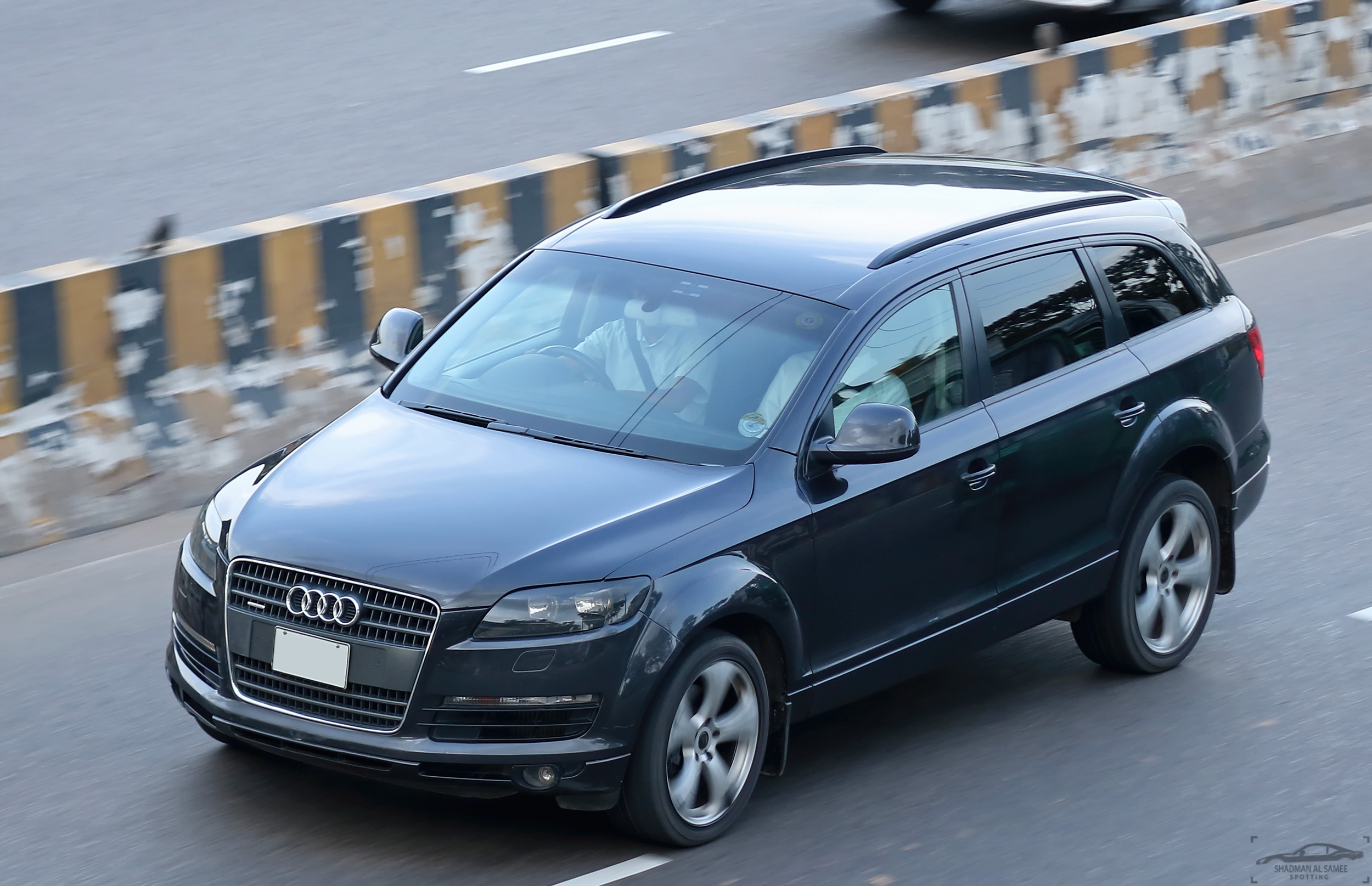
Audi Q7
"I think the big news is the BMW, new BMW X5, although there's a new Audi Q7 and that's not quite as impactful, although I really like that and it looks really nice."
The Audi Q7 is Audi’s bigger luxury SUV. In this segment it’s brought up as a comparison point to the new BMW X5, even though the hosts don’t think it’s as big of a deal.
The Audi Q7 is Audi’s large luxury SUV, and it’s mentioned here as another “big news” model alongside the new BMW X5. The hosts say it’s not as impactful to them, but they still like its look.
BMW design language shift
"This is a departure for them as far as what they've currently had. I think it looks very interesting. It's going to divide people again like a lot of BMW's designs have done the past few years, but that M3 concept that they had looked good and this is playing toward that now, so I guess this is part of their future of design. ... This is their new design language, which is also proving controversial, but personally, I like it a lot better and it's almost gone from one extreme to the other on the grill."
This part of the episode is about BMW’s new styling direction. The hosts explain why they think it will split opinions and how it ties into BMW’s newer “Neuer Klasse” plan and electric models.
The hosts discuss BMW’s evolving design language and how it’s likely to polarize buyers again. They connect the new BMW X5 styling to the “Neuer Classe” direction and to earlier concept/EV previews like the iX3 and iX5.
Neuer Classe
"Yes, it's the Neuer Classe, as they've been calling it for a few years, so they've teased this whole design departure in various concept cars along came the IX3, the electric SUV. ... Now we've seen it introduced in the X5 and the IX5, which is the electric version."
“Neuer Klasse” is BMW’s way of describing its next big generation of cars—basically a new direction for how their vehicles are built and designed. The hosts are saying it’s showing up first in concept cars and now in real models like the X5 and BMW’s electric SUVs.
“Neuer Klasse” (German for “New Class”) is BMW’s internal name for a new vehicle platform and design/technology direction. In the segment, the hosts say BMW has been teasing this shift in concept cars and then rolling it into production models like the X5 and electric SUVs.
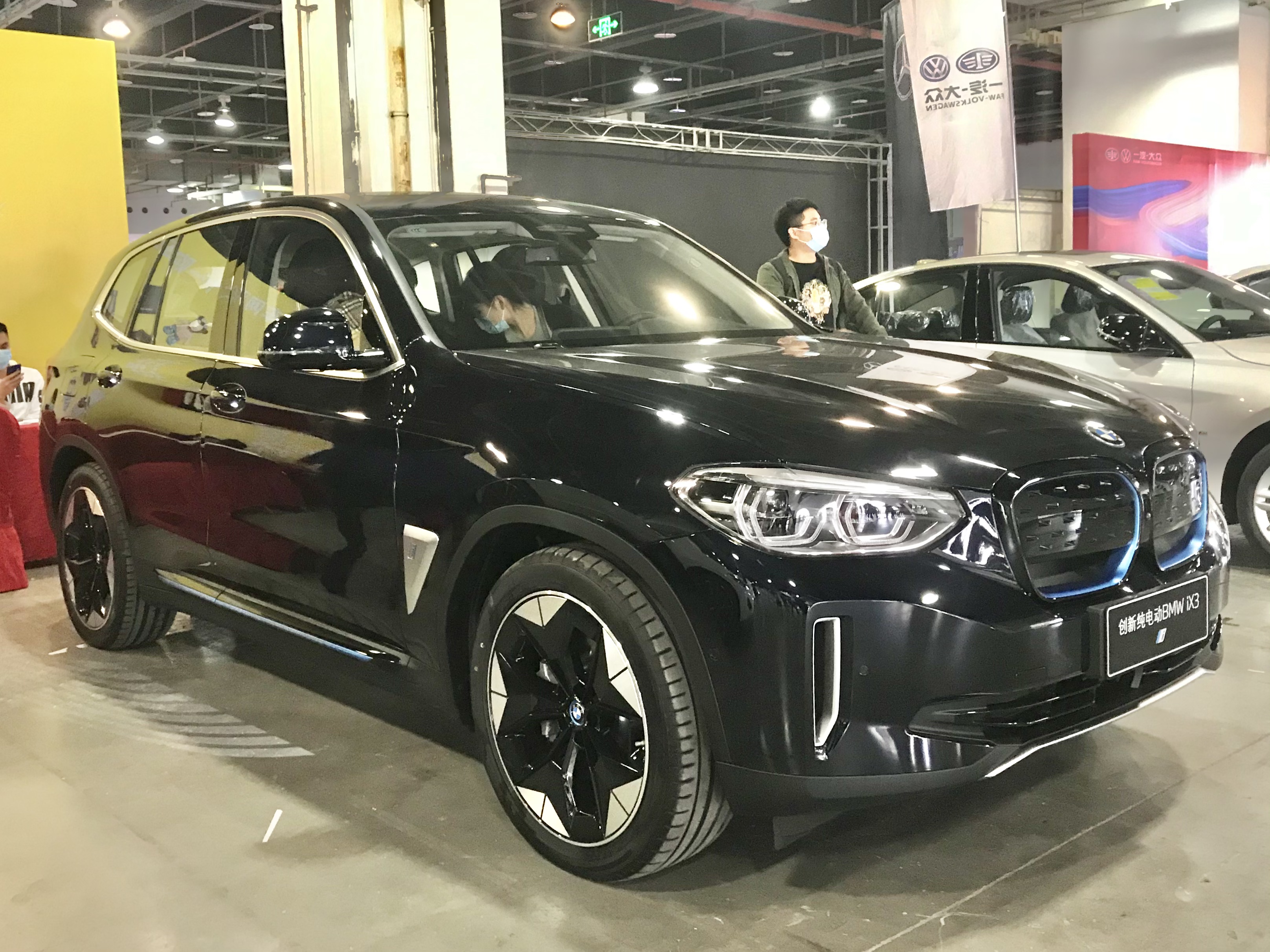
iX3 (G08)
"... departure in various concept cars along came the IX3, the electric SUV. Now we've seen it introduced i..."
The BMW iX3 is an electric SUV made by BMW. Instead of using gasoline, it runs on a battery and an electric motor. The podcast is talking about it as a step from concept ideas to a real production electric SUV.
The BMW iX3 (G08) is an electric SUV version of the X3 platform, introduced as BMW’s move into electric SUVs. It’s discussed in the context of earlier concept cars, which suggests the episode is tracing how BMW’s EV plans evolved into a production model. The “departure” wording highlights that it’s a shift from traditional powertrains to battery-electric driving.
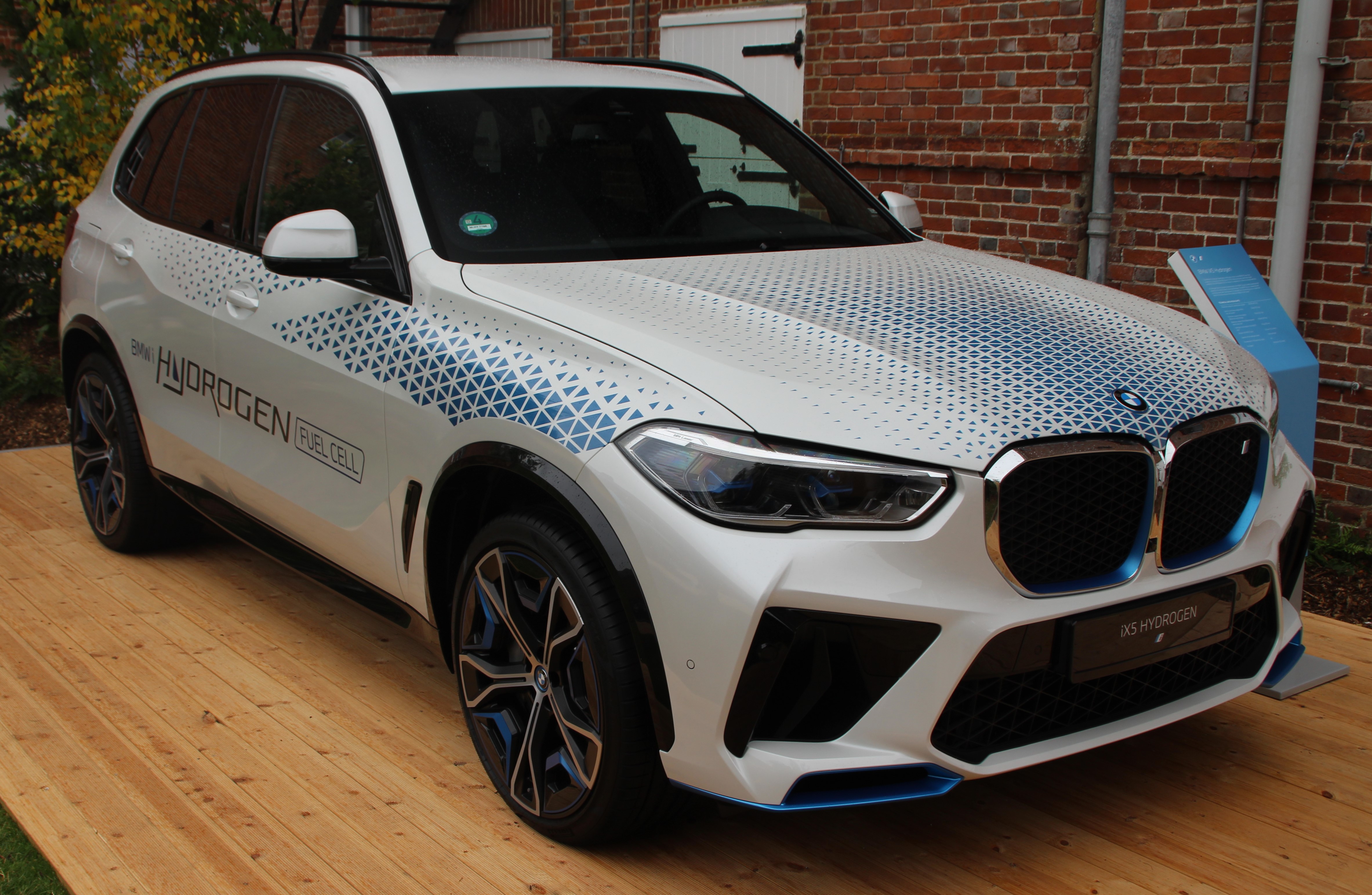
BMW IX5
"Now we've seen it introduced in the X5 and the IX5, which is the electric version. ... We went over to Munich."
The BMW iX5 is BMW’s electric SUV. In this episode, they’re using it to show that BMW’s new direction isn’t just for gas models—it’s also being applied to their electric lineup.
The BMW iX5 is BMW’s electric SUV mentioned here as part of the same “Neuer Klasse” rollout. The hosts contrast it with the X5 (non-electric) to emphasize that BMW is applying the new design/tech direction across both conventional and electric SUVs.
crazy huge grills
"I mean, look, BMW has been criticized for the last decade for their design and they've gone into this kind of world of these crazy huge grills and really polarizing stuff. ... This is their new design language, which is also proving controversial, but personally, I like it a lot better and it's almost gone from one extreme to the other on the grill."
They’re talking about BMW’s recent habit of making the front grille much bigger than before. It’s a styling choice that some people love and others dislike, and they’re saying the new look may do the same.
This refers to BMW’s recent styling trend of very large front grilles, which became a polarizing design feature. In the segment, the hosts use it as context for why BMW’s new design language is likely to divide opinions again.
kidney grill
"Now we're back to this kind of small kidney grill that, for me, harks back to the BMWs [196.5s] of the 1980s, but this is a real heartland vehicle for BMW."
A “kidney grill” is BMW’s recognizable front grille shape. It’s the distinctive grille design that looks like two kidney shapes.
“Kidney grill” refers to BMW’s signature grille shape: two upright, kidney-like openings on the front of the car. The hosts connect a smaller version of this grille to BMW styling from the 1980s.

BMW X5
"Now, BMW is about the X3 and the X5 because those are the ones that really sell and the [212.0s] X5 in particular is a higher margin vehicle for them. [215.8s] It's really important."
The BMW X5 is a luxury SUV from BMW. It’s important to BMW’s lineup because it sells well and makes the company more profit than some other models.
The BMW X5 is BMW’s midsize luxury SUV, known for blending everyday usability with sporty driving dynamics. In this segment, the hosts emphasize that the X5 is a major seller for BMW and specifically a higher-margin model for the brand.

BMW X3
"Now, BMW is about the X3 and the X5 because those are the ones that really sell and the [212.0s] X5 in particular is a higher margin vehicle for them."
The BMW X3 is a smaller luxury SUV than the X5. In the discussion, it’s mentioned as one of the BMW models that helped the brand move toward SUVs.
The BMW X3 is BMW’s compact luxury SUV, positioned below the X5 in size and typically in price. The hosts mention it as part of the shift in BMW’s lineup toward SUVs that drive sales.
SAV
"The X5 is, it's an interesting sort of category that they try to create this sport activity [236.4s] vehicle. [237.2s] Right? [237.3s] That's what they, I think they were the first to use that, the SAV instead of the UR."
SAV is a BMW term for its SUV-style vehicles. It basically means “sporty SUV,” and it was part of how BMW helped popularize this type of car.
SAV stands for “Sport Activity Vehicle,” a marketing term BMW used to describe its SUV-like vehicles. The hosts contrast it with “UR,” implying BMW’s naming helped define the crossover/SUV category in the luxury market.
UR
"That's what they, I think they were the first to use that, the SAV instead of the UR. [242.1s] Yeah."
“UR” is mentioned as an older label BMW used for this kind of vehicle before switching to the term “SAV.” The point is that BMW changed the name as the SUV category evolved.
“UR” is referenced here as an earlier naming convention for BMW’s SUV-like category, contrasted with BMW’s later “SAV” term. The hosts don’t define it fully in this excerpt, but it’s clearly part of BMW’s vehicle-labeling history.

Land Rover Range Rover
"Yeah. [242.7s] I mean, I think a Range Rover might have something to say about this, but yes, the whole idea [247.2s] was, I think this is now the fifth generation, if memory serves, it goes back to about 1998-ish"
Range Rover is a well-known luxury SUV brand. In this conversation, it’s mentioned as a rival to BMW’s X5-style approach.
Range Rover is a luxury SUV line from Land Rover, often used as a benchmark for the “premium SUV” idea. The hosts bring it up as a competitor to BMW’s attempt to define the sport-activity SUV category.

ML-Class Mclass
"the GLE. I think it was originally called the M-Class. Nobody, none of the other luxury brands are really doing SUVs."
The ML-Class is an older Mercedes SUV name. Over time, that model line was renamed and evolved into what people know as the GLE. The podcast is mentioning it to explain where the SUV model history comes from.
The Mercedes-Benz ML-Class is the earlier name for what later became the GLE line, and it’s referenced because the podcast is discussing how Mercedes handles SUV naming and positioning. It’s brought up in the context of luxury brands increasingly offering SUVs, or at least not offering them in the same way. The mention suggests the episode is giving some background on the model’s evolution.

M-Class
"[263.0s] I think it was originally called the M-Class. [265.7s] Nobody, none of the other luxury brands are really doing SUVs."
The M-Class was the older name for Mercedes-Benz’s SUV that later became the GLE. It’s mentioned here to explain how Mercedes’s SUV lineup changed over time.
The Mercedes-Benz M-Class was the earlier name for what is now the GLE SUV line. The hosts use it to show that the X5’s rise happened before Mercedes had adopted the current “GLE” branding.

Mercedes GLE
"if you want your German, it's the GLE Mercedes against the X5, BMW against the new Q7 from Audi."
The Mercedes GLE is another luxury SUV from Mercedes-Benz. They mention it because it’s one of the main competitors to the BMW X5.
The Mercedes GLE is a German luxury midsize SUV that’s commonly compared directly with the BMW X5. In this segment, it’s used as part of the “German SUV” comparison set.
powertrain options
"Like looking at some of the powertrain options, which worldwide, globally, this is quite a list of options."
Powertrain options are the different ways the car can be powered—like different engines or electric setups. They’re saying the X5 offers many choices depending on where you buy it.
Powertrain options are the different engine/motor and transmission combinations a model can be ordered with. They’re emphasizing that the BMW X5 has a wide range of choices worldwide, which affects how the vehicle drives and what it’s like to own.
daytime running lights
"So the headlights have got these daytime running lights that describe an X, but Nick went to see the vehicle and if you don't like the idea of the X for X5, see what they've done"
Daytime running lights are lights that turn on in daylight so other drivers can spot your car more easily. They’re talking about how the X5’s headlights include DRLs as part of its new design.
Daytime running lights (DRLs) are lights that automatically turn on during daylight to make the vehicle easier to see. In this segment, they’re part of the BMW X5’s updated headlight design and signature look.
efficiency
"you now have these little pop-out wing things, which are presumably for efficiency. [358.8s] Now, we saw that on, I was thinking about, I was watching Nick's video, but I think I'm"
Here, “efficiency” means the car tries to waste less energy—often by reducing air resistance. They suggest the new handle design may help the car move through the air more easily.
In this context, efficiency refers to reducing aerodynamic drag and other losses so the vehicle uses less energy. The speaker links the X5’s pop-out “wing” door-handle design to potential aerodynamic gains.

Ford Mustang Mach-E
"Of course, Ford Mustang Mach-E, that also has like little wings instead of a door handle, [369.0s] but on the Mach-E, you actually then push a button and pull the door out."
The Ford Mustang Mach-E is an electric Ford crossover. They mention it because it has a similar “hidden” or unusual door-handle style, where you press a button to open the door handle.
The Ford Mustang Mach-E is an electric crossover that’s used here as a reference point for a specific exterior design idea. They compare it to the BMW X5’s door-handle/entry design, noting that the Mach-E uses a button to deploy the door handle.
belt line
"If you want to get to technical speed, you call that the belt line, the kind of relationship of the metal to the greenhouse, the glass, but it basically, we've sort of gone away"
The belt line is a line/crease you can see running along the side of the car. It helps define the car’s shape and how the windows and body relate to each other.
The belt line is the horizontal body crease that runs along the side of a car, roughly marking the transition between the lower body and the upper glazing. Designers use it to shape the vehicle’s silhouette and how “tall” or “wide” it looks.
greenhouse
"If you want to get to technical speed, you call that the belt line, the kind of relationship of the metal to the greenhouse, the glass, but it basically, we've sort of gone away"
The greenhouse is the part of the car that’s mostly glass around the cabin—like the windows and windshield area. Designers talk about it because it strongly affects the car’s shape.
In car design, the greenhouse is the cabin’s glass area—windshield, side windows, and rear glass—plus the surrounding roof structure. It’s a key reference point for proportions because changing its height or shape dramatically alters the car’s overall look.
rear valance
"You look at the nose of the car, you look at the face, you look at the back, the rear valance, how you handle the taillights, but from the side, there's so many that kind of look the same."
A rear valance is the lower panel at the back of the car, just under the bumper area. It’s mostly about the car’s styling and proportions at the rear.
A rear valance is the lower trim panel at the back of a car, typically spanning the area below the bumper. It often integrates styling elements (and sometimes airflow features) that help define the rear’s visual “shape.”
taillights
"You look at the nose of the car, you look at the face, you look at the back, the rear valance, how you handle the taillights, but from the side, there's so many that kind of look the same."
Taillights are the lights on the back of the car. They’re not just for safety—they also help define the car’s rear design.
Taillights are the rear lamps used for braking, signaling, and visibility at night. Beyond function, their shape and placement are a major part of how a car’s rear design reads from a distance.
touch materials
"They put in a lot of the time and the effort to make it interesting, like the touch materials [505.4s] and the luxury, you know, of course, there's engine options and, you know, there's not"
“Touch materials” means the surfaces inside the car that you touch every day. In a luxury vehicle, better-feeling materials make the cabin feel more expensive and better built.
“Touch materials” refers to the surfaces you interact with inside the cabin—things like the dashboard, door panels, and switchgear textures. In luxury cars, the quality of these materials strongly affects perceived build quality because they influence how the interior feels and sounds when you use it.
engine options
"They put in a lot of the time and the effort to make it interesting, like the touch materials [505.4s] and the luxury, you know, of course, there's engine options and, you know, there's not [513.4s] a lot of cutting corners."
“Engine options” means the car can be bought with different engines or power setups. Different trims may use different engines, so buyers have choices.
“Engine options” means the different powertrains offered across trims or variants of a model. The hosts mention it to contrast how some vehicles provide multiple choices, while the discussion here is more about interior feel and perceived luxury.
old design language
"And the X3 was this weird vehicle that it was kind of between the old design language [543.4s] and the new design language. [544.8s] And so the X3, which is the electric one, looks like much more closer to this new X5."
“Design language” is the brand’s overall style—its look and design cues. If a car is “between” two design languages, it can feel like it doesn’t fully match the newer, more modern look.
“Design language” is a recognizable set of styling cues a brand uses across models and generations. Calling the X3 “between the old design language and the new design language” means its styling feels like a transitional mix, which can make the vehicle look less unified and less premium.
new design language
"And the X3 was this weird vehicle that it was kind of between the old design language [543.4s] and the new design language. [544.8s] And so the X3, which is the electric one, looks like much more closer to this new X5."
“New design language” means the newer styling direction a carmaker is using now. They’re saying the X3 looks more like the updated look that matches the new X5.
“New design language” refers to the updated styling direction a manufacturer rolls out with a newer generation of vehicles. In this segment, the hosts argue that the X3’s look is closer to the new direction than its earlier “in-between” styling, helping it visually align with the new X5.
door case
"But in the X3, particularly what we've been very critical of is the plastics are quite cheap. [567.6s] You know, you get in, you feel the door case, you feel some of the switches. [571.6s] It doesn't feel like a luxury car."
“Door case” here means the interior door panel area you feel when you open the door and get in. Hosts use it as an example of how low-cost plastics can make a cabin feel less premium because the tactile experience doesn’t match what you’d expect from a luxury SUV.
one charger for your phone
"We've talked before about like Genesis, for example, for the interiors of a Genesis [577.7s] feels way beyond what a BMW X3 offers. [580.0s] Even down to little things like you only get one charger for your phone instead of two."
They’re talking about how many USB/charging ports the car gives you for your phone. Fewer ports means less convenience, which can make the car feel less “luxury” even if the rest of the cabin looks nice.
This refers to the number of in-cabin charging ports available for passengers’ devices. In a luxury-focused comparison, having fewer ports (like only one phone charger instead of two) is used as a practical example of how “convenience” features can separate premium and non-premium interiors.
piano black
"So there's they're trying to like stone instead of the like piano black, like they're using an actual piece of like slate stone in there, which which is stood out to me too."
“Piano black” is that super-shiny black trim you see on some dashboards. It looks fancy, but it tends to show smudges and tiny scratches pretty quickly.
“Piano black” is a glossy, mirror-like black trim finish used on dashboards and center consoles. It’s popular because it looks upscale, but it can show fingerprints and scratches more easily than textured plastics or matte finishes.
slate stone
"So there's they're trying to like stone instead of the like piano black, like they're using an actual piece of like slate stone in there, which which is stood out to me too."
“Slate stone” means they’re using an actual piece of stone as part of the interior trim. It’s a way to make the cabin feel more premium than regular plastic.
“Slate stone” here refers to using a real stone piece as trim on a switch area. In luxury interiors, real materials (like stone) are used to create a tactile and visual difference versus standard molded plastics.
projected strip
"Then you've got this little sort of projected strip. So the on the at the bottom of the windshield, you don't have a screen per se."
A “projected strip” is when the car uses a projector to show information on the dashboard area. Instead of a normal screen, it looks like the dials are painted or printed there.
A “projected strip” is a display element where the car projects graphics onto a surface instead of using a traditional screen. This can be used to show gauges or controls while keeping the dashboard visually clean.
project the dials
"It's actually a script, a strip of black that they project the dials onto."
“Project the dials” means the car shows the gauge readings by shining them onto a surface. It’s like a heads-up style display for the instrument information.
“Project the dials” describes projecting the instrument cluster (speed, RPM, etc.) onto a surface so the driver can read it without a conventional gauge cluster. This is often used to create a more modern, minimalist cockpit layout.
projected onto the screen
"So, you know, you've got a screen for the passenger... Then you've got this sort of weird trapezoidal screen for the center of the car... But this is actually projected onto the screen."
“Projected onto the screen” means the display is created by a projector. Instead of only using a typical panel, the image is thrown onto a screen surface.
“Projected onto the screen” refers to using projection technology to display graphics on a dedicated screen surface. Compared with standard LCD/LED panels, projection can change the look of the interface and how it blends into the dashboard design.
Easter egg things
"So being able to go through and find options and add some Easter egg things like the old BMWs or an E30 art car or something like that,"
Here, “Easter egg” means a fun hidden feature or surprise in the car’s screen menus. It’s basically the car’s way of adding personality.
In this context, “Easter egg things” means hidden or playful UI/visual features on the car’s infotainment system. Enthusiasts often like these because they add personality beyond the standard menus and settings.

BMW E30
"So being able to go through and find options and add some Easter egg things like the old BMWs or an E30 art car or something like that,"
An “E30” is a classic BMW 3 Series from the 1980s. An “art car” is a BMW that’s decorated by an artist, and the host is saying the car’s screen can reference that kind of BMW history.
The “E30” refers to the BMW 3 Series generation from the 1980s, and an “art car” is a BMW concept where the vehicle is decorated by an artist. When the host mentions an E30 art car, they’re pointing to BMW’s use of heritage-inspired visuals in the infotainment customization.
interior lighting
"You read through the manual, you can do some customization and kind of set it like interior lighting and different colors and stuff."
Interior lighting is the lights inside the car. Some cars let you change the color or style of those lights to make the cabin feel different.
Interior lighting refers to cabin illumination features—often ambient LEDs—that can be adjusted for color and brightness. The host is saying the customization can extend beyond the screen wallpaper into the cabin atmosphere.
North-South
"It's got the sort of bonkers steering wheel from the X3 as well, where the spokes are on North-South."
“North-South” here means the steering-wheel spokes are set up like a vertical line—more up-and-down than left-and-right. It’s mostly a design/feel detail the host is pointing out.
“North-South” describes a steering-wheel spoke orientation where the spokes are aligned vertically (toward 12 o’clock and 6 o’clock) rather than the more common left-right (9 o’clock to 3 o’clock) layout. It’s a visual design detail that can also affect how the wheel feels and how drivers reference hand positions.
kidney bar
"when you look at the vehicle, yes, we've got the kidney bar, you got kidney grill and we've got the propeller emblem and everything else."
The “kidney bar” refers to BMW’s signature grille styling—an elongated, horizontal interpretation of the classic kidney grille shape. It’s a recognizable design element that helps identify BMW models at a glance.
propeller emblem
"you got kidney grill and we've got the propeller emblem and everything else."
The “propeller emblem” is the BMW logo. It looks like a little propeller inside a circle, and it’s part of BMW’s recognizable front-end design.
The “propeller emblem” is the BMW roundel logo, which resembles a spinning propeller. It’s a brand identity cue used across BMW models and is often referenced alongside grille styling.
crash safety
"And it's harder now because the SUVs, as you say, are all built to scale the the exterior. By the time you put in the crash safety and the aerodynamics, it's quite hard to distinguish them."
Crash safety is how a car is built to protect you in an accident. Things like stronger structures and safety systems can affect the car’s shape, so many SUVs start to look more alike.
Crash safety refers to the engineering systems and structural design that protect occupants during collisions. In modern SUVs, adding crash structures and safety systems can push designers toward similar shapes, making different brands harder to visually distinguish.
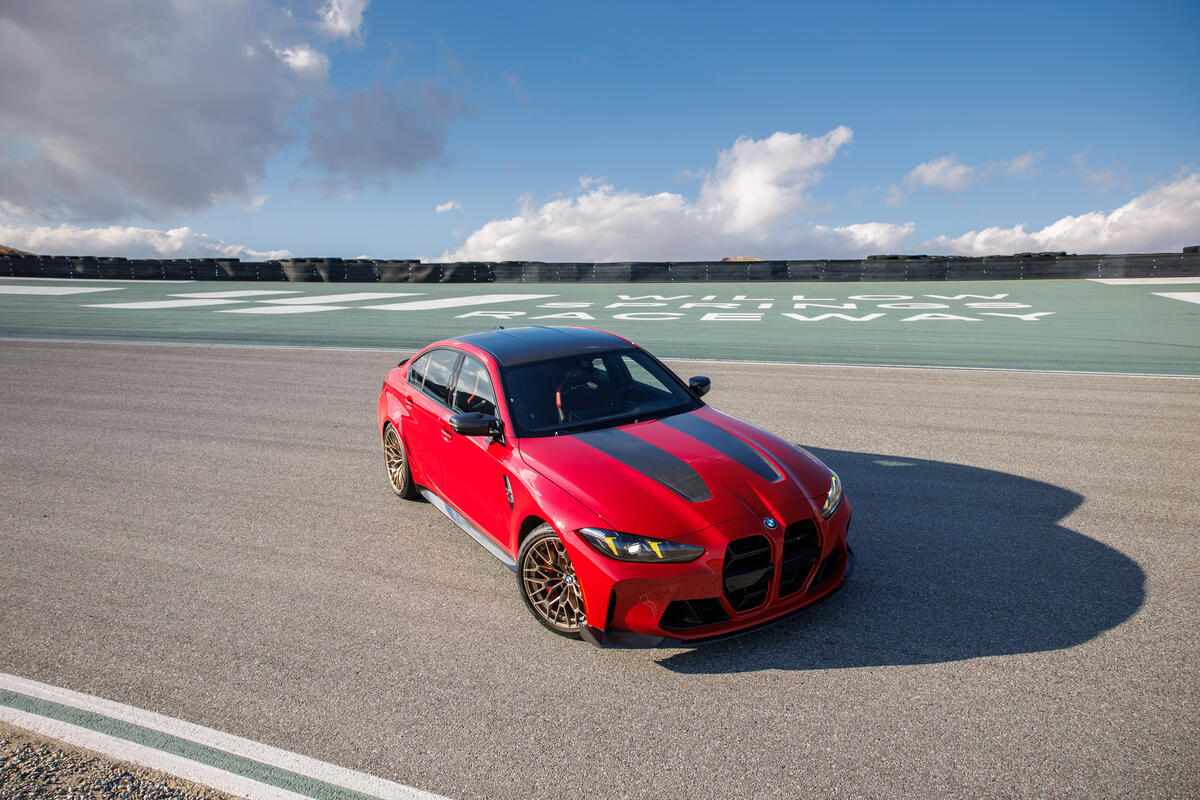
BMW E36 M3
"Yeah, I had, you know, I had an E 36 M3 had an E 46 M3."
The BMW E36 M3 is an older BMW M3 from the 1990s. People love it because it feels very connected and “mechanical,” not like modern cars with lots of screens and software.
The BMW E36 M3 is a 1990s-era M3 that helped define the “driver’s car” reputation for BMW’s M division. It’s known for its analog, mechanical feel and for being a classic platform enthusiasts still modify and track.
V8
"The V8, yeah. And no, no, the 46. It's oh, sorry, the 36 was the straight six. ... I'd be now now around long enough to remember that I did the original launch with that at Hereth Circuit in Spain, the 46, the V8."
A V8 is an engine with eight cylinders arranged in a V shape. It usually feels powerful and has a distinctive sound. The speaker is talking about switching between different BMW engines they owned, including a V8.
A V8 is an engine with eight cylinders arranged in a “V” shape (two banks of four). It’s commonly associated with strong low- to mid-range torque and a distinctive exhaust note. In this segment, the speaker mentions a V8 in the context of their BMW ownership history and compares it to the inline-six they also had.
straight six
"It's oh, sorry, the 36 was the straight six. That's right. Yeah, yeah."
A “straight six” means the engine has six cylinders in a single row. It’s often described as smooth because the engine’s design is naturally balanced. Here, the speaker is comparing it to a V8 they had later.
A “straight six” is an inline-six engine layout, meaning six cylinders arranged in a single line. Inline-sixes are known for smooth power delivery and balanced engine operation compared with many other layouts. The speaker contrasts it with a V8 later, describing the different engines they owned in their BMW.
supercharger
"The 46 I had was modified when I put a supercharger on it and had a lot of fun with it."
A supercharger is an add-on that forces extra air into the engine. That extra air helps the engine burn more fuel and make more power. The speaker is saying they installed one to make their BMW faster and more fun.
A supercharger is a forced-induction device that uses a belt-driven compressor to push more air into the engine. More air (and the right fuel) lets the engine make more power than it would naturally aspirated. In this segment, the speaker says they modified their BMW 46 by adding a supercharger to increase performance.
Hereth Circuit in Spain
"I'd be now now around long enough to remember that I did the original launch with that at Hereth Circuit in Spain, the 46, the V8."
They’re saying they did a launch event at a race track in Spain. The track name in the transcript sounds a bit unclear, but it’s definitely a real circuit. It’s included to give context for where they tested or debuted the car.
The speaker mentions “Hereth Circuit in Spain” as the location where they did an original launch with their BMW. The transcript spelling is unclear (“Hereth”), but it’s clearly a named racetrack venue in Spain. This matters because it anchors the story in a real driving/testing environment rather than a generic anecdote.
big screen in the middle
"As you said, on the interior, some of the pictures that we looked at has that big screen in the middle, which is kind of tilted over a little, gives it a weird shape."
This refers to a modern dashboard infotainment display mounted centrally, often integrated into the instrument panel design. Central “big screens” are a common styling and usability trend on newer cars, replacing or minimizing traditional button-heavy layouts. The speaker notes it appears “tilted over a little,” which is a specific design choice that can affect ergonomics and perceived cabin shape.
Android Auto
"...if you're hooking up your Android Auto or a car play and you've got your navigation on the main screen..."
Android Auto lets you connect your phone to your car and use certain apps on the car’s screen. It’s mainly for things like maps and music, using your phone’s interface.
Android Auto is a smartphone-to-car infotainment system from Google. It mirrors compatible apps (like navigation and music) onto the car’s display so you can use them while driving.
car play
"...if you're hooking up your Android Auto or a car play and you've got your navigation on the main screen..."
CarPlay lets you connect an iPhone to your car so you can use apps on the car’s display. It’s commonly used for maps, calls, and music.
Apple CarPlay is Apple’s smartphone integration for a car’s infotainment system. It brings supported iPhone apps—especially navigation, calls, and music—onto the vehicle’s screen.
split screen
"We don't have like a lot of cars that do the split screen..."
A split screen means the car’s display is divided into two areas at once. One side can show navigation while the other side lets the passenger do something else.
A split screen is an infotainment display layout where two different views are shown at the same time. In cars, it’s often used to keep navigation visible while the passenger controls other functions.

Dodge Ram
"...I wish it had this, but I think the Dodge Ram has this with with its big screen"
The Ram is a Dodge pickup truck. The hosts are using it as an example of a truck that can show different content on the screen for the driver and passenger.
The Dodge Ram (often just called the Ram) is a full-size pickup known for offering large, multi-function infotainment screens. In this segment, it’s mentioned as an example of a vehicle that supports a passenger-facing split-screen setup.
split tailgate
"They've got rid of the split tailgate. Now, Nick said that the PR spin on this was it was all to do with the fact that it actually compromises practicality a little bit to have the split tailgate."
A split tailgate is a back door that opens in two pieces. It can be handy for loading or even sitting on, but the host says the newer X5 design dropped it because it takes away some trunk space and is harder to fit with the new rear shape.
A split tailgate is a rear door that opens in two sections (typically upper and lower parts), which can make it easier to sit on the tailgate or load cargo. The host says BMW removed it on the newer X5, arguing it compromises trunk volume and is harder to package due to the rear body shape.
hatch in the back
"that single, you know, hatch in the back versus the split gate, like you're talking about."
A hatch in the back is the rear door that lifts up. They’re comparing it to another style of rear opening and saying that design choices can change how complicated and expensive the car is.
A “hatch in the back” refers to a rear liftgate that opens upward, typical of many hatchbacks and some SUVs. The speaker contrasts it with a different rear-opening design, implying packaging differences that can affect engineering and cost.
split gate
"that single, you know, hatch in the back versus the split gate, like you're talking about."
A split gate is a rear door that opens in two parts instead of one. That kind of design can affect how complicated the car is to build.
A “split gate” is a rear door design where the opening is divided into sections (often upper and lower) rather than a single liftgate. Different gate designs can change structural packaging, wiring, and manufacturing complexity.

Ford Focus RS
"I remember sitting in the one with the Ford Focus RS. We should in documentary, we talk about it now."
The Ford Focus RS is a high-performance version of the Focus. Here it’s mentioned as an example of how engineers sometimes have to compromise on features because of cost or complexity.
The Ford Focus RS is a performance hatchback known for its hot-hatch all-wheel-drive setup and track-capable tuning. In this segment, it’s used as an example of how cost and complexity can affect even small interior/controls decisions on a performance car.
dampers
"they couldn't afford to put a different button in the car for changing the dampers. So we ended up on the end of the column stalk."
Dampers are the shock absorbers in the suspension. If you change the damper setting, the car can feel softer or firmer and handle bumps and cornering differently.
“Dampers” are the shock absorbers (part of the suspension) that control how quickly the car’s springs compress and rebound. Changing the damper setting alters ride firmness and how the car responds during braking, cornering, and bumps.
column stalk
"So we ended up on the end of the column stalk. And I said, look, guys, this is obvious, right?"
The “column stalk” is the set of steering-column controls (commonly for turn signals, wipers, and sometimes drive-mode functions). Using it for damper controls is a packaging/cost workaround so drivers can change settings without adding extra buttons.
cost and complexity
"And I think you're right, cost and complexity. And probably, you know, it's probably also something that can go wrong."
This means it’s harder and more expensive to offer lots of different powertrain options. Each extra type adds engineering work and parts, which can raise cost and create more things that can go wrong.
“Cost and complexity” refers to the practical engineering and business tradeoffs of offering multiple powertrain types. More variants generally mean more parts, more calibration work, more supplier coordination, and higher development and production costs.
48 volt mild hybrid system
"There's going to be a gas engine option with a like 48 volt mild hybrid system."
This is a small electric-assist system. It helps the gas engine with things like smoother starts and some acceleration, but it usually can’t drive the car purely on electricity for long.
A 48-volt mild hybrid system is a “light” hybrid setup that uses a 48V battery and an electric motor to assist the engine, mainly for smoother starts, acceleration help, and energy recovery. It typically does not replace the engine like a full hybrid or EV can.
plug in hybrid
"There's going to be a plug in hybrid."
A plug-in hybrid can be charged at home or at a charger. You can drive on electricity for some distance, and when that runs out, it uses the gas engine.
A plug-in hybrid is a hybrid vehicle with a battery large enough to be charged from an external outlet. It can run on electricity for short trips, then switch to the gas engine when the battery is depleted.
EV
"There's going to be an EV."
An EV is a car that runs on electricity stored in a battery. Instead of a gas engine driving the wheels, electric motors do the work.
EV means electric vehicle—cars that are powered primarily by one or more electric motors drawing energy from a battery. Unlike hybrids, they don’t use a gas engine for propulsion.
diesel and hydrogen
"A diesel and hydrogen."
They’re talking about non-gas options. Diesel is a different type of engine fuel, and hydrogen usually means a system that makes electricity from hydrogen to power the car.
Diesel and hydrogen are alternative fuel/propulsion paths beyond gasoline and battery EVs. Diesel uses compression ignition with a diesel engine, while hydrogen typically refers to a hydrogen fuel-cell system that generates electricity onboard.
fuel cell hydrogen
"But instead of doing the excuse me, instead of doing the fuel cell hydrogen, they've always persisted with this idea that you can do an internal combustion engine, which runs on hydrogen."
Fuel cell hydrogen means the car makes electricity from hydrogen while you drive. That electricity then runs the electric motor, instead of using a gas engine.
Fuel cell hydrogen refers to using hydrogen in a fuel cell to generate electricity onboard. The fuel cell combines hydrogen with oxygen to produce electricity that then powers an electric motor (often with a small battery for buffering).
internal combustion engine
"they've always persisted with this idea that you can do an internal combustion engine, which runs on hydrogen. And I think this is what they're doing here."
An internal combustion engine is the classic kind of engine that burns fuel inside the engine to make power. Here, they’re talking about doing that using hydrogen instead of regular fuel.
An internal combustion engine (ICE) is an engine that burns fuel inside the engine to create mechanical power. In this segment, the key point is the idea of an ICE that runs on hydrogen rather than gasoline or diesel.
onboard power source
"I don't think it's just a hydrogen car is actually just an electric car. Yeah, with an onboard power source. So basically, you take the hydrogen, you mix it with oxygen, you create,"
An onboard power source is the car’s own energy system inside the vehicle. For hydrogen cars, it’s what turns hydrogen into electricity while you’re driving.
An onboard power source is the system inside the vehicle that generates or stores the energy used to run the drivetrain. In the context of hydrogen, the onboard system produces electricity (via a fuel cell) to power the electric motor.
electric motor
"you create, you turn that into electricity, you create electricity, if you like, in simple terms, and that powers an electric motor"
An electric motor is what actually turns the wheels using electricity. In a hydrogen fuel-cell car, the car first makes electricity from hydrogen, and then the motor uses that electricity to move the car.
An electric motor converts electrical energy into motion. In hydrogen fuel-cell setups, the electricity produced onboard is used to drive the electric motor, making the car feel and behave like an electric vehicle even though the energy source is hydrogen.
hydrogen fuel cell car
"So that's the thinking behind the hydrogen fuel cell car. [1409.5s] But the problem has always been it's quite expensive to do."
This is a car that makes electricity from hydrogen while you drive. Instead of burning gas, it uses hydrogen to create power for the electric motor.
A hydrogen fuel cell car uses hydrogen to generate electricity onboard using a fuel cell. That electricity then powers an electric motor, so it’s different from a gasoline car even though you “refuel” with hydrogen.
hydrogen combustion engines
"So it's I think BMWs continue to have this obsession with we'll we'll do some hydrogen combustion engines. [1444.9s] And I don't really understand why."
This means burning hydrogen inside an engine, like how a gas car burns gasoline. It’s a different approach than making electricity from hydrogen in a fuel cell.
Hydrogen combustion engines burn hydrogen in an engine cylinder the way a gasoline engine burns fuel. The big difference versus a fuel-cell setup is that energy is produced by combustion rather than by converting hydrogen to electricity in a fuel cell.
range extender
"so much in the past year about these range extender, you know, Rams range extender, maybe the new Ford Lightning scout with some sort of range extender, small motor."
A range extender is an extra system that helps the car go farther when the battery is running low. Think of it as a backup generator that keeps the electric drive going.
A range extender is a small onboard power source (often a motor-generator driven by an engine) used to generate electricity when the main battery is low. It’s commonly discussed as a way to reduce “range anxiety” without switching fully to a larger battery.

Honda FCX Clarity
"But I shot a film for Honda, God, like 20 years ago now, [1490.4s] which was all about explaining the FCX clarity."
Honda made a car called the FCX clarity that ran on hydrogen. Instead of using gasoline, it used a special system to turn hydrogen into electricity to power the car.
The Honda FCX clarity was an early production hydrogen fuel-cell vehicle (FCV) from Honda. It used a fuel cell to generate electricity onboard, with hydrogen stored in tanks, making it a key example of how hydrogen could work as a vehicle fuel.
platinum
"All we've got to do is cut down on the use of platinum in the [1514.2s] in the membrane in the system."
Platinum is a costly material used inside hydrogen fuel cells to help the chemical reactions work. Engineers want to use less of it to make the technology cheaper.
Platinum is a precious metal used in many hydrogen fuel-cell catalysts. Because it helps reactions happen efficiently inside the fuel cell, reducing platinum usage is a major cost and scalability target for fuel-cell technology.
membrane
"All we've got to do is cut down on the use of platinum in the [1514.2s] in the membrane in the system."
The membrane is a key part of a fuel cell that helps separate the hydrogen from the other side of the reaction. It also helps the fuel cell work efficiently.
In a hydrogen fuel cell, the membrane is the component that separates the hydrogen side from the oxygen/air side while allowing the right ions to pass through. Its design strongly affects efficiency, durability, and how much catalyst material (like platinum) is needed.
electric infrastructure
"now we're not doing hydrogen. [1526.3s] We're going to do electric and we're going to invest in electric infrastructure."
Electric infrastructure is the network of power systems and charging stations that electric cars rely on. If more people drive electric cars, you need more of this support.
Electric infrastructure refers to the grid and charging systems needed to support widespread electric vehicles. The transcript frames it as the investment needed when policy shifts away from hydrogen toward battery-electric solutions.
hydrogen source
"And we've got to sort out the source of hydrogen. [1521.5s] Yeah."
A hydrogen source is where the hydrogen comes from. For hydrogen trucks to work, you need places to get hydrogen along the routes you drive.
A hydrogen source is the facility or supply chain that produces and delivers hydrogen for vehicles. For fuel-cell trucking, having reliable hydrogen sources at routes’ endpoints (or along the way) is crucial to making refueling practical.
lock in theory
"So you got this kind of lock in theory that hydrogen was out and electricity was in. [1534.0s] But I think where it is really interesting is for big, big road haulage."
“Lock-in” means once a country starts investing in one approach, it can become difficult to switch later. Here, the idea is that policy and infrastructure pushed people toward electric instead of hydrogen.
“Lock-in” theory describes how early policy and infrastructure choices can make one technology path hard to change later. In this context, the speaker suggests hydrogen got sidelined while electricity infrastructure investment accelerated, making the shift toward electric vehicles self-reinforcing.
road haulage
"[1534.0s] But I think where it is really interesting is for big, big road haulage. [1540.9s] So I know Tesla is looking at doing, you know, big trucks and others."
Road haulage just means delivering freight by truck on roads. For trucks, the fuel/energy plan matters a lot because they drive long distances and need quick, reliable refueling.
Road haulage is the movement of goods by truck over highways and between cities. It’s a different use case than passenger cars because energy demand, route planning, and refueling time strongly affect what powertrain solutions are practical.
Tesla
"So I know Tesla is looking at doing, you know, big trucks and others. [1544.5s] But actually when you need that much energy"
Tesla is an electric-vehicle brand best known for battery-electric cars, and the speaker mentions it in the context of building large trucks. The point is that heavy-duty trucking is a major test for whether battery-electric or hydrogen fuel-cell solutions can scale.
EV trucks
"because you have to have massive batteries and massive recharging to do sort of EV trucks or EV boats."
EV trucks are electric versions of delivery or freight trucks. Because they’re heavy and go far, they need big batteries and fast charging to work well.
“EV trucks” refers to electric heavy-duty trucks that rely on large battery packs and high-power charging. The host uses this to explain why battery size and charging infrastructure become critical for long-haul or shipping-like use cases.
massive batteries
"because you have to have massive batteries and massive recharging to do sort of EV trucks or EV boats."
“Massive batteries” just means a very large battery. Bigger batteries usually help vehicles go farther, but they also cost more.
“Massive batteries” means very large battery capacity, typically measured in kilowatt-hours (kWh), to provide enough range for heavy vehicles. In this segment, the host contrasts battery size requirements for EV trucks/boats with the idea of using hydrogen for shipping.

Ford Lightning
"I'm thinking of my Ford Lightning that has some hundred and something, 100 and 31 kilowatt battery."
The Ford F-150 Lightning is Ford’s electric pickup truck. The host mentions its battery size to help explain what “massive batteries” means in practice.
The Ford F-150 Lightning is an all-electric version of Ford’s F-150 pickup. The host uses its battery size as a real-world reference point for how large EV batteries are when compared to the hydrogen/EV discussion.
kilowatt battery
"I'm thinking of my Ford Lightning that has some hundred and something, 100 and 31 kilowatt battery."
They’re talking about how big the battery is using a power-related unit. For EVs, battery size is usually measured in kilowatt-hours, and bigger numbers generally mean more range but higher cost.
The host is quoting battery size in “kilowatts,” but battery capacity for EVs is normally expressed in kilowatt-hours (kWh). The key takeaway for listeners is that the discussion is about battery capacity being roughly 100+ kWh versus a smaller pack, which impacts range and cost.

Cadillac Escalade
"I think BMW is is I mean, they're kind of going after this like the like, you know, like the Cadillac Escalade because the specs that I saw said 100 and 44 kilowatt."
The Cadillac Escalade is a very large luxury SUV. The host is using it as an example of a big, high-spec vehicle—like they think BMW is targeting with large battery numbers.
The Cadillac Escalade is a large, luxury full-size SUV that’s often associated with big engines and high-end features. The host compares BMW’s strategy to the Escalade because the Escalade is a “big vehicle” where buyers expect big power and big specs—here, big battery capacity.
battery pack
"So twice the twice the size of the model three battery pack."
In an EV, the battery pack is the big set of batteries that stores the electricity. A bigger battery pack usually means you can drive farther before needing to recharge.
A battery pack is the full assembly of many individual battery cells, modules, and cooling/management hardware that stores electricity in an EV. Its size (often discussed in kWh) strongly affects how far the car can go on a charge.
European cycle
"You have to be careful because sometimes they quote the European cycle. And then so the European estimates are always very optimistic."
The European cycle is a standardized way cars are tested to estimate how far they can go. Because it’s a test, the results can look better than what you’ll get in real driving.
The European cycle refers to standardized EV testing procedures used to estimate range and efficiency. Different test cycles can produce different results, and the European estimates are often described as more optimistic than what drivers see in everyday conditions.
kilowatts
"If you think that something in like the Hummer is over 200 kilowatts, this is but obviously that's a much bigger, heavier vehicle."
Kilowatts (kW) are a measure of power. For EVs, higher kW usually means the car can charge faster—if the charger and battery support it.
Kilowatts (kW) measure power, and in EV context it’s often used for charging power or how much power the vehicle can draw. Higher kW generally enables faster charging, assuming the battery and charger can accept it.
faster charging speeds
"it's it's critical faster charging speeds. You know, and I think that's the first battery."
Faster charging speeds means the EV can add electricity more quickly at a charger. Even if the car can charge fast at first, the speed often slows down later as the battery fills up.
Faster charging speeds describe how quickly an EV can add energy during a charging session, typically limited by the charger’s output and the car’s battery acceptance. EVs may advertise peak charging rates, but real-world speed can taper as the battery fills.
all wheel drive
"A little bit more if you want all wheel drive, rather than rear wheel drive, plug in hybrids, 80 grand"
All-wheel drive (AWD) powers all four wheels. It can help the car grip better in rain or snow, and it often costs more than rear-wheel drive.
All-wheel drive (AWD) sends power to both the front and rear axles to improve traction and stability, especially on slippery roads. Many EV and plug-in hybrid trims offer AWD as an option, often increasing cost and sometimes affecting efficiency.
electric cars
"So they're probably not making money or making very little money on the electric cars. But, you know, they've they've obviously made this conscious decision"
“Electric cars” are cars that run on electricity from a battery. Instead of using gasoline like most cars, they use an electric motor.
“Electric cars” refers to vehicles powered primarily by an electric motor and a battery pack, rather than a gasoline engine. In this discussion, it’s tied to pricing strategy and how much range the vehicles can deliver.
plug it in at night
"If you can plug it in at home, you know, do you commute on electricity? Plug it in at night. That starts to make more sense."
This means charging the car at home overnight. If you do that, you can start the day with a full battery even if the car’s daily driving range is limited.
“Plug it in at night” is a charging habit: charging an EV while you’re parked at home so it’s ready for morning driving. The host uses it to argue that a limited EV range can still work for many commuters if charging is routine.
battery integrated more into the vehicle
"But it doesn't sound like this has a massive like rolling skate of a battery. It's the battery somehow integrated more into the vehicle, throughout the vehicle, almost in the body panels."
This is about where the battery sits in the car. Instead of being just a flat pack under the floor, the battery is built into the car’s structure and even parts of the body.
This describes an EV packaging approach where the battery pack is distributed or integrated into the vehicle structure rather than being a single “skateboard” under the floor. The host contrasts it with a “rolling skate” battery layout and suggests the pack is integrated into body panels.

BMW iX
"Yeah, it's and the other thing about this vehicle is it's replacing the IX as well. [1855.5s] So in, you know, if you think about BMW's line up to date, you had the [1861.0s] well, I've still got the five series, the I five, which is the electric version [1864.5s] of the five series, but then they for the SUVs, they sort of split, [1867.6s] they had a split strategy. [1868.7s] So you had the the X five and then the IX, which was a standalone electric"
The BMW iX is BMW’s electric SUV. The host is saying BMW is changing its SUV strategy, and that the new model will take over for the iX.
The BMW iX is BMW’s EV-first SUV, positioned as a standalone electric vehicle rather than a conventional model with an EV version. In this segment, the host says the new vehicle is replacing the iX, which signals BMW moving away from a fully separate EV-only SUV line.

BMW i5
"So in, you know, if you think about BMW's line up to date, you had the [1861.0s] well, I've still got the five series, the I five, which is the electric version [1864.5s] of the five series, but then they for the SUVs, they sort of split,"
The BMW i5 is the electric version of BMW’s 5 Series. Here it’s mentioned to show how BMW is organizing its electric lineup across different models.
The BMW i5 is BMW’s electric version of the 5 Series, meaning it uses the 5 Series nameplate but is designed as an EV. The host uses it to explain BMW’s broader lineup approach: EVs exist within the main model families, not only as standalone EVs.
standalone electric vehicle
"So you had the the X five and then the IX, which was a standalone electric [1874.7s] vehicle and was always challenging to look at, but actually great, great car [1879.4s] and great interior."
A standalone electric vehicle is a car that was designed specifically to be electric from the start. The host is saying BMW previously had some EVs that were built this way, but now they’re changing strategy.
A standalone electric vehicle is an EV designed from the ground up as an electric car, rather than being derived from a gasoline platform. The host contrasts this with BMW’s “split strategy” and suggests BMW is moving toward a more unified approach for EVs and non-EVs.
one platform
"And BMW seems to be mastering a Mercedes is going down this road as well, [1889.7s] which don't do don't do an electric car and a gas car. [1894.5s] Let's do one platform, which can take all these different options. [1899.6s] And this was the thing that Porsche said you must not do because it compromise,"
“One platform” means using the same basic car design underneath for different versions—like gas and electric. The idea is to save money and speed development, but it can mean compromises in how perfectly each version is engineered.
“One platform” refers to using a shared vehicle architecture (platform) to underpin multiple powertrains—here, both electric and gas cars. The host frames it as a strategy that can reduce cost and complexity, but may involve trade-offs in how well each powertrain is optimized.
Porsche
"And this was the thing that Porsche said you must not do because it compromise, [1904.8s] you know, you're too compromised. [1906.1s] You compromised on the gas car, you compromised on the electric car."
Porsche is mentioned as an example of a company that thinks mixing electric and gas development on one shared base can lead to compromises. The host uses it to make a point about EV strategy.
Porsche is referenced as the brand that warned against using a single platform for both electric and gas cars. In this context, it’s being used to support the argument that shared architectures can force compromises.
electric version
"Like companies were saying, hey, let's just take what we have. Let's throw a battery in it, see if we can make an electric version."
It means taking a regular car design and making it run on electricity instead of gasoline. Usually that requires major changes under the body to fit the battery and electric motors.
The phrase refers to converting an existing vehicle design into an EV by replacing the combustion powertrain with an electric one. In practice, it can mean reusing the body/chassis while changing major systems like the battery packaging and drivetrain.

Ford F150
"Of course, my truck, the lightning is a good example. Let's take an F-150. Let's get rid of fuel tanks and drive shaft and everything else underneath it."
The Ford F-150 is a very common full-size pickup truck. Here it’s mentioned as an example of a gas truck platform that people might try to turn into an EV.
The Ford F-150 is a best-selling full-size pickup platform that’s being used as a starting point for EV conversion ideas. In this segment, the host contrasts “bolt a battery in” conversions with purpose-built EV architecture by referencing what changes would be needed under an F-150.
drive shaft
"Let's get rid of fuel tanks and drive shaft and everything else underneath it. And let's just throw a battery and some electric motors and we're going to go."
A drive shaft is a mechanical part that sends power from the engine/transmission to the wheels. EVs often don’t need it because the electric motors are arranged differently.
A drive shaft is the rotating shaft that transfers torque from the transmission to the differential(s) in many conventional vehicles. EVs often eliminate it because electric motors can be packaged differently (for example, driving axles more directly).
from scratch
"It didn't really work out quite the way we hoped. So let's do something from scratch and Ford launches their whole EV division."
“From scratch” means building the EV design specifically for electricity, not just modifying a gas-car design. The goal is to make the battery and motors fit better and work more efficiently.
“From scratch” here means designing an EV platform specifically for electric power rather than adapting an existing gasoline vehicle architecture. The idea is that purpose-built EV packaging can improve efficiency, integration, and cost over time.
EV division
"So let's do something from scratch and Ford launches their whole EV division."
An “EV division” is a company team dedicated to making electric cars. Instead of treating EVs as an add-on, they build the whole plan around electric vehicles.
An “EV division” is a dedicated internal organization focused on developing and scaling electric vehicles. It typically coordinates platform strategy, battery/drivetrain engineering, supplier relationships, and product planning for EVs.

BMW Series Bmw
"...om the beginning, right? This isn't taking a five series BMW and putting a battery underneath it. And they sai..."
battery underneath it
"This isn't taking a five series BMW and putting a battery underneath it. And they said, we could do that."
This means putting the EV battery in the floor area of a car. It can be a quick way to make an EV, but it may limit how well the car can be designed compared with building it as an EV from the start.
“Battery underneath it” describes the common conversion approach of fitting an EV battery pack into the floor area of an existing vehicle. This can work, but it may force compromises in vehicle packaging, ride height, and structural design compared with a purpose-built EV platform.
universal platform
"what sort of universal platform can we design from the day one that can have both a gas engine and an EV version of it and still makes sense financially."
It’s a car “body and engineering base” that can be used for different versions. Here, the same basic design is meant to work for both gas cars and electric cars so the company doesn’t have to start from scratch.
A universal platform is a shared vehicle architecture that automakers design so it can underpin multiple powertrains. In this case, the idea is to support both a gas engine and an EV version while keeping development and manufacturing costs manageable.
EV version
"what sort of universal platform can we design from the day one that can have both a gas engine and an EV version of it and still makes sense financially."
An EV version is the electric version of the same model. Instead of a gas engine, it uses an electric motor and a battery pack.
An EV version refers to the electric variant of a vehicle that uses an electric powertrain instead of a traditional internal-combustion engine. The key point in platform planning is that the vehicle structure and systems must accommodate batteries, electric motors, and charging hardware.

Dodge charger
"Dodge is attempting it with their charger, right? Yeah. Yes, that's right."
The Dodge Charger is a popular American muscle-style car. Here it’s mentioned as an example of a company trying to figure out how to offer an EV option alongside the gas version.
The Dodge Charger is a long-running American performance sedan/large coupe that’s known for muscle-car styling and power. In this discussion, the host brings up the Charger as an example of a brand trying to offer both gas and EV approaches under a broader strategy.
tariff perspective
"The other thing is the X5 is built in America. So from a tariff perspective, this vehicle is in a better place as well."
A tariff is a tax on imported products. “Tariff perspective” means the company is thinking about how where the car is built changes the extra taxes it might face when sold elsewhere.
A tariff is a tax applied to imported goods, and “tariff perspective” here means how a vehicle’s manufacturing location affects the cost of selling it in another country. Building in America can reduce or avoid certain import-related charges, improving pricing flexibility.
buttons on the interior
"They've got some fairly basic stuff and get rid of door handles and buttons on the interior."
This is about the physical buttons inside the car. The hosts are saying some cars are removing them and putting functions onto screens instead, partly to save money.
“Buttons on the interior” refers to physical switches and push-buttons used to operate vehicle functions. The discussion frames removing them as a cost-saving move, often paired with moving functions to touchscreens.
air vent controllers
"They've got rid of buttons like Nick was ranting and raving about the fact that, you know, the air vent controllers are in the screen."
Air vent controllers are the knobs/buttons (or screen controls) you use to set where the air blows and how the climate system behaves. They’re discussing the change from physical controls to screen-based controls.
Air vent controllers are the controls used to adjust HVAC airflow direction and settings. This segment criticizes moving those controls into a screen interface, implying a tradeoff between cost, usability, and physical feedback.

Tesla Model Y
"I remember doing the Tesla Model Y standard car. And, you know, when you look at the cost cutting and getting, you know, one of the things that they were telling me, they got rid of the physical controls for the, for the electric seat and they moved it into the, the iPad thing in the center of the car."
The Tesla Model Y is an electric SUV. Here it’s mentioned because Tesla changed how you control things like the power seat—using the screen instead of separate buttons and switches.
Tesla Model Y is an electric crossover that’s often used as an example of how EVs can simplify interior controls. In this segment, it’s referenced specifically for cost-cutting changes like removing physical controls for power seats and moving functions into a central touchscreen.
physical controls
"one of the things that they were telling me, they got rid of the physical controls for the, for the electric seat and they moved it into the, for the electric seat and they moved it into the, the iPad thing in the center of the car."
Physical controls are the real buttons and knobs you press to control something. The point here is that the car can do the same job using the screen instead of separate buttons.
Physical controls are dedicated hardware buttons, knobs, and switches used to operate a function. The speaker contrasts them with touchscreen-based controls, arguing that removing switches can reduce wiring and manufacturing complexity.
wiring
"Yes, because we not only were getting rid of the switches, we're getting rid of the wiring, we're getting rid of the production associated. You know, we're not getting rid of the wiring. It's still there, but we're getting rid of the switches and the manufacturing that goes with that."
Wiring is the set of wires that carries electricity and signals to parts of the car. If you remove buttons and switches, you may need less wiring to make everything work.
Wiring is the electrical cabling and connections that route power and signals to components like seat motors and control switches. The segment’s argument is that eliminating switches can reduce the amount of wiring and related assembly work needed.
supplier
"You're, you're going to your supplier typically, right? Because they're not making the seats in house. You're going to your supplier and going, I want a power seat."
A supplier is an outside company that makes parts for a car maker. In this example, the seat is sourced from a supplier and priced as a package.
A supplier is a company that provides parts or subsystems to an automaker rather than the automaker making everything in-house. Here, the speaker describes going to a supplier to specify a power seat and getting a quoted price.
power seat
"They go, I don't understand. It's a power seat. How do you want, well, how much would it cost if it wasn't switches, but it was still power?"
A power seat is a car seat you can adjust using buttons or switches. It moves the seat for you with an electric motor, so you don’t have to adjust it by hand.
A power seat is a car seat with electric motors that let you adjust things like height, tilt, and sometimes lumbar support. Instead of moving by hand, you use switches or buttons to reposition the seat quickly and precisely.
touchscreen
"You go, I'll take it because you're like, I got a, I got a touchscreen that I could just extend the wire two more feet and get it, you know, get it to my touchscreen."
A touchscreen is the screen in the car you tap to control features. It’s like a tablet screen, and in cars it can control things like settings and media.
A touchscreen is a display you interact with directly using your fingers or a stylus. In modern cars, it often controls infotainment functions and can be tied into other vehicle electronics, which is why the speaker talks about extending wiring to reach a touchscreen.
margin of three to one
"You know, you go working fashion, you've got a margin of three to one, you know, cosmetics, whatever it may be. You know, the car industry, the margins are so tight."
This is a business term for how much profit you keep after costs. The point here is that fashion/cosmetics can make bigger profits per dollar than car companies can.
“Margin of three to one” is a business way of describing how much profit a company makes relative to its costs. The speaker contrasts fashion/cosmetics margins (often higher) with the car industry’s tighter margins, meaning car makers have less room for pricing changes.
Ferrari
"You know, unless you're Ferrari, but for everybody else, the margins are so tight that you save 10 bucks over here."
Ferrari is a famous high-end car brand. The host is saying that most brands have to watch costs closely, but Ferrari doesn’t have to be as constrained.
Ferrari is a luxury/supercar brand known for high-end pricing and strong brand positioning. The host uses it as a contrast point: most automakers have tight profit margins, but Ferrari is the exception in how much they can spend per vehicle.
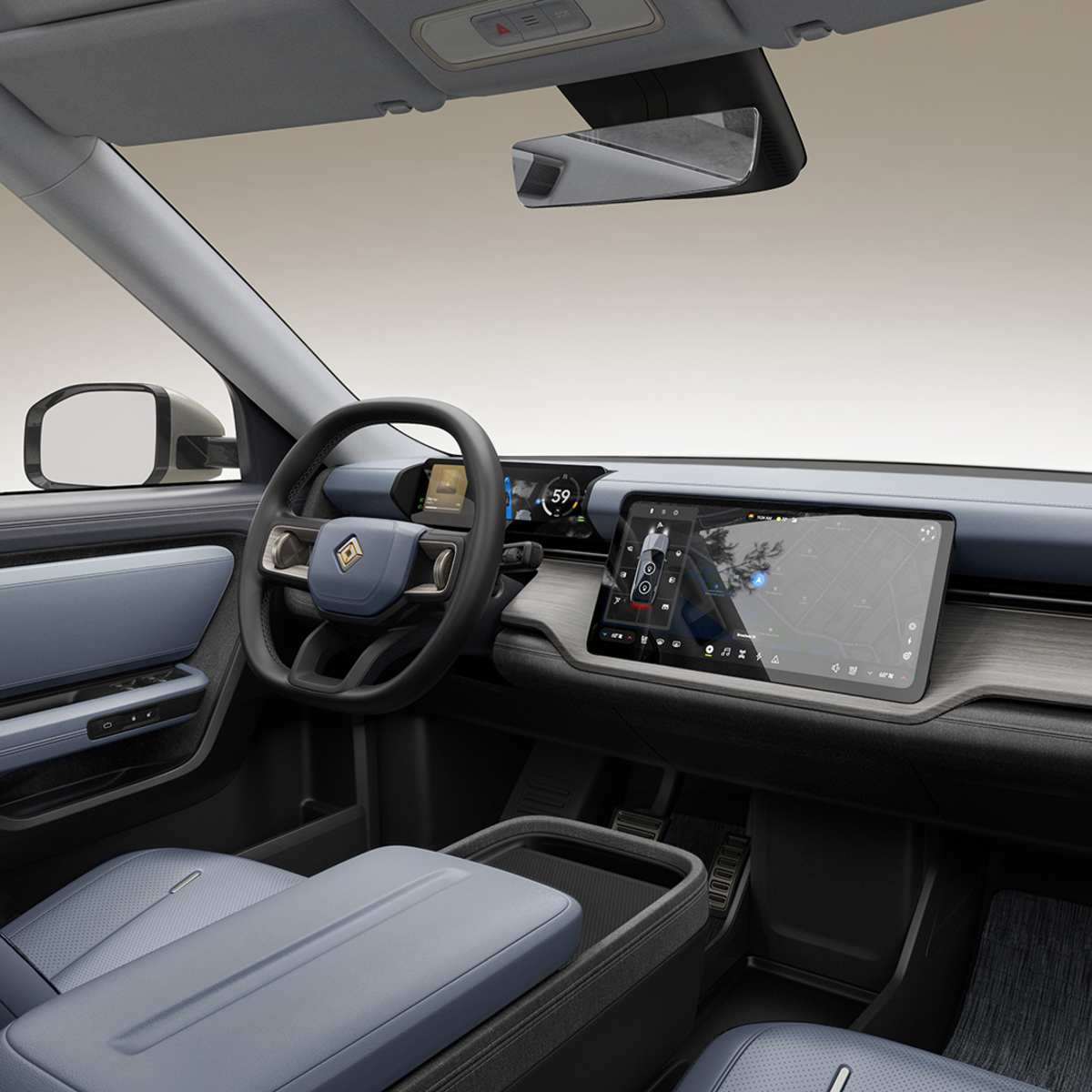
Rivian R2
"So we're talking on a show the other week about the Rivian R2. A big debate about whether you keep the little torch in the, in the door,"
Rivian R2 is an electric SUV that Rivian is planning to sell. The hosts are using it to talk about how even small interior design details can change how much the car costs to build.
The Rivian R2 is an upcoming Rivian electric vehicle positioned as a more affordable, mass-market step in Rivian’s lineup. In this segment, it’s used as an example of how small design choices (like interior features) can materially affect cost and pricing.
Bluetooth speaker
"So they kept that, but they got rid of the Bluetooth speaker. Right. No speaker."
A Bluetooth speaker is a small speaker that connects wirelessly, usually through your phone. Here, it’s brought up because removing it can save money on the car.
A Bluetooth speaker is an audio device that connects wirelessly to the car (or to a phone) using Bluetooth. In the segment, it’s mentioned as a feature Rivian removed to reduce cost, showing how infotainment options can be traded off against price.
high performance line
"Genesis announced a while ago their efforts [2345.0s] toward motorsports and a high performance line, [2348.9s] like AMG and BMW's M."
A “high performance line” just means a company’s lineup of faster, sportier versions of their cars. The idea is that these models are built to feel more exciting to drive than the regular versions.
A “high performance line” is a brand’s set of models tuned for stronger acceleration, sharper handling, and more aggressive driving character than the standard lineup. In this segment, the hosts are comparing Genesis’ push to similar performance sub-brands like AMG and BMW’s M.

Bmws M
"toward motorsports and a high performance line, like AMG and BMW's M. And now we're finally seeing, you know,"
The BMW M Coupe (E36) is a sporty BMW coupe made by BMW’s performance team, the M division. It’s based on an older BMW 3 Series generation (the E36). The podcast is bringing it up as an example of BMW moving toward more performance-focused cars.
The BMW M Coupe (E36) is a rare, performance-oriented coupe from BMW’s M division based on the E36 generation. It’s often discussed by enthusiasts because it represents a motorsports-inspired approach in a compact, driver-focused form. The podcast context suggests it’s being mentioned as part of BMW’s evolution toward a more high-performance line.
AMG
"Genesis announced a while ago their efforts [2345.0s] toward motorsports and a high performance line, [2348.9s] like AMG and BMW's M."
AMG is Mercedes-Benz’s performance brand. It’s the part of Mercedes that makes the sportier, more powerful versions of their cars.
AMG is Mercedes-Benz’s performance brand, known for making higher-output engines and sport-tuned drivetrains. The hosts mention it as an example of a manufacturer having a dedicated performance “line” alongside its regular models.
Magma series
"They've got the Magma series. [2363.1s] We knew the GB60 Magma was going to be the first of it. [2367.2s] We've seen it on an auto show and potentially some ideas"
The “Magma series” is Genesis’ name for a set of special performance versions. The hosts are saying the GV60 Magma is the first real production car showing what that performance line will be.
The “Magma series” is Genesis’ planned performance sub-line, meant to bring a more track-inspired, high-output approach to specific models. In the segment, the hosts frame the GV60 Magma as the first production example of that series.
M-Power
"And now Magma is going to be, you know, what AMG is to Mercedes, what M-Power is to BMW."
This is the host’s shorthand for BMW’s performance branding. The idea is that BMW uses a special badge to mark cars that are built to be sportier and quicker than the regular models.
“M-Power” is being used here as a reference to BMW’s performance sub-brand naming. BMW’s performance line is commonly known as “M” (e.g., M3, M5), representing cars engineered and tuned for track-capable driving.
performance sub-brand
"They want to build a performance sub-brand. And I think in their view, you cannot be a genuine luxury player without a performance sub-brand."
A performance sub-brand is like a special badge for the “sporty” versions of a brand’s cars. The point is that many luxury brands want a clear identity for their fastest, most exciting models.
A performance sub-brand is a separate badge or label a luxury automaker uses to market its sportiest, most enthusiast-focused models. The segment argues that luxury makers increasingly feel they need a dedicated performance identity to be seen as “genuine” luxury.
Equator GmbH
"So Audi has, you know, Equator GmbH, M-Power, AMG."
The host is naming a company tied to Audi’s performance branding. It’s brought up to show that different brands organize their “sporty” identities in different ways.
Equator GmbH is mentioned as part of Audi’s performance/branding ecosystem in this discussion. The host is grouping it alongside other performance labels to illustrate how different automakers structure their sporty sub-brands.
Hyundai N
"Hyundai internally, their sister company has N. Has N, right. But that's Hyundai. ... so Hyundai N does rallying."
Hyundai N is Hyundai’s “sport” badge. The host connects it to motorsport so listeners understand it’s meant to represent the brand’s performance side.
Hyundai N is Hyundai’s performance sub-brand. In the segment, it’s specifically associated with motorsport activities like rallying, reinforcing the idea of a dedicated performance identity.
Genesis
"Genesis, being posh, does World Endurance Championship WECK."
Genesis is Hyundai’s luxury car brand. In this discussion, it’s used as an example of how a luxury brand tries to prove it can build performance cars too.
Genesis is Hyundai’s luxury brand, and the segment frames it as “posh” while describing its motorsport involvement. The host uses Genesis to illustrate how luxury brands use racing programs to build credibility for performance.

Hyundai Genesis
"so Hyundai N does rallying. Genesis, being posh, does World Endurance Championship WE..."
Genesis is Hyundai’s luxury car brand. The podcast is saying Genesis also competes in racing events like the World Endurance Championship. That’s used to show the brand isn’t only focused on comfort and style.
Genesis is Hyundai’s luxury brand, and the podcast context ties it to motorsport involvement—specifically the World Endurance Championship (WEC). It’s being discussed as “posh” while still participating in high-level racing, which highlights how the brand builds credibility beyond just road cars. The mention suggests the episode is connecting Genesis’s performance image to its racing activities.
World Endurance Championship
"Genesis, being posh, does World Endurance Championship WECK. So they go off and do Le Mans,"
The World Endurance Championship is a major racing series focused on long-duration races. It’s the kind of motorsport where brands go to prove durability and performance over time.
The World Endurance Championship (WEC) is a top-level global endurance racing series. The segment links Genesis to WEC participation as part of its performance-brand strategy and mentions Le Mans as a key event.
Le Mans
"So they go off and do Le Mans, and it's all very, very terribly middle class."
Le Mans is one of the most famous long-distance races in the world. The host is saying Genesis targets big endurance events like this to show it can compete at a high level.
Le Mans refers to the famous endurance race held in France, widely regarded as one of the toughest motorsport events. The segment uses it as an example of how a luxury brand like Genesis uses high-profile endurance racing to build a performance image.
prototype cars
"and, you know, the cars look like, you know, prototype cars look incredible."
Prototype cars are early test vehicles that automakers build to try out new ideas. They’re often very dramatic-looking because they’re designed to explore performance and tech before a final production car exists.
Prototype cars are pre-production race or development vehicles built to test new designs and technologies. The host contrasts their impressive look with the brand’s ability to “spin” production-style GTs and coupes from that sporting ethos.
coupes
"And then you can spin these beautiful GTs and coupes off that kind of sporting ethos."
A coupe is a car shape usually with a fixed roof and two doors. The host is saying the brand’s sporty identity can be reflected in cars that look and feel more “coupe-like.”
A coupe is a car body style typically defined by a fixed roof and two-door layout (or a coupe-like silhouette). The host groups coupes with GTs as part of how a performance brand’s “sporting ethos” can show up in product design.
GTs
"And then you can spin these beautiful GTs and coupes off that kind of sporting ethos."
“GT” usually means a grand touring car—built for fast, long-distance driving. The host is saying the brand’s sporty image can translate into GT-style cars.
“GT” (grand touring) is a body-style and performance category aimed at comfortable high-speed driving. In the segment, the host says Genesis can derive “GTs” and coupes from its performance racing-inspired design direction.
British racing green
"And Aston are both British racing green. ... British racing green, red for Ferrari, Italy, blue for Bugatti and France."
British racing green is a classic dark green paint color used in British racing history. The hosts are talking about how different brands and countries often have their own signature racing colors.
British racing green is a traditional racing-livery color associated with British motorsport heritage. In the segment, the hosts use it as part of a broader “national/brand color” mapping for famous automakers and racing teams.
tariff issue
"They're not selling very many GV60 satellites. [2623.7s] They're built in Korea, so there's a whole tariff issue."
A tariff issue means extra government taxes on imported cars. If the car is built overseas, those added costs can make it more expensive to sell or lease.
A tariff issue refers to extra taxes or import charges applied when vehicles are shipped across borders. Those costs can raise the vehicle’s price or make it harder to compete versus cars built domestically.

Hyundai IONIQ 5
"Whereas the Hyundai IONIQ 5, the sister car, [2628.3s] which is a bit bigger and a lot cheaper is sold, [2630.9s] is built here in America."
The Hyundai IONIQ 5 is an electric SUV that’s generally cheaper to lease than the Genesis GV60. The hosts mention it to show how production location and pricing can affect sales.
The Hyundai IONIQ 5 is a mainstream, battery-electric crossover that’s positioned as a value-focused alternative in the EV market. Here it’s used as a comparison point because it’s built in America and is priced/leased more aggressively than the Genesis GV60.

Genesis G90
"The GV90 is the luxury car, the G90, sorry. [2646.9s] So they've got the GV80, which is..."
G90 is Genesis’ top luxury sedan name. The speaker corrects themselves from “GV90” to “G90.”
G90 is referenced as Genesis’ flagship luxury sedan nameplate. The host is clarifying that the “GV90” they mentioned is actually the G90 luxury car in Genesis’ lineup.

Genesis GV80
"So they've got the GV80, which is... [2651.8s] Well, they have a large EV."
The Genesis GV80 is a luxury SUV that Genesis already sells. The hosts use it as a starting point while talking about what’s coming next.
The Genesis GV80 is Genesis’ midsize luxury SUV and part of the brand’s current lineup. In this segment, it’s mentioned as the baseline from which Genesis plans to expand with additional EVs and larger vehicles.

Hyundai Ioniq 9
"Yeah, they've got a version of the IONIQ 9, I think, on the way."
IONIQ 9 is an upcoming Hyundai electric vehicle name. The point here is that Hyundai plans more EVs beyond the current models.
IONIQ 9 is mentioned as an upcoming Hyundai EV model, positioned as a larger alternative in the IONIQ family. The host is using it to suggest Hyundai’s EV lineup will keep expanding.
Genesis GV80 Coupe
"GV80 Coupe's a bit interesting. It's like a Cayenne Coupe for less money, lovely interior."
This is Genesis’s SUV with a more sloped, “coupe-like” shape instead of a boxier SUV roof. The hosts are saying it looks cooler, but it costs more per month to lease compared with the regular version.
The Genesis GV80 Coupe is a Genesis SUV with a coupe-style roofline, aiming to look sportier than a traditional SUV. In this segment, the hosts compare it to the Porsche Cayenne Coupe concept and discuss how the lease pricing changes when you move from the standard GV80 to the coupe version.
Cayenne Coupe
"It's like a Cayenne Coupe for less money, lovely interior. I will tell you, we just looked into this recently."
This is Porsche’s way of making an SUV look more like a coupe by reshaping the roofline. The hosts are saying the Genesis GV80 Coupe is aiming for a similar look.
“Cayenne Coupe” refers to Porsche’s coupe-style take on the Cayenne SUV formula—using a sloping roofline to make the vehicle look more like a sports car. The hosts use it as a shorthand comparison for the Genesis GV80 Coupe’s shape and styling direction.

Porsche Cayenne
"GV80 Coupe's a bit interesting. It's like a Cayenne Coupe for less money, lovely interior. I will tel..."
The Porsche Cayenne is a luxury SUV made by Porsche. It’s meant to be comfortable for daily driving but still feel sporty to drive. The podcast mentions a Cayenne Coupe-style concept to describe a more stylish version of the SUV formula.
The Porsche Cayenne is Porsche’s luxury SUV, combining everyday usability with Porsche-style performance and a high-end interior. It’s often discussed because it’s a key model for people who want Porsche driving dynamics without giving up SUV practicality. The podcast context specifically mentions a “Cayenne Coupe” idea, which ties into how the Cayenne lineup can be configured for different body styles.

Genesis GV60 Magma
"Anyway, Magma, we went into Korea, drove this thing. It is basically a Hyundai IONIQ 5N, but in a Genesis form."
The GV60 Magma is Genesis’s sporty, performance version of its electric GV60. The hosts compare its overall vibe to Hyundai’s IONIQ 5N, but say Genesis dresses it up with more upscale styling cues.
The Genesis GV60 Magma is Genesis’s performance EV concept, positioned as a more aggressive, enthusiast-flavored alternative within the GV60 lineup. The hosts describe it as essentially the same performance “principle” as the Hyundai IONIQ 5N, but with Genesis styling details like big spoilers and distinctive orange accents.

Hyundai IONIQ 5N
"It is basically a Hyundai IONIQ 5N, but in a Genesis form. So we talked briefly last week about the driving around the Acura Integra Type-S."
The IONIQ 5N is the sporty, performance version of Hyundai’s electric IONIQ 5. The hosts are using it as a reference point to explain what kind of performance vibe the Genesis Magma is going for.
The Hyundai IONIQ 5N is Hyundai’s performance-oriented version of the IONIQ 5, tuned for more aggressive driving feel. The hosts say the Genesis Magma is “basically” the same idea, implying a shared performance EV approach and similar “boy racer” styling cues.

Acura Integra Type-S
"So we talked briefly last week about the driving around the Acura Integra Type-S. And it is the same principle that Hyundai does the IONIQ 5N,"
The Integra Type-S is the sportier version of the Acura Integra. The hosts are saying the Genesis Magma/Hyundai IONIQ 5N approach is similar in spirit to how the Type-S tries to feel more exciting and youthful.
The Acura Integra Type-S is a performance-focused trim of the Integra, known for a more driver-oriented setup and a sporty “hot hatch” vibe. In this segment, the hosts use it as a comparison point for how Hyundai’s IONIQ 5N delivers a similar kind of attitude and styling energy.
boy racer vibe
"which is very kind of lary and it looks very kind of... It has that sort of boy racer vibe about it inside and out."
“Boy racer vibe” is enthusiast slang for styling and cabin cues that feel aimed at younger, performance-focused drivers—often loud colors, sporty graphics, and aggressive exterior details. In this segment, it’s used to describe the visual attitude of the IONIQ 5N and how the Genesis Magma channels a similar energy.

Honda Civic Type-R
"slightly less extrovert, slightly more considered version of the Honda Civic Type-R. So that's what they're trying to do with it."
The Honda Civic Type-R is a sporty, track-oriented version of the Civic. It’s known for being loud and exciting to drive, and the hosts are saying another car feels like a calmer, more thoughtful take on that vibe.
The Honda Civic Type-R is a hot-hatch built for front-wheel-drive track-style driving, known for its aggressive tuning and driver-focused chassis. In this segment, the hosts compare another car’s personality to a “slightly less extrovert, slightly more considered” version of the Civic Type-R.

Volvo V60
"...y, I love the IONIQ 5N. I love the standard G for V60. I think this has got all the hallmarks of a real..."
The Volvo V60 is a luxury wagon, meaning it has extra space behind the seats for cargo. It’s designed to be comfortable for daily driving. The podcast is mentioning it because it seems like a proper wagon, not just a small compromise.
The Volvo V60 is a premium wagon (estate) that’s known for practicality, comfort, and a refined interior. In the podcast, it’s referenced as having “all the hallmarks of a real” model, implying it’s being evaluated as a genuine, well-rounded wagon rather than a compromise. The context also mentions other performance interests, suggesting the V60 is part of a broader discussion about what makes a compelling everyday car.
600 horsepower
"Yes, 600 horsepower. Yeah, 85,000 parts."
Horsepower is a number that roughly tells you how strong the car’s power is. The hosts are saying 600 horsepower is a big deal, but it also helps explain the high price.
“Horsepower” is a measure of engine (or motor) power—how much work the car can do over time. In this segment, the hosts cite 600 horsepower as part of why the car is exciting, but also why it may be expensive.
85,000 parts
"Yeah, 85,000 parts. But it's..."
“Parts” means the number of individual components inside the car. More parts usually means the car is more complex, which can affect cost and how hard it is to service.
“Parts” here is a count of how many individual components make up the vehicle. A higher parts count can imply more complexity in manufacturing and systems, which can contribute to cost and service complexity.
comfort settings
"a little bit nicer to drive in its comfort settings. But it has more adjustability or more different settings, more aggressive settings, I guess, between their comfort setting and their race or track"
“Comfort settings” refers to driving-mode calibration that softens how the car responds—typically by making the suspension and throttle/brake behavior less aggressive. In this segment, it’s contrasted with more aggressive “race or track” settings.
race or track
"more aggressive settings, I guess, between their comfort setting and their race or track"
Race/track mode is the car’s more aggressive setting. It’s designed to make the car respond faster and feel more “ready” for spirited driving.
“Race or track” mode is a driving-mode calibration that typically sharpens throttle response, steering feel, and suspension behavior for higher grip and more demanding driving. The hosts are describing a spectrum between comfort and these more aggressive settings.
flappy paddles
"But it also still has the flappy paddles like the IONIQ 5N, [2859.7s] so it simulates gearships, still cuts the throttle,"
These are paddle shifters behind the steering wheel. Even though an EV doesn’t shift like a gas car, the paddles can still change how the car responds to make it feel more like gear changes.
“Flappy paddles” refers to steering-wheel paddle shifters that let you command the car’s drive mode as if it were shifting gears. On EVs, they’re often used to control simulated gear changes and throttle behavior for a more engaging feel.
simulates gearships
"so it simulates gearships, still cuts the throttle, [2862.6s] so you get that little jolt that makes it feel like it's changing gear, even if it's not."
This is when an electric car pretends it’s shifting gears. It does it by changing throttle response so you feel a jolt like a real gear change.
“Simulates gearships” means the EV uses software to mimic the sensation of shifting gears. The car can change throttle response and drivetrain behavior so the driver gets a “gear change” feeling even without a traditional multi-gear transmission shift.
cuts the throttle
"so it simulates gearships, still cuts the throttle, [2862.6s] so you get that little jolt that makes it feel like it's changing gear, even if it's not."
This means the car briefly reduces power. The goal is to create a noticeable “jolt” so it feels like the car is changing gears, even though it’s still an EV.
“Cuts the throttle” describes a momentary reduction in power delivery when the driver requests a shift-like event. In EVs with simulated shifting, this throttle interruption helps create the physical sensation (a brief slowdown in torque) that feels like a gear change.
engine notes
"you just put it in comfort, turn all the engine notes off, [2892.4s] let it drive itself, and you've just got a really fast EV."
This is the fake engine sound an EV plays through the speakers. The host says you can turn it off in a comfort setting if you want a quieter drive.
“Engine notes” here refers to the synthesized sound an EV plays to imitate an engine. The host says you can turn these off in “comfort” mode, which changes the cabin experience from “theatrical” to quieter and more relaxed.
R version
"to be able to look up the high-performance version, go, is there an R version of this? ... Where's the GT version? Where's the R version?"
“R” is often used on cars to mean a sportier, higher-performance version. In this conversation, they’re basically asking why “Magma” isn’t as instantly recognizable as an “R” badge.
“R” is commonly used as a performance trim badge across many brands, generally indicating a more aggressive, higher-output, or track-oriented variant. The host treats “R version” as a familiar consumer cue for “the fast one,” and contrasts it with the “Magma” naming.
GT version
"to be able to look up the high-performance version, go, is there an R version of this? ... where's the GT version? Where's the R version?"
“GT” is a common car label that usually means a sportier, more performance-focused version. Here, they’re saying people look for a clear “top performance” name like that.
“GT” is a trim naming convention that typically signals a sportier, more performance-oriented version of a model. In this segment, the host uses “GT version” as shorthand for the kind of recognizable performance badge consumers expect.
Genesis GV60 Magma
"So like, who cares what brand it is? ... Like, we're fine with doing that if you did a, you know, a GV80 GT or a GV80 R. ... But, you know, Magma, I can't help but just not think Austin Powers the whole time, this liquid hot Magma. ... If, at least initially for anybody getting the GV60 Magma, you can just say you have the Genesis Magma because we all know it's a GV60."
The Genesis GV60 Magma is a special, more performance-oriented version of the Genesis GV60 electric SUV. They’re talking about how the “Magma” name should help people instantly understand it’s the top/fast version.
The Genesis GV60 Magma is a performance-focused variant of the Genesis GV60 electric crossover. In this segment, the hosts discuss how the “Magma” name functions like a high-performance badge (similar to “GT” or “R” trims) and whether it’s easy for consumers to recognize.

Nissan Gtr
"I have a GTR or LFM. We know what that is."
“GT-R” usually means the Nissan GT-R, a fast sports car famous for being quick and grippy. People bring it up as a top-tier performance car.
“GTR” is almost certainly shorthand for the Nissan GT-R, a twin-turbo sports car known for all-wheel-drive traction and rapid acceleration. Enthusiasts often mention it as a benchmark “do-it-all” performance car.
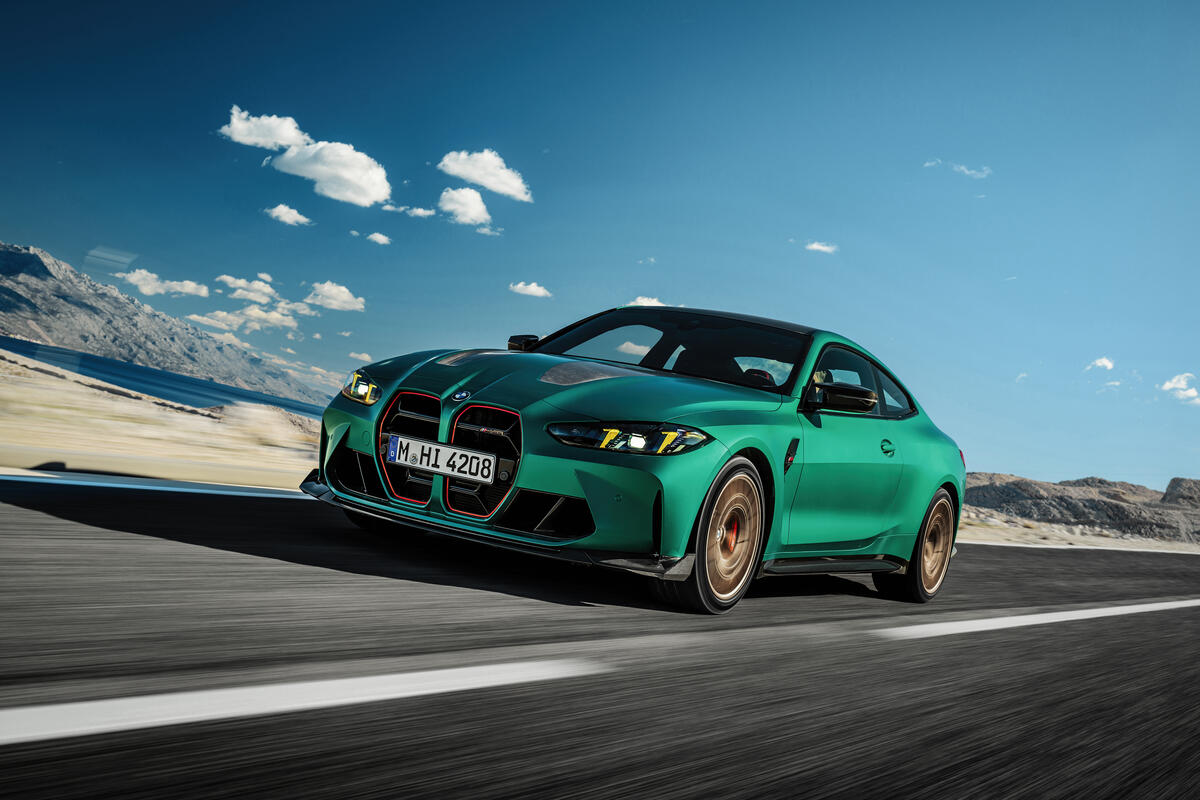
M4 CS
"I've got an M4. I've got an M4 CS."
BMW M4 CS is a special, sportier version of the M4. “CS” generally means it’s tuned and equipped to feel more aggressive and track-ready than a regular M4.
BMW M4 CS is a more track-focused, lighter, and more performance-oriented variant of the M4. “CS” is BMW’s designation for a special-edition style that typically emphasizes sharper dynamics and higher-spec components compared with a standard M4.

Mercedes-Benz Mercedes Benz Amg
"I don't know. It's like Mercedes, Benz, AMG, 4C63. Well, they've got the other problem that they've just put AMG on too much."
The Mercedes-Benz AMG GT is a sports car designed for performance. AMG is Mercedes’ performance brand, so the car is meant to feel faster and more exciting than a regular Mercedes. The podcast is bringing it up in the context of how AMG is used across different models.
The Mercedes-Benz AMG GT is a performance-focused sports car built by AMG, Mercedes’ performance division. It’s often discussed because AMG models are known for strong engines and a more aggressive driving character than typical Mercedes models. In the podcast, it’s referenced alongside comments about AMG branding being used “too much,” implying a conversation about how frequently AMG appears across the lineup.
sports brand
"you get danger of diluting the sports brand by sticking it on too many different cars."
This is the idea that a “sports” badge can lose credibility if it’s used on too many cars. If it’s not really a performance upgrade, people may stop believing the badge means something.
“Diluting the sports brand” refers to the idea that performance branding loses meaning when it’s applied to too many models. If the badge shows up on cars that aren’t truly performance-focused, enthusiasts may view it as less authentic.
Nürburgring
"but soon we're going to see a Nionix 6N that I understand it just like made some kind of record around the Nürburgring. Like, yeah."
The Nürburgring is a well-known race track in Germany. Car makers use it to prove how fast and capable their cars are, because it’s hard to drive well.
The Nürburgring is a famous German racing circuit used as a benchmark for performance cars. When an EV or car “sets a record” there, it usually means it achieved a very fast lap time on the track’s demanding layouts.
Goodwood
"So this is really good. I actually went to Goodwood last year to see the unveil of this car. They're not bringing the Aionix 6N anymore because nobody bought it."
Goodwood is a famous UK venue where car makers and racing fans gather. The host went there to watch a car get unveiled.
Goodwood refers to the Goodwood event venue in the UK, best known for hosting high-profile car reveals and motorsport gatherings. The host says they went there to see the unveiling of the car they’re discussing.
mid-cycle facelift
"The facifted one is really nice. The midlife, mid-sized, one of rare cars, the mid-cycle facelift actually really improved"
A mid-cycle facelift is when a car gets refreshed halfway through its generation. It often means updated styling (and sometimes new features) to keep it competitive.
A mid-cycle facelift is an update done partway through a model’s life, typically with styling changes and sometimes tech or powertrain tweaks. The host says the mid-cycle facelift improved the car’s look and overall appeal.
retuned
"And apparently it's been retuned a little bit and everything else. The central gravity will be fractionally lower even if the batteries are kind of in the same place."
“Retuned” means the car’s settings have been adjusted. That can change how it responds when you press the accelerator and how it feels while driving.
“Retuned” means the vehicle’s calibration has been adjusted—software and/or hardware settings are changed to alter how it drives. In performance EVs, retuning often targets throttle mapping, torque delivery, and sometimes steering/suspension behavior to make the car feel sharper or more consistent.
central gravity
"The central gravity will be fractionally lower even if the batteries are kind of in the same place. And the Magma is basically another version of the Ionix 6N."
This is about where the car’s weight “balances.” If that balance point is lower, the car usually feels steadier and handles better when you turn.
“Central gravity” here means the car’s center of gravity (CG), the point where the vehicle’s weight effectively balances. Lowering CG—like moving mass or battery placement—can improve handling by reducing body roll and making the car feel more stable in corners.

911 GT3S
"It's got like a kind of 911 GT3S rear wing. Just the car to me was just like the profile."
That’s a Porsche 911 model that’s built for track driving. It often has a big, noticeable rear wing, and the host is comparing another car’s wing to that look.
The “911 GT3S” is a Porsche 911 variant known for track-focused aerodynamics, including aggressive rear wings. The host is using it as a visual reference for the kind of rear wing shape the other car is using.

Beetle Volkswagen Bug
"sort of wings that pop off. It just seems Volkswagen bug to me, you know, like the little turbo one when i..."
The Beetle is a small car with a very recognizable, rounded design. The podcast is comparing it to a “Volkswagen bug” because of how it looks. It also mentions a turbo version, meaning some models use a turbocharged engine for extra power.
The Beetle is a compact, iconic Volkswagen model known for its distinctive shape and long-running popularity. In the podcast context, it’s being described in a casual, visual way—“like a Volkswagen bug”—and the mention of a “little turbo one” suggests a performance or turbocharged variant is part of the discussion. It’s likely included as a recognizable reference point for design and character.
aerodynamics
"It talks back to that kind of 1930s, early days of aerodynamics. It's a streamliner. But from an aerodynamic perspective, we've now got a problem with lift at the rear."
Aerodynamics is how the car’s shape interacts with the air as you drive. It affects things like how hard the car has to work to go fast and whether the car feels stable or “light” at speed.
Aerodynamics is how air flows around a car and how that affects forces like drag (how hard it is to move through air) and lift (tendency to get light at speed). In performance design, small shape changes can noticeably change stability and lap times.

Audi Tt
"...it in the same way they had the problems with the Audi TT, that kind of original Bauhaus, I think it was 19..."
The Audi TT RS is a sporty version of the Audi TT, made for quick driving and strong performance. The podcast is also talking about issues that have affected some Audi TT models. That’s why it’s being brought up—so listeners can understand what to watch for.
The Audi TT RS is a high-performance version of the Audi TT, built to deliver sporty acceleration and handling in a compact package. It’s mentioned in the context of “problems with the Audi TT,” suggesting the podcast is discussing known reliability or issue patterns tied to that model line. The reference to “original Bauhaus” and a specific year implies the conversation is about earlier generations and their history.
lift at the rear
"But from an aerodynamic perspective, we've now got a problem with lift at the rear. So, you know, this thing is a very fast car."
Lift at the rear means the back of the car is being pushed upward by the air. That can make the car feel less planted, so engineers add features to push the car down instead.
“Lift at the rear” means the airflow is creating an upward force on the back of the car, which can reduce tire grip and stability at speed. Designers counter it by adding aerodynamic devices that create downforce.
rear wing
"So what we need to do is whack a rear wing on it, it. Rear wing, God, it's been a long day, hasn't it? Rear wing, whack it, it."
A rear wing is a spoiler on the back of the car. Its job is to help keep the car stuck to the road by pushing down at speed.
A rear wing is an aerodynamic spoiler mounted at the back that increases downforce—pushing the rear tires into the road. It’s often used when a car’s shape produces too much lift or when higher-speed stability is needed.
downforce
"Give me some downforce. Yeah."
Downforce is the “push down” effect from the car’s shape. It helps the tires grip the road better, which improves handling at speed.
Downforce is the aerodynamic force that presses the car’s tires into the road, improving traction and stability—especially in fast cornering. More downforce usually helps grip, but it can also increase drag and reduce top speed.
Request an Explanation
Heard something you'd like explained? We'll add it to this episode.
Sign in to request explanations for terms you heard.
Want to learn more?
Browse our glossary for plain-English explanations of automotive terms, jargon, and concepts.
Help improve this episode
See something that's not quite right? Our annotations are AI-generated and can sometimes miss the mark. Click the flag icon on any annotation to suggest a correction.
1 community members have helped improve this episode.