The Tesla Model Y is an all-electric SUV made by Tesla. Instead of using gasoline, it runs on a battery and an electric motor. It’s popular because it offers SUV space with an electric drivetrain.
The Jeep Renegade is a small SUV made by Jeep. It’s meant for people who want an SUV look and some off-road capability, but in a smaller size. It’s often discussed as part of how Jeep’s lineup targets different kinds of buyers.
Reverse engineering means taking something apart to figure out how it works. In this case, they’re studying competitor cars to learn what makes them cheaper and more advanced.
“From the ground up” means starting over instead of making small changes. For an electric vehicle, that can mean rethinking how the whole car is designed and built.
An EV truck is a pickup or light commercial truck designed to run on electricity. Trucks are especially demanding for EVs because they need more energy for towing, hauling, and higher speeds, which affects battery size, charging strategy, and cost.
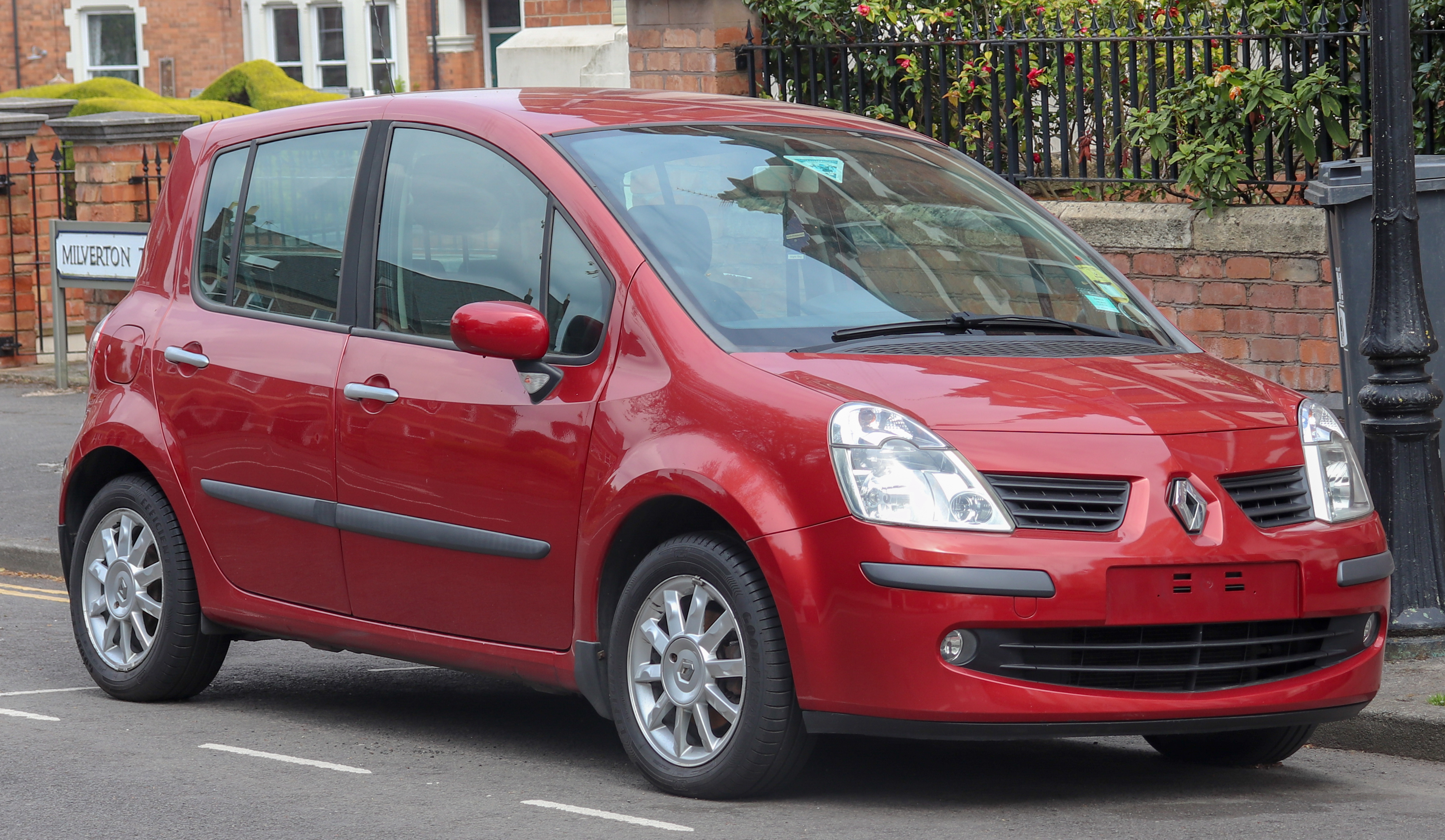
The Renault Modus is a small hatchback car made by Renault. It’s designed to fit in tight spaces while still offering usable room inside. If it’s being discussed, it’s usually because it’s a practical, compact option.
The Tesla Model S is Tesla’s well-known electric sedan. The speaker is talking about the early days when the first customer cars started arriving around 2012.
An “emotional product” is something that makes you feel something—like excitement or connection—rather than just being a practical thing. The speaker is saying that one drive made the car feel special to them.
The Tesla Model 3 is an all-electric sedan made by Tesla. It uses a battery and electric motors instead of a gasoline engine. It’s a major model because it’s designed to be more accessible than earlier Tesla cars.
Bill Ford is a major figure at Ford connected to the Ford family. Here, he’s mentioned as someone the speaker worked with while thinking through Ford’s electric-vehicle direction.
Doug Field is a senior executive at Ford. The host says he’s leaving, and he’s mentioned because he was involved in the EV-focused leadership discussions.
“Solid-state” storage is the kind that uses chips instead of moving parts. The point is that it used to cost more, but got cheaper over time as it became common.
A traditional hard drive stores data with moving parts inside. The speaker is using it as a comparison to show how newer tech can start costly and later get cheaper.
Charging stations are public chargers where you plug in an electric car to recharge it. If they’re common in one area but not in others, it can make people hesitant to buy an EV.
A psychological barrier means people feel uneasy or worried, even if the facts look better than before. In this case, the worry is about EV charging and whether trips will be easy.
Electrify America runs a network of public fast chargers for electric cars. If someone says they had a bad experience with it, they likely mean the chargers didn’t work well when they needed them.
The Dodge Charger is a car that’s built for performance and strong acceleration. It’s a sedan, not an SUV or truck. If it’s mentioned in a charging or reliability story, it’s usually because someone depends on it and wants it to work when they need it.
A battery electric vehicle is a car that runs on electricity stored in a battery. You charge it by plugging it in, and things like towing can use more energy than normal driving.
The Toyota RAV4 is a compact SUV made by Toyota. It’s popular because it offers a good balance of space, comfort, and everyday practicality. In the conversation, it’s used as an example of a top-selling SUV and a reference point for interior room.
This means storage you can lock so your stuff is harder to steal and stays protected. The host is saying pickups often don’t have that with an open bed, but EVs can.
A frunk is an extra storage compartment at the front of many electric cars. Since there’s no engine in the front, you can put things there and close it securely.
The Ford Maverick hybrid is a small pickup that runs on a mix of gas and electricity. The point here is that it’s priced similarly to the EV truck being discussed, so it’s an easy option for people who aren’t ready to go fully electric.
The Ford Ranger is a pickup truck. In this conversation, it’s mentioned because it’s priced close to the EV, so it competes for the same shopper’s attention.
NVH is a car-industry way of talking about how quiet and smooth the ride feels. Lower NVH means less annoying noise and less shaking, so the car feels more refined.
Concept
fund-to-drive moniker
“Fund-to-drive” is basically a slogan meaning the car should feel fun and exciting when you’re driving it. They’re saying the EV has to win on how it feels, not just on the technology inside.
The Geely Galaxy M9 is a Chinese car that uses a hybrid system to help it go farther. The speaker says they tested it on a track and did range testing to see how well it performs over distance.
Term
review mirror analysis
It means looking at what already exists and seeing how people react to it. Engineers check things like whether it breaks or wears out, and whether the new features people added are actually useful to customers.
“Autonomy” here means how much of the driving the car can handle on its own. Think of it as features that steer, control speed, and—at higher levels—drive more independently.
“Blue Cruise” is a Ford feature that helps the car drive more on its own, like keeping in the lane and managing speed. You still have to pay attention and be ready to take over.
A “giant battery” is a bigger battery pack. It can help the car go farther, but it also makes the car heavier, which can make it use more energy and wear tires faster.
“Adding lightness” means making the car lighter. A lighter car usually needs less energy to move and can also put less stress on tires.
Term
optimization
Here, “optimization” means designing the car so it has only the parts it really needs. Instead of making everything bigger “just in case,” you size things to hit the target customers care about.
They’re giving a real weight number for the car. When a vehicle is that heavy, it tends to stress tires more and can use more energy to move.
Brand
Rikaro
This sounds like a company that specializes in making car seats. The point is that if Ford is making its own seat design, it’s relying on its own seat experts instead of outsourcing to a specialist.
This phrase means the company tries to control most of the important technology itself, not just buy parts and software from others. In EVs, that often includes the battery and the software that manages it.
Rivian is another electric-car company. The interview is basically saying that in California, people often move between EV companies because there aren’t enough skilled workers to go around.
Lucid makes electric cars too. They’re mentioned because the interview is about how hard it is for EV companies to hire the right people, so workers bounce between brands.
Car
Ford Lightning
The Ford Lightning is an electric pickup. The point here is that it didn’t come from one fully unified software-and-hardware plan—different parts were made by different companies, so getting everything to work together took extra time.
An operating system is the main software that runs the car’s computer and helps all the other software work. Here, the point is that the Lightning wasn’t built like everything was controlled from one central “OS-first” software plan.
“Time lag” here refers to schedule delays that happen when software and hardware development depend on external suppliers. Even if suppliers can build the right components, the back-and-forth (brief → analysis → questions → prototype) slows down how quickly the system can be integrated and iterated.
A “skunkworks” is a small team that tries new ideas quickly, without a lot of red tape. “Fail fast” means they test things early, learn from what doesn’t work, and improve quickly.
This is about making sure the dealership is ready to sell the new EV truck. If the sales team isn’t prepared, shoppers may not understand why the EV is worth buying.
EVs are cars or trucks that run on electricity from a battery. The speaker is saying dealerships need to be ready to explain how EVs work and why they fit the buyer’s needs.
Your powertrain is what makes the car move and sends that power to the wheels. In this conversation, they’re saying the salesperson should talk about the truck’s benefits, not only the technical parts under the hood.
Residual value is what a car is expected to be worth later—often at the end of a lease. They’re saying that if the truck costs less than a very expensive EV, people worry less about that future resale/lease value.
“Lightning” here means the Ford electric pickup, the F-150 Lightning. They’re comparing a very high price to a cheaper option to explain why future value worries can be smaller.
Price parity means the electric version costs about the same as the gas version. The host is saying Ford needs that to make the electric truck competitive.
The “desirability factor” is whether people actually want the EV. It’s about making it feel like a great choice, not just a different kind of powertrain.
The Rivian R2 is an electric vehicle that Rivian is planning to sell to more people. The host is using it as an example of an EV that people might actually want, not just buy because it’s electric.
Solid state batteries are a newer type of EV battery that uses a solid material inside instead of a liquid. The idea is that they could eventually improve safety and energy density, but they’re not widely available yet.
The Cadillac Escalade is a big luxury SUV. It’s designed to be comfortable and feature-rich, but it’s also heavy and expensive to build. If the conversation mentions putting a large battery in it, that’s because bigger cars need more battery capacity to go electric.
The battery is the big, expensive part of an EV. Saying “small battery” means using a smaller battery to keep the car cheaper. The downside is it usually means less driving distance before you have to recharge.
Efficiency is how well the EV uses its battery energy to move the car. A more efficient EV can go farther on the same charge. That’s important because it can help you get decent range without needing a bigger, more expensive battery.
A “trade-off” means improving one thing usually makes another thing worse. In EVs, adding more battery can increase range, but it also adds weight and cost. Using a smaller battery can save money and weight, but it reduces how far you can drive.
A Porsche 911 is a famous sports car from Porsche. Saying it’s “old” and “heavily modified” usually means it’s an older one that someone has changed a lot for their own taste or performance.
They’re talking about whether the EV program makes financial sense for the company. In other words, it needs to sell well and create value, not just be a trial run.
The Ford GT is Ford’s famous performance sports car. In this segment, they’re using it as an example of how Ford has previously backed big, ambitious projects—now they’re doing something similar with EVs.
LIVE
Hello, welcome to the Edmunds' CarCast Podcast, and for those of you that are new and just
seeing this for the first time, I'm Matt, the moderator, DeAndre here with Alistair
Weaver.
He and I have been hosting CarCast for years.
The podcast has been around for 17 years now, but it is new to the Edmunds YouTube platform.
We hope you guys will enjoy it.
There's plenty of old episodes you can go back and listen to on the CarCast channel,
as well as on Spotify and Apple Podcasts and wherever you listen to podcasts.
Alistair, tell us about this wonderful home you found for us.
Yeah, it's a very flashy new studio, which welcome to the Edmunds headquarters here in
Santa Monica, California.
We thought we'd run some cameras and you could see us in real life.
So if you've never seen us in 4K before, please don't be too disappointed.
So this was built entirely just for us.
Not exactly.
Thanks.
It's good to be here.
This is a great environment for us, but we'll see if this can kind of become more of a
regular place for us.
It's a great place to do it.
OK, so we talked a week or so ago about your visit to this new, wonderful
EV headquarters, if you will, that Ford has built in Long Beach.
And we talked about an interview that you did while you were there.
All right, before we get into it, a word from FanDuel and right now new FanDuel
customers can bet $5 and get 150 and bonus bets if your first bet wins.
That's right.
Turn five bucks into 150 and bonus bets just for getting started.
And when every possession matters in the playoffs, FanDuel makes it easy to get
closer to the action from from player props and your favorite stars to all
the tools you need to back them up.
FanDuel puts player research at your fingertips so you can check the stats,
trends and matchups all in one place and make your picks with confidence.
It's everything you need all in one app, so don't miss your shot.
Head to FanDuel.com slash believe to get started.
That's FanDuel.com slash B L E A V to get started.
It's FanDuel.
Play your game must be 21 and over and present in select states gambling
problem called 1 800 gambler.
So this is with Alan Clark, whose title I'm going to have to read this is the
Vice President of Advanced Development Projects, which is a great title.
I'm really interesting guy.
I think he's younger than you and me.
I think he's only about 40.
He kind of sounds young too.
It works.
I listened before I even saw him.
He has that.
He has a sort of slightly excitable puppy demeanor to him, which is really endearing.
It really interesting career.
It turns out that I think we crossed over at Honda Racing Formula one,
Honda's Formula one team like 100 years ago.
Yeah.
And then we realized we were probably both in the room in 2012 for the launch
of the Tesla Model S and he started in motorsport, as he'll explain in the
interview, then he went to work for Tesla and was really part of the vanguard
of Tesla, despite being an extremely young man at that time.
I don't know that it's in the interview, but we'll get to it soon.
Is did he talk about what he was doing at Tesla when he first started?
Because you're right.
He seemed like a young guy coming just right off of school and a little bit of motorsport.
He touches on it when we get into the interview.
He started it then from going from motorsport arrives at Tesla, which still
had a kind of motorsport technology.
That was very much the startup days of Tesla and then moves to Ford.
And it's kind of interesting hearing him talk about going from this kind of
startup sort of renegade outfit into, you know, the ultimate big American
corporate, but the way that they've established this EV facility in Long
Beach is that they're trying to bring the startup by to Ford.
So what they've established in Long Beach, he talks about, which I thought
was an interesting turn of phrase, as it being kind of VC funded by Ford.
And they're allowed to do their own thing, develop cars in their own way.
And this is Ford's big play to build a cheap EV.
What they've done is look at the market.
They did the Mackey.
They did the F 150 lightning and said, we just can't continue this way.
I know they reverse engineered some of the competitors, particularly the
Chinese cars, stripped them apart and the Tesla's and said, these cars are
way cheaper to build, the way more sophisticated than what we're able to do.
We've got to rethink this from the ground up.
And I think Ford CEO Jim Farley came out and said, it's like another model
team moment. We've got to we've got to come out and rethink everything.
So they've they've empowered this team down in Long Beach.
It's quite a long way from Detroit, both metaphorically and literally
to to rethink the electric car.
And they're going to come out first with an EV truck.
I was given this two hour tour of the the facility, including lots of
technology wins, which I admit went largely over my head.
Fascinating to see.
And then Alan and I sat down a few days later to dig into his career a little bit,
but also to talk about the state of the EV market, why they're launching a truck
and you know, what it how it's all going to shape out.
It's a great interview.
We're going to get into it.
But one of the things that did stand out, like you were just saying,
is treating it like a startup company is interesting because they're not
just sitting around going, hey, let's develop this product.
Let's see if it works. If not, we'll probably pivot, go on another team,
take another direction.
They are trying to prove themselves so they can continue to be funded
by their venture capital, in this case, Ford, right?
So they're going, listen, we don't do our job. This doesn't hit.
They're going to. We're out of business, essentially, right?
Like we could theoretically just be done.
Right. It is.
It is a big play because, you know, Ford, as we talk in the interview,
I think the current the current total is something like 80 billion
of write downs across the industry associated with cancelling EV projects.
Ford themselves canceled a three row SUV they were working on.
So this truck is like their big play.
And if this fails, you know, are you seeing the Americans
just retreat to building V8 trucks and leave the electric market
and the plug-in hybrid market to others, the Koreans, potentially the Chinese?
So it's a big deal for Ford and you can feel the pressure
and everybody stands there and he says, there's a lot of pressure on you
and everybody stands there and says, oh, we love the pressure.
You know, it's what drives us, but you feel it.
All right, so let's get into it.
And then we I'm sure we'll have some thoughts, some questions.
Some questions, a lot of thoughts, questions.
All right, here it is.
Here's the interview.
Alex, we were down at Ford and Long Beach talking with Alan Clark.
Alan Clark. Here we go.
So, firstly, thank you for for joining us on CarCast.
Maybe we should start by just setting the seat, setting the scene
and talking a little bit about yourself.
Looking at your LinkedIn,
I think we crossed over at Honda Formula One about a million years ago
when we were probably both just out of college.
But that was it.
Is that really where your career began in Formula One?
You know, I participated in a college program called Formula SAE.
So I would say that even though I didn't get paid
because there was no college credit or anything,
that's really where my car career began.
Getting a break to be able to go do an internship in Formula One
was probably what continued that sickness.
And then it's just really snowballed from there.
So started in motorsport and then came back to the U.S.
and did some more motorsport?
Absolutely, yeah.
And I think motorsport was a good mixture of aerodynamics
and mechanical engineering, performance, man-machine interface.
All those things were very interesting to me.
And actually, I never wanted to go into road cars
because I didn't think that road cars,
the development process was going to go fast enough.
I didn't think that road cars were pushing the envelope.
But I think what I certainly realize now is that
I wasn't really aware of the difference of challenges,
nor did I understand which constraints to embrace
and what to optimize around.
And it's had a very different opinion now.
Of course, Modus, but that was going to be our next question.
Modus, what everything's happened super fast?
Do you make a change?
It's on the car in a week's time.
And, you know, in particularly in a traditional world like Ford,
things take a little longer.
Sure. Yeah.
I think at the same time, though,
you have to really balance your risk even in motor sports.
You don't want to take the risk of not finishing the race
because, you know, that could have a pretty significant
point spread issue or, you know, who knows what.
And, you know, reputation issue for whatever that race team is,
not to get the funding for the next year.
So I think the calculus is a little bit different
about which risk you actually do take.
And if you're at the back of the grid,
you can perhaps take a lot more risk
and versus if you're at the front,
when durability and reliability matter quite a bit.
So then you go from motorsport to Tesla
and you spend more than a decade at Tesla.
And so that was working originally
on the original Model S, was it?
It was. And I joined because they actually were working
on a really fast car called the Roadster.
I remember it. I drove it. Yeah, that was great fun.
I was a Lotus, basically, with the Lotus turn Tesla.
It was. And you fit?
Yeah, I fit okay. Yeah.
Yeah. It was a tight squeeze.
More so, I think it actually is a little bit roomier
than the Lotus and a little easier to get in than the Lotus.
But that's what attracted me is, you know,
they were working on high performance cars.
They were working on a car that it wasn't that it was an EV.
It was that it was fast and fun and, you know,
an emotional product and, you know,
took one drive of that for me to be sold.
Yeah, there's still a few knocking around here, isn't there?
In case you can see them on the road.
Because I remember going to the original launch
of the Model, so I feel like an old man now,
but I remember going to the original launch of the Model S,
which would be 2012, was it?
Not the press launch, but the time
when the first customer cars rolled off
and going up to three months, seeing that kind of startup vibe.
That must have been incredibly exciting time.
I don't think there's many people left from that era,
but it seemed incredibly exciting just to be there
and be at the start of something.
Yep, I was definitely there that day.
I know exactly the event you're talking about.
I didn't have a lot of sleep at that point.
So, yeah, I think, so, you know,
joining during that time and seeing what you can do
with a really small group of people when you enable them,
when you let them work well together,
I was a great proof point, at least in my mental mindset,
that you can do a lot with very few people.
Because was that, I mean, there's always a cliché
about how intense that period was,
and obviously, you get on with the Model 3
and Model Y and everything that came later.
Was it as intense as everybody says,
it was sleepless nights and proper startup mentality?
Yeah, I mean, there was a risk of not making payroll,
there was a risk of the company not succeeding.
So, you know, I think many people were doing it
because they thought it was important,
many people did it because they didn't think
they'd have a job if it wasn't successful.
But it was also really fun.
It was, you know, lots of smart people,
nobody thought we could do it,
and there's, you know, nothing that probably motivates me
quite as much as someone telling me
that it can't be done when I think that it can.
And in many ways, having lived that kind of life coming,
you know, the traditional image of coming to forward
with all the history and the heritage
and the reputation for, dare I say it,
for bureaucracy and moving slowly, was that quite a big,
did it feel like a cultural leap?
Did it feel like a risk going from more than a decade
at Tesla to the Blue Oval?
It did feel like a really big risk, yes.
And, you know, you mentioned bureaucracy,
you mentioned, you know, big company.
Those are things, obviously, you think about,
but it doesn't mean that I don't respect Ford
in its dynasty of making cars,
in its capability to create, you know,
high quality, robust products at scale.
It's industrial might.
And so all of those things existed.
And, you know, I think when the technology is mature
and you can create a process around that technology,
which internal combustion engine vehicles,
trucks and many other things, you know,
Ford is incredibly good at making products
in those segments as a result of,
ultimately developing those skills over 122 years.
But, you know, in terms of taking the risk
of joining a company that, you know, the question mark is,
will I actually get to do the things I think I'm good at?
And will I be able to convince a whole bunch of other people
who are, want to take on this challenge with me
to join a giant conglomerate?
And I think because that was a tough leap for me to get over,
I had to spend a lot of time with Doug, who, you know,
who was here when I joined a lot of time with Jim as well,
directly, and a lot of time with Bill.
And those were people that, as I started to talk to them,
I started to realize how existential they identified
the crisis was in terms of how to be, you know,
either being competitive or not being competitive in EVs.
We should explain the characters that you're talking about.
So, Jim Farley, the CEO of Ford, Bill Ford,
probably needs no introduction.
And Doug Field, who's leaving Ford now,
but was also ex-Tesla,
and I presume he was the main drawer
that you were familiar with him.
Absolutely, helped me build trust
that Ford would get behind a small skunkwork effort like this.
Because you said something really interesting
when we spoke last week that you see this operation
building the new EV truck in the first instance
as being VC funded by Ford and the industrial partner,
which I thought was a really interesting way
of describing it,
that you genuinely see yourself as a different entity.
I think it's important for us to see ourselves
as a different entity,
especially in the early stages of product development,
primarily because the pressure to deliver
has to be high enough that everyone joining
doesn't see this as a R&D effort
or an architecture incubator.
It is we have to make the decisions around the architectures.
We have to develop them and make them work
for all the different load cases
that we're gonna use them for.
The efficiency numbers have to solve.
The cost numbers have to solve.
And I think if we think about it
as we're not gonna get our next round of funding from Ford,
unless we deliver that value to Ford,
it's a healthy set of pressure for this team
to deliver to.
Because I know in the past,
there's been a certain,
obviously there've been Ford, Ford Performance
and the sort of race teams and the multiple.
I thought it's got this history of trying to spin off
sort of subdivisions that can kind of break the rules
and be a little bit rogue,
but it's not always delivered on that.
What makes you think this is kind of a different construct?
Is this, as you say,
it's a bit more existential either do this
or the consequences are quite severe?
Yeah, I mean, I'm not as familiar
with all the efforts you just described,
but I have quite a bit of confidence in it,
primarily because we built,
culture is very local and mindset,
I think is very important in product development.
When you can build a team that,
they care about the emotional part of building cars,
they understand the technical parts
of what's necessary and all the different domains
of powertrains and software and electrical and cars.
And then you can also then build that mindset
of every millimeter, every watt,
every penny matters to the customer.
Then you can sort of perpetuate that optimism around
you being able to do better than anyone else,
but you can also perpetuate that obsession
with all of those attributes that I just mentioned
to eventually make really great products.
But also staying small gives me confidence
because staying small enough to have
that sort of tribal interaction
where people know each other,
they talk to each other about their problems,
they cross system boundaries to understand areas
where they can improve as a result of understanding
and having empathy across those system boundaries.
Those are all things that exist
if you build up the culture from scratch.
Because one of the things walking around here,
and I had the privilege of going on
to our tour of the facility,
which was fascinating last week.
And it might be, I remember reading a book
by Sir Alex Ferguson,
who was the famous manager of Manchester United.
And he talked about not having enough talent in the world,
that there weren't enough soccer players
who were truly world-class.
So you're all fighting over a little bit of talent.
And it kind of reminded me of that walking around
because if you're bringing so much of this in-house,
then the talent of your people becomes critical.
And at Edmunds, we've tested so many EVs over the years,
and the standard varies dramatically.
And some of that seems to be about who's behind them.
Is it really difficult to pull in the right talent
because, presumably,
there's not a lot of people who can do this?
Yes, it is very difficult.
Talent is our most scarce resource, in my opinion.
It is incredibly hard to find people
who have either the experience,
or the technical excellence,
or the product capability,
or the business acumen to mix all together
into being able to develop world-class products.
It's really hard.
And it's interesting because we sometimes
make decisions based on that.
And I'll give you an example from a platform standpoint
when we're developing the Universal Electric Vehicle
platform, sometimes we'll say,
all right, well, the first vehicle will be like this,
the second vehicle will be like this.
And probably the finance answer is,
okay, well, you can save a dollar if on the next vehicle,
you do it this way instead.
And we'll add an extra dimension pretty consistently,
which is if we did it again just to save that dollar,
would we tie up an engineer's time
for six months doing that?
Okay, it's probably not worth that dollar.
Yeah.
And if you have a platform,
you can then say, all right, well,
that engineer can spend that six months,
but it has to fit into both of those products.
Yes.
When you start thinking that way,
you can start thinking about a way to not get stuck
by the fact that you have a scarcity
of talented individuals to do the work.
That time is not free.
That's right.
And I guess also when you joined Ford
and took over, you go back four or five years,
and I remember our business,
we were very much, everything was focused on EVs.
We're looking at the traffic numbers go up
and we were buying all these fiskers
and Rivians and Lucids and everything else.
And it's a different landscape here.
I was looking at the tracker, if you know,
they're right off and I think over $70 billion
has been written off in the last year on EV projects.
And obviously Ford is not immune to that.
Where do you see the market now?
I mean, you're kind of at the vanguard of this,
but we suddenly in this very different world,
and it's amazing how fast it's turned around.
Yeah, I think the describing it as turned around
may be an overstatement,
because in reality, the EV market is still growing.
It's not growing at the clip that it was three years ago.
That's for sure.
So I think it is still growing, and I think...
In the US?
I mean, I suppose it's marginally growing.
Yeah, depending on how much weight you cut the figures, yeah.
It's flat, for sure.
It's still growing, but if you slice it
as many ways as you want to,
the number one barrier to entry is this combination
of the amount of range you get
and the amount of money you have to pay in order to get it.
So most technologies start off expensive.
You think about solid-state memory, for example,
was always more expensive than a traditional hard drive.
And now it's flipped, and everything we have
has solid-state storage, for example.
And so I think about EVs as something similar.
As they start out expensive,
it's just that we had to get to some level of scale
until there was enough ambition to invest in the right areas
to then get down to lower costs.
And I think we're certainly at the point where,
we're then spitting distance of ice parity cost,
internal combustion engine vehicle, parity cost.
I'll spell out my acronym.
And that's a really key point,
I think, for a lot of consumers.
And it's also, the infrastructure is way different
than it was a few years ago.
I think a lot of people are used to seeing tons
of charging stations, at least in the coastal areas
of the United States.
Because that's interesting about the cost,
because if you look at some of the lease deals
at the moment, probably the best deals on the market
right now are new EVs to lease or used EVs.
So the cost barrier in some ways
almost doesn't exist right now,
but the consumers still aren't biting
in the numbers that perhaps we anticipated.
Quite artificial.
Yeah, and everybody's losing a ton of money
because they're supplementing the leases.
I had to mention that's the case.
So it's a tricky conundrum of how,
so how do you, you mentioned infrastructure
and you're right, that's a big psychological barrier.
As a family, I'm now on my fourth EV.
We had that classic household of EV
and then access to other vehicles.
But every time we rode trip my wife,
we had a very bad experience
with Electrify America and Rivian.
So every time we rode trip now,
my wife refuses to take the EV and it's just that.
Okay, it's an isolated incident,
but there are plenty more examples.
The psychology of it is still a challenge, right?
Just that the infrastructure exists,
the infrastructure works,
it's not going to add an hour to your journey.
There's still big barriers to overcome.
Yep, absolutely.
I think one important thing is
tying all the infrastructure together
and I think Ford's done a really good job
with the Blue Oval Network,
essentially taking everywhere that you could charge your Ford
and ensuring that in the app and in your trip planner,
you know where you can go to get charged.
Yeah.
That gives you a mental safety net that makes it,
you have to build trust over time in it though.
And so that's the customer education and the time part
and the first road trip you take
really has to be a good experience
because it just takes one failed charger
for you to really be the floor of your trust falls out, right?
Yeah, absolutely, yeah.
Or full failed charges
and the man watching a documentary in my case.
Yeah, but it's an interesting,
we obviously we test a lot of Nivea's Edmonds
and that still feels like they're getting over that,
get out of that hump.
And as you say, rebuilding that sense of trust
because I was curious as well
that you're kicking off this project with a truck.
And if you look at the market,
then trucks tend to be the least favored form of EVs.
If you look at Rivian, they sell the SUV,
they don't tend to sell the R1 tiers as well.
So it's almost like it's a bull move
and then you're kind of doubling down
by making a truck as well.
So why lead with a truck rather than an SUV?
Sure, I think, yeah, all the trucks
that you just mentioned are big trucks,
which are a tougher market than small trucks.
And that's because if you're rock crawling or off-roading,
you're probably pretty far away from a charger.
Yeah.
And if you're towing from a thermal standpoint
as well as just from an energy usage standpoint,
another tough use case for battery electric vehicles,
but smaller trucks are used a lot for towing small boats,
towing jet skis, small toder homes, type things.
So I think it's a much better use case,
but I think our use of the midsize pickup truck
sort of top hat first was primarily focused on the fact
that we found a way to get more cabin volume
than the RAV4 and that is the number one selling SUV
in the world.
So clearly a lot of people think
that that's a good cabin size.
You know, it's a good usable cabin size,
but from it being like a universal body type as well,
we think a lot of people are actually ready
to try a pickup truck body form.
You know, throw your dirty stuff in the back,
take your items that you don't want in the cab there.
And the other thing is one of the number one gripes
we hear from pickup truck owners constantly
is they want secure lockable storage.
And with an open bed, you don't get that.
But with an EV, you have the superpower of having a frunk
and you could put your backpack there and close it
and feel secure that your items are going to be secure.
So I think generally we think it's a really good product form
to use because, and there's also, you know,
I think being at $30,000,
there's just nothing else that's close to it.
And so we think a lot of customers will look at it
as a very compelling product offering.
Because you still have this barrier of people
walking into the Ford dealership,
seeing a Maverick hybrid or a Ranger,
both of which are very similar in price point
to where this truck will land.
That's still a psychological barrier.
You've still got to really offer them,
the proposition has to be much stronger
to go towards the EV than to say,
I'm going to hedge and get the hybrid.
I agree.
And that means that we need to stop talking
about just the powertrain, right?
That's one thing, but it has to be, you know,
super compelling from an attribute standpoint.
NVH has to be great, driving dynamics have to be great.
And we keep using the fund-to-drive moniker.
That's very important to us.
It has to tug at your heartstrings.
You know, when you see it, you have to want it.
Yeah.
And, you know, the digital experience
has to be incredible as well,
which means over the air software updates,
it means seamless integration with your other apps
and, you know, devices.
So, we know that this isn't about
being really good at being an EV.
It's about being good as a product itself.
And it happens to be an EV.
And we talk about the EV part
because it's, you know, extra interesting.
And there are barriers we have to get over
in terms of charging.
And, but ultimately, you know,
I think we should start thinking about it
as an incredible product more than anything else.
Because you were mentioning, no competition match.
We're sitting here in Long Beach
and there's a company called Slate of the Road,
which has got some interesting in funding.
I mean, that's a tough kick,
starting genuinely from scratch.
At least you have the might of Ford behind you.
But you could hit the market
at a relatively similar time, potentially,
at similar price points.
We could, yeah.
I think once what they've showed publicly,
it's a very different customer.
And for us, you know, I think it's been very,
we've been very purposeful with putting our money
in the places we think our customers care about.
So I think we could take a product
and completely strip out all the feature comforts
and really make something analog.
But I think people who are interested
in trying a new technology like an electric vehicle,
they're mostly gonna be on the higher side
of wanting to try technology,
be having willingness to try technology.
And so they're gonna ask for more
when it comes to the infotainment in the vehicle.
And so it'll have a high-five.
It'll have a stereo.
These are important things, we think, to our customers.
Yeah.
It was certainly an interesting time.
See, I said, even when you look at the market
more generally, we just had quite a lot of attention.
And then as we tested a Geely Galaxy M9,
and we had one here in America,
I put it through the test track,
put it through all our range testing and everything else.
And came away really quite impressed by it.
Well, not quite impressed, very impressed
by what it was able to deliver.
And that was a range extender hybrid.
But I was curious, do you spend a lot of time,
when you look at the market,
do you spend a lot of time
analyzing Chinese vehicles now?
Yes.
Yeah, I think you don't sleep on your competition.
And we have no monopoly on good ideas.
So I think we educate ourselves on the overall market.
And we assume that at some point
we'd be competing with everyone who makes cars in the globe,
not just those that are here today.
And so it's important for us, I think,
to understand who our competition is.
But it's also, I think, important to just be humble
because there's a different philosophy
in a lot of the Chinese car companies
in terms of how they develop the product,
the speed they develop the product.
And so we call it review mirror analysis
because if it's already on the market
or someone's already thought about it,
you get to look at how customers perceive it.
You get to look at whether it's going well,
whether there's been durability issues,
whether a feature has been added,
but nobody cares about it.
And it's primarily used in the marketing fluff.
Yeah.
So it's great to be able to use that,
but it doesn't mean that we're following or chasing.
Certainly interesting times.
The other thing walking around,
there was a big buzz when I spent some,
the risk of name dropping,
I spent some time with RJ Scrinja at Rivian recently
and what he's talking about as he's Tesla at the moment
is autonomy, autonomy, autonomy.
And it was interesting walking around this building.
There wasn't, I don't think anybody really talked about
autonomy.
I know Ford has Blue Cruise,
but I was just curious as to where that sits in the lexicon.
Sure.
I mean, it's coming, it's important.
Ford has a very diverse set of customers
in North America for sure.
Some are probably not,
I would say like a huge amount of automotive customers
in general, not just Ford,
likely won't try an autonomous vehicle for many years.
And that's maybe partially because autonomous vehicles
have a limited operating design domain today.
And I think in urban areas,
they're becoming more ubiquitous
and you'll be able to see them.
But I think many areas of the country,
they don't even have EV infrastructure
and they've perhaps even never seen a Tesla,
which is probably, it is the number one selling EV in the US.
And they probably still think a Tesla is a foreign car
at this point.
And so I think there's a really diverse set of customers
that driven vehicles are still going to be important to
for a long time.
And there's also many who just,
they really want to drive themselves for a long time.
However, I think there's some really key elements
that are necessary for autonomy.
One is a low cost product,
so you can send it out at scale.
Another is energy efficiency,
because your cost per mile is really the difference
between having a viable business model or not.
And so you want to at least use the least amount of energy
to get the range that you're going
or the distance you're going.
Because most people are now saying,
I think if you talk to most companies saying
that there's a psychological buyer around 300 miles
that you wouldn't launch your vehicle
with less than a 300 miles of range.
Is that something you'd subscribe to?
No.
Okay.
I think going back to the diversity comment,
second EV customers,
they realize most don't need 300 miles of range.
Some do.
And I think as a first EV,
you probably buy the most amount of range.
And likely if second or third EV that you buy,
you're going much lower depending on your use case.
Right.
If it's a family and you have multiple vehicles,
you may end up with a short range EV
and then you have an ice product that you use for road trips.
So I think that it's important to have
multiple power trains for consumers to choose from.
So it gives you that spreading,
getting a lower price point with a smaller range
than you can build from there.
Is there, I mean, obviously we've seen,
well, I know you don't like talking about competitors.
I'm going to do it for you.
We've looked at like the GM products.
You do, you know, pushing 500 miles,
but they do that by just having a massive battery
and hence massive cost that goes with it.
Is that something that you just feel is kind of unnecessary?
We need to solve it through technology
rather than effectively just throwing electrons at it.
Yeah, if you want to compete on price,
then that's exactly what you need to do.
You need to optimize down to the watt,
down to the, you know, every kilogram, every microgram,
whatever you need to do to get the most efficient vehicle.
Arrow is incredibly important.
And, you know, I think mass is one of those compounding things
for real world range as well,
where if you put a giant battery into it,
crash gets harder to solve
because you have such a heavy thing.
And then your tires have so much extra load.
So, you know, your tires can survive,
but you're going to chew through tires more often
the heavier the vehicle is.
So there's these really big issues.
And, you know, I subscribe to the call and chatment theory
of adding lightness and I'm a big fan of optimization
for what you actually need.
And if we can do that and end up with a much smaller battery,
then the customer gets a better product
and they don't really have to think about,
you know, whether they got a smaller battery,
they just look at the price tag and realize it's cheaper.
Because we have a scale at the test track,
we've run to eight and a half thousand pounds
and it's quite striking how many of these
then we can't put on the scales,
which is quite an extraordinary thought.
Yeah, I do one axle at a time.
Well, yeah, don't take the risk.
There you go.
But just to sort of wrap up for a moment,
I know that we've had so much change
over the last few years and maybe the market is,
certainly in the U.S. isn't where most people
thought it would be.
And I know some of that is technology,
some of that is politics, dare I say,
and you know, it's been everything.
Where do, you know, if you were looking at your crystal ball,
where do you see all this going in five, 10 years time?
What do you hope to see in the market?
I mean, hopefully we just look back at this and say,
you remember that speed bump that was 2025, 2026,
where people thought that maybe EVs weren't taking off?
I'd imagine that we'll look back and see that that's the case.
And we'll realize that what we were missing
is compelling products that were low enough costs
that they could become ubiquitous in the market.
And, you know, I think whether we like it or not,
coming to market with this sort of just shows a template,
right, everyone can look over our shoulder
and tear it down and see, you know, what went into it.
Yeah, and they will, yeah.
And they can guarantee they will.
And some of them, you know, some of it will be understood
and some of it will be a head scratcher of why did they do this?
And, you know, if that's the case,
you know, that's our service to the industry
to keep going forward.
It sounds like it you're back
at Tesla with statements like that.
I remember Elon saying something like that in 2012,
but it's interesting times.
I think it's really exciting that a company like Ford
is taking on this challenge and doing, you know,
trying to do it in a different way rather than just, you know,
and actually having that flexibility to adapt.
It's a, it's certainly exciting time
and exciting facility that you have here.
So looking forward to seeing the truck.
Yeah, can't wait to show it off.
Hope you hope you're gonna love it.
Yeah, I'm sure we're great.
Well, thank you for your time.
Really appreciate the time.
Thank you very much.
Take care.
Biopro Plus, it's a 100% drug-free hormone health formula
that helps guys over 40 get leaner, tighter
and stronger naturally.
I've been taking it.
I continue with that journey.
I'm into it for a few months now.
So whether you're just getting started
or a seasoned pro in the gym, Biopro Plus
is the answer to help you get off the couch
and break through plateaus.
Go to bioproteintech.com slash carcast
for $100 off your first order.
There's no commitment and you can cancel at any time.
That's bioproteintech.com slash carcast.
Quick reminder, if you're watching games this week,
jump on FanDuel, whether it's NBA spreads,
player props or same gay parlays,
FanDuel makes it easy to get in on the action.
Download the FanDuel app and place your first bet today.
All right, there we go.
There was the interview with Alan Clark.
There's a lot to kind of unpack there.
I have some questions.
I have a few thoughts on some of the things that he brought up.
I'm sure you do as well.
Let's think about this.
Where do you want to start?
Well, I don't want to start.
I've got my little notes in front of me here.
I think the first one that I found really interesting
was the conversation we had about talent
because I really felt this walking around.
If you're going to try and do everything yourself,
you're really beholden to having lots of internal talent.
I went around and I saw that they're designing their own seat.
And I asked the question to the guy directly.
So you're going to Rikaro and saying,
this is how we do a seat.
And Rikaro has spent the last few decades designing seats.
So you've got to have a lot of belief in your seat guy.
And I think this goes through,
if they're working on their own battery software,
throughout this vehicle, they're trying to do what Tesla does,
which is own the whole process.
And so I thought the commentary on talent was really interesting
that there's not a lot of talent out there
and everybody is competing for it.
And I think there's certainly in this part of California,
there's a lot of people move from say Tesla to Rivian to Lucid
now to Ford.
And he kind of admitted that there isn't enough
top tier talent to go around.
Interesting. So like when Tesla started
and he was an early employee at Tesla,
they were hiring smart, but teachable people
because everything was near.
Although we're figuring out on the job,
they weren't even teachable or having to work it out.
They're like, we need smart people
to kind of figure out what's going on.
And now it's kind of racing to get product done quicker
and more efficient and better.
So everyone, like you said,
everyone's kind of pulling from that talent pool
that has some experience.
So there's only a handful of EV companies
or people have worked on the EV teams at other companies
that are pulling from those people,
but there still needs to be like a teachable moment.
He didn't really mention that.
He wasn't saying, hey, we need to bring in really smart,
like automotive, you know, graduate students,
you know, art center and whatever and go,
or engineers and go, we need this.
I'm sure that's happening as well,
but their management needs to be some people with experience.
I mean, it was very, I think they say that,
how do you shortcut this process?
How do you learn the lessons that Tesla learned the hard way?
Well, you hire the people who've made those mistakes
and learned from them.
I mean, it was very striking to walk around
with a lot of obviously very, very smart people
from all over the world and done by the accents and everything else.
And I guess that was part of the motivation
of having a long beach facility as well.
They were saying, you know, when Tesla was here,
Rivians here, other companies are here,
software engineers. Slates of the road.
Yeah, slate and the access to sort of the Silicon Valley,
Silicon Beach areas, if you're familiar with those,
I mean, Silicon Valley is a term, you know,
but Silicon Beach was here.
Well, we're literally sitting in Silicon Beach.
Effectively.
And so a lot of it's morphed down to Long Beach now,
but yeah, we are.
So it's a Long Beach working at this two-fourth facility.
But yeah, getting those people there as well,
because a lot of like software engineering and stuff as well,
that is going to be a big part of this.
Because that talked about,
as you were saying, sort of software-driven cars.
One of the flaws they had with the lightning,
and not really in the interview,
but we talked about this,
kind of what he's thinking about here as far as talent,
is the lightning was never a software-driven vehicle.
This was a vehicle that had all these different components
designed and built by other manufacturers,
different suppliers,
and the hell has to kind of come together
and talk to each other.
It wasn't like an OS, an operating system,
and they specced out and said,
you need this and this and this.
Some supplier was going, we have this.
This is how you talk to it.
The big part of it,
and I think the big part about the supplier thing
is not that suppliers couldn't do it,
it's just a time lag.
So saying like, you write a brief,
you send it to the supplier,
the supplier analyze it, ask some questions,
then they develop a prototype part,
it comes back to you.
By which time, you're already further down the road.
So by bringing it in-house,
you can, this whole idea of,
this whole Skunkworks idea fail fast.
Like let's stay,
it's a bit like the motorsport mentality as well.
Let's make mistakes, let's learn from them,
let's move on, let's keep things rolling.
I mean, the other thing that struck me,
we were talking about,
why would you start with a truck?
And the argument,
they're kind of in this place.
Some of the other vehicles that they were planning,
like the SUVs were canceled.
So they're launching with a truck,
which is bold because the one sector of the market
which has struggled has been EV trucks.
Couple of things struck me,
one is he was quite open,
EV trucks are not good to tow with
because you just burn the battery too much.
So in the mid-sized truck market,
let's not worry about that too much.
I was like, okay.
And then the other part,
which I thought was interesting was the range.
There is a paradigm, if you like,
wherever we talk to people say,
well, we need to go more than 300 miles.
And that's what customers expect.
In order to get the price in at 30,000 bucks,
I think he's coming out.
I think that the entry level model
will not have 300 miles.
I think listening to both on the day
and how you're in, it's almost like building expectations.
So he's saying, people don't really use it that way.
If you're a plumber in LA
and you're just using it around LA,
you don't need 300 miles.
So, you know, in order to get the price point,
we're going to come in lower than that,
which I thought was interesting.
I still come back to this fundamental thing.
You're walking to a Ford dealer.
You've got the Ranger, which starts in the 30s.
You've got the Maverick, which starts in the 20s, I think still.
You've got the F-150, which is not that much more.
And you've got to get people going,
I'm not going to buy a Maverick hybrid.
I'm not going to buy a Ranger.
I'm going to buy this.
So the product has got to be super convincing.
And the dealer, this is the hard one as well,
the dealer has to be set up to sell it as well.
And, you know, the lesson of the EVs,
particularly in Ford world,
is the dealers haven't been terribly well set up to sell these.
He was putting more emphasis on the potential features
of this truck without giving all of them away,
but saying the features of this truck,
not necessarily the powertrain,
was what will help sell this truck.
So you're right, you walk into the showroom,
there's a Ranger, there's a Maverick,
there's this new EV truck, there's an F-150 even,
and bigger and better, and go,
how are you going to use the truck?
Are you going to go long distances?
Are you going to tow?
If the answer is no,
then we're going to move all those other ones out of the way,
right?
Because he's like, towing in long distance,
he even said it.
He's like, those are off the table.
Get yourself a diesel.
We've got other trucks for those,
you're still going to buy a Ford,
you're there, you're in the room,
but that's not what you're buying here.
So if you're looking for something that's more around town,
look, there was also kind of two thoughts,
and he didn't really break this down,
but it was like, is it a work truck and those customers,
and then is it a consumer truck?
And interesting because he sort of implied,
as a consumer truck, this is not your only vehicle.
He was saying, you do have an ICE vehicle at home, right?
Yeah.
And potentially that's your road trip
and you're camping right over,
or you're, and this is your small truck,
maybe your commuter truck,
your go to work truck,
your weekend truck, your surfing truck, bicycle,
whatever, that kind of thing,
going for hikes, going to the gym,
and having maybe more convenient lockable storage.
And now he mentioned a front,
because that's the obvious one,
but I don't know, maybe this has more things,
like an F-150 and a Ranger,
we look at the aftermarket and go,
what sort of stores do we need?
And you could just get anything you could possibly
creatively come up with from roof racks
to all kinds of stuff in the bed,
and swing out storage, lockable storage,
like all kinds of stuff.
How much of that is gonna be maybe built
into a truck like this?
Like he said, throw the backpack into a front.
Like if you're going to a gym or something.
So, interesting, will this have some commercial appeal,
like the pool guy are saying, lawn people,
like we're not.
Yeah, I think it should do.
I mean, and also if it's a loan of price points,
things like the residual values become less of an issue,
it's not $100,000 lightning.
So, I'm more excited about this vehicle
than I have in about many in a long time,
just because I think it's so sort of make or break
for Ford's EV project.
It will have causing time,
it's a platform that will have causing time spawn SUVs
and everything else, but it's a big play
to launch a mid-sized truck at price parity,
which is what they're aiming for with the gas alternatives.
It's gonna have to have that added value.
I think it's gotta have that desirability factor.
I mean, we talked a few weeks ago about the Rivian R2.
The Rivian R2 for me has got a lot of desirability.
It's cool, it's interesting.
It does things that gas cars don't do,
but I think it will sell to tech forward people
who have bought EVs the last few years.
I think who will this truck sell to?
Yeah.
Again, he's trying to take powertrain off the table, right?
Not completely, but just a little bit less like,
let's look at the functionality of the vehicle.
But that was true of the lightning, right?
I mean, the sell of the lightning,
because I sat in those meetings,
I interviewed those executives,
was it's a better kind of truck.
It's faster, it's quieter, it's got a front.
And a lot of that was true,
and you had that initial wave of excitement,
and then it died away.
So let's hope this doesn't burn.
Look, I have the lightning and I'm loving it
because we have $6.50 a gallon on the way here, right?
But the issue of range,
now this is one of those things that with your interview
with Rivian, with their CEO as well,
kind of said the same thing.
And it's like, well, the range is this.
And you said, aren't people looking for longer range?
And he downplayed range.
And here in this interview with Allen at Ford
is downplaying range.
And it's one of these things where you go,
is everybody downplaying range
because adding range means adding big battery.
The technology isn't there.
We don't have these solid state batteries yet.
And when we do, what's that going to cost?
Adding, going GM's route and putting a massive battery
like in their Escalade is huge truck, heavy, expensive.
They want to avoid all that, right?
Because they need to get to this $30,000 price point.
So they need a small battery.
So is the only response for him to say
is people don't need 300 miles?
Yeah, I think that's what,
I think there's a reality with this technology
that you can only get 300 miles by,
you can get so far with efficiency.
And I think this is going to be way more efficient
than something like a lightning.
But you're going to get so far with that.
So then you either add weight and cost
or you take away range.
And it's range is like saying all the way through the car,
these trade-offs, how do you, how do you?
I guess what I, I question is
instead of saying we're doing 300 miles range
or 250 to 300 miles range
because the technology isn't really there yet.
That's where we're at.
Instead, not just Ford, everyone is trying to say
nobody needs 300 miles range.
Nobody's asking for it.
But in five years from now, when the batteries are better
and the cars are more efficient
and they're lighter and even more aerodynamic
and they have 500 miles of range,
is the pitch going to be,
everybody was asking us for 500 miles of range, right?
Who knows?
It just means they could do it now.
Like we're asking for it now, you just can't do it.
It's fine to just go, we just can't do it yet, right?
I think they can only sell what they can sell right now.
That's right, they can only sell what they can sell.
Listen, I love to have a Ferrari
that gets 100 miles per gallon.
We're not going to get it, right?
No, we are going to get an EV Ferrari.
You're going to get an EV Ferrari, so.
With an Apple interior.
That was just kind of my thought on range
because both RJ and now Allen are saying
they're kind of defending 300 miles of range.
And both of them, I think, you know,
they're both forward thinking technologists.
They're both extremely enthusiastic about what they do.
Allen's a big car guy as well.
I know he's got an old 911,
which is heavily modified, tucked away.
So he's, you know, he said,
haven't you enjoyed going to track days?
So he gets it.
I think he's very, you know, he's not a technologist first.
He's a genuine car guy.
And I think that comes across in the interview.
So I think there's, I'm really excited by it.
I think there's obviously got a very talented team down there
working under pressure and probably working very long hours
to make this happen.
So of all the cars coming out this year,
or the trucks coming out this year,
I think this is the one that probably excites the most.
And we should see it.
There was a prototype running around,
or we've seen prototypes running around.
I mean, we're, I think we're looking to see
at the end of this year.
So it's not that far away.
And it was interesting, you know,
even the facility long beach isn't fully finished.
So it has that startup vibe for sure.
But I enjoyed the interview.
I thought Allen was great.
Really interesting, very candid, very open.
Now there is the bigger picture here, right?
Jim Farley and others at Ford have talked
about having this modular platform.
It's the only way to do this,
to get into EV and make it affordable.
So yes, this platform,
it's launching as a small pickup truck,
but could be an EV, could be a sedan,
could be an SUV, could be all sorts of things at some point.
But how important the sales will be for this initial truck
will, that's going to be significant
because that kind of again,
as sort of a startup VC or startup company,
you go to Ford, your wallet, right?
Your bank account and go, the truck did well.
We want a little bit more money to do the SUV version.
We want a little bit more money to do the sedan.
And of course the big difference compared to Tesla
is they're not selling directly.
You know, they've got to get the dealer body on board.
They've got to get everybody bought into it
and not only bought into it, but educated to sell it.
And that for me, that's another hurdle
that maybe Tesla didn't have to contend with
because at the end of the day, Tesla's a Tesla.
You know, you only go in and buying it for one reason.
And do we know yet if this EV platform or this truck
is meant to be sold outside of the US?
I believe at the moment, this is US.
It's a size that could go into Europe, you know,
like the midsize, the range is sold in Europe.
So it wouldn't be on the realms of possibility,
but I think they've got to get it launched here,
then figure that out.
And it won't be manufactured in Long Beach.
That's just- No, it saves money.
No, all the build is up in Detroit, so.
It's going to be in Detroit.
Well, now we've gotten more of a, like an official peak
at some of the Chinese vehicles, the one that you tested.
And you know, the CEOs of our car companies here in the US
are going there and visiting there.
They're finally getting invited or whatever,
going there and they're coming back going,
guys, we're doing it all wrong, which is crazy
because they've been doing it for a hundred years.
And now they're going, we've been kind of doing it wrong.
We got some figuring out to do.
But I think what was interesting as a sort of final thought
on this place, there is a humility and an acceptance
that actually we can't just keep doing the same thing
again and again, that actually if you are going to produce
an EV at a cost-effective price
and potentially make money on them,
then you have to rethink it.
So it's very hard when you've been in business a hundred years
just to do what you just said, we've done this wrong.
Or our paradigm no longer works, might work for V8 trucks,
doesn't work for this, let's think it.
And I think this is exactly what they've done in this case.
They've said to this group of people,
here's a lump of cash, here's a facility, go to it.
So I'm super interesting.
Yeah.
What else is in there that you wanted?
I know you got some notes there.
Did we grab the things that we wanted to grab?
I think we pretty much exorced and this is probably
the longest show we've ever done now, so.
Well, I thought it was interesting, right?
Because now that it's sort of leveled out a little bit,
we've got sort of a realistic look at EV.
EV is not going anywhere anytime soon,
but it's kind of leveling off.
And now it's time to make it profitable and make it efficient
and turn it into a real viable product.
You can't just keep having F-150s,
pay for a bunch of failed EVs
or whatever car company that you're talking about, right?
Now it needs to be a real part of the business model.
It needs to earn its dinner.
Yeah, for sure.
All right, so some final thoughts before we wrap this up?
Just final thoughts I said earlier.
I think this is a hugely exciting vehicle.
Ford has kind of gone out on a limb here.
It reminds me a little bit of some of their motorsport projects
where they've empowered other people to do it.
They did it with the Ford GT.
They're now doing it with the EVs.
So let's see how expensive it is
for the vehicle that you actually want
with some kit on it.
Let's see how much range it's got
and let's see what these goodies are.
Let's see what the added value is of this electric truck
relative to the Maverick and the Ranger,
which are going to line up on size and price.
I agree 100%.
If they're going to really try to sell this
based off the features of the truck,
not necessarily the powertrain,
how do they make it different
than something that they do very well?
Why do I want one?
You've got to make me want one.
Over a Maverick or a Range or an F-150.
Which are already good vehicles.
Yeah, okay.
All right, so we're going to wrap things up.
Thank you so much for inviting us to this wonderful space.
And for those of you that are new to CarCast,
this is a podcast that's been around for a long time.
It's on all the podcast platforms, Spotify, Apple Podcasts,
pretty much everywhere you want.
We have a CarCast YouTube channel
and here at Edmunds as well.
And until then, we'll see you next week.
Keep the air and the spare in the bag and the wheel.
If you liked the show, please take a moment
to rate, review and subscribe.
It really does help the show to grow.
Thank you for listening.
About this episode
Alan Clarke, head of Ford’s Advanced EV Development, traces his path from motorsport to Tesla and then to Ford’s “Blue Oval.” The team’s Long Beach EV effort is described as VC-like, startup-style, and empowered to rethink everything “from the ground up.” They reverse engineer competitors, chase efficiency and cost parity, and treat the early truck as a make-or-break bet amid massive EV write-downs. The hosts also dig into charging psychology, dealer rollout, and why EV trucks are a tougher launch than SUVs.