
CarCast+Edmunds - Interview with Alan Clarke head of Ford’s Advanced EV Development.
About this episode
Alan Clarke, head of Ford’s Advanced EV Development, traces his path from motorsport to Tesla and then to Ford’s “Blue Oval.” The team’s Long Beach EV effort is described as VC-like, startup-style, and empowered to rethink everything “from the ground up.” They reverse engineer competitors, chase efficiency and cost parity, and treat the early truck as a make-or-break bet amid massive EV write-downs. The hosts also dig into charging psychology, dealer rollout, and why EV trucks are a tougher launch than SUVs.
Follow @motorator
Follow @weaveroncars
Follow Bravago Beverages
Hosted by Simplecast, an AdsWizz company. See pcm.adswizz.com for information about our collection and use of personal data for advertising.

Tesla Model
"...ly both in the room in 2012 for the launch of the Tesla Model S and he started in motorsport, as he'll explain ..."
The Tesla Model Y is an all-electric SUV made by Tesla. Instead of using gasoline, it runs on a battery and an electric motor. It’s popular because it offers SUV space with an electric drivetrain.
The Tesla Model Y is a compact electric SUV built by Tesla, designed to be practical for everyday driving while using an all-electric powertrain. It’s often discussed because it helped expand Tesla’s lineup beyond sedans and became a high-volume model for the brand. In a podcast, it may come up when people talk about Tesla’s product rollout and how the company scaled electric vehicles.

Jeep Renegade
"...alk about going from this kind of startup sort of renegade outfit into, you know, the ultimate big American ..."
The Jeep Renegade is a small SUV made by Jeep. It’s meant for people who want an SUV look and some off-road capability, but in a smaller size. It’s often discussed as part of how Jeep’s lineup targets different kinds of buyers.
The Jeep Renegade is a compact SUV from Jeep, positioned for drivers who want a smaller, more city-friendly vehicle with SUV styling and capability. It’s mentioned in your context as part of a shift from a “startup” or renegade image toward a broader, more established “big American” identity. In podcasts, it often comes up when discussing brand evolution and how Jeep’s lineup has changed over time.
reverse engineered
"I know they reverse engineered some of the competitors, particularly the Chinese cars, stripped them apart and the Tesla's and said, these cars are way cheaper to build"
Reverse engineering means taking something apart to figure out how it works. In this case, they’re studying competitor cars to learn what makes them cheaper and more advanced.
Reverse engineering is taking an existing product apart to understand how it’s built and how its systems work. Here, it’s described as being used to study competitor EVs (especially Chinese cars) to identify cost and sophistication advantages.
rethink this from the ground up
"We've got to rethink this from the ground up. And I think Ford CEO Jim Farley came out and said, it's like another model team moment."
“From the ground up” means starting over instead of making small changes. For an electric vehicle, that can mean rethinking how the whole car is designed and built.
“From the ground up” means redesigning a product starting at the earliest fundamentals rather than making incremental updates. For EVs, that often implies reworking the vehicle architecture, manufacturing approach, and systems integration instead of just swapping powertrains.
Long Beach
"So they've they've empowered this team down in Long Beach. It's quite a long way from Detroit, both metaphorically and literally"
Long Beach is a place in California where Ford has operations. The point here is that the EV team is working from there, not from Detroit.
Long Beach is a city in Southern California where Ford has facilities and teams. Mentioning it highlights that Ford’s EV development work is happening outside its traditional Detroit headquarters.
electric car
"It's quite a long way from Detroit, both metaphorically and literally to to rethink the electric car. And they're going to come out first with an EV truck."
An electric car runs on electricity stored in a battery. The discussion is about rethinking how to build and design EVs overall.
An electric car is a vehicle powered primarily by electric motors and a battery pack instead of a gasoline engine. The phrase is used as the development challenge the team needs to “rethink,” implying a broader strategy beyond just one component.
EV truck
"to to rethink the electric car. And they're going to come out first with an EV truck. I was given this two hour tour of the the facility, including lots of technology wins"
An EV truck is a pickup or light commercial truck designed to run on electricity. Trucks are especially demanding for EVs because they need more energy for towing, hauling, and higher speeds, which affects battery size, charging strategy, and cost.
venture capital
"They are trying to prove themselves so they can continue to be funded by their venture capital, in this case, Ford, right?"
Venture capital is money investors put into a new or risky business. The business has to prove it’s making progress so the investors keep funding it.
Venture capital is funding provided to early-stage or high-risk companies in exchange for the chance of big returns. In this context, the team is being funded like a startup, so they need to show progress quickly to keep receiving that money.
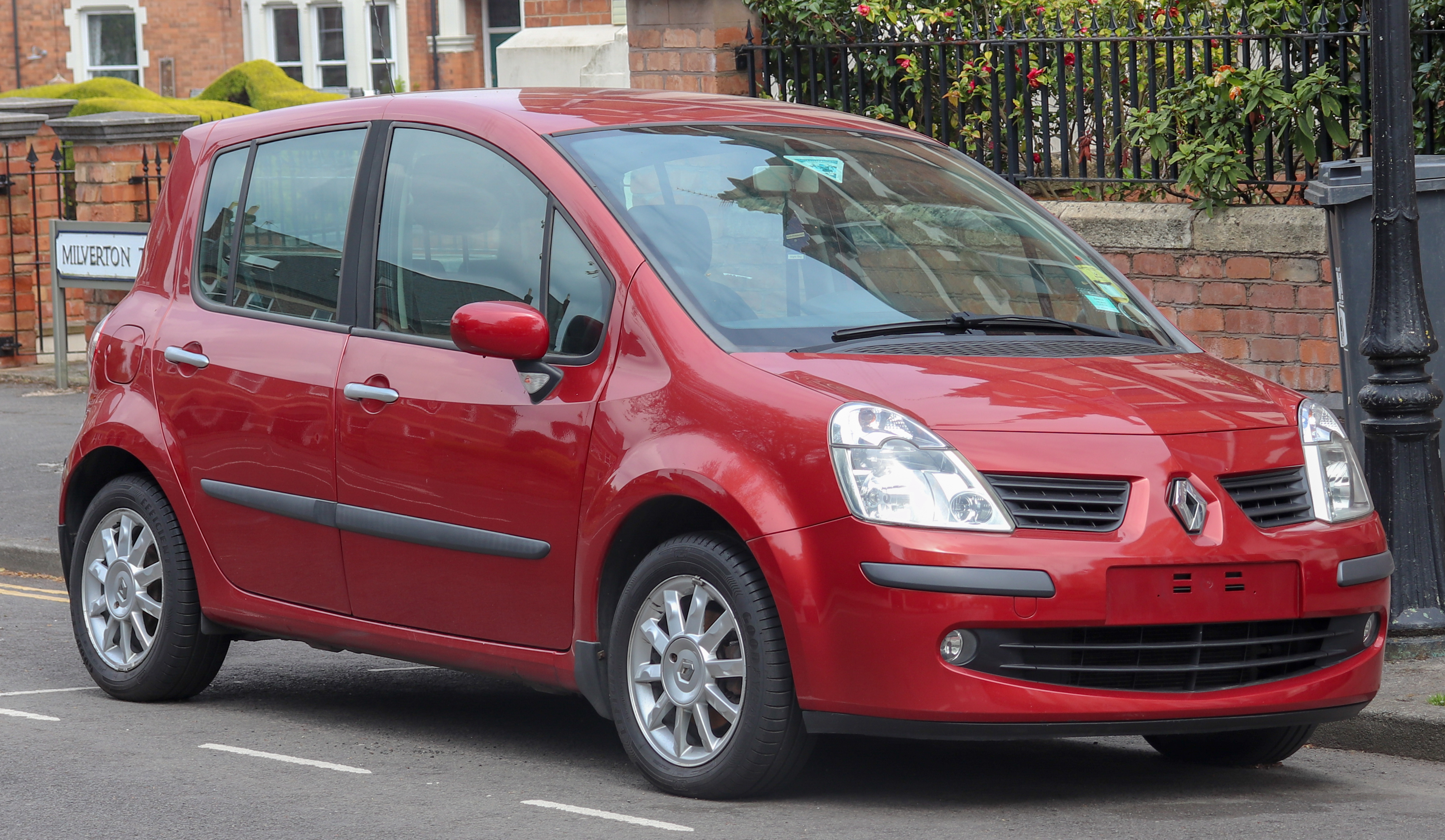
Renault Modus
"...it's had a very different opinion now. Of course, Modus, but that was going to be our next question. Modu..."
The Renault Modus is a small hatchback car made by Renault. It’s designed to fit in tight spaces while still offering usable room inside. If it’s being discussed, it’s usually because it’s a practical, compact option.
The Renault Modus is a small, practical hatchback that was designed to maximize interior space in a compact footprint. It’s mentioned in your context as a model name that came up during a discussion about opinions and what might be next. Podcasts may reference cars like this when talking about how manufacturers choose vehicles for specific markets or customer needs.

Tesla Model S
"[535.2s] on the original Model S, was it? [537.4s] It was. ... [581.8s] but I remember going to the original launch of the Model S, [583.8s] which would be 2012, was it? [586.8s] when the first customer cars rolled off"
The Tesla Model S is Tesla’s well-known electric sedan. The speaker is talking about the early days when the first customer cars started arriving around 2012.
The Tesla Model S is Tesla’s flagship electric sedan, and it’s a key milestone because it moved EVs into the mainstream with a performance-and-range-focused package. In this segment, the speaker specifically references the early customer rollout around 2012, which is when the Model S era really began for real owners.

Tesla Roadster
"[540.4s] on a really fast car called the Roadster. [542.5s] I remember it. I drove it. Yeah, that was great fun."
The Tesla Roadster was one of Tesla’s first electric cars. It was made to show that an EV could be quick and fun to drive, not just practical.
The Tesla Roadster was Tesla’s early high-performance electric sports car, built to prove that EVs could be genuinely fast and exciting. It helped establish Tesla’s reputation before the company’s later mass-market models like the Model S.
EV
"[562.4s] they were working on a car that it wasn't that it was an EV. [565.6s] It was that it was fast and fun and, you know,"
EV means electric vehicle. It’s a car that runs on electricity from a battery, not gasoline.
EV stands for electric vehicle, meaning the car is powered primarily by one or more electric motors instead of a gasoline engine. In this context, the speaker emphasizes that the attraction wasn’t just that it was electric—it was also fast and engaging.
emotional product
"[569.4s] an emotional product and, you know, [571.6s] took one drive of that for me to be sold."
An “emotional product” is something that makes you feel something—like excitement or connection—rather than just being a practical thing. The speaker is saying that one drive made the car feel special to them.
“Emotional product” is a marketing concept meaning the product creates a strong feeling—excitement, desire, or identity—beyond just meeting technical requirements. Here, the speaker argues that the early Tesla experience sold them because it felt exciting and personal, not only because it was an EV.

Tesla Model 3
"...at period was, and obviously, you get on with the Model 3 and Model Y and everything that came later."
The Tesla Model 3 is an all-electric sedan made by Tesla. It uses a battery and electric motors instead of a gasoline engine. It’s a major model because it’s designed to be more accessible than earlier Tesla cars.
The Tesla Model 3 is a compact electric sedan that became one of Tesla’s most important “volume” models. It’s frequently referenced in discussions about Tesla’s lineup because it came after the earlier Model S and helped broaden EV adoption. Podcasts may mention it when tracing how Tesla’s products evolved over time.
Jim Farley
"We should explain the characters that you're talking about. [783.5s] So, Jim Farley, the CEO of Ford, Bill Ford, [785.6s] probably needs no introduction."
Jim Farley is the top leader (CEO) of Ford. The hosts mention him because he’s important to how Ford is handling the move to electric cars.
Jim Farley is the CEO of Ford. In the context of this interview, he’s referenced as a key executive figure shaping Ford’s strategy as the company responds to the shift toward electric vehicles.
Bill Ford
"We should explain the characters that you're talking about. [783.5s] So, Jim Farley, the CEO of Ford, Bill Ford, [785.6s] probably needs no introduction."
Bill Ford is a major figure at Ford connected to the Ford family. Here, he’s mentioned as someone the speaker worked with while thinking through Ford’s electric-vehicle direction.
Bill Ford is associated with Ford Motor Company as a senior leader from the Ford family. In this interview segment, he’s named as one of the people the speaker spent time with while joining Ford and discussing the EV challenge.
Doug Field
"[787.3s] And Doug Field, who's leaving Ford now, "
Doug Field is a senior executive at Ford. The host says he’s leaving, and he’s mentioned because he was involved in the EV-focused leadership discussions.
Doug Field is an automotive executive known for leading major technology efforts, and the speaker notes he’s leaving Ford. In this segment, he’s part of the leadership group the speaker worked with while evaluating Ford’s EV competitiveness.
range
"the number one barrier to entry is this combination of the amount of range you get and the amount of money you have to pay in order to get it."
“Range” is how far an EV can go before it needs charging. Think of it like the fuel tank’s distance, but for electricity.
In EV discussions, “range” means how far the vehicle can drive on a single charge. It’s usually expressed in miles or kilometers under a specific test cycle, and it strongly affects how practical an EV feels for daily commuting and road trips.
barrier to entry
"the number one barrier to entry is this combination of the amount of range you get and the amount of money you have to pay in order to get it."
A “barrier to entry” is the main reason people don’t adopt something yet. In this case, it’s mostly how far EVs go and how much they cost.
“Barrier to entry” means the main obstacle that prevents consumers from adopting a technology. Here, the host frames it as a combination of EV range and purchase price.
solid-state memory
"You think about solid-state memory, for example, was always more expensive than a traditional hard drive."
“Solid-state” storage is the kind that uses chips instead of moving parts. The point is that it used to cost more, but got cheaper over time as it became common.
“Solid-state memory” is non-mechanical storage (no spinning disks or moving parts), typically using semiconductor chips. The analogy here is that early solid-state tech was expensive, but costs dropped as production scaled.
traditional hard drive
"was always more expensive than a traditional hard drive. And now it's flipped, and everything we have has solid-state storage, for example."
A traditional hard drive stores data with moving parts inside. The speaker is using it as a comparison to show how newer tech can start costly and later get cheaper.
A “traditional hard drive” is mechanical storage that uses spinning platters and a moving read/write head. The speaker contrasts it with solid-state storage to illustrate how new tech can start expensive and then become cheaper.
ICE parity cost
"we're then spitting distance of ice parity cost, internal combustion engine vehicle, parity cost."
“ICE parity cost” means the price of an EV is getting close to the price of a gas car. When that happens, more people are willing to switch.
“ICE parity cost” refers to the point where an EV’s total cost is comparable to an internal combustion engine (ICE) vehicle. The speaker is arguing that EVs are approaching cost competitiveness with gas cars, which matters for consumer adoption.
charging stations
"I think a lot of people are used to seeing tons [1234.3s] of charging stations, at least in the coastal areas [1238.1s] of the United States."
Charging stations are public chargers where you plug in an electric car to recharge it. If they’re common in one area but not in others, it can make people hesitant to buy an EV.
Charging stations are public places where EVs can be plugged in to recharge their batteries. The host contrasts “tons of charging stations” in coastal U.S. areas with broader adoption challenges, implying that access and convenience still affect EV buying decisions.
psychological barrier
"so how do you, you mentioned infrastructure [1271.0s] and you're right, that's a big psychological barrier."
A psychological barrier means people feel uneasy or worried, even if the facts look better than before. In this case, the worry is about EV charging and whether trips will be easy.
A psychological barrier is an emotional or perception-based obstacle that prevents people from acting, even when the practical situation improves. Here, the host argues that EV infrastructure concerns can make consumers hesitant to buy, despite better lease deals and lower upfront cost.
Electrify America
"But every time we rode trip my wife, [1283.9s] we had a very bad experience [1285.1s] with Electrify America and Rivian."
Electrify America runs a network of public fast chargers for electric cars. If someone says they had a bad experience with it, they likely mean the chargers didn’t work well when they needed them.
Electrify America is a U.S. fast-charging network focused on supporting electric vehicles (EVs) with public charging stations. When hosts mention a “bad experience” with Electrify America, they’re usually referring to real-world issues like charger availability, speed, or reliability during trips.

Dodge Charger
"... good experience because it just takes one failed charger for you to really be the floor of your trust fall..."
The Dodge Charger is a car that’s built for performance and strong acceleration. It’s a sedan, not an SUV or truck. If it’s mentioned in a charging or reliability story, it’s usually because someone depends on it and wants it to work when they need it.
The Dodge Charger is a performance-oriented full-size sedan known for its powerful engines and sporty driving feel. It can come up in EV-charging or reliability discussions because owners may compare how quickly and reliably they can keep the car “ready” for use. In a podcast, it’s likely mentioned as a specific example of a car that people rely on day to day.
battery electric vehicles
"another tough use case for battery electric vehicles, but smaller trucks are used a lot for towing small boats"
A battery electric vehicle is a car that runs on electricity stored in a battery. You charge it by plugging it in, and things like towing can use more energy than normal driving.
Battery electric vehicles (BEVs) run only on electricity stored in a large battery pack. They don’t use gasoline and typically recharge by plugging in, so towing and energy use are tightly linked to battery capacity and efficiency.

Toyota RAV4
"... we found a way to get more cabin volume than the RAV4 and that is the number one selling SUV in the wor..."
The Toyota RAV4 is a compact SUV made by Toyota. It’s popular because it offers a good balance of space, comfort, and everyday practicality. In the conversation, it’s used as an example of a top-selling SUV and a reference point for interior room.
The Toyota RAV4 is a compact SUV that’s widely known for being practical, versatile, and popular with buyers. In your context, it’s referenced as a benchmark for cabin space and as the number one selling SUV in the world. Podcasts often mention it when discussing what makes a mainstream SUV succeed—like packaging and everyday usability.
secure lockable storage
"one of the number one gripes we hear from pickup truck owners constantly is they want secure lockable storage. And with an open bed, you don't get that."
This means storage you can lock so your stuff is harder to steal and stays protected. The host is saying pickups often don’t have that with an open bed, but EVs can.
Secure lockable storage refers to compartments that can be physically locked to protect belongings from theft or weather. The speaker contrasts open-bed pickup storage (harder to secure) with EV packaging that enables closed storage areas like a frunk.
frunk
"with an EV, you have the superpower of having a frunk and you could put your backpack there and close it"
A frunk is an extra storage compartment at the front of many electric cars. Since there’s no engine in the front, you can put things there and close it securely.
A frunk is the front trunk space on an electric vehicle, created because there’s no traditional engine up front. It can be used for storage and, as the speaker notes, can be closed and secured like a normal trunk.

Ford Maverick hybrid
"you know, [1510.4s] seeing a Maverick hybrid or a Ranger, [1514.4s] both of which are very similar in price point"
The Ford Maverick hybrid is a small pickup that runs on a mix of gas and electricity. The point here is that it’s priced similarly to the EV truck being discussed, so it’s an easy option for people who aren’t ready to go fully electric.
The Ford Maverick hybrid is a compact pickup that uses a hybrid powertrain, making it a key comparison point for shoppers considering an EV. In this segment, the hosts use it as a realistic “nearby” alternative at a similar price, which affects how hard it is to get people to switch to an electric truck.

Ford Ranger
"walking into the Ford dealership, [1511.8s] seeing a Maverick hybrid or a Ranger, [1514.4s] both of which are very similar in price point"
The Ford Ranger is a pickup truck. In this conversation, it’s mentioned because it’s priced close to the EV, so it competes for the same shopper’s attention.
The Ford Ranger is a midsize pickup that’s being used here as a “close in price” alternative to the EV truck. By mentioning both the Ranger and the Maverick hybrid, the speaker highlights how existing Ford truck options create a psychological pull away from EVs.
NVH
"but it has to be, you know, [1536.8s] super compelling from an attribute standpoint. [1539.4s] NVH has to be great, driving dynamics have to be great."
NVH is a car-industry way of talking about how quiet and smooth the ride feels. Lower NVH means less annoying noise and less shaking, so the car feels more refined.
NVH stands for noise, vibration, and harshness—how much sound and vibration the vehicle transmits to occupants, and how “rough” it feels. For EVs especially, NVH targets matter because there’s no traditional engine note, so other sources of noise (tires, wind, drivetrain) become more noticeable.
fund-to-drive moniker
"NVH has to be great, driving dynamics have to be great. [1542.6s] And we keep using the fund-to-drive moniker. [1545.0s] That's very important to us."
“Fund-to-drive” is basically a slogan meaning the car should feel fun and exciting when you’re driving it. They’re saying the EV has to win on how it feels, not just on the technology inside.
“Fund-to-drive” is a brand messaging concept used to emphasize that the vehicle should be engaging and enjoyable to drive, not just efficient. In this context, it’s tied to the idea that an EV needs to be compelling in real-world driving feel and emotional appeal, not only in its powertrain.

Geely Galaxy M9
"And then as we tested a Geely Galaxy M9, [1663.9s] and we had one here in America, [1665.4s] I put it through the test track, [1666.5s] put it through all our range testing and everything else."
The Geely Galaxy M9 is a Chinese car that uses a hybrid system to help it go farther. The speaker says they tested it on a track and did range testing to see how well it performs over distance.
Geely Galaxy M9 is a Chinese-market plug-in range-extender hybrid that’s designed to deliver long-distance capability without relying solely on battery charge. In the segment, the host describes putting it through track testing and range testing, highlighting how these hybrids are evaluated for real-world distance and drivability.
review mirror analysis
"And so we call it review mirror analysis [1724.3s] because if it's already on the market [1725.5s] or someone's already thought about it, [1727.7s] you get to look at how customers perceive it."
It means looking at what already exists and seeing how people react to it. Engineers check things like whether it breaks or wears out, and whether the new features people added are actually useful to customers.
“Review mirror analysis” is a product-development approach where you study what’s already happening with a vehicle that’s on the market. Instead of guessing, teams look at customer perception and real-world issues like durability problems or whether features were added—and whether they actually matter to buyers.
autonomy
"[1754.6s] the risk of name dropping, [1755.7s] I spent some time with RJ Scrinja at Rivian recently [1758.0s] and what he's talking about as he's Tesla at the moment [1762.1s] is autonomy, autonomy, autonomy. [1764.2s] And it was interesting walking around this building. [1766.0s] There wasn't, I don't think anybody really talked about [1767.6s] autonomy."
“Autonomy” here means how much of the driving the car can handle on its own. Think of it as features that steer, control speed, and—at higher levels—drive more independently.
In this context, “autonomy” refers to how much driving the car can do by itself—typically functions like lane keeping, adaptive cruise, and eventually more complete self-driving behavior. The speaker contrasts that focus with what they observed at the building, where they didn’t hear much discussion of autonomy.
Blue Cruise
"[1766.0s] There wasn't, I don't think anybody really talked about [1767.6s] autonomy. [1768.5s] I know Ford has Blue Cruise,"
“Blue Cruise” is a Ford feature that helps the car drive more on its own, like keeping in the lane and managing speed. You still have to pay attention and be ready to take over.
“Blue Cruise” is Ford’s driver-assistance system that supports hands-free driving on compatible roads. It’s part of the broader push toward higher “autonomy” features, but it’s still designed around driver supervision rather than full self-driving in all conditions.
ice product
"you may end up with a short range EV and then you have an ice product that you use for road trips."
“ICE” means a normal gas or diesel car with an engine. Here, they’re saying you might use the EV for daily driving and the gas car for longer trips.
“ICE” stands for internal combustion engine, meaning a conventional gasoline or diesel vehicle. In this context, the host is describing using an ICE vehicle for road trips while keeping an EV for shorter trips.
massive battery
"You do, you know, pushing 500 miles, but they do that by just having a massive battery and hence massive cost that goes with it."
A “massive battery” means a big battery in an electric car. Bigger batteries can go farther, but they usually cost more and add weight.
A “massive battery” refers to a very large battery pack in an EV, which can enable long range. The tradeoff is cost and weight, which can make the vehicle more expensive to build and potentially less efficient.
optimize down to the watt
"You need to optimize down to the watt, down to the, you know, every kilogram, every microgram, whatever you need to do to get the most efficient vehicle."
“Optimize down to the watt” means making the car use electricity more efficiently. The goal is to get more miles out of the same battery energy.
Optimizing “down to the watt” means engineering the EV to use as little electrical power as possible for a given driving task. That typically involves improving aerodynamics, rolling resistance, drivetrain efficiency, and energy management so the car can travel farther per unit of energy.
every kilogram, every microgram
"You need to optimize down to the watt, down to the, you know, every kilogram, every microgram, whatever you need to do to get the most efficient vehicle."
They’re saying weight matters a lot. If you make the car lighter, it takes less energy to move, which can help the EV go farther.
This phrase emphasizes mass reduction as a lever for EV efficiency and performance. In EVs, lowering vehicle weight can reduce energy needed for acceleration and help improve overall efficiency, which can translate into more range or lower cost per mile.
giant battery
"And, you know, I think mass is one of those compounding things for real world range as well, where if you put a giant battery into it, crash gets harder to solve..."
A “giant battery” is a bigger battery pack. It can help the car go farther, but it also makes the car heavier, which can make it use more energy and wear tires faster.
In EV engineering, a “giant battery” means a larger, heavier battery pack chosen to increase range. The tradeoff is that extra mass makes the vehicle harder to stop and can increase tire wear and energy consumption, which can reduce efficiency.
adding lightness
"And, you know, I subscribe to the call and chatment theory of adding lightness and I'm a big fan of optimization for what you actually need."
“Adding lightness” means making the car lighter. A lighter car usually needs less energy to move and can also put less stress on tires.
“Adding lightness” is the engineering approach of reducing vehicle mass to improve efficiency and driving range. Less weight typically means lower energy use and reduced wear on components like tires, especially under repeated acceleration and braking.
optimization
"And, you know, I subscribe to the call and chatment theory of adding lightness and I'm a big fan of optimization for what you actually need."
Here, “optimization” means designing the car so it has only the parts it really needs. Instead of making everything bigger “just in case,” you size things to hit the target customers care about.
In this context, “optimization” means designing the EV around the specific requirements that actually drive customer value—like range targets—rather than overbuilding. The goal is to meet needs with the smallest battery and mass that still deliver the desired experience.
scale
"Because we have a scale at the test track, we've run to eight and a half thousand pounds and it's quite striking..."
They’re talking about weighing the car on a scale. Knowing the car’s weight helps predict things like efficiency and how quickly tires wear.
Here, “scale” refers to weighing the vehicle to measure its total mass (weight). For EVs, that matters because weight directly affects efficiency, braking, and tire loading.
eight and a half thousand pounds
"Because we have a scale at the test track, we've run to eight and a half thousand pounds and it's quite striking how many of these then we can't put on the scales..."
They’re giving a real weight number for the car. When a vehicle is that heavy, it tends to stress tires more and can use more energy to move.
“Eight and a half thousand pounds” is a concrete mass figure used to illustrate how heavy some EVs can be. That level of weight increases tire loading and can contribute to faster tire wear and higher energy consumption.
Rikaro
"So you're going to Rikaro and saying, this is how we do a seat. And Rikaro has spent the last few decades designing seats."
This sounds like a company that specializes in making car seats. The point is that if Ford is making its own seat design, it’s relying on its own seat experts instead of outsourcing to a specialist.
“Rikaro” appears to be a seat-industry brand reference in the context of designing their own seat. The speaker contrasts Ford’s approach with a specialist seat supplier that has “spent the last few decades designing seats,” implying deep expertise in seating systems.
own the whole process
"if they're working on their own battery software, throughout this vehicle, they're trying to do what Tesla does, which is own the whole process."
This phrase means the company tries to control most of the important technology itself, not just buy parts and software from others. In EVs, that often includes the battery and the software that manages it.
“Own the whole process” refers to vertically integrating key parts of the EV—especially software and battery-related systems—so the automaker controls how the vehicle is designed and how it behaves. The interview ties this to working on proprietary battery software across the vehicle, aiming for tighter integration than a purely supplier-driven approach.
Rivian
"And I think there's certainly in this part of California, there's a lot of people move from say Tesla to Rivian to Lucid now to Ford."
Rivian is another electric-car company. The interview is basically saying that in California, people often move between EV companies because there aren’t enough skilled workers to go around.
Rivian is an electric-vehicle maker competing for engineering talent in the same ecosystem as other EV brands. The host uses Rivian as part of a California “talent migration” list, implying these companies pull from a limited pool of experienced EV workers.
Lucid
"there's a lot of people move from say Tesla to Rivian to Lucid now to Ford."
Lucid makes electric cars too. They’re mentioned because the interview is about how hard it is for EV companies to hire the right people, so workers bounce between brands.
Lucid is an electric-vehicle brand referenced here as another employer in the EV talent market. The context is workforce competition—people moving from Tesla to Rivian to Lucid and then to Ford—suggesting talent is scarce across the industry.

Ford Lightning
"One of the flaws they had with the lightning... is the lightning was never a software-driven vehicle. This was a vehicle that had all these different components designed and built by other manufacturers, different suppliers, and the hell has to kind of come together and talk to each other."
The Ford Lightning is an electric pickup. The point here is that it didn’t come from one fully unified software-and-hardware plan—different parts were made by different companies, so getting everything to work together took extra time.
The Ford Lightning is a battery-electric pickup that became known for its software and connectivity features. In this segment, the hosts point out a key limitation: it wasn’t truly “software-driven” in the way a fully integrated platform is, because many subsystems came from different suppliers that had to be made to work together.
operating system
"It wasn't like an OS, an operating system, and they specced out and said, you need this and this and this."
An operating system is the main software that runs the car’s computer and helps all the other software work. Here, the point is that the Lightning wasn’t built like everything was controlled from one central “OS-first” software plan.
An operating system (OS) is the core software layer that manages hardware resources and provides the foundation for applications. The host contrasts a true OS-driven approach with a more traditional, component-by-component integration where suppliers provide parts that must be made to communicate.
time lag
"The big part of it... is not that suppliers couldn't do it, it's just a time lag. So saying like, you write a brief, you send it to the supplier, the supplier analyze it, ask some questions, then they develop a prototype part,"
“Time lag” here refers to schedule delays that happen when software and hardware development depend on external suppliers. Even if suppliers can build the right components, the back-and-forth (brief → analysis → questions → prototype) slows down how quickly the system can be integrated and iterated.
Skunkworks idea fail fast
"So by bringing it in-house, you can, this whole idea of, this whole Skunkworks idea fail fast. Like let's stay, it's a bit like the motorsport mentality as well."
A “skunkworks” is a small team that tries new ideas quickly, without a lot of red tape. “Fail fast” means they test things early, learn from what doesn’t work, and improve quickly.
“Skunkworks” refers to a small, semi-independent R&D effort that moves quickly and takes risks outside normal corporate processes. “Fail fast” means testing ideas early, learning from failures, and iterating rapidly instead of trying to get everything perfect up front.

Ford F-150
"You've got the Maverick, which starts in the 20s, I think still. You've got the F-150, which is not that much more."
The Ford F-150 is Ford’s big, popular pickup truck. In this segment, it’s mentioned to compare how much more you pay as you move up the truck lineup.
The Ford F-150 is Ford’s full-size pickup truck and one of the brand’s most important volume models. Here it’s used as another pricing benchmark—showing that the jump from lower-priced trucks to the F-150 isn’t as large as some EV range expectations imply.
dealer has to be set up to sell it
"And the dealer, this is the hard one as well, the dealer has to be set up to sell it as well. And, you know, the lesson of the EVs,"
This is about making sure the dealership is ready to sell the new EV truck. If the sales team isn’t prepared, shoppers may not understand why the EV is worth buying.
This refers to how dealerships need training, inventory, and sales processes tailored to electric vehicles. The idea is that if dealers aren’t prepared to answer questions about EVs, customers may not find the product convincing enough to switch.
EVs
"And, you know, the lesson of the EVs, particularly in Ford world, is the dealers haven't been terribly well set up to sell these."
EVs are cars or trucks that run on electricity from a battery. The speaker is saying dealerships need to be ready to explain how EVs work and why they fit the buyer’s needs.
EVs are electric vehicles, meaning they use electric motors powered by a battery rather than relying on a traditional gasoline engine. The speaker’s point is that Ford dealers weren’t always set up to explain EVs effectively to customers.
powertrain
"He was putting more emphasis on the potential features of this truck without giving all of them away, but saying the features of this truck, not necessarily the powertrain,"
Your powertrain is what makes the car move and sends that power to the wheels. In this conversation, they’re saying the salesperson should talk about the truck’s benefits, not only the technical parts under the hood.
A powertrain is the set of components that generate and deliver motion—typically the engine (or motor), transmission, driveshaft, and final drive. The speaker is saying the sales pitch should focus on the truck’s features that help sell it, not just the underlying powertrain details.
residual values
"I mean, and also if it's a loan of price points, things like the residual values become less of an issue, it's not $100,000 lightning."
Residual value is what a car is expected to be worth later—often at the end of a lease. They’re saying that if the truck costs less than a very expensive EV, people worry less about that future resale/lease value.
Residual value is the estimated worth of a vehicle at the end of a lease or financing term. The hosts say that when the vehicle is priced lower than something like a $100,000 Lightning, residual values are “less of an issue,” meaning buyers worry less about how much the truck will be worth later.

$100,000 lightning
"things like the residual values become less of an issue, it's not $100,000 lightning. So, I'm more excited about this vehicle"
“Lightning” here means the Ford electric pickup, the F-150 Lightning. They’re comparing a very high price to a cheaper option to explain why future value worries can be smaller.
“Lightning” refers to the Ford F-150 Lightning, Ford’s electric pickup. The hosts use the $100,000 price point to contrast how residual value concerns change when a vehicle is more expensive versus more affordable.
price parity
"it's a big play [2694.1s] to launch a mid-sized truck at price parity, [2697.0s] which is what they're aiming for with the gas alternatives."
Price parity means the electric version costs about the same as the gas version. The host is saying Ford needs that to make the electric truck competitive.
Price parity means matching the purchase price of an EV (or EV variant) to the comparable gas vehicle. In this segment, the host says Ford’s EV plan for a mid-sized truck depends on reaching price parity so buyers don’t have to pay a premium just to go electric.
desirability factor
"It's gonna have to have that added value. [2702.6s] I think it's gotta have that desirability factor. [2705.2s] I mean, we talked a few weeks ago about the Rivian R2."
The “desirability factor” is whether people actually want the EV. It’s about making it feel like a great choice, not just a different kind of powertrain.
“Desirability factor” is the idea that an EV has to be genuinely appealing—style, features, usability, and emotional pull—not merely “technically good” or environmentally motivated. The host connects this to whether a new electric truck will attract buyers beyond early adopters.
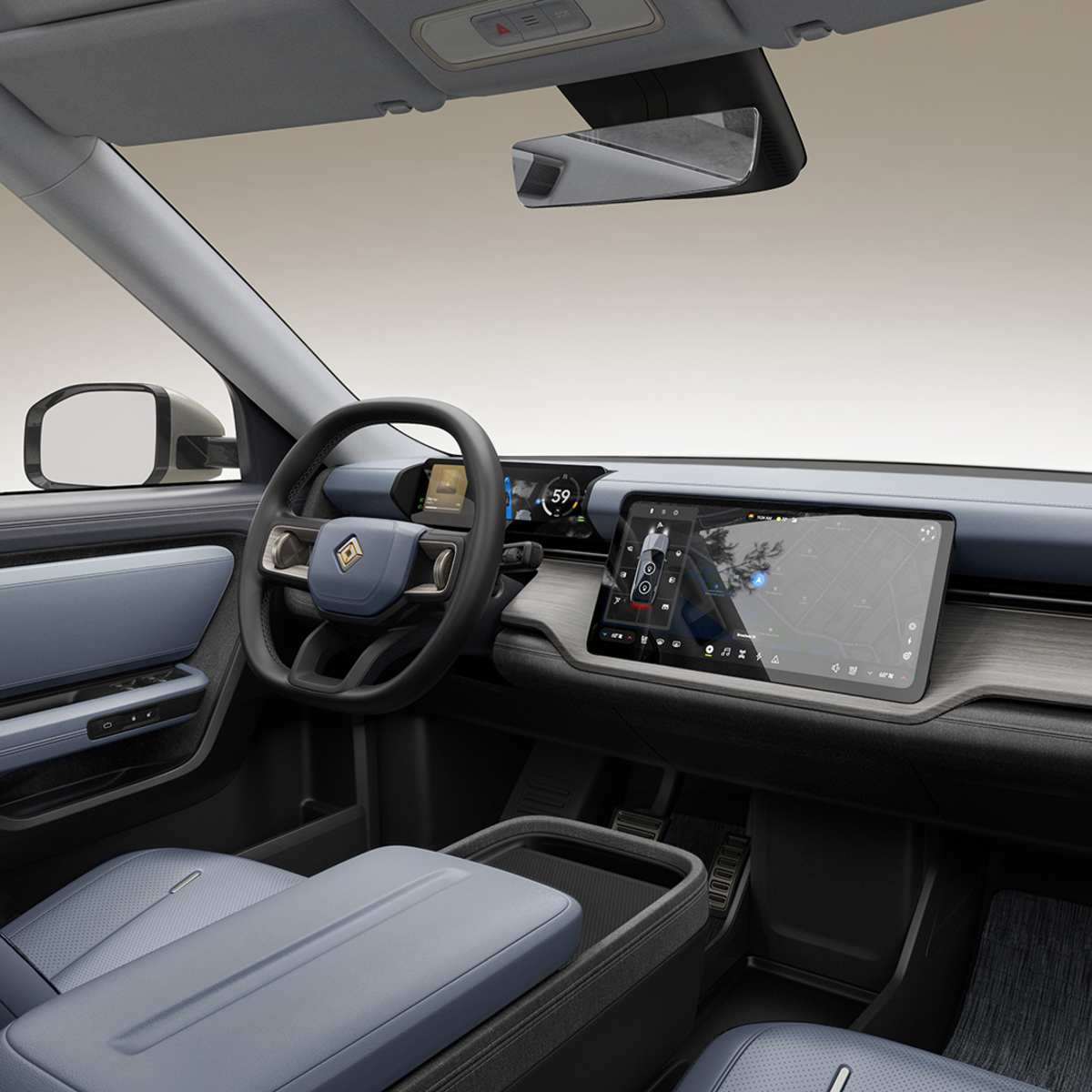
Rivian R2
"I mean, we talked a few weeks ago about the Rivian R2. [2708.4s] The Rivian R2 for me has got a lot of desirability."
The Rivian R2 is an electric vehicle that Rivian is planning to sell to more people. The host is using it as an example of an EV that people might actually want, not just buy because it’s electric.
Rivian R2 is an upcoming Rivian electric vehicle positioned as a more affordable, high-volume EV compared with Rivian’s earlier models. In this segment, it’s used as an example of an EV that has “desirability”—features and packaging that make people want it even if it’s competing against gas trucks/SUVs on practicality.
solid state batteries
"The technology isn't there. [2791.3s] We don't have these solid state batteries yet."
Solid state batteries are a newer type of EV battery that uses a solid material inside instead of a liquid. The idea is that they could eventually improve safety and energy density, but they’re not widely available yet.
Solid state batteries are a next-generation battery design that replaces the liquid electrolyte found in today’s lithium-ion packs with a solid material. The host is arguing that solid-state tech isn’t available yet, which limits how cheaply and effectively automakers can add the battery capacity needed for longer EV range.

Cadillac Escalade
"...route and putting a massive battery like in their Escalade is huge truck, heavy, expensive. They want to avo..."
The Cadillac Escalade is a big luxury SUV. It’s designed to be comfortable and feature-rich, but it’s also heavy and expensive to build. If the conversation mentions putting a large battery in it, that’s because bigger cars need more battery capacity to go electric.
The Cadillac Escalade is a large luxury SUV, typically known for its size, comfort, and premium features. In the context you provided, it’s being discussed alongside the idea of adding a massive battery to a heavy, expensive vehicle—highlighting the practical challenges of electrifying large SUVs. Podcasts often bring it up when talking about the tradeoffs between vehicle weight, battery size, and cost.
small battery
"[2810.8s] So they need a small battery. [2812.2s] So is the only response for him to say"
The battery is the big, expensive part of an EV. Saying “small battery” means using a smaller battery to keep the car cheaper. The downside is it usually means less driving distance before you have to recharge.
In EVs, the battery is the main cost and weight driver, so “small battery” implies using fewer battery cells to hit a lower price point. A smaller battery typically reduces total energy storage, which lowers EV range unless the vehicle is made more efficient. This is the core constraint behind the discussion of meeting a $30,000 target.
efficiency
"[2820.1s] I think there's a reality with this technology [2822.1s] that you can only get 300 miles by, [2825.0s] you can get so far with efficiency. [2826.2s] And I think this is going to be way more efficient"
Efficiency is how well the EV uses its battery energy to move the car. A more efficient EV can go farther on the same charge. That’s important because it can help you get decent range without needing a bigger, more expensive battery.
EV efficiency is how effectively the vehicle turns stored electrical energy into motion, often discussed as energy use per mile. Higher efficiency lets an EV travel farther with the same battery size, which is why the host links “so far with efficiency” to achieving range targets without increasing battery cost. Efficiency improvements can come from aerodynamics, weight reduction, and drivetrain optimization.
trade-offs
"[2835.0s] And it's range is like saying all the way through the car, [2837.5s] these trade-offs, how do you, how do you?"
A “trade-off” means improving one thing usually makes another thing worse. In EVs, adding more battery can increase range, but it also adds weight and cost. Using a smaller battery can save money and weight, but it reduces how far you can drive.
“Trade-offs” here refers to the engineering balancing act between battery size (cost and weight) and EV range. Adding battery capacity can increase range but also adds weight and expense, while removing battery capacity saves cost/weight but reduces range. The host is emphasizing that EV design decisions are constrained by these coupled variables.

Porsche 911
"Allen's a big car guy as well. I know he's got an old 911, which is heavily modified, tucked away."
A Porsche 911 is a famous sports car from Porsche. Saying it’s “old” and “heavily modified” usually means it’s an older one that someone has changed a lot for their own taste or performance.
A Porsche 911 is a rear-engine sports car known for its distinctive handling balance and long-running evolution across generations. When the host says “old 911” and that it’s “heavily modified,” they’re pointing to a classic enthusiast platform that people often personalize for performance or style.
business model
"Now it needs to be a real part of the business model. [3176.9s] It needs to earn its dinner. [3178.1s] Yeah, for sure."
They’re talking about whether the EV program makes financial sense for the company. In other words, it needs to sell well and create value, not just be a trial run.
“Business model” here is the idea that an EV effort can’t just be experimental—it has to generate enough revenue and value to justify itself. The host frames it as needing to be a sustainable part of the company’s overall plan, not a one-off project.

Ford Gt
"They did it with the Ford GT. [3199.3s] They're now doing it with the EVs. [3201.5s] So let's see how expensive it is"
The Ford GT is Ford’s famous performance sports car. In this segment, they’re using it as an example of how Ford has previously backed big, ambitious projects—now they’re doing something similar with EVs.
The Ford GT is a high-performance sports car that Ford built with a strong motorsport pedigree. The host compares Ford’s EV strategy to how it previously “empowered other people” through the Ford GT program, implying a similar approach to development and partnerships.
Request an Explanation
Heard something you'd like explained? We'll add it to this episode.
Sign in to request explanations for terms you heard.
Want to learn more?
Browse our glossary for plain-English explanations of automotive terms, jargon, and concepts.
Help improve this episode
See something that's not quite right? Our annotations are AI-generated and can sometimes miss the mark. Click the flag icon on any annotation to suggest a correction.
1 community members have helped improve this episode.