Hamburg is a city in northern Germany. The host is saying he was there for the car preview and test drive.
Car
Mercedes-AMG GT four-door EV
This is Mercedes-AMG’s new all-electric, four-door performance car. The big idea is that it’s meant to be extremely fast—more like a sports-car experience, but with real back seats.
Horsepower is a way to describe how much power the car’s motor can make. Saying “1,100 horsepower” is the host’s way of saying this EV is aiming to be extremely powerful.
“Grand” is slang for $1,000, so “over 150 grand” means it’s expected to cost more than $150,000. The point is that it’s positioned as a very expensive performance EV.
The Porsche Taycan is Porsche’s electric sports-sedan. It’s one of the reference cars people compare new EVs against, especially for how fast and sporty they feel.
The Model S is an electric car from Tesla. Instead of a gas engine, it uses a battery and electric motors. The conversation suggests that some features or parts can change depending on the version.
The Alero is a car model that the podcast is describing mostly by its looks. The speaker compares its shape to another car from the early 2000s. The point is that the design is considered unattractive by the host.
Car
Mercedes-AMG GT 63
This is a high-performance Mercedes-AMG model. They’re talking about how quickly it can accelerate from a stop, like a “how fast to 60 mph” kind of number.
“One foot rollout” is a testing method where the car is allowed to roll slightly before the timing starts, reducing the effective distance the car must accelerate from a dead stop. It can make acceleration times look faster than a strict “from zero” test.
This is about how the battery handles heat. Better heat management helps the EV keep delivering strong power for longer and can improve charging behavior.
Battery chemistry is what kind of battery the car uses inside—what materials power the electricity. Different chemistries can handle heat and high power differently.
This is how fast the car can charge at a very powerful fast-charger. Higher kilowatts generally means you can add energy more quickly—if the charger can deliver it.
A “Level 3” charger is a fast public charging station meant for quicker top-ups. The key point is that many of them don’t deliver the very highest power the car might be capable of.
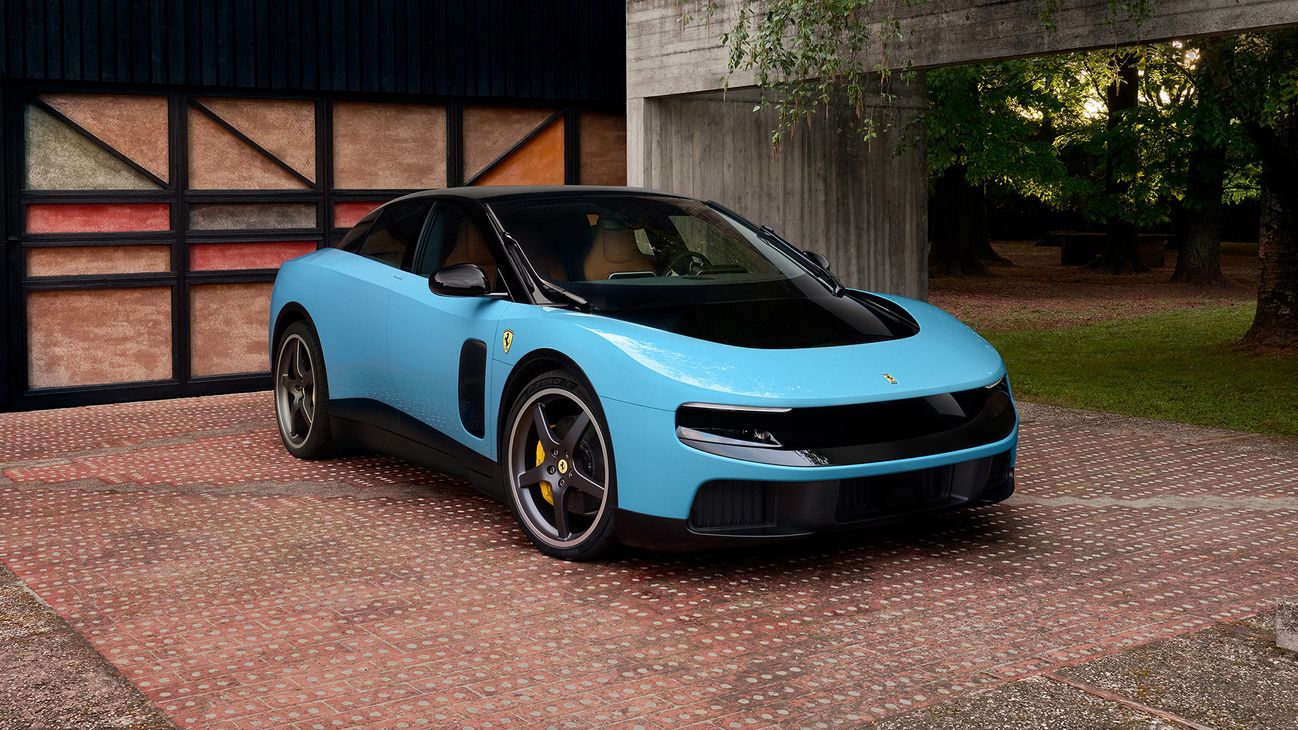
They’re talking about a new Ferrari electric car called the Luce. In this part of the show it’s mainly mentioned as a big recent news item.
Car
AMG one
The Mercedes-AMG One is a very expensive, high-end Mercedes-AMG hypercar. The hosts are saying it was meant to be a headline car for the brand, and they use an auction example to show how costly maintenance can be.
“Service A” is the first scheduled maintenance visit after the car is newly broken in. The point of the story is that on a supercar, even that early service can be extremely expensive.
Break-in is the early period when a new car is still settling in. The hosts are saying the first service after that period is called out separately and can be very expensive on a supercar.
An air filter keeps dirt out of the air going into the engine. They’re mentioning the price because on a supercar, even a normal-sounding part like this can cost a lot.
An oil filter cleans the oil that lubricates the engine. They bring up the price because on a supercar, the cost of even basic maintenance parts can be shocking.
Concept
nickel and dime
“Nickel and dime” means being charged lots of small extra fees. The hosts are saying it feels annoying when a supercar owner gets billed for many separate little things.
Residual value is what a car is expected to be worth later. If residual values are low, the car tends to lose value faster, so it costs more to own or lease.
The Mercedes-Benz CLA is a compact Mercedes model, and here the host is specifically referring to the electric version they drove. They describe its interior as dominated by a horizontal panel of screens, which they contrast with the GT’s different screen arrangement.
Term
climatization
Climatization is the car’s heating and cooling. The host is saying it can take a bit to get the cabin comfortable.
That’s a big screen in the middle of the dashboard—about 14 inches. The host says it’s shaped so it faces the driver more, which makes the cabin feel even more screen-focused.
Integrated air vents are the car’s heating/cooling outlets built into the dashboard design. The host likes it because it looks better and feels more “finished” than plain plastic vents.
A passenger screen is a screen in the car that’s meant for the person riding next to the driver. It’s usually for entertainment and settings like music and climate, not for driving the car.
“Cockpit oriented” means the driver’s area is designed to be the center of attention. If the main screen is aimed more toward the driver, the passenger may need their own screen to see and use it comfortably.
A rev counter is a gauge that shows how fast the engine is spinning (RPM). The point they’re making is that some cars use it to make the experience feel more intense for the passenger.
The infotainment system is the car’s main tech hub for things like music, maps, and screen-based controls. Here, they’re saying the passenger screen is basically another way to use that same system.
Rear infotainment screens are screens in the back seat for passengers to watch or use apps. The host is saying these are becoming more common and more connected to the car’s systems.
In an EV, the battery is built into the car in a specific layout. That layout can change how low the cabin feels and how the car is shaped around the battery.
Bucket seats are shaped seats that hug you more on the sides. They help keep you in place, and here the hosts are saying the rear area uses that kind of sporty seating.
Electric cars don’t make the same engine noise as gas cars. So some EVs add artificial sounds through speakers to make the driving experience feel more like a traditional performance car.
The Mercedes-AMG GT is a performance model line from Mercedes-AMG, and in this discussion it’s specifically being compared as an EV that uses a distinctive sound strategy. The host says Mercedes sampled V8 engine noise from the outgoing AMG GTR, aiming to make the artificial sound feel more authentic than generic EV “fake propulsion” audio.
A V8 engine has a distinctive sound because of how its cylinders fire and how the exhaust responds. They’re using a real V8 recording so the EV’s fake sound is closer to the real thing.
EVs usually don’t shift gears the way a gas car does. Synthetic gear changes are added sounds or effects that imitate shifting so it feels more familiar during acceleration.
EVs are quiet, so some manufacturers add artificial sounds. The point is to make the sound feel realistic and match the car’s behavior, not just add random noises.
A tri-motor EV uses three electric motors instead of one or two. More motors can help the car put power down better and control acceleration more precisely.
“GT 55” is a specific version of the performance EV being discussed. It’s basically the lower-power option compared with the “GT 63,” even though they share the same basic battery and layout.
The EPA rating is an official estimate of how far an EV can go on a full charge. It’s a standardized test number, and real-world results can be higher or lower.
The Porsche Taycan Turbo GT is a very fast electric Porsche. In this discussion, it’s the benchmark they’re comparing against for who can accelerate best.
Car
Lucid Sapphire
The Lucid Sapphire is a top-performance electric car from Lucid. The host says it’s surprisingly easy to drive quickly, even though it’s very fast.
They’re talking about the new dashboard screen setup—multiple big displays in the cabin. The point is that it changes the look and feel of the interior compared with older Mercedes layouts.
A driver’s display is the screen meant mainly for the driver to see key info while driving. Here it’s described as one of the big screens in the new Mercedes layout.
This is a screen that sits upright like a tall panel. They’re saying the older S-Class used that style and it looked more elegant than the new wide-screen approach.
Heated seatbelts are seatbelts that warm up so they don’t feel cold in winter. The host says it’s a nice comfort upgrade.
Term
36 inch screen
They’re talking about a huge screen inside the car—around 36 inches. The point is that some EVs are going all-in on big, tech-focused dashboards.
Term
6K megatron
They’re jokingly referring to a huge, high-resolution screen inside the car. The main idea is that Mercedes-Benz is putting big, modern displays in more and more models.
The GLE is a Mercedes luxury SUV. It’s meant to be comfortable and tech-filled for everyday driving. The conversation is comparing what kinds of screens and features you get in the GLE versus a higher-end Mercedes.
A mild hybrid uses a small electric motor to help the gas engine. It’s not meant to run the car on electricity alone, but it can make acceleration feel smoother and improve efficiency.
Twin turbo means the engine uses two turbochargers. They force more air into the engine so it can make more power, often with better acceleration feel.
A plug-in hybrid (PHEV) is a hybrid vehicle that can be charged from an external power source and typically can drive a limited distance on electricity alone. In this segment, they describe a plug-in hybrid setup with a six-cylinder engine and an estimated electric range.
A V8 is an engine with eight cylinders arranged in a V shape. Here they’re saying the V8 feels more powerful and sounds more exciting than the other options.
An electronic speed limiter is a built-in cap that prevents the car from going faster than a set top speed. In the story, they thought the transmission was doing something, but it was actually the car hitting that cap.
Concept
unrestricted section of Audubon
They’re talking about a road area where cars aren’t generally limited by a posted speed cap. They used that setting to show how the car hit its built-in top-speed limit.
A V12 is a very large engine with twelve cylinders. It’s usually reserved for the most expensive, most powerful versions of luxury cars, and the host is saying Mercedes is limiting it to a special model.
“Diesel gate” is a scandal where some carmakers were accused of cheating emissions tests on diesel cars. It led to investigations and a lot of distrust in diesel technology.
“CDI” is Mercedes’ label for a diesel engine that injects fuel directly into the engine. The idea is better fuel control for efficiency and smoother running.
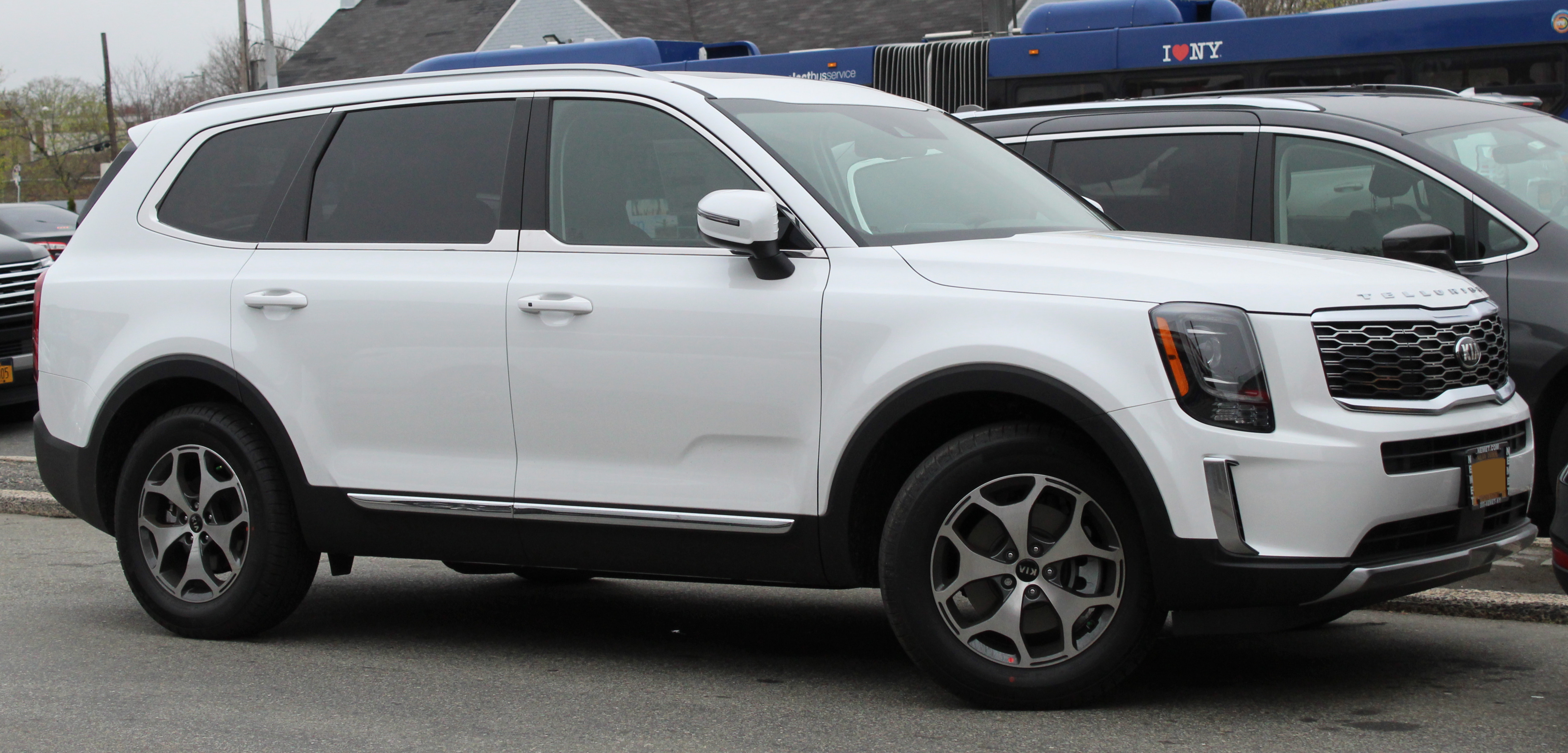
The Kia Seltos is a small SUV/crossover. The hosts are saying it’s a good deal in the mid-$20k to $30k range and that it’s getting bigger and nicer inside.
When the hosts say it’s an “Android screen,” they mean the infotainment system is based on Android software, which typically supports app-style features and streaming. They use this to argue the Seltos’s big display isn’t “luxury” in the traditional sense because it can deliver similar entertainment features to cheaper cars.
When car people say “proportions,” they mean whether the different parts of the car look correctly sized relative to each other. Here, they’re saying the smaller SUV looks good because the wheels and other features were scaled properly.
The Trax is a small Chevrolet SUV. It’s designed for everyday driving and easier parking than bigger SUVs. The podcast is comparing it to other similar-sized options.
The Kona is a small SUV made by Hyundai. It’s designed to be easy to drive and park while still giving you SUV space. The podcast is basically saying it might be the wrong size or style choice depending on what you want.
Term
retune
Here, “retune” means the car’s settings are adjusted for different places. They’re talking about changing how the suspension is set up so the ride feels right on local roads.
Adaptive air suspension is a suspension system that can automatically adjust for a smoother ride. It uses air springs and computer control, and the settings can be different depending on where the car is sold.
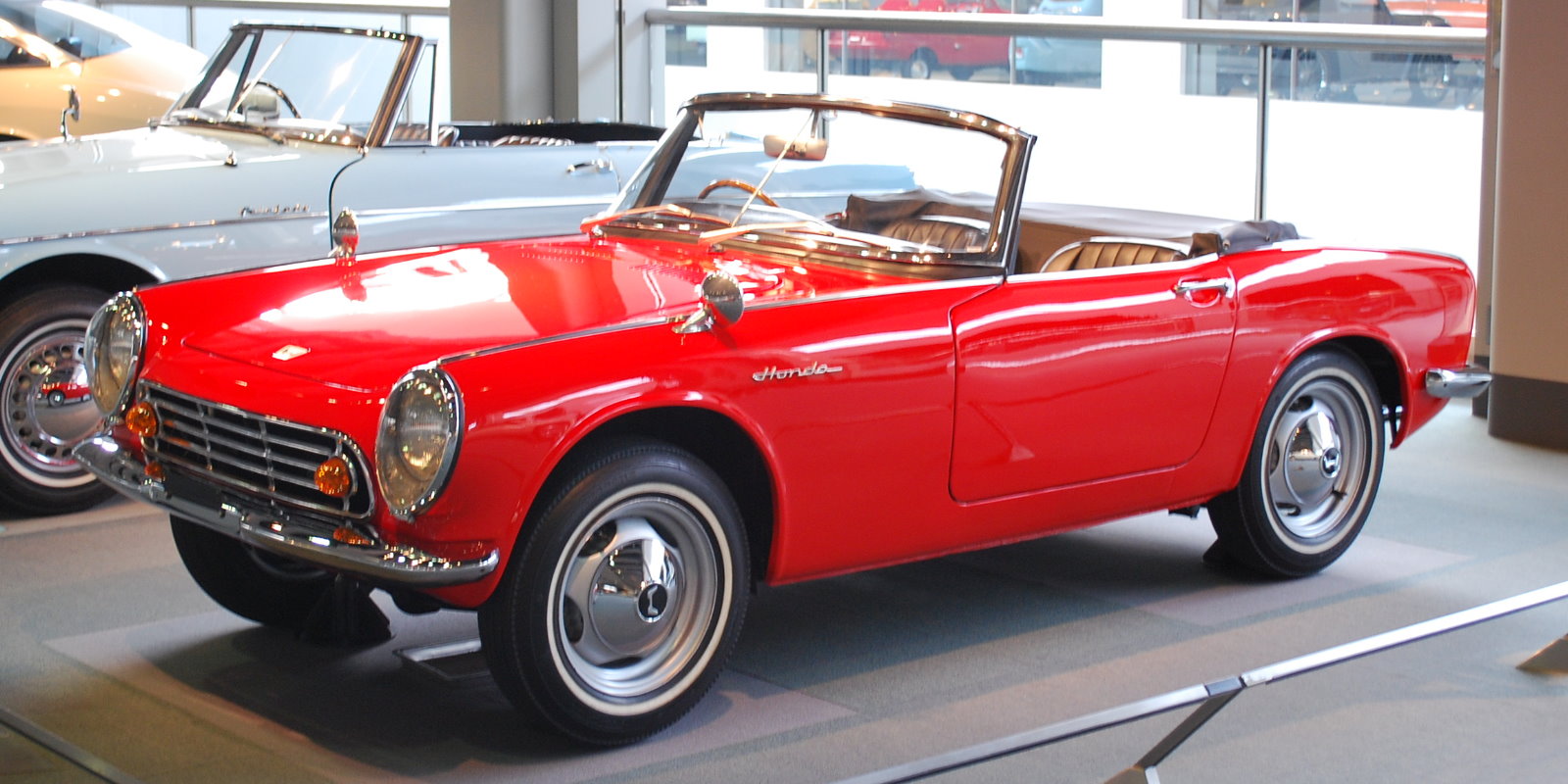
The S500 is a Honda sports car name used for a classic model. It’s the kind of car that’s usually remembered for being small and fun to drive. In the podcast, the “S500” wording is used as a naming reference.
The EX60 is a Volvo model name mentioned in the podcast. It’s likely part of Volvo’s newer lineup and technology. The host is connecting the name to what they saw during a presentation in Europe.
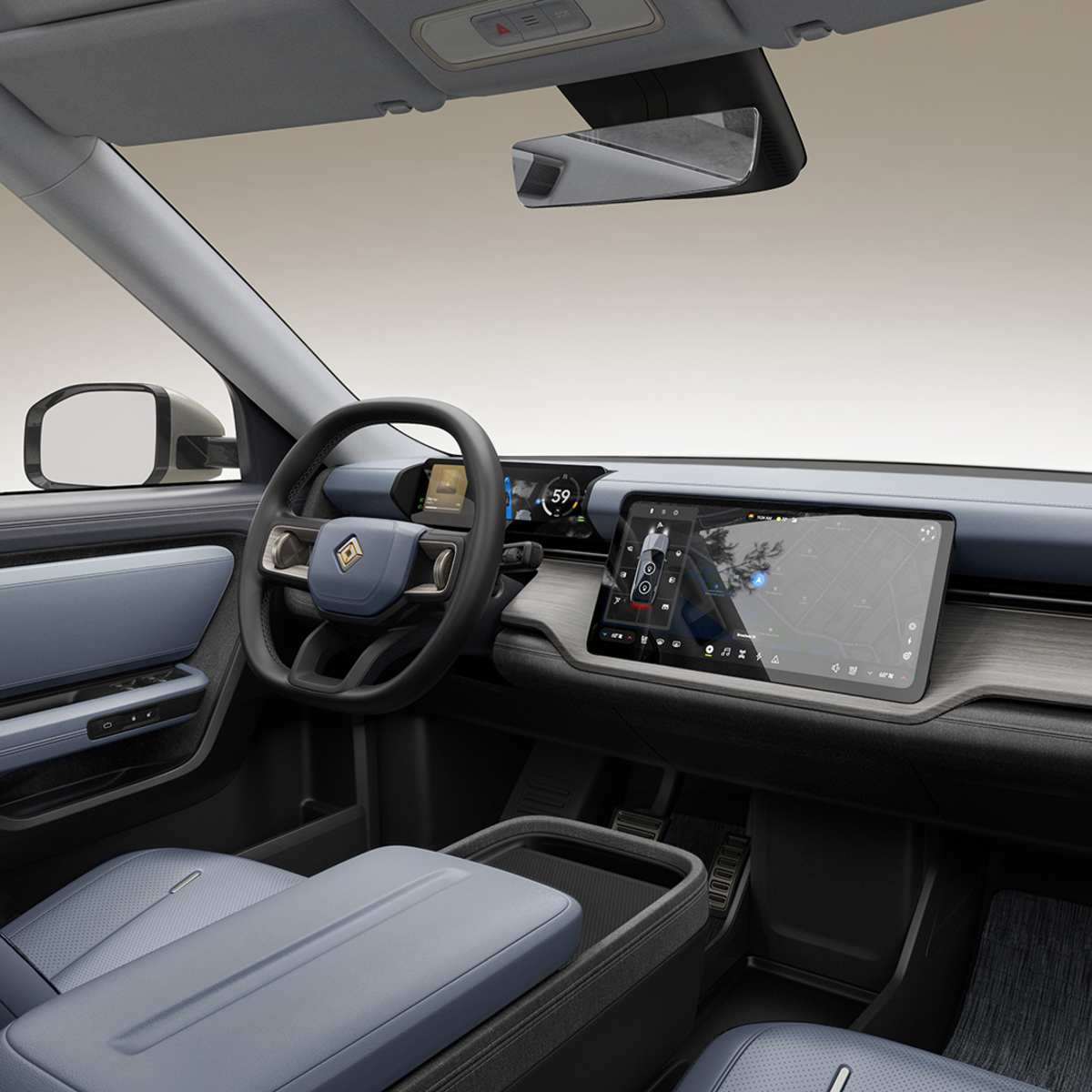
The Volvo EX30 is an electric Volvo small SUV. The host says the car relies a lot on a touchscreen for controlling things, and that caused frustration because the screen didn’t work well for them.
The Volvo EX60 is an electric Volvo. The host says it’s designed to feel smoother because it uses a faster computer (Snapdragon) and can update itself over the internet, so the car’s tech should work better.
Over-the-air updates are software updates sent to your car over the internet. Instead of taking it to a shop, the car can download and install improvements by itself.
The Volvo EX90 is another Volvo electric SUV mentioned here as a comparison point for software maturity. The host contrasts it with the EX60, suggesting the EX60 feels more cohesive and “finished” than the EX30/EX90 experience.
The Tesla Model Y is one of the most popular electric SUVs. In this discussion, it’s the yardstick the hosts use to explain who the Volvo EX-60 is trying to compete with.
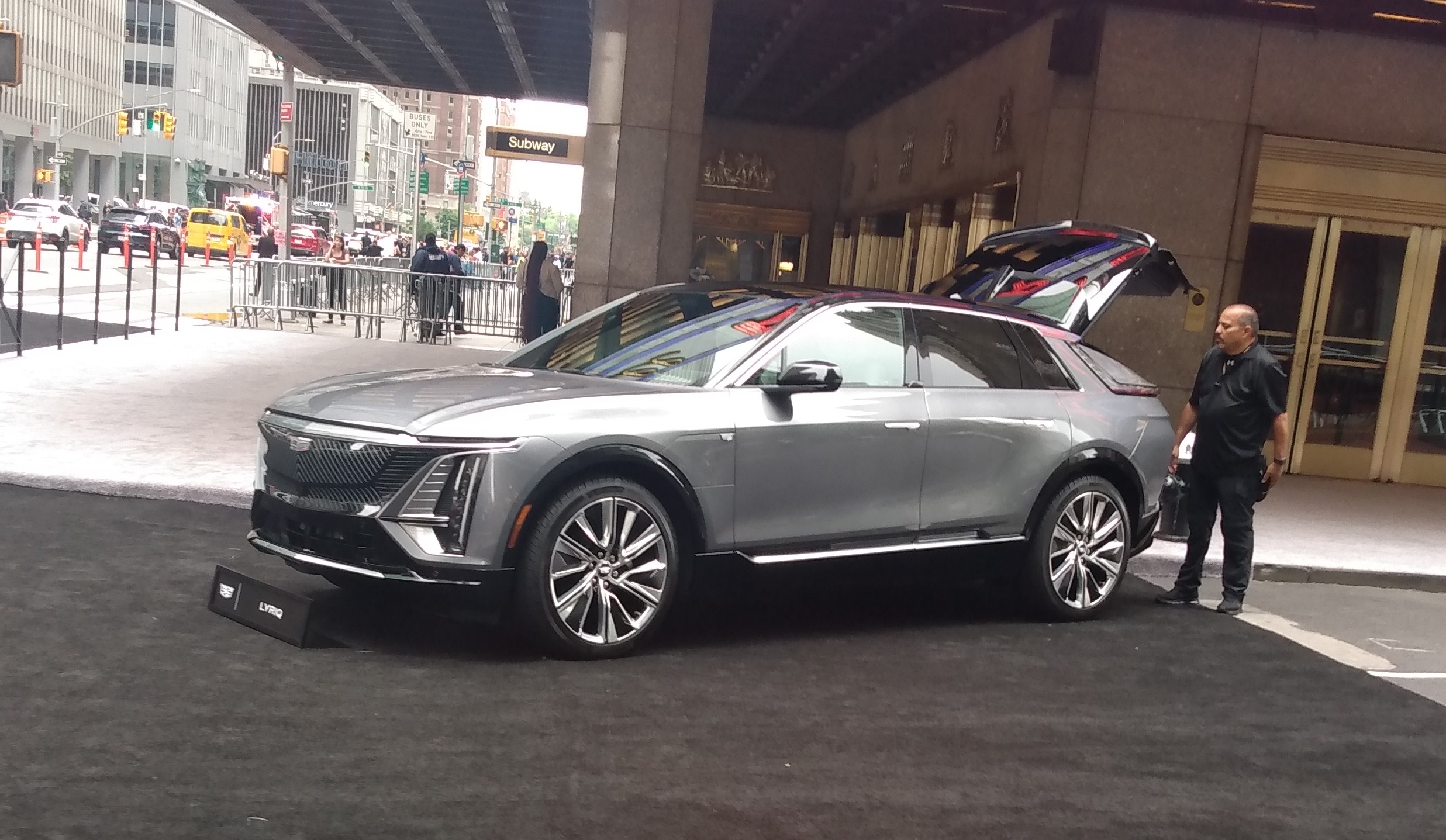
The Optiq is a Cadillac crossover SUV. It’s meant to be a newer, smaller Cadillac option. The podcast mentions its price to help place it among other cars being considered.
The X-90 is a small Suzuki vehicle with a unique look. It’s not a typical mainstream design, and the podcast is saying it had to work out to be a good product. The mention is more about the car’s overall concept than specific specs.
The XC60 is a Volvo luxury SUV that sits in the middle size range. It’s meant to be a practical SUV that still feels upscale and comfortable. The podcast is saying it’s a main model for that mid-sized luxury SUV category.
Term
EV market in decline
The phrase means that fewer people are buying EVs than before, or EV sales are slowing down. The hosts say the Volvo EX-60 is interesting because it’s launching into a more competitive luxury EV environment anyway.
The Rivian R2 is Rivian’s next, smaller electric vehicle. The hosts mention it because it’s another EV that will compete for buyers around the same price level.
A transaxle is the drivetrain hardware that helps send power from the motor to the wheels. The hosts are using it to talk about how expensive the main power-transfer parts can be, and why these EVs might still make sense at their prices.
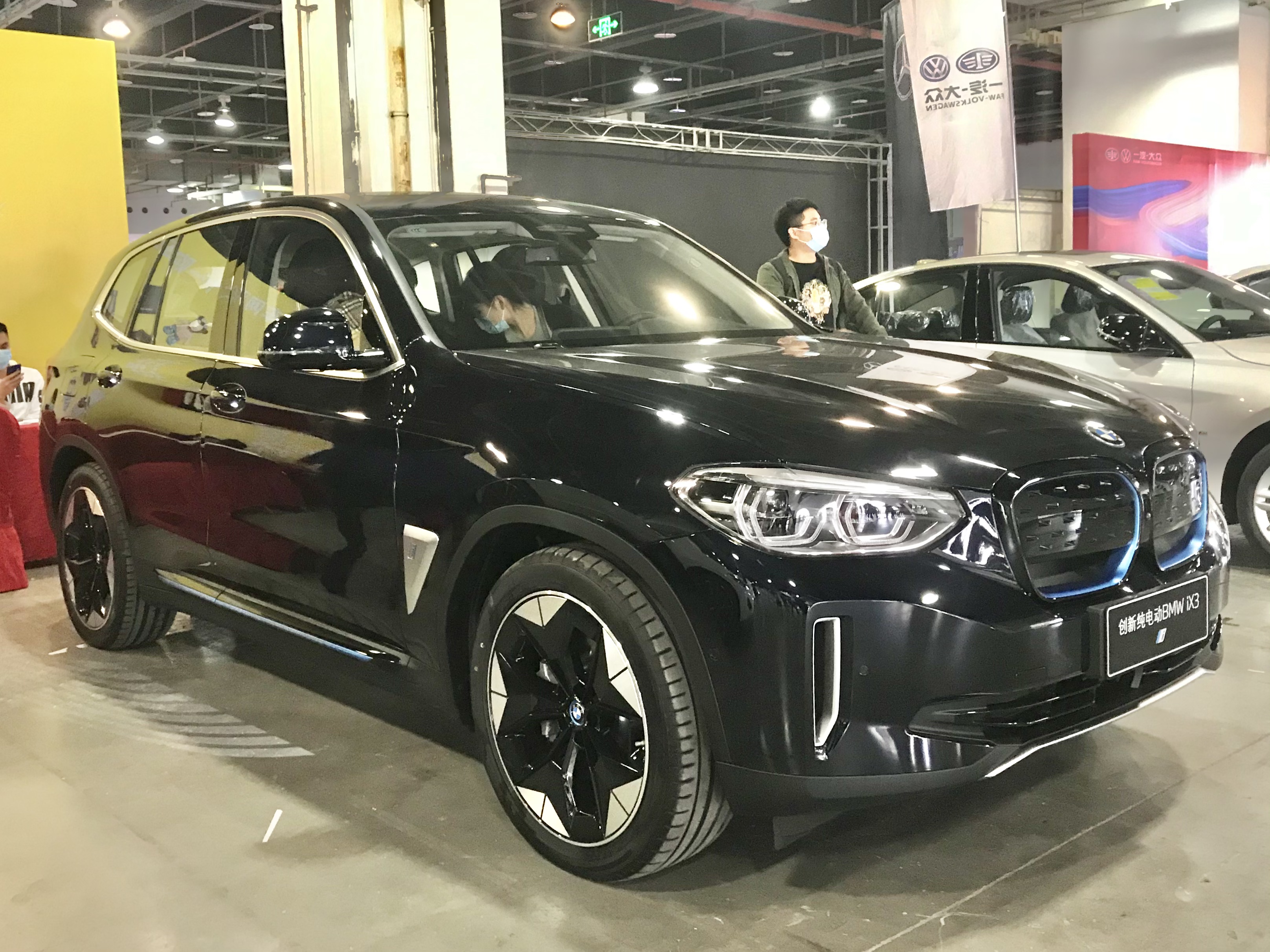
The BMW X3 is a smaller luxury SUV. It’s designed for daily driving but still aims to feel sporty. The conversation suggests that people don’t all agree on how it looks or feels.
Concept
brand thing
The host is talking about cars that show off the brand logo and identity really loudly. They’re saying that can feel annoying—like the car is acting like a billboard instead of just looking good.
The XC90 is a Volvo luxury SUV. It’s meant for comfort and space, especially for families. The podcast is talking about an earlier presentation of new technology that was tied to the XC90.
LIVE
Hello, welcome to the Edmunds CarCast podcast, and for those of you who are not familiar with
it, this is a podcast we've actually been doing for years, and CarCast has been around
for 17 years now, but we are new to the Edmunds YouTube channel.
I'm here with Alistair Weaver and Steve Ewing from Edmunds, and we're also available on
Apple Podcasts, Spotify, or anywhere you listen to podcasts. So guys, welcome. Thanks for having
me in your house. Thank you, Matt. How do you like our new set?
This is fantastic. It looks great. This is new for all of us, by the way. We're just launching on
this new channel and in a studio for the first time in a long time. I was just adjusting my
pillows as well a little bit. It's a surprisingly comfy couch, kind of thing.
It's nice. Yeah, it's nice. So thanks for having us in your home here at Edmunds.
It's a mid-century modern vibe. That's what we're going for. Well, you nailed it.
With some accessories. All right, before we get into it, a word from FanDuel,
and right now, new FanDuel customers can bet $5 and get 150 and bonus bets if your first bet wins.
That's right. Turn five bucks into 150 and bonus bets just for getting started. And when every
possession matters in the playoffs, FanDuel makes it easy to get closer to the action.
From player props and your favorite stars to all the tools you need to back them up.
FanDuel puts player research at your fingertips so you can check the stats, trends, and matchups
all in one place and make your picks with confidence. It's everything you need all in one
app, so don't miss your shot. Head to fanduel.com slash believe to get started. That's fanduel.com
slash B-L-E-A-V to get started. It's FanDuel. Play your game. Must be 21 and over and present
in select states. Gambling problem called 1-800 Gambler. Okay, so we've got a lot to go through
today. And Steve, I want to talk about the trip you did recently, but those of you that are just
again watching this and it's new, Steve, why don't you introduce yourself and tell us where
you went and then we can get into the questions and answers part of the show.
So I'm the director of editorial content here at Edmunds, so things like news,
features, events, first looks, first drives, all the kind of cool newsy bits. That's what
I oversee here. And so for part of that, I just spent a week in Germany in Hamburg up north,
where I drove the new S-Class, but I got to see a couple of weeks ahead of its debut, the new
AMG, GT, four-door EV, which you may have seen online because it looks like a big neon fish.
That's actually what a Mercedes more modest title is. I was just going to say that's the
short one. That's the one you could actually remember. Well, it's not in all caps and it doesn't,
you know, it's not an SE performance, magic, sky control, competition, whatever, something active,
whatever. So this, you saw it in Hamburg two weeks ago. This was launched in LA last night,
as we record the show. It's a 1,100 horsepower EV. It's going to cost about over 150 grand.
It's going to align against higher models of the Porsche Taycan, probably the Jaguar when it actually
arrives. Yep, Lucidere Sapphire. Lucidere Sapphire. Oh, Model S plug. No, that's gone.
Yeah, that's gone. So crazy fast, crazy expensive, very odd looking. And maybe if you're listening
to this on Spotify or something, we should probably describe it. Steve, could you describe it?
So it's about the size of a Porsche Taycan, maybe a little bit larger. It looks kind of like a catfish
swallowed a light up ashtray in the front. And then around back, it's got this huge black gloss
panel that the tail lights sit in. But the shape of the big gloss panel looks like a
Oldsmobile Allero from the early 2000s. The car is just hideous to look at, honestly.
I've seen it in white. I've seen it in black. I've seen it in this kind of like neon tennis ball,
high vis jacket color. And it's just highlight to pen for me. It's just look, it's a lot. I think
that it looks better in person. If you've seen photos of it online, it's a little kind of hard to
see maybe the exact size or, you know, kind of get the little details right. But it's a lot in
person. And I, you know, I look back at the original GTXX concept that Mercedes debuted that previewed
this car. And I think the production car, the front ends a little bit better resolved to me,
but the rear end is just not nearly as good looking. But this car is less about the design
and more about the performance. Okay. So they're trying to do a high performance four door. Is
this now the fastest thing in their lineup, aside from like an AMG one? Yeah. In fact,
probably in a straight line, it's gonna be faster than AMG one, I think. I mean, the quote for the
the higher performance, the GT 63 model is zero to 60. And I want to say 2.2 seconds.
I know that a Mercedes says with one foot rollout, it's two seconds flat zero to 60,
which is, I mean, that's Taycan turbo GT air sapphire. Yeah. So what did we do in the air
sapphire test track? I think that was 2.1 or was it 1.9? I think we did 22 even, two even.
Yeah. And you guys had, but you did U drag. So right, did you have the Taycan turbo GT out at
the U jacks with the air sapphire, which who won that race?
The sapphire is still the fastest car that we've run at Edmonds U drags. The Taycan is second,
followed by the Tesla Plat. So they should, they should be somewhere in there, depending on how,
I think there's also some interesting technology about a lot of those cars, they start pulling a
lot of EVs, and then they stop pulling. Yep. Yeah. And I think reading the technology about
the Mercedes, the idea is that it keeps pulling 180 miles an hour or something. Yep. And the
battery will last how long at 180 miles an hour? Oh gosh, it's, it's, it's supposed to last for a
really long time, but it's because there are just these new thermal characteristics for the battery.
It's a new pack, new cell design. It's actually like, if you really care about battery chemistry
and pack design and all that, it's a really cool, like, nerdy techie deep dive into it. Okay.
But the key takeaways for, you know, everyone else in the world is it allows for really fast
charging. Mercedes is saying that it could do 600 kilowatt charging, which is, I mean,
consider you pull up to a level three fast charger on the U.S. right now, and at most you'll get 350
kilowatts out of it. So that's if nobody else is also part of it. Exactly. So this can do double that.
But it can't, if the charger can't do it. Well, right. You gotta have the charger. But in theory,
it can do it. Well, let's just pause there for a moment and acknowledge the elephant in the room.
We recorded this show before Ferrari unveiled the Luce then new EV, which has been dominating
headlines for the last few days. What do we think about it? Well, we recorded a special
emergency Edmunds car cast podcast, which you can hear now on all your favorite podcast channels.
So search for car cast and find out what we think. When did the Taycan come out?
Oh my gosh. Three years ago. No, longer than that. I want to say five years ago now.
Is this as long as that? Yeah. And in a while. So was Mercedes already working on this or is
this really an answer to the Taycan? Mercedes was already working on this. This has been in
development for a while. I think that initially the AMG one was kind of supposed to be more of a
halo for the brand and not so much just like a little reserve thing that people forget about
sometimes. But this had always been in the works. Yeah. The AMG one, by the way,
there's one up for auction. And it's only got a few hundred miles on it. But before it went to
auction, somebody had this service called Service A, just the initial after break-in service on it.
And it cost $42,000. And they started to break it down. It was like 80 hours of work that was 30
something thousand dollars, right? Because they were charging, I don't know, $385 an hour or something
like that. But they did break down some of the elements. It's like a $1,263 air filter and like
a $671 oil filter. Like it's out there as part of the auction listing. And one of those weird
things with these crazy supercars where you go, listen, if you're going to charge somebody,
whatever it is, Bugatti money, $2 million, wouldn't you feel, let me ask you this,
would you pay $2 million and those crazy costs or would they rather just go to you and go,
pay us $2.5 million and everything is included for like six years? Like you don't have to do
anything. Like just pay it all up front. I think that's the way to go only because, you know, like
to me, the difference between spending $30,000 on a new car or $35,000 on a new car is a big
difference. But if you're already spending $2 million on a car and extra half mil or something,
it's probably not that big of a deal. Also, no one is stretching their budget to afford the Bugatti
payments. So yeah, it just seems weird that you would go in and kind of like nickel and dime for
all these little things. But it reminds me of something that happened at Car Week last year
when I was talking, I think we talked about it on the show back then. I was talking to Bugatti's
president and because of the tariffs, he had a whole bunch of Bugatti sitting in the UK and it
wasn't because the customers couldn't afford to pay the tariffs on a Bugatti, which could be
hundreds of thousands of dollars. It was the fact that they felt that they didn't want to or it was
terribly unfair or they don't like paying tax. So it was like they were all sitting in the UK
waiting to see what would actually happen with tariffs. So I guess now they've probably paid
them and then now they're getting a refund check or it's fascinating. You may not be surprised,
but the amount of people that purchase the high-end supercars that you go, oh, you don't drive them
because of the collectability? No, it's because of the $40,000 break job and the $12,000 windshield
if you crack it. So then they just became pieces of art to trade at auction. But you're right,
if a Bugatti had, it was $2.5 million and go, but for $3 million, it's all inclusive. Aside from
putting gas in, it will include everything for like five years. By the way, that's probably a
more profitable business model. Then I think people would drive them. But anyway, I'm bringing
this up because I'm wondering what's going to be the cost of ownership in the EV version of this.
They're trying to sell this like the Taycan, interesting car, not a big seller, not a huge
success. Not anymore. I mean, it had that initial spike where it was out selling a 911. Now the
residual values aren't good. The initial wave of people who really wanted to get them bought them.
Now it's more of a struggle and that's why we've seen Porsche move away from EVs. Yes,
they've got the, now they've got the Cayenne EV, they've got the Cayenne Coupe EV, the McCann,
but they're doing this backpedaling and trying to bring gas cars back. I mean, the good thing is
Mercedes. Mercedes is hedged, right? So you've got, I know Steve, we're going to come on to it in a
minute. You were also there to drive the S-Class, which is still my bread and butter. Before we
talk about the S-Class and then get on to some more kind of everyday cars, let's talk about the
interior of that Mercedes because I mean, you sat in it. I've only seen it in pictures, but it just
looks holy and intimidating. It's just masses of screen. It is, it is all, I mean, so the room
that I sawed in for the first time, it was a dark room and they had the interior with all the ambient
lighting lit up all the screens on everything else. And it was to show that, you know, there are
cool little bits of lit up piping in the doors and the whole glass roof has kind of like the etched
a falter box AMG logo and everything on it. But you get in the car and all this three of the screens
which go, you know, pillar to pillar on the dash, all of those are lit up. Everything is backlit
and it's all reds and oranges and greens and all these things. It's just overwhelming. And,
you know, the biggest complaint I have about a lot of modern Mercedes cars is that when I'm driving
them at night, the screens won't go dark enough because it's so distracting otherwise. And it's
just, it's, it's very overwhelming to sit in this car, which is supposed to be by design kind of a
smaller, you know, more coupe-like feeling inside. And then you get in and you're just bombarded by
huge backlit dials and massive screens and big, you know, the little controls on the,
on the center console, which are these like kind of like big metal tactile things. It's just,
it's a lot. I mean, I drove a CLA at our test track on Monday, which was the
electric version. That's the first time I've been in the interior, which is now got this Mercedes
signature. She's basically just a horizontal plastic panel of screens. There's not a lot of
design. It's like, what's the design? It's a big horizontal thing with sort of three screens in it.
And even in that CLA, it takes a bit of a climatization. It's, it's just a,
I find it, it's just a lot of screen relative to the road.
It's interesting in the GT though, because you've got the big driver's display right in front of
you. And then the big 14 inch central screen actually kind of comes out and it's curved
towards the driver. So then you've got the 14 inch passenger screen. So instead of it just
being one big seamless screen, you've got this kind of driver's display and then this extra one.
The one cool thing I will say is that on the little part of the panel that sticks out where the
screen is, Mercedes has actually integrated air vents for the climate control. So at least it's
useful and it's not just this like nasty bit of black plastic that's right there.
But I mean, it's, it's a lot and the passenger screen is standard. You can't option a car
without it. All the big screens are standard. You can't do anything else to it. And that's just,
unfortunately, that's the way it is. And, you know, that's kind of the thing with the S-Class too.
I'm going to ask you about that. So the passenger screen, we're starting to see that come up in
a few cars, right? Where they're trying to make either the main screen is too far away because
the car is too big or it's too sort of cockpit oriented like you're talking about. So they're
given the passenger screen. Even Ferrari doesn't, do they do it in the pure song way? Or do they do
it? They're going to do it in the EV? I don't know. Yeah, they had it in the GT cars to scare the
passenger, but that was just like a little straight, wasn't it? Yes. That was like,
just gave you the rev counter and the speed to terrify you. But is it necessary or like,
is the passenger, what are they doing? They're controlling audio, air conditioning. It pretty
much works like the standard infotainment system. It doesn't, you know, it can't really change a lot
of the cars driving functions day to day. It's mostly for, you know, you can watch YouTube or
you can browse the internet or, you know, you can play with the cars controls, but I don't know.
In my experience, like the times where I'm riding shotgun in a car, if I want to look at
something online, I just look at my phone or my iPad. I do something on my phone, but I guess,
you know, the US is not the market for those, for those screens. For the screens. So it's,
you know, that it's a big thing in China more than anything. And since, you know,
China is now the largest car market in the world, Mercedes designs for that.
But it's the same, it's kind of the same with the rear infotainment screens now,
like you can sit in the back of a Mercedes and take a zoom call, which sounds like,
you know, the worst thing in the world to me, but it's, everything is now available for you in
the car. But the passenger screen, just, I don't know, I've asked several of my non-car friends,
like, do you think this is cool? Would you use it? And every single one of them says,
yeah, it's neat, but like, what do I do with it? It's, it's a Samsung one. My wife hates,
because obviously we're in a fortunate position to take lots of cars home. My wife hates anything
with the screen in front of her. She feels like this is the one place he's storing. It's a bit
like when they brought Wi-Fi into her, into her airplanes. Yeah, yeah, right. It's the one place
in your life where you can escape staring at a screen and you can, you know, actually see nature.
But I asked my kids the other day, what's their favorite car,
Tesla data. Why Tesla got Teli in the back? That's, you know, that's, you know, that's all.
Doesn't the seven series have like a big full down screen like they haven't been in the seven
series yet. They have, they have, but I didn't put the screen down. Yeah, but you're right. I'm
with you on this one. Like, you go, it's a feature. It's like, you can have a big full down screen in
the back and do a zoom call. And my first thought is like, oh, that sounds like a terrible idea.
I don't want to sit in the back and do work. Like, I just want to enjoy the ride. I guess,
for me, it's more just, I wish it was optional. You know, I wish, I wish you didn't have to get
the passengers. Or have it fold away like Bentley. Sure. See, I think now there is a,
I think the Bentley is a good example that I think there might be a reaction against this that,
you know, Rolls Royce and Bentley have the technology, but it's, it's the luxury comes in
the elegant simplicity and the analog. And I'm a bit of a watch buff. And, you know, everybody's
gone back to beautiful mechanical watches, which talk to engineering, but are also simple and elegant.
And I think, you know, it'd be interesting what Jaguar do with the production car interior.
Hopefully they're going down that path is actually somebody to say luxury is elegance and
simplicity. And yes, you need the technology. And yes, that's available if you need it. But
we're not going to bombard you with a billion LED lights. Luxury is not screens. I mean, interesting
because I'm pretty sure Bugatti is doing what you're talking about. Like you get in it and there's
like nothing going on. Like there's some controls, but we don't want you to fuss with them. You set
them up before you drive and then you just drive the car. Agreed. Right. So on that, this AMG,
this EV, what's going on in the back? It's, it's low. Do you sit low? Is it just too like bucket
seats? It's two bucket seats. You sit low. It's actually neat. The battery packs design has these
cutouts in the, in like where kind of like the Taycan that kind of like the Taycan. So
there is a space for the passenger's feet to go. You sort of sit almost like upright,
but kind of slouching, but your feet aren't really extended out under the chair in front of you.
It's easy to get in and out of. There's a decent amount of room. It's a lift back. So the whole
back glass opens. There's a big trunk. So it's actually a very practical, comfortable car. It's
who does Mercedes expect to buy this car? There is this the second Mercedes you have at home?
I would think so. I think this is maybe the second Mercedes you have at home. I think maybe this
is the, for the, this is the, you know, you spent five years with the Taycan and you want,
you like it, but you want to try something different or just, you know, you're a big
fan of Mercedes. I don't think it does big fan of fish or big fan of fish. I don't think it does
anything different than something, well, except for one thing. Well, I'll get to that in a moment.
I haven't driven it yet. Obviously I assume it'll be very good. But the one thing that I think is
unique about this car is a lot of EVs have the kind of fake propulsion sound. Yeah. And there's a
couple of ways you can go about it. Porsche with the Taycan, they actually amplify the sound of the
motors and all the electronic wizardry inside. BMW has the whole, you know, sounds composed
by Hans Zimmer, which is futuristic and funky and weird. But with the AMG GT, Mercedes actually
sampled the V8 engine noise from the outgoing AMG GTR. Okay. And so it doesn't sound super
convincing from the outside just because it's the difference of a speaker versus an exhaust.
But inside, I've got to say, I am normally not the type of person to put on the fake noises in a
car. Yeah. I listen to it. I was pretty convinced. I mean, we all drove the Ioniq 5N. It's true.
Right. And that thing is cool. Well, and I think this will be the same thing where the V8 version.
Exactly. And the AMG will have the, you know, synthetic gear changes that the Ioniq 5N does
too. And so to have that sound to go with it, I think kind of, you know, pun intended, drives
home the experience. But it sounds really good. Like, you know, props to Mercedes for at least
sampling a real engine and a real good engine. And I think that that was what for me appeals
about the Ioniq 5N as well is that it's, it's an engine sound that's believable to the car. In that
case, they've sampled a two liter four cylinder turbo, isn't it? But that car, the size and the
scale of it is believable as a V8. So we feel it's important to have the noise. And interestingly,
we, we talked before about the Ford EV program. And one of the questions there, do you put fake
noise in an EV truck is, for me, it's got to sound believable. Yeah. So I don't know whether truck,
you know, you just simulate squeaks and rattles and, you know, a little bit.
Yeah. Okay. And then I'm assuming this thing is all wheel drive. That's how it's going to get to
the number. It's a tri motor setup. So one in the front, two in the back. Okay. And it's at least
for now, there's a GT 55 and a GT 63. Same battery, same setup. The 63 will just have more power.
And now we talked about the performance, but what sort of range are we looking at?
Still estimated right now, but it's looking like on the higher end, based on European estimates
around 450 to 470. Oh, that seems like a lot. It is. And, you know, in our testing, it's funny,
I actually ran the Edmunds EV range test in a Mercedes CLA earlier this week.
Mercedes cars always overperform from the EPA numbers. So, you know, let's say,
because the Taycan does too. Yes. But so like, let's say this thing gets an EPA rating of 400,
I would realistically expect 430, 440. So we'll see. But it'll have good range. It's not, you know,
it's not a fast car that can't go far. Yeah. Unless you lean on the performance.
Right. Yeah. Well, you know, the Bugatti, whatever the Chiron came out like,
put this thing on an oval at top speed and you run out of gas in four and a half minutes or
something like that, you'll go through the entire take. So, well, the battery is the same,
right? You're going to run out of it. So when you guys finally get this on the test track or
knock on wood, we get to see it against the Taycan turbo GT at the U-Drags. Who do you think wins
the race? It's going to be hard to say. I think the Porsche will launch harder. I think the Mercedes
will have more top end. Yeah. And I think also that Taycan is actually quite a handful deliberately.
So they actually, you know, the Lucid Sapphire is actually quite easy to drive fast. The Taycan,
they deliberately engineered it to feel like a Porsche that feel like, you know, it has like
some movement in it. You've really got to like manhandle it a little bit. So they want to see
where they go. They want to feel, yeah, they want to feel like a Porsche. The Lucid is just,
is just a machine. Yep. So it'll be super interesting. Should we talk about a sensible car?
Yes, but first. Oh, the S-Class. S-Class. Get into S-Class a little bit here because it's new.
Well, mostly. Well, mostly new. That's mostly new. There's a lot that's changed about it,
but to kind of go back to what we were talking about with the AMG GT, the big change for the S-Class,
which I absolutely hate is that the whole hyper screen, super screen setup is standard. And it's
not the new system that's in the GLC, CLA. It's the driver's display, big infotainment screen,
passenger screen, but then there's lots of kind of gloss black space between all of them. Yeah.
And the thing I always loved about the S-Class until now was you still got a really large,
you know, vertically oriented screen that did everything you needed, but then there were exposed
bits of really nice open, poor wood or metal or pin striping or all these other beautiful elements
of the interior to drive home the fact that this is a very elegant stately. It's, I mean,
it's the S-Class. It's the flagship. It's the luxury car by which all other luxury cars are
defined. Yeah. And I think that putting the screen in it standard takes away a lot of that.
I mean, don't get me wrong. The rest of the interior is beautiful. It's comfortable. The seatbelts
are heated now, which is really nice, but it's just kind of lost this elegant. Is it open and
sweaty? I didn't know that. Just right here, though. Yeah. You're just across your chest.
I mean, it feels like a strip of sweat. I mean, look, if you're driving shirtless, maybe, but I'm
not, you know, come on. But you were saying that their big market now is China and China loves it,
loves the screens, loves the tech. They're very tech heavy. They feel more like, we'll get into
this too. We feel more like beta testers. They want the technology. They want to be at the forefront
of that. So that's why we have that. Well, the GD that we tested the other week, and you can see
this on our YouTube channel too. That had a 6K, oh God, what was it? 36 inch screen, I think?
I think it was bigger than, you know. It's huge. Bigger than the Telly's I remember growing up
first, for sure. And so I guess you've got to compete with that. Like if you've got an S-Class,
why you can't have an S-Class with a 14 inch screen when your $25,000 GLE has got, you know,
a 6K megatron. I mean, Faraday Future has it on the front bumper. I don't know why, but
there's a little bit of that. It's good for the warranty. The rest of the S-Class though is just,
I mean, it's as lovely as that. Yeah, what's the powertrain? This is their flagship car.
There's a few. So you could do, there's a twin turbo, straight six, mild hybrid. So a little
bit of electric boost to kind of get you off the line. There's an updated version of the
four liter twin turbo V8 with a mild hybrid system. And then there's a new plug-in hybrid setup where
it's instead of being the old four cylinder with a plug-in hybrid system, it's a six cylinder now.
So you get about 50, 60 miles of range and then you still have a straight six engine.
Honestly, the V8 is the way I would go. I mean, the six cylinder engines are both lovely and you'd
never miss the power or anything, but, you know, you get in the S580 with the V8 and you start it
and there's this, it's almost kind of like an un S-Class like roar to it. And then it's just,
I mean, it's the kind of car that delivers power so effortlessly. I remember being on an
unrestricted section of Audubon just cruising in the fast lane and I kept thinking the transmission
was, was doing something because it kept like going like, and I realized I was actually just
hitting this electronic speed limiter because it was just so effortlessly doing 155 miles an hour
that you're like, this thing has so much more to give and you don't even,
you don't even feel remotely fatigued. But there's no V12 now, that's dead, dead.
V12 is for the Maibach S-Class only. Okay. Okay. And the Guard, the armored S-Class. That's for the
real, the real. Yes. So, but you're saying you would take the, the eight cylinder, but kind of
makes sense. Like here as Americans, we would probably drive the S-Class more and we'd like
that power. Whereas maybe in China, which is a big market, you might be driven around more in it.
Yeah. And I mean, that's why, you know, just get the most. Exactly. I mean, we've seen in the past,
I think there's great examples of, you know, you used to be able to get a four cylinder engine in
the seven series and the S-Class and it was for, you know, the people that were mostly being driven,
they didn't really care about the performance. They just wanted, you know, the big long wheelbase
sedan and it didn't matter what was under the hood and they would just take the 740 badge off the
back. Yeah. There was a period in Europe where I think the, before diesels, before the whole
diesel gate thing, I think like the biggest selling S-Class was like the S320 CDI because
all the chauffeur market. So you had these really high technology diesels that would do like a
thousand miles on a tank and every chauffeur in every European city had one of these and it was
like 80% of sales or something. Okay. But it smells like diesel. It just means it smells like
French fries. French fries are good. They were I'm a big diesel.
diesel. If you've got the right treatments on them and everything else, they were, you know,
probably the most technological advanced engines. It's crazy that they, all right, let's just pause
there and we'll be right back. Bio Pro Plus. It's a 100% drug free hormone health formula
that helps guys over 40 get leaner, tighter and stronger naturally. I've been taking it. I continue
with that journey. I'm into it for a few months now. So whether you're just getting started or a
seasoned pro in the gym, Bio Pro Plus is the answer to help you get off the couch and breakthrough
plateaus. Go to bioproteintech.com slash car cast for $100 off your first order.
There's no commitment and you can cancel at any time. That's bioproteintech.com slash car cast.
Quick reminder, if you're watching games this week, jump on FanDuel, whether it's NBA spreads,
player props or same gay parlays. FanDuel makes it easy to get in on the action.
Download the FanDuel app and place your first bet today.
All right. So should we shift gears a little bit and talk about something that people can afford?
I guess. All right. What's up next? Well, I drove the, I was, while Steve was in Germany,
we talked about this on last week's show. I was in Korea driving the Kia Celtos,
which is now, I can now talk about what it was like to drive and actually it's very nice to drive.
I mean, it's not. Moving on. Yeah. I mean, it's like the interesting thing, the big noises they
brought in the hybrid, they're brought in a hybrid and it's like, we're not hybrid this
first time, but the hybrid is a bit weird. It's like a regular hybrid, not a plug-in hybrid.
It's a regular hybrid, but it's, it's not the same hybrid as in the largest sport,
so it hasn't got a turbo. So actually, I don't think it's the choice. I think actually the
1.6 turbo version will, will be the, the sweet spot of the range. Really nice, peppy little thing,
not sporty, but doesn't need to be. Yeah. I was a big fan. I think for anybody
looking to trade down or looking for some good value, $25,000 to $30,000,
the last Celtos was a nice little thing, but kind of flew under the radar. This is a little bit
bigger, particularly inside. Looks a lot cooler. Looks like a baby Telluride. Really nice interior.
I think it'll do well. Well, and you know, it's, we talked about the S class before this. It's,
it's harder to get a $25,000 car right than it is to get a $100,000 car, right? You know? So the
idea that the Celtos brings in this style from the Telluride, nice interior, I assume. Yeah. Drives
well and to do it for between $25,000 to $30,000, that to me, I mean, that's a much bigger story
and a much more compelling story. And do you know what on the screens, if I may jump in for a moment,
we're talking about like the screen, why I don't think the screen's a luxury. This Celtos has
basically got a version of the screen that you find in the Telluride and everything else.
And you can still watch Netflix and YouTube because it's basically an Android screen.
So putting a massive screen in S class, which has basically the same functionality as a $25,000
Celtos, where's the luxury in that? Right. Well, with the one screen, I assume you can't watch
YouTube while you're driving, but with the two screen, with the passenger screen can probably
watch it while you're driving. That's the only real difference. It's like, if you're sitting,
like, I get it, if you're in an EV, you're sitting and you're charging your EV for 40 minutes or
something, then you're watching. But I don't know, like, I think I have YouTube and my Ford
Lightning. I don't know what I'm doing with it. Like, I never use it because, you know, I walk away
when I'm charging and there's nobody else watching it from driving. So I know it's kind of an
interesting thing, but... Your passenger probably has a smartphone. Yeah. On their phone. That's...
I guess, I don't know, maybe I'm different. I just use my phone for that stuff.
Okay. So, but sell to us what you were talking about. So when we see the pictures of it now,
looks like a baby telluride, but they got the proportions right. It doesn't look like a
squatted, shorty version of it. Like, it's done well. Like, everything was sort of
scaled correctly to get it right. Yeah, the wheels, you've got to get the proportion of the wheels.
I think, like, on the K4 here, it's a handsome looking car, but it's got diddy little wheels,
so the proportions look kind of odd. Yeah. And it's got, like, big headlights, big tail lights,
which can look strange on a small car, but you're right. I think everything from the telluride
design language really scaled down well. And so it's got this kind of, like, little tiny, tough
macho vibe to it that, I mean, it's, it's both handsome, but it's got a lot of personality. And
I think that extra small SUVs can often be a segment that lacks personality. So it's nice to
see. Yeah. On the HRV, Chevrolet Trax aren't kind of... Yeah. Or you run the risk of going Hyundai
Kona, which is a little too far in the other direction. And it's like, let's make a hundred
angles on this because we can, you know. And then the only weird thing is you've got the Nero,
you mentioned the Hyundai. Kia's also got the Nero. So it's like, the Nero is basically the same
price and pretty much does the same job. Yeah. So it's, I can't imagine. I was trying to think,
why would you buy the Nero? And I couldn't really think of a good reason. I don't think the Nero
will last. Okay. I mean, it already is, I think one of the versions is gone. The Emperor's got
new clothes. Could be. See what I did there? Yeah, I do. I like that. Okay. So I'm going to see,
I'm just going to head out. So I'll see you guys later, you know. Question for both of you,
because you were driving cars in Germany, you were driving cars in Korea. And are you driving
the American versions of those cars? Because we had a discussion a few months ago on the podcast
when you were referencing a conversation from years ago with Audi and going, why do the
Audis, we like, get an Audi here and like everybody hates it. Like, yeah, because our roads are
terrible and their roads there. So when they're testing their Audi, like, oh, this thing is great
and handles great and smooth. And out here, like it drives like a, like a stiff truck with no springs
on it. So what versions of the cars are you driving when you mostly go overseas for these
events, launch events, press events? So the Celtos that were open about this was obviously Korean
car, but it's actually arriving in the US in August. They have a tendency often to retune
it for the US. Historically, the cars tend to be set up a bit softer in Asia than they are in the
US and Europe. I hope they don't go too far with the Celtos because it didn't feel soft. And you
know, you don't get exactly more rolly-poly feel. It felt, to be honest, I mean, it's difficult on
Korean roads, which are a little bit different to what they are here, but it didn't feel soft. So I
hope that they, if they are going to change play around with the shocks and the dampers and everything
else that they don't go to, too far. I think it actually depends on the vehicle too.
Something like the Celtos makes sense and same with vehicles I've driven in Korea before, it's
kind of the same tuning, but something like an S-Class. I mean, you're using an adaptive air
suspension anyway. The cars that we drove were all German spec vehicles, but I think the German
specification is probably closer to the American specification than, you know, a Korean Celtos to
a US Celtos. The only thing that can be different sometimes is, for example, the six-cylinder car
that I drove for the S-Class in Germany, it'll be called S500 here, but over there it's S450.
So technically I was driving an S450 with a slightly different tune, but most of the time on
these programs, they're good about giving you as close to a US representative product as possible.
And then the times that we don't do that, you know, we're still fortunate to go on a lot of these
events early, you know, there's always the opportunity to then test it later and say,
you know, here's what's changed, here's what's different, here's how this car feels, you know,
in our market on our roads. Yeah, okay. All right, so moving on, what we're going to ask,
what's next on the list? We had somebody in, was it Barcelona for the Volvo X60?
Yeah, while you were in Seoul and I was in Germany, Nick Ikeke and was out in Barcelona.
It sounds all very glamorous, this, we're all jet-like to hell and this is not a typical week,
this is quite an unusual week, but we had like three people in Europe last week, I think. Yeah,
we did. EX, EX60, which is Volvo. Which I saw, they did like a little launch event here. Yeah. And
it looks great. The interior seemed to be great and they talked about, you know, they're like,
we made some mistakes with our software and stuff in the past, but we fixed the glitch,
basically. Yeah. So did they? So according to Nick, it's very good and it's finally sort
of ready for prime time. I think that, you know, we owned a Volvo EX30 in the one-year road test
fleet and for the entire year that we had it, it was just a constant tech nightmare. I mean,
it got to the point where I was kind of the EX30 apologist for a long time, where I like the way
it looks, I liked driving it, I thought the size was good, but you just, the screen was just unusable
and in that car, everything was in the screen. There wasn't even a gauge plus two. So I drove it
that I sort of gripe about. I was like, I don't want to go to a touchscreen to move my AC events.
Like, I don't need to do that kind of stuff. The EX60 has some of that. You still control
things like the air vents through the screen. The big difference is the EX60 is running a
Snapdragon processor for a lot of the vehicle functions. So everything responds quicker.
It's better capable to receive over-the-air updates, put them out, you know, quickly.
I guess the whole thing just feels like a more cohesive, you know, kind of,
we finally finished it experience than, you know, the EX30, the EX90. And from what I hear,
it's perfectly nice to drive. It's, you know, every bit of Volvo, nice comfy seats,
you know, cool interior design. Volvo has always been one of those companies that I'm like,
I wish they were doing better because I'm always kind of rooting for them. I think they have great
design. I think their stuff looks really good. And I was like, God, I wish they, you know, sold
a few more of these because I always feel like they're changing hands or there's some kind of
issue and ownership. This might be the first Volvo in a long time that's been really competitive
within its segment. Yeah. And I think the interesting thing is you talk about technology,
well, of course, I run by GD, the Chinese brand, which is, as we know, because we test one, he's
actually good at this stuff. So whether they're not, whether they've got more hands on in sharing
some of that expertise, but if there's one thing you'd think they would be good at, it was the,
you know, back end, the back end software. I mean, honestly, you're right. So if, if any car company
is thinking about taking one of the successful Chinese cars and taking it apart and reverse
engineering it, who better than Volvo if your parent company is Geely, right, to go, listen,
have their engineers going, you need to use these chips, you need to use these screens,
you need to use, like, this is how we're getting software to talk to each other.
And if we didn't mention this, this is an EV. Yeah, we should, we should.
It's a good time for EX-60 to be launching. I mean, this is the car that competes with Tesla Model
Y, BMW iX3, Mercedes GLC, Cadillac Lyric, I guess. Or OPTIQ. Or OPTIQ. Yeah. It's priced around
$60,000 to start. So it's priced competitively. It looks good. I think more than 400 miles of range.
You know, we'll see when we test it. But it's finally a Volvo that doesn't feel like,
a lot of Volvos have always felt to me like they check, you know, eight out of 10 boxes.
And this one finally is kind of like, I think they got everything. But this is the car also that's,
I mean, frankly, the X90 needed to work. But this is the car that is that hardline,
like XC60, that sort of mid-sized luxury SUV is where they're supposed to be. Yeah.
As Steve said, it's actually, you know, we talk so much about like the EV market in decline. But
it is interesting. It is a good test case because suddenly put in the luxury market, there is now
a lot of hot competition. The iX3 is seen as a good vehicle. This is coming in Rivian R2. I'm
not sure we mentioned it in that latest Tesla Model Y. There's a lot of GLC EVs coming up. So there's
suddenly a lot of really strong cars in that 50 to 60 grand. And Mark, and when you consider that
the average transaxle price in your car is 50 grand, you know, these aren't crazy money in
relative terms. Well, I also like the Volvo because it's, I don't know, it's a little bit more like
conservative design. It feels a little bit more like. It's not trying too hard. You know, like
you mentioned the BMW and I'm sure it's going to do well, but it's got the skewed screen and the
steering wheel is on sideways unless you get the optional steering wheel. And you know, like
it's a little bit of that. And like I just pulled up and you saw it outside the Toyota BZ. I'm like,
I don't get why this, like there's this gauge cluster is like way up front and it's above the
steering wheel. So the steering wheel has to be like in your lap and you have to sit high. And
I was like, it didn't need all of that. I think, you know, but I think that, and this is a good
example of this, I think we're running into the problem that Volvos have had for a long time,
which is, you know, if someone says BMW IX3, you're like, oh, the grill, the screen, the steering
wheel, all this stuff. Someone says GLC, the light up grill, the star tail lights. Someone's EX60 and
you're like, it's nice. And I think that's kind of where Volvo cars have been for a long time where
a gas powered XC60 does everything that a BMW X3 will do. But the X3 has more kind of
polarizing interesting things to talk about, whether it's design features, etc. And so I think
because of that, the Volvo just gets lost in the conversation a lot of the time. And it's not
because it's not a good car, it's just sort of, it does everything fine. But what I like about it,
I don't like, and again, it's probably driven by the Chinese market, but I don't like this idea that
this like overt brand thing, like I don't want to be at somebody's billboard. Look at the Mercedes
got like a billion stars on it. It's awful, you know, massive grills or this or that. And Volvo,
I remember going to the original tech presentation for the XC90, which was kind of the, this is
probably going back 15 years, and it was almost like the relaunch of Volvo after they left Ford
ownership. And they stood there and they said, we don't came as a Swedish accent, we don't care
about Nürburgring times, we don't want to be sporty, we're going to drive a nice comfortable
stylish SUV for families. And it was also like Phillips standing up and giving them a round
of applause. Yeah, right. And that's been that that's been a brand. And I like the understatement.
It's it just says I'm comfortable in my skin. I don't need to like tell the whole world that
I've got a Mercedes. You know, it's it's I'm a big I'm like you. I like the Swedish design.
I'm a fan of the brand and the seats are the best. I think if it tests well, and it
ends up on like your recommended list, if it's up there and if it's in that conversation of top
three that we really like, I think that makes a difference because I agree that the design is on
point and it doesn't have to have all the wacky, weird, artistic features that some people love
and some people hate, you can go, you know what, we tested all of these things and our top three
choices like the Volvo is on the list now. It's in the conversation from everything I've seen and
heard. This will probably be the best executed Volvo in a long time. And so I'm excited to get
it into the US and put it through testing and just get to see them on the road and see people's
reactions to it. I think Volvo could really use this. What is it arrive later this summer summer
out? I've talked about this a few times on the podcast in the past. So to get your thoughts on
this is so many new vehicles like this. What BMW is doing Mercedes is doing even that Toyota BZ.
They're they're they're trying to do this thing. We're like, this is different and this is different.
There's no buttons and this is what you got to do. And this is the future of cars. And it
except in trucks and trucks. When you go on the media event, they go, we listen to you. We ask
truck owners. We hear what you want. And they go, OK, you're not listening to anybody else on these
other cars. You're just listening to truck owners going, you want more storage and more towing capability
and you want big buttons so you can use gloves and you want a antenna so you can listen to AM radio.
We listen to truck owners. They go, but nobody listens to any other owner on any other car. It
seems like well, I think it's slightly different because I mean, trucks are very lucrative. They're
very, you know, repeat buyers are high there. And so if you can be the person, if you can get the
first time truck buyer to get into the F-150, there's a pretty good chance that person is going
to be an F-150 customer for the rest of their lives. And they're going to tell their friends
and family to buy an F-150. And again, because the, you know, the margins are so much higher on
things like that, I think doing exactly what the customer wants makes more sense. But with things
like a Volvo EX60, you know, I think a lot of things in these vehicles are driven by customer
feedback, but maybe not to the extent of a pickup truck. Also keep in mind, a pickup truck by nature
is kind of, you know, there's only so much room where you can kind of think outside the box.
It's got to kind of do the same things over and over again. So it has to be like, what exactly
do you want so you keep buying them? Yeah. Okay. All right. So how are we on time? Let's take a
look. I think we're kind of getting there, but it feels like, you know, yeah, the adrenaline going.
But there's a couple other things, right? Before we wrap up, we can talk about a truck.
We can talk about a cool truck. Oh, yeah. The rumble. What's it called a rumble? The Ram rumble
B, which is not just one truck. It's a lineup of trucks. It's a whole rumble bee lineup where
basically the long and short of it is it's VA performance trucks. What I think is super cool
about it is that it combines the short cab, not the two door cab, but the short quad cab
with the short bed, which is not normally a way you can buy a Ram otherwise. You get a wide body
with big flared fenders. Basically think of it as, you know, a Ford F-150 Raptor Ram TRX
VA performance truck, but for street performance. So just on the cabin. So is that the full cab?
So you've got all the space, but you've got a short bed. No, you have the less space. You have
less space than the full four door. So the four door crew cab is the big four door. That's the one
that we own. Yes. It's like the half doors. The quad cab is, yeah, it used to be what would have
been the half doors, but now they're actually just wheel doors. They're just little. And then
there's a single cab, but this is that quad. You can't get the full size like family version.
No. Oh, you can't at all. You can't get the crew cab. Yeah, I don't get that. Because like the
whole point for me of getting a Ram is like, you've got a living room on wheels. I mean,
yeah, but like, look, we owned a Ram, you know, we still own a Ram. That back seat is enormous.
I have no reason to think that the quad cab, the shorter one, I mean, it's still a proper door.
It's not like a swing out suicide door. There's still going to be plenty of room in there. Yeah,
but it's the look. I gotta see what it looks like. It looks super cool. I think it works because then
it's lowered. You've got these big fender flares. It's, I think it's like eight inches wider in the
front, but there are three stages. There's the standard rumble bee, which is the, you know,
the 5.7 Hemi V8. Yeah. Then you've got the, I think it's called the 392 where you get the
the 6.4 Hemi. And then there's the SRT one, which has the Hellcat engine. Yeah. But it's a
777 horsepower Ram that apparently Ram says we'll do 170 miles an hour, which sounds terrifying.
And I want to do that. That's a lot of inertia. Yeah, but you know what? But I'm so, I'm so down to
try it. So I do like street trucks. Yeah. And this is interesting to me because in Ford's lineup,
you want to do like an aftermarket build, you want to do a SEMA build, you go to Ford's lineup and
you go, I need the five liter, I need the Coyote V8. I'm going to super charge it. Yep. But you
can only get it on the lower trim models. You can't get like a King Ranch or a Platinum. Then
you just get a hybrid truck. They just pulled the V8 out of those high trim models. And I don't know,
maybe because they didn't want it to be $120,000. Who knows? But and the F-150 Lobo, cool, but it's
like $150,000. They bottled, didn't they? Yeah. They bottled that check because I wouldn't even
say it's cool. They just don't have the features inside that people wanted. But they don't even
have the performance. I mean, the F-150 Lobo is the V8 F-150 that's slightly lowered and on
kind of better tires. And that's it. And it has a little bit of like a body kit on it. But they
wanted you to, the idea was to go, now you can get this cool kind of lowered like style truck.
And when you take it to your dealer, you can do the FR-350 package, whatever,
as you get the Supercharger package. And so you're saving the money by no leather interior,
no power accessories. But I like the idea that. And you spend $15,000 getting a Supercharger
installed under warranty. But also the Maverick Lobo is actually quite well executed. Yeah,
except for the tires. Maverick Lobo is a set of tires away from being great because it's on all
season tires, which are garbage. Wasn't like the BRZ and the, they were kind of the same. Like
it's like one good set of tires away from, you know, I like the idea of, it would be one thing.
I think if Ram had just said, we're going to do this one truck and it's called the Rumblebee,
and here's the way it is. It's the idea that there are three stages of it. I think one of them has
an optional track pack on it, but it's a whole family of trucks. And I like the idea that you
could just get all of those right at your dealership without having to do anything to them. You know
there's going to be lots of different customization. And because it's Ram, there's going to be all sorts
of weird, there's this horrible decal package you can get on it. There's going to be all sorts of
neat colors. And you know, I'm into it. I think that Ram's kind of going to have fun with this.
Would you like the name? Rumblebee? Well, I mean.
Can you imagine what I'm going to go into, Bob? What are you driving?
Driving a Rumblebee. I don't know if I would have. But Rumblebee, I mean, Rumblebee is a,
there's some significance in the Ram lineup. It's a thing that's been around before.
I don't really care about it, but I also, I mean, this is the same company that has the,
on the V8 trucks, it has the symbol of protest badge, you know.
They're playing into their brand right now. They flubbed for a while. They flub Ram.
You know, we kind of talked about this. They need to bring this back and you got to put
Dana White in your commercials. Truck makers know who truck customers are,
and they speak directly to those people. Yes.
They are reversing back to their brand. They are. It's like, they're so successful.
The Dodge Charger is like, this is a 15 year old vehicle. We still sell a ton of them.
So let's cancel it and make it EV. I was going to say, like, if Dodge still sold the Challenger,
as is all these years later, it would still be, they would every year do the same thing that
I always do. We're like, here's a new color. It's, you know, a weird purple and you can get
bronze wheels on it and we put this dumb decal on it and they'd sell all of them.
They'd sell like, well, they did the Chrysler 300c.
If you gave them the engine and you gave this wonderful V8 engine or Hellcat engine even better,
and you're right. And every year we're like, we're going to give you seven more horsepower.
Like, look, good. I'm going to buy one.
And look, the reality of the V8 Ram is, you know, we've had some info testing and it doesn't test
as well as the straight six in pretty much every, you know, empirical data point. It doesn't do as
well, but I drive one and I'm like, oh, yeah, I want the V8. Yeah. And they've got a sports exhaust.
It just, it sounds cool. It drives well. It feels good. Like, I mean, maybe this is the,
I'm from Detroit in me, but like, yeah, I want to V8 in my truck. The twin turbos are perfectly
lovely engine, but I want the V8. Before we close, can I call out two of the cars which
are also a retreat to brand. Yeah. So Niznet, we've both got them both on the, the news page,
which we, Steve kindly edits. We got the Nissan Nizmo Z, which has got a manual box. Right.
And Jonathan, our head of testing came back and said, this is actually really cool thing. It's
the first series we liked. Yeah. And then we haven't driven it yet, but BMW launched the M3
hand shelter, which is a great name for a car, much better than Rumblebee.
German for hand shift. But German for hand shift, which is $108,000. Okay. But they said
manual transmission, rear wheel drive. And if you spend a bunch of money and get carbon
ceramic brakes, it's technically lighter. And that's exactly what you need for titanium exhaust
or whatever. It's an M3 CS. So it's the hardcore version of the M3, but it's not all wheel drive.
It's not automatic. So it's a car that, you know, by the numbers, it will be slower than
other M3s. It, you know, it's kind of like a less proficient vehicle, but it's one that's
way more interesting to drive. And 75 pounds lighter, apparently. So only with you get the
start of the car. If you don't, I think it's like 25. As a manual M3 owner, I'm happy to see it.
But I do want to, I would rather walk into a bar in Michigan. So I drive the hand shelter.
Not the Rumblebee. All right. So we got a 60, 65 ish Z Nizmo with a manual, which is
a lot of fun. And then for roughly a little under double the money, you can get the BMW.
You know, it's not quite, it's $110,000 or so. Or just go by four Kia Seltos. Yeah.
Seltie? Oh, what would it be? Seltos? Four or two or three Rumblebees, two Rumblebees.
Two Rumblebees. Well, I mean, the like TRX version of the Rumblebee is going to be 80,000
and change. Maybe more, maybe a hundred. I bet that SRT one is going to be a hundred. At least.
What is a TRX? Well, because a Raptor R is over a hundred. So yeah, you always start off thinking
tricks of 40 grand and they turn out to be 90. Yeah, we did that when we bought our round. Yeah,
sure. Yeah. Well, I have an electric one. That damn thing was a hundred. Not anymore.
All I got is big payments and yeah, it's all right. It's fine. It's so fast. 2008 all over again.
Exactly. It's so fast. Exactly. All right. So that's it. What else is on the docket? What's
coming up with you guys? More travel, more U-Draggs, more testing. More testing. Lots more testing.
Lots more testing. What else is going on? It's a slightly quieter week than last week.
It is a quiet week. Well, your wheels up soon. I don't even know if you could say what you're
going to see. Oh, I'm going on vacation. Okay. Kind of. I'm going to work just from another country
and I'm not going anywhere. I'm just working hard. Wait, you're not allowed to go.
There's only a certain amount of travel that the wife and kids can allow in a row.
Both professionally and domestically traveled doesn't go that well. Yeah, you need to come back
and go, Hanny, we're going on vacation. She's like, where are you going first? You're like,
I'm going to Spain. My wife is as I think most partners are in this industry that when you
know, you go to Korea, you're actually just on vacation. It's not a three-day trip with,
you know, packed schedule. All right. On that note, we're going to wrap things up.
Guys, thanks so much for watching. This is new for us on the Edmunds YouTube channel.
So if you do like it, please give us some comments. Give us a nice like. Subscribe.
Subscribe. You could subscribe too. That's an option. It's a good thing because it's a podcast.
That's the idea. Right. And if you want the podcast version, we're on Apple iTunes,
Apple Podcasts, Spotify, anywhere that you listen to podcasts. So please let us know how you like
it. We appreciate it. And until the next time, keep the air in the spare and the bag in the wheel.
About this episode
Mercedes-AMG’s new four-door EV takes center stage, with talk of “1,100 horsepower,” 600 kW charging claims, and how it stacks up against the Porsche Taycan. The hosts connect performance to real-world testing, battery/charging realities, and even EV sound design—sampling V8 noise and adding synthetic gear changes. Luxury interior philosophy gets debated via Mercedes screen-heavy layouts and rear-seat displays. The episode also covers a new Kia Seltos hybrid value play, plus Volvo EX30/EX60 software and pricing, and wraps with truck and manual-transmission highlights.