Negative equity means your car is worth less than what you still owe on the loan. If you try to sell or trade it in, you may have to pay extra out of pocket—or add that extra amount to a new loan.
Leasing and buying are two different ways to finance a vehicle. Leasing typically means paying for the car’s depreciation over a set term with mileage/condition rules, while buying builds ownership equity and you keep the vehicle after the loan is paid off.
Tesla is one of the biggest electric-vehicle companies. Here, they’re talking about Tesla saying sales improved and how the company’s reputation and stock price keep staying strong.
Autonomy means the car can do more of the driving itself. Instead of you doing everything, the car handles steering, speed, and other driving tasks—at least more and more over time.
Software updates are like phone updates, but for your car. They can add new features or improve how the car drives without you buying a totally new vehicle.
This describes a common EV/tech-car strategy: autonomy and advanced features may depend on newer sensors, compute, and wiring—so older cars can become “outdated” even if they receive software updates. The implication is that owners may need to upgrade hardware to keep up with the newest autonomy capabilities.
Car
Rivian
Rivian is an EV maker known for trucks and SUVs, and it’s mentioned here as another company taking a technology-first approach. The hosts compare Rivian’s autonomy focus to Tesla’s, contrasting both with “traditional manufacturers.”
A robotaxi is a car that drives itself and you summon it like an app-based ride. The company makes money by charging for rides, not by selling you the car.
An aging fleet means there are lots of older cars still being used. If those cars have older hardware, it can be harder for the company to deliver the newest self-driving features to everyone.
The Tesla Model S is Tesla’s bigger, higher-end electric sedan. The hosts are implying Tesla is moving away from it and the Model X in favor of other models.
The Tesla Model X is Tesla’s electric SUV, positioned above the Model Y. The comment that “The S and the X are going” implies Tesla’s strategy or sales mix may be shifting away from these models.
The Tesla Cybertruck is Tesla’s electric pickup truck. The hosts are saying people aren’t as excited about it as they are about some of Tesla’s other cars.
The Tesla Model Y is Tesla’s compact electric crossover/SUV. The segment groups it with the Model 3 as still strong sellers, but “older vehicles” whose appeal may be challenged by newer technology and competitors.
“FSD take rate” means how many people buy or activate Tesla’s self-driving software. If the take rate is low, it suggests fewer owners are willing to pay for it.
“FSD” refers to Tesla’s Full Self-Driving software package, which aims to automate more driving tasks than basic driver assistance. The hosts mention it on a Model Y as a “test vehicle,” highlighting how software capability is being used to evaluate real-world usefulness.
The hosts are discussing commuting as the use case where driving-related technology can deliver the most value. They argue that if automation lets drivers spend less time actively driving (or less time focused on the road), the perceived benefit becomes much larger—especially in traffic-heavy cities like LA.
Licensing technology is when one company shares its tech with another company so they can use it in their own cars. It’s like a permission/contract to use someone else’s innovation.
Market share is how much of all car sales a brand gets. If Tesla’s market share goes up, it means more people are buying Teslas compared with other options.
Wall Street is where investors and analysts look at companies and decide how they’re doing financially. The point here is that investors want Tesla to make money now from car sales, not just promise future tech.
The Dodge Charger is a performance-focused car with four doors. The podcast is specifically referring to the Charger EV, which is the electric version. It’s mentioned because its sales numbers were unexpectedly strong.
Lease rates refer to the cost of financing a vehicle through a lease, typically expressed as the interest/“money factor” and reflected in the monthly payment. Very low lease rates can artificially boost demand because the monthly cost becomes easier to afford.
Concept
EV adoption split: affordable everyday EV vs statement EV
They’re describing two types of EV buyers. Some people want an EV that’s practical and affordable for everyday life, while others want a flashy, high-status EV.
This means some people start with a hybrid first, then later switch to a full electric car. The hybrid experience can make the full EV feel less intimidating.
EV sales just means how many electric cars people are buying. If sales are “struggling,” it usually means not enough people are choosing EVs right now, often because of cost or how they compare to gas.
The federal tax credit is a government incentive that can reduce the effective purchase price of qualifying vehicles, including certain EVs and plug-in hybrids. Incentives can temporarily boost demand, but sales may still depend on broader affordability factors like loan rates and fuel/energy costs.
Gas price affects whether people feel EVs are worth it. If gas gets expensive, driving a gas car costs more, so EVs can start to look like a better deal.
The “price threshold” idea is that there’s a certain gas price where the savings from switching to an EV become compelling enough to influence buying decisions. Hosts are discussing how fuel costs can shift consumer behavior, even when EVs are often marketed for technology and driving experience.
Powertrain is the “mechanical system” that makes the car move. In this context, they mean people are choosing EVs mainly because it’s electric, not necessarily because of the car’s other features.
Concept
fuel cost vs EV cost
They’re comparing the cost of driving with gas versus driving with electricity. If gas is much more expensive where you live, EVs can feel like a better deal.
They’re estimating how much money you save on fuel compared to a gas car. The argument is that the savings might be too small (or too slow) to justify the higher purchase price.
They’re using an average EV price to see if the cheaper “fuel” cost makes up for what you pay to buy the EV. If the car is expensive and the loan is costly, the savings may not be enough.
A lease return is when your lease ends and you give the car back. It can be easier to change cars at that point because you’re not starting from a brand-new loan.
They’re pointing to 2008 as a time when car buying changed a lot. The idea is that when gas got expensive, people switched from big SUVs to smaller cars.
Concept
full-size SUVs being traded in for very small vehicles
When gas prices spike, people often trade big, thirsty SUVs for smaller, cheaper-to-run cars. The hosts are using this as a comparison point for today’s EV market.
Concept
EVs weren't around then
They’re saying EVs weren’t common in 2008, so people couldn’t have switched to EVs the way they might today. Back then, the shift was mostly to smaller gas cars.
Even if a car might make sense overall, if the monthly payment is too high, people can’t buy it. Higher prices and higher interest rates both push payments up.
Sunk cost means money you already spent and can’t change. The point is that a monthly payment can feel “already decided,” while buying gas feels like a fresh hit every time.
They’re describing how the way costs are presented and experienced changes consumer behavior. Fuel purchases happen repeatedly at the pump, so they can feel more immediate and “real” than a monthly payment, even if the math is similar.
In car shopping, “affordability” usually refers to whether monthly payments and operating costs fit comfortably in a household budget. When fuel or charging costs rise, they can quickly change the total cost of ownership and influence buying decisions.
This is basically how much it costs, on average, to charge an electric car. Home charging is often cheaper, while public charging can cost more depending on the network and rates.
Charging an EV at home usually uses your regular electricity rate, while public chargers can have different pricing. To understand what you’ll actually pay, you need to look at both.
They’re quoting electricity cost using a unit called a kilowatt. In practice, it’s the price you pay based on how much energy you use to charge your car.
They’re recommending you charge your EV at home because it’s typically cheaper and easier. Charging overnight can take advantage of lower electricity rates.
Peak time is when lots of people are using electricity at the same time. Utilities usually charge more then, so charging your EV during peak hours costs more.
A fast charger is a higher-power EV charging setup that can add significant energy in less time than standard home charging. Because it’s typically priced higher (and may use different rate structures), it often costs more per charging session or per kWh.
Charging overnight at home usually means you’re using cheaper electricity hours. If your utility has time-based pricing, charging later can cut your EV charging bill.
A trade-in is when you use your current car to help pay for the next one. If your car isn’t worth as much as your loan balance, that gap can carry over into the new deal.
“CVs” seems to mean smaller cars. The episode’s point is that when negative equity is added to the new loan, even smaller cars can end up costing a lot more than you’d expect.
When you owe more than your trade-in is worth, that leftover amount can be added to the financing for the next car. That means your new loan starts out bigger than it should.
Longer loan terms (more months) can reduce the monthly payment, but they also extend the time you’re paying interest. When negative-equity borrowers take longer terms, they may stay “underwater” longer and pay more overall.
When they “roll” negative equity into the new loan, they add the amount you still owe on your old car to the new car loan. So you end up financing more than just the new car. That usually makes the monthly payment and total cost higher.
An 84-month loan means you’re paying for about 7 years. It can make the monthly payment smaller, but you pay interest for longer. If you owe more than the car is worth, that problem can last a long time too.
“Bridging” the $15,000 means you have to cover the gap between what you owe and what the new deal needs. If your trade-in doesn’t cover your old loan, you may need to pay extra cash or finance that gap too. Either way, it costs more to switch cars.
The effective purchase price is what the car really costs you after you factor in your current loan. So even if the new car is $30,000, you might end up paying much more because of what you still owe on the old car.
Longer auto loan terms (like 72 months) reduce the monthly payment by spreading it over more time. The tradeoff is you usually pay more total interest and you may stay “underwater” longer if the car’s value drops.
The Volkswagen Tiguan is a compact SUV. Here it’s brought up as an example of a gas car someone might consider when they’re trying to keep the monthly payment lower.
“Whole life cycle” means thinking about the total cost over the entire time you own the car. Looking only at the monthly payment can miss bigger costs later, like depreciation and what you’ll owe if you sell early.
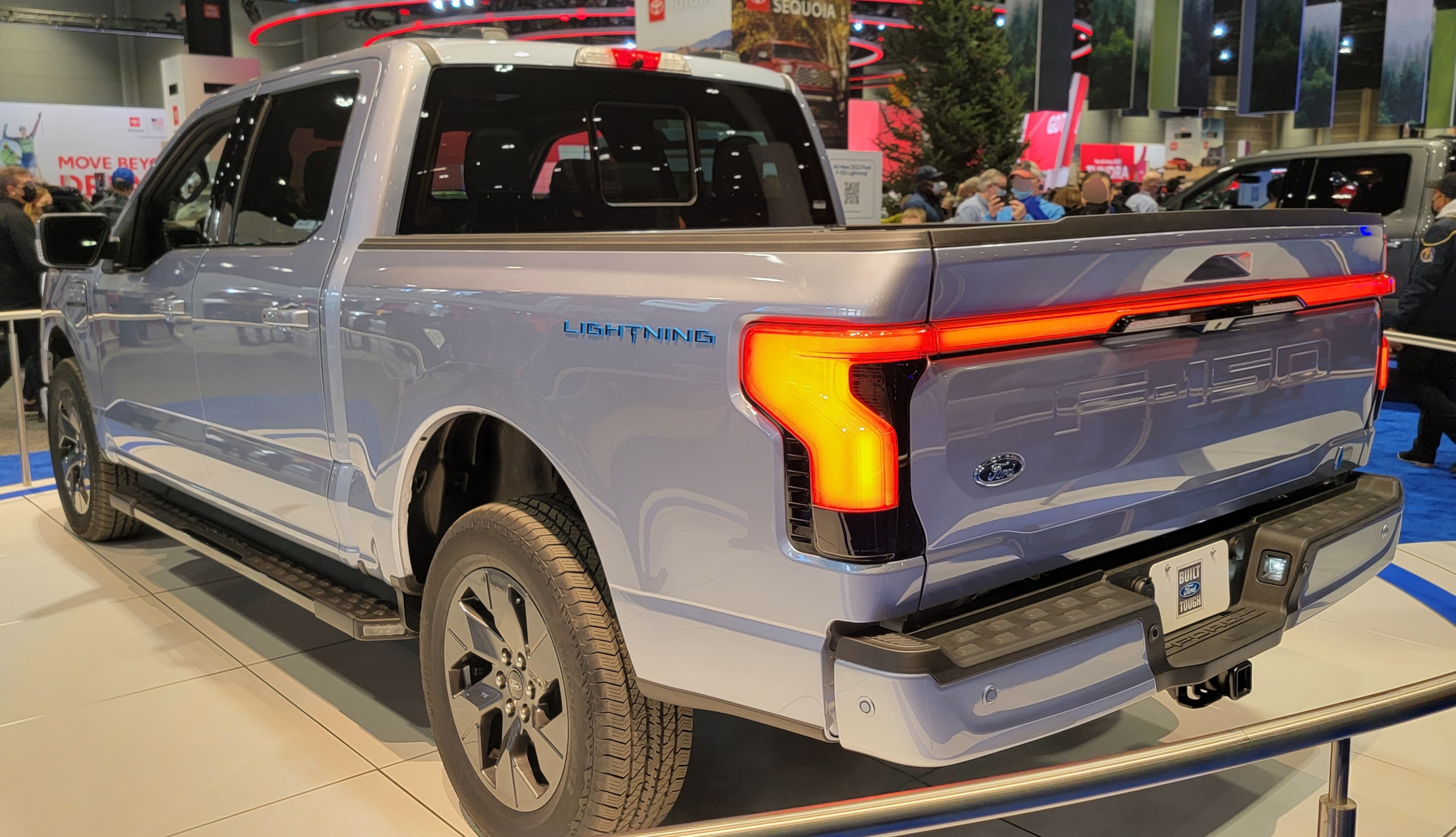
The Ford F-150 Lightning is an electric Ford truck. If you owe more than the truck is worth, that’s negative equity—especially if you want to sell or trade it.
CarMax is a used-car company that gives you an offer for your vehicle. If your car is worth less than what you still owe, those offers can make negative equity feel very real.
“Buy and hold” means you keep the car you already have instead of trading it in right away. If your loan is underwater, waiting can help the situation improve as you make payments and the car’s value changes.
“72 plus months” refers to long loan terms (typically 6 years or more). Longer terms lower the monthly payment but increase total interest paid, and with negative equity they can keep you locked into a high-cost situation for a long time.
The car manufacturer is the company that makes the vehicle. Sometimes they help set up lease deals or incentives, which can change who absorbs the financial risk when a car’s value drops.
Leases assume the car will be worth a certain amount later. If the market value ends up lower than expected, you can owe more than the car is worth when the lease ends.
A buyout rate is the price you pay to buy the leased car when the lease ends. If that price is too high compared to what the car is worth today, it can erase the advantage of having positive equity.
A lease deal is a special offer that lowers the monthly payment. It’s based on what the car is expected to be worth later, so the “best” choice depends on whether you’ll keep the car for a long time or not.
“The economics” here means the real total cost, not just the monthly payment. It includes things like interest, fees, and what the car will be worth later, which can be very different for EVs versus gas cars.
Leasing can make more sense if you think you’ll only keep the car for a short time. Instead of worrying about what the car will be worth later, you’re paying mainly for using it during the lease.
They’re saying EV leases can be a pretty good deal, even if buying a used EV might be even better. That’s because lease payments depend on what the car is expected to be worth later.
An “internal combustion engine” vehicle is basically a normal gas-powered car. They’re comparing how good the lease deals are for gas cars versus EVs, and saying the gas-car deals aren’t as strong.
If you only plan to keep a car for a few years, you might not get the benefit of buying. The costs can be harder to “win” because the car could lose value before you’re ready to sell or trade.
Buying and leasing used EVs can be priced differently than new EVs. That’s because lenders and leasing companies look at how much the car will be worth later. If EV values are dropping fast, the deal terms can change.
Residual value is what the car is expected to be worth later. If EVs lose value faster than people expected, the “residual value curve” drops, and used EVs can look like a great deal. It also changes how leasing and financing deals are priced.
Many EVs include a long battery warranty, often measured in years and/or mileage. An “eight year warranty on their battery packs” can reduce the financial risk of buying used, because battery degradation or failure may be covered. However, coverage details (terms, mileage limits, and what counts as a failure) vary by brand and model.
Volkswagen’s “ID” cars are their electric vehicles. The hosts are talking about how the battery warranty can shape what the car is worth later, especially when the warranty is getting close to ending.
EVs come with a warranty that covers the battery for a number of years. When that warranty is close to expiring, people may assume the battery could become expensive to fix, which can lower what the car is worth later.
The hosts are saying that when an EV’s battery warranty is about to end, used-car buyers may pay less. It’s partly because people worry about what happens if the battery needs expensive work after the warranty.
They’re talking about the worry that if an EV’s battery breaks, the car could be too expensive to repair. That fear can make people hesitant to buy older EVs, even if battery problems aren’t that common.
They’re saying people are nervous because EVs are still new, so there isn’t as much long-term data as there is for older gas cars. That uncertainty can make buyers assume the worst, even if real-world results end up being better.
Concept
battery would fail at year eight
They’re talking about whether an EV battery might fail after several years. In real life, batteries usually last a long time, and there are often warranties that protect you if something goes wrong.
Sticker price is basically the “new” price the car is advertised for. They’re saying you can often buy the same EV used for way less than that new price.
They mean the costs you’ll keep paying after you buy the car. Even if the price is a bargain, tires, insurance, and other expenses can make it less of a deal later.
A certified pre-owned car is a used car that a dealer checks and then “certifies” as being in good shape. It usually comes with extra warranty protection compared to a regular used car.
An extended warranty is extra protection that kicks in after the original warranty ends. Dealers may bundle it into the price so you’re paying for it as part of the deal.
Oil changes are something gas cars need to keep the engine healthy. EVs don’t use engine oil the same way, so that particular maintenance concern is much smaller.
The headliner is the material on the ceiling inside the car. If it starts falling off, it’s usually because the glue or clips that hold it in place have worn out.
Mercedes is the car brand being used as an example in the conversation. The hosts are saying some Mercedes owners may run into issues like interior trim and suspension components.
Air suspension is a suspension system that uses air bags to control how the car rides and how high it sits. Because it has extra parts like compressors and air lines, it can sometimes break and get expensive to fix.
Land Rover is another brand the hosts bring up as an example of vehicles that have had reliability problems over time. They’re using it to make a general point, not to review a specific car.
When leased cars are returned, they usually get sold as used cars. The hosts are saying more EVs will be coming back in 2026, which could change the used-car market and how people think about owning them.
The Lexus GX is a luxury SUV. In this discussion, it’s mainly there to show how a non-EV depreciated compared with an EV over the same timeframe.
LIVE
Dinner time. It's more than just a meal.
It's when work comes to a halt where macaroni masterpieces are made
and little moments turn into lasting memories.
With the Blue Cash Preferred card, you can get 6% cash back at U.S. supermarkets.
So you can bring home the flavors that bring everyone together.
We did say everyone.
Make the special moments even more rewarding.
Learn more at americanexpress.com slash explore dash bcp.
Terms and cash back cap apply with Blue Cash Preferred.
You're listening to this podcast, so I know you've got a curious mind.
Here's a helpful fact you might not know yet.
Drivers who switch and save with Progressive save over $900 on average.
Pop over to progressive.com, answer some questions,
and you'll get a quick quote with discounts that are easy to come by.
In fact, 99% of their auto customers earn at least one discount.
Visit progressive.com and see if you can enjoy a little cash back.
Progressive Casualty Insurance Company and Affiliates.
National average 12-month savings of $946 by new customers surveyed
who saved with Progressive between June 2024 and May 2025.
Potential savings will vary.
Hello, welcome to the Edmunds' Carcass Podcast.
I'm Matt, the moderator, D'Andre, here with Alistair Weaver,
and we'll be welcoming back to the show Jessica Caldwell.
It's a big week at FanDuel.
NBA playoffs are heating up and MLB is in full swing,
so download the FanDuel app and place your bet today.
Must be 21 and over in present and select states.
Gambling problem, call 1-800-GAMBLER.
Jessica is the Head of Insights at Edmunds.
She was on with us a few months ago,
and we got into a conversation about leasing and buying
and negative equity and what that means,
so we'll touch on that and kind of get a recap
of where we are currently,
because you guys just ran a bunch of numbers, basically,
again, and you can explain that.
But before we get into that,
there was some interesting news about Tesla.
Tesla's saying they've rebounded on some sales
and some other things,
but maybe we should start there, Alistair.
What do you understand that you gathered from Tesla's?
What's the takeaway from their announcement?
I think Tesla remains the great unicorn in the EV market, isn't it?
No matter, it seems that whatever Elon does
to damage their reputation, whatever happens,
they somehow just keep going and the share price keeps an extraordinary high level.
The big takeaway for me, which I thought was particularly interesting,
is they were saying that the Roadster, if we ever see it,
I think that's been promised for about 10 years now,
but on the assumption that we eventually see the Roadster,
they're saying that's the only Tesla in the long term
that you will drive yourself.
Everything else, we're going to double down on autonomy
and that this is going to come the way of software updates,
which software updates on most of the vehicles.
If you own an older Tesla, you'll have to trade it in
and get a newer version with the latest hardware.
But that was the kind of interesting takeaway for me,
and it echoes what we heard from R.J. Scrinche from Rivian
on the show a few weeks ago,
that both Tesla and Rivian, I think, as technologists,
if you like, at the helm, they're all in on autonomous driving,
and we're not hearing that from the traditional manufacturers.
So that was kind of an interesting takeaway for me,
that kind of driving is done for Elon.
Do you think they're saying that because they want their consumer cars
to have that technology,
or you think they're really trying to set the stage
for the robotaxi, the car you probably don't own?
Because it seems like that's a big future business model
for both of those companies, especially Tesla.
I think it's a bit of both.
I mean, Tesla's problem right now,
it has an aging vehicle fleet.
The S and the X are going.
The Cybertruck is unloved.
The Model 3 and the Model Y still do well,
but they are fundamentally older vehicles now.
So it is a bit, look at the shiny thing over here.
But I think also they do have a critical advantage,
and the big thing that's driving it at the moment
is the whole AI thing.
Autonomy was kind of creeping along,
and it still seemed that there were kind of big hurdles to jump,
but the birth of AI and the rapid expansion of AI
has made the idea of cars that drive themselves
a lot more accessible in a shorter time period
than perhaps we imagined a few years ago.
So I think they see that as the next big financial moment
for the company that we're all going to be about robotaxis
or individual passenger cars that drive themselves.
I think they feel that they've got something that others haven't,
and I think Rivian feels the same way,
because they're investing heavily in that.
I don't know what you think, Jessica.
I mean, I think he had referenced some of their FSD take rates,
and they're actually shockingly low.
I remember thinking during the call yesterday.
But what Tesla is fundamentally doing
is positioning themselves as a future company, right?
I mean, the reality is they fund everything
from a traditional car company,
which essentially is what Tesla is.
And now they're doing these major cap expenditures
for robots, essentially, and robotaxis.
And we're not entirely convinced that this is what the public wants.
I mean, first of all, we have to stop the hurdle
of everyone worried about AI taking their jobs,
and now we're introducing robots.
I think they may get more pushback than they think.
I mean, is it cool technology?
Yes, but are people going to, I think,
at some point revolt against this?
I think it is altogether possible,
which could be basically what they're betting their future on
at this point.
I think there is a tipping thing there, right?
We've got a Model Y with FSD full-soft driving on it
as a sort of test vehicle for the company.
And I use it more than I imagine when I drive the vehicle.
But the tipping point for me is when I can gain
an hour a day or two hours a day
and I can do some emails or something.
Because if I can buy that time back,
then that technology becomes critical to me.
Because I love driving.
I'm a driving enthusiast, but I don't love commuting.
So if I can gain an hour or two a day,
that's going to make the world a difference.
Then I think you've got that breakthrough moment.
If I still have to sit there staring forward
and observing everything that's going on,
the benefit is marginal.
So that's a personal opinion.
And I still think, to your point, Jessica,
it's still going to be a relatively small proportion of people.
But you think about a city like LA,
the moment you can all just sit there and tap away at your laptops
as you commute, that's a huge benefit.
I agree with you.
And I think Wall Street agrees with you.
But I feel like consumers have been hearing this promise for so long.
They're just kind of over it.
And they're just like, when it happens, it happens.
But it's not happening now.
And that's like, what's affecting my life now?
So when Elon and Tesla talk about autonomy,
autonomy, autonomy, autonomy, consumers seem to care less.
Like you were saying, the buy-in on FSD is low.
But Wall Street keeps rewarding it with this stock price.
So a guy like RJ at Rivian is trying to put that in the conversation.
But I don't know that consumers are really care
if he's saying that or not.
But I'm for sure he wishes his stock price would reflect
the conversation he's having about autonomy the same way it reflects Tesla.
And it's not happening there yet.
So I don't know, it just seems like I agree with you.
It'd be great to go, oh, I got to have a meeting tomorrow morning
in Orange County.
I'd love to get some work done and make some calls
and send out some emails while I'm in the car
for the next hour and 15 minutes there and another hour back.
And then the other part of it is just price
because at the moment it's still expensive.
If you can get the volume up, you can get the price down.
And I think what Tesla and Rivian are also saying is,
can we license this technology?
Rivian has a deal with Volkswagen.
Can they license this technology to Volkswagen?
If Volkswagen doesn't have it and away you go.
So it's interesting in times.
Tesla is still dominating the EV market, isn't it?
I mean, it's still going.
Yeah, it's a smaller share than it once was.
And I think there was a lot of news this week
because California had released its Q1 sales
and Tesla market share went up.
It's been going down for quite a long time.
But it's a much smaller piece,
or it's a larger piece of a much smaller pie.
And I think in times of uncertainty,
which we feel right now from a macroeconomic,
geopolitical uncertainty,
that people tend to go with something that they know
and they're familiar with.
And I think Tesla is that EV company at this point in time.
But that definitely doesn't last forever.
So it's a hard balance, I think,
for them to walk moving forward to deal with the reality today
and get those products less aging.
Nobody wants older EVs.
Everyone wants newer stuff,
especially as you have second and third time buyers.
And then all of the robotaxies and the robotics
and everything that they're hinging their future on financially.
And that's what Wall Street is paying attention to.
They're looking at it going,
we understand you're a car company.
We want you to sell cars so we can look at your revenue
and make some decisions.
But all the hype is around robots and AI and autonomy.
And that's what drives up this super inflated stock price.
But OK, so Tesla sales are up.
Tesla is doing better globally in the US.
But we're not necessarily seeing that across the board.
One of the statistics you shared with us
before the podcast, Alistair, was Jeep.
Was it the Jeep Wagon Air?
Yeah, the Wagon Air S, which was Jeep's big electric hoe.
First quarter they sold 175.
The charger EV, this actually surprised me
because I thought the Jeep would sell the charger,
but the charger sold 240 in the quarter.
So whether those were giving them to dealers,
saying you've got to shift these things, I don't know.
But I mean, these are extraordinary numbers.
And what was striking to me about a lot of the EV sales
datas and the market share and everything else
is people were saying, well, Cadillac is booking the trend.
Well, Cadillac's booking the trend because also they've got
incredibly low lease rates on them.
So they're almost giving them away.
So it's a fascinating market.
But where do you see all this shaping out, Jessica?
I mean, Alistair, it's down to 5% nationwide, isn't it?
A little bit under 5%?
Yeah, EVs are about 2026, rather.
They're about 6% of sales, new vehicle sales.
But I think with EVs, and I think the Jeep illustrates this point
well, is that there's kind of two camps.
One is the affordable everyday practical EV
that most people can live with and drive and the range is fine.
And then there's the statement EVs, like the Hummer
or the Lucids, where it's like, I've got the latest and greatest,
and this is really cool.
And then it feels like everything else is sort of lost in the mix.
So if you have someone like Cadillac who has vehicles
and you can make them affordable by price point,
that's very different than having a super expensive Cadillac EV
that just is going to have to sell on image.
So it's a bit of a tough market.
And I think a lot of the traditional OEMs
are sort of failing in that regard.
But we do see strong promise from some of the new vehicles,
like the Toyota, for instance.
I think that's such a natural.
It may not be critics choice of EVs,
but I think that you have so many people that have bought Toyota
hybrids over the years that they have bridged now into a full EV
and are looking for that type of vehicle,
which will inherently make it successful.
But EVs, I would say right now,
are struggling to get a bit in the United States
post-federal tax credit hybrids doing very strong.
And the gas price bike has done a little bit to help EV sales,
but I wouldn't say a ton.
I'd say that it's very minimal and very different from past
gas price bikes that we've seen in 2022 and even in 2008.
We talked last week a little bit about at what price
does gas need to reach for it to make you want to buy an EV?
Because now you're buying it based off of its powertrain,
not really on sort of the merits of the car.
I mean, it's a factor for sure for some people,
but we were just kind of hypothesizing going,
well, how expensive does gas need to be?
And we're all in California, so it's a little different for us.
But for most people in the country,
if you're in Texas or St. Louis or something,
and it's three something a gallon,
what price does it need to be for you to buy an EV?
Here, you can go around and be 650 a gallon.
You can drive around out here and you're looking at it.
It's like the crazy number has been a couple hundred dollars
filling up your car with fuel.
I mean, it's a hard problem, really,
because an average price of an EV is $55,000,
so you're saving, you know, $2 a gallon.
Let's just say it went up $2 a gallon for the $55,000 purchase.
That doesn't quite economically make sense.
I think it only makes sense for people that are in the market
in the short term have a lease return or are ready to purchase
to buy their vehicle, but other than that,
I think the math doesn't add up.
And the thing that's interesting now is because we have high prices,
because we have high interest rates,
it really does make this challenge a lot harder
because we did see periods of time in history
in which you did see crazy shifts.
In 2008, absolutely, you saw a lot of things happening
during that time period of large SUVs being traded
in for very small vehicles, not EVs.
They weren't around then.
But Honda Fitts, Toyota Prizes,
we saw full-size SUVs being traded in for those vehicles
bought over MSRP because of gas prices.
And today it's just not possible
because vehicle prices have gone up so much
and the average interest rate is 7%,
and it just makes these monthly payments too high.
You don't like gas prices, but what's the alternative?
I was saying on the show last week,
I don't really agree with this,
that you're right on what you just said,
that it's $55,000, therefore,
the fuel cost is actually a small proportion.
But your monthly payment is like your gym membership,
it's a sunk cost.
Whereas when you go to the gas station on a weekly basis
and you put your AmEx card against it,
you see it, it's much more visceral
and it has a different psychological impact.
Therefore, you kind of weight the cost of fuel differently.
Is that fair?
Yeah, no, that's true.
And there's nothing else that I can think of
where you drive down the street living your life
and the price is blasted in like a massive sign
almost on every street corner, right?
So it's not even when you're at the pump,
it's when you're just living your life.
So there's nothing that is like that.
And most people have bills that they said and forget it.
It's on a monthly system, it's linked to your credit card.
It's like, yeah, you know, it's there, it doesn't feel great,
but it happens.
Whereas gas, you can't escape that number.
And it does have an outweighted psychological impact too,
too many consumers,
because you have to confront that number multiple times a month.
So you do see that as a part of the psyche.
So I think it does, like if you have to have a survey
or something that's always very high
in terms of what people consider.
But I just feel like right now,
affordability is such a challenge.
It's like you're mad,
but it's almost impossible to do something unless you're in a
financial place where you don't like gas prices,
but it's not going to kill your monthly budget.
Driving around town,
every time you pass a gas station,
you have this massive depressing billboard reminding you
that maybe you should have stayed home.
It's just, you know,
I was going to ask is,
do you guys at Edmunds,
or does anybody track the average price
of charging an EV either at home
or more importantly, on public networks?
Is there like an average per kilowatt price,
like in California and outside of California?
Because everybody talks about gas prices,
but to be honest with you,
out here in California,
if I'm on using a public network
and I use a Tesla charger with my adapter,
some of the places I go to,
it's 60, 70, 74 cents per kilowatt.
I'm like, this is as much as gas.
There was a period in Texas
where gas was cheaper than electricity.
If you're running,
it was cheaper to run a gas car purely in fuel terms.
There are numbers,
most of it's tied to your,
and on the Edmunds fleet,
we track everything,
so every time we charge,
we run those numbers.
The basic advice is always charge at home,
charge overnight.
So nearly either your charging system
or your car will allow you to schedule charging.
So in my case,
the way that my deal is done
with the electric company is,
I start charging at 10 p.m.,
which gives me enough time to charge the car
before I need to leave in the morning.
So if you charge say at seven o'clock at night,
which is peak time
when everybody's coming home
and cooking dinner,
then you're going to pay a lot more for your electricity.
And again, it's these little nuances
that can actually make quite a significant difference.
If you charge at a fast charger,
it's more expensive.
If you charge overnight at home,
it's going to be sometimes half the price, literally.
Yeah, okay.
We're going to turn the page.
We're going to get into this,
the latest and greatest on negative equity,
if that's what you want to call it.
But let's just take a quick break,
and then we'll be right back.
Quick reminder, if you're watching games this week,
jump on Fanduil,
whether it's NBA spreads,
player props,
or same-gay parlays,
Fanduil makes it easy to get in on the action.
Download the Fanduil app
and place your first bet today.
Okay, so continuing the conversation
of this idea of negative equity
that we had a few months ago,
and now that Q1 is,
the numbers have been crunched.
I wanted to talk a little bit about that.
You guys put out some information today.
Jessica, do you want to start with that?
Yeah, so negative equity
is basically people that trade in their car,
and it's worth less than the loan amount that's left over.
So as people trading in their vehicle,
generally on the earlier side,
and so what happens is they have to take that amount
that they still owe on their current car
and apply it to their next vehicle purchase.
So that's how you get some of these mid-sized sedans
or smaller CVs that are suddenly now $50,000,
because you have rolled in negative equity
into that purchase.
And what we're seeing is that the percentages,
I wouldn't say that it's necessarily troubling.
We have seen times in history where it has been higher.
It's about nearly a third of all people
that trade in a vehicle have negative equity,
so that's not a great number,
but at least seven out of 10 people
don't have negative equity, so that's good.
It's just the amounts, I think,
that are getting a bit scary,
because the amount of negative equity
that we had seen in the first quarter was over $7,000.
And generally what you have in the first quarter
is people that are a bit more, you know,
I would say financially conservative that purchase.
So the fact that you are seeing such a high dollar amount
at this point being rolled in is a bit troublesome.
And I think the longer-term trend that we are seeing
is just the length of the loan terms
that are growing for these people with negative equity.
So over about 90% of people with negative equity
that have a new loan are financing it for 72 months or more.
About 43% of those 72 are financing them for 84 months.
So the fact is you've bought an expensive vehicle probably.
You have more than $7,000 of negative equity
that is rolled into this loan,
and now you're putting it out for 84 months.
Chances are in four years, five years,
you're still gonna find yourself in a pretty bad situation
when you're ready to purchase your next vehicle.
Or if something comes up in year two or year three,
you're probably in a ton of negative equity.
And sometimes that even precludes you from getting another vehicle.
So this is just a trend that we are watching,
because one, it doesn't feel good,
I think for most consumers,
at find themselves in their position.
And then two, when people get themselves into this position,
it's really tough to get out.
And there's not sometimes a lot of great alternatives
that you can turn to when you're in a situation
of so much negative equity.
I was reading your most excellent analysis.
And one of the things that stuck out to me is
one in 10 people now have like $15,000 of negative equity.
So their car is worth $15,000 less than the amount that they owe,
which means that when you go and get your new car,
you've got to bridge this $15,000,
an extraordinary sum of money.
Yeah.
None of you are buying a very expensive vehicle, too,
for your next purchase.
Yeah.
So I just want to put this in like simple terms,
because you're much more of an expert in this field than I am.
And I was kind of reading all of this,
and then trying to sort of digest it.
In very simple terms,
that means that if you're buying a $30,000 Toyota,
the real cost of that vehicle is now $45,000,
because you've still got to deal with the $15,000
that you owe against the car that you're just getting rid of.
Mathematically, yes.
But you would never get approved for a loan like that.
Yes.
But that's basically how it would work, yes.
Every time we have this conversation.
Every time we have this.
Sorry, Matt.
But did you just continue the point?
You wouldn't get approved for a loan
because of the way the rules work,
but you're still going to deal with that $15,000, right?
Yes.
That's exactly right.
And that's why we see people push out loan terms to be so long
because they're just trying to get to a monthly payment
that they can afford.
And the scary thing too about negative equity
is when we look at these loans,
the down payments are very low.
They're probably even in the range of $2,000,
which is much lower than the average new car loan
that you should have.
So you're rolling in negative equity.
You have a low down payment.
You're probably buying a more expensive car than you should,
and then you're financing it for a very long period of time.
None of that sounds good.
Put together, it sounds like a financial disaster.
Because I was almost drawn into that.
We were talking on the show recently, I like about,
and I would have this conundrum,
lease an EV or buy a gas car and keep it a long time.
And when I was looking at something like the Volkswagen Tiguan
and suddenly you do that,
we want to reduce our monthly payment a bit.
We're looking at the long term thing.
It's like, oh, 72 months.
Now I'm going to be paying like 350 a month or 400 a month.
And then I started to kind of do the maths
and the whole life cycle.
Oh, this is not a good deal.
But it's really easy psychologically to get sucked into that.
Yes, that's right.
I was going to say, just as a reminder,
and you pointed this out last time a few months ago, Jessica,
was not really a big deal.
I don't want to scare people with this negative equity thing.
It's not a big deal if you don't plan on getting rid of your car.
My truck, my EV, my lightning, negative equity for sure.
Every time I look at what I owe and then I go to CarMax
and I type it in and I want to tear out my hair.
But I'm like, but I'm not getting rid of it anytime soon.
So there's some relief for me and that going, oh, I don't,
you know, it still works great.
It's only got 22,000 miles on it.
You know, it doesn't have a problem.
I don't need to get rid of it anytime soon.
You know, I don't put a ton of miles on it.
You know, so I keep it garage.
Like I can keep this thing for a long time.
And then at some point this will all sort of fade away for me.
But I mean, that's right.
I mean, that's the number one tip.
If you are in a situation with negative equity,
just buy and hold.
If you can keep that vehicle for the duration of your loan,
do it.
But I think the other issue that we probably will see too is when
we look at the average payments for people with negative equity,
they're over $900.
They're high.
So that means you will be committing to that high monthly payment
for a period of 72 plus months.
And for some people that feels almost like, you know, a red payment,
maybe not in today's day and age, but at one point it felt like
that would be, you know, a red payment.
So that's a tough part too.
Yeah.
Now the idea of, you were saying Alistair,
possibly lease an EV or buy a gas car,
those are two viable options that seem to make the most sense.
But that's mostly because, well,
EVs seem to lose a lot of their value, right?
So the safety net would be to lease it and have that negative equity
be the responsibility of the car manufacturer or the finance
company that they're going through to provide that lease for you.
So kind of relieve yourself of that pain.
But the car companies are, they're going to look at all of these
deals and stuff they've been doing to move cars.
And that's going to show up in their quarterly issues,
their financial issues, right?
You were talking to somebody at, was it Kia?
Yeah, I spoke to Kia CMO and he said basically every EV,
not just a Kia EV, but pretty much every EV on the market
is going to come back with negative equity.
But the majority of EVs, the vast majority of EVs have been leased.
So it becomes a problem of the finance company.
Now I guess as a somebody who's leased,
because I've been buying EVs for the family or leasing EVs,
I've seen this on both sides.
At the end of my time with the Tesla,
there was massive positive equity in it,
but Tesla wouldn't give me a buyout rate.
So Tesla benefited.
Now the Genesis has just gone back.
Massive negative equity.
So thank you very much, your problem.
Right.
So you can see it both ways.
So for me, the whole lease thing,
or particularly lease in the EV market,
is because there are so much incentives being
put behind the lease deals that it kind of becomes
a bit of a no-brainer when you do the economics.
If you're buying an EV, I think if you're buying a gas car
and perhaps keeping it longer term,
then I think, Jessica, I maybe agree with this,
that the economics become a little bit different
and perhaps buying is still an interesting option,
but you've still got to go into it with your eyes open.
Yeah, and I think also just be honest with how long
you really want to keep the car.
Like if you know you're going to have a third child
or you know that you're going to be an empty nester,
there's some life event that may change your vehicle needs
in the next few years, and you need to factor that in.
I think it's easy to get excited about the here and now,
but it's something that you should keep for a period of time.
And if it's not, then leasing becomes a more viable option.
If you're not, like leasing for an EV is a good deal,
not as good as a used EV, but still a good deal.
But if you're leasing for internal combustion engine
vehicle, I don't see the deals as great there.
In fact, the lease rates are, take rates are quite low
on that side of the market.
So, but if that's, if you know you're going to own the car
for only a few years, then you take that gamble
and then you lease it anyway.
But I think being honest with yourself is probably
the first good step as you approach car purchasing.
I have a thought on this and a couple of questions,
two questions is first of all for Alistair,
you've guys have done so much long-term testing now.
What is your feeling on buying or leasing used EV vehicles?
Well, you can't really, I mean, I suppose leasing
would be more like leasing in the used markets
that you can't really do in the same way as you can
on the new market.
That's different rates and things like that.
But let's just say to acquire.
If you acquire, the thing that is still, Jessica's right,
like there's the residual value curve of the vehicle
kind of flips if you buy, if you're the second buyer.
So the fact that these vehicles have,
the value of these vehicles has crashed so spectacularly
and suddenly you can buy a very nice EV
with not many miles on the clock, two or three years old
for low twenties, makes them very desirable.
The bit that we're still kind of questioning is
most of these vehicles have got an eight year warranty
on their battery packs.
So let's say you buy a three year old ID,
Volkswagen ID for something like that today,
maybe you're paying 20,000, a little bit more.
In three years time, when you're selling it on
or four years time, the battery warranty is almost at an end.
So what does that mean for the next consumer
and what does that mean for your value at that point?
I don't know you got an opinion on this, Jessica,
but that for me is kind of like holding back
some of that thought is, does the car then become disposable?
Because if the battery pack fails, you know,
then it's pretty much going to be a write off.
But on the flip side of that is actually battery packs
don't really fail and they've got a longevity.
But I think there's a certain psychology around that.
There's a fear factor of what does a 10 year old EV
actually look like?
I mean, it really just is the unknown
because we just don't have a lot of data yet
that shows us what exactly is happening
because it feels like all the information we get
about battery packs are way better than what we thought
or what we had feared just a short while ago.
So it is tough, but if you are paying 20,000 dollars
for this very nice vehicle and you keep it $5,000
for the duration of the battery warranty,
have you really paid that much?
I mean, considering how nice that vehicle package probably is,
and that's assuming that the battery would fail
at year eight, which it likely won't.
It's just, do I want something that's more modern and new
and perhaps technology would be different?
I mean, we were just out and about the other day
and I pointed out to somebody, I saw the Mercedes EV,
the little sedan, EQ-E.
Is it EQ-E?
EQ-E, yeah.
EQ-E.
And we went to the launch of that
or a debut of that a couple of years ago.
It's been out for a few years.
And I just looked at it and said,
you know what, that's a nice car.
You could buy that thing used
for half of what its sticker price is.
It was, I don't know.
Oh, even less.
I mean, 90,000.
$100,000.
You could take for 38 grand if you wanted to.
Depending on the mileage, maybe 35 to 45 grand.
I was like, it's three or four years old.
You're getting it for half the price.
It's a pretty good quality car.
It looks just like the new ones that are on the road.
You wouldn't tell the difference basically between
the three-year-old version and the one on the dealer lot.
That's true.
And I looked at that.
I looked at that as a proposition because you're right.
I think I was looking at ones that were 80 grand
and got 15,000 miles on the clock and were now 35.
I mean, it really was that extreme.
And with all the software updates and everything else,
they remain current.
The only thing I would say on that is, you know,
you still got a factor in that it started as an $80,000 car.
So things like tires and insurance, there's a lot of things that,
you know, it's still a $80,000 Mercedes.
There's certain things that will probably be more costly to run
than say, than some other vehicles.
But, you know, tie-cap or should tie it?
Well, suddenly you're into more exotic cars.
But again, look at the longer-term running costs.
It's not always quite the deal that they see.
But we are talking about an EV.
So first of all, it's not necessarily out of warranty.
Maybe you get a certified pre-owned.
Maybe there's some sort of extended warranty on it from the dealer.
So you pay a little bit of a premium
because they're rolling that warranty into it.
But, you know, the wear and tear on it sure are tires and stuff.
But, you know, mechanically, like what do you, you know,
the engine oil changes really kind of a non-issue here
when it comes to EV.
So you may be, you know, to your point, Jessica,
you may be afraid of that warranty running out
and you're stuck owning this EV,
but also the risk factor of it having more potential issues
is probably lower compared to the gas engine equivalent.
But if we talk about Mercedes,
your headliner is going to probably fall off
and your air suspension is not going to work well.
Like all the issues they've had over the years,
along with, you know, Land Rover and everybody else.
I have a 46-year-old Mercedes.
I don't think I should be commenting on this conversation.
But I will say, I mean, the consumer alert here too
in this conversation is that we will see many more
electrified vehicles come back off of lease in 2026,
especially compared to 2025.
So a lot more EVs will be certified pre-owned.
So whatever that warranty looks like from each automaker,
I think that kind of gives you that extra bit of relief.
I mean, you know, it's not going to cover obviously
the 20 years of a battery warranty,
or maybe it will.
Maybe we'll get really crazy incentives at some point.
But that is something that we will see more in the market
this year.
So if you are looking for those used EV deals,
and I mean, you guys know,
three-year-old EVs at this point in time, they're pretty good.
I mean, if we had this conversation about three-year-old EVs,
maybe three, three, four years ago, I'd say,
I'm not sure about them,
but now I think we're in a position where they're,
they're compelling vehicles.
Well, we've just had an extraordinary situation on our,
on our one-year ownership fleet that we bought a Dodge Charger EV
and a Lexus GX at the same time for roughly,
roughly speaking, the same money.
And after 20,000 miles,
the GX has depreciated $2,000.
Okay, nothing.
And how much do you think the charger,
which let's face it started off at the same price,
how much do you think the charger has depreciated
over 9,000 miles?
All of it.
Oh, it's worth, what the-
It's 50 to 75%.
This is not a good,
this is not a good business admission, Jessica,
but we basically, it's basically down 50 grand.
So you've got a 40,
you've got, you've got a pretty much a $50,000 price differential
on two vehicles that started at the same price.
So, you know, it's, it's a weird market.
If we move the conversational side,
there's a question I always like to ask when you,
when you come on, is like,
if you're shopping for a new family car right now,
in the kind of, you know,
sort of in the kind of most popular sectors of the market,
what's the advice?
What's the best way to deal with a new car right now?
Well, I think from your example by,
was it a Lexus GX that we purchased that lost $2,000?
Because no matter what happens-
I think most of us can, if you're buying a Lexus,
you can handle a $2,000 loss over the course of a year.
Starts at 80 grand though, 78.
Now it's about 60 something.
So it's probably beyond the reach of many.
Yeah. Yeah. I guess that is true.
Yeah. Honda, Toyota, Lexus, all good residual value.
You look at positive equity.
We talked about negative equity, positive equity,
a lot of those vehicles.
I mean, you know,
talk to someone that owns a Toyota Tacoma,
they're going to be in a good situation,
nearly regardless.
So some of it does come down to vehicle choice
and, you know, how long you want to,
to keep your vehicle.
But for, you know, for someone buying a vehicle now,
it's, you know, it's, it's a tough market.
But I think we're starting to see incentives turn up a bit.
It's been a slow Q1 in terms of sales.
And I think that's understandable given weather,
given the geopolitical uncertainty,
like that does not put people in a list by a big,
let's do a big purchase moment.
So sales have been sluggish.
And we're going into the spring and summer selling season,
which means that volume should increase.
So if that starts to lack a bit,
we may see a little bit more juice in terms of incentives.
But we do know that interest rates are still high.
It doesn't look like the Fed is moving there.
So most people finance their vehicle.
So you're going to expect probably continued high interest rates,
you know, and pricing.
So I think it's, you know, it's one of those situations where
this is sort of the reality.
And I think people are starting to grasp that because so many
aspects of our life,
the prices have gone up so significantly.
So why is it any different with, with vehicles?
But I think right now what's probably really important too,
for consumers is to think about sort of that total cost of ownership.
How much am I paying for gas now? Cause that's, you know,
that could go down in two weeks time, but we don't know.
But the reality is that it fluctuates quite a bit.
And then also insurance.
So it's not just about like what my monthly payment is.
Don't get necessarily distracted like Alistair did 72 months.
Oh, this looks like a good monthly payment.
But think about it like a little bit more deeply in terms of
what am I signing myself up for?
And then what exactly is that total output that you're expecting?
Because all the prices across the ownership cycle have gone up,
even maintenance repairs, all of those things.
Like what is it going to cost you?
Yeah, for sure.
Says the woman who has 46 year old Mercedes and nothing but positive
equity in that car.
Unless you've been making payments for 46 years,
but that would have been a bad deal.
Yeah, that would have been quite the loan.
She's been paying $13 a month for the last 46 years.
Let's say like, let's hope I wasn't in a position to buy in your car
46 years ago.
Not that quite that old yet.
I am older than the car, but not that old.
The other thing to bring up as far as the testing and stuff that you
guys do at Edmunds, like you, we don't call it one year test.
It's more of a long-term test.
And you try to jam as many miles into that other way around.
We call it a one year test, not a long-term test because nobody
knew what long-term test.
Not long-term test is it.
So you've had it for a year, but you jam as many miles as you can into
that one year.
And so as for me, having this, the electric truck,
being in different groups and forums and stuff about them,
the conversation comes up quite a bit.
Someone will jump into the group and go, I'm thinking of buying one.
You know, here's a new one, I'm thinking of buying,
or here's a used one I'm thinking of buying.
And we were talking about sort of the reliability of used EVs,
something to pay attention to is looking at the different groups,
Facebook groups.
People would go on there and go, I'm looking to buy, you know,
three-year-old Lightning.
It's got 32,000 miles on it.
Here's the price.
You know, it's going to be at a warranty soon.
What do I do?
Is it a good deal or not?
And people would chime in and go, I've had mine for four years.
I have 118,000 miles on it.
And all I've done was like tires and alignment and a cabin filter.
You know, it's just like, that's it.
Some people, it's worth looking into.
If you're getting into that used EV market,
look at some of the real-life instances and the case studies
of owners and the tests that you guys do.
Yeah, we have a lot of data.
We have a partnership with a company called Recurrent.
And we have a lot of data on the site about battery life.
And I think we've shared this before on the show.
It's not an iPhone.
You know, I have an iPhone that's 18 months old
and its battery is now dying because, you know,
it knows in six months' time I'll be due an upgrade.
It's not like that.
You know, the reality is car batteries are doing a much,
as Jessica said, performing much better
than perhaps most people expected.
So you get a small degradation,
but really not enough to worry about.
And that seems to be holding true into the medium
and long-term as well.
So it's, and it's also not necessarily my least dependent.
It can be more, we understand from the data seen,
it's actually more to do with time than mileage.
So a lot of the kind of norms that you think about
in internal combustion will kind of change a little bit for EVs.
So it may well be that like a Nissan Leaf that's five years old
with 20,000 miles on it is actually less desirable
than a Nissan Leaf that's two years old with 50,000 miles on it.
So, you know, the old thing of buying the, you know,
buying the your grandma's car or whatever,
which, you know, was always the desire as a kid.
That is not necessarily held true in the same way.
But there's a lot more to come because, you know,
it's still a fairly immature market, really.
Yeah. Yeah.
All right. Well, that's a good point.
So on the EV stuff, you want to look at the time,
not just the mileage, because that might be a factor.
If you go on our site and look at like EV pages,
we have a lot of data on there around like predicted battery life
and things like that.
It's quite an interesting, it's quite an interesting area.
But I think the key message is it's not, it's not like your phone,
you know, you don't get two or three years in and suddenly
only goes half as far.
That's just, that's just not the reality.
Yeah. I kind of feel like the phone companies secretly send
that over the year update going, new phones coming out next month
and then over the year, you're all of a sudden yours is slower
and it doesn't work as well.
And you start going, you know, this thing's really been bugging me
for the last month.
Maybe it's time for a new phone.
They don't do that to cars.
All right.
So I think we're pretty much out of time.
Is there any final thoughts?
What else is coming up?
No, just thank you, Jessica, coming on.
I think we always value your, your insights.
If you're pardoned.
Well, thank you for having me.
It's always a good time here.
Yes. Thank you so much.
And looking forward to the next time that you are on
and we will wrap things up.
Thanks so much.
And until next time, keep the air and the spare and the bag
and the wheel.
About this episode
Tesla’s sales are rebounding, but the bigger debate is what Tesla and Rivian are really betting on: autonomy/robotaxis. Guests discuss low FSD adoption, consumer skepticism, and the gap between Wall Street hype and real-world buy-in—plus how EV market share is shifting toward affordable “everyday” models. The second half turns to negative equity: about a third of trade-ins roll in negative equity, with average amounts rising (over $7,000) and loan terms stretching to 84 months. They also cover charging-cost realities and why used EVs can be compelling, especially with battery longevity data.