
CarCast+Edmunds - Tesla sales pick up and negative equity on car loans continues to increase.
About this episode
Tesla’s sales are rebounding, but the bigger debate is what Tesla and Rivian are really betting on: autonomy/robotaxis. Guests discuss low FSD adoption, consumer skepticism, and the gap between Wall Street hype and real-world buy-in—plus how EV market share is shifting toward affordable “everyday” models. The second half turns to negative equity: about a third of trade-ins roll in negative equity, with average amounts rising (over $7,000) and loan terms stretching to 84 months. They also cover charging-cost realities and why used EVs can be compelling, especially with battery longevity data.
Follow @motorator
Follow @weaveroncars
Follow Bravago Beverages
Hosted by Simplecast, an AdsWizz company. See pcm.adswizz.com for information about our collection and use of personal data for advertising.
negative equity on car loans
"Podcast title: "CarCast+Edmunds - Tesla sales pick up and negative equity on car loans continues to increase.""
Negative equity means your car is worth less than what you still owe on the loan. If you try to sell or trade it in, you may have to pay extra out of pocket—or add that extra amount to a new loan.
Negative equity happens when you owe more on a car loan than the car is worth. It often grows when a vehicle depreciates faster than the loan balance is paid down, making it harder to trade in or refinance without rolling the difference into a new loan.
leasing and buying
"...we got into a conversation about leasing and buying and negative equity and what that means..."
Leasing and buying are two different ways to finance a vehicle. Leasing typically means paying for the car’s depreciation over a set term with mileage/condition rules, while buying builds ownership equity and you keep the vehicle after the loan is paid off.
Tesla
"...there was some interesting news about Tesla. Tesla's saying they've rebounded on some sales..."
Tesla is one of the biggest electric-vehicle companies. Here, they’re talking about Tesla saying sales improved and how the company’s reputation and stock price keep staying strong.
Tesla is a major EV manufacturer whose sales, pricing strategy, and product announcements can move both consumer demand and investor expectations. In this segment, the hosts focus on Tesla’s reported sales rebound and how the company’s reputation and stock performance interact.
autonomy
"Everything else, we're going to double down on autonomy and that this is going to come the way of software updates,"
Autonomy means the car can do more of the driving itself. Instead of you doing everything, the car handles steering, speed, and other driving tasks—at least more and more over time.
Autonomy here means the car’s ability to handle driving tasks with minimal human input, typically via advanced driver-assistance systems and eventually full self-driving. The hosts connect it to Tesla’s strategy of pushing capability over time rather than relying only on new hardware at purchase.
software updates
"and that this is going to come the way of software updates, which software updates on most of the vehicles."
Software updates are like phone updates, but for your car. They can add new features or improve how the car drives without you buying a totally new vehicle.
Software updates are how modern connected cars add features or improve driving behavior after purchase. The segment suggests Tesla’s autonomy improvements will be delivered this way, which is a key difference from traditional automakers that often require hardware changes or new model years.
trade it in and get a newer version with the latest hardware
"If you own an older Tesla, you'll have to trade it in and get a newer version with the latest hardware."
This describes a common EV/tech-car strategy: autonomy and advanced features may depend on newer sensors, compute, and wiring—so older cars can become “outdated” even if they receive software updates. The implication is that owners may need to upgrade hardware to keep up with the newest autonomy capabilities.

Rivian
"and it echoes what we heard from R.J. Scrinche from Rivian on the show a few weeks ago, that both Tesla and Rivian,"
Rivian is an EV maker known for trucks and SUVs, and it’s mentioned here as another company taking a technology-first approach. The hosts compare Rivian’s autonomy focus to Tesla’s, contrasting both with “traditional manufacturers.”
robotaxi
"or you think they're really trying to set the stage for the robotaxi, the car you probably don't own? Because it seems like that's a big future business model for both of those companies, especially Tesla."
A robotaxi is a car that drives itself and you summon it like an app-based ride. The company makes money by charging for rides, not by selling you the car.
A robotaxi is a self-driving vehicle operated as a ride-hailing service, where the company monetizes trips instead of selling the car to an individual. The hosts frame robotaxi as a major future business model for Tesla and Rivian, which helps explain their push toward autonomy.
aging vehicle fleet
"I mean, Tesla's problem right now, it has an aging vehicle fleet."
An aging fleet means there are lots of older cars still being used. If those cars have older hardware, it can be harder for the company to deliver the newest self-driving features to everyone.
An aging vehicle fleet means the average age of a company’s cars on the road is getting older. For autonomy-focused strategies, older vehicles may have less capable sensors or computing, which can limit how quickly the company can roll out improvements across its installed base.

Tesla Model S
"The S and the X are going. The Cybertruck is unloved. The Model 3 and the Model Y still do well,"
The Tesla Model S is Tesla’s bigger, higher-end electric sedan. The hosts are implying Tesla is moving away from it and the Model X in favor of other models.
The Tesla Model S is Tesla’s flagship electric sedan. Saying “The S and the X are going” suggests Tesla may be de-emphasizing or phasing out focus on these models relative to higher-volume vehicles like the Model 3 and Model Y.

Tesla Model X
"The S and the X are going. The Cybertruck is unloved. The Model 3 and the Model Y still do well,"
The Tesla Model X is Tesla’s electric SUV, positioned above the Model Y. The comment that “The S and the X are going” implies Tesla’s strategy or sales mix may be shifting away from these models.

Tesla Cybertruck
"The S and the X are going. The Cybertruck is unloved. The Model 3 and the Model Y still do well,"
The Tesla Cybertruck is Tesla’s electric pickup truck. The hosts are saying people aren’t as excited about it as they are about some of Tesla’s other cars.
The Tesla Cybertruck is Tesla’s angular, stainless-steel pickup truck. In this segment it’s described as “unloved,” which points to weaker consumer enthusiasm compared with Tesla’s other models.

Tesla Model 3
"The Cybertruck is unloved. The Model 3 and the Model Y still do well, but they are fundamentally older vehicles now."
The Tesla Model 3 is Tesla’s popular electric car. They’re saying it’s still selling well, but it’s getting older compared to newer options.
The Tesla Model 3 is Tesla’s high-volume electric sedan. The hosts say it “still do[es] well,” but that it’s now “fundamentally older,” implying demand may shift as newer tech and models arrive.

Tesla Model Y
"The Cybertruck is unloved. The Model 3 and the Model Y still do well, but they are fundamentally older vehicles now."
The Tesla Model Y is Tesla’s compact electric crossover/SUV. The segment groups it with the Model 3 as still strong sellers, but “older vehicles” whose appeal may be challenged by newer technology and competitors.
FSD take rates
"I don't know what you think, Jessica. I mean, I think he had referenced some of their FSD take rates, and they're actually shockingly low. I remember thinking during the call yesterday."
“FSD take rate” means how many people buy or activate Tesla’s self-driving software. If the take rate is low, it suggests fewer owners are willing to pay for it.
“FSD take rates” refers to what percentage of owners who have access to Tesla’s Full Self-Driving (FSD) software actually purchase or enable it. The hosts say Tesla’s FSD take rates are “shockingly low,” implying fewer customers are paying for the autonomy package despite marketing and progress.
FSD full-soft driving
"We've got a Model Y with FSD full-soft driving on it as a sort of test vehicle for the company. And I use it more than I imagine when I drive the vehicle."
“FSD” refers to Tesla’s Full Self-Driving software package, which aims to automate more driving tasks than basic driver assistance. The hosts mention it on a Model Y as a “test vehicle,” highlighting how software capability is being used to evaluate real-world usefulness.
commuting
"I'm a driving enthusiast, but I don't love commuting. So if I can gain an hour or two a day, that's going to make the world a difference... But you think about a city like LA, the moment you can all just sit there and tap away at your laptops as you commute, that's a huge benefit."
The hosts are discussing commuting as the use case where driving-related technology can deliver the most value. They argue that if automation lets drivers spend less time actively driving (or less time focused on the road), the perceived benefit becomes much larger—especially in traffic-heavy cities like LA.
get the volume up, you can get the price down
"And then the other part of it is just price because at the moment it's still expensive. If you can get the volume up, you can get the price down."
The idea is that if a company sells and builds more cars, it usually costs less to make each one. That can make the cars cheaper for buyers.
This is a pricing concept tied to economies of scale: as production volume increases, per-unit costs typically fall, which can allow lower retail pricing. The hosts connect it to EV strategy—selling more units to make the vehicles more affordable.
license this technology
"Tesla and Rivian are also saying is, can we license this technology? Rivian has a deal with Volkswagen."
Licensing technology is when one company shares its tech with another company so they can use it in their own cars. It’s like a permission/contract to use someone else’s innovation.
Licensing technology means one company allows another automaker to use its patents, software, or engineering know-how—often in exchange for fees or royalties. Here, the hosts discuss whether Rivian’s technology could be licensed to Volkswagen as a way to spread adoption and potentially reduce costs.
Volkswagen
"Rivian has a deal with Volkswagen. Can they license this technology to Volkswagen?"
Volkswagen is a large car company. The hosts are talking about whether it could get access to EV or software technology through licensing deals.
Volkswagen is a major automaker that the hosts mention in the context of licensing EV/autonomy-related technology. The idea is that if Volkswagen doesn’t already have the technology, it could partner or license it to accelerate adoption.
market share
"and Tesla market share went up. It's been going down for quite a long time. But it's a much smaller piece, or it's a larger piece of a much smaller pie."
Market share is how much of all car sales a brand gets. If Tesla’s market share goes up, it means more people are buying Teslas compared with other options.
Market share is the percentage of total sales in a market that a brand captures over a given period. In this segment, the hosts use California Q1 sales to argue Tesla’s share is rising even though it had been declining for a long time.
Wall Street
"And that's what Wall Street is paying attention to. They're looking at it going, we understand you're a car company. We want you to sell cars so we can look at your revenue"
Wall Street is where investors and analysts look at companies and decide how they’re doing financially. The point here is that investors want Tesla to make money now from car sales, not just promise future tech.
Wall Street refers to investors and financial markets that evaluate companies’ prospects and performance. Here, the hosts explain that investors want Tesla to keep selling cars for revenue while also betting on future technology like robotaxis.

Dodge Charger
"First quarter they sold 175. The charger EV, this actually surprised me because I thought..."
The Dodge Charger is a performance-focused car with four doors. The podcast is specifically referring to the Charger EV, which is the electric version. It’s mentioned because its sales numbers were unexpectedly strong.
The Dodge Charger is a well-known American four-door performance car that has been offered in multiple powertrain forms over the years. In the podcast context, the “Charger EV” is discussed alongside sales figures, which is why it’s notable—its market performance can indicate how quickly buyers are adopting the electric version. The surprise mentioned suggests the EV variant’s sales results were higher than expected.
lease rates
"[646.4s] Well, Cadillac's booking the trend because also they've got [648.3s] incredibly low lease rates on them. [650.7s] So they're almost giving them away."
Lease rates refer to the cost of financing a vehicle through a lease, typically expressed as the interest/“money factor” and reflected in the monthly payment. Very low lease rates can artificially boost demand because the monthly cost becomes easier to afford.
EV adoption split: affordable everyday EV vs statement EV
"But I think with EVs... is that there's kind of two camps. One is the affordable everyday practical EV... And then there's the statement EVs..."
They’re describing two types of EV buyers. Some people want an EV that’s practical and affordable for everyday life, while others want a flashy, high-status EV.
The hosts describe two EV “camps”: affordable, practical EVs meant for mainstream daily use, and “statement” EVs that sell primarily on excitement, novelty, and image. This matters because sales momentum depends on whether EVs match buyers’ budgets and needs, not just technology.
bridging from hybrids to full EVs
"...you have so many people that have bought Toyota hybrids over the years that they have bridged now into a full EV"
This means some people start with a hybrid first, then later switch to a full electric car. The hybrid experience can make the full EV feel less intimidating.
“Bridging” refers to the transition path where drivers who already own or trust hybrids move into full battery-electric vehicles. For automakers like Toyota, this can reduce friction because buyers are already comfortable with electrified powertrains and charging/efficiency concepts.
EV sales
"But EVs, I would say right now, are struggling to get a bit in the United States post-federal tax credit hybrids doing very strong."
EV sales just means how many electric cars people are buying. If sales are “struggling,” it usually means not enough people are choosing EVs right now, often because of cost or how they compare to gas.
EV sales refers to how many electric vehicles are being bought and delivered over a period of time. When hosts say EVs are “struggling,” they’re usually pointing to demand and affordability issues, including charging access, incentives, and how fuel prices compare to electricity costs.
federal tax credit
"post-federal tax credit hybrids doing very strong."
The federal tax credit is a government incentive that can reduce the effective purchase price of qualifying vehicles, including certain EVs and plug-in hybrids. Incentives can temporarily boost demand, but sales may still depend on broader affordability factors like loan rates and fuel/energy costs.
gas price
"And the gas price bike has done a little bit to help EV sales, but I wouldn't say a ton."
Gas price affects whether people feel EVs are worth it. If gas gets expensive, driving a gas car costs more, so EVs can start to look like a better deal.
Gas price is a major driver of EV demand because it changes the relative cost of driving an EV versus a gas car. When gas prices rise, EVs can look cheaper to operate, which can increase interest even if the EV’s purchase price is unchanged.
price threshold for buying an EV
"We talked last week a little bit about at what price does gas need to reach for it to make you want to buy an EV?"
The “price threshold” idea is that there’s a certain gas price where the savings from switching to an EV become compelling enough to influence buying decisions. Hosts are discussing how fuel costs can shift consumer behavior, even when EVs are often marketed for technology and driving experience.
powertrain
"Because now you're buying it based off of its powertrain, not really on sort of the merits of the car."
Powertrain is the “mechanical system” that makes the car move. In this context, they mean people are choosing EVs mainly because it’s electric, not necessarily because of the car’s other features.
Powertrain refers to the components that generate and deliver motion—like the engine/motor, transmission, and related systems. In the segment, the hosts suggest buyers are considering EVs more for the underlying powertrain (electric vs gas) than for other aspects of the vehicle.
fuel cost vs EV cost
"But for most people in the country, if you're in Texas or St. Louis or something, and it's three something a gallon... filling up your car with fuel."
They’re comparing the cost of driving with gas versus driving with electricity. If gas is much more expensive where you live, EVs can feel like a better deal.
Fuel cost vs EV cost is the comparison of what it costs to drive using gasoline versus electricity. The hosts highlight how regional gas prices (e.g., California vs Texas/St. Louis) can change the perceived savings of EV ownership.
saving $2 a gallon
"... so you're saving, you know, $2 a gallon. Let's just say it went up $2 a gallon for the $55,000 purchase."
They’re estimating how much money you save on fuel compared to a gas car. The argument is that the savings might be too small (or too slow) to justify the higher purchase price.
This is a simplified way to estimate operating-cost savings versus gasoline. The key point is that the savings rate must be large enough—and occur soon enough—to justify the higher upfront cost and financing costs.
EV average price of $55,000
"... because an average price of an EV is $55,000, so you're saving, you know, $2 a gallon."
They’re using an average EV price to see if the cheaper “fuel” cost makes up for what you pay to buy the EV. If the car is expensive and the loan is costly, the savings may not be enough.
The discussion uses an average EV transaction price to evaluate whether fuel savings can offset the higher purchase cost. If the purchase price is high and financing costs are also high, the “savings” from lower energy costs may not pencil out quickly enough.
lease return
"... it only makes sense for people that are in the market in the short term have a lease return or are ready to purchase their vehicle, but other than that, the math doesn't add up."
A lease return is when your lease ends and you give the car back. It can be easier to change cars at that point because you’re not starting from a brand-new loan.
A lease return is when a lessee finishes a lease term and turns the vehicle back to the leasing company. In a high-price/high-rate environment, lease returns can be one of the few times buyers can switch vehicles without taking on as much new financing risk.
In 2008
"... because we did see periods of time in history in which you did see crazy shifts. In 2008, absolutely, you saw a lot of things happening during that time period..."
They’re pointing to 2008 as a time when car buying changed a lot. The idea is that when gas got expensive, people switched from big SUVs to smaller cars.
The hosts reference 2008 as an example of how quickly consumer behavior and vehicle pricing can shift during economic stress and fuel-price spikes. It’s used to illustrate that past “trade-down” behavior happened when gas was expensive and financing conditions were different.
full-size SUVs being traded in for very small vehicles
"... you saw a lot of things happening during that time period of large SUVs being traded in for very small vehicles, not EVs."
When gas prices spike, people often trade big, thirsty SUVs for smaller, cheaper-to-run cars. The hosts are using this as a comparison point for today’s EV market.
This describes a “trade-down” pattern where buyers move from large, fuel-hungry SUVs to smaller, more efficient vehicles when fuel costs rise. It’s relevant because the same affordability pressures can influence whether EVs gain traction.
EVs weren't around then
"... large SUVs being traded in for very small vehicles, not EVs. They weren't around then."
They’re saying EVs weren’t common in 2008, so people couldn’t have switched to EVs the way they might today. Back then, the shift was mostly to smaller gas cars.
The hosts note that EVs weren’t widely available in 2008, so the fuel-price-driven trade-down then couldn’t have been an EV shift. This helps frame why today’s EV affordability math is different from past gas-price cycles.
bought over MSRP
"... we saw full-size SUVs being traded in for those vehicles bought over MSRP because of gas prices."
MSRP is the sticker price the automaker suggests. “Over MSRP” means you paid more than that, often because the car was hard to get.
Buying over MSRP means paying more than the manufacturer’s suggested retail price, usually due to limited supply or high demand. Overpaying can worsen affordability and increase the likelihood of negative equity if the market later cools.
average interest rate is 7%
"... because vehicle prices have gone up so much and the average interest rate is 7%, and it just makes these monthly payments too high."
Interest rate is the “price” of borrowing money. If it’s higher—like 7%—you pay more each month for the same car.
A higher interest rate increases the cost of borrowing, which directly raises monthly payments for the same vehicle price and loan term. That’s why even modest rate changes can make EVs or any new car purchase feel unaffordable.
monthly payments too high
"... and the average interest rate is 7%, and it just makes these monthly payments too high."
Even if a car might make sense overall, if the monthly payment is too high, people can’t buy it. Higher prices and higher interest rates both push payments up.
Monthly payment affordability is often the deciding factor in whether buyers can switch vehicles, especially when both prices and interest rates rise. Even if the total cost isn’t fully discussed, the payment shock can reduce demand and increase loan stress.
sunk cost
"But your monthly payment is like your gym membership, it's a sunk cost. Whereas when you go to the gas station on a weekly basis"
Sunk cost means money you already spent and can’t change. The point is that a monthly payment can feel “already decided,” while buying gas feels like a fresh hit every time.
A sunk cost is money you’ve already committed and can’t get back, so it shouldn’t drive future decisions. In the episode, they’re comparing monthly car-related payments to fuel spending to explain why fuel feels more painful in the moment.
psychological impact
"and you put your AmEx card against it, you see it, it's much more visceral and it has a different psychological impact. Therefore, you kind of weight the cost of fuel differently."
They’re describing how the way costs are presented and experienced changes consumer behavior. Fuel purchases happen repeatedly at the pump, so they can feel more immediate and “real” than a monthly payment, even if the math is similar.
affordability is such a challenge
"But I just feel like right now, affordability is such a challenge. It's like you're mad, but it's almost impossible to do something unless you're in a financial place where you don't like gas prices, but it's not going to kill your monthly budget."
In car shopping, “affordability” usually refers to whether monthly payments and operating costs fit comfortably in a household budget. When fuel or charging costs rise, they can quickly change the total cost of ownership and influence buying decisions.
average price of charging an EV
"I was going to ask is, do you guys at Edmunds, or does anybody track the average price of charging an EV either at home or more importantly, on public networks?"
This is basically how much it costs, on average, to charge an electric car. Home charging is often cheaper, while public charging can cost more depending on the network and rates.
The “average price of charging an EV” is the typical cost per unit of electricity (often $/kWh) or per charging session, depending on the rate structure. It matters because EVs can be cheaper than gas, but public charging can be significantly more expensive than home charging.
charging an EV either at home or on public networks
"I was going to ask is, do you guys at Edmunds, or does anybody track the average price of charging an EV either at home or more importantly, on public networks?"
Charging an EV at home usually uses your regular electricity rate, while public chargers can have different pricing. To understand what you’ll actually pay, you need to look at both.
Charging costs differ between home charging and public networks due to electricity rates, demand charges, and pricing models (membership vs pay-as-you-go). Comparing both is important for estimating real-world EV operating costs and budgeting.
kilowatt
"Is there like an average per kilowatt price... it's 60, 70, 74 cents per kilowatt."
They’re quoting electricity cost using a unit called a kilowatt. In practice, it’s the price you pay based on how much energy you use to charge your car.
A “kilowatt” (kW) is a unit of power, and when you see a price “per kilowatt,” it’s really referring to the cost per unit of energy used to charge (often expressed as cents per kWh). Charging costs depend on both the electricity rate and how much energy your car draws.
Edmunds fleet
"There are numbers, most of it's tied to your, and on the Edmunds fleet, we track everything, so every time we charge, we run those numbers."
They’re saying Edmunds tracks real-world driving and charging costs using a fleet of cars. That’s how they estimate what charging typically costs.
The speaker references Edmunds’ fleet tracking, meaning they collect real-world charging and ownership data across many vehicles. Fleet-based tracking helps estimate typical costs and usage patterns rather than relying on guesses.
charge at home
"The basic advice is always charge at home, charge overnight."
They’re recommending you charge your EV at home because it’s typically cheaper and easier. Charging overnight can take advantage of lower electricity rates.
Charging at home usually costs less and is more convenient than relying on public chargers. Many drivers also benefit from utility time-of-use rates, which can make overnight charging cheaper.
schedule charging
"...either your charging system or your car will allow you to schedule charging."
Scheduling charging means telling your car when to start charging. People do this so they can charge during cheaper electricity hours, like overnight.
Scheduled charging lets you set a time for the car to start charging, often to match lower electricity prices or off-peak hours. It requires either the car’s charging settings or your home charging equipment to support scheduling.
peak time
"So if you charge say at seven o'clock at night, which is peak time when everybody's coming home and cooking dinner, then you're going to pay a lot more for your electricity."
Peak time is when lots of people are using electricity at the same time. Utilities usually charge more then, so charging your EV during peak hours costs more.
“Peak time” refers to the hours when electricity demand is highest, so utilities typically charge higher rates. Charging during peak hours can noticeably increase your cost compared with off-peak charging.
fast charger
"If you charge at a fast charger, it's more expensive. If you charge overnight at home, it's going to be sometimes half the price, literally."
A fast charger is a higher-power EV charging setup that can add significant energy in less time than standard home charging. Because it’s typically priced higher (and may use different rate structures), it often costs more per charging session or per kWh.
charging overnight at home
"If you charge at a fast charger, it's more expensive. If you charge overnight at home, it's going to be sometimes half the price, literally."
Charging overnight at home usually means you’re using cheaper electricity hours. If your utility has time-based pricing, charging later can cut your EV charging bill.
Charging overnight at home often aligns with off-peak electricity rates, which can reduce the cost of running an EV. Many utility plans offer time-of-use pricing, so when you charge can matter as much as how much you charge.
trade in
"negative equity is basically people that trade in their car, and it's worth less than the loan amount that's left over... they have to take that amount that they still owe on their current car and apply it to their next vehicle purchase."
A trade-in is when you use your current car to help pay for the next one. If your car isn’t worth as much as your loan balance, that gap can carry over into the new deal.
A trade-in is when you hand over your current vehicle to the dealer as part of the deal for a new (or different) vehicle. The trade-in value is used to offset the purchase price, but if you still owe more than the trade-in is worth, negative equity can be created.
CVs
"So that's how you get some of these mid-sized sedans or smaller CVs that are suddenly now $50,000, because you have rolled in negative equity"
“CVs” seems to mean smaller cars. The episode’s point is that when negative equity is added to the new loan, even smaller cars can end up costing a lot more than you’d expect.
“CVs” here appears to refer to compact vehicles (likely compact cars/“C-segment” cars) that can get priced much higher when negative equity is rolled into the new loan. The key point is how financing math can push buyers into more expensive monthly payments or purchase prices.
rolling negative equity into a new loan
"It's just the amounts... because the amount of negative equity... was over $7,000. Generally what you have in the first quarter... So the fact that you are seeing such a high dollar amount at this point being rolled in is a bit troublesome."
When you owe more than your trade-in is worth, that leftover amount can be added to the financing for the next car. That means your new loan starts out bigger than it should.
“Rolling” negative equity into a new auto loan is when the remaining balance from the old loan (that exceeds the trade-in value) is added to the financing for the new vehicle. This increases the amount financed and can raise total interest paid over the life of the loan.
loan terms growing
"And I think the longer-term trend that we are seeing is just the length of the loan terms that are growing for these people with negative equity... 72 months or more... 84 months."
Longer loan terms (more months) can reduce the monthly payment, but they also extend the time you’re paying interest. When negative-equity borrowers take longer terms, they may stay “underwater” longer and pay more overall.
72 months
"So over about 90% of people with negative equity that have a new loan are financing it for 72 months or more."
72 months is six years of payments. It can make the payment smaller each month, but it usually means paying interest for longer.
A 72-month auto loan is a common “long” financing term that can lower monthly payments compared with shorter loans. Over that extra time, borrowers typically pay more interest, especially if they also rolled in negative equity.
rolled into this loan
"You have more than $7,000 of negative equity that is rolled into this loan, and now you're putting it out for 84 months."
When they “roll” negative equity into the new loan, they add the amount you still owe on your old car to the new car loan. So you end up financing more than just the new car. That usually makes the monthly payment and total cost higher.
“Rolling” negative equity into a new auto loan means the lender adds the upside-down amount from your trade-in (or prior balance) to the new vehicle’s financing. This increases the amount you’re borrowing, which can extend the time you’re paying and raise the total cost of the car. It’s a common way negative equity spreads from one purchase to the next.
84 months
"You have more than $7,000 of negative equity that is rolled into this loan, and now you're putting it out for 84 months. Chances are in four years, five years, you're still gonna find yourself in a pretty bad situation."
An 84-month loan means you’re paying for about 7 years. It can make the monthly payment smaller, but you pay interest for longer. If you owe more than the car is worth, that problem can last a long time too.
An 84-month auto loan is a long repayment term (7 years). Extending the term can lower the monthly payment, but it also increases the total interest paid and keeps you tied to the loan longer—especially if you’re already upside down. That’s why negative equity can remain a problem for years.
bridge this $15,000
"So their car is worth $15,000 less than the amount that they owe, which means that when you go and get your new car, you've got to bridge this $15,000, an extraordinary sum of money."
“Bridging” the $15,000 means you have to cover the gap between what you owe and what the new deal needs. If your trade-in doesn’t cover your old loan, you may need to pay extra cash or finance that gap too. Either way, it costs more to switch cars.
“Bridging” the gap refers to covering the difference between what you owe (including negative equity) and what the new car deal requires. In practice, that often means bringing cash, adding it to the new loan, or using a trade-in that doesn’t fully cover the payoff. The larger the negative equity, the more money (or financing) you need to make the deal work.
effective purchase price
"In very simple terms, because you're much more of an expert in this field than I am. And I was kind of reading all of this, and then trying to sort of digest it. In very simple terms, that means that if you're buying a $30,000 Toyota, the real cost of that vehicle is now $45,000"
The effective purchase price is what the car really costs you after you factor in your current loan. So even if the new car is $30,000, you might end up paying much more because of what you still owe on the old car.
“Effective purchase price” is the real total cost of getting into a new car after accounting for what you still owe on the old one. Here, the sticker price ($30,000) becomes $45,000 once the remaining $15,000 balance is included.
loan terms to be so long
"And that's why we see people push out loan terms to be so long because they're just trying to get to a monthly payment that they can afford."
Longer auto loan terms (like 72 months) reduce the monthly payment by spreading it over more time. The tradeoff is you usually pay more total interest and you may stay “underwater” longer if the car’s value drops.

Volkswagen Tiguan
"...I would have this conundrum, lease an EV or buy a gas car and keep it a long time. And when I was looking at something like the Volkswagen Tiguan and suddenly you do that, we want to reduce our monthly payment a bit."
The Volkswagen Tiguan is a compact SUV. Here it’s brought up as an example of a gas car someone might consider when they’re trying to keep the monthly payment lower.
The Volkswagen Tiguan is a compact SUV often used as a benchmark for comparing ownership costs and financing decisions against EVs. In this segment, it’s mentioned in the context of choosing between leasing an EV and buying a gas car while trying to manage monthly payments.
whole life cycle
"And then I started to kind of do the maths and the whole life cycle. Oh, this is not a good deal."
“Whole life cycle” means thinking about the total cost over the entire time you own the car. Looking only at the monthly payment can miss bigger costs later, like depreciation and what you’ll owe if you sell early.
“Whole life cycle” refers to evaluating the total cost of ownership over time, not just the monthly payment. In auto financing, focusing only on affordability today can hide the long-term cost of depreciation, interest, and potential negative equity.
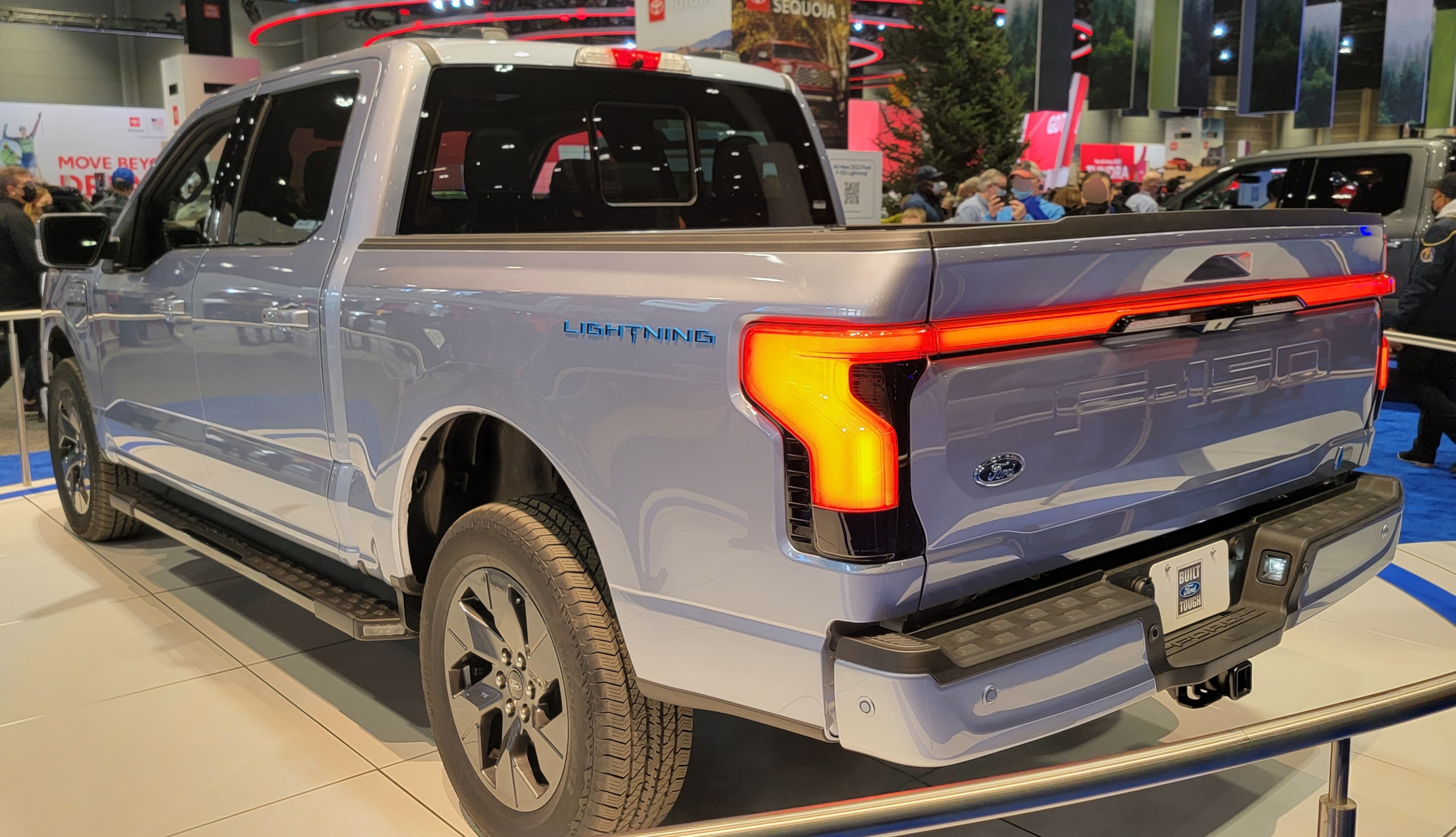
Ford F-150 Lightning
"My truck, my EV, my lightning, negative equity for sure. Every time I look at what I owe and then I go to CarMax..."
The Ford F-150 Lightning is an electric Ford truck. If you owe more than the truck is worth, that’s negative equity—especially if you want to sell or trade it.
The Ford F-150 Lightning is an all-electric version of the F-150 pickup. Because pickups can depreciate differently than sedans, its resale value relative to the loan balance is what determines whether an owner experiences negative equity.
CarMax
"Every time I look at what I owe and then I go to CarMax and I type it in and I want to tear out my hair."
CarMax is a used-car company that gives you an offer for your vehicle. If your car is worth less than what you still owe, those offers can make negative equity feel very real.
CarMax is a large used-car retailer that provides trade-in and purchase offers. In negative-equity situations, checking a car’s CarMax offer can quickly show whether the market value is below the loan payoff amount.
buy and hold
"just buy and hold. If you can keep that vehicle for the duration of your loan, do it."
“Buy and hold” means you keep the car you already have instead of trading it in right away. If your loan is underwater, waiting can help the situation improve as you make payments and the car’s value changes.
“Buy and hold” means keeping your current vehicle for the length of the loan rather than trying to switch cars while you’re underwater. The logic is that time and continued payments can help the loan balance catch up to the car’s value, reducing the negative-equity problem.
72 plus months
"for a period of 72 plus months. And for some people that feels almost like... a red payment."
“72 plus months” refers to long loan terms (typically 6 years or more). Longer terms lower the monthly payment but increase total interest paid, and with negative equity they can keep you locked into a high-cost situation for a long time.
EV depreciation
"EVs seem to lose a lot of their value, right? So the safety net would be to lease it..."
EV depreciation means how fast an EV’s value drops over time. If it drops quickly, it can make it easier to end up owing more than the car is worth.
EV depreciation is how quickly an electric vehicle loses value after purchase. The hosts suggest EVs “lose a lot of their value,” which matters because depreciation affects resale value, loan-to-value ratios, and whether negative equity is likely to worsen.
car manufacturer
"lease it and have that negative equity be the responsibility of the car manufacturer or the finance company that they're going through to provide that lease for you."
The car manufacturer is the company that makes the vehicle. Sometimes they help set up lease deals or incentives, which can change who absorbs the financial risk when a car’s value drops.
Car manufacturers sometimes participate in lease and financing programs (through captive finance arms or incentives) that can affect how negative equity is handled. The hosts imply the manufacturer or finance company may take on some of the risk when structuring a lease deal.
residual value risk at lease-end
"But the majority of EVs, the vast majority of EVs have been leased. So it becomes a problem of the finance company... particularly lease in the EV market, is because there are so much incentives being"
Leases assume the car will be worth a certain amount later. If the market value ends up lower than expected, you can owe more than the car is worth when the lease ends.
Lease contracts rely on an estimated residual value—the expected value of the car at the end of the lease. If real-world used values fall (often influenced by incentives and demand shifts), the lessee can face negative equity and the finance company can take the hit.
buyout rate
"there was massive positive equity in it, but Tesla wouldn't give me a buyout rate."
A buyout rate is the price you pay to buy the leased car when the lease ends. If that price is too high compared to what the car is worth today, it can erase the advantage of having positive equity.
A buyout rate is the predetermined price (often set in the lease contract) to purchase the leased vehicle at lease-end. If the buyout price doesn’t reflect current market value, it can change whether the lessee benefits from positive equity or gets stuck with negative equity.
lease deals
"put behind the lease deals that it kind of becomes a bit of a no-brainer when you do the economics. If you're buying an EV, I think if you're buying a gas car"
A lease deal is a special offer that lowers the monthly payment. It’s based on what the car is expected to be worth later, so the “best” choice depends on whether you’ll keep the car for a long time or not.
“Lease deals” are pricing offers that reduce your monthly cost by using the car’s expected future value (residual) and the money factor/interest portion. Whether a lease is a “no-brainer” depends on how long you’ll keep the vehicle and how the economics compare to buying.
the economics
"put behind the lease deals that it kind of becomes a bit of a no-brainer when you do the economics. If you're buying an EV, I think if you're buying a gas car and perhaps keeping it longer term, then I think, Jessica, I maybe agree with this, that the economics become a little bit different"
“The economics” here means the real total cost, not just the monthly payment. It includes things like interest, fees, and what the car will be worth later, which can be very different for EVs versus gas cars.
In car shopping, “the economics” usually means comparing total cost over time—monthly payments, down payment, interest, fees, and the car’s resale value (or lease residual). EVs and gas cars can look different because incentives, depreciation, and fuel/energy costs change the math.
leasing becomes a more viable option
"And if it's not, then leasing becomes a more viable option. If you're not, like leasing for an EV is a good deal, not as good as a used EV, but still a good deal."
Leasing can make more sense if you think you’ll only keep the car for a short time. Instead of worrying about what the car will be worth later, you’re paying mainly for using it during the lease.
Leasing can be “more viable” when you don’t expect to keep the car long, because you’re effectively paying for the car’s use during the lease term rather than betting on long-term resale value. If your life situation changes, leasing can reduce the risk of being stuck with a vehicle you no longer need.
leasing for an EV
"If you're not, like leasing for an EV is a good deal, not as good as a used EV, but still a good deal. But if you're leasing for internal combustion engine vehicle, I don't see the deals as great there."
They’re saying EV leases can be a pretty good deal, even if buying a used EV might be even better. That’s because lease payments depend on what the car is expected to be worth later.
The segment suggests EV lease pricing can be attractive relative to gas-car leases, but still not necessarily as good as buying a used EV. This points to how incentives, residual values, and depreciation expectations can make EV leases look better on paper.
internal combustion engine vehicle
"But if you're leasing for internal combustion engine vehicle, I don't see the deals as great there. In fact, the lease rates are, take rates are quite low on that side of the market."
An “internal combustion engine” vehicle is basically a normal gas-powered car. They’re comparing how good the lease deals are for gas cars versus EVs, and saying the gas-car deals aren’t as strong.
“Internal combustion engine vehicle” (ICE) is the traditional gas- or diesel-powered car category. The hosts are contrasting lease pricing and deal strength between ICE vehicles and EVs, implying that market conditions and residual values differ between the two.
own the car for only a few years
"So, but if that's, if you know you're going to own the car for only a few years, then you take that gamble"
If you only plan to keep a car for a few years, you might not get the benefit of buying. The costs can be harder to “win” because the car could lose value before you’re ready to sell or trade.
Short ownership periods shift the risk from long-term depreciation to near-term costs like financing/lease terms and early exit penalties. The hosts frame it as a “gamble” because you may not benefit from the long-term value retention that makes buying attractive.
buying or leasing used EV vehicles
"What is your feeling on buying or leasing used EV vehicles?... leasing... would be more like leasing in the used markets... That's different rates and things like that."
Buying and leasing used EVs can be priced differently than new EVs. That’s because lenders and leasing companies look at how much the car will be worth later. If EV values are dropping fast, the deal terms can change.
Buying and leasing used EVs can work differently from new-car deals because financing rates, lease structures, and residual values depend on the vehicle’s age and depreciation. The hosts note that the used market doesn’t mirror the new market “in the same way,” which can change the economics of monthly payments and total cost. It’s a key consideration when EV values are moving quickly.
residual value curve
"Well, you can't really... If you acquire... there's the residual value curve of the vehicle kind of flips if you buy, if you're the second buyer."
Residual value is what the car is expected to be worth later. If EVs lose value faster than people expected, the “residual value curve” drops, and used EVs can look like a great deal. It also changes how leasing and financing deals are priced.
The residual value curve is how much a vehicle is expected to be worth in the future. For EVs, rapid depreciation can make the curve “flip” for second buyers, meaning used prices can drop faster than expected. That affects both leasing math and whether buying used feels like a bargain.
battery pack warranty (eight year warranty)
"The bit that we're still kind of questioning is most of these vehicles have got an eight year warranty on their battery packs."
Many EVs include a long battery warranty, often measured in years and/or mileage. An “eight year warranty on their battery packs” can reduce the financial risk of buying used, because battery degradation or failure may be covered. However, coverage details (terms, mileage limits, and what counts as a failure) vary by brand and model.

Volkswagen Id
"[1735.5s] Volkswagen ID for something like that today, [1737.1s] maybe you're paying 20,000, a little bit more."
Volkswagen’s “ID” cars are their electric vehicles. The hosts are talking about how the battery warranty can shape what the car is worth later, especially when the warranty is getting close to ending.
The Volkswagen ID line refers to Volkswagen’s electric vehicles built on its ID platform (commonly the ID.3, ID.4, and ID. Buzz depending on market). In this segment, they’re using it as an example of how EV pricing and resale value can be affected by battery warranty timing.
battery warranty
"[1739.9s] In three years time, when you're selling it on [1741.9s] or four years time, the battery warranty is almost at an end."
EVs come with a warranty that covers the battery for a number of years. When that warranty is close to expiring, people may assume the battery could become expensive to fix, which can lower what the car is worth later.
A battery warranty is the manufacturer’s promise to cover defects or capacity loss for a set period (often around 8–10 years, depending on the EV and region). As the warranty nears its end, buyers may worry about repair costs and future battery health, which can affect resale value.
EV resale value tied to warranty end
"[1747.3s] So what does that mean for the next consumer [1749.4s] and what does that mean for your value at that point? [1751.7s] I don't know you got an opinion on this, Jessica,"
The hosts are saying that when an EV’s battery warranty is about to end, used-car buyers may pay less. It’s partly because people worry about what happens if the battery needs expensive work after the warranty.
This segment highlights how EV resale value can be influenced by the timing of battery warranty expiration. Even if batteries don’t commonly fail, uncertainty about long-term battery condition can create a discount in the used market, because buyers fear costly out-of-warranty repairs.
EV battery pack failure leading to write-off
"[1758.2s] Because if the battery pack fails, you know, [1760.6s] then it's pretty much going to be a write off."
They’re talking about the worry that if an EV’s battery breaks, the car could be too expensive to repair. That fear can make people hesitant to buy older EVs, even if battery problems aren’t that common.
The hosts discuss the fear that if an EV battery pack fails, the vehicle could be treated as a total loss (“write-off”). This is a market psychology issue: battery replacement costs are high, so buyers may assume failure equals the end of the car’s financial value, even if real-world failure rates are low.
fear factor / unknown long-term EV data
"[1772.2s] There's a fear factor of what does a 10 year old EV [1774.8s] actually look like? [1776.2s] I mean, it really just is the unknown"
They’re saying people are nervous because EVs are still new, so there isn’t as much long-term data as there is for older gas cars. That uncertainty can make buyers assume the worst, even if real-world results end up being better.
This segment points to “unknowns” in long-term EV battery performance because the market is relatively new compared with gasoline cars. When consumers lack real-world data, they may overestimate risk, which can influence buying decisions and used pricing even if later evidence shows batteries last longer than feared.
battery would fail at year eight
"and that's assuming that the battery would fail at year eight, which it likely won't."
They’re talking about whether an EV battery might fail after several years. In real life, batteries usually last a long time, and there are often warranties that protect you if something goes wrong.
This is about EV battery longevity and the idea of battery failure risk over time. Many EVs are designed with long service life and are typically covered by warranties that can extend for years, so “battery failure at year eight” is more of a concern than a certainty.
sticker price
"You could buy that thing used for half of what its sticker price is."
Sticker price is basically the “new” price the car is advertised for. They’re saying you can often buy the same EV used for way less than that new price.
“Sticker price” is the manufacturer’s suggested retail price (MSRP) or the advertised new-car price before discounts. The hosts are contrasting sticker price with what you can pay used, emphasizing EV depreciation and the potential value of buying pre-owned.
longer-term running costs
"But, you know, it's not always quite the deal that they see. But we are talking about an EV."
They mean the costs you’ll keep paying after you buy the car. Even if the price is a bargain, tires, insurance, and other expenses can make it less of a deal later.
“Longer-term running costs” refers to the total cost of ownership beyond the purchase price—things like tires, insurance, maintenance, and energy costs over time. A deal on a used car can look great upfront but may shrink once these ongoing expenses are included.
EV
"But, you know, tie-cap or should tie it? Well, suddenly you're into more exotic cars. But again, look at the longer-term running costs. It's not always quite the deal that they see. But we are talking about an EV."
EV stands for electric vehicle. Instead of gas, it runs on electricity stored in a battery, so your costs can change from gas to charging.
EV means electric vehicle—cars powered primarily by an electric motor and a battery instead of a gasoline engine. EV ownership can shift costs from fuel to electricity, charging equipment (if needed), and battery-related long-term considerations.
certified pre-owned
"Maybe you get a certified pre-owned. Maybe there's some sort of extended warranty on it from the dealer."
A certified pre-owned car is a used car that a dealer checks and then “certifies” as being in good shape. It usually comes with extra warranty protection compared to a regular used car.
Certified pre-owned (CPO) is a used-car program where the manufacturer or dealer inspects the vehicle and backs it with specific warranty coverage. It’s often more expensive than a regular used car, but the added coverage can reduce risk if something fails soon after purchase.
extended warranty
"Maybe there's some sort of extended warranty on it from the dealer. So you pay a little bit of a premium because they're rolling that warranty into it."
An extended warranty is extra protection that kicks in after the original warranty ends. Dealers may bundle it into the price so you’re paying for it as part of the deal.
An extended warranty is extra coverage beyond the standard factory warranty period, typically purchased at sale or added by the dealer. In the transcript, it’s described as being “rolled into” the deal, meaning the cost is bundled into the purchase price or financing.
engine oil changes
"mechanically, like what do you, you know, the engine oil changes really kind of a non-issue here when it comes to EV."
Oil changes are something gas cars need to keep the engine healthy. EVs don’t use engine oil the same way, so that particular maintenance concern is much smaller.
Engine oil changes are routine maintenance for internal-combustion engines, where oil lubricates moving parts and helps carry away heat and contaminants. The hosts note that for EVs, this specific maintenance item is largely irrelevant because there’s no conventional engine oil system like a gas car has.
headliner is going to probably fall off
"But if we talk about Mercedes, your headliner is going to probably fall off and your air suspension is not going to work well."
The headliner is the material on the ceiling inside the car. If it starts falling off, it’s usually because the glue or clips that hold it in place have worn out.
The headliner is the interior fabric/trim panel on the roof. When it “falls off,” it typically means the adhesive or mounting points have degraded, which can be a known comfort/fitment issue on certain models and can require re-gluing or replacement.
Mercedes
"But if we talk about Mercedes, your headliner is going to probably fall off and your air suspension is not going to work well."
Mercedes is the car brand being used as an example in the conversation. The hosts are saying some Mercedes owners may run into issues like interior trim and suspension components.
Mercedes-Benz is referenced as an example of a luxury brand where the hosts believe certain long-term issues are common, specifically mentioning headliner and air suspension problems. The point is less about a single model and more about brand-level reliability perceptions.
air suspension
"But if we talk about Mercedes, your headliner is going to probably fall off and your air suspension is not going to work well."
Air suspension is a suspension system that uses air bags to control how the car rides and how high it sits. Because it has extra parts like compressors and air lines, it can sometimes break and get expensive to fix.
Air suspension uses air springs (instead of steel coils) controlled by a compressor and valves to adjust ride height and comfort. It can be more complex than traditional suspension, so failures like leaks, compressor issues, or sensor problems can be costly—one reason the transcript flags it as a recurring issue for some luxury brands.
Land Rover
"Like all the issues they've had over the years, along with, you know, Land Rover and everybody else."
Land Rover is another brand the hosts bring up as an example of vehicles that have had reliability problems over time. They’re using it to make a general point, not to review a specific car.
Land Rover is mentioned alongside Mercedes as another brand with “issues they’ve had over the years.” In this context, it’s used to support the broader reliability comparison argument rather than to discuss a specific model or system.
electrified vehicles come back off of lease
"we will see many more electrified vehicles come back off of lease in 2026, especially compared to 2025."
When leased cars are returned, they usually get sold as used cars. The hosts are saying more EVs will be coming back in 2026, which could change the used-car market and how people think about owning them.
When electrified vehicles (EVs and hybrids) return from lease, they enter the used market in larger numbers, which can affect pricing, availability, and how buyers evaluate reliability and warranty coverage. The transcript suggests a wave in 2026 that’s larger than 2025, implying more supply and more data on real-world ownership.

Lexus Gx
"Well, we've just had an extraordinary situation on our, on our one-year ownership fleet that we bought a Dodge Charger EV and a Lexus GX at the same time for roughly, roughly speaking, the same money. And after 20,000 miles, the GX has depreciated $2,000."
The Lexus GX is a luxury SUV. In this discussion, it’s mainly there to show how a non-EV depreciated compared with an EV over the same timeframe.
The Lexus GX is a body-on-frame luxury SUV known for durability and off-road capability. Here it’s used as a depreciation comparison against the Dodge Charger EV after 20,000 miles.
Request an Explanation
Heard something you'd like explained? We'll add it to this episode.
Sign in to request explanations for terms you heard.
Want to learn more?
Browse our glossary for plain-English explanations of automotive terms, jargon, and concepts.
Help improve this episode
See something that's not quite right? Our annotations are AI-generated and can sometimes miss the mark. Click the flag icon on any annotation to suggest a correction.