Cavender Auto on Used Dept, HIGHSTREET on Auto Risk, Pecoraro on Building Staff | Daily Dealer Live
Car Dealership Guy Podcast
Cavender Auto on Used Dept, HIGHSTREET on Auto Risk, Pecoraro on Building Staff | Daily Dealer LiveCar Dealership Guy Podcast · Apr 29, 2026
Annotations will appear as you listen
0:00
61:39
Company
HIGHSTREET
The episode title mentions “HIGHSTREET,” but this specific transcript section doesn’t explain it. So it’s not clear from this excerpt what it is or how it relates to the car business.
It means cars are increasingly controlled by computer programs, not just mechanical parts. That can affect features you use every day and can sometimes be updated later.
A powertrain is what makes the car drive. “Lower emission” means the car is designed to put out less pollution than older designs.
Concept
competitive period comparable to the four GM battles of the 1920s
They’re comparing today’s car industry competition to a past time when GM faced big challenges. The takeaway is that things could get more intense for automakers and dealers.
Direct sales means the car company sells the car to you directly, instead of using a local dealership as the middle step. People debate it because it could change how dealers make money and how cars get priced and delivered.
A franchise model is how car brands work with local dealerships. The brand allows dealers to sell and service the cars, usually under brand rules and support.
Digital retail means buying a car online instead of only at the dealership. You might get pricing, offers, and paperwork through a website or app before you ever drive in.
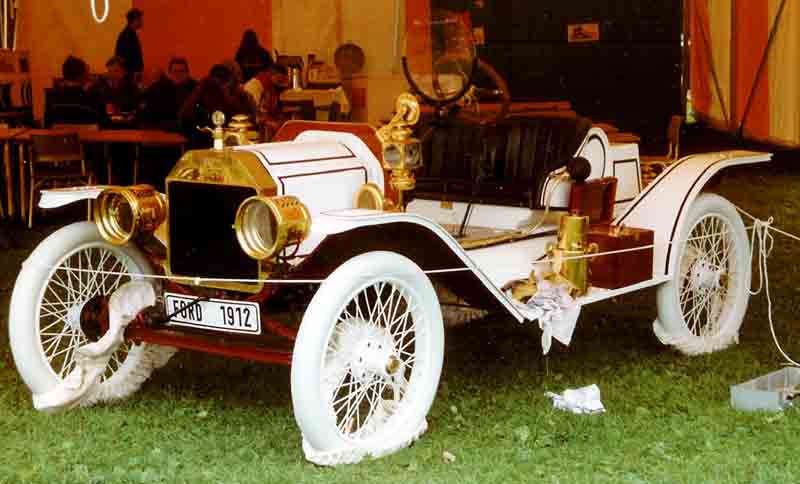
The Ford Model T is an old car that Ford made in very large numbers. It helped more regular people be able to buy and use cars instead of relying on horses. It’s mentioned because it was a key step in making cars common.
Used inventory just means the number of used cars a dealer has available to sell. If it’s hard to get enough cars, it can get harder to compete on price.
Carvana is a company that sells used cars, mostly through an online buying experience. They also buy cars from sellers and bid at auctions, which can make it harder for traditional dealers to source inventory.
Used vehicle days supply is basically “how many days of used cars are sitting around” compared to how fast they’re selling. Fewer days usually means the market is tighter.
An auction is where buyers bid against each other to buy cars. If a company is aggressive at auctions, it can make it more expensive or harder for dealers to find good used cars.
Google Gemini is a generative AI assistant integrated into compatible vehicles. The episode discusses how it will roll out via software updates and how drivers may develop expectations about its behavior in the car.
OnStar is GM’s in-car service that connects the vehicle to help and features. To use Gemini, the car needs an active OnStar plan that includes voice assistant support.
Voice assistants let you talk to the car to control features or ask questions. Here, using Gemini depends on having the right voice-assistant setup in the car.
Toyota suppliers are the companies that provide parts and materials to Toyota’s production network. The segment frames them as monitoring “key inputs” tied to geopolitical conflict risk, highlighting supply-chain exposure.
It’s a major shipping lane for oil. If it’s threatened or disrupted, the price of fuel can jump, and that can eventually affect lots of things—including the cost to get and price vehicles.
A blockade is when one side tries to stop another side from trading or moving goods. When that affects major shipping routes, it can ripple into fuel and supply costs that show up in car prices.
It’s basically how easily a business gets thrown off when the flow of parts or materials gets disrupted. If the supply chain is “sensitive,” small changes can quickly affect what shows up on dealer lots and what it costs.
They’re talking about used 2015 Toyota Corollas—one of the most common cars on the used market. The point is that the price being asked for those cars is drawing attention.
They’re about to talk about what a COO does—basically the person responsible for running day-to-day operations. In a car dealership company, that can include staffing, processes, and how the stores run.
A general manager is the main person in charge of a dealership location. They oversee how the store runs and make sure the team hits its goals.
Concept
variable and fixed directors
They’re talking about different kinds of management roles—some that change based on results or needs, and some that are steady. They decided to replace that with more consistent leadership at each dealership.
OEMs are the car brands themselves (like the companies that make the vehicles). “Prospective OEMs” means the brands they’re trying to work with for dealership opportunities.
Concept
NCM Academy for leaders
This sounds like a leadership training program for dealership managers. They used it to prepare some internal people before promoting them to GM.
They’re talking about how a dealership runs its used-car section. It’s mostly about organizing people, setting clear goals, and making sure the team knows what they’re responsible for.
“Cavender” here refers to the dealership company the guest is joining. They’re talking about how the company grows to more locations while trying to keep its culture and standards the same.
“Phase one” is a structured onboarding approach: the first days/weeks/months are focused on learning what each store needs and building trust. The speaker emphasizes listening, asking questions, and identifying how they can support teams without disrupting progress.
“Tech stack” just means all the computer programs a company relies on to do its work. If people don’t really use them well, the tools can’t help the business the way they’re supposed to.
A “power user” is someone who knows the software really well and uses more of its features. The point here is that you shouldn’t just install tools—you should use them well.
“Supply chain” just means how a business gets products (cars, in this case) and moves them through the process until they’re sold. The point is that used cars and sourcing matter a lot to how dealerships make money.
The hosts discuss used cars as a major lever for dealership profitability and performance, implying that used inventory acquisition, pricing, and operations can materially affect results. They connect this to how different “buckets” of dealership operations work together, including both new and used sides.
A “buy center” is a dedicated operation (often a team or process) focused on purchasing used vehicles. The host later references a person who created a buy center, implying a structured approach to sourcing inventory.
A procurement strategy is a planned approach to acquiring inventory—here, used cars—by defining how many units you need, who buys them, and where they come from. The hosts frame it as a daily, team-based process rather than something handled occasionally.
In used-car sourcing, a “bucket” is a category for inventory acquisition—such as different sources, vehicle types, or price/condition bands. The hosts discuss deciding “which bucket” to buy from, meaning allocating purchasing effort across defined segments.
They mean that you can’t just make small, slow changes and expect used-car problems to go away. The dealership has to work on it every day and check that the plan is actually happening.
In a dealership, a used-car buyer is the person who finds cars to stock on the lot. They’re trying to buy vehicles at the right price so the dealership can resell them for profit.
“Circles” sounds like a dealer network or community. The idea is that members can ask questions and get advice more often than a traditional once-a-quarter group.
The “20 group model” refers to a peer group of about 20 dealers/operators who share insights. In this context, it’s contrasted with “circles” because the communication cadence is less frequent.
Term
EOS
EOS likely refers to a business system the company uses to organize goals and execution. They’re saying they’ve been using it for a year and it helps them coordinate work.
The Volkswagen Eos is a Volkswagen car that’s designed to let you drive with the roof open. It has a roof that can retract so you can switch between open-air and closed driving. It may be discussed because people want to know how that roof feature holds up over time.
This is a deal where a dealer can earn extra money when certain results go well. The sponsor is saying you can review the setup to make sure it’s working in your favor.
Zurich is offering a review of how your profit-sharing setup works. It’s meant to help you understand if you’re getting the best terms without a lot of hassle.
They’re talking about a business that provides cars for rent and for leasing through dealerships. It’s basically managing fleets of cars so dealers can offer rental/lease options to customers.
This means they handle cars that customers rent for short periods (like day-to-day rentals) and also cars that customers keep for longer under a lease. Both require managing a fleet of vehicles.
Company
ATD
ATD is another industry organization they mention as part of where they network and participate. It’s one of the groups dealers and automotive businesses often connect with.
A loaner fleet is a set of cars a shop keeps available to lend to customers. For example, if your car is in the shop, they may give you one of these cars to drive.
This is a type of insurance for businesses like garages that covers accidents and damage, and helps pay legal costs if someone sues. The “garage liability” part is about responsibility for what happens in the shop or involving customer vehicles.
Term
direct rider model
This is an insurance sales approach where the insurer pushes more of the business directly, instead of relying only on third parties. The guest is using it to explain how their company got involved with Zurich’s growth strategy.
An industry vertical means a company specializes in one type of business. In this case, they’re building insurance expertise specifically for the auto-dealership world.
Auto liability is the insurance risk from accidents involving cars. If a dealership’s vehicle is involved in damage or injuries, this is the kind of coverage the dealer needs.
A deductible is what you pay first when there’s a claim. A deductible strategy is how you pick that amount to balance lower premiums versus higher out-of-pocket costs.
Loaners are replacement cars a dealership gives you while your car is in the shop. Since someone else is driving them, they can raise the dealership’s accident risk.
Garage liability insurance is the coverage for a business that handles and operates cars. If the dealership releases a loaner vehicle, that insurance is more likely to be involved if something goes wrong.
A garage policy is the insurance a dealership uses for its day-to-day vehicle-related risks at the shop. The point here is that they’re saying loaner/rental risk shouldn’t be lumped into the same coverage.
Liability is basically “who gets blamed” if there’s a problem. For a dealership, it means the dealer can be held responsible for certain accidents or damages, so they need insurance that covers that risk.
This is insurance specifically tailored to loaner or rental cars that customers drive for a short time. The idea is to make sure that risk is covered by the right policy instead of relying on the dealership’s general coverage.
These are the vans dealers use to move people around while their car is in service. The risk is that accidents or incidents involving the van can create insurance and legal problems.
Ride-share services are apps where you request a car to take you somewhere. Here, dealers are considering using them instead of their own loaner/shuttle setup to reduce risk.
A risk review is basically a checklist-style look at how a dealership operates to find hidden problems that could lead to claims or lawsuits. Insurance companies care about these details when deciding what to cover.
The idea is that safety isn’t just a sign or a policy—it’s how the workplace behaves every day. If managers lead the safety effort, employees are more likely to follow it.
Underwriters are the people at an insurance company who decide how risky something is and what the policy should cover. They often look for evidence that a business manages safety.
Risk reviews are a way to look at what could go wrong for a business and make sure the right protections are in place. Here, they’re saying the insurance setup often doesn’t match the real risks.
Employment practices liability is insurance for problems that come from how employees are treated at work. It can help if someone sues over things like discrimination or wrongful termination.
A garage package is a bundled insurance policy for businesses like dealerships or repair shops. The point being made is that some risks may be better covered by separate, specialized policies.
An endorsement is like an official add-on to an insurance policy that modifies what the policy covers. Here, they’re saying using add-ons inside a bundle may not be the best way to cover certain risks.
A specialized insurance policy is insurance built for one particular kind of risk. The idea is that the insurer is better prepared to handle that exact problem if it happens.
Claims teams are the people at the insurance company who handle your claim. For complex issues like cyber incidents or workplace lawsuits, having the right experts can make a big difference.
Concept
segregating that out
“Segregating that out” means separating certain risks so they’re insured differently instead of all together. The goal is to keep a big loss from messing up the rest of your insurance coverage.
“Lack of appetite” means the insurance company isn’t very interested in taking on that risk. When that happens, it can affect what coverage options are available or how they’re priced.
Hail damage is when the weather (hail) dents your car and can chip or crack the paint. Insurance claims usually need proof and an estimate of what it will cost to fix.
Forensic IT is like a technical investigation after a computer or network problem. Experts look for clues about what went wrong and what data or systems were affected.
A potentially catastrophic cyber event is a big computer security incident—like a hack—that could seriously disrupt a business. It may expose information or shut down important systems.
A specialized coverage form is the specific insurance paperwork that spells out what kinds of problems are covered. If it matches the risk correctly, it can make the claim process smoother and more likely to pay.
A dealer insurance policy is the insurance a car dealership uses to protect the business from losses. It can include things like damage to property and protection if something goes wrong.
It just means how many used cars the dealership has sitting on the lot to sell. Having the right number matters because too few means missed sales, and too many can make cars sit longer.
LIVE
Hey
everybody welcome back to another episode of the Daily Dealer Live. I'm your host Sam
Dark and thanks for choosing to be here with us on this 29th of April. I'm broadcasting live
from Sugarhouse, Utah in this rented studio or props to work high for providing the space today.
We've got one heck of a show coming up to you for you today. Rob Cavender and his new COO,
Jonathan Gray join us out of San Antonio, Texas. They're a multi-brand, multi-market
and they're betting next level performance runs straight through the used car department
and a new COO. We'll find out why. Mike Kies and Vince Stazzoni from High Street Automotive,
40 years ensuring dealers and they're going to tell you the biggest exposure on your lot,
you're probably underestimating right now and we've got a six-month check-in with Phil Pacario
out of Murdoch CDJR. Had I only realized he's just miles from me right now. He took over a store
with zero used cars on the lot and today he tells us the score since that acquisition. Drop your
questions in the chat as a reminder we're live streaming across all Cardiola Ship Guy social
media platforms. Your comments will bring them into today's show. We'll make it fully interactive
but before we dive into today's content let's hit today's auto industry headlines.
First up today in the headlines you know what's funny is every now and again there's a little bit
of a IT snafu and I just had that snafu so I get one of these every show but I only get one
and then after the one I'm done with all the snafu so here we go. All right opening up with a
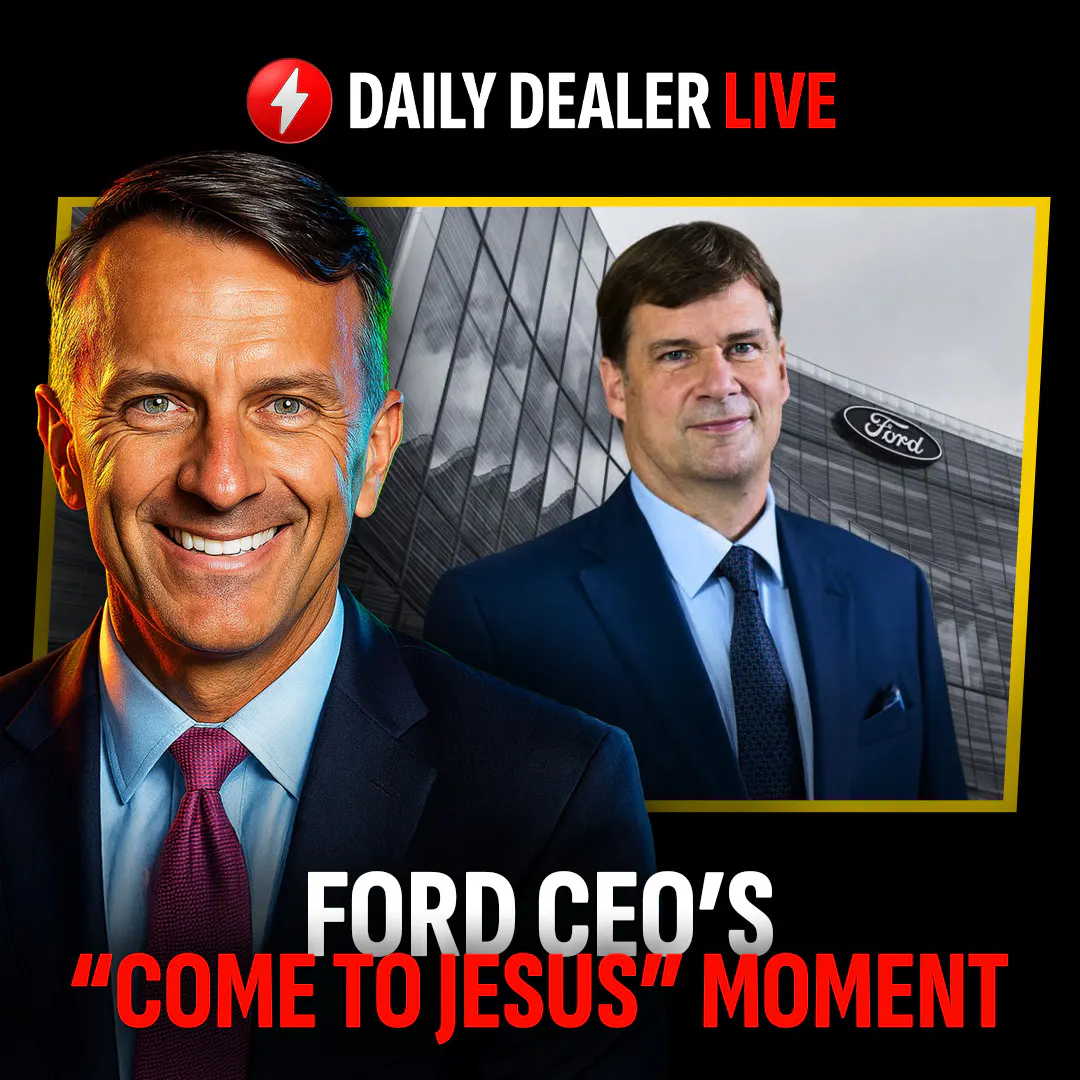
story on Ford. Jim Farley sat down with Rolling Stone and called a current moment in the auto
industry as a quote coming to Jesus moment. He points to three converging forces. I think this
is interesting. The rise of Chinese automakers which we talk often about on this show. The shift
to software to define vehicles and the ongoing transition to lower emission powertrains. His
read is that the industry is entering a competitive period comparable to the four GM battles of the
1920s just playing out differently and across more markets simultaneously. What stood out for
dealers specifically Farley pushed back hard on predictions that direct sales would replace the
franchise model calling them quote dead wrong. He described Ford's 120 year distribution network
as a major strategic asset and he said the dealer channel is well positioned to help customers
navigate the shift to EVs and digital retail the same way it helped people move from horses
to model Ts. Plus we've talked a lot about this on the show as well direct to consumer Ford tried
it in the 90s it didn't work so props to Ford for continuing to support that franchise model.
Next up today a Stevens Inc. survey of several dozen private franchise dealers found near
consensus that the fight for used inventory against Carvana and CarMax got tougher in Q1
2026. Used vehicle days supply fell from 52 days in December to 37 by end of March with one dealer
calling it the tightest used market since COVID those are big words. Dealers say both companies
are showing up aggressively at auction and in consumers driveways with trade and offers before
those customers ever step foot on a lot. The analyst framing from Stevens was this the issue
is that a growing segment of buyers particularly younger ones they may never show up to a dealer's
lot at all. Dealers said they could match on service and value when someone on was on the lot
but sourcing is where discipline has to tighten. Up next today General Motors announced yesterday
that Google Gemini will be rolling out to approximately four million US vehicles through the 2022 and
newer Cadillac, Chevrolet, Buick and GMC models equipped with Google built in. The update arrives
automatically through the play store at no cost. At no additional cost though drivers need an active
on-star plan with voice assistants to use it. For 2025 and newer models that's bundled into the
on-star basics package at no charge for eight years. For dealers this is a largely background
software update but one worth getting ahead of customers who use Gemini on their phones
will have expectations about how it behaves in the car and those may or may not match reality
enforcing the need for teams to know what the feature does and where its limits are before
customers start asking. And finally up today the ceasefire we reported on earlier this month
remains unresolved referencing the Iran conflict and Japanese auto suppliers are now flagging
a different kind of risk from the ongoing conflict. Toyota suppliers are watching key inputs tied to
oil-derived materials particularly naptha based products and aluminum that are difficult to substitute
and vulnerable to price spikes as the Strait of Hormuz situation drags on. Asia is the most exposed
region given its heavy reliance on Gulf imports of crude gas and fuel. Asin CEO says operations are
holding for now but acknowledged uncertainty about how long that's sustainable. The sticking
point remains Iran's demand that the U.S. lifts its blockade as a precondition for reopening
the Hormuz. A condition the Trump administration has signaled it won't accept without Iran's
nuclear program on the table. No immediate disruption has hit dealers lot yet but the supply
chain sensitivity is real and it's worth watching how this plays out over the next few weeks and
that is a wrap on today's auto industry headlines. Supply chain just when we thought we got through
the next period thing now we've got the gulf of and all the interesting consequences of that so
great show coming up today yoga car says car max is trending on x for having 19,000 price 19k price
on you on 2015 used corollas. Super fascinating. Patrick block motive venture says happy anniversary
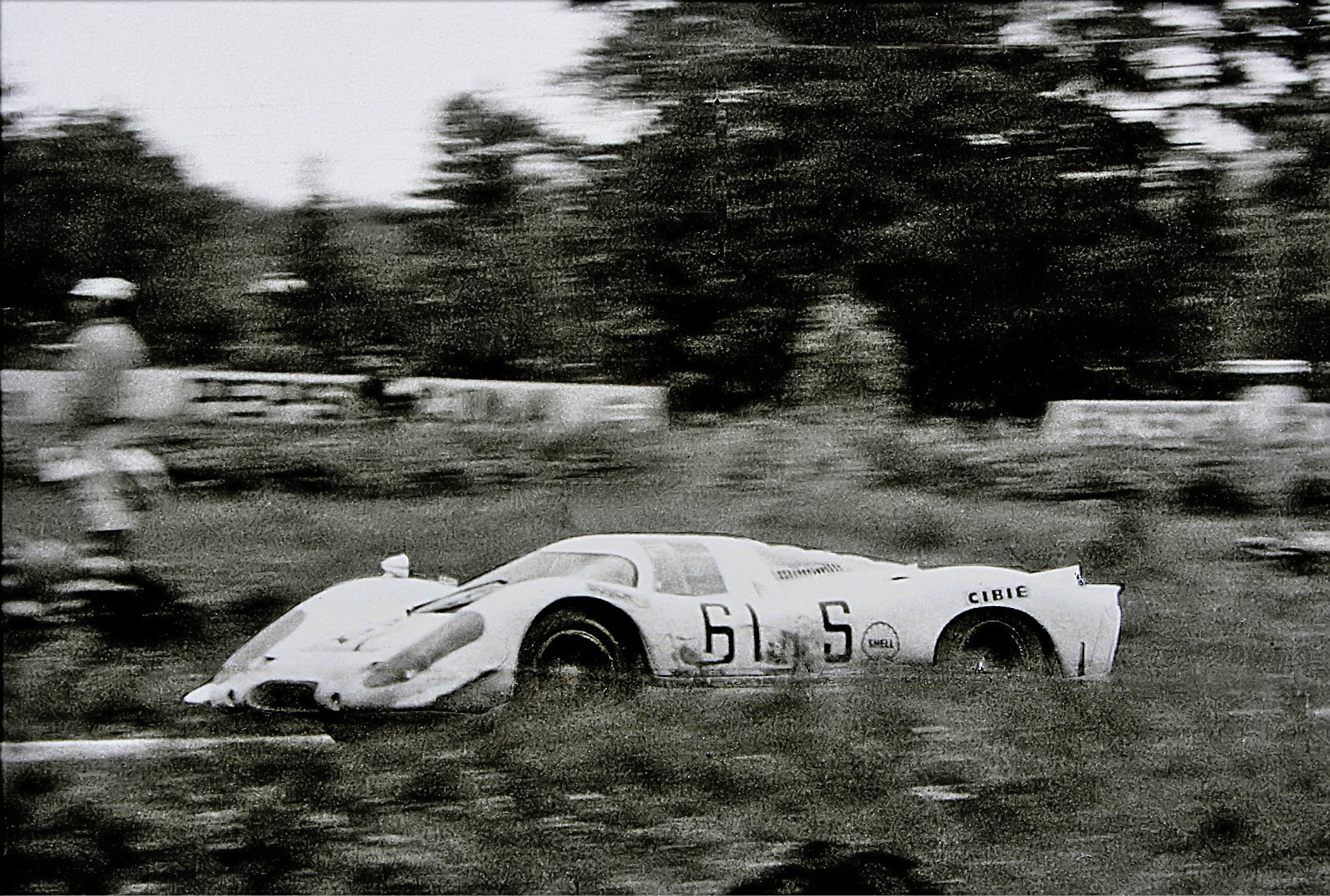
of the debut of the Porsche 917 at Le Mans. Patrick thanks for always being good for our
anniversary dates here on daily dealer live. Hey and I like that sound effect too. All right let's
dive headlong into our first guest and interview. First up today Jonathan Gray COO Cavender Auto Group
and Rob Cavender CEO Cavender Auto Group welcome back to the show both. Hi Sam. Actually what I
should say is Rob welcome back John welcome for the first time so you know what Rob maybe start us
out here would you just introduce both of you what you do where you are and what your organization
is for those that don't know. Yeah sure my name is Rob Cavender I'm CEO of Cavender Auto Group we
have been in the in the business for 87 years down here in Texas started in San Antonio I'm
fortunate to be a fourth generation dealer within our family and you know yeah everything's going
great down here we are also want to introduce John Gray who's our new COO who's been with your
generation for about 30 45 days now and we're very excited to have him on the team. That's
awesome welcome to the show John your first appearance here and Rob as we kick off the
conversation the introduction with John how do you think about the role of a COO a group
your size and what made a need for that role and what made Jonathan the right fit for that role.
Sure so I think the easiest way to probably describe it would give you a little bit of
context on our operational style through our family so the third generation of our business
was my dad and his two brothers and when they got in the business we had three stores and they
basically acted as GM's of each of the of those stores and obviously since then we've grown the
business and we don't have enough calendars to be GM's of all of our stores and frankly I don't
want to go with that model anyway so we made the decision about two years ago that you know we're
no longer just going to run with variable and fixed directors but have real operators and real
leaders at every store carrying the flag for each of our prospective OEMs and creating that synergy
between variable fixed accounting as most you know companies are are trending with with that
leadership model so we went from having zero GM's two years ago to having a general manager in every
store about six months ago and it was a mix of some internal promotions some NCM Academy for
leaders that were ready for it and then also bringing on some people some talented leaders
from outside of our organization and with that being said we wanted somebody seasoned and
prepared to leave these general managers as we're trying to grow our business we have some
really big growth aspirations over the next you know 13 to 20 years that that we've kind of lined
out and targeted with with any OS and then obviously our ultimate goal is to build this company so our
fifth and sixth generations are prepared to lead you know down the line so we felt we we know we're
really fortunate being able to bring John onto our team he's got a a strong experience on both the
private and public sectors which I feel like is a unicorn to find frankly and so we were very very
lucky to have him on the team and leading our general managers as we continue to grow this business
you know I'm interested by what you said Rob so you went from no GM's to every store having a GM
before we get to John was there some growing pains in making that move so quickly from going to none
to everywhere what was the biggest growing pain in that move as you made it yeah I think I think
biggest growing pain was probably clarity on roles I think we had a lot of really talented
people who were prepared for those roles that just hadn't been given the structure and the
framework to be successful within them and so as we grew it was you know I was used to being very
involved in the day-to-day and decision-making and how do I take myself out of that and allow our
leaders to lead their stores and really be the key point of contact and responsibility for each of
those stores so I think it certainly wasn't a talent issue it was really ensuring that everybody
understands where they fit within the accountability chart and allowing our leaders to lead their
stores but I feel like we are at you know the efficiency point of this transition in really
seeing some of our talented leaders take ownership of their store and the results are coming because
of it well it's a bold move it's a bold strategy move Lauren Klein comes into the tax and she says
everybody gets a new boss which is correct so Lauren you are correct but it sounds like a lot
of the team has already known these new general managers you probably went outside for a few
but most it sounds like we're internal promotions through the EOS process so John you're new to
the COO role what does it look like going from a publicly held organization into this new COO
role of this family-run group? First thanks for thanks for having me on and you know thrilled to
be part of yeah thrilled to be part of the calendar you know journey in the calendar history and so
I think ultimately aside from the title you know this is the ultimate people business and so you
think about the role you know more meetings more power points more titles don't solve stuff right
and so you know digging in on these first 30 or 40 days it's you know creating clarity on the mission
getting to know the team kind of connecting the dots on on the X's and O's of how the
calendar machine runs and you know ultimately trying to create as much enthusiasm and clarity is
strengthening the foundation for future growth as possible and it's just been
incredible experiences for this first month quite frankly you know again so much of it is
you know how do you inspire the team how do you communicate best with the team to
find the wins and look for the opportunities and then everybody you know kind of dig in and I did
want to mention one thing that Rob kind of talked about you know one of the dangers I think that
can happen and again my title aside is when you have too many Swiss army knife kind of kind of
scenarios that gets a little bit tricky like being nimble is important but there needs to be clarity
of like what's my specific role what's my primary role and how can I make the biggest difference and
I think maybe maybe cleaning that up and strengthening that so everybody understands where their
fingerprints matter most it has been one of the things that has been you know front and center
these first 30 days which that could be something that's tough and automotive right because sometimes
it gets nerve-racking to make too many changes too fast and give too much uh I guess total
accountability to anyone or multiple people so you mentioned John Eagles who inspire their teams
and have fun doing it I think you said that somewhere in the intake form how do you actually
identify that in someone during the hiring process and Eagle who will soar what are you looking for
John yeah great great question so I think generally if you're doing you know whether it's an interview
process performance reviews generally break it down into a couple categories the first one is
you know are you bankable right can you run a store that we can be proud of and and in this
in this context it's can you run it the Cavender way right we think about exceptional experiences
that's how we measure things the Cavender way we think about you know our employee satisfaction
index and turnover and so as a leader in the relationship with the OEM if you want to grow
certainly need to have that that strength in that relationship and so as a leader you know
can we count on you to be bankable to operate you know the Cavender way and then of course the other
part of that you know we keep scoring this business and so you know you got to create clarity of what
a win and a loss looks like and so if you can combine you know an operator that can can operate
on a daily basis grow people grow little baby eagles into full grown eagles and you know build
their bench run a store that again we're all super proud of and at the same time showcase your
talents right be able to deliver kind of those next level results you know then you end up being able
to identify you know talent so I'm curious about this so give me this a little bit it's interesting
most auto groups you would find someone in that COO role internally right and and it's either a
family member or it's someone that's been long term in the organization for you Rob what made you
say hey John is the right fitness moment for us bringing him in from the outside and then John
what was it about Cavender that made you say hey I want to be part of this organization and
leave a great career with a public company where you'd had a long a long term success what's I
think there's a lesson there for a lot of us in the automotive about leadership in that Rob
sure so I think you know we can we can certainly be humble with where our opportunities were and
identify where we had our strengths our weaknesses and I think our strength that is an organization
has always been our culture we've we've always held a family atmosphere around our stores we've
got a lot of really long-tenured employees around this group that care a lot about our community
care a lot about our brand our employees and so you know we knew that was a strength for us and I
think where we knew we had an opportunity was around accountability and structure and you know
we loved about John when we were going through the interview process was you know not only does he
have and he can certainly speak to his background more shortly but the background on the private
side as he was a dealer but also got to spend a lot of time and lit the understanding their
structure their accountability and how to grow within that you know we've added three stores in
the last 18 months and frankly struggled with some of these acquisitions because we didn't have the
structure dialed in yet for what growth should look like we had the resources we had the culture
to do it but we didn't have the structure in the framework to work within to be successful on these
acquisitions so it's easy to keep the culture and the the progress running on stores that have been
in the market for 30 plus years but our growth aspirations show us that we need to have the
structure moving forward to be successful on these acquisitions so it was very apparent to us that
we needed to bring somebody from outside the organization and you know certainly
moving forward the ultimate goal is every promotion from here on out is you know an
eagle within our organization that's ready and prepared to take on a store or a regional role
or whatever it may be but you know sometimes you have to look in the mirror and say hey we're not
prepared for that just yet and bring on some really talented individuals to make the organization
better that truly is one of the biggest challenges in automotive as you grow Ziggler or 41 locations
we've had multiple stores we did four acquisitions in Wisconsin and Aaron has a great
sort of calculus for keeping culture intact through that but it's a challenge John isn't it
what made Cavender a match for you as you considered this opportunity and how does your
background prepare you to help defend that culture that Cavender has but also hold team members
accountable as you grow and spread the Cavender culture
so first and foremost what drew me to this opportunity you think about you know stages
of your career and what you want to get out of your career right and so when I got connected with
you know Rob and Lee it was very meaningful very the idea of being back in a family organization
certainly more intimate more you know where do the fingerprints matter most with the people how
can you help and maybe polish off somebody's skill sets maybe somebody's starting their career how
can you make a big impact you know on that journey but we just kind of really hit it off and the idea
you know Rob had said to me early on they're on their fourth generation and if I if I remember
correctly there's like a less than a one percent chance it gets to a fourth generation and they
want to get to a million a million exceptional experiences and get it to the sixth generation
so I wrote that down and you know that's quick so it's my responsibility to I don't know how
Rob what which era parents child of yours is going to be the one I'm going to have to help
help mold but but it was you know Sam it was just very personal and I love the story love the
history love love everything about the family and then I got to sneak this in they have a program
you know Cavender cares that it is making such a big difference to the community and and Sidney
and the the ambassadors that are part of that you know going around doing things that are very
special to the San Antonio community you know really kind of pulled at my heartstrings a little
bit we all want to win we know what the X's and O's are in the car business but you know having
it be a little bit more personal and meaningful that drew me to it as well so April 2026 or you
know since you were put into this role you come in as a COO how do you John and this is a challenge
everybody I think deals with an automotive how do you establish credibility in this new role
and trust across all the Cavender stores without disrupting the momentum and the forward progress
that everybody's already making where do you start John yeah that's that's a great question
and I took I thought a lot about that before day one for for sure you know phase one is really just
that literally again the title is is irrelevant those first X amount of days or weeks or months
it's understanding what everybody wants to leverage out of their own game and where I where
can I help support that right asking a lot of questions doing a lot of listening and really
trying to run a lap you know with the general managers or whoever it might it might be you know
it could be a lonely world out there as a GM or or any role and to be there I guess to support them
to help make I suppose some of the things they're looking to have fun out of and the impact they're
trying to make kind of really lead next to them and really remove myself as a potential blocker
to whatever phase two might look like now you know during that obviously you know I'm making some
mental notes of the wins and potential opportunities and areas that I think I can help make an impact
with them but it's I don't want to say slow in the sense of not not trying to make an impact
but but slow in making sure that you got to start with their lives and and and and their priorities
first and then try to identify quite frankly maybe some of the blind spots that I could help with
I think you know ultimately has to be a little bit of finesse and the communication of that
and then and then when the rubber meets the road in this business you're either making a difference
or you're not and so as we kind of shift out of that you know first 30 30 day phase into
all right we've identified some wins and losses now what are the blockers how can I help and then
you know what does execution look like and and felt you know without you know trying not to hurt
my shoulder here I felt like I connected with the team okay and and and didn't do too much damage
those first 30 days yeah you know I think I think part of it too just my own experience in the role
at Ziggler is you know you develop that credibility as you execute successfully over time and I know
in my world I touch a lot of vendors and vendor relationships I and I love saying this so I'm
going to say it again here part of our world is picking the right vendors and relationships and
Erin's always done a great job of that where they deliver at a high level so that you don't lose
credibility with your team when a vendor fails in a big way right and I think sometimes vendors
don't realize how important they are to a corporate structure to or to an auto group at the auto
group level because they end up becoming a little bit of an extension to you so not only are you
working with the teams but you're also working with some of those larger vendors that work across
all the stores and so picking those right vendors are important I don't know if you have any thoughts
on that it it's a nice thing to throw out to the to the industry but it's my only thought on that is
no doubt that there's you know the dealer partners vendors whatever we want to call them
you know it can it can absolutely make it it's an extension of leadership it's an extension of
how we get from you know red to yellow to green but also I think it's very important to mention
you wake up one day and your tech stack looks pretty wild at times the next thing you know if
if you're not committed to being a power user and it's not going to really how do I say you
execute on the intent of why we signed up to begin with whether that's a reflection of of us or them
it's just important that if if it's important enough to connect to the machine
being a powering user you know should be the standard that we hold ourselves to I like that so
you you showing an example by using it first instead of just telling people to use it I like
that so you've I want to transition a little bit by the way Paul Salisman comes into the text as
vendors are the supply chain of retail or partners you've said that the next level performance
often runs through used cars will you unpack that for us why is used cars I mean you saw that in the
top of top of the line read of car max carvana the supply chain and used as tightening what why is
used such a lever right now for profitability and performance and you think of all the different
you know I don't call it silos per se but all the different buckets that make it you know a
dealership run you know you take that on the new car side you know sometimes you have headwind tail
wind and there's a lot of variables to that you know fixed stops you know a little bit of you know
a squared plus b squared equals c squared type type deal where you know used car
I'm not sure there's a better use of time than trying to fix the the use
car to Paul the areas it touches whether it's you know obviously you know the volume side from
f and i internal I mean everything everybody that's watching this kind of understands it touches
everything but I would say that that immediate impact that thrust of operational excellence
is going to be you know more quickly found through the used car department now it's going to take
tier one execution and tier one focus you know no doubt but it just has such an impact to every
area all right second the last question what's the best place to get the ideal used car today
what's what's your best strategy is an auction trade direct to consumer do you have a buy center
what are you working on that way john you're a great question I don't know that I'm going to give you
the best place what I'm going to give you is the best strategy and so first of all treating procurement
buying cars every day as important and with the same level as of enthusiasm as selling cars each
day that's the culture shift that you need to celebrate procurement as much as you would
celebrate selling cars and so I'll kind of leave you with this on that subject you know every Monday
is an example having a procurement strategy with your key players at the team trying to figure out
how many do you need who's going to buy them and from which bucket because it takes a village to
put together you know a next level used car department yeah and then ultimately are people
executing during the week and are you following up on that and and so one of the one of the
comments I'll make here Sam would be you can't solve varsity problems like used cars being
incremental it has to matter every day it's not a once a week type meeting and then you need to
make sure that you followed up you know on Friday that the plan got executed so many buckets but
it's an everyday thing I love that strategy we there will be a car dealership guy industry
show that gets released here in the coming weeks a fellow by the name of Hatch came on the show
used car or GM of a used car operation and he actually created a buy center he took his best
sales person highest selling sales person and reallocated that talent to acquisition of used
cars and I was like that's insane why would you do that your best selling sales person
make him be a used car buyer he's like he will make me more money buying cars than he will
selling cars today and I think that's right John yeah absolutely there are some of the the best
used car operators I worked with in my past life you know everybody logs off or text on what they
sell every day yeah they were actually logging off what they bought every day treating it the same
yeah absolutely all right John as we wrap up what's one interesting thing about yourself that
most people don't know that your new team members at Cavender might find fascinating or the general
public our daily dealer live listening audience got it so I go off to San Diego state in 1989 is
a little surfer kid from Southern California I watched something one day that said red meat was
bad for you so I haven't had red meat since 1989 wow okay all right very cool and that's not
that's not playing well in Texas no I wouldn't think so that's you're gonna get you're gonna get
pummeled there let's see Rob how long until you reconvert him back to meat that's the question
right so we're trying we're trying to convert him to cowboy boots first and that's gonna take a while
so okay after that fair fair enough hey Rob as we wrap up you're a part of cdg circles in fact I
have it on a little I have a little known fact that you may have been one of the originating
founding ideas of circles what have you gotten out of circles year to date 2026 and why is it a good
place for dealers COO's executives to be in 2026 to learn more about auto auto industry yeah I think
it's you know so many people lean on the 20 group model for you know insights from other dealers
other operators around the country but it's inconsistent on the communication you're only
getting together you know once a quarter three times a year whatever it is and then you get back
to your daily grind and what I love about circles is it's a you know a daily opportunity to ask quick
questions to other great operators around the country get insights on vendor partners and
really just gives you a 20 group at your fingertips that you can communicate with constantly
with operators that you probably wouldn't have been in touch with otherwise so
a lot of other great subgroups within circles when it comes to you know even things such as
EOS we've been running on EOS for a year and there's a subsection for that technology OEM
relations all these different things so it's just it's a great way to communicate with other
operators who are intrigued with growing their business focused on being forward-thinking and
it's been a great resource for us yeah and it's fun to watch the the conversations that go back
and forth one of the challenges I have is just figuring out what do you execute on what do you
actually take and go do because there are so many different and interesting ideas Jonathan Gray
COO Cavender Auto Group soon to be eating meat and wearing cowboy boots and Rob Cavender CEO
Cavender Auto Group thank you both for being on the show today and sharing your perspectives and
John we need to get you back soon to report on your progress we're following it closely so thanks
for being here sounds good all right all right cool segment I love thinking about individuals
coming into that COO role and what it looks like because I think it's it's different in every group
you're in what how that's defined and and what that looks like at the end of the day but Rob and
John are definitely forward-thinking let's talk Zurich today's episode is brought to you by Zurich
if you're a if you're a dealer and have ever wondered whether your profit participation
program could be better well Zurich offers a no obligation profit participation checkup it's a
simple pressure free way to get clarity on your program structure request your profit
participation checkup at ZurichNA.com forward slash checkup and props to Zurich for supporting
today's content including that cool reveal by Rob Cavender of of John and in his new role
of COO Jonathan Gray it's been it was a fun conversation and we'll definitely check back
with them in the future and get an update on how things are going over the coming months and weeks
Patrick Block Ventures comes into the the text says saving the Texas barbecue for the rest of us
and yes that does seem that that's right and Lauren Klein going back she's like hey what's
up with the new zoom background this is not zoom this is a conference room I'm off-site today and
I had no black background which is my usual norm for the show because I do travel all over the
place so all right next up let's transition to our second guest Mike Keese agency president
High Street Automotive and Vince that's the zone chairman High Street Automotive Mike and then
welcome to the show hi Sam hi Sam how you doing fantastic we appreciate you both being here tell
us uh for for our audience that doesn't know you uh tell us about High Street Automotive who you are
and what you do out there in Automotive hey Sam before we start I should say that my cardiologist
thinks I'm eating enough red meat for me and John all right I'm going to report to John that he
doesn't eat as much red meat but I'm going to tell you in Texas uh that's not a good idea you've
got to be all in because they have barbecue and they have barbecue and then they have barbecue
and that's about it so yeah hey man Mike do you want to take it yeah yeah so thanks Sam appreciate
it thank you you know our history is something that makes us unique and very happy to share it
so our business started in the late 1980s with Vince father Joe and his business partner Bob Williams
really the sole purpose of the AT&T was to be the leading provider in the dealership
rental and leasing space and so at the time it was the joint venture with Zurich actually and oh
Zurich that's my old employer I have a long story to history with Zurich that's cool good for you
right yeah so yeah so we'll talk more about that at that time Zurich was looking to expand
into writing other types of dealerships and get into that daily car rental and leasing business
and so they tapped into Bob and Joe's expertise and you know for the better part of the last 40 years
dealerships rental and leasing has been our focus our automotive group is based here in
Melbourne Florida where I'm at we've got an office in Arizona we've got team members across the
country and clients in all 50 states so one place to find us right is at industry events
so we believe associations are very important for the industry and so right we're NADA, ATD,
the National Vehicle Leasing Association right international car rental show right we're
participating in a lot of a lot of different events where you know people will find us and so
so is your area of focus is it rental and leasing for like for loaner fleets customer rentals
or do you do the property casualty garage liability a lot insurance and all that as well
both okay yep yep absolutely absolutely both and so did you want to add a little bit more
yeah sure I guess Sam we both have origin stories or tie the Zurich it appears
my family's business we're proud of that origin story tie the Zurich direct markets it's really
where I cut my teeth in the billers face and learned my business development and our my
underwriting acumen it's interesting in the 1990s an opportunity presented itself when Zurich
wanted to grow that direct rider model that we all know them for today and we were able to buy
their stock out of our company and that really allowed us to forge relationships with other
leading insurance carriers and really expand deeper into other aspects of the automotive industry
which is what you and Mike were just chatting about closing the loop a little bit maybe fast
forward to 2021 and my family and I that made this strategic decision to partner with High
Street insurance partners High Street is one of the largest insurance brokers in the country
we have thousands of employees and hundreds of offices coast to coast and we really joined
High Street with the thesis of creating an industry vertical catering specifically to the
automotive industry and if you look at High Street insurance in general the aim there is really
to be the community agency of choice and what's one of the backbones of every community in this
country it's dealerships and so we've leaned into that thesis with High Street and we're really
growing a vertical that our goal is to attract top talent and really also acquire some best in
class competitors which we've been doing on average about one a year and so if we can find
like-minded competitors around the country to help us grow as we build out this vertical that's
part of our strategy all right so looking at an auto dealership and all the complexity of that
business right insurance is a big line item to any dealership right but I think a lot of dealers
may not realize how significant the the liability is walk us through the scope of the exposure
dealers are actually carrying today in April of 26. Yeah so it's obviously hard to pick just one
right but auto liability is right the biggest thing across the entire insurance industry
and certainly with auto dealers right you look at the amount of vehicles they have on the road
all day every day and that's you know that's that's loaners right that's demos and furnished
autos that's test drives that's their technicians driving vehicles whether it's shuttle vans right
so there's so many vehicles out on the road and it's just imperative right that you know who's driving
the cars and how are we controlling that exposure as best as possible right and if they can manage
that they're going to have a lot of success right because that auto liability is certainly
at the top of the mind while the underwriters all right so give us a give us a couple tips
April 2026 I'm a dealer I want to reduce insurance costs now what are three of the best
levers I can pull to help do that yeah look maybe I'll reframe that as to look at insurance as a
business lever like you said and not a cost right so some dealers see insurance as a fixed expense
but in reality I would argue it behaves more like a controllable cost that's tied directly
to operations so for many dealers insurance is in fact one of the top five expenses in their P&L
but what's often missed is that losses claims handling and program structure
can swing that number dramatically year over year so we're not just talking about premium
SAM we're really talking about loss frequency and severity perhaps their deductible strategy
what we call claims leakage and operational behaviors that drive incidents so I think that
the real impact on profitability isn't just what you pay it's how your business is structured to
either absorb or prevent losses okay so you've you've often talked auto liability it's the single
big biggest exposure for a dealership right what what specifically puts dealers most at risk and
where do you see those biggest gaps in auto liability yeah so I think dealers have done a good job
over the years and it's probably been you know pressured by the insurance industry is to really
reduce the amount of demos and furnished autos so I don't think that's as big of a you know problem
as it was you know stay back in the day right so in area where we have conversations with a lot of
dealers is around loaners right and so our loaners partly manufacture a program or not right and if
it's not partly manufacturer program they're exposing their garage liability policy every time
they let one of those vehicles go out right and then there's been there's been case law right that
kind of goes back and forth and looks at that pretty inconsistently and so it's very important
right there you know we have that expertise in the rental space as well as a dealer space
and so we can really help dealers manage that exposure and get that off of their garage policy
and also their dealership liability so you would say get it off keep it off the policy
ensure it separately and that that kind of protects the dealership policy
from you know the the liability of those loaners yeah yeah look disclaimer I only play
attorney on tv so check your local listings oh boy I have to ensure it's where you're right there
but truthfully we do advocate that aggressively for all our clients protect your primary business
which is the dealership and your primary insurance program which is the garage policy
by shifting that exposure to a dedicated daily rental policy it's a strategy that's worked for
our clients for decades yep you talked a little bit about loaner car shuttle vans we kind of we
kind of hit that that's that's out there some dealers in 2026 are actually offloading some of
that risk by turning to uber and lyft and some of the other ride share services is that a strategy
you would buy into or you know is there a part of the loaner car shuttle van liability that
most dealers don't appreciate until something goes wrong I would just add that like the more you control
that client experience the better the client experience so just from that perspective so it's
not perhaps an insurance angle but I think it's an inherent benefit of the structure that we
advocate for because you're still in control of the client experience okay all right so you go in
you do a risk review of dealerships give us two or three operational practices that you almost
always flag that are quietly creating unnecessary exposure in April of 26
yeah so I think I'll give you one and then I'll I'll shoot over to Vin as well so I really think
that safety is driven by culture at the dealership and it really is from a top-down approach right
and we've heard Rob and John previously sounds like they got they got things dialed in there
and are working on that but you know we talk about safety meetings quite a bit right and that's the
question that that underwriters ask about and so that that's you know maybe one of the things
that I'll focus on right here right is you know it's not just about how often are they held but
it's really making sure that these meetings are meaningful and not just checking a box right you
know are they ordering some some Dunkin Donuts and talking about the ballgame last night or are they
actually getting stuff done right because the dealership staff believe that it's a priority
our managers incentivize to keep those costs down that's that's really you know one of the things
that that we see right when we're talking to dealers yeah incentivize profit participate to the
the GM level which by the way we do that if if if a store has a big claim auto whatever we have the
store participate in that that's a good practice in April 26 yeah yeah I would just add to that Sam
that like we do find more more often than we should that there's a limited alignment between
operations and the actual insurance structure in place so incentivizing can be part of that
if I can get into the weeds though on your question a little bit more one call out we see
that's rural world 2026 a common mistake when we're doing risk reviews is that we see far too often
dealers being covered by cyber liability and we all know what happened in in in in our space over
the last few years with that and even coverages like employment practices liability those coverage
being insured or covered on an endorsement on the garage package we think that's a mistake
it's a mistake yeah it's it's first of all again protect your main business protect your main
insurance policy but also you you the dealer's best interest is to cover those exposures on
a specialized insurance policy that's backed by specialized claims teams for those very unique
kind of exposures so that's maybe something that comes to mind so why did that change you know I
remember decades ago it was all hey get it all in one place but I do see that like cyber liability
you think about it you get hit on that we've seen big instances those policies can play pay out big
right and then the bigger the loss that impacts your overall garage keepers policy right so the
idea of segregating that out or protecting the main policy by putting some of these catastrophic
loss type risks outside of that makes sense in 2026 yeah it's part of our strategy it's also part
carriers lack of appetite sometimes at the end of the day when it comes to cyber liability
you do you want someone that's good at adjusting claims with the hail damage on cars yeah or do
you want someone that's truly a specialist with subject matter expertise in forensic
IT folks behind the scenes to unpack a potentially catastrophic cyber event we would argue that
doing it on a specialized coverage form backed by a specialized claims team is the way to go
yeah very cool well my keys agency president high street automotive and vince does own chairman
high street automotive thank you both for joining dailydeal live to give us perspectives on how to
protect your dealer insurance policy in 2026 thank you both for being on thanks for your pleasure
by the way that's near and dear to my heart I worked for Zurich for 20 years and uh on
on a regular basis would sit and talk risk with dealers and it's a fascinating place to be in
that they get to sit in every single day and sitting down with dealers and trying to figure
out all right what risk are you comfortable with are there things strategically and operationally
you can adjust to help mitigate it what part do you want to take the risk on and appreciate them
for coming on the show to help out with that all right last up today phil pacario operating partner
murdoch cdj are about 20 miles away from me or so welcome back to the show phil thank you so much
how are you good fantastic so your last appearance here was 8 october 2025 for those that didn't see
the episode tell us a little bit about who you are and and where you are and what you do phil
phil pacario been in the business for almost 30 years 28 years started selling cars back in
1998 and just about six months ago had an opportunity to partner with the murdoch family
been around since 1932 to purchase the original store that i started at as a general manager
with a larry's mother family the bountiful chrysler jeep store so it's been exciting a lot of lessons
learned and i still feel like i still have a lot more to go so we're we're dragging in the right
direction it feels like we're starting to build some momentum so we've had some great stories on
this show of dealers that have bought a dealership and are just starting that process you're one of
those so we're excited to check back in and get a status update you said back when you're on the
show in october the most important decision was slowing down to seat the right people before
adding headcount what did that actually look like in process at practices you went those first six
months or so did you have to move people out before you could move forward what did that look
like phil you know i think that when we started um you kind of a little bit uh myopic about really
what you're trying to accomplish and and so we really did slow down and as opposed to the people
focus on the process and so we did a we we step back explain the process and when you explain
the process and the execution um some people don't want to go along for the ride and so
i think that was really really important for me to explain that these seats are valuable people
have shown growth um but the good thing is you know we've had a new sales management team a new
finance team new service manager somebody who was an advisor at a store that i worked at before
is now our drive manager and so providing those opportunities as somebody that's
that's comfortable with us that understands what our values are and started to just let them grow
within that position really starts to see um i've heard it on your podcast before you know we're
it's a battle for automotive talent and we're battling every single day to to acquire talent and
it's it's uh it's the game changer so last time when we talked and you just taken the store over
you had zero used cars on the lot which was shocking yes you were scrambling to get inventory
from sister stores from enterprise you heard in our news read at the early at the beginning of the
show car max carv on everybody's in the battle for this great used car six months in phil what's
the score card where are you as it relates to used cars today so we we we made a we made a
strategic error i think um and in fact we just purchased another store uh the accurate store
downtown i'm not part of that one but it's within our group and so some of the mistakes that we made
were not repeating but we didn't have a dms really for about the first 14 days no lenders
and we ballooned to about 80 used cars and what happened is you had all these cars
understaffed as far as sales people so you had too many cars to kind of facilitate the market so
i think our sweet spot is about 47 cars that's what we currently have um and then and and as we
grow that volume we're about a 35 day supply and then just really focusing every single sales manager
has a stock number with their first initials so we know what they're buying oh and and when they so
so my finding even my finance manager it's rm and then that's the stock number of the car so we
can track him and he has a financial interest in watching those vehicles because i want these
i want the team to understand that they have a vested interest in what we're trying to accomplish
and they've started to really enjoy that and feel the accountability because when we're buying cars
right we can sell them be competitive in the market um i'm really excited i'm just looking
at our new uvi machine that got installed yesterday uh so to make sure that every single
trade-in is looked at that way every single service appraisal that we can make sure that
the sales managers get an alert so they can praise that vehicle and put an accurate number on it
so so was was scanning vehicles through uvi as part of your used car process was that a strategy
from uh where did that strategy come from you're a smaller store how did the economics make sense
on that so we we uh the store is 20 years old never had a hunter machine and so we weren't
checking tire depth we're checking uh alignment uvi is one of the few products where you get
an alignment and tread depth so we tackle those two things and then uh also to make sure that
we're buying cars correctly as far as trades i mean we took in three diesel trucks that are
deleted and they look great unless you climb underneath them the second you drive it over
uvi it flags that hey this thing's missing some emissions components and that can save you five
to seven thousand dollars uh from needing a dpf or the kind of stuff like that and so i think that
we're folding into our process to where when we deliver a car we're going to run it through there
to make sure there's no damage and make sure we're transparent with that with the guest to make sure
that the vehicles are delivered in an accurate condition uh to make sure that uh we hold to
that standard so i think we're really excited about that uh the technology makes sense and then
when you look at the cost benefit um it'll save us whatever we're spending on it and also pick up
the alignment and tire business i like it that's interesting we'll we'll follow up with that as
you go down the road i think it's a big investment but i also think from a customer satisfaction
standpoint it's it's an interesting strategy and tool in our own group we've got three stores that
are using it right now so we're watching that progress as well so last time you were on we talked
fixed ops absorption we you last uh turn last turnaround you started at 26 what's your starting
baseline here and where are you today april 26 and fixed ops absorption so that's our biggest
win i think we talked about focusing on that um we started we were doing about 150 thousand dollars
in gross this month we should get to 185 uh on a short month and every single month they've added
about $10,000 in service gross and then parts is coming right along with that so we could get close
to 300 thousand dollars in service gross next month we'll probably hit 280s this month and and that's
just really without any advertising uh or driving that traffic it's really just making sure uh that
we're inspecting the vehicles accurate our video percentage and we talked about that our last one
we're almost at 80 percent um we put a program together so we'll pay for the techs to have the
metaglasses and they are really enjoying that to have kind of the hands-free um experience
so so your goal was 90 percent last time i think we talked to your 80 some odd what what's the
delivery tool you're using for your video npi uh tech yon right now uh but they're using the
metaglasses to actually film it so um it's kind of hands-free so that they really enjoyed that and
it's uh i think transparency is the key with uvi with video with everything we're trying to talk
about we just want to be as transparent with the guest as possible so is that what's
raising the gross and obviously we'll get your absorption where you want it it's it's a video
npi it's it's uvi inspection is there any other secret sauce to raising your gross as much as you
have over the past six months well uh a couple things we um installed a strong checkout process
with the advisors to make sure that the guests are getting offered what they need and nothing
extra but then also just just slowing it down and really training on just just being that
transparency part when you show them what they need and then the customers are taking advantage
of that and it's it's tight right now but customers are starting to fix older vehicles
which increases that customer pay the customer pay traffic is getting good and then uh delivering
that stuff in a timely manner is helping yeah all right we talked a little bit last time about
your sales meetings you're back to running those and those coaching conversations you used 13 years
ago what was the biggest gap between what the team thought was what what the team thought good looked
like and what you actually expected now that you're six months in well i think that uh when we were
selling 30 to 50 cars a month before pre-acquisition um we only had three to five sales people and they
just thought that's what the store was limited to based on what you could do so we've doubled that
we have about seven sales people right now eight sales people we went and out and got a fleet sales
person uh christ or solantis is really focusing on that small business kind of stuff um and so when
when you bring that in it's transformed the business because everybody else sees what an
a paper looks like sees what a little bit of drive and opportunity uh we delivered five cars
out of state this month sold seven uh rhos which are kind of the high line truck which
when i was at the four store we were kind of the raptor business and so we're not really worried
about the margin on the new cars but acquire the trade let f and i do what they do uh be competitive
and i'm really happy about the ftc guidelines i'm uh uh solantis dealers i feel like we're a lot of
bad behaviors as far as made up rebates and all the other stuff uh the flatter level playing field
we can get uh with dealers uh lets us shine because our process is so much stronger so
senator marino was on this show before the ftc call with nada and he said hey this ftc letter is
a cleanup on aisle nine to clean up the five percent of bad dealers out there are you starting
to see a change in the marketplace where uh dealers are starting to comply with that and
that weren't in the past these five percent bad actors yeah it was probably about 30 percent 30 to
50 percent of the the solantis dealers in utah and you know you kind of want to you know swing at
them really hard for saying that but it was just a situation where they were trying to sell the cars
figured out if this guy's doing it then i have to jump in the pool to do it but almost everybody
overnight's cleaned up their inventory priceings uh obviously if you can price it there and earn
the business it's much better but having you know a fake trade rebate or a fake financing rebate
doesn't do anything for the consumer or the experience or us as dealer body um yeah and you
look at you know i think uh go ahead so so what do you the the ftc's come out and said hey we want
dealers that are following all the rules to report on those who aren't do you support that um it was
weird when i was at the hunday store um yeah for about six months before here those guys will
tattletail on everybody for a violation so i don't know if it's so you might as well right yeah so
i think that if it's uh i think self-policing is a good thing but i think that uh you know we have
to hold ourselves to that high standard and the more transparency and we we don't want to give
ourselves a bad name but i think holding that high standard and being transparent is a good thing
give us a your thoughts on still anus today what is still anus doing right april of 26 and and what
is the path that still needs to be forged ahead phil well um i'm really excited about michael orange
coming on board um i think that somebody from hunday who understands volume has a great dealer
relationship who's a little bit younger in the business um they seem like they've made the hard
decisions and taken the um bite in the bullet with the ev right off uh and building those
relationships with dealers products much better quality's been a ton better the pricing's been
readjusted and right-sized the uh half-ton market uh the super duty market is is strong
and the quality's been good um they still have some you know 26 grand cherries got some stuff
to work through the cherries a great car they got to get the pricing right on it but i think
they're moving in the right direction and um obviously we're bullish on the brand right now
patrick comes in and says how is the fleet business with service retention do you lose that
to their competitors i think is what i can't see the the internal partners do you lose that to
their internal partners uh so we have a relationship with enterprise we're enterprise will buy cars from
us but it's an opportunity for us to pick up some of that fleet business um i think the biggest thing
is um when you're involved in the fleet business those customers are so concerned about downtime
can you get the cars in can you get them fixed can you get them authorized um i'm i'm of the mind
that where you you just really have to focus on building those relationships and if you can get
the cars in and out you'll retain them as customers because i mean we'll go pick up a car in vernal
and truck it out here um obviously with gas prices spiking we've seen the basin which is you know
a couple hours away pick up some trucks for us and um that market's kind of heating up again
right now too so it's good all right your goal you said last time was a million dollars net year
one and three to five longer term um and that this was going to be the first of multiple stores
are you on track for that year one and is the second store uh still on timeline six months down the
road so um i've got a little over my skis i can tell you that um we're we're not i love that though
thanks for telling us i think that uh you know we're not profitable yet um we should be profitable
close this month and then in may we should definitely it's our grand opening month um
but i think i i kind of overestimated um how much stuff i could do by myself as far as pulling levers
um still building the team but it's really it's fun to see it grow together and then get better
every single month uh great partners um and i think the market wasn't as strong on the slanty side
as i originally thought that i could flip a switch and make it happen so as that uh market continues
to grow i think we'll we'll get there but we've you know we're growing it every single month we've
about 10 units a month i thought we could do 20 but as the 10 units a month grow uh we'll be there
and then f and i two good finance managers now is really starting to make in that difference
yep what's the last question up and thank you for being uh so transparent with us people are
following your success and i think rooting for you by the way i want an invite to your open house
if i happen to be in town that weekend okay perfect so what's the surprise challenge in the first
six months spill that you didn't see coming but now looking back you're like i should have seen
that or i could have seen that and that really was a big challenge yeah i i think i would have
like when we talked about coming out of the gates i would have pumped the brakes and let it
be more organic um and when i think about it i think about what i did at the forward store
where we pushed the guys so hard so fast we hit 10 000 hours once and then we didn't hit it again
for two years and i kind of tried to do that here so i think um i haven't pumped the brakes but but
spend more time on training and making sure the guys are fully qualified to make sure every
opportunity comes in every internet lead comes in that we do our best job and really let the market
you know grow with us but also make sure that um you know if these guys are big down you know a
lot of these stores are down on the market uh year over year used cars are pretty i mean asbury
they're a big player on market they're down in used cars um and and so it can make a lot of
people nervous but if we're not nervous and we're just sticking to our process as those markets grows
great you know we'll be we'll pick up that mark share because our process is great so um
just stick to the process trust it um kind of the stock deal principle uh is really what we're
focusing on here well phil operating partner murdoch cdjr we appreciate you coming back on
the show for an update we'll take another one in six months or a year or so we appreciate you so
thank you phil appreciate you being here it's always fun to catch up on new newer operators
dealer principles see the progress that they're making will continue to bring you updates as we
get them but to you our loyal listening audience thanks for watching today daily deal of life we
break down the biggest moves in the car business as they happen don't forget we're live here every
monday wednesday friday that means next up friday one p.m eastern so if this is your world hit like
hit subscribe turn on those notifications so you never ever ever miss a beat and we'll see you next
episode thanks for being here everybody
you
About this episode
Rob Cavender and Jonathan Gray walk through how a 87-year-old family dealership group is adapting to growth by adding structure, including a COO and general managers in every store. The conversation then turns practical: used cars are treated as the biggest daily lever, with disciplined buying, training, and process control. Later, High Street Automotive outlines dealership-specific insurance risk, while Phil Pecoraro shares a candid update on rebuilding inventory, tightening service processes, and pushing the store toward profitability.
Today's show features:
- Jonathan Gray, COO of Cavender Auto Group
- Rob Cavender, President and CEO of Cavender Auto Group
- Vin Stazzone, Chairman at HIGHSTREET | Automotive
- Mike Keese, Agency President at HIGHSTREET | Automotive
- Phil Pecoraro, Operating Partner at Murdock CDJR
This episode is brought to you by:
Zurich – Zurich delivers The Zurich Advantage to dealerships nationwide by combining comprehensive F&I products, consultative training, revenue‑generating programs, and wealth‑building profit participation strategies. Grounded in our mission to provide clarity, confidence, and certainty, we help dealers protect what matters, strengthen performance, and build a legacy for the road ahead. Learn more at https://carguymedia.com/4cNTwyu
Highstreet Automotive - Highstreet Automotive specializes in insurance solutions for automotive dealerships, working with operators across the country to help manage risk, control costs and protect long-term profitability. Explore solutions at https://bit.ly/4eQhn3i
Check out Car Dealership Guy’s stuff:
CDG Circles ➤ https://cdgcircles.com/
CDG News ➤ https://news.dealershipguy.com/
CDG Jobs ➤ https://jobs.dealershipguy.com/
CDG Recruiting ➤ https://www.cdgrecruiting.com/
My Socials:
X ➤ https://www.twitter.com/GuyDealership
Instagram ➤ https://www.instagram.com/cardealershipguy/
TikTok ➤ https://www.tiktok.com/@guydealership
LinkedIn ➤ https://www.linkedin.com/company/cardealershipguy/
Threads ➤ https://www.threads.net/@cardealershipguy
Facebook ➤ https://www.facebook.com/profile.php?id=100077402857683
Everything else ➤ dealershipguy.com