These are safety features that watch for signs you’re distracted while driving. If they think you’re looking at your phone or not paying attention, they warn you.
Solid-state batteries are a newer type of EV battery that uses a solid material instead of a liquid inside. The goal is to make batteries safer and potentially give them more energy for longer range.
The Tesla Model X is an electric SUV, so it uses electricity instead of gasoline. It’s a larger, more feature-focused Tesla model, and the podcast mentions it because Tesla is planning to replace it. That usually means updates to the design, technology, or overall package.
This is a race track in California where car events and driving days happen. It’s the kind of place where people can really enjoy how cars handle on a real course.
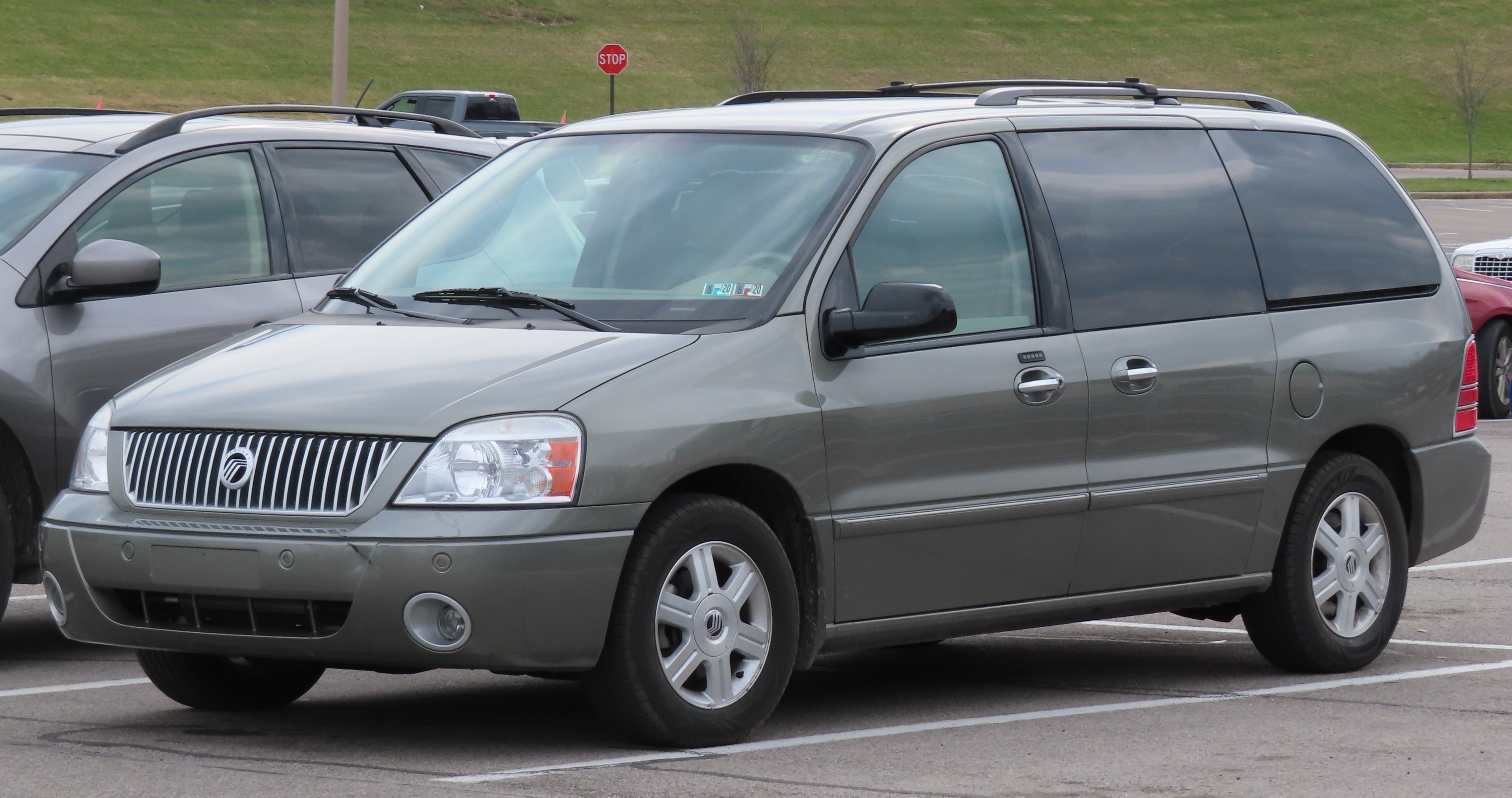
The Mercury Monterey is an older, full-size car made by the Mercury brand. It’s the kind of vehicle people talk about when discussing classic car history and events. In this podcast, it’s mentioned because it connects to the “Monterey” theme and festivities.
This is a Hyundai Venue, and the “SEL” is a specific trim level. The hosts are using this exact version of the car to show how it handles a longer trip, not just everyday errands.
The car uses cameras and other sensors to figure out what the driver is doing. The cameras can watch your eyes and head position so the system can tell if you’re distracted.
An anode is the part of a battery where electricity starts its journey. Using lithium metal as the anode can boost performance, but it can also cause problems when it touches the battery’s solid material.
The electrolyte is the “path” inside a battery that helps charged particles move. In solid-state batteries, that path is made from a solid material instead of a liquid.
Most EVs today use lithium-ion batteries. They use a liquid inside the battery to help electricity flow, and that liquid can be a safety risk if something goes wrong.
In many current EV batteries, there’s a liquid chemical inside that helps the battery work. The issue is that it can be flammable if the battery is damaged or overheats.
Energy density is basically how much “battery power” you can fit into a certain size or weight. Higher energy density usually means more range for the same battery size.
Commercial viability is whether a technology can be produced at scale and sold at a practical cost. The discussion here is about whether solid-state batteries will become affordable once they move from lab progress to mass production.
A nanometer is a unit for measuring extremely tiny thickness—way smaller than a human hair. Here it’s used to show the protective coating is very, very thin.
Corrosion is when materials slowly break down due to chemical reactions. In a battery, that breakdown can hurt performance and shorten how long the battery lasts.
The Tesla Model Y is an electric SUV. Here they’re talking about a longer version with a third row for more people and cargo, while still aiming to keep the usual Model Y driving feel and range.
Dual-motor all-wheel drive means the car has two electric motors and can send power to all four wheels. That can help it grip the road better and accelerate more confidently.
“Full self driving” is Tesla’s name for its advanced driver-assist features. Even when it’s active, a person still has to supervise and be ready to steer or brake.
“Wilderness” is Subaru’s name for the Outback’s tougher, off-road style and equipment package. The host is saying it’s not just cosmetic—it’s supposed to help the car handle rougher conditions.
This is a 2.4-liter engine that uses a turbo to boost power. The turbo helps the engine make more output than the non-turbo version by pushing extra air into it.
This is the Outback’s 2.5-liter engine without a turbo. Since there’s no turbo boost, it usually makes less power than the turbo version, but it can feel straightforward and easy to use.
A CVT is an automatic gearbox that doesn’t use fixed gear steps. It tries to keep the engine in the “right” zone for smoothness and efficiency, but some people notice it can feel a little soft or make the engine sound busy.
Ground clearance is how much space there is between the ground and the bottom of the car. More clearance helps you drive over bumps and rough spots without hitting the underside.
Adaptive dampers are shocks that can adjust how firm or soft they feel. That helps the car ride comfortably on normal roads while still staying controlled when the road gets rough or curvy.
All-terrain tires are tires meant for both regular roads and rougher surfaces. They usually have tread that grips better on dirt and uneven ground than typical highway tires.
The Toyota 4Runner Trail Hunter is a more off-road-focused version of the 4Runner. The hosts mention it to contrast ride feel—showing that the Subaru can be less “off-road harsh” while still being capable.
Synthetic leather upholstery is a fake-leather material made to look like leather. It’s commonly used because it can be easier to maintain and still feels nice.
A heated steering wheel warms up the steering wheel so it feels less cold in winter. It’s a comfort feature that makes driving more pleasant when temperatures drop.
An infotainment system is the dashboard screen and controls for things like music and phone features. The point here is that the updated version responds faster and feels smoother.
Android Auto lets you connect an Android phone to the car screen so you can use apps like maps and music. Here it’s mentioned as one of the phone-integration features you get.
Subaru iSight is Subaru’s set of safety features that helps the driver avoid crashes. In this segment, it’s described as including adaptive cruise and alerts for things around you.
Adaptive cruise control is cruise control that can automatically slow down if the car in front of you slows down. It helps keep a safe gap without you constantly braking.
Automatic emergency braking is a safety system that can brake for you if it thinks you’re about to hit something. It’s meant to reduce damage or avoid the crash.
Blind spot monitoring helps you notice cars you can’t see in your mirrors. Rear cross traffic alerts warn you about cars coming from the sides when you’re reversing out of a parking spot.
A locking differential helps both wheels spin together when traction is uneven, like on mud or loose gravel. The idea is to prevent one wheel from spinning uselessly while the other has grip.
They’re talking about the engine size and shape. It’s a 1.6-liter engine with four cylinders in a straight line, which is a common setup for small cars.
An “intelligent variable automatic transmission” is a brand/marketing description for a continuously variable transmission (CVT) that uses control logic to keep the engine in a good efficiency or response range. It’s still an automatic, but it doesn’t shift like a traditional multi-gear gearbox.
Uneven surfaces are bumpy or uneven roads. They’re saying the ride can feel a bit active or busy over rough pavement, rather than feeling super smooth.
All-wheel drive means the car can send power to all four tires for better grip. If there’s no all-wheel drive option, you’re more dependent on normal traction from just two wheels, which can matter on slippery or rough roads.
Horsepower is basically how much pulling power the car has. With “121 horsepower,” the car isn’t super quick, so you need to plan when you merge or pass other vehicles.
“Rubber band feel” is how it can feel when the engine revs up quickly but the car doesn’t immediately surge forward. They’re saying the Venue’s CVT can feel a bit stretchy when you accelerate.
Passing power is how easily the car can speed up when you’re trying to pass someone. They’re saying this car can do it, but you have to plan because it takes a moment to build speed.
Fuel economy tells you how far the car can go on a gallon of gas. They’re comparing city vs highway vs combined mpg to show it’s getting good mileage on the trip.
Cubic feet is just a way to measure how much stuff a car can hold. They’re using it to say how much cargo space the car has behind the back seats and when you fold them down.
A wireless hookup means connecting your phone to the car without plugging it in. They’re saying the wireless connection had issues, but plugging in worked reliably.
The SEMA show is a huge car event focused on the industry—parts, accessories, and custom builds. If you love cars, it’s one of the best places to see what’s coming next.
Place
Hinsdale
Hinsdale is a location the hosts mention to explain where the guest grew up. It’s part of the personal story behind their connection to International Harvester.
Concept
granddaddy of the SUV
They’re saying the Scout came before modern SUVs and helped set the pattern for them. It’s a way of saying it was an early starting point for the SUV idea.
International Harvester’s Scout is widely cited as an early “granddaddy” of the SUV category. The speaker frames it as the first Scout, emphasizing its role in shaping the off-road passenger-vehicle idea that later became mainstream.
The Ford Bronco is an SUV designed to handle rough roads and off-road driving. It’s the kind of vehicle people choose when they want more capability than a normal car. The podcast brings it up because it’s a well-known model in the off-road SUV category.
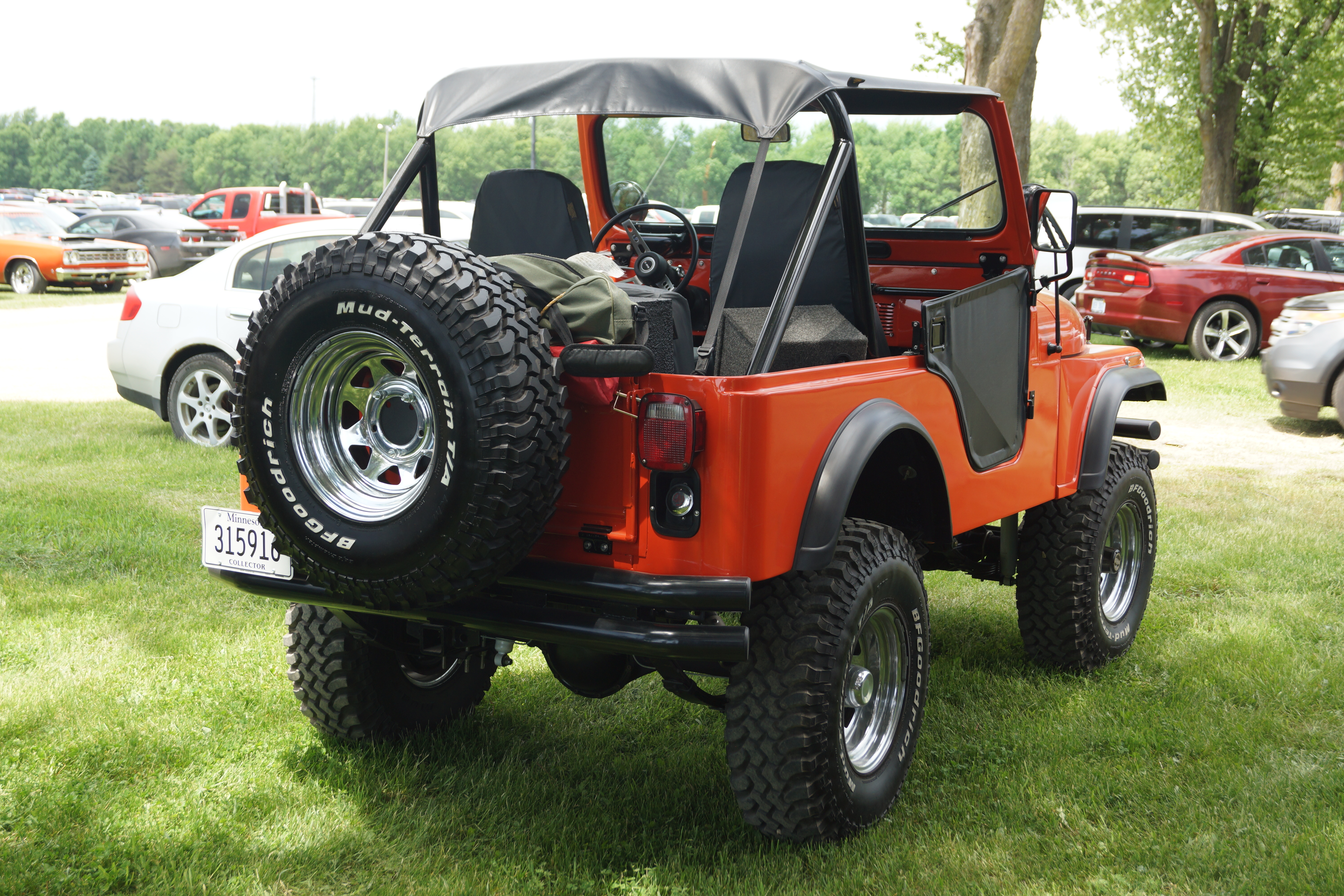
The Jeep CJ is an older Jeep model designed for off-road driving. It’s known for being a rugged, simple vehicle that can handle rough terrain. The podcast mentions it because later vehicles borrowed the general idea of that kind of off-road-focused design.
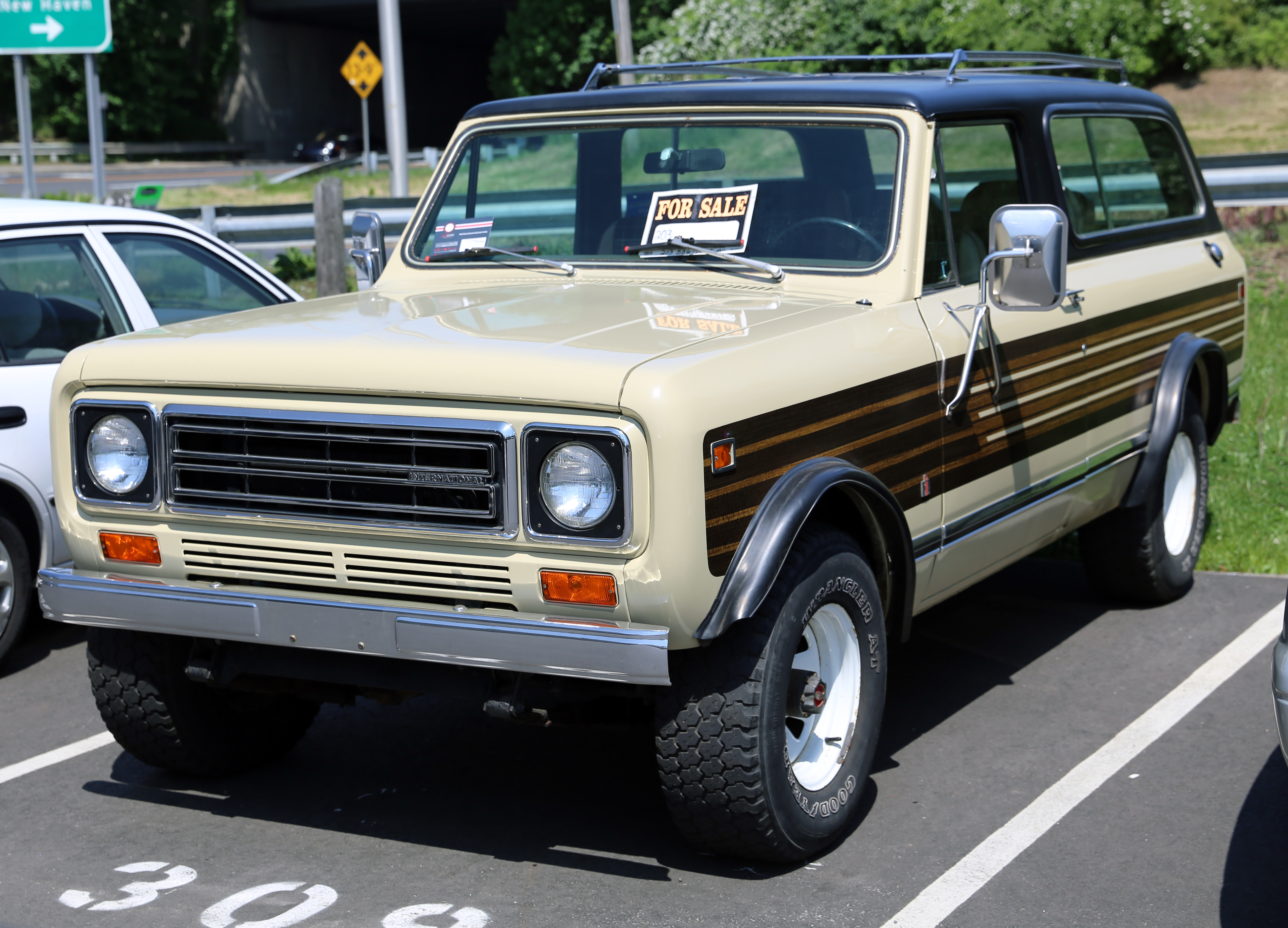
The 1979 Midas edition Traveler is a special version of an International Harvester Scout. It was customized through Midas, including comfort-focused interior touches like shag carpet and swivel front seats.
A “Midas conversion” means Midas did an aftermarket-style makeover on the vehicle. In this case, they’re talking about adding comfort upgrades inside the truck.
“Swivel captain seats” are separate front seats that can turn around. It’s a comfort feature that makes it easier to face different directions inside the vehicle.
The Cupra Born is a small electric car in a hatchback body style. It runs on electricity instead of gasoline, and it’s meant for regular daily driving. The podcast is mentioning it as an example of a car model people can own or talk about.
Electric vehicles are cars that run mainly on electricity stored in a battery. The conversation is about whether EVs can work well for adventurous, off-road trips.
A range extender is a backup power source in an electric vehicle. When the battery gets low, it uses a small gas generator to help you keep going longer.
Death Valley is a very hot, remote desert area in California. It’s the kind of place where you really need a vehicle that can handle long stretches without help.
Barker Ranch is a spot in the Death Valley area. The speaker mentions it because it’s tied to a famous crime story and it’s reached via difficult trails.
Soft-roading means driving on dirt or rough roads, but not the extreme kind of off-roading. It’s more about the look and occasional light trails than serious rock crawling.
Overlanding is long-distance travel where you’re more self-sufficient, often with camping gear. The “overlanding space” means the growing industry of vehicles and accessories made for that kind of trip.
A connected car is a car that can talk to the internet or a phone network. That lets it send and receive information, but it also means hackers could potentially try to access that data if the security isn’t good.
A bounty program is when a company pays people for finding security problems in software. The goal is to fix the issues before bad actors can exploit them.
A vulnerability is a weak spot in software that someone could potentially use to get in or cause trouble. In cars, that could mean problems in the car’s computer systems or the way data is sent.
This means the different ways a car sends and receives information. The more ways it’s connected, the more “doors” there are that need to be protected.
LIVE
This is America on the Road, named Best Radio Show by the International Automotive Media
Conference and now in its 34th year on the air.
Thanks for being with us as we bring you the latest automotive information from around
the world.
I'm Jack D. Rad.
With me is co-host Chris Teague and Chris, I'm wondering how the latest remodeling project
is going.
Well, I'm very sore, but I spent the weekend with a sledgehammer tearing down my bathroom
walls.
So hopefully it's going to be well when they get here to put them back up again.
How are you?
Yeah, there's something satisfying about doing that.
I'm not great at handy stuff.
Occasionally I do stuff and it turns out okay.
My dad was much better at it, but probably true of a lot of us.
Plenty happening in the automotive world this week.
Europe just made nagging you about your driving officially mandatory.
New cars must now spy on your eyeballs to make sure you're not checking your phone.
So we'll tell you more about that.
Scientists are teaming up to fix solid state batteries, the miracle tech that's been just
around the corner for years, maybe decades.
If they pull it off, EVs might finally become mainstream.
We're on that coming up.
Tesla is finally bringing its longer three-row model Y to America.
It's been available in China for a year or so and now it's set to help replace the late
Unlamented Model X.
Hyundai workers are walking out demanding fat bonuses and protection from the robots
the company wants to replace them with.
Did we see similar things here?
We'll offer our thoughts on that.
We are just in a Hyundai factory recently.
Volkswagen board just torpedoed the CEO's plan to slash 100,000 jobs in closed factories.
We told you about that last week.
So we'll have more on that and we'll see where they go from here.
And Goodwood is bringing its posh British car club to California.
The first event is at these distinctly unposhed Willow Springs Riceway in Rosamond, California.
How do you think Goodwood is going to translate in the United States, Chris?
I think it'll do pretty well.
People seem to gravitate towards these events, so I actually might want to attend it myself.
Yeah, I think it's a lot like Monterey Historic's plus all the festivities that go on up there
in Monterey and Pebble Beach, Pebble Beach Concourse, one of the coolest events ever.
Merrick, on the road is brought to you by drivingtoday.com, emlancy.com, the publisher
of my latest book, Only One Thing Stays The Same, and Mercury Insurance.
If you're looking to save some money, you should switch to Mercury for your auto and
home insurance.
Californians save an average of $670 with Mercury, so imagine how much you could save.
Get a quote today at drivingtoday.com slash auto insurance.
Chris, what is your test vehicle for this week?
I spent the week behind the wheel of the 2026 Subaru Outback Wilderness.
I can't wait to tell you all about it.
I look forward to that.
My test vehicle this week is the 2026 Hyundai Venue SEL.
My wife and I drove it to Vegas and back, so we'll tell you all about that.
So stay with us.
We have tons of show.
Great guests.
Stay with us, and we'll be right back right here on America on the Road.
Welcome back to America on the Road with Chris Teague, Jack McRath back with you.
We're so glad you're with us.
We really do appreciate it.
If you like our show, please pass it along to somebody who might like it as well.
We're all over the place on podcast platforms and on sub-stacks, so look for America on
the Road out there.
And it is news time, and I found this fascinating, Chris, apparently advanced driver distraction
warning systems are now mandatory in the European Union.
They have made that part of the general safety regulations over there.
These cameras, these systems use cameras and sensors to monitor your head and eye movements.
It's not just enough to monitor how you're driving, and some cars do that.
But this is actually looking at you, detecting whether you're using your phone or you're
peering over at entertainment screens, other distractions.
And it's interesting.
Maybe great, but maybe intrusive.
What do you think about that?
Yeah, I think I agree with your last statement.
It could be a good thing for driver safety, keeping people focused on the road, but there
are so many ways this could go wrong.
If you imagine the cases we've seen here in the United States where automakers are sharing
data with insurance companies without owners' consent and things like that, there's so
many different ways that this data can be used both to improve safety and against the
drivers themselves.
So I don't know.
I think I'm a little apprehensive about it.
Yeah, I mean, I am writing a sub-stack now.
I do write about crime in addition to cars, and this is a cars and crimes thing that I'm
writing right now, that basically was solved, or a lot of evidence was gathered, let's put
it that way, by what the car systems told police when they went into the infotainment
system and figured out where this person was driving around and all of that kind of stuff.
So kind of interesting.
Not that I'm in favor of criminals getting away with it, but I think there's a lot of
things where maybe you don't want the government or some third party to know exactly where
you are all the time.
What you're doing.
Yeah, seeing the difficulty the government has had keeping flock cameras upright on city
streets leads me to believe that people will find a way to disable this somehow going forward.
Right.
Here's a story I found fascinating because it deals with something we talk about all
the time or have been talking about for years, solid state batteries.
And it kind of explained to me a little bit why they haven't become prevalent, why they
haven't been out there.
An organization called the Southwest Research Institute is teaming with Southern Methodist
University SMU, where my oldest daughter happened to go to school, to solve what is considered
a key challenge in solid state batteries.
And this is the unstable interface between lithium metal anodes and the solid electrolytes.
So these things apparently screw up, you know, to put it in a totally non-scientific terms.
They corrode bad things happen.
Of course, today's batteries, the lithium ion batteries use a flammable liquid electrolyte.
That isn't all that great either.
You know, we've seen some massive fires, some really amazing fires occur in these kind
of batteries.
So the solid state designs promise faster charging, greater energy density and improved
safety.
All of that stuff is good.
But the interface is a problem and this might be a solution.
Sounds good, huh, Chris?
Yeah, it does sound good.
And everything about solid state batteries has been this like next biggest greatest thing,
right?
They're smaller, they're more compact, they're lighter, they're safer.
And they solve a lot of the problems people have with EVs, you know, the batteries are
heavy, they take too long to charge and all those things.
My main worry with this is once they do reach commercial viability, how much of these batteries
are going to cost?
The development process and the cost of developing this thing have been so long and so great.
I can't imagine they're going to be super affordable for some time to come.
Yeah, we'll have to see.
They hope to use this new combination, hopes to use ultra thin film deposition techniques,
metals, oxides and alloys, real thin, you know, 100, 10s to 100s of nanometers thick,
which ain't very thick, on these critical interfaces to prevent this corrosion from
happening.
If the corrosion happens, then the batteries degrade right away and it's a big problem.
Maybe that's a good thing.
Tesla is launching a new longer three row model Y in the US.
This has been available in China for a while now, about a year, I guess.
This is a six seat SUV, 195.6 inches long, seven inches longer than the standard model Y.
It offers 89 cubic feet of cargo space, so more cargo space, of course.
And still delivers, you know, 325 mile range, zero to 60 in four and a half seconds or something
like that, dual motor all wheel drive, probably a nice addition to the Tesla lineup, right?
Yeah, I think it's a smart move by Tesla.
This is a segment that needs a three row SUV to be competitive with a lot of the other
automakers out there.
The model Y had a third row before, but it was too small, so this is a great step for them.
Yeah, price is not necessarily inexpensive.
It starts at about $62,000 for the launch series.
It does include one year of full self driving in parentheses, supervised,
supercharging, premium connectivity, free paint, paint colors and wheels, and a tow hitch.
I'm not sure a lot of people are going to be towing with their model Y, but I guess you could.
They're going to have new colors, including cosmic silver.
A gray interior will be available as well, so good stuff, not inexpensive though.
No, yeah, this is a pretty steep price when people are looking to cut their budgets right now.
They're phasing out the Model X. Of course, the Model X was a very odd duck in so many ways,
including the inability to open the rear doors when you were in the garage, which is kind of a
problem. Maybe they got that whole thing that the spaceship aspect got out of hand there.
What do you think about that?
Yeah, I agree.
Hyundai workers are launching a partial strike over bonuses and robotics,
basically AI, and I'm wondering if we're going to see a lot of this happening in car
plants around the world. They recently staged a three day partial strike, walking out two hours
early. Contract talks going on about this thing. They're looking for a lot more money, 30% of the
previous year's net profit to be paid out to the workers. They're citing very large AI driven
payouts at Samsung and SK Heinecks to major manufacturers in Korea. They want to seek job
protection too. I think a lot of people are wondering about that with AI coming. What's
going to happen? You think we're going to see stuff like this in the United States factories?
I think so, particularly because we don't have all unionized automakers. There are companies
here that operate outside of the union structure. I don't know what the labor protections are in
South Korea, but I have to imagine they're probably a little stronger than they are here.
I don't know how Hyundai gets around this without some sort of deal with the union.
Yeah, well, I think they'll make a deal with the union. I think the union structure there is a bit
different than here where it's not quite as adversarial, but maybe it is as adversarial as it
is to management. In any case, Volkswagen has union problems of its own in its bid to restructure
and close plants in Germany kind of unprecedented. I guess you can't be kind of unprecedented.
It either is unprecedented or not, but this is unprecedented. They're looking to cut 100,000
jobs, close four German factories, but the board, which is heavily influenced by the unions and by
government in Germany, voted that plan down. Now they have to figure out what to do, though,
because basically the Chinese competition, both in Europe and in China, where Volkswagen had a
much smaller presence, is very, very difficult for them to deal with. US tariffs aren't helping
them much either, although a lot of their production that's sold here is either built here or in
Mexico and thus less likely to be highly tariffed. But they got a lot of issues, don't they, Chris?
They do. And I know the labor protections in Germany are extremely strong. I think the
union has some seats on one of Volkswagen's boards and they have quite a bit of power there. So
looking to cut costs, labor is generally one of the first areas because it's so expensive. So I
don't know where they go from here. Goodwood is coming to America. This is a motorsport institution.
Goodwood Road Racing Club of America has just been announced. It's going to do its first event
in California. Again, do you think this is going to play here? I think so. People love expensive
cars, expensive old cars at that, and this is a great place to see them all. Yeah, so we'll
check that out. That should be fun. Jackie Stewart, Mario Andretti are among the people
pushing this forward. Remind us of your test vehicle for this week. I have the 2026 Subaru
Outback Wilderness. And I'm testing the 2026 Hyundai Venue. So stay with us for that and we'll be
right back. Welcome back to America on the Road with Christian Jackson. It was road test time on
America on the Road and Chris, you were driving a vehicle that I think is probably quite popular in
New England where you live and is an off-road version, kind of, I guess, of a Subaru product.
Tell us about it. Yeah, and I'm going to give this car a compliment that I don't give many cars with
this kind of configuration. The Wilderness trim in the Outback actually does add capability and it
doesn't just add looks. So you do get a little bit beefier of a vehicle out of this car. But
taking a step back, you can get into this Outback, the 2026 Outback for around $37,000. My Wilderness
test trim was around $48,000. So there's a big price spread with this vehicle. Jack, have you
driven the new Outback recently? And if so, what did you think about it? I've always been a fan of
the Outback. I don't think I've driven the most recent edition, though, so I'm curious as to your
impressions of it. Well, this is definitely more of an SUV-looking vehicle than the station wagon of
days past, but it's still pretty cool. So the Wilderness trim comes with the upgraded 2.4-liter
turbocharged engine. The 2.5-liter non-turbo engine is standard. But the turbo model gets 260 horsepower,
all-wheel drive, and a continuously variable transmission. Jack, this vehicle has plenty
of power. I don't think that you need much more than 260 horsepower in a vehicle like this,
unless you are really looking to go rally racing or something. I think there's plenty going on here.
The continuously variable transmission isn't terrible. I know we talk a lot about
how it feels a little spongy and lets the engine make too much noise and things like that.
And while some of that is true here, it's not as bad as some others. Subaru has done CVTs for years
and years and years almost exclusively, and this is their experience shows in this vehicle.
The Wilderness does get 9.5 inches of ground clearance, and you get adaptive dampers with
this vehicle. So in addition to the all-wheel drive and the all-terrain tires, you do get some
off-road capability here. You're not going to go rock crawling in the outback Wilderness, but
the ground clearance, the tires, and the horsepower do give you enough to get well off of the beaten
path. What do you think about that in terms of an upgrade over the regular vehicle, Jack?
I like that. I like the fact that there's some real functionality added to the vehicle, rather than
just kind of looks and all of that. I like the fact that you have probably better ground clearance
and capabilities like that. And one of the things you don't give up with this vehicle is on-road
comfort. So the adaptive dampers give it a good ride quality on the road. There's not a lot of
body lean or roll. For example, I'm driving the 2026 Toyota 4Runner Trail Hunter right now,
and you definitely feel like you're in an off-road vehicle, but that's not the case with this Subaru.
So I think people won't miss the comfort if they go for the more off-road trim here.
You also get 21 miles per gallon, 27 miles per gallon highway, 21 miles per gallon city, if I
can spit that out. So not a terrible ride on the road. Inside you get synthetic leather upholstery
heated at front seats and a heated steering wheel in the Wilderness trim. And as with all
outbacks, we actually owned a 2015 outback several years ago. There's plenty of space inside. The
front seats are wide. They're nicely padded. They're comfortable. And there's good ergonomics.
So this is a good road trip car. This is a good car to have kids in to throw your dog in to go
for a trip around town. Pretty good all-around vehicle. You get a 12.1-inch touchscreen Subaru's
infotainment system has been updated as well. So you don't have that clunky sort of laggy tap and
wait for something to happen system that you did it before. It's kind of similar to Toyota's new
system. I think I mentioned this with the last outback I tested about a month ago. It does feel
like a re-skinned Toyota infotainment system. And even if it's not, it benefits from a lot
of the same improvements that Toyota gave its system. You get wireless Apple CarPlay and Android
Auto, Bluetooth, Series XM radio, and a whole load of other features with this vehicle. And then
Subaru iSight's safety system is standard. So you get adaptive cruise control, forward collision
warnings, automatic emergency braking, and then blind spot monitoring with rear cross traffic
alerts. So Jack, if you're asking me what I buy this vehicle, I think the answer is yes. I think
that almost $50,000 is a big ask for a Subaru outback. But you are getting more than the basics
with this vehicle. And so for some people, I think it could be worth it. What do you think?
Yeah, I think so. You know, if you do some off-roading, this seems like it has some genuine
off-road capabilities. So it's that's worth some added money there. If you're going to do that with
your own car or your own vehicle, you would probably trick it out in a lot much the same way
that Subaru has already done done so, you know, all terrain tires, lifted suspension, possibly
that kind of stuff. And if you're doing it yourself, it's a lot bigger problem. So I think
there's a lot to like about that. I think it makes sense. I think so. The thing you don't get is like
a locking differential to help with some of the traction there. But I've seen videos of these
vehicles, people take these things into places that I would never have thought they would get into
or out of and they seem to do just fine. Right. Everything's great until it isn't. Yes. Right.
But you know, God bless them. That's very cool. Very cool. Exactly. Well, I was driving a vehicle
that is a true rarity in today's market. This is a very affordable SUV. You might call it SUV
light, but very affordable. This little sub compact crossover. And I'm talking about the
2026 Hyundai Venue. It does a very nice job of balancing affordability efficiency and everyday
practicality. So you look at it and you go, well, this is probably be a nice city car, which it is.
It has a surprisingly roomy cabin and it lacks flash. That's for certain. My wife referred to
it as the beep, beep car. Kind of cute, but you know, not not imposing, but plenty of value and
convenience. And we drove it to Las Vegas and back. So we, uh, that would weed out some and
point out some pretty bad problems if they were there. So, uh, we kind of found it ironic
that the vehicle we had for the longest drive we're taking this year, at least that we've
scheduled, which is Los Angeles to Las Vegas and back about 300 miles each way was in the
least expensive vehicle we've had this year. But, uh, as I said, this long drive can really
point out weak points of a vehicle. I had some questions about this, Chris. I had some questions
about whether this would be a good vehicle. What, what would be your take on whether the
venue would be good for this drive or not? Well, if you think back, you and I were on the launch
of this vehicle and they made a big point to say that this was designed for urban young professionals.
So urban and to in town driving mostly, um, I don't know. I think that it would lack some
comfort on the highway and maybe be a little bit twitchy. What was your experience? Yeah,
well, I'll tell you about that price was around $24,000. This is the sticker price on this thing.
So that's that kind of blows you away under 25 K. I mean, go figure that out in 2026.
And the base venue starts a little lower, not that much lower, but, uh, you're going to think,
hey, this is going to be an uncomfortable car. And I was frankly worried about highway
refinement and power. And there's some compromises there, but, uh, listen to the power figures and
then see what you think about that powered by 1.6. This is powered by a 1.6 liter inline
four cylinder engine, 121 horsepower, 113 pound feet of torque. These seem like numbers I would
have written 20 years ago, Chris. Uh, but at the same time kind of turned out okay. Power sent
through a intelligent variable automatic transmission, essentially a continuously variable transmission.
Hyundai says it's designed to mimic traditional gear shifts or you can do that. I never experienced
that. It didn't seem natural, like a geared transmission wasn't great, but at the same time,
uh, over this long track, and I mean, we were in the car a long time, including bad traffic coming
back and you know, some really horrendous traffic coming back from Las Vegas. It was pretty darn
comfortable. Uh, a little, uh, busy on uneven surfaces, I think would be my, my major, uh,
complaint about it, but it wasn't a big complaint. There's no all wheel drive option available, which
kind of begs the question, is this really an SUV? And, uh, certainly the 121 horsepower made you have
to think a little bit before you dove into traffic. And, uh, you know, you have to be fairly decisive
on I-15 coming back from Las Vegas or going to Las Vegas. Let me tell you, uh, there's a lot of
areas where it's, uh, two lanes each way. And if you're going to go, you better go. Um, but on the
other hand, I, I like, there's a, there is some rubber band feel to this, uh, transmission.
Your take on the power and all of that power delivery. Yeah. In my experience, the venue on
much shorter highway trips has been fine at highway speeds. The thing that I question is passing power.
As you mentioned, you know, you really have to think about it and plan your gaps accordingly,
because it's going to take you a little bit to get around the vehicle that, uh, you want to pass.
But it's more than comfortable inside. So I can see how this would be a decent road trip car.
Yeah. You jump in and, you know, when you jump on the throttle, there's kind of this rubber band
feel to the CVT. Uh, and then here comes the power, not tons of it, but not bad. Uh, fuel economy was
terrific. Uh, 21 miles per gallon in the city, 33 miles per gallon on the highway, 31 miles per
gallon combined. We observed something more like 35 miles per gallon. And, you know, with air
conditioning on and, uh, well, maybe going slightly extra legal speeds here and there,
not by much, maybe 57 10 miles over the speed limit here and there. Uh, guilty officer,
take me away. Um, I like the fuel economy given we're still in $5 gallon gas situation out here.
Steering was pretty responsive. I would have suggested to, uh, Hyundai engineers that maybe
they build in a little more compliance, that it be a little softer riding, uh, because it is a little,
like I say busy on rough pavement, but otherwise, uh, a lot better than I would have guessed. An
interior space was terrific, comfortable seating, practical layout, material seemed pretty good.
I think punching above its price point there, I think they execute pretty well here. This is
something for 25K. Um, there's a lot to like about it, I think. Yeah, it's refreshing in the
market. The vehicle that is half the current average transaction price for a new vehicle,
would make a great in-town commuter car. And if you need to take a road trip, you've got more than
enough comfort and space to do it. Yeah. Good cargo space, 19 cubic feet of space behind the
rear seats, 32 cubic feet with the rear seats folded. We threw two carry-on bags in the back,
plenty of space for additional luggage and stuff like that. Good infotainment, uh, tech, although
we had some problem with the, uh, wireless hookup of the, uh, entertainment system. Apple CarPlay
didn't work so well wirelessly, but work flawlessly with a wired connection. So that was good. And,
uh, a lot of safety. I mean, this has more safety equipment than many luxury vehicles,
more standard safety equipment, uh, you know, at 25K. So I think all in all, uh, there is a
lot to like about the, the Hyundai Venue at, uh, just 25, $26,000. I agree. And when we come back,
we will have a terrific guest. Kendra Summer is an auto journalist. She's also a specialist in the
international harvester scout. So we'll talk to her about that. A vehicle I have some soft spots
in my head for as well. So stay with us for that and we'll be right back.
I received a letter from Reader this week and I thought I'd share it with you. Here's what he wrote.
I just got around to reading Dance in the Dark and wanted to say how much I enjoyed it. I'm a
compulsive reader and this one was right up my alley. An unlikely hero, a lot of twists and turns,
some adult content and humor that rose naturally from the action. Keep on writing and I'll keep
on reading. Of course, that's just the kind of letter any author would love to get. I hope that
others get the same enjoyment from reading Dance in the Dark and my newest crime novel, Only One
Thing Stays the Same. Both are available exclusively at Amazon.com. That's Dance in the Dark and Only
One Thing Stays the Same, both written by me, Jack R. Neyred. Thanks for looking for them today.
Welcome back everybody to America on the Road Jack Neyred back with you. We've got a terrific
guest for you. I'm really excited to talk with Kendra Summer who is an automotive reporter of
some standing now. You've been doing this for a while and a international harvester scout
enthusiast that you run your own business. Thanks so much for being with us. We really do
appreciate you being here. Yeah, Jack. Thanks so much for having me. Tell us a little bit about
your backstory. Bring us up to date on how you became an automotive reporter because it's not
something you necessarily jump out at, you, is it? I don't know. Well, it's been quite a journey
and I could go on and on about this, but I'll give you the abbreviated version. So I was a
news reporter and I was in the Midwest working. I would go to my news director and pitch these great
car stories. I'm a daughter of a gearhead and I grew up with a garage full of international
scouts and that kind of combination obviously, you know, does something to you and I'd find
these great car stories pitched and they would say nobody cared about cars. So finally, I got so
fed up. The SEMA show was coming and I decided to quit my job and use my last paycheck to fly to SEMA
and then from there I just started really learning the industry, started just taking any job I could,
working with companies and brands and then doing different types of reporting gigs until
we really established. Tell our listeners a little bit about the SEMA show. We talk about it on the
show every now and then, but they probably need a refresher. Tell them about that and why it's such
a cool place for someone like you and me, right? Definitely. I mean, if you're a car nerd, you
definitely want to be at the SEMA show. It's always either the last week of October, early November
and it's pretty much industry only. They are opening it up to the public on Fridays, but it's
every kind of like crazy car build that you could think of. All these great celebrities are there
that are in the automotive space and then all the manufacturers really bring their new product
lines and it's just a great way to get immersed. Yeah, absolutely. Well, it sounds like cars are
kind of in your blood. You told me off air that you kind of have a real close connection with
international scout. Tell us about that and your dad and that kind of thing. Yeah, well, it's a small
world because you know all about Hinsdale too. Yeah, I kind of grew up near an international
harvester facility and apparently was it your dad or grandfather who worked at that place?
Yeah, my grandfather worked there for 40 years. He was an engineer for international and
it was really cool because back in the day, they would have it where the management folks would
be able to be part of the leasing program. So my grandfather would take home the new scout models
and started with the travel laws and then started with travelers and then scout twos. So my dad,
growing up, that was the family car and then obviously in 1980, when they stopped production,
we were, the family was very heartbroken and my dad took it upon himself to get to know a lot of the
core corporate people, become really great friends with them and he started collecting
international scouts back when they weren't cool. We were made fun of, you know, the kind of the
farm truck but we loved them and my dad has all kinds of scout memorabilia and we have some really
great builds at our house. I just, I love international. I think it's, you know, one of those vehicles
that is cool because it was uncool. Yes. At least that's how I came to love it, actually. You know,
to think that a company that basically makes threshers and harvesting machines and those
kind of things is also making vehicles for the public. That's kind of a strange when right off
the top. It was kind of interesting that international harvester should do that, right? They
should create a consumer kind of product like that. Oh, well, definitely. I mean, if you look back in
their heritage, they were one of the top 50 companies to work for in the world at one point.
They're making refrigerators, air conditioners, I mean, construction equipment. So when Ted Ornes,
who was the chief design engineer back in the 1950s, saw how popular jeeps were getting, you know,
he went to the international harvester executives and said, hey, we need to get on this bandwagon
and if you think about it, this passenger vehicle was really the granddaddy of the SUV,
sketched out on the kitchen table. And I mean, if you think about it, Scout was the first one.
Bronco ripped us off. I always get a little test. Yeah, I was about to say that, Kendra. I mean,
it strikes me that Bronco design, even the current Bronco design, owes a whole lot to
international Scout, doesn't it? Yes. Well, don't say that. I always say, don't call it a Bronco
when you see a Scout, because us Scout owners get really angry, but they look so similar. They
ripped off our design when they launched the first model year back in 66, but the first Scout came
out in 61. So we were light years ahead of them. But the problem was the dealer infrastructure,
if you remember, it was only tied to the farm equipment, it would be sold at those farm dealers
where Ford had a better dealer network with car row. Yeah. I mean, by thousands, literally,
I would imagine. And also, people are looking for a vehicle at a Ford dealer. They're not
necessarily looking for a vehicle that they're going to drive every day. Yes. An international
harvester store. Exactly. Well, there's a lot to like about that vehicle, though, right? I mean,
it kind of took the Jeep CJ, but made it a consumer kind of vehicle as opposed to what Jeep was
doing at that time, which was kind of a quasi military vehicle. I thought that was pretty
interesting. Definitely. Yeah, it's very cool. Yeah. What is your favorite era of Scout? I guess
there are kind of at least three kind of major divisions in Scout. Do you have one that you
favor over the other? Definitely. So I'm lucky. My dad has every era of Scout at her house, but
I would say that my favorite is actually going to be our 1979 Midas edition Traveler. And it's
really cool because back in the day, you could send your international to a Midas dealership,
and they would do a conversion, a Midas conversion, and they'd put in like carpet,
like shag carpet, and it's got like swivel captain seats. And what's really cool about it for me
is my parents used that as their just married vehicle. And then when I got, when I was born,
they brought me home from the hospital in that truck. So it's just, it's like a family member.
We're really, we look at our trucks as family. Yeah, talk about Tinder memories attached. That's
very, very cool. Well, what are you up to these days? I mean, kind of interesting time to be in
the auto industry to be an auto reporter. You've seen a lot of changes even over the course of,
you know, 15 or 20 years that you've been in the business. What's keeping you busy right now?
We work with a lot of manufacturers. So I'm busy working with them. And then before the pandemic,
we were actually over in Riyadh, Saudi Arabia, working with the Crown Prince covering his car
show, which was very interesting. You know how the Honda Civic is kind of the average car here?
Well, over there, it was the Ferrari. Like every Ferrari, you would see everybody driving one.
And it was pretty eye-opening. Yeah. Well, I think over there, they have supercars,
even as police cars and utility vehicles and all those kind of things too. They do.
When you have money, you've got money, right? Exactly. What's your stance on electric vehicles?
And, and I guess more directly, electric scout. I mean, that seems like maybe imminent or maybe
not depending on how you look at it. How do you feel about all that? Well, I'm based in Los Angeles,
and I think electric vehicles definitely have a place in our automotive industry. I love, you know,
traditional scouts. And I thought it was really exciting that scout motors, I've done some work
with them actually, they introduced a range extender. So it'll have a small gas generator,
and it is able to give you an extended range of around 500 miles. Because if you think about it,
the consumer of this vehicle is going to be off-roading, they're adventurous, and they're
not going to want to get stuck. So I thought that was really smart. Yeah, I think that makes a heck
of a lot of sense to have that gasoline engine to take care of that that instance. Because you
don't want to run out of electricity. You can't go run out and get a can of electricity for some
or somebody can't drive it up to your campsite and say, oh, here you go. I mean, that's pretty
difficult to do. That'd be something, all right. Yeah, yeah. Other things interesting you in the
car industry, I mean, are you like a performance oriented kind of person? Do you like, is off-roading
basically your thing? You know, where do you stand on all of that stuff? I love off-roading. So
being here in Southern California now, I am really connected with the scout community,
and we'll go do off-road rides. And recently, we went up to Death Valley as a group,
and we went to actually where they found Charles Manson. Wow. And that's like a really intense
trail, but we were able to get up there and just kind of like, you know, check it out,
which is really cool. Barker Ranch is what it's called. Yeah, yeah. Yeah, he spent a lot of time
there. Well, interestingly enough, in addition to reporting on cars, I report on crime. I have
a crime novel. Actually, the protagonist or one of my crime novels drives a scout. Really? Because
I thought that was the perfect, kind of really expressed what this guy was. He's a former rock
and roll drummer, kind of gets himself involved in something that he's not quite sure what it is,
but his vehicle of choice is a scout. So he packs up his drum kit in the scout. There's actually
some scout chases in the crime novel, but I also write true crime. Do you? Oh my gosh. Well,
I have so many questions. Is he a killer? The guy who drives the scout? Yes. He is the good guy.
Okay. He is the good guy, and he's kind of an innocent guy who gets embroiled in something
where he is life-threatening to him, but he doesn't quite know why. And he has to unravel that,
and then he has to get himself out of that because he ends up being wanted for murder
that he didn't commit and stuff like stuff that happens in suspense novels.
Nice. Well, I was going to say that's very similar to the Yosemite killer. He drove a scout.
Yeah. Interesting. I'll have to look that one up because I'm writing a sub-stack on cars, crime,
and curve balls is what it's called. Cool. I'll have to look that up. But are you traveling to
the SEMA show later this year? Do you have plans to do that? And what do you expect to see there?
We go to SEMA every year. It's on our circuit, and they have a great off-road presence this
year. They're introducing motorcycles and power sports, which is really exciting. That's new for
them. So I'm excited to see all of that. And then, of course, I love the PRI show, which is that
high-performance show in Indianapolis. We go every year to that as well. Yeah. It seems like
off-roading or maybe what we call soft-roading is really gaining a lot of steam in the industry.
Vehicles that are at least designed to look like off-roaders. I'm not certain how many of them
will actually go off-road or spend much time off-road. But how do you look at those vehicles?
You kind of scoff at them or you think, hey, that's a nice addition to the whole scheme?
I mean, I think that the off-roading space, overlanding space, whatever you want to call it,
I think is really growing in our industry, and it's really propelling us forward. So I look at
anything positive that's moving our industry forward as a good thing. With the new Scout
coming out in 27 or 28, depending on where they land, it's exciting. It's exciting to see that
excitement around the off-roading space. So I love it. Well, Scouts embroiled in some dealer
controversy, I think, too. So we'll have to see how all that unfolds. But that should be interesting.
And I think it's kind of been a saving grace to companies involved in CMN,
the specialty equipment market, that off-roading is taken off because there's maybe fewer things
you can do performance-wise. But in terms of modifying your vehicle to go off-road,
I mean, kind of the sky's the limit. I think it's never been more popular than right now.
Definitely. And I think what's really cool is it's really pulling in a lot of young people.
And then people who might have not grown up as gearheads are getting involved in off-roading
because there's so many ways and entry points into that, which is really neat.
Yeah, you get off the beaten track. And I think actually COVID probably pushed a lot of people
in that direction because they could get outside and do things that they otherwise couldn't do
and do some travel off-road. So that was fun. For sure. Yeah. Well, I'm looking forward to
the CMN show. Perhaps I will run into you there. Are there other things that you're excited about
in the industry before we let you go? I think one area that is really growing, which is really
exciting to see, is grid life events and things like fuel fests, where it's a combination of car
culture with music. So it's this nice, it's kind of like, I call it carchela, where you have musical
acts. And it just, it brings in so many more people who could be interested in our industry.
Well, Kendra, Summer, thanks so much for being with us. We enjoyed talking with you. I'm always
happy to talk about Scouts and especially with someone so knowledgeable and so connected to
Scout. I appreciate that very much. Great to talk to you. Hope I can do it again.
Thank you so much. I look forward to it. And stay with us, everybody. We'll be right back right here
on America on the Road. Welcome back, everybody, to America on the Road with
Co-host Chris Degas. Happy to have you with you. It is listener question time. Our final
segment of this week's show, we love to answer questions for you based on our long experience
in providing car advice. So send them along to editoratdrivingtoday.com. It's editoratdrivingtoday.com.
Chris, I have a good question for you. It's from Scotty in Sheboygan, Wisconsin. Scotty says,
after doing some reading online, I'm getting concerned about privacy. How secure are connected
cars from hacking or data breaches? I think there's good news and bad news here, right? The good news
is that automakers have entire teams of people, whole hordes of people working on security and
developing these things in the most secure fashion possible. A lot of them also have bounty programs
where they pay members of the public to find vulnerabilities in their software. So they're
working towards making this more secure. I think the bad news is that this is still kind of an
issue. These are new features. processes, new data transmission avenues,
and bad actors are going to find vulnerabilities in those pathways. But I think that overall,
it's going to get safer as we go forward. Yeah, I think you're right. I think there are some
legitimate concerns out there that need to be addressed. I'm not sure whether we need legislation
to do that, but maybe we do. I don't know. That wraps up our show for this week. My crime novel,
only one thing stays the same, is available in both ebook and paperback form at Amazon.
So I'd love it if you'd look for that. If you like our show, please pass it on.
Listen on this radio station each week. Let your friends know where you hear America on the road.
We'd love to double our listenership this year, and we're halfway through the year,
so we better get after it. How can we do that? Yeah, you guys can help us do that with a quick
Google search for the America on the Road podcast. That'll bring us to you on all the major platforms,
Apple, Spotify, and many others. Like the show, leave us a review. Please subscribe to get the
show automatically downloaded to your device every week. That helps us out, and you can
take us with you wherever you go. Right. America on the Road is now available on
Substack, so look for that. Do a little search for that. We have a YouTube channel. Check that out.
Please subscribe to our YouTube channel. Check out our videos. See what we look like. More
importantly, see what these vehicles look like. And thanks to Mercury Insurance for sponsoring
the show. Our sports byline radio network stations for caring it. We love being on
Terrestrial Radio. And most of all, thanks to you for listening to America on the Road. We
know you have a lot of choices, so we thank you for listening, and we hope you join us again next
time for another edition of America on the Road. I'd like to tell you about my newest crime novel.
Only one thing stays the same. As the story unfolds, an unemployed aeronautics worker named Bill
McCurdy becomes disillusioned with his wife and slips into an illicit affair with a teenager
from down the street. Before long, he begins to think of doing the unthinkable. And before the
roller coaster ride stops, he learns quite personally and very finely that only one thing
stays the same. Only one thing stays the same is available in Kindle e-book and paperback form,
exclusively at Amazon.com. I'd appreciate it if you'd look for it today.
About this episode
Road-tripping from Vegas with the 2026 Hyundai Venue SEL, the hosts weigh “cheap thrills” practicality—cargo space, infotainment quirks, and how the small 1.6L and CVT-like transmission feel on two-lane passing. They also zoom out to the tech and policy backdrop: Europe’s mandatory driver-distraction monitoring, connected-car privacy tradeoffs, and why solid-state batteries still face an unstable lithium-metal interface. The conversation also touches Tesla’s longer three-row Model Y and the growing off-road/overlanding scene.
Would you choose one of the least expensive vehicles in the country for a road trip to Las Vegas? Host Jack Nerad did just that, taking the $25,000 small SUV on a 600-mile out-and-back in weather topping 100 degrees. What — is he nuts? Meanwhile, Co-Host Chris Teague gave himself a more reasonable assignment, reviewing the off-road-ready 2026 Subaru Outback Wilderness. Jack and Chris also discuss Europe’s new mandatory driver-monitoring systems, progress on solid-state batteries, and Tesla’s new (longer) three-row Model Y. Labor strife also hits the news in the form of Hyundai worker strikes and Volkswagen’s restructuring setback. Plus, Britain’s Goodwood car festival announces an American version.
🚙 Jack Nerad’s Road Test: 2026 Hyundai Venue SEL
Jack reviews the 2026 Hyundai Venue SEL, one of the most affordable new SUVs available. And, inexplicably, he tests the car on one of his longest road trips of the year — a drive to Las Vegas, where a show at The Sphere was at the end of the rainbow. With a total price around $24,440 as tested, the subcompact crossover delivers nimble city handling, 31 mpg combined efficiency, and a surprisingly comfortable cabin. As he did battle with I-15, Jack discovered the usefulness of the SUV’s modern tech with its 8-inch touchscreen and wireless CarPlay/Android Auto. Luckily, its strong safety features didn’t come into play.
🚗 Chris Teague’s Road Test: 2026 Subaru Outback Wilderness
While Jack talks about the Venue, Chris tests the 2026 Subaru Outback Wilderness, the most rugged version of the redesigned midsize SUV. Powered by a 260-hp turbo 2.4-liter boxer engine with CVT and Symmetrical AWD, it features 9.5 inches of ground clearance, all-terrain tires, X-MODE, electronic dampers, and enhanced approach/breakover angles. Not just an off-road face, the Outback Wilderness offers strong utility with increased cargo space, a 12.1-inch touchscreen, and a balance of multi-terrain capability and daily comfort.
🎙️ Special Guest Interview
Kendra Sommer, auto journalist and International Harvester Scout expert and enthusiast, joins the show.
📰 This Week’s Headlines
EU Mandates Advanced Driver Distraction Warning Systems
All new vehicles in Europe must now use cameras to monitor driver eye and head movements to combat distraction.
SwRI & SMU Advance Solid-State Battery Tech
Researchers work on ultra-thin films to stabilize lithium interfaces, a major step toward safer, higher-density EV batteries.
Tesla Launches Bigger Three-Row Model Y L in U.S.
The longer six-seat Model Y offers 325-mile range and starts at $61,990.
Hyundai Workers Launch Partial Strike
Union demands bigger bonuses and protections from robotics in manufacturing.
VW Board Rejects Major Restructuring
Supervisory board votes down CEO’s plan for massive job cuts and factory closures.
Goodwood Launches U.S. Racing Club
The iconic British motoring festival brings track days and events to California starting in 2027.
❓ Listener Question
Scottie from Sheboygan, Wisconsin, asks: “How secure are connected cars from hacking or data tracking?”
Jack’s crime novel, Only One Thing Stays the Same, is available now in paperback and eBook on Amazon — currently at a sale price.
🎧 Where to Listen
Catch America on the Road on your local Sports Byline Radio Network station each week and subscribe to the podcast on Apple Podcasts, Spotify, YouTube, and more. Follow for new car reviews, guest interviews, auto news, and road tests.
Sponsored by Mercury Insurance and DrivingToday.com
📺 Watch & Subscribe
Find America on the Road on YouTube and Rumble. Subscribe for road test videos, shorts, and extended reviews.