
CHINA: A Record IPO, Ultra Long Range EREVs and One Million Leapmotors | 25 Sep 2025
EV News Daily - Technology and Business of EVs
CHINA: A Record IPO, Ultra Long Range EREVs and One Million Leapmotors | 25 Sep 2025
EV News Daily - Technology and Business of EVs · Sep 25, 2025
Annotations will appear as you listen
0:00
18:07


LIVE
Welcome back to the podcast today, a record IPO, ultra long range E-Refs and a million
leak motors.
Plus stay tuned, I'll tell you about Goshen's Moroccan Gigafactory.
Welcome to AV News China, the podcast dedicated to the world's biggest EV market.
Each day I'll bring you headlines, insights and analysis from the heart of China's booming
EV industry and decode how fast moving developments in the East are shaping the global EV landscape.
Well Cherry Automobile made its Hong Kong market debut today, completing the biggest
automotive IPO, initial public offering on the Hong Kong exchange this year.
The company plans to use roughly 35% of the IPO for passenger vehicle R&D, 25% for next-gen
technology R&D and 20% for overseas market expansion.
They're ticking all the boxes with those aren't they?
Founded in 1997 and based in Wuhu in the Inuit province, Cherry is one of China's big vehicle
exporters.
Cherry Auto is a principal asset of Cherry Holding.
They also do financial services, real estate and other businesses.
Financial show rapid growth over the last three years, in 2022 revenue climbed from
$92 billion RMB, about $13 billion US equivalent, to $270 billion RMB, that's about $38 billion
US dollars.
Now moving on, Chinese automaker Xiaomi Great Wall Motor and Leap Motor all plan to offer
a plug-in hybrid or an e-rev version of their cars with an 80 kilowatt hour battery pack
in the next year, according to the Outlet 36KR Auto.
These cars would deliver pure electric range of between 400-500km, that's 250-310 miles.
While current and near-term rivals include SAIC's IM LS6 e-rev, that's a 66 kilowatt
hour pack.
Then there's Geely, they have the Zika 9X, that's a plug-in hybrid with a 70 kilowatt
hour pack.
The reported 80 kilowatt hour entries are expected to include the Xiaomi Kunlun, which
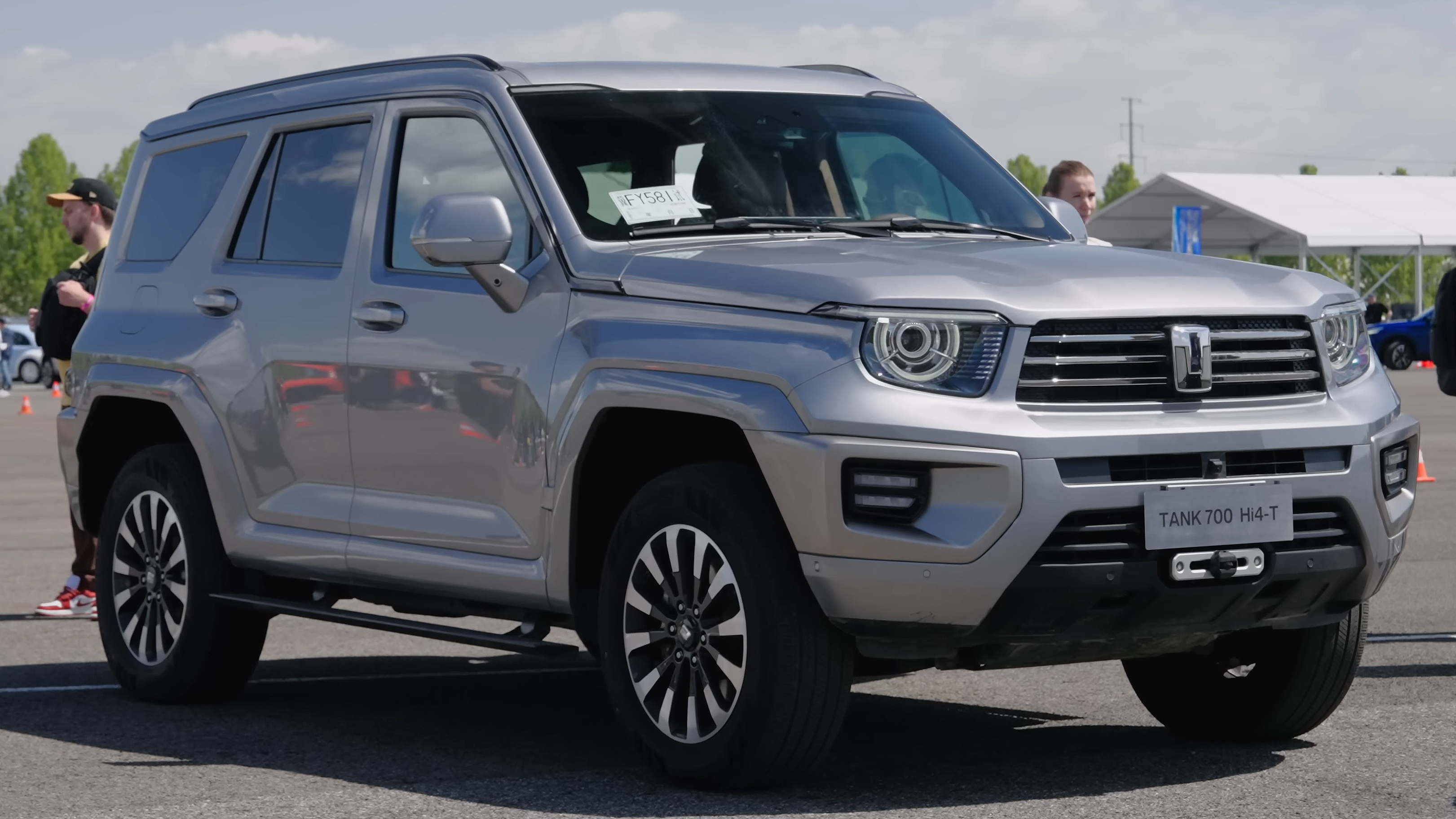
is maybe going to be badged YU9, Great Wall Motor's Tank 800 and Leap Motor's D-Series
flagship SUV like the D-16, 36KR auto reporting that some automakers will use the so-called
eight series high nickel cells to limit weight increases from a large pack.
You see, lithium-ion phosphate technology, LFP, is easily the majority of the Chinese
market right now, around 80%.
Very common, but it adds more mass.
Several 80 kilowatt hour plug-in designs could, if you're using the old technology,
be over three tons for the vehicle.
So, the eight series high nickel chemistry is more expensive, it's a ternary NMC type.
Earlier eight series cells did show poor thermal stability and short cycle life, whereas current
NMC cells, using what they say is the five series formulation with nickel-cobalt-manganese
ratio of five to three are more reliable.
CATL, the world's biggest battery maker, is reported to plan a new generation of high
nickel cells next year.
Many plug-in hybrids and E-Revs in China are used by their buyers in electric only mode,
and they rarely, if ever, use the internal combustion engine, mainly for longer trips.
The move to larger plug-in hybrid battery packs is part of an ongoing competitive escalation
amongst EV manufacturers in China.
It's one-upmanship, in extreme cases of 2,000 kilometers of range in a single journey.
For context, the long-range Tesla Model Y, one of the world's best-selling vehicles,
has a 78.4 kilowatt hour pack.
The entry-level X-Pong G9 uses a 79 kilowatt hour pack, about the same as the Tesla Model
Y long-range.
The Xiaomi Kunlun would have an 800-volt electrical architecture, three rows of seats,
and a battery the same size as some of the best pure-bevs out there.
Moving on, congratulations to the team at Leap Motor, producing its one millionth car
earlier today, becoming China's second startup to hit the mark.
The company reached the milestone 343 days to the day, after passing the 500,000th mark,
a faster pace than other rivals.
Founder and CEO Zhu Jiangming called the result evidence of the accelerating momentum of Leap
Motor, taking five years to hit 500,000 units, but then less than a year, to double the number.
The company delivered more than 320,000 vehicles in the first eight months of the year so far,
and led the Chinese NEV startup sales rankings for six consecutive months.
Leap Motor reported a first half net profit this year as well, and record gross margins.
Things are going well.
It's in-house development designs that builds the batteries, the electric motors, and even
their core computing architectures, accounting for about 65% of the vehicle cost, and that's
what's credited with improving their cost structures.
The company promotes this approach, as the technology for all approach founded in 2015.
Leap Motor is expanding overseas rapidly, with Stellantis, a major shareholder, using
Stellantis distribution and service, particularly here in the UK.
I see loads.
The most closest ones, maybe about half an hour away.
It's not every Stellantis dealership, by the way.
But they're entering 30 international markets.
The brand operates 700 sales and service outlets overseas, including 640 in Europe, delivering
more than 30,000 vehicles overseas this year, and last month in August, they overtook BYD
to lead Germany's pure electric market as well.
Of the Chinese.
Now, let's talk about a German name in China, where a lot of the German big luxury premium
manufacturers have struggled to find a foothold in recent years.
Mercedes-Benz is beginning presales now in China of its all-electric CLA.
That's an incredible vehicle, amazing efficiency.
The long wheelbase version actually offered in two trim levels, the CLA 300L, which starts
at $260,000, U.S. $36,000, and the all-electric CLA 300L ultra-long range, again, $300,000,
about $41,000, equivalent.
The vehicle uses an 800-volt architecture, rear-wheel drive, or all-wheel drive.
It peaks at 325 kilowatts of charging.
And believe it or not, that's not that fast in China, and it'll add 202 miles of range
in 10 minutes, an 85 kilowatt hour battery.
Offering what they say is Level 2 plus plus driving assistance.
That doesn't exist.
It's either Level 2 or Level 3.
A lot of the automakers have got very advanced Level 2 systems, and they're trying to make
them sound, well, very advanced.
But they can't call them Level 3 because they're not hands-off, eyes-off systems.
And so they do all they can.
It was Level 2, then Level 2 plus.
Mercedes call this Level 2 plus plus.
How long till someone puts a Level 2 plus plus plus?
I'm only half joking, by the way.
Let's move on.
Tesla and China's doing really well lately.
Boy, have they struggled.
But they have finally got some good news to report.
Tesla will report their global Q3 numbers next week, isn't it?
The company posted the highest weekly China registrations this month.
Now, unsurprising, we're at the end of the quarter.
All the vehicles made in Shanghai that were due to be exported have been exported.
So now these are domestic sales in China.
So we would expect the numbers to go up.
But this is really good news for Tesla.
China auto industry trackers recording 17,300 Tesla insurance registrations, not ideal metric.
And also, a lot of people in China don't want the weekly insurance numbers being
published, by the way, they feel it skews the market.
It can allow good news and bad news to be interpreted in incorrect ways.
They want it smoothed out a little bit.
But if you look at the weekly numbers for September 15th to 21st, up 13% from the
prior week and a strong week in Q3, the weekly breakdown, according to CN EV
Post, showed 10,340 Model Ys, 850 of them were the long, long wheelbase, and 6,000 of
them were Model 3s.
In the prior week, they sold about the same, actually about 1,000 of the long
wheelbase Model Ys.
But they're weekly and they're insurance data and careful.
After 12 weeks of Q3, though, Tesla registrations are up on the quarter from
quarter two, but down 8% on the same time last year and down 6% year to date on the
same time last year as well.
Which is not a disaster because we've seen in Europe Tesla falling between 40 and 50%
this quarter.
And so China, although down between 6 and 8% year to date, is a better news story than
what's happening in Europe for Tesla.
X-Pung reported some vehicle deliveries outside of China that were very positive.
Almost 25,000 X-Pung's exported in the first eight months of the year.
The company said the figure, which they shared on Weibo, after republishing a user,
which I don't speak Mandarin, nor am I able to read Chinese characters' opinion.
I think it translates as EVs going overseas is the username on the account.
They say there's an increase of 137% compared to the same period last year for
X-Pung.
According to the data, in the 46 countries and regions it's entered, X-Pung ranked
first in 12 of them.
While holding the top position for total sales in new EV brands in 32 of them,
X-Pung said it would now operate across 46 countries and regions.
Last month in August, X-Pung had signed 119 global dealers to date, rising from
150 last year.
The same source described a balanced regional distribution.
So I think what they mean is Europe is about half of the overseas sales for
X-Pung, Middle East 25%, and then split between Asia and Latin America too.
Now, let's talk a little bit about sales in Hungary, Croatia and Slovenia for X-Pung.
Entering the Hungarian market with distribution handled by Auto Wallis'
wholesale network, Budapest hosted the regional debut.
The brand is launching in Hungary, Croatia and Slovenia.
All markets managed for the imports by Salvador Ketano and Auto Wallis.
They also provide sales and after sales support across the region, sales begin in
the autumn with three models, the P7, the G6 and the G9.
Vehicles will first be offered to customers via pop-up stores in Budapest,
starting in October.
Okay, let's talk a little bit about the Lincoln Co. 08 EMP.
It's a refresh of this vehicle, by the way.
It's an updated version announced yesterday and it starts at $160,000.
You want about $22,000 dollars equivalent.
This refresh adds LiDAR to enhance automotive driving features, exterior changes,
now larger lower air intake modified side air channels, revised headlights
with the new brilliant starry sky elements as they describe them,
and a roof mounted LiDAR sensor, a hot and cold storage box integrated into the
central armrest is a very common feature in Chinese cars, even at these lower price points.
And so we see that in here.
The center console has been redesigned for more storage capacity,
powertrain options of this very conventional looking SUV.
May I say from the side angle, a bit Range Rover Velary, so a sloping roof line, not too long,
but a very, I think, very good looking vehicle inside the pictures that they published
have bright orange trim, so bright orange leather, but kind of a leather equivalent
seats, bright orange dashboard trim as well.
Wow, you need sunglasses inside the car, but striking and a lot of cars, let's be honest,
a little bit boring these days in terms of color choices.
And so, wow, looking, well, striking, but pretty on the outside, pretty conventional,
I would say.
Hey, that's not a bad thing.
They've got to have somewhere, it's a conventional kind of three box or two box shape,
the big bonnet sticking out the front and the big SUV shape anyway,
but you've got to have somewhere to put the engine because this does have a 1.5 liter engine.
Single or dual motor configuration, single motor setup has 280 kilowatts combined,
dual motor 436 kilowatts combined.
If you're going pure electric range of the battery, either 99 or 142 miles,
depending on configuration of this one, we'll take a break, we'll come back,
we'll talk about vehicle to grid and BYD and their battery technology, stick around back in a mo.
Welcome back to the podcast.
Let's talk about vehicle to grid being optimized in China.
Researchers at the Shanghai Jiao Tong University developed an operation optimization strategy
for EV charging stations using vehicle to grid technology,
but also integrating PV generation, so adding a bit of solar,
but a battery energy storage and vehicle to grid as well.
This is all part of how EVs will become part of our clean green renewable ecosystem in the future.
And it fascinates me because the car that you drive has typically been something that consumes
energy in the future.
The cars that we all drive and perhaps other devices as well will be part of our energy future.
And that makes them play a very important part of our lives.
So this new system that they've been testing combines what they call day ahead power procurement.
So what's the price of electricity tomorrow with intraday real time scheduling?
So once we're inside a day, what EVs typically charge at this charging location?
And what do they typically how much energy to people typically put into their EV?
So stage one sets how much electricity to buy at what price from the forecast of the weather.
So how much will our PV system generate tomorrow with the sun?
Then there's time of use prices.
Then there's the battery state of charge that we think it'll be at.
Stage two accounts for the PV forecast, any errors, finalizing day ahead procurement planning,
and the day ahead plan is adjusted in real time.
They tested this on a strategy of a Shanghai charging station with 80 DC fast charges that
were sort of 100 kilowatt units.
And they showed cost reductions overall of the energy that you don't need to buy from the grid
because you're going to be generating it yourself or you can buy it at different times
and store it in the battery cheaper between 13 and 18 percent cheaper electricity at that
charging station.
If you cleverly manage PV battery, bit of vehicle to grid, you can feed back in and things like that.
Really fascinating work happening there.
I'm sure it's happening all around the world, but I love hearing about it.
How EVs, how batteries, storage, clean green generation, all works together to make our
life cheaper.
Like this stuff, people go, oh, yes, we'd love to be green, but it's really expensive.
Well, it's just lowered the price by 20 percent just by a smart algorithm.
Probably the AI involved as well.
I imagine they didn't mention that.
But just to work out what's the weather tomorrow?
Should we buy some electricity at what price?
Just being clever about it makes our lives cheaper, right?
That's the truth.
Now, BYD is next in the news.
They obviously, BYD do everything.
They also do battery energy storage like Tesla do their mega packs.
They've just introduced in China BYD, the Haohan Battery Energy Storage System, B-E-S-S or best.
BYD said that each system has a capacity of 14.5 megawatt hours.
That's three times Tesla's latest greatest mega pack three they just announced.
If you put it inside a 20-foot shipping container, BYD said the system will deliver
10 megawatt hours, 50 percent more capacity than its competitors.
BYD said the number of packs is being reduced by more than half and that cuts land use as well,
indicating that the technology transfer has happened from their automotive division
to the energy storage division using a new cell size specific to energy storage systems.
A 2,710 amp hour cell using the Blade Battery Platform developed for EVs,
which provided benefits in stability, safety and packaging.
BYD said the system could reduce renewable curtailment by storing excess generation.
If you've got too much green energy coming onto the grid, don't slow down your wind turbines
or turn off your solar farms.
Store it at a very low cost using these new BYD energy storage systems, which are huge.
They say that they are the least expensive detachable
base load source in many locations.
So if you need energy that would normally mean a fossil fuel
peaker plant, for instance, that needs to get built to support a certain bit of the grid locally,
well you can do that with big batteries.
I love that.
Finally, Chinese firm Goshen high tech will invest 5.6 billion US dollars to build a large
battery factory in northern Morocco with operations starting by the end of next year
that'll produce up to 100 gigawatt hours of battery capacity.
That's maybe two million small to mid size EVs, batteries for two million cars.
The problem is Morocco's electricity mix needs a bit of work.
You see it's heavily fossil fuel based right now.
Going back to 2023 data, 28 terawatt hours of the country's 43 terawatt hours came from coal.
The rest mostly natural gas, which needs changing because,
and it may have changed in the last two years already with more renewables coming on the grid,
but battery production is very energy intensive.
And if we can ensure that, well in Morocco, they've got a bit of sunshine,
that the batteries are made with renewable energy.
It makes the whole EV a lot cheaper.
The Gigafactory will supply those in Morocco, which is increasingly the likes of Renault,
their cheaper Romanian brand Dacia.
Also, I think made in Morocco, Stellantis have business there,
and increasingly because there's a free trade agreement with the United States,
so you can ship them from North Africa to the US.
But equally, it's a hop over the Gibraltar Strait and so it's right next to Europe.
The project will make key battery parts like anodes and cathodes
and strengthen the local supply and value chains.
That's your podcast for today.
Thanks for listening. I'll see you on the next one.
About this episode
A record IPO from Cherry Automobile marks a significant milestone in China's EV market, with plans for extensive R&D and overseas expansion. The episode also discusses the upcoming ultra-long range E-REVs from Xiaomi, Great Wall Motor, and Leap Motor, which aim for impressive electric ranges. Leap Motor celebrates producing its one millionth vehicle, showcasing rapid growth and innovation. Additionally, advancements in vehicle-to-grid technology and BYD's new energy storage systems are explored, along with Goshen's ambitious battery factory project in Morocco. Insights into Tesla's performance and new models from various manufacturers round out the discussion.
Original notes
Can you help me make more podcasts? Consider supporting me on Patreon as the service is 100% funded by you: https://EVne.ws/patreon
You can read all the latest news on the blog here: https://EVne.ws/blog
Subscribe for free and listen to the podcast on audio platforms:
➤ Apple: https://EVne.ws/apple
➤ YouTube Music: https://EVne.ws/youtubemusic
➤ Spotify: https://EVne.ws/spotify
➤ TuneIn: https://EVne.ws/tunein
➤ iHeart: https://EVne.ws/iheart
CHERY RAISES HK$9.14 BILLION IN HK IPO https://evne.ws/46SSC26
CHINESE NEV MAKERS PLAN 80 KWH PHEV/EREV PACKS https://evne.ws/4gF7wwk
LEAPMOTOR REACHES ONE MILLION VEHICLE MILESTONE https://evne.ws/4gF7wwk
MERCEDES CLA LONG-WHEELBASE EV PRE-SALES https://evne.ws/4gF7wwk
TESLA Q3 CHINA REGISTRATIONS AND DELIVERY OUTLOOK https://evne.ws/4gF7wwk
XPENG DELIVERS 24,702 VEHICLES OVERSEAS https://evne.ws/4gF7wwk
XPENG LAUNCHES SALES IN HUNGARY, CROATIA, SLOVENIA https://evne.ws/4nHs6ON
LYNK & CO 08 EM-P REFRESH LAUNCHED https://evne.ws/46LX0zL
V2G OPERATION OPTIMIZATION FOR PV EV STATIONS https://evne.ws/46LX0zL
BYD "HAOHAN" 14.5 MWH BESS LAUNCH https://evne.ws/46LX0zL
GOTION $5.6BN GIGAFACTORY IN MOROCCO https://evne.ws/46LX0zL
You can read all the latest news on the blog here: https://EVne.ws/blog
Subscribe for free and listen to the podcast on audio platforms:
➤ Apple: https://EVne.ws/apple
➤ YouTube Music: https://EVne.ws/youtubemusic
➤ Spotify: https://EVne.ws/spotify
➤ TuneIn: https://EVne.ws/tunein
➤ iHeart: https://EVne.ws/iheart
CHERY RAISES HK$9.14 BILLION IN HK IPO https://evne.ws/46SSC26
CHINESE NEV MAKERS PLAN 80 KWH PHEV/EREV PACKS https://evne.ws/4gF7wwk
LEAPMOTOR REACHES ONE MILLION VEHICLE MILESTONE https://evne.ws/4gF7wwk
MERCEDES CLA LONG-WHEELBASE EV PRE-SALES https://evne.ws/4gF7wwk
TESLA Q3 CHINA REGISTRATIONS AND DELIVERY OUTLOOK https://evne.ws/4gF7wwk
XPENG DELIVERS 24,702 VEHICLES OVERSEAS https://evne.ws/4gF7wwk
XPENG LAUNCHES SALES IN HUNGARY, CROATIA, SLOVENIA https://evne.ws/4nHs6ON
LYNK & CO 08 EM-P REFRESH LAUNCHED https://evne.ws/46LX0zL
V2G OPERATION OPTIMIZATION FOR PV EV STATIONS https://evne.ws/46LX0zL
BYD "HAOHAN" 14.5 MWH BESS LAUNCH https://evne.ws/46LX0zL
GOTION $5.6BN GIGAFACTORY IN MOROCCO https://evne.ws/46LX0zL
0:00
18:07