CHINA: BMW Banks On China, Mercedes Defies Market and Sunwoda Under The Microscope | 19 Jan 2026
EV News Daily - Technology and Business of EVs
CHINA: BMW Banks On China, Mercedes Defies Market and Sunwoda Under The Microscope | 19 Jan 2026EV News Daily - Technology and Business of EVs · Jan 20, 2026
Neuer Class is a new strategy by BMW to create better and more advanced cars, especially electric ones. It helps them keep up with other car companies that are also making electric vehicles.
The BMW iX3 is an electric SUV made by BMW. It's designed to be spacious and is made specifically for customers in China, where electric cars are becoming very popular.
The BMW M Coupe (E36) is a small, sporty car that looks unique and is really fun to drive. It was made in the late 90s and is loved by car fans for its speed and cool design. People talk about it because it's not very common and has a strong following.
Closed-loop battery recycling means taking old batteries, recycling them, and using the materials to make new batteries. It helps protect the environment by reducing waste.
The Electric GLC is a type of SUV made by Mercedes that runs on electricity instead of gasoline. It's part of their effort to create more environmentally friendly cars.
Next-gen models are the newest versions of cars that have better technology and features. They often include electric cars to keep up with what people want today.
High-voltage packs are battery systems used in electric cars that store a lot of energy. They help the car run efficiently and power the electric motor.
An internal short circuit happens when parts inside a battery connect in a way they shouldn't, which can cause the battery to overheat or even catch fire. It's a big safety issue for electric cars.
The EV market is all about electric cars that run on batteries instead of gasoline. This part of the car industry is getting bigger because more people want to drive cars that are better for the environment.
New energy vehicles are cars that use different types of energy instead of just gasoline. This includes electric cars and some hybrids that can use both electricity and gas.
Penetration is a way to measure how many electric cars are being sold compared to all cars. A higher percentage means more people are choosing electric cars.
A plug-in hybrid is a car that can use both electricity and gasoline. You can charge it up like an electric car, but it also has a gas engine for longer trips.
Four-wheel drive means that all four wheels of a car can get power from the engine at the same time. This helps the car grip the road better, especially in bad weather or rough terrain.
EREV means Extended Range Electric Vehicle. It's a car that mainly runs on electricity but has a small gas engine to help it go further when the battery runs low.
Car
V900
The V900 is a big family car made by Geely that can run on electricity and has a backup engine for longer trips. It's designed to be comfortable and practical for families.
Range anxiety is when people worry that their electric car will run out of battery before they can charge it. It's a common concern for drivers of electric cars.
A battery electric vehicle is a car that runs only on electricity and doesn't use gas or diesel. It gets its power from batteries, making it more environmentally friendly.
Car
ION i60
The ION i60 is a small SUV made by a Chinese company called GAC. It has been selling well since it was released, which shows that people are interested in it.
The Peugeot iOn is a tiny electric car that's great for driving around the city without making any pollution. It's small and easy to park, making it perfect for short trips. People talk about it because it's part of the move towards cleaner cars that help the environment.
A range extender is a small engine that helps charge the battery of an electric car when it runs low on power. It allows the car to go further without needing to plug it in right away.
Highway driver assist is a feature in some cars that helps you drive on the highway by keeping a safe distance from other cars and helping you stay in your lane. It's like having a little extra help while driving.
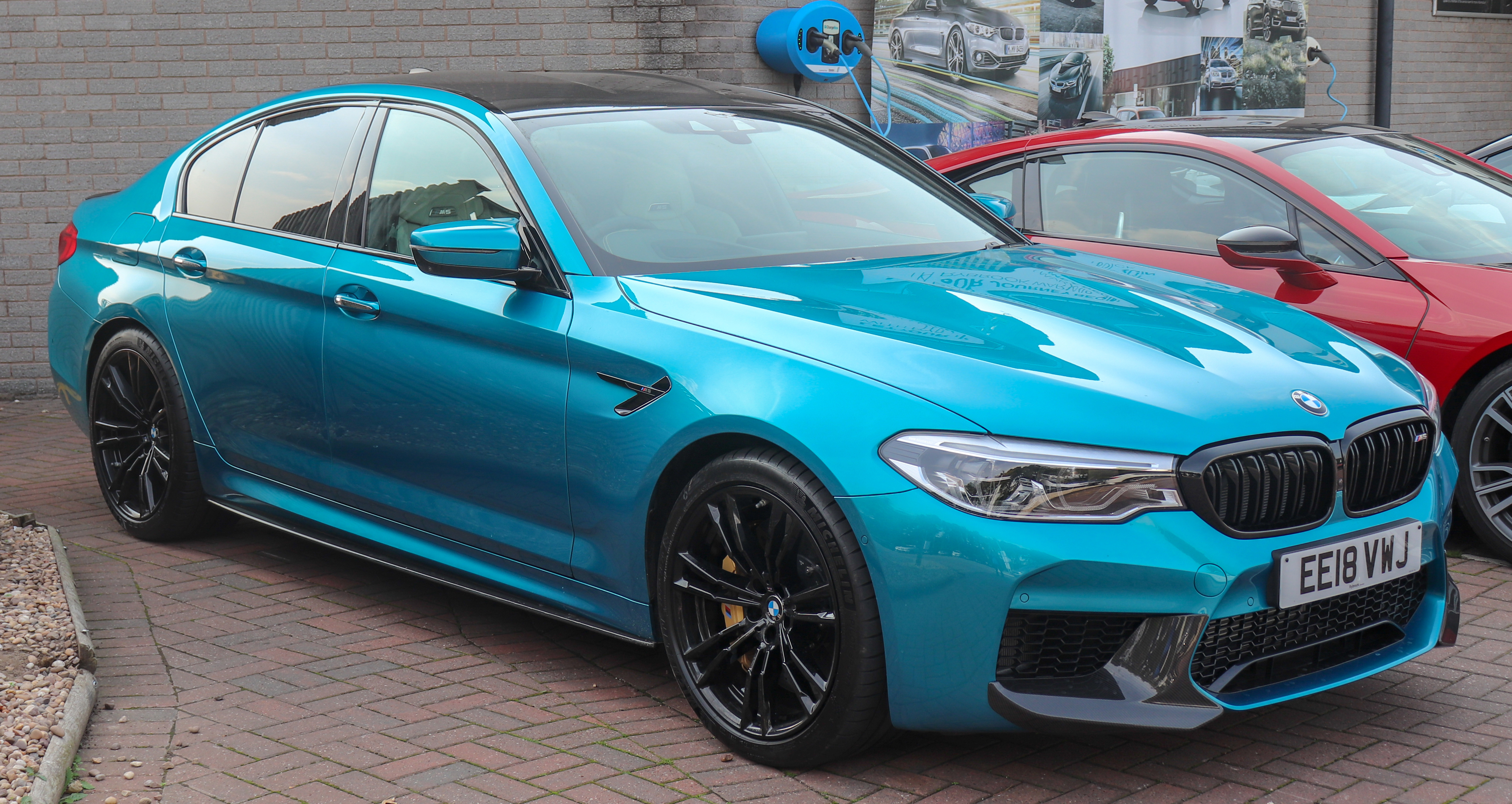
The BMW M5 is a fast and fancy car that looks like a regular sedan but drives like a race car. It's known for being really powerful and fun to drive, making it popular among people who love cars. Many talk about it because it combines comfort with speed.
LIVE
Five years ago, I was paying $65 a month for my subscriptions.
Today, those same subscriptions cost $111, and I don't even use half of them anymore.
That's why now I use RocketMoney to manage my subscriptions for me.
The app gives you a list of all of your subscriptions and reminds you of upcoming payments,
so you're not hit with any surprise charges.
On top of that, it also sends you alerts when subscription prices go up,
so you always know the price you're paying.
If you decide you no longer want a subscription, you can cancel it right from the app.
No customer service needed.
And the best part is, RocketMoney even reaches out
and tries to get you refunded for some of the money you lost.
On average, people that cancel their subscriptions with RocketMoney
save $378 a year.
And overall, RocketMoney has saved its members $880 million in canceled subscriptions.
Stop wasting money on things you don't use.
Go to rocketmoney.com slash cancel to get started.
That's rocketmoney.com slash cancel.
Rocketmoney.com slash cancel.
And as a result, my savings took a backseat.
But RocketMoney doesn't just tell you what you're wasting money on.
It takes action to save you money.
First, the app looks at your income and monthly expenses
and calculates how much you can safely spend each day to stay on your budget.
RocketMoney also finds and cancels unwanted subscriptions for you
and even negotiates better rates on your bills so you have more money in your pocket.
On average, RocketMoney members can save up to $740 a year
when using all the app's premium features.
Users love the app with over 186,000 five-star ratings.
It's time to simplify your finances and take control of your money.
Go to rocketmoney.com slash cancel to get started.
That's rocketmoney.com slash cancel.
Rocketmoney.com slash cancel.
Because they're made with hero bread sliced bread loaves,
tortillas, bagels, dinner rolls, and more.
Try their all-new hero noodles with 12 grams of protein and just 80 calories.
You won't believe hero bread's options have zero to five grams net carbs
and are high fiber from the taste and texture.
They've even got small batch drops of indulgent favorites,
like the popular hero croissant.
And right now, hero bread is offering 10% off your order.
Go to hero.co and use code FALL25 at checkout.
That's FALL25 at H-E-R-O dot C-O.
All figures are per serving of hero bread.
Contains two to 18 grams of fat per serving.
See the product nutrition panels on hero.co for more information.
Welcome back to EV News China.
Today, BMW Banks on China.
Mercedes-Benz defies the market and Sun Woda under the microscope.
Plus they tuned because later in the show,
I'll tell you how quickly Aito sold their first million vehicles
and how quickly they want to double the tally.
Welcome to EV News China,
the podcast dedicated to the world's largest EV market.
Each day, I bring you the latest headlines, insights and analysis
from the heart of China's booming EV industry
and decode how fast-moving developments in the East
are affecting the global EV landscape.
We'll start with BMW had a pretty good last year, 2025.
They sold worldwide 2.46 million vehicles.
China was the anchor, taking 625,000 BMW and Mini cars,
even as domestic brands squeezed the foreign joint ventures.
China now sets the pace in electric cars,
and the test is whether a premium foreign badge can keep its edge.
BMW plans 20 new products for China this year,
led by the long wheelbase version of Neuer Classes BMW iX3.
We don't get that one.
That's going to be the first locally built model on the brand new platform.
It wants Neuer Classer technology in every future BMW
to lift both capability and, of course, pricing power.
In 2025, tougher local rivals ate into BMW's share,
yet the group still held its ground in the upper tiers.
Performance sells.
BMW M lifted sales by 30% or so
and broke 10,000 units for the first time in China,
with 25M models now on offer there.
That, of course, will also go electric.
To stay in the game on technology,
BMW's pouring money into AI and smart manufacturing for its EVs
has teamed up with Chinese partners on drive resistance and smart systems,
building closed-loop battery recycling,
and will source its sixth generation cells from both CATL and eVenergy.
Now, talking BMW, let's talk Mercedes-Benz.
They delivered 575,000 vehicles in China in 2025,
so not too much less actually than BMW.
The two brands are pretty similar in terms of sales numbers.
But last year was the year the country's luxury car market did shrink,
imports fell, and sales of higher priced models did slip.
High net worth buyers still want them, though,
even as the market tightens.
That steady demand has helped Mercedes-Benz
defend its perch against the cheaper Chinese rivals.
But policy threatens to tilt the field.
From the 20th of July 2025,
the luxury car tax consumption threshold dropped
from 1.3 million yuan to 900,000 yuan.
Dealers have already moved with the subsidies
to steady would-be buyers and stop them delaying orders.
Mercedes plans a broad expansion this year.
It will launch more than 15 new and refreshed models,
including a long wheelbase version of the Electric GLC,
that's an SUV by the way,
and the 2025 deliveries validate Mercedes' chance
to hold its high-end pricing in China,
while pushing electrification.
They also have to start a new competitive cycle,
though in which next-gen models and EVs will define what counts as luxury.
Now, Volvo's EX30 recall is putting Sunwoda under the microscope.
Volvo had a global recall of 33,000 EX30s,
that's the smallest one they make by the way,
and that reached China's battery sector.
But Sunwoda says the fault lies outside of them.
Chairman Wang Wei has moved to distance the firm
from the high-voltage packs at the centre of the ISU,
which includes 10,400 vehicles here in the UK.
Wang says Volvo's own factories supplied the recalled packs,
not Sunwoda.
The battery cells came from a company called Shandong Geely Sunwoda Company Limited.
That's a joint venture in which Sunwoda owns only 30%.
Those cells went straight to Volvo's battery system provider,
they then built the packs up, now being replaced.
The recall followed a fire involving an EX30 at a dealership
in Brazil in November last year,
and later reports of overheating in the cells.
They found reports in 0.02% of cars.
Volvo's notice cites manufacturing defects in the high-voltage packs
that could cause an internal short circuit,
a risk that regulators and investors now track very closely.
Responsibility doesn't stop with one incident.
A source says Viridi Emobility Technology Company,
that's a geely subsidiary,
with the ones also working on the design of the battery pack.
Viridi has already sued Sunwoda for $2.31 billion,
about $323 million, alleging quality defects in the cells supplied from 2021 to 2023.
For China's EV ecosystem, the case shows just how blurred the lines can be
in these joint ventures, cell suppliers, and pack integrators.
Let's move on.
China's main car lobby claims a big win.
On January 13th, the China Association of Automobile Manufacturers
declared a soft landing in the European Union's anti-subsidy case against Chinese EVs,
creating steady talks, and what they say credited,
well, they credit those, to the deal done between Beijing and Brussels,
based on what it called mutual respect.
Earlier in January this year, China and the EU struck a price undertaking deal,
a price floor, minimum pricing, if you like, for EVs.
No one's chasing the bottom.
No one's selling Chinese EVs at a loss, potentially, in Europe,
just to get market share, like they have been doing at home in China.
Well, for Europe, it shows that Chinese EVs were to be taken seriously.
It slows their market penetration without stripping consumers of choice
or tearing into supply chains.
The European Commission will issue guidance for the Chinese exporters
on how to file the price undertaking applications that comply with
World Trade Organization rules.
For the industry in China, the outcome is less illegal detail
than more of a template of how to do business.
The industry presents the deal as a model for settling trade disputes,
and as a way to keep China, EU economic and investment ties stable.
It also gives Chinese battery electric vehicle exporters a clearer route into Europe,
although somewhat narrower, amid fierce price competition at home.
Beijing's Commerce Ministry says the two sides held rounds of consultations on the EU's probe,
and they've now agreed to steer Chinese bear makers towards price undertakings.
Okay, for exporters to the EU in return,
the Commission will issue guidance on how it will assess every undertaking,
which it pledges to handle fairly in line with World Trade Organization principles.
I can't wait to see how this works and what all these words actually shake out to mean
in terms of the prices that you and I pay in the West for Chinese cars.
Chinese exporters that opt in must hand over detailed data on export prices,
sales channels and commercial information.
The industry in China says it will help firms defend their interests to the EU on a case-by-case
basis. Now, a few stories in a row about China's market.
First of all, the overall EV market. China's car market itself is still growing.
Total vehicle sales last year, everything, 34.4 million passenger cars sold in China.
That's up 9.4%. All rosy, right? Well, that keeps China the world's largest car market for the
17th year in a row. Yet overall passenger vehicle sales are expected to stabilise this year,
and to perhaps reach 34.75 million, that's not even a 1% year-on-year gain.
Almost all of the momentum now comes from the EVs. New energy vehicles, as they're called in China,
are forecast by the China Association of Automobile Manufacturers to reach 19 million units this year,
up 15.2%. That follows a far faster 28.2% jump in 2025, when EV sales hit 16.49 million.
The EV share makes the shift clear. Penetration is expected to climb from the current almost 50%
to 55% during the year. Some months will obviously be higher. Within that, the passenger EV sales
are forecast to edge up, with commercial sales also reaching 4.5 million units. Exports add
another dimension, another thing to prop up, demand. China shipped 7.1 million vehicles last year,
a 21% increase overseas, including 2.62 million EVs that headed over their shores,
which doubled year over year. In 2026, exports are expected to reach
7.4 million units in total. Second forecasting story now, before we take a break,
and Chinese car makers plan for strong growth in a market that we've just discussed will
barely expand. The overall car market, they predict, will be around 1%. But most firms are
setting double-digit targets and counting on EVs and exports to do the hard work,
with EV penetration hitting 61% at times this year. The old guard is cautious only by local
standards. Geely aims to sell 3.45 million units this year. That's a 14% growth. Chang'an targets
3.3 million, a 13% rise. Cherry Group wants 3.2 million, that's a 14% rise. They're going to
launch 17 new models. Dongfeng wants 3.25 million, of which 1.7 million will be EVs, and 600,000 will
be exported to Great Wall Motors. Sounds almost restrained, with their goal of 1.8 million units.
But that still implies hefty growth. Startups and tech entrants show less restraint. Leap Motor
wants to sell 1 million vehicles this year, that's up 67%, and to cast itself as the leading
intelligent EV maker. Xiaomi targets 550,000, up 34%, helped by refreshing the original Su7.
NIO is projecting sales growth of up to 50%, with volumes up to 489,000.
So if China's market is not going to grow, according to forecasts in 2026,
and somewhat stagnate, and yet all the individual firms are chasing at least double-digit gains,
if not a lot more, well something has to give. Both things can't be true at the same time.
Industry consolidation is probably what will speed up as weaker brands fall away,
get absorbed, BYD, SAIC, FAW haven't revealed their numbers yet, but expectations are that
they too will be very ambitious, leaving at least 7 manufacturers aiming for more than 3 million
sales in 2026. Let's take a break, another EV China story to talk about in terms of exports,
Geely's Galaxy on its big MPV. Stick around back in a mo.
Lowering your bills No customer service needed
With that money freed up, the app will automatically set some cash aside for your goals.
Whether it's an emergency fund, paying off debt, or saving for vacation,
Rocket Money's got you covered. Users love the app, with over 186,000 5-star ratings.
And on average, users can save up to $740 a year when using all the app's premium features.
Make saving money a priority this year. Go to rocketmoney.com slash cancel to get started.
Welcome back to the podcast. Now EVs were 48% of vehicles sold in China last year.
In December, that was at least 52.3%. And battery electric vehicles have been leading
the growth. December, Bev sales were 1.1 million units, up 14% year over year. Plug-in hybrids
were lagging. Plug-in hybrids sales fell actually in China, down 4% year over year in December.
December, domestic EV sales, excluding the exports, were 1.4 million units.
That's actually a slight drop year on year, and a bigger drop 7.4% year,
a month on month from November. So we're just talking about the big China growth story,
but hang on, if you look at domestic sales, they were actually down year on year,
month on month as well. So that's not great. What's happening?
Exports are what's saving so many of the big Chinese names. They want to go overseas,
not as an experiment nor hobby, or because they'd quite like to bring their wonderful vehicles to
some buyers. They absolutely have to, and they will fight to make sure that they are the exporters
that rise above the others. China shipped 2.62 million EVs last year overseas twice, twice.
2024, December alone saw 300,000 EVs exported 120% up on December of 24. Total vehicle exports were
7.1 million, up 21%. So EVs were the fastest growing slice of China's outbound auto trade.
Within the exports, BEVs, battery electric vehicles and plug-in hybrids, both surged,
but from different bases. Bev exports climbed to 1.65 million units. That's a 66% rise year on
year. Plug-in hybrid exports jumped to 969,000, but from a much lower base, showing how Chinese
firms are using plug-in hybrids, at least until now, to get round the EU subsidies,
which didn't drag them in. Now, let's talk about Geely's Galaxy, launching the V900. This is an
extended range MPV, and they will launch it in a couple of days or so. I think sometime actually
January 20th, less than a fortnight after pre-sales opened at 320,000 RMB, that's 40,000 or 45,000
USD equivalent. The car comes in three four-wheel drive trims. Pro, Max and Collectors Edition,
aimed at the top end of China's booming family, and even chauffeur-driven MPV segment. Galaxy
shifted from being a product line to a standalone brand in 2025, with the London Electric Vehicle
Company, LEVC, folded into it as its premium MPV series, by basing the V900 from Galaxy on the
LEVCL380. First launched as a PureBev in 2024, and shown in V900 trim at the Guangzhou Auto Show
last November, Geely is trying to stretch a single platform across BEVs and EREVs.
The V900 is a large MPV, that's somewhat of an understatement. It's 5.36 meters long,
and it has a 3.2-meter wheelbase. Under the bonnet, it's a 1.5-litre engine that is a range
extender, with a peak output of 120 kilowatts, batteries from CALB, up to 50 kilowatt hours in
size, so that is 260 kilometers of all electric range, and a full tank and full battery will give
you 1,220 kilometers. Geely pitches this as a way to deliver BEV-like driving, but to ease any lingering
range anxiety. And I think they've done a really good job with this, the design of the V900,
it's a people carrier, so there's not too much you can do with it, it's always going to be slab
sided, and it's always going to have a completely vertical back, that's just the way they're going
to maximize the space, but you know what, the way they've done it, it's actually looking really nice.
Now the V900 is going to deliver, they say, all of the performance that you would want
from a pure battery electric vehicle, but with an engine, so that's kind of popular in China
right now. Will it work elsewhere? And by the time the rest of the world catches on
to this E-rev craze, will China be, you know, kind of over it? All right, a couple more stories.
ION, GAC's ION, I hear some people call it AION, as in AION, artificial, it either way.
I'm going to have a look online, and people from the company call it ION, so I'll go with ION.
The ION i60 compact SUV cleared 10,000 sales in the first two months of its launch since
November. In December alone, it shifted 10,804 units, the first small SUV in China,
below the sort of 100,000 yuan class to hit 10,000 sales in a month. The result shows how
fast Chinese buyers are moving to low-cost electrified SUVs that blur the line between
BEVs and E-revs. The ION i60 is both a battery electric vehicle and a range extender as well,
with an introductory price of 104,000 yuan. The range extended version they've kindly told us,
because we like to know stuff like this, was 24% of the orders. So clearly,
three out of four buyers are going for the BEV version, but that's interesting. Right,
the i60 offers eight-point massaging seats, rear seats that decline to 137 degrees,
a panoramic glass roof, highway driver assist, and like I say, this is a 100,000 yuan vehicle.
Over the Spring Festival, they're going to add some extra trade-in support,
and some finance subsidies as well. And finally, Ito built its one millionth vehicle. On January
13th, 2026, earlier this year, the Huawei-backed brand took just over four years from its launch
in December 21 to reach the mark. The chairman of Sirius Group wants the next million in less than
two years. It's less than half the time, and that speed matters in China's crowded EV market,
where scale and software now decide who survives. Survival of the fittest has never been more apt.
Ito has a really tight product cycle. It briskly ramps up and deepens ties with Huawei Harmony OS
Ecosystem and shows how fast a new brand can grow, both its manufacturing muscle, if you like,
and its digital reach. It's got the M5, the M7, the M9, and Ito's built a base in the luxury segment
and strong customer satisfaction scores. And that's your podcast for today.
Thank you for listening. Thank you for starting off a brand new week with EV News China. See you tomorrow.
The number one resolution for people last year was to save more money,
but nearly half gave up by February. Don't let that be you. Download rocket money to reach
your financial goals this year. Track your spending, cut waste, and automate savings in one simple app.
Rocket money shows you all your expenses and categorizes them, so you know exactly where
your money is going and where you're overspending. From there, the app cuts waste by canceling your
unused subscriptions and lowering your bills. No customer service needed. With that money freed
up, the app will automatically set some cash aside for your goals, whether it's an emergency fund,
paying off debt, or saving for vacation. Rocket money's got you covered. Users love the app,
with over 186,000 five-star ratings. And, on average, users can save up to $740 a year
when using all the app's premium features. Make saving money a priority this year.
Go to rocketmoney.com slash cancel to get started. That's rocketmoney.com slash cancel.
Rocketmoney.com slash cancel.
About this episode
BMW and Mercedes-Benz are navigating the competitive landscape of China's EV market, with BMW planning to launch 20 new models and focusing on AI and smart manufacturing. Mercedes, despite a shrinking luxury market, aims to expand its offerings with over 15 new models. The episode also covers the recall of Volvo's EX30 and the implications for Sunwoda, highlighting the complexities of joint ventures in the battery sector. Additionally, it discusses the overall growth of China's EV market and the ambitious sales targets set by local manufacturers.