Capital One
Capital One is using AI to make buying a car easier. The system can help you pick a car, set up a test drive, and even start financing and trade-in estimates.
multi-agentic AI
Multi-agentic AI means the AI is made of multiple problem-solving parts working together. Instead of one chat response, the system can coordinate steps like checking info and helping you take the next action.
Chat Concierge
Chat Concierge is like an AI assistant for car shopping. It can help you choose a car and also handle practical steps like test-drive scheduling and starting financing.
pre-approved for financing
Pre-approved financing means the bank checks you first and gives you an approval before you choose the car. It can make buying faster and help you know what you can afford.
estimate trading value
Estimating trade-in value is figuring out what your current car might be worth. It helps you understand the deal before you commit to a new car.
Neo's Envoe brand
The transcript mentions “Neo's Envoe brand,” which suggests a brand strategy within a Chinese EV company’s portfolio. Brand sub-lines are often used to target different price points or customer segments, especially in China’s highly competitive EV market.
SuperTech Day
SuperTech Day is an event where CATL shows off new battery ideas. Think of it like a battery-focused product reveal.
LFP chemistry
LFP is a type of EV battery chemistry. It’s popular because it’s durable and generally safer, but it has a limit on how much energy it can store compared with some other chemistries.
energy density ceiling
Energy density is how much energy the battery can hold for its size and weight. A “ceiling” means there’s a point where improvements get harder unless you change the approach.
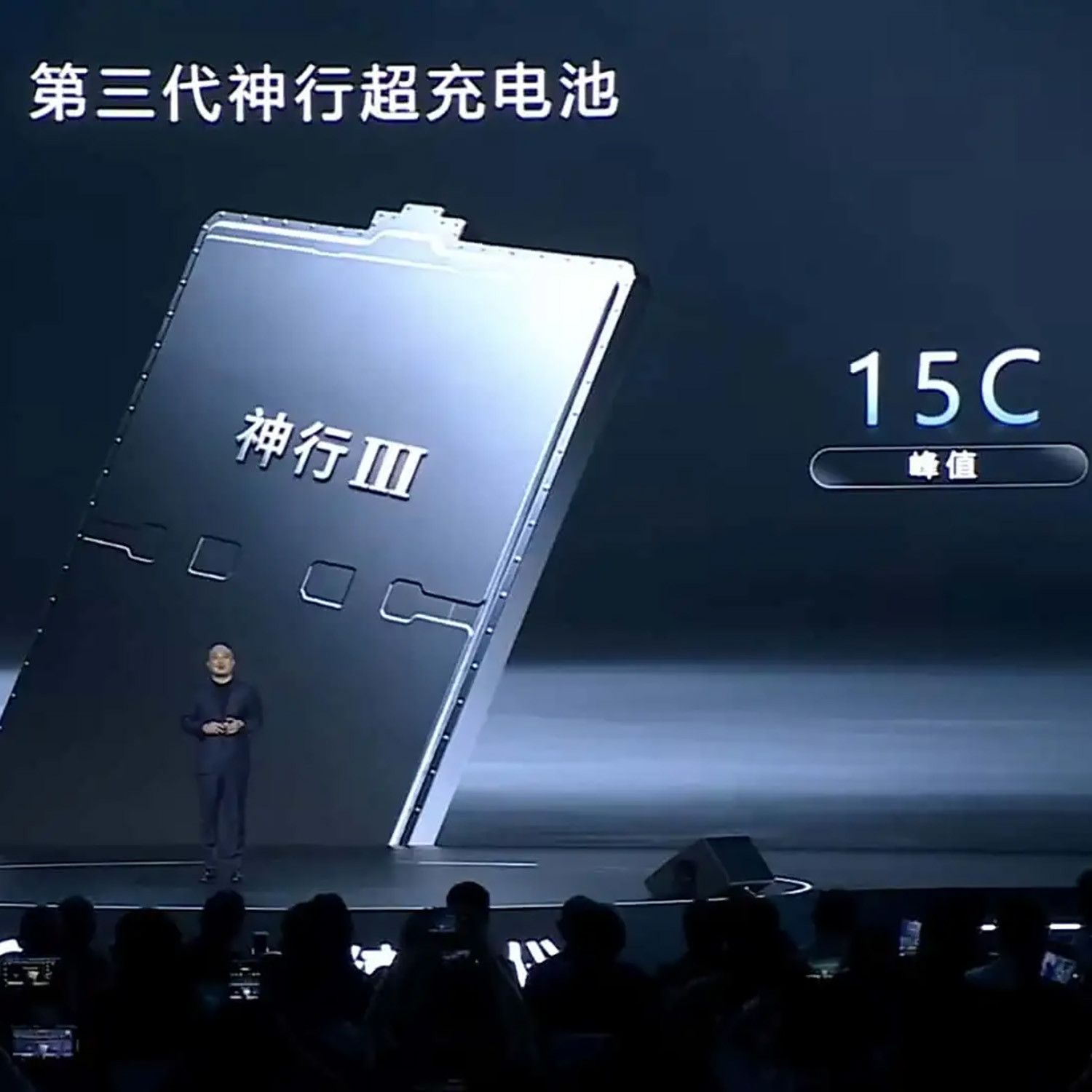
Shenzhen III
Shenzhen III is CATL’s newer battery design focused on fast charging. The idea is you can add a lot of charge quickly, so the car spends less time plugged in.
10 to 90
“10 to 90” means charging from low battery (10%) to near-full (90%). It’s a way to compare charging speed fairly between batteries and chargers.

Toyota A90
The Toyota Supra is a sports car made for fast driving and a sporty feel. It’s the kind of car people talk about when discussing how quickly a car can accelerate. The podcast reference sounds like it’s pointing to a performance number related to speed or acceleration.
Kirin battery
CATL’s “Kirin” is a battery platform/pack design that the segment ties to LFP being used for longer-range EVs. The hosts mention a specific energy density figure and a long-range target, highlighting how pack engineering can extend practical range even with LFP chemistry.
Kirin condensed battery
The “Kirin condensed battery” is another CATL innovation described as applying “aviation-grade technology” to passenger-vehicle packs. The intent is to increase energy density (more usable energy in the same space/weight) so EVs can go farther without growing the battery size.
EREVs
An EREV is mostly an electric car. When the battery gets low, a separate system can generate electricity so you can keep going without immediately switching to a traditional gas-only driving feel.
plug-in hybrids
Plug-in hybrids (PHEVs) combine an electric drive with a conventional engine, and they can be charged from an external power source. The segment frames CATL’s battery work as part of improving plug-in hybrid capability—especially by enabling more all-electric driving before the engine is needed.
Frevoi super-hybrid battery
Frevoi is CATL’s battery tech aimed at hybrid-style EVs. The idea is to let the car drive more of the time using electricity, so it feels closer to a pure EV.
BEV
BEV means “battery electric vehicle,” where propulsion comes only from the battery and electric motor. The hosts use BEV as a benchmark for usefulness, arguing that certain hybrid architectures (EREVs/PHEVs) can be made to behave more like BEVs by maximizing time spent in electric-only operation.
Sodium-Ion battery
Sodium-ion batteries are like regular EV batteries, but they use sodium instead of lithium. That can make them cheaper, and some designs are better in cold weather. They may not always be as fast or as energy-dense as the best lithium-ion packs.
low-temperature performance
Low-temperature performance describes how well an EV battery can deliver power and accept charge in cold conditions. The segment claims sodium-ion’s advantage here, even if it doesn’t offer “glamorous” charging speed or big range. Cold-weather behavior is crucial for real-world EV usability because it affects both charging time and driving efficiency.
Choco Swap
Choco Swap is referenced as the passenger-car battery swapping station concept within CATL’s integrated charging/swapping ecosystem. Naming the station network matters because it signals a concrete deployment plan rather than a purely theoretical idea. For listeners, it’s an example of how battery makers are moving into infrastructure partnerships and operations.
Chiji Heavy Truck Swap
Chiji Heavy Truck Swap is described as the heavy-truck version of the swapping infrastructure, also integrated with CATL’s broader charging/swapping approach. Heavy trucks are a key use case because downtime is expensive, so swapping can be more attractive than charging between routes. The episode’s mention suggests CATL is targeting both consumer EVs and commercial fleets.
LFP battery
LFP is a type of EV battery chemistry. It’s popular because it tends to be safer and lasts a long time. In this episode, they’re talking about how newer LFP versions can charge better.
Shen Qing 3
Shen Qing 3 is CATL’s third-generation LFP technology, positioned as an improvement over earlier Shen Qing iterations. The hosts highlight its charging performance claims and the idea that it can deliver a meaningful amount of charge quickly for short trips. This is the kind of incremental chemistry-and-cell-design upgrade that can materially change real-world EV usability.
10 to 80
“10 to 80” is a common EV habit: you don’t usually run the battery down to near-empty, and you often avoid charging all the way to 100%. The episode says charging can be slower near the top, so the middle range is where you feel the benefit most. It’s basically about practical, real-world charging.
10 to 98% charge (fast charging)
They’re talking about how fast a battery can fill up for a road trip. Charging is usually fastest when the battery is low, and slows down as it gets fuller, so “10 to 98%” shows how long you’d actually be stopping.
BYD
BYD is a major Chinese automaker and EV/battery ecosystem player. In this segment, the hosts compare BYD’s fast-charging time claims (10–70% and 10–97%) against CATL’s “Shenzhen 3” metrics, framing the competitive landscape for cold-weather charging performance.
Shenzhen 3
Shenzhen 3 is CATL’s newer battery design they’re talking about in this episode. The key idea is it can charge faster and handle cold weather better by managing heat and temperature more intelligently.
internal resistance
Internal resistance is how much the battery resists current flow inside the cells. Lower internal resistance generally helps the battery accept higher charging power with less heat buildup, which can improve fast-charge performance—especially in cold conditions.
cell shoulder cooling
This is a way to cool the battery more effectively while it’s charging hard. If the battery stays cooler, it can keep charging faster without getting damaged.
precise temperature measurement (monitor every cell)
Precise temperature measurement across multiple points per cell lets the battery management system detect hotspots and uneven temperatures. That enables more accurate control of charging power and thermal management, improving safety and performance during ultra-fast charging.
self-heating (pulse rapid heating) for cold charging
Self-heating means the battery warms itself up so it can charge faster when it’s cold outside. Instead of waiting for the car to warm up naturally, it heats the cells using controlled bursts.
standard charging pile
They’re saying this battery feature should work with normal public chargers. That matters because you don’t want to rely on only special, rare charging equipment.
in-pile heating elements / dedicated cabinets
Other designs may need special heating equipment built into the charger or kept in a separate box. If your local charger doesn’t have that hardware, the battery can’t use the best cold-weather charging features.
ultra-fast charge cycles (battery degradation)
They’re talking about how the battery holds up after many very fast charging sessions. The claim is that even after lots of hard charging, the battery doesn’t degrade as much as you’d expect.
ultra-fast charges
Ultra-fast charging means you’re putting a lot of power into the battery quickly. Charging that fast can be tough on the battery, so the key question is whether it still lasts after repeated fast charges.
state of charge (90% capacity)
State of charge just means how full the battery is. Charging near 100% (like 90%) is usually tougher and can stress the battery more than charging from, say, 20–50%.
10C charging
10C charging is a way of saying the battery is being charged extremely fast compared to its size. Charging that quickly is challenging, so the battery system has to carefully control heat and charging behavior to protect the cells.
C-rate
C-rate is a measure of how quickly a battery is being charged or drained compared to its size. A higher C-rate means faster charging, but it can also be harder on the battery if the system can’t manage heat and stress.
inverters
An inverter is the electronics that turns battery power into the right kind of power the motor needs. Even if the battery is great, the car still has to convert and manage that power efficiently.
NMC
NMC is the recipe inside many EV batteries. It’s designed to store a lot of energy, and that can help the car go farther or fit the battery in a smaller space.
weight gap
They’re talking about how much lighter the new battery pack is. A lighter car usually accelerates and stops more easily, and it can also reduce wear on parts like brakes and suspension.
cuts the volume by 112 litres
They’re saying the battery takes up less space. If the battery is smaller, you can usually get more room inside the car for people or cargo.
0.6 seconds
They’re quoting how much faster the car gets from a stop to highway speed. Faster acceleration usually comes from having less weight to move, but tire grip and software also matter.
moose test
The moose test is a standardized way to see how well a car can dodge an obstacle quickly. It checks whether the car stays stable and doesn’t roll or feel out of control during a sudden swerve.
braking lifespan
They’re claiming the brakes will last longer. If the car is lighter, it has less energy to slow down, so the brakes don’t have to work as hard as often.
3,000 kilowatts
They’re talking about how much power the battery can output. Higher power generally means the car can respond more strongly when you press the accelerator hard.
Kirin 3rd Gen battery
Kirin 3rd Gen is CATL’s newer battery design. They’re saying it can deliver a lot of power, which matters for fast acceleration and high-performance driving.
CATL
CATL is a major company that makes EV batteries. They’re saying they’re getting sodium-ion batteries ready for large-scale production, which could make some EVs cheaper and work better in cold weather.
cold weather cases and cost cases
They’re basically saying sodium-ion isn’t trying to be the absolute best at everything. Instead, it’s designed to be cheaper and to work better in cold weather, which matters a lot for many drivers.
watt hours per kilogram
Wh/kg is a way to measure how much energy the battery can store for each kilogram of weight. If it’s lower, the battery may not go as far on a charge unless you add more battery weight.
minus 40 degrees Celsius
Very cold weather can make EV batteries feel weaker and reduce range. Saying it keeps 90% capacity at minus 40°C is basically a way of saying it should still work well in extreme winter conditions.
engineering challenges
To make batteries at scale, companies have to solve a bunch of practical problems in the factory. If they don’t, batteries can perform poorly or be less safe.
battery swapping
Battery swapping means you replace an empty battery with a full one instead of charging for a long time. It can be useful for taxis and delivery vehicles that need to keep running.
grid storage
Grid storage means batteries that help the power grid by saving electricity for later. The podcast is saying sodium-ion could be useful there too, not just in cars.
NCM
NCM is a type of lithium battery chemistry that usually helps batteries store more energy. They’re saying the new pack can mix different battery types to hit different goals.
ternary pack
A “ternary” pack is a lithium battery that uses three main metals in the cathode. It’s often used when you want more range/energy, but it can come with different cost and sourcing trade-offs.
4C charging
4C charging is a way to describe how fast you can charge a battery. Higher “C-rate” means faster charging, and the hosts are saying CATL’s tech aims for extremely quick top-ups.
powder particle level
This phrase means the battery materials are mixed very finely during manufacturing. The goal is to make the chemistry more uniform so the battery can perform better.
150 joules vs 1500 joules impact standard
They’re talking about how hard it would take to damage the battery pack. CATL claims their pack can handle a much bigger impact than the baseline safety standard.
supercharging pile
A supercharging pile is the big, high-power charger you plug into at an EV station. Here, CATL is combining those chargers with battery-swap stations.
battery swap infrastructure scale
They’re talking about how many swap stations they want to build. Battery swapping becomes practical only if there are lots of stations where you can swap.
grid to battery to vehicle (conversion steps)
Think of it like electricity being “processed” several times before it reaches the car. CATL says their setup has fewer steps, so less energy gets wasted.
ultra-fast charging
Ultra-fast charging is when an EV charges very quickly using high power. CATL is arguing that some ultra-fast setups lose more energy because of how the electricity gets converted and managed.
battery storage at charging stations
This means the charging station has its own battery pack. That pack helps deliver power to cars efficiently, instead of relying only on the grid at the moment you plug in.
power loss
Power loss is wasted energy during charging—some of the electricity doesn’t end up in the battery. CATL is saying their method wastes less energy than other fast-charging approaches.
energy storage assets
They’re saying these stations act like power storage. Instead of using electricity only when a car arrives, the station can store energy and release it when it’s most efficient.
grid assets
A grid asset is anything that can help the electric grid run smoothly. Here, battery swap stations can charge at the best times instead of all at once.

Leapmotor D19
The Leapmotor D19 is a new family-focused car from Leapmotor. It comes in two main versions: one that’s fully electric and one that uses an e-rev setup. The big point is that it’s trying to feel “premium” while costing less than you’d expect.
e-rev or pure electric
“Pure electric” means the car only uses a battery. “e-rev” usually means it’s still an electric car to drive, but it can use a small engine to help generate electricity when the battery needs support—so you can go farther without charging.
Konkwi air suspension
Air suspension uses air-filled “springs” instead of metal springs. It can smooth out the ride and sometimes lets the car change its height depending on how you’re driving.
double-layer acoustic glass
This is special glass made to cut down noise. It helps keep the cabin quieter by reducing sounds coming from outside.
zero-gravity seats
Zero-gravity seats are designed to feel more comfortable by supporting your body in a way that reduces pressure. They’re usually aimed at making long rides easier, especially in the back seat.
Dolby Atmos
Dolby Atmos is a high-end audio technology. In a car, it usually means the sound is set up to feel more surround and detailed.
on-board oxygen generator
This is a device inside the car that’s meant to make the air feel “healthier” by increasing oxygen. It’s more about comfort and wellness than how the car drives.

Volkswagen ID Aura T6
The Volkswagen ID Aura T6 is a new EV crossover aimed at buyers in China. Volkswagen is positioning it as a tech-heavy family car with driver-assistance features and an updated “digital” cockpit.

Saturn Aura
The Saturn Aura is a type of car that was made as a mid-size sedan. In this podcast, the “Aura” name is being used in connection with EVs, so it’s likely referring to an EV model name rather than the older sedan itself. The key point is that it’s a car name tied to a vehicle category, not necessarily an EV you’d see on the road today.
CEA platform
A platform is the shared “building plan” a company uses for multiple cars. Using the CEA platform helps Volkswagen make the EVs more efficiently and potentially cheaper to build.
control units by 30%
Control units are the car’s electronic computers. Cutting their number can make the car simpler and cheaper to build, and it may reduce the chance of electronics-related problems.
over-the-air updates
Over-the-air updates mean the car can get new software over the internet. Instead of going to a shop, the updates can be installed remotely.
ADAS
ADAS is the umbrella term for driver-assist features. It can include things like keeping you in your lane or helping you avoid crashes, and the exact features can differ by country.
DRL
DRL means daytime running lights. They help other drivers see your car more easily in daylight.

Volkswagen Id3
The Volkswagen ID.3 is a small electric car (an EV) made by Volkswagen. It’s designed for everyday driving, like a hatchback, and it runs on electricity instead of gasoline. The podcast is also pointing out that this version is an all-electric model.
Volkswagen Anhui
This is a Volkswagen-related China partner mentioned in connection with building the new car. Partnerships like this can influence how quickly new models get made and sold locally.
JAC
JAC is the other company involved in the joint venture behind the Volkswagen China partnership. Deals like this are often how automakers team up to build cars faster and at scale.
800-volt architecture
This is the EV’s electrical “voltage level.” Higher voltage can help the car accept more charging power, which is why it can charge faster at the right charger.

Porsche Taycan
The Porsche Taycan is a well-known performance electric car. The hosts mention it to illustrate that, in the West, fast charging is something people really want—so a 20-minute charge sounds amazing.
mental expectations
They’re saying that once you hear about faster charging, your expectations for what counts as “good” get higher. So a number that sounded slow earlier can start to feel impressive later.

Volkswagen Jetta
The Jetta X is a show-car idea from Volkswagen. It’s meant to preview what an all-electric SUV could look like, and it signals Volkswagen wants to make the Jetta name more EV-focused in China.
concept car
A concept car is basically a preview. Automakers use it to show what they might build in the future, even if the final production car could look or work differently.
FAW Volkswagen joint venture
In China, Volkswagen works with local partners through joint ventures. That can make the same brand name (like Jetta) operate differently than it does in other countries.
price including the battery
When they say the price includes the battery, it means you’re not paying for the car and the battery separately. That makes it easier to compare the real cost of different EV versions.
battery as a service plan
Instead of paying a big amount for the battery up front, you pay for it over time. That can make the car cheaper at purchase, while the battery cost is handled like a service.
85 kilowatt hour pack
Kilowatt-hours (kWh) are a way to measure how big the battery is. A bigger number usually means you can drive farther, but it’s not the only factor.
900-volt architecture
Think of voltage like the “electrical pressure.” Higher-voltage EVs can often charge faster and move more power efficiently, especially with compatible charging equipment.
three-minute battery swap
The idea is that you can get back on the road in just a few minutes by swapping batteries. In practice, it depends on how busy the station is and how smooth the process is.
in-house chip
Instead of using a chip made by another company, the automaker designs its own. That can help the car’s computer run driver-assist features more efficiently.
five-nanometer process
This is about how tiny the chip’s internal features are when it’s made. Smaller can mean the chip can be faster or use less power, but it’s not the only factor.
Shenzhen NX9031
This sounds like the specific name of the car’s “brain” chip. Different chip models can mean different levels of capability for driver-assist features.
LiDAR sensor
A “LiDAR sensor” uses laser light to measure distances and build a 3D map of the surroundings. It’s often used for advanced driver assistance, but the transcript suggests this sub-brand uses a lower-spec LiDAR compared with higher-end flagship models.