CHINA: CATL Makes Battery Breakthroughs, Leapmotor D19 and VW’s China EVs | 22 Apr 2026
About this episode
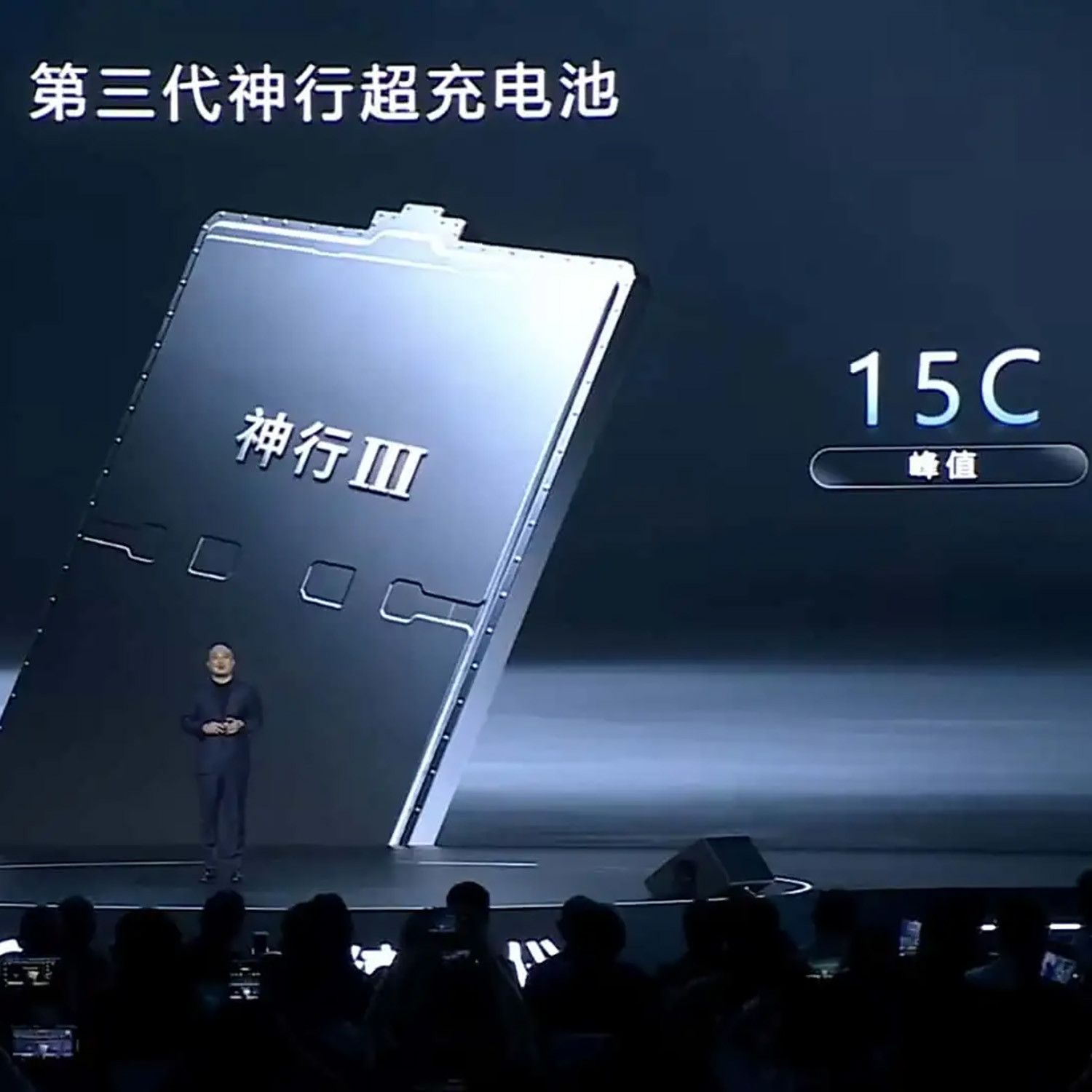
CATL’s SuperTech Day steals the spotlight with six battery announcements, led by Shenzhen 3 LFP fast-charging (10–90% in under seven minutes) and Kirin 3rd-gen tech aimed at long-range, lighter packs, plus sodium-ion moving toward mass production for cold-weather, lower-cost use. The show also covers CATL’s integrated supercharging + battery-swapping network and its grid-asset pitch versus BYD-style station storage. Then it pivots to Leapmotor’s D19 luxury EREV/EV, VW’s China EV lineup, Chang’an platform consolidation, and NEO’s Envo L90 value play with flagship-grade chips and 3-minute swaps.
You can read all the latest news on the blog here: https://EVne.ws/blog
Subscribe for free and listen to the podcast on audio platforms:
➤ Apple: https://EVne.ws/apple
➤ YouTube Music: https://EVne.ws/youtubemusic
➤ Spotify: https://EVne.ws/spotify
➤ TuneIn: https://EVne.ws/tunein
➤ iHeart: https://EVne.ws/iheart
CATL PUSHES SIX BATTERY BETS https://evne.ws/4u2R3Yf
CATL CLAIMS FASTER CHARGING THAN BYD https://evne.ws/4tWWWpF
CATL LAUNCHES THIRD-GENERATION QILIN BATTERY https://evne.ws/3QzVtqX
CATL SETS 2026 SODIUM BATTERY START https://evne.ws/3OlUkmm
CATL PUSHES EREV BATTERY RANGE TO 600 KM https://evne.ws/4tpqH2u
CATL LINKS SWAP AND SUPERCHARGING NETWORKS https://evne.ws/4cWd9FY
CHANGAN TO MERGE AVATR, DEEPAL BACK ENDS https://evne.ws/4vIyPgb
LEAPMOTOR LAUNCHES D19 FROM 219,800 YUAN https://evne.ws/48e9UqN
VOLKSWAGEN ADDS TWO CHINA-MARKET NEVS https://evne.ws/4cA6Czn
VOLKSWAGEN ANHUI LAUNCHES ID. UNYX 08 https://evne.ws/3Qns976
VOLKSWAGEN USES JETTA FOR CHINA'S BUDGET EV PUSH https://evne.ws/42lM8FM
ONVO L90 HOLDS PRICE AS TECH RISES https://evne.ws/4eCgM5b
Capital One
"Capital One's tech team isn't just talking about multi-agentic AI. They are already deployed one. It's called Chat Concierge, and it's simplifying car shopping."
Capital One is using AI to make buying a car easier. The system can help you pick a car, set up a test drive, and even start financing and trade-in estimates.
Capital One is describing an AI product called “Chat Concierge” that supports car shopping. In this context, it’s used to help customers find vehicles, schedule test drives, and even get pre-approved for financing and estimate trade-in value.
multi-agentic AI
"Capital One's tech team isn't just talking about multi-agentic AI. They are already deployed one."
Multi-agentic AI means the AI is made of multiple problem-solving parts working together. Instead of one chat response, the system can coordinate steps like checking info and helping you take the next action.
Multi-agentic AI refers to systems where multiple AI “agents” collaborate to complete a task. In car-shopping use cases, that can mean coordinating research, decision-making, and tool/API calls rather than relying on a single chatbot response.
Chat Concierge
"It's called Chat Concierge, and it's simplifying car shopping. Using self-reflection and layered reasoning with live API checks, it doesn't just help buyers find a car they love."
Chat Concierge is like an AI assistant for car shopping. It can help you choose a car and also handle practical steps like test-drive scheduling and starting financing.
“Chat Concierge” is an AI assistant designed to streamline the car-shopping workflow. It uses self-reflection and layered reasoning, plus live API checks, to connect the buyer to actions like scheduling a test drive, getting financing pre-approval, and estimating trade-in value.
pre-approved for financing
"It helps schedule a test drive, get pre-approved for financing, and estimate trading value."
Pre-approved financing means the bank checks you first and gives you an approval before you choose the car. It can make buying faster and help you know what you can afford.
Pre-approval for financing means a lender reviews your information and offers a financing decision before you pick the exact car. For buyers, it can speed up the purchase process and help you understand your budget range.
estimate trading value
"It helps schedule a test drive, get pre-approved for financing, and estimate trading value."
Estimating trade-in value is figuring out what your current car might be worth. It helps you understand the deal before you commit to a new car.
Estimating trade-in value is an early appraisal of what your current vehicle might be worth. It helps buyers compare total cost and decide whether to trade in now or later, often using data and pricing models.
Neo's Envoe brand
"Later in the show, I'll tell you why Neo's Envoe brand is offering incredible value with their new-ish L90."
The transcript mentions “Neo's Envoe brand,” which suggests a brand strategy within a Chinese EV company’s portfolio. Brand sub-lines are often used to target different price points or customer segments, especially in China’s highly competitive EV market.
SuperTech Day
"CATL used their SuperTech Day to showcase six new battery technologies."
SuperTech Day is an event where CATL shows off new battery ideas. Think of it like a battery-focused product reveal.
“SuperTech Day” is CATL’s event where it demonstrates and explains new battery chemistries and pack designs. It’s being used here as the platform to announce multiple battery breakthroughs in one place.
LFP chemistry
"Their chief scientist, Dr. Wu Kai, said LFP chemistry is approaching its theoretical energy density ceiling that LFP suits fast-charging roadmaps."
LFP is a type of EV battery chemistry. It’s popular because it’s durable and generally safer, but it has a limit on how much energy it can store compared with some other chemistries.
LFP (lithium iron phosphate) is a battery chemistry known for safety and long cycle life. The segment notes LFP is approaching its “theoretical energy density ceiling,” meaning there’s a limit to how much energy (and thus range) you can pack in without changing the chemistry or cell design.
energy density ceiling
"...said LFP chemistry is approaching its theoretical energy density ceiling that LFP suits fast-charging roadmaps."
Energy density is how much energy the battery can hold for its size and weight. A “ceiling” means there’s a point where improvements get harder unless you change the approach.
An “energy density ceiling” refers to the practical maximum amount of electrical energy a battery chemistry can store per unit weight/volume. When CATL says LFP is nearing this ceiling, it implies future gains will likely come from engineering improvements (cell design, pack structure, charging strategy) rather than chemistry alone.
Shenzhen III
"The clearest example came in the first of their six innovations. Their new Shenzhen III, super fast-charging battery."
Shenzhen III is CATL’s newer battery design focused on fast charging. The idea is you can add a lot of charge quickly, so the car spends less time plugged in.
“Shenzhen III” is CATL’s named battery innovation described here as a super fast-charging pack. The key point is the charging performance claim—charging from 10% to 90% in under seven minutes—which is meant to demonstrate how CATL is tackling fast-charge capability.
10 to 90
"CATL said it charges 10 to 90 in less than seven minutes... That's a 90%... Effectively a full battery in less than seven minutes."
“10 to 90” means charging from low battery (10%) to near-full (90%). It’s a way to compare charging speed fairly between batteries and chargers.
“10 to 90” is a common battery-charging metric that measures how long it takes to charge from 10% state of charge to 90%. It’s used because charging behavior is typically slower near the very top and bottom of the battery’s usable range.

Toyota A90
"Six minutes something. That's a 90%. That's not a 10 to 80."
The Toyota Supra is a sports car made for fast driving and a sporty feel. It’s the kind of car people talk about when discussing how quickly a car can accelerate. The podcast reference sounds like it’s pointing to a performance number related to speed or acceleration.
The Toyota Supra is a performance sports coupe known for its strong acceleration and driver-focused design. It often comes up in EV-adjacent discussions because people compare how different powertrains deliver speed and responsiveness. In the podcast context, it sounds like the conversation is referencing a specific performance metric (like a percentage or time range) tied to acceleration or power delivery.
Kirin battery
"CATL paired that with the third-gen Kirin battery, which brings LFP chemistry to long-range EVs, 280 watt-hours per kilogram energy density, 1,000 kilometres or 600 miles of range..."
CATL’s “Kirin” is a battery platform/pack design that the segment ties to LFP being used for longer-range EVs. The hosts mention a specific energy density figure and a long-range target, highlighting how pack engineering can extend practical range even with LFP chemistry.
Kirin condensed battery
"The third innovation, their Kirin condensed battery. CATL said it applies aviation-grade technology to passenger vehicles with high energy density."
The “Kirin condensed battery” is another CATL innovation described as applying “aviation-grade technology” to passenger-vehicle packs. The intent is to increase energy density (more usable energy in the same space/weight) so EVs can go farther without growing the battery size.
EREVs
"...their second generation Frevoi super-hybrid battery for EREVs and plug-in hybrids, making them as useful as a bev, just run on battery all the time."
An EREV is mostly an electric car. When the battery gets low, a separate system can generate electricity so you can keep going without immediately switching to a traditional gas-only driving feel.
EREV stands for “extended-range electric vehicle,” a type of electrified powertrain where the car primarily runs on electricity, but a generator (often gas) extends range when the battery is depleted. The segment suggests CATL’s “Frevoi super-hybrid battery” is designed to make EREVs and plug-in hybrids more useful by keeping them in battery-electric mode longer.
plug-in hybrids
"...also using the event to sharpen their plan for plug-in hybrids, their second generation Frevoi super-hybrid battery for EREVs and plug-in hybrids..."
Plug-in hybrids (PHEVs) combine an electric drive with a conventional engine, and they can be charged from an external power source. The segment frames CATL’s battery work as part of improving plug-in hybrid capability—especially by enabling more all-electric driving before the engine is needed.
Frevoi super-hybrid battery
"...their second generation Frevoi super-hybrid battery for EREVs and plug-in hybrids, making them as useful as a bev..."
Frevoi is CATL’s battery tech aimed at hybrid-style EVs. The idea is to let the car drive more of the time using electricity, so it feels closer to a pure EV.
“Frevoi” is CATL’s named battery technology described here as a “super-hybrid” approach for EREVs and plug-in hybrids. The claim is that it improves real-world usefulness by enabling more time driving on battery power, even though the vehicle may still use other energy sources under the hood.
BEV
"...making them as useful as a bev, just run on battery all the time."
BEV means “battery electric vehicle,” where propulsion comes only from the battery and electric motor. The hosts use BEV as a benchmark for usefulness, arguing that certain hybrid architectures (EREVs/PHEVs) can be made to behave more like BEVs by maximizing time spent in electric-only operation.
Sodium-Ion battery
"Sodium-Ion got its moment. The Nxtra Sodium-Ion battery. CATL's move into the mass production market for this are becoming hundreds of engineering challenges, they say."
Sodium-ion batteries are like regular EV batteries, but they use sodium instead of lithium. That can make them cheaper, and some designs are better in cold weather. They may not always be as fast or as energy-dense as the best lithium-ion packs.
Sodium-ion batteries are an alternative to today’s lithium-ion packs. They use sodium instead of lithium, which can help with raw-material cost and supply, but the performance depends heavily on the cell chemistry and design. In EV news, sodium-ion is often discussed for affordability and cold-weather behavior rather than peak charging speed.
low-temperature performance
"No glamorous charging speed or big range on this, but just incredible low-temperature performance and cost. CATL also unveiled an integrated supercharging and battery-swapping network..."
Low-temperature performance describes how well an EV battery can deliver power and accept charge in cold conditions. The segment claims sodium-ion’s advantage here, even if it doesn’t offer “glamorous” charging speed or big range. Cold-weather behavior is crucial for real-world EV usability because it affects both charging time and driving efficiency.
Choco Swap
"The Choco Swap, passenger car stations, and the Shen Qing supercharging capability. The Chiji Heavy Truck Swap stations, also incorporating this."
Choco Swap is referenced as the passenger-car battery swapping station concept within CATL’s integrated charging/swapping ecosystem. Naming the station network matters because it signals a concrete deployment plan rather than a purely theoretical idea. For listeners, it’s an example of how battery makers are moving into infrastructure partnerships and operations.
Chiji Heavy Truck Swap
"The Chiji Heavy Truck Swap stations, also incorporating this. So, I've picked out a couple of things I want to get to with you on this one, and we have to start with the Shen Qing LFP battery."
Chiji Heavy Truck Swap is described as the heavy-truck version of the swapping infrastructure, also integrated with CATL’s broader charging/swapping approach. Heavy trucks are a key use case because downtime is expensive, so swapping can be more attractive than charging between routes. The episode’s mention suggests CATL is targeting both consumer EVs and commercial fleets.
LFP battery
"we have to start with the Shen Qing LFP battery. Charging faster than the incredible speeds we saw only a few weeks ago with BYD's Blade Battery 2.0."
LFP is a type of EV battery chemistry. It’s popular because it tends to be safer and lasts a long time. In this episode, they’re talking about how newer LFP versions can charge better.
LFP stands for lithium iron phosphate, a common EV battery chemistry known for strong safety characteristics and good cycle life. The segment focuses on CATL’s LFP evolution (“Shen Qing” generations) and how it affects charging behavior and performance. LFP is often discussed as a cost-effective alternative to higher-energy lithium chemistries.
Shen Qing 3
"CATL unveiled Shen Qing 3, third generation LFP technology. Claiming a lead over BYD. They say it'll do 10 to 35% in one minute."
Shen Qing 3 is CATL’s third-generation LFP technology, positioned as an improvement over earlier Shen Qing iterations. The hosts highlight its charging performance claims and the idea that it can deliver a meaningful amount of charge quickly for short trips. This is the kind of incremental chemistry-and-cell-design upgrade that can materially change real-world EV usability.
10 to 80
"10 to 80, which is the number that I really like, because if we just always use the same number, 10 to 80, because most people road tripping don't like to go below 10%, it's a bit squeaky bum time, and then above 80% often batteries slow down..."
“10 to 80” is a common EV habit: you don’t usually run the battery down to near-empty, and you often avoid charging all the way to 100%. The episode says charging can be slower near the top, so the middle range is where you feel the benefit most. It’s basically about practical, real-world charging.
“10 to 80” refers to using a battery’s state-of-charge window rather than routinely charging from very low to very high. The segment explains that many drivers avoid going below 10% for range anxiety, and that charging behavior can slow as batteries approach higher charge levels. It also frames why a battery’s performance in that mid-range window matters most for everyday use.
10 to 98% charge (fast charging)
"A 10 to 98%, which is effectively full, right, 10 to 98, 6 minutes 27 seconds. And at minus 30 degrees Celsius, ... it's only a 9 minute stop for a 98% charge."
They’re talking about how fast a battery can fill up for a road trip. Charging is usually fastest when the battery is low, and slows down as it gets fuller, so “10 to 98%” shows how long you’d actually be stopping.
The hosts are describing how quickly an EV can charge from about 10% to about 98% state of charge. This matters because charging speed usually changes as the battery fills up, so a “10–98%” number is a practical way to compare real road-trip performance rather than just peak charging at low percentages.
BYD
"...it's only a 9 minute stop for a 98% charge. So that puts it ahead of BYD... BYD pitched 10 to 70 in 5 minutes, and 10 to 97 in 9 minutes."
BYD is a major Chinese automaker and EV/battery ecosystem player. In this segment, the hosts compare BYD’s fast-charging time claims (10–70% and 10–97%) against CATL’s “Shenzhen 3” metrics, framing the competitive landscape for cold-weather charging performance.
Shenzhen 3
"CATL said, Shenzhen 3 beats every comparable metric. CATL tied the performance to one key breakthrough... Cell shoulder cooling... precise temperature measurement... and self-heating to use pulse rapid heating..."
Shenzhen 3 is CATL’s newer battery design they’re talking about in this episode. The key idea is it can charge faster and handle cold weather better by managing heat and temperature more intelligently.
“Shenzhen 3” appears to be CATL’s next-generation battery cell platform or chemistry/package referenced for ultra-fast charging. The hosts connect its performance to three enabling technologies: improved cooling, cell-by-cell temperature monitoring, and self-heating for cold charging.
internal resistance
"They've worked on internal resistance. They say Shenzhen 3 has a 0.25 milliohm internal resistance, half the industry average."
Internal resistance is how much the battery resists current flow inside the cells. Lower internal resistance generally helps the battery accept higher charging power with less heat buildup, which can improve fast-charge performance—especially in cold conditions.
cell shoulder cooling
"Cell shoulder cooling to boost cooling efficiency, precise temperature measurement to monitor every cell at multiple points, and self-heating to use pulse rapid heating..."
This is a way to cool the battery more effectively while it’s charging hard. If the battery stays cooler, it can keep charging faster without getting damaged.
Cell shoulder cooling is a cooling approach aimed at improving how heat is removed from the battery cells during high-power charging. Better cooling efficiency helps the battery sustain faster charging without overheating, which is especially important when charging in cold weather where heating and charging power are tightly managed.
precise temperature measurement (monitor every cell)
"...precise temperature measurement to monitor every cell at multiple points, and self-heating to use pulse rapid heating..."
Precise temperature measurement across multiple points per cell lets the battery management system detect hotspots and uneven temperatures. That enables more accurate control of charging power and thermal management, improving safety and performance during ultra-fast charging.
self-heating (pulse rapid heating) for cold charging
"...and self-heating to use pulse rapid heating to tap or call any low temperatures."
Self-heating means the battery warms itself up so it can charge faster when it’s cold outside. Instead of waiting for the car to warm up naturally, it heats the cells using controlled bursts.
Self-heating uses the battery’s own energy to warm cells before or during charging, enabling higher charge rates in low temperatures. Pulse rapid heating suggests controlled heating bursts to reach a workable temperature quickly without excessive energy waste.
standard charging pile
"CATL added that the self-heating system works on any standard charging pile, as they call them in China, the piles."
They’re saying this battery feature should work with normal public chargers. That matters because you don’t want to rely on only special, rare charging equipment.
A “charging pile” is a Chinese term for a charging station/charger. The segment emphasizes that CATL’s self-heating approach is designed to work with standard public chargers, rather than requiring special charger hardware.
in-pile heating elements / dedicated cabinets
"It said rival approaches rely on in-pile heating elements or dedicated cabinets, and that matters because clever battery tricks are looking a lot less clever if you can't find the special hardware."
Other designs may need special heating equipment built into the charger or kept in a separate box. If your local charger doesn’t have that hardware, the battery can’t use the best cold-weather charging features.
Some rival fast-charging approaches may require heating hardware either integrated into the charger (“in-pile heating elements”) or housed in separate equipment (“dedicated cabinets”). The hosts argue this can limit practicality because the battery’s benefits are reduced if the charging site doesn’t have the special hardware.
ultra-fast charge cycles (battery degradation)
"They said after a thousand ultra-fast charge cycles, battery-deck is only 10%."
They’re talking about how the battery holds up after many very fast charging sessions. The claim is that even after lots of hard charging, the battery doesn’t degrade as much as you’d expect.
“Ultra-fast charge cycles” refers to repeated charging events at very high rates, which can accelerate wear if the battery isn’t designed for it. The hosts claim that after a thousand such cycles, “battery-deck” is only 10%, implying relatively limited capacity loss or degradation under aggressive use.
ultra-fast charges
"You won't own the car for a thousand ultra-fast charges. You'll charge it at home a lot as well. But a thousand ultra-fast charges, and you're at 90% capacity."
Ultra-fast charging means you’re putting a lot of power into the battery quickly. Charging that fast can be tough on the battery, so the key question is whether it still lasts after repeated fast charges.
“Ultra-fast charges” refers to charging at very high power/charging rates, which can reduce charging time but increases thermal and mechanical stress on the battery. The segment ties this to cycle life, noting performance after many ultra-fast charge events and at high state-of-charge (90%).
state of charge (90% capacity)
"But a thousand ultra-fast charges, and you're at 90% capacity. Incredible."
State of charge just means how full the battery is. Charging near 100% (like 90%) is usually tougher and can stress the battery more than charging from, say, 20–50%.
State of charge (SOC) describes how full the battery is, and charging at high SOC (like 90%) is typically harder than charging from a lower SOC. The segment uses the 90% point to emphasize that the claimed cycle life/charging performance is measured under demanding conditions.
10C charging
"In fact, Kirin 3rd Gen. This was their other big announcement that their 3rd Gen Kirin battery is a 10C charging."
10C charging is a way of saying the battery is being charged extremely fast compared to its size. Charging that quickly is challenging, so the battery system has to carefully control heat and charging behavior to protect the cells.
10C charging means the battery is charged at a rate ten times its capacity (relative to how long a 1C charge would take). Such extreme rates require advanced battery chemistry, thermal management, and charging control to avoid excessive degradation and safety issues.
C-rate
"The next generation of Kirin battery... This was their other big announcement that their 3rd Gen Kirin battery is a 10C charging. C-rate is a measurement of charging and discharging."
C-rate is a measure of how quickly a battery is being charged or drained compared to its size. A higher C-rate means faster charging, but it can also be harder on the battery if the system can’t manage heat and stress.
C-rate is a way to describe how fast a battery charges or discharges relative to its capacity. For example, a 1C charge means charging at a current that would fully charge the pack in about one hour, while higher C-rates mean faster charging (and usually more stress/heat management requirements).
inverters
"First of all, you've got to decide the size of the battery. Then you've got to put it inside a car and make it work with inverters and motors and efficiency and losses and things like that."
An inverter is the electronics that turns battery power into the right kind of power the motor needs. Even if the battery is great, the car still has to convert and manage that power efficiently.
Inverters convert DC power from the battery into AC power for the electric motor. The segment highlights that battery performance claims ultimately depend on how well the pack works with inverters, motors, and the overall efficiency/losses of the drivetrain.
NMC
"ternary chemistry, so NMC, a lithium pack. That weight gap, though, is the key to this one."
NMC is the recipe inside many EV batteries. It’s designed to store a lot of energy, and that can help the car go farther or fit the battery in a smaller space.
NMC is a lithium-ion battery chemistry (nickel manganese cobalt) commonly used in EVs. Compared with LFP, NMC packs often target higher energy density, which can translate into more range for the same weight or smaller pack size for the same energy.
weight gap
"That weight gap, though, is the key to this one. It charges as good as the battery. ... saving 255 kilograms compared to LFP cuts your naught to 60 time by 0.6 seconds."
They’re talking about how much lighter the new battery pack is. A lighter car usually accelerates and stops more easily, and it can also reduce wear on parts like brakes and suspension.
The “weight gap” refers to how much lighter one battery pack is versus a comparable pack. In EVs, lower mass improves efficiency and dynamics—less mass means less inertia to accelerate, and it can also reduce stress on brakes, suspension, and tires.
cuts the volume by 112 litres
"It's at the pack's compact form factor, cuts the volume by 112 litres, and that's about three 20-inch suitcases, so there's more passenger room in the car."
They’re saying the battery takes up less space. If the battery is smaller, you can usually get more room inside the car for people or cargo.
“Cuts the volume by 112 litres” describes how a more compact battery pack can free up interior space. In EVs, battery packaging directly affects cabin usability and cargo volume, so smaller pack volume can translate into more practical room for passengers or luggage.
0.6 seconds
"so saving 255 kilograms compared to LFP cuts your naught to 60 time by 0.6 seconds. It reduces overtaking times."
They’re quoting how much faster the car gets from a stop to highway speed. Faster acceleration usually comes from having less weight to move, but tire grip and software also matter.
This segment is using a “0-60 time” improvement as a performance metric tied to battery weight reduction. Shorter 0-60 times generally indicate better acceleration, but it’s also influenced by motor power, traction, and vehicle calibration.
moose test
"The moose test where you swerve the vehicle, body roll, emergency avoidance, all of these things improved by making the battery better."
The moose test is a standardized way to see how well a car can dodge an obstacle quickly. It checks whether the car stays stable and doesn’t roll or feel out of control during a sudden swerve.
The moose test is an emergency-avoidance maneuver used to evaluate vehicle stability and handling. It typically involves a rapid swerve followed by a counter-steer, stressing body control, tire grip, and suspension behavior—so improvements can indicate better real-world crash-avoidance performance.
braking lifespan
"They said that the braking lifespan of your car is 40% better. Suspension lifespan is 40% longer."
They’re claiming the brakes will last longer. If the car is lighter, it has less energy to slow down, so the brakes don’t have to work as hard as often.
“Braking lifespan” here is about how battery weight reduction can reduce wear on braking components over time. Less vehicle mass typically means lower kinetic energy to dissipate during braking, which can reduce brake pad/rotor stress and thermal cycling.
3,000 kilowatts
"Oh, by the way, serious power. You can pull 3,000 kilowatts. Yeah, that's three megawatts of power from their new Kirin 3rd Gen battery."
They’re talking about how much power the battery can output. Higher power generally means the car can respond more strongly when you press the accelerator hard.
“3,000 kilowatts” is an extremely high power figure (3 MW) used to emphasize the battery’s ability to deliver peak power. In EVs, battery power capability affects how hard the car can accelerate and how quickly it can respond under demanding conditions.
Kirin 3rd Gen battery
"Yeah, that's three megawatts of power from their new Kirin 3rd Gen battery. This is going to be for very high-end EVs."
Kirin 3rd Gen is CATL’s newer battery design. They’re saying it can deliver a lot of power, which matters for fast acceleration and high-performance driving.
“Kirin 3rd Gen” refers to CATL’s third-generation battery platform. The key point here is claimed high power output (multi-megawatt class), which is relevant for performance EVs that need strong acceleration and sustained power delivery.
CATL
"Thirdly, CATL says they will finally enter mass production of sodium ion, large-scale by the fourth quarter... CATL says sodium ion batteries retain 90% of their capacity at minus 40 degrees Celsius."
CATL is a major company that makes EV batteries. They’re saying they’re getting sodium-ion batteries ready for large-scale production, which could make some EVs cheaper and work better in cold weather.
CATL (Contemporary Amperex Technology Co., Limited) is one of the world’s largest EV battery manufacturers. In this segment, they’re discussing sodium-ion battery commercialization and how it could change EV pricing and cold-weather performance.
cold weather cases and cost cases
"So there's no crazy fast charging here or long range. This is about supply chain resilience and cost coming down... targeting very cheap city cars, $14,000 cars."
They’re basically saying sodium-ion isn’t trying to be the absolute best at everything. Instead, it’s designed to be cheaper and to work better in cold weather, which matters a lot for many drivers.
This frames sodium-ion as a “trade-off” technology: it may not target the best range or fastest charging, but it can be optimized for cost and cold-weather performance. That’s a common EV battery strategy—matching chemistry to the vehicle’s real-world use case.
watt hours per kilogram
"Current systems are about 175 watt hours per kilogram, targeting very cheap city cars..."
Wh/kg is a way to measure how much energy the battery can store for each kilogram of weight. If it’s lower, the battery may not go as far on a charge unless you add more battery weight.
Watt-hours per kilogram (Wh/kg) is an energy density metric that indicates how much energy a battery stores for its weight. Lower energy density can mean less range for the same battery weight, which is why the segment ties Wh/kg to targeting cheap city cars rather than long-range performance.
minus 40 degrees Celsius
"CATL says sodium ion batteries retain 90% of their capacity at minus 40 degrees Celsius... As the supply chain matures, the company says sodium ion technology will offer 600 kilometers in pure electric cars."
Very cold weather can make EV batteries feel weaker and reduce range. Saying it keeps 90% capacity at minus 40°C is basically a way of saying it should still work well in extreme winter conditions.
Cold temperature strongly affects battery capacity and power output because chemical reactions slow down and internal resistance rises. The claim that sodium-ion retains 90% capacity at minus 40°C is meant to show improved cold-weather usability versus many lithium chemistries.
engineering challenges
"CATL says they have overcome 100 engineering challenges to make commercial-scale production possible, solving four problems."
To make batteries at scale, companies have to solve a bunch of practical problems in the factory. If they don’t, batteries can perform poorly or be less safe.
The segment lists specific manufacturing and materials hurdles (moisture control, gas generation, bonding, and anode behavior) that must be solved to scale sodium-ion production reliably. This is important because battery performance and safety depend heavily on manufacturing quality, not just chemistry.
battery swapping
"CATL is aiming sodium ion batteries at battery swapping, grid storage, commercial vehicles and cheaper passenger cars."
Battery swapping means you replace an empty battery with a full one instead of charging for a long time. It can be useful for taxis and delivery vehicles that need to keep running.
Battery swapping is a service model where a depleted battery is quickly replaced with a charged one, reducing downtime compared with waiting for charging. The segment suggests sodium-ion could be well-suited to swapping because it’s aimed at cost-sensitive fleets and commercial use.
grid storage
"CATL is aiming sodium ion batteries at battery swapping, grid storage, commercial vehicles and cheaper passenger cars."
Grid storage means batteries that help the power grid by saving electricity for later. The podcast is saying sodium-ion could be useful there too, not just in cars.
Grid storage refers to using batteries to store electricity from the grid and then release it later to balance supply and demand. Sodium-ion is being positioned not only for vehicles but also for stationary storage where cost and safety can matter more than peak energy density.
NCM
"There's a hybrid LFP NCM pack and a ternary pack, so a lithium pack."
NCM is a type of lithium battery chemistry that usually helps batteries store more energy. They’re saying the new pack can mix different battery types to hit different goals.
NCM refers to nickel-cobalt-manganese, a lithium-ion battery chemistry commonly used when higher energy density is desired. The segment mentions an LFP NCM hybrid pack and a ternary pack, indicating a mix of chemistries to balance cost, energy, and performance.
ternary pack
"There's a hybrid LFP NCM pack and a ternary pack, so a lithium pack."
A “ternary” pack is a lithium battery that uses three main metals in the cathode. It’s often used when you want more range/energy, but it can come with different cost and sourcing trade-offs.
A ternary battery pack typically uses a “three-element” cathode chemistry (often NCM variants) combining nickel, cobalt, and manganese. In practice, ternary packs are usually chosen for higher energy density compared with LFP, though they can involve different cost and supply-chain trade-offs.
4C charging
"Four C charging, which is still incredibly fast... Four C Supercharging, for instance."
4C charging is a way to describe how fast you can charge a battery. Higher “C-rate” means faster charging, and the hosts are saying CATL’s tech aims for extremely quick top-ups.
“4C charging” is a charging-rate shorthand where the battery can be charged at a rate equal to 4 times its capacity per hour (C-rate). The segment claims CATL’s approach enables very fast charging, and they connect it to “Supercharging” and mainstream EV usability.
powder particle level
"...blends both LFP and NCM materials at what they call the powder particle level."
This phrase means the battery materials are mixed very finely during manufacturing. The goal is to make the chemistry more uniform so the battery can perform better.
“Powder particle level” refers to manufacturing/engineering where different materials are mixed at the scale of individual battery powder particles rather than only at larger layers. CATL uses this to describe a hybrid-chemistry battery that aims to distribute LFP and NCM more uniformly for better performance.
150 joules vs 1500 joules impact standard
"The pack's bottom coating withstands 1500 joules of impact... 10 times the new China National Standard of 150 joules."
They’re talking about how hard it would take to damage the battery pack. CATL claims their pack can handle a much bigger impact than the baseline safety standard.
The segment compares CATL’s claimed battery pack impact survivability (1500 joules) against China’s National Standard mentioned as 150 joules. This is a safety/robustness claim: higher joule ratings generally indicate the pack can withstand more impact energy before failing.
supercharging pile
"They're called the Shenzhen Supercharging Piles. And so the result is a combined supercharging and swap station infrastructure."
A supercharging pile is the big, high-power charger you plug into at an EV station. Here, CATL is combining those chargers with battery-swap stations.
A “supercharging pile” refers to high-power EV charging equipment installed at stations. In this segment, CATL’s Shenzhen Supercharging Piles are paired with battery-swap stations to create an integrated charging-and-swapping network.
battery swap infrastructure scale
"They say they span almost 1500 stations in almost 100 Chinese cities... CATL's longer term plan is 100,000 shared infrastructure facilities by 2028."
They’re talking about how many swap stations they want to build. Battery swapping becomes practical only if there are lots of stations where you can swap.
The segment gives a rollout scale for swap-and-charge infrastructure, including near-term station counts and longer-term plans for shared facilities. This matters because battery swapping only works well when there are enough stations to cover routes and demand.
grid to battery to vehicle (conversion steps)
"It said battery swapping needs one conversion. So it goes from the grid to the battery to the vehicle."
Think of it like electricity being “processed” several times before it reaches the car. CATL says their setup has fewer steps, so less energy gets wasted.
The segment describes the charging energy path as multiple conversion steps: electricity from the grid goes to the battery, then to the vehicle. CATL argues their approach needs fewer conversion steps than storage-equipped ultra-fast charging, which they say improves efficiency.
ultra-fast charging
"Storage-equipped ultra-fast charging rivals need two conversions, it says... CATL said its approach cuts power loss by 13% because you're not fast charging batteries at battery swap stations."
Ultra-fast charging is when an EV charges very quickly using high power. CATL is arguing that some ultra-fast setups lose more energy because of how the electricity gets converted and managed.
Ultra-fast charging refers to charging EV batteries at very high power levels to minimize time at the charger. CATL argues that storage-equipped ultra-fast charging requires more “conversions” in the power flow than their swap-and-trickle approach, leading to higher power loss.
battery storage at charging stations
"BYD's ultra-fast charging technology is all about having battery storage at charging stations... Storage-equipped ultra-fast charging rivals need two conversions."
This means the charging station has its own battery pack. That pack helps deliver power to cars efficiently, instead of relying only on the grid at the moment you plug in.
Battery storage at charging stations means the station itself contains batteries that can buffer electricity and supply it to vehicles when needed. The segment frames this as a key element of BYD’s ultra-fast charging approach and a point of comparison for CATL’s efficiency claims.
power loss
"CATL said its approach cuts power loss by 13% because you're not fast charging batteries at battery swap stations."
Power loss is wasted energy during charging—some of the electricity doesn’t end up in the battery. CATL is saying their method wastes less energy than other fast-charging approaches.
Power loss is the energy that gets wasted as heat or inefficiency during charging and power conversion. CATL claims its swap-based method reduces power loss compared with certain ultra-fast charging setups, using the idea that swap stations avoid fast-charging the batteries directly at the station.
energy storage assets
"They say their Choco swap stations are energy storage assets, which is what NEO says as well, giving it an advantage, they say."
They’re saying these stations act like power storage. Instead of using electricity only when a car arrives, the station can store energy and release it when it’s most efficient.
Calling swap stations “energy storage assets” means the site can store electricity (via batteries) and use it strategically rather than only delivering power directly to vehicles. The segment contrasts this approach with other ultra-fast charging strategies that rely more on immediate high-power charging.
grid assets
"CATL said it could let users earn up to $5 or $6 a day by choosing when they swap their battery pack so that the battery swap stations can be effective grid assets. There's a lot more."
A grid asset is anything that can help the electric grid run smoothly. Here, battery swap stations can charge at the best times instead of all at once.
A “grid asset” is something that can be used to help the power grid operate more efficiently—often by shifting electricity use or providing flexibility. In this context, battery swap stations can time charging to match grid conditions and potentially earn money by supporting the grid.

Leapmotor D19
"LeapMotor are doing well with the new D19. That's gone on sale now at 220,000 yuan. Buyers get five trims, e-rev or pure electric... Their flagship D platform, LeapMotor, said the car draws on a decade of technical and supply chain expertise."
The Leapmotor D19 is a new family-focused car from Leapmotor. It comes in two main versions: one that’s fully electric and one that uses an e-rev setup. The big point is that it’s trying to feel “premium” while costing less than you’d expect.
The Leapmotor D19 is a new Leapmotor model positioned as a family upgrade vehicle. It’s offered with either an e-rev powertrain or as a pure electric variant, and it’s priced aggressively for the features it includes.
e-rev or pure electric
"Buyers get five trims, e-rev or pure electric. D19 went on sale a few days ago now."
“Pure electric” means the car only uses a battery. “e-rev” usually means it’s still an electric car to drive, but it can use a small engine to help generate electricity when the battery needs support—so you can go farther without charging.
“Pure electric” means the vehicle runs only on battery power. “e-rev” typically refers to an electric vehicle architecture that still uses an onboard engine as a generator (range-extending) rather than directly driving the wheels, aiming to combine EV drivability with longer range.
Konkwi air suspension
"LeapMotor has loaded the car with luxuries and hardware like the Konkwi air suspension, low-noise premium Michelin tires, double-layer acoustic glass and leather interiors..."
Air suspension uses air-filled “springs” instead of metal springs. It can smooth out the ride and sometimes lets the car change its height depending on how you’re driving.
Konkwi air suspension uses air-filled springs instead of conventional steel springs to adjust ride height and damping characteristics. This can improve comfort and make it easier to tune the car for different driving conditions.
double-layer acoustic glass
"...double-layer acoustic glass and leather interiors, six- or seven-seat layouts, a second-row zero-gravity seats, an on-board oxygen generator, and a 23-speaker Dolby Atmos audio system."
This is special glass made to cut down noise. It helps keep the cabin quieter by reducing sounds coming from outside.
Double-layer acoustic glass is laminated glass designed to reduce road and wind noise. The extra layer and damping materials help improve cabin quietness, which is especially important for EVs that otherwise reveal tire and wind noise more.
zero-gravity seats
"...six- or seven-seat layouts, a second-row zero-gravity seats, an on-board oxygen generator, and a 23-speaker Dolby Atmos audio system."
Zero-gravity seats are designed to feel more comfortable by supporting your body in a way that reduces pressure. They’re usually aimed at making long rides easier, especially in the back seat.
“Zero-gravity” seats are designed to reduce pressure on the body by using a specific recline and support shape. In practice, they’re often marketed for comfort and fatigue reduction, especially for second-row passengers.
Dolby Atmos
"...an on-board oxygen generator, and a 23-speaker Dolby Atmos audio system."
Dolby Atmos is a high-end audio technology. In a car, it usually means the sound is set up to feel more surround and detailed.
Dolby Atmos is a premium audio format and processing system that can create a more immersive soundstage. When used in cars, it typically indicates a higher-end speaker and signal-processing setup aimed at surround-like listening.
on-board oxygen generator
"...a second-row zero-gravity seats, an on-board oxygen generator, and a 23-speaker Dolby Atmos audio system."
This is a device inside the car that’s meant to make the air feel “healthier” by increasing oxygen. It’s more about comfort and wellness than how the car drives.
An on-board oxygen generator is an in-cabin system that claims to increase oxygen concentration for occupants. These systems are more about perceived wellness/comfort than core vehicle performance, and their real-world benefit can vary by design and usage.

Volkswagen ID Aura T6
"Volkswagen's next in the news. They unveiled two new China market EVs. There's the ID Aura T6. That's a crossover... The Aura T6 is FAW Volkswagen, a mid-sized five-seat crossover on their CEA platform..."
The Volkswagen ID Aura T6 is a new EV crossover aimed at buyers in China. Volkswagen is positioning it as a tech-heavy family car with driver-assistance features and an updated “digital” cockpit.
The Volkswagen ID Aura T6 is a China-market crossover introduced as part of Volkswagen’s push to expand its EV lineup in the region. It’s described as a mid-sized, five-seat vehicle built on Volkswagen’s CEA platform and featuring AI-powered cockpit functions and China-specific ADAS.

Saturn Aura
"...nveiled two new China market EVs. There's the ID Aura T6. That's a crossover. And the ID Unix 09. That..."
The Saturn Aura is a type of car that was made as a mid-size sedan. In this podcast, the “Aura” name is being used in connection with EVs, so it’s likely referring to an EV model name rather than the older sedan itself. The key point is that it’s a car name tied to a vehicle category, not necessarily an EV you’d see on the road today.
The Saturn Aura is a mid-size sedan that was produced under the Saturn brand. In the podcast context, it’s mentioned alongside EV-related news, which suggests the discussion is using the “Aura” name in a new EV product context rather than the original gas sedan. That’s why it may appear in an EV technology/business segment.
CEA platform
"The Aura T6 is FAW Volkswagen, a mid-sized five-seat crossover on their CEA platform with X-Pung, cutting the number of control units by 30%."
A platform is the shared “building plan” a company uses for multiple cars. Using the CEA platform helps Volkswagen make the EVs more efficiently and potentially cheaper to build.
A “platform” in EV manufacturing is a shared vehicle architecture used to build multiple models efficiently. The transcript says the ID Aura T6 is on Volkswagen’s CEA platform, and that Volkswagen is cutting the number of control units, which can reduce complexity and cost.
control units by 30%
"The Aura T6 is FAW Volkswagen, a mid-sized five-seat crossover on their CEA platform with X-Pung, cutting the number of control units by 30%."
Control units are the car’s electronic computers. Cutting their number can make the car simpler and cheaper to build, and it may reduce the chance of electronics-related problems.
Reducing the number of electronic control units (ECUs) can simplify wiring, lower manufacturing cost, and reduce software integration effort. It can also improve reliability by reducing the number of modules that can fail, though the overall architecture matters.
over-the-air updates
"...AI-powered cockpit functions, they say, with China-specific ADAS systems, and over-the-air updates in design terms."
Over-the-air updates mean the car can get new software over the internet. Instead of going to a shop, the updates can be installed remotely.
Over-the-air (OTA) updates let a car receive software improvements via its internet connection, without visiting a dealer. This can update infotainment, driver-assistance features, and other vehicle functions after purchase.
ADAS
"...AI-powered cockpit functions, they say, with China-specific ADAS systems, and over-the-air updates in design terms."
ADAS is the umbrella term for driver-assist features. It can include things like keeping you in your lane or helping you avoid crashes, and the exact features can differ by country.
ADAS stands for Advanced Driver-Assistance Systems, which are features that help with tasks like lane keeping, adaptive cruise control, and collision avoidance. The transcript notes China-specific ADAS, meaning the feature set is tailored to local regulations and driving conditions.
DRL
"...semi-hidden door handles, split headlights, and a DRL along the front, like the new ID3 Neo."
DRL means daytime running lights. They help other drivers see your car more easily in daylight.
DRL stands for Daytime Running Lights—lights that are designed to make the vehicle more visible during daylight. The transcript mentions a DRL strip along the front as part of the ID Aura T6’s styling.

Volkswagen Id3
"...dlights, and a DRL along the front, like the new ID3 Neo. Launching as a purebev, other powertrains o..."
The Volkswagen ID.3 is a small electric car (an EV) made by Volkswagen. It’s designed for everyday driving, like a hatchback, and it runs on electricity instead of gasoline. The podcast is also pointing out that this version is an all-electric model.
The Volkswagen ID.3 is a compact electric hatchback built on Volkswagen’s EV platform. It’s significant because it’s part of the brand’s push to offer mainstream EVs with recognizable design and practical everyday size. The podcast context mentions lighting details and that it’s launching as a pure EV (“purebev”), which is the key point for how it’s positioned in the market.
Volkswagen Anhui
"the ID Unix 09 is developed with Volkswagen Anui, a joint venture originally formed with JAC."
This is a Volkswagen-related China partner mentioned in connection with building the new car. Partnerships like this can influence how quickly new models get made and sold locally.
Volkswagen Anhui is mentioned as the development partner for the ID Unix 09. The segment frames it as part of a joint-venture structure, which matters because local partnerships often drive model localization, supply chains, and production scale in China.
JAC
"a joint venture originally formed with JAC. It's the new flagship sedan in the lineup."
JAC is the other company involved in the joint venture behind the Volkswagen China partnership. Deals like this are often how automakers team up to build cars faster and at scale.
JAC is referenced as the original joint-venture partner behind the Volkswagen Anhui collaboration. In China’s EV industry, these partnerships are common and can affect platform sharing, manufacturing capacity, and component sourcing.
800-volt architecture
"It starts at 230,000 RMB... 800-volt architecture and a five-minute charge. It would get you 150 kilometers."
This is the EV’s electrical “voltage level.” Higher voltage can help the car accept more charging power, which is why it can charge faster at the right charger.
An 800-volt architecture is an EV electrical system design that allows higher power to flow to the battery during charging. In practice, it can enable faster charging times than lower-voltage setups when paired with compatible chargers and battery management.

Porsche Taycan
"if you offer me an EV in the West with a 20-minute charge, like an 800-volt Porsche Taycan,"
The Porsche Taycan is a well-known performance electric car. The hosts mention it to illustrate that, in the West, fast charging is something people really want—so a 20-minute charge sounds amazing.
The Porsche Taycan is referenced as an example of an EV in the West that can deliver a fast charging experience. The comparison is used to show how quickly expectations shift when a car offers short charging times.
mental expectations
"And so incredible that our mental expectations,"
They’re saying that once you hear about faster charging, your expectations for what counts as “good” get higher. So a number that sounded slow earlier can start to feel impressive later.
The hosts discuss how “mental expectations” for EV charging performance change based on what’s been talked about previously. This is essentially about how quickly consumer benchmarks move as new charging tech (like higher-voltage systems) becomes more common.

Volkswagen Jetta
"They revealed the Jetta X. So far, that's a concept car, a pure electric SUV concept, as part of their wider plan to turn Jetta from a budget badge into an EV brand."
The Jetta X is a show-car idea from Volkswagen. It’s meant to preview what an all-electric SUV could look like, and it signals Volkswagen wants to make the Jetta name more EV-focused in China.
The Volkswagen Jetta X is presented as a concept car: a pure-electric SUV concept. In this segment, it’s used to illustrate Volkswagen’s strategy to reposition Jetta in China as an EV-focused brand rather than a budget-focused badge.
concept car
"So far, that's a concept car, a pure electric SUV concept, as part of their wider plan to turn Jetta from a budget badge into an EV brand."
A concept car is basically a preview. Automakers use it to show what they might build in the future, even if the final production car could look or work differently.
A concept car is a vehicle built to preview future design, technology, or direction, not necessarily something that will be sold as-is. Concept cars are often used to generate attention and to signal what a brand plans to produce later.
FAW Volkswagen joint venture
"It matters because Jetta in China doesn't work like Jetta elsewhere. Under the FAW Volkswagen joint venture, it's a separate company. So Jetta isn't a vehicle."
In China, Volkswagen works with local partners through joint ventures. That can make the same brand name (like Jetta) operate differently than it does in other countries.
FAW-Volkswagen is a China-based joint venture that operates separately from Volkswagen’s other regional structures. The segment explains that Jetta’s meaning in China is tied to this joint venture setup, so it doesn’t function the same way as “Jetta” does in other markets.
price including the battery
"Expensive for China, but that's the price including the battery. And the price matters because they've held the price compared to the old L90."
When they say the price includes the battery, it means you’re not paying for the car and the battery separately. That makes it easier to compare the real cost of different EV versions.
EV pricing “including the battery” means the quoted vehicle price bundles the battery pack cost rather than treating it as a separate line item. This matters for comparing EV affordability across models and generations because battery cost is a major portion of total EV cost.
battery as a service plan
"Buyers who choose the battery as a service plan can buy it from $180,000 yuan... and then make a small monthly payment to lease the battery."
Instead of paying a big amount for the battery up front, you pay for it over time. That can make the car cheaper at purchase, while the battery cost is handled like a service.
“Battery as a service” (BaaS) is a model where the customer doesn’t buy the battery outright. Instead, they pay a subscription or monthly fee to use the pack, which can lower the upfront price of the car and shift battery costs to an ongoing service relationship.
85 kilowatt hour pack
"So the standard is 85 kilowatt hour pack, which is a 900-volt architecture..."
Kilowatt-hours (kWh) are a way to measure how big the battery is. A bigger number usually means you can drive farther, but it’s not the only factor.
An “85 kilowatt hour” (kWh) battery pack is a measure of battery capacity—how much energy the pack can store. Larger kWh generally means more potential driving range, though real-world range also depends on vehicle efficiency and power usage.
900-volt architecture
"So the standard is 85 kilowatt hour pack, which is a 900-volt architecture compatible with NEO's battery-swapping network."
Think of voltage like the “electrical pressure.” Higher-voltage EVs can often charge faster and move more power efficiently, especially with compatible charging equipment.
A “900-volt architecture” means the vehicle’s electrical system is designed around a higher voltage than the more common 400–800V setups. Higher voltage can reduce current for the same power, which can enable faster charging and allow smaller, lighter components in the powertrain.
three-minute battery swap
"That's a three-minute battery swap. So this new update is 70 software and hardware upgrades."
The idea is that you can get back on the road in just a few minutes by swapping batteries. In practice, it depends on how busy the station is and how smooth the process is.
A “three-minute battery swap” is a claim about how quickly an EV can exchange its battery pack at a swapping station. The real-world experience depends on station readiness, queueing, and whether the swap process is fully automated.
in-house chip
"The big one though is NEO's own in-house chip... this is NEO's technology that they put in their own flagship vehicles."
Instead of using a chip made by another company, the automaker designs its own. That can help the car’s computer run driver-assist features more efficiently.
An “in-house chip” is a specialized semiconductor designed by the automaker (or its technology arm) rather than sourced from a third-party supplier. For EVs, these chips often target compute-heavy tasks like driver assistance and vehicle control, potentially improving integration and performance.
five-nanometer process
"...this is a five-nanometer process. It's a smart driving chip."
This is about how tiny the chip’s internal features are when it’s made. Smaller can mean the chip can be faster or use less power, but it’s not the only factor.
A “five-nanometer process” refers to the manufacturing technology node used to fabricate the chip. Smaller process nodes generally allow more transistors in the same area, which can improve performance and power efficiency—though real outcomes depend on the chip design.
Shenzhen NX9031
"They call it the Shenzhen NX9031. But this is NEO's technology..."
This sounds like the specific name of the car’s “brain” chip. Different chip models can mean different levels of capability for driver-assist features.
“Shenzhen NX9031” appears to be the specific model name of NEO’s smart-driving chip. Chip model names matter because they indicate the generation and intended capabilities for driver-assistance compute.
LiDAR sensor
"The LiDAR sensor is not quite as high-spec as again the main NEO flagship vehicles..."
A “LiDAR sensor” uses laser light to measure distances and build a 3D map of the surroundings. It’s often used for advanced driver assistance, but the transcript suggests this sub-brand uses a lower-spec LiDAR compared with higher-end flagship models.
Request an Explanation
Heard something you'd like explained? We'll add it to this episode.
Sign in to request explanations for terms you heard.
Want to learn more?
Browse our glossary for plain-English explanations of automotive terms, jargon, and concepts.
Help improve this episode
See something that's not quite right? Our annotations are AI-generated and can sometimes miss the mark. Click the flag icon on any annotation to suggest a correction.
2 community members have helped improve this episode.