CATL is a company that makes the battery packs used in many electric cars. The episode highlights that it’s become one of the biggest EV battery suppliers in the world.
Battery supply share means how much of the EV battery market a company provides. The episode uses it to show how big CATL is in the EV battery supply chain.
In the EV context, subsidies are government financial incentives that reduce the cost and risk of building and buying electric vehicles and related supply-chain components. The segment argues that Chinese subsidies and benefits helped battery companies scale up and invest in automotive-grade battery development.
BYD is a Chinese company that makes electric cars. The discussion uses BYD as an example of the big car makers that need batteries and therefore push battery suppliers to innovate.
Battery tech just means the engineering inside EV batteries—how they’re designed and improved. The episode is saying CATL is spending a lot of effort on newer battery designs and materials.
Super fast charging means charging an EV battery much quicker than usual. The host is saying the new battery tech can still charge quickly even in very cold temperatures.
Cold-weather fast charging means charging quickly even when it’s extremely cold. EV batteries don’t always like the cold, so doing it fast without damage is impressive.
This is charging that delivers a lot of power to the battery quickly. The point is that the battery has to be designed to accept that fast energy without getting damaged quickly.
800-volt architecture means the car’s electrical system runs at a higher voltage. That can make fast charging easier because it can deliver the needed power with less current.
1000-volt architecture means the EV uses an even higher voltage system. That can help the car charge faster because the system can move more power with less current.
900-volt architecture is another step up in the car’s electrical voltage. Higher voltage can help the car accept faster charging without overheating as much.
Battery health is how good the battery still is after lots of charging. The host is saying the new batteries keep most of their performance even after many charge cycles.
Battery weight reduction means making the battery store more energy without getting heavier. A lighter battery can make the car feel better to drive and may reduce stress on parts over time.
An NCM battery is a type of lithium-ion battery that uses nickel, cobalt, and manganese. It’s used in EVs because it can store a lot of energy without needing to be as heavy as some other battery types.
Watt-hours per kilogram is a way to say how much energy the battery holds compared to how heavy it is. Higher numbers usually mean more range for the same weight.
An LFP battery is a lithium-ion battery type that uses iron and phosphate. It’s often chosen because it can be tough and cost-effective, though it may be heavier than other chemistries for the same range.
CLTC range is an official test-based estimate of how far an EV can go. It’s specific to China’s testing rules, so the number may not match other countries’ range tests.
Energy density is how much “stuff” (energy) the battery can pack into its size or weight. Higher energy density helps EVs go farther without needing a bigger, heavier battery.
Term
charging in the ground
They’re talking about building charging stations in fixed locations. The point is that faster-charging, longer-range batteries could change how many chargers you really need and where they should go.
A sodium battery is a type of EV battery that uses sodium instead of lithium. People are interested because it can be cheaper and may work better in very cold conditions.
A sodium-ion battery is an EV battery that moves sodium ions to store and release energy. It’s often discussed as a cheaper alternative to lithium batteries, and it can still work in cold weather.
Car
Chang'an sedan
Chang'an is a Chinese car brand, and they’re talking about putting the new battery into an affordable sedan. That matters because it suggests the battery could reach regular buyers, not just special cars.
Cold-weather performance means how well the battery works when it’s very cold outside. EV batteries can lose range in winter, so this is a big deal for real-world usability.
Vertical integration is when a company handles many parts of the process itself instead of relying on lots of separate suppliers. That can lower costs and make it faster to build batteries and EVs.
Concept
at scale and speed
“At scale and speed” refers to the ability to manufacture a new technology in large volumes quickly. For batteries, that matters because costs typically fall and reliability improves only after production ramps up.
“Price wars” refers to automakers aggressively cutting prices to win market share, often forcing competitors to respond quickly. In this segment, the host says price wars at home and weak overseas performance push brands toward safer, copycat product strategies instead of taking risks.
Xiaomi is being used as an example of a company whose EVs are popular, so other brands try to copy the same general approach. The host links that to how competitive and risky the market feels right now.
A hybrid power train uses both a gasoline engine and an electric motor. The host is saying that hybrid SUVs with lots of seats are selling well, so other brands want to copy that approach.
Citroën comes up as a brand that’s showing some creative ideas. The host contrasts it with other automakers that are being more cautious because competition is intense.
A battery EV is a car that runs on electricity stored in a battery. The hosts are saying battery-electric cars will likely become the dominant choice eventually.
They’re talking about how EV competition in China is getting more intense and how companies may merge, shut down brands, or change direction. The overall theme is that the market is moving fast.
Geely is a car company in China. The host says Geely closed one of its car brands (GDU) after only a few years, showing how tough and fast-changing the EV market is.
Company
GDU car brand
The host mentions Geely’s GDU brand, which they say was shut down after a couple of years. It’s an example of how some EV brand launches don’t last when competition gets too intense.
ICE vehicles are gas or diesel cars. The hosts are saying some automakers are stopping sales of gas cars in China and focusing on electric cars instead.
Volkswagen (VW) is a major global automaker that the hosts describe as partnering with a Chinese EV brand to develop a China-specific electric car. This highlights how legacy automakers are adapting their product strategy for the EV market.
Xpeng is a Chinese company that makes electric cars. The hosts bring it up because some traditional automakers are working with Chinese EV brands to compete in China.
Disposable income is the money people have left after paying for the basics. If that number drops, it’s harder for people to afford big purchases like a new car.
“Democratization of transport” in EV context means making electric mobility accessible to more people, typically by lowering purchase price and reducing barriers like charging access. The hosts connect this to smaller, cheaper EVs that don’t require very large batteries.
A kilowatt-hour (kWh) is a measure of how much energy the battery can store. Bigger kWh usually means the car can go farther, but it’s not the only factor.
Concept
over complicating the product
“Over complicating the product” refers to adding too many features, options, or layers of complexity so the end result becomes harder to understand and more expensive. The host connects this to EV marketing and product strategy, suggesting the industry may be pushing tech and larger vehicles that not everyone actually wants.
Concept
productising it
“Productising” means turning something that might have been more flexible or niche into a standardized, packaged offering. In this segment, the host argues that productising EV/tech features can raise cost and make the result less accessible to everyday buyers.
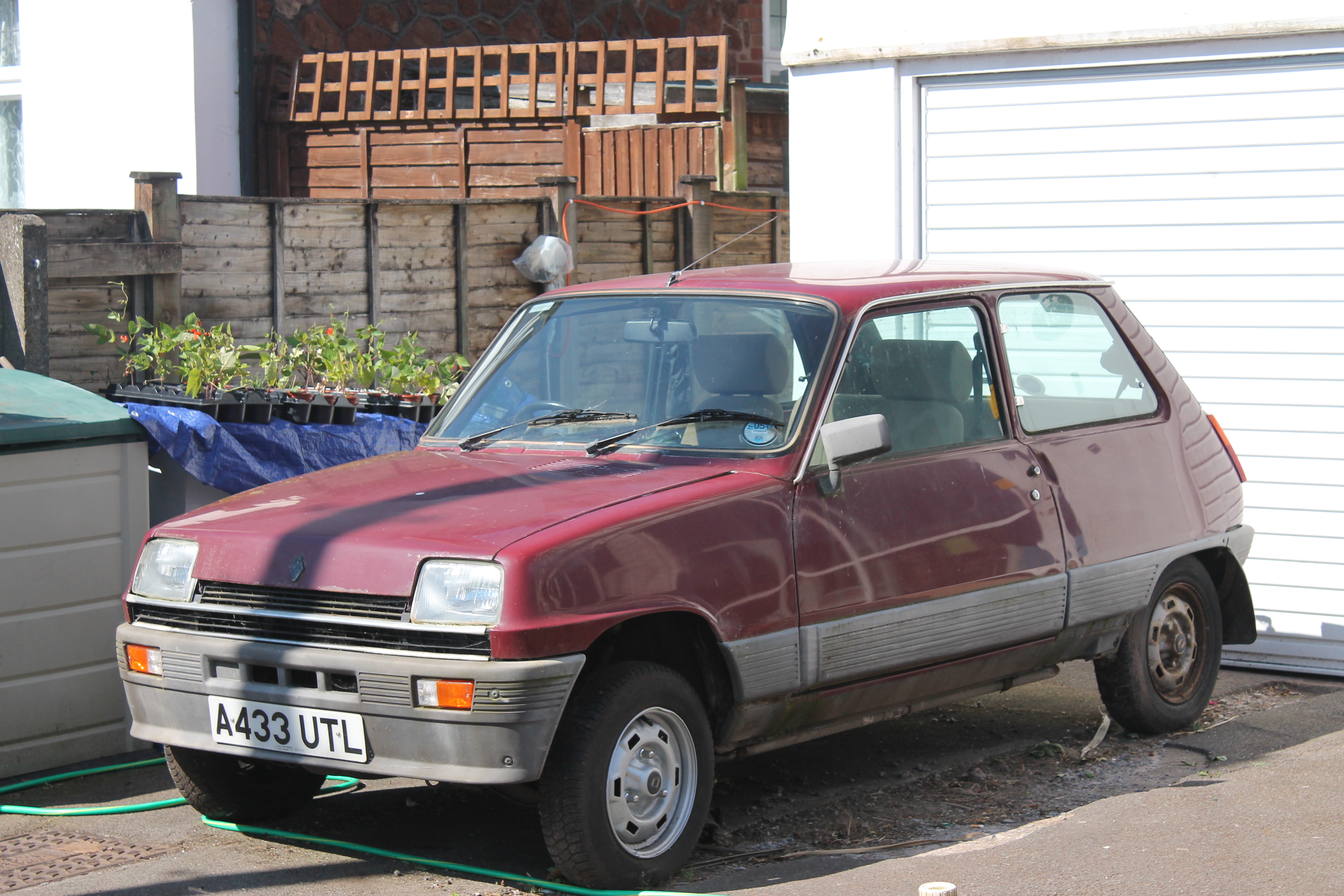
Renault 5 is a small, everyday car. The host brings it up because it’s selling well, showing that smaller cars can still be popular if they’re priced right.
smart is a car brand that’s usually associated with small city cars. In this segment, the host is saying smart is trying a bolder new direction to win buyers back.
Freelander is a Land Rover SUV name. The host is using it as an example of how new models can look interesting, but they’re still part of the bigger-SUV trend.
They’re talking about companies trying to make money by selling mostly higher-end versions of cars. If the cheaper models disappear, buyers feel like they have no choice but to pay more. It’s basically a lineup-and-pricing shift toward premium/luxury.
They’re talking about car expos and how useful they are for seeing what companies are planning. The speaker compares different show locations and suggests one show felt like a bigger sign of change. It’s about trends, not a single car.
Audi is a German car brand. They’re talking about Audi’s China-focused strategy and whether it’s selling well. The discussion is about how brands reposition themselves in China’s EV market.
Polestar is an electric-car brand. The speaker says Polestar stepped back from China because it wasn’t selling as well as expected, even though cars were still being made there. It’s an example of how market demand and brand image matter.
Huawei is a big tech company, and the host is saying BMW is using Huawei technology in its cars. The idea is that tech partnerships can help automakers move faster on EV features.
The host talks about a new Hyundai and doesn’t like its design. They think it looks like it’s borrowing from Chinese styling trends, and they compare it to the new Prius.
The Toyota Prius is a car that uses two kinds of power: a gas engine and an electric motor. The electric part helps the car use less fuel, especially in stop-and-go driving. It’s a well-known model, so people often compare other cars to it based on how it looks.
LIVE
Tired of bolted on security with endless patches, wish your software and systems operated with
built-in security? At the Center for Internet Security, we get it. That's why we partnered
with SafeCode to develop a secure by design guide that offers actionable guidance to help
organizations integrate security throughout development. It's a clear roadmap for turning
intent into execution, strengthening resilience while lowering complexity and cost. Operationalized
secure by design in your organization. Visit cisecurity.org.
When Mother's Day means celebrating your mom, your wife, maybe even your daughter as a new mom,
trust 1-800-FLOWERS to help you celebrate every important woman in your life. With double blooms
from 1-800-FLOWERS, order one dozen roses and get another dozen for free. It's a simple way to
give beautifully, with colorful blooms that make Mother's Day feel meaningful. For every mom you're
celebrating, order with confidence and get double blooms at 1-800-FLOWERS.com slash podcast.
That's 1-800-FLOWERS.com slash podcast.
Welcome to the Pulse podcast on everything electric cars. It's a life and death decade for
the automotive industry and on this podcast for once it's me hosting and I do apologize profusely
for that. Normally you have the lovely dulcet tones of image and bogel and even once Robert
Llewellyn but today it's me and there's a reason for that because I'm actually in Beijing at
Auto Beijing with a fantastic Elliot Richards who almost all of you will be familiar with.
Elliot's been our Chinese based correspondent for many years now talking to us about everything
that's going on in China and you cannot talk about the automotive industry these days without talking
about China. So we're here at Auto Beijing to have a look around and today's podcast is going
to be all about the themes that are emerging from this show. Hello Elliot, how are you?
I'm very good. Thank you. How are you? I'm good. I'm good. It's very surreal to be here with you
and also where we are right now. Do you want to tell people where we are sat at this precise moment?
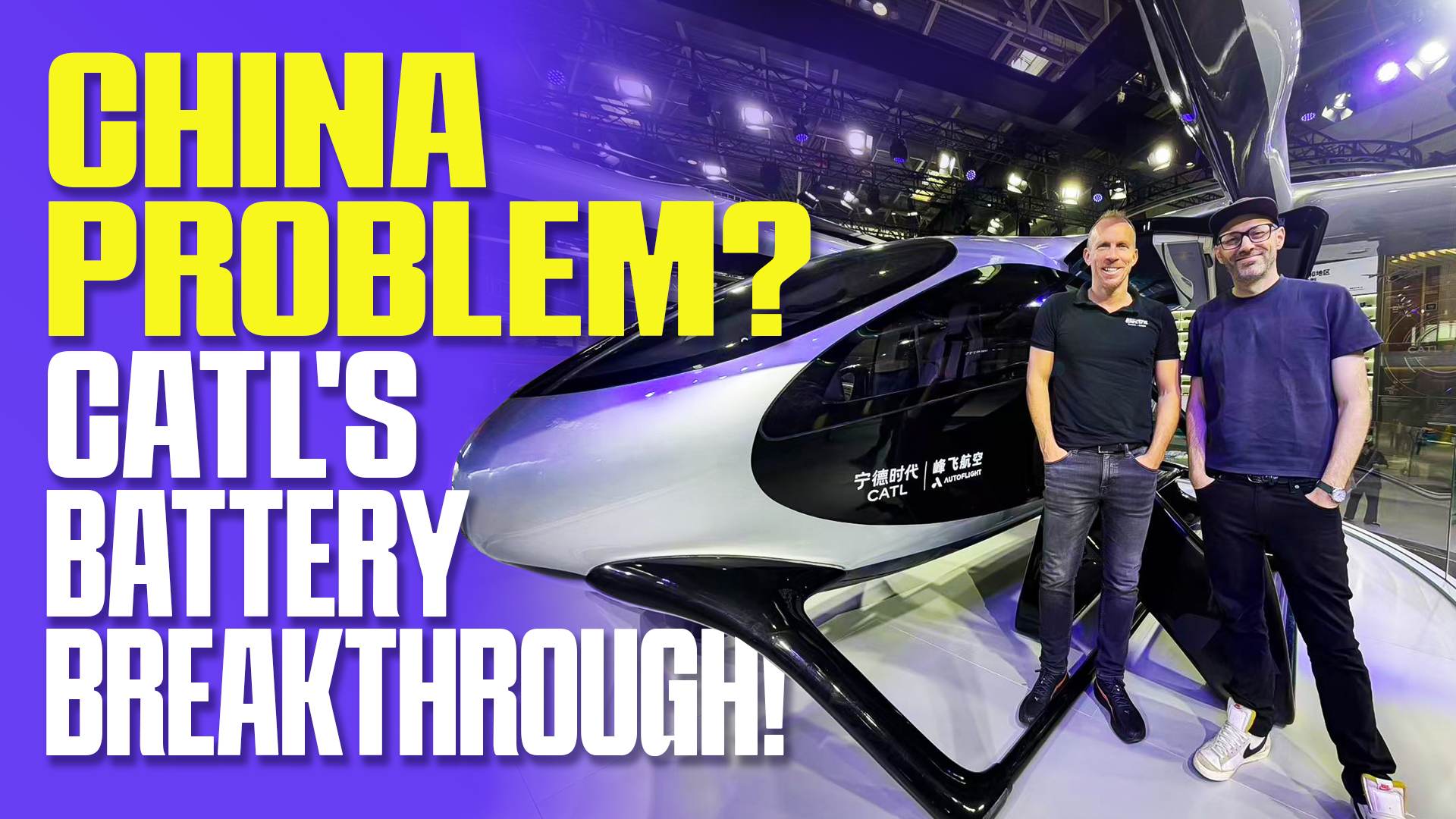
Yeah so for those of you I guess who are listening to this we're actually sat on the CATL stand
within a EVTOL aircraft by Auto Flight. So we're in the back seats, very comfortable
and our cameraman is sitting in the pilot seat. And there's two seats behind us as well so we're
saying this is a perfect vehicle for Elliot and his wife and three children. It might be a bit pricey
I suspect. But the reality is we're here at Auto Beijing so if there's some background noise and
you are listening into this I do apologize. We've obviously done our best to find a relatively
soundproof place to conduct this podcast. So we're here inside this very futuristic vehicle
talking about the show. And how are you more generally? How is life treating you and it's
just a whirlwind time to be here covering the subject right? Yeah absolutely. I mean things
change so much and so fast in this industry that's actually very hard to keep up and a show like this
is so overwhelming. Like the size of this show this is the biggest show that's ever happened
in China. The biggest auto show in the world is 380,000 square meters of space. It's 1.3 kilometers
from end to end as we both experienced yesterday. And there's a lot of themes that I think are coming
out from today. I think we'll discuss that later but yeah it's changed a lot since the last time
you guys were here and then since 2023 when trying to open back up after COVID huge changes in the
industry. But I think the first thing the most important thing for us to talk about is CATL
right because that's for me the anchor behind all of the innovation and all of the cars here is
what's happening on this stat and that's why we you know we started the auto show walk-around video
with CATL and we're filming here right now. So we're going to talk about CATL. I think that you're
right. I think that's an incredibly important part of everything that's going on in the market.
We're also going to talk a little bit about China where the market really is. Lots of different
conjecture online. Is it collapsing? Is it thriving? Is it going to take over the world? We're going to
talk about that and then we're going to talk a bit about the show highlights as well. I agree this
show is so big it's been a bit of a blur so we're actually talking at the beginning of day two
once we've had a bit of time to process everything that we've seen.
So we'll get into those themes shortly but for now a quick advertising break.
Our three free YouTube channels on EVs and Clean Energy Tech are funded by our fun-packed
test drive tastic events in the northwest and greater London and our events down under. Next
up everything electric heads to Harrogate and then Cheltenham. All events include a B2B EV day
and commercial vehicles too and now back to the episode.
Okay so let's cut straight to the chase. CATL is a company that if you're in the industry
you will almost certainly have heard of but for the average person out there you might be
unaware of who they are and what they do. I really like the acronym CATL because the
longer form name is Contemporary Amperex Technology Limited.
Bit of a mouthful. So CATL is the brand and actually in complete transparency we're here
this week as a result of CATL's kindly helping us to come out and be at this show
and actually it's the best company I think for us to come with because
they are integrating their tech into pretty much everything. So one of the things that's
always fascinated me about the rise of Silicon Valley was the Intel inside
processors that actually made the whole thing work and here we've got another ingredient
brand in CATL which is doing fundamentally the same thing not just for electric cars
but for electric tech of all shapes and sizes and the interesting thing is CATL might not
be a household name yet but I've got a feeling like Intel it will be in the not too distant future
and a quick fact before I start asking Elliot questions is that of the batteries made for
battery EVs around the world CATL are making 39% of them. That's right. EYD is second with just
over 16% so between those two Chinese behemoths they're actually producing well over half the
batteries but CATL four out of ten battery electric vehicles are basically carrying their
batteries which is extraordinary and the tech is amazing which we'll get into but
tell us a bit about the success story how has this been possible for this company to come about
and to suddenly be dominating the landscape to this extent. I mean there's a multitude of reasons
and I think they were one of the earliest ones to develop batteries in China so they started
developing batteries for things like Nokia phones I think that was CATL and their engineers right so
everyone in that company is an engineer so Robin Zheng the the CEO he is an engineer by trade by
Tarte so it's a very engineer led company and so they've been able to really build up their battery
expertise you know with gadgets with phones with other things and then when China's made in China
2025 strategy came into place in 2015 that gave them the motivation you know they had subsidies
they had yeah many benefits from the Chinese government in order to then develop for for
automotive in a big way so they suddenly had a huge customer base of all of the Chinese OEMs who
were like well we need batteries where do we go it's more BYD or CATL and so that really spurred
on the innovation and then they invested heavily into research I think they got something like
120,000 researchers working for their company and I think something like I can't make the numbers
I'm going to get it wrong but a few thousand of those have PhDs you know they're doing so much
research into the latest and greatest battery tech but if you haven't heard the innovation has
come from CATL then it's probably not a real innovation so we've spoke about donut labs for
example you know the jury's still out and how legitimate that is but if they're saying they
can do it I'm like well why hasn't CATL been able to do it with their thousands of people researching
so for me that's that's why this company is so important they're at the cutting edge but they're
already as I said in so many different cars and actually there's a fantastic thing on the stand
which I'll share on my LinkedIn account which is actually it's kind of a roller deck of all the
cars that they're in and you flash us through a whole range of different cars and actually
I would consider myself a EV expert and there were a whole bunch of cars from Chinese manufacturers
that I was unaware of which really surprised me I think I'm not even sure we'll do the
test later I'm not even sure Eli would know all of them there were so many but for those listening
in the west it's important to say that CATL is supplying Tesla I think BMW many other western
automakers are getting their batteries from CATL as well and I think from my perspective
they've just started to make a few more announcements as they do and it can be a little bit easy to
become I guess complacent about all announcements coming out of China but the latest stuff again is
another re-raising of the bar BYD and Geely and CATL all these companies seem to be sort of competing
with each other but CATL's recent announcement take things a step further can you kind of unpack a
few of the different announcements that come out recently if you can remember them yeah I've got
my notes because so I went to the press conference a couple of days ago and it was you know every
time I go to these conferences you learn something new about what's going on with the company so now
one in every two cars sold in China has a CATL battery inside so I think it's 47 percent
so that's very impressive straight away but the new battery technologies there's one called the
Shenzhen battery they've just announced the Shenzhen 3 so now this comes with super fast charging
so 10 to 80 percent in three minutes 10 to 98 8 percent in six minutes and 27 seconds that's just
mind-blowing just that alone yeah and then even in minus 30 it only takes nine minutes so you know
we've heard the announcements from BYD with their flash charging the CATL have their own kind of
similar developments but these are now batteries which it takes the same amount of time to fill up a
petrol car and I think that's what is going to happen in the next kind of two years is the roll
out of this you know super fast flash charging you know high discharge rate charging and for
those cars to be able to enjoy those benefits they all have to upgrade to 800 watt a volt
architecture 900 watt architecture 1000 volt architecture and all underpinned by the batteries
so Shenzhen was one announcement so the super fast charging and the battery health for those
batteries after a thousand charges still remains at 90 percent in the press conference they started
showing equations I've never been in a press conference all like flash images like lifestyle
images but in there they said this is the equation like and it was I had no idea what they were
talking about I think they're fairly confident that somebody who works in YouTube can't take a
screenshot definitely not definitely not it just shows you how engineer focused they are I mean no
other company would be brave enough to show equations on the screen during a press conference
for me the most interesting one is around weight so for the first time ever I've heard a company
say you know weight is an issue you know these cars now have or customers demand cars with
a thousand kilometers of EV range or or whatever it might be we might talk about weight and size
later in this podcast yeah that's right but they they said well if we reduce the size of the
weight of the battery and give the same amount of range then it's going to benefit the handling the
brakes the the lifetime of the like the bearings the bushings and everything else but up to like
30 or 40 percent so but also it's a response to what's happening in Norway and France they're very
conscious of the weight limitations coming in for cars so they've got their Chilean the Chilean
third generation battery which is an NCM battery starts with a Q Chilean yeah yeah with a Q and
that it has 280 watt hours per kilograms that's pretty high but it means the battery for 125
kilowatt battery is 600 kilograms instead of 850 kilograms for a LFP battery so they've shaved off
200 kilograms from that battery now it might not sound like much but if they're moving in that
direction will we get the 400 kilogram battery we'll you know we're heading towards that much
better place where batteries don't become so much of a burden and you can get these amazing ranges but
if you have flash charging then do you need a car with a huge battery and so much rain so it's
you know there's so much happening you know what's going to be
which part of the industry is going to grow quicker will it be the weight
weight of the batteries or will it be the fast charging or will it be a combination of both
so that was very very exciting for me to hear someone talking about weight
and then the other one is the they've got this condensed battery now so using their aircraft
technology in their battery so I think last year they announced a 500 watt hour per kilogram
aircraft battery so they've condensed that now to a 350 watt hour per kilogram battery which now
means they can get a thousand kilometers from an EV like CLTC range but 800 kilometers maybe from a
battery so because we've seen from this show the cars seem to be getting larger and larger and
bigger and bigger I think having lighter batteries which have much more which are much more energy
dense will really help the industry try and reduce its weight in general and obviously this podcast
is going on everything electric cars but fundamentally CATL is integrating battery tech into
all types of transport and other technologies as well but we're sat here in a vertical takeover
landing vehicle but it's you know it's the marine industry I think if anyone's going to make
short haul aviation possible it'll be CATL so this has got huge kind of very very kind of
transport industry wide ramifications but the interesting thing is I think that a lot of the
narrative around EVs is driven by fear and ignorance and so all decision makers are probably
underestimating some things and overestimating other things I think that's fascinating that
you get these kind of super long range batteries they can charge really fast but at the moment a
lot of focus is downstream is people putting a lot of charging in the ground that maybe is slower
maybe putting in the wrong type of charging maybe we'll end up with too much charging because
suddenly actually if you can charge very very quickly and the battery range is much longer
that's going to change that equation to such an extent so that's my fear sometimes with
misinformation and the fear that's out there actually it's not enabling us to to plan properly I
think we could end up with a lot of sunk assets that actually we didn't need in the in the long
run so anything else because I'm quite interested I'm fascinated always by sodium oh yeah yeah yeah
so I think then the Naxra battery is there that's right a sodium battery that's showing great
promise as well yeah so then we went to the far north of China to see the Naxra battery in it was
minus 30 outside it was horrendous but they were releasing their new sodium ion battery with Chang'an
and they're putting in one of their more affordable sedans like fairly plain sedan
and they announced that that will be going to mass production in Q4 of this year so
slightly later than we originally thought but that is really game-changing tech yes the range
isn't quite so high it's I think 400 to 500 kilometers at the moment but it can work in
icy cold conditions it's so much cheaper so much more affordable that it will just bring down the
price of electric cars so that for me I can't wait to actually see that come onto the market
and see what impact that has I think it's kind of a not a Trojan horse but I don't think people
have realized the impact that battery is going to have well I think again that's another part of
the equation that people are perhaps underestimating is the degree to which the Chinese manufacturers
have built themselves around sort of vertical integration around the supply chain cost down
advantages that's going to give them if they get to sodium ion at scale and speed that's going
to enable them to make cars even more cheaply and give legacy OEMs even more of a headache so
it's really really interesting but I think sodium ion is great because we don't want to be just solely
reliant on lithium for for example LFP has obviously been a huge boom the developments that are
going on now are fantastic and this is just part of an ongoing change I mean where we will be in
two or three or four or five years I really cannot even begin to fathom it speed at which
companies like CATL are developing the marketplace so even though I think we're a bit ahead of the
kind of the mainstream media and the what's out there in the market I think there'll be
discussions going on within CATL and other companies that would probably blow our tiny minds
where we're going to take this and I don't know maybe AI can play a role perhaps in advancing
these equations and moving things forward even faster so CATL for us is a really fascinating
story we'll keep telling that for sure we could talk about it I suspect for hours we'll have that
time so let's move on to the the second topic now you don't consume a lot of western media
because you live here in China you live in Shanghai specifically you're not can probably consuming
too much Chinese media either which makes you kind of an interesting kind of canvas on which to
sort of paint this discussion but back at home it is now clear you go on LinkedIn as one platform
for example you go on YouTube it's very clear that people are working up to the fact there's
something very seismic is going on in China it's going to have a huge impact on on the world it's
mostly all technologies but obviously vehicles are going to be a big part of that and cars are
hugely exciting aspirational topics so there's loads of posts now on LinkedIn there's videos on
YouTube loads of podcasts about this subject it's suddenly become the talk of the town but it kind
of oscillates between China's in crisis they've got too much supply all the businesses that can
consolidate they're going to go out of business and China's going to take over the world and
obviously the world's much more nuanced what are you seeing is there a sense of panic here a sense
of pride what is actually going on in the Chinese market if you can summarize it yeah hello do we
have this episode is brought to you by Hong Kong the Hong Kong ion tyre is built exclusively for
electric vehicles engineered to deliver what EV drivers need most confident grip quietness energy
efficiency and long mileage as the official tyre partner of Formula E Hong Kong proves its EV
technology is at the highest level of performance and brings that same innovation to every ion tyre
on the road um yeah so i think for me i was trying to think about this last night there's
there has been a huge shift in in what we i mean what we're seeing here today right we're seeing
a lot more SUVs people talking about huge ranges like the smart hashtag six sedan
it's got 1800 kilometers of range why do you need that much range in a sedan
i think there is a fear in this market because overseas expansions haven't gone well for everyone
you know we've seen some automakers not doing very well in europe and other markets and back
home here there's the price wars so things are getting so competitive now so what's happened
is these automakers have responded by saying well we know like the Xiaomi sells really well so let's
just do the Xiaomi copy we know big three-row SUVs with hybrid power trains in them are also
selling really well so we'll just do that so if you go in some of these halls now so all you see is
three-row SUVs and sedans which look like Xiaomi's and there's kind of this fear no one really wants
to take a risk with anything anymore there's no real stat there's a couple of interesting cars here
but there's nothing real um which really stands out and i think that's because the the automakers
here are scared they've got price wars at home things are not selling very well in overseas
markets so they just revert to this kind of kind of blob SUV kind of type and that's showing that
they're not confident the only automakers who are taking risks at the moment is smart with their
hashtag too who knows if that will sell Citroen are doing some interesting concepts whether they
sell very well and that's really about it Xiaomi have made quite a lot of progress Xiaomi have made
a little bit their vehicles look a little bit different they come out of the tech world it kind
of feels like that yeah stylistically they look a little bit different but you could say they look
a bit like Porsche yeah absolutely i mean there's no such thing unfortunately has an original idea
as much as we might fool ourselves into thinking that but what's really interesting for me is to see
these big beasts whether it's chinese companies or legacy automakers adopt this herd mentality
they just chase the herd mentality the political pendulum swings towards EV at one point maybe
back towards hybrids in in in more recent times will swing inevitably back towards battery EVs
because that is the better technology if you're coming on this podcast you might not be surprised
to hear me say that but there are a whole range of ways in which it's better and we think it will
win out it's just a matter of when so i'm just sort of fascinated by the competition in china
because coming to this show we think we'll talk about some of the specific highlights but thematically
i think you're right there's doesn't feel it's bigger than the Shanghai show yes so that belies
the rumors that the chinese car industry is is on the floor but it doesn't seem quite as distinct
to me there does seem to be some copycatting going on some herd mentality going on but
how many sales are there not just in the chinese domestic market which is huge but globally
to go around amongst all of the automakers new and old that they just aren't enough that is in
inescapable reality it's a year of the fire horse isn't it here in china which is a
a year which kind of augurs big things happening potentially it feels like that consolidation
piece feels like everyone's got themselves here debasing it feels like second half of the year
could be potentially spicy spicy that's a very very good word for it are there any
companies you you fear for more than than others i would say no one's safe no one is safe i mean
you look at um so geely for example closed down their gdu car brand after what's it two or three
years they cars on the streets you know they were they were pushing it hard and now it's gone
and they didn't save the cup their own company they didn't save it um it's hard to pinpoint any
automakers who are really struggling obviously the legacy automakers are some are doing better than
others you know some of the japanese ones are responding in the chinese market so toyota's
got five ev almost at china market only right is it enough maybe not honda for example they just
closed the factory i think last week in china because they don't sell ice vehicles anymore in
china so yet legacy brands that the more agile legacy brands like vw they've built and designed a car
with x-peng in china for china it looks fabulous it looks really by tech good software is that the
answer i don't know we'll time will tell right but it seems to have a very good reception i mean with
the chinese automakers the jury's still out i think you're going to see definitely consolidation with
with some of those you still got the big state-run companies like s i c they'll start swallowing up
some of the brands um but we will see some casualties for sure and you can't ignore the macro at the
moment there is still conflict in the middle east there's still the chinese economy to consider as
well these things aren't divorced from each other no you know excusing the pun but the chinese economy
has been a strong engine within which to kind of launch this armada of different ev brands but if
the economy actually is weakening as well that's also problematic so putting iran and the cost of
fuel to one side because that definitely strengthens the case for battery evs how is the chinese economy
in general terms i imagine it's quite opaque here yeah and you know and statistics can be skewed and
we can see statistical economics played out in uk media american media etc and even then numbers can
be yes you know shown up in a certain light but i imagine here you just not getting that level of
transparency and what's going on with the wider economy but what's the what's the vibe i guess here
yeah so i can't give you any numbers um but the sense here is that things are tightening
so for example people are staying in their jobs for longer they're not changing their jobs
as a result they're spending less they have less disposable income so they're not buying
as many cars so for example byd sells year over year or down 50 50 percent they're selling 600,000
a month last year now they're only selling 300,000 a month but it's still a huge number but it is a
significant drop for byd and byd has affordable models here for you know a few thousand pounds
so if if they're hurting then then there's definitely problems right i mean there just has
to be a shakeout doesn't there globally not just here in china because there were just so many
brands trying to intact the market and i guess how long can brands suffer for exactly and does
consolidation actually is it actually potentially a good news story yes in the in the medium term i
wonder how long the industry can defy gravity in the way that it has been doing so so again a topic
that we can't really do full justice to but we thought we would get elliot to talk about what's
going on here in in china with the car companies and the and the wider economy but just then to
focus on our third topic which actually is this this show you alluded to it earlier and i can feel
it too this kind of real move towards some slightly blobby uh well a lot of really big vehicles right
i seem to remember from shanghai last year lots of smaller more affordable at these yes
cars about which our audience typically gets quite excited because it's about the democratization of
transport maybe cheaper vehicles maybe you don't need to lug around the big battery
particularly if you've got a second car or maybe you don't do that much mileage
but here it does seem like we're seeing a lot of very very large cars launched and what's that
telling us so i think it's two things one is uh the car companies are scared so they're just
reverting to what they think buyers want and they think buyers want everything so i want a car with
eight seats can do a thousand kilometers of range so it has to be hybrid it has to be big
and all of the tech and all of the luxury packs inside so that's why we're seeing all these
these they're called nine series cars the like the shao pang x g9 i'll come in the name yeah x9
i think it looks quite a lot like a luxury yeah um that's why we're seeing those huge suv's because
they think well we want a car that can deliver everything to everyone because maybe they can
only afford to change their car once every five years now so they want a car which can do everything
go everywhere and basically be the all and everything for them so i think that's kind of
what's happening at the moment is that there's fear and like you said two last year or two years ago
so many automakers had a small e-v like this is our small e-v it's 3000 pounds four
thousand pounds 20 kilowatt hour battery none of that i think there's two small cars here this year
two out of 1450 cars here there's two small cars i mean if it comes a bit of a self-fulfilling
prophecy if the if the car industry advertises bigger cars because it can mean more more metal
can be more much they get themselves into a way of thinking that everyone wants these these big
vehicles but i think that when we're industry people i do quite like cars i kind of oscillate
on that a little bit i know robert does as well i know you do but the reality is that a lot of people
just see them as a way of conveying themselves from a to b not everyone wants all of that tech so
in a way we're kind of maybe over complicating the product absolutely and i guess productising it
making it more expensive than and taking it away from the average everyday person but if the smaller
vehicles aren't selling that well that's a problem like we talked quite extensively about reno five
selling well in the UK and europe and that's a great little car at a reasonable price point but
i guess there comes a point which the industry has convinced people they need bigger cars
industry is convinced itself correct and it's continuing down when it wants to feel
when it feels fear and it wants to feel safe it kind of goes back to that default which is a
shame because i love a saloon car i have a sedam i don't necessarily want a big suv but it just
seems here we're seeing a lot of different launches are any launches that are particularly
stood out that you do you do like we mentioned the smart hashtag too which is yeah well they're
going smart going back to its roots effectively which is which is good to see i hope it does sell
well but my view is that people are are probably looking for those slightly bigger cars are there
is there anything here that's really stood out or is it a year where you're thinking actually
maybe some of the inspiration is running dry yeah so for me the smart hashtag sorry
hashtag too is the only one that's really stood out for me for being bold design bold
direction return to form for smart and kind of giving some consumers what they really want
don't know price or anything but other than that there hasn't been much which stands out for me
you know i haven't been particularly excited about like the freelander looks cool but if you've
seen the concept here it's huge it's like taller than me it's a concept of course freelander great
to see that brand coming back but it's another suv they're going to go up market they're going to
go luxury they're going to go premium it's like okay we've seen that so many other times i mean
there's a sports car from denser which is quite interesting to see them go into that area um but
that's kind of it really i think um the the other thing i forgot to mention was that the problem
with those small cars they don't make profit and because the car companies are hurting so much at
the moment they have to say well this car's premium so we're going to add another few thousand pounds
of it it's luxury we're going to add another and that's how they're trying to make their money back
so the only cars you can buy are premium and luxury like where is the basics are down here there's none
not even on b y d um and if that's the only product that people can buy now then what can you do that's
the only choice i agree it's really interesting so when it comes to motor shows i've been to a i've
probably got motor show fatigue so i've been to so many in the last year or so and i found it fascinating
to see all the product launched in Shanghai flow through munich and brussels and the shows that we
run as well um our everything electric shows are back very very shortly in fact imminently we'll be
in the north at harrogate uh and then we're coming to to jelton in the west for the first time then
twickenham and then sydney you know you've heard me talk about this many many times before i'm sure
but we understand these shows and it is fascinating but this one feels bigger but maybe not as
materially substantial as the Shanghai show a year ago and maybe that's the first sort of sign that
things are changing just quickly before we move out of this topic i'm fascinated with how the
Germans are presenting to the market last year in Shanghai Audi launched they've got a four ring
strategy so that's the traditional brand you're very familiar with they launched a four letter
strategy which is just a u d i on on a different brand effectively for china they launched a sport
back it's a fabulous vehicle fabulous vehicle but to me it looks european and it comes with a premium
price tag how is that selling and how are the germans doing in general in the chinese market
so the audi four rings or whatever it's called um yeah it's not selling very well unfortunately
it's a really good car but it's got the same problem as polestar so polestar has basically
pulled out the market here even though they're still built here um because they're just seen as
there's design is too european right not not luxury enough and the audi one has fallen into
the same sort of trap or same certainly same perception um and they've got their new suv
jury's still out on whether bmw will be able to recover some of their market with their new
noir class um they're they're moving faster than the japanese because they they're integrating
Huawei tech into their cars so bmw are i think audi are doing it as well and obviously vw has
x-peng tech in their cars that's the smart way to do it but we'll see if the market responds well
it's the first year that these cars are coming onto the market um and i still think they hold a lot of
they have a broad brand love with consumers um we saw a wedding this morning and there's
all Mercedes wasn't it all got 10 black Mercedes so this still holds um still sins of prestige brand
but whether they can really integrate the tech uh effectively to become successful in the market
is very much still to be seen it is interesting because i think there is such a cultural divide
in terms of what cars are appealing to the chinese consumer and then what cars are appealing in europe
because post i was doing very well uk Australia europe north america so it is appealing to a
a big subset of of people not to be sniffed at and that's a growing brand but ultimately
european brands and and the japanese brands are spending so much time in china that's actually
probably changing the way they do things i saw a new Hyundai launched yesterday didn't like the
look i say that regretfully because i like i like the Hyundai kind of design language but actually
it was chinese design it looked a bit like the new Prius as well that's right yeah a bit of a
bit of a strange look so it's very hard to keep a clear head i'm sure when you're an automotive
executive is how do we plot our way through what is an incredibly difficult period
of time and anyway we'll see how that plays out on the pulse podcast and everything electric cars
over the coming months and years it's fascinating it's really good to talk to you what we normally
do on the pulse podcast we've finished with you know who's winning this week and who's losing
this week so i'll give Elliott a moment to to think about that but here we see maybe he's done
well at the show and who's who's not done so well this is a fantastic snapshot in time if you like
the pulse podcast please like what we do please subscribe pulse podcast and everything electric
cars youtube channel we also have a channel called everything electric tech where we cover
everything else really from home energy to microability i noticed a green gravity battery
episode that we did recently got 200 000 views so that's worth listening to check out our events
follow us on our socials as well but to finish off with it who's who's who's won this weekend and
who's lost uh who's won this week uh definitely c atl and i'd probably say huawei so they've
integrated their tech into so many cars now so not just chinese cars but legacy automakers that
they're just they're just dominating the market i would also say i went to a cherry press event
yesterday there was about 4 000 people there cherry slightly less well-known brand in the
uk and in some of the other markets that we're listening in but the reality is obviously they're
bringing out a motor jku cherry they've got another couple of brands i've got a bunch of them so i'm
not gonna uh mention those ones but there was 4 000 press there just for their press event it was
absolutely heaving i've never seen anything quite like it so a few winners and any any standout
company you think is slipping beneath the waves uh it's definitely the japanese automakers they just
they're too stubborn to change even though they've got a chinese market strategy they're not willing
to take that elsewhere and i think that's gonna it's gonna hurt them long term i mean did you even
see a honda here today i think they've got a couple of cars but i don't know no impact no impact as
we always say we don't want anyone to struggle to survive but the reality is that there are only
it's musical chairs and there are only so many seats to go around and the music's about to stop
this year early next year i think we are going to see some some casualties i've always said though
painting it as a chinese catastrophe if there's consolidation actually
isn't correct i feel this has been the plan all along create an amada of brands some of them will
get through the blockade but chinese have set out in full knowledge that many of them will not but
survival of the fittest exactly and the car industry is quite competitive right now and it'll
be really interesting to see how it plays out so thank you very much for joining us today on the
polls podcast thank you to elliot as always hope you've enjoyed this elliot has also filmed a walk
around video of the show so if you're interested in getting closer look at what's going on the show
look search for everything electric cars on youtube uh beijing uh show great to see you as
always if you have been thank you for listening
About this episode
Recorded at Auto Beijing on CATL’s stand, the conversation zooms in on how one battery giant shapes the EV market in China and beyond. The hosts cover CATL’s huge scale, its ties to Tesla, BMW and other automakers, and its latest claims around ultra-fast charging, cold-weather performance, and higher-voltage architectures. They also widen out to China’s price wars, market consolidation, sodium-ion batteries, and the shift toward larger, more premium vehicles.
EVents season kicks off in earnest, with the biggest car show ever held on planet earth. Where else, but in Beijing? But is its scale covering some cracks in the car market more generally and China specifically, Dan Caesar & Elliot Richards think it might be. From inside the cockpit of a CATL battery powered vertical take off and landing craft they predict take off for some, crash landings for others.
Want to see and test drive an array of battery EVs, but can't make it to the major autoshows overseas? Then come join us at our next Everything Electric expo: https://everythingelectric.show
THIS WEEK! - EE NORTH (Harrogate) - 8th & 9th May 2026
EE WEST (Cheltenham) - 12th & 13th June 2026
EE GREATER LONDON (Twickenham) - 11th & 12th Sept 2026
EE SYDNEY - Sydney Olympic Park - 18th - 20th Sept 2026
To partner, exhibit or sponsor at our award-winning expos email: [email protected]