China's EV market faces a domestic sales slump in February, with a 25% year-on-year drop driven by tax incentive timing and softer demand, while exports surge 50%, especially for new energy vehicles. Xiaomi accelerates the launch of its updated SU7 electric sedan, featuring advanced safety and tech upgrades amid a competitive price war. Zeekr prepares to unveil its 8X plug-in hybrid, which functions more like a range-extended EV. Lee Auto struggles with declining profits but plans a flagship i9 electric SUV. Avatar reveals a stylish 06T wagon variant. Solid-state battery tech advances with Dream targeting mass production by 2027, promising higher energy density and safety improvements.
Topics:china ev sales declinenev export growthxiaomi su7 launchzeekr 8x phevlee auto financialsavatar 06t wagonsolid-state batteriesev price competitionrange-extended ev technologyev safety upgrades
"Power train lineup, both bevs and E-revs. The bev version, a 90 kilowatt hour pack and two motor configurations. Dual-motor rear-wheel drive setup or a tri-motor setup,"
Select text to request an explanation
Dating apps? Easy!
Online shopping? Simple.
Banking app? Sorted.
Life admin? Ugh.
That's what a digital ID could change.
And the government is opening a conversation to make it work for you.
Your voice will shape the final product.
So search digital ID consultation to have your say.
Dating apps? Easy.
Online shopping? Simple.
Banking app? Sorted.
Life admin? Ugh.
That's what a digital ID could change.
And the government is opening a conversation to make it work for you.
Your voice will shape the final product.
So search digital ID consultation to have your say.
Digital ID making it work for you.
Yeah, the spin off of EV News Daily and the podcast dedicated to the world's largest EV market.
We're here weekdays to bring you the latest insights and analysis and headlines from the heart of China's booming EV industry.
And we try and unpick it and make sense for the global EV landscape.
Let's get into the big story today and that is China's car sales sliding again in February.
Total sales at retail in China.
We're just over 1 million, 1.034 million in February.
That is down 25% year on year.
The drop followed a pull forward in late 2025 when buyers rushed to use the purchase tax exemptions before it expired in 2026.
EV retail sales were 464,000 units in February.
That's down 32% year on year.
Now what was the percentage of the market?
EVs were 45% of passenger car retail sales.
But that share was 4 percentage points lower than February of 2025.
EV uptake fell short of expectations.
Analysts called the weakness temporary.
They pointed to the late timing of the spring festival adding unevenness to vehicle consumption and softer demand prompting calls for more stimulus.
Chinese domestic brands sold 630,000 in February.
That was down 30% as well.
What about at wholesale level selling everywhere?
That includes exports as well.
Well, automakers shipped over 1.5 million units if you include wholesale.
And that was only down 14%.
That's the lowest percentage we've talked about so far.
Indicating that whilst domestically there was some pullback, at least export wise, less so.
The decline was shallower than the retail fall which suggests the pain at the dealer ran deeper than at the ports where the cars leave.
Exports tell a different story.
Passenger vehicle exports including semi-knockdown shipments and parts to reassemble outside of China rose.
Exports rose 50% year on year.
NEVs were 48.5% of passenger vehicle volume for exports up 15%.
Domestic brands exported 478,000 units in February up 52%.
Joint venture and luxury brands up 85%.
And EV exports as a whole rising 125%.
So that shift is even stronger over the first two months of the year.
Cumulative EV exports up 560,000 to 560,000 units up 115% versus 2025.
Exports have really kicked off the year because domestically they haven't got buyers coming for EVs at the moment because of, as I've mentioned, those reasons.
And so really leaning into export which is why we're here at just the right time on EV News China
to try and make sense of what's happening in China because it increasingly affects the global landscape
as they lean hard on overseas markets to keep the sales momentum going and that directly affects all Western listeners and buyers.
OK, let's talk about Xiaomi. They will launch the updated SU7.
That's the electric sedan where it all started for Xiaomi automotive.
They're going to bring it forward to this month. They're ready to go. Not April but March.
Lei Jun said the firm pulled the launch forward. Mass deliveries will start soon.
Xiaomi has already sped up production targeting 16,000 units this month
and its Beijing Yizhuang EV factory is running at full chat now.
The plant ships 800 SU7s a day.
One report in China citing an on-site logistics observation where 18 new vehicles were made in an hour.
Retail channels are moving in steps.
Xiaomi EV stores now receiving the brand new SU7 display cars and test cars.
By the middle of the month it'll be in almost 500 stores and 143 cities.
The refreshed SU7 comes in standard pro and max trims.
Pre-sale prices run from 230,000 yuan.
Xiaomi opened pre-sales in January with a starting price of effectively about 33,500 US equivalent.
That's six and a half percent up on the old model.
Lei Jun said the retail prices will rise because production costs are going up,
tying it to upgrades in safety, driving control, intelligent features, quality and manufacturing complexity.
Even so, the gap to the Tesla Model 3 is still 5,600 RMB.
In China's EV market, final retail prices often come in below the pre-sale figure.
It's a really common market strategy.
Your pre-sale price is one. When the vehicle arrives, you bring it in at a lower price.
Everyone raves. It's a nice little bonus and everyone pays the lower price.
And so those that got in early get a nice little feel, good bump and save themselves some money.
Very common strategy and tactic.
That'll happen here again.
That matters because the SU7 is in the heart of China's premium EV sedan segment.
It's up against Tesla, NIO, Zika in that kind of 33,000 to 44,000 US equivalent price bracket.
The launch also lands in the middle of a price war.
AI tech inflation has pushed up costs and the Zika 007 GT also announcing price adjustments.
Visually, they've not torn up a successful formula.
And so it's got its fastback shape, upfront, new grille with integrated millimeter wave radar.
The droplet headlights stay now with a 400 meter upgraded high beam, semi-hidden door handles, black mirrors.
At the rear, Xiaomi keeps the halo tail light and active rear spoiler.
Inside again, revision that cabin gets a new dark themed trim, redesigned secondary dashboard, updated steering wheel,
door and seat stitching has been upgraded, new interior color schemes as well.
The bigger changes are technical under the skin.
LiDAR comes as standard on every Xiaomi SU7 as does 4D millimeter wave radar, 700 tops of computing power,
end to end ADAS system they say, also called Xiaomi HAD.
Xiaomi said the system will keep detection in low light fog and poor visibility.
Safety kit is growing, nine airbags up from seven, two new rear side airbags as well.
Talking about hot formed steel door beams and ultra high strength steel roll cage.
Xiaomi's had to fight off some safety negative press so they're leaning hard into safety.
An underside anti ballistic coating because you always need one of those.
The door handles have a mechanical release obviously to match the new Chinese regulations for redundancy in extreme circumstances.
Something that has hit negative publicity around Xiaomi's following accidents and serious collisions and so leaning hard into that.
Now, I haven't got final details, I haven't noticed they've released final details.
The standard and pro trims are reported to have a 752 volt architecture.
The max trim reported to have a 900 volt architecture.
Whereas another report says the whole range moves to the 800 volt architecture.
But when we talk about 400 or 800 volt that's often a way of, that's a short hand way of describing.
Oh, is it a lower voltage or a higher voltage?
And you know, that could be a 900 volt system, but we call it like an 800 volt system.
So we will try and be specific and I'm chasing down the details.
Xiaomi has described an 897 volt silicon carbide high voltage platform.
Battery choices, three of them.
73, 96 or 102 kilowatt hours where it all started for Xiaomi.
Obviously the YU7 is a big seller, but the SU7 really big car for them.
And it's going to drive some sales numbers this year, isn't it?
This refresh one, it looks really, really nice.
Talking of good looking vehicles, Zika will hold a tech launch on Monday for the Zika 8X.
Pre-sales open on Monday as well.
It's Zika's second plug-in hybrid and a flagship plug-in hybrid SUV.
Let's get into the details of this then.
What do we call it? A waterfall grill.
So, you know, think of a big slab of front, not aerodynamic.
I'm sure it is well designed to cut through the air, but in terms of what it looks like in the pictures,
it's certainly a very upright chrome grill.
Pretty common, pretty blingy, which goes down well I think with Chinese buyers of really big SUVs.
This is an interesting one because it's marketed as a plug-in hybrid PHEV,
but I think it's effectively an E-rev.
The Zika 8X is branded and homologated as a PHEV,
but the 2-litre engine's primary role, I believe, is a range-extended generator
for the large traction battery and the electric motors,
not a conventional mechanical drive source to the wheels.
Officially, Zika and the paperwork from the MIIT describe the 8X as a plug-in hybrid PHEV.
However, with its two battery sizes of 55.1 or 70 kilowatt-hours
and up to 328 kilometres of electric-only range,
that 70 kilowatt-hour pack is right in the range of the top-end of batteries
they're putting in E-revs right now.
Zika calls it their super-hybrid powertrain, shared with the 9X,
where the 2-litre is only a range extender.
And the main drive is done via one to three electric motors.
The platform is the SEAS platform.
So does the engine drive the wheels even though it's marketed not as E-rev as plug-in hybrid?
And that's interesting because, well, messaging matters, doesn't it?
Or maybe I'm nitpicking, but I think it matters.
There's a little bit of heat coming off of E-revs right now,
in the last few months, I would say, after a period of time in China when they were all the rage.
So how is China marketing and reacting to plug-in hybrid versus E-rev terminology and technology?
Public technical descriptions stress electric drive.
Front motor, dual rear motors, et cetera, as the propulsion source
with the 2-litre four-cylinder engine generating power for the battery and motors,
like the 9X's E-rev layout.
None of the detailed previews or the MIIT leaks mention a conventional multi-gear transmission
or direct mechanical clutching or coupling of the engine to the wheels.
Rather than they describe 900 volts hardware, large traction packs,
extremely high combined electric motor outputs, et cetera, over a thousand kilowatts in some of the specs.
That's all characteristic of a proper true E-rev sold as a PHEV.
I don't think this one is what you and I might call a PHEV.
Am I just nitpicking or am I trying to nail down the details in the name of specificity?
I'll let you decide.
NEO says cost pressures this year will increase as memory chips and raw material prices rise.
The company said the combined hit could add nearly $1,500 or $10,000 RMB,
so the production cost of a premium EV.
NEO's chief, William Lee, said memory chips themselves could add between $400 and $700.
That's $3,000 to $5,000 RMB per vehicle.
Other raw material costs adding the rest, copper, aluminium prices all on the rise.
Though the rate of increase is, he says, within an acceptable range.
NEO doesn't plan to raise retail prices yet across its three brands.
Lee said the existing pricing structure can absorb higher costs without passing them to buyers.
At least for now, the company said it has already included these cost increases in its operating targets.
We'll take a quick break.
We'll come back.
A couple of Lee Auto stories and some solid-state battery stuff too.
Stick around. Back in a mo.
Your life's already digital.
From banking and shopping to streaming and learning.
So why does sorting government stuff still feel like such hard work?
The government is introducing a new digital ID to make access to services quicker and more secure for everyone.
But we need to hear from you. Your voice matters.
Search digital ID consultation to have your say.
Digital ID making it work for you.
Your life's already digital.
From banking and shopping to streaming and learning.
So why does sorting government stuff still feel like such hard work?
The government is introducing a new digital ID to make access to services quicker and more secure for everyone.
But we need to hear from you. Your voice matters.
Search digital ID consultation to have your say.
Digital ID making it work for you.
Alright, welcome back to the podcast.
Now, a couple of Lee Auto stories.
Things have been rough for Lee Auto.
Their fourth quarter profit disappeared as revenue and deliveries fell.
The car maker posted net income of 20 million RMB.
That's $2.8 million.
Yeah, in a Q4.
That's down though from 480 million in Q4 2024.
Lee Auto said the completion of the Lee Mega recall supported the margin recoveries
and the rollout of the new i6 was pulling down average selling prices.
R&D spending rose 25% year on year.
The pressure on the core business is growing as well.
Rival car makers have started fitting ever larger batteries to their e-revs
and the increasing technology around pure BEVs, putting more strain on Lee Auto's lineup.
Pretty much one of the well-known car makers for putting most of their eggs in the e-rev basket
until recently.
At the same time, their Pure Electric i-Series has failed to attract really strong buyer interest.
Staying with Lee Auto though, they will launch the i9.
Now, when you get nine in a number of vehicle in China, it can often mean the top end.
And in this case, it does.
The i9 is a flagship Pure Electric SUV coming in the second half of this year.
Lee Xiang, the group's CEO and founder, confirming the timing during the earnings call.
The i9 will sit above the i8 in the Pure Electric lineup.
It'll have a larger footprint.
Well, the i8 is already over 5 meters, almost 5.1 meters long and 3 meter wheelbase.
The new model matters because Lee Auto needs a strong result from their BEV lineup.
The i8, its first Pure Electric SUV, has fallen short of internal sales expectations.
So we'll see how going very high-end affects things.
But the i8 itself is a really stunning large vehicle.
Let's move on.
Let's talk Avatar.
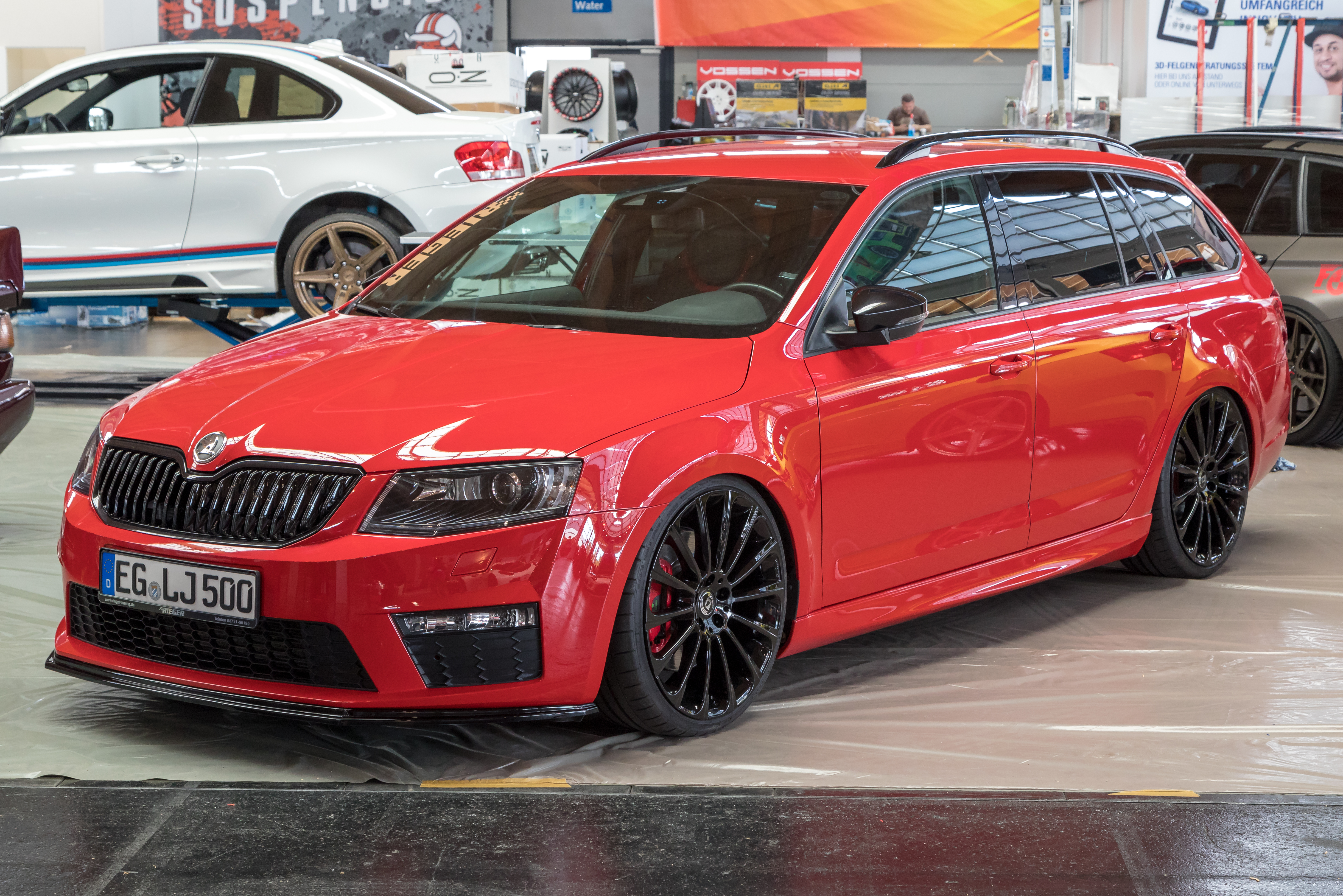
Talking of stunning vehicles, regular listeners know I'm a sucker for a wagon.
And it states I had a really quick one back in the day.
I had a Skoda Octavia.
Same one as the police often use on the motorways over here.
And I love that car.
I'm much rather a wagon than an SUV at my stage of life.
However, a lot of people do want SUVs.
But Avatar says, have one of these.
This is the Avatar 06T.
This is, again, I think Porsche, Taycan, or kind of Sporturismo.
You know, think the 007 GT from Zika or the Denzer.
What's the Denzer one?
Z9 GT.
Make sure I get it right.
And so it's that everything up to the B-pillar is a saloon or sedan.
But then you work backwards and you got that extra practicality.
But also, I think, to my eye, looks very, very gorgeous.
Avatar's released official images of the 06T station wagon.
Planned for Q2.
Targeting the May Day holiday window.
They call it a lifestyle version of the 06 sedan.
A low-slung wagon, not a high-riding crossover.
The roof line adds roof rails, which always look cool, but are also practical.
The rear gets a traditional window at the back, an integrated roof spoiler.
Marking a break from the 06 sedan, which uses Avatar's no-rear window design language, the 06T,
with semi-hidden door handles and what they call the Watchtower LiDAR.
I call it the taxi hump, but there we go.
Inside, the layout follows the current brand, 35-inch windscreen base display,
15.6-inch central touchscreen running Harmony Space 5.0.
Rear passengers get more headroom because of the extended roof line.
Power train lineup, both bevs and E-revs.
The bev version, a 90 kilowatt hour pack and two motor configurations.
Dual-motor rear-wheel drive setup or a tri-motor setup,
combined output up to 712 kilowatts.
It's 1,000 horsepower.
And CLT seed at 460 miles, that's 740 kilometers of range on the optimistic China cycle,
which does give a little bit too much weight towards urban driving compared to real world.
The E-rev version, 1.5-litre engine, 45 kilowatt hour pack.
205 miles, pure electric.
Now, let's finish off by talking about yet another solid-state battery story.
And this really is playing into the narrative.
The story, that 2027, when some of these technologies get properly commercialized,
and there's proper true solid-state in test cars in China right now, coming out of the lab,
next year's going to be a step change.
Three Vs.
And here are you and I talking about this in the first quarter of 2026.
I think by the time everyone else starts talking about solid-state in China in 18 months time,
we can go, ah, we've been there and done it.
Told you it was coming.
This time it's dream technology.
They just unveiled their all solid-state battery at AWE 2026, the China appliance and electronics world expo.
The company plans small batch deliveries in 2026, mass production in 2027.
So many solid-state, true solid-state are looking at mass production in 2027.
And the fact that so many of them are saying it tells me there's this substance to it.
There's so many challenges.
We should do a whole bonus podcast on the challenges of solid-state.
And this is yet another car maker using different technology.
This one uses sulfide electrolytes and dry electrode processes.
Dream says it has a single cell capacity of 60 amp hours.
That's quite common actually in solid-state.
The energy density is high.
It's 450 watt hours per kilogram.
It said the pack can fast charge to 80% in 10 minutes and withstand temperatures over 300 degrees Celsius with no thermal runaway events.
The design will address the safety and range limits of conventional lithium-ion chemistry.
Those claims go to the heart of solid-state's pitch.
More energy, faster charging, less drama when the worst happens.
Which we wish it wouldn't.
We would love to live in a world with no accidents.
But should a battery pack get punctured or be in a serious collision, there is no danger from that.
I'd rather be in that in an EV than carrying a fuel tank sloshing around some very highly combustible fluids.
Thank you.
Now, dream's longer-term targets push further.
By the end of next year, it wants to raise their charge-discharge rate and energy density to 800 watt-hours per kilogram.
Okay, they want to use a lithium-rich manganese-based cathode material to get their 800 watt-hours per kilogram.
Even if that doesn't end up in automotive to begin with, it ends up in robotics or drones or something.
It will end up in automotive and it's perhaps four times better than what would be in your average car right now.
I mean, there's some good stuff on the road. There's some worse stuff as well.
So that could be between three to eight times better than some of the battery technology right now.
It's amazing if it comes off. Let's just chill a bit. Let's cool. Let's cool.
Let's look at what's happening to begin with.
The timeline sits at the sharper end of the market. They are very aggressive with their timeline.
But industry consensus that I'm reporting on every day here is converging on 2026, small batch, test vehicles, 2027,
vehicle integration of all solid state, true solid state.
And by 2030, large-scale mainstream mass adoption, mass production dream is not alone in that chasing of that window.
But it is quite far towards the front of the crowd and that's your podcast for today. Have a great day.
Have a great weekend. See you Monday.
Your voice will shape the final product. So search digital ID consultation to have your say.
Digital ID, making it work for you.
Request an explanation for:
11 cars
Scroll for more
11 cars featured
Request an Explanation
Heard something you'd like explained? We'll add it to this episode.
Sign in to request explanations for terms you heard.
Want to learn more?
Browse our glossary for plain-English explanations of automotive terms, jargon, and concepts.
See something that's not quite right? Our annotations are AI-generated and can sometimes miss the mark.
Click the flag icon on any annotation to suggest a correction.
Report incorrect info
Suggest better explanations
Flag missing cars
More from EV News Daily - Technology and Business of EVs